Anti-Money Laundering and Sanctions Enforcement and Compliance in 2020 and Beyond - December 10, 2020 - Gibson Dunn
←
→
Page content transcription
If your browser does not render page correctly, please read the page content below

Anti-Money Laundering and Sanctions
Enforcement and Compliance in 2020 and
Beyond
December 10, 2020

                                 Panelists:
                            Stephanie L. Brooker
                              Ella Alves Capone
                               M. Kendall Day
                               Adam M. Smith
                          Moderator: F. Joseph Warin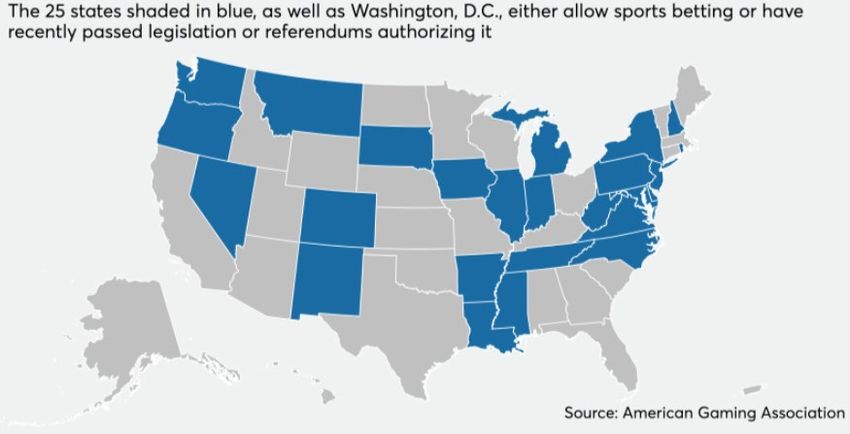
MCLE Certificate Information

• Most participants should anticipate receiving their certificate of
  attendance via email approximately four weeks following the webcast.
• Virginia Bar Association members should anticipate receiving their
  certificate of attendance six weeks following the webcast.
• Please direct all questions regarding MCLE to CLE@gibsondunn.com.

                                                                       2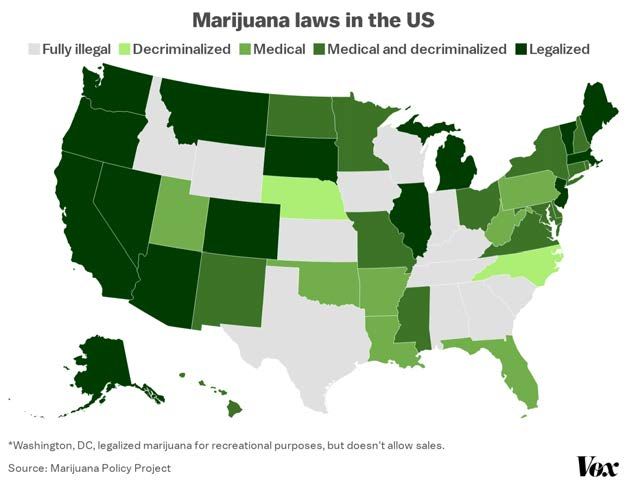
Agenda

1. Introduction
2. Regulatory, Legal, and Advisory Updates
3. AML / Sanctions Topics in the Spotlight
4. Recommended Best Practices
5. AML and Sanctions in the New
   Administration

                                             3
Introduction

U.S. Enforcement Agencies and Regulators

f
          Enforcement Responsibilities         Banking Regulators and Enforcers

    DOJ (Civil, Criminal, and    SEC (Civil)
          Forfeiture)                               OCC                  Fed

         FinCEN (Civil)         CFTC (Civil)

                                                    FDIC
                                                                         NCUA

          OFAC (Civil)          FINRA (SRO)
                                                                   DFS

                                                                                5
U.S. Enforcement Agencies
Secretary
Janet Yellen (Nominee) Attorney General
William Barr
(Senate Confirmed)
Steven Mnuchin
(Senate Confirmed)
Deputy Attorney General
Under Secretary for Terrorism and Jeffrey Rosen
Financial Intelligence (Senate Confirmed)
Justin Muzinich
(Acting)
FinCEN Director National Security Division Criminal Division
Ken Blanco Assistant Attorney General Assistant Attorney General
(Career) John Demers Brian Rabbitt
(Senate Confirmed) (Acting)
OFAC Director
Chief, Money Laundering
Andrea Gacki
and Asset Recovery Section
(Career)
Deborah Connor
(Career)
6International Enforcement Agencies and Regulators
Reserve Bank of India
(“RBI”) Hong Kong Securities
and Futures
Commission (“SFC”)
Switzerland’s Office of
the Attorney General
and Financial Markey
Supervisory Authority
(“FINMA”)
Canada’s Financial
Transactions and
Reports Analysis European Commission &
Hong Kong Monetary
Centre EU Member State Authorities
• Germany Authority (“HKMA”)
(“FINTRAC”) • Netherlands
• France
• Italy Australian Transaction
Reports and Analysis
Centre (“AUSTRAC”)
7Types of U.S. Enforcement Actions
Criminal: Regulatory:
• Declinations • Informal Enforcement Actions
• Declinations with Disgorgement • Public Enforcement Actions
• Non-Prosecution Agreements ‒ Consent Orders, C&D Orders, Formal
Agreements
• Deferred Prosecution Agreements
• Civil Enforcement Measures
• Guilty Pleas
‒ Civil Money Penalties
• Trials
‒ Remedial Measures, including SAR and
• Independent Monitors CDD Lookbacks
Resolutions May Include: ‒ Independent Monitors and Consultants
‒ Remedial Obligations ‒ Extensive Regulatory Reporting and
‒ Agreement to Forfeit Funds Oversight
‒ Criminal Fines ‒ Limitation of Business Lines and
‒ Disgorgement Growth
8AML Framework
Criminal Provisions - 18 U.S.C. 1956 and 1957
• Under the money laundering statutes, it is a crime to engage in a financial transaction with
knowledge that the proceeds involved are the proceeds of unlawful activity if the government
can prove that the proceeds were derived from a specified unlawful activity.
o Unlawful Activity – Generally any violation of criminal law –
federal, state, local or foreign.
o Specified Unlawful Activities – There are over 200 specified
unlawful activities – U.S. and certain foreign crimes.
Foreign crimes: Bribery of a public official; misappropriation,
theft, or embezzlement of foreign public funds; fraud, or any
scheme or attempt to defraud, by or against a foreign bank;
smuggling or export control violations; controlled substance
violations; and specified violent crime offenses.
o Knowledge includes "willful blindness" – turning a blind eye or
deliberately avoiding gaining positive knowledge when faced
with a high likelihood of criminal activity, i.e., ignoring red flags.
9AML Framework
The Bank Secrecy Act & Forfeiture
• The main source for AML reporting, recordkeeping, and compliance program
requirements for "financial institutions" is the Bank Secrecy Act (BSA).
- The BSA requires financial institutions to have an anti-money laundering
compliance program and comply with a number of reporting and recordkeeping
requirements.
- Agencies can impose civil and criminal penalties for violations of the BSA. State
banking agencies can impose similar penalties.
• Under 18 U.S.C. 981, funds involved in money
laundering transactions or traceable to them can
be subject to civil forfeiture.
- Innocent owner defense.
10AML Framework
Refresher on AML Risks
U.S. Government Action Reputational / Possible Outcomes
Commercial Consequences
Private Sector Action REQUIRES:
Private sector concerns
- De-Risking
Forfeiture - Limited Transactions
REQUIRES:
Criminal: Money laundering offense conviction
and proof that property was involved in the
offense.
Civil: Proof by a preponderance of the evidence
that a money laundering offense occurred and the
property was involved in the offense or traceable
to it.
- Loss of assets
Enforcement - Financial impact
REQUIRES:
Financial transaction with
knowledge that the proceeds
involved are the proceeds of Civil and Criminal Consequences
specified unlawful activity. - Potential Substantial Fines
- Potential Incarceration
11Sanctions Framework
Primary v. Secondary
Primary Sanctions Secondary Sanctions
Jurisdiction-Based “With Us or Against Us”
Prohibit U.S. Persons from Threaten the imposition of U.S.
undertaking almost all sanctions against non-U.S. persons
transactions associated with a for engaging in transactions with
listed jurisdiction targeted entities
Behavior-Based
Prohibit U.S. Persons from In reality, all U.S. sanctions have
undertaking almost all become extraterritorial – some are
transactions related to entities
listed for specific behaviors just more extraterritorial than others
Sectoral Sanctions
Prohibit U.S. Persons from
undertaking only limited, specific
transactions with listed entities
12Sanctions Framework
U.S. Dollar as Jurisdictional Hook
OFAC has targeted transactions conducted in USD even if the underlying transaction involves only non-U.S.
entities. The “dollar clearing” process allows OFAC to claim U.S. jurisdiction.
5 In July 2017, CSE, a Singaporean telecom company, paid a
1 Sanctioned $12 million penalty for “causing” U.S. financial institutions to
CSE Iranian Energy violate U.S. sanctions against Iran.
Projects 1. CSE agreed to provide goods and services to sanctioned
USD Wire
Iranian energy projects.
Fund Request Goods and Services 2. CSE initiated 104 wire transfers in U.S. dollars from its
Singaporean bank to third-party vendors providing goods
2 4 Third-Party and services on CSE’s behalf for the sanctioned Iranian
Singaporean Bank Vendors energy projects.
USD Wired 3. These wire transfers were “cleared” (i.e., converted) into
Funds
U.S. dollars by the U.S.-based correspondent bank of the
Singapore
Dollars Singaporean bank.
Because the wire transfers were in support of sanctioned
USD clearing USD
Iranian projects, providing the dollar clearing service violated
3 U.S. sanctions. Because CSE “caused” the U.S. correspondent
U.S. Correspondent Bank bank to violate U.S. sanctions, CSE also violated U.S. sanctions.
13Sanctions Framework
Refresher on Sanctions Risks
U.S. Government Action Reputational / Possible Outcomes
Commercial Consequences
Private Sector Action REQUIRES:
Private sector concerns - De-Risking
- Limited Transactions
Designation
REQUIRES:
OFAC having a reasonable basis to
believe a person’s / entity’s activity
is covered by an Executive Order or
legislation
- Appearance on SDN List
Frequency - Limiting Access to U.S.
Enforcement System
~1000s/year REQUIRES: - Transactions with
Designated Parties can lead
Transactions involving sanctioned to Enforcement
~100s/year parties and a:
• “U.S. Person”/ U.S.
Company
or
~30/year • U.S. Nexus (e.g., use of a U.S. Civil and Criminal Consequences
Bank) - Potential Substantial Fines
- Potential Incarceration
14Development of U.S. Sanctions Policy
An Ever-Expanding Footprint for U.S. Sanctions
• On a bipartisan basis, the U.S. Active OFAC Sanctions Programs
continues to rely on economic 85
sanctions as a primary tool of 75
65
diplomacy and national security.
55
• New programs have been 45
instituted very quickly, 35
blacklisted entities have been 25
added and removed at an 15
unprecedented pace, and the 5
number and severity of 2000 2005 2010 2015 2020
enforcement actions—at both
1000s
the federal and state levels—
60%
have increased remarkably.
• The Trump administration has
been particularly aggressive in
Annual changes to the SDN list,
its use of sanctions, averaging Since 2009, the increase in the including additions, subtractions,
two times more additions to the number of individuals and clarifications. On an annual basis,
SDN list compared with the Bush
entities on the SDN blacklist. the average rate of change has
and Obama administrations.
almost doubled since 2007.
15Development of U.S. Sanctions Policy
Growing Size and Economic Importance of Targets
Zimbabwe DRC Yemen Libya Sudan Myanmar
Somalia DPRK Côte Syria Cuba Belarus Iran
d'Ivoire
Russia: China:
Total: $2.6 trillion $3.6 trillion $23.1
trillion
16EU Blocking Statute
Overview
• Adopted in 1996, the main effect of the EU Blocking Statute is to prohibit compliance by so-
called “EU operators” (i.e. EU persons including EU companies with U.S. parents) with certain
U.S. sanctions on Cuba and Iran.
• The EU Blocking Statute allows a certain amount of flexibility to provide multinational
enterprises a potential path to navigate between the disparate U.S. and EU regulations.
• The German Hanseatic Higher Regional Court recently has made a request to the Court of
Justice of the European Union (CJEU) for a preliminary ruling on the meaning of certain aspects
of the EU Blocking Statute – the judgment might provide additional clarity on the scope and
enforcement of the EU Blocking Statute.
• Domestic authorities (not the European Commission) are responsible for its enforcement, so
penalties vary from one EU Member State to the next.
Criminal Penalty Administrative Penalty No implementation
17Increased Global Enforcement
Regulatory and Enforcement Trends
• 2019 was the second highest year in history for fines with 8.4 billion USD levied against global
financial institutions. By the end of July 2020, 2020 penalties against global financial
institutions had totaled 5.6 billion USD for AML-related offenses.
• Sanctions-related penalties in Germany:
• Sanctions-related sentence of a Russian Citizen to seven years in prison for violating European
sanctions by selling sensitive dual-use technology worth over 1.83 million euros to Russians
with military backgrounds between 2014 and 2018.
• In another trial, which is still in progress, the accused is in pre-trial detention which has so far
been extended to 12 months. He is alleged to have supplied dual-use goods to a Russian
military end user from 2016 to 2018. The required export licenses were obtained by
fraudulent means by providing incorrect information on the intended use of the machines.
• Sanctions-related accusation in Denmark:
• Charges have been brought against a Danish Holding Company and its director. They are
accused of selling jet fuel worth 87 million euros to Russian companies that transported the
fuel to Syria. This is a violation of the EU’s prohibition on “the sale, supply, transfer or export
of jet fuel and fuel additives to persons, entities or bodies in Syria or for use in Syria.”
18Regulatory, Legal, and
Advisory UpdatesFinCEN Enforcement Guidance
Enforcement Guidance
• In August 2020, FinCEN released guidance regarding its approach to enforcing the
BSA. The guidance included three key points:
o FinCEN clarified that in bringing enforcement actions, the agency will seek to establish
violations of laws and regulations and will not treat noncompliance with standards of
conduct promulgated in guidance documents as a violation.
o FinCEN clarified the types of actions it might take when an actual or potential violation of law
is identified, including: no action, a warning letter, equitable remedies, a settlement, a civil
money penalty, and/or a criminal referral.
o FinCEN identified the factors it will consider in bringing enforcement actions.
FinCEN Enforcement Factors: 6. Presence or absence of prompt, effective action to
1. Nature and seriousness of the violations terminate the violations
2. Impact or harm of the violations on FinCEN’s mission 7. Timely and voluntary disclosure
to safeguard the financial system 8. Quality and extent of cooperation with FinCEN and
3. Pervasiveness of wrongdoing other relevant agencies
4. History of similar violations, or misconduct in general 9. Systemic nature of violations
5. Financial gain or other benefit 10. Whether another agency took enforcement action
for related activity
20Banking Regulators’ Joint Enforcement Guidance
• In August 2020, the Federal Reserve, FDIC, NCUA, and OCC issued joint guidance
clarifying the circumstances in which the agencies would take enforcement action for
noncompliance with the BSA.
• The joint statement:
- Emphasizes that isolated or technical deficiencies will generally not result in
mandatory cease and desist orders.
- Sets forth specific types of BSA/AML program deficiencies that would or would not
result in a cease and desist order.
- Identifies the pillars of BSA/AML compliance programs as a system of internal
controls, independent testing, designated individual(s) responsible for BSA/AML
compliance, and training.
21FinCEN CDD and PEP Guidance
Customer Due Diligence (CDD) FAQs
• In these FAQs, FinCEN made clear that the CDD Rule does not categorically require the
collection of any particular customer due diligence information (e.g. media searches) or the
updating of that customer information on a specific schedule.
• Rather, covered financial institutions may take a risk-based approach to collecting and updating
customer information, based on established policies and procedures.
• Financial institutions also do not have to use a specific method to risk rate customers.
Politically Exposed Persons (PEPs) Updated Guidance
• FinCEN and other agencies issued a joint statement clarifying the BSA due diligence
requirements for customers who may be considered PEPs.
‒ Foreign official focus.
• Not all PEPs are high risk. Rather, the risk depends on facts and circumstances specific to the
relationship; due diligence should be commensurate with that risk.
‒ Examples of these facts and circumstances include the volume and nature of transactions,
type of products and services used, relevant jurisdiction(s), customer’s public office and level
of influence, customer’s access to significant government assets or funds, and overall nature
of the customer relationship.
22FinCEN ANPRM
Recordkeeping and Travel Rule
• In October 2020, FinCEN and the Federal Reserve announced a joint ANPRM that would amend
the recordkeeping and travel rule regulations under the BSA. The proposal would:
‒ Reduce the recordkeeping and travel rule thresholds from $3,000 to $250 for transmittals
that begin or end outside the U.S.;
‒ Clarify that “money” as used in these provisions includes convertible virtual currency;
‒ Clarify that these rules apply to domestic and cross-border transactions involving digital
assets that have legal tender status.
AML Effectiveness ANPRM
• In September 2020, FinCEN solicited public comment on incorporating an “effective and
reasonably designed” AML program component into the BSA regulations. Elements include:
‒ Identifying, assessing, and mitigating risk from illicit financial activity consistent with the
institution’s risk profile and the risks communicated by relevant government authorities;
‒ Assuring and monitoring compliance with the recordkeeping and reporting requirements of
the BSA; and
‒ Providing information with a high degree of usefulness to government authorities.
23OFAC Guidance to Industry:
Xinjiang Supply Chain Advisory
• On July 1, the U.S. Departments of State, Commerce, Homeland Security, and Treasury issued
an advisory on the reputational, economic, and legal risks for businesses with exposure in their
supply chain to entities engaged in human rights abuses in the Xinjiang Uyghur Autonomous
Region (XUAR).
‒ An estimated 84% of China’s cotton production comes from Xinjiang.
‒ CBP has seized imports of cotton, apparel, and hair products from Xinjiang under the Tariff
Act.
‒ FAR provision 52.222-50 prohibits the use of forced labor in USG supply chain.
‒ The advisory describes a Chinese internal “pairing” system whereby companies in the more-
developed Eastern provinces open factories in XUAR.
‒ The agencies acknowledge unusual challenges with conducting supply chain audits and
suggest engagement with international stakeholders, including the ILO.
• On September 30, the State Department issued closely related guidance encouraging U.S.
businesses to undertake supply chain due diligence when exporting items to foreign
government end users that can be used in surveillance activities—such as facial recognition
software, biometric data collection items, social media analytics software, recording and
listening devices, and internet communications surveillance tools.
Photo source: Council on Foreign Relations cfr.org
24OFAC Guidance to Industry:
North Korea Ballistic Missile Procurement Advisory
• On September 1, the U.S. Departments of State, Treasury, and Commerce issued an
advisory on North Korea’s ballistic missile procurement activities.
‒ Key participants in these activities are spotlighted, including the Korea Mining
Development Trading Corporation (KOMID) and the Korea Tangun Trading Corporation
(Tangun).
‒ An annex is provided with materials and equipment that North Korea often attempts to
source internationally.
• The advisory warns companies of the deceptive tactics that North Korea employs, e.g.:
‒ Using North Korean officials accredited as diplomats to attempt to orchestrate the
acquisition of sensitive technology.
‒ Using foreign-incorporated companies (often Chinese or Russian) to purchase items to
send onward to North Korea. Sensitive goods may be mislabeled to escape export
control requirements or to conceal the true end user.
• The electronics, chemicals, and materials industries, as well as the financial,
transportation, and logistics sectors, are at particular risk of exposure. Consistent with
OFAC’s compliance framework, companies should take a risk-based approach.
Photo source: Jung Yeon-Je/Agence France-Presse, via
Getty Images
25OFAC/FinCEN Guidance to Industry:
Discouraging Ransomware Payments
• On October 1, OFAC and FinCEN concurrently issued advisories warning of the sanctions
and AML risks of facilitating ransomware payments on behalf of cyber attack victims.
‒ Ransomware is malicious software that blocks access to the victim’s data.
‒ Demands a ransom payment—often in the form of digital currency—to restore access.
• Sources of sanctions-related risk for financial institutions and cyber insurance firms
include:
‒ Growing number of malicious cyber actors are subject to U.S. sanctions.
‒ Payments are frequently to anonymous recipients.
‒ Extremely challenging to assess whether funds are destined for an SDN or a sanctioned
jurisdiction.
• OFAC is concerned payments may finance malign activities and encourage future
ransomware attacks.
• Persons that facilitate such payments are strongly encouraged to timely self-report.
• License applications for ransomware payments are now subject to a presumption of
denial.
Photo source: Solarserven/iStock, via Getty Images Plus 26OFAC Guidance to Industry:
Artwork Advisory and the Berman Amendment
• On October 30, OFAC issued an advisory highlighting the sanctions risks arising from dealings in high-
value artwork associated with blocked persons.
• According to the advisory, the market for high-value artwork allows a high degree of anonymity and
confidentiality, especially as to the sellers and purchasers (who may be hiding behind multiple tiers
of proxy entities). The risk of sanctions evasion is exacerbated by the “mobility, concealability, and
subjective value of artwork.”
‒ In July, the Senate published a report on how designated Russian oligarchs Arkady and Boris
Rotenberg utilized shell companies to purchase artwork in the U.S.
• Per the advisory, OFAC does not interpret the “Berman Amendment” to IEEPA and TWEA as
“allow[ing] blocked persons or their facilitators to evade sanctions by exchanging financial assets such
as cash, gold, or cryptocurrency for high-value artwork or vice versa.” This is in tension with:
‒ The text of the Berman Amendment, which unequivocally states that the President cannot
“directly or indirectly” regulate “information or informational materials, including but not limited
to . . . artworks.” 50 U.S.C. § 1702(b)(3); 50 U.S.C. § 4305(b)(4).
‒ Recent court rulings in the WeChat and TikTok cases emphasizing the broad scope of the Berman
Amendment, as originally intended by Congress. See, e.g., Marland v. Trump, No. 20-cv-4597 (E.D.
Pa. Oct. 30, 2020), Opinion, Dkt. No. 35 at 3.
Photo source: Jung Yeon-Je/Agence France-Presse, via
Getty Images
27EU steps up fight against money laundering
Combined EU-Action Plan 2020/2021
“We need to put an end to dirty money infiltrating our financial system. Today we are further
bolstering our defenses to fight money laundering and terrorist financing, with a comprehensive
and far-reaching Action Plan. There should be no weak links in our rules and their implementation.”
Exec. VP V. Dombrovskis (May 7, 2020)
Six pillar approach
• Strengthen EU's global role with new tools to combat third world country AML deficiencies, e.g. alignment with FATF list.
• Effective application of EU rules on a national level with constant monitoring by European Banking Authority
• Single EU Rulebook to develop cohesion within 27 national legal frameworks.
• EU-level supervision to assure EU Member State’s private sector measures are up to EU standards.
• Coordination/support mechanism for EU Member’s Financial Intelligence Units as hubs of financial intelligence, e.g. by
establishing a refined methodology to identify high-risk countries.
• Enforcing EU-level criminal law provisions/information exchange by creating Financial Crime Centre at EUROPOL and EU
wide AML supervisory system guided by European Commission.
Sixth EU AML Directive
• EU Member States are required to transpose The EU’s Sixth Anti-Money Laundering Directive (“AMLD6”) into national law
by December 3, 2020. After which, relevant regulations must be implemented by institutions within EU Member States by
June 3, 2021.
• AMLD6 will harmonize the definition of money laundering across EU Member States, with the aim of closing loopholes in
the AML legislation of some EU Member States.
28AML/Sanctions Topics in the
SpotlightFinCEN Files
• On September 1, 2020, FinCEN published a news alert previewing that media outlets intended
to publish a series of articles based on unlawfully disclosed SARs, as well as other sensitive
government documents.
• Beginning on September 20, 2020, various media sources began reporting dozens of articles
tracing proceeds from illicit conduct that allegedly went through financial institutions around
the globe.
• This information was reportedly derived from over 2,100 Suspicious Activity Reports and over
two years of investigative work by over 400 reporters.
30Cryptocurrency
Recent Guidance and Enforcement Actions
• In May 2019, FinCEN issued guidance regarding the application of BSA registration, program,
and reporting requirements to certain business models involving CVCs.
• Law enforcement and regulator updates in 2020 show a serious increased focus on providers of
cryptocurrency-related services, particularly with respect to compliance with the BSA.
• On October 8, 2020, DOJ published its Cryptocurrency Enforcement Framework:
“[I]n Part I, the Framework provides a detailed threat overview, cataloging the three categories into
which most illicit uses of cryptocurrency typically fall: (1) financial transactions associated with the
commission of crimes; (2) money laundering and the shielding of legitimate activity from tax,
reporting, or other legal requirements; and (3) crimes, such as theft, directly implicating the
cryptocurrency marketplace itself.
Part II explores the various legal and regulatory tools at the government’s disposal to confront the
threats posed by cryptocurrency’s illicit uses, and highlights the strong and growing partnership
between the Department of Justice and the Securities and Exchange Commission, the Commodity
Futures Commission, and agencies within the Department of the Treasury, among others, to enforce
federal law in the cryptocurrency space.”
31Cryptocurrency
Recent Guidance and Enforcement Actions
• On October 1, 2020, the Department of Justice unveiled charges against four
executives of BitMEX alleging that they willfully failed to comply with BSA program
compliance requirements. The Commodity Futures Trading Commission brought a
companion civil enforcement action against five entities and three individuals that
own and operate the BitMEX trading platform.
• On October 19, 2020, FinCEN announced a $60 million civil penalty assessed against Larry
Dean Harmon, the founder of Helix, a convertible virtual currency “mixer” or “tumbler.”
‒ Citing its May 2019 guidance, FinCEN characterized Helix as a money transmitter
because it accepted and transmitted bitcoin and other CVCs through various means. As
such, FinCEN alleged that Helix had an obligation to register with FinCEN, to maintain an
AML compliance program, and to meet applicable reporting and recordkeeping
requirements.
‒ FinCEN found that Harmon willfully violated the BSA’s registration, compliance,
monitoring, and suspicious activity reporting rules.
• This is also a pending criminal action in D.C. District Court against Harmon for money
laundering offenses and operating an unlicensed money transmitting business.
32Cryptocurrency
Key Developments and Regulatory Landscape
• As discussed, on October 23, 2020, FinCEN announced its intention to issue further regulations
regarding cryptocurrencies by issuing a Notice of Proposed Rulemaking soliciting comments on
proposed amendments to modify the Travel Rule by changing the existing definition of money
to include CVCs.
• This increased regulatory focus comes as regular use of CVCs
expands into the mainstream market. In October 2020,
PayPal launched a new service enabling users to use cryptocurrency
as a funding source for purchases through PayPal’s 26 million
merchant partners.
• PayPal offers this service pursuant to a Bitlicense issued by
NYDFS.
33Sports Betting and Online Gambling
Key Developments
Murphy v. National Collegiate Athletic Association (2018), argued by Gibson Dunn at
the Supreme Court, removed the prohibition on sports betting under federal law.
• 19 states and the District of Columbia
have legalized sports betting; in an
additional 6 states, sports betting is
authorized but not yet operational; 2
states have active bills or ballot.
• Sports betting conducted through
casinos is subject to the BSA program,
reporting, and recordkeeping
requirements.
• Based on a speech by the Director in
August 2019, FinCEN most likely will
consider sports betting conducted
under state licenses that are not casino
licenses subject to the requirement.
FinCEN has not given guidance on this
point.
34Sports Betting and Online Gambling
Overseas Enforcement Actions
BSA/AML focus on casinos, with at least 10 enforcement actions since 2013, suggests
potential scrutiny of sports betting companies, as well.
• In November 2020, the UK Gambling Commission fined
Boylesports Enterprise, an Irish online betting company,
£2.8 million ($3.7 million) for alleged “unsuitable” AML
policies and procedures on two of its websites.
• The UK Gambling Commission also issued an official
warning and added the following conditions to
Boylesports’s license:
‒ Boylesports must appoint a money laundering reporting
officer, who will be required to undertake yearly AML
training.
‒ Senior managers must undergo external training.
35Sports Betting and Online Gambling
• In the absence of harmonization at the EU level, EU Member States can organize their
gambling services autonomously, but they have to comply with fundamental freedoms under
the TFEU, as interpreted by the CJEU.
‒ Article 56 TFEU prohibits restrictions on the freedom to provide services to recipients in
other EU countries. According to the CJEU, the provision and use of cross-border gambling
services constitutes an economic activity that falls within the scope of the fundamental
freedoms of the TFEU, but there is no obligation of mutual recognition of authorizations or
licenses to provide gambling services granted by an authority in an EU country.
• Most EU Member States allow at least some online gambling to be offered on the internet.
Some only allow certain types (betting, poker or casino games), while others allow all games.
• Online gambling regulation in EU Member States is characterized by diverse regulatory
frameworks. The CJEU has repeatedly ruled on the compliance of national regulatory
frameworks with EU law, i.e. the CJEU recognized EU countries’ rights to restrict the cross-
border supply of certain gambling services where necessary to protect public interest
objectives, such as the protection of minors, the fight against gambling addiction, and the
prevention of crime and fraud.
36Marijuana-Related Businesses in the US
Key Developments
• In the 2020 election, Arizona,
Montana, and South Dakota
legalized marijuana for
recreational purposes, while
Mississippi and South Dakota
legalized medical marijuana.
• Marijuana is now legal for
recreational and medical use
in 15 states, the District of
Columbia, Guam, and the
Northern Mariana Islands.
More states are expected to
follow suit.
• Legal marijuana sales are
expected to exceed $15 billion
in 2020.
37Marijuana-Related Businesses
Key Developments
Biden Administration and the 117th Congress
• President-elect Joe Biden has historically not supported the legalization of marijuana, though he
has been supportive of decriminalization measures for marijuana offenses.
• Vice President-elect Kamala Harris has been a very vocal supportor of federal legalization of
marijuana.
• Senate Majority Leader Mitch McConnell does not support legalization. If Democrats were to
gain control of the Senate, Current Senate Minority Leader Chuck Schumer has stated that
legalization would be a major priority.
• Legislation Options:
‒ The SAFE Banking Act would allow banks and financial institutions to legally do business with
the cannabis industry without fear of federal arrest or prosecution or other punitive actions.
‒ The STATES Act, which would recognize states’ ability to legalize cannabis at the state level
without the risk of federal intervention.
‒ The MORE Act, which would fully remove cannabis from the Controlled Substances Act, has
been the preferred legalization proposal of House Democratic leadership in the current
Congress. This Act passed the House Judiciary Committee on December 4.
38Marijuana-Related Businesses
Key Developments
FinCEN Guidance: Due Diligence Requirements under the Bank Secrecy Act for Hemp-
Related Business Customers
On June 29, 2020, FinCEN issued new guidelines clarifying the customer due diligence
requirements for hemp-related businesses and explaining the SAR reporting
requirements.
BSA/AML Program Expectations
• Financial institutions should obtain basic identifying information about hemp-related
businesses through the application of the financial institutions’ customer
identification programs and risk-based CDD processes.
• Standard SAR monitoring protocols should apply.
• To the extent the financial transactions of a hemp-related business are comingled with
marijuana-related activities, FinCEN’s 2014 Marijuana Guidance, which provides
clarity on how to file SARs on marijuana-related activities, should be applied.
39Marijuana-Related Businesses in the EU
• Recreational cannabis:
‒ There is no harmonized EU law on recreational cannabis use.
‒ Possession of cannabis for personal use is an offense in all EU Member States, but over
one-third do not allow prison as a penalty for minor offenses.
• Medical Cannabis:
‒ Approved by the European Medicines Agency for specific use cases.
‒ Several EU Member States have specific legal processes governing its distribution and use.
• Hemp:
‒ Legal to cultivate and supply cannabis plants with low levels of THC for hemp fiber.
‒ CJEU ruled that the cultivation of hemp fulfilling the strict EU conditions cannot be
prohibited by any EU Member States.
• Specific use case food:
‒ European Commission recently paused all novel food applications for CBD and hemp
products and is considering recategorizing CBD as a narcotic extract.
40CFTC Increased AML Enforcement
Recent
• Over the past few months, CFTC has demonstrated an increased focus on AML
enforcement, by bringing cases for violations of CFTC Regulation 42.2, which requires
futures commission merchants and introducing brokers to comply with the BSA.
‒ August 2020: CFTC found that Interactive Brokers, a registered FCM, failed to meet
its obligations to monitor account activity and file suspicious activity reports when
appropriate.
‒ September 2020: CFTC settled charges against A&A Trading, Inc., a registered
investment broker, for allegedly failing to timely file a suspicious activity report and
failing to properly supervise employees.
‒ October 2020: As discussed, CFTC filed a complaint against BitMEX for, among other
things, allegedly failing to implement a BSA-compliant AML program.
41International Focus on AML: United Kingdom
Regulatory and Enforcement Trends
In the United Kingdom, as a result of legislation passed in 2017, prosecutors can seek an
“unexplained wealth order” (“UWO”) to require the targets to reveal their source(s) of wealth.
• On February 5, 2020, Zamira Hajiyeva – the first UWO recipient and wife of
jailed International Bank of Azerbaijan chairman Jahangir Hajiyev – lost her
appeal against two UWOs issued in 2018.
• If Ms. Hajiyeva cannot explain the source of her wealth, the NCA will seize
her assets, including a London home purchased for £11.5 million and a
Berkshire golf course purchased for £10.5 million.
• In April 2020, the High Court threw out three UWOs against Nurali Aliyev,
the grandson of Kazakhstan’s former leader, for failing to provide
“reasonable grounds” that the assets were proceeds of serious crime.
• In June 2020, the FCA announced a ₤37.8 million fine against Commerzbank for alleged AML
program failures, including not performing periodic due diligence on clients or addressing a
known weakness in its suspicious activity monitoring software.
• In November 2019, the NCA reported that it had received a record number of SARs (478,437)
and a 52.72% increase in requests for a Defence Against Money Laundering in 2018 to 2019.
42Sanctions & AML Enforcement: North Korea
• On July 16, OFAC and the Justice Department announced a settlement with Essentra FZE,
including a $665,112 penalty, and deferred prosecution agreement for violations of the North
Korea Sanctions Regulations (31 C.F.R. Part 510). Essentra FZE, a UAE company, sold cigarette
filter products to North Korea via third parties in China and received payments in U.S. dollars at
the foreign branch of a U.S. bank. The company’s knowing use of false invoices and shipping
documents “caused a violation” of the sanctions statute.
‒ Essentra was DOJ’s first corporate enforcement action for violations of North Korea sanctions.
• In August, DOJ announced that Yang Ban Corporation, a BVI entity with operations in southeast
Asia, entered a guilty plea to charges that it conspired to launder money in connection with
evading North Korea sanctions and deceiving U.S. banks into processing prohibited U.S. dollar
transactions.
• In May, the federal district court for the District of Columbia unsealed an indictment charging
28 North Korean nationals and 5 Chinese nationals for facilitating more than $2.5 billion in
payments on behalf of North Korea’s Foreign Trade Bank, a state-controlled enterprise alleged
to be engaged in WMD proliferation.
Theories of criminal liability have ranged from intentional violations of IEEPA, to intentional failure to comply with AML
requirements, to simply intentional deception of a U.S. financial institution (“bank fraud”).
43Deficiencies in Automated
Screening Systems
• In recent years, OFAC has consistently brought enforcement actions against companies for
sanctions violations resulting from the failure of companies’ automated screening systems to
detect transactions involving SDNs or other prohibited parties.
‒ Amazon (July 2020): OFAC brought an action against Amazon.com, Inc. for allegedly
providing goods and services to persons located in sanctioned regions (Crimea, Iran, Syria), to
individuals employed by governments of sanctioned countries (Cuba, Iran, North Korea,
Sudan, Syria), and to individuals included on the SDN List under various sanctions programs
due to Amazon’s screening software’s failure to fully analyze all relevant transaction and
customer data.
‒ American Express (April 2020): OFAC brought an action against American Express Travel
Related Services for allegedly issuing a prepaid card to and processing 41 transactions on
behalf of an SDN due to an error in Amex’s screening software, allowing the transactions to
be processed despite initially being flagged and denied.
‒ Apple (November 2019): OFAC brought an action against Apple, Inc. for allegedly transacting
with an SDN listed as a significant narcotics trafficker due to the failure of Apple’s screening
software to detect differences in capitalization of the entity’s name as well as the company’s
failure to screen all individual users identified with an App Store account.
44U.S. Measures Against China
A “whole of government” approach in 2020
Congressional Action:
• Uyghur Human Rights Policy Act (Pub. L. 116-145), signed June 17, requires a Initiatives affecting
report within 180 days identifying foreign persons responsible for human rights trade with China are
violations in XUAR. numerous. Below we
highlight a few of the
• Hong Kong Autonomy Act (Pub. L. 116-149), signed July 14, authorizes sanctions
key recent
against CCP and Hong Kong leaders in response to the National Security Law. developments.
U.S. Department of State:
• Imposed visa restrictions on CCP officials and immediate family members connected to human rights
violations in Xinjiang and Hong Kong.
• On May 28, the State Department revoked its certification of Hong Kong’s “high degree of autonomy” from
China, an action that removes Hong Kong’s special status under the Hong Kong Policy Act of 1992.
• State Department announced immediate policy change to end exports of defense items to Hong Kong.
U.S. Department of the Interior:
• On September 30, the President declared a national emergency with respect to the United States’ “undue
reliance on foreign adversaries,” specifically referencing China, for rare earth elements and other “critical
minerals.” EO 13953 suggests restrictions on imports, including tariffs and quotas, and directs the
Department of Interior to take action to increase domestic supply.
Photo credit: Council on Foreign Relations cfr.org 45U.S. Measures Against China
A “whole of government” approach in 2020
U.S. Department of Treasury:
• In July, OFAC designated 4 persons under Global Magnitsky Act sanctions for alleged human rights abuses in
Xinjiang.
• In August, OFAC designated Chief Executive of HKSAR Carrie Lam and 10 other leaders in Hong Kong and PRC, for
actions undermining Hong Kong’s democratic institutions. In September, OFAC published FAQ 840 warning against
direct negotiations with or entering contracts signed by governmental SDNs.
• In September, President Trump issued EO 13959 restricting the ability of U.S. persons to invest in publicly traded
securities of certain “Communist Chinese military companies.” The E.O. currently applies to 33 companies
previously identified by the U.S. DoD as having alleged ties to the Chinese military.
U.S. Department of Commerce:
• In May, BIS announced a new Huawei-specific Direct Product Rule, designed to increase the range of items subject
to U.S. restrictions on trade with Huawei.
• In August, BIS added 24 Chinese companies to the Entity List for their role in helping the Chinese government build
militarized artificial islands in the South China sea.
• In October, BIS expanded its ability to review license applications for human rights concerns, and expanded its
licensing policy for reviewing crime control items—and specifically noted China’s use of technology to enable
abuses in Hong Kong and Xinjiang.
DOJ China Initiative:
• DOJ has stated an enforcement priority of cases arising out of China.
Photo credit: Council on Foreign Relations cfr.org 46U.S. Measures Against China
Targeting of WeChat and TikTok
• In November 2019, the Committee on Foreign Investment in the U.S. (“CFIUS”) began reviewing the
acquisition by ByteDance, TikTok’s Chinese parent company, of Music.ly, TikTok’s predecessor, to
determine whether that transaction presented national security concerns.
• Before the CFIUS case concluded, President Trump intervened in early August, announcing in two
executive orders that the Commerce Department would impose restrictions not only on TikTok-
related transactions but also on transactions involving WeChat—another Chinese-owned mobile app.
• The announcement, which referenced a national emergency declared in 2019 regarding the
information and communication technology and services supply chain, represented an
unprecedented use of the President’s authority under IEEPA.
• The President also announced that, at CFIUS’s recommendation, he would require ByteDance to
divest its ownership of TikTok, sparking a public bidding war ultimately won by Oracle and Walmart.
• In early September, the Commerce Dept. announced that it would prohibit U.S. persons from
participating in a list of transactions relating to distribution of or support for the TikTok and WeChat
mobile apps.
• Before these restrictions could come into effect, federal judges in three cases blocked their
implementation on the grounds that the President may have overstepped his IEEPA authorities or
violated users’ first amendment rights—suggesting a rare restriction on the President’s expansive
sanctions authority.
47Sanctions Legislative Developments:
A Focus on China
Impact of China’s Hong Kong National Security Law
• On July 28, 2020, the Council adopted conclusions expressing grave concern over this national
security legislation. According to the EU, China’s actions call into question China’s will to uphold
its international commitments, undermine trust and impact EU-China relations.
• The conclusions restate the EU's support for Hong Kong’s high degree of autonomy under the
“One Country, Two Systems” principle, and its solidarity with the people of Hong Kong, whilst
setting out a coordinated response package of measures in various fields.
• In particular, the EU endorsed measures further scrutinizing and limiting exports of specific
sensitive equipment and technologies for end-use in Hong Kong, specially where there are
grounds to suspect undesirable use relating to internal repression, the interception of internal
communications or cyber surveillance.
Impact of China’s supposed “re-education camps” for Uyghurs in Xinjiang
• EU parliament says that China must close its “re-education camps” for Uyghurs in Xinjiang.
• They call on Council to adopt targeted sanctions and freeze assets.
• EU urged Beijing to let independent observers into Xinjiang.
48China’s Latest Movements
Recent Counter Sanctions on U.S. Persons and Entities
• July Sanctions
‒ July 9: OFAC sanctioned Xinjiang Public Security Bureau and four officials based on alleged human rights
abuse in Xinjiang.
‒ July 13: A spokesperson of China’s Ministry of Foreign Affairs (“MOFA”) announced “corresponding
sanctions” on the U.S. Congressional-Executive Commission on China and four officials.
• August Sanctions
‒ August 7: OFAC sanctioned Hong Kong Chief Executive Carrie Lam and 10 other Chinese and Hong Kong
senior officials pursuant to “The President’s Executive Order on Hong Kong Normalization.”
‒ August 10: A MOFA spokesperson announced sanctions on 11 U.S. individuals who “behaved badly with
respect to Hong Kong-related matters,” including Senators Ted Cruz, Marco Rubio, Tom Cotton, Josh
Hawley, and Pat Toomey and Representative Chris Smith, as well as certain individuals at non-profit and
human rights groups.
• October Sanctions
‒ October 21: The U.S. State Department approved the potential sale of three weapons systems with a
total value of US$1.8 billion to Taiwan.
‒ October 26, 2020: A MOFA spokesperson declared sanctions on Lockheed Martin, Boeing Defense,
Raytheon and others “who had a negative influence in selling weapons to Taiwan.”
• The actual effect of these Chinese sanctions measures is not yet clear.
49China’s Latest Movements
New Export Control Law
• China’s Export Control Law was passed on October 17, 2020 and came into effect on December
1, 2020. This marks the first milestone on China’s journey towards a comprehensive and unified
export control regime.
‒ Deemed exports are also captured under this law, although details should be clarified when
China’s export control administration would require export operators to submit end user and
end-use certification.
‒ Import operators and end users who violate such end user and end-use certification risk,
among other things, being added to a control list. Transactions with those on the control list
may be prohibited, restricted, or suspended.
‒ Re-exports and deemed exports are also captured under this law, although details should be
clarified when China issues a set of corresponding implementation rules
• Also worth noting is China’s proposed unreliable entity list, which was first introduced in the
midst of the U.S.-China trade war. This list would purportedly include foreign individuals and
entities detrimental to China’s sovereignty, national security and interests, or those who
interrupt normal transactions with or take discriminating measures against Chinese persons.
50Recommended Best Practices
Recommended Best Practices

• Risk-based compliance programs supported by dedicated AML, payment, and
  sanctions policies
  ‒ BSA-covered entities will be guided by regulations
  ‒ Non-regulated entities should also have these elements in place
• Detailed KYC and continuous monitoring
• Sanctions screening at onboarding, for third parties, and for transactions
  ‒ Deep review, not just name and address
• Know your risk areas
  ‒ Geographic risk, government interactions, third parties, marijuana-related
    businesses, and virtual currencies
• Automated transaction monitoring
• Create a culture of compliance
• Independent testing of the compliance program
• Regular and mandatory training

                                                                                 52
AML and Sanctions in the
New AdministrationAML Under the New Administration
• Continued Emphasis on BSA/AML Investigations: International, federal, and state regulators/enforcers
remain keenly focused on BSA/AML compliance. Regulators and enforcers will focus on financial
institutions’ response to COVID-19.
• Broad Application of AML Requirements: Actions against crypto-businesses illustrate the broad view U.S.
regulators are taking in mandating adequate AML compliance. Developments in application of BSA rules to
sports betting, additional crypto regulations, further attention on the real estate industry, and enactment
of pending legislation may bring about further change.
‒ Focus on virtual currencies and individual liability.
• Mixed Cases: We will likely continue to see an increased intersection between AML enforcement and FCPA
and sanctions enforcement.
• FinTech: Legislators and regulators will continue to try to ensure that financial technology platforms are
not used for money laundering.
• Marijuana: Federal decriminalization or banking protections.
• Corporate Governance: Sanctions and AML regulators are increasingly interested in corporate compliance.
‒ Compliance requirements in recent OFAC settlements.
‒ Revised DOJ compliance guidance suggests that these principles will have continued prominence in
the AML space.
54BSA/AML Reform Legislation
• On Tuesday, the House passed The National Defense Authorization Act, which
includes widespread changes to the Bank Secrecy Act, as well as other changes
related to AML and CTF reform.
• Highlights include:
‒ National registry of beneficial ownership information;
‒ Required efficiency studies related to the BSA requirements and streamlining CTR
and SAR requirements;
‒ Enhanced penalties under the BSA for repeat offenders;
‒ Enhanced information sharing provisions;
‒ BSA whistleblower provision;
‒ Addition of dealers in antiquities to the definition of financial institutions covered
by the BSA;
‒ Addition of digital currency in the BSA’s definition of “coins and currency.”
55Sanctions Under the New Administration
• Sanctions will remain as a core instrument of U.S. foreign policy
Multilateralism • Supplement sanctions with additional emphasis on diplomacy
• Renewed coordination with traditional allies
• Evaluate removal or narrowing of some Trump administration
sanctions and under what conditions
Recalibrating
• Potentially remove sanctions (e.g., of ICC officials) inconsistent with
Sanctions
commitment to multilateral institutions
• Consider new sanctions on countries, e.g., Turkey or Myanmar
• Broad, bipartisan support for pressure on Beijing; limited cooperation
in some areas
China
• Relaxing Trump-era measures will likely require concessions
• Sustained focus on human rights in Xinjiang and Hong Kong
• Potentially rejoin Joint Comprehensive Plan of Action (JCPOA)
Iran • Counterterrorism sanctions may be challenging to reverse
• Limited constituency for easing pressure on Tehran
56Sanctions – What’s Next?
• Possible return to Obama-era sanctions relief
Cuba • Waiver of Title III of Helms-Burton Act
• Act of Congress required to lift most Cuba sanctions
• Bipartisan support for tough approach to Russia; potential for
additional sanctions
Russia • Condemnation of Russian actions; focus on human rights and
democracy
• Broader strategy for Western opposition to Russian policies
• Potentially narrow sanctions to reduce humanitarian crisis in the
country
Venezuela • Focus on multilateral diplomatic solutions to crisis
• Continuation of substantial criminal prosecution of regime
government officials
57Recorded Webcasts (CLE credit available)
• Congressional Investigations and Oversight Post-Election
• SEC Enforcement Focus on COVID-19 Issues and Key Areas of Risk
• Corporate Compliance and Sentencing Guidelines
• Managing Internal Audit
• Spoofing What it is, where it’s going
• The False Claims Act: Updates for Health Care Providers
• In-house Guidance for Managing Non-U.S. Antitrust Investigations
• The False Claims Act: Updates for Drug & Device Manufacturers
• Trends in Government Investigations into Foreign Influence in the Private Sector: A discussion of FARA and
related provisions
• The False Claims Act: Updates for the Government Contracting Sector
• The False Claims Act: Updates for the Financial Services Sector
• Negotiating Closure of Government Investigations: NPAs, DPAs, and Beyond
58Panelists
F. Joseph Warin
         1050 Connecticut Avenue, N.W.
         Washington, D.C. 20036-5306, USA
         Tel: +1 202.887.3609
         FWarin@gibsondunn.com

F. Joseph Warin is chair of the 200-person Litigation Department of Gibson Dunn’s Washington, D.C., office, and he is co-chair of the firm’s global White Collar Defense and Investigations
Practice Group. Mr. Warin’s practice includes representation of corporations in complex civil litigation, white collar crime, and regulatory and securities enforcement – including Foreign
Corrupt Practices Act investigations, False Claims Act cases, special committee representations, compliance counseling, and class action civil litigation.
Mr. Warin is continually recognized annually in the top-tier by Chambers USA, Chambers Global, and Chambers Latin America for his FCPA, fraud and corporate investigations
expertise. Who’s Who Legal named Mr. Warin a “Global Elite Thought Leader” in its 2020 and 2019 Investigations guides list for Business Crime Defense – Corporate and
Investigations. In 2020, Mr. Warin was selected by Chambers USA as a “Star” in FCPA, a “Leading Lawyer” in the nation in Securities Regulation: Enforcement, and a “Leading
Lawyer” in the District of Columbia in Securities Litigation and White Collar Crime and Government Investigations. In 2017, Chambers USA honored Mr. Warin with the
Outstanding Contribution to the Legal Profession Award, calling him a “true titan of the FCPA and securities enforcement arenas.” He has been listed in The Best Lawyers in
America® every year from 2006 – 2020 for White Collar Criminal Defense. U.S. Legal 500 has repeatedly named him as a “Leading Lawyer” for Corporate Investigations and
White Collar Criminal Defense Litigation.
Mr. Warin’s group was recognized by Global Investigations Review in 2020 as the leading global investigations law firm in the world. This is the fifth time in six years to be so
named. Global Investigations Review reported that Mr. Warin has now advised on more FCPA resolutions than any other lawyer since 2008. In 2016 Who’s Who Legal and Global
Investigations Review named Mr. Warin to their list of World’s Ten-Most Highly Regarded Investigations Lawyers based on a survey of clients and peers, noting that he was one
of the “most highly nominated practitioners,” and a “’favourite’ of audit and special committees of public companies.”
Mr. Warin has handled cases and investigations in more than 40 states and dozens of countries. His clients include corporations, officers, directors and professionals in regulatory,
investigative and trials involving federal regulatory inquiries, criminal investigations and cross-border inquiries by dozens of international enforcers, including UK’s SFO and FCA, and
government regulators in Germany, Switzerland, Hong Kong, and the Middle East. His credibility at DOJ and the SEC is unsurpassed among private practitioners – a reputation based in
large part on his experience as the only person ever to serve as a compliance monitor or counsel to the compliance monitor in three separate FCPA monitorships, pursuant to settlements
with the SEC and DOJ: Statoil ASA (2007-2009); Siemens AG (2009-2012); and Alliance One International (2011-2013). He has been hired by audit committees or special committees of
public companies to conduct investigations into allegations of wrongdoing in a wide variety of industries including energy, oil services, financial services, healthcare and
telecommunications.
Mr. Warin’s civil practice includes representation of clients in complex litigation in federal courts and international arbitrations. He has tried 10b-5 securities and RICO claim lawsuits,
hostile takeovers and commercial disputes. He has handled more than 40 class action cases across the United States for investment banking firms, global corporations, Big 4 accounting
firms, broker-dealers and hedge funds.
Early in his career, Mr. Warin served as Assistant United States Attorney in Washington, D.C. As a prosecutor, he tried more than 50 jury trials and was awarded a Special Achievement
award by the Attorney General. Mr. Warin was awarded the Best FCPA Client Service Award by Main Justice in 2013 and he joined the publication’s FCPA Masters list. He was named a
Special Prosecutor by the District of Columbia Superior Court in 1988.

                                                                                                                                                                                   60
You can also read


