Antimicrobial resistance (AMR) - The role of the Swedish Board of Agriculture - prevention coordination prudent use - SVA
←
→
Page content transcription
If your browser does not render page correctly, please read the page content below

Antimicrobial resistance (AMR)
   The role of the Swedish Board of Agriculture
     - prevention coordination prudent use

                                 Lena Hellqvist Björnerot
                                 Deputy CVO

2019-05-14
Outline

      • Background, the importance of AMR, global views
      • OIE - and EU coordinaton

      • The Swedish model and strategy
            historically
            prevention & healthy animals
            reduce the need & prudent use
            cooperation
            legislation, control
            monitoring

      • One Health, Intersectoral Coordination Function

      • Summary
2019-05-14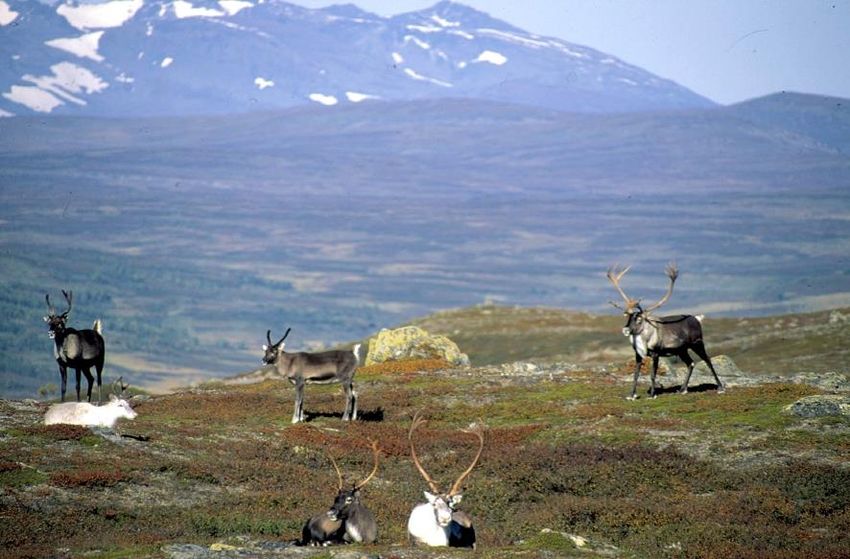
Swedish Board of Agriculture (SBA)
                   SBA is the Government's expert authority in the
                   agro-food sector - responsible for all matters related
                   to agriculture & horticulture

                   Task - to fulfil the overall objectives of the political
                   sectors of agriculture, food & fisheries

Aim - Sustainable agriculture, good livestock husbandry
& a varied agricultural landscape

Being prepared for crisis

   2019-05-14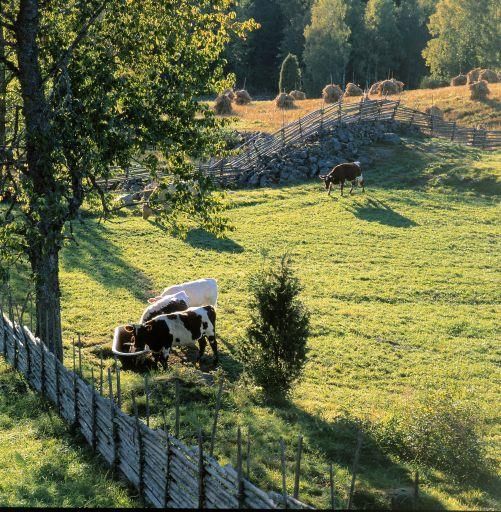
SBA´s mission
Ensure good animal health among kept animals
Prevent spread, and control, of infections
among kept animals
Ensure a good animal welfare
Work for food security and consumer trust for
our part of the food chain
Sustainable food production
Profitability in farming
2019-05-14
Antimicrobial resistance
                     (AMR)

2019-05-14
A big threat to humanity...
             WHO: Antibiotic resistance, along with the climate
             issue, is one of the biggest threats to global health,
             food security and development today!

             Global action plan to tackle antimicrobial resistance –
             2015, in Tripartite collaboration with The Food and
             Agriculture Organisation (FAO) and The World
             Organisation for animal health (OIE).

                             http://www.who.int/antimicrobial-resistance/global-
                             action-plan/en/

2019-05-14
A big threat to humanity...
             United Nations General Assembly in New York September 2016:

             A political declaration endorsed by Heads of State signaled the
             world’s commitment to taking a broad, coordinated approach
             to address the root causes of antimicrobial resistance across
             multiple sectors, especially human health, animal health and
             agriculture.

             Namely all UN countries support the Global Action Plan
             against Antibiotics Resistance, produced by the WHO in
             cooperation with FAO and OIE

             https://www.un.org/pga/71/wp-content/uploads/sites/40/2016/09/DGACM_GAEAD_ESCAB-AMR-
             Draft-Political-Declaration-1616108E.pdf

2019-05-14
A big threat to the economy...
             The World Bank estimates that antimicrobial resistance
             (AMR) has the potential to lead to economic
             consequences in the dignity of the financial crisis 2011
             by the year 2050.

             The World Bank's report also shows that low and middle
             income countries are often the hardest hit.

                               http://documents.worldbank.org/curated/en/32331149
                               3396993758/pdf/114679-REVISED-v2-Drug-
                               Resistant-Infections-Final-Report.pdf

2019-05-14
‘Review on Antimicrobial Resistance. Antimicrobial Resistance:
    Tackling a Crisis for the Health and Wealth of Nations. 2014.’

    If increase and spread of AMR continues in the same way & rate
    in 2050…

2019-05-14
                  https://amr-review.org/home.html
Use of antimicrobials in livestocks
             Increased demand for animal protein and shift to large-
             scale farms – use may increase with 67% by 2030

2019-05-14
             Comment – urging for a sustainable production
One health approach is necessary
All sectors must work together at all levels….
2019-05-14FAO
http://www.fao.org/search/en/?cx=018170620143701104933%3Aqq82jsfba7w&q=antimicrobial+resist
ance&cof=FORID%3A9&siteurl=www.fao.org%2Fabout%2Fen%2F&ref=www.fao.org%2Fhome%2Fen%2
F&ss=7432j3340152j24
2019-05-14OIE - World organisation for Animal Health
OIE Activities
against AMR
http://www.oie.int/fileadmin/Home/eng/Media_Center/docs/pdf/PortailAMR/EN_OIE-
AMRstrategy.pdf
2019-05-14OIE 4 main objectives
against AMR
• Improve awareness & understanding
• Strengthen knowledge through
surveillance & research
• Support good governance &
capacity building
• Encourage implementation of
international standards
2019-05-142019-05-14
AMR in OIE TERRESTRIAL & AQUATIC CODES
                Chapter 6.7.               Chapter 6.1.
                Introduction to the        Introduction to the
                recommendations for        recommendations for
                controlling antimicrobial controlling antimicrobial
                resistance                 resistance
                Chapter 6.8.
                                           Chapter 6.2.
                Harmonisation of
                                           Principles for responsible
                national antimicrobial
                                           and prudent use of
                resistance surveillance
                                           antimicrobial agents in
                and monitoring
                programmes
                                           aquatic animals              MANUAL OF
                Chapter 6.9.               Chapter 6.3.
                Monitoring of the          Monitoring of the
                                                                        DIAGNOSTIC TESTS
                quantities and usage       quantities and usage
                patterns of antimicrobials patterns of antimicrobial
                                                                        AND VACCINES FOR
                agents used in food        agents used in aquatic       TERRESTRIAL
                producing animals          animals
                                           Chapter 6.4.                 ANIMALS
                Chapter 6.10.              Development and
                Responsible and prudent harmonisation of national
                                                                        Chapter 2.1.2
                use of antimicrobial       antimicrobial resistance     Laboratory
                agents in veterinary       surveillance and
                medicine                   monitoring programmes        methodologies for
                                           for aquatic animals
                                           Chapter 6.5.                 bacterial
                Chapter 6.11.
                Risk analysis for
                                           Risk analysis for
                                           antimicrobial resistance
                                                                        antimicrobial
                antimicrobial resistance
                arising from the use of
                                           arising from the use of
                                           antimicrobial agents in
                                                                        susceptibility testing
                antimicrobials in animals
                                           aquatic animals

http://www.oie.int/en/standard-setting/terrestrial-code/access-online/
http://www.oie.int/index.php?id=171&L=0&htmfile=titre_1.6.htm
http://www.oie.int/fileadmin/Home/eng/Health_standards/tahm/2.01.01_ANTIMICROBIAL.pdf
   2019-05-14
OIE activities against AMR continued
List of antimicrobial agents of
veterinary importance,
in parallel with the existing
WHO list for human medicine
Global database on
antimicrobial agents
intended for use in animals
Network
2019-05-14EU legislates & EU coordinates its positions related to OIE & other international organisations EU cooperates on OIE issues with other regions, such as Africa 2019-05-14
EU – AMR Strategy key objectives
                                     2. Boosting research,
 1. Making the                       development and innovation
 EU a best practice region

3. Shaping the global agenda

                                                        2019-05-14
https://ec.europa.eu/health/amr/action_eu_en
The Swedish animal health situation, Swedish model & AMR strategy 2019-05-14
Sweden has a unique high
               animal health status
•   Geographically favourable situation & climate
•   No recent wars
•   Financial resources
•   Not so dense animal population
•   Strict legislation
•   Long tradition cooperation government &
    stakeholders - “prevention is better than cure”
•   Low volume & strict control for safe trade/imports
    of live animals – but promoting trade of products
•   Animal Welfare                              Etc…
History of animal health activities
• Tuberculosis and Brucellosis eradication schemes in 1940-60
• Organizations for insemination and bovine fertility started
preventive fertility and disease control ~ 1940
• Dairy industry started preventive udder health scheme in ~1950
• Salmonella Control programme started after an outbreak 1953
• Voluntary eradication of EBL (free 2007) & BVD (free 2013)
started in the 1990-ties
• Eradication program for IBR, paratuberculosis,
Aujeszky's Disease & PRRS
2019-05-14
Now free for most of these and several other diseases!A composite strategy
against AMR is needed
Remove unnecessary use
growth promoters, routine prophylaxis
Reduce need
keep animals healthy
prevention and infection control
Avoid spread
biosecurity, infection control, food hygiene...
Optimize use when needed
correct diagnosis, selection and dose
Monitoring of resistance and use
LONG-TERM WORK. AWARENESS &
COOPERATION AT ALL LEVELS!Our tools
• Legislation
• Financial resources –
to fight epizootic diseases & support programmes
and projects run by farmers organisations to
promote animal health
• Incentives & understanding of
risks and benefits
• Cooperation
2019-05-14Remove unnecessary use Antibiotics as growth promoters prohibited in SE 1986 Corresponding prohibition in EU 2006 - important to reduce and end the use globally! Avoid routine prophylaxis - only use after veterinary prescription, clinical examination and diagnosis, sampling and sensitivity analysis! - problem solving at the root! Legislation (SBA) Global standards!
Reduce need & avoid spread

Healthy animals do not need antibiotics

Infection prevention & control
”THE SWEDISH MODEL”
                     AMR is not in isolation

• Long tradition in Sweden of “prevention is better than cure”
• Close dialogue & cooperation between stakeholders &
  governmental authorities
• Knowledge & understanding of benefits!
• Stakeholder platform, yearly meetings
• Stakeholders run programs for improving animal health &
  biosecurity in general (pig-, cattle-, sheep-, fish- & poultry sector)
• Focus on ”production diseases” – free of serious diseases
• One Health
• Prudent use of antimicrobials
• Animal welfare
     2019-05-14
Infection prevention & control
(IPC)
Important tool also in the veterinary medicine to
- prevent emergence of healthcare associated infections*
- prevent the spread of infectious agents between
animals, farms & bet ween animals – humans
Clean hands, working clothes, equipment…
- Reduce the need of antimicrobials
Mandatory for all veterinary services in Photo; Bengt Ekberg, SVA
Sweden to have IPC-plans! *e.g. MRSA
https://distriktsveterinarerna.se/download/18.1487953d1697560ebcfc49d3/1552654159983/Hygienguiden.pdf
http://www.svf.se/sv/Forbundet/Policydokument (IPC small animal veterinary clinics/hospitals; horse practice;
handling dogs & cats with specific AMR,)
http://www.jordbruksverket.se/download/18.2ae27f0513e7888ce22800010291/1370040513684/2013-014.pdfOptimize use when needed
Correct diagnosis
Correct substance, dose & time
Guidelines & treatment
recommendations
- considering risks for AMR when prescribing
- Mastitis policy; Guidance on medicated feed;
- Swedish Veterinary Association general policy (1998) &
specific guidelines for use of antibiotics in: dogs & cats;
cattle & pigs; horses; sheep & goats
- Medical Products Agency recommendations on antibiotic use
https://saveantibiotics.se/ http://skyddaantibiotikan.se/
http://www.svf.se/sv/Forbundet/Policydokument/
https://lakemedelsverket.se/veterinara-behandlingsrekommendationerUse & monitoring of
antimicrobials
• SBA is responsible for regulating the use of VMPs,
risk management and the overall control
- requirement for veterinary prescription
- veterinarians not allowed to sell VMP
- veterinary obligation to report use
• SBA obligation to compile & report the sales of VMPs
- Swedish Government - yearly report on sales
of VMPs (including antibiotics)
- ESVAC – yearly report antibiotics (Europe)
- OIE (as of 2015)
2019-05-14
Working for harmonised EU legislationSweden - use of antibiotics
Källa: Swedres-Svarm 2018
2019-05-14Europe – use of antibiotics
Sales for food-producing species, in mg/PCU,
for 30 European countries, in 2016
Eighth ESVAC report
2019-05-14
Sales of veterinary antimicrobial agents in 30 European countries in 2016. Eighth ESVAC reportOne health approach is necessary
All sectors must work together at all levels….
2019-05-14The Swedish AMR Strategy
- overall framework
Overarching goal:
Preserve the possibility for effective treatment of
bacterial infections in people and animals
First joint National Action Plan in year 2000
Joint work on zoonosis since 1990ties
https://www.government.se/contentassets/168838e186de455ca7f
e868bee92d209/swedish-strategy-to-combat-antibiotic-
resistance.pdfrnment.se/information-material/2016/05/swedish-
strategy-to-combat-antibiotic-resistance/
2019-05-14Intersectoral Coordination Function • 2012 – formalised AMR cooperation • 25 governmental authorities & organisations • National Action plan updated for 2018-2020 • Yearly forum during the European AMR-awareness day (November) • Joint communication strategy updated 2019 • https://saveantibiotics.se/ http://skyddaantibiotikan.se/ • E.g. recommendations to prevent MRSA from infected humans working with animals 2019-05-14
In summary

                       Cooperation
Prevention & control    all levels
disease management                       Animal welfare
      AH+PH

                                          Knowledge
  Prudent use of                     Understanding benefits
  antimicrobials                          Incentives
                       Financing
                       Legislation

 Long term cooperative work – understanding & motivation
 is needed to achieve a change in behaviour!
 2019-05-14
It is possible!
Thank you for your attention
Lena Hellqvist Björnerot
Deputy Chief Veterinary Officer (Deputy CVO)
Department of Animal Health and Welfare
lena.bjornerot@jordbruksverket.se
https://www.jordbruksverket.se
2019-05-14You can also read


