Cameroon: ITN distribution in the North West
←
→
Page content transcription
If your browser does not render page correctly, please read the page content below
Cameroon: ITN distribution in the North West
                Region during a humanitarian crisis –
           Challenges and lessons learned for reaching the
                              last mile

                                                Presented by

              Dorothy Achu, MD, MPHM                              Mohamadu Wirngo, MD, MPH
             Permanent Secretary, NMCP                         Regional coordinator, Malaria control
         Ministry of Public Health - Cameroon                    North West Region - Cameroon

Public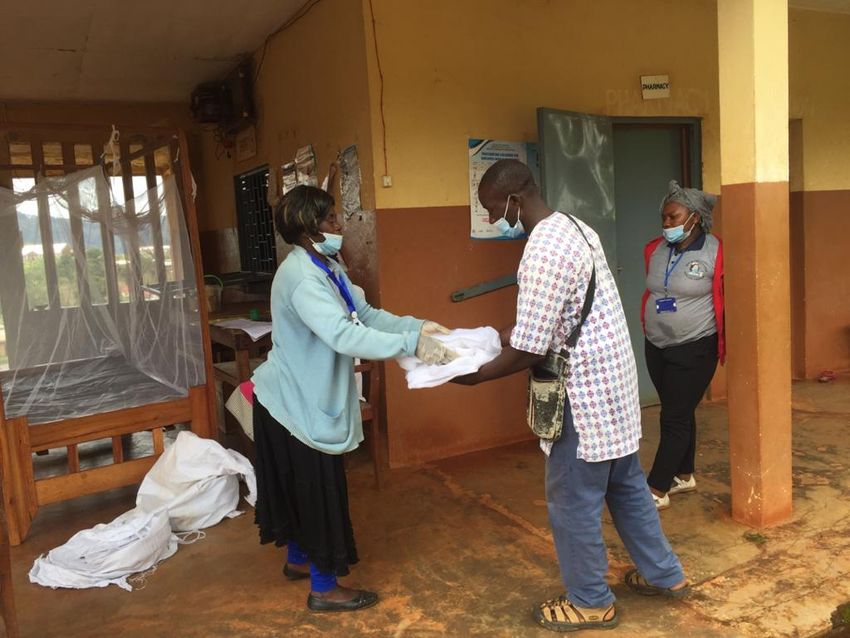
OUTLINE
         ➢Profile of the North West Region (NWR)
         ➢Epidemiological context
         ➢Security and humanitarian context
         ➢Impact of humanitarian crisis
         ➢Implementation of the mass ITN campaign
         ➢Enabling factors of the ITN campaign
         ➢Achievement of the ITN campaign
         ➢Main challenges and solutions
         ➢Take home message
         3/26/2021               AMP 2021 PARTNERS MEETING   2
Public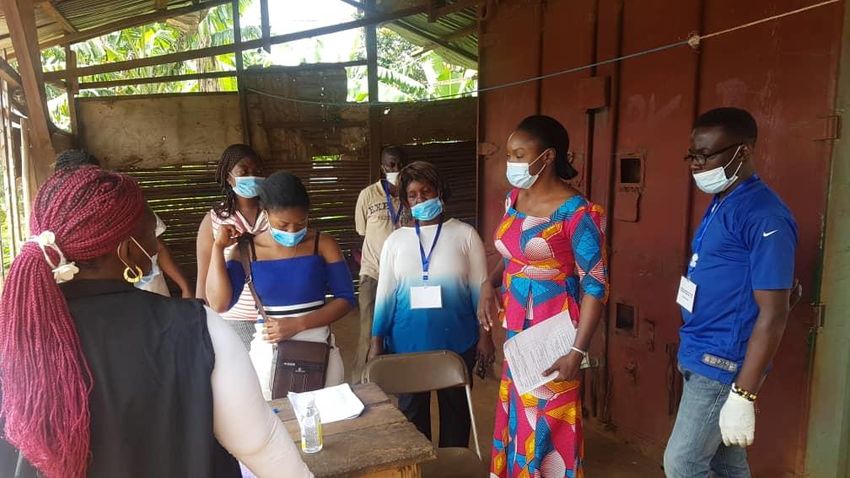
PROFILE OF THE NORTH WEST REGION

                                                             Population = 2,246,302 / 26 million
                                                             15.2% = Children under 5
                                                             3.46% = Pregnant women

                                                             Surface area = 17,000 Km2
                                                             Pop density = 130 persons/Km2

                                                                         Health Map
                                                             19 health districts (HD)
                                                             243 health areas (HA)
                                                             416 health facilities (61% Public,
                                                             21% confessional and 18% Private)

                                                             A network of 597 CHW (GF) in
                                                             09/19 HD and over 1000 PBF CHW

         3/26/2021               AMP 2021 PARTNERS MEETING                                         3
Public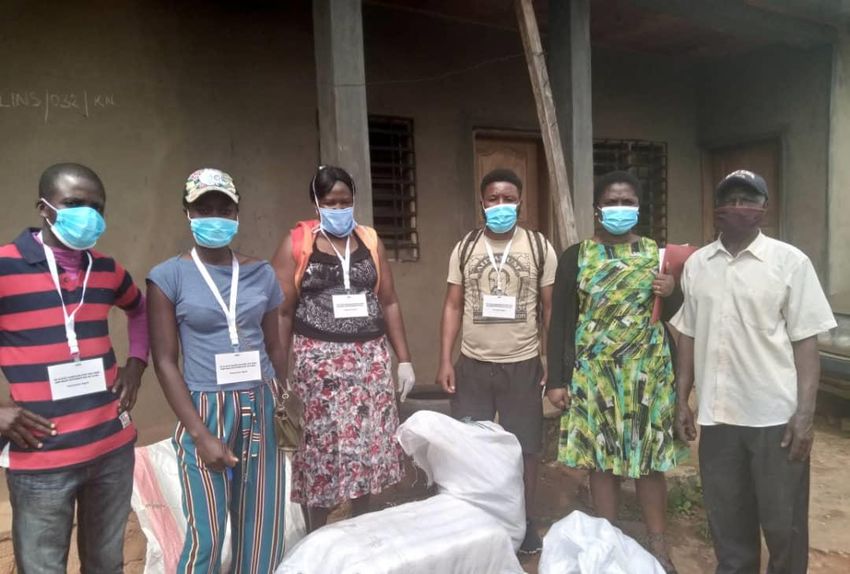
EPIDEMIOLOGICAL CONTEXT
                           ➢ Malaria is the leading PH problem in Cameroon;
                           ➢ HBHI approach implemented throughout the country;
                           ➢ The NWR was among the lowest burden regions before
                             2016 with proportional mortality rates of 5,3% in general
                             population at HF level (national: 18%, NMCP report);
                           ➢ Mortality rates in children below 5 years have risen from
                             7% in 2016 to 21% in 2019 following the same trends at
                             national level due to weakening of the health system;
                           ➢ COVID-19: 610 cases (95 among HCW) and 61 deaths
                             (July 2020);
                           ➢ Barrier measures were prescribed by the government;
                           ➢ WHO recommends sustained high impact interventions
                             despite the COVID-19 pandemic.

         3/26/2021            AMP 2021 PARTNERS MEETING                                  4
Public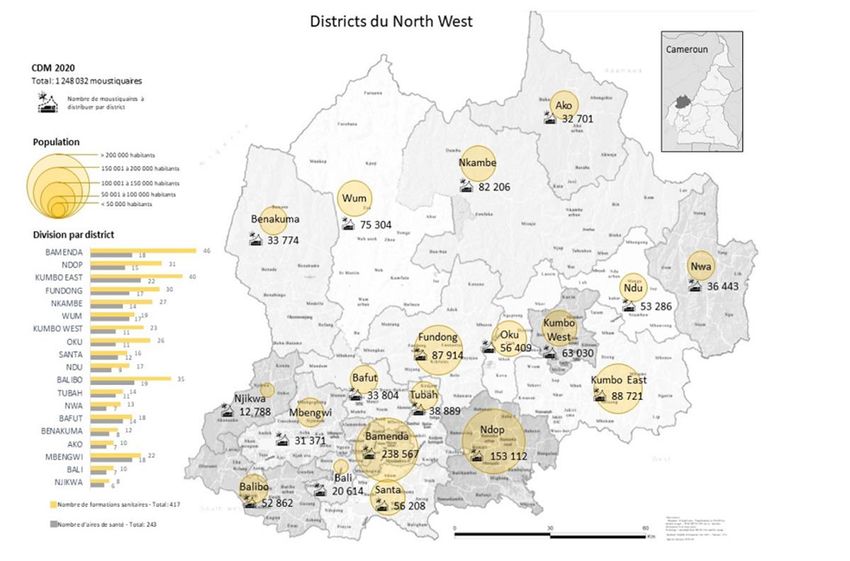
HUMANITARIAN CONTEXT
Estimated Gravity of
Number
% of % security
Total of Numbe
Health displaced functiona threat
populatio functiona r of
➢ Armed conflicts since 2017 (secessionist movement); District
n 2019
populatio
n (if
l health
l health
facilities
CHW
(mild,
moderate,
facilities
known) severe)
➢ Predominantly led by non-state armed groups (NSAGs); Ako 58862 20% 7 70% 23 Severe
Bafut 60840 20% 17 94% 350 Moderate
➢ 670,000 IDPs, 58,000 refugees (OCHA, February 2018) Bali 37103 Unknown 9 90% 100 Moderate
Bamenda 429276 0% 46 100% 1500 Mild
➢ 10% of health facilities + absence of qualified staff; Batibo 95150 54% 28 80% 320 Severe
Benakuma 60794 Unknown 6 50% 200 Severe
➢ Many ghost towns, lockdowns and roadblocks; Fundong 158245 Unknown 30 100% 450 Moderate
Kumbo East 159554 19% 37 93% 300 Severe
➢ Significant disruption of service offer and delivery; Kumbo 113508 15% 23 100% 310 Severe
West
➢ Deterioration of health indicators; Mbengwi 56429
275603
50%
20%
14
27
64%
87%
300
250
Severe
Severe
Ndop
➢ Presence of humanitarian NGOs (WHO cluster, MSF); Ndu 95914
23017
Unknown
30%
17
8
100%
100%
290
200
Moderate
Moderate
Njikwa
➢ ITN ownership by households greatly reduced (48%) DHS Nkambe
Nwa
150424
65599
16%
Unknown
25
13
93%
100%
520
48
Moderate
Moderate
2018. Oku 101536 Unknown 25 96% 375 Severe
Santa 101176 40% 16 100% 300 Moderate
Tubah 69999 Unknown 14 100% 120 Moderate
Wum 135546 34% 12 63% 860 Moderate
Total 2248575 374 90% 6816
5
3/26/2021 AMP 2021 PARTNERS MEETING
Public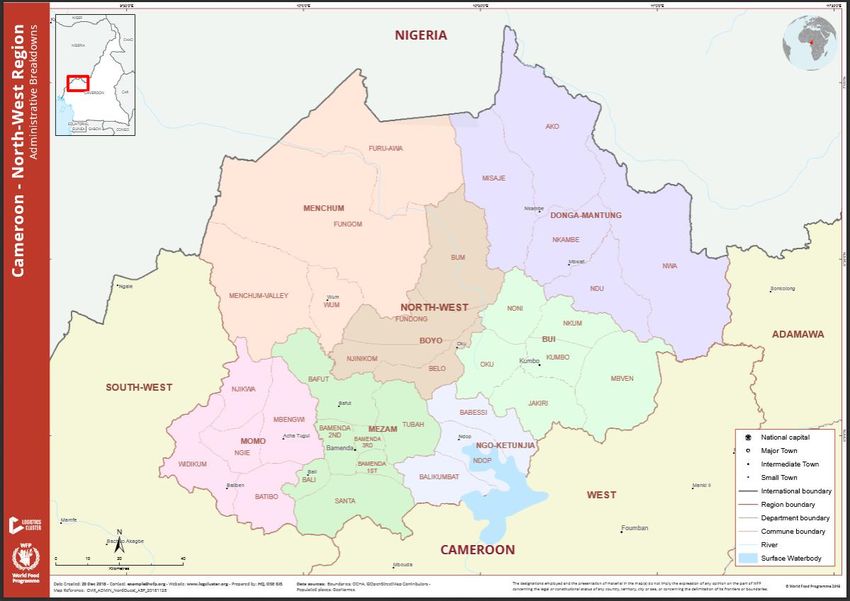
Impact of the humanitarian crisis
         ➢Frequent armed attacks (cross-fire) affecting civilians;               REPUBLIQUE DU CAMEROUN                                                         REPUBLIC OF CAMEROON

                                                                                      Paix – Travail – Patrie                                                 Peace – Work – Fatherland

         ➢IDPs and increased number of persons per
                                                                                         ------------                                                             -------------
                                                                                MINISTERE DE LA SANTE PUBLIQUE                                                MINISTRY OF PUBLIC HEALTH
                                                                                       ----------                                                                   -----------
                                                                                 DELEGATION REGIONALE DU                                                  REGIONAL DELEGATION FOR THE
                                                                                       NORD OUEST                                                                  NORTH WEST

          household;                                                            N°
                                                                                       -----------

                                                                                      /NWR/RDPH/RTG/Malaria
                                                                                                                                                                   ------------

                                                                                                                                                                BAMENDA, the.....................

                                                                                                                                                                THE REGIONAL DELEGATE
                                                                                                                                                                    Le Délégué Régional

         ➢Ghost towns, long lockdowns, roadblocks that
                                                                                                                                                               Tel; 233 363 289/674493327

          interrupting socio-economic activities;                                    Third National mass campaign for the free distribution of long-lasting insecticide treated
                                                                                     mosquito bed nets (LLINs) in Cameroon.

         ➢Use of French prohibited by the NSAGs, limiting free
          movement of some supervisors;
         ➢Prohibition of use of state emblems on documents,
          requiring their revision;                                                                                             Written by:
                                                                                                                    Dr Wirngo Mohamadu Suiru, MD, MPH
                                                                                                                   Coordinator RTG – Malaria control, NWR

         ➢Several roadblocks causing increase cost of transport;                                                               Supervised by:
                                                                                                                      Dr Kingsley Che Soh, MD, MPH
                                                                                                        Regional Delegate of Public Health for the North West Region

         ➢Harassment from both camps.                                                                                              AND

                                                                                                                  Dr Dorothy Fosah Achu, MD, MPHM
                                                                                                          Permanent Secretary, National Malaria Control Program

                                                                                                                                                                                                    6
           3/26/2021                                AMP 2021 PARTNERS MEETING
Public
Implementation of the ITN campaign(1)

         Objectives:                                          Allocation: 1 ITN/2 persons/ household
                                                              02 strategies:
            1. Advocacy at the regional, district and         Door-to-door (COVID-19 and low insecurity)
               community levels for the safety of             •   Planned for a period of 6 days ;
                                                              •   Headcount & simultaneous distribution of LLINs;
               persons and commodities and                    •   Workload, 35 HH/ day in rural and 40 HH/day in urban;
               acceptance of the campaign by the              •   The teams were supplied multiple times a day with ITNs
               population;                                        by a delivery agent

            2. Ensure the transport, security, pre-           Fixed post Hit & Run (Moderate to High insecurity)
               positioning of ITNs at the level of HD;        •   HH count done separately from distribution;
                                                              •   Headcount on D1 to D5 & distribution from D2 of
            3. Household count and distribution;                  headcount until D5 + 1;
            4. Carry out communication linked to              •   Headcount teams different from distribution teams;
                                                              •   No coupons were used during HH head count;
               the ITN distribution campaign;                 •   Households were recorded on printed forms and sent to
            5. Distribute 1,162,050 ITNs to the pop;              the distribution teams at the end of the day (not in a
                                                                  register).
            6. Ensure M&E of the campaign.
                                                                                                                 7
          3/26/2021                           AMP 2021 PARTNERS MEETING
Public
Implementation of the ITN campaign (2)

                                                                    Coordination
                                                   • National Coordination Committee (NCC)
                                                     headed by the Minister of Public Health
                                                   • Regional Coordination Committee (RCC):
                                                     chaired by the Governor
                                                   • Advocacy meetings at district and health area
                                                     levels (three meetings planned at each level)

                                                            Advocacy and communication
                                               • Advocacy meetings at all levels with pre-determined
                                                 outputs in terms of demographics, mapping of
                                                 stakeholders, accessibility, availability of warehouses,
                                                 communication channels and community health
                                                 workers
                                               • Cautious use of mass media and social media channels
                                               • No launching ceremonies

         3/26/2021                AMP 2021 PARTNERS MEETING                                          8
Public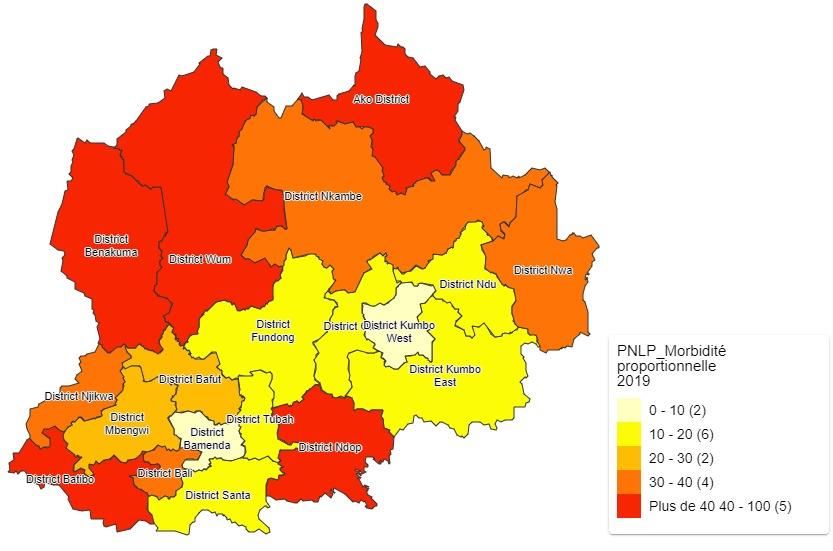
Implementation of the ITN campaign (3)
                                                            Logistics
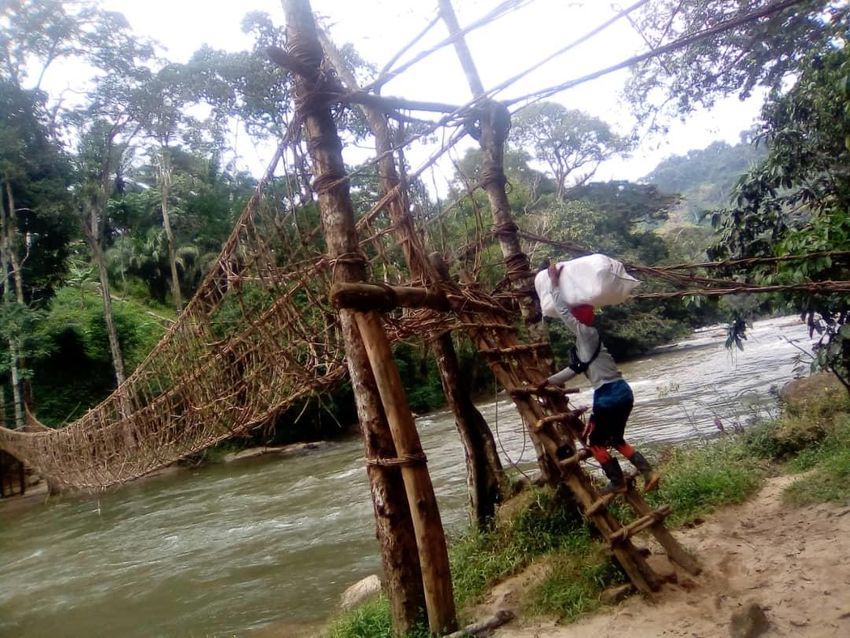
         1,162,050 ITNs planned for distribution to the entire population by over 8,000 community volunteers among
         whom CHW

          3/26/2021                                 AMP 2021 PARTNERS MEETING                                        9
Public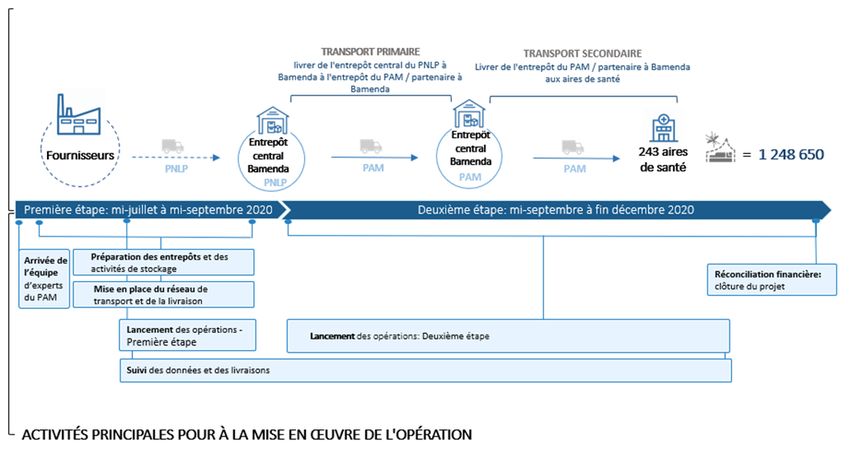
Enabling factors for the ITN campaign
         • High political commitment from the Government and support from the Global Fund;
         • Advocacy meetings at community level to improve buy-in of new stakeholders;
         • Targeted proximity communication strategies (little mass communication& no use of French);
         • High awareness of the population about the severity of malaria and need for ITNs;
         • Active network of close to 1,000 trusted community health workers (CHW);
         • Community organisation and participation through dialogue structures;
         • Detailed microplanning beginning with health area level and consolidation at the Region;
         • Strategic execution of the distribution – starting distribution of ITNs with the NSAGs;
         • Participatory approach in all communities, including members of the NSAGs as actors;
         • Adapting recruitment criteria for actors to the context (more women than men);
         • Logistics support by humanitarian agency (WFP) though with mitigated impact.

Public
           3/26/2021                             AMP 2021 PARTNERS MEETING                            10
Achievement of the ITN campaign
• Training of 8,000 actors at all levels;
• Deployment of 54 supervisors from central and regional level to ensure effectiveness of activity;
• Distribution of 1,026,101 out of the 1,162,050 ITNs (88%);
• Coverage of a population of 1,797,112 (including 104,130 IDPs), 80% of estimated population;
• Community engagement through 243 advocacy meetings to facilitate transportation of ITNs enable
access to all sites and ensure security during campaign (retrieval of seized PPE by some NSAGs) ;
• Local procurement of about 1,000,000 masks and hand sanitizers for campaign actors;
• Implementation of the campaign in line with WHO COVID-19 prevention measures (AMP support);
• Valuable support from the incident management system for COVID-19 in the region; and
• Effective use of mobile money payment modalities despite the limited coverage of the region.
3/26/2021 AMP 2021 PARTNERS MEETING 11
PublicMain challenges faced and solutions used
SN Main challenges faced Solutions used
1 Budgetary constraints due to resource-intensive Reduction of the number of actors in teams,
strategies increasing workload in urban dense areas
2 Coordination of logistics operations with the WFP Creation of a situation room on WhatsApp with all
giving the exigences of humanitarian principles the NGOs involved, the DMOs and the regional team
3 Unpredictable population displacements with no Just a proportion of ITNs were sent to the health
headcount done before distribution areas in collaboration with the DMOs
4 Lack of mobile money accounts by many actors Use of surrogates for the payment of actors that did
especially in enclaved areas with no ID cards not have an account and could not establish one
5 Justification of expenses according to the norms Waiver of some justification modalities by the GF to
and standards of financial management ease justification for the service providers
6 Supervision of training and implementation of Designing of a distance supervision checklist and
activities in highly enclaved and insecure zones creation of a call center for distance support
7 Timely payment of actors due to late transmission Constant supervision and coaching of the district
of reports (Conflict of calendar in the MOH) teams.
8 Poor timeliness and completeness in reporting At least one data manager was based in town to
Public 3/26/2021 enter
AMP 2021 PARTNERS data for some HD
MEETING 12Take home messages
1. The characteristics of the armed conflict must be well understood (contingency plan);
2. Humanitarian principles should be contextualized based on the level of risks and
should ensure close collaboration with health systems actors;
3. Advocacy meetings with all stakeholders is required to ensure buy-in and proper
selection of community actors and acceptance of the activity ;
4. Proper microplanning is important and permits a rational use of resources;
5. Adjustments to strategy should take into account more time needed to train actors and
increase in size of households due to IDPs;
6. Strategies used should be adapted to the COVID-19 response;
7. Phasing the campaign permits adjustments to be made in subsequent phases;
8. Distant supportive supervision and mentoring is helpful when security threats limit field
visits; and
9. Flexibilities on the use and justification of funds are necessary to adapt to the context.
3/26/2021 AMP 2021 PARTNERS MEETING 13
PublicPICTURES
3/26/2021 AMP 2021 PARTNERS MEETING 14
PublicAPPRECIATIONS
15
3/26/2021 AMP 2021 PARTNERS MEETING
PublicTHANK YOU FOR YOUR KIND ATTENTION
3/26/2021 AMP 2021 PARTNERS MEETING 16
PublicYou can also read


