ARCTIC STRATEGY THE DEPARTMENT OF THE AIR FORCE - ENSURING A STABLE ARCTIC THROUGH VIGILANCE, POWER PROJECTION, COOPERATION, AND PREPARATION - AF.mil
←
→
Page content transcription
If your browser does not render page correctly, please read the page content below
THE DEPARTMENT OF THE AIR FORCE

     ARCTIC STRATEGY

ENSURING A STABLE ARCTIC THROUGH VIGILANCE, POWER PROJECTION, COOPERATION, AND PREPARATION
                                            i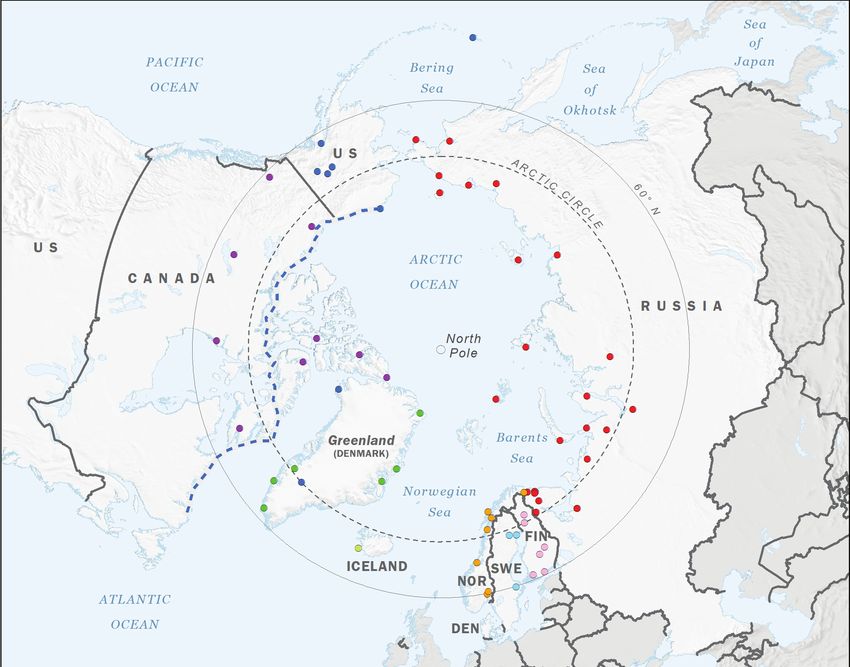
ii
1
The Department of the Air Force
Arctic Strategy
Executive Summary                                                       activities in the region by great power competitors
                                                                        with increased physical access due to receding land
                                                                        ice and sea ice, yields the potential for intensified
                                                                        regional competition as well as opportunities for
The Department of the Air Force Arctic Strategy                         cooperative endeavors with allies and partners.
fully supports the 2018 National Defense Strategy
(NDS) and implements the 2019 Department of                             The Department of the Air Force contributions to
Defense (DoD) Arctic Strategy embracing the DoD’s                       U.S. national security in the Arctic are large, but
desired Arctic end-state: A secure and stable region                    relatively unknown. Given the Arctic’s vast distances
where U.S. national interests are safeguarded, the                      and challenges to surface operations, air and space
homeland is protected, and nations address shared                       capabilities have long been essential to gain rapid
challenges cooperatively.                                               access and provide all-domain awareness, early
                                                                        warning, satellite command and control, and
The strategy outlines the Department of the Air                         effective deterrence. Offering a solid foundation on
Force’s unique role and optimizes Air Force and                         which to build and project power across the region,
Space Force capabilities for the region. The Arctic’s                   the Department of the Air Force is the most active
increasing strategic importance, coupled with the                       and invested U.S. military department in the Arctic.2
Services’ significant regional investment, requires
the Department to have a unified, deliberate, and                       The strategy identifies the Arctic as a region of
forward-looking approach, ensuring the Air and                          strategic opportunity for the Air and Space Forces,
Space Forces can compete and defend the nation’s                        Joint Force, allies, and partners. It provides
interests in the Arctic region.                                         recommendations in light of the Arctic’s most
                                                                        significant strategic threats and opportunities,
Residing at the intersection between the U.S.                           based on Combatant Commander requirements and
homeland and two critical theaters, Indo-Pacific and                    the Air and Space Forces’ missions.
Europe, the Arctic is an increasingly vital region for
U.S. national security interests. The Arctic’s capacity                 The Department approaches the Arctic with four
as a strategic buffer is eroding, making it an avenue                   main lines of effort: Vigilance, Power Projection,
of threat to the homeland, due to advancements                          Cooperation, and Preparation. The strategy outlines
by great power competitors. Additionally, it hosts                      how the Air and Space Forces will organize, train,
critical launch points for global power projection                      and equip to provide Combatant Commanders
and increasingly accessible natural resources.                          with combat-credible assets capable of conducting
While the DoD analyzes the immediate prospect                           operations throughout the Arctic into the future.
of conflict in the Arctic as low,1 the confluence of

1.   DoD Report to Congress: Arctic Strategy 2019.
2.   DoD Report to Congress: Resourcing the Arctic Strategy 2016.

                                                                    2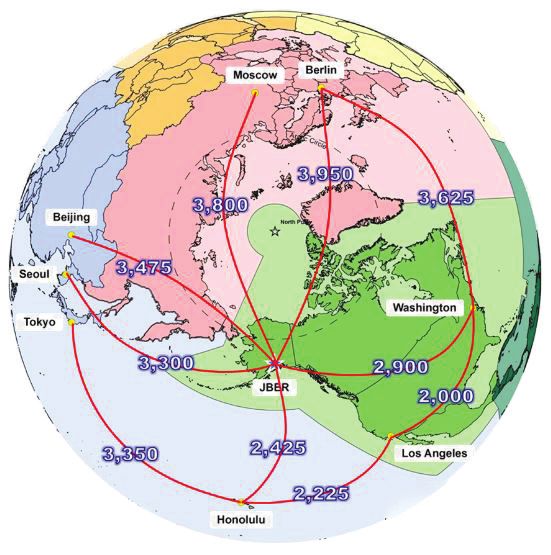
First, through investments in missile warning               Third, strong alliances and partnerships in the Arctic
and defense, as well as command, control,                   are a strategic advantage for the United States. The
communications, intelligence, surveillance, and             strategy outlines ways to enhance cooperation as
reconnaissance (C3ISR), the Air and Space Forces            well as interoperability, operations, and exercises
will defend the homeland by maintaining vigilance.          between the United States and its Arctic partners.
                                                            To uphold the international rules-based order in the
Second, the Air and Space Forces will utilize unique        Arctic, the Air and Space Forces must leverage the
positioning afforded by bases in locations like             strong defense relationships among Arctic nations
Alaska and Greenland to project combat-credible,            and work closely with regional and joint partners.
all-domain air and space power. Infrastructure,
focused on thermal efficiency and durability, will be       Finally, the strategy outlines essential training
combined with fifth generation aircraft and lethal          and preparation for operations within this
capabilities to ensure the Air and Space Forces             unique environment. To meet this challenge, the
remain agile and capable in the future.                     Department will renew focus on training, research,
                                                            and development for Arctic operations, while
                                                            leveraging the Arctic expertise of the Total Force.

                                                        3
The Air & Space Forces                                                     The Arctic is a region of immense geostrategic
                                                                           significance and a key location for global power
in the Arctic                                                              projection. With two large Alaska air bases, Joint
                                                                           Base Elmendorf-Richardson and Eielson Air
                                                                           Force Base (AFB), and other strategic facilities,
                                                                           the Air and Space Forces project power into
The Arctic represents a cornerstone of the nation’s                        two critical theaters: Indo-Pacific and Europe.
defense. The Department of the Air Force provides                          Often unrecognized, Alaska offers the quickest
close to 80% of DoD resourcing to the Arctic region.3                      flight access to strategic locations across the
Installations across Alaska, Canada, and Greenland                         Pacific region and western Russia. As evidence of
include large bases, training complexes, satellite                         Alaska’s strategic location, once the planned F-35
command and control stations, and a constellation                          bed-down is complete, Alaska will be home to
of more than 50 early warning and missile                                  more advanced fighters than any other location in
defense radars. For reference, page 5 highlights                           the world.
Department of the Air Force Arctic equities.
                                                                           As strategic as the Arctic is to power projection, it
Geographically, the Arctic region consists of the                          is equally critical to deterrence and U.S. defense.
Arctic Ocean, adjacent seas, and parts of eight                            From an air and space power perspective, it is the
nations: Canada, the Kingdom of Denmark                                    shortest distance for adversaries to threaten the
(including Greenland), Finland, Iceland,                                   homeland with strategic air and missile attacks. The
Norway, Russia, Sweden, and the United States.4                            Alaska Radar System and the 50-plus radars that
Demographically, among the millions of Arctic                              comprise the North Warning System across Canada
inhabitants, indigenous communities possess                                provide vital early warning for homeland defense
millennia of knowledge about the Arctic domain                             and North American Aerospace Defense Command
passed down through generations.                                           (NORAD). Locations like Clear, Alaska and Thule,
                                                                           Greenland uniquely enable missile warning and
Several factors make the Arctic particularly reliant                       defense in addition to space domain awareness,
on air, space, and cyberspace power to provide                             helping USSPACECOM track tens of thousands of
rapid access, reach, and domain awareness. The                             objects daily.
area above the Arctic Circle (above 66 degrees
North latitude) is vast, almost 2.5 times the                              From aerial refueling tankers to the Air National
size of the continental United States. Lacking                             Guard’s ski-equipped aircraft, the Air Force brings
the climate-moderating effect of the warm                                  mobility capabilities that provide access to some
Gulf Stream, the North American Arctic hosts a                             of the harshest and most remote locations in the
much harsher environment than the European                                 Arctic. Meanwhile the Alaska Rescue Coordination
Arctic and significantly less road and maritime                            Center and affiliated rescue squadrons work closely
infrastructure. Alaska epitomizes this geographical                        with partners, including the U.S. Coast Guard, on
disparity in infrastructure. It is the largest state                       hundreds of search and rescue missions annually.
(twice the size of Texas) covering 586,000
square miles, but offering only 5,600 miles
of highway.5

3.   DoD Report to Congress: Resourcing the Arctic Strategy 2016.
4.   The Department of the Air Force Arctic Strategy uses the definition of the Arctic codified at 15 U.S.C. § 4111. The Arctic means all U.S.
     and foreign territory north of the Arctic Circle and all U.S. territory north and west of the boundary formed by the Porcupine, Yukon,
     and Kuskokwim Rivers; all contiguous seas, including the Arctic Ocean and the Beaufort, Bering, and Chukchi Seas; and the Aleutian
     Islands chain.
5.   Alaska Department of Transportation & Public Facilities. Department Fast Facts Prepared for Legislative Session 2020.

                                                                      4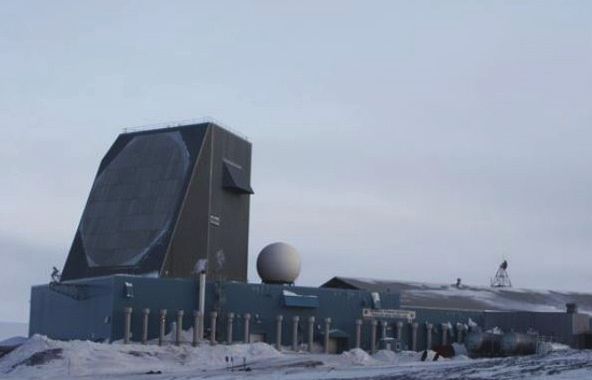
F-22, E-3, C-17, C-130, C-12F, Alaska Rescue
Coordination Center: HC-130, HH-60
79%
Eareckson
EIELSON AFB: F-35, F-16, ANG KC-135, Polar
USA
DAF is responsible for AS
Department of the Air Force Equities in the Arctic
Survival School
USAF EQ
of DoD Arctic Resourcing
JOINT PACIFIC
JBER & ALASKA RANGE COMPLEX
Alaska Rescue
Coordination Center
(JPARC): Airspace & Training Grounds
Source: 2016 DoD Report to Congress
CLEAR AFS:
Eielson AFB, Ballistic Missile Early Warning,
Clear
79%
Space
AFS, Domain
JPARC Awareness
ALASKA DAF is responsible for
JOINT BASE ELMENDORF-RICHARDSON (JBER):
POINT BARROW/NORTH SLOPE:
DAF
Radar System
of DoD
of 3DoD
(15isradars,
responsible
Arctic
part of
Alaska
Barrow
Arctic
for
Warning
Resourcing
79%
& North
NorthResourcing
System
Warning System)
F-22, E-3, C-17, C-130, C-12F, Alaska Rescue
Coordination Center: HC-130, HH-60 Missile Defense
EARECKSON AS:Source: 2016 DoDRadar
Report to Congress
North Warning
Source: 2016 DoD Report to Congress
System
EIELSON AFB: F-35, F-16, ANG KC-135, Polar
CANADA
Survival School
ALASKA
JOINT PACIFIC ALASKA RANGE COMPLEX ALASKA Thule
NORAD: NorthABWarning System (~50 radars)
(JPARC): Airspace & Training Grounds
JOINT BASE ELMENDORF-RICHARDSON SAMPLE OF(JB AR
CLEAR AFS: Ballistic Missile Early Warning, JOINT BASE ELMENDORF-RICHARDSON (JBER):
Space Domain Awareness GREENLAND F-22, E-3, C-17, C-130, C-12F, Alaska Rescue
F-22, E-3, Coordination Center:
C-17, C-130, C-12F, HC-130,
Alaska HH-60
Rescue UNITED STATE
POINT BARROW/NORTH SLOPE: Alaska Coordination Center: HC-130, HH-60
AF EQUITIES IN THE ARCTIC
THULE AB: Ballistic Missile Early Warning,
Radar System (15 radars, 3 part of North EIELSON
Raven AFB: F-35, F-16, ANG KC-135, Polar
DENMARK/GR
Space DomainCamp
Awareness
Warning System) EIELSON AFB: F-35,
Survival F-16, ANG KC-135, Polar
School
RAVEN CAMP:
Survival ANG Training for LC-130
School
EARECKSON AS: Missile Defense Radar JOINT PACIFIC ALASKA RANGE COMPLEX
JOINT PACIFIC
(JPARC):ALASKA RANGE
Airspace COMPLEX
& Training Grounds
%
Eareckson
CANADA (JPARC):
AS
Airspace & Training Grounds
CLEAR AFS: Ballistic Missile Early Warning,
Map Source: National Geospatial-Intell
CLEAR AFS: Ballistic
Space Domain Missile Early Warning,
Awareness
USAF EQUITIES IN THE ARCTIC
NORAD: North Warning System (~50 radars)
JBER & Alaska Rescue Space Domain Awareness
Coordination CenterSAMPLE OF ARCTIC REGIONPOINT BARROW/NORTH
MILITARY FACILITIES SLOPE: Alaska
GREENLAND POINT BARROW/NORTH
Radar System SLOPE:
(15 radars,Alaska
3 part of North
Radar System (15
Warning radars,
NORWAY System)
3 part of North
% Eielson AFB, Clear Eareckson
UNITED STATES FINLAND CANADA SWED
AS
AFS, JPARC
THULE AB: Ballistic Missile Early Warning, Warning System)
DENMARK/GREENLAND EARECKSON
RUSSIA AS: Missile Defense Radar
ICELAND
Space Domain Awareness JBER & Alaska Rescue Barrow & North EARECKSON AS: Missile Defense Radar
Coordination Center
RAVEN CAMP: ANG Training for LC-130 Warning System
N (JBER): Eielson AFB, Clear CANADA
ue AFS, JPARC CANADA
North
Barrow & North
Warning
Warning System
NORAD: North Warning System (~50 radars)
SON
System NORAD: North Warning System (~50 radars)
olar(JBER):
escue SAM
GREENLAND
GREENLAND
North Warning
Thule
System
EXPolar
5,
AB
THULE AB: Ballistic Missile Early Warning, U
PLEX
Thule
AB
THULE AB: Ballistic
Space Missile
Domain Early Warning,
Awareness
ng,
s Space Domain Awareness
D
RAVEN CAMP: ANG Training for LC-130
rning,
RAVEN CAMP: ANG Training for LC-130
ska Raven
rth
Raven Camp
Camp
ar
Map Source: National Geospatial-Intelligence Agency
radars) Map Source: National Geospatial-Intelligence Agency
ars) SAMPLE OF ARCTIC REGION MILITARY FACILITIES
SAMPLE OF ARCTIC REGION MILITARY FACILITIES
UNITED STATES NORWAY FINLAND CANADA SWEDEN
ning,
DENMARK/GREENLAND RUSSIA ICELAND
UNITED STATES NORWAY FINLAND CANADA SWEDEN
g,0 5
DENMARK/GREENLAND RUSSIA ICELAND
The Changing Strategic                                                          Great Power Activity in the Arctic
Environment
                                                                           Russia is an Arctic nation. No other country has as
                                                                           much permanent military presence above the 66th
The United States is an Arctic nation, and a number                        parallel. Russia’s recent Arctic initiatives include
of trends impact U.S. interests in the complex                             refurbishing airfields and infrastructure, creating
security environment.                                                      new bases, and developing an integrated network
                                                                           of air defense, coastal missile systems, and early
                                                                           warning radars to secure its northern approaches.
                                                                           Further, Russia seeks to regulate maritime traffic on
      Changing Physical Environment                                        the Northern Sea Route in ways that may exceed
                                                                           its authority permitted under international law.
Changes in the Arctic environment are transforming                         Close to 25% of Russia’s gross domestic product
Arctic ecosystems.6 The environment is often cited                         comes from the Arctic region. Reflecting this, Russia
as the greatest adversary to Arctic operations.                            is expected to continue investing in the region to
Variations in weather and climate forecasting                              advance its economy and bolster national identity.
hamper missions and long-term planning for Joint                           The Russian military plays a significant role in
Force needs and capabilities. Thawing permafrost                           securing these interests and may leverage ostensibly
affects infrastructure across the region, including                        defensive capabilities for other purposes. Finally,
Department of the Air Force hangars and runways.                           Russia tightly manages its Arctic messaging to
Reductions in single and multi-year polar ice are                          highlight its capabilities and control.
accelerating the rate of coastal erosion, putting
Air and Space Forces’ already sparse infrastructure                        China is not an Arctic nation (its northernmost
at risk.                                                                   city, Mohe, shares roughly the same latitude of
                                                                           Philadelphia and Dublin), but it sees the region as
                                                                           important to its long-term economic and security
                                                                           interests. China’s Arctic narrative attempts to
     Increasing Access & Human Activity                                    normalize Chinese presence in the region, enhance
                                                                           polar operating capabilities, and gain a regional
                                                                           governance role. In 2018, China linked its Arctic
Melting ice, transportation advances, and extraction
                                                                           activities to its One Belt, One Road initiative
innovation are exposing resources once thought
                                                                           underscoring its strategic ambition toward the
inaccessible. The Arctic is estimated to harbor
                                                                           region’s vast quantities of rare earth minerals,
over 90 billion barrels of oil reserves, 30% of the
                                                                           hydrocarbons, and fisheries.
world’s untapped natural gas, and around one
trillion dollars’ worth of rare earth minerals.7
Extended seasonal access, growth in commercial
traffic, and an uptick in tourism increase
international competition and the potential need
for disaster response.

6.   National Oceanic and Atmospheric Administration. Richter-Menge, J., M. L. Druckenmiller, and M. Jeffries: Arctic Report Card 2019.
7.   U.S. Geological Survey. Circum-Arctic Resource Appraisal: Estimates of Undiscovered Oil and Natural Gas North of the Arctic Circle 2008.

                                                                     6
A secure and stable Arctic region, founded on respect
for national sovereignty and the international 1. Vigilance in All Domains
rules-based order, benefits the United States. Many
challenges transcend borders. Arctic nations have
historically respected sovereignty and constructively The Air and Space Forces’ ability to protect the
engaged even when interests diverge. In recognition homeland requires Arctic domain awareness
of the Arctic’s strategic significance to the defense including threat detection, targeting and tracking,
of the homeland and American national security communications, and weather forecasting sufficient
interests, the region remains a focus for the to build a reliable operational picture.
Department of the Air Force.
Missile Defense
DoD Arctic Objectives
Defending the homeland is the first priority for the
DoD. The Department of the Air Force is responsible
The Department of the Air Force will contribute to for the majority of the architecture used to detect,
the achievement of the three objectives set out in the track, and engage air and missile threats that could
2019 DoD Arctic Strategy: transit the Arctic. These architectural assets include
COBRA DANE, which provides real-time missile data,
Defend the homeland and the new Long Range Discriminating Radar at
Clear, Alaska, which provides persistent long-range,
Compete when necessary to maintain mid-course discrimination, precision, and tracking
favorable regional balances of power of missile threats. Adding to these capabilities,
cooperation with Canada through NORAD is critical
Ensure common domains remain free
to the defense of the northern approaches. NORAD
and open
relies on radar systems like the aging North Warning
System, a network of aerospace surveillance radars
in northern Canada and Alaska, for early detection
Lines of Effort of adversary air threats.
The DoD’s ability to detect threats and defend
The Air and Space Forces will enhance vigilance, North America is challenged by rapidly advancing
reach, and power through four coordinated lines strategic competitors’ capabilities. Today’s threats
of effort: have longer range, better precision, and lower radar
cross-sections. To counteract evolving threats:
1. Vigilance in All Domains The Department of the Air Force will enhance
its missile defense surveillance system in the
Projecting Power through a
2. northern tier while continuing to work with
Combat-Credible Force
Canada to identify materiel and non-materiel
3. Cooperation with Allies & Partners solutions to the North Warning System.
4. Preparation for Arctic Operations The Department of the Air Force will improve
domain awareness through new technologies
ranging from over the horizon radar to
space assets.
7Command, Control, Communications, Space Capabilities
Intelligence, Surveillance &
Reconnaissance (C3ISR) Space assets reduce the need for a physical footprint
in the demanding Arctic operating environment
while supporting ISR, missile defense, satellite
Arctic communications capabilities and capacity command and control, and all-domain awareness.
above 66 degrees North latitude must meet Joint Challenges in the space domain are particularly
Force and Air and Space Forces’ needs for the region. acute in the Arctic. To operate effectively, the
Environmental and geographic limitations challenge Space Force must overcome Arctic-unique orbital
the Air and Space Forces’ three main communications mechanics and electro-magnetic obstacles as well
capabilities in the region: satellite communications, as rising threats from the United States’ principal
high frequency radio, and long-haul terrestrial competitors. The Department can no longer assume
systems. In response to these impediments: space superiority. In response:
The Air and Space Forces will work as The Space Force will work closely with allies,
part of the Joint Force to develop an Arctic partners, and the private sector to establish
communications roadmap that examines mutually beneficial relationships that address
current capabilities and emerging technologies. common goals in space and the Arctic region.
The Department will pursue satellite The Space Force will develop new technologies
communications options with the Joint Force and modernize existing assets in the Arctic
and ally and partner nations to develop necessary to ensure access to and freedom to
critical communications and data links for operate in space.
operations in the region.
The Space Force will devise capabilities
The Air and Space Forces will work as part of to mitigate and predict environmental
the Joint Force and with interagency partners disturbances unique to the Arctic region.
to ensure adequate C3ISR coverage to match
projected activity in the region.
Terrestrial Weather
Forecasting & Prediction
Weather in the North American Arctic remains
difficult to predict due to terrain, scarce surface-
based sensors, and underdeveloped climate models.
Frequent winds, fog, and icing are hazardous to
air operations. In response:
The Air and Space Forces will collaborate with
interagency partners to address understudied
Thule Early Warning Radar areas and expand meteorological coverage
including terrestrial and nascent air and space
surveillance systems.
8The Air and Space Forces will work with The Department will work with the Joint Force
interagency partners to forecast changes to the to protect and maintain freedom of navigation
Arctic environment that impact infrastructure and overflight.
and operations.
The Air Force will provide strategic airlift and
critical refueling to both U.S. and partner
aircraft operating in the region and provide key
2.
Power Projection through a mobility to parts of the Arctic unreachable by
Combat-Credible Force other means.
Protecting America’s interests in the homeland The Air Force will advance recapitalization and
and abroad entails more than a vigilant defensive explore modernization of existing and emergent
posture. The Arctic also affords significant strategic polar mobility platforms that are critical for
opportunities for all-domain power projection. reaching remote areas.
Power Projection
With increasing levels of air and space traffic over
the Arctic, it is imperative that the region remains
a free and open domain. Air and Space Forces
must retain the global access guaranteed under
international law.
Fundamental to this access, Alaska bases
provide air and space power to significant
portions of USINDOPACOM and USEUCOM
while simultaneously providing defense for North
America’s northern and western flanks. Recent
upgrades to Clear, Alaska’s Early Warning Radar
enhance the detection of satellites, further enabling
Global Combatant Command Areas of Responsibility
space combat power. Additionally, once the planned
F-35 bed-down at Eielson AFB is complete, Alaska’s USAFRICOM USNORTHCOM
unparalleled concentration of fifth generation USCENTCOM USINDOPACOM
USEUCOM USSSOUTHCOM
fighters will present a highly-effective power
projection capability.
Source: NORAD/NORTHCOM. The distances depicted in
nautical miles are to select world capitals from Joint Base
Supporting military, interagency, and civil Arctic Elmendorf-Richardson (JBER).
activities, the Department provides year-round
access to the Greenland ice sheet via ski-equipped
LC-130s. Critically, long range strike aircraft Agile Operations & Logistics
provide reach, combat ability, and a growing
sensor capability contributing to regional deterrence,
Because the U.S. homeland is no longer a sanctuary,
vigilance, and power projection. To ensure power
the NDS highlights the need for flexibility and agility
projection:
in force posture and employment. New concepts
to complicate adversary planning include agile
9The Arctic is among
the world’s most
strategically significant
regions – the keystone
from which the U.S.
Air and Space Forces
exercise vigilance.
BARBARA BARRETT
Secretary of the Air Force
10operations, which may involve expanded fixed Ally and partner nations that comprise the Arctic
bases, unoccupied airfields, or portable radar share unique experiences, capabilities, and security
systems. The Arctic supply chain remains complex interests.
and expensive, and most operations must provide
their own logistical support. In response:
The Department of the Air Force must adopt
Arctic-grade, resilient permanent infrastructure
and expeditionary, modular components.
The Department of the Air Force, with the Joint
Force, will develop Arctic basing concepts that
complicate enemy targeting systems.
Infrastructure Development
Base infrastructure across the northern tier is a
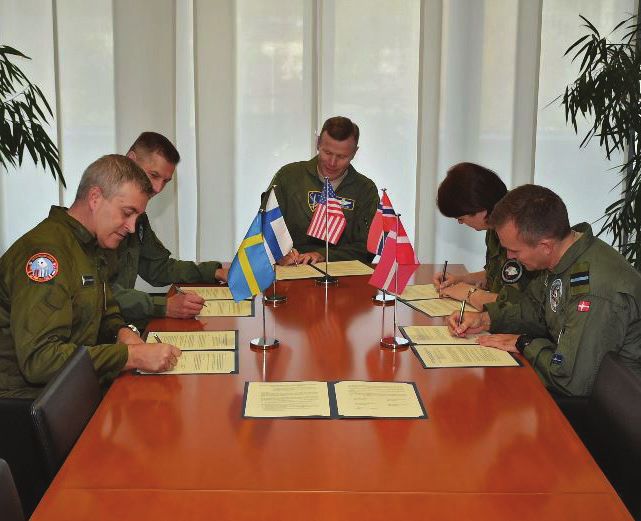
central component to Air and Space Forces’ power Air Chiefs from Sweden, Finland, U.S., Norway, Denmark sign
projection, and the Department maintains significant letter of intent to develop Arctic Challenge Air Exercise in 2017
installations across the Arctic region. To survive
in the region, materials need to meet standards
including: high thermal efficiency; long-term Interoperability
durability; tolerance to repeated freeze and thaw
cycles; and resistance to permafrost degradation.
Infrastructure in many austere locations, like Interoperability is especially critical in the Arctic
Thule, Greenland, has deteriorated due to extreme region due to terrain, limited access, and the
environmental factors. To address this: low-density of domain awareness assets. Through
the centuries, regional allies and partners have
developed concepts, tactics, techniques, and
The Department of the Air Force will advocate
procedures from which the Joint Force can greatly
for investment in installations that match future
benefit. Allies and partners are on the frontline of
operational needs.
deterrence; maintaining their partnership is critical
to Arctic domain awareness.
3.
Cooperation with By developing interoperable systems with
sister Services as well as allies and partners, the
Allies & Partners Department of the Air Force demonstrates capability,
enhances operational flexibility, and conveys a strong
Alliances and partnerships represent key strategic deterrent message. To support interoperability:
advantages for the United States in the Arctic. The
United States maintains strong defense relationships The Department of the Air Force will continue
with six of the seven other Arctic nations. Four are building relationships and promoting air
NATO Allies: Canada, the Kingdom of Denmark and space information sharing with ally and
(including Greenland), Iceland, and Norway; and partner nations.
two are NATO Enhanced Opportunities Partners:
Finland and Sweden.
11The Department of the Air Force will The Department of the Air Force will look for ways
learn from ally and partner operating concepts, to build upon Arctic operations-focused forums to
including advanced F-35 implementation, increase collaboration, information sharing, and
dispersed basing, and search and rescue trust building.
techniques.
The Department of the Air Force will build
The Department of the Air Force will continue upon existing relationships with indigenous
working toward shared capabilities, such as
communities in the Arctic region.
hosted payloads, mobility, logistics, and basing.
The Department of the Air Force will cooperate
with ally and partner nations as well as Air
Exercises National Guard units from cold weather states
to take advantage of mutual interests and skills.
Joint exercises demonstrate cooperation, enhance
interoperability, and expand deterrence. In air,
maritime, land, space, or cyberspace, exercises 4. Preparation for Arctic Operations
mitigate operational uncertainties and build
trust with allies and partners. Working with local
Preparation is essential to operate in the Arctic
indigenous communities, who possess unique
where a lack of training and understanding of the
knowledge about the region, helps Air and Space
environment can have perilous consequences.
Forces understand the Arctic environment and
enriches training and exercises. To build on
these efforts: Exercises & Training
The Department of the Air Force will enhance
and explore additional training, exercises, The Arctic environment requires specialized training
wargames, and combined deployments with and acclimation by both personnel and materiel. The
regional and joint partners. ability to operate and survive extreme cold weather
(down to -60 degrees Fahrenheit) is fundamental for
contingency response or combat power generation
Expand Collaborative in many potential operating areas. The Joint Pacific
Alaska Range Complex, offering some of the best
Planning Opportunities training airspace in the world, and the Air Force’s
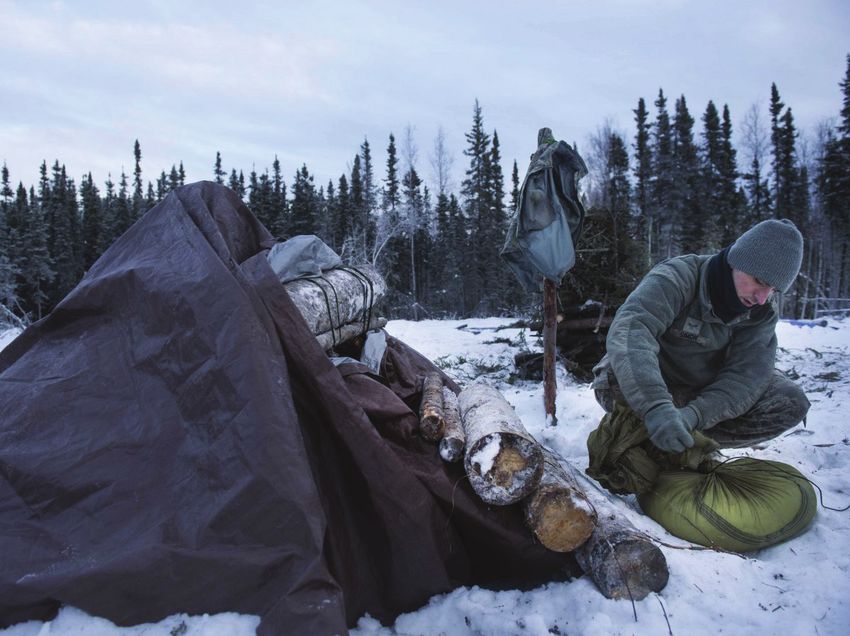
polar survival school at Eielson AFB represent a
U.S. cooperation with Arctic allies and partners is strong foundation on which to build. To ensure Arctic
based on shared values as well as defense, safety, operational readiness:
and security goals in the region. Building these
relationships counters influence from adversaries, The Department of the Air Force will assess
whose actions are not aligned with U.S. interests, requirements for Arctic readiness certification,
and bolsters U.S. national security. The Department designating personnel with Arctic training and
of the Air Force must work to highlight shared experience in the event of an emergency.
goals, ensuring a peaceful and stable region
where international norms and standards are The Department of the Air Force will work
upheld. To strengthen collaborative international across Services, Joint Staff, and Combatant
security relationships: Commands to enhance integration of Arctic-
related exercises and maximize existing
training capacity.
12Total Force Humanitarian Assistance
& Disaster Response (HADR)
A substantial portion of the Department’s & Personnel Recovery
Arctic expertise resides with the Air Reserve
Component. The Alaska Air National Guard
conducts civilian and military search and rescue Because of the Department of the Air Force’s
operations with its Guardian Angel personnel, inherent rapid-response and long-range capabilities,
HH-60 helicopters, and HC-130 aircraft. The Air Airmen will likely be first to the scene in the event
Force Reserve operates F-22s out of Joint Base of any Arctic disaster. Through air and space
Elmendorf-Richardson, while the New York Air systems that build situational awareness, establish
National Guard operates LC-130s, the DoD’s only communications, or deliver Arctic survival packages,
ski-equipped transport and contingency aircraft. the Department’s substantial capabilities often
Both the Guard and Reserve play a critical role in augment other departments’ HADR and personnel
supporting space missions at Clear, Alaska and Thule, recovery missions in the Arctic. To ensure these
Greenland. To increase Arctic capability throughout capabilities in the future:
the Total Force:
The Department of the Air Force will leverage
Guard and Reserve expertise to enhance Arctic
training and operations.
The Department will pursue mutual objectives
with the National Guard’s Arctic Interest Council,
a group of Guard units from states with Arctic
interests, capabilities, and resources.
Research & Development (R&D)
Eielson AFB Cool School Attendee
Foundational to future operations, Air and
Space Forces’ R&D ranges from research on the
The Air and Space Forces must assess
space environment and engineering standards
how they deploy capabilities for the most-
to cold-weather materials and radar technology.
likely large-scale disasters and personnel
In the future:
recovery missions.
The Air and Space Forces will work as part of the To ensure readiness, the Air and Space Forces
Joint Force along with USNORTHCOM’s Arctic must prepare for increased activity in the
Capability Advocacy Working Group to sustain region and practice jointly and multi-nationally,
Arctic R&D to address operational needs. learning from allies and partners.
The Air and Space Forces will work with
Alaskan Command and the U.S. Coast Guard to
further develop air-deployable rescue packages
and personnel recovery techniques for Arctic
conditions and locations.
13Conclusion
Since its earliest days, the Department of the Air The Air and Space Forces value the Arctic. As
Force has recognized the strategic importance of the Arctic’s importance increases, so too will the
the Arctic. The Department will continue to lead as Department of the Air Force’s focus on the region.
the DoD’s most active and invested department in the
region – critical as a juncture between the homeland, The Department of the Air Force’s Arctic Strategy
Indo-Pacific, and Europe. Building on a globally supports both the NDS and DoD’s effort to secure
capable force and its current posture in the Arctic, a stable region where U.S. national interests are
the Department will continue innovating along four safeguarded, the homeland is protected, and nations
lines of effort: address shared challenges cooperatively.
1. Vigilance in All Domains
Projecting Power through a
2.
Combat-Credible Force
3. Cooperation with Allies & Partners
4. Preparation for Arctic Operations
This strategy is accompanied by a Classified Annex.
14Notes
15Notes
16ii
16
You can also read


