Survey of Sea Kayak Owners
       in Minnesota:
Kayaking the North Shore of
      Lake Superior
←
→
Page content transcription
If your browser does not render page correctly, please read the page content below
Survey of Sea Kayak Owners
in Minnesota:
Kayaking the North Shore of
Lake SuperiorSurvey of Sea Kayak Owners in Minnesota:
Kayaking the North Shore of Lake Superior
Summary Report
Minnesota Department of Natural Resources
Division of Parks and Recreation
Trails and Waterways Division
Office of Management and Budget Services
Report prepared by:
Office of Management and Budget Services
February 2001
An electronic copy of this report can be found on the MN DNR’s
World Wide Web home page: www.dnr.state.mn.us/trails_and_waterways/state_canoe_routes/
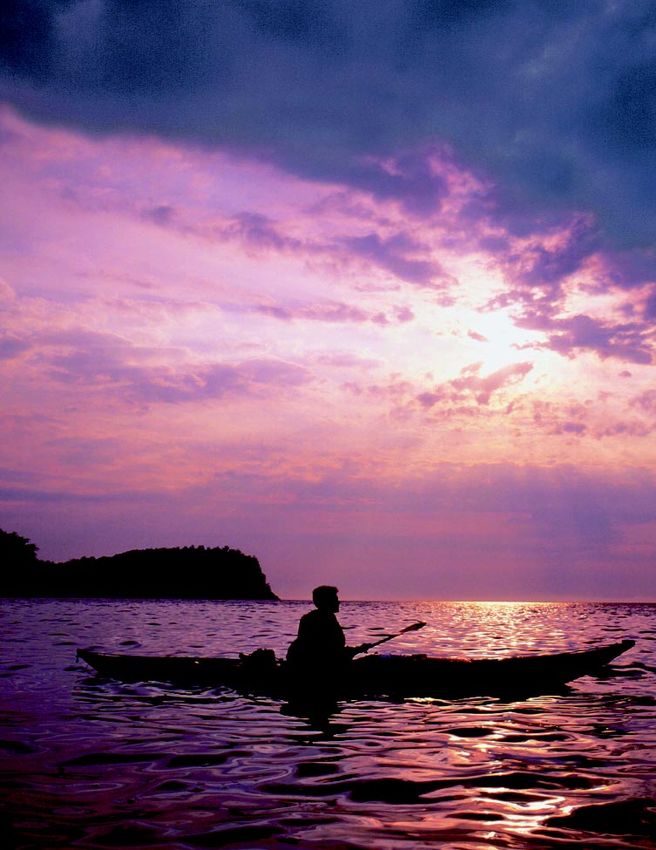
Cover photograph by Craig Blacklock
2 Survey of Sea Kayak Owners in MinnesotaCONTENTS
Topic Page
Executive Summary . . . . . . . . . . . . . . . . . . . . . . . . . . . . . . . . . . . . . . . 4
Introduction . . . . . . . . . . . . . . . . . . . . . . . . . . . . . . . . . . . . . . . . . . . . . 9
Methodology . . . . . . . . . . . . . . . . . . . . . . . . . . . . . . . . . . . . . . . . . . . . 11
Sea kayak use statewide . . . . . . . . . . . . . . . . . . . . . . . . . . . . . . . . . . . . 12
Sea kayak use along the Minnesota portion of the North Shore of Lake
Superior . . . . . . . . . . . . . . . . . . . . . . . . . . . . . . . . . . . . . . . . . . . . . 14
Interest in, and barriers to, using a sea kayak on the Minnesota portion
of the North Shore of Lake Superior . . . . . . . . . . . . . . . . . . . . . . . . 17
Interest in, and barriers to, kayak-camping on the Minnesota portion of
the North Shore of Lake Superior . . . . . . . . . . . . . . . . . . . . . . . . . . 20
Kayaking on the Water Trail of Lake Superior
General information . . . . . . . . . . . . . . . . . . . . . . . . . . . . . . . 23
Characteristics of most recent trip . . . . . . . . . . . . . . . . . . . . . 26
Characteristics of sea kayak owners . . . . . . . . . . . . . . . . . . . . . . . . . . . 32
References . . . . . . . . . . . . . . . . . . . . . . . . . . . . . . . . . . . . . . . . . . . . . . 35
Survey instrument . . . . . . . . . . . . . . . . . . . . . . . . . . . . . . . . . . . . . . . . 36
MN Department of Natural Resources 3EXECUTIVE SUMMARY
INTRODUCTION
The Lake Superior Water Trail provides an opportunity to experience the rugged North Shore of
Lake Superior from the water, a perspective few North Shore visitors are able to enjoy. It is
intended primarily for sea kayaks, which are larger than their whitewater cousins (a sea kayak is at
least 14 feet long). The Water Trail—as envisioned in the future—will extend the entire 150-mile
length of the North Shore in Minnesota, and will connect with Canadian and other U.S. state
efforts to form a loop around all of Lake Superior.
At present, a 40-mile stretch of the Water Trail has been developed in Minnesota along the North
Shore (see map). Before providing
additional amenities and maps for the
Water Trail, the Minnesota Depart- Water Trail Location Along North Shore of
ment of Natural Resources (MN Lake Superior in Minnesota
DNR) wanted to obtain some back-
ground information about sea
kayaking on the Trail and on the CANADA
North Shore in general. The MN
DNR wanted to know—among other Grand
Lake
Cook Marais
St. Louis
things—how much the Trail and County County
County
associated kayaking facilities are
Little
being used, what sea kayakers are MINNESOTA Marais Water trail extent along
looking for in terms of facilities/ Silver
shore in Lake County
Bay
services and experiences on the Trail,
and what barriers exist to the further Two Harbors
use of Lake Superior by sea Duluth
kayakers. To obtain this knowledge,
two efforts were undertaken in 2000.
One was a mail survey of Minnesota-
registered sea kayak owners, and the
other was field counts of sea-kayak campgrounds and access facilities along the Water Trail.
SEA KAYAK USE STATEWIDE
Minnesota had 3238 sea kayaks registered for pleasure (personal, noncommercial) use in early
2000. The typical sea kayak is used about 20 times a year. Since there is not a great deal of
region-to-region variation is use rates, most of the sea kayaking originates where most of the sea
kayaks are registered, namely the Twin Cities metro region.
Sea kayaking—like many recreation activities—is predominately a near-home activity: 62 percent
of all sea kayaking occurs within an hour’s drive of home. This pattern of use makes the Twin
4 Survey of Sea Kayak Owners in MinnesotaCities metro region the primary use area for the largest number of sea kayakers. The metro region
is closely followed by Northeast Minnesota, where the North Shore of Lake Superior is a popular
destination. Other popular destinations are the border lakes in the U.S. and Canada, and the South
Shore of Lake Superior in Wisconsin, which includes the Apostle Islands.
SEA KAYAK USE ALONG THE MINNESOTA PORTION OF THE NORTH SHORE OF
LAKE SUPERIOR
Based on survey results, the North Shore of Lake Superior in Minnesota is the destination for 14
percent of all sea-kayak outings from Minnesota-registered sea kayaks (8,672 of 61,007 outings),
and the Water Trail is the destination for five percent of all outings (3,078 of 61,007 outings).
These use figures—based on Minnesota sea kayaks registered for pleasure (personal, noncommer-
cial) use—represent the large majority of sea kayaking at these locations, but they do not include
two additional sources of sea kayaks: outfitters and kayaks registered in another state. Estimates
for the former source were obtained directly from the outfitters for both the Water Trail and North
Shore, and estimates for the latter were obtained from access counts for the Water Trail only.
Together, the two additional sources would raise Water Trail use into the 3,500 to 4,000 outing
range. The outfitters for the North Shore would raise Minnesota North Shore use into the 12,000
to 12,500 outing range. Most of the outfitter-related outings come from Duluth and Grand Marais.
Kayakers from Northeast Minnesota, who live near the North Shore, have a two to three times
higher use rate of Lake Superior and the Water Trail than other Minnesota sea kayakers. Because
of these high use rates, Northeast kayakers comprise a significant share of North Shore and Water
Trail kayaking, but Metro kayakers—because of their sheer number—comprise a significant share
as well.
Some 20 percent (19% to 21%) of the sea kayaking along the Water Trail and along the North
Shore is associated with kayak-camping, while the remaining 80 percent is day use. This translates
into about 590 Water Trail outings associated with kayak-camping, and about 1820 North Shore
outings.
INTEREST IN, AND BARRIERS TO, USING A SEA KAYAK ON THE MINNESOTA
PORTION OF THE NORTH SHORE OF LAKE SUPERIOR
Owners who have kayaked in the last year on the Minnesota waters of Lake Superior have a high
interest in kayaking more (90+%), and the large majority (80+%) have plans to do so. In contrast,
owners who have not kayaked on these waters in the last year have a lower, but still sizable interest
in kayaking there (73%), but only 30 percent have plans to do so.
Perceived barriers to further use of the North Shore for kayaking are strongly associated with a
kayaker’s current use of these waters, except for one universal barrier: time. Beyond time con-
straints, the major barriers for kayakers who have not used the North Shore in the last 12 months
MN Department of Natural Resources 5have to do with intervening opportunities (good opportunities closer to home) and lack of knowl- edge of what kayaking is like on this part of Lake Superior. A different set of barriers becomes evident for the owners who have kayaked these waters in the last year, and these barriers become larger with heavier use. The barriers are of two types: one has to do with the social setting kayakers desire (namely, an undeveloped Lake Superior shoreline), and the other involves the lack of specific facilities provided for kayakers. The facilities in the survey that were regularly found lacking were all of those listed (kayak campgrounds, safe landing places in case of bad weather, and good water access) so other facilities should be considered barrier candidates as well. In short, existing users want more amenities for their outing, and they want the outing to occur in a less developed setting. A number of items did not show up as major barriers to any user or nonuser group, and they are noteworthy for that reason. Money is not a major barrier, nor is the current amount of kayaking on the North Shore, lack of overnight accommodations in the area, lack of additional leisure opportu- nities in the area, expecting interference from motorized watercraft, or expecting to encounter too many people. INTEREST IN, AND BARRIERS TO, KAYAK-CAMPING ON THE MINNESOTA POR- TION OF THE NORTH SHORE OF LAKE SUPERIOR Consistent with the previous topic, an owner’s participation in kayak-camping on the North Shore is strongly associated with their desire and plans to participate more, as well as with perceived barriers to further participation. Owners who have kayak-camped in the last year along the Minne- sota waters of Lake Superior have a high interest in kayak-camping more (95%), and the large majority (83%) have plans to do so. Kayak owners who have not kayak-camped in the last year along Lake Superior have a lower, but still sizable interest in kayak-camping there (70+%), but far fewer have plans to do so. For kayakers who have not kayak-camped on the North Shore in the last 12 months, the major perceived barrier to participation is lack of personal knowledge about this activity on the North Shore. In contrast, for those who have kayak-camped in the last year, the major barriers are a shortage of campsites (too few and too full), a related barrier on lack of guarantee of a campsite, and the need for more remote campsites with less human development around. Consistent with the need for more remoteness, the existing rustic nature of these campgrounds (no running water or toilets) is not a significant barrier. Weather is a moderate barrier to all kayak-camping user groups; all groups have some concern about getting stranded by bad weather. These kayak-camping barriers are similar to the kayaking barriers reported earlier. Kayakers who are users identify a lack of amenities (facilities and services) and remote/less-developed settings as major barriers, while nonusers identify lack of personal knowledge as a major barrier. A number of items did not show up as major barriers to any user or nonuser group, and they are noteworthy for that reason. Dislike of camping is not a major barrier, nor is the rustic nature of the 6 Survey of Sea Kayak Owners in Minnesota
campgrounds (noted above), the current amount of kayak-camping on the North Shore, or con-
cerns about campground safety.

KAYAKING ON THE WATER TRAIL OF LAKE SUPERIOR

Statewide, some 20 percent of owners report kayaking on the Water Trail in the last 12 months.

When owners were asked if they would kayak the Water Trail more if it was longer than its current
length of 40 miles, current users of the Trail were far more likely to respond ‘yes’. This response
pattern is probably another reflection of the desire for more amenities among the current users.

Owners were queried about their level of knowledge of the Water Trail, and results indicate that
self-described knowledge is not particularly high. Kayak owners—who know at least ‘a few
things’ about the Water Trail—are most likely to have first heard about the Trail from the Lake
Superior Water Trail Association. ‘Family or friends’ (a typically large information source) is the
next most frequently indicated source, followed by ‘special events’ and the ‘Minnesota DNR’.

The sea-kayak owners who have used the Water Trail sometime in the past (28% of all owners)
were asked to describe their most recent outing. Outing characteristics include:
   The vast majority of outings on the Water Trail (89%) are loop trips that start and stop at the
       same place. The most frequent launching sites are state parks along the Trail and Two
       Harbors.
   The typical Water Trail trip is 10 miles in length.
   Typical party size is two to three people in the same number of kayaks.
   Kayaking along the Water Trail is almost entirely an adult pursuit; few teens and children are
       part of the outings.
   Nearly three-fourths of Water Trail outings involve an overnight somewhere, typically 2 nights
       in length.
   Camping is the most frequent type of overnight accommodation; 23 percent of overnights are
       at water-accessible kayak-campgrounds, and another 35 percent are at other types of
       campgrounds. Resorts are the next most common type of overnight accommodation
       (17%).

There are four campgrounds along the Water Trail that are provided for sea kayakers: Thompson
Beach, Palisade Head, Gooseberry River and Crazy Bay. Field counts at these sites indicate that
they are little used. This means that kayakers—in their survey responses—are considering other
campgrounds as water accessible sites where they kayak-camp.

When engaging in day trips or overnight trips involving kayak-camping, kayakers participate in a
range of activities, the most common of which are passive visual pursuits: a majority of kayakers
participate in nature observation and sightseeing, while over one-third participate in photography
and birdwatching. Kayak-campers, as opposed to day users, are far more likely to do park-type
activities, including hiking, a self-guided nature walk, rock climbing, visiting historic sites, and
photography.

                                                              MN Department of Natural Resources       7
Kayakers attain a host of beneficial experiences from kayaking on the Water Trail. Most frequently
attained are those related to getting away to a natural, peaceful setting. Next most frequent are
those involving sensual enjoyment: enjoying the smells/sounds of nature and the fresh clean air,
and working the body to attain physical fitness. Also of high importance is experiencing adventure
and taking risks, which are not the types of experiences recreators get from more routine outings,
such as visiting state parks or using state trails. Many kayakers view their trail outing as a chance
to connect to nature, feel a sense of wildness and attain spiritual renewal, all of which are facilitated
by more primitive, less developed settings. As noted above, kayakers are sensitive to the develop-
ment along the North Shore and want kayak-campgrounds to be more remote.
Associated with the use of the Water Trail by Minnesota-registered sea kayakers is trip spending,
which contributes to the local economy. Trip spending totals just over $100,000 annually. The
typical kayaker spends $34.53 per day. Most spending is on the essentials: food, transportation and
lodging. Kayakers who spend the night away from home spend more each day than day users,
mainly because of overnight accommodation costs.
CHARACTERISTICS OF SEA KAYAK OWNERS
Most sea kayak owners are in households with one or two kayaks; the mean number per household
is 1.8. In addition to sea kayaks, owners possess and use a distinctive mix of household recre-
ational equipment. The most common types of equipment are associated with non-motorized
physical activity, just like sea-kayaking. Over 60 percent of owners use their household’s cross-
country skiing equipment, backpacking equipment, mountain bike, fishing gear, and canoe.
The demographic characteristics of sea kayak owners include:
Sea kayak owners are mostly middle-aged, in the 40 to 60 age range.
Males account for three-fourths of owners, females one-fourth.
The educational attainment of sea kayakers is quite high: 78 percent have completed college,
which includes 38 percent who have completed a postgraduate degree. Another 6 percent
have completed vocational or technical school.
Nearly half of households (46%) are in middle income ranges of $30,000 to $80,000, while
another 32 percent are over $100,000. Overall, the incomes are high, with a median in the
$70,000 to $80,000 range, well above the Minnesota household median which is probably
near $50,000 today.
8 Survey of Sea Kayak Owners in MinnesotaINTRODUCTION
The Lake Superior Water Trail was officially designated in 1993 by the Minne-
sota Legislature (MS 85.0155). The Trail provides an opportunity to experience
the rugged North Shore of Lake Superior from the water, a perspective few North
Shore visitors are able to enjoy. It is intended primarily for sea kayaks, which are
larger than their whitewater cousins (a sea kayak is at least 14 feet long). The
long-term vision for the Trail in Minnesota is to have it extend the entire 150-
mile length of the North Shore from Duluth to Canada. The Minnesota Trail—as
envisioned—will connect with Canadian and other U.S. state efforts to form a
loop around all of Lake
Superior. The development
and maintenance of the Water Figure 1
Trail in Minnesota is a joint
Water Trail Location Along North Shore of
effort of the Minnesota De-
Lake Superior in Minnesota
partment of Natural Re-
sources (MN DNR) and the
Lake Superior Water Trail CANADA
Association of Minnesota. Grand
Lake
Cook Marais
St. Louis
County County
County
At present, a forty mile
Little
stretch of the Water Trail has MINNESOTA Marais
Water trail extent along
Silver
been developed in Minnesota Bay
shore in Lake County
along the North Shore from
Two Harbors
Two Harbors to just north of Duluth
Little Marais near the Cook
County line (Figure 1). Be-
fore providing additional
amenities and maps for the
Water Trail, the MN DNR wanted to get some background information about sea
kayaking on the Trail and on the North Shore in general. The MN DNR wanted
to know—among other things—how much the Trail and associated kayaking
facilities are being used, what sea kayakers are looking for in terms of facilities/
services and experiences on the Trail, and what barriers exist to the further use of
Lake Superior by sea kayakers.
To gather this information, two efforts were undertaken. One was a mail survey
of Minnesota-registered sea kayak owners, and the other was field counts of sea-
kayak campgrounds and access facilities along the Water Trail. The field counts
MN Department of Natural Resources 9were designed to gauge the use of these facilities and to supplement the informa-
tion collected in the mail survey. The survey was first mailed in April 2000.
Field data collection covered the expected high-use period from mid June to the
end of September 2000.
This report is a summary of findings from the survey and field data collection.
After a brief description of methodology, the topics are presented as follows:
● Sea kayak use statewide
● Sea kayak use along the North Shore of Lake Superior
● Interest in, and barriers to, using a sea kayak on the North Shore of Lake
Superior
● Interest in, and barriers to, kayak-camping on the North Shore of Lake
Superior
● Awareness and characteristics of sea kayaking on the Water Trail of Lake
Superior
● Characteristics of sea kayak owners
For those who would like more detailed information, survey tabulations with
breakdowns and data files are available from the Minnesota Department of Natu-
ral Resources.
This project was a cooperative effort of the Minnesota Department of Natural
Resources’ Division of Parks and Recreation, Trails and Waterways Division, and
Office of Management and Budget Services.
10 Survey of Sea Kayak Owners in MinnesotaMETHODOLOGY
The survey (copy appended to this report) was mailed in April 2000 to a sample
of 1000 owners of Minnesota-registered sea kayaks that are used for “pleasure”
(personal, non-commercial purposes). The sample was systematically selected
from a zip-code sorted registration file. After two remails, a return rate of 71
percent was achieved, which is a high enough return rate to allay concerns about
nonresponse bias. Sea kayak owners who live along Lake Superior (Cook, Lake
and St. Louis County) were oversampled relative to other places to help ensure a
large enough sample of Lake Superior and Water Trail users. All survey results in
this report are differentially weighted to account for this oversampling of owners
in some places.
The use of two types of facilities along the Water Trail were estimated from field
counts. One facility type was kayak-campgrounds, and the other was water
access sites for launching/landing a sea kayak (see facility lists below). Counts
were made according to a statistical sampling plan, and were made over the ex-
pected high use period from mid June to the end of September 2000. The camp-
grounds were counted a total of 30 times, and the water accesses a total of 50
times. Counts were stratified by day of week (weekdays and weekend/holidays),
and by conjectured use rate of a site (high, medium, low).
Facilities Included in Field Counts
Campground Sites Water Access Sites
Site Mile Marker on North Site Mile Marker on North
Site Name Shore from Duluth Site Name Shore from Duluth
Gooseberry River 38.3 Agate Bay 25.3
Thompson Beach 39.7 Burlington Bay 26.0
Crazy Bay 42.3 Flood Bay 27.1
Palisade Head 55.5 Stewart River 28.0
Gooseberry River 38.3
Split Rock River 41.9
Little Two Harbor 43.7
Bayside Park 50.5
Baptism River 56.3
MN Department of Natural Resources 11SEA KAYAK USE STATEWIDE
Minnesota had 3238 sea kayaks registered for pleasure (personal, noncommer-
cial) use in early 2000. The typical Minnesota-registered sea kayak is used about
20 times a year, and there is not a great deal of region-to-region variation is use
rates (Figure 2). An annual use rate of around 20 is not uncommon for outdoor
recreation activities. Minnesota anglers fish 20 times a year on average, and
Minnesota hunters hunt 13 times a year (USFWS, 1998).
Figure 2
Annual Days of Sea Kayak Use by Region of Origin
Regions
25
20
19 19 18 Northwest
20
17
Days of Use Northeast
per Year
15
Central
10
Metro
5
Southwest Southeast
0
Overall Northeast Central Metro Region All other
Region Region origins
Without much region-to-region varia- Figure 3
tion in use rates, most of the sea
kayaking originates where most of Origin of Sea Kayaking Outings
the sea kayaks are registered, namely (total annual days of sea kayaking is 61,007)
the Twin Cities Metro Region (Figure
3). In addition to being the origin of Central Region
8%
around half of Minnesota’s sea kayak
outings, the Twin Cities contains Northeast Region
20%
about half of Minnesota’s population.
Metro Region
53%
All other origins
19%
12 Survey of Sea Kayak Owners in MinnesotaSea kayaking—like
many recreation activi- Table 1
ties—is predominately In what region did most of your sea kayaking outings occur?
a near-home activity.
Percent who indicated region
Some 62 percent of all Region as primary use region
sea kayaking occurs Twin City Metro Region 30
within an hour’s drive
Northeast Minnesota 28
of home. Thus, many North Shore of Lake Superior in Minnesota 13
of the sea kayaking Remainder of Northeast Minnesota 8
Border Lakes in US and Canada (including BWCA) 7
outings that originate
Central Minnesota 12
in a region have desti-
nations in the same Wisconsin
South Shore of Lake Superior in Wisconsin (includes
10
7
region. This pattern of Apostle Islands)
Remaining parts of Wisconsin 3
use makes the Twin
Cities metro region the Northwest Minnesota 7
primary destination for Southeast Minnesota 4
the largest number of Southwest Minnesota 3
sea kayakers (Table 1).
All other regions 5
The metro region is
Total percent 100
closely followed by
Northeast Minnesota,
where the North Shore
Sea-Kayaking Use Regions
of Lake Superior is a 13
popular destination. Regions
1. NW Minnesota
Other popular destina- 3 10
2. NE Minnesota
3. Border Lakes in US and
Canada (including BWCA)
tions are the border 1 2 4 4. North Shore of Lake Superior in
Minnesota
lakes in the U.S. and 5
5. South Shore of Lake Superior in
13 6 13 Wisconsin (includes Apostle
Islands)
Canada, and the South 6. Central Minnesota
7. SW Minnesota
Shore of Lake Supe- 8. SE Minnesota
9 11
9. Twin City Metro Area
rior in Wisconsin, 13 7 13
10. Remaining waters of Lake
Superior
8 12 11. Remaining parts of Wisconsin
which includes the 12. Lake Michigan
13. Any where else in the world
Apostle Islands. 13
MN Department of Natural Resources 13SEA KAYAK USE ALONG THE MINNESOTA PORTION OF THE NORTH
SHORE OF LAKE SUPERIOR
Based on survey results, the
Figure 4
North Shore of Lake Supe-
rior is the destination for 14 Water Trail Location Along North Shore of
percent of all sea-kayak out- Lake Superior in Minnesota
ings from Minnesota-regis-
tered sea kayaks (8,672 of
CANADA
61,007 outings), and the
Water Trail is the destination Grand
Lake
Cook Marais
St. Louis
for five percent of all outings County County
County
(3,078 of 61,007 outings)— Little
(see Figure 4). The Water MINNESOTA Marais
Water trail extent along
Silver
shore in Lake County
Trail accounts for just over Bay
one-third of North Shore Two Harbors
outings (35%). Duluth
These use figures—based on
Minnesota sea kayaks regis-
tered for pleasure (personal, noncommercial) use—represent the large majority of
sea kayaking at these locations, but they do not include two additional sources of
sea kayaks: outfitters and kayaks registered in another state. Estimates for the
former source were obtained directly from the outfitters for both the Water Trail
and North Shore, and estimates for the latter were obtained from access counts for
the Water Trail only. Together, the two additional sources would raise Water Trail
use into the 3,500 to 4,000 outing range; these two source are approximately the
same size for the Water Trail. The outfitters for the North Shore would raise Min-
nesota North Shore use into the 12,000 to 12,500 outing range. Most of the
outfitter-related outings come from Duluth and Grand Marais.
Kayakers from Northeast Minnesota, who live nearer the North Shore than other
Minnesotans, have higher use rates of Lake Superior and the Water Trail. Com-
pared with the typical sea kayak registered in Minnesota, a sea kayak from the
Northeast is used two to three times more often on the North Shore and the Water
Trail (Figure 5).
14 Survey of Sea Kayak Owners in MinnesotaFigure 5
Average Annual Days a Typical Kayak is Used Along
the North Shore of Lake Superior by Origin Region
Days used on MN portion of
North Shore of Lake Superior
Average Annual
Days used on Lake Superior
Days a Typical Water Trail
Kayak is Used
Overall Northeast Central Metro All other
Region Region Region origins
Northeast kayakers—because of their nearby location and associated high use
rate—comprise a significant share of North Shore and Water Trail kayaking.
Metro kayakers—because of their sheer number—comprise a significant share as
well. The Water Trail appears to be more of a tourist destination (less dominated
by local users) than the North Shore as a whole (Figure 6).
Figure 6
2ULJLQRI6HD.D\DN2XWLQJV 2ULJLQRI6HD.D\DN2XWLQJV
RQ0LQQHVRWD3RUWLRQRI1RUWK RQ/DNH6XSHULRU:DWHU7UDLO
6KRUHRI/DNH6XSHULRU
Northeast Northeast
Region Region Central
55% 42% Region
All other 11%
All other
origins origins
5% 4% Metro Region
Metro Region Central
43%
35% Region
5%
Northeast kayakers—again because of their proximity—are far more likely to use
the North Shore and Water Trail as part of a day trip, whereas those traveling a
long distance are much more likely to stay overnight. The origin of kayak-
MN Department of Natural Resources 15camping reflects this: kayakers from Northeast Minnesota comprise just 20 to 25 percent of kayak-camping on the North Shore and the Water Trail, which is about half their share of kayaking outings along these same stretches. In contrast, metro region kayakers comprise some 60 percent of kayak-camping along these same stretches, well above their share of kayaking outings. Overall, some 20 percent (19% to 21%) of the sea kayaking along the Water Trail and along the North Shore is associated with kayak-camping, while the remaining 80 percent is day use. This translates into about 590 Water Trail outings associ- ated with kayak-camping, and about 1820 North Shore outings. In comparison, about 15 percent of Minnesota state park attendance is camping and the remain- ing 85 percent is day use. Kayak-camping was defined in the survey as camping at a facility entered from the water. There are four campgrounds along the Water Trail that are provided for sea kayakers: Thompson Beach, Palisade Head, Gooseberry River and Crazy Bay. Field counts at these sites indicate that they are little used. This means that kayakers—in their survey responses—are considering other campgrounds as water accessible sites where they kayak-camp. The locations of these “other campgrounds” was not ascertained in the survey, although some likely sites in- clude the walk-in sites at Tettegouche and Split Rock Lighthouse State Parks, and the municipal campground at Two Harbors. 16 Survey of Sea Kayak Owners in Minnesota
INTEREST IN, AND BARRIERS TO, USING A SEA KAYAK ON THE MIN-
NESOTA PORTION OF THE NORTH SHORE OF LAKE SUPERIOR

Just over one-third of Minnesota-regis-
tered sea kayak owners have kayaked                                               Figure 7
                                                                      ,
on the North Shore of Lake Superior in                           In the last 12 months, how many days
                                                               have you kayaked (using your or anyone
the last 12 months (Figure 7). Most
                                                               else’s kayak) on the Minnesota portion of
who have kayaked the North Shore                                   the North Shore of Lake Superior?
have kayaked five or fewer days, al-
though a fair portion have kayaked six                                                 zero days
or more days.                                                                            65%

Owners who have kayaked in the last             6 or more days
                                                     14%
year on the Minnesota waters of Lake
                                                               1 to 5 days
Superior have a high interest in                                   21%
kayaking more (90+%), and the large
majority (80+%) have plans to do so
(Table 2). This is especially true of the heavier users. In contrast, owners who
have not kayaked on these waters in the last year have a lower, but still sizable
interest in kayaking there (73%), but only 30 percent have plans to do so.

                                                  Table 2
                 Interest and Plans to Kayak on the Minnesota Waters of Lake Superior
                             (percent responding ’YES’ to interest and plans questions)

                                                        Days used MN waters of Lake
                                                         Superior in last 12 months:             All
                                                        Zero        1 to 5    6 or more      Respondents
        Interest
        Would you like to kayak (or kayak more
        often) on the Minnesota waters of Lake            73          92          96               81
        Superior?

        Plans
        Do you have any plans in the next 12 months
        to kayak (or kayak more often) on the             30          82          96               50
        Minnesota waters of Lake Superior?

Perceived barriers to further use of the North Shore for kayaking are strongly
associated with a kayaker’s current use of these waters, except for one universal
barrier: time (Table 3). Time is a constraint regardless of how much a kayaker
uses the North Shore now. Interestingly, money is not a barrier to any of the

                                                                     MN Department of Natural Resources    17
analysis groups in Table 3. Beyond time constraints, the major barriers for kayakers who have not used the North Shore in the last 12 months have to do with intervening opportunities (good opportunities closer to home) and lack of knowledge of what kayaking is like on this part of Lake Superior. Intervening opportunities is a barrier that is difficult to break through. Removing intervening opportunities requires differen- tiating the North Shore opportunity and raising its perceived value as a place to kayak. With respect to the knowledge barrier, two-thirds of the owners who have not used the North Shore in the last 12 months feel they do not know enough about kayaking in this area. And about 40 percent indicate barriers related to their skills to kayak there, the coldness of the water, and the difficultly of finding others to go with them (perhaps the other kayakers they know are also nonusers and share the same barriers to use). The lighter users (1 to 5 days in the last 12 months) of these Lake Superior wa- ters have all the same barriers as the preceding nonuse group, except the barriers are less salient. For heavier users (6 or more days in the last 12 months), these same barriers are further diminished and no longer constitute major barriers. A different set of barriers becomes evident for the owners who have kayaked these waters in the last year, and these barriers become larger with heavier use. The barriers are of two types: one has to do with the social setting kayakers desire (namely, an undeveloped Lake Superior shoreline), and the other involves the lack of specific facilities provided for kayakers. The facilities in the survey that were regularly found lacking were all of those listed (kayak campgrounds, safe landing places in case of bad weather, and good water access) so other facilities should be considered barrier candidates as well (for example, trails from kayak campgrounds). In short, existing users want more amenities for their outing, and they want the outing to occur in a less developed setting. A number of items did not show up as major barriers to any user or nonuser group, and they are noteworthy for that reason. Money is not a major barrier (as noted above), nor is the current amount of kayaking on the North Shore, lack of overnight accommodations in the area, lack of additional leisure opportunities in the area, expecting interference from motorized watercraft, or expecting to en- counter too many people. 18 Survey of Sea Kayak Owners in Minnesota
Table 3
          Barriers to Kayaking (or Kayaking more often) on the Minnesota Waters of Lake Superior
                                   (percent who 'mildly' or 'strongly' agree that item is a barrier)

                                                                              Days used MN waters of Lake
                                                                               Superior in last 12 months:          All
Category Item                                                                 Zero        1 to 5    6 or more   Respondents

Time
          ●   I don’t have enough time to kayak there as much as I
                                                                                73           80        76           75
              would like

Intervening opportunities
         ● There are other good places to kayak closer to home                  70           45        23           57

Personal knowledge and skills
        ● I don’t know enough about kayaking on the Minnesota
                                                                                67           40        16           54
          portion of Lake Superior
        ● I lack the skills needed to kayak there                               39           26        10           31

Physical setting
         ● The water is too cold                                                41           31        19           36
         ● The waves are too large                                              24           20        10           21
         ● It’s too dangerous                                                   20           20        10           19
         ● The weather is unpleasant                                            14            8         8           12

Social setting
          ● The Lake Superior shoreline is too developed                        22           45        55           32
          ● I expect motorized watercraft will interfere with the
                                                                                21           16        30           21
            enjoyment of my kayaking
          ● I expect I will encounter too many other people                      9           13        25           12

Kayak-specific facilities
       ● Suitable kayak camping sites that are accessible only by
                                                                                29           54        70           41
         water are lacking
       ● There are not enough safe places to land in case of bad
                                                                                25           53        54           36
         weather
       ● A good way to get on the water is lacking                              21           40        61           31

Additional leisure opportunities
        ● There are not enough things to do other than kayaking                  7            5        6            6
        ● The fishing is poor                                                    4            6        9            5

Overnight accommodations
        ● It is too difficult to find any camping in this part of
                                                                                16           20        36           20
          Minnesota.
        ● It is too difficult to find in-door lodging in this part of
                                                                                11           12        10           11
          Minnesota.

Companionship
       ● I can’t find others to go with me                                      37           32        19           33

Expense
          ●   It’s too expensive to kayak there                                  7            5        6            7

Do enough already
        ● I already kayak enough on the Minnesota portion of Lake
                                                                                 4            5        14           6
          Superior

                                                                                 MN Department of Natural Resources           19
INTEREST IN, AND BARRIERS TO, KAYAK-CAMPING ON THE MINNE-
SOTA PORTION OF THE NORTH SHORE OF LAKE SUPERIOR
Consistent with the previous topic, an owner’s participation in an activity—in this
case kayak-camping on the North Shore—is strongly associated with their desire
and plans to participate more,
as well as with barriers to
further participation. Figure 8
In the last 12 months, how many nights did you kayak-camp (that is, enter a
In the last year, fewer than 10 camping site from the water) using your or anyone else’s kayak on the
Minnesota portion of the North Shore of Lake Superior?
percent of Minnesota-regis-
tered sea kayak owners have
kayak-camped on the North
0 nights (did not
Shore of Lake Superior (Fig- kayak or kayak-
camp on North
ure 8). Another 27 percent Shore)
65%
have kayaked, but not kayak- 1 or more nights
8%
camped, on the North Shore.
0 nights (kayaked
Nearly two-thirds have neither but did not kayak-
kayaked nor kayak-camped camp on North
Shore)
along the North Shore in the 27%
last 12 months.
Owners who have kayak-camped in the last year along the Minnesota waters of
Lake Superior have a high interest in kayak-camping more (95%), and the large
majority (83%) have plans to do so (Table 4). Kayak owners who have not
Table 4
Interest and Plans to Kayak-Camp on the Minnesota Waters of Lake Superior
(percent responding ’YES’ to interest and plans questions)
Kayaking and kayak-camping on the MN waters of Lake Superior in
last 12 months:
Did not kayak or Kayaked but did not Kayaked and kayak-
kayak-camp kayak-camp camped All Respondents
Interest
Would you like to kayak-camp (or kayak-
camp more often) on the MN shoreline of 72 78 95 75
Lake Superior?
Plans
Do you have any plans in the next 12 months
to kayak-camp (or kayak-camp more often) on 22 40 83 32
the MN shoreline of Lake Superior?
20 Survey of Sea Kayak Owners in Minnesotakayak-camped in the last year along Lake Superior have a lower, but still sizable
interest in kayak-camping there (70+%), but far fewer have plans to do so. Plans
to participate are least frequent among those who neither kayak-camped nor
kayaked in the last year.
One potential barrier to more kayak-camping on the North Shore—a simple
dislike of camping—is minor among kayakers (Table 5). Sea kayakers, it ap-
pears, are a camping friendly group.
For kayakers who have not kayak-camped on the North Shore in the last 12
months, the major barrier to participation is lack of personal knowledge about
this activity on the North Shore. In contrast, for those who have kayak-camped
in the last year, the major barriers are a shortage of campsites (too few and too
full), a related barrier on lack of guarantee of a campsite, and the need for more
remote campsites with less human development around. Consistent with the
need for more remoteness, the existing rustic nature of these campgrounds (no
running water or toilets) is not a significant barrier. The shortage of campsites
and lack of guarantee of campsite availability also are important barriers to
kayakers who used the North Shore but did not kayak-camp last year. Weather is
a moderate barrier to all kayak-camping user groups; all groups have some con-
cern about getting stranded by bad weather.
These kayak-camping barriers are similar to the kayaking barriers reported earlier.
Kayakers who are users identify a lack of amenities (facilities and services) and
remote/less-developed settings as major barriers, while nonusers identify lack of
personal knowledge as a major barrier.
A number of items did not show up as major barriers to any user or nonuser
group, and they are noteworthy for that reason. Dislike of camping is not a
major barrier (as noted above), nor is the rustic nature of the campgrounds (also
noted above), the current amount of kayak-camping on the North Shore, or
concerns about campground safety.
MN Department of Natural Resources 21Table 5
Barriers to Kayak-Camping (or Kayak-Camping more often) on the Minnesota Waters of Lake Superior
(percent who 'mildly' or 'strongly' agree that item is a barrier)
Kayaking and kayak-camping on the MN waters of Lake Superior in
last 12 months:
Did not kayak or Kayaked but did not Kayaked and kayak-
Category Item kayak-camp kayak-camp camped All respondents
Personal knowledge
● I don’t know enough about kayak-
camping on the MN portion of 72 62 25 65
Lake Superior
Shortage of campsites
● Water-accessible campgrounds
26 57 77 39
are too few in number
● Existing water-accessible
12 24 53 19
campgrounds are too full
Guarantee of a campsite
● There is no way to guarantee
(such as through a reservation)
23 47 66 34
that a water-accessible campsite
will be available for my use
Weather
● I don’t want to get stranded by
36 35 33 35
bad weather
Campground setting
● The kayak campgrounds are not
remote enough (that is, there is
13 24 58 20
too much human development
around)
● The facilities in kayak-
campgrounds are too rustic (that 5 9 7 6
is, no running water or toilets)
Dislike of camping
● I don’t like camping of any kind 5 9 0 6
● I don’t like kayak-camping 6 8 0 6
Do enough already
● I already kayak-camp enough on
5 3 8 5
the MN portion of Lake Superior
Campground safety
● I don’t feel safe in the kayak-
2 2 0 1
campgrounds
22 Survey of Sea Kayak Owners in MinnesotaKAYAKING ON THE WATER TRAIL OF LAKE SUPERIOR
General information
The Water Trail stretches some 40 miles along the North Shore of Lake Superior.
As reported earlier, about five percent of all sea-kayaking outings from Minnesota
registered kayaks occurs along this Trail. Northeast and Metro Region sea-
kayakers dominate the use of
the Trail; each region contrib-
utes just over 40 percent of all Figure 9
Trail outings. In the last 12 months, how many days did you kayak
(using your or anyone else’s kayak) on the Water Trail
along the North Shore of Lake Superior?
Overall, some 20 percent of
kayak owners report kayaking 0 days (did not
kayak on North
on the Water Trail in the last 12 Shore)
65%
months (Figure 9). Another
15 percent kayaked some-
1 or more days on
where on the North Shore but Water Trail 0 days (kayaked
20%
not on the Water Trail. The on North Shore but
not on Water Trail)
remaining two-thirds did not 15%
kayak on the North Shore or
the Water Trail.
When kayak owners were asked if they would use the Water Trail more if it was
longer than its current length of 40 miles, responses were strongly associated with
their current use of the Trail (Table 6):
A majority of kayak owners (62%) who used the Trail in the last 12 months
indicated they would use the trail more if it was longer than 40 miles,
though nearly a third (31%) were ‘not sure’ if they would use it more.
Few (6%) responded that they would definitely not use it more.
For kayak owners who used the North Shore but not the Water Trail in the last
12 months, the ‘not sure’ responses comprised the plurality (42%), fol-
lowed closely by ‘yes’, they would use the trail more (40%).
For kayak owners who did not use the Trail or the North Shore in the last
year, the majority (53%) were ‘not sure’, and the definite ‘no’ response
(27%) was larger than the definite ‘yes’ response (20%).
This response pattern is probably another reflection of the desire for more ameni-
ties among the current users. As noted earlier, major barriers among current users
MN Department of Natural Resources 23Table 6
Would you kayak more on the Water Trail if the Trail was longer than the current 40 miles?
(percent of kayakers giving a reponse)
Kayaking on the North Shore and Water Trail in last 12 months:
Did not kayak on Kayaked on North
North Shore or Water Shore but not on Kayaked on the Water
Response to question Trail Water Trail Trail All Respondents
"Yes" 20 40 62 32
"No" 27 19 6 22
"Not sure/don’t know" 53 42 31 47
Total percent 100 100 100 100
Number of kayakers 2037 468 617 3122
(116 kaykers did not
respond to this question)
to kayaking (or kayak-camping) are related to the perceived lack of amenities,
both facility and service amenities.
The large number of ‘not sure’ responses in Table 6 from owners who are not
regular Water Trail users is indicative of a lack of knowledge about kayaking the
Trail. It is another reflection of an earlier finding: a major barrier to the use of the
North Shore for the owners who are not regular users is a lack of personal knowl-
edge. This lack of knowledge is further evidenced in the responses of owners to
a direct question about their
level of knowledge of the Figure 10
Water Trail. Half of owners Prior to receiving this survey, how much did you know about this
statewide either ‘never heard Water Trail along the Minnesota portion of Lake Superior?
of the Trail’ (22%) or ‘did A lot
not know very much’ about Never heard of it
10%
it (28%)—(see Figure 10). before
22%
Another 40 percent know ‘a
few things’ about the Water
Trail, and 10 percent claim to A few things
know ‘a lot’. Overall, self- Not very much
40%
describe knowledge of the 28%
Trail is not particularly high.
Kayak owners—who know at least ‘a few things’ about the Water Trail—are most
24 Survey of Sea Kayak Owners in Minnesotalikely to have first heard about the Trail from the Lake Superior Water Trail Asso-
ciation (Figure 11). ‘Family or friends’ (a typically large information source) is
the next most frequently indicated source, followed by ‘special events’ and the
‘Minnesota DNR’. Other sources from which at least 5 percent first heard about
the Trail include ‘outfitters’, ‘kayak sellers’, and ‘newspapers’.
Figure 11
From Whom Did You First Hear About the Water Trail?
(based on kayakers who know ’a lot’ or ’a few things’ about the trail)
Lake Superior Water Trail Association
Family or friend
Special events, such as fairs and shows
Minnesota DNR
Outfitter
Kayak seller
Newspaper
Travel publication or brochure
Magazine
Highway or tourist information center
Radio or TV
Resort or campground owner/manager
Can’t remember
Other
0 5 10 15 20 25
Percent of Kayakers
In early 2000 the Lake Superior Water Trail Association did a large mailing to
kayak owners about the Trail. The effectiveness of that mailing is evident in
these findings.
Table 7
Nineteen percent of
kayak owners indi- How would you rate the usefulness of the Water Trail map published
cated they had used by the Minnesota DNR?
the Water Trail map (based on the 19% of all respondents who indicated they used this map)
from the Minnesota Rating Percent of Map Users
DNR. Most of these
Excellent 20
map users rate the Good 59
map as ‘excellent’ or Fair 18
Poor 3
‘good’ (20% and
59%, respectively)— Total percent 100
(see Table 7). ‘Fair’
MN Department of Natural Resources 25ratings are given by 18 percent of map users, and only 3 percent give a clearly
negative rating of ‘poor’. These ratings, although skewed toward positive, prob-
ably indicate room for improvement, mostly because the positive ratings are
mainly ‘good’ and not ‘excellent’, and because 21 percent of users give middling
or negative ratings.
Characteristics of most recent trip
To gain insight on how the Water Trail is used, the survey asked Trail users to
describe their most recent trip. Of all sea kayak owners, nearly 30 percent (28%)
indicated they had used the Water Trail sometime in the past, and the most recent
outing for most of these (71%) was within the last 12 months.
The vast majority of outings on the Water Trail (89%) are loop trips that start and
stop at the same place. The most frequent launching sites are state parks along
the Trail and Two Harbors (Table 8). State parks, when combined, account for
nearly half (47%) of trip start points. Stop points, when different from start
points, overlap a lot with the familiar start points (mainly state parks).
Table 8
Where did your most recent Water Trail outing begin?
(places named are those indicated by 5% or more respondents)
Start Place Percent of Outings
Split Rock Lighthouse State Park 26
Two Harbors 24
Tettegouche State Park 12
Gooseberry Falls State Park 9
Silver Bay 8
All other start places 21
Total percent 100
26 Survey of Sea Kayak Owners in MinnesotaOuting characteristics include (Table 9):
The typical Water Trail trip is 10 miles in length. The mean trip length is
longer at nearly 30 miles, in part because two respondents’ most recent trip
was a circumnavigation of Lake Superior (1200 miles).
Typical party size is two to three people in the same number of kayaks; one
person per kayak is the norm.
Kayaking along the Water Trail is almost entirely an adult pursuit; few teens
and children are part of the outings.
Nearly three-fourths of Water Trail outings involve an overnight somewhere,
typically 2 nights in length; the mean length of overnights is much larger at
3.9 nights because of a few very long trips, including the two respondents
who circumnavigated Lake Superior.
Camping is the most frequent type of overnight accommodation; 23 percent
of overnights are at water-accessible kayak-campgrounds, and another 35
percent are at other types of campgrounds. Resorts are the next most com-
mon type of overnight accommodation (17%).
With regards to overnight accommodations, kayak-camping was defined in the
survey as camping at a facility entered from the water. There are four camp-
grounds along the Water Trail that are provided for sea kayakers: Thompson
Beach, Palisade Head, Gooseberry River and Crazy Bay. Field counts at these
sites indicate that they are little used. This means that kayakers—in their survey
responses—are considering other campgrounds as water accessible sites where
they kayak-camp. The locations of these “other campgrounds” was not ascer-
tained in the survey, although some likely sites include the walk-in sites at
Tettegouche and Split Rock Lighthouse State Parks, and the municipal camp-
ground at Two Harbors.
When engaging in day trips or overnight trips involving kayak-camping,
kayakers participate in a range of activities. The most common activities are
passive visual pursuits: a majority of kayakers participate in nature observation
and sightseeing, while over one-third participate in photography and
birdwatching (Figure 12). Picnicking, too, is a leading activity. All the remain-
ing activities are participated in by fewer than 30 percent of kayakers. Water-
based activities like fishing and swimming are done by few kayakers. Kayak-
campers, as opposed to day users, are far more likely to do park-type activities,
including hiking (especially prevalent—done by 71% of kayak-campers), a self-
guided nature walk, rock climbing, visiting historic sites, and photography.
MN Department of Natural Resources 27Table 9
Water Trail Trip Characteristics for Most Recent Outing
Miles traveled in kayak for the outing
Mean = 28.3
Median = 10.0
Number of kayaks that were part of outing
Mean = 2.7
Median = 2.0
Number of people on outing
Mean = 2.8
Median = 2.0
Kayaks per person on outing
Mean = 1.0
Median = 1.0
Party composition
Percent
Adults (over 18) 96.9
Teens (13-18) 1.9
Children (12 or under) 1.2
Total percent 100.0
Did the outing involve an overnight?
Percent
"Yes" 73.4
"No" 26.6
Total percent 100.0
Number of nights away from home for overnight outings
Mean = 3.9
Median = 2.0
Types of overnight accommodations used for overnight outings
Percent
Other campground (not a water-accessible 34.7
kayak campground)
Water-accessible kayak campground along 22.9
Water Trail
Resort 16.7
Friend’s or relative’s home 11.2
My cabin 3.2
Other 11.2
Total percent 100.0
28 Survey of Sea Kayak Owners in MinnesotaFigure 12
Recreational Activities (in additon to kayaking) that Trail Users Participated in
While Using The Water Trail on Day and Overnight (kayak-camping) Trips
Nature observation
Sight seeing
Photography
Picnicking
Bird watching
Hiking
Camping
Did nothing/relaxed
Visiting historic sites
Rock hounding
A self-guided nature walk
Swimming
Rock climbing
Fishing
A naturalist-led program
0 10 20 30 40 50 60
Percent of Water Trail Users
Kayakers attain a host of beneficial experiences from kayaking on the Water Trail.
Through their responses, kayakers grouped 29 individual experiences and ben-
efits into eight categories (Table 10). Primary among the categories of benefits
and experiences is one related to getting away to a natural, peaceful setting.
Closely following this is a category involving sensual enjoyment: enjoying the
smells/sounds of nature and the fresh clean air, and working the body to attain
physical fitness. Also of high importance is experiencing adventure and taking
risks, which are not the types of experiences recreators get from more routine
outings, such as visiting state parks or using state trails. Many kayakers view
their trail outing as a chance to connect to nature, feel a sense of wildness and
attain spiritual renewal, all of which are facilitated by more primitive, less devel-
oped settings. This desire for more primitive settings is probably why so many
kayakers are sensitive to the development along the North Shore and why many
kayak-campers want the campgrounds to be more remote.
The less frequently attained beneficial experiences have to do with learning and
exploring; learning about their equipment is a leading item here. Learning about
nature, however, is not particularly prevalent, and only 28 percent of kayakers
indicated they attained this beneficial experience. Also less frequently attained are
the beneficial experiences that involve kayakers feeling invigorated doing new
things, and finding solitude and dark night skies (kayak-campers).
MN Department of Natural Resources 29Table 10
Beneficial Experiences Attained on Water Trail Outing
(percent of kayakers attaining an item while using the Trail during day
outings or kayak-camping overnights)
Category Item Percent
Got away and enjoyed natural setting
Enjoyed natural scenery 97
Experienced silence and quiet 77
Got away from crowds 76
Got away from life’s usual demands 72
Rested mentally 63
Felt healthier 61
Enjoyed outdoors sensually
Enjoyed smells and sounds of nature 84
Experienced fresh clean air 83
Got/kept physically fit 75
Found adventure
Experienced a sense of adventure 65
Took some risks 47
Connected with nature
Felt connected to nature 63
Experienced a feeling of wildness 58
Experienced spiritual renewal 47
Learned and explored
Got a chance to use or test my equipment 57
Viewed wildlife 48
Explored and discovered new things and areas 46
Learned more about nature 28
Felt invigorated doing new things
Felt exhilarated 57
Felt more self-confident 44
Enjoyed different experiences from home 42
Talked to new and varied people 25
Found solitude
Experienced solitude 55
Experienced dark night skies (no artificial lights) 24
Socialized
Was with members of my group 31
Helped others develop their skills 27
Spent leisure time with family 23
Experienced a sense of history 15
Did something creative 14
30 Survey of Sea Kayak Owners in MinnesotaSocial experiences and benefits are not frequently attained by kayakers, whether it
is with family or members of another group. Some of these people-oriented
benefits and experiences (especially spending leisure time with family) are key to
other recreation offerings, such as state parks, and provide a major motivation for
such outings.
Associated with the use of the Water Trail by Minnesota-registered sea kayakers is
trip spending, which contributes to the local economy. Trip spending totals just
over $100,000 annually (Table 11). The typical kayaker spends $34.53 per day.
Most spending is on the essentials: food, transportation and lodging. Kayakers
who spend the night away from home spend more each day than day users,
mainly because of overnight accommodation costs. Kayakers who stay in camp-
grounds spend less than those who stay at resorts. A kayaker who overnights at a
resort incurs trip expenses of $63 per day, well above the average overnight cost
of $39 per day.
Table 11
Kayaker Trip Spending Associated With the Use of the Water Trail
Total Trip Spending
Total annual spending = $106,282
"Total annual spending" is the product of
the following two factors:
● Dollars spent per person per day = $34.53
● Annual person-days of Water Trail use = 3078
Profile of Trip Spending
All Users Day Users Overnight Users
Expense Item (percent) (percent) (percent)
Overnight lodging/camping 24 0 28
Restaurant food/beverage/snacks 26 28 25
Groceries 17 18 17
Gasoline 21 32 19
Entertainment, tickets, festivals 1 0 2
Shopping, souvenirs 6 10 5
Equipment rental/repair 5 10 4
Other 1 2 1
Total percent 100 100 100
Dollars spent per person per day $34.53 $21.68 $38.73
MN Department of Natural Resources 31CHARACTERISTICS OF SEA KAYAK OWNERS
Most sea kayak owners are in house-
holds with one or two kayaks; the
mean number per household is 1.8 Table 12
(Table 12). Single-kayak households
Number of Sea Kayaks in Households of
make up nearly half (46%) of all Registered Sea Kayak Owners
households.
Number in a Household Percent of Households
1 46
In addition to sea kayaks, owners 2 39
possess and use a distinctive mix of 3 10
4 or more 5
household recreational equipment.
The most common types of equipment Total percent 100
are associated with non-motorized
physical activity, just like sea-
kayaking. Over 60 percent of owners use their household’s cross-country skiing
equipment, backpacking equipment, mountain bike, fishing gear, and canoe
(Figure 13). Rollerblades and downhill skiing equipment are also relatively
commonly in the household and used by owners (40 to 50 percent of owners).
The most common motorized equipment of a household that is used by owners is
Figure 13
In addition to sea kayaks, what other types of recreational equipment do
you use that are owned by you or other members of your household?
cross-country skiing equipment
backpacking equipment
mountain bike
fishing gear
canoe
roller blades
downhill skiing equipment
hunting gear
motorboat
sailboat/sailboard
kayak less than 14 feet in length
rock climbing equipment
snowmobile
RV
OHV/ATV
personal watercraft (jet ski)
0 10 20 30 40 50 60 70 80 90 100
Percent of Registered Sea Kayak Owners
32 Survey of Sea Kayak Owners in MinnesotaYou can also read


