Are You Ready for the 2020 Certification Standards? - 2019 CAPCSD Annual Conference San Diego, CA April 12, 2019
←
→
Page content transcription
If your browser does not render page correctly, please read the page content below

Are You Ready for
                 the 2020
2019 CAPCSD
   Annual
 Conference
                 Certification
San Diego, CA
                 Standards?
April 12, 2019
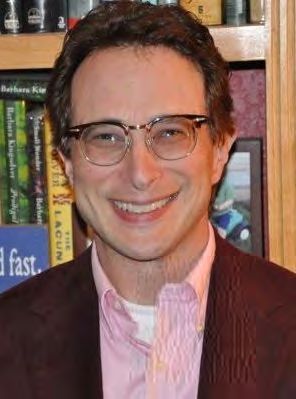
Jo Puntil, MS, CCC-SLP, BCS-S
Speech Pathologist/Dysphagia Specialist
Dixie Regional Medical Center
Council for Clinical Certification in
Audiology and Speech-Language
Pathology (CFCC)
Chair-Elect

CFCC@asha.org
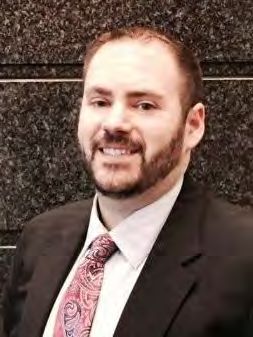
Thomas Muller, AuD, CCC-A, FAA
Clinical Associate Professor,
University of Arizona
Council for Clinical Certification in
Audiology and Speech-Language
Pathology (CFCC)
Vice-Chair of Audiology

CFCC@asha.org
Patti Solomon-Rice, PhD, CCC-SLP
Director and Associate Professor of
Communication Disorders
Our Lady of the Lake University

Council for Clinical Certification in
Audiology and Speech-Language
Pathology (CFCC)
Vice-Chair of Speech-Language Pathology
cfcc@asha.org
Todd R. Philbrick, CAE,
Credentialing Specialist
Director of Certification
ASHA

Council for Clinical Certification in
Audiology and Speech-Language
Pathology (CFCC)
Ex-Officio

tphilbrick@asha.org
DISCLOSURES
• Financial – Todd Philbrick is a compensated ASHA staff
  member.
• Non-financial – Jo Puntil, Tom Muller, and Patti Solomon-Rice
  are on the Council for Clinical Certification in Audiology and
  Speech-Language Pathology. However, we do not receive any
  compensation for this role. We are proud ASHA certified
  members.
ASHA                     • Neil DiSarno, Chief Staff Office, Audiology
National Office Staff Support   • Todd Philbrick, Director, Certification, CFCC Ex-Officio
                                • Gretchen Ehret Hoshaw, MA, CCC-SLP, Associate
                                  Director of Certification, CCSC Ex-Officio
                                • Nana Aboagye, Associate Director of Certification
                                  Operations
                                • Staff of 13 full-time employees to support over 190,000
                                  certificate holders and 9,000 applicants annually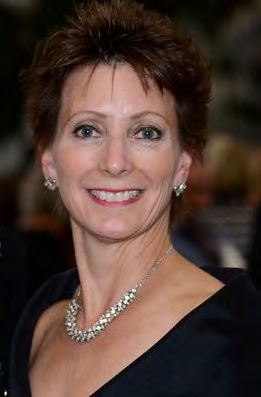
Agenda
• Overview of Certification
• CFCC Members
• CFCC Strategic Plan
• 2020 Audiology Standards
• 2020 SLP Standards
• Clinical Fellowship Revalidation
• Online Certification Application
• Assistant Program

Overview of Certification
• Certification: Ensures that
  individuals have met standards of
  knowledge, skills, and abilities as
  determined by a national
  professional society.
• Accreditation: Ensures that
  academic programs provide
  opportunities for students to prepare
  to meet relevant credentialing, such
  as licensure and certification          Credentialing
• Licensure: Ensures basic consumer
  protection through adherence to
  standards endorsed in the state.
2018 Certification Applications
New Certification Applications
                   2018          2017      2016      2015       2014     2013
AUD App            591           547       527       490        436      463
SLP App            8,254         7,848     7,746     4,591      11,508   8,209
Total Apps         9,420         8,970     9,059     5,877      12,655   8,672
 Total Certified  9,644          9,280     9,348     9,466      8,376    8,072
Total CCC-A and CCC-SLP
                 2018            2017      2016      2015      2014      2013
CCC-A             13,407         13,226    13,118    12,970    12,008    11,975
CCC-SLP           175,025        168,604   162,473   156,254   148,105   141,847
Dual Cert         815            849       881       907       931       957
Total Certified   189,245        182,719   176,472   170,131   161,044   153,822
2019 CFCC Members
Audiologists Board Certified Specialists
Pat Chute, CCC-A Judy Montgomery, CCC-SLP, BCS-CL
Mary Sue Fino-Szumski, CCC-A Jo Puntil, CCC-SLP, BCS-S
Kalyani Mandke, CCC-A
Ann McMahon, CCC-A Public Members
Thomas Muller, CCC-A Jake Milne
Lee Reeves
SLPs
Amy Thorpe Wiley, CCC-SLP Chair: Amy Thorpe Wiley
Patti Solomon-Rice, CCC-SLP Chair-Elect: Jo Puntil
Barbara Moore, CCC-SLP, BCS-CL Vice Chair for Audiology: Thomas Muller
Jerrold Jackson, CCC-SLP Vice Chair for SLP: Patti Solomon-Rice
Barbara Rodriguez, CCC-SLP
Debra Suiter, CCC-SLP, BCS-S2020 CFCC Positions
• One ASHA-certified audiologist
• One ASHA-certified speech- Define and apply the
language pathologist standards for clinical
• One Board Certified Specialist certification of individuals;
(BCS-F, BCS-S, or BCS-IOM) develop and administer a
• Time Commitment credentialing program for
Nominations
• 3 meetings per year at the assistants
National Office due
May 1st
• 1-2 one-hour conference calls per
monthCFCC Strategic Plan
• Recently completed 2015-2018 strategic plan with emphasis on:
• Ensure ASHA's certification standards promote excellence in practice
• ASHA’s certification continues to be the preferred credential by speech-
language pathologists, audiologists, and all stakeholders
• Transparency in certification standards, policies, etc.
• Increase the recognition of Clinical Specialty Certification
• Public Protection
• 2020-2023 strategic plan will be available at the end of the yearNCCA Accreditation • National Commission for Credentialing Agencies (NCCA) is the accrediting body of the Institute for Credentialing Excellence. • Accreditation of certification programs provides impartial, third-party validation that your program has met recognized national and international credentialing industry standards for development, implementation, and maintenance of certification programs. • ASHA received NCCA accreditation in May 2018. • ASHA now has the only certification programs in Audiology and Speech-Language Pathology that are NCCA Accredited.
2020 AUDIOLOGY
CERTIFICATION STANDARDS
2020 Audiology Standards
• Practice Analysis study was completed in February 2016
• Peer Review was completed in February 2017
  • Approximately 900 responses
  • Sought feedback on the following areas:
     •   Degree
     •   Qualification of supervisors
     •   Duration of supervised clinical experience
     •   English language proficiency
     •   Continuing education in ethics for certification maintenance
     •   Updated and reclassified knowledge and skills
2020 Audiology Standards Approved changes for 2020 Audiology Standards • Applicants will have to have or show equivalency to an AuD (clinical doctoral degree) from a CAA-accredited program • Clinical hours will no longer be prescribed by the CFCC. Applicants and their programs will follow CAA standards for duration, and CFCC standards for depth and breadth of knowledge and skills • Supervised clinical experiences are encouraged to include IPP/IPE • Knowledge and skills for certification have been updated and reordered in accordance with the practice analysis study results
2020 Audiology Standards
Approved changes for 2020 Audiology Standards
• Applicants who did not complete their entire supervised clinical
  experience under a CCC-A will be able to make up the remainder of
  their experience post-graduation to meet ASHA certification
  standards. The post-graduate supervisor will also attest to
  knowledge and skills.
• Beginning on 1/1/2020 hours earned must be under clinical
  supervisors who have 9 months of experience after being awarded
  the CCC-A and two hours of professional development in the area of
  supervision
• Beginning with the 2020-2022 interval, certificate holders will be
  required to take one hour of CE in “Ethics” per certification
  maintenance period
2020 Audiology Standards

           Questions?
2020 SLP CERTIFICATION STANDARDS
2020 SLP Standards
• Practice Analysis study was completed in February 2017
• Peer Review was completed in September 2017
• Over 3,000 responses
  • Sought feedback on the following areas:
     •   Qualification of supervisors
     •   Requiring physics or chemistry course content
     •   English language proficiency
     •   Continuing education in ethics for certification maintenance
     •   The addition of literacy as a core skill
2020 SLP Standards Approved Changes for the 2020 Standards • Physical science coursework must include physics or chemistry content and meets university physical science requirements for non-CSD major students • Knowledge and skills areas were refined to include speech sound production, fluency disorders, literacy, and feeding within the current nine core content areas • Supervised clinical experiences and clinical fellowship experiences are encouraged to include IPP/IPE
2020 SLP Standards
Approved Changes for the 2020 Standards
• Beginning with supervision hours earned on 1/1/2020 clinical
  supervisors and clinical fellowship mentors must have 9 months
  of experience after being awarded the CCC-SLP and two hours
  of professional development in the area of supervision
• Beginning with the 2020-2022 interval, certificate holders will be
  required to take one hour of CE in ethics per certification
  maintenance period

**Please encourage all 2019 graduates who wish to obtain
the CCC-SLP to apply immediately upon graduating if they
would like to apply under the 2014 Standards.
2020 SLP Standards

           Questions?
CLINICAL SPECIALTY CERTIFICATION
Approved Clinical Specialty Certification
Boards
ASHA officially recognizes seven specialty certification
boards, four of which are operational
• American Audiology Board of Intraoperative
  Monitoring (AAB-IOM)
• American Board of Child Language and Language
  Disorders (AB-CLLD)
• American Board of Fluency and Fluency Disorders
  (AB-FFD)
• American Board of Swallowing and Swallowing
  Disorders (AB-SSD)
Approved Clinical Specialty Certification
Boards
Three boards have been approved and are under
development
• American Board of Augmentative and Alternative
  Communication (AB-AAC)
• American Board of Autism Spectrum Disorders
  (AB-ASD)
• American Board of Voice and Upper Airway Disorders
  (AB-VUAD)
The Future of Specialty Certification
Boards

• The CFCC’s Committee for Clinical Specialty Certification
  (CCSC) recently participated in an Ad-hoc committee to
  examine methods of recognizing individuals with advanced
  knowledge and skill in professional areas.
• The Ad-Hoc committee’s report was accepted by the ASHA
  Board of Directors in March 2019. Recommendations will follow.
2020 CLINICAL FELLOWSHIP
   SKILLS INVENTORY
Clinical Fellowship Revalidation
• The Clinical Fellowship Skills Inventory (CFSI) is a report used
  to validate a Clinical Fellow’s independence in 18 skill areas
  during a 36 week, 1,260 hour post-graduate Clinical Fellowship
• The CFSI has been largely unchanged since 1993
• The 2016 Practice Analysis Study confirmed that 36
  weeks/1260 hours was still sufficient
• The purpose of revalidation is to ensure that the assessment
  continues to meet validity requirements and accurately measure
  the Clinical Fellows’ competency.
• A multi-methodological research approach using Subject Matter
  Experts selected by the CFCC and ASHA was used to
  determine the psychometric validity of the CFSI.
Clinical Fellowship Revalidation -
Objectives
 • Whether the 18 clinical skills are relevant, critical, and important for entry-level
   practice
     • Identify Core –vs- Non-Core Skills and if they should be rated in the same
       manner
     • Determine if N/A response as an effective rating option
 • Whether the 4 domain areas of evaluation, treatment, management, and
   interaction are valid and sufficient for the clinical skills
 • Whether the 5 point rating scale and verbal anchors are clear, consistent, and
   complete in measuring clinical skill level
 • Whether the descriptors of the rating scale are valid, useful, and accurate
 • Whether the instructions for how to use the clinical skill rating scales are clear
   and complete
 • Whether the assessment’s qualification score accurately reflects the minimum
   level of competency a Clinical Fellow must possess to independently practice
   SLP
Clinical Fellowship Revalidation - Process
• Process of Revalidation
Summer 2017
• SMEs met at National Office to review 18 clinical skills, review and propose changes to the current
5-point rating scale and its descriptors
• SMEs created an updated Skills Inventory and a 3-point rating scale with updated descriptors
• SMEs created case studies to evaluate interrater reliability between a new group of SMEs’ use of
the updated Skills Inventory
Fall 2017
• SMEs met to review the results of the case study review and made additional updates to the Skills
Inventory and case studies
• A second round of case study reviews was completed with a third group of SMEs
January 2018
• The Skills Inventory was “test driven” by groups of Clinical Fellow Mentors and Clinical Fellow
March 2018
• Results indicated strong interrater reliability and preference for the new Skills Inventory.2020 CFSI • Effective with CFs beginning on 1/1/2020 • Simplified instructions/explanation of ratings focused on accuracy, consistency, clinical judgement, and autonomy. • 3 point rating scale – Needs improvement, Meets Expectation, and Exceeds Expectations for entry-level independent practice
2020 CFSI
• 4 domains remain largely the same
   •   Assessment
   •   Treatment
   •   Professional Practices
   •   Interpersonal
• Skills updated and expanded to 21 areas
   • Updates reflect current practice requirements/terminology
   • Additions highlight the need for skills in interprofessional practice and cultural competencies
Example: Professional Skills

                                                                                                                                                      Expectations
                                                                                                                                                      Meet
                                                                                                                                                      1 = Does Not

                                                                                                                                                                     Expectations
                                                                                                                                                                     2 = Meets

                                                                                                                                                                                    Expectations
                                                                                                                                                                                    3 = Exceeds
Skill                                           Description

1. Adheres to the ASHA Code of Ethics and       •   Reviews and interprets the codes of ethics before taking actions
to state codes of ethics, and federal, state,   •   Acts in accordance with the codes of ethics
and local laws related to client/patient        •   Maintains client/patient records in accordance with HIPAA/FERPA policies,
information                                          including the appropriate, confidential, and ethical use of social media
2. Schedules and prioritizes direct and         •   Prioritizes and coordinates various activities, including scheduling client
indirect service activities                           contacts and meetings
3. Manages and documents client/patient         •   Maintains accurate, detailed client/patient records and completes documentation, including
records                                             professional contacts (e.g., conversation with a physician, parent/caregiver contact, mailing
                                                    reports, etc.)
                                                •   Completes documentation in a timely manner
4. Complies with local, state, federal, and     •   Reviews and interprets the local, state, federal, and payer’s regulations before taking actions
payer’s regulations to determine eligibility    •   Acts in accordance with the local, state, federal, and payer’s regulations
and complete billing requirements for           •   Completes billing requirements accurately and in a timely manner
reimbursement

5. Demonstrates competencies and adapts         •   Acquires knowledge of best practices for culturally and linguistically diverse populations
to individualized needs of culturally and       •   Applies best practices for culturally and linguistically diverse populations
linguistically diverse populations              •   Provides education and/or resources to promote best practices for culturally and linguistically
                                                    diverse populations
6. Provides education and/or resources          •   Provides clear and meaningful education and/or resources to promote the knowledge, prevention,
                                                    and treatment of communication and related disorders (e.g., swallowing, hearing, cognitive, and
                                                    linguistic)
ASSISTANTS CERTIFICATION
PROGRAMAssistant Certification Program Goals Approved by the ASHA BOD in November 2017 • The establishment of a national standards to measure the knowledge, skills, and abilities of assistants • Create/revalidate national scopes of practice for audiology assistants and for SLPAs • Create certification maintenance requirements for assistants • Allow portability of credentials for assistants • Enhance ethical guidelines for assistants • Institute steps for the reimbursement of services for assistants • Allow Audiologists and SLPs to practice at the top of their license
Program Contract and Timeline
• The goal is to begin accepting applicants for the
  examination/certification program by the end of 2020.
• 2018 Milestones:
   • Job Task Analysis (JTA) Meetings (May/June)
   • Peer review of the JTA Survey (Summer)
   • Approved test blue prints for the certification (Fall)
• 2019 Milestones
   • Pathways to Certification before Testing/Becoming Certified (Summer)
   • Marketing and Communication to Build the Buzz (Summer/Fall)
   • Finalize Exam Forms (Fall/Winter)
• 2020 Milestones
   • Pilot the exams
   • Determine the passing scores
   • Begin accepting applications
ONLINE CERTIFICATION
    APPLICATION
Online Certification and Reinstatement
Application
• ASHA began working on an online certification and
reinstatement application project in late 2017
• The online application launched officially on March 4, 2019
• Benefits of the online application include:
• Integration into ASHA’s website/your existing My ASHA account
• Increased security
• Reduced administrative errors
• Elimination of staff data entry and reduced processing times
• Online rating portals for Program Directors and CF mentors, expediting the process
toward certification
• Elimination of paper with the exception of transcripts
• Real-time application status updates
• Applicants automatically are sent updates and remindersOnline Certification and Reinstatement Application
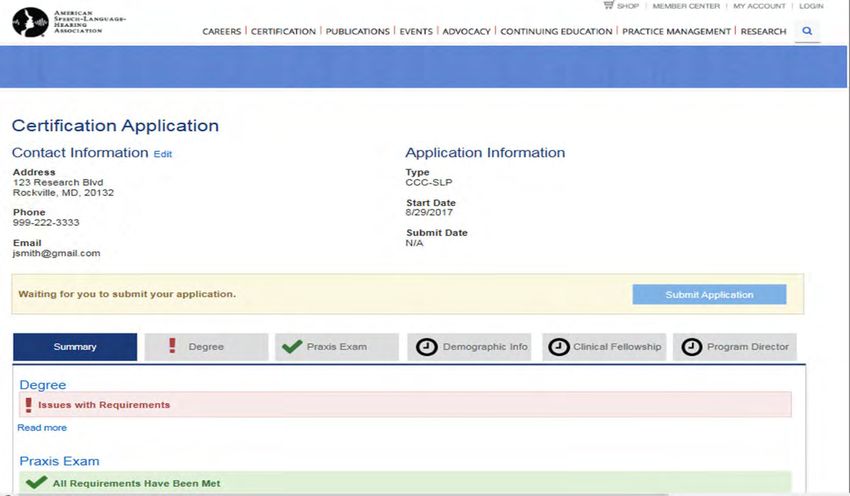
Online Certification and Reinstatement
Application
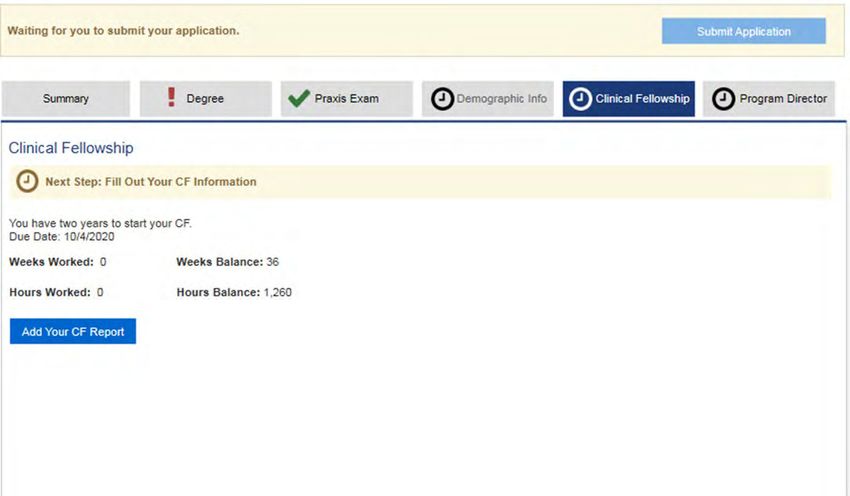
Online Certification and Reinstatement
Application
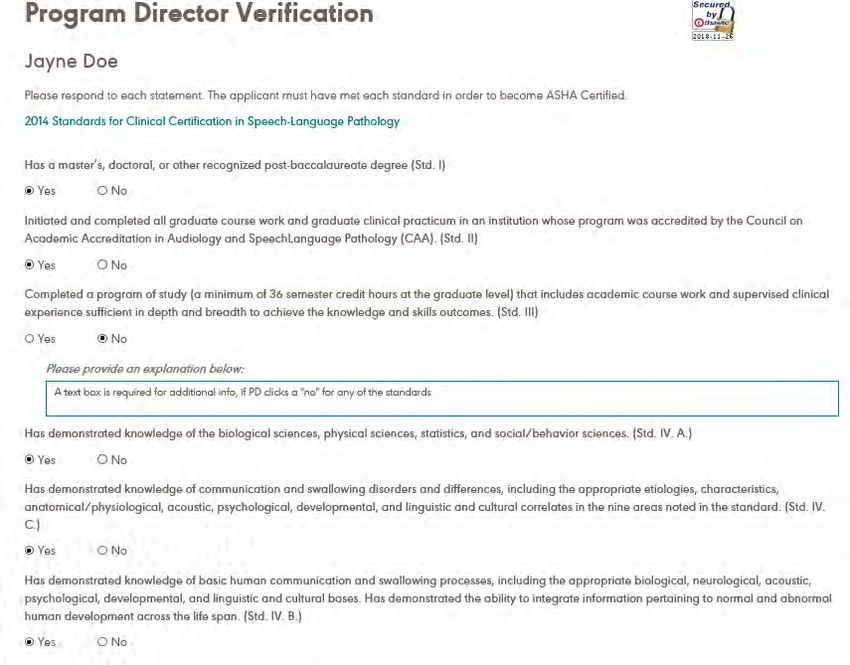
Program Director Verification
Program Director Verification
Clinical
Fellowship
Mentor
Verification
Clinical Fellowship Mentor Verification
• Some students will have completed their academic
              and practicum requirements in December 2019, but
              have their degrees conferred in January 2020.
                • The online application will automatically evaluate
                  them under the 2020 Standards
            • Students graduating in December 2019 are
              encouraged to submit a paper application
                • MUST be received by 12/31/2019 to apply under
                  the 2014 Standards

A Special
            • Program Directors may submit the verification
              forms after 1/1/2020 if they are unable to verify that

  Note
              all academics and practicum have been met before
              1/1/2020

Regarding
                • For example, if final exam scores or competencies
                  are posted in January 2020, the Program Director

December
                  can retroactively verify that all requirements had
                  been met in December

  2019
                • If the Program Director learns that the student did
                  not pass all requirements, then this would be

Graduates
                  indicated on the verification form. The student would
                  then be required to apply under the 2020 Standards
                  (which includes coursework in chemistry or physics
Questions?
You can also read


