ASEAN Connectivity Project Information Sheets - US-ASEAN Business Council
←
→
Page content transcription
If your browser does not render page correctly, please read the page content below
ASEAN Connectivity
Project Information Sheets

                                  one vision
                                one identity
                             one community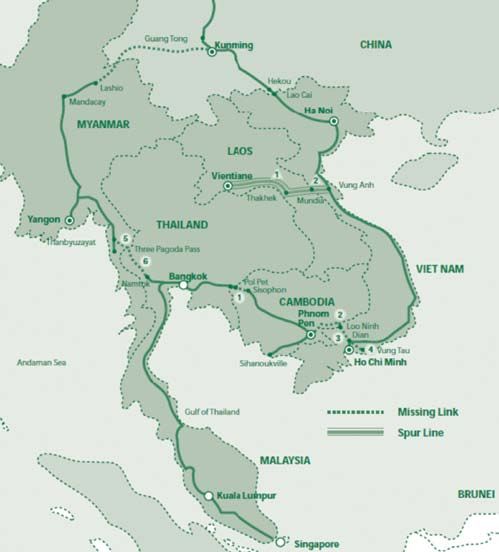
The Association of Southeast Asian Nations (ASEAN) was established on 8 August
1967. The Member States of the Association are Brunei Darussalam, Cambodia,
Indonesia, Lao PDR, Malaysia, Myanmar, Philippines, Singapore, Thailand and Viet Nam.
The ASEAN Secretariat is based in Jakarta, Indonesia.

The ASEAN Secretariat
Public Outreach and Civil Society Division
70A Jalan Sisingamangaraja
Jakarta 12110, Indonesia
Phone : (62 21) 724-3372, 726-2991
Fax : (62 21) 739-8234, 724-3504
E-mail : public.div@asean.org

General information on ASEAN appears online at the ASEAN Website: www.asean.org

Catalogue-in-Publication Data

ASEAN Connectivity
Jakarta: ASEAN Secretariat, August 2012

The text of this publication may be freely quoted or reprinted with proper acknowledgement.

Copyright Association of Southeast Asian Nations (ASEAN) 2012
All rights reserved
PHYSICAL CONNECTIVITY           Project Information Sheet MPAC PP/A1/01

             Construction of the ASEAN Highway Network (AHN) Missing Links and
             Upgrade of Transit Transport Routes in Lao PDR and Myanmar

Project Description                                           Project Status
Given the growing regional integration and cooperation        Seeking technical

                                                                                         ASEAN HIGHWAY
in ASEAN, the development of high quality transport           assistance and funding

                                                                                            NETWORK
infrastructure is a crucial element to building a
competitive ASEAN Community with equitable economic           Target Completion
development. However, ASEAN with total land area              Date
of around 4.4 million sq. km faces challenges with poor       December 2015
quality of roads and incomplete road networks. The
ASEAN Highway Network (AHN) project is a flagship             Implementing Bodies
infrastructure project that seeks to bring connectivity       Ministry of Public
across borders and confer many benefits, such as              Works and Transport
improved competitiveness of regional production               of Lao PDR, Ministry
networks, better trade and investment flows, and              of Construction of
reductions in development gaps. The ASEAN Leaders             Myanmar and Ministry
adopted the Master Plan on ASEAN Connectivity in              of Transport of Myanmar
October 2010 that identified the AHN project as one of
the 15 prioritised projects to bridge the connectivity gap    Coordinating
within ASEAN.                                                 Countries
                                                              Coordinator(s)
Main Objectives, Outputs and Activities                       Lao PDR and Myanmar
The main objective of the AHN project is establishing
efficient, integrated, safe and environmentally sustainable   Contact Person
regional land transport corridors linking all ASEAN           Lao PDR: Mr. Math
Member States and countries beyond. ASEAN Member              Sounmala
States have been developing and upgrading various             Director-General
sections of the AHN as integral components of their           (Planning and
national programmes.                                          Cooperation)
                                                              Ministry of Public Works
This prioritised project seeks to complete the remaining
                                                              and Transport
missing links and upgrade ‘Below Class III” roads within
                                                              Lane Xang Avenue, Ban
ASEAN’s designated Transit Transport Routes (TTRs) by
                                                              Phonxay, Vientiane Lao
2015:
                                                              PDR
                                                              Tel : (856-21) 412 265
Remaining Missing links:
                                                              Fax: (856-21) 412 250/
(i) Myanmar: AH112 (Lehnya – Khlong Loy, 60km)
                                                              412 265
(ii) Myanmar: AH123 (Dawei {deep seaport} – Maesamee
pass {Phu nam Ron}, 132 km + 18 km [150 km])
                                                              Myanmar: Mr. Winn Pe
                                                              Director General
Upgrading of the remaining “Below Class III” TTRs:
                                                              Department of Transport
(i) Lao PDR: AH11 (Vientiane – Veunkham, 861km)
                                                              Building No (5), Nay Pyi
(ii) Lao PDR: AH12 (Vientiane – Luang Prabang, 393 km) -      Taw
completed                                                     Myanmar
(iii) Lao PDR: AH15 (Ban Lao – Namphao, 98 km)                Tel : (9567) 411 034
(iv) Lao PDR: AH3 (Houaysay – Boten, 88 km)                   Fax: (9567) 411 420/1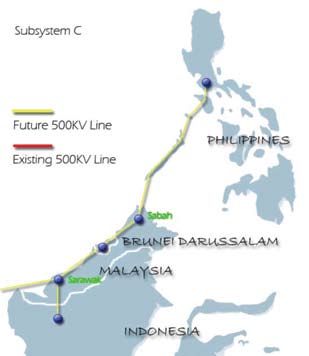
(v) Lao PDR: AH13 (Odomxay – Tai Chang, 202 km)              Email :
(vi) Lao PDR: AH16 (Savannakhet – Densavanh, 240 km)         dept.transport@mptmail.
                                                             net.mm
(vii) Myanmar: AH1 (Tamu – Mandalay – Bago – Myawadi,
781 km)
                                                             ASEAN Secretariat:
(viii) Myanmar: AH2 (Meikthila – Loilem – Kyaington –        Infrastructure Division:
Tachikeik, 593 km)                                           Email:
(ix) Myanmar: AH3 (Mongla – Kyaington, 93 km)                InfrastructureDivision@
(x) Myanmar: AH14 (Mandalay – Muse, 453 km)                  asean.org
(xi) Myanmar: AH111 (Thibaw – Loilem, 239 km)

Detailed information of the missing links and the roads
to be upgraded in the TTRs in Myanmar and Lao PDR
appears in Annex 1.

Beneficiaries
The ASEAN Highway Network Project will help provide
access to an enlarged market, reduce transportation and
trade cost, establish linkages with regional and global
supply chains, and facilitate greater regional economic
cooperation and integration. Both the private and public
sectors are indeed beneficiaries of the AHN Project.
While the private sector’s gains include a reduction of
transport costs, more efficient service and increased
opportunities from tourism, the public sector has
benefitted from encouragement of investment which
will increase country’s revenue and provide more
jobs. ASEAN will continue to assist and coordinate in
the identification of priority investment needs and to
promote financing for the development of road as well as
supporting the installation of route signal along the AHN.
Annex I
Information on the roads to be upgraded to Class III and above of the ASEAN Highway TTR in Lao PDR
Asian National City/Town City/Town Sub-Total Total Expected Budget Needed
No. Highway Highway Name at name at Length Length Road Completion AADT for Road Remark
Route Route Starting Point Ending Point (Km) (Km) Class Year of Construction
No. No. Construction (million US$)
Vientiane City Paksan 150 3 1997 750
Paksan Thakek 193 3 1997 450
1. AH-11 NH-13S Thakek Seno 130 861 3 1997 550 Completed
Seno Pakse 228 3 2001 200
Pakse Veunkham 160 3 1999 150
Vientiane City Thanaleng 21 3 2007 1200
Vientiane City Pholhong 70 3 1992 1000
2. AH-12 NH-13N Pholhong Luangprabang 319 682 3 1996 250 Completed
Luangprabang Oudomxay 194 3 1997 200
Oudomxay Nateuy 78 3 1998 100
Banlao Laksao 96 3 1990 200 Under
3. AH-15 NH-8 132 construction
Laksao Nam Phao 36 3 2005 200 (65%
completed)
Houaysay Louangnamtha 194 3 2006 75 Under
4. AH-3 NH-3 Louangnamtha Nateuy 37 251 3 2006 75 construction
(65%
Nateuy Boten 20 3 2006 100 completed)
AH-16 NH-9E Savannakhet Seno 30 3 2001 300
5. Seno Muang Phin 130 240 3 2003 932 Completed
AH-16 NH-9W
MuangPhin Densavanh 80 3 2004 358
Oudomxay Muangkhua 100 3 2010 100
6. AH-13 202 40.4 Need Funding
Muangkhua Tai Chang 102 3 2010 102Annex II
Information on the missing links and roads to be upgraded to Class III and above of the ASEAN Highway TTR in Myanmar
ASEAN National City/Town City/Town Expected Budget needed
No. Highway Highway Name at name at Sub-Total Total Length Road Class Completion AADT for Road Remark
Route No. Route No. Starting Point Ending Point Length (Km) (Km) Year of Construction
Construction (million US$)
Tamu Mandalay 610 3, below 3 423
Mandalay Meiktila 167 1, 3 2713
Meiktila Yangon 540 1, 3 2050 1208 km of these
1. AH-1 Yangon Bago 80 1656 1, 3 2012 2697 routes have been
upgraded to class
Bago Payagyi 16 3 1896 3 level
Payagyi Thaton 144 3 1487
Thaton Myawadi 195 3, below 3 792
Meiktila Loilem 276 2, 3, below 3 527 350 km of these
2. AH-2 Loilem Kyaingtong 367 807 below 3 2012 44 routes have been
upgraded to class
Kyaingtong Tachileik 164 3 195 3 level
93 km of these
3. AH-3 Mongla Kyaington 93 93 3 2012 100 routes have been
upgraded to class
3 level
Mandalay Thibaw 245 1, 3 2378 435 km of these
4. AH-14 453 N/A routes have been
Thibaw Muse 208 3 1828 upgraded to class
3 level
5. AH-111 Thibaw Loilem 239 239 below 3 N/A 275 N/A
Thaton Mawlamyine 66 3 872
Mawlamyine Thanbyuzayat 64 2, below 3 740
Thanbyuzayat Ye 91 below 3 161
6. AH-112 Ye Dawei 155 1145 below 3 2015 116
Dawei Lehnya 449 below 3 154
Lehnya Khamaukgyi 260 below 3 26
Lehnya Khongloy 60 Missing link 0
Constructed by ITD
Dawei (deep Maesamee & Max Myanmar
7. AH-123 seaport) pass (Phu nam 132 + 18 150 Missing link 2015 36 Co., corridor
Ron) of Dawei Deep
Seaport ProjectPHYSICAL CONNECTIVITY Project Information Sheet MPAC PP/A2/01
Completion of the Singapore Kunming Rail Link (SKRL) Missing Links
Project Description Project Status
Efficient and integrated transportation networks are Seeking technical and
essential to improve competitiveness of ASEAN. The funding assistance
Singapore-Kunming Rail Link (SKRL) was proposed at
the Fifth ASEAN Summit in December 1995. The SKRL Target Completion
Project is a prioritised project under the ASEAN transport Date
cooperation and Master Plan on ASEAN Connectivity. Aranyaprathet-Klongluk
The circular rail link will connect the capital cities in by 2014; Poipet-
KUNMING RAIL LINK
Cambodia, Lao PDR, Myanmar, Viet Nam and Thailand. Sisophon and Phnom
This railway linkage forms a crucial linkage in the “North- Penh-Snuol-Loc Ninh by
SINGAPORE
South Economic Corridor” by connecting Singapore- 2015; Loc Ninh – Ho Chi
Malaysia-Thailand-Cambodia-Vietnam and southern Minh City by 2020
China. It would also complement other infrastructure
projects, such as the various transport corridors under Implementing Bodies
the Greater Mekong Sub-Region (GMS), ASEAN Highway Singapore Kunming
routes and other existing transport networks, thereby Rail Link (SKRL) Special
creating an integrated multi-modal transport network in Working Group
the entire of Southeast Asia and the Asia region.
Coordinating Country
The SKRL has two lines, an “Eastern Line” through Malaysia
Thailand, Cambodia and Viet Nam, with a spur line
between Lao PDR and Viet Nam, and a “Western line” Modality & Source of
through Thailand and Myanmar. Currently there are 4,069 Funding
kilometers of missing links or links which need to be ASEAN Member
rehabilitated in six Member States including Cambodia, States (AMS), National
Lao PDR, Malaysia, Myanmar, Thailand and Viet Nam. Budgets, Private
Sector), ASEAN
Main Objectives, Outputs and Activities Infrastructure Fund (AIF),
The main objective of SKRL project is to provide a China-ASEAN credit
complementary mode of land transportation, which is more facility
environmental friendly than road transportation and provides
more efficient and most economical mode for cross-border Contact Details
cargo transportation in the region and beyond. Malaysia (Coordinating
Country):
This project aims to complete the following SKRL missing Ministry of Transport
links: Malaysia
Level 3, Block D5,
i) Thailand: Aranyaprathet – Klongluk, 6 km Complex D
ii) Cambodia: Poipet – Sisophon, 48 km Federal Government
iii) Cambodia and Viet Nam: Phnom Penh – Snuol – Loc Administrative Centre
Ninh, 254 km 62616, PUTRAJAYA
iv) Viet Nam: Loc Ninh – Ho Chi Minh City, 129 km MalaysiaThe railway sections prioritised here correspond to the Cambodia:
sections that will complete the mainline SKRL. The first Mr. Ly Borin
three - items (i), (ii) and (iii) – are scheduled for completion Director of Railway
by 2015. Item (iv), which is a 129 km connection between Department
Loc Ninh and Ho Chi Minh City, is currently scheduled for Ministry of Public Works
completion by 2020. The full benefits of SKRL will only be and Transport
realised if all the links - (i), (ii), (iii) and (iv) - are completed Tel: (855) 12 972 027 /
by 2015. 23 723 513
Email:
Map of SKRL networks and missing links, and the current lyborin@yahoo.com
status of the SKRL project appear in Figure 1 and Annex
1 respectively. Thailand:
Mr. Narit Tangradomsin
Beneficiaries State Railway of
The SKRL allows rail transport to play a part in economic Thailand
integration and boost trade via extending the reach Tel: (662) 220 4284
of container land-bridge currently operating between Email:
Malaysia and Thailand to a range of other destinations in tnarit2001@yahoo.com
Cambodia, Lao PDR, Myanmar and Viet Nam. Both the
private and public sector will benefit from this project Viet Nam:
as it will lead to access to an enlarged market, reduced Mr. Nguyen Tien Thinh
transportation and trade cost, establish linkages with Deputy Head of
regional and global supply chains, and facilitate greater Planning & Investment
regional economic cooperation and integration. Beyond Department
ASEAN, once these links are built, it will connect both Ministry of Transport
the mainland ASEAN and ASEAN with its trading partners Vietnam Railway
China and India Administration
Tel: (844) 3942 7540
Email:
thinhnt.vnra@mt.gov.vn
ASEAN Secretariat:
Initiative for ASEAN
Integration and
Narrowing the
Development Gap (IAI
and NDG) Division
Email:
IAI&NDGDivision@
asean.orgFigure 1. SKRL Networks and Missing Links Source: ASEAN Transport Strategic Plan 2011 – 2015 – Midterm Report, ERIA and Nippon Koei 2010
Annex I
Current Status of Singapore-Kunming Rail Link Network (SKRL) Project

                                                 Rail Length
                                                                      Pre-Feasibility (Pre-                             Planned
             Missing Sections/Route &     Existing                                               Implementation
  Country                                                 New          FS) or Feasibility                              Completion
                    Spur Lines           Length of                                                   Status
                                                       Construction    Study (FS) Status                                  Year
                                          section
            Poipet (Thailand border) –
Cambodia                                     -                 28     Completed               Ongoing                    2015
            Sisophon
                                                                                              Not Commenced
            Phnom Penh – Loc Ninh
Cambodia                                    32                 254    Ongoing                 (under negotiation for     2015
            (Viet Nam border)                                                                 funding)
            Loc Ninh (Cambodia border)
Viet Nam                                    20                 129    FS Completed            Not Commenced              2020
            – Ho Chi Minh City
                                                                                              The budget for the
                                                                                              rehabilitation has
                                                                                              been allocated and
Thailand    Aranyaprathet - Klongluk         -                  6     FS Completed                                       2014
                                                                                              is now in the process
                                                                                              of bidding for its
                                                                                              contractor.
Lao PDR     Vientiane-Thakhek*               -                 330    FS Completed            Not Commenced              2020
            Thakhek-Mu Gia (Viet Nam
Lao PDR                                      -                 136    FS Completed            Not Commenced              2020
            border)*
            Mu Gia (Lao PDR border) –
Viet Nam                                     -                 53     Pre-FS Completed        Not Commenced              2020
            Tan Ap*
Viet Nam    Tan Ap – VungAng*               6                  66     FS Ongoing              Not Commenced              2020

*Spur Line
Source: SKRL Fact Sheet Summary
INSTITUTIONAL CONNECTIVITY Project Information Sheet MPAC PP/A3/01
ASEAN Broadband Corridor
Project Description Project Status
Currently, broadband development among ASEAN Phase 2 is under
Member States remains relatively disparate. ASEAN implementation.
Member States also use different definitions in specifying
broadband speeds. To promote regional integration, Phase 3 will require
there is a need to address this divide and nurture greater resource mobilisation
broadband penetration and access to make it universal from ASEAN Member
and affordable in the region. Greater usage of broadband States, external partners
can be an effective empowering tool for ASEAN citizens and private sector.
in this digital age. It will also have a positive effect on
education, tourism and help facilitate innovation and Target Completion Date
catalyse ICT growth to make ASEAN an attractive December 2015
destination for business opportunities.
Implementing Bodies
This ASEAN Broadband Corridor aims to promote greater ASEAN
ASEAN BROADBAND
broadband penetration, affordability and universal access Telecommunications
in ASEAN in order to enhance economic growth. It aims Senior Officials Meeting
CORRIDOR
to create an environment where e-business, e-commerce, (TELSOM)
venture capital, talents and ideas flow easily so that
the region is better positioned to tap into the benefits Modality & Source of
of ICT and keep pace with the rapid development in Funding
other parts of the world. The three main focuses of ASEAN Member States
broadband penetration, affordability and universal (AMS) National Budgets,
access will also help the region achieve the International Private Sector, ASEAN
Telecommunications Union (ITU) Global Broadband Infrastructure Fund (AIF),
Targets 2015. External Partners
Main Objectives, Outputs and Activities Coordinating Country
The ASEAN Broadband Corridor project aims to promote Singapore
greater broadband penetration, affordability and universal
access in ASEAN. The project will be implemented in two Contact Person
phases: Infocomm Development
Authority of Singapore
Phase 1 (2011-2012) – Review of broadband development (IDA)
in ASEAN Email:
Rachelle_Lee@ida.gov.sg
Phase 2 (2012) – Propose suitable recommendations Davina_Wong@ida.gov.sg
and strategies to enhance broadband penetration, Mike_Ong@ida.gov.sg
affordability and universal access to realise the goals
of the ASEAN ICT Masterplan 2015. ASEAN Secretariat:
Infrastructure Division:
Phase 3 (2013-2015) – Implementation of regional and Email:
national strategies to enhance penetration, affordability InfrastructureDivision@
and universal access to broadband internet. asean.orgPhase 1, was completed in January 2012. In late April 2012, the ASEAN TELSOM Leaders approved the commencement of Phase 2 with a funding of US$70,000. Phase 2, which involves a research consultant, will outline the appropriate recommendations and/ or strategies to achieve the three key focuses of broadband penetration, affordability and universal access. It will include specific plans for ASEAN to strive for targeted improvements to create or promote greater broadband penetration and access, such as in the areas of broadband speed, broadband pricing, household penetration, mobile broadband coverage, and availability of wireless hotspots. The targeted improvements will be tailored for each of the ASEAN Member States. The proposed strategies and recommendations will consider the status of ICT infrastructure development, level of access to ICT and Internet broadband, especially in areas that lag behind in development. The proposed strategies and recommendations shall also take into account related broadband initiatives and projects in sub-regional arrangements such as BIMP-EAGA, GMS, and IMT-GT in ASEAN to optimise synergies and complementation. ASEAN Member States will be given the flexibility to decide how best to work towards the improvement targets by 2015. The research consultant will work closely with ASEAN Member States to identify these needs. The recommendations and/or strategies from Phase 2 will be submitted to TELSOM in end 2012 for endorsement. They will then be implemented over the next three years from 2013-2015 during Phase 3 of the project. Beneficiaries All ASEAN Member States will benefit from the project. The project is also expected to bring long term benefits to ASEAN citizens, businesses as well as foreign travellers to the region.
PHYSICAL CONNECTIVITY         Project Information Sheet MPAC PP/A4/01

            Melaka – Pekanbaru Power Interconnection
            Indonesia-Malaysia-Thailand Growth Triangle (IMT-GT)

Project Description                                          Project Status
Recognising the critical role of an efficient, reliable      Seeking financial
and resilient electricity infrastructure for stimulating     resources for the whole
regional economic growth and development, ASEAN              project.
is poised to build the ASEAN Power Grid (APG), a 600-        Detailed Terms of
MW joint electricity network which connects Peninsula        Reference (TOR)
Malaysia and Sumatra, Indonesia under the Indonesia-         prepared for the under-
Malaysia-Thailand Growth Triangle (IMT-GT) sub-regional      sea submarine cable
arrangement. Enhancing electricity trade / exchange          survey. Contract to
across borders through integrating the national power        be awarded soon
grids of the ASEAN Member States is expected                 and survey would be
to provide benefits of meeting the rising electricity        completed by the end of
demand and improving access to energy services. The          first quarter of 2012.
Melaka-Pekanbaru Interconnection project is part of the
APG for ensuring regional energy security while promoting    Target Completion Date
the efficient utilisation and sharing of resources as well   December 2015
as narrowing the development gap amongst ASEAN
Member States. The ASEAN Leaders adopted the Master          Implementing Bodies
Plan on ASEAN Connectivity in October 2010 which             PT PLN (Persero) of
identified the Melaka-Pekanbaru Interconnection as one       Indonesia, and Tenaga
of the prioritised projects.                                 Nasional Berhad (TNB)
                                                             of Malaysia

                                                                                         MELAKA - PEKAN BARU
Main Objectives, Outputs and Activities

                                                                                          INTERCONNECTION
The Melaka-Pekanbaru Interconnection project aims            Coordinating
to support investment in strategic transmission assets       Countries
that connects regions or countries across to optimise        Indonesia and Malaysia
power networks by reducing the overall need for
reserve capacity, improving system reliability, removing     Modality & Source of
transmission bottlenecks, and transmitting cheaper power     Funding
from one area to the other, addressing overall regional      Assets will be
socio-economic and environmental improvement. In this        constructed by
project, each country will exchange peaking capacity         contractors engaged by
and spinning reserve due to differences in peak hours        PLN and TNB
and load curves as well as the one hour time difference
between the two countries.                                   Budget
                                                             Total project cost is US$
This project will involve construction of a 500 kV high      500 million: PLN’s share
voltage direct current (HVDC) power transmission             of the cost is US$ 300
line between Melaka and Pekanbaru. It foresees the           million and TNB’s share
construction of a 600 MV ±250kV HVDC transmission            is US $ 200 million.
line from Sumatra to Peninsular Malaysia plus converter
stations and other transmission facilities.
The routing consists of: Contact Person
• Submarine cable (52 km) through the Straits of INDONESIA
Malacca from Telok Gong in Malaysia to the Island of Mr. Nur Pamudji
Rupat in Indonesia; President Director
• Overhead transmission lines (30 km) crossing the PT PLN (Persero)
Rupat Island; Jl. Trunojoyo, Blok M
• Submarine cable (5 km) crossing the Rupat Straits up I/135
to Dumai in Sumatera Jakarta 12160,
• 275 kV overhead transmission lines (200 km) from Indonesia
Dumai to Garuda Sakti in Central Sumatra (Riau Tel : +62 - 21 - 7220300
Province) to be built by Indonesia’s state electricity Fax : +62 - 21 - 7204929
firm - Perusahaan Listrik Negara (PLN); and, Email :
• Converter stations in Telok Gong and Garuda Sakti n.pamudji@pln.co.id
including harmonic filters and other necessary
transmission facilities. MALAYSIA
Y. BHG. Dato Sri Che
The project will be implemented in two phases. The first Khalib Bin Mohamad
phase consists of establishment of a 300 MW single pole Noh
configuration. Establishment of the second 300 MW pole President/ CEO
will be carried out in the second phase, allowing for the Tenaga Nasional Berhad
interconnection to operate on a bipolar configuration. (TNB)
PT PLN Persero of Indonesia and Tenaga National 1st Floor, Head Office
Berhad (TNB) of Malaysia agreed that a detailed feasibility Building,
study needs to be carried out before the project can No. 129 Jalan Bangsar,
be financed. Both parties will also undertake detailed 50732 Kuala Lumpur,
engineering study of this project. The interconnection is Malaysia
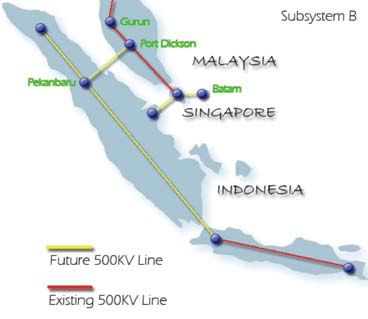
illustrated in Annex 1 Tel : +60- 3 - 2296 6177
Fax : +60- 3 - 2282 9223
Beneficiaries Email :
The project is expected to bring benefits to both public ckhalib@tnb.com.my
and private sectors in the involved countries, which can
be classified as follow: ASEAN Secretariat:
• Strategic benefits from security of supply and Infrastructure Division:
improved technical and commercial cooperation Email:
between the parties; InfrastructureDivision@
• Supply benefits of improved reliability and stability of asean.org
supply together with spinning reserve savings;
• Investment benefits of a high IRR (Internal Rate of
Return) yielding project in the base case and a higher
upside sensitivity on a firm basis; and
• Financing benefits from healthy free cash flows that
can help fund future PLN and TNB investments.ANNEX 1:
Melaka – Pekanbaru
Interconnection
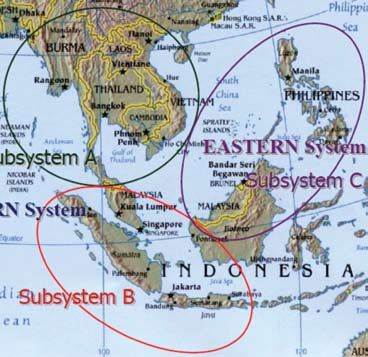
Melaka - Pekanbaru Interconnection project is one of the power grid networks under the ASEAN
Power Grid (APG) programme. It is categorised in Subsystem B: Indonesia, Peninsular Malaysia,
and Singapore (IMS).PHYSICAL CONNECTIVITY Project Information Sheet MPAC PP/A5/01
West Kalimantan – Sarawak Power Interconnection
BIMP – EAGA
Project Description Project Status
The ASEAN region has abundant energy resources with Term Sheet for a Power
great hydropower potential. This provides vast opportunities Exchange Agreement (PEA)
to utilise the available energy resources efficiently within between Sarawak Energy
ASEAN, thereby reducing the need and independency on Berhad (SEB) and PT PLN
imported fuel from other regions. Adequate and reliable Persero (PLN) for the export
supply of electricity is vital to the economic development of bulk electricity from Sara-
of ASEAN Member States. To continuously and reliably wak to West Kalimantan was
meet the growing demand for electrical energy, capital signed in Jakarta July 2011.
investments for the installation of additional generating
capacities and transmission lines are necessary. It was found Duration
that one of effective ways to lower the requirements for Proposed Financing
capital investments is to interconnect the power systems via Approval: 2012, Start of
transmission lines between neighboring countries. Implementation: 2012
Nowadays, large numbers of people in West Kalimantan still Implementing Body
heavily rely on imported fossil fuels. Kerosene is widely used Malaysia : Sarawak Energy
for lighting in households which have no access to electricity. Berhad (SEB)
Moreover, all power is generated by oil fired power stations
which led to the high cost of power generation (23 US cents/ Indonesia: The executing
kWh). In this connection, the ASEAN Leaders adopted the agency is PT PLN (Persero)
Master Plan on ASEAN Connectivity in October 2010 which Headquarter in Jakarta;
identified the West Kalimantan-Sarawak interconnection the implementing agency
as one of the prioritised projects. This project will connect will be PT PLN (Persero)
the electricity grids in the Indonesian and Malaysian parts Pokitring Kalimantan, and
of Borneo which will contribute to the optimum usage of PT PLN Pokitring West
regional energy resources. Kalimantan will handle the
project in the field.
Main Objectives, Outputs and Activities
WEST KALIMANTAN - SARAWAK
The West Kalimantan-Sarawak Interconnection project Countries Involved INTERCONNECTION
aims to support investment in strategic transmission Indonesia and Malaysia
assets that connects international boundaries to optimise
power networks by reducing the overall need for reserve Budget
capacity, improving system reliability, removing transmission Estimated Total Project
bottlenecks, and transmitting cheaper power from one area Cost: US$ 161 million.
to the other, addressing overall regional socio-economic and Malaysia: US$ 41 million,
environmental improvement. In this project, Sarawak will Indonesia : US$ 120 million
export additional electricity to West Kalimantan which will
generate additional income for Sarawak Energy Berhad (SEB). Funding Partner(s)
On the other side, the power system will improve the quality Asian Development Bank
and reliability of power supply and help to diversify energy (ADB).
generation portfolio by retiring old in-efficient oil-based power
plants in West Kalimantan, thus reducing CO2 emission in the
Borneo Island. In the longer term, the project will also support
the development of West Kalimantan’s resources.The project will consist of 125 km high voltage 275kV AC Other Expertise/
interconnection transmission network enabling power Resources Needed
import and export capacity between two countries. Experts to undertake study
The line will connect Bengkayang Substation in West on compensations under
Kalimantan to Mambong Substation in Sarawak. PLN, Resettlement and Ethic
the state owned power utility in Indonesia, plans to Minority Development Plan
reduce its cost of power generation in West Kalimantan (REMDP)
by importing hydropower generated electricity from
neighboring Sarawak, Malaysia by building about 83 km Contact Person
275 kV transmission line from its Bengkayang substation Responsible ADB Officer:
to the border with Sarawak, Malaysia. On the other side Mr. Sohail Hasnie
of the border, Sarawak Energy Berhad (SEB), the state Principal Energy Specialist
owned power utility in Sarawak will build about 42 km Energy Division
275 kV transmission line from Mambong substation to the Southeast Asia Depertment
border with West Kalimantan. Together, these transmission Asian Development Bank
lines in the two countries will form the first regional BIMP- 6 ADB Ave., Mandaluyong
EAGA flagship project and the first leg of the Trans Borneo City
Power Grid. 1550 Metro Manila,
Philippines
Currently, line route survey from the Mambong substation Tel. No. +63 2 632-6412
in Sarawak to the interconnection point at the town of Email: shasnie@adb.org
Serikin has been completed. The Basic Design Studies
on the proposed interconnection had already been INDONESIA:
completed by PT PLN Persero and Sarawak Energy Mr. Nur Pamudji
Berhad (SEB). Data collection in the project area for the President Director
purpose of drafting a resettlement plan for affected and PT PLN (Persero)
displaced persons (i.e. ethnic minorities) was undertaken Jl. Trunojoyo, Blok M I/135
in the period of December 2009 until April 2010 through Jakarta 12160, Indonesia
a socio - economic survey and inventory of losses (IOL). Tel : +62 - 21 - 7220300
Compensation for the lost land and non-land assets Fax : +62 - 21 - 7204929
and compensation for the lost land and non-land assets Email: n.pamudji@pln.co.id
under Resettlement and Ethic Minority Development
Plan (REMDP) will be undertaken. The West Kalimantan- MALAYSIA:
Sarawak Interconnection is illustrated in Annex 1 Mr Nick Wright
Vice President, Strategic
Beneficiaries Communications & CSR
The interconnection will reduce the costs of operating Sarawak Energy Berhad (SEB)
power systems in both countries and increase the reliability Level 8, Menara SEB, No
of the power supply. More people in West Kalimantan will 1, The Isthmus, 93050
have access to sustainable and efficient power supply. Kuching, Sarawak
In the environmental side, the project will contribute to Tel: +6082 388388 ext 8802
reduction of CO2 emissions by about 600,000 tons/annum Fax: +6082 444433
in the Indonesian side, which in turn, contributing positively Email: nickwright@
to minimise the effects of climate change. sarawakenergy.com.myANNEX 1:
Sarawak – West Kalimantan
Interconnection
West Kalimantan-Sarawak Interconnection project is one of the power grid networks under the ASEAN Power Grid (APG)
programme. It is categorised in Subsystem C (Eastern System), also named as Trans Borneo Power Grid, which includes Brunei,
Sabah, Sarawak, West Kalimantan, and the Philippines.PHYSICAL CONNECTIVITY Project Information Sheet MPAC PP/A6/01
Feasibility Study on the Establishment of an ASEAN Roll-On/Roll-
Off (RO-RO) Shipping Network and Short Sea Shipping
Project Description Project Status
ASEAN, as a region comprising more than 30,000 islands, Feasibility Study is
is unique in the world in its development challenges. being conducted
Connecting these islands in the traditional manner
through increased shipping services has proven to be Target Completion Date
quite prohibitive in costs, in terms of investments in ports December 2012
and facilities and related services. The development of
an ASEAN Roll-On/Roll-Off (RO-RO) Shipping Network Implementing Bodies
could, among others, reduce transport costs, expand ASEAN Senior Transport
business activities and improve local government Officials Meeting (STOM),
revenues. ASEAN Leaders adopted the Master Plan on National Coordinators,
ASEAN Connectivity in October 2010 which identified Sub-Regional
the RO-RO feasibility study as one of the 15 prioritised Arrangements (The Brunei
projects to bridge the connectivity gap within ASEAN. Darussalam-Indonesia-
Malaysia-Philippines East
Main Objectives, Outputs and Activities ASEAN Growth
The feasibility study aims to assess the viability of Area [BIMP-EAGA], The
establishing RO-RO routes within ASEAN that will link Indonesia-Malaysia-
mainland and archipelagic regions in order to provide a Thailand Growth Triangle
seamless inter-modal transport system for ASEAN. [IMT-GT], The Greater
Mekong Subregion
Output 1: Case Studies [GMS], etc.), and ASEAN
Three case studies will be conducted on the European business-related groups.
experience, Asian RO-RO experience, and the Philippine
and Indonesian Domestic RO-RO Systems and other RO- Modality & Source of
RO systems in ASEAN region. Funding
Japan International
Output 2: Feasibility Studies on Identified Potential RO- Cooperation Agency
RO Routes in ASEAN (JICA)
This component will evaluate the economic and financial
viability of establishing and operating potential RO-RO Coordinating
shipping routes in ASEAN based on market, technical and Countries
social and environment assessments. The selection of Indonesia and the
priority RORO routes will also be based on the potential Philippines
and long term benefits of the routes to the covered areas
in support to the objective of inclusive growth in ASEAN. Contact Person
Mr. Arsenio Lingad
ROLL-ON / ROLL-OFF
Output 3: Regulatory, Legal and Institutional Framework Director II
for the ASEAN RO-RO Network Maritime Industry
STUDY
This part will review existing policies and regulations Authority
pertaining to RO-RO routes in ASEAN and put forward Department of
an ASEAN framework that seeks to promote greater Transportation &
competition (by expanding the port network), improve Communications
transport logistics efficiency, enhance regional trade (byincreasing the number of routes served) and encourage PPL Bldg., 1000 United
private sector participation. Nations Avenue, Manila,
Philippines
Output 4: ASEAN RO-RO Network Roadmap Tel: +632 525 7890
This policy document will provide a clear direction for the Fax: +632 525 7890
implementation of the ASEAN RO-RO Network. Email: arsenioflingadii@
yahoo.com
In general, the activities will involve market surveys
and consultative meetings and conferences at both ASEAN Secretariat:
the ASEAN and national levels. The main activities Infrastructure Division:
and outputs of this project will provide more detailed Email:
implementation strategies for the ASEAN RO-RO project, InfrastructureDivision@
including sub-activities, timetables and responsible asean.org
entities as well as roles of various agencies in Member
States.
Beneficiaries
Both the private and public sector are expected to be
beneficiaries of an ASEAN Ro-Ro network. While the
private sector’s gains include a reduction of transport
cost, more efficient service and increased opportunities
from tourism, the public sector has benefitted from
increased revenue collection through direct and indirect
sources.INSTITUTIONAL CONNECTIVITY Project Information Sheet MPAC PP/B1/01
Developing and Operationalising MRAs for Prioritised and
Selected Industries
MUTUAL RECOGNITION
Project Description Project Status
This project will assist ASEAN Member States to (i) Seeking technical
AGREEMENTS
develop more Mutual Recognition Arrangements (MRAs), assistance/funding
in particular for the priority integration sectors; and (ii) support for the
adhere to the general principles and conditions stipulated proposed projects
in the ASEAN Framework Agreement on MRAs and
to facilitate the recognition of results of compulsory Target Completion
certification required by a Member State where the Date
certificate is issued by conformity assessment bodies in July 2016
the territory of another Member State, especially for the
prioritised sectors. Implementing Bodies
ASEAN Consultative
MRA facilitates the flow of goods by allowing the Committee for
mandatory conformity assessment (i.e., testing, inspection Standards and Quality
and/or certification) being imposed by importing country (ACCSQ) and the
be conducted at the source country following the relevant sectoral body
specified standards, technical requirements or relevant under its purview
procedures. There are two sectoral MRAs that have been
developed in ASEAN; 1) ASEAN Electrical and Electronic Modality & Source of
MRA which provides for acceptance of test reports Funding
issued by Listed Testing Laboratories and certification Japan and ARISE
issued by Listed Certification Bodies that demonstrate
conformity of electrical and electronic equipment with Contact Person
its mandatory requirements, and 2) ASEAN MRA ASEAN Secretariat:
for Good Manufacturing Practice (GMP) Inspection Trade and Facilitation
of Manufacturers of Medicinal Products, under the Division
pharmaceutical sector, which provides for acceptance Market Integration
of the GMP certificates and GMP inspection reports for Directorate
manufacturers of medicinal products issued by a Listed ASEAN Economic
Inspection Service. Other sectoral MRAs are being Community Department
developed in ASEAN such as MRA on prepared foodstuff Email:Trade&Facilitation
and MRA on automotive. Division@asean.org
The MRA on automotive sector aims to provide for the
acceptance or recognition of conformity assessment
results issued by Listed Technical Services thus
facilitating mutual recognition of conformity assessment
results for automotive products. Japan and EU have
signified support in assisting ASEAN in the development
and implementation/ operationalisation of MRA in the
automotive sector. Japan has proposed a project on
Assistance for Developing and Operationalising MRAs and
Establishing Common Rules for Standards and Conformity
Assessment Procedures for Automotives which waswelcomed and endorsed by the Land Transport Working Group Meeting (LTWG) and Automotive Product Working Group (APWG), respectively. Under the ASEAN Regional Integration Support from EU (ARISE) project, support on the development and implementation of MRA on Type Approval for Automotive Products has been identified as specific area of assistance. Main Objectives, Outputs and Activities To support ASEAN in harmonising its standards, technical regulations and conformity assessment procedures thus reducing or eliminating Technical Barriers to Trade (TBTs). To assist in the development and implementation of ASEAN-wide harmonised regulations to realise ASEAN and certification, as well as to facilitate the establishment of an efficient and integrated transport system in ASEAN. To implement possible approaches synthetically such as advising implementation on regulation and organisational structure, and capacity building about implementation of a system depending on the situation of each country. Activities include public and private forum, workshop, survey, training, exchange of technical experts and other forms of technical assistance support. Beneficiaries The relevant stakeholders in ASEAN would benefit from the project, these are: the ASEAN regulatory authorities, conformity assessment bodies/technical services, manufacturers, consumers. List of Proposed Projects A. Automotive. • Implementation of MRA for Type Approval of Automotive Products. (Automotive Product Working Group: 3rd Quarter of 2013) • Workshop on Electric Vehicle (EV) Standards. (Automotive Product Working Group: 4th Quarter of 2012)
• Harmonisation of technical requirements with UNECE
  Regulations of the 1958 Agreement.
  (Automotive Product Working Group: 4th Quarter of
  2014)
• Understanding and compliance to Conformity of
  Production procedures (COP) of UNECE 1958
  Agreement.
  (Automotive Product Working Group: 4th Quarter of
  2013)

B. Legal Metrology
• Developing Training Modules on Pre-packaged
   Products; Train-the-Trainers Training.
   (Working Group on Legal Metrology: 2nd Quarter of
   2013)
• Training on Verification of Non-Automatic Weighing
   Instrument (NAWI).
   (Working Group on Legal Metrology: 3rd Quarter of
   2013)

C. Traditional Medicine and Health Supplements
• Training on Implementation of ASEAN Guidelines on
   Good Manufacturing Practice (GMP) for Traditional
   Medicines and Health Supplements (TMHS).
   (Traditional Medicines and Health Supplements
   Product Working Group: 4th Quarter of 2013)

D. Electrical and Electronics
• Development and Implementation of ASEAN
   Guidelines to Determine the Type of Conformity
   Assessment Regime Based on Risk Assessment for
   Electrical and Electronic Equipment (EEE).
   (Joint Sectoral Committee on EEE: 2nd Quarter of
   2013)
• Establishment of list of standards at the regional
   level as presumption of conformity to the essential
   requirements of the EEE.
   (Joint Sectoral Committee on EEE: 2nd Quarter of
   2013)
• Develop the requirements for post market surveillance
   and safety alert system for EEE.
   (Joint Sectoral Committee on EEE: 2nd Quarter of
   2013)
E. Agro Based Sector
• Implement the ASEAN Common Food Control
   Requirements for food control systems, food hygiene
   and food labelling;
• Harmonise national standards and technical
   requirements for prepared foodstuff with CODEX
   standards;
   (Prepared Foodstuff Product Working Group: Timeline
   8/2012 – 7/2016)
INSTITUTIONAL CONNECTIVITY      Project Information Sheet MPAC PP/B2/01

             Establishing Common Rules for Standards and Conformity
             Assessment Procedures

Project Description                                            Project Status
The project will support ASEAN in harmonising standards,       The project will be
technical regulations and conformity assessment                implemented under
procedures with the objective of reducing technical            the ASEAN Regional
barriers to trade (TBT) posed by differing standards,          Integration Support
technical regulations and conformity assessment                from EU (ARISE) and the
procedures for priority sectors agreed in ASEAN. This          details of the specific
would include agro-based based products, automotive,           activities of the project

                                                                                            COMMON RULES FOR
healthcare products and electrical and electronic              will be defined during
equipment.                                                     the inception phase and

                                                                                               STANDARDS
                                                               in consultation with the
The project would provide mechanism to work towards            ACCSQ.
achieving the following:
• enhancing legal framework for ASEAN quality                  Target Completion
   infrastructure built on the ASEAN Policy Guideline on       Date
   Standards and Conformance;                                  July 2016
• feasibility study on the development of regional standards
   (ASEAN) and its supporting framework agreement at the       Implementing Body
   regional level.                                             ASEAN Consultative
• conduct of pilot projects for the development of regional    Committee for
   standards for selected priority product sector;             Standards and Quality
• development and implementation of common and                 (ACCSQ)
   harmonised approaches for accreditation and conformity
   assessment procedures and post market surveillance          Modality & Source of
   systems for ASEAN                                           Funding
                                                               European Union (EU)
Main Objectives, Outputs and Activities
To support ASEAN as a single market and production             Contact Person
base by developing common rules in the area of                 ASEAN Secretariat:
standards and conformity assessment procedures.                Trade and Facilitation
                                                               Division
To provide a framework for enhancing policies and              Market Integration
procedures of ASEAN Member States related to on                Directorate
quality infrastructure (metrology, standardisation, testing,   ASEAN Economic
accreditation and quality).                                    Community Department
                                                               Email:
It is expected that the feasibility of developing regional     Trade&FacilitationDivision
standards would be attained and/or a framework for             @asean.org
harmonised standards for ASEAN.

Beneficiaries
The relevant stakeholders in ASEAN on standards and
conformance such as ASEAN regulatory authorities,
conformity assessment bodies, standards bodies,
manufacturers, consumers.
List of Potential Projects A. Agro-based sector • Develop and implement the common requirements for Harmonised Import-export Inspection and Certification System; • Develop and implement the common requirements for ASEAN Audit and Certification of Food Hygiene and Hazard Analysis and Critical Control Points (HACCP); • Develop and implement guiding principles for the establishment and management of the ASEAN Food Reference Laboratories, covering mandate and necessary resources. (Prepared Foodstuff Product Working Group: Timeline 8/2012 – 7/2016). B. Cosmetics • Establish a regional network of testing laboratories; • Develop trainings modules and training materials material such as guidelines on preparation of Product Information File (PIF), safety evaluation, PIF audits, toxicology and safety assessment, efficacy assessment; for public sector (regulator, control authorities) and private sector (manufacturers); • Develop training modules and Train The Trainer Programmes to ensure common understanding and interpretation of the technical requirements of the ACD; • Develop a regional database of notified cosmetic products; • Ensure regular involvement of private sector (consultation and raising awareness). (ASEAN Cosmetic Committee: Timeline 8/2012 – 7/2016) C. Electrical and electronic equipment • Develop the requirements for post market surveillance; (Joint Sectoral Committee on Electrical and Electronic Equipment: 2nd Quarter of 2013) • Ensure regular involvement of private sector (consultation and awareness raising). (Joint Sectoral Committee on Electrical and Electronic Equipment: 4th Quarter of 2014)
INSTITUTIONAL CONNECTIVITY     Project Information Sheet MPAC PP/B3/01

            Operationalisation of the National Single Windows (NSWs) by
            2012 and the ASEAN Single Window (ASW) by 2015

Project Description                                         Project Status
Realising that an effective and efficient arrangement       Seeking technical and
to expedite customs release and clearance will reduce       funding assistance to
the costs of doing business for traders, ASEAN is           expand the ASW Pilot
developing the ASEAN Single Window (ASW) to enhance         Project and progress to a
trade facilitation and further integrate the regional       “live” environment
economies. The ASW is the environment where National
Single Windows (NSWs) of Member States integrate            Target Completion Date
and operate. While NSWs provide traders with a single       December 2012 for NSWs;
entry point for submitting and processing clearance         December 2015 for ASW
documentation and data, the ASW architecture will allow
that data to be exchanged electronically among Member       Implementing Bodies
State NSWs to enhance government agencies’ ability to       ASEAN Customs
clear goods faster for the benefit of traders. The ASEAN    Directors-General, ASW
Leaders adopted the Master Plan on ASEAN Connectivity       Steering Committee and
in October 2010, which identified the operationalisation    relevant national agencies

                                                                                          ASEAN SINGLE
of all NSWs by 2012 and the ASW in selected ports by

                                                                                            WINDOW
2015 as one of the 15 prioritised projects to bridge the    Modality & Source of
connectivity gap within ASEAN.                              Funding
                                                            USAID, External Partners,
Main Objectives, Outputs and Activities                     ASEAN Member States
To operationalise the ASW, ASEAN will develop a legal       National Budgets
framework for the cross-border exchange of electronic
transaction data, and harmonise and standardise             Contact Person
electronic data needed to process and clear shipments.      ASEAN Secretariat:
The ASW also aims to strengthen the coordination and        Trade and Facilitation
partnership among ASEAN Customs Administrations             Division
and relevant line ministries and agencies, and, through     Market Integration
its integration with NSWs, economic operators as well       Directorate
(including importers, exporters, transport operators,       ASEAN Economic
express industries, customs brokers, forwarders,            Community Department
commercial banking entities and financial institutions,     Email:
insurers, and those relevant to the international supply    Trade&FacilitationDivision@
chain).                                                     asean.org

Currently ASEAN Member States are at various stages
of NSW implementation and have invested substantial
efforts and resources in designing the ASW. Through a
Memorandum of Understanding (MOU), most ASEAN
Member States will be implementing an ASW Pilot
Project that will serve to test the ASW architecture in
the exchange of the ASEAN Trade in Goods Agreement
preferential certificate of origin (ATIGA Form D) and the
ASEAN Customs Declaration Document. The Pilot,
currently in scaled down phase, would eventually be scaled up to include other cross-border exchange of information to support pre-arrival clearance, which will enhance government agencies’ ability to clear goods faster. This would be followed by an evaluation of outcomes of the Pilot Project and formulation of recommendations for the eventual ASW. Beneficiaries The implementation of the NSWs and the ASW will facilitate the streamlining of processes and procedures, engender tight coordination of related government agencies and trade-related service providers in the private sector, and foster greater transparency and predictability on trade-related rules, regulations and procedures. All these will result in faster, easier, more predictable, and more cost effective movement of goods that would ultimately benefit the traders and consumers.
INSTITUTIONAL CONNECTIVITY        Project Information Sheet MPAC PP/B4/01

             Options for a Framework Modality towards Phased Reduction and
             Elimination of Investment Restrictions/Impediments

Project Description                                              Project Status
To achieve free flow of investment, ASEAN is intensifying        The modality was
its efforts to create a more favourable environment for          endorsed
investment in the region with the signing of the ASEAN           by the ASEAN Economic
Comprehensive Investment Agreement (ACIA) in 2009.               Ministers in August
The Agreement entered into force on 29 March 2012.               2011. Funding will be
ACIA is the result of a consolidation of two ASEAN               required to implement
Investment Agreements, the 1987 ASEAN Agreement                  an investment
for the Promotion and Protection of Investments                  liberalisation and
(ASEAN IGA) and the 1998 Framework Agreement on                  facilitation programme
the ASEAN Investment Area (AIA) as well as its related           based on the modality
protocols. The consolidation means that there is one             endorsed.
single comprehensive investment agreement covering
the manufacturing, agriculture, fishery, forestry, and the       Target Completion
mining and quarrying sectors, and services incidental            Date
to these five sectors. The ASEAN Leaders adopted                 December 2015
the Master Plan on ASEAN Connectivity in October
2010 which identified the development of a framework/            Implementing Bodies
modality towards the Phased Reduction and Elimination            ASEAN Investment Area
of Scheduled Investment Restrictions/Impediments as a            (AIA) Council, ASEAN
prioritised project.                                             Coordinating Committee
                                                                 on Investment (CCI)
Main Objectives, Outputs and Activities
The main objective of this project is to achieve free            Contact Person

                                                                                          INVESTMENT
and open investment through progressive liberalisation           ASEAN Secretariat:
whereby ASEAN Member States are obliged to start                 Services & Investment
progressive reduction/eliminating investment restrictions        Division (SID),
and impediments. This objective shall be delivered               Market Integration
through actions which are outlined under the four pillars        Directorate,
of the ACIA, i.e., (1) Investment Protection, (2) Facilitation   ASEAN Economic
and Cooperation, (3) Promotion and Awareness, and (4)            Community Department,
Liberalisation.                                                  the ASEAN Secretariat
                                                                 Email:
The ASEAN Economic Minister (AEM)-14th AIA Council               investment@asean.org
Meeting in August 2011 has endorsed the “Modality for
the Elimination/ Improvement of Investment Restrictions
and Impediments”, which will govern ASEAN’s future
work on progressive investment liberalisation.

The publication of the ACIA Guidebook/Handbook and
promotion and outreach activities are also being planned
and will be implemented with the support from ASEAN
partners.
Beneficiaries On one hand, ACIA will promote ASEAN as an integrated investment area and production network. On the other hand, ACIA will provide enhanced protection to all investors and their investments as it will bring about a more transparent, consistent and predictable investment rules, regulations, policies and procedures that benefit investors.
INSTITUTIONAL CONNECTIVITY      Project Information Sheet MPAC PP/B5/01

            Operationalisation of the ASEAN Agreements on Transport Facilitation

Project Description                                          Project Status
Transport infrastructure in the ASEAN region is steadily     Making preparations for
developing with the construction of Singapore-Kunming        the commencement of
Rail Link (SKRL) and ASEAN Highway Network (AHN).            ARISE programme in Q3
Transport infrastructure alone would not be sufficient       of 2012
to bring about free flow of goods, services and peoples
between countries if non-tariff barriers and border          Target Completion
impediments are not removed. To complement the               Date
developments and efforts in building physical connectivity   2014-2015
through hard infrastructure, ASEAN is pursuing three
land-based transport facilitation agreements and their       Implementing Bodies
protocols and three roadmaps for the integration of air      TTCB, NTTCC of ASEAN
and maritime transport and logistics services. The three     Member States, Senior
ASEAN transport facilitation agreements are the ASEAN        Transport Officials
Framework Agreement on the Facilitation of Goods in          Meeting (STOM)/ ASEAN
Transit (AFAFGIT), the ASEAN Framework Agreement             Transport Facilitation
on Multimodal Transport (AFAMT) and the ASEAN                Working Group
Framework Agreement on the Facilitation of Inter-State
Transport (AFAFIST).       ASEAN Leaders adopted the         Modality & Source of
Master Plan on ASEAN Connectivity in October 2010            Funding
which identified the “Operationalisation of the ASEAN        European Union (ASEAN
Agreements on Transport Facilitation” as one of the 15       Regional
prioritised projects to bridge the connectivity gap within   Integration Support from
ASEAN.                                                       the EU, ARISE)

Main Objectives, Outputs and Activities                      Contact Person
The main objective of this project is to achieve progress    ASEAN Secretariat:
in removing barriers related to transport, including         Infrastructure Division
preparation for and implementation of the ASEAN              Email:
Framework Agreement on the Facilitation of Goods in          InfrastructureDivvision@
Transit (AFAFGIT), the ASEAN Framework Agreement             asean.org
                                                                                        FACILITATION
                                                                                         TRANSPORT
on Multimodal Transport (AFAMT) and the ASEAN
Framework Agreement on the Facilitation of Inter-State
Transport (AFAFIST), and other relevant ASEAN transport
agreements to facilitate movement of goods and
passenger vehicles.

The prioritised project focuses in delivering related
measures under the ASEAN Transit Transport
Coordination Board (TTCB) Work Plan and Brunei Action
Plan (BAP), which include the following outputs and
activities:
AFAFGIT: • At the regional level, assist ASEAN in finalising the institutional bases for AFAFGIT implementation, through the development of annual work plans, and annual reports; • At national level, assist ASEAN Member States in finalising the institutional bases for implementation, including Terms of Reference (TOR), Membership and Frequency on National Transit Transport Coordinating Committees (NTTCC) meetings; NTTCCs overall and annual work plans at national level. AFAFIST: • At the regional and national levels, assist ASEAN in finalising the institutional bases for AFAFIST implementation and that such bases are consistent with those in the AFAFGIT; • Assist ASEAN Member States and the ASEAN Secretariat to define Technical Assistance requirements (at regional and national levels) and related resources for AFAFIST implementation (for inclusion in national work plans); AFAMT: • Organise a series of workshops to support: (i) the development of a multi-annual work plan to activate the AFAMT including regional and national dimensions; and (ii) support the implementation of the work plan in particular in CLMV; • Assist in transposing AFAMT at national level, especially in CLMV. Beneficiaries The private sector is expected to be beneficiaries of the full implementation of ASEAN transport facilitation agreements through the reduction of the economic distance to market.
PEOPLE TO PEOPLE CONNECTIVITY       Project Information Sheet MPAC PP/C1/01

              Study of the Implementation of Visa Exemption for ASEAN Nationals and the
              Possible Establishment of an ASEAN Common Visa for Non-ASEAN Nationals

Project Description                                               Project Status
As more people around the world see Southeast Asia as an          The proposed study

                                                                                              RELAXATION
attractive place to visit, invest in and live, ASEAN is working   on ASEAN Common
on easing visa requirements for ASEAN nationals and               Visa for Non-ASEAN

                                                                                                 VISA
foreign tourists, and at the same time, designing a common        Nationals is expected to
visa framework to boost foreign visitors. According to the        commence in 2012.
ASEAN Tourism Statistic Database, ASEAN attracted more
than 79 million visitors in 2011, posting a healthy 7.4 per       Target Completion
cent growth. Intra-ASEAN travel maintained its position as        Date
the major share of tourists, making up 43 per cent of total       December 2015
international arrivals. In this context, ASEAN Member States
continue to accelerate the easing of visa requirements for        Implementing Bodies
ASEAN nationals through the full implementation of the 2006       Output 1:
ASEAN Framework Agreement for Visa Exemption. ASEAN               ASEAN Directors-
Leaders adopted the Master Plan on ASEAN Connectivity             General Of Immigration
in October which identified “Easing Visa Requirements             Departments And
for ASEAN Nationals as a prioritised project, which also          Heads Of Consular
explores the possibility of implementing progressive visa         Affairs Divisions Of The
relaxation for foreign tourists visiting ASEAN by 2015.           Ministries Of Foreign
                                                                  Affairs (DGICM), in
Main Objectives, Outputs and Activities                           coordination with Senior
This prioritised project addresses basic people-to-people         Economic Officials
connectivity issues and facilitates the mobility of people        Meeting (SEOM),
and tourists.                                                     ASEAN National
                                                                  Tourism Organisations
Output 1: Visa Exemption for intra-ASEAN travel by                (NTO), and other
ASEAN Nationals                                                   relevant sectoral bodies.

The ASEAN Member States are in the process of                     Output 2:
implementing the ASEAN Framework Agreement for Visa               ASEAN Senior Officials
Exemption on a bilateral basis. The visa exemption for the        Meeting (SOM) in
ASEAN nationals holding ordinary passports is agreed              coordination with
upon through bilateral Memorandum of Understanding as             relevant sectoral bodies
well as based on reciprocity. These efforts would facilitate
intra-ASEAN tourism. The status of visa requirements for          Modality & Source of
ASEAN nationals appears in Annex 1.                               Funding
                                                                  ASEAN Development
The ASEAN Economic Ministers, on the other hand,                  Fund, External Partners,
have mooted the idea of exploring the development of              ASEAN Member States
an ASEAN Business Travel Card, which is expected to               National Budgets
cut through the red tape of business travel, and gives
ASEAN nationals who are frequent business travelers
expedited immigration clearance to participating ASEAN
economies.
You can also read


