ASM 2018 - A COSMIC EVENT - RANZCR
←
→
Page content transcription
If your browser does not render page correctly, please read the page content below

Volume 15 No 1 / December 2018

Quarterly publication of The Royal Australian and New Zealand College of Radiologists

                                                                  ASM 2018 –
                                                                  A COSMIC
                                                                     EVENT

                           The Art of          Accreditation –       Meet the new
Also Featured             Observation
in this edition            Enhancing
                                               Building strong        Dean and
                       Interpretation Skills
                                                foundations           Councillors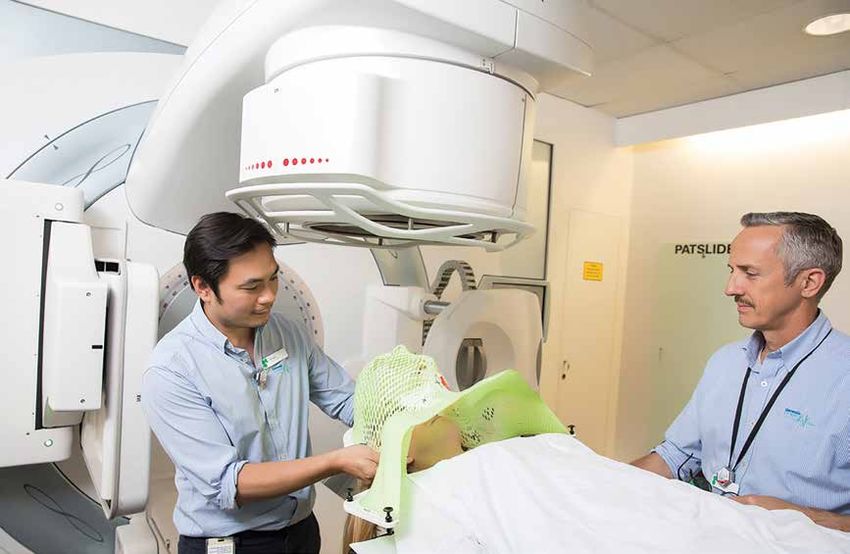
Discover the magical top end with I-MED.

Join us in Darwin.
A great opportunity now exists for radiologists seeking
professional and financial rewards, and a unique ‘life
experience’ while working for the leading medical
imaging provider in Darwin.

I-MED Radiology is offering                    the-art clinics, run at a local level
radiologists a highly competitive,             to best meet the needs of diverse
market-leading remuneration                    communities around Australia. With
package to reflect the unique                  Darwin’s mix of private and public
location and work profile. Both                hospital locations encompassing
short and long-term placements                 all imaging modalities, you will have
will attract a $1,000,000 salary per           exposure to an unparalleled mix of
annum, depending on the suitable               work and interesting pathology.
candidate.
                                               Discover new horizons and join our
With I-MED Radiology Network you               vision to be the most respected and
have the best of both worlds – a               trusted medical imaging specialists
national network with state-of-                in the world.

To find out more please contact Ashley Risbridge on 02 8274 1075
or email ashley.risbridge@i-med.com.au

www.i-med.com.au
Editor’s Pick
5      The President’s Message

                                                                                                  43         Radiation Oncology

6      The CEO’s Message
                                             27        Training and Assessment
                                                                                                             Training Program News

                                                                                                 49
                                                       Reform Update

7
                                                                                                                 ARPANSA’s new
         Accreditation –                                                                                         linac is coming
         Building strong
         foundations                         29        A Message from the Dean
                                                       of Clinical Radiology

                                                                                                  51           Meet the new FRO Dean

13
                                                                                                               and Councillors for 2019
         ASM – All the
                                             31
                                                       Clinical Radiology Training
         highlights from                               Program News
         Canberra
                                                                                                  53          New Zealand Branch

                                            35
                                                            The Art of Observation                            News

17     Targeting Cancer ramps
       up in New Zealand
                                                            Using art to enhance
                                                            interpretation skills
                                                                                                  54          News in Brief

                                            37
                                                            An alternative to
20     Inside Radiology – MRI
                                                                                                                "Of at least

                                                                                                55
       access in focus                                      Hysterectomy?
                                                            Exploring Uterine                                   intermediate status"–
                                                            Artery Embolisation                                 Wandering with the
                                                                                                                Rouse Traveling

22      Courses, Workshops and                                                                                  Fellow

                                             38
        Events
                                                      Meet the new FCR Dean
                                                      and Councillors for 2019
                                                                                                  57         From the Archives
24      The search for biomarkers

                                             41       A Message from the Dean
                                                      of Radiation Oncology

                       If you have thoughts or comments about one                                        Have you moved
  What                  of the stories you have read in this issue, we                                   recently?
 are your                 want to hear from you. The submission of                                       Log into the MyRANZCR
thoughts?               letters to the editor, articles and news items                                   Portal and ensure your
                      are encouraged. Please email any submissions                                       contact details are up to
                           to Mark Grzic at editor@ranzcr.edu.au                                         date at www.myranzcr.com

   Inside News is printed on Sovereign Silk. Sovereign Silk is produced in an ISO 14001 accredited facility ensuring
       all processes involved in production are of the highest environmental standards. FSC mixed Sources Chain
             of Custody (CoC) certification ensures fibre is sourced from certified and well managed forests.

 Editorial Staff            All rights reserved. No part of this publication may be reproduced or copied in any form or
                            by any means without the written permission of the publisher.
 Editor-In-Chief            Publication of advertisements and articles submitted by external parties does not constitute
 Dr Allan Wycherley         any endorsement by The Royal Australian and New Zealand College of Radiologists of the
                            products or views expressed.
 Sub Editors                Inside News
 Mark Grzic                 © 2018 The Royal Australian and New Zealand College of Radiologists® (RANZCR®)
Key Dates

 Call for Abstracts Open:    Janurary 2019   Sponsorship and Exhibition
                                             Opportunities Now Available
 Call for Abstracts Close:      April 2019   Contact Encanta for further details or to tailor
                                             a package to suit your marketing objectives
 Registrations Close:           April 2019
                                             (08) 9389 1488, ranzcr@encanta.com.au.

ranzcr2019.com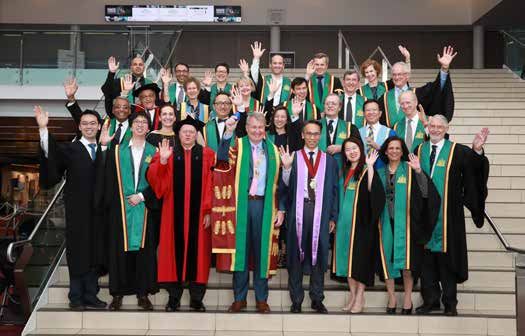
Introduction

                                               Across the expanding
                                               medical universe
                                               A Message from
                                               the President

   Dr Lance Lawler

                                               trajectories and the future of our            underfunding. She argued that AI had
Radiologists in search of their place in
                                               specialties. This was most evident in         already begun to improve workflow
the universe took the unusual step this
                                               the talks, presentations and panel            efficiency and reduce the drudgery of
year of consulting the stars. This we
                                               discussions devoted to interventional         repetitive tasks, and within 10 years
did, as true practitioners of evidence-
                                               radiology, artificial intelligence (AI) and   would help to deliver the promise of
based medicine, not by consulting
                                               women in medical leadership.                  a new era of personalised medicine
the horoscopes (although the recent
                                                                                             through radiomics. Memorably she
entry by Uranus into Taurus was a              The Chairman of the RANZCR
                                                                                             stated, ‘The advent of AI will allow us
worry), but through reflection on the          Interventional Radiology Committee
                                                                                             to reinvent ourselves and behave as
celestial insights of Brian Schmidt,           (IRC), Dr. Nick Brown, gave an
                                                                                             doctors again, and not be hived off into
our best-known astronomer and a                important update on the IRC’s work
                                                                                             darkened rooms acting like battery hens
Nobel laureate. Prof. Schmidt—who              since its formation over 18 months
                                                                                             turning out reports without interaction
helped make the unexpected discovery           ago. His update emphasised that, to
                                                                                             with our clinical colleagues or patients.’
that the expansion of the universe is          achieve recognition of IR as a distinct
accelerating—delivered the Nisbet              medical specialty and a new faculty           Finally, this year’s ASM included, for
Oration at our 2018 Annual Scientific          within the College, we need to better         the first time, a forum devoted to
Meeting (ASM) in Canberra. Fittingly, his      define the specialty, develop detailed        women in medical leadership and the
lecture was about the future and how           standards and guidelines, establish           issues facing women in our profession.
we should best deal with our inability to      a training pathway, and consider and          The well-attended breakfast heard
predict it well.                               explain the implications for patients.        presentations which ranged across the
                                               This list is no mean set of tasks and         #Metoo movement, maternity leave,
The ASM’s theme of ‘Our Place in the
                                               will require engagement and support           gynaecological cancers in Botswana and
Universe’ was launched in plenary by
                                               from the whole profession, as well as a       the participation by women in banking
Richard Gunderman, one of America’s
                                               realignment of the College’s advocacy         and finance, as well as medicine. Later,
best-known radiologists and medical
                                               work with government.                         Prof. Birgitte Offersen outlined an
educators. Prof. Gunderman reminded
                                                                                             important Danish study into the late
us that Röntgen’s discovery of X-rays          The ASM talks around Artificial
                                                                                             effects of treatments for breast cancer.
in 1895 did not just alter medicine            Intelligence (AI) were especially well
forever—it changed our understanding           received, and rightly so, as few aspects      I commend the ASM’s organisers,
of the universe by opening our eyes            of our professional future loom larger        sponsors, contributors and attendees on
to the vast electromagnetic spectrum           or more unpredictably in our collective       such an inspiring event, and welcome
beyond visible light. In a discussion          vision than this. In addition to valuable     our new fellows to the College. The
involving supernovae, black holes and          technological contributions by local and      universe never looked so big and bright
Mercury (Freddie, not the planet), he          overseas researchers at IBM and others,       and our place in it so clear.
noted that ‘much of the universe would         it fell to Nicola Strickland, President
be invisible to us except for our ability to   of the Royal College of Radiologists,
detect X-rays.’                                to pose perhaps the crucial issue
                                               for her fellow radiologists: why we
Finding our place in a future medical
                                               clinically need AI. In addressing the
universe dominated much of the
                                               issue, Dr. Strickland noted the unmet
discussion at the ASM this year, and,
                                               demand for radiologists in the UK and
as a result, attendees no doubt gained
                                               worsening delays in the reporting of
a clearer view of their professional
                                               imaging studies due to government

                                                                                                  Volume 15 No 1 I December 2018        5
Introduction
2018 achievements
and 2019 plans
From the
Chief Executive Officer
Ms Natalia
Vukolova
An increasingly large number of and accessibility of diagnostic imaging careful work with Department of Health
radiologists and radiation oncologists equipment. We advocated at two this past year helped to deliver a new
are volunteering for the College – roundtable discussions on radiation funding agreement for the Specialist
defying the trend in other volunteer oncology with the Australian health Training Program for 2018–20, including
organisations. In 2018 the number minister's office and senior Department funds for new training posts under its
grew to 1,619 individuals or 37% of Health staff in Canberra, as well Integrated Rural Training Pipeline.
of College members. It is the as meetings with the shadow health
The College’s focus in 2019 will be on
opportunity to give back to the minister and Labor MPs in Queensland,
implementing our strategic plan across
profession, the social networks and and another with the NZ Health
member engagement, advocacy, clinical
the diversity of the work that keeps Minister, David Clark, in Wellington.
excellence, education and operational
the engagement high. The work of Over the course of the last financial
efficiency. We will see substantial
the College ranges across advocacy year the College issued 37 media
progress in offering improved services
to governments, the development releases and 21 submissions or position
to our members and more opportunities
of clinical standards and the statements, a list which includes the
for you to be engaged with the College.
education of registrars. The breadth important teleradiology standards to
We will be strengthening our advocacy,
of responsibilities borne ably every be incorporated in the forthcoming
public profile, and partnerships. The
day by the College demonstrates its version of the Standards of Practice
Australian Medical Council will be re-
reputation as the go-to organisation for Diagnostic and Interventional
accrediting the College in 2019. This will
in radiology and radiation oncology Radiology. This particular achievement
bring into focus the extensive reforms
in our region. This reputation is no was followed by a presentation to
we are putting in place across our
happy accident, it’s the aggregated the prestigious Australian Telehealth
training programs. There is much to look
outcome of the generous and Conference outlining how we had
forward to in 2019 and all members are
continuing contributions of those successfully converted telehealth policy
encouraged to join their peers and lend
1,619 clinicians supported by expert into a coherent and practical set of
a hand.
staff. standards for the benefit of professionals
and patients. In these initiatives and If you have any thoughts or comments,
In 2018, the College has ramped
many others, the College is playing please email me on ceo@ranzcr.edu.au
up its advocacy and representation
a long form of the advocacy game,
activities. We gave evidence and made Warm wishes for the festive season,
working towards the goal of being a
a detailed submission to a Senate
'trusted adviser.' The results are already Natalia
committee inquiry into the availability
evident. For example, our close and
Members donating Number of donations Participated in Sitting on our Sitting on
to our Education to our Education Special Interest committees, the Board
and Research Fund and Research Fund Groups and panels and and Faculty
and the JP Trainor and the JP Trainor Reference working groups: Councils:
Archive Trust: Archive Trust: Groups:
486 38
106 157 1,239
6 Inside News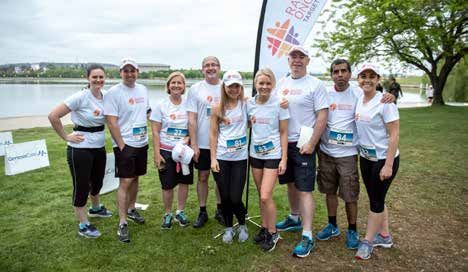
Feature

Accreditation – Laying the
foundations for our future
The College’s Chief Accreditation Officers sat down with us to discuss
the Training Site Accreditation process and what the future holds.

RANZCR’s Training Site Accreditation         diversified from a few major centres,
process has been receiving a lot of          we must ensure these centres meet the
coverage of late. Stories in the papers      required standard and that rotations
and more than the usual share of word        between centres are equitable. The main
of mouth tales have created a lot of         aim is to guarantee optimal training
discussion about one of the less well        for our trainees. This is dependent on
understood aspects of the College.           trainees giving honest opinions without
                                             fear of retribution. Changes cannot be
To get to the heart of the recent
                                             made without worthwhile feedback and
improvements and to get a better
                                             the appointment of the Trainee Liaison
overview of the process, we sat down
                                             Officer, Chris Bartley, has been vital in
with A/Prof John Leung from the Faculty                                                    Dr Mark Phillips
                                             providing a confidential touchstone for
of Radiation Oncology and Dr Mark
                                             trainees.
Phillips from the Faculty of Clinical
Radiology the Chief Accreditation            MP: The College’s commitment to              Officers and the Chief Accreditation
Officers for their respective Faculties.     guarantee that existing policies meet        Officer. The aim of these meetings is
                                             the required expectations of all trainees,   to resolve whatever matters may arise
Why did you perceive a need for              whilst consistently receiving the highest    quickly and efficiently where possible
change in accreditation process?             level of training relevant to modern         and provide the best outcome for all
                                             medicine is at the heart of what we do.      trainees concerned. Additionally, we
JL: There has been a proliferation of        Just with centres seeking accreditation,     work diligently to enact processes
centres requesting trainees and hence        we believe it is important to consistently   ensuring that we keep pace with a
accreditation over the last several years.   review our processes to ensure that we       changing world.
Whilst it is excellent for training to be    meet the needs of current and future
                                                                                          JL: Beyond the benefits of
                                             specialists. We also need to make
                                                                                          modernisation, the accreditation process
                                             certain that this training is provided
“With centres seeking                        without prejudice or bullying. It is our
                                                                                          itself has not really changed from our
                                                                                          perspective. After an initial discussion,
accreditation, we                            hope that through this review trainees
                                                                                          the site self-assessment is completed
                                             are given ample opportunities to train in
believe it is important                      a thorough and methodical way which
                                                                                          by the training site and submitted to
                                                                                          the College. A scheduled site visit
                                             will equip them for the future.
to consistently review                                                                    is conducted by at least two Fellows
                                                                                          from the College and a member of
our processes”                               How has the accreditation process            RANZCR’s personnel. A detailed written
                                             changed?                                     report is submitted by the Accreditation
                                             MP: There have been many recent              Panel and reviewed by the Chief
                                             changes in the modernisation of the          Accreditation Officer. Sites are required
                                             accreditation process. The online            to provide an interim report at three
 A Prof John Leung                           submission process allows us to review       years with another visit at five years. The
                                             documents as they are submitted by           accreditation team also investigates
                                             the sites undergoing accreditation.          issues outside of the normal cycle if they
                                             This allows us to be able to review          are deemed important enough to affect
                                             the documents as they come in and if         training.
                                             necessary, contact the sites to help them
                                             more clearly understand where there                                 continued over...
                                             may be problems. We are also setting
                                             up the Clinical Radiology Training
                                             Accreditation Working Group known as
                                             CRTAWG. There are weekly meetings
                                             between the College’s Accreditation

                                                                                               Volume 15 No 1 I December 2018        7
Features

What do you feel are the impacts             What is your vision for
of accreditation on the quality,             accreditation in the future?                 Want to know more about the
standards, and effectiveness of                                                           accreditation process or how you
                                             JL: Accreditation should continue to
training?                                                                                 can be involved? Contact Bettina
                                             be an integral part of College activities.
                                                                                          Brooke from the Accreditation Team
JL: Currently, the Accreditation             Currently, accreditation visits are a very
                                                                                          at accreditation@ranzcr.edu.au or
Standards reads like a “tick box” of         structured and formal occurrence with
                                                                                          phone +61 2 9268 9777
requirements for sites and networks.         sites and networks having many months
The actual quality and effectiveness of      to prepare for visits. We would like to
training is more difficult to ascertain.     have a more open approach with our
For example, networks and sites may          training sites to allow the accreditation
provide structured teaching with a list of   team ongoing interaction with all
lectures, but the quality and relevance      sites so that accreditation is more a
of these can often only really be            collaborative continuous improvement
                                             process.
determined by feedback from trainees.
                                                                                          “We would like to
 MP: Accreditation allows us to maintain     MP: We are committed to making
effective training standards. When a         certain that the College’s accreditation     have a more open
                                             process continues to evolve in such a
trainee chooses to undergo training they
usually have high expectation, which the     way as to stay current and to prepare
                                                                                          approach with our
College training sites are responsible       trainees for the future by building on       training sites to allow
for delivering. It is necessary to protect   strong foundations. It is important
the reputation of each profession by         to remember that the education               the accreditation team
                                             experience of all trainees must be
ensuring that every site delivers a
standardised program to provide a level      consistent across all training sites to
                                                                                          ongoing interaction”
of comfort that, irrespective of where a     ensure quality outcomes not just for the
patient goes, they will receive the same     wellbeing of all trainees but for their
professional service.                        patients.

                                               Longevity comes from strong foundations

8    Inside News
Features

RO Accredited Training Site:
Allan Walker Cancer Centre, Darwin
We spoke with Dr Christopher Rumley and KA Giam to discuss their recent accreditation

Showcase the training program                Tell us about your experience              of issues that affect patients, additionally
at your site.                                during the accreditation process.          we have well-appointed accommodation
                                                                                        and the use of a clinic car provided
Northern Territory Radiation Oncology        As with any audit there is initial         whilst on rotation allowing for easy of
(NTRO) at Alan Walker Cancer Care            trepidation as to whether documents,       rotation and relocation.
Centre (AWCCC) Darwin provides               policies and procedures are in place,
radiotherapy to patients in the Northern     but it also provided the opportunity
                                                                                        What are the 5 most outstanding
Territory and neighboring areas. NTRO        to showcase the different aspects of
Darwin together with the major centre of     training received at NTRO that are
                                                                                        aspects about training at your
the Royal Adelaide Hospital and private      unique to the site.                        site?
facility of Oncology, South Australia                                                   1. Opportunity to work and live in a well-
(Genesis Care) in South Australia forms      What was the most challenging                  supported rural and remote location
the RANZCR SA/NT Training Network.           part of the accreditation process?             receiving experience that is not
NTRO provides the latest radiotherapy                                                       attainable in a suburban site.
                                             No real challenges were identified but
treatment techniques including IMRT,         the accreditation process allowed NTRO     2. Cultural awareness and education.
VMAT, DIBH and SABR lung. NTRO               to identify what it does well, as well
Darwin rotation provides trainees with a                                                3. Experience collaboration and strong
                                             as reflect on areas of improvement. It
unique experience in delivering health                                                      networking.
                                             also highlighted the change, progress
care in a rural and remote area serving      and development that has been              4. Relaxing lifestyle in a warm
both Non-Indigenous and Indigenous           made throughout the period from last           environment that fosters camaraderie,
patients, many of whom present from          accreditation visit and self-assessment,       together with a balanced work, study
very remote communities with late            all of which forms an avenue for               and home life.
stage disease and comorbidities.             continuous improvement.
Cultural awareness training allows staff                                                5. Opportunity to experience the
to deliver appropriate care, treatment                                                      ethos and philosophies of RANZCR’s
                                             How have the above challenges                  network training model through
and education. Awareness of the special
patient needs has seen NTRO Darwin
                                             impacted your training program?                rotation to a rural and remote site
achieve an equal radiotherapy utilisation    Through challenge you grow. The                combined with rotation and training at
rate of over 40% between Indigenous          location of the site forced us to              major city public hospitals and private
and Non-Indigenous patients over the         ensure that we take full advantage             suburban radiotherapy sites.
past 9 years.                                of our assets. As a result, trainees       Also – cheap flights to Bali!
                                             often return to South Australia with a
NTRO has close professional links with
                                             broader knowledge, confidence and
other disciplines and receives direct
                                             sense of maturity gained through their
training in aspects of surgery, radiology,
                                             experience in the Northern Territory and
pathology and physics from skilled
                                             Darwin. We work hard to assist trainees
professionals from Darwin and visiting
                                             in developing a greater understanding
VMO’s.

                                                                                             Volume 15 No 1 I December 2018         9
Features

RA Accredited Training Site:
Christchurch Hospital, New Zealand
We spoke with Dr Wayne Collecutt and Dr Hugh Roberts
to discuss their recent accreditation

                                                                                            What was the most challenging
                                                                                            part of the accreditation process?
                                                                                            The leaders of our training program are
                                                                                            aware that the accreditation process is
                                                                                            part of their job and so they achieve it.
                                                                                            The process may be time consuming but
                                                                                            can be beneficial if one engages with it.
                                                                                            If there is one particularly painful part,
                                                                                            it is filling in the forms required prior
                                                                                            to the training visit. Occasionally, new
                                                                                            requirements of the training program do
                                                                                            present challenges with accreditation,
                                                                                            but with all parties determined to
                                                                                            surmount these they are generally
                                                                                            overcome quickly.

                                                                                            How have the above challenges
                                                                                            impacted your training program?
                                                                                            It was pleasing to receive a good
Showcase the training program at               Tell us about your experience
                                                                                            report, but our reality is that our training
your site.                                     during the accreditation process.            program is what it is because of where
The Christchurch Hospital RANZCR               In healthcare, radiology and training, as    it has come from. Over time it will be
Radiology training program has recently        with most other things, little stays still   different as it is fluid, flexible, equitable
been through the RANZCR accreditation          for very long. As such, the principles       and consensus driven. Equally, it will
process. Operating out of Christchurch         applied to achieving the RANZCR              only be as good as it is now at the next
Hospital, the allied local public sector       training program have had to be applied      accreditation visit if we continue to use
hospitals, and the local private hospital      in an ongoing fashion to ensuring the        the College accreditation as a check
network operated by Pacific Radiology          program continues to deliver in line         / balance and make full use of the
Group (PRG). In the private network the        with the RANZCR training program. The        opportunity accreditation visits provide
trainees get exposure to mammography           College accreditation process has been       in terms of questioning ourselves with
and PET, the public network provides           a key part of ensuring standards in the      the aim of improvement.
the rest.                                      Christchurch Hospital training program
                                               are maintained. There is flexibility
Inside the public component, there
                                               throughout the training program
are 42 radiologists who currently
                                               and this encourages questioning
oversee 18 trainees. Trainees rotate
                                               where individuals can see room for
through a series of runs which fulfil the
                                               improvement. The College accreditation
requirements of the RANZCR training
                                               process brings focus to this ongoing
program, undertake on call work, receive
                                               review, as well as an external opinion
teaching / lectures in line with the
                                               and balance. The College accreditation
College program, and are overseen in
                                               process is seen as an opportunity to
line with College and MCNZ regulations.
                                               improve and obtain external help in
Trainees rotate through most runs/sub-
                                               delivering the best possible training
specialities three times over the course
                                               program. It has always been the case
of their training. All registrar reports are
                                               that when asked for help, the College
verified by a consultant on a sessional
                                               has delivered it.
basis until the trainee has passed the
part II examination, after which they can
seek assistance as required.

10   Inside News
Education
The Royal Australian and New Zealand
College of Radiologists®
CHANGES TO YOUR
MEDICAL REGISTRATION
REQUIREMENTS
ARE YOU PREPARED?
The MBA are changing their
registration requirements for doctors. Professional
Development
The changes will transform the way
you maintain your medical registration
by shifting the focus to tailored
professional development activities,
Remediation Wellbeing
that aim to enhance patient safety.
Find out more: www.ranzcr.com
Professional Wellbeing Remediation
Development
Supplementary support will
Shift from attending be provided for doctors:
conferences, workshops and • Aged 70 years
courses to a mix of 3 categories;
• Live in remote or isolated
1. 25% Reviewing locations or working in
Performance Medical Board of professional isolation
e.g. Peer review, Australia will:
multisource feedback • 3 substantiated
• Maintain contemporary complaints that impact on
2. 25% Measuring professional standards e.g. patient safety against
Outcomes update Code of Conduct
e.g. Clinical audit, Reviews Doctors will need to
patient records • Foster a culture of undertake:
respect across all medical
3. 25% Education activities professions • Regular peer reviews
e.g. conferences, lectures
• Steward development and • Health assessments, every
25% Combination of any integration of wellbeing three-years (for 70 years
or all the above initiatives only)
Volume 15 No 1 I December 2018 11What’s in Issue 6? Medical Imaging Review Article: A review of factors influencing radiologists’ visual search behaviour Corresponding author: Ms Aarthi Ganesan, The University of Sydney, 75 East Street, Lidcombe, Sydney, NSW 2141, Australia This narrative literature review aims to identify the various factors that have significant impact on radiologists’ visual search patterns. Identifying the factors that influences readers’ visual search behaviour helps to understand their perception and interpretation of medical images, which in turn could lead to the development and implementation of effective strategies that could aid in improving the ability to detect abnormalities. Databases including PubMed, MedLine, Web of Science and ScienceDirect were searched using terms ‘visual search’, ‘eye‐tracking’, ‘radiology OR radiography’, ‘mammogram OR mammography’ published since the early 1960s until June 30, 2016. Some of the factors that have been identified to significantly influence radiologists’ visual search patterns were (i) readers’ expertise, (ii) Satisfaction of Search, (iii) readers’ visual fatigue, (iv) readers’ confidence in reporting abnormalities, (v) training received and (vi) readers’ prior knowledge. Readers’ level of expertise was the factor that has been identified to have the most significant impact on their visual search pattern. Eye‐tracking studies have shown the differences in visual search patterns of readers with different levels of experience and not so surprisingly, more experienced readers have shown effective visual search strategies. Readers’ expertise has also been found to have significant impact in their confidence in reporting abnormalities and their ability to discriminate lesions from background structures in medical images. Medical Imaging Pictorial Essay: Radiological appearance of coal mine dust lung diseases in Australian workers Corresponding author: Dr Rhiannon McBean, Wesley Medical Imaging, Level 2, 30 Chasely Street, Auchenflower, Qld 4066, Australia. Coal Mine Dust Lung Disease (CMDLD) encompasses a spectrum of lung diseases caused by prolonged exposure to coal mine dust. This review presents high‐ resolution computed tomography (HRCT) images from men diagnosed with a CMDLD since the resurgence of these diseases in Queensland in 2015. Radiation Oncology Original Article: Hyperbaric oxygen treatment for the management of radiation‐induced xerostomia Corresponding Author: Dr Susannah Sherlock, Royal Brisbane and Women’s Hospital, Butterfield St, Herston, Qld 4029, Australia Introduction: Hyperbaric oxygen therapy (HBOT) is widely used for the treatment of the late effects of radiation therapy. We report a prospective observational cohort study of 51 patients designed to examine the effectiveness of hyperbaric oxygen treatment (HBOT) for xerostomia following radiotherapy. Methods: Objective (saliva volume) and subjective (quality of life scoring and visual analogue scale (VAS) of discomfort) measurements associated with xerostomia were compared prior to commencement of HBOT, after 30 sessions (over 6 weeks) of HBOT at 243 kPa for 90 minutes daily for five days per week and at 6‐week review (12 weeks from commencement). Results: One hundred and one courses of treatment in 99 patients were examined. For 53 (53%) courses in 51 patients, data were recorded before and after HBOT and so could be included in the analysis. Thirty‐four (34%) of these patients had complete data for all three time points. The unit of study was per treatment course, not per person. There were no major complications to HBOT. There was a statistically significant difference in saliva volume following HBOT (P = 0.016). The mean saliva volume increase was 0.9 mL over a 5‐min collection period (95% CI 0.2–1.5). There was also a statistically significant improvement in discomfort after HBOT (P < 0.001) and QOL (P < 0.001). The mean visual analogue scale for discomfort (VAS on a 0–10 scale) score decreased by 1.4 units (95% CI 0.7–2.1), whilst the mean QOL score was 10 points lower after treatment (95% CI 5.9–14.4). Conclusion: Hyperbaric oxygen therapy may be a safe and effective treatment for symptoms of xerostomia after radiation therapy and should be considered when available. Radiation Oncology Original Article: Utility of CT imaging in a novel form of high‐dose‐rate intraoperative breast radiation therapy Corresponding Author: Dr Shayna L Showalter, Division of Surgical Oncology, Department of Surgery, University of Virginia Health System, Box 800709, Charlottesville, VA 22908-0709, USA. Introduction: Intraoperative radiation therapy (IORT) is an alternative to whole breast radiation following breast conserving surgery. Conventional breast IORT is limited by lack of cross‐sectional imaging. In response, our institution developed Precision Breast IORT (PB‐IORT) which utilizes intraoperative computed tomography (CT) images for confirmation of brachytherapy applicator placement and for treatment planning. The purpose of this study was to determine the utility of CT imaging in PB‐IORT in the first 103 patients treated in two prospective clinical trials. Methods: We retrospectively reviewed the first 103 patients treated with PB‐IORT. All patients underwent breast surgery and placement of a multi‐lumen brachytherapy applicator. Patients had a CT scan followed by high‐dose‐rate (HDR) brachytherapy. Endpoints were the number of patients having more than one CT during PB‐IORT and the number of treatment plans having image‐based modifications. Results: After initial CT scan, 27 patients (26.2%) had findings prompting surgical applicator adjustment. One patient underwent an additional scan to localize a biopsy clip and aid in excision to negative margin. Eighty‐one patients (78.6%) had dosimetry modifications based on CT findings with 36 plans (35.0%) adjusted to protect the skin or chest wall and 45 plans (43.7%) to protect both the skin and chest wall. Conclusions: Computed tomography findings prompted treatment alterations in the majority of patients treated with PB‐IORT to enhance tissue conformity and to sculpt the radiation dose away from normal tissues. CT imaging is unique to PB‐IORT. These findings suggest the potential clinical superiority of PB‐IORT given its allowance for patient‐specific alterations.
Features

That’s a Wrap...
RANZCR 69th Annual
Scientific Meeting, Canberra
More than 1,000 delegates joined
together in Canberra for the College’s
69th Annual Scientific Meeting titled
Our Place in the Universe. This was the
first time the ASM was held in Canberra
and the intimate surrounds of the
National Convention Centre ensured
ample networking opportunities.
The social program included many
iconic locations from the National War
Memorial where the new Fellows were
celebrated to the Australian Institute of
Sport for the Gala Dinner.
The program included some of the
brightest experts in the field of Clinical
Radiology and Radiation Oncology
with our international speakers
travelling from the USA, Denmark,
The Netherlands and Canada.
Complementing the international guest
faculty, the meeting program was well
populated with highly regarded invited
speakers from Australia and New              Moreover the trainee education day          during which Prof. Richard Gunderman
Zealand.                                     held on Saturday allowed large numbers      delivered a declamatory rejection of
                                             to attend and be treated to vivas and       our current obsession with candidates’
The meeting commenced bright and             lectures from our international visitors.   ‘equality of experience’ in examinations.
early for around 80 delegates with the                                                   “What are our exams if they are not
‘Women in Leadership’ Breakfast session                                                  authentic?” he demanded. Elizabeth
that included presentations from Jen                                                     Dick and Jadranka Stojanovska made
Dalitz, CEO of Women in Banking and
Finance, Dr Surbhi Grover, Assistant
                                             “The highlights?                            numerous great contributions which
                                                                                         enlightened us about trauma, and
Professor of Radiation Oncology,             Who can forget                              thoracic radiology. Both explored the
University of Pennsylvania, USA and
Director of Global Radiation Oncology,       Claude Sirlin’s cutting                     problems faced by women in radiology
                                                                                         while offering immensely practical
Botswana-UPENN Partnership, Princess
Marina Hospital, Botswana. The morning
                                             edge brilliance at                          solutions. Emmeline Lee and Natalie
                                                                                         Yang were further stunning contributors;
was facilitated by Prof Liz Kenny and        demystifying magnetic                       Clyde Helms with seasoned aplomb
included numerous topics of discussion
and challenges being faced in the            resonance sequences?“                       dissected and simplified shoulder
                                                                                         and ankle conditions; Frank Gaillard
industry.                                                                                brought us up-to-date with the mighty
The Clinical Radiology sub-themes were                                                   Radiopaedia; Sandeep Bhuta on Skin
                                             The highlights? Who can forget
‘Error’ and ‘Education’. Unashamedly,                                                    cancer imaging … seemingly endless
                                             Claude Sirlin’s cutting edge brilliance
the emphasis was on edutainment.                                                         displays of excellence emphasising the
                                             at demystifying magnetic resonance
The program deliberately sandwiched                                                      unimpeachable centrality of Radiology
                                             sequences? Or his precision-guided
proffered papers between world-class                                                     in the medical Universe. As a parting
                                             applications of physics which unlocked
contributions by a stellar international                                                 flourish, Prof. Julie Quinlivan explored
                                             the diagnostic conundrums of liver
faculty. This meant that our trainees                                                    the use of Medicare items in Radiology
                                             imaging? Or Mary Roddie, Chief
did not miss-out on the brilliance                                                       billing.
                                             Examiner of the UK RCR, presiding
of the expert teachers from abroad.          over a session with incisive brilliance

                                                                                            Volume 15 No 1 I December 2018     13
Features
And the lowlights? Three teams of A/Prof Sean Collins presented on during pelvic ultrasound examinations?
New Zealand registrars smashed their Stereotactic body radiation therapy A clinical audit of 1000 patients.
way to the finals of the ‘Battle of the (SBRT) for Unfavorable Prostate Cancer:
Abstracts of oral and exhibit
Branches’ Quiz using age-old cheating Is it Ready for Primetime? and Is There
presentations are now available to
methods including knowledge, genius Still a Role For Radiation Therapy in
viewed via the online library of the
and inspired deduction, much to the the Management of Melanoma Brain
Journal of Medical Imaging and
consternation of the shocked Australians Metastases?
Radiation Oncology (JMIRO).
in attendance. The Victorians were
The trainees in both disciplines did
ultimately victorious – largely because More than 80 new Fellows were
not fail to deliver with the radiation
the NZ teams had to fly home and welcomed into the College at the
oncology Varian Prize tightly contested,
missed the Final. Some muttered that Annual Ceremony held on Friday
with Dr Nicolas Bucknell taking out
this timing was deliberate, but Question evening. New Fellows and guests
the coveted prize for his presentation
Master Supreme Ross O’Neil gave the gathered in the Royal Theatre to
whingers short shrift. After all there is welcome the official processional
always Auckland 2019… party including the 2018 Nisbet Orator
The Radiation Oncology program saw “The Radiation Professor Brian P. Schmidt AC FAA
FRS, Vice-Chancellor and President,
one of the largest international speaker
contingents in recent years thanks to the Oncology program The Australian National University and
recipient of the 2011 Nobel Laureate
generous support of industry partners.
Professor Birgitte Offersen provided
saw one of the Physics, who provided an inspiring
a number of insightful presentations largest international presentation.
and in addition presented the ESTRO Saturday saw over 100 participants head
FALCON workshop on Breast Cancer. speaker contingents down for a morning walk/run around
Dr Christopher Crane’s opening plenary
presentation on From palliative to
in recent years.” Lake Burley-Griffin as the sun rose for
the Targeting Cancer Fun Run to see
curative: The role of image guidance Gracie Keown and Stuart Turner take out
and adaptive planning in GI cancers the prize for the fastest female and male
set the scene for the four day radiation Personalising Lung Radiation Therapy: runners. The Gala Dinner that evening
oncology program. The charismatic Optimising VMAT Planning to Functional was the highlight of the social program
A/Prof Heiko Enderling addressed Lung Imaging to Reduce Functional and included the presentation of a
Integrating mathematical oncology Lung Dose and Escalate Dose to Primary number of prizes and awards. The night
into radiation oncology and Individual Tumour. The Branch of Origin prize in was filled with a variety of international
patient tumor growth dynamics to 2018 was awarded to Dr Sheila Oh from entertainment, from the Japanese
personalize radiation dose and dose New Zealand on her presentation for drummers, to an incredible record-
fractionation. Thanks to Accuray Asia What is the value of surveying the kidneys breaking kazoo orchestra. At one stage
14 Inside NewsFeatures
Bollywood reigned supreme, with a
quick dance lesson having many guests
believing they could be Bollywood's
next big star!
Delegates will have received their
certificate of attendance by now, so
don’t forget to claim your CPD points
via CPD Online. A maximum of 23.5
RANZCR CPD points can be claimed
for full attendance at the ASM
(additional CPD points are claimable for
attendance at workshops).
The College would like to take this
opportunity to thank everyone who
attended, and in particular speakers,
exhibitors, sponsors including Platinum
Partner Varian and Gala Dinner Sponsor
Canon for their support of the College
meeting. A special thanks to the 2018
Organising Committee for their hard
work and dedication to achieving a truly
out of this world ASM.
Be sure to mark your diary for 17 – 20
October 2019 for the 70th ASM to
be held in Auckland. With a theme of
Back to the Future you are sure to be
transitioned back in time to the age of
the Deloreon in what promises to be
another stellar ASM.
Organising Committee
Dr Hany Elsaleh (Radiation Oncology Co-Convenor)
Dr Angela Rezo (Radiation Oncology Co-Convenor)
Dr Farhan Syed (Radiation Oncology Co-Convenor)
Dr Natalie Collier (Radiation Oncology Trainee
Representative)
Dr John Cockburn (Clinical Radiology Co-Convenor)
A/Prof Rajeev Jyoti (Clinical Radiology Co-Convenor)
Dr James Bain (Clinical Radiology Trainee
Representative)
Dr Jade Lee (Clinical Radiology Trainee Representative)
Dr Chaturica Athukorala (Committee Member)
Volume 15 No 1 I December 2018 15About Radiation Oncology Radiation Therapy Treatment By Cancer Type Our Stories Talking To Your Doctor
Treatment Centre News For GPs
Radiation
therapy
cures cancer and is safe
The Targeting Cancer website - a trusted
source of information about radiation therapy
1 in 2 cancer patients would benefit from radiation therapy at some time during their
cancer experience. However, only 1 in 3 patients in Australia and New Zealand will
actually receive radiation therapy.
Targeting Cancer Campaign aims to increase awareness of radiation therapy as an
effective, safe and sophisticated treatment for cancer. It is designed to reach cancer
patients, their families as well as health professionals, in particular general practitioners,
to improve their knowledge of this (sometimes overlooked) treatment.
Visit www.targetingcancer.com.au or
www.targetingcancer.co.nz
Or follow us on:
Radiation Oncology: Targeting Cancer
@TargetingCancer
Radiation Oncology Targeting Cancer
Please contact info@targetingcancer.com.au for more information.Advocacy
Targeting Cancer
increases advocacy
efforts in New Zealand
reducing the scourge of cancer.
“We can help more people in New
Zealand by increasing awareness of
radiotherapy through the Targeting
Cancer campaign. It will also improve
access and investment in radiotherapy
treatment, as it is a technology
dependent treatment.”
Other recent New Zealand activity has
included social media promotion of
the campaign among New Zealand
clinicians and a recent interview with the
influential New Zealand Doctor website
by Dr Delaibatiki.
Going forward, the campaign aims to
recruit a New Zealand ambassador to
raise the profile of radiation therapy
The College's Targeting Cancer oncologist based at Tauranga, said in New Zealand as an effective, safe
campaign has been successfully she had realised the importance of and cost effective cancer treatment.
stepping up advocacy efforts in New promoting the campaign and radiation Additionally the campaign will host
Zealand recently as it aims to further therapy. open days and information sessions at
increase awareness among the country’s radiation oncology centres and publish
“I know the benefits of radiation therapy educational material in GP journal/
patients of radiation therapy as a
and that there are still quite a number websites.
treatment option.
of patients in New Zealand who aren’t
Activities have included a GP awareness benefiting from this treatment,” Dr “We’re delighted with the increasing
evening at Wellington Blood and Delaibatiki said. support the campaign is receiving from
Cancer Centre, promotion of Targeting New Zealand clinicians,” Targeting
“Targeting Cancer has done some Cancer Clinical Lead A/Prof Sandra
Cancer in key media outlets and input
excellent work in increasing the profile Turner said. “Their support and
from several New Zealand radiation
of radiation therapy among both enthusiasm has been amazing.
oncologists and radiation therapists into
patients and health professionals. I
brainstorming ideas for NZ Targeting “Helping New Zealand cancer patients
believe helping promote the campaign
Cancer activity. become more aware of radiation
in New Zealand will help achieve better
Among the attendees at the Wellington outcomes for more patients in this therapy was always one of the key
awareness session, which took place country.” aims of Targeting Cancer but it will be
at the Wellington Regional Hospital, much easier to achieve this with the
Dr Ramesh Pandey, a Radiation leadership of Miriama and Ramesh and
were GPs, palliative care coordinators,
Oncologist and another new New their many keen NZ radiation oncologist
hospice nurses and cancer care nurses.
Zealand-based Media and Profile and radiation therapist colleagues who
The event provided valuable information Committee member, has also been support the campaign.
on patient pathways, how patients can enthusiastic about supporting the
be referred to the service and more Targeting Cancer campaign. “Ultimately, we want all New Zealand
details about radiation oncology as a patients who might benefit from
“Clinical trials increasingly show the radiation therapy to be able to access it
treatment option. Feedback from the
benefits of radiotherapy in curing some and understand their treatment options
attendees was very positive.
cancers, treating oligo-metastases and if radiation therapy is one of them.
Targeting Cancer supporter and palliating a myriad of symptoms,” Dr
Media and Profile Committee member Pandey said. “It is a highly efficacious Any New Zealand radiation therapists,
Dr Miriama Delaibatiki, a radiation and extremely cost-effective means of radiation physicists and radiation
Volume 15 No 1 I December 2018 17Advocacy
oncologists keen to get involved or Officer Stuart Turner was the overall
discover more information should email race winner, with New Zealand clinical
Philip Munro at info@targetingcancer. radiology trainee, Dr Gracie Keown the
com.au for further details. first woman past the post.
Fabulous fun run Media coverage
Targeting Cancer was delighted to host In addition to the recent piece on the
another successful fun run as part of the New Zealand Doctor website, Targeting
recent RANZCR ASM in Canberra. Cancer has also helped drive recent
positive media coverage of radiation
More than 100 people registered for the
therapy.
fun run, which saw participants either
run or walk along a five-kilometre circuit In October a study by trainee radiation
the basics of radiation therapy - how
adjacent to the city’s picturesque Lake oncologist Dr Luke Nicholls from
it works, the patient pathway and
Burley Griffin. Brisbane’s Princess Alexandra Hospital,
experience having treatment - and were
which highlighted a lack of radiation
The fun run has become a regular fixture then shown the machines and other
oncology teaching in medical schools
of the annual ASM and aims to help interesting parts of the department at
across Australia and New Zealand, was
raise further awareness of the Targeting interactive ‘stations’.
featured in multiple Australian media
Cancer campaign and its objectives.
outlets. A large team of radiation oncology
Former Wallaby and ACT Brumbies star professionals including radiation
In early November the results of the
Joe Roff graciously gave his time to oncologists, therapists, physicists and
SABR-COMET trial were featured in a
open this year’s run. nurses took part.
story by Channel 7.
“The run is an excellent way to unite A TV film crew from China chose this as
The trial results which were presented at
supporters of the Targeting Cancer one of only a few activities in Sydney to
the recent ASTRO meeting, underlined
campaign and to help raise awareness of feature from the festival. It is hoped that
the potential value of Stereotactic
its activities among those attending the next year the event will be extended to
Ablative Radiation Therapy for patients
ASM,” Targeting Cancer Clinical Lead A/ other radiation oncology departments
with oligometastatic disease.
Prof Sandra Turner said. around Sydney.
These pieces helped promote the
“It was generous of Joe to open the Targeting Cancer Clinical Lead A/Prof
importance of and need for awareness
fun run and we were so grateful for his Sandra Turner gave a talk on ‘What is
around radiation therapy to a mass
assistance and inspiring words. Radiation Therapy’, while Targeting
audience.
Cancer promotional materials were also
“Hopefully next year’s run will be even distributed to attendees.
bigger and better!” Sydney science week event
RANZCR Media and Communications How you can help
Targeting Cancer was delighted to be
involved in the recent Sydney Science Targeting Cancer is always looking
Festival, which celebrates Sydney’s for radiation oncologists, radiation
diverse and multidisciplinary innovation physicists and radiation therapists to
community. help promote both the campaign and
radiation therapy as a treatment option
Among the 200 events featured in this for cancer.
year’s festival was a celebration of the
40th anniversary of Westmead Hospital, The campaign, which is run by the
which included a public tour of radiation College’s Faculty of Radiation Oncology,
oncology services at the western Sydney recently marked its fifth anniversary.
hospital.
“Over its five years, the Targeting Cancer
Members of the public registering for campaign has made great strides
this free event had a quick talk about promoting the value of radiation therapy,”
18 Inside NewsAdvocacy
Targeting Cancer Working Advisory Group
Chair Dr Lucinda Morris said.
Some of the practical ways to assist the campaign are:
“The website attracts visitors from across
the world, our social media outlets are ➢ haring articles/tweets from the Targeting Cancer Facebook
S
growing in popularity and visibility and the and Twitter accounts
campaign’s key messages have been seen
by millions of people across the globe
➢ efer patients and other professionals to the Targeting Cancer website
R
(www.targetingcancer.com.au or www.targetingcancer.co.nz).
since it was established five years ago.
“We’ve achieved much but we can still
➢ romote the campaign through an awareness or oncology
P
education evening
do more, which is dependent on more
people helping out. ➢ L et your colleagues and friends know about the campaign
and encourage them to join
“Ultimately, this is about helping save
the lives of cancer patients across the ➢ ick up some of fantastic promotional materials by emailing
P
world by highlighting the value of Philip Munro at info@targetingcancer.com.au
radiation therapy as a cost-effective
and safe treatment for cancer. That’s Please use your imagination and help get the Targeting Cancer
why we would love more people to get message out there. Let us know what is happening and we can
involved.” also help promote your events and educational activities!
Volume 15 No 1 I December 2018 19Advocacy
InsideRadiology is an Australasian resource on clinical
radiology tests, procedures, and interventions, providing
up-to-date information to health consumers and health
professionals and improving doctor-patient communication.
www.insideradiology.com.au
MRI access in focus
The College continues to make progress through
our education and advocacy activities
Access and affordability of this non- Relentless Advocacy The College has also publicly voiced
ionising imaging modality has been a opposition to cuts emanating from
key focus of the College over the last Due to RANZCR’s advocacy efforts, the MBS Review such as restrictions
year. A key strand of this advocacy work there has been growing concern on patients aged over 50 who will be
is improving consumer knowledge about amongst stakeholders and greater denied a Medicare-funded MRI for
the role of the radiologist and including political recognition of the shortcomings knee injuries unless requested by a
them in discussions with referrers. of access to MRI under Medicare in specialist. RANZCR believes that this
Australia. recommendation is not supported by
To mark the occasion of the 2018
contemporary clinical evidence. Our
International Day of Radiology (IDoR),
position was supported by other groups
the College launched two interactive
including Consumer Health Forum,
infographics that illustrate the MRI
journey from the perspective of a
“All three major Council of The Ageing, the Australian
Diagnostic Imaging Association and
patient. These infographics are designed Australian political AMSIG.
to provide health consumers requiring
imaging, including parents of children, parties have made Following a series of meetings with
with a fun interactive way to learn more backbench MPs, the Australian
about MRI. These infographics are now
important commitments Senate initiated an inquiry in 2017
live on the InsideRadiology website. to improve MRI access into the Availability and Accessibility
The website continues to be a great of Diagnostic Imaging Equipment
source of information with over 5,000 for patients.” in Australia. Senior RANZCR
visitors a month viewing the MRI general representatives including then-President
information item alone. Greg Slater, Dr Lincoln Gillam, CEO
Natalia Vukolova and Mark Nevin
The interactive tool (pictured on the The College has been strongly and presented to the Senate Committee
following page) charts a patient’s journey successfully advocating for better about clinical oversight of service
from referral, to image acquisition, access to MRI. This has resulted in MRI delivery, inequities in the MRI licensing,
analysis by a clinical radiologist, for prostate cancer and some cardiac service level restrictions under Medicare
through to reporting of results to the conditions listed, with liver and obstetric and the implications of the freeze on
primary referrer. Consumer research has MRI also through the MSAC application Medicare.
previously indicated that patients want process and expected to be listed soon.
to know more about what radiologists The committee’s final report, published
do and how they help patients. This tool RANZCR members have been later, included recommendations which
has been designed accordingly to break instrumental in the MBS Review, calling echoed RANZCR’s proposals that access
down the key role that radiology and the to remove clinically unsound restrictions be improved and the Commonwealth
clinical radiologist plays throughout the on patient access to MRI tests, such Government implement a clear and
treatment process. as the once in a lifetime restriction on transparent application process for MRI
pelvic MRI. machines.
20 Inside NewsAdvocacy
Over the subsequent 12 months, all In September, the Federal Government to streamline the patient pathway,
three major Australian political parties announced a $175m investment to improve access and reduce the time
have made important commitments to improve MRI accessibility in Australia, taken to recovery.
improve MRI access for patients over the including an extra 30 Medicare-eligible
Whilst welcome, RANZCR advocated
last year, with further announcements machines across the country.
for improvements to clinical indications,
anticipated.
RANZCR welcomed these policy the referral pathway and training for
Early in 2018 the Greens pledged $550m commitments but will continue to argue GPs in appropriate use of this valuable
aimed at reducing out-of-pocket costs for quality improvements, better access modality. The New Zealand Office is
for patients looking to access X-rays, for patients to MRI and indexation of all continuing to work with ACC to advance
ultrasounds, MRI and CT scans. imaging modalities. this. Over the coming year, GP referrals
to MRI will be progressively rolled out
In the Budget Reply in May, the
Better Access in across the country.
Opposition Labor Party announced
that they would deliver 20 new MRI New Zealand The College will recommend that ACC,
machines for hospitals and imaging GPs and consumer groups utilise the
centres in regional areas and the outer The Accident and Compensation interactive tool to promote better
metropolitan suburbs if elected in the Commission commenced a pilot on GP understanding of MRI.
2019 Federal election. referrals for MRI in 2017. This is intended
Promote Promoting Supplementing your hospital or
InsideRadiology InsideRadiology in your
professional networks.
practice resources using links to
InsideRadiology.
to Patients
and Colleagues
Recommending any
topics that could be Volunteering
to assist with
Share the
InsideRadiology
considered for inclusion. content. Video.
Volume 15 No 1 I December 2018 21You can also read


