ATM Future Trends - Amazon AWS
←
→
Page content transcription
If your browser does not render page correctly, please read the page content below
ATM Future Trends
2017

CONTE NTS
Page 4   Forward                                                 Page 50 ATMs at 50: Prospects for the Next Generation
         Suzanne Cluckey, senior editor, ATM Marketplace                 Michael Lee, CEO, ATMIA

Page 7   U.S. Consumer Survey Results                            Page 53 Organized Fraud Rings Target U.S. ATMs
                                                                         Shirley Inscoe, senior analyst specializing in
Page 13 U.K. Consumer Survey Results                                     fraud and data security issues in financial
Page 19 Industry Survey Results                                          services, Aite Group

Page 28 Extended Services at Smart ATMs Enhance Quality          Page 57 2017: The Year FIs Become Consumer Responsive
        of Customer Experience and Increase Revenue                      Stacy Gorkoff, VP of marketing, INETCO Systems Limited
        Antonella Comes, chief marketing officer, Auriga         Page 59 What’s in Store for ATMs in 2017?
Page 31 Cardless Cash                                                    Suzanne Galvin, SVP of Elan Financial Services
        Angel Siorek, vice president of product                  Page 61 Four Key Trends Lead to Personalized
        management and debit, Fiserv                                     Banking Experience
Page 33 The ATM: Bringing 50 Years of Security                           Devon Watson, vice president of software strategy
        and Convenience to the Banking Industry                          and innovation, Diebold Nixdorf
        Bernardo Bátiz-Lazo, professor of business history
                                                                 Page 64 About the sponsors
        and bank management, Bangor University (Wales)

Page 35 EMV, Fraud and Liability: Where We Are on the
        Road to ATM Compliance
        Bill Prichard, senior manager of public relations and
        corporate communications, CO-OP Financial Services

Page 37 Bank Transformation: Bearish on Branches,                                      Tom Harper, president & CEO
        Bullish on ATM Operators                                                     tomh@networldmediagroup.com
        Brad Nolan, managing director of global product                           Kathy Doyle, executive vice president
        and marketing, Cardtronics                                                           and publisher
                                                                                   kathyd@networldmediagroup.com
Page 40 Top ATM Security Trends: Global Survey Insight                     Suzanne Cluckey, senior editor, ATM Marketplace
        Claire Shufflebotham, global security director,                         suzannec@networldmediagroup.com
        TMD Security GMBH
                                                                                 Brittany Warren, custom content editor
Page 44 Anti-skimming, Consolidation, Cardless Transactions                       brittanyw@networldmediagroup.com
        to Rise in Importance                                                   Paige Hobbs, custom content coordinator
        James Phillips, vice president of sales and marketing,                     paigeh@networldmediagroup.com
        Triton and ATMGurus

Page 46 Wells Fargo ATMs to Offer Card-Free Account Access
        Jonathan Velline, head of ATM and branch banking,
        Wells Fargo
                                                                       ATM Future Trends 2017 ©2017 Networld Media Group.
Page 48 The Future of Self-Service Banking                             13100 Eastpoint Park Blvd., Louisville, KY 40223. (502) 241-7545.
        Jose Resendiz, vice president and general manager              All rights reserved. No part of this publication may be reproduced
                                                                       without the express written approval of the publisher. Viewpoints of the
        of financial services solutions, NCR Corp.                     contributors and editors are their own and do not necessarily represent
                                                                       the viewpoints of the publisher.

 © 2017 NETWORLD MEDIA GROUP                                                                                                                      2
NEXT GENERATION ATMs, DIGITAL BANKING, AND MOBILE PAYMENTS

                         2017

                     customer experience
                                              summit
                   SEPTEMBER 18-20 | CHICAGO

 Millennials and other digitally minded consumers are forcing financial institutions to rethink
    the way they do business. These consumers want to bank when and how it suits them.

   Bank Customer Experience Summit will provide bank executives with powerful insights
  on these trends and highlight innovative technology to help today’s financial institutions
             transform themselves to capture the next generation of consumers.

                             SAVE 15%
                WITH PROMO CODE ATMFT17
                        BankCustomerExperience.com
FORWA RD
     Welcome to the 5th edition of the biannual ATM Future Trends
     report. Within its pages, you’ll find a wealth of information
     intended to help you establish achievable goals and strategies
     for your ATM channel or business over the next few years.
                                                                                                  Suzanne Cluckey
     This report includes results from our survey of more than                                    senior editor,
     300 ATM industry members at all corporate levels, as well as                                 ATM Marketplace
     our surveys of more than 1,000 ATM end-users in the United
     Kingdom and the United States.                                          Suzanne Cluckey is a writer with more
                                                                             than 25 years of experience in journalism
     You’ll find interesting differences in our two consumer groups          and mass communications. Her work has
     that highlight the variation in behaviors and priorities from           appeared in trade journals and consumer
     market to market.                                                       publications throughout the U.S. and she
                                                                             has covered a vast range of topics from
     Because of this, we’ve also included a breakout of deployer             cider-making to software development. In
     trends for major global market, as well.                                addition to her work for ATM Marketplace
                                                                             (and Fast Casual), she has written white
     You’ll see notable differences between all groups, but also             papers and features for other publications
     many similarities.                                                      in the Networld Media Group family
                                                                             including FastCasual, Kiosk Marketplace,
     It deserves mentioning that this 2017 report comes at an                Mobile Payments Today, QSRweb and
                                                                             Virtual Currency Today.
     important juncture for the ATM and the ATM industry.

     For a start, this year marks the golden anniversary of the ATM.
     It was 50 years ago — June 27, 1967 — that the first cash-dispensing machine went live at Barclays
     Bank in London’s Enfield borough.

     From this inaugural installation, an entire industry has grown, with the result that, today, you’ll find ATMs
     everywhere — in fact, 3 million of them in installations all over the world, from the most populous cities
     to the loneliest outposts, including a mountaintop in the Himalayas.

     As they’ve increased in number, ATMs have also stepped up impressively in sophistication. Today’s
     ATMs are a far, far cry from that first installed De La Rue machine.

     Of course, they still dispense bank notes around-the-clock, but many of them perform transactions no
     one imagined automating 50 years ago. Besides dispensing cash down to the penny, today’s advanced
     machines can:
         • issue passbooks, prepaid cards, stamps and lottery tickets;
         • accept deposited cash and checks;
         • grant loans and take payments of almost any kind;

© 2017 NETWORLD MEDIA GROUP                                                                                               4
• calculate and convert one nation’s currency into another — and dispense both from
              the same safe;
            • put an account holder directly in touch with a live-remote teller at any time day or night;
            • remit money to a relative halfway around the world; and most impressively,
            • perform these and other functions too numerous to mention here with better than 99
              percent reliability.

        However … it is also true that operators of these amazing machines face challenges that
        no one thought much about 50 years ago either, including:
            • the cost of competitive upgrades;
            • expenses related to compliance with government regulations and network rules;
            • pressure from governments and groups to reduce or eliminate fees and surcharges;
            • physical attacks that can destroy an ATM and cause catastrophic damage to the
              structures around it;
            • sophisticated malware attacks that can result in multimillion-dollar losses within hours;
            • skimming and other scams that shake public trust in the safety and security of ATMs;
            • proliferating payments technologies that reduce consumer demand for cash; and
            • rising government interest in (and international card brand promotion of) the concept
              of a “cashless society.”

        Those are some of the direct challenges. The future of the ATM industry is also complicated
        by issues that include:
            • continued global economic uncertainty a decade removed from the Great Recession;
            • political and economic angst over the pending exit of Great Britain from the European
              Union and the rumored exit of other EU nations;
            • the increasing sophistication of cyberattacks and their threat to critical infrastructure and
              financial markets; and
            • a new and disruptive United States administration disposed toward the imposition
              of tariffs on imported goods — including ATMs.

        That’s one half of the glass.

        The other half is filled with vibrant growth and opportunity all across the ATM and self-
        service industry.

        Financial institutions in increasing numbers are looking to self-service as the cost controller of the
        future and the key to competitive differentiation. Over the last two years, branch transformation
        has progressed from limited experimentation to full-blown implementation.

© 2017 NETWORLD MEDIA GROUP                                                                                      5
Branches are becoming smaller, smarter, more customer-focused and more technologically
        advanced. Financial institutions are looking to ATM and self-service providers for devices that can
        automate mundane tasks and perform them quickly, efficiently and seamlessly from step to step and
        device to device.

        They’re also looking for software and systems that can help them efficiently manage and monitor
        these devices, and extend their value beyond the transaction with data-gathering and analytics
        capabilities that can turn masses of information into meaningful insights into customer behavior,
        preferences and protections.

        They’re looking for off-premises partners in the retail ATM world who can help them broaden their
        brand imprint without increasing their operational costs.

        They’re looking for outsourcing experts who can more efficiently keep an ATM network up and
        running, so that their staff can work more efficiently at assisting customers and educating them
        about valuable financial products.

        In developing nations around the world, governments and financial institutions are reaching out with
        greater consistency and determination to bring unbanked populations — and their cash — into the
        formal financial system.

        To accommodate their new accountholders, institutions across Asia-Pacific, Africa, the Middle East
        and South America are building more extensive and innovative ATM networks capable of bringing
        much-needed financial services to areas where construction of a branch is not feasible.

        In developed markets, ATMs are taking up the slack as consumers migrate to digital channels and
        banks trim unprofitable, low-traffic branches.

        This is a future with enormous potential for both financial institutions and independent ATM
        deployers — especially those whose business model is flexible, adaptive and nimble and whose
        employee culture is collaborative, creative and, above all, service-driven.

        If you sneak a look at the last graph in the report, you’ll see good news for the ATM as it achieves the
        half-century mark: Industry members who think the ATM has passed its peak are outnumbered by
        those who believe the ATM is at or still approaching its prime by a ratio of 4 to 1.

        It is to these visionaries and their success that we dedicate this report.

        ATM Marketplace extends sincere thanks to Auriga, whose generous underwriting allows us to present ‘ATM Future
        Trends 2017’ to our readers free of charge.

© 2017 NETWORLD MEDIA GROUP                                                                                              6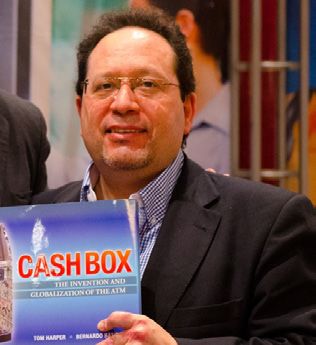
U.S. CO N S U M E R
  Note: Not all data will add up to 100% due to rounding
                                                                                      S U RV E Y R E S U LT S

1. What is your age?                                              2. Where are you?

                               18-24
                               8%
              65 and over
                 19%                    25-34
                                       17%
                                                                                US
                                                                               100%
         55-64
        19%
                                       35-44
                                       22%
                       45-54
                     15%

3. What is your gender?                                           4. What is your annual household income?

                                                                                Over $150,000
                                                                                      10%

                                                                                                   Less than
                                                                                                    $25,000

                 53%                                                                                15%
                                           47%                               $100,001 -
                                                                              $150,000
                                                                               18%                          $25,000 -
                                                                                                             $50,000

                                                                               $75,001 -
                                                                                                               22%
                                                                               $100,000
                                                                                17%             $50,001 -
                                                                                                 $75,000
                                                                                                 19%

    U.S. CONSUMER SURVEY RESULTS         ATM FUTURE TRENDS 2017                                                         7
5. How often do you use an ATM?                                                                             More than once
                                                                                                               a week
                                                                                                                 8%

                                                                                Rarely or never
                                                                                      21%                       Weekly
                                                                                                                 23%
                                                                             One to four
                                                                            times a year
                                                                               17%
                                                                                                  Monthly
                                                                                                  32%

6. Which of the following services would you most like to see at the ATM?

  Participants selected their top three choices

                    Cash withdrawal in multiple denominations (i.e., not just $20 bills)                                     70%
            Real-time transactions (i.e., deposited funds instantly credited to account)                        39%
                                             Biometric ID (e.g., fingerprint, palm print,
                                                facial recognition) replacing PIN entry
                                                                                                             34%
                                                             Check cashing at the ATM                        32%
                                                                   Email receipt option                 28%
                                                               Bill payment at the ATM             19%
                                 Personal preference setup (e.g., withdrawal amounts,
                                                               transaction types, etc.)
                                                                                                   17%
                                           Cardless cash withdrawal using mobile app              14%
                                                                    Currency exchange             13%
                                             Cash withdrawal using a contactless card         9%
                                                                      Event ticket sales      9%
                  More complex transactions (e.g., loan application, account opening,
            cashier's check, replacement card request, withdrawal limit override, etc.)     6%
                                                         Charitable donation capability     6%
                                                                     Prepaid card sales     5%

   U.S. CONSUMER SURVEY RESULTS           ATM FUTURE TRENDS 2017                                                                   8
7. Are you carrying more or less cash these days?

                                                    34%              44%

                                  11%                                                      11%

                                  More              Less         About the same       I never carry cash

8. What is your preferred payment method for in-store purchases?

                                              1%    Reloadable prepaid credit card
             Cash
             15%                              1%    Store-branded credit card

                                              1%    Check
       General
       purpose                Debit card
        credit
      card (e.g.,               47%
     MasterCard,
     Visa, etc.)                                               9. What is the most important thing to you about
       35%                                                        your preferred payment method?

                                                                                           It's private
                                                                                               4%
                                                                       It helps me track         It's
                                                                            spending           reliable
                                                                             9%                   8%       It's convenient
                                                                                                                 53%
                                                                      It helps me
                                                                   control spending
                                                                       10%
                                                                                            It's secure
                                                                                              15%

   U.S. CONSUMER SURVEY RESULTS     ATM FUTURE TRENDS 2017                                                                   9
10. If data breaches continue or get worse, how likely are you to switch to cash?

                   7%
           10%                                             35%    I'll still use cards; my bank covers any fraud, so it doesn't really affect me

                                      35%                  29%    I'll start thinking about it very seriously

       19%                                                 19%    I'll use cash more often, but mostly for smaller purchases

                                                           10%    I definitely will switch for all but the most expensive purchases

                     29%                                   7%     I already use cash more often because of past data breaches

11. How important is it to you to have access to a fee-free ATM?

                       45%                    34%

                                                                   11%
                                                                                            4%                      6%

                       Essential          Very important         Somewhat                 Not that              I don't care
                                                                 important               important

12. Does the U.S. have:

                                                           57%

                                                                             17%                     20%
                                       5%
                                   Too many ATMs     Enough ATMs        Not enough ATMs            Not enough
                                                                                                 ATMs that can
                                                                                                do more than just
                                                                                                  dispense cash

    U.S. CONSUMER SURVEY RESULTS        ATM FUTURE TRENDS 2017                                                                                     10
13. Would you rather have …
All ATMs be fee-free even if it means having
23% 77% to go further to find one
77% 23%
Guaranteed access to an ATM whenever you need
cash, even if it means paying a fee of $3–$4
14. Is it more important to you to have an ATM nearby, 15. If you had the option to go to a teller window or do
or a branch nearby? the same transaction at a drive-up video ATM with a
remote teller, which would you choose?
Neither, I do my banking
with a mobile app
6%
Neither, I do my
banking online
13%
Video teller
ATM 36%
43%
Branch Bank branch
38% 64%
16. Do you worry about someone using a skimming device to steal
your card information and PIN when you’re using the ATM?
4%
11% Yes, I’m very concerned about it
34%
I’m aware of the possibility, but not that concerned
I never even think about it
52% What’s a skimming device?
U.S. CONSUMER SURVEY RESULTS ATM FUTURE TRENDS 2017 1117. Do you think an EMV smart card (an ATM card with a computer chip in it)
will make your ATM transactions more secure?
I don't know It makes them
what that is absolutely secure
7% 5%
It helps a lot
27%
35%
It helps some
26%
18. In terms of security, how would you rank the following payment methods
(1–7, seven being most secure and one being least secure)?:
Cash 5.96
Credit card 4.61
Check 4.46
Debit card 4.30
Prepaid general credit card 3.59
Mobile wallet 2.93
Virtual currency (e.g., bitcoin) 2.16
U.S. CONSUMER SURVEY RESULTS ATM FUTURE TRENDS 2017 12U.K . CO N S U M E R
Note: Not all data will add up to 100% due to rounding
S U RV E Y R E S U LT S
1. What is your age? 2. Where are you?
65 and over
5%
55-64 18-24
8% 17%
UK
45-54 100%
16%
25-34
28%
35-44
26%
3. What is your gender? 4. What is your annual household income?
More than
90,000 GBP
60,001 GBP – 3%
90,000 GBP
9%
55% Less than
15,000 GBP
45% 45,001 GBP – 20%
60,000 GBP
14%
30,001 GBP –
45,000 GBP 15,000 GBP –
23% 30,000 GBP
32%
U.K. CONSUMER SURVEY RESULTS ATM FUTURE TRENDS 2017 135. How often do you use an ATM? One to four
Rarely or never
times a year 6%
4%
More than
once a week
Monthly 31%
16%
Weekly
43%
6. Which of the following services would you most like to see at the ATM?
Participants selected their top three choices
Cash withdrawal in multiple denominations (i.e., not just $20 bills) 52%
Bill payment at the ATM 34%
Real-time transactions (i.e., deposited funds instantly credited to account) 32%
Check cashing at the ATM 32%
Biometric ID (e.g., fingerprint, palm print,
facial recognition) replacing PIN entry 29%
Cash withdrawal using a contactless card 23%
Currency exchange 22%
Email receipt option 21%
Cardless cash withdrawal using mobile app 19%
Personal preference setup (e.g., withdrawal amounts,
transaction types, etc.) 12%
Charitable donation capability 7%
Event ticket sales 7%
Prepaid card sales 5%
More complex transactions (e.g., loan application, account opening,
cashier's check, replacement card request, withdrawal limit override, etc.) 5%
U.K. CONSUMER SURVEY RESULTS ATM FUTURE TRENDS 2017 147. How much cash do you carry compared with two years ago?
38% 43%
15%
4%
More Less About the same I never carry cash
8. What is your preferred payment method for in-store purchases?
15% General purpose credit card (e.g., MasterCard, Visa, etc.)
3% Mobile wallet (e.g., Apple Pay, Samsung Pay, etc.)
1% Store-branded credit card
1% Reloadable prepaid credit card
Debit card
Cash 54%
28% 9. What is the most important thing to you about
your preferred payment method?
It helps me track
spending
It helps me control
spending 6%
11%
It's convenient
46%
It's secure
20%
It's
reliable It's
9% private
9%
U.K. CONSUMER SURVEY RESULTS ATM FUTURE TRENDS 2017 1510. If data breaches continue or get worse, how likely are you to switch to cash?
7%
31% I'll start thinking about it very seriously
13%
31% 30% I'll use cash more often, but mostly for smaller purchases
19% I'll still use cards; my bank covers any fraud, so it doesn't really affect me
19% 13% I definitely will switch for all but the most expensive purchases
7% I already use cash more often because of past data breaches
30%
11. How important is it to you to have access to a fee-free ATM?
60%
28%
9% 1%
1%
Essential Very important Somewhat Not that I don't care
important important
12. Does the U.K. have:
61%
24%
10%
4%
Too many ATMs Enough ATMs Not enough ATMs Not enough
ATMs that can
do more than just
dispense cash
U.K. CONSUMER SURVEY RESULTS ATM FUTURE TRENDS 2017 1613. Would you rather have …
8%
All ATMs be fee-free even if it means having
92% to go further to find one
92% 8%
Guaranteed access to an ATM whenever you need cash,
even if it means paying a fee of 3–5 pounds
14. Is it more important to you to have an ATM nearby, 15. If you had the option to go to a teller window or do
or a branch nearby? the same transaction at a drive-up video ATM with
a remote teller, which would you choose?
Neither, I do my banking
Neither, I do my with a mobile app
banking online 5%
11%
Video teller
18%
Branch
20%
ATM
Bank branch
63%
82%
16. Do you worry about someone using a skimming device to steal
your card information and PIN when you’re using the ATM?
3%
8%
Yes, I’m very concerned about it
I’m aware of the possibility, but not that concerned
43%
I never even think about it
46% What’s a skimming device?
U.K. CONSUMER SURVEY RESULTS ATM FUTURE TRENDS 2017 1717. Do you think an EMV smart card (an ATM card
with a computer chip in it) will make your ATM
transactions more secure?
It makes them
absolutely secure
7%
18. In terms of security, how would you rank the
I don't know following payment methods (1–7, seven being
what that is It helps a lot most secure and one being least secure)?:
37% 25%
Cash 5.62
It helps some
17% Debit card 4.63
15% Credit card 4.52
It doesn't make much difference;
criminals will find a way to defeat
Check 4.31
the technology
Prepaid general credit card 3.51
Mobile wallet 3.00
Virtual currency (e.g., bitcoin) 2.41
U.K. CONSUMER SURVEY RESULTS ATM FUTURE TRENDS 2017 18I N DU STRY S U RV E Y R E S U LT S
1. What is your industry segment?
Other includes: Consultants, regulatory authorities, resellers, software developers, and solutions providers.
9% FI, less than $500 million in assets
9% 8% FI, $500 million to $1 billion in assets
8% 17% FI, $1 billion to $500 billion in assets
24% 4% Independent ATM deployer with 1–25 ATMs
2% Independent ATM deployer with 26–100 ATMs
17% 5% Independent ATM deployer with 101–500 ATMs
3% 3% Independent ATM deployer with 501–1,500 ATMs
13% 7% Independent ATM deployer with more than 1,500 ATMs
4% 5% Processor
5% 3% EFT network
5% 7% 13% ATM manufacturer
2% 3% ATM parts provider
3%
3% 24% Other
2. In which region is your company based?
Central/Eastern Europe
North America
Western Europe 9%
49% 10%
Middle East
Central America 6%
Africa Asia Pacific
2% 5% 14%
South America
6%
INDUSTRY SURVEY RESULTS ATM FUTURE TRENDS 2017 193. What is your position?
Other includes: Analysts, engineers, and sales.
Entry-level employee 3%
Other 5%
Project manager 6%
Mid-level executive 7%
Consultant 8%
CEO 9%
Owner/operator 9%
IT professional 9%
Senior-level manager 12%
Mid-level manager 15%
Senior-level executive 16%
4. Over the next five years, which of the following do you believe will have the greatest impact
on the global ATM industry?
1%
28% Mobile technology
2% 27% Branch transformation and focus on self-service
11% Reduced demand for cash
8% Cash recycling
5% New solutions to protect card data and PIN
3% 3% Alternative operating systems
3% 28%
3% 3% Cloud-based solutions
3% Government regulation
5% 2% Other (please specify)
2% Increased demand for cash
8%
2% Real-time transactions
2% Self-service software upgrades and patches
11% 27%
1% Caps on ATM surcharges
1% Movement of ATMs to virtual private networks
Work with outside vendors on PCI compliance
1% standards, such as the Data Security Standard
1% Interchange reduction
INDUSTRY SURVEY RESULTS ATM FUTURE TRENDS 2017 205. In five years, which of the following will be the most popular trend in serving cash-preferred consumers?
3%
4% Deploying solutions that integrate mobile-banking
and marketing with the self-service channel
11%
Advanced self-service solutions such as bill
payment and check cashing
Reaching out to “digital natives,” who grew up with
12% 51%
digital and mobile technology
FIs, independent deployers and retailers partnering
to reach unbanked and underbanked consumers
Prepaid-card dispensing at the ATM or other
18% self-service channel
Cross-border remittances via ATM
6. In the next five years, what do you see as the top three threats facing the ATM industry in your region?
Other includes: EMV, government regulations, mobile apps, higher interest rates, legacy infrastructure
Other 7%
Government protectionism 11%
Larger competitors 16%
Physical attacks on ATMs 20%
Global economic downturn 24%
Reduced cash demand 42%
Malware attacks on ATMs 54%
Card skimming and counterfeit fraud 60%
Increasing costs for upgrades, maintenance,
security, cash-handling, etc. 69%
INDUSTRY SURVEY RESULTS ATM FUTURE TRENDS 2017 217. Do you see the regulatory environment as predominantly positive for the continued
growth of the ATM industry?
No
40%
Yes
60%
8. Which trends are most likely to affect the North American ATM market in the next five years?
Participants selected their top three choices
EMV chip migration 40%
Mobile integration 39%
Availability of new technologies/functionalities 33%
Branch transformation with self-service emphasis 29%
Security and compliance issues 26%
ATM data analytics 18%
Cash-in and recycling at the ATM 18%
Video banking/remote teller technology 17%
ATM branding, surcharge-free network
membership by financial institutions 13%
Outsourcing of ATM network maintenance
or ownership by financial institutions 13%
Cost reduction 12% North America
Open software and thin-client architecture 10%
Auto-deposit/deposit imaging at the ATM 9%
Industry consolidation 7%
Remote management and monitoring 6%
Uniform hardware standards and compliance 4%
Financial inclusion policies on the part
of the central government 3%
Other 3%
INDUSTRY SURVEY RESULTS ATM FUTURE TRENDS 2017 229. Which trends are most likely to affect the European ATM market in the next five years?
Participants selected their top three choices
Mobile integration 36%
Branch transformation with self-service emphasis 30%
Availability of new technologies/functionalities 26%
Cashless policy on the part of the central government 24%
Cost reduction 24%
Security and compliance issues 23%
Cash-in and recycling at the ATM 20%
ATM data analytics 18%
Security and EMV global migration 12%
Auto-deposit/deposit imaging at the ATM 12%
ATM branding, surcharge-free network membership by financial institutions 11%
Financial inclusion policies on the part of the central government 11% Europe
Video banking/remote teller technology 11%
Open software and thin-client architecture 10%
Outsourcing of ATM network maintenance or ownership by financial institutions 10%
Industry consolidation 9%
Uniform hardware standards and compliance 6%
Remote management and monitoring 5%
Other 5%
10. Which trends are most likely to affect the Asia-Pacific ATM market in the next five years?
Participants selected their top three choices
Mobile integration 35%
Availability of new technologies/functionalities 30%
Cash-in and recycling at the ATM 29%
Security and compliance issues 24%
Branch transformation with self-service emphasis 22%
Cost reduction 20%
ATM data analytics 19%
Cashless policy on the part of the central government 18%
Security and EMV global migration 17%
Financial inclusion policies on the part of the central government 16%
Auto-deposit/deposit imaging at the ATM 11%
ATM branding, surcharge-free network membership by financial institutions 11% Asia
Industry consolidation 10%
Video banking/remote teller technology 9%
Uniform hardware standards and compliance 8%
Open software and thin-client architecture 7%
Outsourcing of ATM network maintenance or ownership by financial institutions 7%
Remote management and monitoring 5%
Other 4%
INDUSTRY SURVEY RESULTS ATM FUTURE TRENDS 2017 2311. Which trends are most likely to affect the Middle Eastern ATM market in the next five years?
Participants selected their top three choices
Mobile integration 33%
Security and compliance issues 32%
Availability of new technologies/functionalities 28%
Branch transformation with self-service emphasis 27%
Cash-in and recycling at the ATM 27%
Cost reduction 18%
Security and EMV global migration 18%
Cashless policy on the part of the central government 16%
ATM data analytics 14%
Financial inclusion policies on the part of the central government 13%
ATM branding, surcharge-free network membership by financial institutions 12%
Middle Eastern
Auto-deposit/deposit imaging at the ATM 10%
Video banking/remote teller technology 10%
Outsourcing of ATM network maintenance or ownership by financial institutions 9%
Industry consolidation 9%
Uniform hardware standards and compliance 7%
Open software and thin-client architecture 6%
Remote management and monitoring 6%
Other 5%
12. Which trends are most likely to affect the African ATM market in the next five years?
Participants selected their top three choices
Security and compliance issues 35%
Mobile integration 32%
Availability of new technologies/functionalities 26%
Cost reduction 24%
Cash-in and recycling at the ATM 22%
Financial inclusion policies on the part of the central government 19%
Security and EMV global migration 19%
Branch transformation with self-service emphasis 18%
Cashless policy on the part of the central government 14%
African
ATM branding, surcharge-free network membership by financial institutions 12%
Industry consolidation 11%
Outsourcing of ATM network maintenance or ownership by financial institutions 11%
Uniform hardware standards and compliance 11%
ATM data analytics 10%
Remote management and monitoring 10%
Auto-deposit/deposit imaging at the ATM 10%
Open software and thin-client architecture 7%
Video banking/remote teller technology 7%
Other 3%
INDUSTRY SURVEY RESULTS ATM FUTURE TRENDS 2017 2413. In five years, what region or country will be considered the most popular deployment
market in terms of new or replacement installations?
United
Kingdom Central and Russia
1% Eastern Europe 1%
North America
Western Europe 3% Other
9% 2% (Asia, Japan
and Spain)
Middle East China
5%
4% India 23%
Africa 26%
Central and South America
19%
9%
Australia and New Zealand
0%
14. In five years, what region or country will be considered the most popular deployment
market in terms of replacement installations or added ATM functionality?
United
Kingdom Central and Russia
3% Eastern Europe 1%
North America
Western Europe 7% Other
31% 14% (Asia, Japan
and Spain)
Middle East China
3%
4% India 15%
Africa 9%
Central and South America
5%
7%
Australia and New Zealand
1%
INDUSTRY SURVEY RESULTS ATM FUTURE TRENDS 2017 2515. In five years, what percentage of successfully 16. Do you think surcharging will become more
completed ATM transactions will NOT be prevalent in markets outside North America within
cash withdrawals? the next five years?
Less than 10%
8%
Unsure
21%
More than 30%
Roughly 10%
26% Yes
15% 42%
Will stay
the same
22%
10% to 20%
No
23% 20% to 30%
30% 15%
17. What percentage of U.S. ATM deployers will be 18. To what extent will financial institutions outsource
EMV-compliant when the final liability shift their ATM operations all or in part by 2017?
occurs in the American market in 2017?
Unsure Less than at
present
5%
2%
10-25%
More than 75%
14%
17%
Much more About the same
than at as at present
present
32%
20%
50-75%
25-50%
30% 40%
Somewhat more
than at present
41%
INDUSTRY SURVEY RESULTS ATM FUTURE TRENDS 2017 2619. What do you see as the trend in cash demand 20. This year marks the 50th anniversary of the first
in your region over the next five years? ATM installation. Where do you believe this banking
technology is in its development as of today?
Other
Unsure
Much more than 1% 3%
at present
8%
At its peak
Unsure
16% 14%
Somewhat Less than
more than at at present
present
32% On a
20% downward
trend
16%
About the same Not yet in its prime
as at present
50%
40%
INDUSTRY SURVEY RESULTS ATM FUTURE TRENDS 2017 27I N DU S TRY I N S IG HT
Extended Services at Smart ATMs
Enhance Quality of Customer
Experience and Increase Revenue
2017 marks both the golden anniversary of the ATM and the
silver anniversary of Auriga as a leading European provider
of innovative omnichannel solutions to banks and other
financial institutions.
Auriga’s growth over the last 25 years has been driven by our Antonella Comes
chief marketing officer,
advocacy to the retail banking sector of vendor-independent, Auriga
fully vendor-agnostic ATM software solutions. At the same
time, we have held to a vision for the future of banking in which Antonella Comes, chief marketing
digital banking, ATM/ASD/ASST and the branch are integrated officer at Auriga, oversees sales and
on an omnichannel platform in a seamless and convenient way. communications and coordinates the
company’s international expansion.
This perspective keeps customers first. Customers aim to She began this position in 1998 and is
based in the company headquarters in
interact with their financial service providers in the simplest
Bari, Italy. She holds a master’s degree
and fastest fashion, accessing and benefiting from the same in corporate organization with a focus in
accurate and up-to-date information regardless of the chosen marketing from the University of Vicenza.
access point.
At Auriga, we are convinced that every banking service channel can be transformed into an efficient
communication tool that enhances customers’ experiences and maximizes the opportunity for
financial institutions to sell new services. This includes the ATM channel. Indeed, we believe that the
ATM, when part of an advanced smart web-based ATM architecture, will survive and thrive in the
current banking revolution, which is being driven by changing customer behaviors and issues linked
to estate cost management and security. The ATM and new generations of self-service machines
can offer more value and provide better services to a bank’s customers, if managed as part of a
channel that is fully integrated into an omnichannel banking environment.
In fact, even with the fast-growing adoption of digital channels, the ATM remains a primary interface
between customers and their banks. Customers are familiar and comfortable with ATMs as a way
of accessing their banks. There are operational challenges, however. ATMs can be a costly channel
© 2017 NETWORLD MEDIA GROUP 28for financial institutions, often managed separately from other banking channels and providing a
limited scope of services. But technology is available to transform the ATM channel, to make major
operational efficiencies and to enable financial institutions to make the most of this channel.
Next-generation ATMs enabled by innovative and flexible software can change the ATM from being
a simple cash dispenser to being a more personalized and richer communication channel that
allows banks to extract more value and provide better service to their customers. In countless
scenarios, the right software could rejuvenate existing ATMs and deliver much-needed profits for
banks through new revenue streams and integrate this old-fashioned channel as part of a true
omnichannel banking strategy.
Even though the technology is available, there needs to be a major change of mindset within many
banks about the greater role that ATMs can play in improving customer experience and services.
The current position tends to be too rigidly fixed on offering a limited set of services and reducing
operating cost. Financial institutions should embrace how ATMs can become a much more powerful
service platform for building customer loyalty that is integrated with, rather than superseded by,
mobile and web banking.
Breaking down the technological and operational silos in customer banking channels has been
anticipated for many years. It now seems the omnichannel vision is being realized. The 2016 edition
of the ATM Marketplace report “Omnichannel Marketing for Financial Institutions: An Industry Guide”
revealed that 64 percent of banks in the world are moving ahead with omnichannel strategies.
Over the next five years, we expect banks to respond to customers’ demands for more tailored
advanced services at ATMs and banks, own requirement to control operational costs to meet higher
standards of compliant maintenance, security and cash handling. The goal is that a fully functional,
omnichannel capability enables a bank to achieve a shorter time to market for new services valued
by customers while significantly lowering costs and gaining a competitive edge.
In Western Europe and other developed markets, a major transformation of traditional branch-based
services is underway. This entails the closure of programs but also the development of new branch
models with the branch continuing as an important touch point for sales and consulting services.
At the core of the branch of the future will be smart ATMs, assisted self-service devices, welcoming
kiosks and specialist consultants ready to assist customers and provide tailored service, all
integrated on a single omnichannel architecture.
For many years, Auriga has been helping banks develop this new model of branch banking. With our
complete omnichannel banking suite WinWebServer (WWS), we have made it possible to implement
about 100 configurable banking services on ATMs and other devices, including withdrawals,
balance inquiries, intelligent deposits or cash deposits, as well as advanced functions such as utility
payments, credit transfers, tickets sales or mobile top-up services. This is achieved by deploying the
same software application on ATM and ASD/ASST from different vendors for managing bill payment
using multiple denominations of banknotes, checks and even coins.
© 2017 NETWORLD MEDIA GROUP 29Cash is confirmed as the most secure payment method in the views of the respondents to this
survey. Even as cashless digital banking has become increasingly more popular, respondents
say they carry the same amount of cash now as they did two years ago. So, banks need to put in
place every effort to make cash management easier and more secure and consider cross-channel
innovations. There are great opportunities to integrate cash management with mobile banking.
Cardless pre-staged mobile withdrawal will become popular as the most convenient and safest
method for accessing cash.
In a previous ATM Marketplace report on ATM and self-service software trends, mobile integration
was identified as one of the top three trends that are most likely to affect the ATM industry
worldwide. Forty-eight percent of the banks surveyed forecast that one of the areas of branch
transformation most likely to happen over the next four years would be customers using a mobile
phone as the transaction device interacting with in-branch systems such as cash and currency
dispensers. Indeed, the pre-staged cash withdrawal is completed at the ATM faster and more safely
than a traditional card-based transaction, leading to greater consumer satisfaction. Again, it’s a
question of cross-channel capability that ensures that one single transaction begun on a mobile
phone could be concluded easily and immediately on the ATM channel.
When combined with how a bank can analyze and monitor customer data in real time, cross-channel
capabilities can enable much more personalized customer experiences when customers they access
bank services on an ATM or on their online or mobile banking apps. By knowing personal choices
and preferences on the ATM interfaces, banks can help transactions become faster and smoother.
Moreover, thanks to predictive analytics, banks are able to send relevant promotional messages on
all or even most of the channels that their customers use.
An integrated marketing approach is extremely challenging, but it is achievable when a bank has
a single smart platform for managing all channels. An omnichannel marketing approach also
means gathering timely data on customers’ choices, preferences and reactions to one-to-one
promotional campaigns.
Availability of more integrated and tailored services at ATMs, self-service and assisted self-service
devices will be the right strategy to enhance customer experience and improve a bank’s revenue
by maximizing the additional sales potential of each consumer interaction.
© 2017 NETWORLD MEDIA GROUP 30I N DU S TRY I N S IG HT
Cardless Cash
The future of ATMs — we DON’T card
If the past year has taught us anything — in politics, in
sports, in virtually any area you care to mention — it is that
the year ahead is incredibly hard to predict. That said, we Angel Siorek
still can cling to a few certainties; one of these is that the vice president of
skyrocketing usage of smartphones will continue unabated. product management
and debit, Fiserv
According to new research conducted by Fiserv, consumers’
Angel Siorek, vice president of product
love affair with mobile apps shows no sign of ending. On
management, and debit, at Fiserv,
average, people report having 24 apps installed on their oversees debit growth solutions and
phones, with 15 percent having 40 or more, and 66 percent channel management. She joined Fiserv
use five or more apps daily.1 Moreover, a recent survey from in 1993 and has held many diverse
YouGov found that over 50 percent of millennials now carry positions during her tenure, including
their phones in their hands throughout the day.2 operational, client relationship, product
and leadership roles. Siorek holds a
In many areas, financial institutions have responded with a bachelor’s degree in secondary education
from Kutztown University.
wide variety of technology solutions, from mobile deposits
and bill pay to real-time payments and notifications. In
the world of ATMs, however, the way people access their cash has remained largely unchanged,
operating on the same card-and-PIN fundamentals as they have since the 1960s. Efforts are turning
to technology that makes accessing cash safer, faster and more convenient to stay in step with
people’s busy lives.
Reimagining access to cash
With smartphone access the norm, particularly among millennials, the next evolution is to leverage
technology to enable cardless access to cash. Even in this digital future, cash is by no means
obsolete and remains the only accepted form of payment by some vendors. But while consumers
sometimes need cash, it cannot be assumed that people always have access to their cards.
1 Fiserv, “Expectations and Experiences: Channels and New Entrants” survey:
https://www.fiserv.com/resources/expectations-experiences-channels-new-entrants-research-paper.aspx
2 https://today.yougov.com/news/2016/07/06/young-people-carry-phone-in-hand/
© 2017 NETWORLD MEDIA GROUP 31A cardless solution might be desirable in many scenarios:
• Emergency cash: When consumers’ wallets are lost or stolen, they need a solution to access
funds when they need them the most.
• Interim access: Instead of waiting days for a new card to arrive, consumers can access cash
in the meantime.
• Simple convenience: Consumers have no need to dig out a card.
• Security-conscious consumers: With security top-of-mind, tokenization adds a layer
of security to cardless funds access at ATMs.
Easy, convenient and secure
Cardless options are coming to the fore whereby cardholders can withdraw cash even if they do
not have their cards on them, by using a secure access code and PIN at participating ATMs. Users
contact the card issuer via phone or mobile banking application to set up an access code (or token),
as well as a secure PIN. They find the nearest participating ATM from thousands nationwide using
the ATM locator online or via the mobile app, and simply input the access code and PIN to receive
the cash. Consumers are able to specify the amount to be withdrawn and also are able to determine
if the access code and PIN are for one-time use or multiple uses. To provide additional security, the
access codes given by the financial institutions are not tied to a debit card number and account
numbers are not stored on phones.
An expectation, not a “nice-to-have”
Unexpected situations occur every day, and consumers’ on-the-go lifestyles sometimes make it
difficult to keep a card on hand. With phones becoming like another appendage, consumers expect
their financial institutions to deliver powerful, easy-to-use banking applications to their smartphones.
To satisfy existing accountholders and attract new ones, financial institutions soon will need to offer
cardless solutions to remain competitive. This likely will be the only way for institutions to keep
pace with the evolution of cash access and respond to the needs of today’s on-the-go consumer —
anytime, anywhere.
© 2017 NETWORLD MEDIA GROUP 32I N DU S TRY I N S IG HT
The ATM: Bringing 50 Years of
Security and Convenience to the
Banking Industry
In the summer of 2017, we will celebrate the 50th anniversary
of the deployment of the first cash machine. We often think
of this instance of invention around the device that was
Bernardo Bátiz-Lazo
manufactured by De La Rue and deployed in Barclays’
professor of business
Enfield (London) branch. However, we must bear in mind two history and bank
other independent groups of bankers and engineers who also management, Bangor
deployed a cash machine in 1967, within days of Barclays: University (Wales)
one from the U.K. (Chubb-Westminster Bank) and one in
Bernardo Bátiz-Lazo is professor of
Sweden (Asea Metior — Swedish savings banks). In fact,
business history and bank management at
Chubb and Metior were particularly successful in deploying Bangor University in Wales. He is an ATM
devices overseas, whereas De La Rue was largely limited to historian and researcher. His publications
the U.K. include “Cash Box: The Invention and
Globalization of the ATM,” co-authored with
These three instances of invention are the genesis of today’s Tom Harper, and more recently “The Book of
ATMs. It is appropriate to recognize all of them because they Payments” with Leonidas Efthymiou. Bátiz-
attest to innovation in retail payments embodying complex Lazo was named “ATM Industry Champion”
technologies. Such innovation results from team efforts that by the ATM Industry Association in 2016.
are increasingly diverse (in terms of gender, expertise and
geographic location) and cut across several organizations and industries (as opposed to the vision of
an isolated inventor working in a garage or a eureka moment in a bathtub).
The ATM is an icon for digital banking, and the advent of the cash dispenser certainly was a pivotal
moment for today’s self-service technology. At the technology’s dawn, the devices only supplied
crisp, new banknotes. Banks had to deal with many challenges, including placing electronics directly
into the weather, enabling secure transactions and changing customer habits. ATMs were unreliable,
clunky and hard to find. For almost 10 years, each manufacturer had its own activation token, as it
took a while to agree on a standard for plastic cards. Since then, the cash machine has evolved from
stand-alone, isolated, offline devices to the modern ATM that includes video display units, closed-
circuit TV, printers, online encrypted communication and general computer technology (notably the
© 2017 NETWORLD MEDIA GROUP 33Windows operating system). Much more important, ATMs no longer work in isolation but have been
integrated into a global interconnected network through Visa and MasterCard.
Proponents of the cashless economy see ATMs as dinosaurs. However, the ATM remains a
channel that is fully under the bank’s control — from the make and model to location and security
in transactions. This gives it an advantage over malware and fintech startups, which have security
concerns because service is delivered over hardware where the financial institution no longer
has control. Lack of control has huge implications for security as malware moves into the mobile
phone and tablet space. The ATM thus can remain a channel to complete secure, “client-present”
transactions or simply to finalize a transaction with a high degree of reliability.
At the same time, customer-owned devices can be (and often are) more powerful and modern than
legacy systems at banks. This seems to be opening the door to disruptive innovations by new
entrants in some aspects of the retail transaction space. But the reliability, trustworthiness and
security of all these innovations have yet to be tested — as opposed to the 50-year successful track
record of the ATM.
© 2017 NETWORLD MEDIA GROUP 34I N DU S TRY I N S IG HT
EMV, Fraud and Liability:
Where We Are on the Road
to ATM Compliance
When it comes to fighting U.S. card fraud, EMV is living up
to all its promises. In fact, creditcards.com reports that, as of
May 2016, chip-enabled merchants nationwide had reported Bill Prichard
a 47 percent reduction in counterfeit fraud annually, according senior manager
of public relations
to statistics released by Visa.
and corporate
As of April 2016, EMV-compliant merchants within communications, CO-OP
Financial Services
MasterCard’s network reported a 54 percent annual decrease
in counterfeit card fraud — while merchants without EMV Bill Prichard is senior manager of public
security saw counterfeit fraud rise by 77 percent year over year. relations and corporate communications
for CO-OP Financial Services, a payments
With cardholders and merchants embracing EMV chip and financial technology company serving
technology in growing numbers, many consumers may credit unions based in Rancho Cucamonga,
California (www.co-opfs.org).
wonder why their credit union’s ATMs are still limited to
magnetic-stripe transactions.
That paradigm is about to change.
“Based on the ATMIA (ATM Industry Association) 2016 ATM Channel EMV Readiness Survey, nearly
90 percent of U.S. ATM owners have performed hardware and software analysis or made purchases
needed to upgrade or replace their ATMs in order to support EMV,” said Terry Pierce, senior product
manager for CO-OP Financial Services.
The same ATMIA survey estimates up to 60 percent of ATMs nationwide will be EMV-enabled,
with almost 80 percent supporting EMV by the end of 2017.
“If your credit union is not reflected in these percentages, you need to contact your ATM vendor
or a third-party provider to get started with the upgrade,” she said.
And the sooner the better, Pierce adds, noting that MasterCard’s EMV liability shift for ATMs went
into effect in October 2016 and Visa’s is set for October 2017.
© 2017 NETWORLD MEDIA GROUP 35“If your ATMs are not in compliance with these mandates, you will be liable for any fraud that occurs
when an EMV card is inserted,” she said. “Consider also that, as EMV becomes more common at
the ATM, machines without its protection will be even more susceptible to card skimming. You do
not want to be the last holdout.”
Where credit unions stand today
According to Pierce, credit unions lag slightly behind megabanks in terms of upgrading their ATMs.
“This is to be expected because larger banks are typically given priority with vendors due to
the sheer size of their fleets and budgets,” she said. “Many large banks also have deep internal
resources they can tap to develop the technology, which makes them less dependent on their
vendors as well.”
She adds that the expense involved in these projects is keeping a small percentage of credit unions
from upgrading.
“While that is the case, we tend to see this dynamic more with independent ATM operators,” Pierce
said. “Many of these businesses can’t cost justify the upgrade — and in some instances, the
machines they have deployed are simply unable to support EMV.”
Securing member data takes more than EMV
While an EMV-enabled ATM is well protected from card skimming, Pierce reminds credit unions that
card fraud is not going away any time soon.
“Criminals are already shifting their efforts to card-not-present fraud, which means your members
should take every precaution with online and mobile transactions,” she said. “As a credit union, you
can help them stay safe in cyberspace by providing member education on security best practices.”
According to Pierce, members should be advised to vary user names and passwords across sites,
and to avoid providing any personal or account data to a business they don’t recognize.
“As a credit union, serving members well truly begins and ends with securing their data,” she said.
“While security innovations such as EMV are essential in the fight against card fraud, your best
defense is always an informed, engaged and vigilant member.”
© 2017 NETWORLD MEDIA GROUP 36I N DU S TRY I N S IG HT
Bank Transformation:
Bearish on Branches,
Bullish on ATM Operators
At first glance, the secular trends driving change in the
banking industry might seem cause for concern for
independent ATM operators. Digital, on-demand, mobile
— consumers now demand all of the above from their Brad Nolan
banks. So where does that leave the 50-year-old ATM, managing director of
a fixed physical asset largely associated with paper global product and
currency? Leaning forward and ready to lead because bank marketing, Cardtronics
transformation is a tailwind (not headwind) for independent
Brad Nolan is managing director of global
ATM operators, that’s where.
product and marketing at Cardtronics.
Make no mistake, a banking industry transformation is Making ATM cash access convenient where
people shop, work and live, Cardtronics is
underway and focused on digital and mobile engagement,
at the convergence of retailers, financial
shrinking the number of bank branches and effectively institutions and the customers they
managing customers’ increasing demand for convenience. share. Cardtronics provides services to
Therein lies the opportunity for ATMs. approximately 225,000 ATMs in North
America, Europe, Asia-Pacific and Africa.
The shrinking physical presence, the embrace of
cash
According to Federal Deposit Insurance Corp. research, from June 2015 to June 2016 in the United
States, more than 1,400 branches closed. To put that into perspective, that is the size of a top 15
bank. But what about the customers? All of those closed branches, yes, they eliminated real estate
and cost, but the accountholders, they’re still here.
Bank customers have enthusiastically embraced the digital transformation of banking. And they
continue to use cash. Recently published research by the Federal Reserve Bank of San Francisco
agreed with our Cardtronics 2016 U.S. Health of Cash Study: Cash is the most commonly used
form of payment. Importantly, there’s good reason to believe this condition will endure, that cash will
survive and thrive in the digital age.
© 2017 NETWORLD MEDIA GROUP 37A clear trend emerged in our “Health of Cash” research: As consumers encounter a growing array
of ways to pay — from cash and cards to mobile wallets and person-to-person (P2P) apps — a
“new norm” is emerging, with consumers embracing a blended mix of payment options in today’s
fragmented payments landscape.
The independent ATM: Critical infrastructure
The footprint, form and function of banking is evolving, with customers demanding always-on
access to banking services, including ATM cash access. A byproduct of the banking transformation
is that ATMs have emerged as the physical component of the digital banking model. As banks
reduce branches and staff, ATMs become more valuable. And yet, cost rationalization isn’t limited
to branches and people. Banks are doing the same with ATMs, along with evaluating their footprints
and reducing branch locations.
An ATM specialist, an ATM infrastructure partner. Surcharge-free cash, envelope-free deposits. This
is what a well-positioned independent ATM operator can be and offer for a cost-rationalizing bank. A
Cardtronics can be the capital- and cost-efficient physical distribution network for banks and credit
unions that find it increasingly difficult to justify a dedicated branch infrastructure, much less their
own retail ATM presence.
Inflection point: Independent ATMs move up-market
Looking back on recent months through the lens of two noteworthy moments for Cardtronics,
this moment in time may well be an inflection point for the independent ATM industry. Historically
the means by which small- and mid-market financial institutions competed with America’s
largest banks, our Allpoint surcharge-free ATM network now finds itself of great interest to those
up-market institutions.
Allpoint is expanding its audience, and it’s directly correlated to the trend of digital transformation and
banks looking to manage their costs more effectively. Within the last six months, Allpoint ATMs have
been embraced as a vital complement to the digital strategies of both a top five and top 15 bank.
Beyond being newsworthy for Cardtronics, these are significant milestones for the independent ATM
industry. Why? In many instances, America’s largest banks are leading the way in investing in digital
channels. And yet, their customers clearly want what all consumers want: convenient fee-free access
to cash, despite going digital in other areas of their banking relationship.
Independent ATM operators have good reason to be bullish about the future when even at the scale
of a top five bank, they see independent ATMs in top-tier retail locations as critical infrastructure for
transforming customer service. That is a powerful statement on how intertwined digital banking and
ATMs have become in fulfilling the self-service demands of consumers, especially at a time when
ATMs increasingly are becoming America’s source for cash.
© 2017 NETWORLD MEDIA GROUP 38What it all means
Even as the ATM advances beyond middle age, the banking industry transformation has created an
unprecedented opportunity for independent ATM operators. We can be — we are being — looked
at as the perfect complement to a bank’s or credit union’s digital strategy. The independent ATM
industry can be the low-cost, high-value physical infrastructure that empowers banks to focus on
their digital channels.
With the ATM turning 50 in 2017, our industry has achieved a seat of importance and honor at the
banking industry table. Banking may be entering the digital age, and the ATM might be approaching
its golden years, but it appears the independent ATM industry also is entering a golden age.
© 2017 NETWORLD MEDIA GROUP 39You can also read


