Barrhead High School Handbook 2021/22 - Glow Blogs
←
→
Page content transcription
If your browser does not render page correctly, please read the page content below
Barrhead High School Handbook 2021/22
INDEX

Section 1   INTRODUCTION
            A Welcome from the Head Teacher                      2
            Barrhead High School                                 3
            School Ethos                                         4

Section 2   TRANSITION TO BARRHEAD HIGH
            Transition from Associated Primaries                 5
            Transition at Other Times                            6

Section 3   SUPPORT FOR PUPILS
            Getting to Know Us                                   7
            Our Support Team 1,2,3                               8-10
            Child Protection                                     11

Section 4   POLICIES AND PROCEDURES
            The School Day / The School Year                     12
            Attendance & Timekeeping                             13
            Behaviour & Anti-Bullying                            14
            The Merit Scheme                                     15-16
            Dress Code                                           17
            Homework and Study                                   18
            School Canteen & Free Meals                          19
            ParentPay                                            20
            Medical Matters / Emergency Procedures               21
            Equalities & Social Justice / Data Protection        22
            Religious & Moral Education / Religious Observance   23
            Complaints                                           24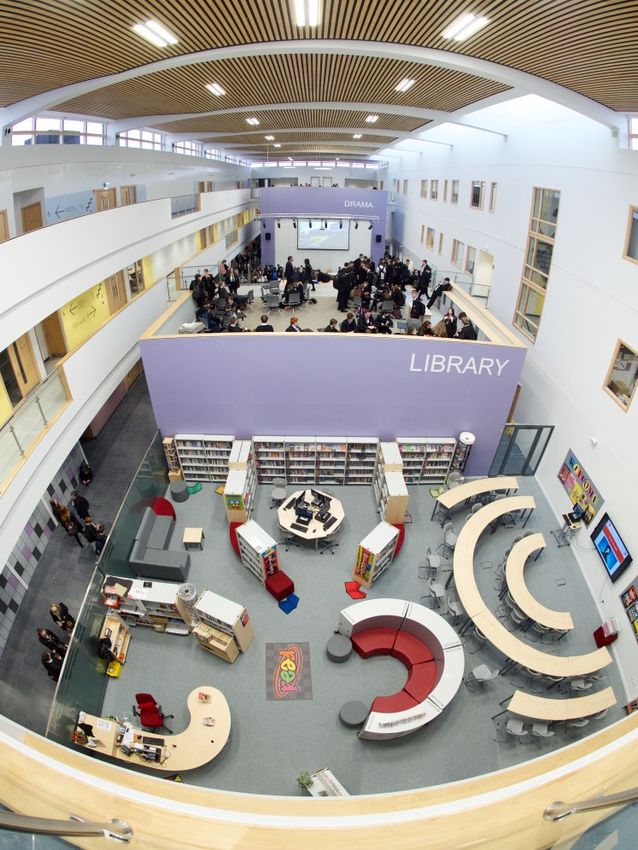
INDEX

Section 5   THE CURRICULUM
            Curriculum for Excellence             25
            CfE—Implementation in Barrhead High   26
            S1/2 Curriculum                       27
            S3/4 Curriculum                       28
            S5/6 Curriculum                       29

Section 6   ASSESSMENT AND REPORTING
            Assessment                            30
            Reporting                             31

Section 7   ACHIEVEMENT AND IMPROVEMENT
            Achievement                           32
            Improvement                           33

Section 8   PUPIL INVOLVEMENT
            Getting Involved in School Life       34
            Extra-Curricular Activities           35

Section 9   PARENTAL INVOLVEMENT
            Keeping in Touch                      36
            Getting Involved                      37
            Parent Council                        38

Section 10 FURTHER INFORMATION
           ERC Information                        39
           Other Useful Websites                  40
Section 1 - Introduction

A WELCOME FROM THE HEAD TEACHER

It gives me great pleasure
to welcome all prospective
parents/carers to the
community of Barrhead
High School. I hope as you
read this Handbook, you
will gain not only
information about our
school but also a sense of
the caring and inclusive
community at its heart.

As a Rights Respecting School, we are committed to ensuring all our young
people are safe, happy and healthy and encourage our young people to take
an active role in the wider life of the school and have a voice in school
decisions.

Strong and trusting relationships are at the heart of our community. We value
our partnerships with parents and carers, and work together to ensure our
young people are supported and challenged to achieve their personal best.

We aim to deliver excellent learning experiences to develop confident
individuals who are prepared for life and all the opportunities and challenges it
will bring.

I hope you find this Handbook informative and I look forward to meeting you
as new members of our school community.

Please visit our school website at https://
blogs.glowscotland.org.uk/er/Barrhead/ or
follow us on Twitter to keep up to date with our
school notices and acknowledgements.

Fiona Johnston
Head Teacher

Barrhead High School

                                     2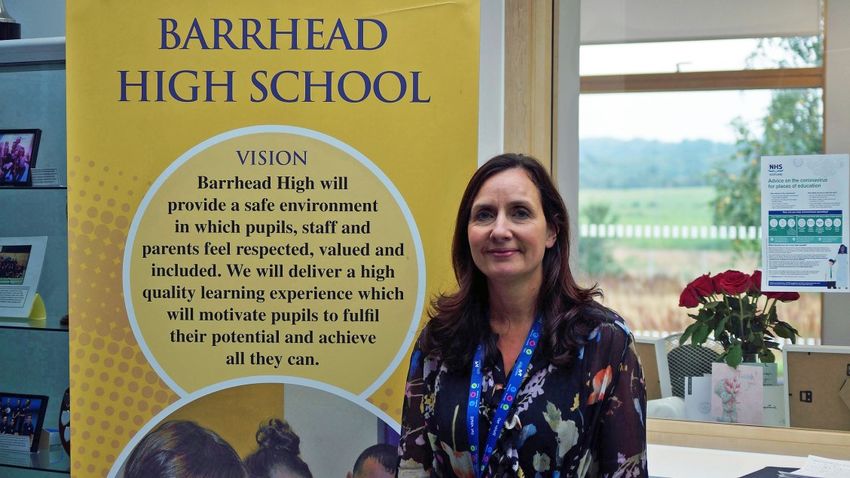
Section 1 - Introduction

BARRHEAD HIGH SCHOOL

Barrhead High School is a six year, non-denominational, comprehensive
school serving the town of Barrhead. We work closely with our three
associated Primary Schools, Carlibar, Cross Arthurlie and Hillview to support
families and improve outcomes for all.

We have a current roll of approximately 647 pupils and a teaching staff
equivalent to 57 full-time teachers. Our young people are further supported by
support staff equivalent to 23 full-time members. There are 3 Depute Head
Teachers, 8 Curricular Principal Teachers, 6 Pupil Support Principal Teachers
and 7 Development Principal Teachers.

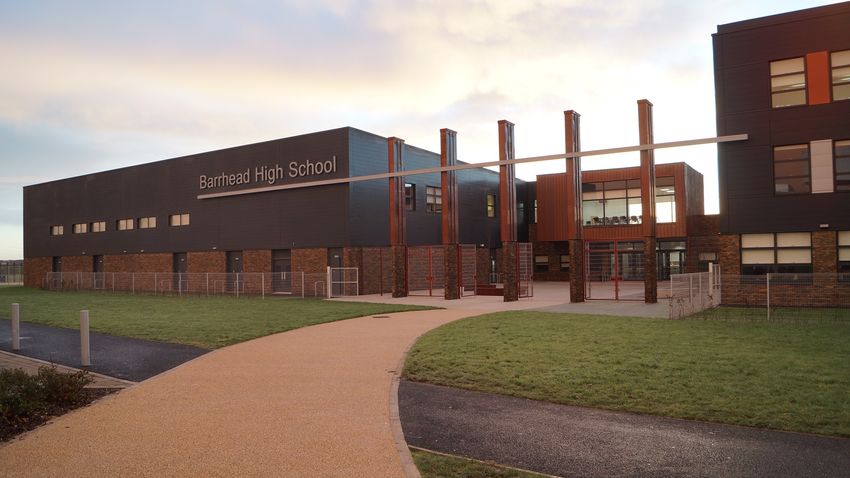
The school lies on the outskirts of Barrhead with a
splendid outlook over to Cowan Park and adjacent
farmland. The new building opened in August 2017
and has provided a learning environment and facilities
of the highest standard.

There is a ‘theatre box’ drama area which serves as a
teaching area and also a performing area. There are 8
IT rooms, wifi throughout the building and access to
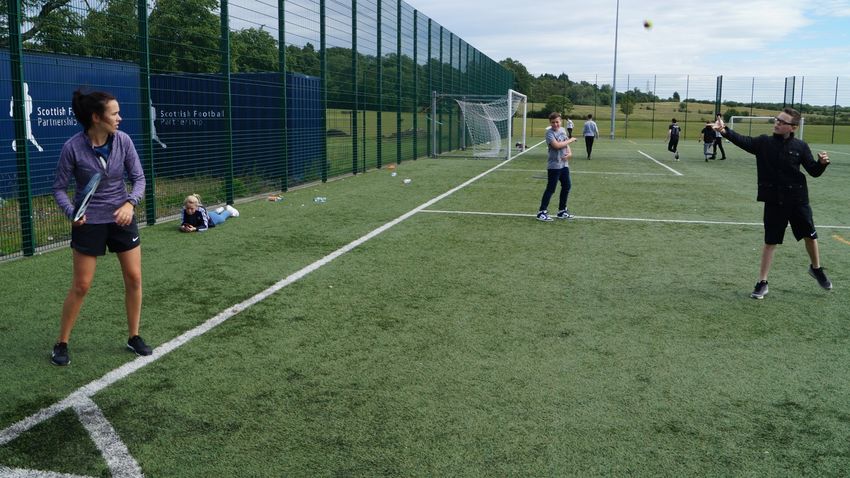
chromebooks, laptops and ipads. The PE facilities are
first class and we have 2 MUGA pitches with a running
track around one.

The school is also fortunate in having strong support
from our local community. Parents have high
expectations of the school and provide encouragement
and support for their children.

Local employers also offer work placements to our young people and share
their expertise.

                                    3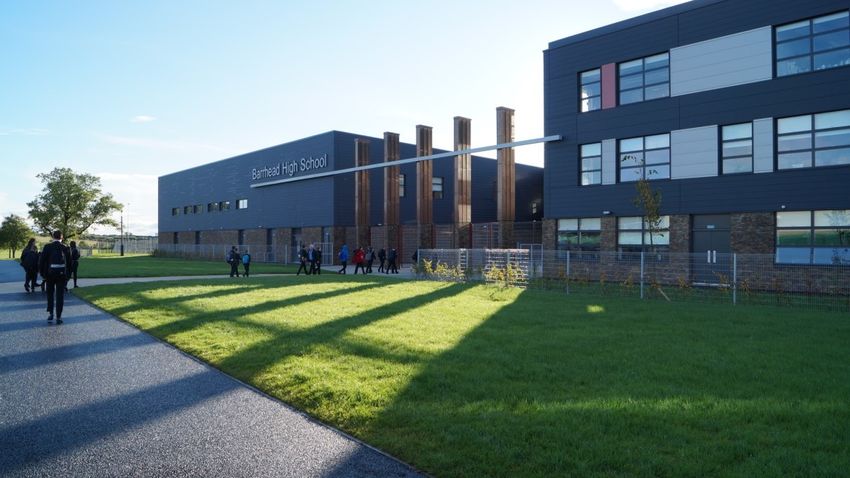
Section 1 - Introduction

SCHOOL ETHOS

Barrhead High School is noted for its caring ethos. All pupils are respected
and valued, and relationships are at the heart of our school community. We
are a Gold Rights Respecting School. The Gold Award recognises
achievement in putting the United Nations Convention on the Rights of the
Child at the heart of a school’s planning, policies, practice and ethos. The
aims of our school charter is to ensure the whole community learns about the
Convention on the Rights of the Child and that our young people, staff and
parents use this shared understanding to work for global justice and
sustainable living.

At Barrhead High School, we aim to ensure that your child achieves their
potential. It is our intention that, with the help of parents, and with the
professionalism and dedication of the teaching staff, all our young people will
be equipped to take their place in society as responsible, well educated,
caring people.

We, as a school, care for the children as individuals, and feel confident that
we will bring out the best in them whatever their particular strengths and
abilities.

Our Vision and Values

Vision

      Barrhead High will provide a safe
      environment in which pupils, staff and
      parents feel valued, respected and
      included.

      We aim to deliver a high quality
      learning experience for all which will
      motivate pupils to aim for and reach the
      highest standards of attainment and
      achievement within their potential.

Values
                                                             Responsibility
      What we do and how we do it is guided by our
      underlying values.                                     Excellence
                                                             Success
      At the heart of these values lies RESPECT -            Perseverance
      respect for each other and respect for yourself.
                                                             Equality
                                                             Confidence
                                                             Teamwork
                                    4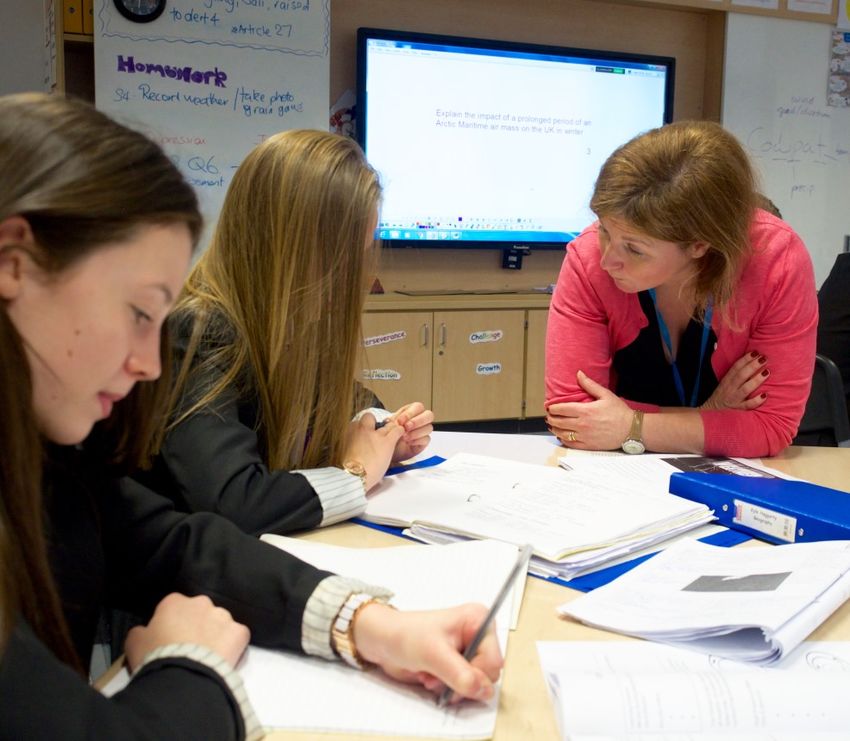
Section 2 - Transition to Barrhead High

TRANSITION FROM ASSOCIATED PRIMARIES

                                   In order to ensure a coherent and smooth
                                   progression from Primary to Secondary, an
                                   extensive transition programme is in place.
                                   Curriculum for Excellence provides a
                                   framework that coordinates learning and
                                   teaching from age 3 to 18 and we work
                                   closely with our associated primaries to
                                   ensure this happens.

Your child will have attended a range of cluster transition events to give them
an opportunity to meet their future teachers and experience a range of
curriculum areas. They will also have the opportunity to join Barrhead High for
Induction days to ensure they feel confident about finding their way around the
school, following their timetable and are excited about the range of extra-
curricular activities on offer at Barrhead High. Parents will have an opportunity
to visit the High School and hear more about the transition process and
provide an opportunity for you to share any concern you or your child may
have.

                                     5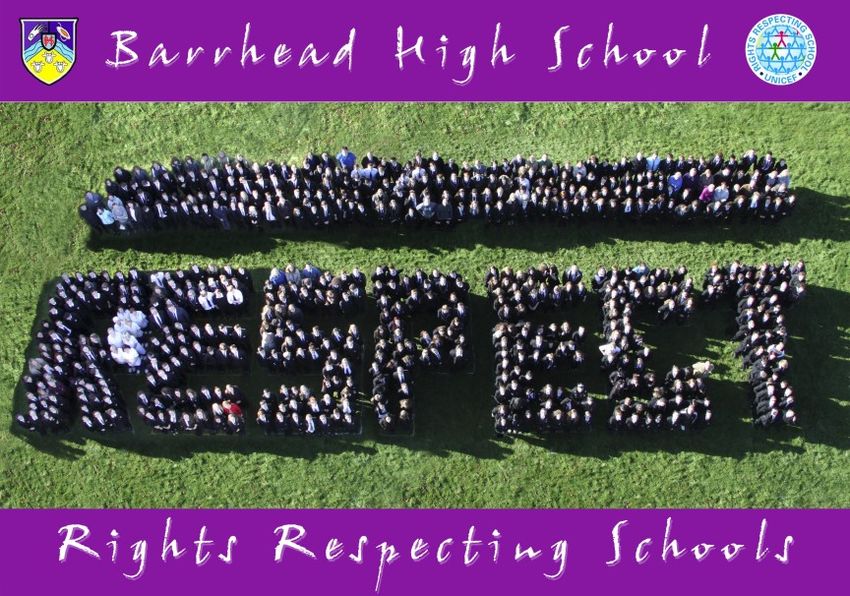
Section 2 - Transition to Barrhead High

TRANSITION AT OTHER TIMES

Before a child enrols in Barrhead High School, the Education Department will
seek documentary evidence to validate a child’s entitlement to a catchment
place at this school. Documentary evidence can be submitted to the
Education Department via the school office; further detail on required
documentary evidence is available in the Education Department’s school
admission policy which is accessible on the Council’s website via the web
address below:

https://www.eastrenfrewshire.gov.uk/school-admissions

When a child who was enrolled in the school as a catchment pupil ceases to
reside within the Barrhead High School delineated catchment area and his/
her parents wish the child to continue to attend the school the parent must
submit a placing request to remain.

Placing Requests
If you do not live within our catchment, you would need to submit a placing
request to East Renfrewshire Council and it would need to be granted before
we can proceed. To make a placing request, or for further information about
this, please contact

             East Renfrewshire Council Offices
             Placing Request
             Education Department
             211 Main St
             Barrhead
             G78 1SY

             0141 577 3578

The ERC Education Department website contains more information regarding
catchment places and placing requests. The full policy and procedures can be
accessed here:

http://www.eastrenfrewshire.gov.uk/placingrequest

                                  6
Section 3 - Support for Pupils

GETTING TO KNOW US

The support and partnership of parents is very important to the success of
Barrhead High School. We hope to get to know new parents as soon as possible,
but in the meantime, you will find it helpful to be introduced to some of the staff
your child may meet, even before they arrive.

                               Senior Leadership Team

   Miss Lindsey Potter              Mr Adam Beaton              Mrs Kirsty McShane
  Depute Head Teacher             Depute Head Teacher           Depute Head Teach-
        S3 & S6                         S2 & S5                          er
                                                                     S1 & S4

                               Pupil Support Team

                                    Miss G Van Looy
       Ms M Mahon                Principal Teacher Pupil
   Principal Teacher of            Support (Pastoral)
         Inclusion
                                                                  Ms L Smith
                                                            Principal Teacher Pupil
                                                              Support (Pastoral)

                                     Mrs S Wallace
                                 Principal Teacher Pupil
                                                                     ?
                                  Support (Support for
                                        Learning)
         Ms C. McGuire                                          Mr G. Maybury
    Acting Principal Teacher                                  Principal Teacher
      Support (Pastoral)                                    Pupil Support (Pastoral)

                                        7
Section 3 - Support for Pupils
OUR SUPPORT TEAM (1)
The Pastoral (“Guidance”) Teacher
Your child will have a Principal Teacher of Pupil Support (Pastoral) who has
responsibility for them and who will be the first port of call for any concerns.
They will soon get to know your child and will keep a close eye on progress,
attendance, timekeeping and on friendship groups.
We also try to ensure that siblings share the same Pupil Support teacher so
you should be able to speak to one person who knows your child and your
family well.
Pupils will be introduced to their Pupil Support teacher when they first arrive at
High School and in most cases, their Pupil Support teacher will meet with them
at least one period every week for Pastoral or Social Education.
In addition to their normal teaching duties, they are involved in a number of
important activities:
care of new admissions
monitoring the attainment and achievements of all pupils
giving advice on course choices
monitoring attendance and timekeeping
care of pupils facing difficulties – emotional, physical, academic
preparation of reports on pupils – for employers, universities, colleges etc
contact with parents of individual pupils – by letter, telephone, interview,
meeting
links with supporting agencies such as the careers service, social work
department, community organisations etc.
As your son/daughter progresses through the school, they will help them make
responsible and informed decisions at the key stages in their education e.g.
choosing subjects at option times and considering the possibilities when they
leave school.
8Section 3 - Support for Pupils
OUR SUPPORT TEAM (2)
Support for Learning
Like other schools in East Renfrewshire, Barrhead High School has a team of
specialist staff – teachers and assistants – who aim to provide the additional
support an individual pupil may require. If your child has a difficulty which
makes learning more challenging, they will quickly get to know the Support
department and its Base.
The department offers help to pupils in a variety of ways:
providing direct one-to-one help from a learning support specialist teacher
allocation of a support for learning teacher or pupil support assistant to a
class
teaching co-operatively with subject teachers
advice to classroom teachers by learning support
staff
referral to specialist services, eg Psychological
Services, through the school’s Joint Support Team
arranging a case conference for pupils with
additional support needs.
providing specialist resources
liaising with the Scottish Qualifications Authority
(SQA) so that special examination arrangements are made where
appropriate
support for pupils with additional support needs to make positive transitions
to Barrhead High School from primary and other schools, and from
Barrhead High School to further education, employment or training
working co-operatively with other staff in the pupil support team.
Contact the Principal Teacher Support for Learning with any concerns.
Behaviour Support
For some pupils who have social, emotional and behavioural difficulties, their
behaviour may affect their learning, or the learning of other pupils. Again as in
all other high schools in East Renfrewshire, we have a specialist team of staff -
teachers and assistants - who will work with the child and other teachers to
support.
The team will employ similar strategies to those detailed above, working one-to
-one, in small groups or with whole classes, focussing on behavioural issues.
They work within the East Renfrewshire GIRFEC (Getting It Right For Every
Child) Framework and will also liaise with other partner agencies including the
East Renfrewshire Psychological Service and Social Work.
Contact the Principal Teacher Inclusion with any concerns.
9Section 3 - Support for Pupils
OUR SUPPORT TEAM (3)
The wider Support Team
Your child can also be supported by our Social Justice
Manager; by Young People’s Services; by our Campus
Police Officer; or by our Education Psychologist. We can
also link to Social Work, the Youth Counselling service,
the School Nurse, a local doctor and other partners.
All of these supports are available for any young person
who needs additional help, and we hope that parents will
work with us to make sure learning is fully supported.
Please contact the Principal Teacher of Pupil Support
with any concerns.
Joint Support Team (JST)
The work of coordinating the different support agencies is often carried out
through the Joint Support Team. It is made up from representatives of the
school’s Senior Leadership Team, Pupil Support staff, teaching staff, and
where possible, Social Work department, Psychological Services, School
Nurse service, Careers Service and other appropriate agencies. It allows us to
bring together the experience and specialist knowledge of the different
agencies to find the best solutions for our young people. We would always
seek a parent’s permission first before involving the JST.
ENQUIRE
The Scottish Advice Service for Additional Support for
Learning
Operated by Children in Scotland, Enquire offers independent, confidential
advice and information on additional support for learning through:
A telephone helpline—0345 123 2303
An email enquiry service—info@enquire.org.uk
An online enquiry service
Two websites—www.enquire.org.uk (for parents/carers and practitioners)
and www.enquire.org.uk/advice-young-people (for young people)
Enquire also provide a range of clear and easy to read guides and fact sheets
explaining everything from ‘additional support in the early years’ to ‘what
planning should take place for moving on from school’.
10Section 3 - Support for Pupils
CHILD PROTECTION
At Barrhead High School we work hard to keep our children safe.
At Barrhead High School we take the care, welfare and
protection of our children very seriously. We believe all
children have a right to feel safe within the school, home and
community.
Within our school we strive to provide a safe, secure and
nurturing environment for our pupils, which promotes
inclusion and achievement.
Our child protection policy and procedures set out what we will do if we have
reason to believe a child is being abused or is at risk of abuse, either within the
home or the community. These policies are designed to ensure that children
get the help they need when they need it.
Every staff member undergoes a minimum of one child protection training
activity every session. Many of our staff are extensively trained in specific
areas of child protection to support and identify potential child protection
concerns.
All schools in East Renfrewshire have comprehensive Pupil Support systems
in place and we work closely with our partners in Social Work, Health and the
Police. The school operates a multi agency Joint Support Team to ensure that
the best possible supports are available to pupils when they need them.
The Child Protection Co-ordinator for the school is Miss Potter, one of our
Depute Head Teachers. The Head Teacher, Mrs Johnston, is the Child
Protection Officer. If you wish any further information or a copy of the school
policy, please contact the school office. If you wish to discuss this important
matter further, please make an appointment to see your young person’s
Support Teacher.
Barrhead Social Work Office: 0141 577 8300
Clarkston Social Work Office: 0141 577 4000
Police Scotland Family Protection Unit: contact Police Scotland 101
Standby Social Work Out of Hours 0800 811 505
11Section 4 - Policies and Procedures
THE SCHOOL DAY / THE SCHOOL YEAR
The School Day
Period 1 • 8.45 - 9.35
Period 2 • 9.35 - 10.25
Interval
Period 3 • 10.40 - 11.30
Period 4 • 11.30 - 12.20
Lunch
Period 5 • 1.05 - 1.55
Period 6 • 1.55 - 2.45
Period 7 • 2.45 - 3.35 (M, T, Th) The School Year 2020/21
New Session Starts:
School Opens • Wednesday 12 August 2020
September Holiday:
Close • Thursday 24 September 2020
Open • Tuesday 29 September 2020
October Holiday:
Close • Friday 9 October 2020
Open • Tuesday 20 October 2020
Christmas Holiday:
Close • Friday 18 December 2020
Open • Tuesday 5 January 2021
Mid Term Holiday:
Close • Thursday 4 February 2021
Open • Wednesday 10 February 2021
Easter Holiday:
Close • Thursday 1 April 2021
Open • Monday 19 April 2021
May Day Holiday:
Close • Friday 30 April 2021
Open • Tuesday 4 May 2021
Inservice– Thursday 6 May 2021
Local May Weekend Holiday:
Close • Thursday 27 May 2021
Open • Tuesday 1 June 2021
Summer Holidays:
School Closes • Friday 25 June 2021
12Section 4 - Policies and Procedures
ATTENDANCE AND TIMEKEEPING
If pupils are not in class, they will not learn. It is vital therefore that parents
work with the school to maximise the opportunities to learn for their children
by encouraging good attendance and timekeeping.
East Renfrewshire has a clear policy on attendance, which is set out below:
‘Section 30 of the 1980 Education Act lays a duty on every parent of a child of
‘school age’ to ensure that their child attends school regularly. Attendance
must be recorded twice a day, morning and afternoon.’
In Barrhead High School, electronic registration is now recorded for all
classes on a period by period basis. East Renfrewshire’s target attendance
figure is 95%. We value the partnership and support we have with parents in
meeting our attendance target. East Renfrewshire Council asks parents to
avoid taking family holidays during term time. At a school level we are very
conscious of the disruptive effect on a pupil’s learning. Holidays taken during
term-time will be classed and recorded as unauthorised absence.
Staff will investigate all unexplained absences. If unexplained or unjustified
absences persist, the matter is then referred to the Reporter to the Children’s
Panel, which is made up of members of Parent Councils in the area. If
parents feel that their child may be truanting from school, they should not
hesitate to contact us. Early contact may remove the parent’s fears and will
help us to resolve any issues.
Absence procedures
Please telephone the school office before 8.45am to inform us that your child
will be absent. Please telephone every day of your child’s absence. Your child
will be recorded as Unauthorised Absence if there is no parental
communication.
Medical and dental appointments
Your child should show the appointment card to the main office and follow
signing out procedures. If there is no appointment card, a parental phone call
is required. No pupil under the age of 16 will be allowed to leave during the
school day without a consenting adult accompanying them.
Unwell at school
If your child feels unwell during the school day, the office will contact you. At
no point should your child call you. All calls should be directed through the
school office. A parent/guardian may be asked to collect the pupil. No pupil
under the age of 16 will be allowed to leave school unaccompanied.
Timekeeping
When pupils are at school, it is vital that they arrive on time for classes.
Otherwise not only is their education disrupted but so is the education of
others in the class. Your assistance in ensuring your son/daughter arrives at
school on time is appreciated.
13Section 4 - Policies and Procedures
BEHAVIOUR AND ANTI-BULLYING
In Barrhead High School, we are conscious that effective learning and
teaching will only take place in a calm and ordered environment,
characterised by respect for self and respect for others. We expect the
highest standards of behaviour and our classroom charter aims to achieve
and maintain this.
School policy on behaviour is based on the classroom charter and on positive
relationships between pupils and staff. In dealing with repeated misbehaviour,
we recognise the support of parents is vital. In this case, parents will be
invited to come in and discuss the situation with a senior member of staff.
The possibility of bullying is often a concern for parents of children moving to
a new school, although, in practice, it is not as prevalent as some might fear.
However one incident is one too many and as a school we take the issue of
bullying very seriously. We aim to ensure that we develop a climate in which
bullying is not tolerated by staff or pupils through our “No Bystanders”
message. We would encourage parents to make contact with the Pupil
Support teacher or Year Head as soon as possible if they have any concerns
in relation to this.
In recent years, with the easy access many pupils now have to mobile
phones, social networking sites and the internet, there has been an increase
nationally in incidents of cyberbullying. Internet safety measures are in place
by the provision of the ERC firewall, ensuring the safety and protection of our
pupils within school. However many incidents of this nature occur out of
school and we would encourage parents to be aware of their son/daughter’s
phone and internet usage. While we may have limited jurisdiction over what
happens out of school, in many instances these things carry over into school
as well, so it is helpful for us to know about them.
14Section 4 - Policies and Procedures
MERIT SCHEME
The Merit Scheme is our way of rewarding students who work hard, do their
best and take part in the life of our school.
Staying on the Merit List
All pupils start the month on the merit list. To remain on the list at the end of the
month, you must have:
At least twice as many merits as demerits.
Attendance greater than 90% for that month.
No more than 4 lates in the month.
Teachers can award merits for a variety of achievements: leadership,
contributing to the class ethos, consistently living the school values.
The Merit List
At the end of each calendar month, we produce a list of the names of all of our
pupils who remained on track for that month. The Merit List will be posted in the
school.
Each term there will be small rewards for
merit pupils such as watching a movie,
an extended interval or early lunch, an
extra period of PE, certificates, merit list
pens & rulers. Twice a year, at Christmas
and in June, there will be a more
substantial reward such as a visit to the
cinema, or special activities day. Pupils
will require to have been on 3 out of 4
lists to be eligible.
The Merit List is also used to decide
whether pupils are eligible to
participate in some of the “extra”
activities on offer. For example, to be
considered for a school trip, pupils
require to have been on the Merit List
for 3 consecutive months.
15Section 4 - Policies and Procedures
MERIT SCHEME (continued)
Demerits
As well as awarding Merits, teachers may also require to award Demerits when
pupils do something that does not uphold the high standards that we set
ourselves as a school.
They could be given a demerit for
example for not completing homework,
failing to follow class instructions, eating
in class, using a mobile phone during
periods, etc.
Every demerit will require 2 merits to
cancel it out. A more serious behaviour
referral will require 4 merits to cancel it
out. If they have been in the Learning
Zone, excluded or truanting, a pupil will
not be on the Merit List for that term.
What Else Happens with Demerits?
If a pupil gets 5 demerits their Pastoral Support teacher will call home to alert
parents to an emerging problem. This is to support the pupil to get back on
track.
If a pupil reaches 10 demerits in a month, the parents/carers will be called by
the Depute Head Teacher in charge of the year group.
16Section 4 - Policies and Procedures
DRESS CODE
Dressing for excellence at Barrhead High School is
crucial to set high standards for all. Wearing a
uniform presents an image of the school in the
community, avoids inequalities in terms of
possessing the latest designer fashions and allows
us to identify quickly who should, and who should
not, be in our campus.
Pupils, staff and parents working together can
maintain excellent standards in uniform. These
photographs illustrate acceptable school uniform at
Barrhead High School.
Parents can support us by ensuring that their son/
daughter is wearing:
Blazer with badge
Black Smart Trousers
Black Skirts (knee length)
White School Shirt (buttons to the neck)
Black V-neck Jumper / cardigan
Black Shoes (all black)
School Tie
Black outdoor jacket (as required)
As we are preparing our young people for the world of work parents can support
us by ensuring pupils do NOT wear the following items of clothing:
Leggings, jeggings, shorts
Jeans (including black)
Skirts of an inappropriate length
Hooded or casual tops (any colour including black)
Shirts that do not button to the neck
White or coloured trainers or shoes
Items with logos
Football colours
All outdoor jackets and other coloured tops, other than blazers, will require to be
removed inside the building. Lockers are available to keep outdoor jackets in for
all pupils.
We also have our own PE uniform—a purple polo-
neck or T-shirt.
17Section 4 - Policies and Procedures
HOMEWORK AND STUDY
Homework is essential to support the learning that takes place in the
classroom. It is also important to realise that homework involves more than
completing set tasks issued by teachers. Increasingly as pupils move up
through the school, they should be taking responsibility for consolidating work
already covered and preparing for new work. It is vital therefore that they
learn from an early stage to develop good study habits and routinely complete
homework.
The amount and type of homework set by teachers will vary from year to year.
We expect that all faculties will set pupils homework at all stages. The work to
be completed at home should be worthwhile and planned to add to the
educational experience. Some exercises may be set to reinforce what has
been taught in class; on other occasions pupils may benefit from guided
reading, from researching materials in books, newspapers and magazines, or
from being directed to watch a programme, film or play on TV.
One of the most significant effects on a young
person’s progress can happen through the
engagement of parents / carers in their child’s
learning. Barrhead High School has subscribed to
‘Show My Homework’ (SMH) to remove any barriers
there may be for parents accessing / understanding
what homework should be completed at home.
All pupils are issued with log in to SMH. Parents are also given a login to
SMH to see what homework has been set and completed by their son /
daughter. We would ask parents to check their child’s SMH on a regular basis
to check homework is being completed. Teachers will record the completion
of homework and may comment on it in SMH.
Teachers or Pupil Support staff will contact parents and carers should there
be any concerns developing regarding homework. If parents have concerns
about homework, they should contact their son/daughter’s Pupil Support
teacher in the first instance.
Supported Study
At various times in the session, a programme of supported study may be
organised to provide pupils with additional help with their work, particularly in
the run up to the prelims or the SQA exams. These supported study sessions
are usually held at the end of the school day when teachers are available to
provide tutorial support. Pupils are encouraged to take full advantage of these
opportunities to maximise their achievement and ensure they attain the
highest possible grades.
At other times, teachers will offer help on an informal basis and again we
would encourage pupils to make full use of this.
18Section 4 - Policies and Procedures
SCHOOL CANTEEN & FREE MEALS
Pupils in S2 and above are allowed to go out
of school at lunchtime; however we
encourage parents and pupils to make full
use of the on-site facilities—the Hub, the
Deli or the Cafe. Our facilities are safe,
supervised and offer a wide range of healthy
eating options. S1 pupils are required to stay
in school at lunchtimes.
Barrhead High School operates a cashless cafeteria. Pupils, staff and visitors
have an account which is accessed by entering their individual code
number. Purchases are then debited from the account.
Money can be credited to the account by inserting cash into the
machine in the canteen. However we would encourage parents to
make use of the online payment facility ParentPay to add money to the
pupil’s card.
If pupils require special diets, their parents should obtain a diet sheet from
their doctor or the hospital dietician and send it to the School Meals
Supervisor. The Supervisor will then contact the Catering Manager at the
school and the matter will be dealt with discreetly.
Pupils who bring packed lunches to school may use the cafeteria or social
areas to eat them.
Free School Meal Entitlement
Some pupils may be eligible for free school meals. This is a means-tested
benefit dependent on parental income. Pupils are given a daily allowance
(currently £2.30) which is automatically added to each pupil’s account each
day. If it is not used, it is then lost and cannot be cashed or built up.
Information and application forms for free school meals may be obtained from
the school office or from Customer First staff at Council Offices, Barrhead
(0141 577 3001). Although application may be made at any time, it is helpful if
forms are completed in April for applications which are to take effect from the
beginning of the following session. Please note that a new application must
be made each session.
We would encourage parents who are eligible to make use of this. Pupils who
are in receipt of free meals are also eligible for other support e.g. at
present senior pupils are entitled to free places on the school’s Easter
Revision classes. These benefits are only available to pupils who actually
receive the free meals. Similarly the school can receive support based on the
number of pupils who receive free meals.
19Section 4 - Policies and Procedures
PARENTPAY
East Renfrewshire Council operates a service that allows parents/carers to
pay for their child's school excursions/visits and schools meals online, via the
council's ParentPay system.
By paying online, parents will no longer have to send their young person to
school with money to pay for excursions/visits or meals.
The system is also more cost-effective and avoids the amount of cash that
has to be handled by staff.
It is hoped that, due to ease of use, there will be an increase in the number of
pupils taking school meals.
You can get more information and log on at:
https://www.parentpay.com/
or access it directly from the school
website.
Using ParentPay
Access the ParentPay facility at
www.parentpay.com (You can go directly to the site from
the Quick Link on the school website.)
You will first need to create an account using the account
activation letter provided by the school and set up a new
password.
Log on with your username (email address) and pass-
word.
You can now use the facility to pay for dinners, Home
Economics payments, school trips and much more.
20Section 4 - Policies and Procedures
MEDICAL MATTERS
We have 2 trained First Aiders in the school. For pupils who are ill during the
day there are strict regulations limiting the first aid we are allowed to provide.
We are forbidden to administer medicine unless the relevant pro-forma has
been completed, signed by a parent and returned to the School Office along
with the medicine, stored in its original packaging.
In cases of serious illness or accidents, every effort is made to contact the
parents and, if necessary, arrangements are made to have the pupil taken to
hospital. In cases where a pupil is not able to remain in school, contact is
made with the parents with a view to having the pupil taken home. Fortunately
most cases are straightforward and the pupil returns to classes as soon as
possible after receiving first aid.
We would request all parents to inform us of any medical problem or condition
affecting their child. Such information is helpful and enables us to take prompt
and appropriate action if a pupil is suddenly taken ill. Details of this nature are
of course handled with sensitivity and in confidence.
Routine immunisations are carried out by the education doctor and nursing
staff. Parents are informed when these immunisations are to take place.
Pupils with medical/dental appointments during the school day should bring
the appointment card to the School Office to be recorded. As much notice as
possible of appointments should be given.
EMERGENCY PROCEDURES
As with all East Renfrewshire Council schools, we make every effort to
maintain a full educational service, but on occasions circumstances may arise
which lead to disruption. Schools may be affected by, for example, severe
weather, dislocation of transport, power failures or difficulties of fuel supply.
In such cases we shall do all we can to let you know about the details of
closure or re-opening as soon as possible. In any decisions taken, the safety
and welfare of both pupils and staff will always be paramount. We shall keep in
touch by using text-messaging, Twitter and our school website. We shall also
use the ERC website, local radio and notices in the local community.
A letter informing parents of the procedures is sent home each year and a
copy of the full procedures is available on the website.
21Section 4 - Policies and Procedures
EQUALITIES & SOCIAL JUSTICE
East Renfrewshire Council Education Department is committed to ensuring
equality and fairness for all. In accordance with the requirements set out by
the Equalities and Human Rights Commission, we seek to –
Eliminate unlawful discrimination, harassment and victimisation and
other conduct that is prohibited by the Equality Act 2012
Advance equality of opportunity between people who share a relevant
protected characteristic and those who do not
Foster good relations between people who share a protected
characteristic and those who do not.
As a school, we have a commitment to
equality of opportunity and to social justice.
This commitment is extended to all members
of the school community, pupils, parents and
staff, irrespective of social background, creed,
disability or race.
The school community has achieved the
Rights Respecting School Gold Level Award
and the Vision Schools Scotland Level 2
Award, which confirms that such values are
embedded into our values, policies and
procedures.
Barrhead High School has clear guidelines and procedures for dealing with
incidents of inequality, as advised by the Education Department. We
encourage that any concerns be raised with us. Our Equalities Coordinator is
Ms Pauline Bradley (DHT) and can be contacted by email or by telephoning
the school.
DATA PROTECTION
Information on pupils, parents and carers is stored on a computer system and
may be used for teaching, registration, assessment and other administrative
purposes. The Data Protection Act 2018 and the European General Data
Protection Regulations 2016 (GDPR) regulate the way data is managed by us
to keep personal information confidential, accurate and secure. For further
information please contact the school.
22Section 4 - Policies and Procedures
RELIGIOUS & MORAL EDUCATION
and RELIGIOUS OBSERVANCE
In line with our statutory duty, the school includes one period of Religious &
Moral Education (RME) within the curriculum for S1 - S4. Relevant issues are
examined in a meaningful and progressive way, using a context of
Christianity, other religions or other belief systems.
Within the S5/6 curriculum, pupils also have the opportunity to study
Religious, Moral and Philosophical Studies, offering SQA certification at
Higher level.
Further relevant issues in relation to Moral Education will be addressed
through our programme of Personal, Social & Health Education for all year
groups, delivered mainly by the Pastoral Support teachers.
Similarly issues of this nature may be addressed within the programme of
regular assemblies held with each year group.
At times throughout the session, again in line with our statutory duty, we offer
opportunities for religious observance.
The programme for this is designed to provide
a meaningful experience for all, regardless of
personal faith. Such assemblies are planned to
be meaningful to all and are sensitive to
individual spiritual needs and beliefs. They
provide opportunities for the school community
to reflect upon and develop a deeper
understanding of the dignity and worth of each
individual and their contribution to the school
and wider community.
23Section 4 - Policies and Procedures
COMPLAINTS
As a school, we pride ourselves in offering a first class service to all parties —
pupils, parents and the community.
We encourage our pupils to show respect for each other, and the local
community. For example, our pupils carry out regular litter-picks in the area
surrounding and participate in volunteering in the local community.
If you have a concern, we would welcome hearing from you at an early stage,
before it develops into a more serious concern or complaint. Often a quick call
to the Pupil Support teacher or even the Year Head will be enough to resolve
the issue.
In line with Council policy, and
following statutory direction from
the Scottish Public Services
Ombudsman (SPSO), we have
adopted a Complaints Handling
Procedure with a two stage
approach to handling complaints:
Stage One: Frontline Resolution: We will use this to deal with issues
that are straightforward and easy to resolve. We will give you our decision
in five working days or less, unless there are exceptional circumstances.
Stage Two: Investigation: For complaints not resolved at Stage 1 or
those that are complex and require detailed investigation, we will:
acknowledge receipt of your complaint within three working days
give you a full response to the complaint as soon as possible and within
20 working days.
If you are still unhappy with the response, after going through all the stages,
you would still have the option of taking your complaint to the Scottish Public
Services Ombudsman (SPSO). We would expect however that we would be
able to resolve most issues at an earlier stage.
24Section 5 - The Curriculum
CURRICULUM FOR EXCELLENCE
Curriculum for Excellence (CfE) is the name given to the Scottish
Government’s programme for education in schools. It aims to provide a
coherent, more flexible and enriched curriculum from ages 3 to 18.
The curriculum includes the totality of experiences which are planned for
children and young people through their education, wherever they are being
educated. These experiences are grouped into four categories:
Curriculum areas and subjects
Interdisciplinary learning
Ethos and life of the school
Opportunities for personal achievement
The curriculum has been planned to offer “relevant, inspiring, engaging
education for every child and young person in Scotland”. It aims to ensure
that all children and young people in Scotland develop the attributes,
knowledge and skills they will need to flourish in life, learning and work. The
knowledge, skills and attributes learners will develop will allow them to
demonstrate four key capacities – to be successful learners, confident
individuals, responsible citizens and effective contributors.
The curriculum is described in terms of experiences and outcomes. They
signpost progression in learning and set challenging standards that will equip
young people to meet the challenges of the 21st century.
The title ‘experiences and outcomes’ recognises the importance of the quality
and nature of the learning experience in developing attributes and capabilities
and in achieving active engagement, motivation and depth of learning. An
outcome represents what is to be achieved. The experiences and
outcomes are used both to assess progress in learning and to plan next
steps, making use of the benchmarks for each subject area which help
determine the levels at which pupils are achieving.
You can find out more about Curriculum for Excellence on the website:
https://education.gov.scot/
The school website also contains further information relating to the particular
curriculum arrangements, the subjects on offer and the subject departments
within Barrhead High School.
25Section 5 - The Curriculum
CfE—IMPLEMENTATION IN BARRHEAD HS
Curriculum for Excellence (CfE) encourages the focus on a broad general
education up to S3, before pupils progress to the senior phase. In the broad
general education, they will experience learning in all of the 8 curricular areas:
Languages Mathematics
Social studies Sciences
Technologies Expressive Arts
Health and Wellbeing Religious and Moral Education
covering the experiences and outcomes up to 3rd Level, with progress for
many into the 4th Level.
As your child progresses through the school, they will move from a broad
general education in S1 towards a greater depth and specialism by S4. The
following pages give more detail on how the curriculum throughout S1 to S6 is
designed to contribute towards this.
Skills Development
The development of skills is central to Curriculum for Excellence, particularly
in relation to literacy, numeracy and health & wellbeing. These 3 areas are
seen as the responsibility of all teachers and much work has been carried out
by teachers working together to ensure consistency and coherence in
developing the skills across the school. This has involved work within
individual subject departments but also interdisciplinary learning coordinated
between 2 or more subjects.
Increasingly as the pupils progress through the school, there is an emphasis
on the development of skills for learning, for life and for work, both in school
subjects, and in other opportunities for achievement, within and outwith the
school context. We recognise that the learning experience will not finish for
any pupil when they leave Barrhead High and it is vital that we prepare and
equip them for the next stage in their experience.
A major focus for us at all stages is the Scottish Government’s Developing the
Young Workforce programme and staff have incorporated various strategies
into learning and teaching to emphasise how learning in school helps prepare
for the world of work and to ensure our pupils move on to a positive and
sustained destination when they leave school.
26Section 5 - The Curriculum
S1/2 CURRICULUM
In S1 and S2 pupils study a broad range of courses, covering the 8 curricular
areas of Curriculum for Excellence, which create the strong foundations for
study in S3 to S6. The allocation of time to each subject is outlined below:
Subject Periods (S1) Periods (S2)
English 5 4
Mathematics 4 5
French 3 3
Social Subjects 3 3
(Geography / History)
Science 3 3
Art
Music
Drama The 6 Practical Subjects are taken
I.T. on a rota, 3 at a time, with an
Technical average of 1.5 periods per week
Home Economics
Physical Education 3 3
Social Education / Pastoral 2 2
Religious & Moral Education 1 1
27Section 5 - The Curriculum
S3/4 CURRICULUM
In S3, most pupils in Barrhead High will continue to focus on 8 or 9 subjects
which they will study over the next two sessions. S3 in particular will act as a
bridge between completing the broad general education phase, described in
terms of experiences and outcomes, and preparing for certification through
the National qualifications in S4.
Choice in S3 & S4
Pupils will have the opportunity to make some selections of subjects at this
stage, but are still required to follow a broad general education comprising
Languages (English and French), Mathematics, a Social subject, a Science
subject, a Technology subject and an Expressive Art subject. All pupils will
meet Health and Wellbeing through core Physical Education and Social
Education and all will follow a core course in Religious and Moral Education.
However there is also an element of personalisation and choice in terms of
which subjects they choose within some of these broad areas.
Pupils will choose their subjects through an option pathways process taking
into account their progress and achievements to date and their career
intentions beyond school. They will be supported in making these choices by
their subject teachers, Pupil Support teacher, Year Head and Careers Officer,
among others. Further details can be found in the Option Pathways Booklets
(see website).
Parents will have a vital role to play at this time in supporting and helping their
child to make the right choices. Information sessions specifically aimed at
parents are held at the times choices are being made.
28Section 5 - The Curriculum
S5/6 CURRICULUM
In S5/6, pupils can continue their studies from S4, progressing on to Highers
and then Advanced Highers or continuing at National levels as appropriate.
Pupils will normally focus on 5 subjects in S5.
East Renfrewshire Council also offers an extensive programme of vocational
courses in conjunction with the local colleges which can supplement or take
the place of some of the school options. Vocational courses are intended to
provide a pathway to employment, training or further and higher education,
and pupils will gain general employability skills valued by employers.
Some courses are 2.5 day options which means a student will attend college/
training provider Monday, Tuesday and Wednesday afternoons and all day on
Thursday. The rest of the week he/she will attend school, taking 3 school
subjects. Other courses will run for 2 afternoons, (Tuesday and Thursday)
allowing students to study 4 subjects in school. All transport costs are met by
East Renfrewshire Council. Taxis /buses collect students from the school and
return them at the end of the day. Full details of the programme for this
session are available by clicking on East Renfrewshire’s Vocational
Programme prospectus or, speak to your Pupil Support Teacher.
In S6 pupils are expected to focus on 4 subjects. This allows them some
freedom to have an involvement in the wider life of the school – for example
the S6 committees, volunteering or peer mentoring.
It is important that pupils check with employers, colleges and universities to
identify the required qualifications for their chosen pathway.
The school works hard with Skills Development Scotland to ensure every
pupil moves on to a positive destination. Pupil Support teachers lead an
intensive UCAS programme to help pupils apply for university, including a
parents’ information evening.
LEAVING SCHOOL
If you have questions relating to the choices after school, please contact the
DHT with responsibility for post-16 provision - Mrs Potter.
29Section 6 - Assessment and Reporting
ASSESSMENT
Assessment is an integral part of learning and teaching. It helps to provide a
picture of a young person's progress and achievements and to identify next
steps in learning. As learners move through the curriculum, they will
experience a range of approaches to assessment.
A learner's progress will be assessed in ways and at times appropriate to
their learning needs. Judgements about learning will be based on evidence
from a broad range of sources, over
time, and across a range of activities,
both in and out of school. Learners at all
stages will be involved in planning and
reflecting on their own learning, through
formative approaches, self and peer
assessment and personal learning
planning.
Assessment in the Broad General Education
Teachers will use a range of ways of assessing young people; this may
include observation, coursework and assessments to capture how a young
person is progressing and what their next steps in learning should be. The
CfE benchmarks are used to establish standards.
In addition to school assessment, all pupils in East Renfrewshire currently sit
standardised tests in Literacy and Numeracy during S2 and the Scottish
National Standardised Assessments in S3.
Assessment in the Senior Phase
At the senior phase young people will also experience assessment practices
which lead to qualifications. There will be a variety of internally and externally
assessed items, including the formal exams.
Many courses at National 5, Higher and Advanced Higher levels include work
that is assessed by teachers and lecturers, but learners will also have to pass
a course assessment for these qualifications – usually a question paper and/
or coursework. This will be marked by SQA.
30Section 6 - Assessment and Reporting
REPORTING
Reporting has two main purposes. Firstly, it provides clear, positive and
constructive feedback about young people's learning and progress, looking
back on what has been achieved against standards and expectations.
Secondly, it creates an agenda for discussions between learners and those
teaching and supporting them about their next steps in learning.
Parents will receive regular information about their children's strengths,
progress and achievements. They will be informed about any gaps in their
children's progress and ways that they can help.
Teachers will report to parents on their child's progress in planned learning
across the curriculum areas and in different contexts. They will do this in
terms of levels (CfE levels or National Qualification levels) as well as using
brief qualitative comments. Reporting will note particular strengths, areas for
development and achievements in challenging aspects and in the application
of learning.
We will send home a full formal report for each pupil at an appropriate time
each year. In addition, we will issue at least one tracking report which informs
briefly how the pupil is performing in each subject area in terms of effort,
behaviour and homework. The timing of these reports varies by yeargroup
and is issued at the start of each session.
Each pupil in S3 will produce a profile. A profile is a snapshot of a child's or
young person’s best achievements at a given point in time. Profiles are
primarily aimed at learners and their parents, and draw together a range of
information about a young person’s learning. It is envisaged that this profile
will build up over the pupil’s time in school and produce a document that will
assist the pupil in applying for jobs, college or university when they leave us.
In addition to the written reports, there will be a parents’ consultation meeting
for each yeargroup each session. Where possible this is held at a different
point in the session from the full report to increase the quantity and value of
communication.
31Section 7 - Achievement & Improvement
ACHIEVEMENT
Attainment in SQA Examinations
Barrhead High School aims to ensure that all
pupils attain to their highest level. The summary
statistics for current attainment in the SQA
examinations are summarised in the school’s
Standards & Quality Report for the previous
session, issued each October. A copy of this can
be accessed on the school website.
Other Achievement
While we recognise attainment in SQA exams as very important, we value
achievement in other areas too, both in and out of school. As We have
received a number of exciting awards including the Digital Schools Scotland
award, the Vision Schools Scotland award, the GOLD Sports School Scotland
award and the Rights Respecting School Gold Level award. In addition we
regularly see our pupils achieving success in sporting, musical and
competitive contexts, as individuals or teams.
We highlight achievements on a week by week basis on the school website or
Twitter account and again summarise the most significant of these in the
annual Standards & Quality Report.
Celebrating Achievement
At the end of each session, we hold an
awards ceremony for S1-3 learners to
recognise their achievements.
These can range from effort in classes,
leadership, and from representing the school
to service to the community.
32Section 7 - Achievement & Improvement
IMPROVEMENT
The results below summarise the school’s achievements in SQA exams over
the past three sessions in the key measures:
Percentage of S4 pupils attaining 5 or more National 5 (SCQF Level 5)
awards
Percentage of S5 pupils attaining 3 / 5 or more Higher (SCQF Level 6)
awards
All percentages are of the relevant S4 roll.
By end of S4 5+ @ level 5 or better
2017/2018 2018/2019 2019/2020 2020/2021
52 60 66 65
By end of S5 3+ @ level 6 or better
2017/2018 2018/2019 2019/2020 2020/2021
42 35 46 56
By end of S5 5+ @ level 6 or better
2017/2018 2018/2019 2019/2020 2020/2021
13 20 23 25
By end of S6 5+ @ level 6 or better
2017/2018 2018/2019 2019/2020 2020/2021
29 36 37 45
By end of S6 1+ @ level 7 or better
2017/2018 2018/2019 2019/2020 2020/2021
20 17 20 22
School Improvement Plan
Barrhead High School works in the context of the Scottish Government’s
National Improvement Framework and the Local Improvement Plan of East
Renfrewshire Council’s Education Department. East Renfrewshire.
As a school, we ensure that we are offering the best possible learning
experiences for our pupils by reflecting on our practice, both as individual
teachers and as a school. Each year we produce a School Improvement Plan
which identifies our priorities and vison.
33Section 8 - Pupil Involvement
GETTING INVOLVED IN SCHOOL LIFE
School is not just about the academic learning
that takes place in the classroom. Many of the
most memorable experiences for our learners
will occur in other contexts. Sometimes this will
involve teachers taking their subject out of the
classroom but often it will be through
participating in other experiences and making
the most of opportunities.
This can be through extra-curricular clubs, charity
work, competitions, school trips and much more.
The Friday Club is always popular and offers a
variety of activities in a non-competitive context.
Each session, we run a Freshers’ Fayre to ensure that all pupils, but
particularly the new S1, know what clubs and activities are taking place and
we encourage them all to sign up for something.
If you want to get the most out of your time at Barrhead High School, you
must be prepared to try new opportunities to #raisethebarr.
Pupil Voice
Pupils can have a voice on decisions which will affect
them through the Student Council. We have an active
group who make a real contribution to learning &
teaching and the life of the school.
34Section 8 - Pupil Involvement
EXTRA-CURRICULAR ACTIVITIES
Sports
Barrhead High School offers many sporting activities during
lunchtimes and after school. Activities vary from session to
session depending on demand. Football, Rugby, Badminton,
Basketball, Netball, Gymnastics and Athletics have been
offered in the past and are open to both boys and girls.
Music
Barrhead High School has a wide variety of musical activities
on offer. Pupils can join the school orchestra or choir or use the Music
Department’s extensive resources to join groups of pupils, for example,
practising guitar, drum, keyboard or many other instruments during the
lunchtime.
Drama
Our drama studio has allowed our pupils not only to
study Drama as part of their course, but to take part
in other activities based on drama.
Performances
As well as an annual concert, we
have a number of school shows
throughout the year. These are
often suggested and, in part,
organised and directed by pupils
themselves, supported by staff.
We have enjoyed talent shows;
gymnastics displays; a dance
show. Often, the ticket money
raised is given to charities. Our
own school panto is becoming an
annual activity.
Trips Home and Abroad
Trips are often the highlight of a pupil’s
(and a teacher’s!) school experience. In
recent years we have skied in Italy, tasted
snails in France, eaten tapas in Spain and
caught a show in London, as well as
adventured in an Outdoor Centre.
35You can also read


