Berlioz Symphonie fantastique - Fantaisie sur la Tempête de Shakespeare - Chandos Records
←
→
Page content transcription
If your browser does not render page correctly, please read the page content below
Berlioz
Symphonie fantastique
Fantaisie sur la Tempête
de Shakespeare

Toronto Mendelssohn Choir
Toronto Symphony Orchestra   Sir Andrew Davis
Hector Berlioz, c. 1830

                          Drawing by Jean-Auguste-Dominique Ingres (1780 – 1867) / AKG Images, London
Hector Berlioz (1803 – 1869)
Fantaisie sur la Tempête de Shakespeare (1830 – 31)* 14:25
(Fantasy on Shakespeare’s The Tempest)
for Chorus, Orchestra, and Piano Four Hands
Final movement from Lélio, ou Le Retour à la vie, Op. 14bis
Monodrame lyrique
Dedicated to His Son, Louis Berlioz
1
Prologue. Andante non troppo lento – [ ] –
Tempo I senza rallentare – 3:07
2
La Tempête. Allegro assai, ma primo poco ritenuto –
Poco a poco animato – 2:29
3
L’Action. Un poco meno mosso – Meno mosso – 6:51
4
Le Dénoument. Tempo I. Più animato con fuoco – Presto 1:57
3Symphonie fantastique, Op. 14 (1830) 55:33
en cinq parties
(Fantasy Symphony
in Five Movements)
Épisode de la vie d’un artiste
(Episode in an Artist’s Life)
Dedicated to His Majesty Nicholas I, Emperor of Russia
5
I Rêveries (Dreams). Largo –
Passions (Passions). Allegro agitato e appassionato assai –
Religiosamente 15:30
6
II Un bal (A Ball). Valse. Allegro non troppo 6:27
7
III Scène aux champs (Scene in the Country). Adagio 16:00
8
IV Marche au supplice (March to the Scaffold). Allegretto non troppo 6:44
9
V Songe d’une nuit du Sabbat (Dream of a Witches’ Sabbath).
Larghetto – Allegro – Allegro assai – Allegro –
Dies irae –
Ronde du Sabbat. Un peu retenu –
Dies irae et Ronde du Sabbat ensemble 10:28
TT 70:08
Toronto Mendelssohn Choir*
David Fallis interim conductor and artistic director
Toronto Symphony Orchestra
Jonathan Crow concertmaster
Sir Andrew Davis
4Toronto Mendelssohn Choir
David Fallis interim conductor and artistic advisor
soprano alto tenor
Kathryn Barber Jane Agosta Mitch Aldrich*
Nicole Bernabei Marlo Alcock Mason Borges†
Lesley Emma Bouza* Julia Barber* Samuel Broverman
Joanne Chapin* Sarah Climenhaga Brian Chang
Leslie Finlay Kirsten Fielding* Peter DeRoche
Kaveri Gandhi Ilone Harrison John Duwyn
Julia Goss Valarie Koziol John Gladwell
Pui See (Natasha) Ho Jennifer McGraw Nicholas Gough*
Christine Kerr Pamela Psarianos Alejandro Guerrero
Jennifer Kerr Amy Rossiter Valdis Jevtejevs*
Sarah Maria Leung Alison Roy* James Jones
Marlene Lynds Jan Szot Clement Kam
Teresa Mahon* Chantelle Whiteside Nestor Li
Sachiko Marshall Emma Willemsma Lawrie McEwan*
Lydia McIntosh Andrea Wong Paul Oros*
Lindsay McIntyre* Jessica Wright* William Parker
Cathy Minnaar William Reid*
Julia Morson* Isaiah-John Sison†
Jennie Worden Steve Szmutni*
Kate Wright* Max von Holtzendorff
Sophya Yumakulov Bill Wilson
David Yung*
*Elora Singer
†Apprentice
5Toronto Symphony Orchestra
Sir Andrew Davis interim artistic director
Peter Oundjian conductor emeritus
violin Jennifer Thompson
Jonathan Crow, concertmaster Angelique Toews
Tom Beck Concertmaster Chair James Wallenberg
Mark Skazinetsky, associate concertmaster Virginia Chen Wells
Marc-André Savoie, assistant concertmaster Sarah Kim*
Etsuko Kimura, assistant concertmaster Daniel Koo*
Paul Meyer, principal second violin Valerie Li*
Wendy Rose, associate principal second violin Lance Ouellette*
Eri Kosaka, assistant principal second violin Aaron Schwebel*
Atis Bankas
Sydney Chun viola
Carol Lynn Fujino Nicolò Eugelmi, guest principal
Amanda Goodburn Theresa Rudolph, assistant principal
Terry Holowach Daniel Blackman
Bridget Hunt Ivan Ivanovich
Amalia Joanou-Canzoneri Gary Labovitz
Mi Hyon Kim Diane Leung
Shane Kim Charmain Louis
Leslie Dawn Knowles Mary Carol Nugent
Douglas Kwon Christopher Redfield
Sergei Nikonov Ashley Vandiver
Young Dae Park Emily Eng *
Semyon Pertsovsky Jesse Morrison*
Clare Semes
6cello piccolo
Joseph Johnson, principal Camille Watts
Principal Cello Chair supported by
Dr Armand Hammer oboe
Emmanuelle Beaulieu Bergeron, associate Sarah Jeffrey, principal
principal Keith Atkinson, associate principal
Winona Zelenka, assistant principal Cary Ebli
Alastair Eng Hugo Lee
Igor Gefter
Marie Gélinas English horn
Roberta Janzen Cary Ebli
Britton Riley
Kirk Worthington clarinet
Ashton Lim* Joaquin Valdepeñas, principal
Sheryl L. and David W. Kerr
double-bass Principal Clarinet Chair
Jeffrey Beecher, principal Eric Abramovitz, associate principal
Michael Chiarello, associate principal Miles Jaques
Theodore Chan Joseph Orlowski
Timothy Dawson
Chas Elliott bass clarinet
David Longenecker Miles Jaques
Paul Rogers
Michael Cox* bassoon
Michael Sweeney, principal
flute Darren Hicks, associate principal
Kelly Zimba, principal Samuel Banks
Toronto Symphony Volunteer Fraser Jackson
Committee Principal Flute Chair
Julie Ranti, associate principal contrabassoon
Leonie Wall Fraser Jackson
Camille Watts
7horn percussion
Neil Deland, principal Charles Settle, principal
Dr Michael Braudo Principal Horn Chair Joseph Kelly
Christopher Gongos, associate principal John Rudolph
Audrey Good Kristopher Maddigan*
Nicholas Hartman
Erin Halls* harp
Heidi Van Hoesen Gorton, principal
trumpet Principal Harp supported by
Andrew McCandless, principal Richard Rooney and Laura Dinner
Toronto Symphony Volunteer Committee Lori Gemmell*
Principal Trumpet Chair
Steven Woomert, associate principal keyboard
James Gardiner Talisa Blackman*
James Spragg David Louie*
trombone librarians
Gordon Wolfe, principal Gary Corrin, principal
Vanessa Fralick, associate principal Principal Librarian supported by
Bob and Ann Corcoran
bass trombone Kim Gilmore
Jeffrey Hall
personnel
tuba David Kent, manager
Mark Tetreault, principal
Jennifer Stephen* *Guest musician
timpani
David Kent, principal
Joseph Kelly, assistant
8© Dario Acosta Photography Sir Andrew Davis
Berlioz: Symphonie fantastique / Fantaisie sur la Tempête de Shakespeare

Symphonie fantastique                                  then set to music several of Thomas Moore’s
When a New York newspaper in 1868                      Irish Melodies, which at least evoked the
described the Symphonie fantastique as ‘a              land of her birth. He would have liked to be
nightmare set to music’, it was meant to be            writing a Beethovenian symphony – except
an insult. Yet this was exactly what Hector            that the customary triumphant ending had no
Berlioz (1803 – 1869) had intended: not that           counterpart in his own world.
the critic should have a miserable evening,               The dilemma was resolved early in 1830
but that he should grasp, even dimly, the              when Berlioz was informed, evidently by a
agonies of the composer’s own experience. Of           new aspirant to the role of lover, Camille
Berlioz’s real suffering there can be no doubt.        Moke, that Harriet was a typical actress,
One has only to read the letters of 1829 (when         free and easy with her favours and in no way
Berlioz was twenty-five years old) to glimpse          worthy of the exalted passion that consumed
the torment of a composer whose mind was               him day and night. Now, he suddenly realised,
bursting with musical ideas and whose heart            he could represent this dramatic episode
was bleeding.                                          in his life as a symphony, with a demonic,
   The object of his passion was an Irish              orgiastic finale in which both he and she are
actress, Harriet Smithson, whom Berlioz                condemned to hell.
had seen on the stage two years before in                 The symphony was speedily written
the roles of Juliet and Ophelia. Since then            down in little more than three months and
he had observed her only at a distance,                performed for the first time later that year.
while of his very existence she was still quite        It became a main item in the many concerts
unaware. How was this unreal passion to                which Berlioz gave in the 1830s, for each
be expressed? His first thought, naturally             of which he issued a printed programme
enough, was a dramatic Shakespearean work,             explaining the symphony’s narrative.
perhaps a Romeo and Juliet, for which Berlioz          Although the symphony is about an ‘artist’
composed, it seems, a few movements. He                and his ‘beloved’, it was widely known
                                                  10
that the work was autobiographical. Even and the agitation caused by the beloved’s
after Berlioz, by a strange irony, had met appearance. At the end a lone shepherd’s pipe
and married Harriet Smithson three years is answered only by the rumble of distant
later, the symphony’s dramatic programme thunder.
remained. There can be few parallels to this In his despair the artist has poisoned
extraordinary tale of love blooming in real his beloved and is condemned to death.
life after it had been violently repudiated and The fourth movement is the ‘Marche au
exorcised in a work of art. supplice’ (March to the Scaffold), as he
All five movements of the Symphonie is led to the guillotine before the raucous
fantastique contain a single recurrent theme, jeers of the crowd. In his last moments he
the idée fixe (‘obsession’), which represents sees the beloved’s image (the idée fixe in the
the artist’s love and is transformed according clarinet’s most piercing range), then the blade
to the context in which the artist finds his falls. Finally, in the ‘Songe d’une nuit du
beloved. After a slow introduction depicting Sabbat’ (Dream of a Witches’ Sabbath), the
‘the sickness of the soul, the flux of passion, artist finds himself a spectator at a sinister
the unaccountable joys and sorrows he gathering of spectres and weird, mocking
experienced before he saw his beloved’, monsters of every kind. The idée fixe appears,
the idée fixe is heard as the main theme of horribly distorted, bells toll, the Dies irae is
the Allegro, the violins and flute lightly coarsely intoned by tubas and bassoons, and
accompanied by sputtering lower strings. the witches’ round-dance gathers momentum.
The surge of passion is aptly described in the Eventually the dance and the Dies irae join
volcanic first movement. together and the symphony ends in a riot of
In the second movement, ‘Un Bal’ (A Ball), brilliant orchestral sound.
the artist glimpses her in a crowd of whirling The Symphonie fantastique has remained
dancers. In the third, ‘Scène aux champs’ to this day a classic document of the
(Scene in the Country), two shepherds call romantic imagination and a great virtuoso
to each other on their pipes, and the music piece for orchestra. The grasp which Berlioz
depicts the stillness of a summer evening demonstrated of the orchestra’s potential
in the country, the artist’s passionate charge was uncanny at so early an age. His
melancholy, the wind caressing the trees, writing for brass and percussion is particularly
11novel, and in ‘Un bal’ he later added a part competition in the summer of 1830, which,
for solo cornet to evoke the ballroom music for the fourth time of trying, Berlioz won.
of his day. That movement also for the first This assured him a stay of two or three years
time introduced harps into the symphony in Italy, and if he was enthused enough to
orchestra, and the finale calls for bells and the begin to learn Italian, he was also troubled
squeaky, high-pitched E flat clarinet. by the thought of leaving behind the lovely,
It is curious to reflect that Berlioz drew but skittish, pianist Camille Moke, whom he
much of the symphony’s material from earlier called ‘Ariel’, as his current Shakespearean
compositions: the melody of the ‘Scène aux passion was The Tempest. Before leaving
champs’, for example, was recently discovered for Rome he composed an ‘Overture’ for
to have been the main theme of a movement orchestra, inspired by the play, in which an
in his early Messe solennelle, and the ‘Marche Italian-speaking chorus (without basses)
au supplice’ was rescued from an unperformed addresses Miranda and Caliban in words that
opera, Les Francs-juges. It is probable that Berlioz wrote himself, while a piano, played
the ballroom music was originally meant for by four hands, tinkles on the upper octaves
the projected Roméo et Juliette. If so, its new of the instrument to represent Camille. (In
function in the symphony is strikingly apt, as Berlioz’s mind was the image of her playing
Romeo’s first glimpse of Juliet at the ball of the slow movement of Beethoven’s ‘Emperor’
the Capulets is exactly how Berlioz imagined Concerto.)
the artist to see his unhappy, doomed The Overture was performed in Paris
‘beloved’. When Berlioz finally composed in November 1830, before Berlioz left for
a symphony on Romeo and Juliet, nearly Italy, the first performance of the Symphonie
ten years later, his ballroom music was already fantastique following a few weeks later.
taken, so he had to write a new, and even more After he had been gone for some months
spectacular, ball. without hearing from Camille, Berlioz set
off back to Paris to find out why. En route,
Fantaisie sur la Tempête de Shakespeare he learnt that she was engaged to another
Berlioz’s next compositions after this man, so his expedition turned into a plan
ground-breaking symphony were a fugue and to murder her, her fiancé, her mother, and
a cantata composed for the Prix de Rome himself. But as his coach rumbled along the
12cliff tops towards Nice, he passed through premières of Choir commissions, and rarely
a traumatic crisis from which he emerged heard works. In addition to its own concert
whole and unscathed, ready to abandon his season, the Choir also appears regularly with
murderous plan and give himself once again the Toronto Symphony Orchestra and makes
to his art. What emerged was a ‘return to life’, other guest appearances. It presented its first
depicted in the ‘monodrama’ Lélio which he concert on 15 January 1895, as part of the
composed on his way back to Rome. It was inaugural season of Massey Hall. Since then
finished there in June 1831. Putting together it has flourished under the leadership of seven
the work from pre-existing music, linked by of Canada’s pre-eminent conductors and will
dramatic monologues recited by the artist welcome its eighth conductor in 2020. Over
himself, Berlioz found a place for the Tempest the years, the Choir has received critical
music as a finale. Now re-named ‘Fantaisie’ acclaim for its performances and recordings.
(Fantasy), the music is divided into four Its choristers include a twenty-member core
sections: ‘Prologue’, ‘Tempest’, ‘Action’, and of professional singers, auditioned volunteers,
‘Dénouement’. The programme note from and choral apprentices. As part of the
1830 tells us: Choir’s education programmes, the Choral
The orchestral close shows Prospero, Apprentice Program brings experienced
now recognised as the rightful Duke of seventeen- to twenty-two-year-old singers
Milan, with the King of Naples, Miranda into the Choir and supports them through
and Ferdinand, boarding the royal ship bursaries, voice coaching, and mentoring.
to the accompaniment of fanfares and The Associate Conductor position supports
the joyful shouts of the entire crew. the development of emerging conductors
through a two-year appointment. Outreach
© 2019 Hugh Macdonald
programmes of the Toronto Mendelssohn
Choir include choral workshops for amateur
The Toronto Mendelssohn Choir, Canada’s choristers and international webcasts of
world-renowned large vocal ensemble, select concerts.
performs choral music drawn from five
centuries, including grand symphonic One of Canada’s most respected arts
masterworks, a cappella motets, world organisations, the Toronto Symphony
13Orchestra plays a vital role in the city’s Since 2000, Sir Andrew Davis has served
dynamic cultural life. It is committed to as Music Director and Principal Conductor
serving local and national communities of the Lyric Opera of Chicago. In 2013,
through vibrant performances and he also became Chief Conductor of the
expansive educational activities, offering a Melbourne Symphony Orchestra. He is the
wide range of programming that resonates former Principal Conductor, now Conductor
with people of all ages and backgrounds. Laureate, of the Toronto Symphony
With a notable recording and broadcast Orchestra, the Conductor Laureate of
history complementing international the BBC Symphony Orchestra – having
touring engagements, it is a unique musical served as the second longest running Chief
ambassador for Canada around the world. Conductor since its founder, Sir Adrian
Peter Oundjian was named Conductor Boult – and the former Music Director of
Emeritus at the end of his fourteen-year the Glyndebourne Festival Opera. In 2015
tenure as Music Director in June 2018. In the he was named Conductor Emeritus of the
2018 / 19 and 2019 / 20 seasons, Sir Andrew Royal Liverpool Philharmonic Orchestra.
Davis serves as Interim Artistic Director, Born in 1944 in Hertfordshire, England,
prior to the arrival of the Orchestra’s new he studied at King’s College, Cambridge,
Music Director, Gustavo Gimeno, in where he was an organ scholar before taking
2020. Sir Andrew Davis is well known to up the baton. His repertoire ranges from
Toronto audiences, having a forty-four-year baroque to contemporary works, and his
relationship with the Orchestra. It was vast conducting credits span the symphonic,
founded in 1922 by a group of Toronto operatic, and choral worlds. In addition to the
musicians and gave its first performance core symphonic and operatic repertoire, he is a
at the historic Massey Hall. Since 1982, great proponent of twentieth-century works by
the iconic Roy Thomson Hall has been the composers such as Janáček, Messiaen, Boulez,
Orchestra’s home, drawing patrons from and Shostakovich, as well as his compatriots
around the world. As the Toronto Symphony Elgar, Tippett, and Britten. He has led the
Orchestra approaches its centenary, its name BBC Symphony Orchestra in concerts at the
remains synonymous with musical versatility BBC Proms and on tour to Asia, continental
and growth and with artistic distinction. Europe, and the USA. He has conducted all
14the major orchestras and led productions at exclusive contract to Chandos. He received the
opera houses and festivals throughout the Charles Heidsieck Music Award of the Royal
world, including The Metropolitan Opera Philharmonic Society in 1991, was created
in New York, Teatro alla Scala in Milan, a Commander of the Order of the British
The Royal Opera, Covent Garden, and the Empire in 1992, and in 1999 was appointed
Bayreuther Festspiele. A prolific recording Knight Bachelor in the New Year Honours
artist, Maestro Davis is currently under List. www.sirandrewdavis.com
15© Jag Gundu / TSO
Sir Andrew Davis conducting the
Toronto Symphony Orchestra in
Berlioz’s ‘Symphonie fantastique’© Jag Gundu / TSO
Sir Andrew Davis
conducting the Toronto
Mendelssohn Choir
and Toronto Symphony
Orchestra in Berlioz’s
‘Fantaisie’Berlioz: Symphonie fantastique / Fantaisie sur la Tempête de Shakespeare
Symphonie fantastique unwirkliche Leidenschaft ausgedrückt werden?
Die Symphonie fantastique als “Alptraum in Sein erster Gedanke war natürlich eine
Musik” zu beschreiben, war dem Rezensenten dramatische Shakespeare-Vertonung, vielleicht
einer New Yorker Zeitung im Jahre 1868 Roméo et Juliette, wofür er auch tatsächlich
als treffliche Verunglimpfung eingefallen; einige Sätze komponiert zu haben scheint.
doch dass er damit die Hoffnungen des Dann vertonte er einige der Irish Melodies
Komponisten erfüllte, war ihm entgangen. von Thomas Moore, die ihn zumindest an ihr
Was nicht heißen soll, dass Hector Berlioz Geburtsland erinnerten. Am liebsten hätte er
(1803 – 1869) einem Kritiker den Abend eine Beethovensche Sinfonie geschrieben –
verderben wollte – vielmehr ging es ihm nur hatte das übliche triumphale Ende keine
darum, sein eigenes Elend zumindest Entsprechung in seiner eigenen Welt.
anflugsweise begreifbar zu machen. An der Das Dilemma löste sich Anfang 1830, als
Realität dieser Qualen kann kein Zweifel Berlioz offenbar von einer neuen Anwärterin
bestehen. Man braucht nur die Briefe von auf die Rolle der Geliebten, Camille Moke,
1829 zu lesen, um die Seelennot eines zu hören bekam, dass Harriet eine typische
fünfundzwanzig-jährigen Komponisten zu Schauspielerin sei, die ihre Gefälligkeiten frei
verstehen, dessen Geist vor musikalischen und unbefangen erweise und der erhabenen
Eingebungen barst, während sein Herz Leidenschaft, die ihn Tag und Nacht verzehre,
blutete. in keiner Weise würdig sei. Jetzt wurde ihm
Das Objekt seiner Leidenschaft war die plötzlich klar, dass er diese dramatische
irische Schauspielerin Harriet Smithson, Episode in seinem Leben doch in einer Sinfonie
die Berlioz zwei Jahre zuvor in den Rollen darstellen konnte, mit einem dämonischen,
von Julia und Ophelia auf der Bühne erlebt orgiastischen Finale, in dem sie beide in die
hatte. Seitdem hatte er sie nur von weitem Hölle verdammt würden.
bewundert, während sie sich seiner Existenz Diese Sinfonie entstand in kaum mehr als
überhaupt nicht bewusst war. Wie sollte diese drei Monaten, wurde noch im selben Jahr
18uraufgeführt und fand einen festen Platz den tiefen Streichern. In diesem “Rêveries,
als Kernstück in den vielen Konzerten, die Passions” (Träumereien, Leidenschaften)
Berlioz in den 1830er Jahren gab, wobei überschriebenen, ungestümen ersten Satz
er immer in einem Programmheft den finden die brandenden Leidenschaften
narrativen Zusammenhang der Sinfonie impressiv Ausdruck.
erläuterte. Obwohl es in dem Werk um Im zweiten Satz, “Un Bal” (Ein Ball),
einen “Künstler” und seine “Geliebte” findet der Künstler die Geliebte in einer
geht, war es kein Geheimnis, dass das Werk Gesellschaft wirbelnder Tänzer. Im dritten
autobiografische Züge trug. Selbst als Satz, “Scène aux champs” (Szene auf dem
Berlioz drei Jahre später Harriet Smithson Lande), spielen zwei Hirten auf ihren
kennengelernt und geheiratet hatte, hielt er Pfeifen (ein Dialog zwischen Englischhorn
an dem dramatischen Programm der Sinfonie und Oboe). Die Musik vermittelt die Stille
fest. Es kann nicht viele Parallelen zu dieser eines Sommerabends auf dem Land, die
außergewöhnlichen Geschichte von einer leidenschaftliche Melancholie des Künstlers,
Liebe geben, die im wirklichen Leben erblüht, den in den Bäumen streichelnden Wind
nachdem sie in einem Kunstwerk brutal und die Erregung beim Erscheinen der
verneint und ausgetrieben worden ist. Geliebten. Am Ende erklingt wieder eine
Alle fünf Sätze der Symphonie fantastique Hirtenpfeife (Englischhorn), doch der andere
enthalten als Idée fixe (“Obsession”) ein Hirte bleibt stumm, und man hört nur noch
einzelnes, zyklisches Leitmotiv, das die Liebe Donnergrollen aus der Ferne.
des Künstlers vergegenwärtigt und je nach In seiner Verzweiflung hat der Künstler
dem Kontext, in dem er die Geliebte findet, die Geliebte vergiftet und ist zum Tode
transformiert wird. Nach einer langsamen verurteilt. Der vierte Satz führt ihn unter
Einführung, in der “die Krankheit der dem Titel “Marche au supplice” (Marsch
Seele, die Wogen der Leidenschaft, diese zur Hinrichtung) zur Guillotine, begleitet
unerklärlichen Freuden und Sorgen, die er vom rauhen Spott der Menge. Noch einmal
erlebte, bevor er die Geliebte sah” vermittelt erscheint ihm das Bild der Geliebten (die Idée
werden, erscheint die Idée fixe als Hauptthema fixe in der schrillsten Tonlage der Klarinette),
des Allegros auf der Soloflöte und den dann fällt das Messer. Der Künstler findet
Violinen, leicht stotternd begleitet von sich nun im “Songe d’une nuit du Sabbat”
19(Traum einer Sabbatnacht) als Zuschauer champs” als Hauptthema eines Satzes in
bei einer unheimlichen Versammlung seiner frühen Messe solennelle auftritt und der
von Schemen und bizarren, spottenden “Marche au supplice” einer nie aufgeführten
Ungetümen aller Art wieder. Die Idée fixe Oper, Les Francs-juges, entstammt.
ertönt, grotesk verzerrt. Glocken läuten, Wahrscheinlich war die Ballmusik
das Dies irae wird von Tubas und Fagotten ursprünglich für das Roméo et Juliette-Projekt
grob intoniert, und der Rundtanz der Hexen gedacht. Wenn dem so ist, war sie auch für
kommt in Schwung. Schließlich werden der die Sinfonie blendend geeignet, denn der
Tanz und das Dies irae miteinander vermengt, erste Anblick Julias, der Romeo auf dem Ball
und die Sinfonie endet in einem Tumult von der Capulets elektrisiert, entsprach nach
brillantem Orchesterklang. Vorstellung des Komponisten auch genau
Die Symphonie fantastique ist bis dem unseligen, schicksalhaften Moment,
heute ein Musterstück der romantischen in dem der Künstler zum ersten Mal die
Phantasie und ein großartiges virtuoses Geliebte sieht. Als Berlioz fast zehn Jahre
Orchesterwerk. Dass ein Komponist in so später schließlich eine Sinfonie über Roméo
jungem Alter die mögliche Explosionskraft et Juliette komponierte, war die Ballmusik
dieses Klangkörpers erkannte, war geradezu bereits vergeben, sodass er einen neuen, noch
unheimlich. Sein Einsatz von Blechbläsern prunkvolleren Ball kreieren musste.
und Schlagwerk war besonders originell, und
in “Un bal” fügte er später einen Part für Fantaisie sur la Tempête de Shakespeare
Solozink hinzu, um die Ballmusik seiner Zeit An diese bahnbrechende Sinfonie schloss
zu evozieren. Dieser Satz nahm auch zum Berlioz im Sommer 1830 mit einer Fuge und
ersten Mal Harfen in ein Sinfonieorchester einer Kantate an. Es war sein vierter Anlauf
auf, während das Finale Glocken und eine auf den Wettbewerb Prix de Rome, und
quietschende, hohe Es-Klarinette verlangt. diesmal gewann er endlich den ersten Preis.
Es mutet seltsam an, dass Berlioz einen Das Stipendium war mit einem zwei- bis
Großteil des in der Sinfonie verarbeiteten dreijährigen Italienaufenthalt verbunden,
Materials aus früheren Kompositionen und obwohl ihn der Erfolg derart begeisterte,
bezog: So hat man zum Beispiel vor kurzem dass er anfing, Italienisch zu lernen,
entdeckt, dass die Melodie der “Scène aux bekümmerte ihn auch der Gedanke an die
20zwangsläufige Trennung von der reizenden, während seine Kutsche an der wilden Küste
aber ungebärdigen Pianistin Camille Moke in Richtung Nizza rumpelte, überwand
(die er als Shakespeare-Verehrer in seiner jüngst er die traumatische Krise unversehrt und
entdeckten Leidenschaft für The Tempest gerne nunmehr gewillt, die mörderischen Pläne
Ariel nannte). Vor der Abreise nach Rom aufzugeben und sich aufs Neue seiner Kunst
komponierte und textete er noch eine von dem zu widmen. Das Resultat war eine “Rückkehr
Drama inspirierte “Ouvertüre” für Orchester, ins Leben”, die er auf dem Rückweg nach
in der Miranda und Caliban durch einen Rom konzipierte und dort im Juni 1831 als
italienisch singenden Chor (ohne Bässe) zum Monodram (oder Mélolog) mit dem Titel
Ausdruck kommen, während ein vierhändig Lélio, ou Le Retour à la vie vollendete. Berlioz
gespieltes Klavier in den oberen Oktaven setzte das Werk aus bereits bestehender Musik
des Instruments Camille vergegenwärtigt. zusammen, verbunden durch dramatische
(Berlioz stellte sich dabei vor, wie Camille Monologe, die der Künstler selbst vortrug.
den langsamen Satz von Beethovens Als Finale bot sich die Tempest-Ouvertüre
Kaiserkonzert spielen würde.) an, die nun in “Fantaisie” umbenannt in vier
Noch vor Beginn des Italienbesuchs wurde Abschnitte unterteilt ist: “le Prologue”, “la
die Ouvertüre im November 1830 in Paris Tempête”, “l’Action” und “le Dénouement”.
gegeben; die Uraufführung der Symphonie Die Programmnotiz von 1830 erklärt:
fantastique folgte einige Wochen später. Am Ende besteigt der inzwischen als
In Rom hörte Berlioz dann monatelang rechtmäßiger Herzog von Mailand
nicht von Camille, sodass er beschloss, anerkannte Prospero zusammen mit
dem Schweigen persönlich auf den Grund dem König von Neapel, Miranda und
zu gehen. Auf dem Weg nach Paris erfuhr Ferdinand das königliche Schiff zum
er, dass sie inzwischen mit einem anderen Klang von Fanfaren und Freudenrufen
Mann verlobt war, und zutiefst verletzt der gesamten Besatzung.
begann er sich auszumalen, wie er die
Treulose, ihren Verlobten, ihre Mutter © 2019 Hugh Macdonald
und sich selbst umbringen könnte. Doch Übersetzung: Andreas Klatt
21Berlioz: Symphonie fantastique / Fantaisie sur la Tempête de Shakespeare
Symphonie fantastique dramatique shakespearienne – peut-être
Lorsqu’en 1868 un journal new-yorkais un Roméo et Juliette – en vue de laquelle il
qualifia la Symphonie fantastique de composa, semble-t-il, quelques mouvements.
“cauchemar en musique”, cette description se Il mit ensuite en musique plusieurs Irish
voulait insultante. Et pourtant elle concordait Melodies (Mélodies irlandaises) de Thomas
exactement avec l’intention d’Hector Berlioz Moore, qui avaient le mérite d’évoquer le pays
(1803 – 1869): non pas la volonté de faire natal de sa bien-aimée. Il aurait bien écrit
passer une soirée lamentable au critique, une symphonie beethovénienne – si ce n’est
mais celle de lui faire comprendre, même que le final triomphal d’usage aurait été sans
confusément, le martyre qu’avait vécu le équivalent dans son univers à lui.
compositeur. Que la souffrance de Berlioz Ce dilemme fut résolu au début de 1830,
fût bien réelle, la chose ne fait aucun doute. lorsque Berlioz fut prévenu, bien évidemment
Il suffit de lire ses lettres de 1829 (lorsque par une autre candidate au rôle d’amante,
Berlioz avait vingt-cinq ans) pour entrevoir Camille Moke, qu’Harriet était une actrice
le tourment d’un compositeur dont l’esprit typique, accordant facilement ses faveurs
débordait d’idées musicales, mais dont le et ne méritant aucunement la passion
cœur saignait. exaltée qui le dévorait jour et nuit. Ce fut
L’objet de sa passion était une actrice alors qu’il se rendit soudain compte qu’il
irlandaise, Harriet Smithson, que Berlioz pouvait représenter cet épisode dramatique
avait vue sur scène deux années auparavant de sa vie sous la forme d’une symphonie au
dans les rôles de Juliette et d’Ophélie. Il finale démoniaque et orgiaque, dans lequel
ne l’avait observée depuis qu’à distance, et lui et la femme aimée seraient tous les deux
elle ignorait encore tout de son existence. condamnés à aller en enfer.
Comment fallait-il exprimer cette passion La symphonie fut rédigée très rapidement,
chimérique? La première idée de Berlioz se en à peine plus de trois mois, et créée plus
porta, assez naturellement, vers une œuvre tard dans le courant de l’année. Elle devint
22un morceau principal des nombreux concerts Dans le deuxième mouvement, “Un bal”,
donnés par Berlioz au cours des années 1830, l’artiste aperçoit sa bien-aimée parmi les
il fit d’ailleurs imprimer pour chacun un tournoiements d’une foule de danseurs.
programme expliquant l’élément narratif de Dans le troisième, “Scène aux champs”, deux
sa symphonie. Quoique la symphonie soit à bergers s’appellent sur leurs chalumeaux,
propos d’un “artiste” et de sa “bien-aimée”, il et la musique dépeint la quiétude d’un soir
était de notoriété publique que l’œuvre était d’été à la campagne, la mélancolie passionnée
autobiographique. D’ailleurs le programme de l’artiste, les arbres caressés par le vent, et
dramatique de la symphonie persista, même l’agitation causée par l’apparition de la bien-
après que, par une étrange ironie du sort, aimée. À la fin, le chalumeau solitaire d’un
Berlioz eut rencontré Harriet Smithson et berger n’a pour seule réponse que le roulement
l’eut épousée trois années plus tard. Cette lointain du tonnerre.
histoire extraordinaire où l’amour fleurit L’artiste qui, dans son désespoir, a
dans la vie réelle, après avoir été violemment empoisonné sa bien-aimée, se retrouve
répudié et exorcisé dans une œuvre d’art, ne condamné à mort. Dans le quatrième
saurait guère avoir d’équivalent. mouvement, “Marche au supplice”, il est
Les cinq mouvements de la Symphonie mené à la guillotine sous les huées d’une
fantastique contiennent tous un seul thème foule tapageuse. À ses derniers instants, il
récurrent, l’“idée fixe”, qui représente l’amour voit l’image de sa bien-aimée (l’idée fixe
de l’artiste et se transforme suivant le contexte exécutée dans le registre le plus perçant de
dans lequel l’artiste trouve sa bien-aimée. la clarinette) avant la chute du couperet.
Après une lente introduction dépeignant “ce Pour terminer, dans le “Songe d’une nuit de
malaise de l’âme, ce vague des passions, ces Sabbat”, l’artiste se retrouve le spectateur
mélancolies, ces joies sans sujet qu’il éprouve d’une sinistre assemblée de spectres et de
avant d’avoir vu celle qu’il aime”, l’idée fixe se toutes sortes de monstres railleurs et étranges.
fait entendre en thème principal de l’Allegro, L’idée fixe, horriblement déformée, fait son
les violons et la flûte étant accompagnés par apparition, des cloches sonnent, les tubas et
les légers crépitements des cordes graves. La bassons entonnent grossièrement le Dies irae,
montée de la passion se trouve habilement et la ronde des sorcières s’accélère. Puis la
décrite par ce premier mouvement volcanique. danse et le Dies irae finissent par se fondre et
23la symphonie s’achève sur un déchaînement de fonction lui revenant dans la symphonie
sonorités orchestrales éclatantes. s’avère remarquablement adaptée: le premier
La Symphonie fantastique demeure à ce coup d’œil que Roméo jette sur Juliette
jour un document classique sur l’imagination au bal donné par les Capulet, correspond
romantique et une grande pièce virtuose exactement à la situation imaginée par Berlioz
pour orchestre. Berlioz fait ici preuve d’une au moment où son artiste voit sa malheureuse
compréhension de l’énergie pouvant émaner “bien-aimée” destinée au trépas. Lorsque
de l’orchestre, qui s’avère troublante chez Berlioz finit par composer une symphonie
quelqu’un de si jeune. Son écriture pour sur le thème de Roméo et Juliette, près de dix
cuivres et percussion est particulièrement années plus tard, comme sa musique de bal
originale. Par la suite, il ajouta aussi une avait déjà été utilisée, il dut en écrire une
partie pour cornet soliste dans “Un bal”, afin autre, encore plus spectaculaire.
d’y évoquer la musique de salle de bal de son
époque. Ce mouvement introduisit aussi Fantaisie sur la Tempête de Shakespeare
pour la première fois des harpes au sein de Les compositions de Berlioz qui suivirent
l’orchestre symphonique, et le finale nécessite cette symphonie révolutionnaire, furent
l’utilisation de cloches et le recours au timbre une fugue et une cantate composée pour
grêle de la clarinette en mi bémol. le concours du Prix de Rome de l’été 1830,
Il paraît curieux de se dire que Berlioz a concours que Berlioz remporta à sa quatrième
puisé une grande partie du matériau de la tentative. Ce succès lui garantit un séjour
symphonie dans des compositions antérieures: de deux ou trois années en Italie. S’il se
on a découvert récemment, par exemple, que montra suffisamment enthousiasmé pour
la mélodie de la “Scène aux champs” avait été se mettre à apprendre l’italien, il était aussi
le thème principal d’un mouvement d’une inquiet à l’idée de devoir laisser derrière
œuvre juvénile, la Messe solennelle; quant à lui la charmante, mais frivole, pianiste
la “Marche au supplice”, elle a été récupérée Camille Moke, qu’il appelait “Ariel” car
dans un opéra non-joué, Les Francs-Juges. Il il se passionnait alors pour La Tempête de
est également probable que la musique de bal Shakespeare. Avant de partir pour Rome, il
était à l’origine destinée à son projet de Roméo composa une “Ouverture” pour orchestre
et Juliette. Et si c’est bien le cas, la nouvelle inspirée par la pièce, dans laquelle un chœur
24en italien (sans basses) s’adresse à Miranda et à abandonner son plan meurtrier et à s’adonner
à Caliban en utilisant des paroles écrites par de nouveau à son art. Il en résulta un “retour
Berlioz lui-même, tandis qu’un piano joué à à la vie”, dépeint dans le “monodrame” Lélio,
quatre mains tinte aux octaves supérieures de qu’il composa durant son voyage de retour
l’instrument pour représenter Camille. (Berlioz à Rome. Ce fut d’ailleurs là que la pièce fut
avait à l’esprit l’image de la jeune pianiste achevée, en juin 1831. Bâtissant son œuvre
en train d’exécuter le mouvement lent du à partir de musiques préexistantes, reliées
Concerto “L’Empereur” de Beethoven.) par des monologues dramatiques récités par
L’Ouverture fut jouée à Paris, en novembre l’artiste lui-même, Berlioz trouva une place
1830, avant le départ de Berlioz pour l’Italie, pour sa musique inspirée par La Tempête –
et la création de la Symphonie fantastique elle en devint le finale. Désormais rebaptisée
suivit quelques semaines plus tard. Plusieurs “Fantaisie”, cette dernière est divisée en quatre
mois après son départ, Berlioz, qui était resté sections: “Prologue”, “Tempête”, “Action” et
sans nouvelle de Camille, se mit en route “Dénouement”. Le commentaire figurant sur le
pour rentrer à Paris et connaître la raison programme de 1830 nous explique:
de ce silence. Il apprit en chemin qu’elle Au dénouement, Prospero, reconnu duc
s’était fiancée à un autre, et son expédition se de Milan, le roi de Naples, Miranda et
métamorphosa en projet de tuer la jeune fille, Ferdinand montent sur le vaisseau royal,
son fiancé, la mère de celle-ci et lui-même. au bruit des fanfares et des cris de joie de
Toutefois, tandis que sa diligence roulait avec tout l’équipage.
un bruit de tonnerre sur le haut des falaises en
direction de Nice, il traversa une violente crise © 2019 Hugh Macdonald
d’angoisse dont il émergea indemne, guéri, prêt Traduction: Marianne Fernée-Lidon
25Fantaisie sur la Tempête de Fantasy on Shakespeare’s
Shakespeare ‘The Tempest’
1
Prologue Prologue
Chœur d’esprits de l’air Choir of Sprits of the Air
Miranda! Miranda! Miranda! Miranda!
Vien’ chi t’è destinato sposo, Come to him who is destined to be your
conoscerai l’amore, Miranda! husband,
D’un novello viver Miranda, you will know love!
l’aurora va spuntando per te. The dawn of a new life
Miranda, addio! Will arise for you!
Miranda, farewell!
2
La Tempête The Tempest
Chœur d’esprits de l’air Choir of Sprits of the Air
Miranda, e desso e tuo sposo, Miranda, he is your husband,
sii felice! May you be happy!
3
L’Action Action
Chœur d’esprits de l’air Choir of Sprits of the Air
Miranda! Miranda!
Caliban, horrido mostro, Caliban, horrid monster,
temi lo sdegno d’Ariello! Beware of Ariel’s scorn!
Oh! Caliban! O Caliban!
O Miranda, ei t’adduce, O Miranda, they are taking you away,
tu parti, You are leaving!
no! ti vedrem ormai We will see you no more!
delle piaggie dell’aurora nostra sede, On the shore of our island at dawn
noi cercarem invano, We will search for you in vain.
lo splendente e dolce fiore The loveliest, sweetest flower
26che sulla terra miravan. Ever seen on earth,
No! ti vedrem ormai, dolce fiore, We will see you no more, sweet flower,
O Miranda! no! ti vedrem ormai. O Miranda, we will see you no more.
Addio! Miranda! Farewell, Miranda!
Hector Berlioz (1803 – 1869) Translation: Hugh Macdonald
TMC
Toronto Mendelssohn Choir, 2016
27© Jag Gundu / TSO Sir Andrew Davis and the Toronto Symphony Orchestra after a performance of Berlioz’s ‘Symphonie fantastique’
Also available

CHSA 5176(2)
                  Handel
                  Messiah
                 sr
                     29
Also available
CHSA 5201
Vaughan Williams
Piano Concerto • Oboe Concerto • Serenade to Music • Flos Campi
sr
30You can purchase Chandos CDs or download MP3s online at our website: www.chandos.net
For requests to license tracks from this CD or any other Chandos discs please find application
forms on the Chandos website or contact the Royalites Director, Chandos Records Ltd, direct at
the address below or via e-mail at bchallis@chandos.net.
Chandos Records Ltd, Chandos House, 1 Commerce Park, Commerce Way, Colchester,
Essex CO2 8HX, UK.
E-mail: enquiries@chandos.net Telephone: + 44 (0)1206 225 200 Fax: + 44 (0)1206 225 201
www.facebook.com/chandosrecords www.twitter.com/chandosrecords
A Hybrid SA-CD is made up of two separate layers, one carries the normal CD information and
the other carries the SA-CD information. This hybrid SA-CD can be played on standard CD
players, but will only play normal stereo. It can also be played on an SA-CD player reproducing
the stereo or multi-channel DSD layer as appropriate.
31Executive producer Ralph Couzens
Recording producer Blanton Alspaugh (Soundmirror Inc.)
Sound engineer John Newton (Soundmirror Inc.)
Mixing engineer Dirk Sobotka
Mastering engineer Mark Donahue (Soundmirror Inc.)
Editor Blanton Alspaugh (Soundmirror Inc.)
Chandos mastering Jonathan Cooper
A & R administrator Sue Shortridge
Recording venue Roy Thomson Hall, Toronto, Ontario, Canada; 20 – 22 September 2018
Production manager Chris Walroth (Toronto Symphony Orchestra)
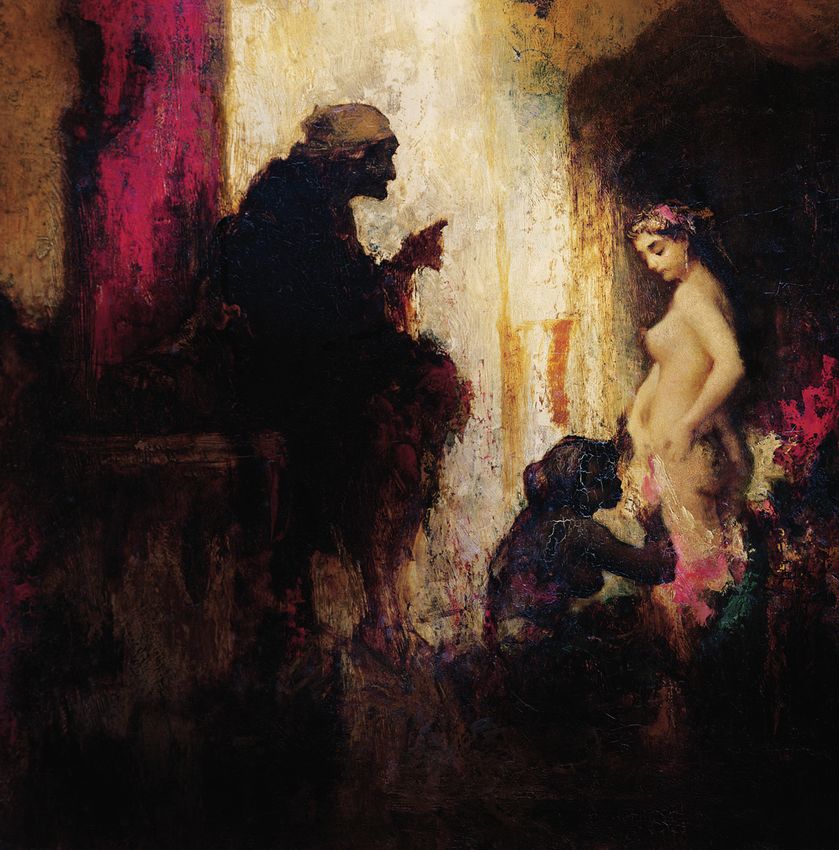
Front cover Préparatifs pour le sabbat des sorcières (Preparations for the Witches’ Sabbath) (first
half of the nineteenth century) by anonymous French painter / Musée d’art et d’histoire de
Meudon, Meudon, France / Archives Charmet / Bridgeman Images
Back cover Photograph of Sir Andrew Davis © Dario Acosta Photography
Design and typesetting Cap & Anchor Design Co. (www.capandanchor.com)
Booklet editor Finn S. Gundersen
P 2019 Chandos Records Ltd
C 2019 Chandos Records Ltd
Chandos Records Ltd, Colchester, Essex CO2 8HX, England
Country of origin UK
32CHANDOS DIGITAL CHSA 5239
CHANDOS
CHANDOS
Hector Berlioz (1803 – 1869)
1 - 4 Fantaisie sur la Tempête de Shakespeare (1830 – 31) * 14:25
(Fantasy on Shakespeare’s The Tempest)
Toronto Mendelssohn Choir / Toronto SO / Davis
BERLIOZ: SYMPHONIE FANTASTIQUE, ETC.
for Chorus, Orchestra, and Piano Four Hands
Final movement from Lélio, ou Le Retour à la vie, Op. 14bis
Monodrame lyrique
5 - 9 Symphonie fantastique, Op. 14 (1830) 55:33
en cinq parties
(Fantasy Symphony
in Five Movements)
Épisode de la vie d’un artiste
(Episode in an Artist’s Life)
TT 70:08
Toronto Mendelssohn Choir *
David Fallis interim conductor and artistic director
Toronto Symphony Orchestra
Jonathan Crow concertmaster
Sir Andrew Davis
CHSA 5239
CHSA 5239
p 2019 Chandos Records Ltd c 2019 Chandos Records Ltd Chandos Records Ltd • Colchester • Essex • England
All tracks available This Hybrid SA-CD
SA-CD and its logo are
in stereo and can be played on any
trademarks of Sony.
multi-channel standard CD player.You can also read


