BIODIVERSITY SURVEYS,
        2017
            PREPARED FOR CITY OF RYDE
              BY APPLIED ECOLOGY P/L
←
→
Page content transcription
If your browser does not render page correctly, please read the page content below
BIODIVERSITY SURVEYS,
2017
PREPARED FOR CITY OF RYDE
BY APPLIED ECOLOGY P/L
INTRODUCTION
Presented by Anne Carey and Dr Meredith
     Brainwood, Applied Ecology P/L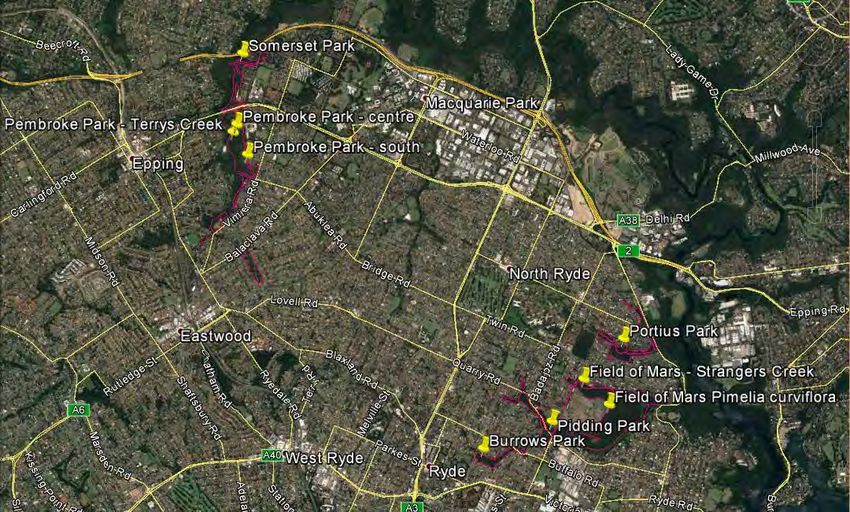
OVERVIEW OF PRESENTATION
• Project background and
  context                    • BIODIVERSITY GROUPS:
                                o   Native flora
                                o   Introduced flora
• Survey methods                o   Vegetation communities
• Survey results                o   Mammals
                                o   Herpetofauna (reptiles & frogs)
• Comparison with previous      o   Avian fauna
  survey (Biosphere, 2007)      o   Microbats
                                o   Invertebrates

• Where to from here…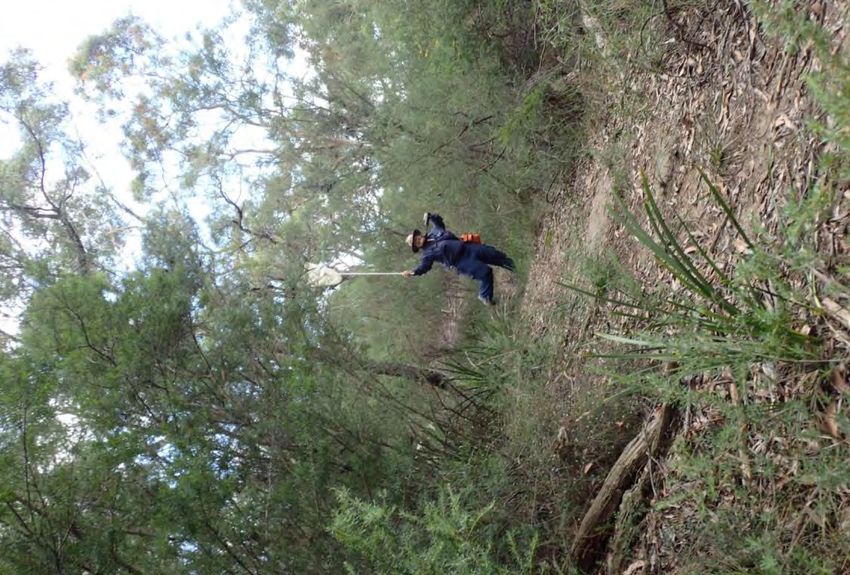
PROJECT BACKGROUND
 • Part of a series of flora and fauna
   studies for City of Ryde LGA
 • Main aims are “standardised baseline
   information” about biodiversity of
   reserves
 • Includes vertebrate and invertebrate
   fauna, endemic and introduced flora
 • Stage 2 (2007) focused on [additional]
   water catchments in the LGA
 • Information about species richness
   and abundance will inform
   management decisions for the
   reserves…
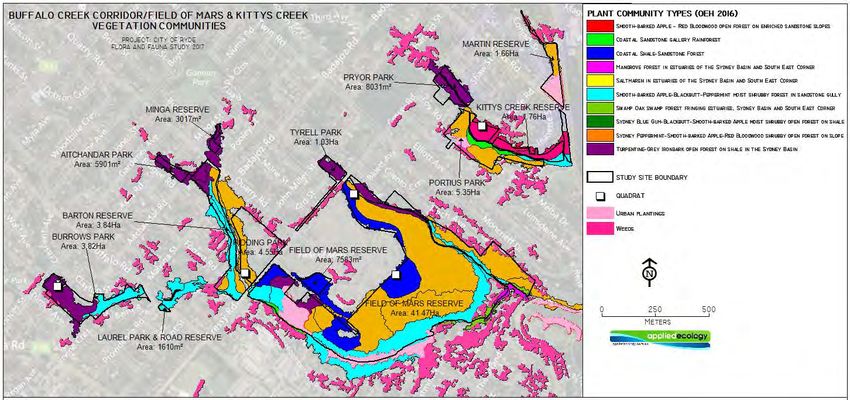
PROJECT CONTEXT
• BIOSPHERE 2006
   o Brush Farm Park, Darvall Park, Lambert   • ANNE CLEMENTS & ASSOC 2016
     Park, Field of Mars Reserve                 o Brush Farm Park, Darvall Park, Lambert Park, Field of
                                                   Mars Reserve
• BIOSPHERE 2007
   o Terrys Creek reserves, Kittys Creek
     reserves, Buffalo Creek reserves,
     Memorial Park                            • APPLIED ECOLOGY 2017
• BIOSPHERE 2008                                 o Terrys Creek reserves, Kittys Creek reserves, Buffalo
                                                   Creek reserves, Field of Mars additional quadrats
   o Other bushland reserves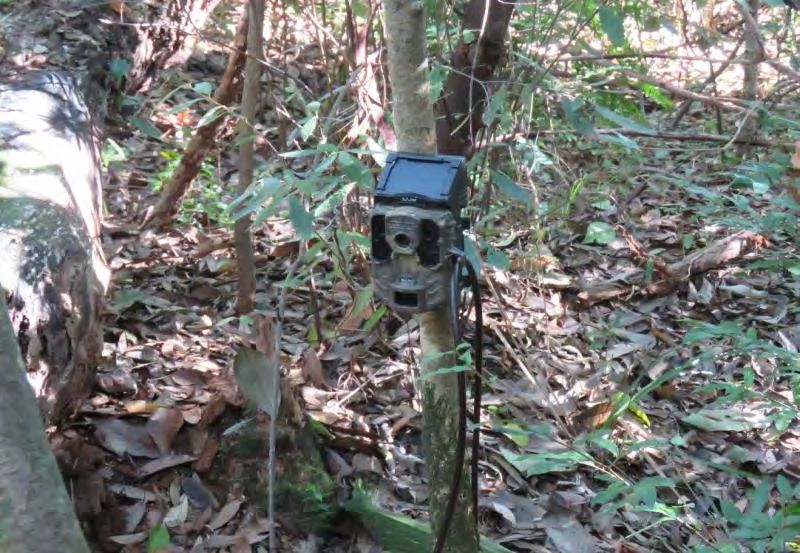
APPLIED ECOLOGY 2017
• Quadrat surveys (20m x 20m):
   o Timed searches for mammals, herps and invertebrates
      (2 per season, autumn and spring)
   o Detailed flora surveys including % cover classes
      (Braun-Blanquet)
• General surveys for reserves to develop species richness
  inventories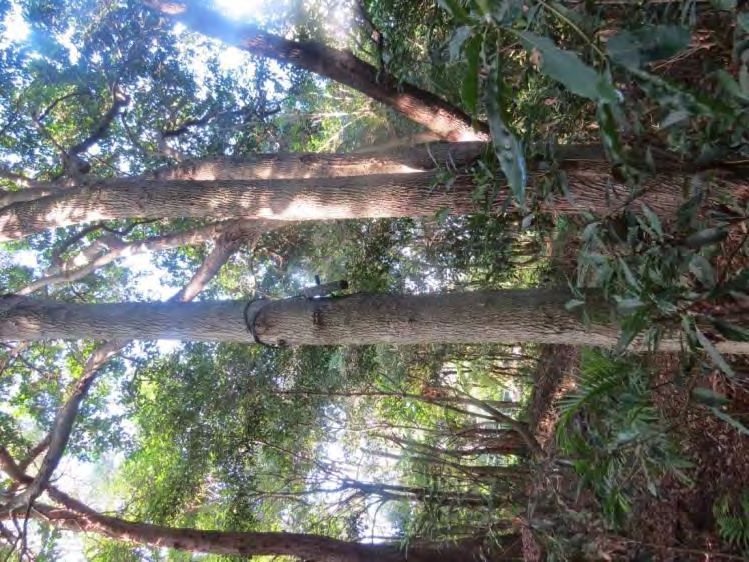
Flora & Vegetation
Buffalo, Kittys, Terrys Creeks & Field of Mars Reserve
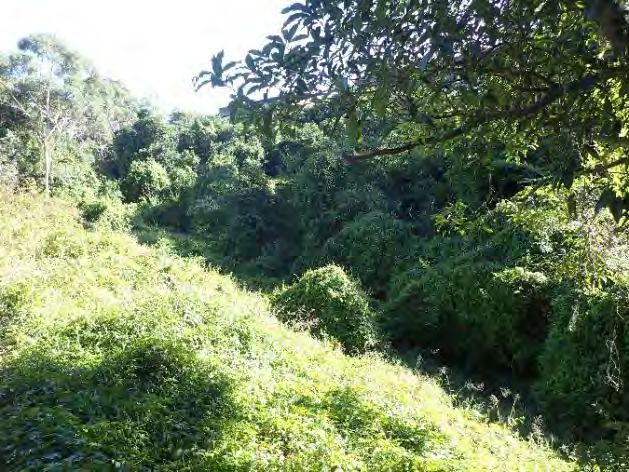
Overview
• Summary of floristic diversity (for reserves and
  corridors)
• Changes over time (based on fixed quadrat surveys
  2007-2017)
• Targeted threatened species surveys
• Ground truthing of vegetation mapping, based on
   o   Fixed quadrats
   o   Random meanders
   o   Spot quadrats
   o   ACA data from 2016
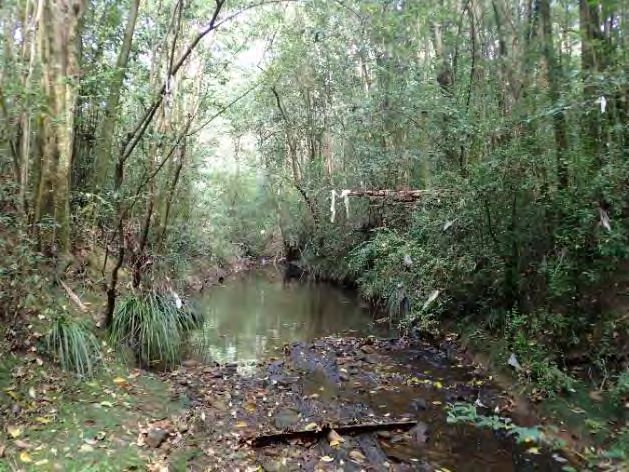
Methodology
• Needed to replicate the methods developed in 2006 by Biosphere
• Used in our target reserves in 2007
• Comprised:
   o General survey of plant species in each reserve
   o Quadrat based surveys at established locations using 7 stage Braun-Blanquet cover classes
   o Ground truthing of vegetation mapping developed by OEH in 2013
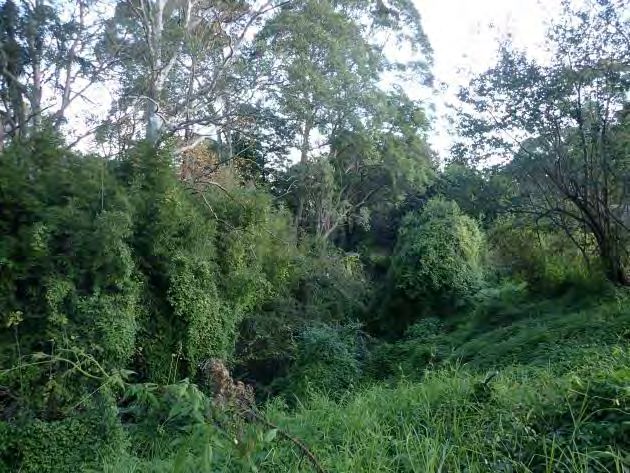
Location of quadrats
• “Each survey site consisted of a 20m
  by 20m square i.e. 400 square
  metres quadrat. Survey pegs and
  string lines were used to mark the
  boundaries of each quadrat and the
  location of each corner peg was
  plotted by GPS (in case they were
  interfered with or removed).”
• (Biosphere, 2007)
Reserves and quadrat locations
Braun-Blanquet cover classes

 Assigns the abundance for each species to a ranked grouping, and this
 can be used to determine whether observed changes in cover should
 be considered significant.
2017 SURVEY RESULTS      # NATIVE SP   # INTRODUCED

                                                       Summary of flora
TERRYS CREEK CORRIDOR      (253 sp)       (141 sp)
Jim Walsh Park                34              52
Yarramar Reserve               5        not recorded
Forsyth Park                  85              58
Forrester Park
Pembroke Park
Lucknow/Somerset Parks
                              54
                             174
                             178            50
                                              63
                                              74
                                                          surveys
Ivanhoe Park                 79             49
KITTYS CREEK CORRIDOR      (181 sp)       (67 sp)
Pryor Park                   78             27
Portius Park                 93             40
Kittys Creek Reserve         61             17
Martin Reserve               68             30
BUFFALO CREEK CORRIDOR     (187 sp)       (132 sp)
Burrows Park                 115              64
Laurel Park                   42              51
Barton Park                   67              66
Aitchander Park               50              56
Minga Reserve                 50              44
Pidding Park                 118              57
Tyrell Park                   20        not recorded
FIELD OF MARS RESERVE      (298 sp)       (81 sp)
TERRYS CREEK
Forsyth/Forrester
2007
60
2017
108
TOTAL
RECORDED
125
IN BOTH
SURVEYS
43
IN 2007
ONLY
17 (-13%)
IN 2017
ONLY
65 (+52%)
Terrys Creek
Corridor
Reserves
Pembroke Park 153 174 215 112 41 (-19%) 62 (+29%)
Somerset/Lucknow 185 178 228 135 50 (-22%) 43 (+19%)
Parks
Ivanhoe Reserve 45 79 96 28 17 (-18%) 51 (+53%)
TERRYS CREEK 229 253 302 180 49 (-16%) 73 (+24%) Number of species of native flora
CORRIDOR
2007
(229 species)
49 species 180 species 73 species
2017
(253 species)KITTYS CREEK
Pryor Park
2007
60
2017
78
TOTAL
RECORDED
106
IN BOTH
SURVEYS
32
IN 2007
ONLY
28 (-26%)
IN 2017
ONLY
46 (+43%)
Kittys Creek
Portius Park/Kittys
Creek Reserve
Martin Reserve
105
74
119
68
148
97
76
45
29 (-20%)
29 (-30%)
43 (+29%)
23 (+24%)
Corridor
KITTYS CREEK 150 156 202 104 46 (-23%) 52 (+26%)
CORRIDOR Number of species of native flora
2007
(150 species)
46 species 104 species 52 species
2017
(156 species)BUFFALOS CREEK 2007 2017
TOTAL
RECORDED
IN BOTH
SURVEYS
IN 2007
ONLY
IN 2017
ONLY Buffalo Creek
Corridor
Burrows Park 84 115 130 69 15 (-12%) 46 (+35%)
Minga Reserve 42 50 68 24 18 (-27%) 26 (+38%)
Barton Park 98 67 119 46 52 (-44%) 21 (+18%)
Pidding Park 91 108 130 68 22 (-17%) 40 (+31%)
BUFFALOS CREEK 164 179 203 140 24 (-12%) 39 (+19%)
CORRIDOR Number of species of native flora
2007
(164 species)
24 species 140 species 39 species
2017
(179 species)Field of Mars
FIELD OF MARS
2007
285
2017
298
TOTAL
RECORDED
344
IN BOTH
SURVEYS
239
IN 2007
ONLY
46 (-13%)
IN 2017
ONLY
59 (+17%)
Reserve
RESERVE
Number of species of native flora
2007
(285 species)
46 species 239 species 59 species
2017
(298 species)Fixed quadrat survey data • First, estimate Braun-Blanquet cover classes for 2017 • Next, for each species, compare with previous cover class recorded in 2007 for that species in that quadrat, and determine if there is: o Increased cover o Decreased cover o Cover unchanged • Finally, tally how many increased/decreased/unchanged for each floristic group (and for native and introduced species)
Burrows quadrat (BC)
Pidding quadrat (BC)
Strangers quadrat (FOM)
Pimelea quadrat (FOM)
Wolfe Rd quadrat (KC)
Lucknow quadrat (TC)
Pembroke north (TC)
Pembroke Terrys Creek
Pembroke south (TC)
Changes in vegetation over time
• Development of an estimate for a vegetation health trajectory for each quadrat
         TRAJECTORY        DEFINING CHARACTERISTICS
         DEGRADING         decrease in numbers and cover extent for native species with
                           increase in numbers or cover extent for introduced species
         MINOR DEGRADING   decrease in numbers or cover extent for native species with
                           unchanged numbers or cover extent for introduced species          OR
                           unchanged numbers or cover extent for native species with
                           increased numbers or cover extent for introduced species
         STABLE            little or no change in numbers or cover extent for native species with
                           no change in numbers or cover extent for introduced species
         IMPROVING         no change or increase in numbers or cover extent for native species with
                           no change or decrease in numbers or cover extent for introduced species
Vegetation health trajectories
NO. COVER EXTENT OVERALL
RESERVE NO. NATIVE COVER EXTENT
QUADRAT INTRODUCED INTRODUCED CONDITION
CORRIDOR SPECIES NATIVES
SPECIES SPECIES TRAJECTORY
BURROWS decreased decreased decreased or increased DEGRADING
BUFFALO PARK unchanged
CREEK PIDDING decreased unchanged decreased or increased DEGRADING
PARK unchanged
STRANGERS decreased decreased decreased or unchanged MINOR
FIELD OF
CREEK unchanged DEGRADING
MARS
PIMELEA unchanged increased unchanged or increased MINOR
RESERVE
CURVIFLORA increased DEGRADING
KITTYS KITTYS decreased increased decreased or increased DEGRADING
CREEK (WOLFE RD) unchanged
LUCKNOW- decreased absent unchanged or absent STABLE
SOMERSET decreased
PEMBROKE decreased unchanged decreased or unchanged MINOR
SOUTH unchanged DEGRADING
TERRYS
PEMBROKE increased unchanged increased or unchanged IMPROVING
CREEK
TERRYS unchanged
CREEK
PEMBROKE decreased unchanged decreased or decreased MINOR
NORTH unchanged DEGRADINGGround truthing vegetation
mapping
• Vegetation patches were
surveyed for native flora
species
• Lists of species present
were compared with
criteria for mapped veg
communities
• Must have minimum
number of species to
test
• Must have minimum
number of diagnostic
species to satisfy
identification criteria
(= pass)Vegetation mapping (OEH 2016)
Identifying vegetation patches
                                                                                                         #
    VEGETATION COMMUNITY                       NSW PLANT COMMUNITY TYPES (PCTs)
                                                                                                      PATCHES
  Coastal Enriched Sandstone Dry      Red Bloodwood - Scribbly Gum - Silvertop Ash open forest on
                                                                                                        15
  (previously Sheltered) Forest       sandstone ridges of the Woronora Plateau
  Sydney Turpentine Ironbark Forest   Turpentine - Grey Ironbark open forest on shale in the lower
                                                                                                         9
  CEEC                                Blue Mountains, Sydney Basin Bioregion
  Coastal Sandstone Gully             Sydney Peppermint - Smooth-barked Apple - Red Bloodwood
  (previously Sheltered Peppermint-   shrubby open forest on slopes of moist sandstone gullies,          8
  Apple) Forest                       eastern Sydney Basin Bioregion
  Coastal Enriched Sandstone Moist    Smooth-barked Apple - Turpentine - Blackbutt tall open forest
                                                                                                         5
  Forest                              on enriched sandstone slopes and gullies of the Sydney region
                                      Smooth-barked Apple - Red Bloodwood - Blackbutt tall open
  Coastal Shale Sandstone Forest                                                                         5
                                      forest on shale sandstone transition soils in eastern Sydney
  Coastal Sandstone Gallery           Coachwood - Lilly Pilly - Water Gum gallery rainforest in
                                                                                                         4
  Rainforest                          sandstone gullies of the Sydney basin
                                      Sydney Blue Gum - Blackbutt - Smooth-barked Apple moist
  Blue Gum High Forest CEEC           shrubby open forest on shale ridges of the Hornsby Plateau,        2
                                      Sydney Basin Bioregion
                                      Dwarf Apple - Broad-leaved Scribbly Gum - Sydney Peppermint
  Hornsby Enriched Sandstone
                                      low open woodland on sandstone ridges with subtle enrichment       1
  Exposed Woodland
                                      in northern Sydney
Results of ground truthing surveys
• 46 vegetation patches were ground truthed
• 6 quadrats unable to test due to insufficient species
• 9 quadrats failed for mapped veg community
• 3 quadrats retested for adjoining veg community, 2 passed,
1 failed by 1 diagnostic species
• TOTAL PATCHES MEETING DIAGNOSTIC CRITERIA =
33 confirmed communitiesTargeted TS: Melaleuca deanei
Melaleuca deanei: (left) fruit and foliage, (right) foliage and form
(Photos: © Steve Douglas, OEH profile)
Surveys undertaken on 19/9, 27/9, 5/10, 9/11, 17/11
(flowers in summer)Targeted TS: Epacris purpurascens
var. purpurascens
Flowers in spring; confusing
species include Epacris
pulchella (flowers all year,
leaves more sparse) and
Woollsia pungens (similar
leaves but has white
“crumpled” looking flowers)
RESULTS OF SURVEYS – 6
PLANTS, 4 ADDITIONALTargeted TS: Pimelea curviflora
var. curviflora Survey dates: 19/9, 27/9,
PREVIOUS SIGHTINGS 5/10, 9/11, 17/11, 12/12
SIGHTING DATES, LEFT TO
RIGHT: 2011, 1914, 1/3/2007
“will resprout from tuberous
roots and rapidly flower in
spring or summer following
sufficient rainfall”
SURVEY RESULTS
– NOT SIGHTEDVegetation changes over time • Changes are primarily in species composition and/or vegetation structure • Processes causing change can be abrupt or gradual • Abrupt changes o Are usually major disturbances, usually external in origin, can be catastrophic o Examples include flood, fire, extreme wind and weather conditions o Cause rapid and often long lasting changes in vegetation composition and structure
Mechanisms of change
    in Ryde LGA
• Fire:
   o Many flora species adapted to recover from fire
   o Too frequent fire will result in loss of species from the area
   o Observed in Field of Mars Reserve                                       15 years post fire near Strangers Creek, Field
                                                                             of Mars Reserve
• Urban stormwater:
   o   Fast time of concentration, resulting in high velocity flows
   o   Causes erosion at discharge points and along streams
   o   Results in sedimentation at other locations along streams
   o   Carries high nutrient loads, which favour weeds over native species
   o   Observed in Terrys, Kittys, Buffalo and Strangers Creeks

                                                                             Terrys Creek after a bank overtopping storm
                                                                             event
How much change is reasonable? • Literature review for vegetation change over time in Sydney’s urban bushland • Benson & Picone, 2009: repeated decadal surveys for 32 years in BGHF in Beecroft. Reported that o Changes in species were linked with plant form – vines increased in diversity and cover o Despite ongoing bush regeneration weed control, important native species declined o Noted the shortcomings of ‘random’ snapshots over time o Noted the importance of the soil seedbank in the community
Site history vs propagule
             pressure
• Site history can adversely affect native
  vegetation
• What about Field of Mars Reserve?
• Propagule pressure affects areas
  downslope from roads, and areas within
  the riparian corridor
• In narrow reserves both impacts are
  present, eg Laurel Park (Buffalo Creek)
  and Yarramar Reserve (upstream end of
  Terrys Creek)
Weeds like creeks!
• Areas within 2 m of a creek edge have higher
exotic species richness and cover (Hill et al,
2004)
• Rate of spread is affected by channel form – Above: Laurel Park (Buffalo Creek)
Below: Yarramar Res (Terrys Creek)
steep banks are slower to colonise
• Also affected by nutrient levels in stormwater
and frequency of bank overtopping storm
events (Terrys Creek!)Conclusions • Decadal surveys need to be considered in context of o Stochastic events – climate and weather impacts o Localised changes – bush regeneration, erosion and stabilisation works, bushfire • Replication can be affected by inability to relocate quadrat markers • Understanding reference conditions for relevant vegetation communities can help to guide management • Conservation management needs to consider internal and external impacts • Wins should be taken at reserve or corridor level • Losses may not be apparent for many years
FAUNA SURVEY METHODOLOGIES

   BASED ON METHODS DESCRIBED BY BIOSPHERE 2006 & 2007
DIURNAL BIRDS
                        Listening, direct observation
         Minutes                      TERRYS CREEK TERRYS CREEK FIELD OF MARS     BUFFALO       KITTYS
                                         NORTH        SOUTH        RESERVE       CREEK TRIBS    CREEK
autumn
                   # Quadrat survey      40 (2)       120(6)         80(4)          80(4)       100 (5)

                   # 40 min random
                                         160(4)       200(5)        320(8)         120(3)       240(6)
                          meanders
spring
                   # Quadrat survey      60(3)        120(6)         80(4)          80(4)        40(2)

                   # 40 min random
                                         240(6)       480(12)      520(13)         400(10)      480(12)
                          meanders
                                        500 min,     920 min,    1000 mins, 30   680mins, 21   860 mins,
          Totals                       15 surveys   29 surveys      surveys        surveys     25 surveys
NOCTURNAL BIRDS Spotlighting/listening Call playback 25W megaphone or speaker, smartphone, 50w spotlight • Barking Owl (Ninox connivens) • Eastern Barn Owl (Tyto delicatula), • Masked Owl (Tyto novaehollandiae) • Sooty Owl (Tyto tenebricosa tenebricosa)
SPOTLIGHTING
•   MAMMALS
•   REPTILES AND FROGS
•   NOCTURNAL BIRDS
•   FISH
•   INVERTS
                 TERRYS CREEK   TERRYS CREEK   FIELD OF MARS   BUFFALO CREEK
      CORRIDOR                                                                 KITTYS CREEK
                    NORTH          SOUTH          RESERVE          TRIBS

       NIGHTS         4              4              6                4              4

Spotlighting was undertaken using 50- 100 watt hand held spotlights
as appropriate which were used to sweep surrounding vegetation in
search of eye-shine or animal movements. Time was spent listening
for calls at 10 minute intervals for 1 minute. Creeks, soaks, surface
waters were inspected for fish and frogs.
CAMERA TRAPPING • PRIMARILY MAMMALS
HAIRTUBES
• MAMMAL SPECIFIC
                     MINIMUM EFFORT
MAJOR CORRIDOR
NAME           HAIRTUBE NIGHTS PER SEASON

Terrys Creek                          200
Buffalo Creek                         250
Kittys Creek                          150

 Common Brushtail Possum   Bush rat
MICROBATS – SURVEY METHODS
1. Deployed at fixed locations in
reserves for 5 to 7 nights
(depending on weather)
2. Carried through the reserve
during spotlighting surveysQUAD 20 MINUTE TIME SEARCHES
Reptiles and frogs
2 SEARCHES PER SEASON PER QUAD
Inverts
OTHER SEARCHES
Fish, tadpoles, macroinvertebrates
20 minute dip netting + observations
Inverts
ad hoc observations during other survey activities
Mammals +
searches for evidence – scats, diggings, nests etc.RESULTS FAUNA 114 vertebrate species were detected during the survey including: • 5 threatened species • 2 species listed under the Bonn convention • 10 exotic species 72 species of bird, 22 mammals, 4 amphibians, 12 reptiles, 4 fish were recorded.
Native Mammals
Common Brushtail
Possum                    Trichosurus vulpecula
Common Ringtail Possum Pseudocheirus peregrinus
Grey-headed Flying-fox Pteropus poliocephalus        FED-V
Long-nosed Bandicoot Perameles nasuta
Short-beaked echidna      Tachyglossus aculeatus
Sugar Glider              Petaurus breviceps
Swamp Wallaby             Wallabia bicolor
White-striped Free-tailed
Bat                       Austronomus australis
Gould's Wattled Bat       Chalinolobus gouldii
Chocolate Wattled Bat Chalinolobus morio
                          Miniopterus orianae
Eastern Bentwing-bat      oceanensis                 NSW-V
Ride's Free-tailed Bat    Mormopterus ridei
Large-footed Myotis       Myotis macropus            NSW-V
a Long-eared Bat          Nyctophilus sp
Yellow-bellied Sheath-
tailed Bat                Saccolaimus flaviventris   NSW-V
Large Forest Bat          Vespadelus darlingtoni
Exotic Mammals Black Rat Rattus rattus Cat (sighted/cams) Felis catus Dog (spotlighting) Canis lupus familiaris House Mouse Mus musculus Rabbit Oryctolagus cuniculus Red Fox Vulpes vulpes
Reptiles & amphibians
Dark-flecked Garden Sunskink   Lampropholis delicata     Striped Marsh Frog   Limnodynastes peronii
Bar-sided Skink                Concinna tenuis           Common Eastern
                                                                              Crinia signifera
Broad-tailed gecko             Phyllurus platurus        Froglet
Eastern Blue-tongue Lizard     Tiliqua scincoides        Green Stream Frog    Litoria phyllochroa
                                                         Perons Tree Frog     Litoria peronii
Eastern Long-necked Turtle     Chelodina longicollis
Eastern Water Dragon           Intellagama lesueurii
Eastern Water-skink            Eulamprus quoyii
Elegant Snake-eyed Skink       Cryptoblepharus pulcher
Pale-flecked Garden Sunskink   Lampropholis guichenoti
Red-bellied Black Snake        Pseudechis porphyriacus
Three-toed Skink               Saiphos equalis
Weasel Skink                   Saproscincus mustelinus
KITTYS CREEK CLASS 2007 2017 BIRDS 47 36 REPTILES 7 6 FROGS 3 4 MAMMALS 7 17 TOTAL 64 63
Australian Brush-turkey   Alectura lathami                                                                                           aves species

                                                          BIRDS –
Australian King-Parrot    Alisterus scapularis                                                                                       richness
Australian Magpie         Cracticus tibicen                                                                              15           2017
Australian Raven          Corvus coronoides                                                        27 21                 2
Australian White Ibis     Threskiornis molucca                                                                                         both
Australian Wood Duck      Chenonetta jubata
                                                        KITTYS CREEK
                                                                                                                                      2007
Brown Gerygone            Gerygone mouki                                                                                             EXOTIC SPECIES
Brown Goshawk             Accipiter fasciatus                                                      KITTYS CREEK CORRIDOR
                          Scythrops
Channel-billed Cuckoo     novaehollandiae                                                          2017 - CURRENT SURVEYS
Common Myna               Sturnus tristis        Powerful Owl          Ninox strenua
Crested Pigeon            Ocyphaps lophotes      Rainbow Lorikeet      Trichoglossus haematodus
                                                 Red Wattlebird        Anthochaera carunculata
Crimson Rosella
Eastern Koel
Eastern Rosella
                          Platycercus elegans
                          Eudynamys orientalis
                          Platycercus eximius
                                                 Rufous Fantail
                                                 Satin Bowerbird
                                                                       Rhipidura rufifrons
                                                                       Ptilonorhynchus violaceus
                                                                                                       29                    4
                                                                                                                         SEASONAL
                                                                                                                                      3               36
Eastern Whipbird          Psophodes olivaceus    Spotted Pardalote     Pardalotus punctatus          SEDENTARY           MOVEMENT/   ALL OTHERS
                                                                                                                         MIGRANTS
Eastern Yellow Robin      Eopsaltria australis   Spotted Turtle-Dove   Streptopelia chinensis
Laughing Kookaburra       Dacelo novaeguineae    Sulphur-crested
Little Corella            Cacatua sanguinea      Cockatoo              Cacatua galerita            2007 - PAST SURVEYS

Magpie-lark               Grallina cyanoleuca    Superb Fairy-wren     Malurus cyaneus
Masked Lapwing            Vanellus miles
                          Manorina
                                                 Tawny Frogmouth
                                                 Welcome Swallow
                                                                       Podargus strigoides
                                                                       Hirundo neoxena                 34                    10         3             47
Noisy Miner               melanocephala          White-browed
Pacific Black Duck        Anas superciliosa      Scrubwren             Sericornis frontalis                              SEASONAL
                                                                                                                         MOVEMENT/
                                                                                                      SEDENTARY                      ALL OTHERS
Pied Currawong            Strepera graculina     Willie Wagtail        Rhipidura leucophrys                              MIGRANTS
NEW OBSERVATIONS NOT DETECTED
Australian Brush-turkey Alectura lathami Australian Hobby Falco longipennis
Australian King-Parrot Alisterus scapularis Australian Pelican Pelecanus conspicillatus
Australian Raven Corvus coronoides Black-faced Cuckoo-shrike Coracina novaehollandiae
Australian Wood Duck Chenonetta jubata Black-faced Monarch Monarcha melanopsis
Brown Gerygone Gerygone mouki Brown Thornbill Acanthiza pusilla
Brown Goshawk Accipiter fasciatus Eastern Spinebill Acanthorhynchus tenuirostris
Common Myna* Sturnus tristis Fan-tailed Cuckoo Cacomantis flabelliformis
Eastern Whipbird Psophodes olivaceus Galah Eolophus roseicapillus
Eastern Yellow Robin Eopsaltria australis Great Egret Ardea alba
Masked Lapwing Vanellus miles Grey Butcherbird Cracticus torquatus
Pacific Black Duck Anas superciliosa Grey Fantail Rhipidura albiscapa
Jacky winter Microeca fascinans
Powerful Owl Ninox strenua
Little Pied Cormorant Microcarbo melanoleucos
Satin Bowerbird Ptilonorhynchus violaceus
Long-billed Corella Cacatua tenuirostris
Spotted Turtle-Dove* Streptopelia chinensis
New Holland Honeyeater Phylidonyris novaehollandiae
White-browed Scrubwren Sericornis frontalis
Olive-backed Oriole Oriolus sagittatus
Pied Cormorant Phalacrocorax varius
Red Wattlebird Anthochaera carunculata
Rufous Whistler Pachycephala rufiventris
Sacred Kingfisher Todiramphus sanctus
Silver Gull Chroicocephalus novaehollandiae
Silvereye Zosterops lateralis westernensis/lateralis lateralis
White-plumed Honeyeater Lichenostomus penicillatus
White-throated Tree-creeper Cormobates leucophaea
White-throated Needletail Hirundapus caudacutus
Yellow Thornbill Acanthiza nana
Yellow-faced Honeyeater Lichenostomus chrysops chrysopsTERRYS CREEK CLASS 2007 2017 BIRDS 63 53 REPTILES 7 9 FROGS 3 4 MAMMALS 7 19 TOTAL 92 87
BIRDS –TERRYS CREEK
Australian Brush-turkey     Alectura lathami
                                                           Olive-backed Oriole
                                                           Pacific Black Duck
                                                                                        Oriolus sagittatus
                                                                                        Anas superciliosa
                                                           Pied Currawong               Strepera graculina
Australian King-Parrot      Alisterus scapularis           Powerful Owl                 Ninox strenua
Australian Magpie           Cracticus tibicen              Rainbow Lorikeet             Trichoglossus haematodus
Australian Raven            Corvus coronoides              Red Wattlebird               Anthochaera carunculata
Black-faced Cuckoo-shrike   Coracina novaehollandiae       Red-browed Finch             Neochmia temporalis
Brown Gerygone              Gerygone mouki                 Red-whiskered Bulbul         Pycnonotus jocosus
Brown Thornbill             Acanthiza pusilla              Rufous Whistler              Pachycephala rufiventris
Channel-billed Cuckoo       Scythrops novaehollandiae      Sacred Kingfisher            Todiramphus sanctus
Common Myna*                Sturnus tristis                Satin Bowerbird              Ptilonorhynchus violaceus
Crested Pigeon              Ocyphaps lophotes              Scarlet Honeyeater           Myzomela sanguinolenta
Crimson Rosella             Platycercus elegans                                         Zosterops lateralis
Dollar Bird                 Eurystomus orientalis          Silvereye                    westernensis/lateralis lateralis
Eastern Koel                Eudynamys orientalis           Spotted Pardalote            Pardalotus punctatus
Eastern Rosella             Platycercus eximius            Spotted Turtle-Dove*         Streptopelia chinensis
Eastern Spinebill           Acanthorhynchus tenuirostris   Sulphur-crested Cockatoo     Cacatua galerita
Eastern Whipbird            Psophodes olivaceus            Superb Fairy-wren            Malurus cyaneus
Eastern Yellow Robin        Eopsaltria australis           Superb Lyrebird              Menura novaehollandiae
Golden Whistler             Pachycephala pectoralis        Variegated Fairy-wren        Malurus lamberti
Grey Fantail                Rhipidura albiscapa            White-browed Scrubwren       Sericornis frontalis
Grey Goshawk                Accipiter novaehollandiae      White-cheeked Honeyeater Phylidonyris niger
Laughing Kookaburra         Dacelo novaeguineae            White-headed Pigeon          Columba leucomela
Leaden Flycatcher           Myiagra rubecula               White-throated Tree-creeper Cormobates leucophaea
Lewins Honeyeater           Meliphaga lewinii              Yellow Thornbill             Acanthiza nana
Little Corella              Cacatua sanguinea                                           Lichenostomus chrysops
Little Wattlebird           Anthochaera chrysoptera        Yellow-faced Honeyeater      chrysops
Magpie-lark                 Grallina cyanoleuca            Yellow-tailed Black Cockatoo Calyptorhynchus funereus
Noisy Miner                 Manorina melanocephala
NORTH SOUTH
Buffalo Creek & Field of Mars
          Reserve
   Buffalo creek   Field of Mars Reserve
Australian Brush-turkey Alectura lathami Welcome Swallow Hirundo neoxena
Australian King-Parrot Alisterus scapularis
Birds
White-browed Scrubwren Sericornis frontalis
Australian Magpie Cracticus tibicen White-cheeked
Australian Owlet-nightjar Aegotheles cristatus Honeyeater Phylidonyris niger
Australian Raven Corvus coronoides White-faced Heron Egretta novaehollandiae
Australian White Ibis Threskiornis molucca White-throated Tree-
Australian Wood Duck Chenonetta jubata creeper Cormobates leucophaea
Little Wattlebird Anthochaera chrysoptera
Black-faced Cuckoo-shrike Coracina novaehollandiae White-winged Triller Lalage sueurii
Magpie-lark Grallina cyanoleuca
Black-faced Monarch Monarcha melanopsis Willie Wagtail Rhipidura leucophrys
Masked Lapwing Vanellus miles
Brown Gerygone Gerygone mouki Yellow Thornbill Acanthiza nana
Musk Lorikeet Glossopsitta concinna
Brown Goshawk Accipiter fasciatus Lichenostomus chrysops
New Holland Honeyeater Phylidonyris novaehollandiae
Brown Thornbill Acanthiza pusilla Yellow-faced Honeyeater chrysops
Noisy Friarbird Philemon corniculatus
Channel-billed Cuckoo Scythrops novaehollandiae Yellow-tailed Black
Noisy Miner Manorina melanocephala
Chestnut Teal Anas castanea Cockatoo Calyptorhynchus funereus
Pacific Black Duck Anas superciliosa
Common Myna* Sturnus tristis Pied Currawong Strepera graculina
Crested Pigeon Ocyphaps lophotes Powerful Owl Ninox strenua
Crimson Rosella Platycercus elegans Rainbow Lorikeet Trichoglossus haematodus
Eastern Koel Eudynamys orientalis Red Wattlebird Anthochaera carunculata
Eastern Rosella Platycercus eximius Red-browed Finch Neochmia temporalis
Eastern Spinebill Acanthorhynchus tenuirostris Red-whiskered Bulbul Pycnonotus jocosus
Eastern Whipbird Psophodes olivaceus Sacred Kingfisher Todiramphus sanctus
Eastern Yellow Robin Eopsaltria australis Satin Bowerbird Ptilonorhynchus violaceus
Galah Eolophus roseicapillus Scarlet Honeyeater Myzomela sanguinolenta
Golden Whistler Pachycephala pectoralis Zosterops lateralis
Grey Butcherbird Cracticus torquatus Silvereye westernensis/lateralis lateralis
Grey Fantail Rhipidura albiscapa Spotted Pardalote Pardalotus punctatus
Laughing Kookaburra Dacelo novaeguineae Spotted Turtle-Dove* Streptopelia chinensis
Leaden Flycatcher Myiagra rubecula Sulphur-crested Cockatoo Cacatua galerita
Lewins Honeyeater Meliphaga lewinii Superb Fairy-wren Malurus cyaneus
Little Corella Cacatua sanguinea Tawny Frogmouth Podargus strigoides
Little Pied Cormorant Microcarbo melanoleucos Variegated Fairy-wren Malurus lambertiOTHER SURVEY RESULTS
MICROBAT
  SURVEYS
City of Ryde, Lane Cove River drainages
RESULTS OF 2017 SURVEYS
                          COMMON NAME                     SPECIES NAME                     BioCon   #
                                                                                           Act      RESERVES

• 12 species              White-striped Free-tailed Bat   Austronomus australis                     5

  recorded in 2017, 3     Gould's Wattled Bat             Chalinolobus gouldii                      4

  in all of the reserve   Chocolate Wattled Bat           Chalinolobus morio                        3
                          Eastern Bentwing-bat            Miniopterus orianae oceanensis   V        4
  corridors
• 4 threatened            East-coast Free-tailed Bat
                          Ride's Free-tailed Bat
                                                          Mormopterus norfolkensis
                                                          Mormopterus ridei
                                                                                           V        1
                                                                                                    5
  species                 Large-footed Myotis             Myotis macropus                  V        2
                          a Long-eared Bat                Nyctophilus sp                            5
  (Vulnerable under       Yellow-bellied Sheath-tailed    Saccolaimus flaviventris         V        4
  Biodiversity            Bat
                          Large Forest Bat                Vespadelus darlingtoni                    1
  Conservation Act        Southern Forest bat             Vespadelus regulus                        1
  2016)                   A forest bat                    Vespadelus sp                             N/A
                          Little Forest Bat               Vespadelus vulturnus                      1
COMPARISON WITH 2007 SURVEY • More species recorded in 2017 • Explanations include better equipment, increased survey effort • Targeted surveys included waterways and forested areas
SEASONAL
VARIATION IN 2017

• Maximum of 7 species
  recorded in any given
  reserve in either season
• Greatest diversity in
  Kittys Creek!
• Closely followed by
  FOM…
• Most important finding
  was the almost complete
  absence of forest bats
  (Vespadelus species)
HABITAT PARTITIONING  ECHOLOCA
                                                                  TION                                              FORAGING   SENSITIVE TO         CORRIDORS
SPECIES NAME                     COMMON NAME                                       FLIGHT PATTERNS
                                                                  FREQUENC                                          NICHE**    URBANISATION*        PRESENT
                                                                  Y
Austronomus australis            White-striped Free-tailed Bat    low              fast, low manoeuvrability        Open       tolerant             5

Chalinolobus gouldii             Gould's Wattled Bat              low              fast, high manoeuvrability       Edge       tolerant             4

Chalinolobus morio               Chocolate Wattled Bat            high             fast, moderate manoeuvrability   Edge       moderately           3
                                                                                                                               sensitive
Miniopterus orianae              Eastern Bentwing Bat             medium           fast, moderate manoeuvrability   Edge       tolerant             4
oceanensis
Mormopterus norfolkensis         East-coast Free-tailed Bat       low              fast, low manoeuvrability        Open       moderately           2016 only
                                                                                                                               sensitive
Mormopterus ridei                Ride's Free-tailed Bat           low              medium, moderate                 Open       tolerant             5
                                                                                   manoeuvrability
Myotis macropus                  Large-footed Myotis              linear           medium, moderate                 Clutter    very sensitive       2
                                                                                   manoeuvrability
Nyctophilus sp                   a Long-eared Bat                 linear           slow, high manoeuvrability       Clutter    moderately           5
                                                                                                                               sensitive
Saccolaimus flaviventris         Yellow-bellied Sheath-tailed     low              fast, low manoeuvrability        Open       unknown              4
                                 Bat
Vespadelus darlingtoni           Large Forest Bat                 medium           fast, moderate manoeuvrability   Clutter    unknown              1

Vespadelus regulus               Southern Forest Bat              medium           fast, moderate manoeuvrability   Clutter    moderately            2016 only
                                                                                                                               sensitive
Vespadelus vulturnus             Little Forest Bat                high             fast, high manoeuvrability       Clutter    moderately            2016 only #
                                                                                                                               sensitive
     ** Foraging spaces were defined following Milne et al (2004) and Adams et al (2009);                                              Recorded in FOM by ACA in 2016 only
     * Overall sensitivity to urbanisation is described in Threlfall et al (2012).                                                   # recorded by PdD student in FOM in 2017
     Echolocation ranges are based on Reinhold et al (2001) and Pennay et al (2004)
SENSITIVITY TO
URBANISATION
• Used literature to find
o Echolocation frequency
o Flight patterns
o Foraging niche
o Sensitivity to urbanisation
• Compared this with
the number of
reserves/corridors
presentWHO ARE THESE MICROBATS ANYWAY? • Eastern Bentwing Bat (Miniopterus orianae oceanensis): Seasonal migrant, needs large reserves, vulnerable across its range • East-coast Free-tailed Bat (Mormopterus norfolkensis): Open space feeder sensitive to urbanisation • Large-footed Myotis (Myotis macropus): aka Fishing Bat, clutter tolerant and affected by water quality and artificial lighting • Yellow-bellied Sheath-tailed Bat (Saccolaimus flaviventris): Large, open space feeder over forests, seasonal migrant? • Little Forest Bat (Vespadelus vulturnus): Tiny, clutter dependent feeders, obligate tree hollow dwellers
Eastern Bentwing Bat
• Seasonal migrant to overwintering cave, then
  maternity cave, then up to 300km back to coastal
  habitat
• Vulnerable to bushfire (loss of habitat and death of
  animals), pesticide use (loss of food resources,
  vegetation clearing (habitat loss, loss of directional
  marker trees)
• High flying, moderately manoeuvrable open space
  foragers
• Low frequency calls travel further but only locate
  larger prey
• Need large reserves for summer habitat
• Recorded in 4 reserve corridors in 2017
East-coast Free-
     tailed Bat
•Fast flying open space feeders with
low manoeuvrability
•Maternity roosts in mangroves
•Frequent changes of roosts but high
fidelity to an area
•Affected by artificial lighting
especially during foraging
•Recorded by ACA in 2016, not
recorded in 2017
Large-footed Myotis •Medium fast flyer, moderately manoeuvrable •Fly over creeks and rake their clawed hind feet through the water to catch fish and insects •Affected by poor water quality and increasing urbanization •vulnerable to heavy metal pollution and bioaccumulation •Recorded in 2 reserve corridors in 2017
Yellow-bellied Sheath-
            tailed Bat
•   Little known species, suspected
    seasonal migrant
•   Largest microbat species in Sydney
•   Open forager, fast flying but not very
    manoeuvrable –
•   Avoids foraging in areas with artificial
    lighting
•   Feeds over forests, roosts in tree
    hollows and old buildings
•   Recorded in 4 reserve corridors in 2017
Little Forest Bat • Clutter dependent, highly manoeuvrable flyer • Feeds within the canopy of trees • Smallest microbat species in Sydney • Very high frequency calls don’t travel far but locate small insects • Hollow dependent for roosting locations, requires trees with hollows surrounded by dense vegetation/canopy • Affected by increased artificial lighting, and by loss of habitat following bushfire (including HR burns)
FISH
                                        SURVEY
                                        RESULTS
                                         2017
The Smallmouth Hardyhead is a small silvery-      The Short-finned Eel migrates to the Coral Sea
coloured fish that is common in shallow coastal   every year to spawn, before returning to live in
habitats of southern Australian waters.           southeastern Australian rivers, lakes and dams

  The Striped Gudgeon is mostly found in slow-
                                                     Female (large) and male (small)
  flowing, often muddy water streams where it
                                                     Gambusia (NSW DPI), a Class 3
  feeds on Gambusia and aquatic insects
                                                     noxious species in the Sydney basin
Comparison of 2007 with 2017
• Many of the species recorded in
Field of Mars Reserve were
estuarine – not surveyed 2017
• Two species were reported in 2007,
compared with four species in 2017
• Many species were only recorded
in one, or occasionally two
corridorsINVERTEBRATE FAUNA SURVEYS Autumn and Spring, 2017
INVERTEBRATES
 IN QUADRATS
• Lower diversity and
  abundance in spring,
  probably due to dry
  weather
• Consistent across all
  quadrats
INVERTEBRATE HABITAT PREFERENCES
     • Soil biota were mostly
       absent during the spring
       surveys
     • Soil moisture linked with
       greater invertebrate
       diversity (Ives et al, 2007)
Terrys Creek corridor: 2007 to 2017
• 69 taxa reported in 2007
• 57 taxa recorded in 2017
• Missing taxa includes more
sensitive groups
• Greatest diversity in canopy/flying
• Reduced number of taxa in 2017
except for soil biota
• Very hot summer in 2017?Kittys Creek corridor: 2007 to 2017
• 70 taxa reported in 2007
• 48 taxa recorded in 2017
• Missing taxa includes more
sensitive groups
• Greatest diversity in canopy/flying
• Reduced number of taxa
throughout in 2017…Buffalo Creek corridor: 2007 to 2017
• 44 taxa reported in 2007
• 54 taxa recorded in 2017
• More taxa from common groups
but fewer from sensitive groups
• Overall increase in taxa from each
habitat niche in 2017
• But why?DURAL LAND SNAIL – TARGETED
SEARCHES
• Very similar to Cumberland Land
Snail but they do not co-occur
• Targeted searches undertaken in
potentially suitable locations – based
on soil landscapes and veg
community types
• Dry weather did not favour finding
them. Best time to search is at night,
during/after wet weather in summerCOMPARISONS
WITH PREVIOUS
SURVEYS 2007-
2017
FAUNA RESULTSTOTAL VERTEBRATE DIVERSITY • Overall pretty similar 2007:2017 • More mammals in 2017 • Less birds in 2017
STATISTICAL ANALYSIS METHODS
• We used PRIMER-E MULTIVARIATE STATS FOR ECOLOGISTS v7 for analysis
• Firstly, we developed a similarity matrix of suites of species at each site for each
  season in 2017, and for results reported from 2007
• Used CLUSTER to produce dendrograms to show similarities between sites
• Used Non-metric Multi-Dimensional Scaling to produce nMDS plot to show
  relationships between sites

• Used Analysis of Similarity (ANOSIM) to quantify relationships – produces a global
  R statistic which shows how similar/dissimilar sites are based on suites of species
  present
BIRD FAUNA
   2007 VS 2017
• Grouped results into
  reserve corridors
• Found that all of the
  reserves surveyed in
  2017 had bird fauna
  more similar to other
  reserves in that year
  than any surveyed in
  2007
BIRD FAUNA
    2007 VS 2017
• nMDS also showed an
  observable difference
  between suites of bird
  fauna for each year
• ANOSIM global R statistic
  = 0.0.643 (p=0.002) – shows
  that the difference is real
  and moderately large
• Causes? Possibly changes
  over time in bird fauna,
  also some partitioning of
  habitat between creek
  corridors
Reptiles & Frogs 2007 VS 2017 • Similar pattern of notable differences between 2007 and 2017 • Frogs and reptiles at different reserves were a bit different within each survey event • Global R = 0.272 (p=0.041) indicates minor differences between the two surveys • Interpretation: core group of frogs and reptiles present has not changed greatly over time
MAMMALIAN
FAUNA 2007 VS
    2017
• Results of mammal surveys
  were different for 2007
  compared to 2017
• Global R = 0.813 (p=0.002)
  indicates a very large
  difference between suites of
  mammals in each survey
• Microbats!
SOME THINGS TO CONSIDER…
• Lots of apparent changes in species richness (numbers) and
diversity (which ones) from 2007 to 2017
• In the ten years since 2007 there have been massive changes in
technology – affordable remote cameras, weather resistant bat
detectors
• Urban fauna species have often developed avoidance behaviours
that mean they are rarely seen, but can be captured by non-invasive
passive monitoring
• Random events – flood, fire, drought
o Fire in FOM around 15 years ago… in recovery trajectory in 2007, but by 2017 it would be
more stable… unless there is another stochastic event!
o Extremely dry weather throughout Sydney in autumn, winter, spring, and into summer,
leading to reduced invertebrates, reduced flowering and fruiting, and reduced numbers of
birds and animals feeding on them
• Or is it increasing urban pressure on reserves and surrounding
buffer areas?MANAGEMENT
FOR FIRE IN
RESERVES
• Whole of reserve burns are to be avoided at all
cost
• Mosaic burns should burn less than half of any
reserve, and there should be good dispersal of
burnt and unburnt areas, ideally with a range of
fire intensities for the burnt areas
• Native fauna species need to be able to move
through the landscape to emigrate, access refuge
areas, or remain in in-situ refuges, if they are to
survive a fire
• Some species are not able to avoid fire, such as the
Dural Land Snail, and some areas should be
dedicated as ‘fire excluded’ for this and similar
species
• A more holistic approach to fire management be
adopted by council and any relevant fire
authorities, such as NPWS, RFS, NSW Fire &
RescueRECOMMENDATIONS
• Final report includes o Amphibians
o Reptiles
sections with management o Possums and gliders
actions for specific faunal o Flying foxes
groups, including o Swamp wallabies
o Large ground dwelling birds o Microbats
o Hollow dependent birds o Dural land snail
o Small woodland birds • Also includes specific
o Water birds
management
o Birds of prey
o Nocturnal birds recommendations for
reserve corridorsYou can also read


