Vermilion - Tucson Audubon Society
←
→
Page content transcription
If your browser does not render page correctly, please read the page content below
Vermilion
THE QUARTERLY NEWS MAGAZINE OF TUCSON AUDUBON SOCIETY | TUCSONAUDUBON.ORG

                                           flycatcher
                                                           July–September 2014 | Volume 59, Number 3

        Birding Economics
                Patagonia’s Ecotourism ● Tucson Bird & Wildlife Festival
    What’s in a Name: Vermilion Flycatcher ● Southeastern Arizona’s Summer Sparrows
Features
Vermilion
THE QUARTERLY NEWS MAGAZINE OF TUCSON AUDUBON SOCIETY | TUCSONAUDUBON.ORG
12 What’s in a Name: Vermilion
Flycatcher
flycatcher
13 Southeastern Arizona’s Summer July–September 2014 | Volume 59, Number 3
Sparrows
14 Hold That Note
Tucson Audubon promotes the protection and
stewardship of southern Arizona’s biological diversity 15 Another Important Step in Patagonia’s
through the study and enjoyment of birds and the Ecotourism Efforts
places they live. Founded in 1949, Tucson Audubon is
southern Arizona’s leading non-profit engaging people
16 It’s the Fourth!
in the conservation of birds and their habitats. 17 The Grass is Always Greener in
Southeastern Arizona?
Tucson Audubon Society
300 E. University Blvd. #120, Tucson, AZ 85705
629-0510 (voice) or 623-3476 (fax)
All phone numbers are area code 520 unless otherwise stated.
Departments
4 Events and Classes
tucsonaudubon.org Birding Economics
Board Officers & Directors 5 Events Calendar Tucson Bird & Wildlife Festival ● Patagonia’s Ecotourism
SEAZ’s Summer Sparrows ● What’s in a Name: Vermilion Flycatcher
President Cynthia Pruett 5 Living with Nature Lecture Series
Vice President Bob Hernbrode
Secretary Ruth Russell 6 News Roundup
Treasurer Richard Carlson
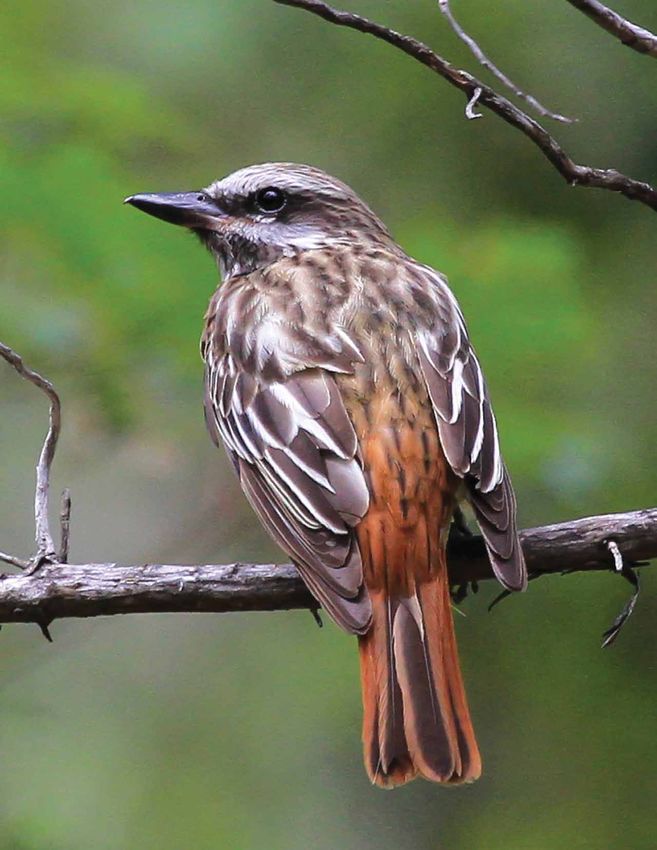
FRONT COVER: Sulphur-bellied Flycatcher in Ramsey
18 Conservation and Education News
Directors at Large Matt Bailey, Ardeth Barnhart,
Canyon by Muriel Neddermeyer. Muriel is a marketing
Gavin Bieber, Les Corey, Edward Curley, Jennie Duberstein, 24 Birding Travel from Our Business Partners professional and mother of two teenagers. She loves
Dave Dunford, Debra Finch, Jesus Garcia, Kathy Jacobs, 25 Field Trips watching and photographing birds in her spare time.
John Kennedy, Claire Zucker, Nancy Young Wright
Board Committees Conservation Chair Chris McVie,
25 Birds & Business Alliance To have your photograph considered for use in the
Development Les Corey, Education Jennie Duberstein, 26 Nature Shops Vermilion Flycatcher, please contact Matt Griffiths at
Finance Richard Carlson, Nominating & Governance Dave
27 Book Reviews mgriffiths@tucsonaudubon.org.
Dunford, Personnel Cynthia Pruett
Programs & Activities
Field Trips Matt Griffiths
Library
Membership Meetings
629-0510
629-0510 Birding in Tucson and Southern Arizona
Rare Bird Alert Andrew Core | Report Rare Birds 629-0510
Staff (unless otherwise stated, dial 629-0510 plus extension) The Sonoran Desert Takes to the Skies
Executive Director Paul Green ext 7001
Accountant Michelle Bourgeois ext 7003
Jessica Stephens, Director of Public Relations, Visit Tucson
Finance ext 7014
Membership & Development Manager Located along the migratory path between Canada Flycatchers, and many other species. Birding buffs
Kara Kaczmarzyk ext 7009
Membership & Development Assistant Vacant ext 7002 and Mexico, Southern Arizona’s lush desert is might even catch a glimpse of more than 150
Events & Volunteer Coordinator Julie Pulliam ext 7011 one of the best birdwatching areas in the United species in a single day during Southern Arizona’s
Environmental Education Coordinator Bété Jones ext 7012 States. More than 500 species can be observed spectacular spring and fall migrations.
IBA Conservation Biologist Jennie MacFarland ext 7004
Urban Program Manager Kendall Kroesen ext 7006 throughout the year, and hummingbirds are Visitors from around the world travel to Tucson
Restoration Ecologist Jonathan Horst 971-6238 especially plentiful. Bird watching enthusiasts need and Southern Arizona for our unique desert setting
Field Supervisor Rodd Lancaster 256-6909
only take a short drive through rolling grasslands, and abundance of watchable wildlife. According
Restoration Specialist Andy Bennett 262-1314
Communications and Habitat Restoration desert greenery and lofty mountain ranges to to a study by Arizona Game & Fish Department,
Matthew Griffiths 971-7924 find Gray Hawks, Red-faced Warblers, Vermilion watchable wildlife activities, including birding,
Conservation Advocate Matt Clark 307-0956
Coordinator: Paton Center for Hummingbirds
generated a $1.4 billion economic impact in which
Keith Ashley 488-2981 732,343 non-residents participated in related
Operations and Retail Manager Sara Pike ext 7008 activities statewide. In 2013, the Tucson Audubon
Operations and Retail Coordinator Kelly DiGiacomo ext 7007
Operations and Retail Coordinator Sarah Whelan ext 7007 Society released a county-level analysis of birding
Tucson Audubon Nature Shops in the region. Locally, the economic impact is $300
300 E University Blvd #120 ext 7015 million, where birding was the primary activity
Hours: 10 am–4 pm, Mon–Sat
for approximately 77 percent of non-resident
Agua Caliente Park, 12325 E Roger Rd 760-7881
Hours: Thu–Sat 10 am–1:30 pm. Please call to confirm hours. watchable wildlife participants.
The shop opens earlier and closes later during certain months. Visit Tucson, the region’s official destination
RED-FACED WARBLER, CHARLES MILES / CCL
marketing organization, values the importance of
Vermilion Flycatcher is published quarterly. For address
birding as a draw to our area. Working with local
changes or subscription problems call 629-0510, or write to groups, including the Tucson Audubon Society,
Membership Coordinator at the address above. Submissions
are due 1st of the month, one month before issue date. Send
we promote various activities and itineraries to
submissions as Microsoft Word or RTF documents, or plain visitors, showcase the area’s “birding hotspots” and
text files, to Matt Griffiths at mgriffiths@tucsonaudubon.org.
highlight regional birding festivals throughout the
Coordinator Matt Griffiths 971-7924
Proofreaders Tucson Audubon staff and volunteers year. For more information about visiting Tucson
Design / Layout Eng-Li Green and Southern Arizona, go to visittucson.org.
© 2014 Tucson Audubon Society
CCL in photo credits = Creative Commons License creativecommons.org.
All photos © the photographer.
2 Tucson Audubon Vermilion Flycatcher July–September 2014 Visit tucsonaudubon.org for updates and more.
KENDALL KROESEN
COMMENTARY
PAUL GREEN | EXECUTIVE DIRECTOR
Growing the PIE
Nearly 30,000 visitors travel each year
to Tucson Audubon’s newly acquired
Paton Center for Hummingbirds to watch
amazing birds. Our guests leave tokens of
Above left to right: Patagonia-Sonoita Creek
ALAN D. WILSON, WWW.NATURESPICSONLINE.COM
appreciation in the donation box and pick value of conserving natural Preserve; Magnificent Hummingbird
up a brochure informing them of other resources in the region.
great birding sites in the area: Harshaw Management efforts to protect habitats Only by protecting our wildlife resources
Canyon, the Patagonia Rest Stop, The for wildlife will safeguard the economic will southeast Arizona communities be
Nature Conservancy’s Patagonia-Sonoita viability of the local nature tourism assured of sustaining the economic
Creek Preserve, and Patagonia Lake industry. However, our communities and opportunities associated with nature
State Park. The brochure also offers tips decision makers must face a number of tourism into the future.
for coffee, lunch, dinner, and lodging. challenges before outdoor recreation and In our state, private property rights and
We’re working with the Patagonia Town tourism can influence and contribute to the 1872 Mining Law include the right to
Manager’s office and the local business our economy at their greatest potential. destroy irreplaceable resources even as
association to develop a strategic most of us strive to conserve our national
approach to economic development Two Keys: Collaboration and
treasures, their associated landscapes,
linked to traveling birders. Businesses Creative Planning
and their ecological functions for future
providing services for visitors benefit—as Without broader-level cooperation and
generations. Witness the Rosemont Mine
do birders. It’s a win-win situation. Tucson planning, nature tourism destinations are
and the Santa Ritas. Witness Wildcat
Audubon is growing the PIE by working bound to operate in isolation, each site
Silver and Harshaw Canyon. Witness
to protect the most important Places for competing—rather than collaborating—
the Tribute housing development and
birds, providing Information for traveling with its neighbors. Our region would
the Lower San Pedro River. All destroy
birders, and by developing Events to benefit from a regional nature tourism
natural functioning ecosystems that
attract people to southeast Arizona. strategy! And Tucson Audubon is poised
provide ecological services, wildlife
Tucson Audubon is also collaborating to play a key role for the southeast corner
resources, and more besides.
with the City of Tucson and Pima County of our state.
Nature tourism planning based on
at a more preliminary stage on ideas and A great deal of the undeveloped land
wildlife-watching economics is very much
projects to develop an integrated local around Tucson, Patagonia, and the rest
a collaborative and collective enterprise.
nature tourism strategy. We have recently of southeast Arizona is teeming with birds
To work successfully it engages planners,
received funding to develop birding trails and other wildlife. It is also controlled by
politicians, businesses, chambers
within the City of Tucson. A great deal private entities who realize few of the
of commerce, and communities to
remains to be done, however—with a potential benefits of wildlife watching.
understand the resources and ensure
broad range of partners. As the demands for outdoor recreational
that it can deliver on its potential. And to
To paraphrase Ted Eubanks, Robert opportunities increase, some of these
be effective, the importance of outdoor
Ditton, and John Stoll from their 1998 landowners could increase income by
recreationists as drivers of economic
River Platte Report1: Wildlife watching, diversifying their individual economic
activity has to take its place as a part of
as a coordinated outdoor recreational strategies and offering access to their
the broader context of human and natural
industry, is still in its infancy. Although the lands for a fee. Providing viewing blinds
communities and their endeavors.
nature resources are available, strategies and photographic opportunities could
By developing the Places,
by which communities and individuals expand the economic incentives for these
Information, and Events that provide
take advantage of these resources and landholders.
exciting nature experiences, we support
activities for the benefit of both residents The economic benefits of wildlife
a truly sustainable economy and
and wildlife are not well developed. In a watching in southeast Arizona stem
environment. That is the win-win of
real sense, the wildlife watching industry from the wildlife resources found here.
birding economics.
has developed ad hoc, without significant Threats to wildlife therefore undermine
Please support our work with your
planning or direction. the viability of nature tourism. Any
donation this summer. Thank you.
Dollars generated by birders, hunters, strategy to promote nature tourism must
be built upon a foundation of resource
1 The Economic Impact of Wildlife Watching On
anglers, hikers, campers, and cyclists the Platte River in Nebraska. Prepared by
throughout our area have a tangible, conservation. Economic sustainability
Fermata Inc. Ted Lee Eubanks, Jr., Robert
measurable economic impact as may be achieved if our communities use B. Ditton, and John R. Stoll. February 15,
communities make money by supplying their resources wisely without depleting 1998. Prepared for the U.S. Environmental
goods and services to them. This them. Once these resources are depleted, Protection Agency Region VII.
provides hard evidence for the economic the nature tourism business will fail.
Visit tucsonaudubon.org for updates and more. July–September 2014 Vermilion Flycatcher Tucson Audubon 3
TUCSON AUDUBON Birds, Beauty, and Biodiversity
Deepen your connection with life
EVENTS AND CLASSES in the Santa Rita Mountains at this
two-day retreat and workshop.
Transformational Living activities
Celebrate the Bird Days of will help you experience nature as a
framework for personal, political, and
TIM LINDENBAUM
Summer with Tucson Audubon spiritual inquiry. From birding and
botting to story-telling and guided
discussion—with nature journals
in hand—you will observe and
identification aid. We will delve into
appreciate the sky island habitat. You
the complexities of migration, skeletal
will sharpen your art of seeing, draw
structure, and anatomy, as well as
connections between natural beauty
flight behaviors. A one-day field trip
and values, and articulate these
will connect field observations with the
insights into writing. While we seek a
topics discussed..
real depth of experience, contagious
enthusiasm (a.k.a. fun) is also Instructor: Homer Hansen
SANTA RITAS, LARS HAMMAR
guaranteed. Trip includes professional Date and Time: October 30; 5:30 pm–
instruction, all meals, and lodging. 8:30 pm & November 1, All day field trip
Instructors: Lynn Hassler and Location: TAS Main Office, Historic Y
Keith Ashley Conference Room, University Blvd. and
Date and Time: November 8–9, 5th Ave.; Field Trip Destination TBA.
This summer why not deepen your connection with life in 2014 Cost: $145 / $110 member discount
the Santa Ritas (above) and learn how to create desert- Location: Santa Rita
friendly gardens for birds such as Verdin (inset).
Experimental Range and Workshops at the
Bird & Naturalist Audubon’s Wildlife Area, Pima County, Tucson Bird & Wildlife
resident expert Arizona
Education Program: for Festival: August 13–17
VERDIN, JOAN GELLATLY
instructors, Homer Cost: $360 / $325 member discount
the Sonoran Desert and Hansen and Lynn Hassler. For New to Advanced Birders:
Sky Islands Regular cost for classes INTERMEDIATE Flycatchers with Homer Hansen.
Become a birder or improve your and workshops include a year August 14; 1:30 pm–3:00 pm. $35
birding skills and knowledge through membership to Friends of Tucson Warblers: August 21; 5:30 pm–
8:30 pm & August 23; 7:00 am–5:00 pm How to Use Your Flipping Field
a suite of courses offered at Tucson Audubon.
Guide with Steve N.G. Howell. August
Audubon. Our courses are designed to Flycatchers: September 4; 5:30 14; 3:30 pm–5:30 pm. $35
take you through a natural progression pm–8:30 pm & September 6; 7:00 am–
ALL LEVELS
that will transform you from a 5:00 pm Got Molt? What is Molt and will you
beginning to intermediate/advanced Gardening to Attract Birds age better if you know something
See our website for more detailed about it? with Steve N.G. Howell.
birder and transport you to some of Learn how to provide for birds the descriptions of the workshops. August 15; 3:30 pm–5:30 pm. $35
the most beautiful locations throughout natural way by growing plants that
our region. Below, you will find our Instructor: Homer Hansen
offer seed, fruit, and nectar, as well Go Batty Under the Bridge with
workshops listed by birding level. as cover and shelter. Naturalist/writer/ Location: TAS Main Office, Historic Y
Ronnie Sidner. August 15; 5:45–
Also listed below are the workshops gardener Lynn Hassler will teach you Conference Room, University Blvd.
8:15 pm. $25
we are offering at our Tucson Bird & how to create desert-friendly gardens and 5th Ave.; Field trip destinations
Wildlife Festival in August, located at TBA. Beginning Birding with Lynn Hassler.
that support birds and help make up
the Riverpark Inn. These workshops Cost: $145 / $110 member discount August 16; 10:00 am–12:00 pm. $35
for lost habitat. Lynn has recorded
will introduce you to experts in the field over 130 species in her Tucson Gardening to Attract Hummingbirds
of birding, as well as Tucson backyard. ADVANCED with Lynn Hassler. August 16;
Instructor: Lynn Hassler 1:30 pm–2:30 pm. $25
Flight and Feathers
ay! Visit Date and Time: October 18; Tucson Birds and Landscaping for
r o nline tod n One of nature’s wonders, the flight
Re giste /educatio 10:00 am–12:00 pm Wildlife with Kendall Kroesen. August
so n a ud ubon.org of birds is an amazing physiological 17; 10:00 am–11:00 am. $5
tuc ation Location: TAS Main Office, Historic Y
r all educ feat. In this workshop you will take
Contact fo es at Conference Room, University Blvd.
Bété Jon an in depth look into the how and Visit the Festival website for details
activities: naudubon.o
rg, and 5th Ave.
why of bird flight, and how to use and to register: tucsonaudubon.org/
@ tuc s o
bjones 2 Cost: $25
510 x701 observation of flight patterns as an festevents.html.
520-629-0
FOR MORE INFORMATION ON OUR SUITE OF EDUCATION CLASSES AND TO REGISTER ONLINE, PLEASE VISIT
TUCSONAUDUBON.ORG/EDUCATION
4 Tucson Audubon Vermilion Flycatcher July–September 2014 Visit tucsonaudubon.org for updates and more.
EVENTS CALENDAR
Tucson Audubon’s Living with Nature Lecture Series August 10–12. Bird Communities of the Sky
Islands Field Workshop
August 13–17. Fourth Annual Tucson Bird &
Wildlife Festival (see p 4 and p 17)
• Aug 13: Sky Islands Birding Cup
• Aug 15–16: Free Nature Expo
• Aug 15–17: Workshops
• Aug 15: Optics Day
• Aug 15: Keynote dinner presentation by
RICK FLETCHER
JEFF WEBSTER
Robert Mesta
• Aug 15–17: Advocacy Station
• Aug 15–17: Field Trips
L to R: A well-attended Living With Nature lecture in Green Valley; Gary Nabhan talks to our Tucson audience. • Aug 16–17: Fun Family Weekend
• Aug 16: Keynote dinner presentation by
Steve N.G. Howell
Our lecture series is a monthly, free, We thank: Gary Paul Nabhan, TUCSON
August 14–16. Nature Shops closed—will be at
public presentation that seeks to Don Falk, Mauro Gonzalez, Paul All lectures will be held at the Pima
the Tucson Bird & Wildlife Festival
inform, educate, and entertain. We Green, Charles Van Riper, George Community College Downtown
August 21 & 23. Warblers workshop (see p 4)
invite speakers who are experts in Divoky, Jennifer Koop, Ted Fleming, Campus, Amethyst Room, 1255 N.
September 4 & 6. Flycatchers workshop
their fields to present on a variety of Trica Oshant Hawkins, Christopher Stone Ave. Lectures are scheduled (see p 4)
topics related to birds, including their Cokinos, LoriAnne Barnett, Doug for the second Monday of each month August 22. Tucson Audubon Awards—closing
biology and ecology; global, regional, Moore, Caleb Weaver, Pinau Merlin, at 7:00 pm, November through April. date for nominations (see p 8)
and local birding hot spots; and David McKay, and John Millican. 2014: November 10; December October 18. Gardening to Attract Birds
conservation issues that affect birds, Thank you to all our members workshop (see p 4)
8 (Member Holiday Potluck,
other wildlife, and their habitats. who took the time to respond to the October 23 & 25. Flight and Feathers
St. Phillips Plaza) workshop (see p 4)
We express our gratitude to our survey and provide us with feedback
2015: January 12; February 16 November 1. Living With Nature lecture
amazing line up of presenters during on the timing and location of the (Green Valley)
the 2013–2014 season, with whom Tucson lecture series. We have (third Monday); March 9; April 13
November 10. Living With Nature lecture
we explored topics such as: the already incorporated some of your (Tucson)
GREEN VALLEY
relationship of pollinators to plants and ideas! Next season, we will offer two December 6. Living With Nature lecture
All lectures will be held at the Green
people, the role of fire in the health additional talks: one on the northwest (Green Valley)
Valley Recreation’s Desert Hills
of North and South American forests, side of town and one at Saddlebrook. December 8. Living with Nature lecture and
Social Center, 2980 S. Camino Del member holiday potluck at St Phillip’s Plaza
the unique avifauna of northwestern Save the dates listed here for Tucson
Sol. Lectures are scheduled for
Mexico, the importance of migration and Green Valley and stay tuned for
the first Saturday of the month at
stopovers in southeastern Arizona, additional talk times and dates.
10:00 am, November to April.
the human dimension of wildlife Enjoy your summer and we’ll see
2014: November 1; December 6 The Tucson Bird & Wildlife
conservation, and the effects of you in November!
climate change on seasonal patterns 2015: January 3; February 7 Festival offers activities galore
of plants and animals. March 7; April 4 for the birder and nature
enthusiast, August 13–17. View
the full schedule of field trips,
Harvest is a State of Mind birds we enjoy so much, all the
other animals and plants, and their
workshops, evening programs,
Kendall Kroesen, Urban Program Manager ecological relations. Think of birding and Nature Expo activities online
as the harvest of color, form and song! at tucsonaudubon.org/festival.
For the last three years, we have Whatever form our celebration You don’t need Tucson Audubon
PAINTED REDSTART, JERMEY HAYES
milled mesquite pods at the Mason takes this year, the harvest surrounds in order to see this diversity, but
Center in November. For the last two us. There are hundreds of edible wild we hope you will experience it and
years, we have celebrated plants and many desert-adapted crops celebrate it alongside us—in classes
the year-round Sonoran that thrive in the Sonoran Desert. And and festivals, as volunteers at habitat
Desert harvest at our beyond that is the larger biodiversity restoration sites, and on birding field
Harvest Festival. heritage that is ever-present: the trips. Watch for opportunities to join in
and participate in the stewardship of
the Sonoran Desert.
Together, we can create more ways
to be sustainable and bird-wise in the
wonderful region in which we live, and
in the “Bird City” that is Tucson.
Barbara Rose (left) of Bean Tree Farm
and chiltepines (inset) from Charles
DeConcini’s table at Tucson Audubon’s
2013 Harvest and Mesquite Milling Festival
Visit tucsonaudubon.org for updates and more. July–September 2014 Vermilion Flycatcher Tucson Audubon 5
TUCSON AUDUBON
NEWS ROUNDUP Thank You for Going Birding for
the Birds during Birdation!
Kara Kaczmarzyk, Membership and Development Manager
Tucson Bird Count—
A Delicious Recipe for Urban Habitat
Jennie MacFarland, IBA Program Biologist
JENNIE DUBERSTEIN
MATT GRIFFITHS
LANDSCAPING AT ORO VALLEY MARKETPLACE, KENDALL KROESEN
KENDALL KROESEN
KENDALL KROESEN
Top, left to right: The Wrenegades as they built up to their 160 species Big Day total.
Team Waterfoul scopes Sweetwater Wetlands.
Bottom, left to right: First time Birdathoner Laura Diaz wins a pair of binoculars at the Birdy
BBQ. Birdathoner-extraordinaire Maia Stark enjoys the Birdy BBQ.
Data collected diligently by volunteers at
more than 800 Tucson Bird Count locations Another amazing Birdathon season and Birds of Fray: Scott Olmstead,
PYRRHULOXIA, JOAN GELLATLY
over the last 14 years will be used to create has concluded with nearly $24,000 Jennie MacFarland, and Richard
“recipe cards” to guide Tucson residents
on how to make their yards attractive to a raised for bird conservation through Fray respectively. The Birdy BBQ
certain bird species or a suite of birds. the efforts of 51 outstanding was a blast at the Mason Center,
Birdathoners bringing in 293 donations where Birdathoners, friends, and
The Tucson Bird Count (TBC) and counting! Throughout the month family gathered to celebrate the
successfully completed its 14th of April, Birdathoners went birding achievements of the Birdathoners.
spring count and is now moving for the birds, raising support and The Birdy BBQ was made possible
into a new phase of the project. awareness while spotting the spring in part by Tucson Audubon’s Board
The main goal of this study from the specialties: the migrants, residents, of Trustees who donated food for
very beginning was to determine the Tucson Audubon has been awarded and rarities that make southeastern the evening, and by the outstanding
best recommendations for creating a Heritage Grant from Arizona Game Arizona such an outstanding birding musical styling of staffer Andy Bennett
and enhancing urban bird habitat. and Fish to make and print the first destination. For the third year running, and the Bending Blades who set the
After all of these years of volunteers batch of recipe cards. A new Tucson the Wrenegades surpassed their mood with their five piece bluegrass
diligently surveying over 800 locations Bird Count website was created to Birdathon record, this year seeing ensemble. Thanks also goes to
in Tucson, we are using this data accommodate this phase of the TBC. 160 species. Our star Birdathoners Sprouts, Thunder Canyon Brewery,
to find patterns in how various This project would not have been included Maia Stark and Kendall Summit Hut, Tucson Audubon’s
bird species use urban habitat in possible without all of the amazing Kroesen, who each surpassed their Nature Shops, and our Birdathon
Tucson. This information will help us volunteers who have helped over the funds raised over last year. Our sponsors Pima Federal Credit Union
to understand what birds need and years. Thank you! thanks goes out to the expert leaders and Hughes Federal Credit Union.
what changes Tucson residents can of Scott’s Orioles, the Wrenegades, We’ll see you next year!
make to increase the area of urban
bird habitat suitable for native birds.
ZONE-TAILED HAWK, SEARCHNETMEDIA / CCL
These components and directions will
be distilled into “recipe cards” which
Tucson Audubon’s eNews Delivered to Your Inbox
will be produced for a variety of bird Did you know that Tucson Audubon To subscribe to any of these,
species. The cards will be available offers a range of specialized email go to tucsonaudubon.org and click
free to Tucson residents and will guide updates on various topics, such as on the “Sign-up for Newsletters”
them in making their yard attractive to Volunteer News, Green City News, button on the home page. Or you
a certain bird species or suit of birds. Conservation Alerts, Paton News, IBA can call Kara at 520-209-1809 and
In partnership with Saguaro National News, Nest Boxes for Urban Birds, she will take your details.
Park, an original supporter of the TBC, as well as a regular Weekly Update?
6 Tucson Audubon Vermilion Flycatcher July–September 2014 Visit tucsonaudubon.org for updates and more.
2014 ELEGANT TROGON
SURVEY RESULTS
Two New IBAs in Arizona and 8 females. All females were
Arizona Important Bird Areas News in proximity to males with whom
they were probably paired, yielding
Jennie MacFarland, IBA Program Biologist a total of 8 pairs. The Patagonia
Mountains are a surprisingly good
It has been a very a birding destination since a Blue Jay area for Elegant Trogons, and 18
busy and productive was found during an IBA survey here. volunteers surveyed in 10 territories
ELEGANT TROGON, LAURENS HALSEY
season for the This is an excellent place for Eastern in the Patagonia Mountains.
Arizona Important “Azure” Bluebirds, Montezuma Quail Altogether 22 Elegant Trogons
Bird Areas Program and, as it turns out, Elegant Trogons. were found: 8 pairs, 4 males, and 2
and it isn’t over yet! The amazing Many years of volunteer effort have females. The Huachuca Mountains
and dedicated volunteers that so gone into this mountain range and I were the big winners this year and
generously give their time and am proud to announce that this area 32 volunteers surveyed 16 canyons
experience have made possible many is now an IBA. Joshua Tree IBA, also and 38 Elegant Trogons were found,
different survey efforts all over the known as the Chicken Springs BLM 21 males and 10 females. All
state this spring and early summer. grazing allotment, is a beautiful mix of For the second year, the Arizona females were in proximity to
We counted Gilded Flickers in the Mohave and Sonoran desert habitats. IBA Program and Rick Taylor joined males with whom they were
lovely Sonoran Desert habitat on both habitats. Data gathered by IBA forces to census the Elegant Trogons probably paired, yielding a total of
the east and west side of Tucson volunteers has shown that the towering in the four major Sky Islands in SE 10 pairs. Seven (7) trogons were not
in March, as well as Elf Owls in the Joshua Trees make this excellent Arizona plus some of the major identified to gender. The Chiricahua
same locations in April. Migrants along habitat for Bendire’s Thrashers canyons in the Atascosa Highlands. Mountains are still showing low
the Lower San Pedro River Global and this new IBA has already been The beautiful and mysterious species numbers of Elegant Trogons, most
IBA were the main target during our nominated for Global IBA status for this is a “most wanted” bird for visitors likely due to the major fire this range
spring surveys in San Manuel, an species. This is where the hard work and residents alike and always a experienced a few years ago. Just 6
area of amazing significance to birds from all of you volunteers pays off: new treat to see. Once considered rare, Elegant Trogons were actually seen
that we are focusing on this season. IBAs for the birds! they are now locally dependable in by 26 volunteer counters who were
The breeding bird surveys of desert the right habitat, and some even stay surveying 24 contiguous riparian
EASTERN “AZURE” BLUEBIRD, LOIS MANOWITZ
habitat, in partnership with the Tohono all winter. areas averaging approximately 0.4
O’odham Nation, were only possible Overall, Elegant Trogon numbers mile in length in the South Fork-Cave
because of Tucson Audubon IBA are good and it would appear that Creek Canyon. A male and a trogon
volunteers. This collaborative effort southeast Arizona has a stable of unknown gender were found in
is the first of its kind on the Tohono nesting population. For the Santa Rucker Canyon. Including Rucker
O’odham Nation. A huge amount of Ritas, 24 volunteers surveyed in 12 Canyon, the survey produced 4
volunteer effort has also gone into territories within the Madera Canyon males, 3 females, and 1 trogon of
the Elegant Trogon census surveys complex, and 6 counters checked unknown gender.
of 4 different sky islands as well as 4 other canyons in the Santa Rita Huge thanks to the many
the lowland canyons in the Atascosa Mountains. Altogether 23 Elegant volunteers that made these surveys
Highlands. This diverse and ambitious Trogons were found: 15 males possible!
survey season would not have been
possible without the talented and
JOSHUA TREE IBA, DAVE KREUPER
dedicated folks that make up the
volunteer crew for this program.
Thank you so much.
This leads to the big news of the
moment: there are two new Important
Bird Areas in Arizona, bringing the
grand total up to 45. Patagonia
Mountains IBA is an area that is great
for birds and increasing in popularity as
BENDIRE’S THRASHER, DAVE KREUPER
Visit tucsonaudubon.org for updates and more. July–September 2014 Vermilion Flycatcher Tucson Audubon 7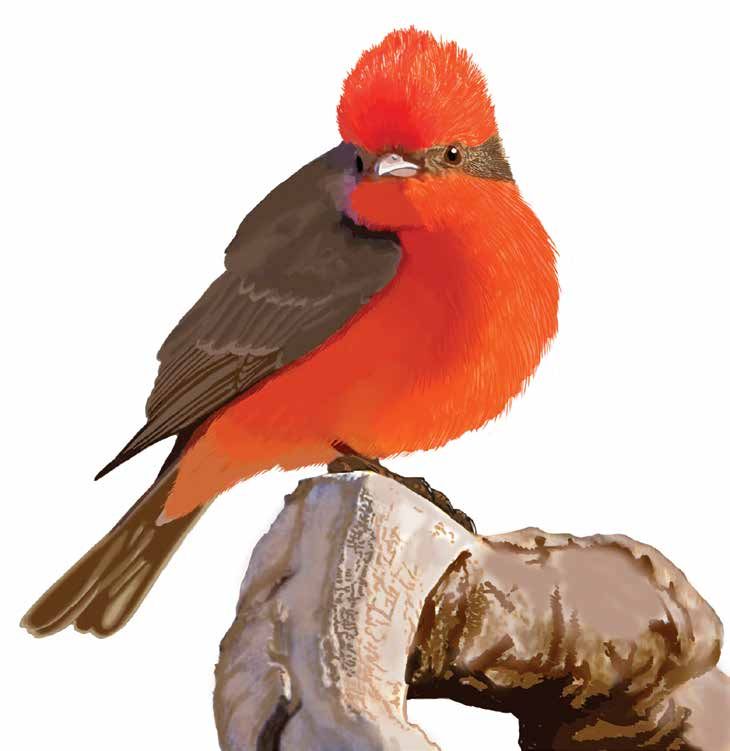
TUCSON AUDUBON NEWS ROUNDUP

                Nest Boxes for Urban Birds The Science of
                Kendall Kroesen, Urban Program Manager Nestboxes
                Last winter, volunteers helped us              them to locations where they might              The interest in the Nest boxes
                build nest boxes for our pilot nest            support Western Screech-Owls.                   for Urban Birds Pilot has been
                box project. The goals are to support               The second thing we learned is             overwhelming! To further our
                cavity-nesting birds and to expand our         that birds seem pretty picky about              capacity to turn it into an ongoing
                outreach to the Tucson community. It           where they nest. Many of the boxes              and widely successful program this
                is a “pilot” project because we wanted         and gourds are not being used—some              summer, we’re undertaking a series
                to test whether nest boxes can work            were explored (birds were seen going            of small but scientifically rigorous
                reliably in the Sonoran Desert.                in and out) and rejected, though the            experiments to quantify the effects
                    We decided on two nest box                 specific cause is not known. It may             on internal box temperature of
                designs: a large box for American              be that next spring these same boxes            placement aspect (N/S/E/W
                Kestrels and a medium box for Ash-             and gourds will be used because birds           exposure), shade type (solid/
                throated Flycatchers. In the end we            will have grown more comfortable                dappled/full sun), box size, and box
                did not give all these boxes away (see         with them.                                      shape. The first experiment will get
                below) but some other people built or               However, some boxes have                   underway at the Mason Center,
                purchased their own boxes. We now              become nest sites for birds. At least           just as soon as we finish building

                                                                                                                                                                                                            JOY REMER
                have about 40 boxes and 15 gourds              two of the large boxes are being used           20 identical nest boxes based on
                that are part of the pilot program.            by screech-owls and one is being                the model Lucy’s Warbler box that
                    The first thing we learned is that         used by Ash-throated Flycatchers. We            fledged two young this spring in              In what may be the first photographically
                although people are eager to help              learned about another tiny box that             Catalina (see photo on the right)!            documented occurrence of Lucy’s
                                                                                                               If you’d like to get involved in the          Warblers successfully nesting in a
                kestrels, it is challenging to find a good     successfully fledged a brood of Lucy’s                                                        human-constructed nest box, two chicks
                place for a kestrel box. Kestrels like         Warblers (see photo and caption, right).        scientific exploration of bird nesting        fledged from this tiny wooden birdhouse
                their nests to be high off the ground               Finally, we have put temperature           with a conservation goal, please              in Joy Remer’s backyard in Catalina,
                                                                                                               contact Jonathan Horst at jhorst@             Arizona. The box itself is 3”x3”x4-5” for an
                and we thought a shady northern                sensors in some of the boxes to                                                               interior volume of less than 20 in3 —that’s
                exposure would help mitigate heat.             measure temperatures inside the                 tucsonaudubon.org. To make a                  smaller than the volume of a 12 oz soda
                Few yards have such a location, so we          boxes. With generous support from               monetary contribution, go to the              can! We also have two previous reports
                                                                                                               online donation page at www.                  from Tucson Audubon members that
                did not distribute all the kestrel boxes.      project volunteers we purchased 25                                                            Lucy’s Warblers have successfully nested
                This fall we will look for more places         iButton sensors. These are tracking             tucsonaudubon.org and make a                  in small gourds or decorative boxes.
                for kestrel boxes or we will distribute        temperatures hourly and will allow us           note in the “comments” box that it is         Documentation of these exciting findings
                                                                                                               for the nest box pilot program.               furthers scientific understanding which, to
                                                               to see if temperatures ever exceed                                                            date, has said that Lucy’s Warblers have
                                                               critical threshold levels making nests                                 Jonathan Horst,        ‘not been reported to use nest boxes’
                                                               fail.. We will analyze the box usage                             Restoration Ecologist        even though adequate nest sites are
                                                                                                                                                             likely a limiting factor. Won’t you join us
                                                               and temperature information this fall                     Keith Ashley, Coordinator:          in the quest to determine what makes a
                                                               and modify the program accordingly!                  Paton Center for Hummingbirds            nest box appropriate for Lucy’s Warblers?
                                                               Stay tuned.

                                                                                                                                                                                                            MASON PHOTOS PAUL & ENG-LI GREEN
LOIS MANOWITZ

                Left: Lucy’s Warbler explores a gourd as a potential nest. Right three photos: Nest boxes installed at various locations around Tucson Audubon’s Mason Center.

                8       Tucson Audubon Vermilion Flycatcher July–September 2014                                                              Visit tucsonaudubon.org for updates and more.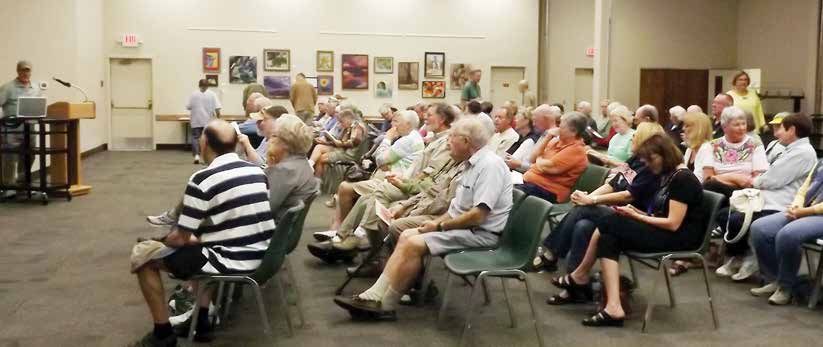
The Paton Center for Hummingbirds
Keith Ashley, Coordinator: Tucson Audubon’s Paton Center for Hummingbirds

What is a bird worth? Let’s say, for
instance, a Yellow-breasted Chat.
Maybe you’ve been listening to his

                                                                                                                                JEREMY HAYES
one-bird band of melodic chatter and
wild whistles coming from a thicket.
You’re delighted long before you spot
him, though you wish he’d pop out
of that bush—if only for a moment.
Suddenly the chat flies to a tray of
orange halves set out near the back
fence. He’s dazzling in the full sun,
with his olive back and golden breast.
You feel that familiar thrill of having
just witnessed a small miracle of
backyard beauty.

                                                                                                                                KEITH ASHLEY
                                          PAUL GREEN

    On the one hand, birders know
they cannot put a price on the beauty,
excitement, and inspiration wild birds
bring us. On the other hand, the          systems. These are the methods the          Tucson Audubon’s restoration crew
birding community recently showed         Paton Center will also be employing         has improved hundreds of acres of
exactly what it was worth to them to      and demonstrating.                          southeast Arizona in support of local
save a beloved birding hotspot: the           Large basins along the driveway         wildlife and wildlife watchers. They’ll
Paton house in Patagonia. It was          and in front of the house will feed         now be focusing some of those efforts
worth years of struggle and focus to      habitat-pollinator gardens. Catchment       on the little lot next door.
acquire the funds, not just to purchase   systems from building roofs will                COMMUNITY—We are also
the home and land, but also to obtain     provide extra water for our food-rich       striving to build deep and lasting
a budget for upkeep and needed site       landscaping for birds and people.           ties with the local community. The
improvements.                             Water that currently runs along or          preservation of the Paton Center—
    Tucson Audubon’s Paton Center         pools beside Blue Heaven Road will          and its birds—is intimately linked to
for Hummingbirds is the birding           be directed onto the property to feed       the health and survival of this entire
community’s gift to itself, to birders    the paddock.                                corner of Arizona. We will work
around the globe, and—of course—to            RESTORATION—An important                toward shared resource conservation
the birds. Tucson Audubon knows the       step in the evolution of the Paton          and economic sustainability
value of this jewel. While preserving     Center is the restoration of the            goals in partnership with the
the legacy of Wally and Marion Paton,     “paddock”—the small lot adjacent            Hummingbird Monitoring Network, the
we are investing in the Paton Center’s    to the home. Formerly used for              Patagonia Area Resource Alliance,
future. Here is a sneak-peek into our     livestock, this tree-lined patch of green   Borderlands Restoration, the Nature
developing vision.                        will be transformed into a healthier        Conservancy’s Patagonia-Sonoita
    RAINWATER HARVESTING                  ecosystem with a special emphasis on        Creek Preserve, and the town of
DEMONSTRATION—In Arizona,                 enticing and supporting birds—from          Patagonia.
water means survival, for people and      rare migrants to local rarities and             As we bring changes to the Paton
birds. Tucson’s rainwater harvesting      everyday old friends. The paddock           Center, we are also taking care to        (Upper left) Marcia Grand, major donor to
expert Brad Lancaster visited the         is already home to key elements of          preserve the best parts exactly as        the Paton project, reviews sketch of Paton
                                                                                                                                Center plans with Keith Ashley.
Paton Center to help design a site-       the Patagonia riparian-scrub biotic         they are. Larry continues to fill the
                                                                                                                                (From above) (1) Yellow-breasted Chat.
specific water-harvesting program         community: elderberry, mulberry,            feeders every day—a couple of times       (2) Jonathan Horst and Larry Morgan
that supports the health of the local     mesquite, and plenty of Vermilion           a day now that the cowbirds are           remove invasive weeds before they go to
watershed. Brad and his brother,          Flycatchers. Resident Caretaker             back in town. He continues to put         seed in the paddock. (3) The shed before
                                                                                                                                being removed by the restoration crew.
Rodd, Tucson Audubon’s Restoration        Larry Morgan reports seeing Arizona         out oranges for the orioles, and the      (4) A new view of the leafy green paddock
Field Crew Supervisor, annually           glossy snakes, short-horned lizards,        Yellow-breasted Chats. We hope that       after removal of the shed.
harvest 100,000 gallons of rainwater      and Gray Flycatchers there as well.         you will continue to support the center
on their 1/8 acre home lot in Tucson.     At the same time, the paddock has           as well, with your ideas, volunteer
They do so through simple means           suffered an onslaught of invasive           hours, and generous donations.
available to most homeowners: rain        species: London rocket, sticky grass,       Please support our summer appeal
cisterns, earthworks, and graywater       and horehound, to name a few.               with your donation today.

Visit tucsonaudubon.org for updates and more.                                              July–September 2014 Vermilion Flycatcher Tucson Audubon                       9
TUCSON AUDUBON NEWS ROUNDUP
BROAD-BILLED HUMMINGBIRD, ALAN D. WILSON/NATURESPICSONLINE.COM
WELCOME NEW MEMBERS
Stepfanie Aguillon, Maria Altemus, Gonzalez, Marlesa Gray, Jeannie Andrew Roberts, Mark Sackett,
Jill Barrett Johnson, Edward Greven, Marius Gutowski, Jeri Dan Sheahan, Pennelope Shepard,
Berghausen, Debbie Harrison & Haklik, Joey Hiller & Robin Doshas, Kathy & Jim Shurts, Bill Shuster,
Robert Blackett, Gary Bowerman, John & Isabella Hindman, Mary Ariel Olroyd & Marcia Slagle, Kenna
Marc Callis, Lonnie Calmes, Dennis Howk-Hanley, John & Kathy Hughes, Smith, Harvey Smith, Khrista &
Carlson, Sarah Carlson, Linda Root Barbara Johnson, Ken Kalina, C.J. Jeremy Sohn, Janet Somerson,
Cooper, Judy & Gordon Craig, Karamargin, Peter Kaune, Joanna Estelle Stern-Eilers, Alan Stoddart, THANK Y O U TO
Sharon Craig, Nancy Davis, David Kirkwood, Natasha Kline, Paula Mark Stromberg, Diana & Joel OUR DO NO RS
Dean, Rebecca Dickinson, Larry Kulina, Geraldene Larrington, Strupp, Angela Terry, Rauny & Ron
Gifts in Honor/Memory:
Bodine & Dorian Dvorak, Irene Robin Lenaker, Arthur & Jeanne Thompson, Jane Tobin, Neil Travis,
In honor of Larry Abrams from
Edgett, William Edwards, Kreg Lewis, Mike & Mary McMinn, Andre Frank Urban, Lloyd Vest, Judy Visty,
Martin Karson
Ellzey, Jane Erin, Kristin Everett, McNulty, Jeffrey Middlekauff, Janice Lisa & Frank Walter, Nancy Wesorick,
In memory of Janet Glassman from
Charles Fears, Giovanna Fiori, Craig Mock, Duane Morse, Ken Murphy, Peggy White, Ana Zir.
Kathy Kuyper
Fischer, Larry Fisk, Syrene Forsman, Susan Neuman, David Niven, John
Kara Kaczmarzyk, Membership & In honor of Dr. Connie Steele from
Siri Forsman-Sims, Robert Fouch, O’Rourke, Dave & Linda Ott, Julie
Development Manager Sherie Steele
Jeffrey Patey & Holly Fredericks, Ana Pulliam, Diane Rand, Pam Rivers,
In memory of Kim Zonge from
Mort Womack
What Does Your Membership Cost? Thank You to Our
Frequent Flyers
Kara Kaczmarzyk, Membership & Development Manager
Vermilion Ardeth Barnhart, Myrna Beards,
THE QU
ARTE RLY NE
WS MAG
AZI NE OF T
UCSON
AUDUBO
N SOCI
ET Y | TUC
SON AUDUBO
N.ORG
Brooke Bedrick, Melanie Builder,
.Org
on
bON
uDu
flyca
ONa
Vermi i
s
| Tuc
l
ieTy
sOc
tcher
What does it mean to be sustainable? time we speak out for wildlife and and Senior
Du bON
O N au
Tucs
e Of April–June
g aziN 2014 | Volume
ew s Ma 59, Number
ly N 2
rTer
Qua
The
Andrea Cohen, Janet Cohn,
her
atc
flyc
4
58, Number
We each practice sustainability in our open spaces, we speak on your categories
| Volume
ber 2013
–Decem
October
s
Threat
To Birds Mich Coker, Christine Curtis,
daily lives. Members sustain Tucson behalf—on the behalf of Tucson at the end of
Change
Climate
ions
ow Collis
Bird–Wind ning
Lead Poiso
Sandy Elers, Margaret Ford,
ries
Wind Facto
Audubon, and for Tucson Audubon to Audubon members. 2014. Current
birds
Meet your
Tucson :
in a Name
what’s shrike
loggerhead
Resilience Marcy Gray, Mike Judd,
be sustainable in the community, we Recently we assessed the costs Student
Where to Find
Wood-Warblers
● Bird Stop-ove
r Habitat Patches
Nest Boxes ● A Wilson’s
for Urban Birds
John & Sarah Kennedy, Susan
● What’s in Warbler’s Journey
a Name: Burrowin
g Owl
balance services, programs, and a of servicing a Tucson Audubon and Senior
Kozacek, Erin Olmstead,
Insert
Catalog
Winter
e Shop
Plus Natur
variety of revenue sources. membership for one year, and the members
Nancy Young Wright, Claire Zucker
As a Friend of Tucson Audubon figure came to around $30. That figure can still renew at the current levels
you are the cornerstone of the includes such things as producing through the end of this year. We’ll Monthly giving through automatic
organization. When Tucson Audubon and mailing the Vermilion Flycatcher, also be encouraging members to pay credit card or bank withdrawals is
advocates for the most pressing member benefits, such as store their dues through automatic monthly convenient, secure, and simply one
environmental issues to policy discounts, and general administrative payments, with a base of $5 a month. of the best ways you can support
makers, businesses, and the public, costs, but does not include any It’s easy to check that option on your Tucson Audubon’s programs.
our voice is only as strong as our additional support for program work. renewal notice. For more information, visit
membership. Tucson Audubon In order to streamline membership Tucson Audubon achieves its tucsonaudubon.org. VF
members make possible publication to be more sustainable and at least goals only through your support and
of the magazine you are now reading have it cover the costs, we will be we thank you for being a Friend of
and so much more. In every outreach reducing the number of member Tucson Audubon.
letter, in every comment letter, every categories by eliminating the Student
Call for Nominations
Kara Kaczmarzyk, Membership & Development Manager
Do you know someone whose passion dedication to birds and the birding Conservation in Southern
for birding, education, or conservation community. Arizona. This award is for The David Yetman Award for Exhibiting
has moved them to do extraordinary • The Kenn Kaufman Award conservation practices that or Promoting Conservation in Southern
things in southeastern Arizona? Help promote sustainability. Arizona was presented to Christina McVie
for Excellence in Education at the 2013 Tucson Audubon gala.
us celebrate those achievements. The Relating to the Natural World. Nominations are being accepted
three awards seeking nominees are: This award is for an individual, through Friday, August 22nd. You recognized through Tucson Audubon
• The Wally and Marion Paton institution or corporation that may nominate as many people, or and local media. To nominate, please
Award for Outstanding provides ongoing nature education companies, as you would like. Our complete a nomination form at www.
Contributions to Birding. to adults or children. selection committee will choose tucsonaudubon.org/what-we-do/
This award is defined by • The David Yetman Award the winners to be awarded at the awards, pick up a form at our Nature
the example of the Patons’ for Exhibiting or Promoting next Tucson Audubon Gala and Shops, or call 520-209-1809.
10 Tucson Audubon Vermilion Flycatcher July–September 2014 Visit tucsonaudubon.org for updates and more.VOLUNTEER SPOTLIGHT
Volunteer Update Meet Lynn Hassler! Plant
aficionado Lynn Hassler manages
Julie Pulliam, Events & Volunteer Coordinator the habitat garden at our 5th and
University office location and writes
Hello! I am enjoying my journey with the garden plant profiles for the
“When one tugs at a single thing in Tucson Audubon and our dedicated Vermilion Flycatcher.
nature, one finds it attached to the volunteer community. I look forward She first became involved with
rest of the world.” to meeting you, if I haven’t already! Tucson Audubon in 1987, serving
Conservationist, John Muir’s words Thank you to our volunteers on the board of directors for two
are at the heart of my life philosophy for being an integral part of our years. Early in 2012 she and Cynthia
to genuinely connect with others successes and goals to “protect and Pruett (current board president,
and the world around me—with a steward Southern Arizona’s protect fellow gardener and book club
deep awareness of how individuals and steward Southern Arizona’s member) decided to tackle the
contribute to the whole. biological diversity through the study Tucson Audubon garden, which
I am delighted to serve the Tucson and enjoyment of birds.” We truly was overgrown, under-watered, and Writers Association, and teaches
Audubon Society as the new Events appreciate what you do! over-taken by Bermuda grass. Lynn classes and leads trips for Tucson
& Volunteer Coordinator! I joined the offered her gardening expertise on a Audubon, Tohono Chul Park, and
Interested in Volunteering?
Tucson Audubon staff in April, 2014, volunteer basis and recruited three Desert Botanical Garden in Phoenix.
Volunteers with the Tucson Audubon
and have a bachelor’s degree in fellow Tucson Audubon volunteers Lynn’s favorite bird? “Impossible
Society have the opportunity to learn
Communication from the University to help. “Marcia, Julia, and Keith are to say,” but there are some names
new skills and meet new people
of Arizona. Over the last 16 years the crème de la crème, “says Lynn. she likes from her many trips abroad
through many exciting areas such
I have coordinated events in the You will often find Lynn nurturing the (she has been to every continent).
as Restoration, Important Bird Area
education, arts, and non-profit sectors garden each Wednesday morning. “Paltry Tyrannulet has always been
Surveys, our Nature Shop, Field
with a more recent focus on planning, Lynn, a long-time gardener, a favorite, along with Screaming
Trips, Administration and Special
creative design, public relations, and worked at the Tucson Botanical Piha, Guttulated Foliage-Gleaner,
Events and Projects. Attend our
marketing. Gardens for 14 years as Nursery Coppersmith Barbet, Noisy Miner,
4th Annual Tucson Bird & Wildlife
I am a native Tucsonan and life- Manager, Volunteer Coordinator, Bornean Whistler, Zitting Cisticola…
Festival, August 13th–17th to see
long learner with a passion for birds, Newsletter Editor, Director well, you get the idea.”
our enthusiastic volunteers in action.
sustainable living and conservation—it of Education, and Director of The species that inspired Lynn
If you are interested in volunteering
is a way of life for me. Growing up in Horticulture. She has written several to begin birding some 40 years
opportunities, please call or email
rural Tucson, I began watching birds books—Birds of the American ago was a Spotted Towhee double
me at 520-209-1811, volunteer@
at early age, and have enjoyed many Southwest; Gambel’s Quail; scratching in the leaf litter in her front
tucsonaudubon.org. I look forward to
experiences with them over the years. Roadrunners; Hummingbirds of the yard in Palo Alto, California—“…
collaborating with you.
I am continually inspired by the way American West; The Raven: Soaring something about the behavior, the
they represent nature through their Warmest Welcome Through History, Legend & Lore; juxtaposition of the rufous flanks with
beauty and actions, and believe they to our New Members of the Tucson and Hot Pots: Container Gardening the black hood, and those gleaming
are a wonderful way to connect with Audubon Volunteer Team! in the Arid Southwest. For the past red eyes,” she said.
nature. Prithi Avanavadi 12 years she has written a bird Besides birding and gardening,
Bob Bowers gardening column for Birdwatcher’s Lynn is an avid photographer,
A Message to Our Volunteers Prudy Bowers Digest. She has previously served bibliophile, and movie addict. In
In addition to working with Tucson on the board of directors of the her former life, she served as the
David Bygott
Audubon staff and volunteers to Arizona Native Plant Society and Finance & Personnel Manager
Linda Crouse
coordinate events; my role is to serve the Southern Arizona Volunteer for the Sleep Disorders Center at
Laura Diaz
as your point-of-contact for volunteer Management Association. Lynn is Stanford University.
Michele Frisella
opportunities and activities, to listen, currently a member of the Garden
Stuart Lueders
and assist you in contributing your
Ken Murphy
individual strengths as a volunteers.
Tracy Scheinkman
The goal is to collaborate together to
Taralynn Reynolds
create successful experiences and
outcomes within our community.
Since I joined the Tucson Audubon Contact Julie about
staff I have met many of our dedicated volunteering!
TRICA OSHANT HAWKINS
volunteers, who have so many skills volunteer@tucsonaudubon.org
and interesting stories to share. I 520-209-1811
tucsonaudubon.org/
JULIE PULLIAM
learn something new each day, and I
appreciate the smiles they bring to me
and others around them!
volunteer
L to R: Nature Shop Attendant Jim Watts enjoying his favorite area of the Nature Shop;
Volunteers Michele Frisella and Bryon Lichtenhan representing Tucson Audubon Society at
2014 EarthFest in Patagonia.
Visit tucsonaudubon.org for updates and more. July–September 2014 Vermilion Flycatcher Tucson Audubon 11Interesting stories about birds with interesting names
FEMALE (ON LEFT) AND MALE VERMILION FLYCATCHER, LEN BLUMIN / CCL
Vermilion Flycatcher
WHAT’S IN A NAME
LARRY LIESE
Well readers, all good things must visiting birders who were itching to see
come to an end, and with me running one.
out of ideas on the column’s theme Early on my journey into birding, I
I’ve decided to wind it up with two heard the story of how male Northern
key species. This issue’s focus is on Cardinals were chosen by females by
none other than our namesake mascot the deepness of their red color (famously
species—Vermilion Flycatcher (how indicating their ability to find and provide
could I not cover this one!). For the next food for a family). Later I read that
issue, I’ll wrap up the series with the very because of this, the males suffered an
interesting story of Crissal Thrasher, its added twenty percent risk of predation. have plumages that are decidedly more
name, and something called the Law of It made me wonder just how the more striking from the front and sides, but give
Priority—a key rule by which birds names vividly-colored birds evaded predation, a muted pattern from directly behind. A
are held to, regardless of changes in especially this issue’s species which similar coloration strategy exists in our
taxonomy. seems to really push the limit on being local lizard populations when in breeding
Back to Vermilion Flycatcher: I must visible. Although the vermilion color would colors (hidden on their underparts,
quickly remind readers of a nice article have that short-term selection advantage, mostly). Just goes to show—Nature finds
written by Bob Bowers six or so issues what about the longer term issue of a way!
ago titled “Tucson Audubon, Meet your predators finding them first? I pondered Besides being a showy species, the
Mascot,” in which he told interesting this for some time, then had a sighting Vermilion Flycatcher male’s display
stories and some of the history of our of a male directly from the rear and had flight is a wonder to see. They fly from
mascot and how it came to be so. Like a hard time identifying it. The bird then a prominent perch up into the air at an
Bob, I had no luck finding direct evidence turned its head and … “Holy Cow,” look angle, flapping their wings like mad
on why this species was chosen. All I at that color! Since then I’ve (but not really travelling fast). A song
have to add to Bob’s account is that noticed a number of composed of a number of rapid notes
I’d heard from a long-time Nature bird species rising and then falling accompanies the
Shop staffer that it might that flight. When you notice this, be sure
have been that it was to look for the female nearby that he’s
Vermilion Flycatcher displaying for—there will always be one
that was the most in view. Here are some comments on
VERMILION FLYCATCHER ILLUSTRATION BY GEORGE WEST
asked-about identifying females that might come in
bird by handy. Next time you’re looking at either
male or females, take a close look at
the shape of the bill. I find this to be a
sure-fire trigger when I see a female in
poor light. Combined with the species’
preference for semi-open habitat and its
sit-and-wait hunting style, I find that I don’t
need to see the females’ streaks or flank
color to be pretty sure of the ID. Though
most field guides now show the young
female having yellow flanks before they
mature into that salmon color, it used to
befuddle birders when first seeing that!
So next time you’re seeing a “Ruby
Fire-head” (this is what the scientific
name Pyrocephalus rubinus means),
think back all those years ago to when
our Society’s founders chose this little guy
as our mascot. Little did they know how
it would hold the focus of what Tucson
Audubon has done and become through
the years. Way to go, little flycatcher! VF
12 Tucson Audubon Vermilion Flycatcher July–September 2014 Visit tucsonaudubon.org for updates and more.You can also read


