BROADBAND AND MOBILE TECHNOLOGY - OVERVIEW - Brentwood ...
←
→
Page content transcription
If your browser does not render page correctly, please read the page content below
07 BROADBAND AND MOBILE
TECHNOLOGY
OVERVIEW

7.1            The speed of technological advances can at times seem daunting which makes
               consideration of infrastructure planning extremely challenging. This chapter
               tends to focus upon big messages and directions – particularly around
               broadband / fibre, and mobile telecommunications.

               A Snapshot of Change

7.2            Each year Deloitte Global produce a set of global technology predictions, which
               for 2018 focused upon1:

                    •    Augmented Reality (AR) - the continued expansion of augmented reality
                         linked to apps development and mobile phone technology particularly
                         focused around photorealistic AR and camera features;
                    •    smartphones – the full potential of smartphones has yet to be fully
                         realised with multiple functionality and artificial intelligence features –
                         smartphones connectivity is also about to undergo a further step change
                         in evolution with the upcoming deployment of 5G services;
                    •    better understanding of the negative impacts of technology – particularly
                         smartphone on the behaviour and activity of users;
                    •    machine learning and artificial intelligence – chips are at the heart of
                         much technology - allowing for the use of less power at less cost and
                         faster speeds of data processing with integrated learning;
                    •    live broadcasting continues to thrive in an online world – video now
                         accounts for 75% of internet traffic;
                    •    media subscriptions – further growth predicted in number of average
                         number of online subscriptions per individual and household;
                    •    advertising – reaching customers within a growing culture of ad blocking
                         – particularly within the context of social media;
                    •    television – continued decline in traditional viewing for 18-24 year olds
                         but the proportion of same age group viewing live and time-shifted
                         television not moving significantly over time;
                    •    supplying services to mobile only customers without access to wired
                         home internet and using restricted broadband speeds if available, and

1   http://www.deloitte.co.uk/tmtpredictions/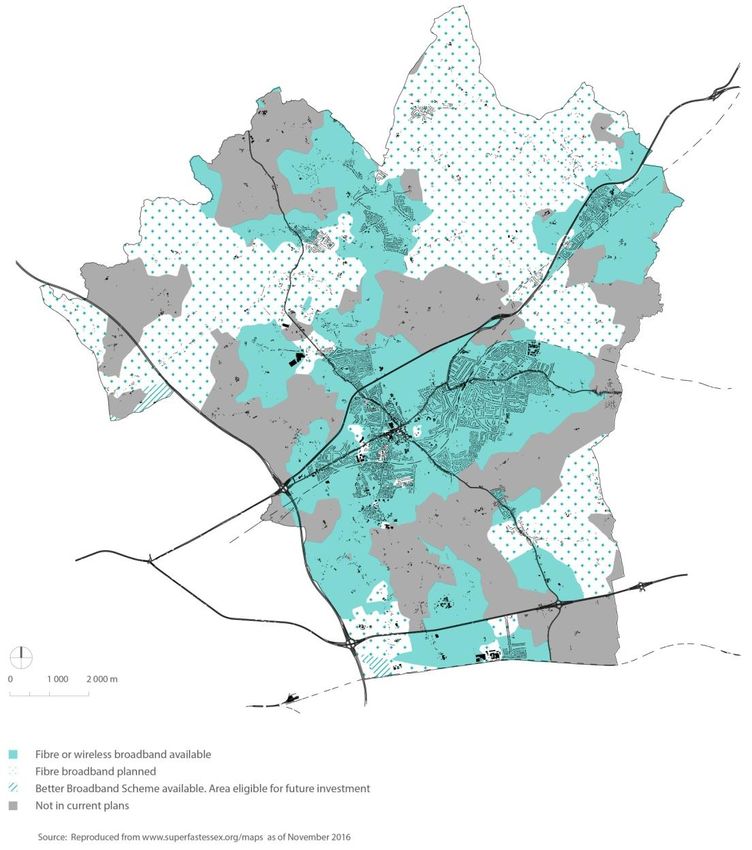
•     in flight connectivity for airlines alongside train / rail based connectivity
                         trends for both surface and underground.

             It is obvious from the above snapshot, that technology plays a multi-layered role
             in how we live, work and play, with access to technology differentiated by age,
             culture, location and social standing. Getting the right technological
             infrastructure in place at the right time is fundamental to well-planned and
             successful communities.

             National Planning Policy Framework

7.3          The NPPF is explicit in the support for high quality communications, stating that:

             ‘Advanced, high quality and reliable communications infrastructure is essential
             for economic growth and social well-being. Planning policies and decisions
             should support the expansion of electronic communications networks, including
             next generation mobile technology (such as 5G) and full fibre broadband
             connections. Policies should set out how high quality digital infrastructure,
             providing access to services from a range of providers, is expected to be
             delivered and upgraded over time; and should prioritise full fibre connections to
             existing and new developments (as these connections will, in almost all cases,
             provide the optimum solution)’. (para 112).

             Para 20 b) of the NPPF also indicates that strategic policies should make
             sufficient provision for telecommunications.

             UK Digital Strategy

7.4          Published in March 2017, the UK Digital Strategy2, builds upon the
             Government’s Digital Communications Strategy (DCIS 2015)3 and National
             Broadband Strategy (2010), as well as the post-Brexit Britain Industrial Strategy
             (Green Paper) to set out a forward plan for the UK’s digital economy.
7.5          The UK Digital Strategy sets out seven key themes for a post-Brexit digital
             economy in the UK, which are summarised below:

2 Department for Culture, Media & Sport – Policy Paper – UK Digital Strategy 2017 (Published 1 st Match 2017) -
https://www.gov.uk/government/publications/uk-digital-strategy
3 The Government’s ‘Digital Communications Infrastructure Strategy’ (DCIS) builds upon the goal for the UK to have the best superfast

broadband network in Europe 3 with a challenging focus upon making available ultrafast broadband of at least 100Mbps to nearly all UK

premises. It is estimated that improvements in digital connectivity have supported a strong digital economy within the UK, currently worth

more than £120 billion each year. The digital sector 3 has grown over seven times faster than the economy as a whole between 2008 and 2013.

[In 2013, the digital sector contributed 7.5% (£113 billion)].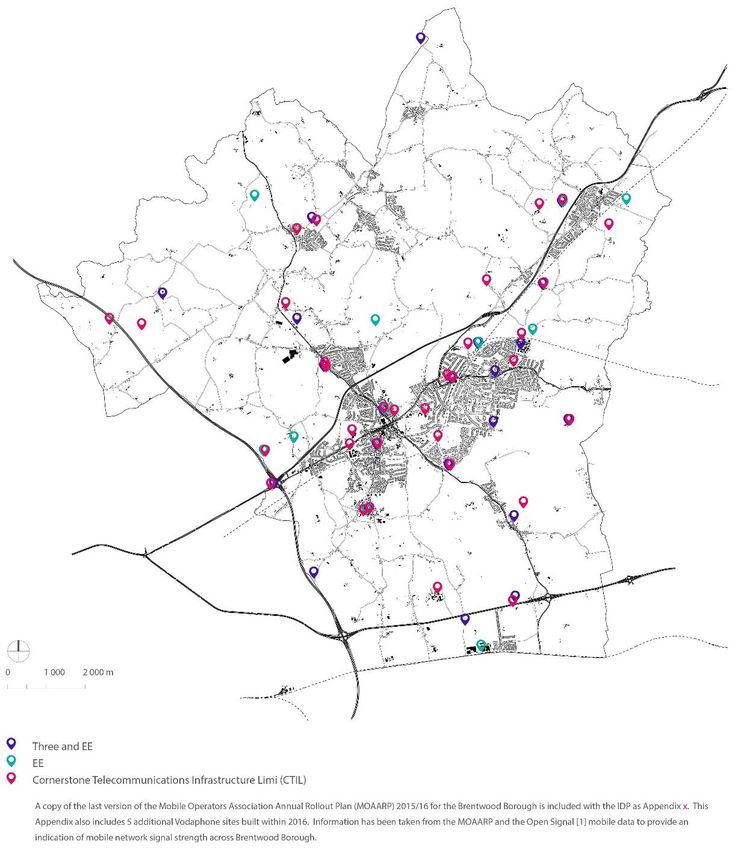
•   Building world-class digital infrastructure for the UK – continue to
    complete the roll-out of 4G and superfast broadband by 2020, but also
    implement a Universal Service Obligation, giving every individual,
    business and public premise across the country the right to request an
    affordable high-speed broadband connection. Also invest over £1 billion
    to accelerate the development and uptake of next generation digital
    infrastructure - including full fibre and 5G.
•   Giving everyone access to the digital skills they need – ensure all adults
    in England have access to the basic digital skills training and establish a
    new Digital Skills Partnership to tackle the digital skills gap and
    coordinate activity on job promotion. The strategy also focuses upon
    delivering coding in the National Curriculum, and other areas of skills
    development.
•   Making the UK the best place to start and grow a digital business –
    creating the right conditions for growth, to encourage innovation-friendly
    regulation that creates a positive context for the adoption of new
    technologies and an investment of an additional £4.7 billion by 2020-21
    in R&D funding. Priority challenges include helping the UK capitalise on
    its strengths in science and innovation such as robotics, clean energy
    and biotechnology.
•   Helping every British business become a digital business – ensure
    businesses have the knowledge and means to access technology,
    working on existing initiatives, and plug gaps where there are specific
    challenges. Funding of £13m to be set aside for the development of a
    private sector led Productivity Council to drive engagement to improve
    productivity across the economy, including through appropriate use of
    digital technologies.
•   Making the UK the safest place in the world to live and work online –
    continue to support the National Cyber Security Centre to provide a
    single point of contact for companies for cyber threats and attacks and
    introduce a new approach of Active Cyber Defence, using the skills,
    knowledge and technical expertise of GCHQ working with the country’s
    ISPs (internet service providers) to provide a new level of protection for
    British cyberspace. Focus also upon national after-school programmes,
    apprenticeships and adult retraining cyber security and improve security /
    safety for children using online content.
•   Maintaining the UK government as a world leader in serving its citizens
    online – working towards 25 million GOV.UK Verify users by 2020 and
    adopting new services onto the government’s GOV.UK Pay and GOV.UK
    Notify platforms and continue work, across government and the public
    sector, to harness the potential of digital to radically improve the
    efficiency of our public services - enabling us to provide a better service
    to citizens and service users at a lower cost.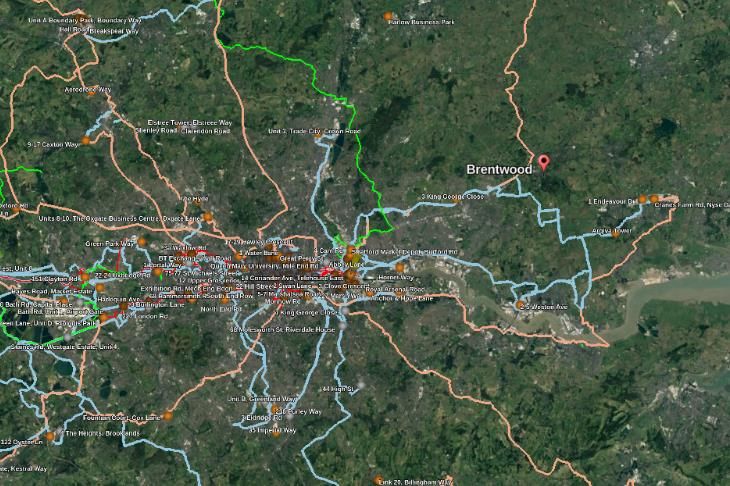
•    Unlocking the power of data in the UK economy and improving public
                         confidence in its use – continue to ensure that UK businesses can
                         compete and communicate effectively around the world and implement
                         the General Data Protection Regulation by May 2018.

              Planning for Growth

7.6           Although seen by some as a new thing, research on fibre optic infrastructure
              has indicated that fibre has been in common usage with carriers and service
              providers since as long ago as the 1980s. Within such organisations fibre
              communication speeds in the 1 Terabit per second range have been achieved
              and lower speeds in the 10s and 100s of Gigabits per second are
              commonplace, as are fibre distances in the 10s, 100s and even 1000s of miles.
              Fibre as a public resource is however less well understood as it is only recently
              appeared as an end user service in the form of Full Fibre Broadband and so
              called ‘dark fibre’, where end users connect directly using their own equipment.
              Particular sectors with high demands for broadband and fibre include:

                    •    corporates - frequently require symmetrical (same speed upload and
                         download) and uncontended (dedicated not shared with other users) and
                         much higher speed connections ‘Pipes’ due either to high demand
                         processing or due to many users within an office. Enhanced security is
                         also increasingly very important in some sectors;
                    •    carriers & ISPs - 4/5G Mobile Cell Tower/ Pico/FemtoCell backhaul and
                         Public Wifi Backhaul connections;
                    •    financial traders – algorithmic Platforms need very low latency (delay on
                         server response times) and many banks need encryption due to
                         regulatory and corporate requirements;
                    •    media production facilities – using extremely large data files, unusual
                         protocols, with high reliability and ultra-high speeds;
                    •    next generation medical drug treatments tailored to the individual,
                         requiring industrial scale genetic sequencing in order to address large
                         populations and
                    •    data centres – where specialist protocols, ultra-high capacities and low
                         latency connections are a common requirement.4

4   Information from Stephen Pegrum ‘Technology Change, Growth & Planning’ presentation for Brentwood Borough Council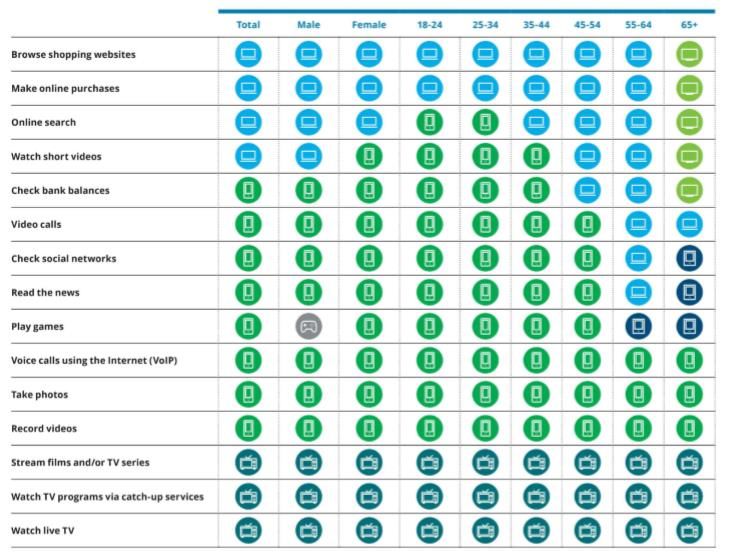
EXISTING INFRASTRUCTURE, GAPS AND PROGRAMMES

              Broadband
7.7           Superfast Essex is the county’s broadband improvement programme co-
              ordinated by Essex County Council, and part of the Government’s national
              Superfast Britain programme. Across Essex, the programme is enabling as
              many homes and businesses as possible to access superfast broadband to
              enable economic growth and improve residents’ quality of life.
7.8           Figure 7.1 below provides a snapshot of broadband coverage across the
              Brentwood Borough as at Autumn 2016, with at the time funding / improvement
              options. It provides an overview of Broadband at a particular point in time.
              Further individual property information is available through an interactive
              mapping system5. The map indicates potential deficits in broadband coverage
              towards the north and south of the Borough.
7.9           It should also be strongly emphasised that while so called Fibre Broadband is
              available in the Borough via BT Openreach, in reality this is Fibre to the Cabinet
              (FTTC) broadband where the fibre is connected to the Green Cabinets seen at
              many street corners, with the rest of the connection to homes and businesses
              being made on the old fashioned Copper wires originally intended for traditional
              phone lines. Fibre to the Premises (FTTP) services offer dramatically higher
              speeds than FTTC, currently well into the Gigabit per Second range. BT and its
              affiliates do not offer FTTP services in the Borough and none are known to be
              planned at this time. Specialist FTTP providers such as Gigaclear also do not
              operate in the area due to the prevalence of FTTC services that even so tend
              only to address urban areas.
7.10          Figure 7.2 provides information on fibre optic cabling (excluding BT and Virgin
              Media) in relation to the Brentwood area. It shows cabling running through
              Borough from north to south and a loop of cabling towards the south of the
              Borough.6 However this fibre tends not to be available directly to end users
              because it belongs to various network operators who sell it to particular
              customers. For end users and SMEs therefore this indicates both a problem
              and an opportunity should things change in the way fibre based services are
              sold. It is also notable that locations as close as Southend are now deploying
              FTTP services through an arrangement with the council.

5   http://essex.astuntechnology.com/atsuperfastsolophase2.html
6   Information from Stephen Pegrum ‘Technology Change, Growth & Planning’ presentation for Brentwood Borough Council
Figure 7.1: Broadband Coverage
Figure 7.2: Fibre Optic Cabling (excluding BT and Virgin Media)

7.11         Although not detailed on any plans it is understood that that there is dark fibre 7
             or at least duct space inti which fibre could easily be deployed within
             Brentwood, linked to the Council’s CCTV infrastructure. There may also be
             other infrastructure across the Borough such as buildings (for antennas and
             ducts) and public land across which the borough could if it chose, facilitate the
             use of for such deployments, as has been done in nearby towns such as
             Southend as well as Physical Infrastructure Access service from Openreach.
             Fibre Projects
7.12         Cross local authority work has been progressing to look at strategy and funding
             options for enhancing fibre optic cable infrastructure connecting potential high-
             volume users, including employment sites. There are particular implications for
             this project linked to the A127 corridor sites.
             Mobile Communications
7.13         Mobile phone network provision is an important component of a modern
             economy and has a vital social function. With development in smart phone
             technology and mobile internet services, mobile phones are increasing

7 Dark fibre - unused optical fibre potentially available for use in fibre-optic communication – often laid alongside other cabling as part of
infrastructure / communications works.
important for e-commerce and access to services such as on-line banking.
Figures released by IMRG and Capgemini indicate that mobiles and tablets now
account for more than half of all online sales in the UK.8 As indicated at the
beginning of the chapter, the full potential of smart phones has yet to be fully
realised with increasing functions and features.
7.14 Figure 7.3 below outlines the range of IT, mobile and media activities by device,
showing the strong and increasing performance and increasing dominance of
smartphones.9
Figure 7.3: Activities by Device
7.15 The infrastructure required for mobile communication includes plant and equipment,
including communication masts. If accessing mobile coverage, mobile phones,
dongles and tablet computers cannot work without a network of base stations (masts).
If the base stations are too far apart, the service can be interrupted. Base stations are
usually built about 200 to 500m apart in towns and 2 to 5km apart in rural areas. Base
stations can only support a maximum of 120 calls at any one time.
8 During the period of November 2015 to January 2016, 51 per cent of UK online retail sales happened via mobile, a significant increase on the
45 per cent share recorded during Q3 2015. Desktop and laptop accounted for 49 per cent of ecommerce sales, 33 per cent of sales came via
tablets and 18 per cent via smartphones.Source – E-commerce News and www.thedrum.com.
9 Information reproduced from Deloitte Global 2018 TMT Predictions Report.7.16 The Mobile Operators Association Annual Rollout Plan has historically provided up to
date information on the mobile signal / broadband infrastructure and was last issued
for the Brentwood Borough in 2015/16. The Association is no longer operational.
7.17 Information has been taken from the MOAARP and the Open Signal 10 mobile
data to provide an indication of mobile network signal strength across the
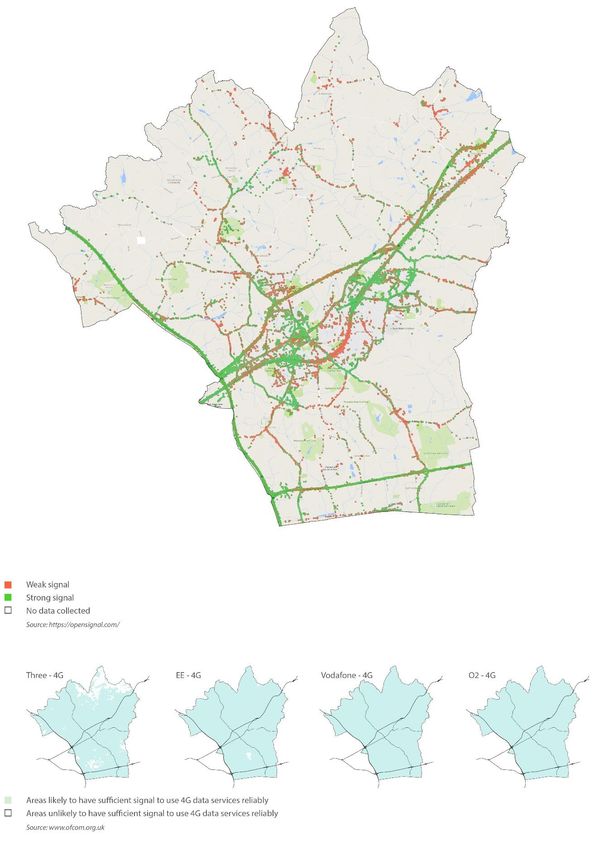
Brentwood Borough. Figure 7.3 provides information on mobile masts while
Figure 7.4 indicates signal strength using Open Signal mobile data. Weaker
mobile coverage is concentrated within the Borough’s rural or green field areas.
This feature is particularly noticeable to the north of the Borough.
7.18 It should be noted that there is likely to be a dramatic increase in the need for
mobile radio masts across all regions with the deployment of 5G networks that
are necessary to support the smaller cell sizes required to support higher data
rates. In turn this will also drive an increase in the need for fibre based backhaul
connections between such cell sites and their central nodes.
10 https://opensignal.com/ - OpenSignal is a company that specializes in wireless coverage mapping. The company crowdsources data on carrier
signal quality from users who have its consumer mobile application installedFigure 7.3: Mobile Masts
Figure 7.4: Mobile Coverage
Other Telephone Infrastructure
7.19           No specific information was available at the time of publication, regarding the
               range of locations of BT public phone boxes across Brentwood. In line with
               BT’s strategy in other parts of the UK, the company indicated in 2016 that it
               would like to disconnect a significant quantity of telephone boxes across Essex
               County - around 300 in total. 11 BT has indicated that it has seen a 90% decline
               in pay phone usage over the last decade. However, Ofcom has indicated that
               phone boxes can provide a useful service for people who don’t have any kind of
               phone or for people who find that their mobile phone isn’t working. 12 BT now
               offers an ‘Adopt a Kiosk’ programme for local communities to take ownership of
               local phone boxes for a variety of uses and as part of the valued local heritage.

IMPLICATIONS AND OPPORTUNITIES OF GROWTH

7.20           There are clear opportunities available to improve current broadband and
               mobile technology across the Borough – particularly in poorer served areas to
               the north and south of Brentwood. In line with NPPF priority needs to be placed
               in the Local Plan to supporting where possible full fibre connections to existing
               and new developments. There are also opportunities with fibre optics in
               particular as part of a sector driven approach to economic growth and
               opportunities along the A127 corridor and within Brentwood town.
7.21           The provision of new and enhanced broadband and mobile coverage is also a
               clear business opportunity. There is strong market demand amongst residents
               and prospective new residents for effective broadband and mobile technology to
               not only provide ‘the basics’ of reliable mobile phone coverage and fast
               broadband connections but also increasing smart house technology for
               assisting in the running of properties. Estate agents also report that an
               increasing number of buyers are willing to pull out of a deal if broadband is not
               available in that area. The property search website rightmove.co.uk has added
               a broadband speed checker to every one of its listings, alongside details of
               transport links and schools. Given the market demand for broadband, and the
               fact that costs per unit for larger sites are usually cost neutral (except for fibre to
               the door / curb infrastructure), it makes good business sense to ensure that new
               developments include high speed broadband infrastructure as a matter of
               course.
7.22           If broadband installation is integrated into the planning of developments as early
               as possible, it may be possible to mitigate costs of installation through electricity
               and broadband cables sharing the same infrastructure assets, routes or

11   http://www.itv.com/news/anglia/2016-10-26/people-see-red-over-plans-to-remove-1-000-public-phone-boxes/
12   https://www.ofcom.org.uk/__data/assets/pdf_file/0035/47879/removing_callboxes.pdf
networks. Potential savings of 16-26% could be achieved where existing
infrastructure is used to rollout broadband. 13
7.23 It is recommended that further auditing / review work is undertaken on
broadband / mobile technology improvements as part of a refresh on the IDP.
7.24 It has been noted that the increased prevalence of high quality network
infrastructure can be a driver for general economic growth. According to a study
by Deloitte and GSMA summarised in the following statement:
’For a given level of total mobile penetration, a 10% substitution from 2G to 3G
penetration increases GDP per capita growth by 0.15 percentage points’.
It has been anticipated that similar growth can be anticipated by each
technology generational change e.g. 3G to 4G to 5G mobile and DSL to FTTC
to Full Fibre fixed networks.
FINANCIAL IMPLICATIONS
7.25 Part B of the IDP includes calculations on the cost of supplying fibre to the door
/ curb, which equate to circa £880 per dwelling based upon European
Research. Although it is likely that innovation in this area could later such
estimates considerably.
7.26 Funding should also be set aside to support local fibre adoption strategies
where commercial interest is more limited. Further up to date information is
also required on mobile and fibre optic capacity and opportunities across the
Borough. It should be noted that planning and highways regulations can have a
highly beneficial effect on the cost of deploying new fibre services, such as
mandating the provision of duct infrastructure while roads are opened for other
works such as gas, electricity or water, where the low incremental cost of such
work could have a very minor effect. Although it may be difficult to provide a
contiguous duct connection from end to end, where such infrastructure is
available it can have a significant effect on the overall cost once such sections
are joined.
Revision Schedule – Chapter 7
Version 1.1 October 2018
13Information on the benefits of installing high speed broadband taken from Colchester Borough Council – ‘Planning for Broadband’ February
2016.You can also read


