Broadband in India
Hemant Joshi, Technology, Media & Telecom Leader
←
→
Page content transcription
If your browser does not render page correctly, please read the page content below

Broadband in India Hemant Joshi, Technology, Media & Telecom Leader
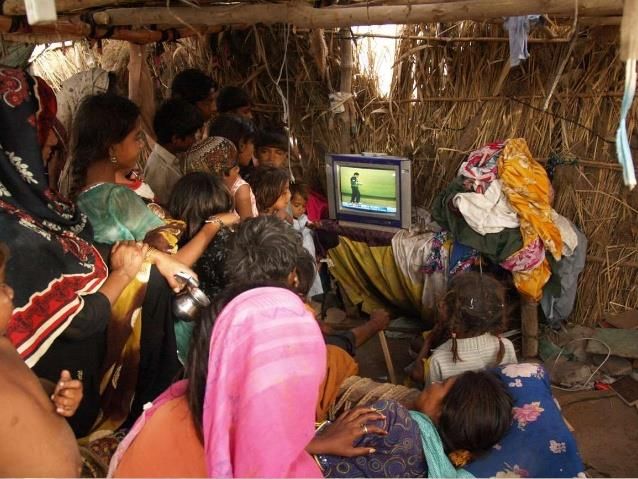
Digital footprint of India

                           360M+
                                                                          1B+
                                                       Internet users
                                                                                         Mobile connections

                           190M+
                                                                          383M
                                                      Broadband users
                                                                                           Smartphone users

                            31K                    WI-FI Hotspots

                                                                        260M+          Jan Dhan accounts

                                                                           8    Payment Banks

                         1B+                Aadhaar cards
                                                                         Unified Payment Interface

1.3B+ People, 6 lakh villages, 2.3 lakh gram panchayats
© 2017 Deloitte Touche Tohmatsu India LLP                                                                     2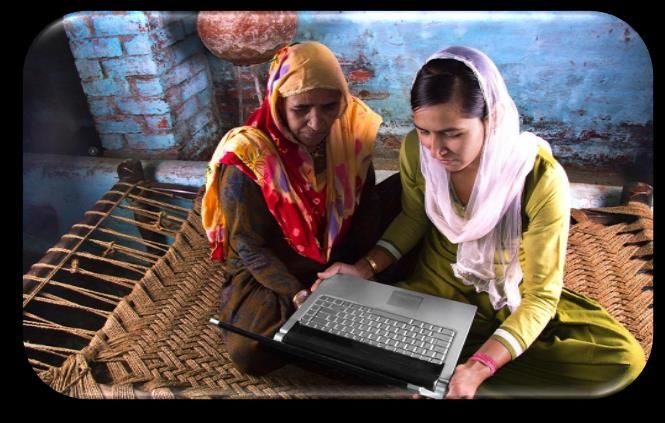
The amount of data generated every minute is exploding

         Without broadband, everything will collapse…
© 2017 Deloitte Touche Tohmatsu India LLP                3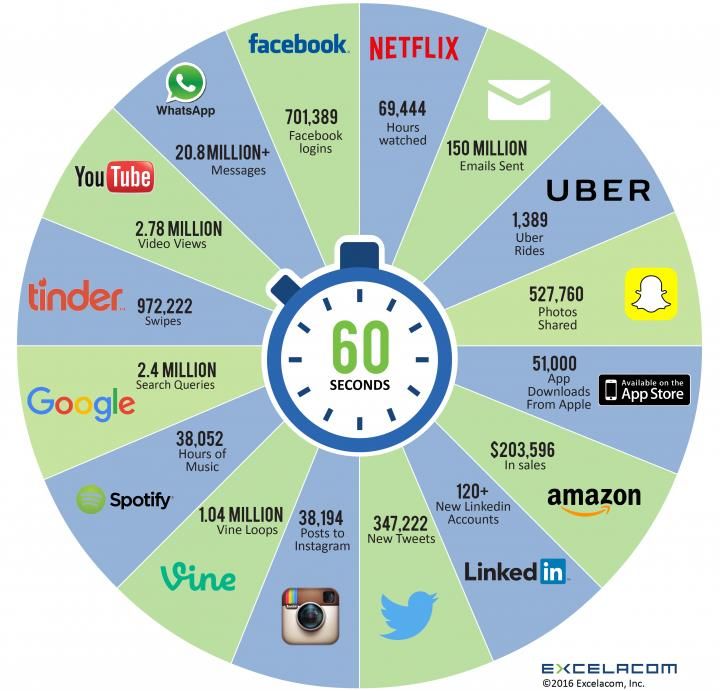
Hyper-connected world: Creating internet of people, things,…
and everything

                                 Are we ready with … Broadband?
© 2017 Deloitte Touche Tohmatsu India LLP                         4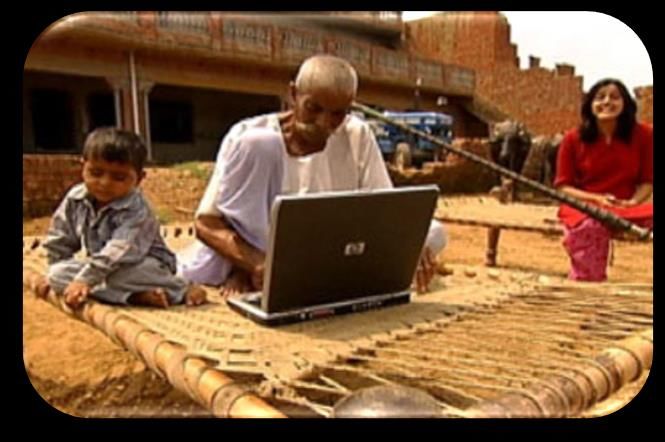
The prerequisite for convergence is broadband connectivity

                                                                  Drones

                                                                                             3D Printing
                Augmented Reality

                Internet of Things                                                           Blockchain
                                                                           Virtual Reality
                                                         Robots

                                            Are we ready with … Broadband?
© 2017 Deloitte Touche Tohmatsu India LLP                                                                  5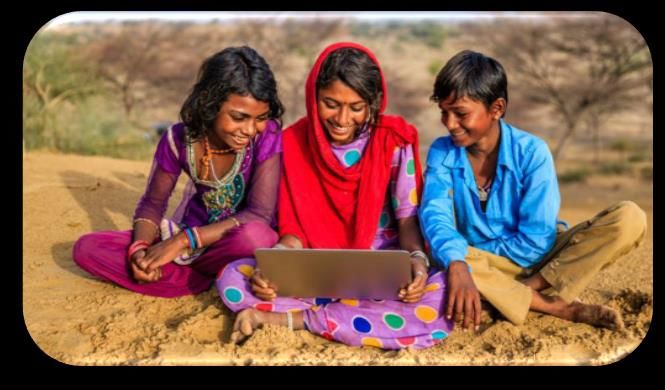
Lack of infrastructure in India demands virtual connectivity

     Lack of banks
        • 14000 per bank branch in India

     Lack of hospitals and doctors
        • Doctor-population ratio in the country stands at 1:1681 against the WHO norm of 1:1000
        • 6.28 lakh hospital beds and 9.18 lakh allopathic doctors for over 1.25 billion people

     Lack of schools, universities and vocational training centers
        • Pupil-teacher ratio in primary and upper primary schools in India fell to 28:1 and 30:1
          respectively in 2013-2014

     Lack of roads and highways
        • India has less than 3.8 kilometres of roads per 1000 people
        • In terms of quality, all season, 4 or more lane highways, India has less than 0.07 kilometres
          of highways per 1000 people, as of 2010

                                            Are we ready to provide… Broadband?
© 2017 Deloitte Touche Tohmatsu India LLP                                                                 6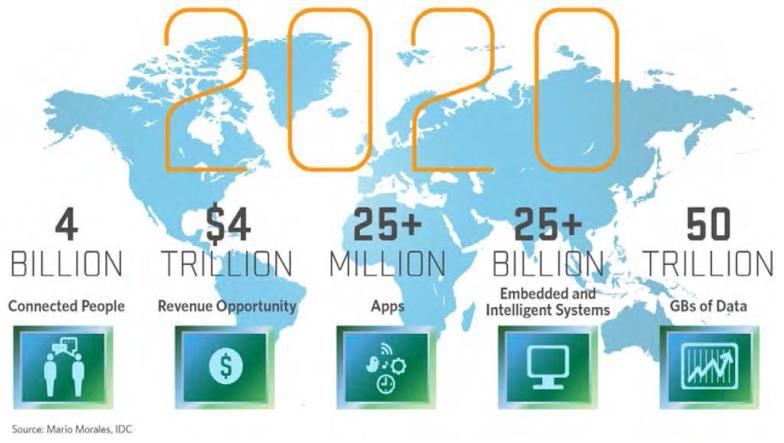
All the strategic initiatives of the government demand internet
connectivity

                                            Are we ready to provide… Broadband?
© 2017 Deloitte Touche Tohmatsu India LLP                                         7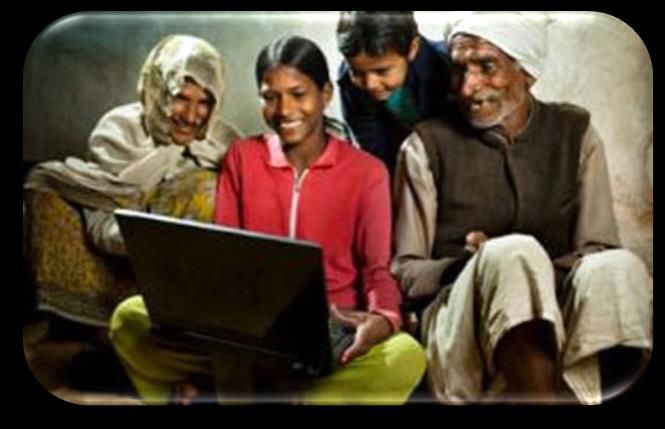
Developed countries have defined broadband as a minimum of
over 20 Mbps speed

                          USA                                                                      25

                            UK                                                                24

                        China                                                            20

                  Australia                  1
                                                        Broadband Definition (in Mbps)

                         India              0.512

     While India has set the Broadband definition as 512 Kbps…

                                                    Is that enough?

© 2017 Deloitte Touche Tohmatsu India LLP                                                               8
Although lot of spectrum was made available in last auction,
significant spectrum still needed per operator

Global average spectrum holding per Operator

  This is prerequisite to provide mobile broadband and achieving the objective of
  connecting 600 million by 2020.
© 2017 Deloitte Touche Tohmatsu India LLP                                           9

For proliferation of Broadband, a range of technologies can be
deployed across the value chain
Value Chain
Connect to National Long Domestic Fibre to Towers / Enterprise SME Connectivity Retail Services
submarine cables Distance Transmission POPs, AGs, etc. Connectivity
Undersea Core Backhaul
Metro Enterprise SMEs Retail
Cables National (FTTT)
Wholesale Infrastructure & Connectivity Services Access Services
Dominant
Technology Fibre Fibre Fibre Micro-Wave Fibre 3G/LTE 3G/LTE
Competing Copper, VSAT VSAT,
Copper, Fiber
Technologies - Copper Microwave Fibre Micro-wave, Copper, Fiber
WiMAX, WiFi
WiMAX, LTE WiMAX, LTE
Data speed Medium to Medium to
Very high Very high High High Medium
and capacity high high
requirements
• Low • Low • High • High • Medium to • Medium to • High
• Low fill rates • Sufficient • Growing data • Growing high high • Growing
• Existing capacity in demand, wireless data • Growing data • Growing bandwidth &
Additional
capacity is national reliability and demand, demand bandwidth & reliability
capacity
need under- backbone uptime reliability and • Higher SLAs, reliability requirement
utilized coverage security and requirement
driving uptime
fiberization requirements
© 2017 Deloitte Touche Tohmatsu India LLP 10India continues to remain highly under-fiberized
Comparative analysis (Population vs Cumulative fiber deployment)
1381
1320
1060
417
323
99
US India China
Population (Mn) Cumulative fiber deployed (Mn f-Km)
While developed as well as developing countries are promoting deployment of
optic fiber across broadband delivery value chain since it is future proof…
© 2017 Deloitte Touche Tohmatsu India LLP 11To match the global average of a hotspot for every 114 people,
11 million hotspots need to be deployed
Public Wi-Fi Hotspots Population Citizens/Hotspot
World 64.2 Mn. 7.346 Bn. (7,346 Mn.) 114
India 31,000 (0.031 Mn.) 1.311 Bn. (1,311 Mn.) 37,000
© 2017 Deloitte Touche Tohmatsu India LLP 12First time unused TV “white space” (TVWS) frequencies were combined with solar-powered base stations to deliver low-cost broadband to a rural area lacking even basic electricity. © 2017 Deloitte Touche Tohmatsu India LLP 13
Marquee government projects such as BharatNet will accelerate
the growth of broadband in India over the next 6 years

                               NOFN project renamed
                             to BharatNet by Telecom                                                     Phase III
                                  Commission and
                               strategy to implement                                            • Focus on providing state-of-
                      Physical        redrawn                                                     the-art, future-proof , reliable
                 implementation                                     Phase II                      and scalable network
                   of BharatNet                                                                   (underground & other types
                       began                                                                      of), with ring topology to
      NOFN project                                             • Connect 1.20 lac GPs             provide redundancy across the
                                           Phase I               via OFC (underground             2.5 lac GPs (Ring topology from
      initiated with
                                                                 and overhead) in                 DHQ-BHQ and from BHQ - GP )
       the task of                                               linear topology
                                          • Connect 1 lac GPs
       connecting                                              • Balance 0.30 lac via
                                            from BHQ via OFC
      2,50,000 GPs                          in linear topology   radio & satellite
                                                                     • Last mile connectivity
                                                                       (enabling private
                                                                       sector to assess
                                                                       service provisioning)
                                                                                                                      Timeline
            Oct ’11             Jun ’14       Apr ’16           Mar ’17              Dec ’18                               Dec ’23

                                   OFC at ~61,500 GPs      Oct ‘16
                                        deployed

                                  ~11,000 GPs lit (GPON
                                  integrated and tested)

© 2017 Deloitte Touche Tohmatsu India LLP                                                                                        14
In addition to the existing scope, network strengthening and
connecting DHQ to BHQ and BHQ to FPoI needs to be undertaken
Current scope of BharatNet Additional considerations for
SHQ BharatNet
DHQ DHQ
Strengthen the network
from SHQ to DHQ
DHQ
Phase III: Ring connectivity
BHQ BHQ
from DHQ to BHQ
Lay new fiber from block
to Fiber Point of
Interconnect
BHQ Lay fresh fiber across
Phase I and II:
linear lines especially
Connecting 2.5 Lac GPs
from DHQ to BHQ, as
via OFC linear topology FPoI FPoI
well as BHQ to FPoI,
FPoI
where fibre life is dated
Phase III: Deploying ring
GP
GP
architecture
GP
Phase I & II
Phase III
© 2017 Deloitte Touche Tohmatsu India LLP 15Transformation of the legacy wireless networks needs to be
encouraged to ensure high-speed internet access
Dimension Current state in India Global leaders / Required future state
• Full IMS, EPC, MDN, real time
Core • Legacy 2G - 3G riding on 2G communication, big data support
• Virtual core components
Transmission • Microwave intensive (80%) • Fiber intensive
medium • Low bandwidth capacity • High capacity microwave (Giga bit)
• Greater fraction of spur sites (point to
• Ring- smaller ring size in case of MW
Network topology point)
• Hybrid & mesh in case of fiberized site
• Limited rings (>6-7 sites in case of MW)
Network protocol • Circuit switched / Packet switched • Full IP / E2E - MPLS
• Off-loading to micro sites for enhanced
Traffic movement • Through macro sites capacity
• Small cells, Wi-Fi etc.
Virtualization of • Physical elements • Virtual elements
network elements • Often proprietary hardware • Uses generic hardware
Technology
• Technology specific (2G, 3G) • Technology agnostic (2G, 3G, 4G support)
dependence
© 2017 Deloitte Touche Tohmatsu India LLP 16To ensure broadband uptake, specific initiatives need to be
undertaken to promote and educate the masses
Strategic Partnerships Learning &
Form partnerships with Development
private sector players Impart training to
(CSR initiative) and government employees
NGOs to provide so that they are fully
computers and internet informed of the e-
facility at public schools government services
across India and at the same time
they can play a societal
role by educating other
members of the society
Relevance
Targeted Education
Introduce relevance by
Educate users of the
demonstrating major
advantages of
benefits of using
performing financial
broadband, showcasing
transactions online and
the positive impact that
setup workshops/melas
broadband services can
and events to address
have on the day-to-day
issues of the prospective
lives of the rural
users (About 50% of the
populace across
population perceive
genders, age groups and
online transactions as
income groups.
risky)
© 2017 Deloitte Touche Tohmatsu India LLP 17Learnings from Global Best Practices Government Involvement by Country Source: Ericsson Report, 2014: Benchmarking 15 national broadband plans © 2017 Deloitte Touche Tohmatsu India LLP 18
It is important to incorporate learnings from other countries
across the globe
Country Learnings from broadband infrastructure plans
The Ministry of Information, Communications of Singapore outsourced the task of network
deployment to a consortium named OpenNet (private players such as Singtel, Axia NetMedia
Singapore Corporation, SP Telecommunications PTE were the primary owners) to design, build, operate the
GDP/Capita: USD infrastructure such that it would meet the need of NextGen NBN of delivering 1 Gbps speed and
52,889 beyond. The Government would support the cause by providing a grant of up to SGD 750 million
Infrastructure ownership and service provisioning were segregated to drive broadband growth
UK GDP/Capita: The UK Government initiated the OpenReach Network in the UK that aggregated the network of the
service providers and is now responsible for services of fixed line connections, DSL and fiber optic
USD 43,734 broadband. It works on behalf of 537 communication providers to maintain local access network
that covers 30 million customers
Infrastructure ownership and service provisioning have been bifurcated to ensure effective
broadband proliferation
The US established a Connect America Fund–II (CAF-II) to incentivize both roll-outs and uptake.
USA GDP/Capita: Despite being a predominantly fiberized country, significant efforts are being taken to further
USD 55,837 develop their broadband infrastructure and investments worth USD 70-75 billion per year are being
made
China is spending USD 320 Bn. over a 5 year period (2015-2020), on infrastructure to bring
China broadband coverage and penetration to OECD levels. This Government funded infrastructure has set
a target of delivering broadband services at download speeds of 50 Mbps for urban areas and 12
GDP/Capita: USD Mbps for rural areas
7,925 This initiative is being spearheaded by the Government to ensure that 98% of the administrative
villages are covered under broadband by 2020
The GDP/capita of Kenya (with a population of ~46 Mn.) has remained lower (USD 1,376) than that
of India (USD 1,581). However, their internet penetration has grown significantly higher from 39%
Kenya in 2013, to 45.62% in 2015 -75% higher internet penetration than India. This growth in penetration
GDP/Capita: has been enabled by Government policies such as reduction of spectrum and usage charges levied
USD 1,377 on service providers.
The regulator is now proposing free-of-charge access to 4G spectrum to enable rapid deployment of
broadband in select areas of the country
Malaysia has an internet penetration of over 70% (as of 2015). This has been possible owing to
Malaysia various initiatives carried out by the Government to ensure the deployment of broadband
infrastructure
GDP/Capita:
PPP agreements with select private players have helped drive adoption of broadband services. An
USD 9,766 example of such a project includes a 10 year long deployment of High Speed Broadband Network
© 2017 Deloitte Touche Tohmatsu India LLP(HSBB), which is a technology-hybrid deployment of FTTx, VDSL2, HSPA (mobile) and WiMAX 19But Digital India is not realized till every user in every village is reached! (Only ~4% of the rural populace are broadband users) © 2017 Deloitte Touche Tohmatsu India LLP 20
Deloitte refers to one or more of Deloitte Touché Tohmatsu Limited, a UK private company limited by guarantee
(“DTTL”), its network of member firms, and their related entities. DTTL and each of its member firms are legally
separate and independent entities. DTTL (also referred to as “Deloitte Global”) does not provide services to clients.
Please see www.deloitte.com/about for a more detailed description of DTTL and its member firms.
This material has been prepared by Deloitte Touché Tohmatsu India LLP (“DTTILLP”), a member of Deloitte Touché
Tohmatsu Limited, on a specific request from you and contains proprietary and confidential information. This material
may contain information sourced from publicly available information or other third party sources. DTTILLP does not
independently verify any such sources and is not responsible for any loss whatsoever caused due to reliance placed on
information sourced from such sources. The information contained in this material is intended solely for you. Any
disclosure, copying or further distribution of this material or its contents is strictly prohibited.
Nothing in this material creates any contractual relationship between DTTILLP and you. Any mutually binding legal
obligations or rights may only be created between you and DTTILLP upon execution of a legally binding contract. By
using this material and any information contained in it, the user accepts this entire notice and terms of use.
©2016 Deloitte Touché Tohmatsu India LLP. Member of Deloitte Touché Tohmatsu Limited
Deloitte Touché Tohmatsu India Private Limited (U74140MH199 5PTC093339), a private company limited by shares, was
converted into Deloitte Touché Tohmatsu India LLP, a limited liability partnership (LLP Identification No. AAE-8458),with
effect from October 1, 2015.
You can also read


