Building the 5G Economy - The Wireless Industry's Plan to Invest and Innovate in the U.S - CTIA
←
→
Page content transcription
If your browser does not render page correctly, please read the page content below
Building the 5G Economy
The Wireless Industry’s Plan to Invest and Innovate in the U.S.
Bluewater Wireless, LLC

We are the wireless industry. From the cell towers to
the devices that capture our memories and connect
us to our loved ones, America’s wireless industry is
dynamic, growing, and central to the way we work,
live, and play. The cellphone was invented here, and
we remain the quintessential American industry.

Today, wireless is hard at work investing in America,
building the infrastructure and networks that will drive
our economic recovery, shrink the digital divide, and
provide the platform on which American ingenuity
and innovation will solve the challenges of the 21st
century—from health care and climate change to
education and transportation.

                                                            Tristar License Group, LLC

                                                                  Building the 5G Economy | 2
Table of Contents
Our 5G Future is Now . . . . . . . . . . . . . . . . . . . . . . . . . . . . . . . . . . . . . . . . . . . . . . . . . . . . . . . . . . . . . . . . . . . . . . . . 4

A Smartphone World . . . . . . . . . . . . . . . . . . . . . . . . . . . . . . . . . . . . . . . . . . . . . . . . . . . . . . . . . . . . . . . . . . . . . . . 11

Investing in America . . . . . . . . . . . . . . . . . . . . . . . . . . . . . . . . . . . . . . . . . . . . . . . . . . . . . . . . . . . . . . . . . . . . . . . . 15

Responding to COVID-19. . . . . . . . . . . . . . . . . . . . . . . . . . . . . . . . . . . . . . . . . . . . . . . . . . . . . . . . . . . . . . . . . . . . 20

Closing the Digital Divide . . . . . . . . . . . . . . . . . . . . . . . . . . . . . . . . . . . . . . . . . . . . . . . . . . . . . . . . . . . . . . . . . . . 23

Spectrum Fuels our Future . . . . . . . . . . . . . . . . . . . . . . . . . . . . . . . . . . . . . . . . . . . . . . . . . . . . . . . . . . . . . . . . . 28

Protecting Americans Online . . . . . . . . . . . . . . . . . . . . . . . . . . . . . . . . . . . . . . . . . . . . . . . . . . . . . . . . . . . . . . . . 36

Key Recommendations and Resources . . . . . . . . . . . . . . . . . . . . . . . . . . . . . . . . . . . . . . . . . . . . . . . . . . . . . . 41
Our 5G Future is Now
5G is available across the U.S. today, years ahead of schedule. Over the next decade, 5G will
drive our nation’s economic growth and global competitiveness, creating 4.5 million new jobs
and adding $1.5 trillion to our economy.

Our 5G Future is Now

    KEY 5G
    CHARACTERISTICS

    100x FASTER
                                              100x
                                             MORE DEVICES
                                                                                               5x
                                                                                   MORE RESPONSIVE
With 4G, it can take almost six           5G will be able to connect up to          5G’s low latency (or quick reaction
minutes to download a full                100 times more devices, including         time) will make breakthroughs in
movie. That same movie can be             everything from baby monitors             real-time applications a reality.
downloaded in about 15 seconds            to cars, smartphones, drones, VR
with 5G.                                  headsets and more.

    5G is the Innovation Platform
    5G is the next generation of wireless. It’s more than just an evolutionary step forward technologically.
    It’s a revolutionary leap. These wireless networks, rolling out in communities across the country, will be
    transformative—making our lives better, our communities safer, and our nation more prosperous. Just like
    4G wireless, 5G wireless networks will improve in functionality, speed, and reach every year this decade.

                                                                                                       Building the 5G Economy | 5
Our 5G Future is Now

           U.S. 5G
           DEPLOYMENTS

                                                                                                           5G Coverage
Source: Ookla®

           Deploying 5G Across America
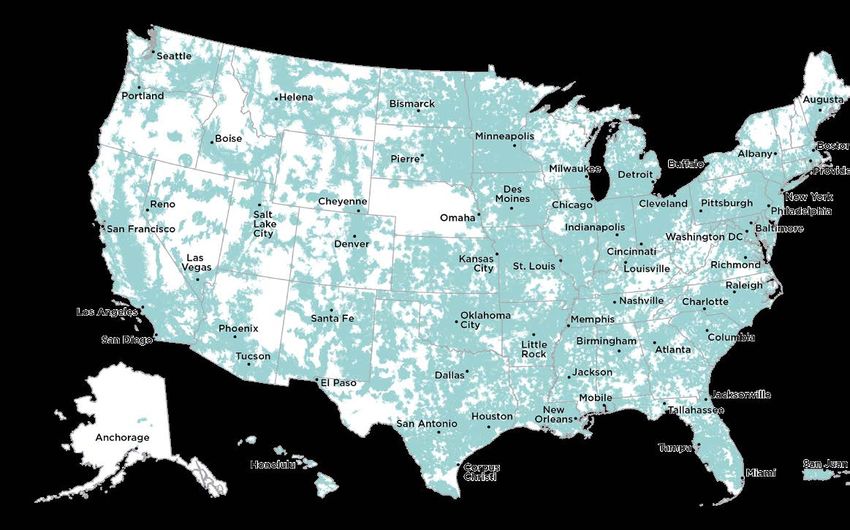
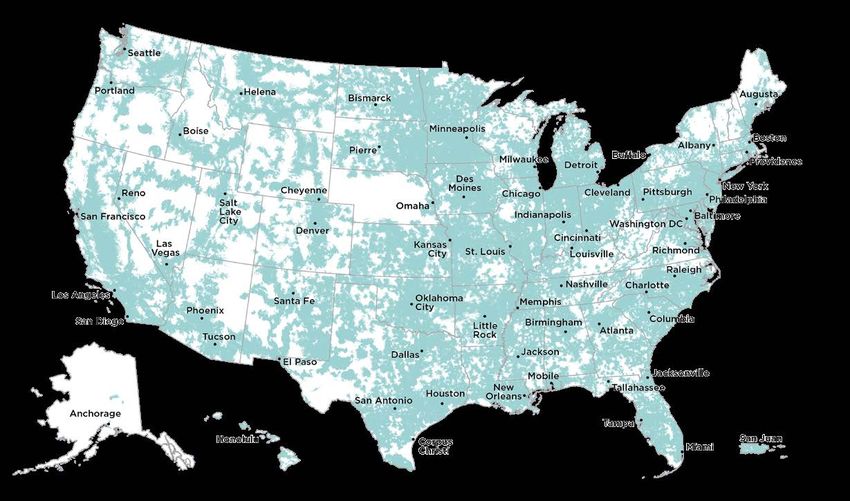
           Tower by tower, small cell by small cell, device by device, the U.S. has made remarkable progress rolling
           out 5G networks. The U.S. has among the world’s fastest 5G speeds, and is the largest country with three
           nationwide 5G networks. We’re also doing it much more quickly than ever before. The U.S. industry built
           more cell sites last year than in the three prior years combined, and the leading smartphone providers
           have all launched new signature 5G devices. The initial 5G networks already cover over 270 million
           Americans and one operator has committed to serve over 90 percent of rural Americans in a few short
           years. 5G networks are already running in rural parts of Iowa, North Carolina, and Wisconsin as we turn on
           5G in more communities every day.

                                                                                                            Building the 5G Economy | 6
Global Snapshot: Pulling Ahead of China
The U.S. wireless industry’s aggressive efforts have left countries like China scrambling to catch up. We
keep pushing ahead as the U.S. invested three times more per capita on 5G than China last year. China’s
aggressive 5G ambitions remain clear and we need to ensure spectrum and siting policies help us build
faster and smarter to keep pace.

U.S.-CHINA
COMPARISON

           3                                                                                0
                                          5G LAUNCHES
                                   The first U.S. 5G deployments were 13
                                   months before China. The U.S. already
                                   has three 5G nationwide networks.
                                   China has none.
 NATIONWIDE 5G NETWORKS                                                           NATIONWIDE 5G NETWORKS

      74%                             5G SUBSCRIPTIONS
                                   The key stat is how prevalent 5G will be
                                                                                        64%
                                   in each country. By 2025, 5G will be 74%
                                   of U.S. wireless connections. China’s 5G
                                   will permeate society at a significantly
                                   lower rate, only 64%.

                                         5G INVESTMENT
                                   Overall, U.S. wireless industry invested
                                   3 times more per capita on 5G last year.

                                                                                                  Building the 5G Economy | 7
Our 5G Future is Now

SIZE OF THE U.S. WIRELESS
INDUSTRY COMPARED TO
                                                             U.S. WIRELESS
NATIONAL GDPs                                                INDUSTRY
                                                             $691 B

                                                                         SWEDEN
                                                                         $531 B
        UNITED ARAB EMIRATES
                          $421 B

                                                                                    ISRAEL
                                                                                    $395 B
        PORTUGAL
             $238 B

Wireless Economic Impact Today
We know 5G will have a powerful positive economic effect because of our experience with 4G wireless,
which drove innovation in the past decade fostering the app and sharing economies. Last year, wireless
contributed nearly $700 billion to the economy and supported almost 5 million jobs—jobs that pay 50
percent more than average American jobs. The wireless ecosystem has been the largest job creator across
all industries in the last decade.

                                                                                              Building the 5G Economy | 8
Our 5G Future is Now

   5G WILL ENHANCE
   ALL INDUSTRIES

Wireless enabled smart
grids will add $1.8T to
the U.S. economy.

                                                                                         5G will have up to $650B
                                                                                         impact on manufacturing
                                                                                         by 2030.

 Connected devices
 save $305B per year
 in healthcare costs.

     Connected applications will
     drive up to $700B in growth                                                 Wirelessly connected self-driving
     to the retail sector.                                                       cars could save 21,700 lives and
                                                                                 $447B per year.

  Powering Innovation Across All Industries
  4G has demonstrated the power of wireless to drive innovation. 5G promises to enable the jobs and
  technologies that will drive the U.S. economy and industries of the future for years to come. In doing so, 5G
  will help us address our nation’s biggest challenges.

                                                                                                         Building the 5G Economy | 9
The Wireless Climate Commitment
The wireless industry is committed to combating climate change and 5G holds great potential to greatly
enhance our industry’s energy efficiency and assist other industries’ efforts to mitigate climate change. The
U.S. wireless industry is focused on reducing carbon emissions, embracing more sustainable practices,
and constructing more resilient and energy-efficient networks. 5G will require one third the power of 4G
sites and 5G-powered IoT promises to cut overall carbon emissions by 15 percent.

WIRELESS INDUSTRY REDUCED
EMISSIONS COMMITMENTS EQUAL
235,000 CARS OFF THE ROAD.                                                                   = 10k Cars

                                                                                                 Building the 5G Economy | 10
A Smartphone World In a generation, wireless has gone from a luxury product to an extension of ourselves critical to how we live and communicate. Amazingly, there are more wireless connections right now than there are Americans.
A Smartphone World

 AMERICA’S TALK, TEXT
 AND DATA DEMANDS

                                                                                              3.1T
                                                                              2.4T            MINUTES

                                                                              MINUTES

                                                                       We talked for 30% more minutes last year.

                                                                                              2.1T
                                                                                            SMS TEXT MESSAGES

284M
SMARTPHONES
                          Americans use their 284M
                          smartphones more every year.
                                                                             We exchanges 2.1T SMS texts.
                                                                             That’s 63K texts a second.

                                                                                            37T MB
                                                                                             MOBILE DATA

                                                                           And we used 37T MB of mobile data.

 Record Wireless Usage
 Consumer demand for wireless set a new standard last year as Americans use more and more wireless
 services every year whether by voice, text, or data. There are now 1.3 wireless devices per American as our
 smartphones are increasingly joined by tablets, smartwatches, cars, and IoT devices. Last year, Americans
 used more than 37T MBs of mobile data, or roughly 9GB a month per smartphone.

                                                                                                 Building the 5G Economy | 12
A Smartphone World
MOBILE DATA
(MEGABYTES) 2019
37 TRILLION
2018
29 TRILLION
2017
16 TRILLION
2010
0.4 TRILLION
Mobile Use Skyrockets
Since 2010, almost 100 times more traffic runs over wireless networks. That requires billions invested every
year just to keep up with year-over-year growth, new Americans online, and the proliferation of devices. To
help keep up with America’s demand for more, the U.S. wireless industry uses the spectrum available 42
times more efficiently over the last decade.
Building the 5G Economy | 13A Smartphone World
AMERICANS
BENEFIT FROM
COMPETITION
Speeds since 2010 31x
FASTER
Price of unlimited
plans since 2010
43%
CHEAPER
Price per MB
compared to 2010
98%
LESS
CONSUMER
SAVINGS
$130B
PER YEAR
BASED ON 2010 PRICES
More For Less—A Win for Consumers
Wireless competition has resulted in faster speeds, better services, and was even responsible for the first
decrease in the total Consumer Price Index in almost a decade. NERA found Americans benefit from the
best mobile value proposition across the globe.
Building the 5G Economy | 14Investing in America U.S. 5G global leadership is not by chance. It is a direct result of billions invested and the most competitive and dynamic industry built on an investment-friendly national regulatory framework.
Investing in America

WIRELESS
INVESTS

                          $275B    The wireless industry will invest $275B in 5G deployment.

$29 Billion in Tomorrow’s Infrastructure
Over the past four years, the wireless industry has invested a staggering level of private capital—over $100
billion—to bring 5G connectivity from New York City to Cedar Rapids. Providers invested $29 billion last
year alone towards our 5G future. The Progressive Policy Institute ranked CTIA members as 6 of its top 10
“Investment Heroes.”

                                                                                                 Building the 5G Economy | 16
Investing in America
U.S. INVESTS MORE
THAN PEERS
The U.S. represents only
4.5% of the world population...
...while its $29B investment accounts for
18% of the world’s total mobile capex
Investing Far More Than Global Rivals
U.S. wireless providers’ investment significantly exceeds our global rivals. More regulation and less
competition continue to impact wireless innovation in other countries, particularly in Europe. U.S.
investment is equal to $89 per American or over four times as much as China per capita.
Building the 5G Economy | 17Investing in America
AMERICANS HAVE
WIRELESS CHOICE
99% OF AMERICANS
CAN CHOOSE BETWEEN
3 OR MORE MOBILE
PROVIDERS
Wireless Competition Drives It All
99 percent of Americans can choose between three or more wireless providers from among national
operators, over 100 regional operators, as well as resellers and cable companies.
With more spectrum, the greater speed and capabilities of 5G promise to help our industry provide much-
needed competition in the home broadband market where almost two-thirds of rural households have no
choice in home broadband providers.
Building the 5G Economy | 18Affirming a National Policy Approach
We must preserve consumer choice and a regulatory framework that promotes the future private
investment we need. The key to widespread and rapid wireless deployment has also been a bipartisan
national policy approach — enshrined in Section 332 of the Communications Act — that precludes a
patchwork of local and state requirements. States today are increasingly encroaching on that national
framework, risking the investment-friendly approach needed to promote job creation. Congress should
affirm the national wireless approach and enshrine a new national framework for the internet.
KEY RECOMMENDATIONS
Establish comprehensive privacy rules. Policymakers should enact a national privacy framework to
protect consumer data. It should be centered under the Federal Trade Commission, treating consumer
information consistently across platforms and applications, minimizing consumer confusion and
ensuring all players in the internet ecosystem can compete on a level playing field with one set of
national rules.
Safeguard an open internet. The wireless industry supports an open internet. Congress should ensure
net neutrality principles outside of Title II to protect consumers online while facilitating innovation and
investment in next-generation networks and services.
Building the 5G Economy | 19Responding to COVID-19 When America needed us the most, the wireless industry was ready to keep all of us connected with family, jobs, schools, doctors and so much more.
Responding to COVID-19

COVID-19’S IMPACT: CHANGE IN
AVERAGE MOBILE DOWNLOAD SPEED

10%

                                                                                                            USA
                                                                                              +9%

0%

                                                                                                           CHINA
-10%

                                                                                                           ITALY
                                                               -23%

-20%

-30%                                                                                   7             8

                                    -40%

-40%

WEEKS AFTER
OUTBREAK
STARTS               1          2          3          4          5          6

  Keeping Americans Connected
  COVID-19 overnight changed how we live, work, and educate our kids. America’s wireless networks rose
  to the occasion, handling an unprecedented surge in mobile traffic. Voice traffic jumped up to 40 percent,
  and data traffic grew nearly 20 percent. U.S. wireless network speeds actually increased thanks to our
  industry’s investment and additional spectrum resources. The U.S. experience is even more remarkable in
  comparison to other countries where networks strained to maintain quality and speed as demand spiked.

                                                                                                    Building the 5G Economy | 21
Watch Tempele’s story. Responding to COVID-19
Click here.
“I have seen great work that the wireless industry
has done throughout the pandemic, particularly for
students who are from vulnerable communities, when
connectivity has become more critical than ever.”
– Geoffrey Starks
FCC Commissioner
Connecting 2 Million Kids
The wireless industry recognized immediately the impact COVID-19 would have on Americans and rolled out
new offerings and services to help. The clearest example may be connecting kids: thanks to proactive efforts
and innovative partnerships, the wireless industry has already helped ensure over 2 million schoolchildren
were able to keep learning thanks to new hotspots and connected devices. The job is far from done, and we
continue to connect more kids every day. When Forbes ranked the best COVID-19 corporate responses the
three national wireless carriers were each in the top five across all industries, and we continue to connect
more kids every day with commitments in place to serve tens of millions more kids.
KEY RECOMMENDATION
Close the homework gap. Despite significant efforts from schools and wireless providers, there
remain too many children without access to broadband at home today. We should make a national
commitment to connect all schoolchildren and provide congressional funding for mobile hotspots to
close that gap once and for all.
Building the 5G Economy | 22Closing the Digital Divide Wireless is the broadband on-ramp for millions of Americans and can help drive broadband adoption and shrink the digital divide with the help of policymakers.
Closing the Digital Divide

SHARE OF WIRELESS-ONLY
HOUSEHOLDS IN THE U.S.

   2007                                                    2019

16%
In 2007, 16% of households
                                                        65%
                                                        By 2019, 65% of households
relied on cellphones alone                              were wireless-only. Their only
with no landline.                                       phone was their cellphone.

Serving All Americans
The wireless industry is proud to connect millions more Americans to broadband than any other
technology. 99.9% of Americans have access to a wireless broadband connection and 17% of Americans
are smartphone-only today, meaning their only broadband at home is from their wireless provider. For
low-income Americans that number is even higher: 26% of adults living in households earning less than
$30,000 a year are now smartphone-only.

                                                                                             Building the 5G Economy | 24
Closing the Digital Divide
EXPANDING OUR REACH
Every six-month delay in 5G
deployment means missing out on
$25 BILLION
of the potential benefits.
Expanding Networks
The wireless industry is proud to cover over 99 percent of Americans today. Targeted government funding
can help us reach more Americans and expand and densify our networks every year. To meet consumer
demand and enable the full potential of 5G, wireless networks need to be denser, which is why providers
are investing in small cells to help complement the layer of coverage provided by towers. There are now
almost 400,000 active cell sites across the country, thanks to new federal and state policies that modernized
permitting rules. However, 5G will require hundreds of thousands of small cells in the coming years, and the
siting processes in too many communities still take too long and are too complex and costly.
KEY RECOMMENDATIONS
Deliver on the 5G Fund. Policymakers can help reach unserved areas by providing targeted support
to wireless providers to bring service to the hardest to reach areas. The FCC’s 5G Fund will accelerate
deployment of next-generation wireless services to Americans unserved today. The key to properly
targeting government funding is accurate broadband maps, and we support FCC action on the recently
approved congressional funding.
Modernize siting rules. To roll out wireless quickly, efficiently, and farther, policymakers at all levels of
government should update infrastructure siting processes and build on reforms already instituted by
the FCC and over 29 state governments to provide more certainty to all stakeholders.
Building the 5G Economy | 25Championing Diversity
We are proud that ~98% of Asian-American households, ~98% of Hispanic households, and ~96% of Black
households own a smartphone. Communities of color overwhelmingly prefer wireless—25% of Hispanic
adults and 23% of Black adults are “smartphone-only” for home broadband.
Our industry’s commitment extends beyond our customers. More than 40% of the national wireless
providers’ workforces identify as people of color. Our industry spends billions of dollars with diverse
suppliers, and creates supportive, inclusive work environments every day.
Wireless is also a proven platform for innovation and entrepreneurship in communities of color. Ashley
Edwards founded MindRight Health, a digital mental health coaching service that uses SMS text messaging
to link low-income and underserved youth to leaders, role models, and other resources that can help
brighten the lives of marginalized communities. She notes that “Wireless technology really drives
everything that we’re able to do.”
“ Our work at MindRight would not be possible
without wireless technology. Early on we asked
ourselves, ‘How can we transform wireless
technology and cellphones into healing tools?’
because we know that we all depend on
wireless technology.”
— Ashley Edwards
Founder, MindRight Health
Building the 5G Economy | 26Closing the Digital Divide
“This digital divide needs to be closed everywhere, from
lower-income urban schools to rural America, to many
older Americans as well as those living on tribal lands.”
— President Joe Biden
Finishing the Job
COVID-19 has shone a light on the pressing need to get all Americans connected and ensure equitable
online opportunities for all. For many Americans, affordability remains a key impediment as Pew found 50
percent of households without home broadband cite pricing concerns. The wireless industry is committed
to helping shrink the digital divide as all Americans must benefit from the 5G economy. The wireless
industry has a variety of prepaid and postpaid plans to help match household needs in an affordable
manner. To accomplish this goal, industry and policymakers must work together.
KEY RECOMMENDATIONS
Update low-income support. A modernized low-income program can help address affordability
challenges by providing consumers with more choices to meet their diverse needs. We encourage
policymakers to work with broadband providers to develop solutions that empower consumer choice.
Find an equitable funding mechanism. Our collective effort to shrink the digital divide could bring
greater pressure on the FCC’s Universal Service Fund. We support efforts to ensure that the Universal
Service Fund has a stable and equitable funding support mechanism that is not regressive and is
technologically neutral.
Building the 5G Economy | 27Spectrum Fuels our Future All of our nation’s 5G ambitions are dependent upon the continued availability of sufficient spectrum to support consumer usage
Spectrum Fuels our Future

 A MIX OF SPECTRUM
 POWERS 5G

                                                                                           HIGH-BAND (ABOVE 8 GHz)
                                                                                           Also known as millimeter wave
                                                                                           spectrum, these airwaves travel shorter
                                                                                           distances, but offer high capacity and
                                                                                           ultra-fast speeds.

                                                                                           MID-BAND (3-8 GHz)
                                                                                           Blends the characteristics of low- and
                                                                                           high-band spectrum to provide a mix
                                                                                           of coverage and capacity. Mid-band
                                                                                           is the most used 5G spectrum around
                                                                                           the world.
SPEED

                                                                                           LOW-BAND (UNDER 3 GHz)
                                                                                           This spectrum travels long distances
                                                                                           with minimal signal interruption.
                                                                                           Today’s wireless networks are built
                                                                                           primarily on low-band spectrum.

                                           COVERAGE

        Wireless Runs on Spectrum
        Wireless technologies are powered by spectrum, the radio waves that transmit data though the air, enabling
        us to communicate anywhere, anytime. 5G requires a blend of different bands to unlock its full promise.

                                                                                                         Building the 5G Economy | 29
Spectrum Fuels our Future
AUCTION
TIMELINES HAVE
BEEN CUT IN HALF
8
YEARS
3
YEARS
1998-2006 2018-2022
FEDERAL: AWS-1 Federal: 3.45-3.55 GHz
2.5X FASTER THAN AWS-1
Auctions Are Primary Government Tool
The federal government controls spectrum access. Almost thirty years ago, the U.S. began conducting
spectrum auctions to ensure this limited, natural resource was put to its highest, most efficient use.
Auctions have been key to our 4G leadership and our 5G fast start. Since 1993, auctions have raised over
$200 billion for the U.S. Treasury and congressional priorities.
Auctioned spectrum provides operators with exclusive use rights, which helps ensure the quality of service
we all rely on today. Auctioned spectrum forms the core of today’s mobile broadband networks, providing
clear protection from interference, enabling investment and high-quality, reliable wireless service. Thanks
to key advancements with the Spectrum Relocation Fund, the government has gotten far more efficient
clearing spectrum. The 3.45 GHz spectrum is set to be cleared and auctioned in six years less time than the
shared access regime right next door at 3.5 GHz. Similarly, the C-Band auction took less than 4 years.
Building the 5G Economy | 30Auctions Are Win-Win for Industry and Agencies
The federal government is the United States’ largest spectrum user. Federal systems often rely on decades-
old, inefficient wireless technologies with limited capabilities.
The Commercial Spectrum Enhancement Act (CSEA) created a forward-looking spectrum reallocation
framework to create win-win outcomes by transitioning federal spectrum to commercial use while
providing federal users with enhanced systems. Shared spectrum or unlicensed spectrum access deprives
government agencies of the new funding needed for new systems or capabilities. CSEA was instrumental
in the AWS-3 auction, which brought in $41.3B in revenue against federal relocation costs of $5.1B across
sixteen agencies and more than 100 federal systems.
KEY RECOMMENDATION
Incentivize better federal spectrum management. Federal agencies should have additional tools to
help them manage spectrum more efficiently and evaluate potential commercial access.
“AWS-3 auction … show[ed] that it is possible to work together on a bipartisan basis
and across agencies to free up spectrum and shows a path forward for making more
spectrum available for innovation commercial use.”
— Senator Brian Schatz (D-HI)
Building the 5G Economy | 31MID-BAND
SPECTRUM OUT
OF BALANCE
2/3
Federal government controls two-thirds
80%
Over 80% of commercial mid-band
of mid-band spectrum (3-8 GHz). access is unlicensed.
COMMERCIAL
UNLICENSED
GOVERNMENT LICENSED
Seeking a Balanced Spectrum Policy
The U.S. needs to ensure robust spectrum access for government, military, and commercial usage.
Commercial spectrum must support wireless service, unlicensed services, broadcasters and satellite users.
Despite work across Administrations, the federal government controls roughly two-thirds of key mid-band
spectrum and the amount of mid-band spectrum designated for unlicensed use eclipses licensed use
almost four to one. Access to more licensed wireless spectrum is key to U.S. 5G leadership, and should be
an immediate priority.
Building the 5G Economy | 32Spectrum Fuels our Future
GLOBAL RIVALS HAVE
SIGNIFICANTLY MORE
COMMERCIAL MID-BAND
CHINA
460 MHz
CANADA
480 MHz
JAPAN
1,000 MHz
UK
790 MHz
U.S.
350 MHz
S. KOREA
600 MHz
Global Rivals Lead on Mid-Band Spectrum
Nearly every 5G deployment outside the U.S. relies on mid-band spectrum. Despite the good progress
made in the past two years and the auction of 350 megahertz of mid-band spectrum, the U.S. will still trail
key rivals. To close the gap, the United States will need to roughly double the amount of licensed mid-
band available for commercial use. On average, the U.S. will face a global deficit of 310 megahertz by 2022.
The record setting C-Band auction shows the overwhelming need for more licensed mid-band spectrum.
Building the 5G Economy | 33Spectrum Fuels our Future
“We need to press our federal partners to work
collaboratively with us to open more mid-band
spectrum for new commercial use.”
— Jessica Rosenworcel
FCC Commissioner
Refilling the Spectrum Pipeline
The Administration should develop a clear spectrum pipeline of future spectrum auctions and execute
on those bands already identified for future commercial use. A set schedule of future auctions is key to
providing the certainty needed to invest. The New York Times bluntly concluded “developing a functional
national 5G network strategy cannot wait any longer,” and it is imperative to provide operators a defined
roadmap of future spectrum availability.
KEY RECOMMENDATIONS
Refill the spectrum pipeline. Policymakers should establish a long-term spectrum plan and auction
schedule to unlock thousands more megahertz of low-, mid-, and high-band licensed spectrum to fuel 5G.
Execute on immediate priorities. Policymakers should ensure the auction of federal spectrum at
3.45-3.55 GHz for full power commercial 5G operations in 2021, and clearance of at least another 150
megahertz of lower 3 GHz spectrum during this Administration. The recently auctioned C-Band should
be cleared for wireless use on schedule.
Prioritize licensed, exclusive use. Congressional action on a new pipeline plan must happen before
the expiration of FCC auction authority in 2022. Licensed, exclusive use spectrum has been key to
U.S. wireless leadership and must remain the priority. Complex and novel sharing experiments risk
higher costs, delayed network builds, reduced 5G capacity, and limited funding to support modernized
government systems.
Building the 5G Economy | 34The DoD National Network Fallacy
Our 5G leadership is thanks to $100+ billion in private capital invested in the past few years alone and
robust competition. The private sector should continue to lead in building 5G across the U.S. and the FCC
should remain the authority over commercial spectrum access. Policymakers should reject the idea of a
government-led, nationalized wholesale network, or any solution in which the military sets the terms for
commercial usage. Such proposals are incredibly risky and would be bad for connecting rural America,
bad for U.S. military readiness, and bad for consumers.
Neither DoD—nor any company promising a nationalized 5G network—can start from scratch and build a
nationwide network that meets consumer’s needs in less than three years’ time, with no fiber, no towers,
and no plan to start. Other countries experimented with nationalized networks and failed. For example, in
2011, Russia gave away spectrum to a company that promised lower prices and sweeping deployments via
a wholesale network built with Huawei equipment. Three years later, that company gave up after reaching
barely a quarter of Russia.
KEY RECOMMENDATION
Restore spectrum management processes. Policymakers should reaffirm the leadership of the FCC
to manage commercial spectrum and NTIA to manage government spectrum. These spectrum experts
must collaborate with a common objective, rejecting radical ideas like 5G nationalization or DoD-
control of commercial spectrum.
“The Department of Defense’s [proposal] on the creation of a government-
owned and operated 5G network will do nothing but slow the deployment
of this critical technology.”
— Chairmen Frank Pallone (D-NJ)
& Mike Doyle (D-PA)
Building the 5G Economy | 35Protecting Americans Online The wireless industry is committed to protecting the safety and security of Americans using wireless services.
Protecting Americans Online

   5G SECURITY
   ADVANCEMENTS

ENCRYPTION & SOFTWARE                             SECURITY                              PERSONALIZED
    ADVANCEMENTS                                 ALWAYS ON                                SECURITY
5G will employ enhanced                 5G security travels with you              5G offers device-specific security
encryption technologies and             protecting you no matter whether          updates and network slices
resilient virtual systems.              you are on Wi-Fi, Bluetooth, or           that let users set their security
                                        another wireless network.                 parameters.

   Protecting Wireless Networks and Consumers
   Every day, the wireless industry invests in people and technologies that protect our customers and
   networks from cyber threats. The entire wireless ecosystem works together to develop advanced and ever-
   improving security features. 5G will be the most secure generation of wireless technology, having built in
   innovative security features from the beginning. To succeed, we need to retain a flexible approach build on
   industry-led efforts that avoid mandates, which would quickly become outdated as threats evolve.

      KEY RECOMMENDATION
      Retain a collaborative approach. Policymakers should retain close public/private collaboration—led
      by DHS—and technology-neutral approaches to identifying, mitigating, and responding to evolving
      global cyber threats.

                                                                                                     Building the 5G Economy | 37
Bolstering A Secure Supply Chain
There is no Huawei gear in U.S. 5G networks and the U.S. wireless industry works closely with national
security experts to help safeguard America. We are showcasing to the world the ability to thrive with a
trusted, safe, and secure supply chain. The U.S. has made progress working with allies to limit vulnerable
equipment going into next-generation networks. At the same time, there is significant investment in
software-based solutions and American manufacturing that can help ensure the long-term viability of our
supply chain.
KEY RECOMMENDATIONS
Drive supply chain innovation. Policymakers should promote trusted suppliers and the development
of software-based solutions. They should also empower DHS to work collaboratively with industry to
develop sustainable principles for evaluating supply chain partners, practices, and potential threats.
Promote global security. Policymakers should encourage other nations to adopt global industry
standards for secure supply chain management and encourage fair market business practices.
Building the 5G Economy | 38Protecting Americans Online
SHARE OF
MESSAGES THAT
ARE SPAM,
BY PLATFORM
80%EMAILSProtecting Americans Online
Responding to Emergencies
Wireless providers have invested significant resources to strengthen and harden networks. Industry
response has also greatly improved thanks to the voluntary industry Wireless Resiliency Framework
promoting mutual aid and planning. To prepare networks to withstand the increasing intensity and
frequency of major natural disasters, wireless providers are adopting new network planning tools that
analyze climate-related scenarios, improving the physical resiliency of cell sites to withstand harsh
conditions. The wireless industry also continues to enhance coordination efforts with the power industry
and local governments.
KEY RECOMMENDATIONS
Promote proactive disaster management. Policymakers should foster the flexible industry-driven
approach and avoid one-size-fits-all mandates that may be poorly suited for particular communities
or disaster responses. Federal and local policymakers should ensure wireless industry workers are
deemed essential and can respond quickly to emergencies.
Modernize 911. The majority of 9-1-1 calls now come from wireless phones. Policymakers should
embrace the nationwide deployment of next-generation 911 solutions and commercial handset-based
technologies that can provide first responders with the actionable information needed to save lives.
Building the 5G Economy | 40Key Recommendations and Resources The wireless industry stands ready to help jumpstart our economic recovery and tackle the most difficult policy challenges facing our nation. We will invest tens of billions of dollars into our nation’s future and do our part to connect all Americans with the help of the Administration and a robust spectrum policy.
Key Recommendations and Resources

Key Policy Recommendations
Spectrum
Refill the spectrum pipeline. Policymakers should establish a long-term spectrum plan and auction
schedule to unlock thousands more megahertz of low-, mid-, and high-band licensed spectrum to fuel 5G.

Execute on immediate priorities. Policymakers should ensure the auction of federal spectrum at 3.45-
3.55 GHz for full power commercial 5G operations in 2021, and clearance of at least another 150 megahertz
of lower 3 GHz spectrum during this Administration. The recently auctioned C-Band should be cleared for
wireless use on schedule.

Prioritize licensed, exclusive use. Congressional action on a new pipeline plan must happen before the
expiration of FCC auction authority in 2022. Licensed, exclusive use spectrum has been key to U.S. wireless
leadership and must remain the priority. Complex and novel sharing experiments risk higher costs, delayed
network builds, reduced 5G capacity, and limited funding to support modernized government systems.

Restore spectrum management processes. Policymakers should reaffirm the leadership of the FCC
to manage commercial spectrum and NTIA to manage government spectrum. These spectrum experts
must collaborate with common objectives, rejecting radical ideas like 5G nationalization or DoD-control of
commercial spectrum.

Incentivize better federal spectrum management. Federal agencies should have additional tools to
help them manage spectrum more efficiently and evaluate potential commercial access.

Digital Divide
Deliver on the 5G Fund. Policymakers can help reach unserved areas by providing targeted support
to wireless providers to bring service to the hardest to reach areas. The FCC’s 5G Fund will accelerate
deployment of next-generation wireless services to Americans unserved today. The key to properly
targeting government funding is accurate broadband maps, and we support FCC action on the recently
approved congressional funding.

Close the homework gap. Despite significant efforts from schools and wireless providers, there remain
too many children without access to broadband at home today. We should make a national commitment
to connecting all schoolchildren and provide congressional funding for mobile hotspots to close that gap
once and for all.

Modernize siting rules. To roll out wireless quickly, efficiently, and farther, policymakers at all levels of
government should update infrastructure siting processes and build on reforms already instituted by the
FCC and over 29 state governments to provide more certainty to all stakeholders.

                                                                                                    Building the 5G Economy | 42
Update low-income support. A modernized low-income program can help address affordability
challenges by providing consumers with more choices to meet their diverse needs. We encourage
policymakers to work with broadband providers to develop solutions that empower consumer choice.
Find an equitable funding mechanism. Our collective effort to shrink the digital divide could bring greater
pressure on the FCC’s Universal Service Fund. We support efforts to ensure that the Universal Service Fund
has a stable and equitable funding support mechanism that is not regressive and is technologically neutral.
Protecting Consumers
Retain a collaborative cyber approach. Policymakers should retain close public/private collaboration—
led by DHS—and technology-neutral approaches to identifying, mitigating, and responding to evolving
global cyber threats.
Empower providers to protect consumers. Policymakers should ensure providers have mechanisms
and the safe harbor protections needed to safeguard consumers from illegal and nuisance calls. Providers
should be encouraged to expand call authentication and robocall and robotext mitigation efforts to
reduce spam and phishing attacks. Law enforcement should aggressively pursue bad actors.
Promote proactive disaster management. Policymakers should foster the flexible industry-driven
approach and avoid one-size-fits-all mandates that may be poorly suited for particular communities or
disaster responses. Federal and local policymakers should ensure wireless industry workers are deemed
essential and can respond quickly to emergencies.
Modernize 911. The majority of 9-1-1 calls now come from wireless phones. Policymakers should
embrace the nationwide deployment of next-generation 911 solutions and commercial handset-based
technologies that can provide first responders with the actionable information needed to save lives.
Drive supply chain innovation. Policymakers should promote trusted suppliers and the development
of software-based solutions. They should also empower DHS to work collaboratively with industry to
develop sustainable principles for evaluating supply chain partners, practices, and potential threats.
Promote global security. Policymakers should encourage other nations to adopt global industry
standards for secure supply chain management and encourage fair market business practices.
A National Internet Framework
Establish comprehensive privacy rules. Policymakers should enact a national privacy framework to
protect consumer data. It should be centered under the Federal Trade Commission, treating consumer
information consistently across platforms and applications, minimizing consumer confusion and ensuring
all players in the internet ecosystem can compete on a level playing field with one set of national rules.
Safeguard an open internet. The wireless industry supports an open internet. Congress should ensure
net neutrality principles outside of Title II to protect consumers online while facilitating innovation and
investment in next-generation networks and services.
Building the 5G Economy | 43Key Recommendations and Resources
1 2 3
When consumers press “send” to The network equipment Data is then routed across the
share video, voice calls, texts, or at the cell site receives network and the internet to the
emails from their wireless devices, the data, and sends it on right carrier and location, then sent
the data starts traveling over to a switching center that again over the spectrum to the right
spectrum―or radio airwaves. connects to the internet. carrier and device.
4
The recipient
gets the message
on their wireless
device.
How Wireless Works
Wireless networks are built using a complex series of servers, antennas, and other equipment to send
signals, via spectrum, between devices—and to and from the internet.
Building the 5G Economy | 44Key Recommendations and Resources
Wireless Safety
The scientific consensus is that there are no known health risks from all forms of RF energy at the low
levels approved for everyday consumer use. All wireless devices sold in the U.S. must go through a
rigorous approval process to ensure they meet the science-based guidelines set by the FCC. These
guidelines—based on internationally-recognized scientific organizations—set limits for the maximum
amount of RF exposure from wireless devices and include a significant margin of safety.
In December 2019, the FCC reaffirmed—on a unanimous and bipartisan basis—that its safety standards
“ensure the health and safety of workers and consumers of wireless technology,” and that “no scientific
evidence establishes a causal link between wireless device use and cancer or other illnesses.” Typical
exposure to 5G devices—such as small cells attached to phone poles or the sides of buildings—is far below
the permissible levels and comparable to Bluetooth devices and baby monitors. The FCC continues to
monitor the science to ensure that its regulations are protective of public health.
More information is available at wirelesshealthfacts.com.
“[T]he RF waves given off by cell phones don’t have
enough energy to damage DNA directly or to heat body
tissues. Because of this, it’s not clear how cell phones
might be able to cause cancer.”
— American Cancer Society (2018)
“We have relied on decades of research and hundreds
of studies to have the most complete evaluation of
radiofrequency energy exposure. This information has
informed the FDA’s assessment of this important public
health issue, and given us the confidence that the current
safety limits for cell phone radiofrequency energy exposure
remain acceptable for protecting the public health.”
— Director of the FDA’s Center for Devices
and Radiological Health (2018)
Building the 5G Economy | 45Key Recommendations and Resources
Key Resources
Building the 5G Economy | 46You can also read


