BULLETIN Union Internationale de Spéléologie - International Union of Speleology
←
→
Page content transcription
If your browser does not render page correctly, please read the page content below
BULLETIN
Union Internationale de Spéléologie
           Volume 58-1 - May 2016

                                     IN THIS ISSUE:
         13th International Symposium on Pseudokarst
                        Cave Rescue Training in Russia
                       UIS, Wikicaves and Grottocenter
                               Reports of Commissions
               Important update regarding the 17th ICS
                          UIS France Habe Prize 2016
                                            and more...

             Contents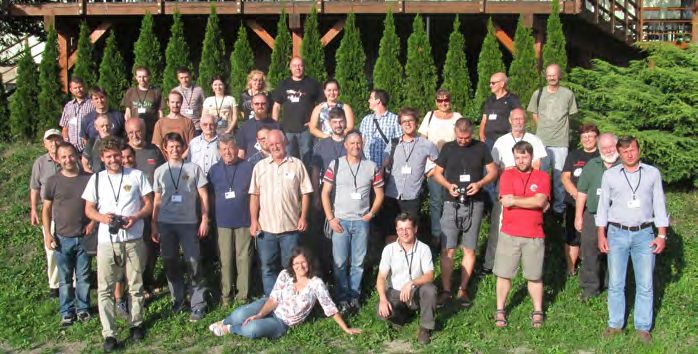
BULLETIN
                                                                                                                                                                                          Union Internationale de Spéléologie

                                                           Table of Contents
                  BULLETIN                                 Editorial: Expanding our ties with local cavers ................................................................................ 3
Official publication of the UIS for publicizing the
 activities of the UIS and the state of the art of         Report of Informatics Commission ........................................................................................................ 4
        international speleology - 2016©
                                                           Publications Exchange Working Group of the Informatics Commission ................... 5

             EDITOR IN CHIEF                               UIS, Wikicaves and Grottocenter .......................................................................................................... 7
           Efraín MERCADO (Puerto Rico)
                                                           World Caves Data - Letter of invitation .................................................................................................. 9
            GRAPHIC EDITION                                Report of Pseudokarst Commission ................................................................................................... 10
             Nivaldo COLZATO (Brazil)
                                                           13th International Symposium on Pseudokarst 2015 ................................................................ 13
                 DISCLAIMER
                                                           Report of Commission on Cave Rescue ....................................................................................... 18
The views and opinions expressed in this bulletin are
those of the authors and do not necessarily reflect        The 10th Balkan Caver’s Camp ............................................................................................................... 33
the official policy or position of the International
Union of Speleology or its Bureau members unless           UIS France Habe Prize 2016 ........................................................................................................................ 34
stated. UIS reserves it rights to admit or refuse any
                                                           In memoriam - Charlie Self ......................................................................................................................... 37
article that does not fulfill UIS standards or criteria.
                                                           Books ............................................................................................................................................................................. 39

                                                           Calendar of Events 2016-2017 .................................................................................................................. 40

                                                           Important update regarding the 17th ICS, Australia 2017 ........................................... 41
            Union Internationale                           UIS Bureau 2013/2017 ...................................................................................................................................... 43
              de Spéléologie
      Founded in Postojna, Slovenia, 1965                  Active Nation Members List ..................................................................................................................... 44
     The UIS is a non-profit, non-governmental
                                                           Annual Contributions and Bank Account .......................................................................................... 45
     worldwide speleological organization that
 promotes the development of interaction between           Guide for submitting and publishing articles in the UIS Bulletin ......................... 46
  academic and technical speleologists of a wide
  range of nationalities to develop and coordinate         Editor’s Disclosure ................................................................................................................................................ 48
   international speleology in all of its scientific,
     technical, cultural and economic aspects.
   NON DISCRIMINATION POLICY                                       Before submitting articles for the
    The UIS prohibits discrimination against its
 member nations, volunteers, and providers on the                  UIS Bulletin, please refer to the
basies of race, color, national origin, age, disability,
 sex, gender identity, religion, reprisal, and where               guide on page 44 Click here!
applicable, political beliefs, marital status, familial
or parental status or sexual orientation. Should you
 have any question, please direct your inquiriry to:                Deadline for submissions for the next issue (Nº 58-2)
 Dr. Fadi NADER - UIS General Secretary
           fadi.nader@gmail.com                                                                                         July 30, 2016
               Alternatively, write to:
   Union Internationale de Spéléologie
   Titov trg 2 - 6230, Postojna - Slovenia
                                                           COVER
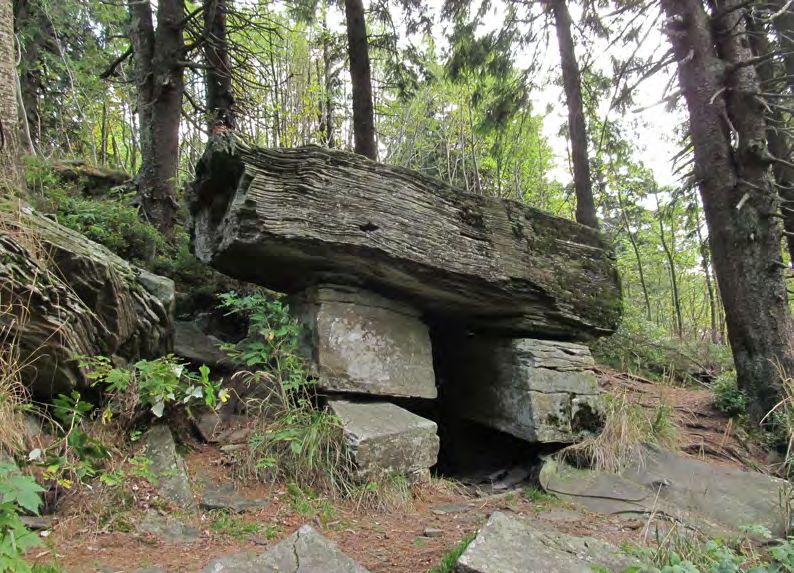
                                                           - Spectacular landscape element Čertův Stol (Devil Table) within the sys-
                WEBSITE:
        http://www.uis-speleo.org/                         tem of gravitational trenches near the ridge of Mt Čertův Mlyn (Czech Re-
                                                           public) - Photo by Jan Urban
       SCIENTIFIC MEMBER OF

                                                           Reproduction of articles contained herein depends                                                                                              REMEMBER
                                                           on the permission of the authors and should be                                                                                               SAVE A TREE;
                                                           reported to the UIS. The UIS Bulletin as a complete                                                                                         DO NOT PRINT
                                                           issue can be distributed freely.                                                                                                           IF UNNECESARY
           http://www.icsu.org

UIS BULLETIN - VOLUME 58-1 - May/2016                                                                                                                                                                                     Page 2/ 48

                                                                                     Contents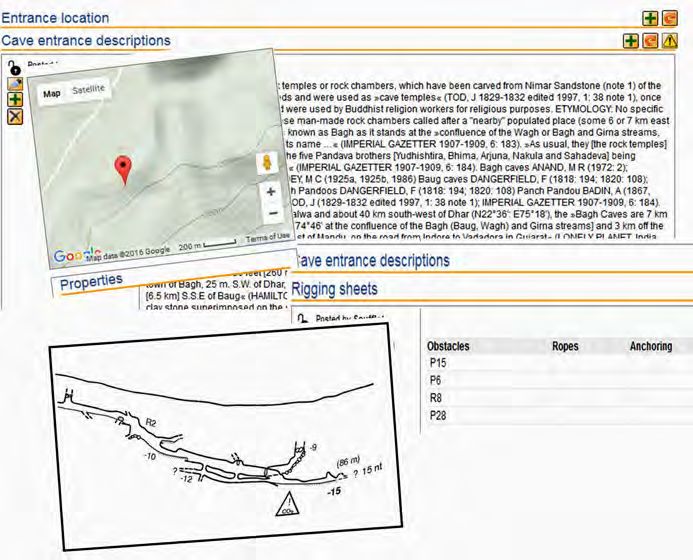
BULLETIN
                                                                                     Union Internationale de Spéléologie

Editorial
Expanding our ties with
local cavers
By Efraín MERCADO (Puerto Rico) - Editor in Chief
UIS Vice-President of Operations
emercado@caribe.net

      No one is an island itself. Working in             leology, one that does not glorifies the work
speleology demands an assurance that                     of one but the efforts of many.
our passions, our science and our strength                     The next UIS International Congress in
works toward the accomplishment of com-                  Sydney, Australia, is another way to convey
mon goals with the people who lead the ex-               in a worldwide project to let our citizens know
panding knowledge: local cavers. As grega-               that karst areas exist, that they are strongly
rious humans there is no more satisfaction               tied to our past, to our history, to our present
than to see projects working, cavers enga-               and, why not, to our future. Knowledge is a
ged in protecting our natural underground                challenge that has two path: alone, like an
wonders and the meticulous research, stu-                island or together, as a team. Each of us is
dy and dissemination of the unfolded truth               responsible to extend our hands, our hearts,
behind every discover. But this is not possi-            our strength and our knowledge in the bene-
ble if we, as cavers, speleologist and scien-            fit of a better protected karst areas, some-
tists deny the opportunity to get together in            thing to preserve for the future.
this hard path.                                                Rethink: karst protection is about ex-
      Karst areas need to be protected, so-              panding our ties to local cavers, to commu-
mething that is repeated every time to satie-            nities, to the real guardians of our caves; the
ty. Knowledge that is not shared has little or           people who live there. Not getting advanta-
no value. The first in this row of knowledge             ge of this simple ties with local cavers is a
should be our local cavers, through which                way to waste energy in high profile projects
it is possible to spread the word in commu-              without taking into account those who work
nities, with people avid of learning and the             hard to keep the knowledge among our citi-
best guardians of our underground won-                   zens. Let’s be a team. Avoid being an island.
ders. Projects like the International Year of            Share and observe. Expanding our ties with
Speleology are just a hint of what we could              local cavers is a priority, our speleology de-
accomplish as a group. Moreover, a solid                 pend on it.
team of cavers, speleologists and scientists
is necessary to get the aims of a strong spe-

UIS BULLETIN - VOLUME 58-1 - May/2016                                                                Page 3/ 48

                                                    Contents
BULLETIN
                                                                                                  Union Internationale de Spéléologie

REPORT of activities

INFORMATICS Commission
By Peter Matthews (Australia), President
matthews@melbpc.org.au
http://www.uisic.uis-speleo.org

S
        everal of the Commission’s working groups are          examine the issues of T-LiDAR laser scanning/map-
        making good progress as below, but other pro-          ping of caves, and to produce recommended standar-
        jects are languishing for lack of volunteers to        ds where needed. See the web page for more details.
help with the work.                                                  A meeting of the several members of the
        If you would like to contribute to the progress        working group was held in Deinze, Belgium, in July
of cave and karst documentation techniques, parti-             2015. Provisional agreements were made on file for-
cularly that related to data fields, data exchange and         mats, specifically:
the semantic web, please contact the president at the                Open Standard. Archiving will need three files
email address above.                                           for each project:
        And if you would like to contribute to any of                1. Point cloud file in generic format; x.y.z. binary.
the working groups below you would be very wel-                      2. Mesh in VRML format or STL format. Redun-
come - please email their leader directly. We are also         dant scans should be removed.
still looking for a Vice-President to help run the Com-              3. Metadata file. To include tie-in to surface
mission and its work.                                          GPS location, or classic survey (which should be inclu-
                                                               ded in the metadata file). Summary data, e.g. num-
MAPPING SYMBOLS FOR                                            ber of scans, dates of scanning, team names. Angular
ARTIFICIAL CAVITIES                                            resolution(s) used for the scans.
Leader: Philipp Häuselmann (Switzerland)
praezis@speleo.ch                                                    Further discussion was conducted on the issue
Web:http://www.uisic.uis-speleo.org/wgsurmap.html#artificial   of non-arbitrary definitions of chambers versus pas-
                                                               sages.
       The UISIC Working Group for Survey and Ma-                    This is currently the subject of Doctoral resear-
pping was requested by the UIS Commission on Ar-               ch by Nico Schertler (Cave Research Group of the TU
tificial Cavities to investigate whether an additional         Dresden Institute for Cartography).
symbol set for artificial cavities could be created, as a            There may be a 3D scanning session at the UIS
complement to the existing symbol set.                         18 Congress in Sydney, July 2017, which would
                                                                  th

       At the International Congress of Speleology in          be an appropriate venue to present the work of the
Artificial Cavities, HYPOGEA, in March 2015 in Rome            group.
(Italy), the different symbol sets were proposed and
first discussions held.                                        PUBLICATIONS EXCHANGE
       The next task will be a compilation of possi-           Leader: Trevor Faulkner (United Kingdom)
ble symbols on artificial cavities that could be part of       trevor@marblecaves.org.uk
an international symbol set, and discussion on these           Web: http://www.uisic.uis-speleo.org/publexch
symbols within both commissions.
       This task is expected in 2016.
                                                                     The Publications Exchange Working Group has
                                                               been established to tackle the challenges and oppor-
T-LIDAR CAVE SCANNING
                                                               tunities for the exchange, accessing, organisation,
Leader: Donald McFarlane (USA)
                                                               safe storage and archiving of world-wide published
DMcFarlane@kecksci.claremont.edu
                                                               speleological and karstic information into the future.
Web: http://www.uisic.uis-speleo.org/wgsurmap-lidar.html
                                                               Trevor’s full report of the working group’s aims and
      This working group has been established to               progress can be found on the next page in this Bulletin.

UIS BULLETIN - VOLUME 58-1 - May/2016                                                                             Page 4/ 48

                                                         Contents
BULLETIN
                                                                                                Union Internationale de Spéléologie

UIS-WIKICAVES                                             300 speleological concepts in twenty-four languages,
Leader: Didier Borg (France)                              the latest being Russian and Ukrainian. The Group is
dcborg@aol.com                                            currently working with our Turkish friends to have
Web: http://www.uisic.uis-speleo.org/wikicaves            Turkish added also.
                                                                 New languages or improvements to existing
      The UIS and WikiCaves are collaborating via         languages are always welcome, and important tech-
this Working Group to encourage and help with the         nical information on how best to go about this is avai-
responsible collecting and sharing of data about the      lable on the Working Group’s web pages.
world’s caves and karst. The data is being stored in       340:
the publicly accessible GrottoCenter web-based data-       en: cavernous
                                                           bg: порест (adj), шуплест (adj)
base initiated by WikiCaves in 2008.                       de: kavernös
      Because cave information can be a sensitive is-      es: cavernoso (adj)
                                                           fa:
sue, UIS is writing to all countries to ascertain what     fr: caverneux, -se (adj)
level of locational precision they can accept, and         gr: σπηλαιώδης
                                                           hr: šupljikav; kavernozan
whether they would help the project by supplying in-       hu: üreges
formation about their caves.                               id: bergua
                                                           it: cavernoso/a (ag)
      The WG also plans to look into whether the           ja: 洞窟状の (dokutsujono); 洞窟のある (dokutsunoaru); 空洞性の (kudoseino)
data can be set up as Linked Data on the Semantic          ko: 동굴지대의
                                                           la: cum cavernis
Web to make basic cave and karst information more          lt: akytas (adj)
                                                           nl: grotachtig; grot-
accessible via the web.                                    pl: jaskiniowy
      More details about WikiCaves and its Grotto-         pt: cavernoso
                                                           ro: cavernos (adj)
Center web database can be found in the separate           ru: пещеристый
report on page 7 in this Bulletin.                         se: hålig
                                                           sl: votlikav
                                                           sr: шупљикав; кавернозан
CAVER’S MULTI-LINGUAL DICTIONARY                           uk: печеристий
Leader: Mladen Garašič (Croatia)
                                                          Example of a page of the Caver’s Multi-Lingual Dictionary
mgarasic@public.carnet.hr; mgarasic@grad.hr
Web: http://www.uisic.uis-speleo.org/lexintro.html

      The web-based Dictionary lists terms for over

REPORT of activities

PUBLICATIONS EXCHANGE WORKING GROUP
OF THE UIS INFORMATICS COMMISSION
By Trevor FAULKNER (United Kingdom), Chairman
trevor@marblecaves.org.uk
http://www.uisic.uis-speleo.org/publexch

T
      he Publications Exchange Working Group of the             The information has been partly disseminated
      UIS Informatics Commission has been establi-        through journals and books published by internatio-
      shed to tackle the challenges and opportunities     nal and national bodies and by local caving clubs.
for the exchange, accessing, organisation, safe sto-      Since the 1950s, many of these organisations have
rage and archiving of world-wide published speleo-        made bilateral arrangements to exchange new publi-
logical and karstic information into the future; it is    cations amongst themselves, usually by post, in an ad
believed that this literature has enormous historical     hoc pattern that remained unknown internationally.
and research value.                                             The documents exchanged are commonly hou-

UIS BULLETIN - VOLUME 58-1 - May/2016                                                                           Page 5/ 48

                                                     Contents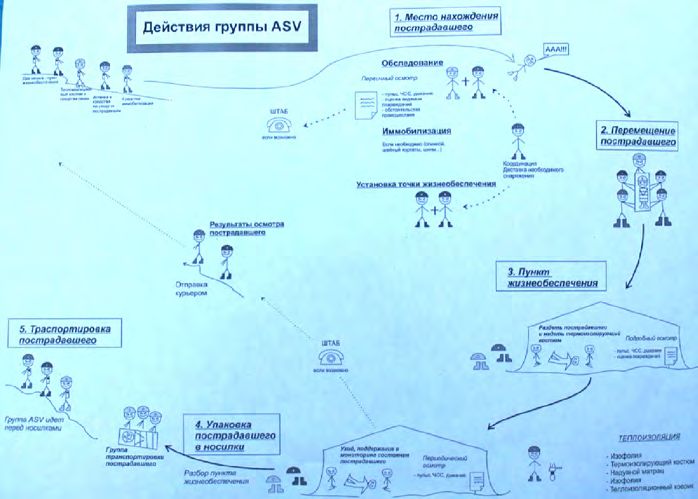
BULLETIN
                                                                                                 Union Internationale de Spéléologie

sed in speleological libraries of various sizes and          Working Group participants
physical accessibility. Many are thus stored in relati-      and communication
ve safety and are available for study, at least to local
members.                                                            All attendees at the 25 July 2013 meeting in
      Three main issues now confront this beneficial         Brno, Editors and Librarians of other international
exchange of information:                                     speleological organisations known to the Chairman,
      - the rising costs of postal delivery;                 and other people who have expressed an interest, are
      - the opportunities presented by electronic publi-     asked to regard themselves as part of this Working
cation, electronic delivery and electronic storage;          Group. These people are also asked to forward the
      - the intention of some Governments for all pa-        Working Group’s Terms of Reference and its Appendi-
pers that report publicly-funded research to be freely       ces to their other Exchange Partners and invite them
available under an ‘Open Access’ policy.                     to join, by sending a short email to the Chairman.
       The main aims of this Working Group are to:                  The Terms of Reference and the Appendices are
       1 - Promote the exchanges of previous and new         held on the Working Group’s web page at http://www.
paper journals and books that will be housed in physi-       uisic.uis-speleo.org/publexch/. These will be publicly
cal libraries internationally;                               available, but will not necessarily be completely up
       2 - Publicise the extent of this international coo-   to date.
peration to help safeguard the preservation of impor-               The latest working versions of the Appendices will
tant speleological information into the distant future,      be distributed to the Working Group by the Chair-
as a widely distributed ‘archive’;                           man, from time to time, and placed on the web page
       3 - Examine the opportunities and problems rela-      when appropriate.
ted to the production, dissemination and long-term sto-             Formal meetings for the Working Group will be
rage of information electronically, primarily to improve     arranged at future international speleological mee-
its international, searchable, ‘access’.                     tings. These meetings will enable discussions about
                                                             progress, the dissemination of exchange information,
       The vision is that the Working Group will assist      and the actual exchange of back issues of speleologi-
in the networking of over 100 existing speleological         cal journals and books. Suitable meetings identified
libraries internationally that will each hold and ca-        at present are:
talogue a good selection of published cave and karst                - The EuroSpeleo event to be held in Yorkshire,
literature.                                                  United Kingdom, from 13–20 August 2016.
       The Working Group was formally established                   - The 17th Internacional Congress of Speleology
within the UIS Informatics Commission, with close            (ICS) to be held in Sydney, Australia, from 23–30 July 2017.
liaison with the UIS Bibliography Commission, at the
16th International Congress of Speleology (ICS) held         Achievement of the aims
in Brno, Czech Republic, from 21–28 July 2013.               of the Working Group
       This action followed a meeting in Brno on 25
July about Journal Exchanges that was convened by                  The aims will be achieved by the preparation
the British Cave Research Association (BCRA) and at-         and maintenance of various Recommendations and
tended by 19 Editors, Librarians and other interested        informational spreadsheets that are Appendices to
people from 12 Countries.                                    the Terms of Reference.
       That meeting discussed the BCRA experience                  The Appendices currently identified are:
in re-creating a British Caving Library (BCL) and in
trying to re-establish contact with many overseas or-              Appendix 1: Speleological libraries. File PEWG
ganisations with whom exchange agreements had lapsed.        Appendix 1
       This situation has now been corrected, with                 Appendix 2: Paper publications. File PEWG
BCRA currently exchanging journals with about 45             Appendix 2
overseas organisations.                                            Appendix 3: Postal exchanges. File PEWG Appendix 3
       The ‘Publications Exchange’ name of this                    Appendix 4: Digital scanning. File PEWG Appendix 4
Working Group indicates that books and other ma-                   Appendix 5: Electronic publications exchanges.
terial can also be exchanged between speleological           File PEWG Appendix 5
organisations.                                                     Appendix 6: Working Party Contacts spread-

UIS BULLETIN - VOLUME 58-1 - May/2016                                                                            Page 6/ 48

                                                       Contents
BULLETIN
                                                                                           Union Internationale de Spéléologie

sheet. File PEWG: Appendix 6 Contacts (Pages 1-5)        Appendices on to the UISIC web page.
       Appendix 7: Journal Titles Published spread-
sheet. File PEWG: Appendix 7 Titles (Pages 1-5)                Next Meeting
       Appendix 8: Publications Exchanges Status
spreadsheet. File PEWG: Appendix 8 Status (Pages 1-9)           A Publications Exchange Workshop will be
       Appendix 9: Action Review: previous and outs-     convened within the EuroSpeleo event to be held in
tanding actions for the Working Group. File PEWG         Yorkshire, UK, from 13–20 August 2016: http://eu-
Appendix 9                                               rospeleo.uk/. The workshop is for all Caving Libra-
                                                         rians, Caving Editors and others interested in the ex-
Progress to date                                         change and safe archiving of speleological literature.
                                                         The aims of the Workshop are:
       The ToR and Appendices 1, 2, and 3 are now               1. To review the ToR;
fairly stable, so that editors and librarians can con-          2. To review progress in achieving the aims of the
sider the recommendations. Appendices 4 and 5 go         Working Group;
beyond the recommendations for postal exchan-                   3. To provide an opportunity for networking and
ges, and are being worked on by an expert team to        the physical exchange of publications amongst the at-
address the issues regarding the electronic exchange     tendees. Prior registration via EuroSpeleo 2016, nearer
of published information.                                the time, is requested, so that a suitable agenda can be
       These draft Appendices record their various       proposed, but is not essential for attendance.
inputs, in advance of a more formal set of recommen-
dations. Everyone is asked to provide new informa-             Trevor Faulkner
tion and updates for Appendices 6, 7 and 8.                    20 February 2016
       Peter Mattthews, the Chairman of the UIS In-            WFW 672
formatics Commission, is thanked for providing ad-
vice and guidance on the placing of the ToR and its

UIS, WIKICAVES AND GROTTOCENTER
By Didier Borg (France)
UIS-WikiCaves Working Group Leader
dcborg@aol.com
http://www.uisic.uis-speleo.org/wikicaves

A
      s announced at the UIS General Assembly in         The Wikicaves & Grottocenter
      Brno, Czech Republic, July 2013, the UIS and       philosophy
      WikiCaves are collaborating via a new Working
Group within the UIS Informatics Commission to help            As Europeans cavers realized they all faced the
with the responsible sharing of data about the world’s   same difficulties when it came to finding and sha-
caves and karst.                                         ring cave related information and data, they knew
      Because cave information can be a sensitive is-    there had to be a common tool in order to avoid the
sue, UIS is writing to all countries to ascertain what   multiplication of numerous projects which required
level of locational precision they can accept, and       each team to invest so much time and efforts.
whether they would help the project by supplying in-           Yet, the context could be quite different depen-
formation about their caves.                             ding on the countries. This is why working together
      The Working Group will also be looking into        seemed the obvious solution. That is how Wikicaves
whether the data can be set up as ‘Linked Data’ on       was created with Grottocenter, as its website and
the ‘Semantic Web’.                                      data base.

UIS BULLETIN - VOLUME 58-1 - May/2016                                                                      Page 7/ 48

                                                   Contents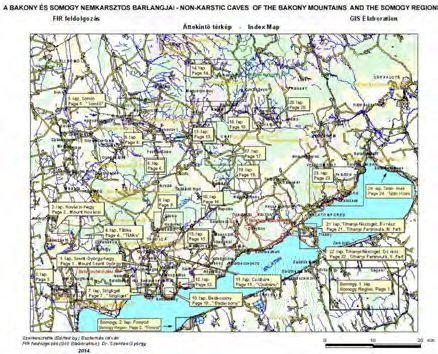
BULLETIN
                                                                                                Union Internationale de Spéléologie

World coverage                                             Sharing
      Wikicaves and Grottocenter have since 2008,                The website also provides links and gives credit
through a number of partnerships, collected and            to the various partners and contributors and allows
made data available for over 50,500 caves covering         cavers to communicate in order to facilitate contacts.
more than 86 countries with over 2,100 contributors
around the world.                                          Language
      Data is entered either directly or by the Grotto-
center team who then takes care of the digitalization            To make access easier, the website is now
and integration in the database.                           available in 8 languages (the Arabic version is un-
      Grottocenter partners are regularly kept infor-      derway). Being a community-based project every ca-
med about additions and updates made in the da-            ver may take part by adding data as well as in the
tabase on caves in their countries - Including about       decision making process. Wikicaves also is funded
additional data that might have been added by cavers       and supported by the FSE (European Speleological
from other areas of the world.                             Federation).

Sharing almost everything cavers might need rigging sheets, topographies, contacts, cave data
(Source: Wikicaves /Grottocenter)

UIS BULLETIN - VOLUME 58-1 - May/2016                                                                           Page 8/ 48

                                                     Contents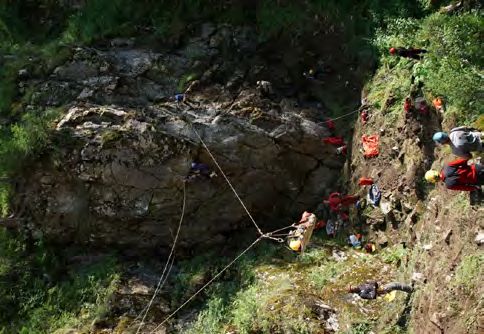
BULLETIN
                                                                                                       Union Internationale de Spéléologie

      16SG - Letter 41
      April 2016

      To: All National Speleological Organisations
      CC: UIS Country Delegates

                                                   World Caves Data
      On behalf of the International Union of Speleology (UIS) and WikiCaves, we are contacting you to introduce you to the
      GrottoCenter World Caves Database (http://en.wikicaves.org/) managed by WikiCaves (http://www.grottocenter.org/),
      and to invite you to join an international effort for the responsible sharing of data about the world’s caves.

      GrottoCenter has operated the World Caves Database on the web since 2008, and it currently contains details of over
      50,500 entrances in over 86 countries and with over 2100 contributors.

      As you may know, WikiCaves requested UIS collaboration to share cave data during the last International Congress at
      Brno (CZ) in 2013. UIS was very happy to agree, while still being aware that publication of locations and other sensi-
      tive information could be a problem in some countries.

      The UIS therefore set up a Working Group (http://www.uisic.uis-speleo.org/wikicaves) under its Informatics Commis-
      sion to handle this project. UIS required the Working Group to contact each country to ascertain the level of locational
      precision to be used when publishing data about any caves from that country, to conduct its business in English, and
      to have its leader appointed by WikiCaves.

      So that we receive a single answer from each country even where there is more than one national organisation, we
      ask that you respond via your UIS Delegate, who should convey your country’s consolidated wishes to the Working
      Group Leader. If we do not hear from you within six months, we will assume that you do not need any restriction on
      locational precision.

      Your UIS Delegate can be found on the UIS website at http://uis-speleo.org.
      Or if you do not have a delegate, please contact our Working Group Leader directly.

      Please advise us by 31 July 2016:
               · what level of locational precision we can use when listing caves from your country.
               · whether you would be interested in helping this important data-sharing project by supplying information
      about the caves and karst from your country.

      Your UIS Delegate should respond to:
      Working Group Leader: Didier BORG

      Didier is of course happy to answer any questions you may have.
      We are looking forward to your collaboration in order to promote the responsible sharing of speleological information
      among the global cave and karst community.

      Frédéric Urien                                                     Fadi Nader
      President of the                                                   Secretary General
      Wikicaves Association                                              International Union of Speleology

                                      Union Internationale de Spéléologie • Founded in 1965
                                     Titov trg 2 - 6230, Postojna – Slovenia • www.uis-speleo.org

UIS BULLETIN - VOLUME 58-1 - May/2016                                                                                  Page 9/ 48

                                                          Contents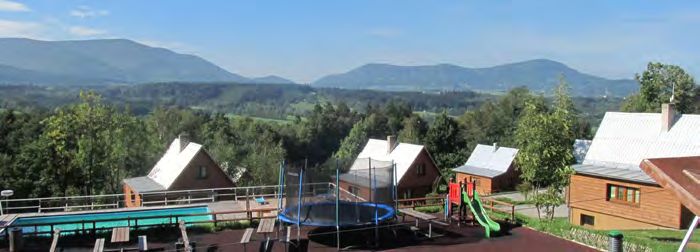
BULLETIN
                                                                                                                                  Union Internationale de Spéléologie

REPORT of activities between 2013 and 2015

PSEUDOKARST Commission
By Jan Urban (Poland), President - urban@iop.krakow.pl
   Rudolf Pavuza (Austria), Vice-President - rudolf.pavuza@nhm-wien.ac.at
   Ludovít Gaál (Slovakia), Secretary - gaal@ssj.sk
   http://www.pseudokarst.de.vu/

Functionaries of the Commission                                                                Events (meetings)
         Jiří Kopecký (Honorary President)                                                           - The assembly taking place during the 16th In-
         István Eszterhás (Honorary President)                                                 ternational Congress of Speleology in Brno, 25th July
         Jan Urban (President)                                                                 2013 and gathered 17 persons from 11th countries (3
                                                                                               continents), among which 11 persons were formal
         Rudolf Pavuza (Vice-President)
                                                                                               members of the Commission.
         Ludovít Gaál (Secretary)
                                                                                                     - During the 16th International Congress of Spe-
                                                                                               leology in Brno three half-day scientific sessions were
       Members: Jiří Adamovič, Ahmad Afrasibian, So-
                                                                                               dedicated to the “Karst and caves in other rocks” i.e.
raya Ayub, Pavel Bella, William R. Halliday, Erich Knust,                                      widely understood pseudokarst. These sessions were
Włodzimierz Margielewski, Jan Paul van der Pas, Juan                                           perfectly prepared and conveyed by J. Adamovič.
Ramón Vidal Romani, Hartmut Simmert, Rabbe Sjöberg,                                            They included 21 presentations on non-karst, proba-
Herman de Swart, George Szentes, Maurizio Tavagnutti,                                          bly-karst, possibly-karst, partly-karst, more-or-less-
                                                                                               -karst as well as karst-like caves and cavities.
Tiberiu Tulucan, Marcos Vaqueiro Rodriguez, Marina Vdo-
vets, Lukáš Vlček, Josef Wagner, Karel Žák.                                                    Publications
                                                                                                     - Comprehensive abstracts, practically papers
Assembly of the Commission                                                                     of the presentations given during the “pseudokarst
       The assembly took place during the 16th Inter-                                          sessions” of the Congress in Brno, 2013, were
national Congress of Speleology in Brno, 25th July                                             published in printed volume of the Congress materials.
2013; in this meeting the report of the Commission
activity in 2009-2013 was presented.

 Válogatott irodalom - Selected Literature                                         Eloszó               - Preface

          MAGYARORSZÁG NEMKARSZTOS BARLANG JAINAK
                        KATASZTERE
                    (tartalmazva néhány ausztriai és szlovákiai országhatár közeli területet)
                                    A LIST OF THE NON- KARSTIC CAVES IN HUNGARY
                                     (including some border regions in Austria and Slovakia)

                                                                                 Térképes közelítés - Map approach

                                                                             Táblázatos közelítés -Tabular approach

                                                                                                                      The first cover of the “Pseudokarst
                                                                                                                      Commission Newsletter,” N° 24,
The homepage of the database “List of non-karst caves of Hungary,”                                                    which can be found at the internet
which can be found at the internet address:                                                                           address:     http://wwwpub.zih.tu-
http://nonkarstic.elte.hu/start.html                                                                                  -dresden.de/~simmert/pkarst/

UIS BULLETIN - VOLUME 58-1 - May/2016                                                                                                           Page 10/ 48

                                                                                   Contents
BULLETIN
Union Internationale de Spéléologie
- Pseudokarst Commission Newsletter has been - The report on the “pseudokarst sessions” du-
issued one a year in two languages: English and Ger- ring the Congress in Brno, 2013, was published in the
man. Editors of the issues were: Jan Urban, Rudolf Pseudokarst Newsletter no. 24.
Pavuza and Christa Pfarr. The following numbers
were published: no. 24 (February 2014) and no. 25 Webpage
(February 2015). The Newsletter is distributed both The webpage of the Pseudokarst Commission
in digital version by internet and in printed copies by (edited by Hartmut Simmert) is permanently acti-
mail among people preferring this form. The printed ve. It presents all documents produced by the Com-
version was financially granted by UIS Bureau. Both mission assembly and executive group, issues of the
issues, 24 and 25, include 12 scientific or popular- Pseudokarst Newsletters as well as reports and an-
-scientific papers as well as several short notices, nouncements concerning meetings and other events.
event announcements and reports. It also presents the members and functionaries of the
- Closely related to the Commission activity Commission, history of the Commission as well as
and prepared by its members, I. Eszterhás and G. European clubs and scientific institutions exploring
Szentes, is “List of non-karst caves of Hungary” – di- and/or studying non-karst caves. All activity provi-
gital database accessible via internet since December ding new data and improving the informational level
2014. The database presents short descriptions (in of the webpage is welcome.
two languages: Hungarian and English), selected li-
terature, maps and photographs of caves. Current activeness
- Partly related to the Commission activity and - The most important event recently prepared
partly prepared by its members are also papers publi- and currently taking place is the 13th International
shed in the “Zeitschrift für Geomorphologie”, vol. 59 Symposium on Pseudokarst, held in Kunčice, in the
(2015), suppl. 1, containing the materials of the In- Silesian-Moravian Beskydy, Czech Republic. The pla-
ternational Conference “Sandstone Landscapes III”, ce of this Symposium was not set definitely during
Kudowa Zdrój, Poland 25-28.04.2012. the last Commission assembly in Brno (2013), and
- Minutes of the Pseudokarst Commission assembly the trials of its location were continued by the Com-
in Brno were published in the UIS Bulletin, no. 56, 1 (2014). mission executive. Therefore, we are the more grate-
ful for our Hosts who have invi-
ted us to the Silesian-Moravian
Beskydy. The institutional orga-
nizers of the 13th Symposium on
The first cover of the “Pseudokarst
Commission Newsletter,” N° 25,
One of the maps in the database “List of non-karst caves of Hungary,” which can be found at the internet
which can be found at the internet address: address: http://wwwpub.zih.tu-
http://nonkarstic.elte.hu/start.html -dresden.de/~simmert/pkarst/
UIS BULLETIN - VOLUME 58-1 - May/2016 Page 11/ 48
ContentsBULLETIN
Union Internationale de Spéléologie
Pseudokarst are: Speleological Group Orcus, Depart- Future events and prospects
ment of Physical Geography and Geoecology of the - The most important aim of the Pseudokarst
University of Ostrava and Founded Management of Commission activity is the organization of interna-
the Beskydy Protected Landscape Area. Personally, tional pseudokarst symposia. Therefore, the crucial
the main organisers of this Symposium are Jan Le- problem which should be solved during this assembly
nart and Josef Wagner. Observing their hard work is the location of the 14th International Symposium
and its results we all want to express our thanks to on Pseudokarst. So far, the Commission executive has
them and all other co-organisers. got no suggestion in this issue, therefore all proposals
- According to the decision made during the are welcome. We should also discuss the term of this
last assembly of the Commission, the Working Group event in the context of the 17th International Congress
on the Classification of Non-Karst Caves was to be or- of Speleology which will be held in Australia in 2017.
ganised and should preceed works on this problem. - The Commission executive proposes to pro-
Unfortunately, the Working Group have not presen- long the activity of the Working Group on the Clas-
ted any results of its work, yet. sification of Non-Karst Caves under the leadership of
- During the Congress in Brno (2013) the Com- P. Bella and L. Gaál. We hope that the conclusions
mission executive got contacts with members and of this group work will be presented during the 14th
executives of the Volcanic Cave Commission and the International Symposium on Pseudokarst and, conse-
Artificial Cavites Commission. These contacts have quently, the final version of such classification will be
been still kept. consequently published in the most important spele-
- Owing to good work of the UIS Vice-Presi- ological and geological journals.
dent, George Veni, the information on events related - The persistent work of the Pseudokarst Com-
to cave and karst exploration, study and management mission executive will be continued. So the webpage
(meeting annoucements, publications atc.) has been will be updated and next issues of the Pseudokarst
efficiently distributed to the Commission executives Newsletter are expected.
and then redistributed to its members and friends. The UIS Bureau is no longer providing finan-
cial support to the com-
missions for the printing
and distribution of news-
letters in order to encou-
rage greater digital dis-
tribution, which reaches
more people and for less
money. The Pseudokarst
Commission appreciates
the past financial sup-
port by the Bureau. The
Commission will provide
support for the printed
version of the Newsletter
until 2017 to meet the
requirements of libra-
ries still keeping printed
records as well as some
members of the Commis-
sion.
Kunčice, 16.09.2015
Ludovít Gaál - Secretary
Rudof Pavuza - Vice-President
Jan Urban - President
The homepage of the UIS Pseudokarst Commission, which can
be found at the internet address: http://wwwpub.zih.tu-dresden.de/~simmert/pkarst/
UIS BULLETIN - VOLUME 58-1 - May/2016 Page 12/ 48
ContentsBULLETIN
Union Internationale de Spéléologie
13th International
Symposium on
Pseudokarst
16-19 September 2015 (Kunčice pod Ondřejnikem, Czech Republic)
By Jan Urban (Poland), President - urban@iop.krakow.pl
Rudolf Pavuza (Austria), Vice-President - rudolf.pavuza@nhm-wien.ac.at
UIS Pseudokarst Commission - http://www.pseudokarst.de.vu/
DEPARTMENT
OF PHYSICAL
GEOGRAPHY
AND GEOECOLOGY
UNIVERSITAS
OSTRAVIENSIS
Facultas Rerum Naturalium
T
he history of the International Pseudokarst ment of our knowledge. We also observed whether
Symposia reaches back to 1982 and includes there was a change in the group of people attending
thirteen meetings, mainly in Central Europe, the meetings – as always not only professionals: ge-
therefore the regions in which they were held have ologists, geomorphologists, biologists, climatologists,
started to repeat. The place of the last, 13th Inter- archaeologists conducting their studies in caves, but
national Symposium on Pseudokarst in September also hobbyists: cavers discovering, exploring and ca-
2015, is situated in the Silesian-Moravian Beskydy refully documenting caves.
Mts., about ten kilometres from the Podolanky resort, The results of such comparison are not unequi-
where 25 years ago, in 1990, the 4th Symposium on vocal (just equivocal). We still have not formulated
Pseudokarst was held (Wagner 1990). For a few par- a strict definition of the term “pseudokarst” and the
ticipants of both these Symposia (like the authors of spectrum of problems included in this term as well as
this report) such context was an excellent opportuni- the boundary to karst sensu stricto. Nevertheless the
ty for the comparison of what has changed during this term “pseudokarst” is still the symbol that connects
quarter of a century. We could discuss the progress scientists and cavers who examine and explore caves
of research, development of study methods, enlarge- of non-karst genesis in general or such that origina-
J. Urban
Fig. 1 - View toward the west from the terrace of the H-resort in Kunčice, where the Symposium was organized.
UIS BULLETIN - VOLUME 58-1 - May/2016 Page 13/ 48
ContentsBULLETIN
Union Internationale de Spéléologie
ted at least partly owing to other than karst proces- genetic and geomechanic criteria was an introduction
ses. Compared to the meeting held 25 years ago, this to this matter (authors: W. Margielewski, J Urban).
term lost its feature of novelty. Sometimes the term Further, the genesis, shape, exploration and scienti-
has been criticised – but nevertheless no “better” term fic features/values of these caves in the Silesian-Mo-
was proposed, so far (e.g. Eberhard, Sharples 2013; ravian Beskydy Mts. were shown in several lectures
Urban 2014). Since that time thousands of such ca- by our Czech hosts. They started their presentations
ves have been discovered and described in various from the general description of the geological and
places of the Earth and even on Mars. Several fields/ biological heritage of this region (presentations and
directions of scientific studies of such caves can be movie by F. Jaskula, D. Kvita, J. Lenart, J. Wagner)
distinguished. New classifications of non-karst caves and concluded with the characterisation of problems
have been proposed (e.g. Halliday 2007; Bella, Gaál of cave exploration and examination (several presen-
2011, 2013; Urban, Margielewski 2013). New tools tations and posters by J. Kupka, J. Lenart, L. Šesták, P.
and methods of investigation of such caves (elabora- Tabořik, J. Wagner). The important result of the stu-
ted and developed within frames of other scientific dy of caves in the Silesian-Moravian Beskydy Mts. is a
disciplines as geophysics, mechanics or mineralogy- genetic-morphological classification of cave passages
-petrography) have been presented and research fo- published recently in “Geomorphology” (Lenart et al.
cusses more in processes involved than on a satis- 2014) and presented during the Symposium sessions
fying terminology. (J. Lenart, J. Wagner). Apart from the geologic-geo-
During the scientific sessions of the 13th Inter- morphologic problems, a very modern method of a
national Symposium on Pseudokarst the presenta- microclimatic study in the caves in this region (M.
tions concerning two fields of research predomina- Kašing) as well as the analysis of the occurrence of
ted. The first was obviously related to the geological bats in these caves (V. Škarpich, J. Wagner) were pre-
region where the Symposium was organised – the sented. The results of cave exploration and studies in
Outer Flysch Carpathians. In this region caves ori- the Polish segments of the Outer Carpathians were
ginated owing to the gravitational slope failures are introduced during these sessions by Polish authors.
very common and some of them are of considerable The following topics should be mentioned in this
extent. Therefore, the lecture presenting the genesis group:
and categorisation of these caves based on morpho- - progress in exploration of caves in the Polish
part of the Beskidy Mts. (in Polish: Beskidy or Beskid,
not Beskydy),
- water in caves of the Beskidy Mts.,
- genetic differentiation of caves in the Homole
Gorge, Pieniny Mts. and
- morphogenesis of the Mroczna Cave, Beskid
Niski Mts. (several presentations and posters by P.
Franczak, W. Gubała, G. Klassek, W. Margielewski,
J. Urban
J. Urban
Fig. 2 - Gravitational trench near the ridge of Mt Čertův Fig. 3 - Spectacular landscape element Čertův Stol (Devil
Mlyn (Devil Mill); above the trench the leader of the Table) within the system of gravitational trenches near
Organisational Committee, J. Lenart. the ridge of Mt Čertův Mlyn.
UIS BULLETIN - VOLUME 58-1 - May/2016 Page 14/ 48
ContentsBULLETIN
Union Internationale de Spéléologie
T.,. Mleczek, J. Pukowski, C. Szura, J. Urban and M. Eastern Alps, some of them formerly regarded as karst
Zatorski). ones (I. Baroň, L. Plan, B. Grasemann, I. Mitrović, G.
A comparatively large number of lectures given Winkler),
during the scientific sessions and concerning the se- - exploration of “pseudokarst” caves in calca-
cond predominating scientific problem, was also in- reous spring tufa in Austria (R. Pavuza),
duced by the high number of representatives of the - reviews of volcanic caves and speleothems in
country hosting the meeting. This scientific field was non-karst caves of Hungary (G. Szentes, I. Eszterhás)
the study of morphogenesis of sandstone rock forms as well as
in the Bohemian Cretaceous Basin, carried out also - the history of exploration of the Ledove Sluje
in a context of the cave occurrence in these rocks. In cave system in metamorphic schist of the Podyji Na-
contrast to the caves in the Outer Carpathians, the ca- tional Park, Czech Republic (F. Kuda, J. Divišek).
ves in sandstones of this Basin represent usually ero- During the field sessions we visited mountain
sional-weathering or boulder caves. To this thematic massifs of the Silesian-Moravian Beskydy, situated
group belong the conception of the development of close to the Symposium place (Fig. 1). Among the
orthogonal jointing in sandstones (J. Adamovič, M. sites shown to us were caves and surface landforms,
Coubal) as well as the lectures and posters providing which were the results of gravitational mass move-
analyses of effects of loading stress (compaction) and ments, as well as cultural-ethnographic objects. The
lichen cover on spatial distribution and rate of ero- most spectacular surface landforms we saw were
sion and – in consequence – stability of sandstone the trenches crowning the ridge of Mt. Čertův Mlýn
cliffs and cave ceilings (team: J. Schweigstillová, J. (1206 m a.s.l.), and the crags of a specific, pictures-
Bruthans, J. Řihošek, M. Slavík). The study of the in- que shape, which were associated with these tren-
fluence of various factors, not sufficiently apprecia- ches (Figs. 2, 3).
ted up to recent, on the stability of sandstone massifs, The cave tours included the largest, deepest
comparing field observations with results of uncon- and most interesting ones. The first was a maze sys-
ventional laboratory analyses, conducted recently by tem of passages of the longest cave, Cyrilka (535 m
the team of Czech scientists, has brought about very long and 16 m deep), in the light of a new classi-
interesting conclusions, just published in international fication (Urban, Margielewski 2013) representing
journals (Bruthans et al. 2014). A new field of research most probably a dilatancy cave. The second was the
seems to be also the usage of geophysical methods deepest cave of the region, Kněhyňska Cave (280 m
(e.g. ERT) for the analysis of tectonic-structural cons- long and 57.5 m deep) representing, in turn, most
traints of the morphology of mesas in the Broumov probably the initial, dilational cave system. It is com-
Upland, Bohemian Cretaceous Basin (P. Tabořik, F. posed of a spacious and several dozen meters deep
Hartwich, J. Stemberk, J. Kopecký, O. Jenka). chasm (well), surrounded by a set of narrower (sub)
Among the other topics of the session lectures, vertical fissures – cave passages (Figs. 4-6). Both
the following should be mentioned: these caves are located in the Mt. Radhošt (1106 m
- tectonic evidences in pseudokarst-caves of the a.s.l.) and Mt. Smrk (1276 m a.s.l.) massif. However,
J. Urban
J. Urban
J. Urban
Fig. 4 - Lower part of the main abyss
of the Kněhyňska Cave, the deepest Fig. 5 - Difficult traverse in the Fig. 6 - Typical, high and narrow
cave in the region Kněhyňska Cave passage of the Kněhyňska Cave
UIS BULLETIN - VOLUME 58-1 - May/2016 Page 15/ 48
ContentsBULLETIN
Union Internationale de Spéléologie
the most interesting from the scientific point of view sium, presumably in 2018 (as the 17th International
was the Velká Ondrášova Cave (217 m long and 35 Congress of Speleology in Australia makes another
m deep) in the Mt. Lysa Hora (1323 m a.s.l.) massif, event in 2017 not reasonable). Several possibilities
the highest summit of the Silesian-Moravian Beskydy. were considered, such as: Călimani and Gurghiu
The entrance of this cave is situated in the highest Mountains in central Romania, where numerous tree
part of the gravitational ridge trench, while its passa- mould caves have been recently discovered, Lenin-
ge system is very complex and comprises a maze set grad Province in Russia with its caves in granites and
of crevices intersecting in various levels (Figs. 7-10). Devonian sandstones, Austria with some pseudokarst
However, the crevices-passages are clustered in two caves in karst areas, abrasion and tectonic caves of
branches of orientation “supplementing” the system Sweden; however, no final decision was made. New
of surface trenches. In this cave the typical (induced members were welcomed to the Commission.
by gravitation) movements of rock massif fragments The main institutional organisers of the 13th In-
producing cave passages were described (Lenart et ternational Symposium on Pseudokarst, initiated – as
al. 2014). usual – by the UIS Pseudokarst Commission, were:
An important event during the Symposium was Department of Physical Geography and Geoecology
the assembly of the UIS Pseudokarst Commission, of the University in Ostrava and Speleological Club
held on Thursday, 17th Sept. 2015, and gathering 11 Orcus in Bohumin. The Organisational Committee
members of this Commission. During this meeting was led by J. Lenart and J. Wagner. All participants
the activity of the Commission between 2013 and appreciated the good organisation of both the scien-
2015 was recapitulated. Among significant measures tific and field sessions of the conference and all ad-
of the activity of the Commission and its members the mired the scenic mountainous surroundings of the
following affairs were mentioned: Symposium place (Fig. 1). About 45 people from 9
- the sessions dedicated to non-karst caves du- countries (Austria, Czech Rep., Germany, Hungary,
ring the 16th International Congress of Speleology in Netherlands, New Zealand, Poland, Slovakia and
Brno (Czech Rep. 2013), Sweden) attended the Symposium (Fig. 11). One op-
- the publication of the “Pseudokarst Newslet- timistic outlook might be the observation that apart
ter” nos. 24 and 25, from some older participants – veterans of the early
- the permanently active Commission webpage, days of the pseudokarst symposia – many young pe-
as well as ople attended the 13th Symposium, similar to the 4th
- the digital database of non-karst caves in Hun- Symposium held nearby a quarter of a century ago.
gary prepared by the members of the Commission (I. The symposium proceedings – well prepared by
Eszterhas and G. Szentes). the organizers (Lenart 2015) – were published and
The most important problem discussed during are available for download from the Commission’s
the meeting was the location of the next sympo- homepage http://www.pseudokarst.de.vu/.
J. Urban
J. Urban
J. Urban
Fig. 8 - Velka Ondrášova Cave
fragment formed within a highly Fig. 9 - Group visiting the Velka
Fig. 7 - Deep (high) and sub- disintegrated part of the massif Ondrášova Cave at the end of this route,
vertical passage in the Velka which is suggested by the state of cover-
Ondrášova Cave -alls and humour of the participants
UIS BULLETIN - VOLUME 58-1 - May/2016 Page 16/ 48
ContentsBULLETIN
Union Internationale de Spéléologie
Sandstone landforms shaped by negative feedback be-
tween stress and erosion. Nature Geoscience 7: 597-601
doi:10.1038/ngeo2209
Eberhard R. Sharples C. 2013. Appropriate ter-
minology for karst-like phenomena: the problem with
„pseudokarst”. Intern. Journal of Speleology 42, 2: 109-113.
Halliday W. R. 2007. Pseudokarst in 21st century.
Journ. of Cave and Karst Studies 69, 1: 103-113.
Lenart J. (ed.) 2015. 13th Intern. Symp. on Pseu-
dokarst, Proceedings, 16-19.09.2015, Kunčice pod
Ondřejnikem, Czechia. Ostrava, pp. 50. http://rcswww.
J. Urban
urz.tu-dresden.de/~simmert/pkarst/
Lenart, J., Panek, T., Dusek, R., 2014. Genesis, types
Fig. 10 - The entrance of the Velka Ondrášova Cave and evolution of crevice-type caves in the flysch belt of
situated within the gravitational ridge trench. the Carpathians. Geomorphology, 204: 459-476.
Urban J. 2014. “Pseudokarst” during the 16th In-
ternational Congress of Speleology, Brno, July 21-28th
References 2013. Pseudokarst Newsletter 24: 34-36. http://rcswww.
Bella P., Gaál L. 2011. Terminology and genetic urz.tu-dresden.de/~simmert/pkarst/
types of boulder caves. Pseudokarst Commission Newslet- Urban J., Margielewski W. 2013. Types of non-karst
ter 22: 1-4. caves in Polish Outer Carpathians – historical review and
Bella P., Gaál L. 2013. Genetic types of non-solu- perspectives. In: Filippi M., Bosak P. (ed.), Proceedings of
tion caves. In: Filippi M., Bosak P. (ed.), Proceedings of the the 16th International Congress of Speleology, 21-18.07.,
16th International Congress of Speleology, 21-18.07., Brno, Brno, vol. 3: 314-319.
vol. 3: 237-242. Wagner J. (ed.) 1990. 4th Pseudokarst Symposium
Bruthans J., Soukup J., Vaculikova J., Schweigstillo- with international participation. Proceedings. Podo-
va J., Mayo A.L., Masin D., Kletetschka G., Rihosek J. 2014. lánky v Beskydách. Czech Speleol. Assoc., Praha, pp. 149.
J. Urban
Fig. 10 - Participants of the 13th Symposium in Kunčice, 2015.
UIS BULLETIN - VOLUME 58-1 - May/2016 Page 17/ 48
ContentsBULLETIN
Union Internationale de Spéléologie
REPORT of activities
cave rescue Commission
By Bernard Tourte (France)
btourte@wanadoo.fr
Formation
Spéléo-Secours International
Du 3 au 12 Juillet 2015 - Dans l’Oural - Russia
SÉMINAIRES: Photos © Spéléo
Secours Français
Equipier - Chef D’équipe
Assistance Victime
Plongée Secours
UIS BULLETIN - VOLUME 58-1 - May/2016 Page 18/ 48
ContentsBULLETIN
Union Internationale de Spéléologie
Preambule Le Deroule General
L
a session de formation qui s’est déroulée était
envisagée depuis près de deux ans. C’est Jean- Mercredi 1 juillet
-Michel Vallon qui a joué le rôle de coordinateur Départ de France de quatre formateurs du
SSF pour sa mise en place, soit un important travail SSF. Wim CUYVERS (SSF39), Cédric Lacharmoise
préparatoire, dont une reconnaissance sur le terrain (SSF69) et Jean-Michel Vallon (SSF01) s’envolent de
en juillet 2014 afin de bien s’assurer de la faisabilité Lyon Saint-Exupéry à 13h30 pour l’aéroport de Char-
du projet. les de Gaule.
Au même moment, Bernard Tourte (Président
Ce sont au total trois stages du SSF), décolle de Toulouse pour la même destina-
qui ont été réalisés: tion. Départ pour Moscou à 16h00 et arrivée à 20h40
- Un stage E/CE coordonné par Bernard Tourte heure locale. Nous rejoignons Ekaterina Medvedeva,
et Cherednichenko Filippe (responsable Russie des for- traductrice et spéléologue du club de Kiev. Nous re-
mations techniques secours). Cette session rassemblait décollons ensemble à 22h25 pour arriver à Ufa le 2
trente-cinq participants. Juillet à 2h30 heure locale.
- Un stage ASV, comprenant vingt-deux spéléolo-
gues, coordonné par Wim Cuivers et Rychagov Sergey Jeudi 2 juillet
(responsable Russie des formations ASV qui, en septem- Amina Chanysheva et Vladimir AKIMOV nous
bre 2014, a participé à une formation ASV à la chapelle récupèrent à l’aéroport. Quelques heures de repos
en Vercors avec huit spéléologues russes. nous permettront d’inhiber la fatigue du décala-
- Un stage plongée secours qui a regroupé trei- ge horaire. L’après-midi, nous profitons d’avoir un
ze spéléo-plongeurs, encadré par Cédric Lacharmoise, peu de temps pour faire du tourisme. Nous visitons
Jean-Michel Vallon et Akimov Vladimir pour sa gestion l’incontournable monument de Yulaev de Salvat
organisationnelle russe. (1752-1800).
Pour ces sessions, la quasi-totalité du matériel Héros national bachkir et poète, il est l’un des
secours spéléo a été fournie pas les Russes, bouteil- leaders de la guerre paysanne de 1773-1775 en Rus-
les de plongée comprises.Le seul matériel amené de sie et un compagnon de chasse d’Emelian Pougatchev.
France a été: En 1774, il est arrêté, puni et envoyé aux travaux for-
- Trois TPS. cés en Estonie, où il meurt en 1880.
- Deux ensembles de recherche en siphon (fla- Sans oublier la station de ski d’Ufa… La ville est
sheurs, ardoise, cookies). en pleine effervescence: la Russie accueille les chefs
- Vingt mètres de fil d’Ariane avec l’âme électrique d’Etat des « Brics » (Brésil, Russie, Inde, Chine, Afri-
pour la communication. que du Sud), les membres du groupe de Shanghai,
Comme à chaque fois, des interprètes ont été ainsi que l’Inde et le Pakistan, à Oufa, du 8 au 10 juil-
mobilisés pour ce séminaire dont Aleksey Teres- let. Leur objectif est de créer une véritable puissance
chenko, qui était une nouvelle fois de la partie vu économique et diplomatique régionale eurasiatique.
qu’il était déjà présent lors du stage en Crimée qui
s’est déroulé il y a deux ans. Au total, cinq interprètes
Vendredi 3 juillet
sont venus épauler l’équipe d’encadrement.
Départ pour le plateau de Koutouk. Au petit
Certains d’entre eux, non spéléologues, ont claire-
matin, dans la banlieue d’UFA, nous faisons une halte
ment été mis à rude épreuve, du matin au soir, pour que
dans un hypermarché, ouvert de manière continue,
l’information transmise puisse être comprise par tous.
pour acheter de quoi survivre pendant le trajet.
Quatre heures de route nous permettent de re-
joindre la ville de Meleuz qui se trouve à deux cent
cinquante kilomètres au sud de la ville d’Ufa. De là,
nous prenons une piste pour rejoindre le petit villa-
ge de Nugush. Nous déposons nos bagages dans une
clairière, lieu de rassemblement pour l’ensemble des
spéléo conviés au séminaire. De là, part en forêt un
chemin de terre sur trente-deux kilomètres pour le
plateau de Koutouk.
Depuis plusieurs mois, la météo est très plu-
vieuse. Ce chemin est quasiment impraticable. La dé-
UIS BULLETIN - VOLUME 58-1 - May/2016 Page 19/ 48
ContentsYou can also read


