Call for appliCations - Unesco
←
→
Page content transcription
If your browser does not render page correctly, please read the page content below

United Nations    Diversity of
                        Educational, Scientific and   Cultural Expressions
With funding from the

                                                                                            Call for
                            Cultural Organization
   European Union

                                                                                        Applications
                                                                                EU/UNESCO Expert Facility
                                                                            on the Governance of Culture in
                                                                                     Developing Countries
                                                                            Support for new regulatory frameworks to strengthen the cultural
                                                                               and creative industries and promote South-South cooperation
Published in 2019
    by the United Nations Educational, Scientic and Cultural Organization (UNESCO)
    Culture Sector, 7 place de Fontenoy, 75352 Paris 07 SP, France

    en.unesco.org/creativity

    Photos copyrights:
    Cover: © Asim Waqif, Prototype for Control, 2013-2014
    Inside pictures: © Emanuele Cidonelli
    Page 6-7: © Martine Doyon, Le Quartier des Spectacles, Montréal, 2012

           @UNESCO #supportcreativity

           www.facebook.com/unesco

           www.youtube.com/unesco

           www.instagram.com/unesco

           culture-governance@unesco.org

2
T
      he United Nations Educational, Scientific and Cultural Organization
      (UNESCO), with funding from the European Union, launches an
      open call for on-demand provision of expertise and peer-to-
peer learning support to governments, public bodies and professional
associations from developing countries parties to the 2005 UNESCO
Convention on the Protection and Promotion of the Diversity of Cultural
Expressions (the 2005 Convention). The objective of the Expert Facility
project is to strengthen the regulatory frameworks for the cultural and
creative industries (CCIs) of developing countries, including Intellectual
Property Rights regulation related to CCIs. This call is open to developing
countries that are Parties to the UNESCO Convention on the Protection
and Promotion of the Diversity of Cultural Expressions (2005). Twelve (12)
beneficiary countries, or more if budget allows, can benefit from this call.
Annex 1 provides a list of eligible countries.

Ratified by 145 countries and the European Union as of December 2018,
the Convention establishes rights to adopt regulations, policies and
measures to support the emergence of dynamic and strong cultural and
creative industries. It ensures artists, cultural professionals and creative
practitioners, as well as all citizens, have the capacity to create, produce,
disseminate and enjoy a broad range of cultural goods, services and
activities, including their own.

                                                                         2019
                               Applications received and evaluated
                                               on an ongoing basis
                                                    (see page 11 for more information)

                                                                                         3
1
                                           Context and
                                          purpose of the
                                             project

    The cultural and creative industries (CCIs) have become a driver and enabler of sustainable
    development, generating annual global revenues of US$ 2,250 billion and exports of over
    US$ 250 billion. It is estimated that these sectors provide nearly 30 million jobs worldwide and employ
    more people aged 15-29 than any other sector.
    The CCIs operate in a complex environment requiring laws, strategies, policies and measures that can
    be based on goals and principles defined in the UNESCO Convention on the Protection and Promotion
    of the Diversity of Cultural Expressions (2005). This means that frameworks regulating the CCIs should
    contribute to an enabling environment for the culture sector, where artistic freedom, creativity and
    innovation, the diversity of cultural contents and expressions, intellectual property rights, the mobility
    of artists and cultural professionals and market access are ensured. Such frameworks also need to
    address the significant and rapid changes posed by digital technologies and the challenges that artists
    and cultural professionals face in order to ensure that their works can be protected and promoted in a
    digital environment.
    Therefore, this programme aims to support developing countries within a timeframe of
    18-24 months to:

    • Design, adapt and/or implement regulatory frameworks (laws, strategies, policies and
      measures) for the CCIs, including intellectual property rights related to CCIs;
    • Strengthen skills and capacities to support long-term cultural policy development and
      implementation that support the CCIs;
    • Create peer-to-peer mechanisms to strengthen institutional capacities for the CCIs through
      South-South cooperation activities.

4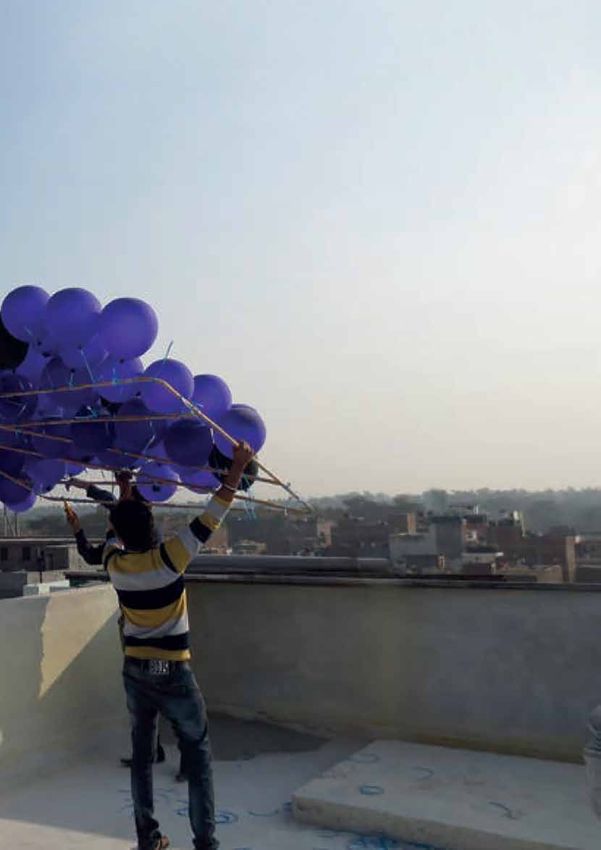
Annex 2 provides examples of different types          advancement of women working in CCIs.
of expertise and peer-to-peer learning support
                                                      Guided by the overarching objective of poverty
governments can expect from this programme.
                                                      reduction and sustainable development, this
In addition to EU and UNESCO global priorities,       cooperation programme also responds to the
the programme responds to the African Union’s         EU Joint Communication on “Towards an EU
2063 Agenda “The Africa We Want”, in particular,      Strategy for international cultural relations”
Aspiration 5 by promoting “African creative arts      (June 2016) and the “New European Consensus
and industries […] contributing significantly to      for Development” (June 2017). This vision is
self-awareness, well-being and prosperity”, as        aligned with EU commitments taken as a Party
well as Aspiration 6 by supporting “the creativity,   to the 2005 Convention.
energy and innovation of Africa’s youth being
                                                      The results of this programme are expected to
the driving force behind the continent’s political,
                                                      provide developing countries with support in
social, cultural and economic transformation.”
                                                      achieving their commitments to the UN’s 2030
It will also support the advancement of gender        Agenda for Sustainable Development in general
equality through specific gender-sensitive            and specific Sustainable Development Goals
activities that aim to support the recognition and    (SDG) aimed at:

                           Creating sound policy frameworks to support accelerated
                           investment in poverty eradication actions (SDG target 1.b)

                           Adopting and strengthening sound policies and enforceable
                           legislation for the promotion of gender equality and the
                           empowerment of all women and girls at all levels (SDG target 5.c)

                           Promoting policies that support entrepreneurship, creativity and
                           innovation, and encourage formalization and growth of micro and
                           SMME’s (SDG target 8.3)

                           Ensuring responsive, inclusive, participatory and representative
                           decision-making at all levels (SDG target 16.7)

              Frameworks regulating the CCIs should contribute to an enabling
              environment for the culture sector, where artistic freedom,
              creativity and innovation, the diversity of cultural contents and
              expressions, intellectual property rights, the mobility of artists
              and cultural professionals and market access are ensured.

                                                                                                       5
2
What is on-demand
   provision of
expertise and peer-
 to-peer learning
     support?
With funding from the
Provision of expertise and peer-to-peer learning support                                        European Union
are non-financial assistance provided by national and
international experts, involving transfer of knowledge and
peer-to-peer exchanges, skills training, and consulting
services. Its goal is to provide expertise to developing
countries in order to reinforce their political commitment,
institutional and human capacities, requiring the participation
of multiple stakeholders.                                            and contracted by UNESCO to guide the beneficiary
On-demand assistance is provided based on an expressed               government in the design of laws, strategies,
interest by governments from developing countries for                policies and measures for the cultural and creative
services to help them meet the needs and challenges                  industries (CCIs), including Intellectual Property
facing the CCIs in their countries. It is offered in the spirit of   Rights regulation related to CCIs. The programme
partnership in order to ensure ownership and sustainability          will cover the costs of up to three missions by the
of results.                                                          international expert. He/she will work with a national
                                                                     expert, and the duration of each mission and the
International experts and local partners work together to            precise mission schedule will be decided between
achieve the aims and objectives of the individual country            the beneficiary country, the experts and UNESCO.
projects. They work to formulate pragmatic strategies,               The experts will provide mentoring throughout the
ensuring the creation of an endogenous development                   policymaking process.
dynamic. The provision of expertise and peer-to-peer learning
support are therefore designed as a continuous process that          Multi-stakeholder dialogue and consultation.
assists in responding to identified needs, obstacles and             The project will support the organization of multi-
weaknesses. It also includes capacity development support            stakeholder meetings in order to gather diverse
through the organization of training activities to ensure a          perspectives during the elaboration of a new
transfer of competences to the public entities requesting            regulatory framework. Such consultations are
support.                                                             indispensable to ensuring that the new regulatory
                                                                     framework takes into account the needs, challenges
The provision of expertise and peer-to-peer learning support
                                                                     and opportunities faced by a wide range of
also require peer-to-peer arrangements to be effective and
                                                                     stakeholders (various ministries within a government,
sustainable. Supporting collaborative arrangements and
                                                                     civil society, professional associations/unions, the
partnerships between countries from the Global South facing
                                                                     private sector, etc.).
similar policy challenges are therefore an integral part of this
scheme.                                                              Training workshops. In order to ensure that the
More specifically, the selected beneficiaries will receive from      beneficiary government is empowered to implement
UNESCO the following types of support during a period of             the new regulatory policies/measures, the project will
18-24 months, depending on the nature of the request:                organize training workshops targeting government
                                                                     officials and civil society stakeholders.
Specialized expertise. Drawing upon the expertise requested,
an international expert from the EU/UNESCO Expert Facility           Peer-to-peer learning support, exchanges and
and a national expert will be identified by national authorities     sharing of knowledge. In order to encourage peer-to-
                                                                     peer learning, the project will facilitate exchanges with
                                                                     public officials/policy administrators/implementers
                                                                     from the Global South who have created exemplary
                                                                     policies in their own country. He/she will share his/her
                                                                     experience during a visit to the beneficiary country. In
                                                                     addition, public officials from the beneficiary country
                                                                     will also be invited to visit their counterparts in order
                                                                     to gain first hand knowledge and experience from
                                                                     their peer. This cooperation mechanism will support
                                                                     the exchange of information as well as capacity-
                                                                     building for professionals and public officials in the
                                                                     culture sector.

                                                                     Technical backstopping. UNESCO (Headquarters
                                                                     and Field Offices) will provide continuous support to
                                                                     ensure effective implementation of the activities in
                                                                     the country and take remedial actions as necessary.

                                                                                                                                 7
3
                        Eligibility
                         Criteria

           Beneficiary Countries
               The list of countries eligible to apply for
                the project is provided in Annex 1. The
                 two main eligibility criteria are:
                  a. Developing countries
                   recipients of Official
                    Development Assistance (ODA)
                    on OECD-DAC (Development
                     Assistance Committee)
                     b. Parties to the 2005
                     UNESCO Convention
                     Particular attention will be given
                     to Africa, Caribbean and Pacific
                     (ACP) countries. Priority will also
                     be given to eligible countries
                     that have not benefited from the
                    first phase of the “EU/UNESCO
                    Expert Facility: Strengthening
                   Systems of Governance for
                   Culture” project (2010-2015)1.

                 Who can apply?
              Ministries, public institutions and public
             agencies responsible for culture and media
            having a direct influence and regulatory
          responsibilities on the governance of culture,
        in developing countries included in the list of
      eligible countries.

1
 13 countries benefited from this first project: Argentina,
Barbados, Burkina Faso, Cambodia, Democratic Republic of
Congo, Haiti, Honduras, Kenya, Malawi, Mauritius, Niger,
Seychelles, Viet Nam.
Focus Area
    Applications are to identify a focus area in terms
    of policies and measures to support regulatory
    frameworks for the CCIs. The focus may be
    sectoral (e.g., book industry, film industry,
    audio-visual industry, music industry, etc.) or
    transversal (e.g., copyright revision taking into      Commitment of Authorities
    account the digital environment, new forms of
                                                           While UNESCO will cover the contracts of one
    financing for SME in the CCIs, status of the artist,
                                                           international and one national expert as well
    legislation to ensure visibility or diverse cultural
                                                           as the organization of activities (see Section 2),
    expressions and discoverability of local cultural
                                                           applicants are requested to provide:
    content, etc.). See Annex 2 for examples.
                                                                 • an indicative budget (to be expressed
    Diagnostics, Needs and Priority Assessment                      in US$) elaborating the national
    Before applying, the country must have                          contribution for backstopping the
    undertaken a diagnostics, needs and priority                    project (e.g., providing the experts with
    assessment in order to substantiate the need for                the necessary logistics to accomplish
    provision of expertise and peer-to-peer learning                their mission including work space and
    support and capacity development support.                       related technical requirements as well
    This situational analysis is indispensable for the              as the local transportation required for
    evaluation by UNESCO. The beneficiary country                   the realization of the mission);
    will make all existing information, reports and              • a monitoring and evaluation and
    data relevant to the mission available to the                   sustainability plan
    international expert.
                                                                 • a visibility/communication plan
    Civil Society Involvement
                                                                 • a plan to promote gender equality
    Applications must clearly demonstrate that
    the project for which provision of expertise and       Establishment of a Multi-Stakeholder National
    peer-to-peer learning support are requested,           Team
    will be implemented with significant civil society     Since regulations, policies and measure for the
    engagement. A list of involved civil society           CCIs often require the cooperation of various
    stakeholders is to be attached to the application.     ministries and stakeholders, and with a view
                                                           to ensuring the transfer of knowledge and
                                                           sustainability of capacity-building activities,
                                                           the project will be implemented by a multi-
                                                           stakeholder national team, ensuring continuity
                                                           beyond the provision of expertise, peer-to-peer
                                                           learning support and capacity development
                                                           activities. The team is to appoint a key focal
                                                           point to coordinate/communicate with the
                                                           international/national experts and UNESCO.

    4
                                                           A preliminary list of members of the multi-
                                                           stakeholder national team is requested in the
                                                           application.

REQUIREMENTS FOR
  APPLICATIONS

                                                                                                                9
ANNEXES

                                                                                   5
            United Nations    Diversity of
 Educational, Scientific and   Cultural Expressions
     Cultural Organization

                                                                                   selection
                                                                                    criteria

                    The Applications will be evaluated
                    and decided on the basis of the
                    following criteria:

                    Direct beneficiaries: Who is supposed to be empowered by
                    the proposed request and achieve change?

                    Relevance: To what extent is the proposed request for
                    provision of expertise and peer-to-peer learning support
                    relevant to the objectives of the programme and the goals
                    and guiding principles of the 2005 Convention?

                    Feasibility: Are the stated outcome/outputs in the request
                    for provision of expertise and peer-to-peer learning support
                    realistically attainable within the expected timeframe and
                    available resources?

                    Effectiveness: To what extent does the request help the
                    beneficiary country meet its needs and priorities?

                    Sustainability: Are measures/policies/impact resulting from
                    the provision of expertise and peer-to-peer learning support
                    likely to continue and grow after the completion of the
                    programme?

10
6
APPLICATION
AND SELECTION
In order to apply for
provision of expertise
and peer-to-peer
learning support,
applicants should:
PROCESS
1 Download the electronic application form at:
https://en.unesco.org/creativity/news/strengthen-
your-creative-sectors-unesco-european-union. If
you experience difficulty downloading the electronic
application form, please contact the UNESCO
Secretariat at culture-governance@unesco.org.
2 Fill out the application form in English OR in French.
3 Attach relevant supporting documentation,
including a result framework.
4 Sign and date the application.
5 Send the completed application by email to
culture-governance@unesco.org. The UNESCO
Secretariat will confirm receipt of applications via
email. All applicants will be notified within two
months as to whether or not their requests have been
approved.
A Steering Committee composed of UNESCO and the European
Commission representatives will evaluate applications and
decide upon successful candidates, considering the eligibility and
selection criteria outlined above.
Applications are received and evaluated on an on-going
basis. While there is no submission deadline for applications,
this open-ended call will be closed once twelve beneficiary
countries, or more if budget allows, have been selected. It is
expected that the selection process will not go beyond the end
of 2019.
Once the letter of agreement between the beneficiary country
and UNESCO is signed, it will act as a basis for the contract
between UNESCO and the experts.
Unsuccessful applications can be revised and resubmitted in
light of the comments provided by the Steering Committee.
11Call for Applications
7
United Nations Diversity of
UNESCO/EU Expert Facility on the Governance of Culture in Developing Countries
Educational, Scientific and Cultural Expressions
Cultural Organization
IMPLEMENTATION
The provision of expertise, peer-to-peer learning and capacity development support in selected
beneficiary countries are expected to last between 18 and 24 months. The beneficiary countries are to
organize regular meetings for the international/national experts with all national team members and
subsequent meetings and interviews with local stakeholders as required (public officials, professionals,
civil society actors). Project implementation will be supported by UNESCO Headquarters and Field
Offices.
Please note that the beneficiary countries are required to present to the UNESCO Secretariat:
1 a detailed implementation work plan no later than one month after the notification of
approval;
2 a detailed mid-term report on the implementation of the project and on expertise and peer-
to-peer learning support provided to selected countries, and progress towards the results.
The beneficiary country will notify UNESCO of any challenges that may lead to changes in
the original work plan or conditions for the successful implementation of the project and the
provision of expertise and peer-to-peer learning support; and
3 a final report providing information on outcome/outputs and follow-up for the project no
later than three months following completion of the project and provision of expertise and
peer-to-peer learning support to selected countries.
12ANNEXES
Annex 1: List of eligible countries
Developing countries recipients of Official Development Assistance (ODA) on the OECD-DAC List1 that are
Parties2 to the 2005 Convention on the Protection and Promotion of the Diversity of Cultural Expressions.
1
See list at http://www.oecd.org/dac/financing-sustainable-development/development-finance-standards/DAC_
List_ODA_Recipients2018to2020_flows_En.pdf
2
http://www.unesco.org/eri/la/convention.asp?KO=31038&language=E
1. Afghanistan 34. Egypt 68. Nicaragua
2. Albania 35. El Salvador 69. Niger
3. Algeria 36. Equatorial Guinea 70. Nigeria
4. Angola 37. Eswatini 71. Palestine
5. Antigua and Barbuda 38. Ethiopia 72. Panama
6. Argentina 39. Gabon 73. Paraguay
7. Armenia 40. Gambia 74. Peru
8. Azerbaijan 41. Georgia 75. Rwanda
9. Bangladesh 42. Ghana 76. Saint Lucia
10. Belarus 43. Grenada 77. Saint-Vincent and the
11. Belize 44. Guatemala Grenadines
12. Benin 45. Guinea 78. Samoa
13. Bolivia (Plurinational State 46. Guyana 79. Senegal
of) 47. Haiti 80. Serbia
14. Bosnia and Herzegovina 48. Honduras 81. South Africa
15. Brazil 49. India 82. South Sudan
16. Burkina Faso 50. Indonesia 83. Sudan
17. Burundi 51. Iraq 84. Syrian Arab Republic
18. Cambodia 52. Jamaica 85. Tajikistan
19. Cameroon 53. Jordan 86. The former Yugoslav
20. Central African Republic 54. Kenya Republic of Macedonia
21. Chad 55. Lao People's Democratic 87. Timor-Leste
22. China (People's Republic of) Republic 88. Togo
23. Colombia 56. Lesotho 89. Tunisia
24. Comoros 57. Madagascar 90. Turkey
25. Congo 58. Malawi 91. Uganda
26. Congo (Democratic Republic 59. Mali 92. Ukraine
of) 60. Mauritania 93. United Republic of Tanzania
27. Costa Rica 61. Mauritius 94. Venezuela (Bolivarian
28. Côte d'Ivoire 62. Mexico Republic of)
29. Cuba 63. Mongolia 95. Vietnam
30. Djibouti 64. Montenegro 96. Zimbabwe
31. Dominica 65. Morocco
32. Dominican Republic 66. Mozambique
33. Ecuador 67. Namibia
13United Nations Diversity of
ANNEXES
Educational, Scientific and Cultural Expressions
Cultural Organization
Annex 2: Examples of potential areas for provision of expertise and peer-to-
peer learning support
This table is based on the framework to monitor the implementation and impact of the UNESCO Convention
on the Protection and Promotion of the Diversity of Cultural Expressions. It puts forward a set of policy
goals and objectives to inform policy making for the CCIs as well as advance creativity for development1.
1
See Global Report “Re|Shaping Cultural Policies” (UNESCO, 2018) at https://en.unesco.org/creativity/global-
report-2018
Support sustainable
systems of governance
for culture
Policies and measures to support the development of dynamic cultural and
creative sectors
1 Design or revise a law, strategy, policy and measure for the development of cultural and creative
industries (CCIs), including in a digital environment
2 Design or revise a sector-specific law, strategy, policy and measure that supports different
cultural and creative industries (e.g., film, music, visual arts, publishing, design, etc.)
3 Design or revise measures that invest in job creation, entrepreneurship and encourage the
formalization and growth of micro-, small- and medium-sized enterprises in the cultural and
creative industries
4 Design or revise a law on intellectual property rights, taking into account the challenges of the
digital environment
Policies and measures to support diversity
Policies and measures to of content in the media
support media diversity
5 Design or revise a media policy
or media strategy to guarantee
7 Strengthen public service media with a legal remit
to promote the diversity of cultural expressions
(public service media with cultural mandate)
media freedom and public access
to information in the digital
environment 8 Design or revise policies or measures that support
regional or local broadcasters; linguistic diversity
6
in media programming; community programming
Design or revise a media policy
for marginalized groups; co-productions with other
or media strategy to promote
countries; and socio-cultural programming
distribution and access to a
diversity of cultural content in the
media 9 Design or revise legislation to ensure visibility of
diverse cultural expressions and discoverability
of local cultural content
14ANNEXES
Policies and measures to support digital creativity, enterprises and markets
10 Design or revise a policy or measure to ensure vibrant domestic digital cultural industry
markets with a diversity of e-players of all sizes
11 Design or revise specific policies or support mechanisms to foster modernization of cultural
and creative industries and institutions (training schemes, funding for digitization of analogue
industries, support to female entrepreneurs working with new technologies)
12 Design or revise policies or measures to promote digital creativity and support artists and
other cultural professionals working with new technologies
13 Design or revise specific technical/vocational training on information and communication
technology (ICT) for artists and cultural professionals
14 Design or revise policies and measures to enhance access to domestically produced cultural
content in the digital environment
Achieve a balanced flow of cultural
goods and services and promote
the mobility of ARTISTS AND cultural
professionals
Policies and measures to support the outward and inward mobility of artists and
cultural professionals
15 Design or revise policies and measures to support the outward mobility of artists and
cultural professionals (e.g., cultural agreements, memoranda of understanding, export
offices, support for participation in international cultural markets, bilateral or international cultural
partnerships and joint ventures, etc.)
16 Design or revise policies and measures to support the inward mobility of artists and cultural
professionals (e.g., cultural agreements, memoranda of understanding, development
projects, etc.)
17 Design or revise specific visa policies or other cross-border measures to support the
inward mobility of foreign artists in your country (e.g., simplified visa procedures, reduced
application fees, visas for longer durations)
18 Design or revise work permit regulations to support foreign artists and cultural professionals
in your country (e.g., double taxation avoidance agreements, special work permits, health
insurance, accommodation, subsidies to cover living expenses, etc.)
Policies and measures to support balanced international flows of cultural goods
and services
19 Signing of co-production and co-
distribution agreements to improve the
distribution of cultural goods and services in
21 Design or revise measures that provide
incentives to import cultural goods and
equipment
22
the digital environment
Design or revise fiscal measures
20 Design or revise export strategies or
measures to promote cultural goods
and services abroad
on imports of cultural goods
15United Nations Diversity of
ANNEXES
Educational, Scientific and Cultural Expressions
Cultural Organization
Integrate culture in
sustainable development
frameworks
National sustainable development policies and plans to include action lines to
support creativity and diverse cultural expressions
23 Design or revise national sustainable development plans and strategies that recognize the
strategic role of culture, creativity and innovation and cultural and creative industries
24 Design or revise financial, infrastructural or other support mechanisms for artists and
cultural professionals in rural/disadvantaged areas
Promote human
rights and fundamental
freedoms
Policies and measures to promote gender equality in the culture and media
sectors
25 Design or revise policies and measures
to support women’s full and effective
participation in cultural life
28 Design policies and measures to support
the recognition and advancement
of women as artists, cultural professionals
26
and/or creative entrepreneurs (e.g., ensure
Design or revise legislation to address
equal pay for equal work or equal access to
cyber harassment, online trolling and
funding, coaching or mentoring schemes, anti-
targeted attacks, particularly against female
discrimination measures, etc.)
artists on digital platforms
27 Design or revise policies to empower all
women and girls, ensure their effective
29 Design or revise policies and measures
to ensure equal opportunities at all
levels of decision-making in culture and media
participation and equal opportunities to
sectors (e.g., ministries, public bodies and
work in the cultural and creative industries,
cultural facilities, training institutions and/or
including in a digital environment
private companies)
Policies and measures to promote and
Policies and measures to promote protect the social and economic rights of
freedoms of creation, expression and artists
participation in cultural life
30 Design or revise national regulatory
frameworks that formally acknowledges
32 Design or revise a governance process to make
decision-making for government funding, state
grants and awards for artists more transparent
33
the right of artists to freely create, disseminate
and/or perform their artistic work Design or revise a law on the status of artist,
including provisions to guarantee the right to
31 Design or reinforce an independent form or join trade unions and professional organizations
34
body to receive complaints and
monitor violations to fundamental freedoms Design or revise social protection for artists
of expression including artistic and/or media (e.g., health insurance, retirement schemes,
freedoms, in particular against women unemployment benefits, etc.)
35 Design or revise economic measures for artists
(e.g., intellectual property rights, contracts,
collective agreements, income tax and other
frameworks, etc.)
16ONGOING APPLICATION
APPLY NOW: culture-governance@unesco.org
culture-governance@unesco.org
UNESCO
Diversity of Cultural Expressions (DCE)
Culture Sector
7, place de Fontenoy. 75352
Paris 07 SP. France
17@UNESCO #supportcreativity
www.facebook.com/unesco
www.youtube.com/unesco
www.instagram.com/unesco
culture-governance@unesco.org
culture-governance@unesco.org
UNESCO
Diversity of Cultural Expressions (DCE)
Culture Sector
7, place de Fontenoy. 75352
Paris 07 SP. FranceYou can also read


