Caribbean Market Overview - Q2 2021 - CIBC FirstCaribbean
←
→
Page content transcription
If your browser does not render page correctly, please read the page content below

Caribbean Market Overview
         Q2 2021
GENERAL LEGAL DISCLAIMER
This communication has been prepared by CIBC FirstCaribbean International Bank (“FCIB”) and the Macro Strategy Desk within the Global Markets Group at CIBC Capital Markets .

CIBC LEGAL DISCLAIMER

CIBC CAPITAL MARKETS — MACRO STRATEGY
This communication, including any attachment(s), is confidential and has been prepared by the Macro Strategy Team and may include contributions from CIBC Economics, CIBC
Capital Markets Desk Strategists and the Research Department within the Global Markets Group at CIBC Capital Markets.
CIBC Capital Markets is a trademark brand name under which different legal entities provide different services. Products and/or services offered through CIBC Capital Markets
include products and/or services offered by the Canadian Imperial Bank of Commerce and various of its subsidiaries. Services offered by the Canadian Imperial Bank of Commerce
include corporate lending services, foreign exchange, money market instruments, structured notes, interest rate products and OTC derivatives. CIBC’s Foreign Exchange Disclosure
Statement relating to guidelines contained in the FX Global Code can be found at www.cibccm.com/fxdisclosure. Other products and services, such as exchange-traded equity
and equity options, fixed income securities and futures execution of Canadian securities are offered through directly or indirectly held by CIBC World Markets Inc. or other CIBC
subsidiaries as indicated below.
The contents of this communication are based on macro and issuer-specific analysis, issuer news, market events and general institutional desk discussion. The author(s) of this
communication is not a Research Analyst and this communication is not the product of any CIBC World Markets Inc. Research Department nor should it be construed as a Research
Report. The author(s) of this communication is not a person or company with actual, implied or apparent authority to act on behalf of any issuer mentioned in the communication.
The commentary and any attachments (other than any attached CIBC World Markets Inc. branded Research Reports) and opinions expressed herein are solely those of the individual
author(s), except where the author expressly states them to be the opinions of CIBC World Markets Inc. The author(s) may provide short-term trading views or ideas on issuers,
securities, commodities, currencies or other financial instruments but investors should not expect continuing analysis, views or discussion relating to the securities, securities,
commodities, currencies or other financial instruments discussed herein. Any information provided herein is not intended to represent an adequate basis for investors to make an
informed investment decision and is subject to change without notice. CIBC World Markets Inc., Canadian Imperial Bank of Commerce or its affiliates may, currently or at any time in
the future, engage in these trading strategies or hold positions in these issuers, securities, commodities, currencies or other financial instruments discussed in this communication
and may abandon such trading strategies or unwind such positions at any time without notice.
The contents of this message are tailored for particular client needs and accordingly, this message is intended for the specific recipient only. Any dissemination, re-distribution or
other use of this message or the market commentary contained herein by any recipient is unauthorized. If you are not the intended recipient, please reply to this e-mail and delete
this communication and any copies without forwarding them.
This report does not take into account the investment objectives, financial situation or specific needs of any particular client of CIBC. Before making an investment decision on the
basis of any information contained in this report, the recipient should consider whether such information is appropriate given the recipient’s particular investment needs, objectives
and financial circumstances. CIBC suggests that, prior to acting on any information contained herein, you contact one of our client advisers in your jurisdiction to discuss your
particular circumstances. Since the levels and bases of taxation can change, any reference in this report to the impact of taxation should not be construed as offering tax advice; as
with any transaction having potential tax implications, clients should consult with their own tax advisors. Past performance is not a guarantee of future results. The information and
any statistical data contained herein were obtained from sources that we believe to be reliable, but we do not represent that they are accurate or complete, and they should not be
relied upon as such. All estimates and opinions expressed herein constitute judgments as of the date of this report and are subject to change without notice. This report may provide
addresses of, or contain hyperlinks to, Internet web sites. CIBC has not reviewed the linked Internet web site of any third party and takes no responsibility for the contents thereof.
Each such address or hyperlink is provided solely for the recipient’s convenience and information, and the content of linked third-party web sites is not in any way incorporated into
this document. Recipients who choose to access such third-party web sites or follow such hyperlinks do so at their own risk.
Distribution in Hong Kong: This communication has been approved and is issued in Hong Kong by Canadian Imperial Bank of Commerce, Hong Kong Branch, a registered institution
under the Securities and Futures Ordinance (the “SFO”) to “professional investors” as defined in clauses (a) to (h) of the definition thereof set out in Schedule 1 of the SFO. Any
recipient in Hong Kong who has any questions or requires further information on any matter arising from or relating to this communication should contact Canadian Imperial Bank
of Commerce, Hong Kong Branch at Suite 3602, Cheung Kong Centre, 2 Queen’s Road Central, Hong Kong (telephone number: +852 2841 6111).
Distribution in Singapore: This communication is intended solely for distribution to accredited investors, expert investors and institutional investors (each, an “eligible recipients”).
Eligible recipients should contact Danny Tan at Canadian Imperial Bank of Commerce, Singapore Branch at 16 Collyer Quay #04-02 Singapore 049318 (telephone number + 65-6423
3806) in respect of any matter arising from or in connection with this report.
Distribution in Japan: This communication is distributed in Japan by CIBC World Markets (Japan) Inc.
Distribution in Australia: Communications concerning derivatives and foreign exchange contracts are distributed in Australia to “professional investors” within the meaning of the
Corporations Act 2001 by CIBC World Markets Inc. Communications concerning securities are distributed in Australia by CIBC Australia Ltd (License no. 240603; ACN 000 067 256)
to CIBC Capital Markets clients.
CIBC World Markets Inc. is a member of the Canadian Investor Protection Fund and the Investment Industry Regulatory Organization of Canada. In the United States, CIBC World
Markets Corp. is a member of the Financial Industry Regulatory Authority and the Securities Investor Protection Fund. CIBC World Markets plc is authorized by the Prudential
Regulation Authority and regulated by the Financial Conduct Authority and Prudential Regulation Authority. Canadian Imperial Bank of Commerce, Sydney Branch (ABN: 33 608 235
847), is an authorized foreign bank branch regulated by the Australian Prudential Regulation Authority (APRA). CIBC Australia Ltd (AFSL No: 240603) is regulated by the Australian
Securities and Investment Commission (“ASIC”). CIBC World Markets (Japan) Inc. is a member of the Japanese Securities Dealer Association. Canadian Imperial Bank of Commerce,
Hong Kong Branch, is a registered institution under the Securities and Futures Ordinance, Cap 571. Canadian Imperial Bank of Commerce, Singapore Branch, is an offshore bank
licensed and regulated by the Monetary Authority of Singapore.
Unauthorized use, distribution, duplication or disclosure without the prior written permission of CIBC World Markets Inc. is prohibited and may result in prosecution.
Caribbean Market Overview – Q2 2021

Table of Contents

Market Review ........................................................................................................................... 2
Caribbean Economic Review .................................................................................................. 11
Antigua and Barbuda............................................................................................................... 13
Aruba ....................................................................................................................................... 15
The Bahamas .......................................................................................................................... 17
Barbados ................................................................................................................................. 19
Belize ....................................................................................................................................... 21
Bermuda .................................................................................................................................. 23
Cayman Islands....................................................................................................................... 25
Costa Rica ............................................................................................................................... 28
Curaçao ................................................................................................................................... 30
Dominica ................................................................................................................................. 32
Dominican Republic ................................................................................................................ 34
El Salvador .............................................................................................................................. 36
Grenada .................................................................................................................................. 38
Guyana .................................................................................................................................... 40
Jamaica ................................................................................................................................... 42
Panama ................................................................................................................................... 45
St. Kitts and Nevis ................................................................................................................... 47
St. Lucia .................................................................................................................................. 49
Sint Maarten ............................................................................................................................ 51
St. Vincent and the Grenadines .............................................................................................. 53
Suriname ................................................................................................................................. 55
Trinidad and Tobago ............................................................................................................... 57
Turks and Caicos .................................................................................................................... 60
About CIBC ............................................................................................................................. 62
About CIBC FirstCaribbean ..................................................................................................... 64
Notes ....................................................................................................................................... 65

CIBC Capital Markets & CIBC FirstCaribbean International Bank                                                                       July 2021

Caribbean Market Overview – Q2 2021                                    1

Caribbean Market Review

CIBC Capital Markets & CIBC FirstCaribbean International Bank   July 2021

Caribbean Market Overview – Q2 2021                                                                                            2

Market Review                                                                                             Luis Hurtado
                                                                                                    CIBC Capital Markets
Summary
The euphoria of the first half of the year, characterised by upward revisions to growth and the dissipation of pandemic
concerns, appears to have given way to a much grimmer narrative over the last few weeks. The recent narrative points to
the deterioration of the growth/inflation relationship – a scenario where growth is near or has already peaked in the short
term while inflation expectations keep rising. The latter plays an important role in the dynamics of US Yields as the curve
flattens out, creating a classic flight-to-safety correction across assets. Contributing to the situation are a less
accommodative global monetary policy, the slowdown of China’s credit push, the risk of a rebound in COVID-19 cases
due to new variants, and already stretched Government finances around the world. Remember that following the
arithmetic rebound expected post pandemic, most countries will have to tighten their belts as the cost of financing large
deficits increases at an accelerated pace in local markets and in hard currency. Hence, as we have mentioned in previous
notes, we expect investors to start paying closer attention to intrinsic issues as countries decide whether to support
growth or implement fiscal adjustment measures to prevent further credit rating downgrades in the short term.
In the Caribbean and Central American (CAC) economies, we note that although the region responded positively to the
vaccination distribution news in advanced economies at the start of Q2, this scenario did not necessarily replicate
regionally, with some islands and Central American economies moving in and out of quarantines or, in some cases,
easing then reinstating aggressive mobility restrictions as COVID-19 cases rebounded. Having said that, and despite the
recent upward revisions to growth estimates by international agencies, the disconnect between the fundamental picture
and the performance of regional credits remained in place, a situation we expect to prove difficult to change as countries
battle the political implications of aggressively reducing fiscal and monetary stimulus. And, all of this is occurring in an
environment of higher-than-anticipated inflationary pressures and credit rating concerns in the short term.
A look at the performance of CAC credits since our last publication shows that BAHAMA gained the most ground, with
average yield declines of 94bps across its curve. COSTAR also posted a solid positive performance during the same
period with yields dropping 73bps. The country’s agreement with the IMF and some early signs of fiscal austerity in 2021
were the main reasons behind these rebounds. However, positive performance has stalled, in line with recent volatility
driven by COVID-19 fears, higher inflation expectations, and the medium-term global growth picture. We don’t expect
Costa Rica to post much of an improvement from current levels as the market focuses on the difficult tax revenue
discussion in congress. Meanwhile, the Dominican Republic lost its opportunity to give the credit a solid boost when the
Government announced it will no longer pursue fiscal adjustment discussions this year – not exactly a catalyst for a
significant reversal, given the above-average growth, but a warning sign into the medium term.
PANAMA and ELSALV were the regional underperformers, with average yields across their curves moving -20bps and
+246bps, respectively. The lack of an immediate fiscal adjustment plan in Panama and the sharp GDP growth declines
early this year remain the main reasons behind that country’s performance. However, despite its recent credit rating
downgrade, PANAMA issued US$2bln in June – almost entirely covering its expected financing needs for this year.
ELSALV’s credit underperformance is driven by the Bukele administration’s confrontational attitude since the start of May,
delaying and jeopardising a potential deal with the IMF.
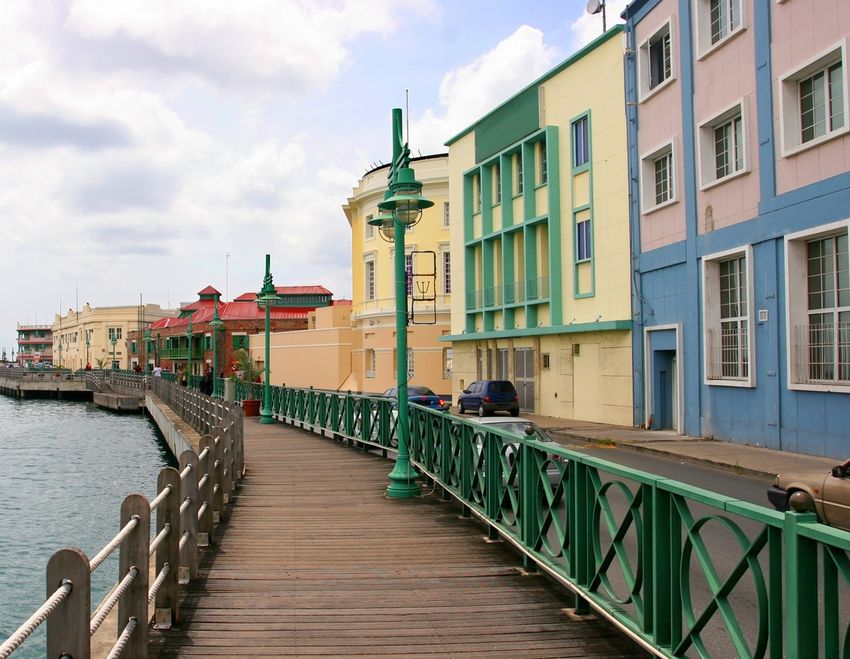
    •   Bahamas: The Bahamas Department of Statistics estimates that real economic activity contracted 14.5% in
        2020. Since then, the ongoing pandemic and the imposition of global travel restrictions have continued to curtail
        economic activity thus far in 2021. Tourism output remained depressed. Air arrivals declined 53.1% y/y over
        January to April 2021, reflecting declines of 63.5% y/y, 56.1% y/y and 6.2% y/y to New Providence, Grand
        Bahama and the Family Islands, respectively. On the fiscal front, revenue losses coupled with greater spending
        worsened the Government of Bahamas’ fiscal deficit by US$628.4mln to US$878.1mln during the first nine
        months of FY2020/21 ended March 2021. National debt climbed US$1.04bln over the nine-month period to
        US$9.95bln (93.1% of IMF 2021 GDP estimate) at the end of March 2021. The Government projects a
        US$951.8mln (7.7% of GDP) deficit for FY2021/22, below its expected US$1.3bln deficit for FY2020/21. Though
        acknowledging that a full recovery of the sector remains contingent on the course of the virus, the Central Bank
        expects modest economic growth in 2021, supported by the partial resumption of tourism services.

CIBC Capital Markets & CIBC FirstCaribbean International Bank                                                      July 2021
Caribbean Market Overview – Q2 2021                                                                                     3

   •   Barbados: Following an 18% contraction in 2020, the Central Bank of Barbados estimates that economic output
       fell by 19.8% y/y during Q1 2021. The tightening of travel restrictions in key source markets, including Canada
       and the UK, and the February lockdown precipitated a further decline in tourism activity, estimated to have
       plunged 96% during the quarter. Output of most other economic sectors shrank too, partly reflecting the
       reintroduction of curfews and restrictions during the quarter. The Government achieved its revised 1% of GDP
       primary deficit target for FY2020/21 ended March 2021, compared to the 6% of GDP primary surplus recorded the
       previous fiscal year; this outturn coincided with a US$404.7mln deterioration in the fiscal balance to a
       US$212.4mln (5.0% of GDP) deficit. On June 18, the IMF announced the completion of its fifth review of
       Barbados’ EFF program, noting that all quantitative targets for end-March 2021 were met, except for the ceiling
       on grants to public institutions due to measures to address the impact of the pandemic. The review made
       available an additional disbursement of US$24mln. Further, on June 24, the World Bank approved a US$100mln
       disbursement for Barbados to support its COVID-19 response and recovery.
   •   Bermuda: Following an estimated 9.0% contraction in 2020, real economic activity has likely remained subdued
       thus far in 2021. Latest tourism statistics also imply that external demand remained weak. Against the backdrop of
       a 66.9% y/y reduction in air capacity, air arrivals declined 86.3% y/y during Q1 2021, but the average length of
       stay almost tripled to 19.7 days, likely an indication of persons taking advantage of the ‘Work from Bermuda’
       programme. Public finances deteriorated considerably during FY2020/21 due to greater (pandemic-related)
       spending and declining revenue. Detailed data on public sector operations after September 2020 remained
       unavailable up to publication time, but the Government expected to post a US$245.5mln deficit for the full
       FY2020/21 ended March 2021, compared to a US$32.5mln deficit in FY2019/20. To finance its deficit, the
       Government raised its debt ceiling from US$2.75bln to US$3.5bln, secured a US$150mln credit facility with local
       financial institutions, and tapped the international capital market for US$1.35bln in August. Consequently,
       Government debt rose to around US$3.35bln (net of the sinking fund), representing 49% of GDP at March 2021.
   •   Costa Rica: The Central Bank of Costa Rica’s most recent quarterly numbers showed that Q1 2021 GDP growth
       came in at -1.6% y/y, improving from the -2.7% y/y and -6.3% y/y posted in Q4 2020 and Q3 2020, respectively,
       as mobility restrictions and social distancing measures were eased. Despite some delays, congress gave the
       green light to the IMF agreement. The deal includes a three-year extended fund facility for US$1.75bln. The deal
       prospect continued to support COSTAR in Q2 as congress moved in the right direction with the administrative
       reform discussion. That being said, expenditure measures rely heavily on political consensus in congress, and
       even though some controversial taxes were removed from the reform proposal, we have already seen strong
       opposition to new or further tax increases. Hence, we expect the positive sentiment around COSTAR to start to
       dissipate late in Q4 as the presidential/congress race collides with the new taxes/revenues discussions in the
       legislative branch.
   •   Dominican Republic: Numbers from the Banco Central de la Republica Dominicana (BCRD) showed Q1 2021
       growth coming in at 3.1% y/y, improving from the -2.9% y/y and -7.2% y/y posted in Q4 2020 and Q3 2020,
       respectively. On the fiscal front, January-May 2021 Central Government revenues reached DOP332.6bln,
       increasing 36.7% y/y, while total expenses reached DOP328.4bln (down 7.0% y/y). With these numbers, the
       12-month Central Government nominal deficit reached DOP252bln or 4.9% of GDP while the primary deficit came
       in at DOP95.5bln or -1.9% of GDP. Moreover, the Government proposed an amended budget law, increasing the
       Central Government deficit by 1.3% of GDP to 4.3% of GDP. Taking into consideration that DOMREP has already
       issued US$2.5bln in external markets and the relatively low issuance in the local market in comparison to the
       US$1.6bln guidance in the budget law, we do not expect to see further external issuance this year. However, we
       would highlight that, contrary to most regional credits, the Government has complete discretion on the breakdown
       of issuance in the domestic and external markets through the year, making the still-pending US$1.3bln-US$1.6bln
       in financing a risk for DOMREP in H2.
   •   El Salvador: Q1 2021 GDP growth increased 3.0% y/y, rebounding from the -2.1% y/y posted a quarter earlier
       and the -10.0% y/y in Q3 2020. This is the first positive quarterly result since the onset of the pandemic and well
       above the -19.5% y/y recorded during the peak of the pandemic in Q2 2020. Recent fiscal numbers indicate that
       January-May Non-Financial Public Sector (NFPS) revenue reached US$3.1bln, increasing 23.8% y/y, while NFPS
       expenses increased to US$3.3bln, maintaining the same level of expenditures during the same period last year.

CIBC Capital Markets & CIBC FirstCaribbean International Bank                                                  July 2021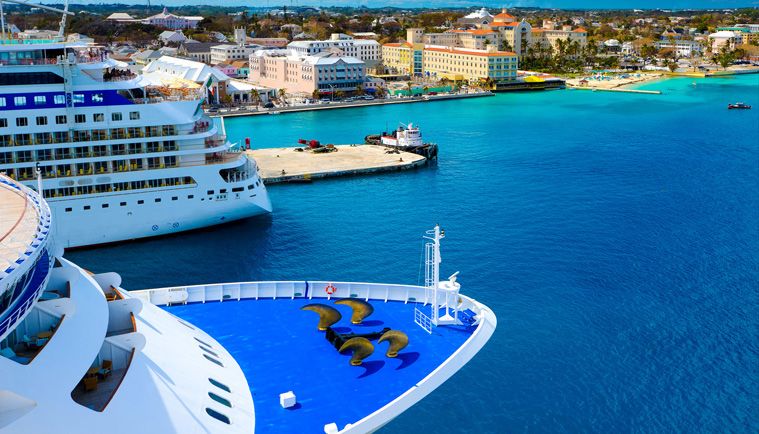
Caribbean Market Overview – Q2 2021                                                                                          4

       With these numbers, the 12-month NFPS nominal deficit came in at US$1.9bln or -7.7% of GDP. The 12-month
       primary deficit came in at US$713mln or -2.9% of GDP. Total public debt sits at 93.0% of GDP. On the political
       front, the overwhelming official party majority in congress voted in favour of removing all of the constitutional court
       judges and the attorney general during the first weekend of May. This situation diluted the initial optimism (IMF
       negotiations) in the credit and reverted the gains seen along the curve at the start of the year. Moreover, although
       congress’ support of an eventual agreement is practically guaranteed with the new composition of congress, we
       remain highly cognizant of the implementation risks into next year and the confrontational attitude taken by the
       Bukele administration over the last two months.
   •   Jamaica: The Statistical Institute of Jamaica estimates that economic activity shrank 6.7% y/y in Q1 2021, a
       slower pace relative to the 8.3% contraction for Q4 2020. The hotel and restaurant sector declined 55.9% y/y
       during the quarter. Stopover arrivals fell 57.5% y/y during January to April, with visitors from the US, Canada and
       the Caribbean lower by 38.2% y/y, 96.3% y/y and 70.9% y/y, respectively, while cruise operations had not yet
       restarted. The Government of Jamaica’s fiscal balance deteriorated from a US$144.6mln surplus during
       FY2019/20 to a US$428.7mln deficit during FY2020/21, ended March 2021. Total Central Government debt stood
       at US$14.36bln at May 2021 as domestic debt rose 1.7% y/y to US$5.18bln and external debt rose 1.3% y/y to
       US$9.18bln. The BOJ expects real GDP growth in the 5% to 8% range for FY2021/22 as the gradual recovery of
       external demand boosts domestic activity against the backdrop of accommodative monetary conditions.
   •   Panama: Q1 2021 GDP numbers maintained a marked negative trend, dropping 8.5% y/y, albeit improving from
       the 10.9% y/y, 23.6% y/y, and 38.2% y/y declines posted in Q4 2020, Q3 2020 and Q2 2020, respectively,
       maintaining one of the largest contractions in Latin America. Non-Financial Public Sector (NFPS) revenues for Q1
       landed at US$2.6bln, up 4.2% y/y. Total expenses increased 7.9% y/y to US$3.6bln. Hence, the Q1 NFPS
       nominal deficit came in at 1.7% of GDP, up from 1.6% in Q1 2020, while the primary deficit reached US$480.6mln
       or -0.8% of GDP. Total NFPS debt reached US$39.7bln in June or 68.1% of GDP. We maintain a downward bias
       with respect to the consensus growth forecast for this year. The spread of the pandemic in the country is still to
       dictate the rate at which internal demand will improve. Further, the market no longer appears to accord Panama
       the benefit of the doubt, with Moody’s, S&P and Fitch all downgrading the country’s credit rating on the lack of a
       credible fiscal consolidation path and the substantial contraction of growth in 2020.
   •   Suriname: The Centrale Bank van Suriname’s latest estimates suggest that real GDP contracted 14.5% in 2020.
       However, the external current account balance improved during the year on account of lower imports and higher
       exports of gold. The Government of Suriname reported a SRD4.30bln fiscal deficit for 2020, lower than the
       SRD5.86bln reported in 2019. Since then, higher revenue and reduced spending on capital works have improved
       the fiscal deficit by SRD423.1mln to SRD175mln over January to February 2021. Suriname’s precarious
       economic situation, including unsustainable fiscal and external financing needs, demands a significant structural
       economic adjustment. The staff-level agreement on the IMF programme is a major step in the right direction, but,
       as the IMF notes, a resolution to negotiations with commercial creditors on the terms of the debt restructuring is a
       necessary complement to restore debt sustainability and close funding gaps, alongside debt relief from bilateral
       partners and additional financing by multilateral institutions.
   •   Trinidad and Tobago: Preliminary indicators suggest that the energy and non-energy sub-sectors have
       remained subdued thus far in 2021, as a significant rise in COVID-19 infections led to a series of tightening
       restrictions. Increased capital receipts coupled with reduced outlays lowered the Government’s fiscal balance by
       US$213.9mln to a US$580.4mln fiscal deficit during the first six months of FY2020/21 ended March 2021. The
       global rebound of energy demand and prices sets the stage for the recovery of Trinidad and Tobago's economy –
       the IMF’s latest estimates suggest growth of 2.1% in 2021. However, economic growth also remains largely
       dependent on the course of the COVID-19 pandemic. Record-high new infections prompted the Government to
       reintroduce lockdown measures and tighten restrictions on non-essential activity in a bid to stem the spread of the
       virus during Q2. The Government will likely continue to withdraw funds from the Heritage Stabilization Fund
       valued at US$5.6bln at March 2021, over the remainder of FY2020/21, while greater borrowing will also likely
       push debt higher by September 2021.

CIBC Capital Markets & CIBC FirstCaribbean International Bank                                                      July 2021
Caribbean Market Overview – Q2 2021                                                                                                                                   5

Chart 1                                                                                     Chart 2
High Yield - 10Y Against Benchmark                                                          Investment Grade - 10Y Against Benchmark
   1370
      bps                                           DOMREP           COSTAR                  700 bps
                                                                                                                PANAMA                BERMUD       TRITOB
                                                    JAMAN            ELSALV
   1170                                                                                      600
                                                    BAHAMA
                                                                                             500
    970
                                                                                             400
    770
                                                                                             300
    570
                                                                                             200
    370                                                                                      100

    170                                                                                         0
      Jan-20            May-20             Sep-20       Jan-21       May-21                     Dec-19        Apr-20         Aug-20     Dec-20   Apr-21
Source: Bloomberg and CIBC Capital Markets – FICC Strategy
10Y bonds are: COSTAR 6 1/8 02/19/31 DOMREP 4 1/2 01/30/30 JAMAN 6 3/4 04/28/28 BAHAMA 6.95 11/20/29 BERMUD 4 3/4 02/15/29
TRITOB 4 1/2 08/04/26 PANAMA 3.16 01/23/30 SURINM 9 ¼ 10/26/26 ELSALV 8 5/8 02/28/29

Chart 3
Caribbean and Central American Bonds Change in Yields Since Last Publication (April 8, 2021)
           BAHAMA 6 5/8 05/15/33
           COSTAR 4 1/4 01/26/23
           BAHAMA 5 3/4 01/16/24
           COSTAR 4 3/8 04/30/25
           BAHAMA 7 1/8 04/02/38
           COSTAR 6 1/8 02/19/31
            ARUBA 4 5/8 09/14/23
           BAHAMA 6.95 11/20/29
          COSTAR 7.158 03/12/45
               COSTAR 7 04/04/44
          BERMUD 4.854 02/06/24
           COSTAR 5 5/8 04/30/43
            TRITOB 4 3/8 01/16/24
             JAMAN 9 1/4 10/17/25
           PANAMA 7 1/8 01/29/26
           PANAMA 9 3/8 04/01/29
             JAMAN 7 7/8 07/28/45
          DOMREP 8 5/8 04/20/27
           PANAMA 8 7/8 09/30/27
           PANAMA 4 1/2 05/15/47
                JAMAN 8 03/15/39
           PANAMA 3.87 07/23/60
             PANAMA 4.3 04/29/53
           PANAMA 3 7/8 03/17/28
           DOMREP 7.45 04/30/44
              PANAMA 4 09/22/24
           PANAMA 3 3/4 03/16/25
           DOMREP 6.85 01/27/45
          DOMREP 5 7/8 01/30/60
          DOMREP 5 1/2 01/27/25
             JAMAN 8 1/2 02/28/36
            DOMREP 6.4 06/05/49
           PANAMA 3.16 01/23/30
          DOMREP 6 7/8 01/29/26
             JAMAN 7 5/8 07/09/25
          DOMREP 4 1/2 01/30/30
            TRITOB 4 1/2 08/04/26
             JAMAN 6 3/4 04/28/28
          DOMREP 5 7/8 04/18/24
            DOMREP 6.6 01/28/24
          ELSALV 7.1246 01/20/50
            ELSALV 7 5/8 02/01/41
            ELSALV 7.65 06/15/35
            ELSALV 7 5/8 09/21/34
           SURINM 9 1/4 10/26/26
            ELSALV 8 5/8 02/28/29
            ELSALV 6 3/8 01/18/27
            ELSALV 5 7/8 01/30/25
            ELSALV 7 3/4 01/24/23
                                    -200             -100              0          100               200                300              400         500         600

Source: Bloomberg (BVAL) and CIBC Capital Markets – FICC Strategy.

CIBC Capital Markets & CIBC FirstCaribbean International Bank                                                                                               July 2021
Caribbean Market Overview – Q2 2021 6
Chart 4 Chart 5
Caribbean – BERMUD, TRITOB and BAHAMA Caribbean – JAMAN and DOMREP
YTM 7 YTM
8 DOMREP '44
BAHAMA '38 DOMREP '45 DOMREP '60
7 6
BAHAMA' 33
6 BAHAMA '29 DOMREP JAMAN JAMAN '36 DOMREP '49
5 4/20/27 10/17/25
DOMREP DOMREP '48
5 4/18/24 JAMAN '45
BAHAMA '24 4 DOMREP '30
4 DOMREP '28 JAMAN '39
TRITOB '27 DOMREP
3 3
JAMAN 7/9/25 1/25/27
TRITOB '24 DOMREP '26
2 BERMUD '27
2 DOMREP '25
BERMUD '23 DOMREP
1 Modified Duration
BERMUD '24 1/28/24
Modified Duration 1
0
0 2 4 6 8 10 12 14 16
0 2 4 6 8 10
Source: Bloomberg and CIBC Capital Markets – FICC Strategy Source: Bloomberg and CIBC Capital Markets – FICC Strategy
Chart 6 Chart 7
Central America – Panama, Costa Rica, and El ELSALV ‘25s vs. COSTAR ‘25s
Salvador
12 YTM 500
ELSALV '29 ELSALV '41
ELSALV '23
10 ELSALV '34
400
ELSALV '35
ELSALV '50 COSTAR '45
8 300
ELSALV '25ELSALV '27 ELSALV '32
COSTAR '44
6 COSTAR '43 200
PANAMA '50
COSTAR '31 PANAMA '36
COSTAR '23
4 COSTAR '25 100
PANAMA '60
PANAMA '29 PANAMA '30
PANAMA '53
2
PANAMA '24 PANAMA '28 0
PANAMA '27 PANAMA '47
PANAMA '25 PANAMA '26 Modified Duration
0 -100
0 5 10 15 20 25 Apr-19 Aug-19 Dec-19 Apr-20 Aug-20 Dec-20 Apr-21
Source: Bloomberg and CIBC Capital Markets – FICC Strategy Source: Bloomberg and CIBC Capital Markets – FICC Strategy
Chart 8 Chart 9
COSTAR ‘45s vs. DOMREP ‘45s PANAMA ‘24s vs. BAHAMA ‘24s and BERMUD ‘24s
350 400
200
300
0
250 -200
-400
200
-600
150 -800
-1000
100 -1200
-1400 PANAMA '24s - BAHAMA '24s
50
-1600 PANAMA '24s - BERMUD '24s
0 -1800
Apr-19 Aug-19 Dec-19 Apr-20 Aug-20 Dec-20 Apr-21 Dec-19 Apr-20 Aug-20 Dec-20 Apr-21
Source: Bloomberg and CIBC Capital Markets – FICC Strategy Source: Bloomberg and CIBC Capital Markets – FICC Strategy
CIBC Capital Markets & CIBC FirstCaribbean International Bank July 2021
Caribbean Market Overview – Q2 2021                                                                                                                          7

Table 1
Public Sector Fiscal Accounts and Debt 2021 or 2021/22
                                                     Primary/Adjusted                Nominal    Gross Government      Net Public Sector         Real
  2021 or 2021/22                                         Balance                    Balance           Debt                 Debt             GDP Growth
                                                         % of GDP                    % of GDP       % of GDP              % of GDP            % of GDP
  Antigua and Barbuda                                      -3.5%                       -5.8%         111.8%                  n.a.              -3.0%
  Aruba                                                   -13.0%                      -18.6%         130.3%                88.6%                5.0%
  The Bahamas                                              -8.9%                      -12.5%          88.6%                82.7%                2.0%
  Barbados                                                  0.0%                       -4.1%         138.3%                133.3%               4.1%
  Belize                                                   -4.5%                       -8.7%         128.6%                123.6%               1.9%
  Bermuda                                                  -1.0%                       -2.8%          44.5%                 8.2%                5.0%
  Cayman Islands                                            1.2%                       -1.6%           7.1%                  n.a.               5.0%
  Costa Rica                                               -2.0%                       -7.5%           76%                   n.a.               2.9%
  Dominica                                                  0.9%                       -0.8%         100.2%                  n.a.              -0.4%
  Dominican Republic                                       -1.5%                       -4.3%          60.0%                  n.a                7.0%
  El Salvador                                              -4.0%                       -8.0%         100.0%                  n.a.               5.0%
  Grenada                                                   1.5%                       -0.9%          74.4%                  n.a.              -1.5%
  Jamaica                                                   6.1%                       -0.4%         100.0%                91.8%                1.5%
  Panama                                                   -4.1%                       -7.5%           78%                   n.a.               8.5%
  St. Kitts and Nevis                                      -3.6%                       -5.5%          72.5%                  n.a.              -2.0%
  St. Lucia                                                -3.0%                       -6.6%          91.3%                  n.a.               3.1%
  St. Vincent and the Grenadines                           -3.6%                       -6.0%          91.7%                89.0%               -0.1%
  Suriname                                                 -6.2%                      -16.4%         157.4%                  n.a.               0.7%
  Trinidad and Tobago                                      -4.5%                       -8.5%          61.6%                  n.a.               2.1%
Sources: IMF, Bloomberg, CIBC Capital Markets, Standard and Poor's, Moody’s.
NA: Not available.

Table 2
Ratings of Caribbean Sovereigns
                                                                                                                       Ratings Key
    2021 Ratings                                                                                   Investment Grade                     High Yield
                                                         S&P                   Moody’s          S&P             Moody’s             S&P            Moody’s
    Aruba                                                BBB                     NA             AAA               Aaa               BB+             Ba1
    The Bahamas                                           BB-                   Ba2              AA+              Aa1                BB             Ba2
    Barbados                                               B-                   Caa1             AA               Aa2               BB-             Ba3
    Bermuda                                               A+                     A2              AA-              Aa3                B+              B1
    Cayman                                                NA                    Aa3              A+               A1                 B               B2
    Costa Rica                                             B                     B2               A               A2                 B-              B3
    Dominican Republic                                    BB-                   Ba3               A-              A3               CCC+             Caa1
    El Salvador                                            B-                    B3             BBB+             Baa1              CCC              Caa2
    Jamaica                                               B+                     B2             BBB              Baa2              CCC-             Caa3
    Panama                                               BBB                    Baa2            BBB-             Baa3               CC               Ca
    Trinidad and Tobago                                  BBB-                   Ba1
Sources: Bloomberg, S&P, and Moody’s

CIBC Capital Markets & CIBC FirstCaribbean International Bank                                                                                    July 2021
Caribbean Market Overview – Q2 2021 8
Table 3
Caribbean Bonds and Indicative Prices/Spreads (July 22, 2021)
Aruba
Bond Price Yield 3m Yield Change Z-Spread S&P Moody's Fitch
ARUBA 4 5/8 09/14/23 104.19 2.59% -69.36 -13.56 BBB NR BB
Bahamas
Bond Price Yield 3m Yield Change Z-Spread S&P Moody's Fitch
BAHAMA 5 3/4 01/16/24 102.78 4.55% -102.18 408.63 BB- Ba2 NA
BAHAMA 6.95 11/20/29 105.26 6.13% -65.39 504.77 BB- Ba2 NA
BAHAMA 6 5/8 05/15/33 100.31 6.59% -117.53 530.80 BB- Ba2 NA
BAHAMA 7 1/8 04/02/38 96.96 7.44% -86.86 595.90 BB- Ba2 NA
Barbados
Bond Price Yield 3m Yield Change Z-Spread S&P Moody's Fitch
BARBAD 6 1/2 10/01/29 101.24 6.30% 18.35 532.56 B- Caa1 NA
Bermuda
Bond Price Yield 3m Yield Change Z-Spread S&P Moody's Fitch
BERMUD 4.138 01/03/23 105.31 0.42% -35.72 12.22 A+ A2 NA
BERMUD 4.854 02/06/24 110.57 0.63% -49.79 14.66 A+ A2 NA
BERMUD 3.717 01/25/27 109.60 1.87% -13.37 94.35 A+ A2 NA
BERMUD 3.717 01/25/29 117.50 2.22% -16.62 111.01 A+ A2 NA
Costa Rica
Bond Price Yield 3m Yield Change Z-Spread S&P Moody's Fitch
COSTAR 4 1/4 01/26/23 102.11 2.80% -115.96 247.34 B B2 B
COSTAR 4 3/8 04/30/25 103.35 3.42% -99.73 279.92 B B2 B
COSTAR 6 1/8 02/19/31 107.40 5.14% -70.29 393.21 B B2 B
COSTAR 5 5/8 04/30/43 94.73 6.06% -44.26 455.92 B B2 B
COSTAR 7 04/04/44 106.05 6.49% -61.94 500.34 B B2 B
COSTAR 7.158 03/12/45 107.13 6.56% -65.07 507.71 B B2 B
Dominican Republic
Bond Price Yield 3m Yield Change Z-Spread S&P Moody's Fitch
DOMREP 5 7/8 04/18/24 106.44 3.38% 29.26 165.09 BB- Ba3 WD
DOMREP 6.6 01/28/24 110.87 2.12% 32.95 168.31 BB- Ba3 WD
DOMREP 5 1/2 01/27/25 110.06 2.48% -10.51 186.50 BB- Ba3 WD
DOMREP 6 7/8 01/29/26 116.14 3.02% -6.82 230.26 BB- Ba3 BB-
DOMREP 5.95 01/25/27 112.78 3.38% 0.86 252.70 BB- Ba3 BB-
DOMREP 8 5/8 04/20/27 123.00 4.08% -23.83 256.67 BB- Ba3 BB-
DOMREP 6 07/19/28 114.35 3.65% -19.20 265.32 BB- Ba3 BB-
DOMREP 4 1/2 01/30/30 102.59 4.14% -2.86 300.89 BB- Ba3 BB-
DOMREP 7.45 04/30/44 122.22 5.69% -13.52 422.08 BB- Ba3 BB-
DOMREP 6.85 01/27/45 114.57 5.72% -10.88 421.45 BB- Ba3 BB-
DOMREP 6 1/2 02/15/48 110.62 5.72% -11.14 420.06 BB- Ba3 BB-
DOMREP 6.4 06/05/49 109.19 5.73% -9.00 421.80 BB- Ba3 BB-
DOMREP 5 7/8 01/30/60 100.63 5.83% -10.85 432.10 BB- Ba3 BB-
El Salvador
Bond Price Yield 3m Yield Change Z-Spread S&P Moody's Fitch
ELSALV 7 3/4 01/24/23 97.64 9.48% 492.00 902.34 B- B3 B-u
ELSALV 5 7/8 01/30/25 91.22 8.84% 323.05 813.01 B- B3 B-u
ELSALV 6 3/8 01/18/27 88.43 9.10% 308.33 824.29 B- B3 B-u
ELSALV 8 5/8 02/28/29 94.64 9.63% 264.16 859.50 B- B3 B-
ELSALV 8 1/4 04/10/32 92.40 9.39% 198.90 812.78 B- B3 B-u
ELSALV 7 5/8 09/21/34 86.92 9.37% 186.23 807.69 B- B3 B-u
ELSALV 7.65 06/15/35 88.88 9.07% 172.88 772.08 B- B3 B-u
ELSALV 7 5/8 02/01/41 85.71 9.22% 164.53 779.56 B- B3 B-u
ELSALV 7.1246 01/20/50 82.28 8.84% 122.54 737.23 B- B3 B-
CIBC Capital Markets & CIBC FirstCaribbean International Bank July 2021Caribbean Market Overview – Q2 2021 9
Jamaica
Bond Price Yield 3m Yield Change Z-Spread S&P Moody's Fitch
JAMAN 7 5/8 07/09/25 115.67 3.36% -4.65 155.92 B+ B2 B+u
JAMAN 9 1/4 10/17/25 122.53 3.47% -37.63 273.86 B+ B2 B+u
JAMAN 6 3/4 04/28/28 117.47 3.79% 0.97 249.31 B+ B2 B+u
JAMAN 8 1/2 02/28/36 139.85 4.70% -9.68 332.65 B+ B2 B+u
JAMAN 8 03/15/39 140.73 4.60% -21.17 308.62 B+ B2 B+u
JAMAN 7 7/8 07/28/45 140.49 4.97% -25.25 347.00 B+ B2 B+u
Panama
Bond Price Yield 3m Yield Change Z-Spread S&P Moody's Fitch
PANAMA 4 09/22/24 108.85 1.14% -12.88 42.99 BBB Baa2 BBB-
PANAMA 3 3/4 03/16/25 108.86 1.25% -12.79 53.06 BBB Baa2 BBB-
PANAMA 7 1/8 01/29/26 124.53 1.48% -33.01 77.07 BBB Baa2 BBB-
PANAMA 8 7/8 09/30/27 138.69 2.15% -23.50 125.28 BBB Baa2 BBB-
PANAMA 3 7/8 03/17/28 110.59 2.16% -15.47 114.84 BBB Baa2 BBB-
PANAMA 9 3/8 04/01/29 148.47 2.42% -30.87 136.33 BBB Baa2 BBB-
PANAMA 3.16 01/23/30 105.39 2.45% -7.33 129.69 BBB Baa2 BBB-
PANAMA 6.7 01/26/36 137.62 3.39% -15.71 187.78 BBB Baa2 BBB-
PANAMA 4 1/2 05/15/47 115.33 3.58% -22.37 200.45 BBB Baa2 BBB-
PANAMA 4 1/2 04/16/50 115.12 3.65% -19.52 205.43 BBB Baa2 BBB-
PANAMA 4.3 04/29/53 112.32 3.64% -18.90 206.66 BBB Baa2 BBB-
PANAMA 3.87 07/23/60 104.13 3.67% -18.98 210.07 BBB Baa2 BBB-
Trinidad and Tobago
Bond Price Yield 3m Yield Change Z-Spread S&P Moody's Fitch
TRITOB 4 3/8 01/16/24 105.91 1.91% -38.31 150.38 BBB- Ba1 NA
TRITOB 4 1/2 08/04/26 106.44 3.10% -1.23 228.03 BBB- Ba1 NA
Source: Bloomberg (BVAL) and CIBC Capital Markets – FICC Strategy
CIBC Capital Markets & CIBC FirstCaribbean International Bank July 2021Caribbean Market Overview – Q2 2021 10 Caribbean Economic Review CIBC Capital Markets & CIBC FirstCaribbean International Bank July 2021
Caribbean Market Overview – Q2 2021                                                                                                                                                                                                            11
2-

Caribbean Economic Review                                                                                                                                                         Tiffany Grosvenor-Drakes
                                                                                                                                                                                         CIBC FirstCaribbean
Eighteen months following the advent of the COVID-19 pandemic, signs of a tangible global economic recovery have
begun to surface. Looser monetary conditions, fiscal stimulus and vaccination efforts have cemented recovery progress in
several major markets, but virus resurgence, lack of vaccine access and/or the absence of fiscal support have restricted
significant headway in others. Of the region’s major trading partners, the US and Canada recorded annualised real GDP
growth of 6.4% and 5.6%, respectively, in Q1 2021, primarily reflecting greater personal consumption spending,
Government transfers and private investment. In contrast, UK real GDP fell 1.5% q/q, as the impact of Government-
imposed restrictions on manufacturing output and services overshadowed an expansion in construction activity.
Meanwhile, the uptick in global demand, combined with adverse climatic conditions and supply chain disruptions have
spawned a surge in prices across the globe, prompting some central banks to weigh the potential impact of raising interest
rates – a move that could cloud the course of recovery. Specifically, oil prices soared despite the easing of OPEC+ supply
cuts, with the price of WTI crude oil increasing 51.9% year-to-date to US$73/barrel at the end of June 2021, while
international food and beverage prices climbed 19.9% year-to-date at the end of the same period, aided by drought in key
export markets and rising shipping costs.
However, signs of a Caribbean economic recovery have paled in comparison to the global picture. The reintroduction of
travel restrictions in key source markets coupled with virus resurgence in several markets kept economic activity in the
region subdued year-to-date 2021. Tourism dependents, in particular, suffered substantial declines as stay-over arrivals to
the region plunged 78.1% y/y during Q1 2021, relative to an almost normal Q1 2020 – when the effects of the pandemic
had not yet fully set in – while cruise vessel operations remained on pause. Further, rising COVID-19 infections compelled
some Governments, including Aruba, Barbados, Bermuda, Curacao, Jamaica and Turks and Caicos Islands to tighten
restrictions and reinstate lockdowns, limiting domestic traffic and business activity. The jaded performance of the
accommodation sector coupled with limitations on non-essential services continued to hamper growth in wholesale and
retail, transportation storage and communication, and other related services’ sectors year-to-date 2021. Although
commodity exporters were poised to benefit from the improved demand and more favourable energy prices, virus
resurgence in Trinidad and Tobago and Suriname also led to an escalation of restrictive measures to stem the spread,
and likely hampered productive activity. However, ramped up oil production continued to boost economic output in
Guyana, while preliminary indicators of non-oil activity imply a mixed performance in Q1 2021. Meanwhile, concerted
efforts by regional Governments to advance vaccination programmes have gained momentum. However, progress
remained uneven with the Caymans Islands administering at least a first dose to over 74% of its population by the end of
June, and at other end of the spectrum, Jamaica had not yet reached 10%.
Regional consumer price inflation exhibited modest quickening over the twelve months ended March 2021 likely heralding
the climbing of global commodity prices. Regional consumer prices (excluding Suriname) rose 1.2% y/y, accelerating from
0.9% y/y recorded one year earlier, as prices rose in all markets except Aruba, St. Kitts and Nevis and St. Vincent and the
Grenadines. Meanwhile, consumer prices in Suriname increased 50.7% y/y during March 2021, up from 17.6% y/y during
March 2020, but slowed relative to the 60.7% y/y recorded during December 2020.

Chart 1                                                                                                                   Chart 2
Trends in Regional1 Tourist Arrivals                                                                                      Regional2 Loan and Deposit Growth (y/y; %)
      40 12-mth moving                                                                       (mln)                               10
                                               Total Stay-Over Arrivals (R)
         average                                                                                                                                                                                                Total Deposits
      20 growth (%)                            Growth in Tourist Arrivals (L)                                                      8
       0                                                                                                                                                                                                        Total Loans
                                                                                                                                   6
      -20                                                                                                                          4
      -40                                                                                                                          2
      -60                                                                                                                          0
      -80                                                                                                                         -2
     -100                                                                                                                         -4
         Mar-17 Sep-17 Mar-18 Sep-18 Mar-19 Sep-19 Mar-20 Sep-20 Mar-21                                                             Dec-16 Jun-17 Dec-17 Jun-18 Dec-18 Jun-19 Dec-19 Jun-20 Dec-20

Source: Caribbean Tourism Organization, Eastern Caribbean Central Bank and CIBC FirstCaribbean.                           Source: Regional authorities and CIBC FirstCaribbean.

1 Caribbean region includes: Anguiilla, Antigua and Barbuda, Aruba, the Bahamas, Barbados, Belize, British Virgin Islands, Cayman Islands, Curaçao, Dominica, Grenada, Jamaica, St. Kitts and Nevis, St. Lucia,
St. Maarten and St. Vincent and the Grenadines.
2 Caribbean region includes: Anguilla, Antigua and Barbuda, Aruba, the Bahamas, Barbados, Belize, Curaçao, Dominica, Grenada, Jamaica, St. Kitts and Nevis, St. Lucia, St. Maarten, St. Vincent and the Grenadines, Trinidad and Tobago, and

Turks and Caicos Islands.

CIBC Capital Markets & CIBC FirstCaribbean International Bank                                                                                                                                                                July 2021
Caribbean Market Overview – Q2 2021 12
2-
The pandemic’s drag on economic activity has cast a dark shadow on the region’s fiscal accounts. Significant borrowing
led to a surge in public debt for all markets, except Cayman Islands, St. Kitts and Nevis, and Turks and Caicos Islands,
with latest data suggesting that at least six markets, namely Aruba, Barbados, Belize, Dominica, Jamaica and Suriname
now post public debt ratios above 100% of GDP. Moreover, the strain on public finances averted fiscal consolidation
progress in Aruba, Bahamas, Barbados and Jamaica, while public debt in Barbados and Jamaica in particular, reverted
from its downward trajectory. However, the Jamaica Government continued to reiterate its commitment to debt reduction
post-recovery. And, the Barbados Government met most of its revised IMF targets for end-March 2021, but has delayed
its 60% debt target by two years to FY2034/35. Meanwhile, following its bond deferral agreement and expected
resumption of interest payments in May 2021, the Government of Belize also missed this payment and has engaged
bondholders to seek yet another restructuring of its 2034 ‘superbond’. Also, the IMF announced a staff-level agreement
on a US$690mln three-year Extended Fund Facility for Suriname in support of its homegrown economic reform
programme, which is expected to be complemented by a comprehensive debt restructuring. In addition to borrowing to
support financing requirements, the Government of Trinidad continued to make withdrawals from its Heritage Stabilization
Fund during Q1 2021, which fell to US$5.6bln at March 2021. Conversely, the Government of Guyana continued to
receive oil earnings and royalties into its Natural Resource Fund, which rose to US$267.7mln at the end of the same
period.
Following a build-up for most markets in 2020 associated with a high reliance on external borrowing, FX reserves
remained largely elevated thus far in 2021. However, as borrowing slowed and import outflows likely nudged upward in
light of rising oil prices and a pick-up in domestic activity following initial lockdowns, FX reserves started to trend
downward for some markets, including Bahamas and Barbados. Meanwhile, rising deposits and either falling credit
balances or slower growth coincided with greater excess liquidity of most regional commercial banking systems. However,
latest available data suggest a modest rise in non-performing loans, while banks’ profitability slipped amid lower interest
income and higher loan provisioning.
The IMF latest projections suggest global real GDP growth of 6.0% in 2021 founded on the additional fiscal stimulus in
some major economies and the impetus of vaccine progress over the second half of year. However, uncertainty
surrounding the course of the pandemic, including the birth of new variants, continue to pose a downside risk to expected
outcomes. Meanwhile, the sluggish tourism rebound, intermitted by sporadic lockdowns, and staggered vaccine progress
suggest a long road to recovery for the Caribbean region. Most markets are not expected to return to pre-crisis output
levels for a few years, even in the absence of additional external shocks, e.g., the increased likelihood of a severe
hurricane, given the expected above average season for 2021. Further, the recently proposed implementation of a 15%
global minimum corporate income tax rate intended to ensure multinational companies pay their fair share of tax, could
have negative implications for Caribbean international financial centres over the medium-term.
Chart 3
Regional3 Inflation and Intl. Commodity Prices (y/y; %)
5 110
Regional Inflation Rate (L) 90
4
70
3 50
30
2
10
1 -10
-30
0
-50
-1 -70
Mar-17 Sep-17 Mar-18 Sep-18 Mar-19 Sep-19 Mar-20 Sep-20 Mar-21
Source: Regional authorities, International Monetary Fund and CIBC FirstCaribbean.
* Average of U.K. Brent, Dubai and West Texas Intermediate + International Monetary Fund Food Index.
3Caribbean region includes Anguilla, Antigua and Barbuda, Aruba, Barbados, Belize, British Virgin Islands, Cayman Islands, Curaçao, Dominica, Grenada, Jamaica, St. Kitts and Nevis, St. Lucia, St. Maarten, St.
Vincent and the Grenadines and Trinidad and Tobago.
CIBC Capital Markets & CIBC FirstCaribbean International Bank July 2021Caribbean Market Overview – Q2 2021 13
2-
Antigua and Barbuda Tiffany Grosvenor-Drakes
CIBC FirstCaribbean
Production, Prices, and Employment
Following a 16.0% contraction in 2020, preliminary indicators suggest that the pandemic continued to hamper real
economic activity in Q1 2021.
• Against the backdrop in increased COVID-19 infections, the tourism services sector remained largely unoccupied
with total visitor arrivals and visitor spending plunging 93.0% y/y and 72.7% y/y, respectively during the quarter.
The number of stay-over visitors in particular fell 74.0% y/y, reflecting declines of 54.0% y/y, 97.7% y/y, 86.3% y/y
and 81.1% y/y from the US, Canada, UK and Caribbean, respectively. Yacht passenger arrivals fell 77.8% below
Q1 2020 while cruise operations remained on hold. Consequently, activity in associated sectors, including
wholesale and retail trade, transport storage and communication, likely remained subdued.
• Indicators of construction and investment activity imply a mixed performance during Q1 2021. Imports of inedible
crude materials except fuels expanded 18.4% y/y, but imports of machinery and transport equipment declined
31.5% y/y. However, Antigua and Barbuda’s trade deficit improved 17.6% y/y to US$117.2mln largely on account
of an overall 21.6% y/y fall-off in import payments.
The consumer price index rose 2.1% y/y during March 2021. The prices of transport and communication increased 13.5%
y/y and 8.6% y/y, respectively, but the price of food and non-alcoholic beverages fell 0.3% y/y, and the price of housing,
utilities gas and fuels declined 2.5% y/y.
Developments in Financial Markets
Commercial banks’ loans and advances recorded a 0.2% uptick over the three months to March 2021, as corporate
balances grew 0.9%, but retail balances fell 0.9%. Meanwhile, total deposits rose 2.7% reflecting higher balances of
demand (5.7%), savings (1.4%) and time (0.5%) deposits. Consequently, the loan to deposit ratio fell 1.9 percentage
points to 71.4% at March 2021.
The weighted average lending rate fell 6bps since December 2020 to 7.52% at March 2021, but the weighted average
deposit rate rose 3bps to 1.52% over the same period.
Banks’ loan quality and profitability worsened during Q1 2021.
• The non-performing loan ratio rose marginally from 6.3% to 6.5% over the three months to March 2021, while the
annualised return on assets fell from 1.7% during Q1 2020 to 0.2% during Q1 2021. Banks’ capital adequacy ratio
rose marginally 35.0% at March 2021.
Chart 1
Stay-Over Tourist Arrivals Chart 2
Inflation (y/y; %)
3,000 (US$/person) (000's) 360 5 All Items (L)
320 4 Food (L)
2,500 280 3
240 2
2,000 200 1
160 0
1,500 Visitor Expenditure/person (L) 120 -1
Stay-Over Arrivals (R)
80 -2
1,000 40 -3
Mar-17 Sep-17 Mar-18 Sep-18 Mar-19 Sep-19 Mar-20 Sep-20 Mar-21 2016Q1 2017Q1 2018Q1 2019Q1 2020Q1 2020Q1
Source: Eastern Caribbean Central Bank and CIBC FirstCaribbean, Caribbean Tourism Organization. Source: Eastern Caribbean Central Bank and CIBC FirstCaribbean.
CIBC Capital Markets & CIBC FirstCaribbean International Bank July 2021Caribbean Market Overview – Q2 2021 14
2-
Government Debt
Data on public sector operations after December 2020 remained unavailable up to publication time.
The Government of Antigua and Barbuda reports that lower current spending mitigated the revenue losses associated
with the pandemic containing the fiscal deficit to US$74.9mln (5.3% of GDP) in 2020, relative to a US$61.7mln deficit in
2019.
• A US$13.1mln (31.4% y/y) fall-off in Citizenship by Investment (CBI) receipts underpinned a US$14.1mln decline
in non-tax revenue, while tax receipts fell US$23.0mln (9.2% y/y). Taxes on income and profits rose US$3.0mln,
likely reflecting business performance in the previous year, but taxes on property, domestic goods and services,
and international trade and transactions declined US$3.9mln (37.0% y/y), US$15.5mln (13.7% y/y), and
US$6.6mln (6.9% y/y), respectively. Capital revenue nudged upward US$0.8mln (69.4% y/y).
• Meanwhile, the Government’s current spending declined US$29.7mln (8.6% y/y). Outlays for goods and services
contracted US$13.0mln (23.1% y/y), while expenditure on personal emoluments, transfers and subsidies and
interest fell US$3.1mln (2.1% y/y), US$6.6mln (6.8% y/y) and US$6.9mln (16.1% y/y), respectively. However,
capital spending rose US$6.6mln (20.7% y/y) during 2020.
Public debt climbed 4.5% y/y to US$1.32bln (93.6% of GDP – ECCB estimate) at December 2020. Apart from US$13mln
in emergency financing from the CDB, Government financed its operations largely from domestic sources. Central
Government debt rose 6.0% y/y to US$1.14bln, while public corporations debt fell 4.2% y/y to US$182.0mln at the end of
the same period. A build-up of arrears (US$57.8mln) was also evident during the year.
Outlook
The ECCB’s latest estimates suggest that real economic activity will grow by a shy 1.0% in 2021 largely reflecting modest
upticks in the output of the hotel and restaurant, wholesale and retail, real estate and construction sectors. However, the
flare-up of the COVID-19 outbreak in Q1 2021 underscores the sensitivity of the expected recovery to ongoing
developments. Nevertheless, the Government remains optimistic about the tourism recovery in the latter half of the year,
as the global recovery powers on and as the distribution of vaccines progresses on the domestic front. The rebound of
productive activity remains critical to the improvement of Government’s flailing financial position, while the on-going build-
up of arrears continues to generate cause for concern.
Chart 3 Chart 4
Public Sector Debt Outstanding Growth in Key Balances (y/y; %)
1,350 (US$mln) 15
1,300 Loans
10
1,250 Deposits
5
1,200
1,150 0
1,100
-5
1,050
1,000 -10
2016Q4 2017Q4 2018Q4 2019Q4 2020Q4 2016Q1 2017Q1 2018Q1 2019Q1 2020Q1 2021Q1
Source: Eastern Caribbean Central Bank and CIBC FirstCaribbean. Source: Eastern Caribbean Central Bank and CIBC FirstCaribbean.
CIBC Capital Markets & CIBC FirstCaribbean International Bank July 2021Caribbean Market Overview – Q2 2021 15
2-
Aruba Tiffany Grosvenor-Drakes
CIBC FirstCaribbean
Production, Prices, and Employment
After losing nearly one quarter (22.3%) of real economic activity in 2020, preliminary indicators suggest productive output
remained weak in Q1 2021.
• Rising COVID-19 infections prompted the Government to tighten restrictions in Q1, limiting domestic traffic and
business activity. Indicators of investment output also imply a lackluster performance. Specifically, the number
and value of construction permits granted fell 31.6% y/y and 21.2% y/y, respectively, while total cement imported
shrank 24.0% y/y during the quarter.
• Meanwhile, the tourism services sector remained under pressure likely contributing to the reduced demand in
most other sectors. Stay-over visitors contracted 25.2% y/y during January to April, with arrivals from the US,
Latin America and Europe declining 13.9% y/y, 54.8% y/y and 46.5% y/y, respectively, but gathered momentum
over the four-month period. Meanwhile, cruise operations remained on hold.
The Centrale Bank van Aruba reports that the unemployment rate climbed from 5.2% in 2019 to 14.0% in 2020.
Consumer prices nudged upward 0.4% y/y during April 2021, following consecutive y/y declines over the last 12 months.
Developments in Financial Markets
The weak domestic environment kept loan demand subdued over the four months to April 2021, while deposits growth
remained robust, increasing banks’ excess liquidity over the period.
• Bank lending fell 1.1% year to date as a fall-off in credit to businesses reduced corporate lending by 0.5% and retail
lending dipped by 1.3% reflecting declines of 0.4% and 5.1% in mortgages and consumer loans, respectively.
• Meanwhile deposits expanded 3.6% year to date, as increases of 8.3% and 0.6% in demand and savings deposits
eclipsed 4.9% drop in time deposits.
• As a result, banks’ loan-to-deposit ratio fell 3.3 percentage points over the four-month period to 70.3% at April
2021.
The weighted average interest rate on loans fell 50bps y/y to 6.3% at March 2021, while the weighted average rate on
deposits rose 10bps y/y to 2.1%, reducing the average spread to 4.2%.
Loan delinquencies increased as the bank’s non-performing loan ratio increased from 2.9% at March 2020 to 6.1% at
March 2021, but bank’s return on assets in Q1 2021 stood at 0.4% during Q1 2021, on par with the level recorded one
year earlier. However, regulatory capital to risk-weighted assets climbed 2.2 percentage points y/y to 33.7%, far in excess
of the 16% stipulated requirement.
Chart 1 Chart 2
Real GDP and Unemployment (%) Growth in Tourist Arrivals and Length of Stay
10 16 1,220 12-month (nights) 11
rolling Tourist Arrivals (L) 10
5 14
1,020 000's of 9
0 12 persons 8
820 7
10
-5 6
8 620
-10 5
6 4
420
-15 4 3
-20 Real GDP Growth (L) 220 2
2
Unemployment Rate (R) 1
-25 0 20 0
2012 2013 2014 2015 2016 2017 2018 2019 2020 Apr-17 Oct-17 Apr-18 Oct-18 Apr-19 Oct-19 Apr-20 Oct-20 Apr-21
Source: Centrale Bank van Aruba and CIBC FirstCaribbean. Source: Caribbean Tourism Organization, Centrale Bank van Aruba and CIBC FirstCaribbean.
CIBC Capital Markets & CIBC FirstCaribbean International Bank July 2021You can also read


