Cement - Data-Driven Actions to Protect Our Future - Ximang.vn
←
→
Page content transcription
If your browser does not render page correctly, please read the page content below

News   Branding    Photography     2020 Tips   Analysis   Fans   Bagging   Eltomation   CemFuels   AUCBM   Philippines

 www.globalcement.com
                                                                  gl bal
                                                                      cement
                                                                                                                  TM
   Contents       Subscribe      Ad Index

 JANUARY 2020                                                                                 MAGAZINE

       Data-Driven Actions to Protect Our Future

                                                                                  www.dalog.net
Optimization
              of Crushers
               and Mills

                                             Machine Learning
                                               Algorithms

Cloud-Based
Maintenance
   Support

                                 Load
                             and Vibration
                             Measurements

                                                                Condition
                                                                Monitoring
                                                                 Training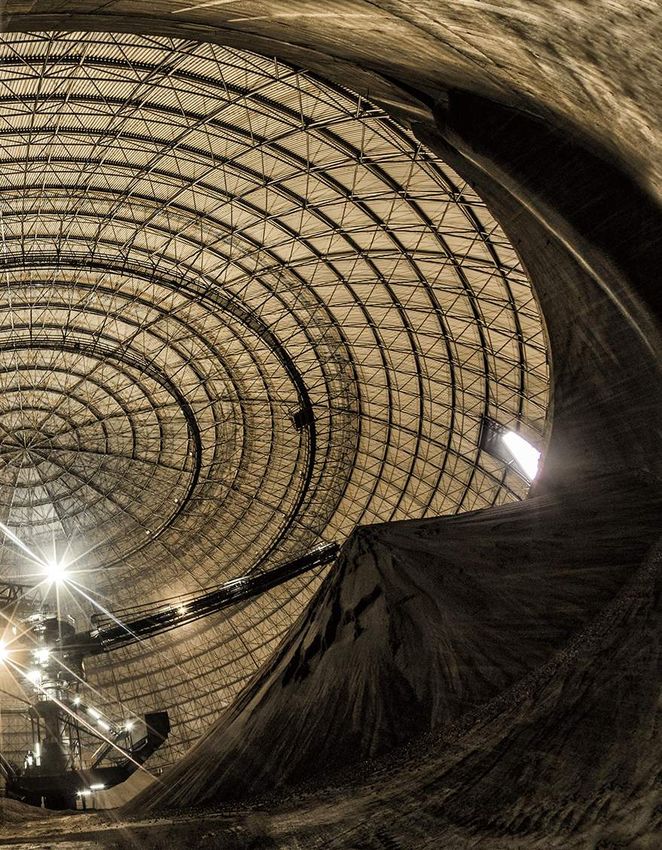
www.dalog.net

Empowering decision makers with
 Online Condition Monitoring and
       Predictive Analytics

    Global Data-Driven Maintenance
       and Process Optimization

                For more information contact:
                Christoph Muschaweck
                E-mail: christoph.muschaweck@dalog.net
                Phone: +49 821 74777 - 115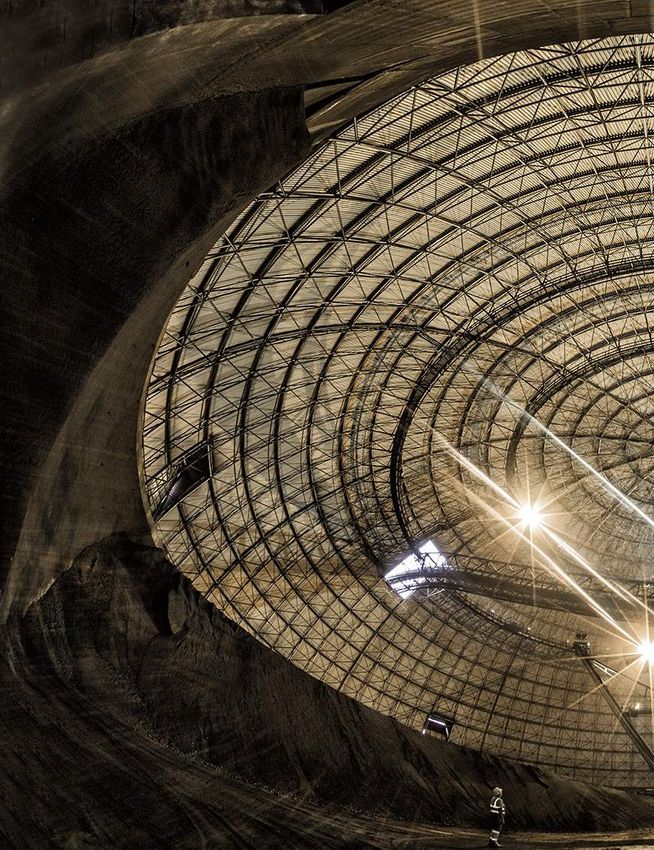
GLOBAL CEMENT MAGAZINE: DEAR READERS NOVEMBER2013 Subscribe Ad Index
gl bal
cement
News Branding Photography 2020 Tips Analysis Fans Bagging Eltomation CemFuels Chains AUCBM Philippines On the cover...
January 2020
www.globalcement.com
gl bal
cement
TM TM
DALOG Diagnosesysteme GmbH provides online condition
www.globalcement.com
JANUARY 2020 MAGAZINE
monitoring solutions for data-driven maintenance and
process optimisation. Its solutions improve machine
Philippines
MAGAZINE availability, lifetime and energy efficiency with the goal
AUCBM
Chains
of increasing profitability while lowering the environmental
CemFuels
footprint of industries worldwide.
Eltomation
Bagging
www.globalcement.com
Fans
Analysis
The DALOG Diagnostic Center serves hundreds of customers
2020 Tips
around the globe, helping them minimise downtime and
Photography
Exclusive Official Magazine for optimise the life cycle of their machines. The company can
Branding
Data-Driven Actions to Protect Our Future
count on its in-house development team for sensor, data
News
Global Cement Conferences: Global CemFuels, Global
Ash, Global Slag, Global GypSupply, FutureCem, Global logger and software technologies.
globalcementMAGAZINE
CemBoards, Global WellCem, Global CemProcess www.dalog.net
Email: info@dalog.net www: www.dalog.net
Editorial Director
Dr Robert McCaffrey
rob@propubs.com
(+44) (0) 1372 840 951
Editor
Peter Edwards
peter.edwards@propubs.com
(+44) (0) 1372 840 967
Welcome to the January 2020 issue of Global Cement Magazine - the world’s most
widely-read cement magazine - and Happy New Year! We hope that you’ve made
Web Editor
David Perilli
the most of any seasonal opportunities that have come your way to pause, take stock
david.perilli@propubs.com and prepare for some of the challenges that the new decade will bring. Depending
(+44) (0) 1372 840 952 on where you are in the world, this might mean embarking on a new expansion
Editorial Assistant project, exploring new markets or ‘digitising’ your business. Alongside these
Jacob Winskell exciting opportunties, many will continue to face a number of threats in 2020,
jacob.winskell@propubs.com
(+44) (0) 1372 840 953 among them rising overcapacity, staffing issues, stricter-than-ever environmental
legislation and the trawl for further savings. How can cement producers tackle
these challenges (and others besides) during the year ahead? Angus Maclean from
Commercial Director consulting firm Proudfoot offers his Top 5 Tips for 2020 on Page 13.
Paul Brown
paul.brown@propubs.com Elsewhere in this issue, we have an in-depth interview with Bert van Elten,
Mobile: (+44) (0) 7767 475 998
Managing Director at wood wool cement board (WWCB) equipment manufacturer
Business Development Executive Eltomation ahead of the Global CemBoards Conference in Munich on 21-22
Sören Rothfahl
soeren.rothfahl@propubs.com January 2020. Turn to Page 20 to read about the company’s history, its technology
Mobile: (+44) (0) 7850 669 169 and how the company sees the future of the sector. We also carry articles on cement
Account Executive - North America branding (Page 14), cross belt analysis (Page 18), diagnostics (Page 20) and cement
Tina Rich fans (Pages 26, 28 & 32).
tina.rich@propubs.com
Mobile: (+44) (0) 7809 679 695 The issue’s country report heads to the Philippines, a rare example of a country
Office: (+44) (0) 1372 840 955 that has insufficient domestic capacity and rising demand. The country’s cement
sector has seen major changes in ownership in the past five years, alongside rapid
growth. Both of these trends look set to continue in the early 2020s, with 7.7Mt/yr
of capacity slated to come online. Turn to Page 54.
Company manager
Sally Hope • sally.hope@propubs.com Last, but by no means least, the winners of the Global Cement Photography
Subscriptions Competition 2020 have now been chosen. Now in its 10th year, the competition
Amanda Crow • amanda.crow@propubs.com attracted around 750 entries from more than 150 individuals, more than twice the
Office administration number of entries as in any previous year. Turn to Page 10
Jane Coley • jane.coley@propubs.com to see if yours is among the winners!
Views expressed in articles are those of the named author(s). Enjoy the issue!
For details on submission, see: www.GlobalCement.com
Peter Edwards
Editor
ISSN: 1753-6812
Published by Pro Global Media Ltd
Ground Floor, Octagon House, 20 Hook Road,
Epsom, Surrey, UK KT19 8TR
Cement Printed on Programme for the Endorsement
Tel: +44 (0)1372 743837 / Fax: +44 (0)1372 743838 Industry of Forest Certification (PEFC®) certified papers
Suppliers’ by Pensord, a company with ISO 14001:2004
Forum PEFC/16-33-447 environmental certification.
4 Global Cement Magazine January 2020
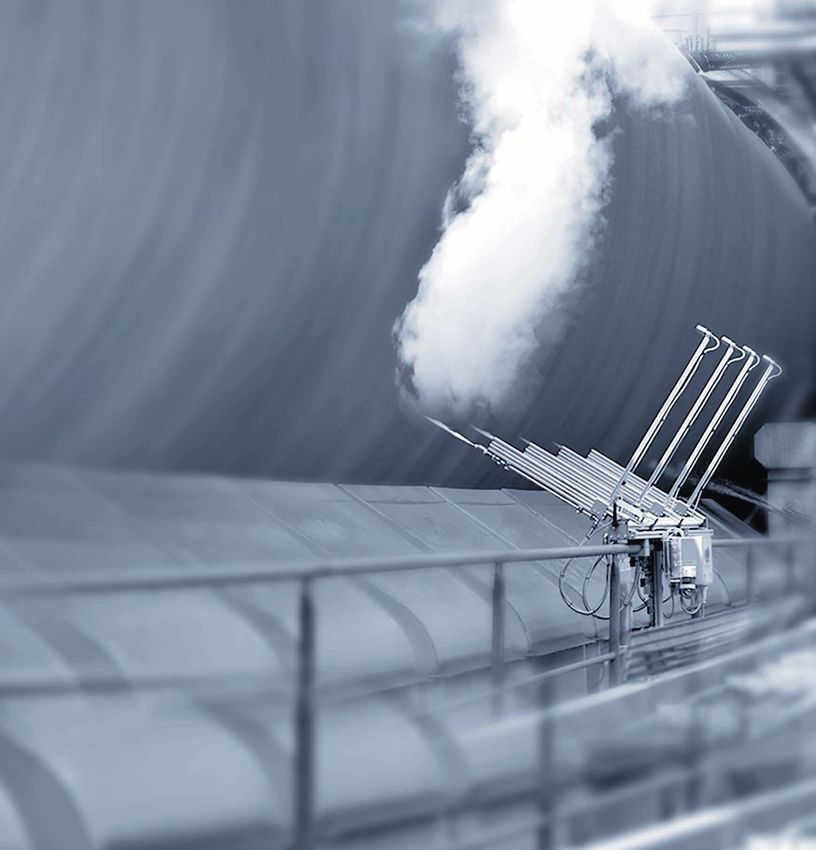
ADVANCED PROCESS CONTROL
INNOVATIVE MEASUREMENTS

 KILN SHELL COOLING
 ON THE SPOT

 WITH KILNCOOLER

 INFRARED CONTROLLED
 WATER COOLING OF KILN SHELL
 –   expansion of kiln‘s operation time
 –   reduced mechanical tension
 –   fast, but carefully cooling down
 –   energy savings

 THAT‘S WHAT WE CALL THE KIMA PROCESS.

WWW.KIMA-PROCESS.DE
GLOBAL CEMENT: CONTENTS                                                                  Subscribe      Ad Index

               Features
                10 Global Cement Photography Competition 2020 - Winners
               		 This year’s competition received a record number of entries. Is yours among the winners?

                15 Proudfoot’s top five tips for 2020

                Consulting firm Proudfoot presents its suggested priorities for the
                     global cement sector in 2020.

                16 Preparing for tomorrow: Tackling
                     the cement sector’s image problem

                The global cement sector’s image is under fire
                     on a number of fronts. What can be done?

               Technical
                18 New SABIA analyser for
                     CalPortland’s Mojave plant
               		 A US cross belt analyser case-study.

                20 In discussion: Bert van Elten,
                     Eltomation
               		 The Managing Director of wood wool
                  cement board equipment manufacturer
                  Eltomation talks about the company’s
                  history and products, plus how he sees
                  the global cement board sector in 2020.

                26 Visiting Venti Oelde

                Global Cement gets the latest from the
                German fan manufacturer.

                28 TLT-Turbo upgrades fan testing laboratory
               		 Recent investments have upgraded TLT-Turbo’s capabilities.

                32 In discussion: Michael Stork, Hofmann Mess- und Auswuchttechnik

                Global Cement catches up with the fan balancing equipment producer.

                34 Maximising workflow, capacity utilisation and
                     profitability with enhanced safety and less waste
               		 A look at the Haver & Boecker Radimat® bag applicator.

6   Global Cement Magazine January 2020
GLOBAL CEMENT: CONTENTS

                        36 Preview: CemFuels Conference 2020, Paphos, Cyprus

             38 Preview: Global CemBoards Conference 2020, Munich, Germany

                                40 Concrete news               41 Products & Contracts

                                                                                 Europe
                                                                                   42 News

                                                                             Americas
                                                                                   46 News
                                                        50 Review: 38th International
                                                                          Cement Seminar

                                                                                       Asia
                                                                                   51 News
                                                             54 ‘Build, Build, Build’-ing
                                                                         in the Philippines
                                                            Opportunities abound for cement
                                                      producers in this south east Asian nation.

                                                        Middle East & Africa
                                                                                   60 News
                                                 62 Review: 24th Arab-International
                                                                      Cement Conference

                                  66 Review: Wikov Gear Technology Conference

                                                      Regulars & Comment
                                                              67 Global Cement prices
                    Cement prices from around the world. Subscribers receive extra information.

68 Subscriptions    69 The Last Word             70 Advertiser Index & future issues
                                                                Global Cement Magazine January 2020   7
GLOBAL CEMENT MAGAZINE: DIARY DATES
    Contents
                            4th Global CemBoards Conference
                                                                   15th Global Slag Conference
                            21-22 January 2020                     6-7 May 2020, Vienna, Austria
    Subscribe               Munich, Germany                        www.GlobalSlag.com
                            www.Cem-Boards.com
    Ad Index                                                      interpack 2020

                            14th Global CemFuels Conference       7-13 May 2020, Düsseldorf, Germany
                            19-20 February 2020, Cyprus           www.interpack.com
                            www.CemFuels.com

                                                                   3rd Global CemProcess

                            2nd Global GypSupply                   Conference
                            Conference                             26-27 May 2020, Munich, Germany
                            18-19 March 2020, Brussels, Belgium    www.CemProcess.com
                            www.Gyp-Supply.com
                                                                  Hillhead Quarrying & Recycling Show 2020
                           SOLIDS Dortmund                        23-25 June 2020, Buxton, UK
                           1-2 April 2020, Dortmund, Germany      www.hillhead.com
                           www.solids-dortmund.de

                           62nd IEEE-IAS/PCA Cement
                           Conference & Exhibition                  Download 2020 Media Information from
                           19-23 April 2020, Las Vegas, US
                           www.cementconference.org                           www.propubs.com

8              Global Cement Magazine January 2020
ADV-Plastretard-2018-297-210.pdf   1   27/06/2018   13:10

 C

 M

 Y

CM

MY

CY

CMY

 K
GLOBAL CEMENT: PHOTO COMPETITION 2020

10   Global Cement Magazine January 2020
Contents   Subscribe   Ad Index
                                  GLOBAL CEMENT: WINNER

                                       Winner: Francisco Rosa García, LafargeHolcim España, Spain.
                                       Interior of coal storage dome at the Carboneras cement plant in
                                       Almería, Spain.

                                  Global Cement Magazine January 2020                                    11
GLOBAL CEMENT: PHOTO COMPETITION 2020
First runner-up: Grzegorz
Gornisiewicz, Cement Ożarów, Poland.
This picture was taken in July 2019 at
the 90-year old wet process
Rejowiec cement plant, which is
currently being demolished.
Second Runner-up: Diego Hall, Loma Negra, Argentina.
Third Runner-up: Erina du Toit, Afrisam, South Africa.
The 2200t/hr Thyssenkrupp primary crusher in the La Pampita
quarry supplies limestone to the L’Amali and Olavarria plants. Inside Kiln 1 at the AfriSam Dudfield plant, during demolition.
12 Global Cement Magazine January 2020GLOBAL CEMENT: RUNNERS-UP
Fourth Runner-up: Majid Mohammadi, Canada.
Inside the Garmsar mine in Semnan Province, Iran.
Highly Commended: Akashneel Banerjee, Holtec Consulting, India.
Simba Cement, Kenya.
Global Cement Magazine January 2020 13GLOBAL CEMENT: PHOTO COMPETITION 2020
Above - Highly Commended: Kiln construction at the L’Amalí plant. Diego Hall, Loma Negra, Argentina.
Above - Highly Commended: Ożarów Cement plant, Poland.
Marcin Gruszka, Poland.
Below - Highly Commended: J K Cement Mangrol plant in India.
Rahul Kumar Rai, FLSmidth India.
Above - Highly Commended: Tabriz Cement factory, Iran. Majid Mohammadi, Canada.
Above - Highly Commended: Conveyor at the InterCement Brumado plant. Ana Moura, Brazil.
To see the Global Cement Photography
2020 Video, containing these and many
more entrants, scan the QR code or enter
the bit.ly link into your browser.
See more
http://bit.ly/
36voh7X
Above - Highly Commended: View of the former Rejowiec cement plant. Kosikowski Andrzej, Poland.
14 Global Cement Magazine January 2020Contents Subscribe Ad Index
GLOBAL CEMENT: TRENDS
Angus Maclean, Proudfoot
Proudfoot’s Top 5 tips for 2020
Based on its most recent conversations with top building materials CEOs and its 70
year history of implementing industry best practice around the world, consulting firm
Proudfoot here presents its five top tips for the global cement sector in 2020...
1 Implement next generation digital
Target Operating Models (TOMs)
upgrade them now. Don’t wait until ETS pay-
ments stop!
At the same time, invest in CO2 capture and
Identify the basic building blocks of efficient ce- storage (CCS) and renewable energy projects
ment operations. However, digitisation should be like solar and wind farms in order to com-
selective. All-encompassing ‘big bang’ schemes pensate for unavoidable plant CO2 emissions.
are too costly. Everyone in the workforce, clients, Further optimise raw material chemistry
suppliers and others, should be involved in proof mixes and the clinker factor towards the de-
of concept initiatives. velopment of low-CO2 cements.
Within digitisation efforts, the scalability
of Internet of Things (IoT) architecture is key.
Global cement producers have to reliably manage
many hurdles relating to security and GDPR. It is
important to ensure that the hardware and soft-
4 Further optimise variable and fixed ‘cash
costs’ per tonne to become the cost leader.
ware is up to the task. To do this, ensure that the There is little new capacity being planned at
company has the necessary bandwidth, both tech- present, so the focus needs to be on improving
nically and in terms of staff. Digitisation should efficiency. To do this, focus on making money
not only optimise but also humanise processes. in local markets, reduce energy consumption
New technologies add to existing human capabili- and return to strict, frequent pilotage of en-
ties, not replace them. ergy consumption. Increase electrical energy
efficiency, alternative and CO2-neutral fuels,
while exploring vertical integration, closer
2 Improve Customer Portals and
Sales and Operations Planning
partnerships or joint-ventures with waste pro-
cessors.
At the same time, implement lean-agile
One of the most important areas to improve in organisations with organised, flexible and ef-
2020 will be forecasting sales and operations plan- fective supply chain planning, transportation
ning in order to anticipate changes in demand. and maintenance procedures. Optimise asset
Improvement using IoT technologies to improve footprints in terms of their type, capacity and
customer experience will permit ordering, order location to balance scale and efficiency with
tracking, quality and laboratory information to be strategically-positioned grinding plants. Fi-
instantly available to clients. Maintain customers’ nally, improve working capital management
volumes by being easy to do business with! and returns on investment.
At the same time, offer better technical support
to customers. For example, changes in the raw mix
or the clinker factor may well require an adjust-
ment period for customers, as well as the cement
producer’s internal operations.
5 The workforce
Attract, recruit and - crucially - retain new
staff to replace your ageing workforce. Be
aware that digitalisation is changing the re-
3 Implement ahead of future environmental and
pollution regulations
quirements of established roles and creating
new ones, for example data scientists to run
artificial intelligence and machine learning
CO2 emission regulations are changing, so be initiatives. Workforce skills and availability are
ahead of the pack! Eliminate old plants and / or key in a tightening labour market.
Global Cement Magazine January 2020 15GLOBAL CEMENT: BRANDING Contents Subscribe Ad Index
James Pope, Beaumont Bailey
Preparing for tomorrow: Tackling the cement
sector’s image problem
The global cement sector’s image is under fire on a number of fronts. What can be done?
E nergy consumption, sustainability, globalisation,
a lack of innovation and workplace diversity are
just some of the factors that influence how the global
see have become important customer requirements.
To this we now have to add the major shift in the
planet’s geo-political tastes. Over the past five years
cement sector is perceived as we start the 2020s - in the appetite for ever increasing globalisation that
the eyes of its customers, supply chain and potential has facilitated much of the growth in the cement
future employees. At present, the narrative is being industry has been replaced by the rise of national
led by the world’s media. The global cement sector, protectionism across much of the western world.
unlike many others, has only just begun to find a This has been translated to a shift in consumer ap-
unified voice via the Global Cement & Concrete petite from global to local in many markets.
Association (GCCA) and World Cement Associa- The only meaningful shift to the cement indus-
tion (WCA). Given that current perceptions of the tries’ brand image will come from collective action
industry are often negative, how best can the sector and industry-wide initatives that drive change on a
Above: James Pope, one of influence the tide of public opinion, ensure its own number of fronts. So, what can be done?
the co-founders of Beaumont future and attract an appropriate workforce for to-
Bailey, is an executive head- morrow? Global, local or ‘glocal?’
hunter specialised in placing
board level, senior functional, First and, I believe, most crucially the cement sector
country and cluster leadership How did we get here? has to respond to the change in consumer appetite.
across the building materials For much of the global cement industry over the past The rise of ‘regional champions’ across Asia Pacific,
industries, with a particular decade, ‘beautiful’ has been synonymous with ‘big.’ Africa and Latin America is a key indicator that
focus on cement.
The industry has focused on acquisitions, mergers customers value local insight driven by local leader-
and consolidation, as well as organic expansion into ship. An ability to understand, empathise with and
emerging markets and increasingly large production react to customer challenges is the easiest and most
Below: Cement producers
should seek employees from facilities. This has meant the development of new cost-effective way of adding value in a commodity-
diverse backgrounds. Not names and brand identities. However, new colours driven business. After all, many of the challenges of
only will this remove the and logos are only part of the branding story. As the the cement industry’s customers are highly localised.
unhelpful perception that the
cement sector has consolidated, it has too often ne- There is, however, a balance to be struck. Devel-
sector is only for 50+ year old
men, but actually increase glected innovation, diversity, sustainability and the oping local leadership that has credibility with its
the effectiveness of senior creation of added value, all of which are important customer base while also leveraging an international
management. contributors to how our sector is seen outside the footprint to drive product, service and sustainability
factory gates. innovations is the way forward for the wider cement
As a result of this consolidation, not to community in the 2020s.
mention overcapacity in a number of
markets, the global cement indus- Sustainability
try has found itself feeling rather The best time to plant a tree was 20 years ago.
sluggish. Increasingly large The next best time is today – Chinese Proverb.
and somewhat disjointed
organisations have lacked Most of the negative media publicity aimed at the
the dynamism and agil- cement industry is centred on sustainability and the
ity to change course environmental impact of cement and concrete. No-
rapidly. Ever-stretched where was this clearer in 2019 than The Guardian’s
senior leadership Concrete Week,1 which took aim at what it called ‘the
teams have often most destructive material on earth.’ Such coverage
lacked the bandwidth represents a major threat to the industry. In contrast,
to drive through the very little publicity is given to the leaps in innovation
changes that they can from across the industry in alternative fuels, fall-
16 Global Cement Magazine January 2020GLOBAL CEMENT: BRANDING
ing clinker factor, waste heat recovery, burgeoning both in and outside
carbon capture solution and, at MIT in the latter half of the industry for
of 2019, the first tantalising glimmer of ‘emission- those skills (fast mov-
free’ cement.2 ing consumer goods
The industry must turn the tables so that it can for supply chain,
lead the global conversation on sustainability in ce- automotive for opera-
ment rather than react. To date, it has been too slow tions, finance for cyber
and not vocal enough when sharing its ambitions security etc) cement
and the many ongoing efforts to develop a greener, producers will be able to
more energy-efficient and more sustainable product. select candidates that have
In recent months this has changed at some major varied backgrounds, experi-
players, which have ‘brought sustainability to the ences and education... as well
board’ by the creation of Chief Sustainability Officer as gender and race. There are
(CSO) positions. also some excellent practices around
This is not to say that sufficient progress has been behavioural-based interviewing rather
made - far from it. This should be an attractive op- than experience-led interviewing, to ensure
portuntity for the young, environmentally-minded the criteria for assessment promote appointments Above: Producers and the
workers looking to make a difference. Where bet- from outside of the sector. wider cement sector should
ter to tackle climate change than from within the By doing this, a cement producer could show champion recent develop-
cement industry? There are myriad opportuni- the outside world that it is an organisation that ments in renewable energy
solutions, alternative fuels and
ties waiting, but first the collective industry must promotes diversity because it believes it is good for the myriad other sustainabil-
focus on sharing its ambitions for change. It must business, not because it is trying to hit an arbitrary ity levers at their disposal.
effectively communicate to its future employees, quota. At the same time, it will tackle the danger- A public perception that
supply chain partners and customers to join them ous ‘group think’ mentality that says ‘we have always the cement sector is driving
forward with sustainability ef-
on that journey. done it this way.’ forts will attract well qualified
and enthusiastic new workers.
Diversity Things do not change unless we change
Diversity: The art of thinking independently You can’t build a reputation on what you
together – Malcolm Forbes. are going to do - Henry Ford.
The cement industry has traditionally been slow to All great reputations are built up over time, with
tackle a lack of diversity across the sector. This has years of providing great service to customers, looking
now manifested itself into a separate public image after employees and giving back to the communities
crisis. A recent survey of senior leaders across the in which a company operates. However reputations
global cement industry undertaken by Beaumont can only be maintained if these things constantly
Bailey found that over 90% of senior leaders are improve. Driving continuous incremental improve-
male. This implies to the outside world that unless ment is the key for cement producers to improve its
you are a 50+ year-old man with over 30 years of brand image over the long term. By constantly assess-
cement industry experience, you will never make it ing the status quo, developing and executing a plan
into senior leadership. Clearly, this is unacceptable to improve and - crucially - effectively communicat-
from an equal opportunities perspective. It’s also in- ing its successes to the outside world, the industry
credibly bad for business because it drastically limits can ensure that brands are built proactively, rather
those that can contribute at a senior level. By exten- than reactively.
sion, this lack of diversity limits the problems senior Most importantly the cement industry can only
management can actually solve. develop postive public perceptions of the ‘global ce-
So how do we tackle diversity in the cement ment brand’ by working together. Successes should
industry? Well, somewhat paradoxically, the best be promoted widely across the sector and the pub-
way to attract diverse talent is to create an inclusive lic sphere. Companies and the sector as a whole
workforce that promotes a diverse way of thinking. should also seek a greater presence in industry-wide
Getting the ball rolling means the realisation that di- platforms where they can reach to suppliers, users,
versity is about more than gender or race, it’s about allies and even competitors from across the wider
diversity of thought and creating an environment of construction materials sector.
contrasting and varied views. Our gender or race
are not the only things that shape the way we work References
and think. Our industrial experiences, upbringing, 1. https://www.theguardian.com/cities/series/guardian-concrete-
education and socio-economic background have a week, 25 February - 2 March 2019.
massive impact, as do many others. 2. Chandler, D.L.; ‘New approach suggests path to emissions-free
By thinking critically about the skills and charac- cement,’ MIT News website, http://news.mit.edu/2019/carbon-
teristics you need for a particular role and searching dioxide-emissions-free-cement-0916, 16 September 2019.
Global Cement Magazine January 2020 17GLOBAL CEMENT: QUALITY CONTROL Contents Subscribe Ad Index
Interview by Peter Edwards, Global Cement Magazine
New SABIA analyser for CalPortland’s Mojave plant
The CalPortland Mojave plant recently installed a prompt gamma neutron activation
analysis (PGNAA) cross belt analyser (CBA) with Raw Mix Control Automation Software
from SABIA.. Global Cement spoke to representatives from both parties about the project...
Global Cement (GC): Can you introduce SABIA Abhi Sheshadri, Chief Technology Officer, SABIA
and its analysers? (AS): The analyser is mounted on the belt and
bombards the material continuously with neutrons,
April Montera, Director of Sales, SABIA (AM): which produces in the order of 6-million gamma-
SABIA was founded in May 2000 by some members ray counts per minute to the detectors. Each gamma
of the team that first developed prompt gamma ray has a characteristic wavelength that indicates the
neutron activation analysis (PGNAA) in the 1980s. compounds present in the raw mix. Software con-
They saw that the technology had not advanced and verts the signals into data to show the composition of
wanted to improve it while lowering operating costs the material, with a report every minute.
and affordability. This was achieved by reducing the
amount of radio-isotope used, which meant less GC: What’s the background of the CalPortland
shielding was required, while also taking advantage Mojave plant?
of the improvements that had been made to detectors.
Instead of weighing 5-6t, the new SABIA machines Michael Stratford, Quality Control Superintendent,
came in at just 1.5t, so installing a PGNAA system CalPortland Mojave plant: CalPortland bought the
over a conveyor belt became a much simpler proposi- limestone reserves at Mojave in 1953 and first cement
tion. SABIA also made the analyser web-enabled for was made in 1956. There were two long dry kilns and
remote diagnostics, which was a big deal in 2001. three more were added over the years. In 1981 a new
In 2014 SABIA released the X1-LiNX, in which 1.5Mt/yr dry process Fuller kiln with preheater and
the electronics are all consolidated inside the ana- precalciner was commissioned and the older kilns
lyser. This avoids analogue wires and did away with were closed.
Below: Location of the new
the need for an air-conditioned room for electronics.
SABIA X1-LiNX cross belt
analyser installed at the GC: The Mojave plant installed a new SABIA
Mojave cement plant. GC: How do PGNAA analysers function? PGNAA analyser for raw meal in mid 2019. Why
did it embark on the project?
MS: The main aim was to reduce the standard devia-
tion (SD) of the raw mix in order to reduce our coal
and natural gas costs, while saving energy. This is
because improved SD control reduces the risk of high
SABIA lime-saturation factor (LSF) peaks. This had not been
a major issue but it is something that should be kept
X1-LiNX
under control. The plant prides itself on quality con-
trol and it made sense to take our clinker SD control
to the next level.
GC: What led to the selection of SABIA?
MS: This was a fairly intense process as the better-
known names in the sector were very popular with
senior management. However, I was really impressed
by SABIA’s technology, customer service and com-
petitiveness and was able to successfully relay this to
senior management. This led to an eventual decision
in favour of SABIA’s solution.
18 Global Cement Magazine January 2020GLOBAL CEMENT: QUALITY CONTROL
GC: What solution was implemented and how was
this decided upon?
AS: The plant opted for an X1-LiNX analyser. The
positioning requirements are fairly basic: The ana-
lyser has to be after the additives have been added
but before the raw mill. It’s also preferable, but not
essential, that it comes after a transfer point. There
was no transfer point at Mojave, but such situations
are easily dealt with.
MS: One factor that made this project unique was the
limited physical window that was available to place
the equipment on a bridge that heads to the mill. This
would not be possible with other CBA technologies
due to weight and size constraints.
GC: Can you provide the timeline of the project?
Gurjeet Sarao, Mojave Plant Engineer (GS): We
began work on the project in October 2018 and
installed platforms and access routes in November
2018. We mounted the analyser on the belt in De- We have also reduced the number of samples that Above: The SABIA X1-LiNX
cember 2018 and began commissioning in January are processed in our automated laboratory by 10%, was installed at the
CalPortland Mojave plant in
2019. There was a delay with the scales in early 2019 which reduces ongoing costs and wear. The CBA also the spring of 2019.
due to the complexities of feeding six different raw helps our FLSmidth OK vertical finish mill, which
materials. This was resolved in March 2019 and we likes consistent, high-quality clinker. We can now
could begin recording and using the data from the provide this to it more reliably than ever before.
analyser by the start of April 2019.
GC: Are there plans to upgrade or develop the sys-
GC: What information does the analyser provide? tem (or others) with SABIA in the future?
How does this differ from the prior situation?
MS: We have another CBA installation at another
MS: Before the installation by SABIA, we took a sam- position at the Mojave plant that we may upgrade in
ple from our raw mill every 40 minutes and altered the future. Our two sister plants are also aware of the
the feed accordingly. Now that we measure the raw success story here. They both have CBA systems from
meal every 200ms, it’s like taking a microscope to the other suppliers but one is looking at the possible ben-
plant. The analyser generally operates autonomously efits of using SABIA’s equipment at its site.
using SABIA’s RHEA 2.0 Raw Mix Control Automa-
tion Software, which corrects the raw meal feed every AS: SABIA constantly develops its technology. At the
few minutes, if needed. There is occasional human moment we are refining an intelligent system for the
oversight and the team can retake control of the raw back-end that draws in data from across the entire
meal feed system to accommodate unusual instances, raw meal feed process, even including information
for example high lime levels in the quarry. from the quarry. It’s like a car dashboard. You could
run the car flat out with no information but not know
GC: How else does the new information help? if or why it is inefficient. The dashboard might tell
you that a tyre is not at the optimum pressure.
MS: I mentioned fuel savings as an advantage, but In terms of the cement plant, such a system pre-
we haven’t resolved the numbers on that fully just sents all relevant data, be it from the raw meal feed
yet. Other benefits include added redundancy in system itself, the raw mill or the quality of the lime-
our suite of analysis tools. We still rely heavily on stone, to look at the underlying reasons behind the
our X-ray Fluorescence (XRF) spectrometers. When performance of the raw meal feed system. It alerts
these failed previously, we would have to shut down operators to any issues that need attention and may
equipment, both for quality reasons and because we be able to shed light on unexplained variations when
might have damaged equipment. Now, we have the human operators don’t know what happened.
PGNAA to cover ourselves with regards to the raw
mix. This added redundancy has helped us maintain GC: Thank you everyone for your time today.
production several times, aiding in the justification
of the investment. AM/AS/MS/GS: You are very welcome indeed!
Global Cement Magazine January 2020 19GLOBAL CEMENT: CEMENT BOARDS Contents Subscribe Ad Index
Interview by Peter Edwards, Global Cement Magazine
In discussion: Bert van Elten, Eltomation
Ahead of the Global CemBoards Conference in Munich, Germany, Global Cement spoke
to Bert van Elten, Managing Director of the Dutch wood wool cement board (WWCB)
equipment manufacturer Eltomation, about his company’s history, products and how he
sees the global cement board sector in 2020.
Global Cement (GC): Can you introduce I became Managing Director of Eltomation in
Eltomation to our readers? 1992 and I run the firm with my brother Paul, who is
the Technical Director. More than 60 years after our
Bert van Elten (BvE): The story of Eltomation began father founded Eltomation, the company remains the
when my father, Gerry van Elten, was a mechanical leading, indeed only, producer of fully automated
engineering student in the late 1950s. He was asked production lines for WWCB at the start of the 2020s.
to solve a problem at a wood wool cement board
(WWCB) plant, which was a fully manual process at GC: What exactly is WWCB?
that time.
He went away and thought, ‘How do I automate this BvE: WWCB is a medium-density board comprising
Above: Bert van Elten has
been Managing Director of process?’ From there, he designed the first elements long soft wood fibres that are bonded together with
Eltomation since 1992. His of a plant that could automate the process of manu- Portland cement. They are typically 0.6m x 2.4m
father Gerry van Elten founded facturing WWCB products. He founded the Elten with a density of 350-500kg/m3. They are B1 class
the family firm in 1956. It is
Engineering Company, now called Eltomation, in fire-resistant and have excellent thermal and acous-
based in Barneveld, in the
centre of the Netherlands. 1956 to produce fully automated WWCB lines. These tic insulation properties. This combination makes
remain our main product line today. The company WWCB very applicable for use as a ceiling panel,
was able to grow well on the back of this development particularly in municipal and commercial buildings
as European WWCB producers consolidated and and schools, but increasingly in residential ones too.
moved towards larger, more modern plants in the
1960s and 1970s. Growth continued in the following GC: How does an Eltomation WWCB line work?
decades and, more recently we have launched produc-
tion lines for two further types of wood wool cement BvE: The first part of the production line is the au-
Below: A modern WWCB
products: Eltoboard, which is a form of compressed tomatic wood wool machine, which cuts pre-cut
Plant for 60cm wide WWCB,
with a plant capacity of up to WWCB and large wood wool cement elements 50cm long blocks of small-diameter soft wood, typi-
12,000m2/day. for pre-fabricated insulated walls. cally pine, spruce or poplar, down to 25cm in length.
20 Global Cement Magazine January 2020GLOBAL CEMENT: CEMENT BOARDS
These blocks are then shredded into 1.0-3.0mm-wide GC: With a new panel every 7s, that’s a lot of forms! Above left: A dosing
and approximately 0.25mm-thick fibres, depending and mixing Line at a WWCB
plant, producing 11t/hr
on the client and application. Such a machine can BvE: Yes - A plant produces around 2800 boards per of fresh mixture.
typically produce 3t/hr of wood wool, around 60,000 eight hour shift, so that’s 8400 over a 24 hour period.
fibres every second! Each fibre is up to 25cm in length However, a plant never runs the same product day-in
and will be slightly curled. day-out, so that figure is split across a number of dif- Above: An EltoBoard press at
Once the fibres are made, they flow into a submer- ferent form types. a WWCB/EltoBoard
sion unit, where they absorb water at a mass ratio of plant for the production of
medium density WWCB.
around 1:1. The water contains a small percentage of GC: How does Eltomation make and install a
sodium silicate to act as a set accelerator. Additives WWCB plant?
can be added for enhanced fire-resistance, which can
take the WWCB from B1 class to A2 class. BvE: First of all, the ordering process takes, in most
Cement is then accurately dosed into the wet wool cases, at least 1-3 years. The client has to get to know
fibres at a ratio of around 1.5:1 in favour of cement us, conduct market studies, obtain financing and per-
compared to the dry wood wool. The semi-dry mix- mits, etc...before we can confirm an order. Once the
ture is mixed in a continuous double shaft mixer. contract is signed we can manufacture and supply the
The combination of 3t/hr of wood wool, equipment within 10-12 months. We presently install
3t/hr of water and 4-5t/hr of cement gives us a total about one WWCB plant every year.
mass of 10-11t/hr that enters a double forming line. There are clear responsibilities for each party.
The fresh mixture is formed as a 625mm wide mat Eltomation designs the plant and software and is
on continuously-moving marine-plywood moulds. A responsible for project engineering. We subcontract
rim line determines the thickness of the board, which the construction of the main equipment to one of
is typically 15-50mm in the current market. If re- our trusted machine shop partners in Europe, which
quested, adjustments can be made to produce boards are supervised by our experts. We keep all the tech-
up to 150mm thick. Some clients also introduce min- nical and IT know-how in house, to keep it as safe Below: Computer-generated
impression of a fully-automat-
eral wool, polyurethane or polystyrene insulation at as possible. Eltomation also sources off-the-shelf ed large wall element line.
this point, sandwiching the insulation
between two layers of WWCB.
The forming line operates at 20-21m/
min. As each panel is 2.4m long, there is
a new panel every 7s, around 12,000m2/
day. A separating saw cuts between the
forms, which head to a low-pressure
stacking press to achieve a density of
350-500kg/m3. The stack is cured for 24
hours before de-moulding. The form is
cleaned and oiled before heading back to
the start of the forming line.
Most clients send the panel through a
pre-cutting step to clean up the edges of
the panel. These are stacked and sent to a
second setting area, typically for 10 days.
Panels will then be cut to size and may be
painted or otherwise further processed
at the plant, depending on the product.
Global Cement Magazine January 2020 21GLOBAL CEMENT: CEMENT BOARDS
GC: You just mentioned upgrades at existing cli-
ents’ plants. How does Eltomation meet new ones?
BvE: We usually approach the industry from the
wood side, promoting our plants for WWCB at wood
industry conferences and trade shows. Until now,
with our attendance at the Global CemBoards Confer-
ence, we had not actively approached prospects from
the cement side. This opens up new opportunities for
us, including potential clients that we are due to meet
from South East Asia. I’m sure the event will provide
us with new information and leads for future busi-
ness development.
Right: Acoustic WWCB components like motors, hydraulics, conveying
ceiling panels in an indoor
swimming pool.
systems, etc. The client constructs the building and GC: How are your clients’ requirements changing
Source: Troldtekt, Denmark. cement silos, typically at the same time as Eltomation with time?
is sourcing and producing the plant equipment.
Once the equipment is assembled, the client is BvE: Unlike many concrete elements, gypsum wall-
invited to the workshop to inspect the equipment in board or insulation, WWCBs are directly visible in
dry-run mode prior to shipping. Then Eltomation use. This means that recent changes in the demands
ships the equipment in a set order. To give an idea of placed on WWCB products have centred on their
scale, a recent plant we sent to Russia consisted of 50 physical appearance, as well as their other beneficial
truckloads! properties. The uniformity, structure and colour of
In a typical project, the plant is constructed dur- the panel is ever more important and so the produc-
ing months 12 and 15 after signing the contract, with tion tolerances are becoming smaller.
start-up in month 16. At the start of the installation, Part of this is a trend to thinner and thinner fibres,
Eltomation will typically have two technical super- from 3mm wide 20-30 years ago to 1.0mm wide in
visors on site. They are followed up by the electrical the 2010s. There is also a trend from grey to white
controls guys to supervise the electrical installation cement, the ‘natural look’ of which is favoured by
works, plant commissioning and start up. Further- architects and owners.
more, we train the operators.
GC: What about automation and service needs?
GC: Where are most of Eltomation’s projects
coming from at present? BvE: As in every sector, our clients constantly request
ever greater levels of automation. In the past 10 years
BvE: We are mainly active in Europe, where we pre- this has extended into all elements of the plant, with
dominantly take care of our existing clients’ needs, features like frequency controlled motors for start-up
be it in terms of consumables, modernisations or / shut-down and improved control of hydraulics.
expansions. We estimate that these clients currently Automation is particularly strongly favoured in
produce around 20Mm2/yr of WWCB. Regarding Western Europe, and Scandinavia especially, where
new plants, there is still an increasing demand in staff costs are very high indeed. A recent plant we
Europe, as well as in newer markets, Russia, North installed in Denmark operates its main line with just
America and China in particular. We have installed four shift workers. If we quoted the same project in
six plants in China in recent years, followed by an Russia or China, we might specify 13-15 shift work-
ultra-modern line in Russia in 2018. ers. Looking further back, a plant in 1980 might have
needed two to three times the number of workers per
GC: What is driving demand for WWCB now? shift as is the case with a modern plant, but it would
be running at around 70% of the production rate.
BvE: Healthy (emission-free) indoor environments Another trend that took hold in the 2010s, is
are becoming important to the public and thus are a VPN connection from the plant to our HQ. This
increasingly specified. It is, for example, increas- means that we can observe the plant in real time, ad-
ingly common to find WWCBs as ceiling panels in vise plant operators and solve problems without the
residential buildings. These modern apartments need to visit the plant. The data gained also helps us
have hard floors and no curtains so the acoustics are to improve our designs. Maintenance contracts are
terrible! WWCBs can help massively in this regard. also important nowadays. We will send a mechanical
Our Scandinavian contacts tell us that there will be and control engineer to each plant every six months
EU-wide standards for acoustic performance in the to tune it up and maintain operating efficiency above
built environment, so this trend looks set to continue 90% - usually we achieve considerably higher levels.
strongly.
22 Global Cement Magazine January 20202122 JANUARY 2020 MUNICH*, GERMANY
gl bal
4th
cem-boards.com
cemboards TM #globalcemboards
CONFERENCE & EXHIBITION 2020
Global CemBoards Enquiries
Cement-based board markets Exhibition and sponsorship:
paul.brown@propubs.com
Cement-based board production technologies Programme and speakers:
robert.mccaffrey@propubs.com
New applications for cement-based boards
MUNICH
Plus Global
CemBoards
Social Evening
£1 oar
00 d
b
di pro
Organised by:
sc d
gl bal
ou uc
cement *The conference will take place in the quaint
TM
nt ers
town of Freising, close to Munich Airport, a
fo
taxi ride from the centre of Munich.
MAGAZINE
r
CemBoardsAd2020FP.indd 1 13/12/2019 10:25GLOBAL CEMENT: CEMENT BOARDS
We are always going back to clients’ lines to see termite-resistant and don’t expand or contract with
what we can do to expand their production. They temperature changes. They’re a great product, for
always want higher speed, less waste, more automa- which we have developed a modern automated pro-
tion and higher process stability. It’s a lot of work to duction line.
keep up with this ever-growing list - but we’re not
complaining! GC: What’s the next region with big potential for
WWCB and, by extension, Eltomation?
GC: You mentioned some other products that can
be produced with Eltomation’s equipment. Could BvE: The Russian market is becoming increas-
you introduce them briefly? ingly important to us, both for WWCB and large
wall elements. Elsewhere, we see great potential in
BvE: In the past we made equipment to produce ce- sustainable, low-cost housing using our large wall el-
ment-bonded particle board (CBPB), which is much ement technology in developing regions, particularly
denser than WWCB. It was used as a replacement for in Africa.
asbestos cement board but it has gone somewhat out However, selling a turn-key plant to a new cli-
of fashion in recent years. When we were selling both ent in, let’s say Ivory Coast, is quite an undertaking.
CBPB and WWCB lines, we asked ourselves, ‘What Will the market accept a new building material like
about medium-density cement boards?’ This question this? Also, where will the wood come from? Will the
led to the development of Eltoboard, essentially a source be sustainable? It’s hard to know the answers
WWCB product that is compressed after it goes into to many of these questions at this stage. We have a
the mould. It is compressed to around a third of the lot of interested parties however, so I hope we’ll enter
volume of a WWCB. The advantage of Eltoboard is this market soon.
that it can be used as a structural element. You do
however, lose the acoustic and thermal-resistance GC: What threats are there to WWCB / Eltomation
properties of WWCB, so it’s ‘swings and rounda- over the next decade?
bouts.’
We have also helped a Swedish client to further BvE: We are the only producer with this technology.
develop large wall element production from the same If a client decides that it wants to make WWCB, we’re
material as they make WWCB at the same density. in a good position. While that’s a nice captive market,
Essentially this is a full-size wall, 6m x 2.8m x 40cm. it does mean that we have to do a lot of the marketing
Such elements can incorporate recesses for windows, for this type of material all by ourselves. Of course
wiring and so forth. our clients do this, but only in their local areas. This is
The Swedish client has now made over 300 struc- a disadvantage compared with other building materi-
tures, homes, schools, sports halls and many other als, for example cement or gypsum wallboard.
buildings with these large wall elements. The insula- On that topic, there are, of course, other building
tion properties of wood wool cement products come materials that can do some or all of the same jobs as
Below: Affordable and to the fore in the Swedish market. There is no need WWCB. Wood fibre cement boards are one big sector
sustainable housing for Africa,
for any other insulation material, so construction we’re not involved with, for example. This only partly
based on the prefabricated
large wall element wood wool is very simple. The elements are easy to transport overlaps with our insulating wood cement products,
cement system. and have a six hour fire rating. They are rot-proof, so it’s only a limited threat.
GC: Does Eltomation have any new products or
services in the offing?
BvE: We constantly update our range, mostly due
to individual client requests. However, we remain
focused on WWCB as our core strength. We are
frequently approached by clients who know we are
engineers and want us to make different machines.
We have to turn them down.
However, within wood wool we are keen to de-
velop new technologies, for example as we have done
with the large wall element products. We may also
re-enter the CBPB market, should the right oppor-
tunity arise.
GC: Bert van Elten, Thank you for your time today.
BvE: You are very welcome!
24 Global Cement Magazine January 2020Relax,
it’s Venti.
We cool reliably.
Low-noise clinker cooler fans from Venti Oelde are equipped with air flow control
and inlet measuring nozzles. The precise and quickly adjustable air supply of
the high-performance fans ensures optimum clinker cooling and trouble-free
long-term operation.
Make the best use of cooling potential
u m b er 1
The n
High throughput rates y
in the t industr
n
Trouble-free long-term operation ceme
We make air work for you | www.venti-oelde.com
Global Cement Magazine 01_20.indd 1 29.11.19 14:08GLOBAL CEMENT: FANS Contents Subscribe Ad Index
Global Cement staff
Visiting Venti Oelde
Global Cement recently visited the German fan manufacturer Ventilatorenfabrik Oelde to
meet its new cement sector contact Reinhold Mertens and catch up on its latest projects.
R einhold Mertens started working for Venti Oelde
as the new branch manager and therefore the
main contact for the cement industry on 1 November
2019. Since obtaining his mechanical engineering
degree, he has gained experience over a period of
almost 10 years, working for a well-known German
cement plant manufacturer.
Reinhold Mertens and his team at Venti head-
quarters will handle not only local sales personnel
but will also be responsible for customer liaison and
support for all Venti Oelde cement industry custom-
ers, from plant manufacturers to cement plants.
Above: Reinhold Mertens has been the new cement sector contact at
Ventilatorenfabrik Oelde since 1 November 2019.
Above: Clinker cooler fans for a cement plant
in Thailand.
Right: Rotor for a baghouse fan, ready for
dispatch to France.
26 Global Cement Magazine January 2020GLOBAL CEMENT: FANS
Above: Inge Teich
(Marketing
Manager - left), Reinhold
Mertens (Sales Manager
Fan Division - centre)
and Peter Herrmann
(General Manager Fan
Division - right) stand
in front of a rotor for a
kiln ID fan for a cement
production
line in Nigeria.
Left: Clinker cooler fans
for a Thai cement plant,
before the test run.
Below: Installation of
a new waterjet/plasma
cutter to cut carbon or
stainless steel with a
thickness of 2-200mm.
Global Cement Magazine January 2020 27GLOBAL CEMENT: FANS Contents Subscribe Ad Index
TLT-Turbo GmbH
TLT-Turbo upgrades fan testing laboratory
Global ventilation fans and systems manufacturer TLT-Turbo GmbH has spent the past
five years investing in and equipping its on-site fan testing laboratory. The facility now
provides streamlined processes for research, the advancement of product quality and
expanded capabilities for material testing. With a focus on particle impact wear testing,
the laboratory is driving innovation forward at TLT-Turbo as the results help improve
product reliability, quality and performance in the operating environment.
P atrick Baumgärtner, a Research and Develop-
ment Engineer and expert in wear and corrosion
protection at TLT-Turbo, has played an instrumen-
TLT-Turbo’s approach is to continuously test ma-
terials, coatings and components in order to produce
fan components that are designed for performance
tal role in building up the test laboratory, which is excellence in any operating environment, no matter
located at the TLT-Turbo Development Centre in how abrasive. This testing is applied to current and
Zweibrücken, Germany, to its current capabilities. new products in development but also to samples
He has spearheaded the current research together that are brought in from client sites in order to es-
with Sabine Groh, Industrial Fans Product Manager tablish the wear patterns caused by their specific
at TLT-Turbo. environment. By doing this, TLT-Turbo is able to
Currently, the core field of research at the test provide each client with a customised solution that
laboratory is testing of new wear-resistant materials will last longer and require less maintenance.
and coatings for fan components. Baumgärtner says The test laboratory now offers facilities for met-
that testing takes place using the laboratory’s solid allography, a stereomicroscope, a pycnometer to
particle impact wear test bench. Various types of determine the density of materials and coatings and
dust or abrasive particles can be blasted onto the test an automated solid particle impact wear test bench.
material, varying the angle and speed of the blast to “The capabilities of the test laboratory open a lot of
observe the resulting wear patterns. doors for advanced research that will make a posi-
“We also carry out caking tests in which we se- tive contribution to the engineering community at
lect, for example, anti-adhesive layers for our fans, in large as well,” continues Baumgärtner. “Under my
order to find suitable solutions for customer applica- supervision, studies and thesis research take place
tions,” explains Baumgärtner. “A further main focus in the laboratory in cooperation with local colleges
is the analysis of process residues that can have an and universities. For me, this is the basis for success-
Below: Part of the materials abrasive or corrosive effect. Here the composition, fully researching and developing new solutions in
testing laboratory at
TLT-Turbo’s Development size distributions, pH value and conductivity in the our field.”
Centre in Zweibrücken. eluate are determined.” According to Sabine Groh, the facility has ‘almost
endless’ possibilities for the improvement of product
delivery to TLT-Turbo’s clients. “Our customers often
operate TLT-Turbo fans in abrasive and/or corrosive
environments, like the cement sector,” she explains.
“To develop suitable solutions that match the wear
resistance against particle impact, we use our auto-
mated solid particle impact test bench. Compressed
air accelerates a defined mass flow of abrasive particles
to velocities of up to 300m/s and propels them onto
a piece of sample material. This leads to material loss
and wear that we can examine. It is even possible to
use original dust from a customer’s plant to evaluate
the most suitable solution for that client. By varying
the impact angle we can observe system characteris-
tic wear curves. With this knowledge we can provide
customised solutions for many processes.”
28 Global Cement Magazine January 2020glas-ag.com
Intelligent Balancing Solutions
Automatic Integrated Balancing solution Hand-Held Special Balancing
for process fans Measuring Units Solutions
www.hofmann-global.com
Hofmann Mess-und Auswuchttechnik GmbH & Co. KG, Werner-von-Siemens-Str. 21, 64319 Pfungstadt, GERMANY, germany@hofmann-global.com
American Hofmann Corporation, 3700 Cohen Place, Lynchburg, VA 24501, USA, usa@hofmann-global.com
19-20 FEBRUARY 2020 PAPHOS, CYPRUS
gl bal cemfuels.com
14th
Including
cemfuels
CemFuels #cemfuels
TM
Awards
Gala Dinner
CONFERENCE • EXHIBITION • AWARDS
Global CemFuels Enquiries
Alternative fuels for cement and lime Exhibition and sponsorship:
paul.brown@propubs.com
Global, regional and national market trends
Programme and speakers:
robert.mccaffrey@propubs.com
Technological developments and case studies
In cooperation
with the AUCBM
Organised by:
Including
gl bal
cement
TM Vassiliko
Cement field
MAGAZINE tripGLOBAL CEMENT: FANS
This is one of numerous examples of how TLT-
Turbo’s testing capability can positively impact
ventilation systems across all applications. “Due to
the broad database of wear tests on various materials
and coatings, we are able to offer tailor-made wear
protection solutions for various processes of our cus-
tomers,” says Baumgärtner.
Groh adds that the wide variety of chemical com-
positions and coating conditions such as acceleration
of coating powder and heat development make it
extremely difficult to objectively find the best coating
by carrying out testing at a customer’s plant.
“The process of reaching even the initial findings
Above: A blasting nozzle These solutions can be best illustrated in the selec- in these conditions is very time consuming,” she says.
and sample holder tion of coatings. This, says Groh, has an immensely “In addition to this, there is a broad variety of con-
on the test bench.
positive impact for clients. “If we were to propose ditions to contend with at different customer plants
a new coating for a customer, the wear rate of the that hinder an accurate comparison of different coat-
coating would be determined first. That is the main ings at different plants. If you test different coatings
scientific-based decision criteria for wear-resistant on one machine, you might get a rough estimation
coatings. If the coating has a superior wear rate com- of what coating is superior but different wear rates of
pared to other coatings or at least a wear rate that is coating cause imbalances in the impeller and vibra-
on par with other coatings and another beneficial tions at the fan.”
quality such as an anti-stick effect, corrosive resist- Groh elaborates by explaining that finding a pre-
ance or a cost advantage it will be implemented into cise comparative measurement on different coatings
our coating portfolio.” is impossible without being able to analyse how the
Groh says that they have also conducted tests wear rate changes at different angles. “At the up-
that have led to the development of completely new graded test laboratory we can control the conditions
proprietary coatings. “During the manufacturing to find precisely what we are looking for in a shorter
process, coatings were tested to see the influence of timeframe. Additionally we are able to replicate the
welding heat on coating qualities, such as the devel- fan’s operating environment. We can run tests using
opment of cracks, to ascertain how to avoid damage dust collected from the client site while simulating
caused by heat or weld splashes. We conducted re- particle speeds that match the client’s environment to
search and testing on combining welded coatings precisely simulate wear rates.”
and thin layer coating into a hybrid coating, which In the laboratory environment, the TLT-Turbo
Below: An exchangeable can dramatically increase the operational lifespan of team is also able to determine additional coating
impeller blade that has been TLT-Turbo fans at clients’ plants.” properties as they have the capability to run addi-
exposed to massive wear. tional experiments, for example corrosive resistance,
anti-stick effect, robustness, heat resistance, suitable
application methods and combination possibilities
like hybrid coatings.
The test laboratory has afforded TLT-Turbo en-
gineers a deeper understanding of the mechanisms
behind wear and the effects of specialised solutions.
This has led to new approaches in product ad-
vancement and development that are grounded in
providing solutions that meet market requirements.
“The analysis of residues from plants has a
great influence on product development as we are
making more informed decisions when choosing
materials for corrosive and abrasive environments,”
says Baumgärtner.
The laboratory has also had an impact on what
TLT-Turbo can offer in terms of after-sales services.
“The development of new solutions for specific
customer problems is now much faster and more
accurate. Also the suitability of low cost approaches
or solutions that allow for wear-induced damages to
be repaired on-site integrate effortlessly into TLT-
Turbo’s existing solutions,” concludes Groh.
30 Global Cement Magazine January 2020You can also read


