Changing the Perception of Business Values in the Perspective of Environmental Sustainability
←
→
Page content transcription
If your browser does not render page correctly, please read the page content below
sustainability

Article
Changing the Perception of Business Values in the Perspective
of Environmental Sustainability
Mária Demjanovičová and Michal Varmus *

                                          Faculty of Management Science and Informatics, University of Žilina, 010 26 Žilina, Slovakia;
                                          demjanovicovaml@gmail.com
                                          * Correspondence: michal.varmus@fri.uniza.sk; Tel.: +421-415-137-741

                                          Abstract: This study provides an overview of practical approaches to sustainability and its com-
                                          munication to the public in the business sector. The research presented in this article is focused on
                                          perceived sustainability in micro and small enterprises in Slovakia through research of business
                                          models used by these enterprises using a qualitative approach. The aim is to provide a general view
                                          on this topic and to prepare the basis for a sustainable business model composed of the values of
                                          society in micro and small businesses in Slovakia. The research consists of two phases—research
                                          in the field of business environment through personal interviews with entrepreneurs (examination
                                          of parameters: locality, waste management, ecological components, minimization of waste) and re-
                                          search of consumers’ perceived values within the perception of environmental problems. Businesses
                                          perceive the seriousness and necessity of solving the problem. Entrepreneurs from the micro and
                                          small segments perceive the high importance of solving elements of sustainability. They mentioned
                                          the minimization of waste as the most important element, the highest value on the scale (5) was
                                          marked by up to 85% of respondents. From a customer survey, it is possible to assess that almost 86%
                                of respondents in this case feel that global problems are affecting them personally and at the same
                                   time more than 62% of them believe that they can influence the offerings of companies through their
Citation: Demjanovičová, M.;             purchases and support sustainability in the business environment.
Varmus, M. Changing the Perception
of Business Values in the Perspective     Keywords: sustainability; perceived value of sustainability; sustainable business model; value
of Environmental Sustainability.          parameters; social responsibility
Sustainability 2021, 13, 5226. https://
doi.org/10.3390/su13095226

Academic Editor: Umberto Panniello        1. Introduction
                                                Sustainability can be approached from multiple perspectives. In this case, sustainabil-
Received: 1 April 2021
Accepted: 4 May 2021
                                          ity is being researched within the business context as the main aspect of the operation of
Published: 7 May 2021
                                          the whole business-making system, in connection to the social and value system of the
                                          consumers. Business entities have considerable impact on the environment. They represent
Publisher’s Note: MDPI stays neutral
                                          the supply of goods and services, bring innovations, and can affect the whole market. How-
with regard to jurisdictional claims in
                                          ever, this should be done only until their activities negatively influence other stakeholder
published maps and institutional affil-   groups. There are various entities entering the system [1]. Understandably, there is the
iations.                                  government setting the boundaries of fair trade on the market, the business entity itself
                                          with its business model, the consumer (customer) buying the products and services, as well
                                          as the environment enabling the operation of this system [2]. The environment represents
                                          the surroundings, nature, atmosphere, material, and other conditions necessary for the
Copyright: © 2021 by the authors.
                                          existence of the system.
Licensee MDPI, Basel, Switzerland.
                                                Therefore, sustainability can be viewed from the perspective of each of these stake-
This article is an open access article
                                          holder groups. Nevertheless, a responsible approach is the one where all the other entities
distributed under the terms and           entering the whole system are considered [3].
conditions of the Creative Commons              Sustainability in this study is perceived as responsibility and an active approach
Attribution (CC BY) license (https://     to finding a greener alternative in the business environment. It is a matter of choosing
creativecommons.org/licenses/by/          materials that should be sustainable, as well as supply routes that should be shortened to
4.0/).                                    reduce the carbon footprint. The impact of inputs will also be adequately influenced by

Sustainability 2021, 13, 5226. https://doi.org/10.3390/su13095226                                       https://www.mdpi.com/journal/sustainability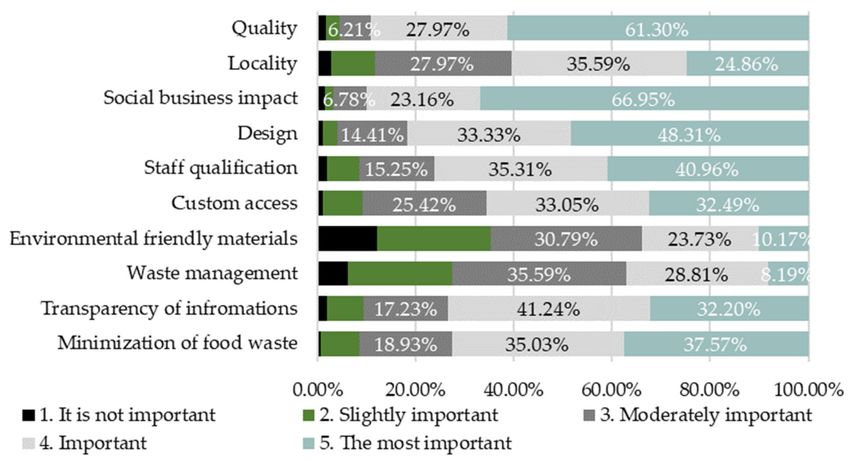
Sustainability 2021, 13, 5226                                                                                            2 of 18

                                sustainability elements. This is linked to the customer via the business itself. Creating a
                                sustainable supply will thus ensure the next step for social sustainability and provide the
                                market with a sustainable alternative to conventional products and services.
                                      CSR is a functional basis for setting sustainability goals in capacity-unlimited business
                                models. The principles of CSR can be applied to all business models; therefore, this concept
                                is the starting point for the position of the theoretical foundations in this article.
                                      From the perspective of the business and the product or service it provides, attention
                                can be paid to whether this product is recyclable, whether it was developed and produced
                                by a sufficiently efficient, environment-friendly process, and so on [4]. A suitable model for
                                sustainable operation is summarized in the CSR (Corporate Social Responsibility) concept.
                                This is a concept of responsible operation and a sustainable approach not only to materials
                                but to the whole environment. Strand is one of the experts in this field, dealing with the
                                CSR concept not only as a researcher but also connecting it with practice. In his studies,
                                he successfully points out the necessity of addressing this topic via specific examples
                                from corporations. This way, he can point out the deficiencies as well as provide a more
                                responsible alternative and thus a solution leading to sustainability [5,6].
                                      Sustainability understood environmentally is a necessary element within the business
                                context. It represents a new aspect in the managerial as well as the marketing perspective.
                                Businesses do not focus only on the customer, political, social, or ethical perspective.
                                There is another inseparable part of the business operation that needs to be addressed
                                and considered, upon which the whole business model must be set [5]. “The so-called
                                sustainable model’s role is to analyze, manage, and communicate the generation and
                                maintaining of the value while sustaining or regenerating natural, social, and economic
                                possessions, going beyond the organizational goals” [7] Despite all the measures of the
                                government and the promises made by retail chains, the state of the environment is not
                                getting better, on the contrary, it is getting markedly worse. The climate conditions around
                                the world underwent unprecedented changes and the statistics show that the climate crisis,
                                loss of biodiversity, and global inequality warn about an adverse situation [8]. Businesses
                                are not sufficiently engaged in the improvement of the global conditions and gaps occur
                                between the statistics and reality.
                                      A precondition for the achievement of sustainable goals is the provision of a transfer
                                of substantial information within society. If the public gets substantial information on
                                sustainability and its necessary application in everyday life from multiple sources, it will be
                                possible to apply its values in the business environment as well (Figure 1). It is not possible
                                to sell the customers a more expensive product without explaining to them what they are
                                paying for. In the same way, it is not possible to implement the values of sustainability in a
                                business without helping the employees identify with these values [9].

                                Figure 1. The process of identification with the values of sustainability [10].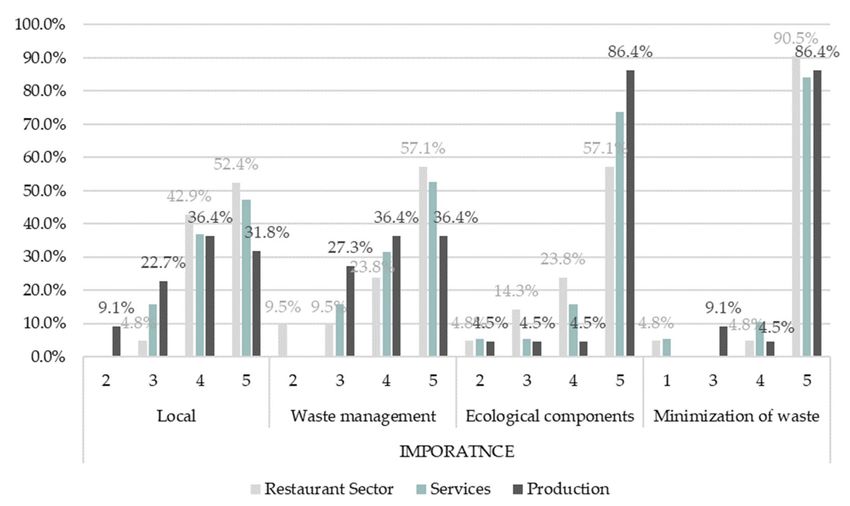
Sustainability 2021, 13, 5226                                                                                                3 of 18

                                          The process of getting familiar with the value of sustainability can be applied within
                                     the public as well as in a business. The substance is the same, to identify, understand,
                                     implement, and manage. There are also cases when people understand the consequences
                                     of their unsustainable purchasing behavior, but they do not have sufficient information on
                                     the alternatives, so they stick to proven products [11]. For this reason, it is important to
                                     increase the motivation of the businesses themselves. They need to realize that they are
                                     responsible for spreading information on the value of sustainability to the customers.

                                     2. Materials and Methods
                                     2.1. Researched Areas of Business Sustainability Values
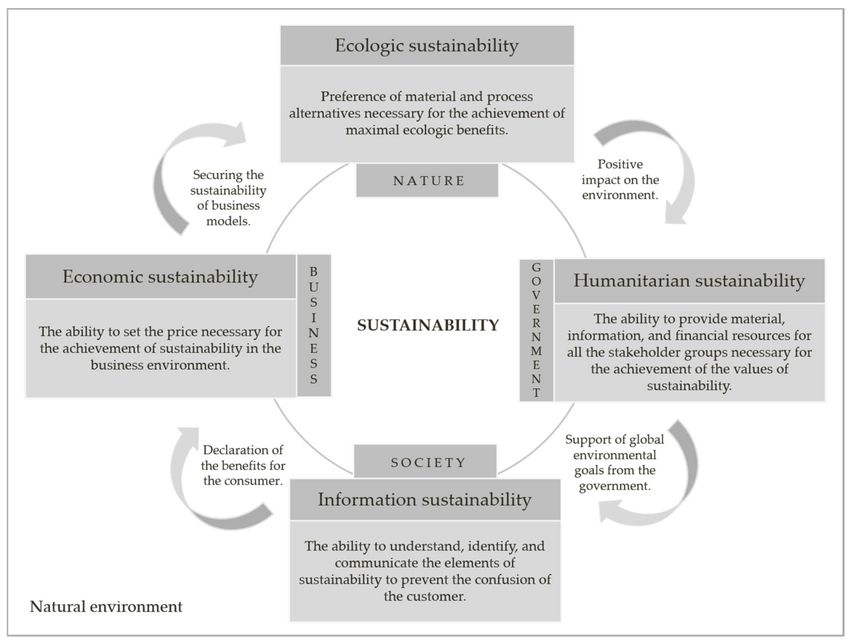
                                          This article studies sustainability from the perspective of cooperation of all the stake-
                                     holders. Creating the values of sustainability in the business environment is not possible
                                     unless the environment recognizes them. For this reason, it is necessary to think about
                                     sustainability as a cycle of knowledge, understanding, and the ability to translate the
                                     values of sustainability into all the elements of the stakeholders’ operation in the natural
                                     environment. Figure 2 shows the stakeholder groups and their sustainability values.

                                Figure 2. Studied aspects of sustainability and their mutual interconnections.

                                          Based on the knowledge from the theoretical research, the need to address the issue
                                     and its relevance are confirmed. According to the CAS theory and the theoretical founda-
                                     tions, it is necessary to understand the importance of interconnection in the model [5,6,12].
                                     To establish viable sustainability management, it is essential to be aware of all the stake-
                                     holders in this process.

                                     2.2. Research Methodology and Hypothesis
                                          What are the plans and reactions of local entrepreneurs regarding the elements of
                                     ecological sustainability in their business models? This research includes a survey con-
                                     ducted on a deliberately picked sample of 62 businesses from three segments (gastronomy,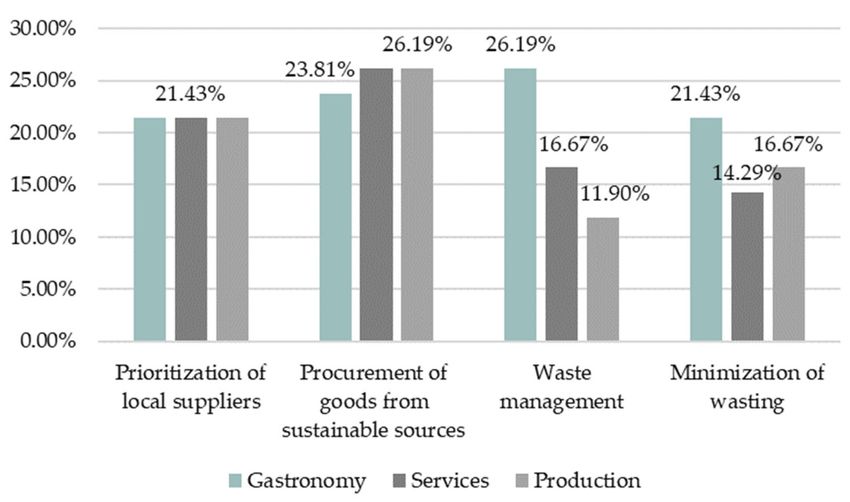
Sustainability 2021, 13, 5226                                                                                              4 of 18

                                services, production) of the Slovak economy for this article. The businesses sectors include
                                the restaurant sector (coffee shops, restaurants, etc.), the production sector (production of
                                furniture, toothbrushes, etc.), and the sector of services (a wedding agency, a laser arena,
                                transport services, etc.). This research is part of a larger project, which consists of an
                                analysis of business models in Slovakia. For this research, a qualitative approach to the
                                data collection was selected, personal interviews directly in the businesses. This part of
                                the research consists of 62 interviews with entrepreneurs from local Slovak businesses.
                                The main objective of the research was to understand how they work daily, what is their
                                perceived value of their business models, and how they understand sustainability. After
                                this phase, it was possible to collect data and divide them into the 3 segments of interest.
                                These parameters were amended after the second phase of the research, which is the core
                                of this article.
                                     The sample of micro and small businesses was a result of a deliberate selection within
                                the businesses in Slovakia. These were businesses with between 1 and 10 employees.
                                They must be active, conducting business in one of the three selected segments—food
                                companies (gastronomy), services, or production. Within the food company, cafes, bakeries,
                                restaurants, cake shops, and businesses selling gastronomy equipment were included.
                                The segment of services included the businesses providing services of any kind. The
                                actual sample includes a legal consulting company, hairdresser, event agency, and a car
                                repair shop. The production segment is represented by businesses producing furniture,
                                construction companies, and a company producing toothbrushes.
                                     The businesses were approached directly via email, and the selection was performed
                                using a website providing information about businesses in Slovakia, finstat.sk [13]. These
                                were local entrepreneurs from various regions of the Slovak Republic. The research was
                                performed using the questionnaire technique in its online form. Generalization of this situa-
                                tion created the foundations for the research that opens the topic of ecological sustainability
                                in micro and small businesses in Slovakia.
                                     Research questions
                                •    What is the level of awareness in this field?
                                •    Do entrepreneurs apply elements of sustainability to their business models?
                                •    Do customers perceive the issue of the natural environment?
                                •    Do customers feel that their shopping behavior can affect business offerings?
                                     Research hypothesis

                                Hypothesis 1 (H1). If the entrepreneur knows the parameters of the value of sustainability, then
                                his motivation to apply them to his business model increases.

                                Hypothesis 2 (H2). If micro and small businesses perceive the parameters of sustainability value
                                as important, they also apply them to their business models.

                                Hypothesis 3 (H3). If customers perceive the need to solve environmental problems in the business
                                activities of companies as important, then they are looking for sustainable companies.

                                2.3. Research Sample and Its Specifications
                                2.3.1. Business Research Sample
                                     In this part, the research was specifically focused on micro and small businesses in
                                Slovakia. Its topic was the perception of sustainability in businesses such as whether
                                sustainability is substantial, which elements are perceived as substantial, and which are
                                not. The businesses included in the research are micro and small companies from Slovakia.
                                     The research sample was selected by a random selection at finstat.sk—a database
                                of entrepreneurs from Slovakia (Table 1). The selection parameters were the number of
                                employees (1–10), profitability in the last 2 years, and the company sector (restaurant sector,
                                services, production). The research sample consisted of 92 active businesses that were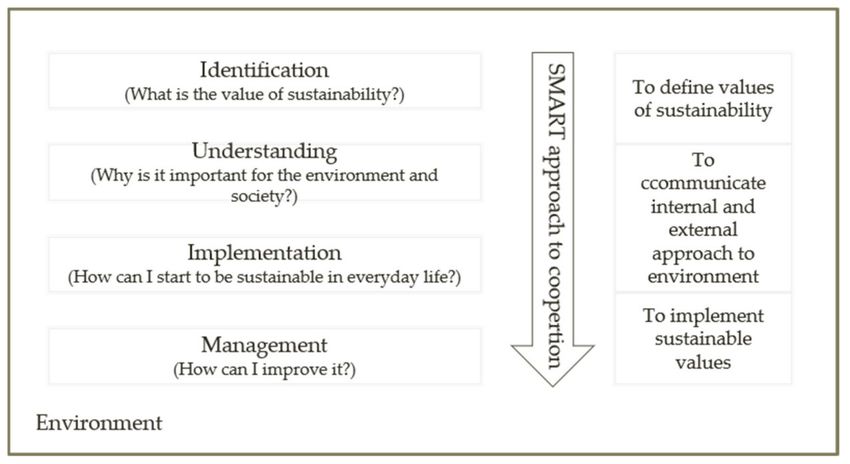
Sustainability 2021, 13, 5226                                                                                                     5 of 18

                                       contacted via email. The research was supported by 62 business entities. The answers were
                                       collected from the businesses’ CEOs or managers.

                                           Table 1. Research sample specification—business research.

                      Sample Specification                                        Parameter of the Research Sample
                The size of the research sample                         62 entrepreneurs/CEOs from micro and small companies
                       Method of selection                                                  Deliberate choice
                                                                                 Minimally 1, maximally 10 employees
                      Selection parameters                                   Profit for the last two accounting periods 0 + €
                                                                               Sector—gastronomy, production, services
                                Location                                                        Slovakia
                     Duration of the survey                                            May 2020–November 2020

                                       2.3.2. Consumer Research Sample
                                            The consumer survey was conducted online, and its sharing was electronic (Google
                                       Forms) through various communication channels, so that the survey addressed the widest
                                       possible range of respondents, given the age, level of education, or place of permanent
                                       residence. The survey ran from 3 December 2020 and lasted until 20 February 2021 (Table 2).
                                       A website was created for the communication of the given survey, which contained basic
                                       information related to the given topic, so that the potential respondent would be interested
                                       and willing to support the survey. At the same time, the information on the support website
                                       did not provide a large amount of information so as not to influence the respondents’
                                       answers. This is just a very simple introduction to issues with a motivating character. An
                                       online space under the auspices of the wordpress.com platform was used to create an
                                       information website, and it is a website owned by the author. Its operation was free for
                                       a period of one year of use. The website was named after the keyword of the research
                                       activity to motivate respondents—https://tvorimehodnotu.wordpress.com/ (accessed on
                                       15 February 2021).

                                       Table 2. Research sample specification—consumer research.

                                                     Sample Specification                      Parameter of the Research Sample
                                                The size of the research sample                         354 respondents
                                                     Method of selection                                 Random choice
                                                                                                              Age
                                                     Selection parameters
                                                                                                             Region
                                                           Location                                          Slovakia
                                                    Duration of the survey                       December 2020–February 2021

                                       3. Results
                                       3.1. The Research of the Perceived Value in Slovak Local Businesses
                                            The outputs from these interviews are the specific parameters that explain the per-
                                       ceived value of each business from the perspective of its boss. From the results, four main
                                       groups for the perceived value parameters were created, consisting of 15 individual param-
                                       eters. These groups of the value parameters perceived by the entrepreneurs include:
                                       •    Product (quality, bio, local),
                                       •    Service (interior design, additional services, staff qualifications, custom access, special
                                            accessories, supplementary program),
                                       •    Environment (waste recycling),
                                       •    Emotions (minimalization of the waste production, social business impact, eco prod-
                                            ucts, atmosphere, company name) [14].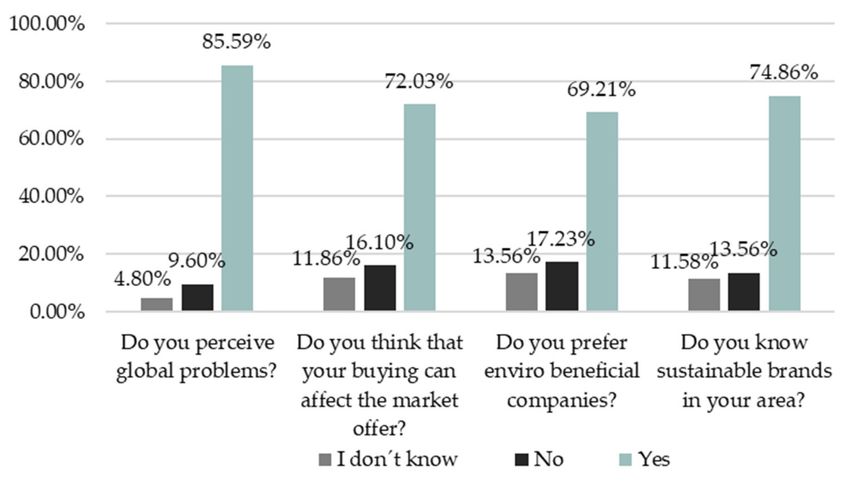
Sustainability 2021, 13, 5226                                                                                                6 of 18

                                        The parameters of the value perceived by the entrepreneurs were the basis for the
                                  next analysis. After analyzing similar studies of sustainability and sustainable business
                                  models from the environmental perspective, it was possible to compare the terms used in
                                  common practice and adjust the parameters for the main topic of the research [15,16]. The
                                  first research was focused on these parameters:
                                  •    Locality—prioritization of local suppliers (reducing carbon footprint),
                                  •    Waste management (recycling, separation, etc.),
                                  •    Ecological components—procurement of goods from sustainable sources,
                                  •    Minimization of waste (wasting energy, material, etc.).

                                  3.1.1. Prioritization of Local Suppliers (Reducing Carbon Footprint)
                                        The awareness in relation to this issue was at a good level for the majority of businesses.
                                  The essence of the prioritization of local suppliers is known to entrepreneurs. They also
                                  often describe this element as important from the perspective of the local market and local
                                  economy. This also represents one of the fundamentals of a circular economy. In relation
                                  to this element, the highest importance was assigned with the highest frequency in the
                                  food company (52.4% of respondents), followed by the segment of services (40%) and the
                                  production segment (also 32%). The difference among the segments can be caused by the
                                  fact that in production the system of supplying can be planned more easily, and the process
                                  of supplying has a longer cycle. In comparison, the supplying process in the food company
                                  is much different and most of the products are being delivered daily.
                                        Investigation of the relationship between the perceived importance of the parameter
                                  “prioritization of local suppliers” and the subsequent implementation of the parameter
                                  into the business model. The aim was to determine whether the variance of the boundaries
                                  of perceived importance and the subsequent application of the parameter to the model is
                                  significant. The ANOVA test using the SPSS program was used for statistical investigation
                                  (Table 3).

      Table 3. ANOVA test—monitoring the performance of the parameter “preference of local suppliers” and its perceived
      importance.

   Prioritization of Local Suppliers       Sum of Squares           df          Mean Square            F         Significance
      Dispersion between groups                  29.53               3              0.984            5079            0.003
            Within Groups                       11.241              58              0.194
           Total dispersion                     14.194              61

                                       The results confirmed the dependence of the importance of the parameter “preference
                                  of local suppliers” and its subsequent implementation into the business model of the
                                  company. To determine the magnitude of the effect (r) of this parameter, its effect is
                                  calculated using the formula:
                       Dispersion between groups      √
               r2 =                              → r = 14.194 → r = 3.77 (Strong magnitude of the effect)                       (1)
                            Total dispersion
                                        Individual segments of entrepreneurs compiled according to the perceived importance
                                  of the parameter “preference of local suppliers” differ statistically significantly in the
                                  implementation of the parameter in their business model, F = 5079, p < 1, with a high effect
                                  of 3.77.

                                  3.1.2. Procurement of Goods from Sustainable Sources
                                       The preference for sustainable sources is an often-discussed topic. The substitution of
                                  standard incandescent light bulbs with LED lights is being actively applied in the public
                                  sector. However, this is only one of the possible ways to contribute to sustainability. The
                                  substitution of combustion engines by hybrid or electric engines and the change of heating
                                  systems are other such ways. Conventional options are being replaced by their more
Sustainability 2021, 13, 5226 7 of 18
ecological alternatives [17]. These ecological innovations are common in large businesses,
but in local micro-businesses, each such investment is discussed and recalculated several
times. The preference for a more ecological alternative is often financially demanding.
Therefore, this element is often postponed, and entrepreneurs implement such innovation
only when they are forced to do so, e.g., by the government. The highest frequency of
this element was recorded for the food company again, and up to 90.5% of respondents
assigned the highest importance to it within environmental sustainability. In the segment
of services, the frequency was 72%, and in the segment of production, this element was
considered highly important by 86.4% of respondents. An interesting extreme occurred
in the food company segment where one respondent perceived this element as almost
unimportant. This was the case of an owner of a specialized beer shop selling craft beers
from local breweries. Even though the owner is interested in sustainability, he cannot affect
this element; therefore he considers it to be almost unimportant for his operation. If he
does not want to lower the quality of his products, he cannot look for alternatives (for the
packaging, transport, or beer cooling). Nevertheless, the fact that the owner is interested in
the issues of sustainability is an important positive finding.
3.1.3. Waste Management (Recycling, Separation, etc.)
Recycling, separation, upcycling, and many other effective ways of waste management
have been known in Slovakia since the first steps of the EU towards awareness in this field,
starting in 2014 within the Europe 2020 program. A lot has changed since that time even in
Slovakia. Over time, people have learned that there are many ways to work with waste.
Nevertheless, the first step is waste separation. This applies to the business environment
as well. The accessibility of the bins for the separated waste plays an important role in
changing habits. Other steps of the government helped change the habits of entrepreneurs
too since the government started to create pressure on the reduction of the waste via
sanctions. Businesses started to look for an alternative. The survey’s results show that this
element is perceived as a fundamental step by the respondents—highly important within
the topic studied. This is supported by the assignment of five points on the scale in all the
segments with the frequency above 50–57% in the food company, 52% in services, and 36%
in the production segment.
3.1.4. Minimization of Wasting (Wasting Energy, Material, etc.)
The last element does not only represent environmental sustainability but also eco-
nomic efficiency. In this case, it was revealed that if the value of the element is directly
favorable for the business, the level of importance of this element for the management of
the business is considerable. Up to 83% of all the respondents assigned the highest value
on the scale to this element.
The following graph (Figure 3) shows the perceived importance of individual pa-
rameters by segments. The most significant results can be observed with the parameters
“waste minimization” and “ecological components”. These are the most significant results
in terms of perceived importance for all three monitored segments.
The research was also focused on the identification of the elements that are already
implemented in the business models by the entrepreneurs; thus they already have actual
experience with the elements from the practice. The willingness of entrepreneurs to im-
prove within the studied topic represents an important precondition for the design of the
part of the new model oriented on environmental sustainability in the business environ-
ment. Therefore, another question dealt with the entrepreneurs’ plans within this field.
Which of the elements are important for local businesses and which are they planning to
implement in their business models? Figure 4 captures the state of the planned applications
of individual elements of environmental sustainability in the business models analyzed.Sustainability 2021, 13, 5226 8 of 18
Figure 3. Perceived importance (1–5) of individual parameters according to segments.
Figure 4. The planned implementation of the elements of environmental sustainability in individual segments.
The preference for procurement from sustainable sources represents an activity that is
planned the most often among the respondents. This was observed even though the same
element did not have such a high value of importance assigned among all the elements
studied. The chart shows a considerable interest in the planning of the application of
individual elements of sustainability in the business models.
Entrepreneurs from the micro and small segment perceive the high importance of
solving elements of sustainability. They mentioned the minimization of waste as the most
important element, for this parameter, the highest value of importance (5) was marked by
up to 86% of respondents. This fact may be due to the fact that minimizing waste has a
direct positive impact on the economic results of entrepreneurs. Given the issues addressed,Sustainability 2021, 13, 5226 9 of 18
the differences between the segments are interesting. The gastro segment is significantly
more active in most parameters compared to production and services. In addition, it is
production that lags in most cases.
A positive indicator is the fact that companies plan to apply elements of sustainability
to their business models, even those that they have not identified in terms of importance
as significantly important. This consequence may be because entrepreneurs identified as
essential those they practice in terms of personal responsibility. Sounding fair is essential
in the field of micro-business and entrepreneurs are careful how they express themselves
on individual topics. Of course, these topics are also taken seriously by large companies,
but in their case, the loss of one customer will not cause as significant losses as in the case
of a local entrepreneur. So this fact can be perceived as the so-called maneuver to ensure
that they also apply the important elements of sustainability they perceive, that is, they try.
However, it is essential in the context of research that they want to improve and plan to
implement activities within the elements of sustainability soon.
In the following table (Table 4), it is possible to see the percentage of answers to the
question of the perceived importance of individual parameters. These are entrepreneurs
who have indicated that they perceive the parameter as important and very important
(indicated by 4 and 5, respectively). The table shows an overview of differences in the
importance of individual parameters based on the monitored segments—gastronomy, ser-
vices, and production. The highest perceived importance can be observed in the segment
of gastronomy, which also appeared to be the most active in previous results. As many as
95% of respondents described the parameters “minimizing waste and prioritizing local
suppliers” as very important. It is the “waste minimization” parameter that is considered
to be the most important given the average percentage in responses of the highest impor-
tance. The largest variance between segments occurs in the parameter “prioritization of
local suppliers”, where only 68% of respondents in the production segment marked the
parameter as important and very important, and in the case of the gastro segment up to
95%. These results point to the maturity of the gastro segment in the given issue and its
active implementation of sustainability values not only into the internal activities of the
company, but also their transformation among the company’s stakeholders. In any case,
there is no significant difference with the other parameters. The perceived importance is
at a high level and so it is possible to assess that the perception of the issue in the Slovak
business environment is at a level capable of actively implementing change.
Table 4. Percentage of answers ranked 4 and 5 on a scale of importance.
Gastronomy Services Production Average
Minimization of waste 95.30% 90.90% 91.20% 92.47%
Ecological components 80.90% 89.00% 90.90% 86.93%
Waste management 80.90% 83.00% 72.80% 78.90%
Prioritization of local suppliers 95.30% 85.00% 68.20% 82.83%
3.2. The Survey of the Consumers’ Perceived Value of Sustainability in Slovakia
The results of the survey are as follows. Three hundred and fifty-four respondents
participated in the survey. They were 47% male, 53% female. Most respondents (34.8%) are
in the age range of 24–29 years. Subsequently, 28.4% are in the age range of 30–39 years,
23.2% in the age range of 8–23 years, 10.3% in the age range of 40–55 years, and the rest
are older respondents. The locality is dominated by the Žilina and Bratislava regions,
Slovak Republic.
3.2.1. Perceived Importance of Value Parameters
In the given graph (Figure 5), we can see the individual examined parameters of the
value and the percentage evaluation of the perceived importance by the respondents. The
color scale distinguishes the perceived importance from 1 to 5. Of course, the highest
value represents the highest level of importance of the parameter. At levels 4 and 5, theSustainability 2021, 13, 5226 10 of 18
most significant result was for the parameter of waste management, 23.16% and 66.95% of
respondents in this case stated levels 4 and 5, respectively. The second parameter is the
minimization of waste (27.97% and 61.30%). The third most important parameter is the
ecological safety of materials with 33.33% and 48.31% of respondents giving it a rating of 4
and 5, respectively.
Figure 5. Graph of perceived importance of individual parameters of value on a scale of 1–5 according to customers.
3.2.2. Customer Perception of Global Problems
The following graph (Figure 6) shows the answers to the questions aimed at deter-
mining the perception of global problems. Respondents chose from the options “yes, no, I
don’t know”, while the questions were aimed at finding out their awareness of the problem.
In the first case, it is an environmental question: “Do you perceive problems such as global
warming, the amount of non-recycled waste, or air pollution as a problem that affects you
personally?” In this regard, the survey focused on the environmental environment. Almost
86% of respondents perceive global environmental problems. The figure shows several
answers in one graph, while it is possible to observe that the answer yes is above 69% in
all answers. Thus, consumers clearly perceive global problems as a topic that should be
actively addressed. They believe that buying them as an individual can affect market sup-
ply, so that if they change their shopping behavior, they can influence the consumer offer
and thus promote sustainable products and services. They correspond in percentages to
69.21% of all respondents preferring environmentally friendly companies and up to 74.86%
of all respondents knowing brands in their neighborhood that implement a sustainable
approach to their business.
Respondents answered positively on environmental sustainability issues in more than
70% of cases (Table 5). All positive responses to business sustainability exceeded 70%.
Within the given article, we state the highest and lowest range of answers.
As many as 63% of respondents from the customer survey perceive the problems of the
natural environment and at the same time believe that they can influence the market offer
with their purchases and thus contribute to a more sustainable environment. Verification
of the dependence of this relationship was treated by a chi-square test, with a p-value of
18.59 with a significance of 0.001. Based on this conclusion, it is possible to assess that the
relationship is statistically significant.Sustainability 2021, 13, 5226 11 of 18
Figure 6. Evaluation of interest in societal issues in the field of sustainability.
Table 5. Percentage of answers to “global perception” and “belief in change through sustainable purchasing”.
Belief in Changing the Market Offer by Own Purchases
Numbers within the Questions
Yes No I Don’t Know
Perception of global Yes 62.99% 11.58% 11.02%
environmental No 5.08% 3.95% 0.56%
problems I don’t know 3.95% 0.56% 0.28%
3.3. Hypothesis Verification
Companies perceive their own value as a way of fulfilling their business goals, which
in most companies are presented by the products themselves. In the field of micro and
small enterprises, the main motivating element for establishing a business model is its
very value—solving the personal values of the founding leader, in 95% of business owners
(research of perceived sustainability in micro and small enterprises in Slovakia). The
identified parameters of the perceived value of sustainability from the point of view of
entrepreneurs were subsequently verified by primary research, but also by secondary data
through foreign research and case studies, which support the logic of dividing parameters
into areas or the nature of stakeholders in value management in terms of sustainability.
Hypothesis 1 (H1): In the pre-research part, the first interviews were conducted
with entrepreneurs in order to understand their perception of value. In many cases,
entrepreneurs could not define exactly what their value was without being explained in
more detail than how to look at the value as such. After clarifying that this is a value as an
internal stimulus for the establishment of the main idea of a business idea and elements
that are superior to economic results, the responses were more prompt, more accurate, and
the certainty in the given answer increased. The level of knowledge also increased through
the interview itself. This consideration forced the entrepreneur to think about the deeper
idea of the whole business.
The data described in more detail are in the pre-research section, how the research
was conducted and what the reactions of entrepreneurs were. After jointly determining
the individual parameters, the entrepreneurs were able to precisely define the values, as
well as the scope of their application and the positive effects of such solutions. Most of
the respondents from the pre-research after the interview stated that they are satisfied
that they participated in the interviews and perceive that this type of interview was of
an educational nature for them, and they would like to learn more about the issue and
results. The tendency to address issues of value management and sustainability was alsoSustainability 2021, 13, 5226 12 of 18
confirmed in the case of respondents in the main research—research on the perception of
sustainability values in Slovak companies. After the first survey, entrepreneurs showed
interest in the subsequent implementation of sustainability parameters into their business
models. However, the most significant interest was recorded in the segment of gastronomic
companies, where, for the four examined parameters of sustainability, 65% of respondents
plan to implement parameters after the research aimed at prioritizing local suppliers and
minimizing waste, and up to 76.19% of plan focusing on purchasing from sustainable
sources and 55% of respondents plan to implement waste management. In the service
and production segments, the motivation for the implementation of elements is not so
strong for all elements. In the service segment, 73% plan to implement innovations in
the local supply chain, and in the case of production it is also 73% of respondents. In
purchasing from sustainable sources, it is 78% service sector and 80% for production.
However, in the other two elements, only 43% of entrepreneurs involved in research from
the services segment mentioned the planned innovation activities, only 32% from the waste
management production segment, and 43% in waste minimization.
Based on the given data, the validity of the hypothesis is confirmed. Due to the
differences in parameters and segments it is argued that the average values in all examined
parameters are higher, more than half of the respondents plan innovations in the field of
sustainability within their business model.
Hypothesis 2 (H2): The parameters of the perceived values were tested and adjusted
because of the primary and secondary data so that their formulation was clear and under-
standable. Subsequently, the parameters were tested in research focused on the perception
of sustainability values in micro and small enterprises in Slovakia. From the data ob-
tained in the primary research, the statistical significance of the dependence of the waste
minimization parameter was confirmed in connection with the company perceiving the
parameter as important, i.e., he chose option 4 or 5 on the scale of importance 1–5, so at the
same time he applies it to his business model in 92.5% of cases. This speech also answers
the part of the research question, which focused on the transfer of personal values to other
parts of life, e.g., business.
Specific research question: Assign a level of importance to your perceived elements of
sustainability. The importance was determined on a scale from 1 to 5, where 1 is the least
important and 5 is the most important. In the parameter “waste minimization”, 92.5% of
companies indicated an importance level of 4 (important) to 5 (most important) and at the
same time in the question of whether they implement the given parameter in their business
model they marked it as yes. Based on statistical significance, H2 is confirmed (Table 6).
Table 6. Verification of H2.
Perceived Importance of the Parameter Application of the Parameter to
χ2 Test
by Entrepreneurs the Business Model
χ2 10.086
Waste minimization (energy, material,
products, time, etc.) p-value 0.018
Significance yes
Hypothesis 3 (H3): The researched hypothesis is part of a customer survey. In the
survey, however, it is possible to preliminarily evaluate the relationships between the
questions, “Do you perceive it as necessary for society to become interested in global issues
such as the amount of waste, air, and water pollution, or global warming? Indicate on a
scale of 1 to 5 the seriousness of this issue, 1 indicating that this issue is not important for
the company and 5 that it is necessary for the company to start actively addressing this
issue.“ As well as the question, Do you prefer companies that try to be environmentally
friendly? Beneficial? (They practice activities such as separation, recycling, actively seek
sustainable alternatives for materials, supply routes, etc.).Sustainability 2021, 13, 5226 13 of 18
The method of hypothesis testing was used to determine statistical significance be-
tween the examined questions with a p-value of less than 0.001 and thus the result is
statistically significant and H3 was confirmed. As 76.71% of respondents perceive it as
necessary to solve global problems, they really prefer environmentally friendly companies
(Table 7).
Table 7. Verification of H3.
χ2 Test Prioritizing the Environmentally Friendly Companies
χ2 37.488
Do you see it as necessary for society
p-valueSustainability 2021, 13, 5226 14 of 18
however, are very narrowly specified around business in the segment of medium and
large companies. Thus, there is a marked absence of simple communication of sustainable
parameters in practice. For this reason, we decided to prepare a simple form of summary
of the main parameters of sustainability in the field of small and micro enterprises. Finding
opportunities for unified communication of the issue to the public is a difficult process.
However, customers perceive the issue as a serious aspect that entrepreneurs should
address and adapt their business to. According to research in companies, the perception of
the issue of waste minimization is evident especially in business segments, where these
are products of immediate consumption. So, the most significant steps in the direction of
eco-innovation are applied in the field of gastronomy (restaurants, cafes, cafeterias, etc.).
The lowest level of awareness and interest was recorded in the field of services, especially
in the field of construction.
Our proposed value management model of value parameters to support sustainability
in micro and small enterprises is an exact list of parameters and their areas, which the
company can analyze before their implementation, during implementation and evaluate
after implementation. It is a system of looking at the issue across the area of stakeholders
through the optics of the value parameter.
The design and function of the model are subject to lean management methodologies.
This is an approach with the utmost effort to avoid waste. The specifics of the model are
its simplicity, clarity, avoidance of supply and emphasis on linking all processes to the
customer and the environment, and thus increasing trust between all stakeholders.
After the overall evaluation of the model verification, the ambition is to bring to the
research results a supplemented part describing the proposed alternative solutions to the
individual sustainability parameters. They would serve as a quick aid in finding solutions
to the so-called “better options” in terms of value parameters implemented in the company.
This fact is essential in realizing that sustainability and its application to the business
environment has its phases. These phases begin with the initial awareness of small changes
to promote sustainability. Gradually, after they are automated into the company’s activities,
it is possible to move to the next level (ideally with another balance period, then new goals,
and the next level of the model).
Due to the lean approach of the whole methodology, the setting of a new level is given
based on the parameters of lean management:
• Simplicity,
• Clarity,
• Targeting.
After applying these specifics, the company will be able to set new goals and improve
the original parameters of the model. The model provides an agile methodology for
managing value parameters to support sustainability in micro and small businesses.
Verification of model parameters from the point of view of the external environment
is a necessary indicator of the correct definition of parameters and their importance for
customers. The parameters of sustainability value represent specific areas for improvement
in the sustainable goals of the company itself, but also in the general goals of the company.
The need for retrospective review from an external environment serves as a verification
parameter for possible adjustment and prioritization of individual parameters and the
model itself.
The FOCUS agency and the Business Leaders Forum carried out a survey, the main
goal of which was to analyze trends in the perception of responsible business in the Slovak
market from the perspective of the public. The survey was conducted in Slovakia, it is
a survey of the public and its perception of a responsible approach to business, it was
conducted in October 2019. The survey was conducted in the form of a questionnaire on a
representative sample of 1021 respondents aged 18 years.
As many as 94% of respondents think that companies should, in addition to making a
profit, also have priority in their CSR goals and up to 91% of respondents think that compa-
nies should inform the public about their CSR activities. For the question of examining theSustainability 2021, 13, 5226 15 of 18
consumer’s knowledge of what CSR really is, 25% agreed that CSR is honest in business,
25% perceive CSR as environmental consideration in their business, and 25% perceive CSR
as non-abuse of employees, the remaining 25% were different types of responses.
When asked whether the respondents can spontaneously state at least one company
that does business responsibly, up to 48% of respondents answered yes and mentioned
Slovak companies such as Lidl Slovakia (13%), Orange, Slovakia (10%), Telekom (9%), Kau-
fland Slovak Republic (8%), and Tesco STORES SR (8%). When asked about societal issues
that companies should address, 53% mentioned the environment and climate change [22].
The Datank agency prepared a survey of hundreds of companies in Slovakia for ČSOB.
These are companies from the small and medium segments. The results of the survey were
published in 2020, and their results are interesting conclusions on the topic.
The aim of the survey was questions focused on eco-innovations applied to business
models of entrepreneurs. Almost a third of companies (31%) have already implemented
some of the activities aimed at reducing their negative impact on the environment. How-
ever, a much more favorable number came out in the question: “Are you implementing
such measures now?” Up to 46% of Slovak companies in the field of SMEs are in this stage
of eco-innovation implementation. One fifth of respondents (18%) stated that they do
not introduce eco-innovation and do not plan to do so in the future [23]. “Protecting the
environment is my life credo and I also subordinate the functioning of the company to it”
said Marian Pánik, Profi Building Materials, in the survey. An interesting specificity of
the surveyed subjects is that the larger the company, the more its interest in environmen-
tally beneficial activity increases. More than two fifths of companies (42%) are motivated
by social responsibility for eco-innovation, and almost one third of respondents simply
consider it correct and natural. Roughly 16% of companies have the introduction of ecolog-
ical processes and innovations ordered by legislation. “When we asked companies why
they did not implement environmental measures, they most often said that they did not
have a chance to affect the environment as part of their business activities. The highest
representation among these companies was around wholesale, retail, repairs, and mainte-
nance, as well as administration” explains Dáša Polláková, manager of the Department
for Small and Medium-sized Enterprises of ČSOB. Regardless of the size of the company,
the most common measure is the recycling of waste, which has been actively mastered by
more than a third of respondents (36%) and 17% of entrepreneurs reach for energy-saving
electrical appliances. Roughly 15% of companies use new ecological materials or ecological
packaging materials in their production and 8% of entrepreneurs work with ecological
technologies [23].
A greener approach to business also means higher innovation costs for some segments.
Most companies involved (70%) in the survey stated that they did not include the additional
costs involved in the final prices. “Of course, in this case, the decisive factor is in which
segment/sector the company operates and for which type of measure it has decided. On
average, 7 out of 100 entrepreneurs contacted include these costs in the value of a product or
service, and another almost 1/4 of companies partially reflects the costs of eco-innovation
in the price of products and services,” adds Polláková [23].
The resources needed for eco-innovation are common reasons that entrepreneurs
consider when operating greener. Almost one third of companies are reluctant to be
ecological precisely because of the financial demands of investments in environmental
protection. Another 14% of entrepreneurs are bound by legislation, 6% of companies
complain about the lack of experts, 5% of entrepreneurs lack demand from clients, and 17%
of companies operate in a segment that does not allow environmental measures. Skepticism
is the main reason for 2% of respondents [23].
The level of awareness of the issue is high in the business environment. In the moni-
tored segments, the most significant results were in the gastro segment, which also has the
highest degree of motivation to implement innovations in the future. To shift the awareness
of entrepreneurs, it is necessary to set the main measures for setting measurable goals in the
field of sustainability. This is the exact naming of parameters and their measurable units. ItSustainability 2021, 13, 5226 16 of 18
is necessary to record the baseline so that these steps can be subsequently optimized and
evaluated. Sustainability is a never-ending process of growth in corporate culture and the
natural environment.
Customer perception of the issue is also at a very high level. At the same time, cus-
tomers feel responsible for the impact of consumer purchasing and believe that sustainable
approaches to consumption tend to change market supply (62% of respondents in customer
surveys). For companies and customers, it is first and foremost necessary to start communi-
cating the individual steps towards sustainability. Given the results of research, it is evident
that companies are trying to be more sustainable, as well as that customers are looking for
sustainable businesses. Therefore, it is essential that companies start communicating these
steps at any stage of the solution. It is essential that customers learn about this activity and
thus have the opportunity to support their innovation.
5. Conclusions
The changes related to the perception of sustainability described in this article are
especially reflected in the behavior of millennials. Young people can make their way
around the abundance of information present in the online or offline environment. They
have grown up in a time when the accessibility of products and services reached the level of
demand; thus they mostly do not know the feeling of shortage of something [24] However,
their preferences include values such as environmental sustainability, ecological help,
or engagement in social issues. They have their own attitude towards global problems
and the solution to the imminent climate crisis. This perspective determines the next
generation of consumers, and the elements of their behavior should be applied in the
business environment. Businesses can be more intriguing and preferred to their competitors
if they declare a value system based on ecological principles [25].
The issues of environmental sustainability represent a well-known topic for corpora-
tions which is being actively approached via the implementation of CSR principles into the
companies’ operation [26]. However, these models are very complicated, and it is often
impossible to implement them in micro and small businesses. Therefore, this research fo-
cused on this environment. The results show that the level of importance of the elements of
environmental sustainability in Slovakia is high. A substantial finding for further research
is also the fact that local businesses are planning to broaden their knowledge in this field,
and they are willing to innovate. For this reason, it is substantial to bring new pieces of
knowledge not only for the science but also for micro and small businesses, representing
a considerable part of the Slovak business environment. These entrepreneurs are able to
support the economy even during a crisis since they are able to swiftly react to the changes
in the market. The design of a model of environmental sustainability for micro and small
businesses will help them with a smooth adaptation to new changes, contributing to the
European goals for a greener world [27–29].
The aim of this article was to provide a general view of the changing perception of
values in relation to sustainability. Consumers are changing their behavior and, given the
level of entrepreneurs’ belief in eco-innovation, we consider data on customer demand
specifications to be crucial. At the same time, however, we perceive it as necessary to
bring comprehensible solutions applicable to the common practice of micro and small
entrepreneurs in Slovakia.
Questionnaire research of consumers reflected the significant importance of solving
the problem and confirmed the research hypotheses of the article. Consumers prefer
businesses that actively address environmental issues and strive to do business sustainably.
The supporting surveys in the discussion section confirm our claims with secondary data.
Based on our analyses, we perceive this issue as significantly important for building values
in the field of micro and small businesses, not only in the Slovak business market.
Author Contributions: Conceptualization, M.D. and M.V.; methodology, M.D. and M.V.; software,
M.D.; validation, M.D.; formal analysis, M.D and M.V.; investigation, M.D.; resources, M.D.; data
curation, M.D.; writing—original draft preparation, M.D.; writing—review and editing, M.D.; visual-Sustainability 2021, 13, 5226 17 of 18
ization, M.D.; supervision, M.V.; project administration, M.D. and M.V.; funding acquisition, M.D.
and M.V. Both authors have read and agreed to the published version of the manuscript.
Funding: This research was funded by the Grant System of University of Zilina No. 1/2020, grant
number 7941 and VEGA 1/0533/20 Online Reputation Management: Tools and Methods.
Institutional Review Board Statement: Not applicable.
Informed Consent Statement: Not applicable.
Data Availability Statement: Not applicable.
Conflicts of Interest: The authors declare no conflict of interest.
References
1. Demjanovičová, M. Current Situation in the Field of Management of the Value of Small and Medium-Sized Enterprises through Marketing
Activities; Sciemcee Publishing: London, UK, 2018; pp. 51–53. ISBN 978-0-9935191-7-8.
2. Del Borghi, A.; Gallo, M.; Strazza, C. An evaluation of environmental sustainability in the food industry through Life Cycle
Assessment: The case study of tomato products supply chain. J. Clean. Prod. 2014, 78, 121–130. [CrossRef]
3. Ranta, V.; Aarikka-Stenroos, L.; Mäkinen, S.J. Creating value in the circular economy: A structured multiple-case analysis of
business models. J. Clean. Prod. 2018, 201, 988–1000. [CrossRef]
4. Kim, A.J.; Ko, E. Do social media marketing activities enhance customer equity? An empirical study of luxury fashion brand.
J. Bus. Res. 2012, 65, 1480–1486. [CrossRef]
5. Strand, R. Strategic Leadership of Corporate Sustainability. J. Bus. Ethic 2014, 123, 687–706. [CrossRef]
6. Strand, R. The Stakeholder Dashboard. Greener Manag. Int. 2006, 2006, 23–36. [CrossRef]
7. Schaltegger, S.; Hansen, E.G.; Lüdeke-Freund, F. Business models for sustainability: Origins, present research, and future avenues.
Organ. Environ. 2016, 29, 3–10. [CrossRef]
8. Chernev, A.; Blair, S. Doing Well by Doing Good: The Benevolent Halo of Corporate Social Responsibility. J. Consum. Res. 2015,
41, 1412–1425. [CrossRef]
9. Collins, J. Good to Great; Eastone Books Publishing: Bratislava, Slovakia, 2005; ISBN 80-89217-09-5.
10. Demjanovičová, M.; Varmus, M. Knowing the Parameters of Perceived Value in the Companies Operating in Smart Environment.
CER—Comparative European Research 2019. In Proceedings of the 12th Biannual, London, UK, 28–30 October 2019; Sciemcee
Publishing: London, UK, 2019; pp. 56–59. ISBN 978-1-9993071-5-8.
11. Dankova, A.; Droppa, M. The Impact of National Culture on Working Style of Slovak Managers. Procedia Econ. Finance 2015, 34,
164–171. [CrossRef]
12. Dentoni, D.; Pinkse, J.; Lubberink, R. Linking Sustainable Business Models to Socio-Ecological Resilience Through Cross-Sector
Partnerships: A Complex Adaptive Systems View. Bus. Soc. 2020. [CrossRef]
13. Finstat.sk. Statistics about Companies in Slovak Business Area. 6.8.2020. Available online: https://finstat.sk/databaza-firiem-
organizacii (accessed on 10 January 2021).
14. Demjanovičová, M. The impact of value on the effectiveness of marketing communication of local companies. Edukacja
Ekonomistów i Menedżerów 2020, 55, 24–32. [CrossRef]
15. Abahumna, A. Sustainability of small and micro enterprises. Int. J. Curr. Res. 2019, 11, 5175–5179. [CrossRef]
16. Condon, L. Sustainability and Small to Medium Sized Enterprises—How to Engage Them. Aust. J. Environ. Educ. 2004, 20, 57–67.
[CrossRef]
17. Hrušovská, D.; Demjanovičová, M.; Mičiak, M.; Tumová, D. Analysis of the perception of sustainability from the perspective of
entrepreneurs and consumers in the food industry in Slovakia. In Proceedings of the 35th IBIMA Conference, Seville, Spain, 1–2
April 2020; ISBN 978-0-9998551-4-0.
18. Zrakova, D.; Kubina, M.; Koman, G. Influence of information-communication system to reputation management of a compa-ny.
In Proceedings of the 12th International Scientific Conference of Young Scientists on Sustainable, Modern and Safe Transport,
High Tatras, Slovakia, 31 May–2 June 2017; Volume 19, pp. 100–1000.
19. Newman, G.E.; Gorlin, M.; Dhar, R. When Going Green Backfires: How Firm Intentions Shape the Evaluation of Socially Beneficial
Product Enhancements. J. Consum. Res. 2014, 41, 823–839. [CrossRef]
20. Van Hille, I.; De Bakker, F.G.A.; Groenewegen, P.; Ferguson, J.E. Strategizing Nature in Cross-Sector Partnerships: Can Plantation
Revitalization Enable Living Wages? Organ. Environ. 2019. [CrossRef]
21. L´Observatoire Cetelem. Consumption in Europe: New Paths to Confidence. 2017. Available online: https://www.cetelem.sk/o-
spolocnosti/aktuality/prieskum-spokojnosti-zakaznikov/Contents/0/observatoire_conso_2017_gb_ss_annexes_bd.pdf (ac-
cessed on 13 January 2021).
22. Blf.sk. Research FOCUS for BLF: Slováci Chcú, aby Firmy Bojovali Proti Klimatickej Zmene a Korupcii. Business Leaders Forum.
2019. Available online: http://www.blf.sk/aktuality-partnerov/slovaci-chcu-aby-firmy-bojovali-proti-klimatickej-zmene-a-
korupcii/ (accessed on 14 January 2021).You can also read


