Chemicals & Small Tankers - Is the order fever over?
←
→
Page content transcription
If your browser does not render page correctly, please read the page content below
Chemicals &
Small Tankers

Is the order fever
over?
At the start of 2017 we could already
foresee a challenging year to come.
The large volume of newbuildings coming
onto the market each month strengthened
the existing tonnage oversupply, and
every addition to the fleet increased the
competition between shipowners.

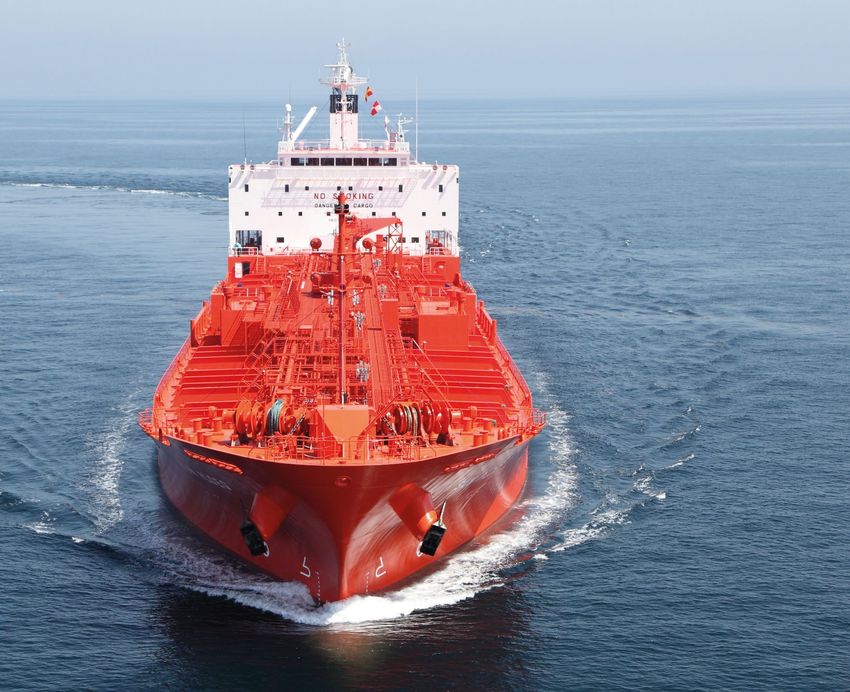
SUN PLOEG
Chemical/Oil tanker, 19,976 dwt, built by Fukuoka Nagasaki
shipyard in 2015, operated by Hansa Tankers.

                                                             59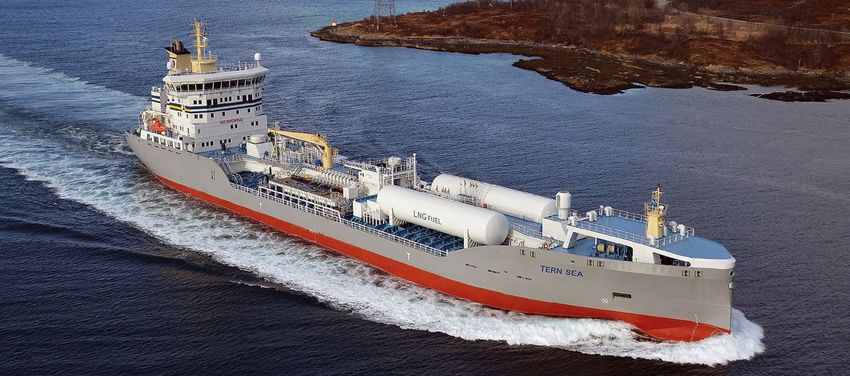
2010 2011 2012 2013 2014 2015 2016 2017 2018 2019 2020
Deliveries Orderbook Demolitions
CHEMICALS & SMALL TANKERS CHEMICALS & SMALL TANKERS
CHARTERING CHARTERING
SST & Part SST Chemical Tanker Fleet - Deliveries , Demolitions & Orderbook
SST & Part SST Chemical Tanker Fleet - Deliveries, Demolitions & Orderbook per year
per year (19,000 to 45,000 dwt)
SST & part SST chemical tanker fleet - deliveries,
(updemolitions
to 18,999&dwt)
orderbook per year (up to 18,999 dwt) SST & part SST chemical tanker fleet - deliveries , demolitions & orderbook per year (19,000 to 45,000 dwt)
108 ships on order
49 ships on order 463 ships in service - Average Age = 8 years
686 ships in service - Average Age = 15 years 30 Ships
Dwt
dwt 24 Ships
686 ships in service - average age 15 years dwt
Dwt 463 ships in service - average age 8 years
48 ships on order 108 ships on order
400,000 1,800,000
35 29 61
300,000
24
14 44
18 18 44
200,000
19 14 1,200,000
8 39
100,000
6 30
1
- 22
1 600,000
1 16 17
-100,000
11 7 5 11
12 8 8
-200,000
28 -
-300,000
1 2
5 3 3 3
-400,000
7
42
-500,000 -600,000 14
2010 2011 2012 2013 2014 2015 2016 2017 2018 2019 2020 2010 2011 2012 2013 2014 2015 2016 2017 2018 2019 2020
2010 2011 2012 2013 2014 2015 2016 2017 2018 2019 2020 2010 2011 2012 2013 2014 2015 2016 2017 2018 2019 2020
Deliveries Orderbook Demolitions Deliveries Orderbook Demolitions
Deliveries Orderbook Demolitions Deliveries Orderbook Demolitions
SST & Part SST Chemical Tanker Fleet - Deliveries , Demolitions & Orderbook Time Charter Rates - Basis 1 year
per year (19,000 to 45,000 dwt) $/day
108 ships on order
463 ships in service - Average Age = 8 years 25,000
30 Ships
to take in four 40,900 dwt newbuildings on bareboat charter. Odfjell will this into perspective, rates only just managed to regain the levels of the first to hold up until May. However a subsequent drop in
CHARTERING
dwt
put these vessels in an 8-strong pool with Sinochem. In doing so, Odfjell will quarter - in other words, they were still pretty poor. demand brought freights to new lows. Overall, we
1,800,000
replace some of its older units with these modern, sophisticated vessels. 20,000 have seen a fair amount of activity and fixing on this
The DPP (Dirty Petroleum Products) market was so low on intermediates in
61 westbound trade, but nothing enabling absorption of the
Supply-demand balance under pressure Recently, Essberger Tankers announced
44
the purchase of the Danish chemical 2016 that a number of owners opted to clean their vessels for deployment in
tonnage available on this route. Demand will have to
tanker operator Crystal
44 Nordic, owners of 14 ships between 4,000 and the CPP trade in the hopes of better market conditions. Unfortunately
15,000 their
1,200,000
Overcapacity will remain a key factor in 2018, a grow further to absorb the steady flow of newbuildings
12,000 dwt. The deal will take Essberger’s fleet from 23
39 to 37 vessels. timing was not ideal, and they added to the negative trend in rates in the
phenomenon that is well illustrated by the stainless steel entering the market since 2016.
30 CPP market. By contrast, the DPP market maintained a semblance
10,000 of stability
market. Stainless steel deliveries in the chemical market Borealis Maritime also restructured, establishing a tanker management joint
22 during the year.
were high again in 2017: at the end of 2017 the stainless
600,000 venture in Turkey with new partners. The new company, BT, will concentrate
16 17
steel fleet comprised 1,149 vessels or 17.7 million 11 dwt, on the management of coated vessels up to 8,500 dwt. Overall, Time Charter Equivalent rates for the intermediate segment
5,000 (CPP +
8 8
of which 58 were delivered last year, equivalent to 5% DPP) were traded at around $10,000-$11,000 per day over the year, similar
of the- fleet. Over the next three years, the stainless steel to 2016 levels.
segment will receive newbuildings equivalent to 13%
Regulatory1 challenges to come 0
2
5 3 3 3 In the coaster/small tanker market (below 10,000 dwt), the year ended with
of the fleet. Taking all sizes, 90 ships are scheduled for The implementation of 7the main new IMO Ballast Water Management
Essberger taking over the Crystal Nordic fleet. Meanwhile North Sea 07
Tankers 08 09 10 11 12 13 14 15 16 17
2018, 57 for 2019 and14 9 for 2020 – see charts above. regulation has been deferred until September 2019 but installation of
-600,000 handed back a number of coated vessels belonging to Borealis, 6,000
whichdwt
the 13,000 dwt 16,500 dwt 19,000 dwt (Ssteel)
a management system remains a challenge for owners: not only is it a
However, the improvement in the global economy may latter will now operate as part of its new start-up. IMO 2 coated IMO 2 coated IMO 2 coated
2010 2011 2012 2013 substantial2015
2014 financial investment,
2016 but the technical
2017 2018 requirements
2019 of adapting
2020
provide some light at the end of the tunnel. The chemical
Deliveriesthe Orderbook Demolitions
existing space on a vessel can be challenging. Biodiesel continued to be one of the dominant grades shipped in this segment.
seaborne trade is set to follow this trend, with gradual
There were significant exports from Argentina (namely SME/Soya Methyl
growth predicted. Shipowners hope that with a healthier The global cap on emissions will further limit sulphur content in marine
fleet evolution in the coming years, it is only a question Time Charter Rates - Basis 1 year
fuels from today’s 3.5% to 0.5% as from 2020 and it will increase owners’
Esther), helped by the European Union’s decision to lift its anti-dumping
ban on the country’s exports in September. Argentine imports into Europe
of time before the market absorbs the current tonnage operational costs. Owners will have the option to either use bunkers within
$/day
were subsequently parceled off and redistributed on small tankers (3,000-
oversupply and achieves a more comfortable balance. the limit, or to reduce emissions by installing onboard scrubbers.
25,000 7,000 dwt) to the Mediterranean out of Huelva and to the Continent from the
It remains to be seen what will happen in the interim. If The decision will be mainly driven by owners’ assessment of the price Amsterdam-Rotterdam-Antwerp area. Nonetheless market levels remained
there is healthy demand in the Clean Petroleum Products differential between low sulphur bunkers and the high cost of retrofitting stable (low) throughout the year.
20,000
(CPP) market, we may see fewer MRs competing with the vessels with scrubbers.
chemical tanker fleet for easy chemicals.
It is expected
these measures could push owners to scrap some of their older
The translatlantic market
15,000
tonnage, which could help reduce overcapacity. 2017 began on a bright note for the eastbound transatlantic route, but the
Shipowner consolidation rate levels could not be maintained and quickly returned to the low levels
10,000
first seen in 2016. Despite this, COA volumes provided a good basis for those
The end of 2016 was marked by consolidation between Focus on North West Europe/small tankers (CPP-DPP) owners based permanently in the area.
two Norwegian chemical tanker owners when Stolt
Unlike 2016, where there was at least decent activity in the first quarter,
Overcapacity
5,000
Nielsen acquired Jo Tankers’ chemical fleet. In contrast, the absence of a steady spot market for the larger cargoes left
2017 was a poor year from the beginning for CPP (Clean Petroleum Products)
tramp owners struggling. Instead, the regular owners were left in charge, which
Last year, Odfjell continued its strategy to grow the fleet freight rates. Earnings started the year at low levels, and unfortunately
to 100 vessels, acquiring five 25,000 dwt stainless steel
0
continued to drop throughout the year, with only occasional spikes. Such
only allowed for small, sporadic, and unsustainable increases in freight rates.
will remain a key
units initially ordered by Chemical Transport Group. In spikes were never sustained
10 for more than one
13 or two weeks. Finally, the The westbound leg enjoyed a promising first quarter. Despite the threat of
factor in 2018
07 08 09 11 12 14 15 16 17
addition, it signed an agreement with Sinochem Shipping market showed a hint of ‘recovery’ in the fourth quarter. However, to put tonnage oversupply, and some vessels sailing light, the market managed
6,000 dwt 13,000 dwt 16,500 dwt 19,000 dwt (Ssteel)
IMO 2 coated IMO 2 coated IMO 2 coated
60 BRS - Annual review 2018 BRS - Annual review 2018 Picture: BOW PALLADIUM, Chemical/Oil tanker, 24,764 dwt, built by Avic Dingheng shipyard in 2017, operated by Odfjell. 61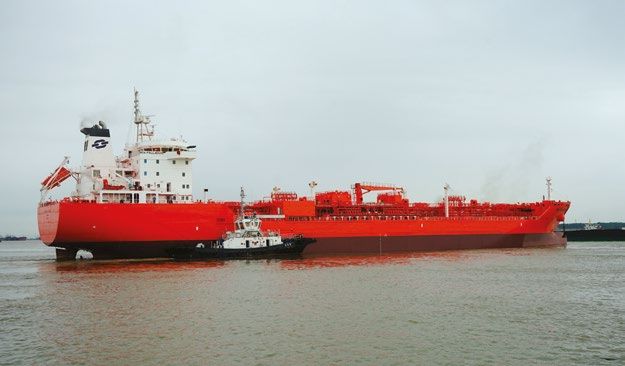
22
600,000
16 17
11
8 8
CHEMICALS & SMALL TANKERS
SECOND HAND MARKET
-
1 2
5 3 3 3
7
-600,000 14
Focus on North
2010
East2011
Asia 2012 2013 2014
Deliveries Orderbook
2015 2016
Demolitions
2017 2018 2019 2020
The North East Asia market saw significant volatility
in 2017. At the beginning of the year, winter season Time charter rates - basis 1 year
Time Charter Rates - Basis 1 year
demand and bad weather delays created a robust $/day
$/day
market, and freight rates rose by 20% to 30%. This trend
did not last long, with a sharp halt related to the Chinese 25,000
New Year holidays. During the second quarter, freight
rates declined slightly and owners were willing to accept
20,000
lower rates to compete for cargoes. Cargo volumes on
Contract of Affreightment (COA) remained stable.
15,000
The summer season remained in the doldrums while
Chinese exports of acids, lubes and small parcel sizes
to India remained stable during the second and third 10,000
quarters.
5,000
Finally, the fourth quarter was marked by a strong
increase in freight rates due to weather delays, high
bunker prices and good demand. We expect trading to 0
cool off after the Chinese New Year, and rates to decline
2007 2008 2009 2010 2011 2012 2013 2014 2015 2016 2017
slightly before stabilizing. 07 08 09 10 11 12 13 14 15 16 17
The Chinese domestic market meanwhile enjoyed better 6,000
6,000dwt
dwt 13,000
13,000 dwt
dwt 16,500
16,500 dwt
dwt 19,000dwt
19,000 dwt (Ssteel)
IMO22coated
IMO coated IMO22 coated
IMO coated IMO 2
IMO 2 coated
coated (Ssteel)
than average conditions throughout the year, with strong
demand from local manufacturers.
Prospects for 2018 Conclusion
We note several reasons to be more optimistic for 2018, and even more so We expect 2018 to be a pivotal year for the coated tanker
for 2019. market, with increased ordering of vessels in the 15,000
The North East SECOND HAND MARKET
• Our hope that there would be more scrapping in 2017 was dashed by the
to 25,000 deadweight range, but a more moderate
appetite for stainless steel units.
deferral of the D2 ballast water regulation making Ballast Water Treatment
Asia market Systems (BWTS) compulsory on vessels in service. By giving a two- This should open up opportunities for Chinese shipyards,
Small tankers and chemical carriers year respite for the older part of the fleet, it will postpone the expected while Turkish shipbuilders may struggle to compete on
saw significant (3,000-25,000 dwt) turnaround in the market. This, combined with IMO’s decision to reduce such sizes. Rates are also likely to rise due to increased
the sulfur cap in marine fuels to 0.5% from 1 January 2020, gives further ton-mile demand and the approaching regulatory
volatility Shipowners’ pockets have been further emptied in 2017: on the supply side, comfort that significantly stronger levels of scrapping will come into play as deadlines (BWTS in September 2019 and the low sulfur
deliveries were steady while demolition remained negligible, while demand from the end of 2019. But this alone will clearly not be sufficient to balance cap in 2020). These are two good reasons for owners to
in 2017 remained stable at best but with increased competition from MRs. Vessel the fleet, given today’s orderbook represents 13 years of demolition. invest in younger vessels or newbuildings.
profitability was further hit by a 15% increase in bunker costs during the
year (reaching $50 per ton for HFO and $90 per ton for MGO). Rates were • Higher ton-miles are forecasted for the future. Rising oil prices have not The tsunami of vessels that was delivered in the market’s
volatile and saw only short-lived spikes. been entirely negative for the industry as they have rendered the US a boom years (2006-2009) will progressively hit their
more competitive producer and exporter of chemical products. The ton- critical 15 year anniversary in the years to come. Let
A total of 111 sales were concluded in 2017 (including 32 stainless steel mile boost from shale gas should support the intermediate chemical tanker us hope that the expected turnaround in the market
vessels), which represents another year of falling activity, and a drop of about vessels with IMO2 notation, while refinery capacities in Europe are expected that looms on the horizon will not provoke the same
10% on 2016. Simply, the market lacked buyers. to decline further between now and 2020. Europe’s mounting dependence speculative fever that owners are still paying for.
Conclusion Low profitability across the board deterred financiers from investing in the on imports will also call for higher inventories to avoid seasonal shortages.
segment, and buyers had to resort to older and more affordable vessels. As • The fundamentals in the MR sector are also improving in 2018 thanks
2017 has seen a significantly oversupplied chemical
a result, the average age of vessel sold on the second hand market increased to declining newbuilding deliveries. This should affect positively the
tanker market. This situation is expected to continue in
to 12 years (compared to 11 in 2016). intermediate tanker segment and limit MR competition on key trades such
2018 given the large number of deliveries scheduled,
making it difficult to forecast any short term improvement With the flight away from smaller vessels, the average size of vessel sold as ethanol and caustic soda.
in freight rates. rose again, reaching 12,200 dwt for 2017. The median size of vessel sold also
increased by 700 dwt to 11.200 dwt, showing the continued appetite among
• The orderbook looks sizeable in quantitative terms (168 coated units of 1.7
million dwt) but the eligible fleet according to oil major quality standards
We expect
However, the gradual growth in chemical demand,
a slowdown in newbuilding orders and the new
buyers for bigger vessels. Overall, they are more attractive due to the higher
ton-miles available, and less exposed, in relative terms, to higher bunker and
accounts for less than 40% of this total. The picture is a less rosy for
stainless steel vessels: there is 1.8 million dwt currently on order, which
2018 to be
environmental rules, which could lead to more scrapping,
give hope for the years to come. There is expectation
operating costs. will put freight rates under pressure for a second year in a row. No less than
70 stainless steel vessels are expected to be delivered in 2018 (against 33
a pivotal year
that by then the laws of a balanced supply and demand Scrapping showed a faint improvement, with 16 vessels equivalent to
would be within sight. 153,000 dwt sent to the beach. The average age of vessels scrapped was 32 delivered in 2017).
for the coated
years, another reminder that a re-balancing of the fleet will not result from
demolition alone. tanker market
62 BRS - Annual review 2018 BRS - Annual review 2018 Picture: TERN SEA, Chemical/Oil tanker, 14,879 dwt, built by Avic Dingheng shipyard in 2016, operated by Terntank Rederi. 63You can also read


