CHOICES CHARTER SCHOOL ACS WASC MID-CYCLE SCHOOL PROGRESS REPORT
←
→
Page content transcription
If your browser does not render page correctly, please read the page content below
CHOICES CHARTER SCHOOL
                 ACS WASC MID-CYCLE
               SCHOOL PROGRESS REPORT
                             4425 Laurelwood Way
                            Sacramento, CA 95864

                            www.choicescharter.org

                               April 20-21, 2021

                  Accrediting Commission for Schools
               Western Association of Schools and Colleges

Mid-cycle Progress Report
Rev. 10/19
Choices Charter School ACS WASC Mid-cycle Progress Report

                                            CONTENTS

I:    Student/Community Profile Data .............................................................    1

II:   Significant Changes and Developments ....................................................       21

III: Engagement of Stakeholders in Ongoing School Improvement ...............                         26

IV: Progress on Implementation of the Schoolwide Action Plan ...................                      28

V:    Schoolwide Action Plan Refinements .......................................................      52

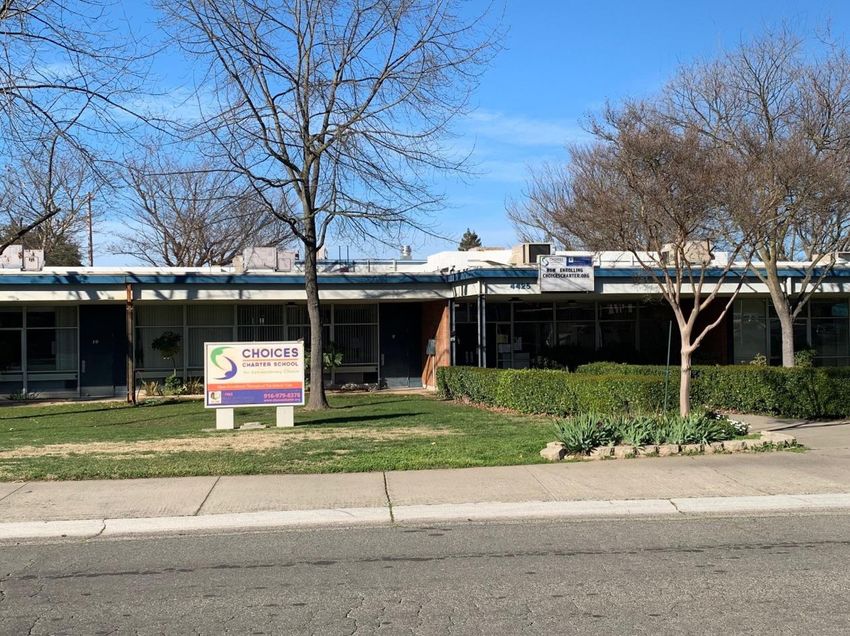
                                   Choices Charter School Main Entrance

                                                    ii
Choices Charter School ACS WASC Mid-cycle Progress Report

I: Student/Community Profile Data
Include the following:
• Student/community profile that has been updated annually since the last full
  visit.
• From the analysis of the updated student/community profile, include the
  following:
    o An updated summary with implications of the data and identified student learner
      needs.
Note: See Task 2, ACS WASC Student/Community Profile Guide, of the ACS WASC
Focus on Learning manual.

Choices Charter School (“CCS” or “Choices” or “Choices Charter”) is a 6-12 Independent Study
School that involves parents/guardians as partners in the education of their children. A highly
qualified and motivated faculty educates a diverse population of students, with the great
majority being at some level of academic risk (“at risk” students.) Choices students attend
small classes and/or meet with a faculty member in a one-on-one setting for two to six hours
each week. Students accomplish much of their learning through assignments that are
completed independently, all of which are available online, under the supervision of
parents/guardians, while they are at home. All Choices curriculum is aligned with California
Content Standards and Common Core Standards. Founded in 1999, the school’s charter was
renewed in 2004, 2009, 2014, and 2019 for five-year terms (2018 Charter Renewal Document:
https://choicescharter.org/wp-content/uploads/2020/01/San-Juan-Choices-Charter-School-
Charter-Renewal-2018-final.pdf). The Choices Charter campus has been closed to students
since March 2020, due to COVID-19. During distance learning, curriculum continues to be
available to students online 24 hours a day; class sessions are offered at their regularly
scheduled times, via Zoom. Choices’ COVID-19 Operations Report:
https://choicescharter.org/wp-
content/uploads/2020/06/covid19LCAPreportChoicesCharterJune2020.pdf)
The primary goal of CCS is to offer personalized educational alternatives organized around how
students learn best. Due to small class sizes and one-on-one instruction, CCS students and
faculty members work together in a meaningful way to address personal obstacles and to work
effectively with students’ learning styles and strengths. CCS teachers utilize subject-specific
diagnostic, formative, and summative test data to identify what students have learned and to
re-teach to fill the identified gaps in knowledge. Teachers customize curriculum and instruction
to fit the needs of the individual, while encouraging all students to utilize and build upon their
strengths, in order to meet grade-level standards and progress toward graduation. Teachers
engage students in the learning process by providing relevant and memorable classroom
learning experiences that involve collaborative conversation among classmates as they seek
solutions to academic prompts/problems. Honors and Advanced Placement (“AP”) courses are
offered to students who qualify for more challenging academic course work. Remedial courses
and modified assignments provide extra help in target areas for students who struggle. A-G
coursework and a new Career Technical Education (“CTE”) Pathway in Business & Finance
support students as they become college and career ready. A variety of elective courses -
offered both online and in the classroom setting – provide students with the opportunity to earn
credits while exploring individual interests and developing life skills. Of note, in recent years,
CCS’s popular Fine Arts Program has expanded significantly to now include Choir, Piano, Guitar,
Percussion, and both Introductory and Advanced Art courses. (CCS Course Catalog:
https://choicescharter.org/wp-content/uploads/2021/02/Course-Catalog-2020-2021-rev-2-12-
21.pdf) CCS’s personalized educational environment builds students’ confidence, interpersonal
skills, commitment to school, and engagement in learning, which leads to the realization of high

                                                1
Choices Charter School ACS WASC Mid-cycle Progress Report

academic    standards.    (Parent/Student  Handbook:   https://choicescharter.org/wp-
content/uploads/2020/08/Parent_student_handbook_2020-2021.pdf)

One of CCS’s greatest strengths in educating students lies with the program and
faculty’s ability to rehabilitate learners who have lost both confidence in themselves
as students and motivation to excel academically. CCS students typically re-engage
in their education while at Choices, thanks to the guidance and encouragement of
faculty members who meet them where they are and help them to experience
incremental academic successes that build confidence and promote a sense of pride in
their accomplishments. Students feel they are both seen and respected at CCS and
thrive both academically and socially in a safe environment where student
misbehavior and bullying are virtually non-existent. CCS students come to feel
empowered and optimistic about education and about their ability to reach academic
goals and make positive changes in their lives.

Once students find success with their academics at CCS, they are supported in their decision to
remain at Choices for the duration of their middle school and/or high school careers, or to
return to the traditional school environment. The CCS Staff facilitates students’ return to
traditional schools when they are ready. This has a negative effect on test scores and data but
shows that CCS’s highest priority is to help students to get back on track with their education.
Students who remain at Choices are provided a breadth of courses, access to standardized
college-entry exams and internship/job opportunities, a supportive staff, and individualized
counseling, all designed to prepare students for post-secondary academic and/or professional
pursuits. Ninety-eight percent of 2020 graduates stated that they would recommend
the program to other students. Forty-six percent of the graduates stated that they
would not have graduated from high school if they had not attended CCS. Sixty-three
percent of those graduates planned to attend college or trade school in the coming
year.

              Choices Charter School Mission Statement
Choices Charter School is a public educational option for students in grades six through twelve.
Our mission is to graduate confident, self-directed students who are contributors to their
communities. This is accomplished through a partnership with parents, students, staff, and
community in an extraordinary environment where student learning is individualized and
relevant to student goals and future plans.

                        Choices Charter School Vision
To create an extraordinary learning environment for students to acquire the knowledge and
21st century skills necessary for living a meaningful life through responsible citizenship, lifelong
learning, and productive employment.

                                                 2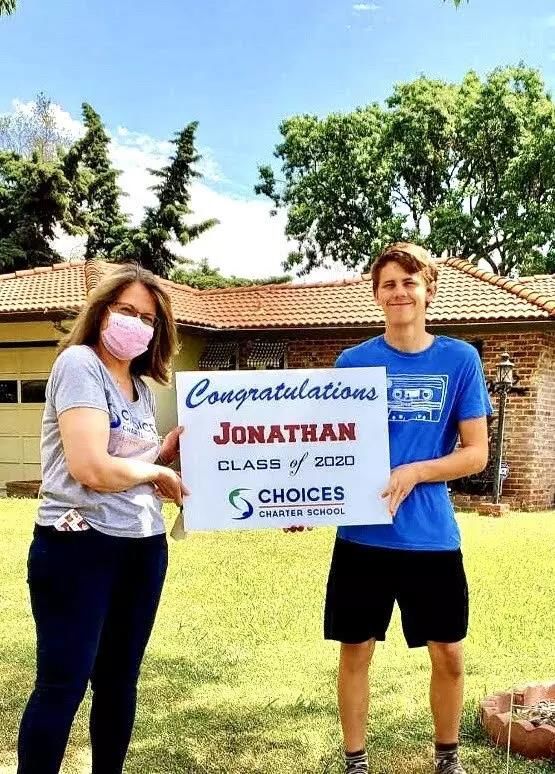
Choices Charter School ACS WASC Mid-cycle Progress Report

            Choices Charter School Graduation Outcomes
The Choices Charter School Graduation Outcomes (“GOs”) are based on establishing and
accomplishing goals. This process is modeled at Choices through a pursuit of high school
graduation and college and career readiness. At Choices, students:

•   Define Goals
•   Implement a Plan
•   Make Adjustments
•   Persevere

The Mission Statement, Vision, and Graduation Outcomes are re-evaluated by the CCS Staff on
an annual basis and updated when deemed necessary to reflect evolving requirements of an
ever-changing student body and world. The Student Learner Outcomes (2015-2020) were
redesigned in 2015 to be closely aligned with the Common Core Four Cs, based on a
recommendation by the 2015 WASC Three-Year Term Revisit Committee, and were then
renamed the Graduation Outcomes, based on a recommendation by the 2018 WASC Visiting
Committee. In 2019-20, the Choices Staff decided to redefine the Graduation Outcomes to
reflect a greater focus on graduation and college and career readiness. The Graduation
Outcomes were updated, and in 2020-21, the staff will pilot a new method of measuring
student achievement of the GOs, using a new rubric, which will be delivered to students
electronically, as an online survey.

Choices Charter Staff
The Choices Charter Staff is a collaborative team of caring and highly qualified educators, half
of whom have worked at Choices for more than fifteen years. Please visit the Choices Charter
School website for more information: https://choicescharter.org/who-are-you/our-staff/

                                    Mr. Oddo and Mrs. Summers

                                               3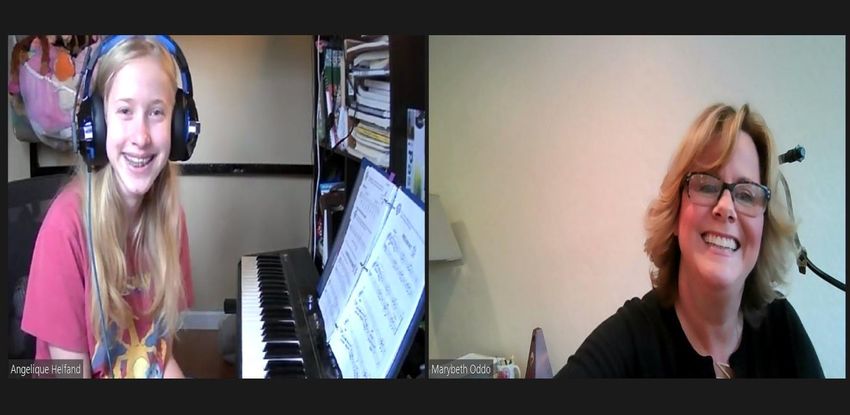
Choices Charter School ACS WASC Mid-cycle Progress Report

Student Enrollment
Total enrollment at Choices was 214 in 2017 and has gradually grown to 295 in 2020,
thanks to high student satisfaction/word of mouth and a strong online marketing
presence. Most Choices students belong to a disadvantaged student subgroup and benefit
from CCS’s flexible, personalized academic program and safe, supportive school culture.

2020 Enrollment by Student Group and Race/ Ethnicity*
Student Group                                                                  #               %
                                                                            Enrolled        Enrolled
Socioeconomically Disadvantaged                                                131           44%
Students with Disabilities                                                      38           13%
English Learners                                                                12            4%
Foster Youth                                                                    6             2%
Homeless                                                                        3             1%
Race/Ethnicity                                                                 #               %
                                                                            Enrolled        Enrolled
White                                                                          179           61%
African American                                                                27            9%
Two or More Races                                                               12            4%
Pacific Islander                                                                5             2%
Filipino                                                                        2             1%
Hispanic                                                                        61           21%
American Indian                                                                 2             1%
Asian                                                                           7             2%
TOTAL                                                                          295          100%**
*CA School Dashboard data (https://www.caschooldashboard.org/reports/34674473430758/2020)
**Percentages are rounded to the nearest whole number.

Featured Students: https://choicescharter.org/featured-student-page/
Student/Parent Testimonials and Photo Gallery: https://choicescharter.org/

According to the Fall 2020 New Student Survey, 55% of new students heard about Choices
from a friend, family member, or staff member, and 36% found Choices through an internet
search; the five most common reasons that students enrolled at Choices were (respondents
were asked to choose up to three):

•   Choices fits our family needs . (50%)
•   I wanted a smaller environment. (39%)
•   I would like more control over my education. (35%)
•   I heard of the great reputation of Choices. (26%)
•   I wanted to try online learning. (21%)

                                                   4
Choices Charter School ACS WASC Mid-cycle Progress Report

Student Progress

In order to assess the fulfillment of CCS’s charter agreement with the San Juan Unified School
District (“SJUSD”), to track progress for goals in the CCS Local Control Accountability Plan
(“LCAP”) and its WASC School Wide Action Plan (“SWAP”), and to report to SJUSD in the
school’s Annual Report, student progress towards meeting standards and outcomes is measured
primarily through analysis of the following types of student data, as tracked on the California
School Dashboard (https://www.caschooldashboard.org/reports/34674473430758/2020 and in
some cases, at https://caaspp-elpac.cde.ca.gov/caaspp/):

• Academic Performance
   o CAASPP ELA & Math
   o College/Career Indicator

• Academic Engagement
   o Chronic Absenteeism
   o Graduation Rate

• Conditions & Climate
   o Suspension Rate

The data types above are presented in detail below, disaggregated where possible to show
academic performance of students in the significant subgroups at Choices Charter School:
Socioeconomically Disadvantaged Students (44% of CCS Students in 2020) and Students with
Disabilities (13% of CCS Students in 2020).

CCS is a small school that specializes in serving at-risk students who have experienced difficulty
in the traditional school environment and are typically below grade level in skills and credit
deficient. With small sample sizes of testing data, high student turnover rate (as students get
back on track and often decide to move back to the traditional school environment), and a
population that tends to struggle academically, it is difficult to define the value that the CCS
program offers to its students using the traditional measures above. For this reason, CCS also
tracks and highly regards data concerning student progress and student and parent satisfaction
with the program using internally developed tools:

•   Graduation Outcomes Rubric Evaluations
•   Student School Satisfaction Survey
•   Parent School Satisfaction Survey
•   Senior Exit Interview
•   Students with Disabilities Attitude Survey

Key data points from these additional surveys will be included below, as well, to add
perspective about the benefits of enrollment in CCS’s non-traditional learning program.

                                                5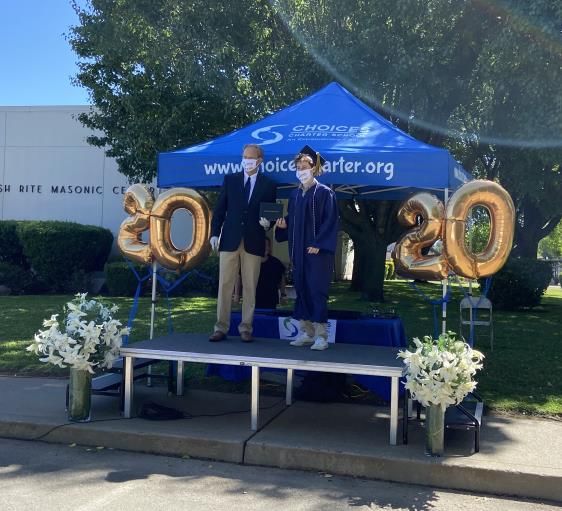
Choices Charter School ACS WASC Mid-cycle Progress Report

Academic Performance

CAASPP (SBA) ELA & Math
CAASPP performance levels remained the same or dropped from 2018 to 2019. Math scores for
All Students actually increased by 4.8 points in 2019. However, this increase did not result in an
increase in the overall performance level for Math. In both years, the number of Students with
Disabilities who took CAASPP exams was too small to qualify for a separate performance level
rating for that subgroup.

All changes in 2019 were small, in comparison to the changes that occurred in the previous
year, which may indicate that the 2018 scores were inflated due to the performance of a few
students and adjusted to more typical averages in 2019; shifts such as these can frequently
occur with small sample sizes. No significant program or staffing changes occurred in 2019 to
cause these small shifts, which frequently take place from year to year in a small program. In
all areas, the net progress since 2017 remains positive.

CCS seeks to improve its academic performance data through ongoing data analysis and
program changes that will more effectively serve students. In 2020-21, CCS adopted a new
curriculum system, SchoolsPLP (“PLP”), which offers promising opportunity to
provide superior online curriculum to students - particularly important during this
time of campus closures. All classes are offered at their regularly scheduled times
and are conducted via Zoom. Tutoring and teacher office hours are available for
support. Teachers have increased their rate of outreach to students and parents, in
order to remain connected to student circumstances and needs.

CAASPP (SBA) ELA & Math*
CCS CAASPP (SBA) Data**                                                       2018       2019
ELA
All Students                                                                 +37.9pts   -21.5pts
Socioeconomically Disadvantaged Students                                     +41.2pts   -22pts

Students with Disabilities                                                   ISS***       ISS
Math

All Students                                                                 +17.6pts   +4.8pts
Socioeconomically Disadvantaged Students                                     +17pts     -9.3pts
Students with Disabilities                                                     ISS        ISS
*https://www.caschooldashboard.org/reports/34674473430758/2020 data source
**No CAASPP data available for 2020 due to COVID-19 School Closure
***”ISS” means “Insufficient Sample Size”

Though Choices has been shifting to the use of the California School Dashboard measures of
school achievement and progress, CCS has also continued to monitor the data points provided
directly by CAASPP.      The following tables show proficiency levels of All Students,
Socioeconomically Disadvantaged Students, and Students with Disabilities on the CAASPP
(Smarter Balanced Assessments) for English Language Arts and Mathematics, as provided on
https://caaspp-elpac.cde.ca.gov/caaspp/. For consistency purposes, the 2020-21 WASC School
Wide Action Plan continues to track progress with these figures, as they were the original data

                                                   6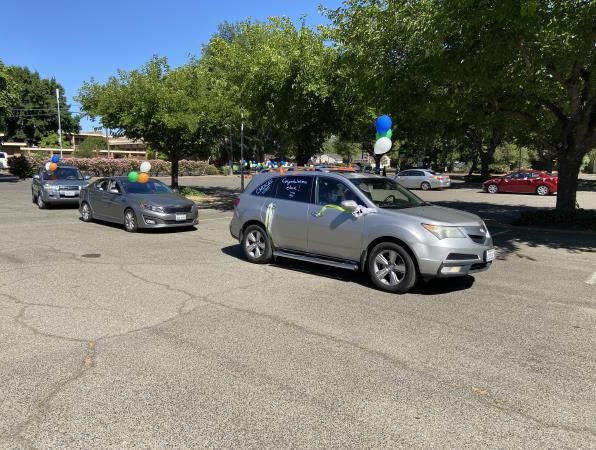
Choices Charter School ACS WASC Mid-cycle Progress Report

points driving growth targets leading to this 2021 WASC Mid-Cycle visit.

CAASPP (SBA) ELA*
Category of Focus                                                         2018          2019
Percentage of ELA students who scored
“Standard Not Met” on the ELA SBA**

All Students                                                               23             28

Socioeconomically Disadvantaged Students                                   26             28

Students with Disabilities                                                 50             65

Percentage of ELA students who scored
“Standard Met or Exceeded” on the ELA SBA**

All Students                                                               50             44

Socioeconomically Disadvantaged Students                                   39             38

Students with Disabilities                                                 32              5
*https://caaspp-elpac.cde.ca.gov/caaspp/ data source
**No CAASPP data available for 2020 due to COVID-19 School Closure

CAASPP (SBA) Math*
Category of Focus                                                         2018          2019
Percentage of Math students who scored
“Standard Not Met” on the Math SBA**

All Students                                                               60             56

Socioeconomically Disadvantaged Students                                   69             67

Students with Disabilities                                                 81             95

Percentage of Math students who scored
“Standard Met or Exceeded” on the Math SBA**

All Students                                                               14             18

Socioeconomically Disadvantaged Students                                    7             10

Students with Disabilities                                                  7              5
*https://caaspp-elpac.cde.ca.gov/caaspp/ data source
**No CAASPP data available for 2020 due to COVID-19 School Closure

The CAASPP (SBA) ELA table above supports the ELA data presented on the CA School
Dashboard: student performance dropped for all student groups in 2019. However, the greater
detail offered in the CAAPP (SBA) Math table reveals some more positive perspectives. Fewer
students in the All Students and Socioeconomically Disadvantaged Students groups scored at
“Not Met” in 2019 than in 2018. Also a positive: More students in the same two groups scored
“Standard Met or Exceeded” in 2019 than in 2018. This is welcome progress on both ends of
the scoring spectrum. Students with Disabilities’ Math performance worsened on both the high
and low end of the scoring spectrum in 2019, perhaps depressing averages on the CA School
Dashboard.

                                                     7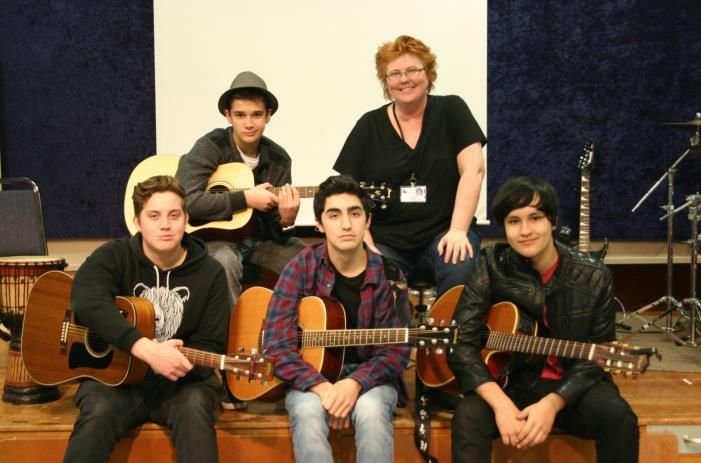
Choices Charter School ACS WASC Mid-cycle Progress Report

Though small score fluctuations from year to year are common with small sample sizes, the
uniformly low performance of Students with Disabilities in 2019, in comparison to 2018 figures,
is of concern. The CCS Resource Specialists are working with great dedication and
determination to support students with IEPs during the current distance learning
conditions to minimize learning loss and maintain grade-level expectations.

College/ Career Indicator
California School Dashboard College and Career Readiness performance levels have grown
steadily and significantly since 2017 for All Students and, during the same time,
Socioeconomically Disadvantaged students have seen less consistent but nonetheless, net-
positive growth.     In 2020, Students with Disabilities outpaced All Students and
Socioeconomically Disadvantaged Students with 27% considered college and career ready.

Choices Charter recognizes that, although many CCS students advance to community college
and trade schools instead of four-year universities, its students’ college and career readiness
levels must continue to improve. In 2020-21, CCS adopted a new set of Graduation
Outcomes that focus on setting goals and following through to achieve them. At
Choices, students will practice setting and reaching goals related to college and
career readiness, through the focused pursuit of timely high school graduation and
the completion of at least one of a variety of possible paths that lead to success in
college and career. Of note, CCS now offers a Career Technical Education Pathway in
Business & Finance and plans to add another in Aviation/Robotics and/or Computer
Science, to debut in 2021-22.

CCS College/ Career Indicator Data*                       2018            2019            2020
                                                                                         +4.0%
All Students                                             +0.4%           +1.1%           (18%)

                                                                                         +7.6%
Socioeconomically Disadvantaged Students                 +2.3%            -8.9%          (13%)

Students with Disabilities                                ISS**            ISS           (27%)
* 2020 CCI data provided at
https://www6.cde.ca.gov/californiamodel/ccireport?&year=2020&cdcode=&scode=3430758&reporttype=sgroups;
no color coded performance levels available in 2020.
**”ISS” means “Insufficient Sample Size”

Academic Engagement

Chronic Absenteeism
Although both All Students’ and Socioeconomically Disadvantaged Students’ rates of Chronic
Absenteeism declined (All Students: -5.8%, Socioeconomically Disadvantaged Students: -
6.4%,) only the performance level for Socioeconomically Disadvantaged Students improved in
2019. A collaborative and consistent process of staff discussion and outreach to struggling
students (those with chronic absences) has certainly improved this figure on the California
School Dashboard in 2020 and 2021, though this data is not yet available.

                                                   8
Choices Charter School ACS WASC Mid-cycle Progress Report
CCS Chronic Absenteeism Data* 2018 2019
All Students -5.8% -5.8%
Socioeconomically Disadvantaged Students -6.7% -6.4%
Students with Disabilities ISS** ISS
*2018 & 2019 Data Source:
https://www.caschooldashboard.org/reports/34674473430758/2019/academic-engagement#chronic-absenteeism
No Chronic Absenteeism data publicly available on CA School Dashboard in 2020
**”ISS” means “Insufficient Sample Size”
Graduation Rate
After falling behind, and at times disconnecting completely from the traditional education
program, students reconnect to education and gain a path to graduation while at Choices. The
table below shows California School Dashboard Graduation Rate data:
CCS Graduation Rate Data* 2018 2019 2020
+4.0%
All Students +5.4% +1.1% (73%)
+6.7%
Socioeconomically Disadvantaged Students +7.8% +1.1% (75%)
Students with Disabilities ISS** ISS (83%)
*2018 & 2019 Data Source: https://www.caschooldashboard.org/reports/34674473430758/2019/academic-
engagement#graduation-rate
2020 Graduation Rate data provided at
https://www6.cde.ca.gov/californiamodel/gradreport?&year=2020&cdcode=&scode=3430758&reporttype=sgroups
(no color coded performance levels available in 2020)
**”ISS” means “Insufficient Sample Size”
CCS Graduation Rates have grown each year since 2017, demonstrating significant progress in
retaining students and engaging them in the pursuit of a high school diploma. In 2020, the
Graduation Rates for the two largest disadvantaged subgroups were greater than the
Graduation Rate for All Students, demonstrating equity in educational opportunity at Choices.
Whereas Socioeconomically Disadvantaged Students lag All Students in some other academic
indicators, they are ultimately persevering to graduation at a slightly higher rate.
Perhaps the most impressive evidence of the transformation that students experience
while at CCS is found in the percentage of surveyed graduates who report that they
would not have graduated from high school at all, had they not enrolled at Choices. In
2020, this percentage was 46%.
9Choices Charter School ACS WASC Mid-cycle Progress Report
Conditions and Climate
Suspension Rate
At Choices, students are very rarely suspended or expelled. Teachers and Administration are
typically connected to students and families and able to intervene when concerned, usually well
before significant problems arise. In 2019, the Suspension Rate for Socioeconomically
Disadvantaged Students grew from 0% to 0.5% (+0.5%,) which caused a drop in performance
level from blue to green. The following data from the California School Dashboard demonstrates
that suspensions almost never occur at Choices.
CCS Suspension Rate Data* 2018 2019
All Students +/-0% +0.2%
Socioeconomically Disadvantaged Students +/-0% +0.5%
Students with Disabilities +/-0% +/-0%
*2018 & 2019 Data Source: https://www.caschooldashboard.org/reports/34674473430758/2019/conditions-and-
climate#suspension-rate
2020 Suspension Rate data not available
Locally Collected Student and Parent Data
Graduation Outcomes Rubric Evaluations
In addition to mastery of academic content standards, Choices students are also expected to
develop life skills while completing their coursework in the program. In 2015-16, the Student
Learner Outcomes (“SLOs”) for all students were updated to closely align with the Common
Core Four Cs. At Choices, students have been guided in becoming accomplished at Critical
Thinking, Communication & Collaboration, Creativity, and Commitment. CCS coursework
provides opportunities for students to progress in these four areas. Once a year, using a rubric,
all teachers have evaluated their students’ progress toward accomplishment of each of the SLO
objectives. In 2018-19, the Student Learner Outcomes were renamed the Graduation
Outcomes (“GOs”), as recommended by a 2018 WASC Visiting Committee. Though the name
changed, the skills remained the same.
The following data summarizes CCS seniors’ achievement of the GOs, by graduating class, in
2018, 2019, and 2020, as evaluated with a Graduation Outcomes Rubric (“GO Rubric”). The
CCS faculty has sought to ensure that at least 80% of graduating seniors are “At or Exceeding
Standard” in each of the Graduation Outcome (“GO”) categories. Unfortunately, though
student growth was seen as students progressed through the grades at Choices, the 80%
objective was never quite reached. It may have been too ambitious a goal, or it may have
required more time to build the practice needed into the program’s curriculum.
In the following table, green cells show data that is better than the data from the previous
year’s seniors but does not indicate that the 80% goal has been met. Orange cells indicate a
decline from the previous year’s data.
10Choices Charter School ACS WASC Mid-cycle Progress Report
Percentage of Students “At or Exceeding Standard” as Seniors, by GO Category
Class of Class of Class of
Graduation Outcome
2018 2019 2020
Critical Thinking 65 78 71
Communication & Collaboration 63 61 59
Creativity 63 69 56
Commitment 63 65 54
In 2019-20, the Choices Staff decided to redefine the GOs to reflect a greater focus on
graduation and college and career readiness. The GOs were updated, and in 2020-21, the staff
will pilot a new method of measuring student achievement of the GOs, using a new rubric,
which will be delivered to students electronically, as an online survey.
Student & Parent School Satisfaction Surveys
CCS Students and Parents are typically extremely satisfied with their experience at Choices
Charter School, as can be seen in the following tables, which document responses from the
Student & Parent School Satisfaction Surveys in 2018, 2019, and 2020.
In 2018, a transition to an online survey format involved an error on the student survey that
significantly affected the data that was collected; therefore, answers were not recorded for this
survey in 2018. Some survey questions have been added in recent years. Gray cells indicate
that a question was not yet included on the survey for the given year. Cells in blue are data at
the desired 90% or above (anxiety levels: same + less = 90%) and in green are approaching
the goal (at 80%+). Several metrics without color are tracked for information purposes only
and do not reflect the strength of the program, itself. All collected data is important to the CCS
Staff; several of the questions on the surveys are tracked in the WASC SWAP and LCAP for
annual progress.
Student Survey Year
# of respondents 158 132 72
Statement 2018 2019 2020
My experience at Choices Charter School last year
NA 96 96
was positive.
I feel safe at Choices Charter School. NA 93 96
I feel satisfied with the social opportunities and
NA 89 90
sense of community at Choices Charter School.
My feelings about my education have become more
NA 89 87
positive since attending Choices Charter School.
My education has become more personalized at
NA 98 90
Choices Charter School.
The Choices staff is caring and responsive to NA 98 99
11Choices Charter School ACS WASC Mid-cycle Progress Report
student needs.
My parents make sure that I do my schoolwork. NA 95 97
I want to go to college/ vocational school. NA 83 85
I utilize tutors/ teachers on campus. NA 83 81
I plan to graduate from Choices. NA 89 93
Attending core classes once a week is sufficient for
me to get the educational support and knowledge NA 96 94
that I need to be successful.
How is your anxiety level since attending CCS?
More 10 10 4
Less 44 54 58
Same 46 36 38
If you do not attend on-campus classes regularly,
please tell us why (choose up to three).
Lack of transportation 25 19
Work/ family commitments 16 21
My parents don’t require me to attend 8 6
I have health issues that prevent regular
15 18
attendance
Attending class does not help me learn/ complete
7 22
assignments
I do not care for the instructor(s)/ manner of
4 4
instruction
I do not feel comfortable on campus/ in class 9 8
I do not enjoy class 8 7
Other (please specify) 47* 47*
Which new elective(s) would you like to see added
** ** **
to the CCS Course Catalog?
What else would you like us to know? *** *** ***
*2019: Most students stated that they do attend class regularly; some miss due to illness or anxiety
2020: Many stated that they do attend regularly; some referenced COVID-19 and health challenges
** Most popular elective requests: Cooking, Woodshop/Metal shop/Home Economics, Sports, Computers/Coding,
Additional Languages (esp. German)
***Overwhelmingly positive, appreciative comments about the school and teachers, and miscellaneous…
12Choices Charter School ACS WASC Mid-cycle Progress Report
Parent Survey Year
# of respondents 144 106 84*
Statement 2018 2019 2020
The educational program at Choices Charter School
98 95 99
met my expectations.
My child made satisfactory progress in learning this
92 95 96
year.
The social environment at school was positive and
96 96 99
supportive.
I have opportunities to provide input about the
93 94 91
school program.
I understand the role of the school’s governing
87 92 90
board.
I have had the opportunity to participate in the
87 88 84
school’s meetings and operational processes.
Overall, Choices Charter School provides a positive
99 100 100
educational experience.
The Choices Charter School website serves as a
professional and engaging marketing tool for the 98 99 99
school.
The Choices Charter School website accurately
98 100 99
represents the program and its strengths.
The Choices Charter School website is helpful and
97 97 98
informative.
I am satisfied with how the school keeps me
95 98 96
informed about my student’s academic progress.
I feel my student has the opportunity to
95 95 98
demonstrate his knowledge in a variety of ways.
The facility meets the needs of the school. 99 97 99
The staff follows acceptable policies regarding cash,
97 100 100
deposits, and fundraising.
The school provides adequate staffing to support
98 98 100
the school’s program.
Teachers modify the teaching/learning process
based upon the results of the assessments they 94 95 95
give students.
I am satisfied with my ability to access my
student’s information and communicate with my
96 100 95
child’s teachers through the online gradebook
system, School Pathways.
13Choices Charter School ACS WASC Mid-cycle Progress Report
Last year, I checked my student’s grades on School
Pathways (recommended that parents check at
least once a week)
Never 4 1 5
About Once a Month 19 10 22
About Once a Week 48 53 51
About Once a Day 30 36 23
Last year, I checked my student’s progress and/or
helped my student to complete homework on
GradPoint (recommended that parents check at
least once a week)
Never 4 3 7
About Once a Month 12 7 12
About Once a Week 40 49 44
About Once a Day 44 41 37
I prefer that the school communicate with me
regarding my student’s progress and notify me of
important school events via**
Automated Phone Call 7 4 4
Automated Text 20 25 24
Automated Email 22 22 25
Phone Call from Teacher 5 5 0
Text from Teacher 14 12 10
Email from Teacher 32 33 37
I would recommend Choices Charter to my Friends/
Family 99 99 100
My overall rating of Choices Charter School is
(percent of parents who rate the school at an 8, 9,
or 10 out of 10) 87 91 90
*School Satisfaction Surveys are typically administered in person at Fall Orientation. However, in 2020 a new online
survey administration was necessary, due to the COVID-19 campus closure. The response rates were low, despite
several requests. The CCS Leadership Team is currently discussing more effective methods of administering surveys
from a distance that will elicit more, and therefore more reliable, feedback.
**In 2020: Automated Communication: 53%, Teacher Communication: 47%; Phone Call: 4%, Text: 34%, Email: 62%
14Choices Charter School ACS WASC Mid-cycle Progress Report
Senior Exit Interview
At the close of each academic year, graduates are asked to complete a written Senior Exit
Interview on which they can answer questions and provide feedback about their experience at
Choices. The data listed in the following table, along with the student quotes below,
demonstrate the significant positive impact that the CCS experience has on students’ lives.
2018-2020 Senior Exit Interview Data
Key Data Point 2018 2019 2020
% of surveyed graduates who believe that they
would not have graduated from high school had 43 58 46
they not enrolled at Choices
% of surveyed graduates who would recommend
100 100 98
the CCS program to other students
CCS students typically experience life-altering success while attending the CCS program, as is
exemplified by the following quotes from 2020 graduates’ Senior Exit Interview responses.
When students were asked, “What did you learn about yourself through this independent study
program?” they responded with:
• I’m strong.
• I have self-discipline.
• I am capable of things I didn’t think I could do.
• I’m hardworking.
• I learned to be more assertive.
• I work better when I can do things at my own pace.
• If I set my mind to do something, I can do it.
• I can do it on my own.
• I was extremely shy, but it changed.
• I can do whatever I put my mind and heart to.
• I learned that what works best for me is staying on task and doing my assignments ahead of
the due date.
• I learned that I am capable of doing my work and just need to plan it out better.
• I’m a visual learner, as well as someone who can be hard-working with the right motivation.
• I learned about time management.
• I learned to self-motivate.
• I’m more productive when I’m busy.
• I learned how to be more independent.
• I have to work hard and have self-discipline. But, when you see your hard work pay off, it’s
all worth it.
• I became more confident.
15Choices Charter School ACS WASC Mid-cycle Progress Report
Students with Disabilities Attitude Survey
At the close of each school year, CCS Students with Disabilities are given an Attitude Survey to
measure their approach to, feelings about, and plans for their education at Choices and beyond.
Because Students with Disabilities follow a wide variety of schedules with many different
supervising teachers at Choices, it can be challenging to reach all of them for the survey
administration at year’s end. However, more than half of them submit surveys; results for
recent years are shown in the table below.
2018-2020 Students with Disabilities Attitude Survey Data
# of survey responses 36 24 22
Statement 2018 2019 2020
I like to come to school at Choices. 79 96 86
I feel safe at Choices. 89 92 96
Getting good grades is important to me. 79 79 91
I have a computer with internet access. 86 96 96
I use a computer for schoolwork. 69 88 91
My parents make sure that I do my schoolwork. 72 83 100
I want to go to college/ vocational school. 50 83 59
I utilize tutors/ teachers on campus. 66 88 86
I plan to graduate from Choices. 81 88 86
I want to return to traditional school. 23 13 9
I am proud of how I did in school this year. 75 71 50
How is your anxiety level since attending CCS?
More 3 13 9
Less 57 54 64
Same 40 33 27
Cells in blue indicate that the data is exemplary (90%+). Cells in green show very strong data
(80%+). Cells in yellow contain data points that are strong but need further attention. Data in
orange and red cells are a concern that require immediate remediation. Students’ wish to
return to traditional school is an ambiguous metric that is collected for general information,
only. Anxiety levels that are the same or less are grouped together for color coding.
Students with IEPs have reported strong levels of satisfaction and engagement at Choices in
most categories across the last three years, and scores have generally improved since 2018.
Consistent outreach to students, rapid intervention when students are struggling,
strictly enforced policies governing on-campus behavior, technology assistance,
flexible and supportive relationships with students, and additional tutoring services
made available to prioritize students with IEPs have contributed to success with this
student group.
16Choices Charter School ACS WASC Mid-cycle Progress Report
The COVID-19 Campus Closure, which has been in place since March of 2020, likely influenced
2020 data, and in most cases, the effect seems to be positive. However, significant drops in
the percentage of Students with Disabilities who report that they plan to attend
college/vocational school and who report feeling pride in their academic performance are of
great concern. The CCS Resource Specialists will work with students to emphasize the efforts
and progress that they have made during a difficult time. A 2020-21 shift to new GOs that will
reach all students will ensure that conversation specifically focused on high school graduation
and post-secondary goals will take place more frequently, encouraging longer-term goal
setting.
Mrs. Oddo Teaching Piano via Zoom
Progress toward Educational Goals in 2018-19 LCAP
Choices Charter closely monitors the progress of its significant student subgroups, the largest of
which is Socioeconomically Disadvantaged Students (44% of enrollment in 2020). Students in
this group, along with English Learners (4%) and Foster Youth (2%) are served, specifically,
with the use of LCFF funding. Activities supported by this funding are outlined in the school’s
annual LCAP, the most recent of which was submitted before campus closures in 2019, which
reflected on the 2018-19 school year. The following table outlines the progress made toward
each of the two 2018-19 LCAP Goals. Below this table is a list of additional services made
available in 2020 and noted in the new Learning Continuity and Attendance Plan (“LCP”), to
expand services to meet student needs during the COVID-19 Campus Closure.
17Choices Charter School ACS WASC Mid-cycle Progress Report
Progress Made on 2018-19 LCAP* Goals
2018-19 LCAP Goal Progress Made
In 2018-19, CCS Students were supported through LCFF
funds with supplemental services, such as:
• tutoring
• computer lab renovations
• College & Career Family Nights
• assistance with college applications
• a Career Fair
• the debut of a CTE Pathway in Business & Finance
• new elective courses and extracurricular events,
• field trips
• hardware and software upgrades
• referrals to low-cost home internet service providers
• laptops for loan
• collection and careful review of student data by all school
stakeholders each year
LCAP Goal #1: • training on the administration of the Smarter Balanced
Improve and support student Assessments
learning to close
achievement gaps and • improvements in student intervention services
ensure all students graduate • One-on-one instructional support targeting at-risk students
college and career ready.
• professional development on Poverty Culture
In 2019, all California School Dashboard Performance
Levels were the same or within one performance level
of each other for All Students and Socioeconomically
Disadvantaged Students, demonstrating that students
are educated in an equitable manner at Choices. All
Students and Socioeconomically Disadvantaged Students
scored at the same performance level in CAASPP ELA,
Chronic Absenteeism, and Graduation Rate.
Socioeconomically Disadvantaged Students fell behind All
Students by one performance level in CAASPP Math,
College/ Career Indicator, and Suspension Rate.
Newly released 2020 data shows that Socioeconomically
Disadvantaged Students’ College and Career Readiness
Indicator (“CCI”) grew by more than that of All Students
(+7.6% vs. +4.0%); Socioeconomically Disadvantaged
Students also made greater gains in the Graduation Rate in
2020 and now outscore All Students by 2% points (75% vs.
73%).
18Choices Charter School ACS WASC Mid-cycle Progress Report
Student anxiety is a growing concern in today’s schools, and
Choices is committed to doing all that it can to meet the
needs of a growing population of anxious students. On a
New Student Survey that is completed by students when
they enroll at Choices, 26% reported “social/ other anxiety”
as a primary reason for enrolling at Choices in 2017, and
34% reported the same in 2018. A sensitive and respectful
school culture and program flexibility support students as
LCAP Goal #2: they seek to overcome their anxiety. In August 2018, a
Foster a respectful, leading anxiety specialist trained the staff on understanding
collaborative and reflective anxiety, which has resulted in even greater levels of
school culture that ensures sensitivity and compassion in interactions with students who
academic success and social/ struggle.
emotional well-being for
each student. In Fall 2019, 54% of returning students reported that they
felt less anxiety since enrolling at Choices (2019 Student
School Satisfaction Survey).
In Fall 2020, 64% of returning students reported less
anxiety since enrolling at Choices (2020 Student
School Satisfaction Survey).
* https://choicescharter.org/wp-content/uploads/2021/02/Choices-Charter-School-2019-LCAP.pdf
Learning Continuity and Attendance Plan* additions made in 2020:
• Return of one-on-one tutoring via Zoom.
• Expansion of teacher office hours for tutoring support.
• Commitment to improve frequency, quality, and documentation of communication with
families.
• Commitment to provide more Zoom class meetings (during regularly scheduled class
times), as well as recordings of meetings/ lessons to be posted online.
• Expanded Mental Health support.
• Chromebooks and Wi-fi/ hotspots for students in need.
• Technology purchases to support teachers with instruction from a distance.
• Training for teachers on technology/ resources that contribute to effective distance
learning.
• CDC protocols in place for safe campus reopening (task force preparation).
• Parent and student training about best practices for online learning, specifically with
respect to PLP curriculum.
• Technical support services for students struggling at home.
* https://choicescharter.org/wp-content/uploads/2021/02/LCaAP_Choices.pdf
19Choices Charter School ACS WASC Mid-cycle Progress Report
In Summary
Each year, the Choices Charter staff analyzes GO Rubric results, student & parent survey
results, and student performance data from diagnostic, formative, and summative assessments,
in order to better understand the strengths and weaknesses of its program. Based on this data,
changes in program structure & policies, course curriculum, and instructional strategies are
implemented as needed to more effectively meet the learning needs of its students. CCS seeks
to eliminate gaps in academic performance among student subgroups through thoughtful use of
LCFF funds that target specific student needs.
Through the analysis of the school data presented above, the following primary Areas of
Strength and Preliminary Student Learner Needs have been identified by the Choices Staff:
Areas of Strength:
• Highly qualified staff that is devoted to student success, meets students where they are,
and engages and supports students through positive relationships.
• Program structure provides flexibility and personalization of instruction and curriculum
that effectively meets at-risk students’ needs, guiding them to high school graduation.
• Safe campus environment.
• 24/7 availability of standards-based online curriculum and grades.
• Breadth of course offerings that engage a variety of learners.
• Effective intervention when students struggle.
• New GOs, supported by AP, Honors, A-G, and CTE Pathway courses and a myriad of
counseling services, special events, and field trips, build students’ college and career
readiness.
Preliminary Student Learner Needs:
• Increase percentage of students who meet or exceed standard in Mathematics. Ensure
that no student groups remain at a red performance level on the CA School Dashboard.
• Increase percentage of students who meet or exceed standard in English Language Arts.
Ensure that no student groups remain at a red performance level on the CA School
Dashboard.
• Continue to grow percentage of students who are College and Career Ready. Ensure that
no student groups remain at a red performance level on the CA School Dashboard.
As the Choices Staff looks to solutions for these student needs, it asks itself:
1. Which measures have been taken in the past to address these areas of need? Which
have been effective and ineffective?
2. What potential solutions have we not yet considered and/or tried?
3. Given current resources and limitations, what actions can we take during the next three
years to improve upon CCS Students’ ELA, Math, and College/Career Readiness
achievement levels?
20Choices Charter School ACS WASC Mid-cycle Progress Report
II: Significant Changes and Developments
• Include a description of any significant changes and/or developments that have had
a major impact on the school and/or any specific curricular programs since the last
full visit.
• Describe the impact these changes and/or developments have had on the school
and/or specific curricular programs.
1. Changes in Staff
Since the 2018 WASC Visit, due to personal tragedies and other circumstances, the CCS Staff
has suffered losses - some permanent, some temporary - of several veteran staff members.
Their loss has been difficult for remaining staff members, both professionally and personally.
The staff is small and operates as a close-knit, caring, and collaborative team; the absence of a
few members has ripple effects that touch the entire school community.
Staff members have rallied around their colleagues, offering personal support during difficult
times, and have adjusted on a professional level to address new areas of need created by staff
absences and departures. In less than a year’s time, Choices lost two full-time teachers who
taught all of the school’s Science courses and some of the middle school Math courses. In
2018, a new Science Teacher was hired to cover all levels of Science, grades 9-12. Existing
staff shifted to cover middle school Math and Science courses. A new full-time Social Sciences
Teacher was hired in 2020 to replace a recent departure. And, the head of the Special
Education Department assumed responsibility for all students with IEPs during the Fall 2020
semester, when her department partner was on leave, which required a shift from part-time to
full-time employment. In 2019, an Instructional Aide was hired to facilitate tutoring and class
attendance for students while on campus and now plays a significant role in the enrollment
process; this individual also brings tremendous technology knowledge to the staff and has
provided guidance in troubleshooting, software updates, computer loans to students, and new
technology purchasing decisions. New staff members have brought to Choices a wealth of
talent, passion, and fresh perspective, as experienced Choices faculty have applied their
knowledge about the program to identify priorities and take on new classes and students in the
most effective ways possible.
Some of these staff changes have taken place during the COVID-19 Campus Closure, which, in
and of itself, has had a profound effect on both the student and teacher experiences at Choices.
It is difficult to clearly understand the impact that staff changes, alone, have had on students
and staff. However, the CCS Staff has endeavored to minimize the emotional and academic
impact of the changes on students, through sound decisions and hard work. New and veteran
teachers have worked feverishly to optimize curriculum and instruction, while maintaining
meaningful relationships with students, and personalizing education as needed to meet
students where they are, during these challenging times.
Preliminary data suggests that Choices has been successful at navigating staff changes in a way
that minimizes negative impact on students and continues to maximize student well-being and
learning. According to 2020 School Satisfaction Survey data, collected from returning families
in Fall 2020:
• 100% of parents believe that the school provides adequate staffing to support the school’s
program.
• 99% of students feel that the Choices Staff is caring and responsive to student needs.
• 90% of students feel that their education had become more personalized at Choices.
• 99% of parents report that the academic program at Choices has met their expectations and
21Choices Charter School ACS WASC Mid-cycle Progress Report
that the social environment at Choices is positive and supportive.
• 100% of parents would recommend Choices to family and friends.
2. COVID-19 Campus Closure
Since March 2020, the CCS campus has been closed to students. Whereas many students are
accustomed to coming to campus for in-person instruction, tutoring, use of the computer lab,
nutrition services, and special events, Choices has not been permitted to welcome students to
the site for nearly a year. Teachers have also been largely absent from the site, sometimes
because their presence has been discouraged or even prohibited by state and/or school district
guidelines, and sometimes out of teacher preference, due to safety concerns.
CCS, a school whose hallmark is, in large part, its meaningful relationships between staff
members and students, has been challenged to rethink its methods of communication and
connection. While teachers and students initially felt a rupture in their relationships when
campus closed, a sense of adaptation and resiliency has generally prevailed.
Curriculum continues to be available to students and parents online, as has long been the case
at Choices. The new SchoolsPLP curriculum program provides standards-based curriculum to
students through an interface that is very similar to the previous GradPoint curriculum system.
Online tutorial videos support students and parents as they navigate the software. Student
access to curriculum remains unchanged with distance learning.
Teachers have increased the frequency of their communication with families, in order to remain
closely in touch with students and aware of the circumstances that students are navigating
during this particularly challenging time. In fact, many teachers meet with students and/or
parents several times each day, one-on-one, via Zoom. Interaction with families is documented
in School Pathways, where all teachers can learn from the knowledge and experiences of their
colleagues, with respect to specific students. In Spring 2020, the CCS Staff created a
spreadsheet that logged their interactions with each student, to document efforts to leave no
student behind. Staff members meet every two weeks to discuss students who have accrued
the most absences in recent weeks, in order to coordinate intervention efforts for students who
are struggling.
Classes are held at regularly scheduled times, via Zoom, to ensure no disruption in instruction.
Teachers have learned to utilize the features in Zoom to effectively share audio and video
content and to facilitate both small- and large-group learning experiences. Teachers employ
formative assessment strategies and applications, such as Kahoot!, Padlet, Zoom Annotate
function, anonymous polling, and random questioning to be sure that students are learning
content and skills during online instruction.
Special events and hands-on elective programs have been conducted online whenever possible.
Senior Breakfast Awards, the Middle School Promotion ceremony, Honor Roll Awards, college
information sessions, college tours, college representative visits, Orientation, Information
Sessions, Celebrations of the Arts (piano recital portion only – watch one here:
https://youtu.be/YXTi1j7O2ik), Character Board Awards, and more have been continued in
modified formats, from a distance. The 2020 High School Graduation ceremony was held in a
parking lot with social distancing. Field trips, the Sacramento Speaker Series, the Career Fair,
Student Leadership, intramural sports, dances, choir, and some beginner-level musical
instrument courses are currently on hold.
Nutrition services continue to be available at a handful of district schools, though Choices is not
one of them. Choices students may go to designated sites for meals. Technology support is
offered to families in the form of laptops on loan, assistance acquiring affordable internet
22Choices Charter School ACS WASC Mid-cycle Progress Report
services, and technical support for students with technology problems. Laptop loans and
technical support have been provided immediately (within hours) in most cases. One-on-one
tutoring appointments are available via Zoom. Senior yard signs were delivered to students’
homes in 2020 and 2021 to strengthen a sense of ongoing community during distance learning.
Community-wide distance learning, provided through the traditional schools in the area during
the campus closures, has changed the reasons that students typically come to Choices.
Whereas students usually seek out the independent study model that Choices offers, now that
traditional schools are teaching online in a hybrid format, students who prefer independent
study are more content at their home schools and are remaining enrolled there. The students
now expressing interest in the program at Choices tend to feel that the traditional schools’
version of independent study is unsatisfactory in some way, and they are interested in the
distance learning expertise offered by CCS. Choices is unsure about the long-term impact of
this shift in “clientele,” and expects that more changes are ahead, as traditional schools open to
in-person learning in one format or another. If many families realize during the COVID-19
campus closures that they prefer independent study and/or a blended learning format, Choices
enrollment may grow substantially when traditional schools resume their all-day programs.
Also unexpected has been the inability to efficiently utilize the technology that has been
purchased in recent years to support many students on campus. Virtual Reality headsets and
drone aviation equipment are currently unused and aging while students work from home and
many wait to enroll in hands-on electives until they can do so on campus. It is unclear how
great of a financial loss this will ultimately represent for the school.
Staff members remain resilient and committed to providing the best education possible, despite
difficult circumstances. The Staff continues to collaborate frequently via Zoom meetings to
ensure that students continue to participate in school and make academic progress. Two Staff
Meetings, two Leadership Meetings, and four or five Administration Team Meetings take place
each month. WASC Home/Focus Groups meet once per month. The Advisory Council convenes
three time each year. Staff members also continue to communicate frequently with one
another via email and phone. Employees miss in-person camaraderie that typically takes place
on campus, but they have adjusted well to new circumstances. Through this experience, the
CCS Staff has, interestingly, gained a new understanding of the isolation and lack of connection
that independent study students may be more likely to experience; this new understanding will
help them to more effectively communicate with and help students going forward. Teachers
received an end-of-year bonus in early 2021, in thanks for their hard work during unusual
times, and teacher appreciation yard signs were delivered to teachers’ homes in 2021 in an
additional expression of gratitude and support.
Preliminary Satisfaction Survey data suggests that families continue to feel satisfied with the
CCS program, despite the challenges presented by COVID-19 and distance learning. According
to Fall 2020 data collected from returning families:
• 96% of students feel that their experience at Choices during the previous year was positive.
• 96% of students report feeling the same or less (58%!) anxiety since enrolling at Choices.
• 90% of students feel satisfied with the social opportunities and sense of community at
Choices.
• 96% of parents state that their children made satisfactory academic progress during the
previous year.
23You can also read


