Cities Future Report for the - Roads Australia
←
→
Page content transcription
If your browser does not render page correctly, please read the page content below
Cities for
       the

Future
Report
2018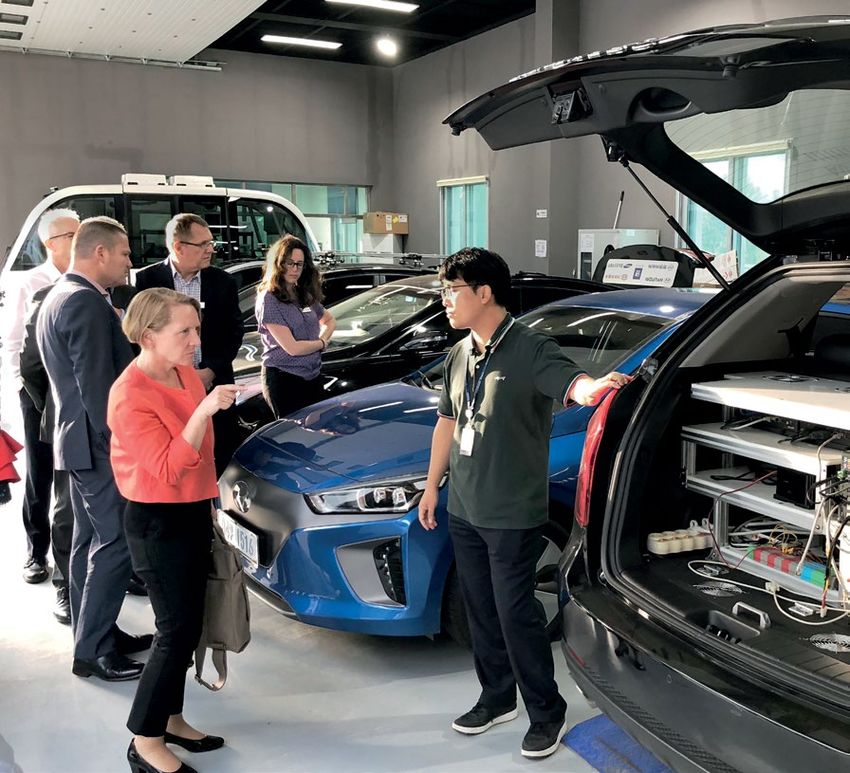
Introduction                                                             SEPTEMBER

                                                                            2018
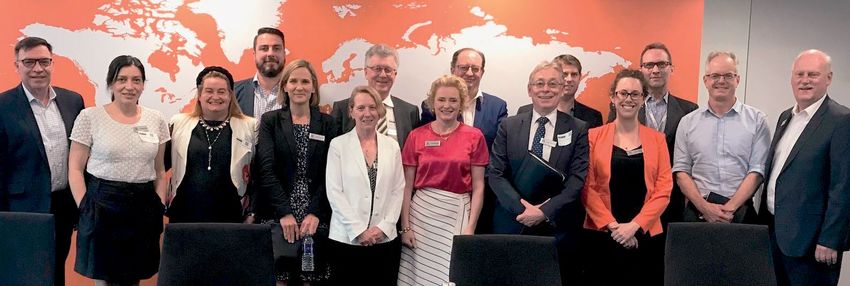
                                                                             Roads Australia, the national peak body for
                                                                             transport and infrastructure stakeholders, led a
                                                                             delegation of senior government and industry
              In Australia, we can learn from                                leaders on a study visit to investigate how
                                                                             major Asian national and city governments
              Governments in our region                                      were developing their city transport networks

              who have markedly different                                    to cope with population growth, livability,
                                                                             changing demographics and the introduction of
              approaches to integration                                      autonomous vehicles on their networks.

              of transport strategy and
              land use planning, smart
              infrastructure and technology
              delivery, transport investment
              priorities and customer
              focused mobility solutions.                    The delegation was privileged to be given access to the
                                                             highest-level Government and industry players in Japan,
              The next decades will see our major cities     South Korea and Singapore. This report offers insights into
              growing rapidly, presenting huge challenges    their priorities and approaches to mass transport and mobility
              for governments and societies in delivery of   solutions. We hope this will provide a platform for different
              equitable transport solutions.                 thinking on how Australia manages and leverages the
                                                             technologies of the Fourth Industrial Revolution.

2                                                                                                                               3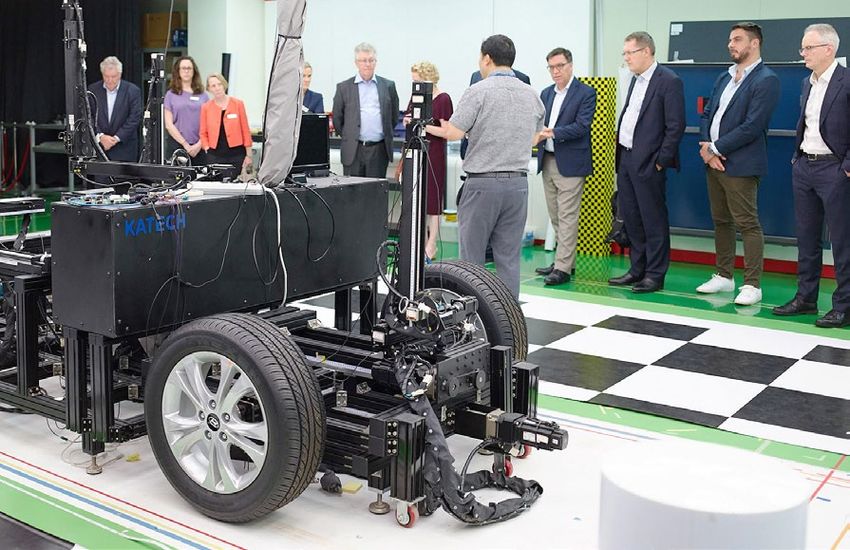
Key
findings
“Big Data” changes Look for stepping stones
the paradigm • Electric Vehicle introduction
• Coordinated transport data is strongly supported
control and management by manufacturers and
has a high strategic focus Government in Japan and
South Korea
• Integrated management
of investment, demand • Hydrogen Fuel Cell powered
and pricing of multi-mode fleets, particularly for buses
transport needs “big data” and heavy transport are the
likely end game
• Australia must mandate open
access to all transport network • Australia should take the
data as a pre-requisite for opportunity to collaborate
participation early on these developments
- as a potential producer
• State and City governments
Mass transit is king should implement integrated
of Hydrogen for our future
transport fuel needs
• Public transport thinking, charging and demand
investment and culture management systems across
dominates in major cities the total commuter journey
• Australian cities need
page 16 page 18
massive investment in
renewal and expansion
of public transport
systems
• Our governments need
to actively discourage
private car use in the
Use the quiet before the storm
overall journey mix Summary of key findings
• Much stronger Be aligned or be behind • Good preparation will lead to early
and recommendations
adoption of autonomous technologies and
collaboration is needed • High level national government
between our tiers of collaboration with industry and
rapid roll-out of driverless functions from 2025
page 20
• Strong coordinated development of network
government to integrate academia sets the transport
control technologies and mapping systems
transport and agenda for our neighbours
is the key – do we need a rethink
land use planning • The Australian government must
of Australia’s approach? Acknowledgements
page 6 be the lead collaborator in
• Better coordination of Australia’s autonomous
developing long-term, people- page 22
vehicle trials, enabling law and regulatory
oriented transport outcomes
processes is essential
• Australia’s current state-by-state
• Governments should be engaging now
approach will leave us behind
to help remove consumer/societal barriers
• City governments need to cast a
to the introduction of new autonomous
wider net and be at the table
technology
page 10 page 12
4 5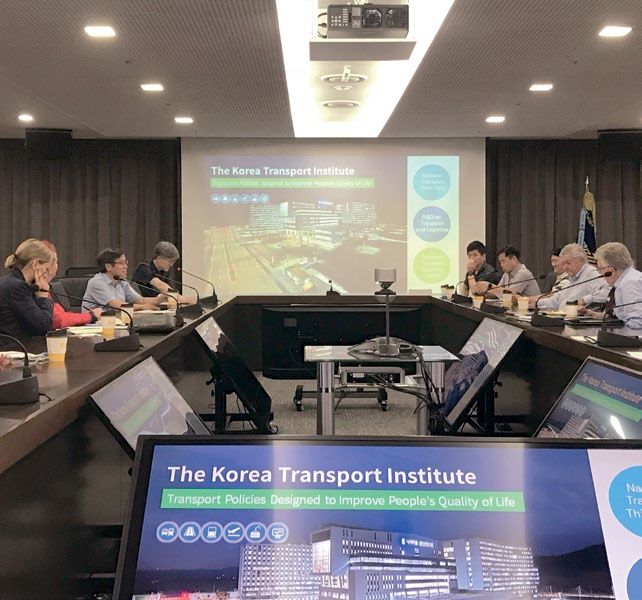
Mass public transport
is the mode of choice in
As a unique city state, Singapore has
developed a similarly unique approach to
urban transport that has lessons for many
our neighbouring cities growing cities around the world. The very
densely populated city of 5.6m people has
little room for expansion. The first striking statistic
is that the scale of the road expressway network As we look towards 2050, with rapid growth
in kilometres is exceeded by the size of the predicted, Australian cities will need massive
The contrast between transport mode With evident similarities to Japan, the Seoul Mass Rapid Transit network. investment in the renewal and expansion of our
choices in these cities compared to Australia Metropolitan Government agenda is strongly
A strong focus on mass public transport system
public transport systems to maintain the livability
is stark. Public transport thinking, investment focused on mass passenger transport
investment, combined with a “car lite” policy sees
we cherish. This is not an easy or short-term
systems. The city government is responsible for
and culture has dominated the strategic public transport dominate as a mode of choice.
challenge. It has been heartening to see
transportation services covering Seoul and the
agenda for generations. Indicative mode shares for Singapore are
the emerging support by state and federal
Greater Metropolitan area, for a population of governments for public transport investment,
26.2 million people. 59% public transport and 29% private car use.
particularly over the past decade. The challenge
The Tokyo Metropolitan Government is strongly Peak-hour public transport use is even higher,
Seoul has responded to heavy traffic we face is generational in magnitude.
focused on building capacity and resilience reaching 67% in 2017, with a 2030 target of 75%.
congestion experienced in the 1990s, with a Our city neighbours have been building their
in the city’s public transport systems to The contrast with Australia is stark. In our two
Beyond 2000 strategy focused on moving metropolitan rail networks, as core interconnectors,
accommodate the rapid growth in foreign visitors largest cities with populations of over 5 million
from the car to public and active transport only since they emerged from the devastation of
to Tokyo (up to 13 million in 2017, a 250% increase people the private car dominates. This diagram
modes. They firmly believe that building new the mid- 20th Century global conflicts. They are
in the past decade). shows indicative mode shares compared to |
road infrastructure in the past did not improve modern, strongly interconnected grid networks,
The positive public transport culture in Tokyo, congestion in the long-term and have an our neighbours:
with high frequency, fast, affordable, safe and
built over many decades since the underground ongoing concern about vehicle contribution to reliable services. These networks are being
rail network began its rapid expansion in the the city’s air pollution challenge. continually upgraded and rapidly expanded,
1950’s, has a strong influence on transport mode
The combined impact of limited road expansion for example Singapore expects to add a further
investment priorities for the city government.
for the past two decades, and investment in a 75% to line length in the MRT network by 2030.
Passenger transport statistics for Tokyo would be
world class subway system integrated with city
the envy of most city governments around the
and suburban bus services, has seen indicative
world, with the indicative breakdown of mode
mode share of public transport in Seoul grow
share 51% public transport, 37% cycling/walking In Australia’s major cities, our city rail
significantly to around 66% of all journeys,
and only 12% private car use. networks have their foundation in the
including taxis at 7%, with private
19th century. These essentially radial,
car use 23%.
suburban to city centre connectors,
do not have the interconnectivity,
frequency, speed and reliability of
services to make them attractive as the
commuter mode of choice. The lack of
TOKYO connectivity detracts from the unique
advantages that our cities, such as
SEOUL Sydney (Ferries) and Melbourne (Trams)
already have in their transport mix.
SINGAPORE Strategic investment by state governments
in suburban rail is already high on the
MELBOURNE
Active forward agenda. The reality is we will
Private SYDNEY need exponential investment to cope
Car
with the expected population growth that
Public
transport
BRISBANE could see Melbourne and Sydney
reach 8 million people by 2050.
6 7
Australian cities of the future                                                         Tokyo, with the lowest percentage of car usage                              2 to 3 minute

    need to have much                                                                       relies on continued investment in the subway train
                                                                                            network to reduce passenger congestion and
                                                                                                                                                                        wait time

    less reliance on
                                                                                            improve frequency. Their target is a 2 to 3 minute
                                                                                            wait time and proximity of within 10 minutes’ walk                    10 minutes’ walk
                                                                                            from stations for the majority of residents. Improved                    from stations

    private car
                                                                                            access for elderly and disabled passengers has
                                                                                            been a strong focus, with elevator installation at
                                                                                            93% of the 755 metro stations completed by 2017.

    travel
                                                                                                                                                                       Access for elderly
                                                                                            Safety investment, through installation of platform                        and disabled
                                                                                            screen doors is also a continuing investment
                                                                                            program. Rail investment has been backed up by
                                                                                            the development of Bus Rapid Transit services and
                                                                                            conversion of the commuter bus fleet to step-less
                                                                                                                                                                Elevators in 93%
                                                                                                                                                                  metro stations
                                                                                            low floor access across the fleet.

    In parallel with rapid
    upgrade in the mass
    public transport
    systems, Australian                                                                                                            In Seoul, there has been significant expansion of
    governments need to                                                                                                             median Bus-Only lanes across the city (155km by 2020),
    put more effort into                                                                                                              aimed at further improving transit times and reliability.
    actively discouraging                                                                                                              Continued expansion of the urban rail network aims
    private car use in the                                                                                                              to reduce travel times by a further 10% and road
                                                                                                                                         congestion by 15%. Overall, the Seoul Metropolitan
    overall journey mix.
                                                                                                                                         Government has an ambitious target of increasing
                                                                                                                                        public transport usage to 75% of total journeys.
                                                                                                                                       Next steps could see Seoul move to restrict,
                                                                                                                                     then block diesel vehicles from entry into the inner city,
                                                                                                                                   mirroring London’s low emissions zone policies.

    All of the cities we visited have their own approach to minimise car usage.
    Singapore is the most extreme, with a car-lite policy that severely limits the   Australia has a challenge ahead. Our reliance on private
    number of privately-owned vehicles in the country. While many countries          car ownership threatens the enviable high livability rankings
    have implied cross subsidies between private and public transport, in            that our major cities currently hold. The strategic thinking on
    Singapore it is explicit government policy to generate revenues from             how this can be achieved and the necessary engagement
    car owners to fund public transport capital investment. The results have         with all Australians in the change process, needs to have
    been outstanding - while over the past ten years Singapore has seen a            the highest possible focus by all governments.
    population increase of around 16% (4.84m to 5.61m), vehicle growth has           Much stronger collaboration is needed between our
    been around half that level, with an almost negligible increase over the         tiers of government to integrate Transport and Land Use
    past 5 years: The 2013 “Enhancing Travel Experience” strategy has an             Planning. We saw strong evidence in the three cities we
    even stronger customer journey focus, investing in more PT connections,          visited of the benefits of this integration – with public
    enhancing services with a focus on livability and inclusivity, and even          transport connections often the lead development in
    further reduction on the reliance on private transport.                          new residential or urban renewal projects.

8                                                                                                                                                                                                 9
Be aligned or be behind KOTI has a strong focus on Transport Research for the “Fourth Industrial
Revolution” with a wide remit to connect South Korea with, and contribute
to, global transport research and policy initiatives. Current KOTI activities are
focused on field oriented and data driven research in big data technology,
High level national government collaboration with industry and academia informs the transport autonomous vehicles, unmanned aerial vehicles, new age logistics and
agenda for our neighbours. We strongly encourage the Australian government to take the role smart mobility. With nearly 300 highly credentialled academic staff,
as lead collaborator in development of long-term, people-oriented transport outcomes. KOTI coordinates research and policy development in the following areas:
Transport Research Comprehensive Transport Road Transport – Policies Railway Transport –
The Japanese Government has a strong Dynamic Mapping – through the
for Fourth Industrial – Metropolitan Transport and Operation: Pedestrian Metropolitan High-speed
Dynamic Map Platform Company,
collaborative approach with Industry and Revolution – and Administration: and Eco-friendly Transport; Rail; Private Finance for
established in collaboration with six
Academia, through the Cross-Ministerial surveying/mapping companies
Integrated Mobility; Smart Commuting and Multimodal Legislation and National railways; Infrastructure
Cities and Transport; AI and Transport; Mobility for the Safety; and Funding and in Northeast Asia and
Strategic Innovation Promotion Program (SIP). and the 10 Japanese automakers.
Big Data; and Autonomous Disadvantaged; Climate PPP on Highways. North Korea.
Established and funded by the Bureau of Driving and Future vehicles. Change and Sustainable
Human Machine Interface –
Science, Technology and Innovation within Transport; and Urban
a consortium of manufacturers, industry
the Cabinet Office, the program is entering the associations and universities gathering
Regeneration and Transport.
second phase of a planned 10-year program. and integrating public road data for future
Transport has a high focus, with Automated AI applications.
Driving Systems one of the 12 strategic SIP themes. In 1996 the Singapore Government launched its Singapore has the strongest integration of Land Use
Cyber Security – cooperative
“World Class Land Transport System” agenda. and Transport planning of all the cities we visited.
A key characteristic of SIP is the appointment development of technology evaluation
This rapidly implemented strategy integrated Land With a striking ratio of land under roads (12%) almost
guidelines, establishing regulatory
of lead project directors from Industry and Use and Transport Planning with strategic road equaling the residential building footprint (14%);
organisations and central data
Academia, rather than Government, which management systems. and public transport investment, with a strong Singapore has embarked on a “reclaim urban space”
sets a very strong tone from the top in fostering demand management focus. The strategy included strategy. This includes the current 21.5km North-South
collaboration. The SIP Automated Driving Systems Pedestrian Accident Reduction – University establishment of a world first Electronic Road Pricing expressway project, where much of the existing road
and government led development of mutual
program (SIP-adus) is headed up by a senior (ERP) system and curtailment of car ownership through corridor is being moved underground. The project
alert systems and behavior predictors.
Toyota Motor Corporation Executive. the Certificate of Entitlement process. provides: dedicated Bus-Lanes in the tunnels;
Key sub-elements of the program are Next Generation Transport – University and at grade public bus connections; cyclist and
focused on R&D and implementation government collaboration on establishment of pedestrian facilities; and a predicted 30-minute
Advanced Rapid Transport (ART) and Public Transport Singapore’s Land Transport Authority (LTA) has reduction in travelling time from North to City Centre.
testing in five key areas: Priority System (PTPS) central control centre functions, maintained this integrated approach throughout
including autonomous bus operations. successive strategic plans including:
In Australia, while we acknowledge the challenges
2008 Land Transport Master Plan – “A People- set by our federation, there are many areas where
Centred Land Transport System” strongly focused our current state-by-state approach to strategic
on public transport as the mode of choice, transport planning will leave us behind our
In addition to the social objectives of the program,
continuing the downward pressure on road usage, neighbours. There are many academic institutions
the industry collaboration in SIP-adus has a strong and progressing investment in diverse customer working on these important issues, however
commercial purpose. Automotive manufacturing needs, such as access and safety. stronger collaboration and strategic support at
industry employs 5.29 million people in Japan Similarly, the South Korean Government has the Federal Government level is needed to focus
2013 Land Transport Master Plan – “Enhancing Travel
and generates 53 Trillion Yen in product sales a strong research-based approach to and leverage their efforts.
Experience” with an even stronger customer journey
annually. SIP-adus expects the program to transportation policy. Through the Korea Expanding the national focus on our growing
focus, investing in more PT connections, enhancing
facilitate the creation of new associated future Transport Institute (KOTI), established in 1986, services with a focus on livability and inclusivity, cities, already commenced through the “City Deal”
industries, including vehicle sensor equipment, the Government aims to be a leader in shaping and even further reduction on the reliance on process, is strongly recommended. In this process,
communications devices and digital infrastructure and coordinating human-centric and safe private transport. our major city Governments need to be at the
for the local and world markets. transport systems. The national government table, however as a precondition they should be
“people oriented” transport policy, through the encouraged to cast a wider net - collaborating
work of KOTI, follows the message we heard from or combining with suburban local governments
the Seoul Metropolitan Government, who put to harmonise their strategic input to a
citizens at the centre of transportation planning. “whole of city” approach.
10 11South Korea’s automotive testing and approvals Singapore’s continued “car-lite” strategy has not taken
authority KATECH has responsibility for coordinating away from consideration of the future benefits and
autonomous and connected vehicle (CAV) challenges of the introduction of autonomous vehicles.
introduction. The long history of CAV development in Prime Minister Lee Hsien Loong’s “Smart Nation” platform
the country goes back to light vehicle platooning encourages smart thinking to address Singapore’s
tests in 1998. The South Korean Government timetable demographic challenges. Singapore has a projected
for introduction of automated and connected vehicles 30% population growth to 6.9 million, with one in four
is progressing with many on-road trials, including Singaporeans to be over 65, by 2030. Autonomous
Use the quiet
driverless shuttles planned to be deployed within vehicles could have a dramatic impact on connectivity
2-3 years in Sejong City. and road safety outcomes, in a city with one of the
highest population densities in the world.
before the storm While the technology is expected to be ready for
introduction of level 3 autonomous vehicles within
3 years, it is acknowledged achieving accident-free
The Singaporean Government has not committed
publicly to an autonomous vehicle introduction
timetable. AV trials in Singapore have a strong focus
roads using AV technology will require three pillars on safety, with an autonomous future for taxis and
In Japan, due to the public transport emphasis and buses high on the agenda. LTA’s Smart City Transport
of acceptance:
The preparation by our neighbours is likely the conservative risk adverse culture, there is less & Infrastructure Technology approach will integrate
to lead to early adoption of autonomous strategic attention on the potential benefits and
impacts of autonomous vehicles within the Tokyo city Social // Consumer // Industry new vehicle technologies, building on their existing
technologies and rapid roll-out of driverless system. However, during the delegation visit a Toyota
advanced planning systems, recognising that law
functions from 2025 onwards. In all cases, sponsored trial of driverless taxis commenced in
makers need to be increasingly nimble to keep
pace with emerging technology.
a strongly coordinated development of Tokyo. It was also acknowledged that the 5000 strong
A focus on taxis and buses also allows the
network control technologies and mapping bus fleet in Tokyo could provide a great platform for
government to retain control of trials and
systems is the key. It is not too late for the first major move into driverless operations.
implementation timetables. This is due to the high
Australia to rethink our current approach The recent announcement of a joint venture between sensitivities around managing disruption in the point-
and take a big step forward through Toyota and SoftBank is a potential pathway for Tokyo to-point industry, particularly the 45,000 active taxi
strategic alliance with one of our key to bypass driver based MaaS systems, with a move drivers. LTA estimates that half of the taxi fleet is driven
directly into driverless technology. Monet Technologies
international trading partners. by guest workers from Malaysia and Indonesia
combines Toyota’s mobility services platform and and the bus fleet is also heavily reliant on guest
information infrastructure for connected vehicles workers to operate.
with SoftBank’s Internet of Things platform. From 2019,
2020
Unmanned autonomous Monet plans to deploy an on-demand transportation
driving transport services service and corporate shuttles, progressing to an The government officials we visited all
in specified areas by 2020 autonomous MaaS fleet, called e-Pallete, using placed a high emphasis on gaining
Toyota’s battery-electric vehicles by the mid-2020s. a better understanding of community
2025
Fully automated driving of While the “on road” evidence of a move towards acceptance of autonomous technologies
trucks on expressways Autonomous Vehicles in Japan is moderate, on the road networks. There is also a strong
from 2025 the delegation was extremely impressed by the safety-first approach, where staged and
genuine collaborative efforts of individual industry
well-coordinated on-road trials have a
2025
Level 4 fully automated and university organisations who have put aside
government controlled technology system
private vehicles on competitive constraints for the universal benefits to
safety-net.
expressways, circa 2025 Japanese society and the economy. This leaves
little doubt that the ambitious targets for autonomous
2022
Level 2 or higher automated vehicle introduction in Japan will be achieved,
driving of buses on including: unmanned autonomous driving transport
expressways from 2022 services in specified areas by 2020; fully automated
driving of trucks on expressways from 2025; level 4 Better coordination of Australia’s autonomous vehicle trials, enabling law and
fully automated private vehicles on expressways, regulatory processes, is essential if we are to keep up. Our governments should
circa 2025; and level 2 or higher automated driving be acting collectively and engaging now on strategies to help remove consumer
of buses on expressways from 2022. and societal barriers to the introduction of new autonomous driving technologies.
12 13Australia’s state-by-state approach to AV
The control of road network operating technologies and introduction, while supported by National
the development of systems to support the introduction Transport Commission’s regulatory advice,
of autonomous technologies is markedly different to has the potential to see a fragmented
Australia’s approach. approach to AV introduction. It is incongruous
that our national highway system could
see markedly different network control and
management systems in place as vehicles
The approach in Western countries has
transverse state and territory borders.
been dependent on individual proprietary
We could be faced with the dilemma of
mapping systems, such as Google and
accepting a significant delay to AV introduction
vehicle manufacturers systems, to support
until all states and territories have adequate
vehicle automation and connectivity.
systems in place; or staggered jurisdiction
implementation. Australia’s productivity and road vehicle fleet with driverless capability. The lack of
safety outcomes can be strongly improved by a nationally coordinated and integrated system,
the introduction of autonomous vehicles, initially ambivalent to jurisdiction borders, will delay
in the heavy freight sector then through the light these benefits, potentially for many years.
Japan has taken In South Korea With no local
an alternative the anticipated automotive
approach, overall manufacturing,
establishing the Dynamic connected and autonomous Singapore has limited ability
Mapping Platform as their management systems are to to influence autonomous
core vehicle management be government controlled. vehicle technology.
and control safety net. The Ministry of Land, However, their next generation
This combination of satellite Infrastructure, Transport and ERP II system, which is expected
and cadastral mapping Tourism (MLIT) is funding to be commissioned by 2020,
systems has the potential to be the development of the will provide an integrated
much more precise (down to Advanced Systems for technology and transport
centimetre position accuracy) Automated Driving (C-AHS). management platform.
and more efficient than This includes development of ERP II will use a Global
collective proprietary systems. precision dynamic mapping, Navigation Satellite System
To operate in Japan, vehicles GPS communications (GNSS), removing the existing
must be compliant with the and real-time road traffic physical gantries and paving
DMP. The approach offers information collection systems. the way for the possibility of
significant safety and security The C-AHS program also dynamic autonomous
measures, with future network incorporates investigations vehicle management.
asset management and into required improvements
road user charging options in road structures, for precise
that will be more difficult to positioning and sensor
achieve under the alternative perception improvement,
approaches. and improving road structure
construction specifications The concept of Japan’s integrated Dynamic Mapping Platform could lead
to facilitate autonomous other countries to question the logic and long-term effectiveness of their
vehicle driving. current approach – Australia should urgently consider the potential for high
level government collaboration with Japan on this approach.
14 15Big data The approach in Japan, South Korea and
changes the paradigm
Singapore enables central management
and collection of road use data across their
road networks with the ability to link to other
transport data sets. While direct road user
charging was most evident in Singapore,
the availability of individual vehicle travel
Coordinated transport data control and management has a high strategic data has the potential to be used in future
focus in the countries we visited. While these big city governments have a road user charging regimes.
focus on public transport, they are also building strong capability in collecting
data on the total end to end customer journey.
The Seoul Metropolitan Government’s strategic agenda towards a human-
oriented transportation system is well advanced, with the potential to make them
a benchmark for other mega cities to follow. Their electronic payment Transit Card
is implemented as a multi-mode total journey system. The Card can be used
on buses, subways, taxis, railways and for expressway tolls, with parking to be
incorporated in the near future. Managed by central Transportation Management
Centre, the Card provides input to real time traffic management and information
flow, which together with other traffic “big data” analytics helps to develop long-term
transportation policy and investment priorities.
The Card In Singapore, movement The message from all the city
can be used towards multi-modal travel on governments we visited was
on buses, a single platform is also well that integrated management
subways, advanced. The ERP stored of investment, demand and
taxis, railways value cash card has already pricing of multi-mode transport
and for been extended for use in car in the future will need access
expressway
parking, with a strong possibility to “big data”. In Australia,
tolls, with
that this can be extended for city transport managers
parking to be
use on the city’s extensive certainly have access to public If Australia is to harness
incorporated
public transport network. transport data. However, the important road transport
in the near
the missing link in the future travel data that will be provided by
future There is no doubt that demand
could be the road user travel autonomous vehicles in the future,
management of commuting
data that will be essential to it must consider mandating access to all
choices in the future will be
understanding and influencing transport network data as a pre-requisite
enhanced by integrated
customer travel patterns. for participation of these vehicles on the
charging systems. In Australia,
network. While there is no current agenda The strong message for Australia
we encourage state and city
in Australia to move from the fuel excise is that access to data for all
governments to extend the
system towards a more equitable road transport modes will be essential for
development of their public
user charging system, there can be no managing demand and delivering
transport travel cards
doubt that access to vehicle travel data customer focused services across an
to incorporate the total
will be essential for any alternative system. expanding range of mode choices.
commuter journey.
16 17e H2
Look for Japan and South
stepping stones Korea see a world A recent announcement that New Zealand and
Japan are working together to transition away
where the countries from a reliance on fossil fuels is an interesting
produce their own development. New Zealand has signed a
Memorandum of Cooperation on hydrogen with
transport fuel Japan that helps signal New Zealand’s interest
through the home in working in partnership with Japan to develop
hydrogen technology. The announcement
Electric Vehicle introduction Japan sees a world after 2025 where the
manufacture indicates that New Zealand and Japan are both
is strongly supported country produces it’s own transport fuel through of hydrogen. intent on transforming their respective energy
and transport sectors in transition to a low-
by manufacturers and the home manufacture of hydrogen.
emissions economy and that the partnership
governments in Japan and South Korea is also at the forefront of hybrid will allow the exchange of information to
South Korea. While this and EV development in the world, with Hyundai enhance hydrogen development.
is understandable given vehicles winning both the Hybrid and EV awards
New Zealand, like Australia, has energy sources
the importance of the for best in class in recent years. Despite the
that could be used to produce hydrogen as
international export markets significant investment in both technologies by the
a next generation sustainable fuel. Projections
for these countries, they private OEMs, the South Korean government has
show that there will be a significant impact on the
established their strategic goal of introducing
may be seen internally as a electricity grid and demand in Australia as use
Fuel Cell (hydrogen) powered buses with large
stepping stone to a Hydrogen of Electric Vehicles grow. Hydrogen production
trials of Fuel Cell powered buses underway.
Fuel Cell powered future. could potentially offset this pressure on the
Like Japan, South Korea intends to move to a distributed electricity grid, with heavy transport
fully Hydrogen powered fleet, as Fuel Cells are the likely first adopter.
mass produced, and is focused on a future
where the country produces its’ own transport
fuel through the manufacture of Hydrogen.
As a potential producer of Hydrogen for our transport fuel needs in the
future, Australia should take the opportunity to collaborate with Japan
and/or South Korea as Hydrogen Fuel Cell technology develops.
18 19Summary of 9.
key findings and While the introduction of Electric
Vehicles is strongly supported in
recommendations
Japan and South Korea, these are
8. seen as a stepping stone to a future
5. There is significant effort
Hydrogen Fuel Cell powered fleet,
There is lower than expected particularly for buses and heavy
towards managing the
evidence of on-road transport.
autonomous vehicle trials, 6. total commuter journey
through single travel Australia has an opportunity to
however behind the scenes In common with payment systems – collaborate with Japan and Korea
2. preparation is likely to result in other jurisdictions, with potential for future on fuel cell technology for use in
early adoption of autonomous the development of dynamic demand- buses and trucks and to consider the
While strategic
technologies, with rapid roll-out enabling law and based pricing across potential production of Hydrogen as
approaches
of driverless functions from 2025. consumer/societal
1. differ across the
Better coordination of Australia’s
acceptance are likely
the modes. a fuel for use in transport.
region, there is State and City
Public transport thinking, to be greater barriers
overt pressure by on-road autonomous Governments
investment and culture to introduction than
governments to vehicle trials, enabling law should move urgently
dominates our three technology.
reduce private car and regulatory processes is to develop single
near-neighbour cities.
use in the overall essential for early adoption. Governments should payment platforms
Governments should journey choice mix. have more engagement for the total
ramp-up investment on the consumer/ commuter journey.
Deliberate actions
in the renewal and societal acceptance
by Government are
expansion of mass of new technologies to
required to reduce
public transport systems
in Australia’s major cities.
private car use as 4. help remove barriers to
introduction.
the mode of choice There is strong, high level
for commuters national government
in Australia’s collaboration with industry and 10.
major cities. academia in developing long- While approaches vary, the three countries
term, people-oriented transport have a strong focus on coordinated and
agendas. integrated development of the network control
High level national government technologies and mapping systems required for
collaboration with state the introduction of autonomous vehicles.
and territory Governments, The concept of Japan’s integrated Dynamic
3. industry and academia is
essential for development of
Mapping Platform could lead other
countries to question the logic and long-
7.
City Governments have long-term, people-oriented term effectiveness of their current approach.
a strong controlling transport agendas.
interest in the transport The coordinated approach
agenda, which is to transport data control & The Transport and Infrastructure Council
strongly integrated with management in these countries should re-examine the national mapping and
Land Use Planning. strongly positions them to network control approach for introduction of
leverage the “big data” for future autonomous vehicles.
Stronger collaboration
integrated management of
is needed between Australia should urgently consider high level
investment, demand & pricing
the three tiers of government collaboration with Japan on the
of multi-mode transport.
government to lift Dynamic Mapping Platform approach.
integration of Transport Governments need to establish
and Land Use Planning the framework for access to
for our major cities. essential data from all transport
network participants, as a
prerequisite for access.
20 21Acknowledgements Key individuals the Roads Australia Delegation
met with during the 2018 Study Visit
Roads Australia would like to thank the many international city and
TOKYO METROPOLITAN GOVERNMENT
national governments, think-tanks, innovators, private sector partners and
Hiroo Takagi Unit Chief – Transport Planning, Bureau of Urban Development
the Australian government and industry delegation for their commitment
TOKYO METROPOLITAN GOVERNMENT
and support for the 2018 RA Study visit on Cities for the Future..
Sachiko Higashi Unit Chief – Street Planning, Bureau of Urban Development
MITSUBISHI RESEARCH INSTITUTE
Takaaki Sugiura Research Director – Smart Infrastructure Group
UNIVERSITY OF TSUKUBA
Masayuki Kawamoto Co-Chair SIP-adus Next Generation Transport Working Group
MINISTRY OF LAND, INFRASTRUCTURE, TRANSPORT AND TOURISM, JAPAN
Kyouji Kuramochi Director Transport Planning, Public Transport Policy Department
DYNAMIC MAP PLATFORM CO.LTD
Tsutomu Nakajima President
Members of the 2018 Roads Australia Yasuhide Shibata
MITSUBISHI ELECTRIC
Senior General Manager
Study Visit Delegation TOYOTA TSUSHO
Yasuhiro Fujii Group Leader
JACOBS YAMAHA
Yasnna Blom Manager – Roads and Highways Transport Makoto Yoshida Group Manager – PPM Project
VICTORIAN GOVERNMENT MITSUBISHI HEAVY INDUSTRIES
Collette Burke Chief Engineer of Victoria Yoshifumi Hayakawa Engineering Manager – ITS Division
AUSTRALIAN ROAD RESEARCH BOARD (ARRB) CABINET OFFICE, GOVERNMENT OF JAPAN
Peter Duncan Chairman Naohiko Kakimi Counsellor for SIP – Bureau of Science, Technology and Innovation
TBH CABINET OFFICE, GOVERNMENT OF JAPAN
Rob Hammond Managing Director Yasuyuki Koga Counsellor for SIP – Bureau of Science, Technology and Innovation
TBH THE KOREA TRANSPORT INSTITUTE
Jonathan Jacobs Director Jaehak Oh President
TRANSURBAN THE KOREA TRANSPORT INSTITUTE
Stephen McDonald General Manager – Strategic Initiatives Hee Cheol Shin Chief Director – Fourth Industrial Revolution & Transport
ROADS AUSTRALIA KOREA AUTOMOTIVE TECHNOLOGY INSTITUTE
Norm Mcilfatrick Executive Director - Policy Jae Yong Park Director – Business Development Division
MONASH UNIVERSITY SEOUL METROPOLITAN GOVERNMENT
Madeleine McManus Director – Industry Engagement Min Dong Hwan Transport Policy Division
TRANSPORT FOR NSW, NSW GOVERNMENT SOCAR
Natalie Pelham Executive Director – Innovation, Research and Reform Maxine Lee Brand Innovation Manager
ARUP LAND TRANSPORT AUTHORITY, GOVERNMENT OF SINGAPORE
Claire Quinlan Highways Business Leader, Victoria Jenny Teo Deputy Director
SMEC SURBANA JURONG, SINGAPORE
Dan Reeve Market Director – Transport & Logistics Wu Xian Senior Executive Engineer
LENDLEASE ARUP, SINGAPORE
Eckart Schlotfeldt General Manager – Infrastructure Services John McCarthy Leader Intelligent Mobility
ROADS AUSTRALIA ARCADIS, SINGAPORE
Alex Stott Policy Manager Alisdair Gillies Executive Director
ROADS AUSTRALIA ARCADIS, HONG KONG
David Stuart-Watt President Jonathan Beard Head of Business Advisory, Asia
NATIONAL TRANSPORT COMMISSION NUTONOMY
Reece Waldock Commissioner Cody Kamin Singapore Operations Manager
ROADS AUSTRALIA SMRT INTERNATIONAL PTY LTD
Ian Webb CEO Jonathan Khong Deputy Managing Director
TRANSMAX MASSACHUSETTS INSTITUTE OF TECHNOLOGY (MIT)
Mark Williamson Managing Director Jinhua Zhao Professor City and Transportation Planning
22 23Roads Australia P 61 3 9821 5255
2/437 St Kilda Road E admin@roads.org.au
MELBOURNE VIC 3004 W www.roads.org.au
T @RoadsAustralia
LI roads-australiaYou can also read


