CITIZENS' VIEWS AND EXPERIENCES OF CORRUPTION - GLOBAL CORRUPTION BAROMETER AFRICA 2019 - Transparency International
←
→
Page content transcription
If your browser does not render page correctly, please read the page content below
1999-2019
                                          20 years of giving voice to Africans

GLOBAL CORRUPTION BAROMETER AFRICA 2019

CITIZENS’ VIEWS AND
EXPERIENCES OF CORRUPTION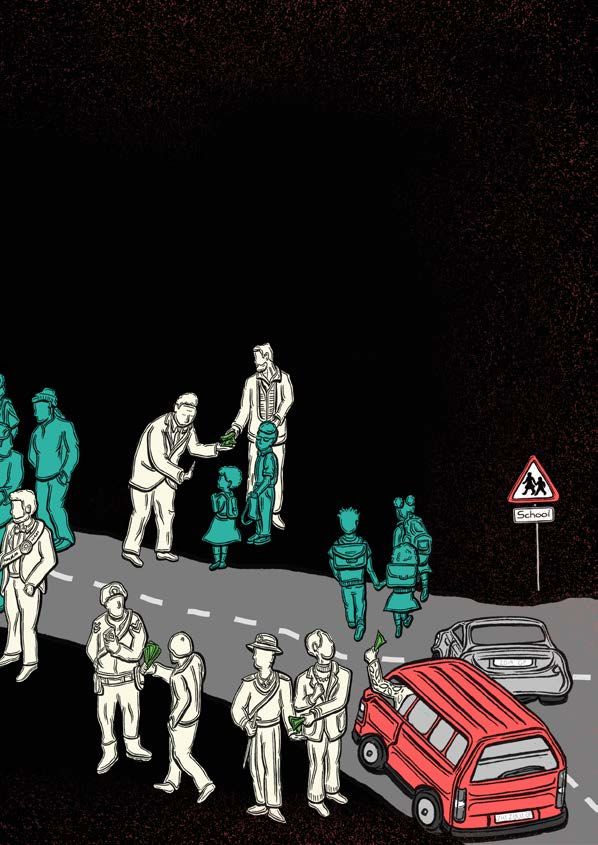
Transparency International is a global movement with
one vision: a world in which government, business,
civil society and the daily lives of people are free of
corruption. With more than 100 chapters worldwide and
an international secretariat in Berlin, we are leading the
fight against corruption to turn this vision into reality.

www.transparency.org

Afrobarometer
Afrobarometer directs a pan-African, non-partisan research network
that conducts public attitude surveys on democracy, governance,
economic conditions, and related issues in Africa.
Afrobarometer surveys are implemented by about 35 national
partners in surveyed countries, with regional coordination by the
Ghana Center for Democratic Development (CDD-Ghana), the Institute
for Justice and Reconciliation (IJR) in South Africa, and the Institute
for Development Studies (IDS) at the University of Nairobi in Kenya.
Michigan State University (MSU) and the University of Cape Town
(UCT) provide technical support to the network.
Afrobarometer publications from seven survey rounds (1999-2018)
in up to 38 countries are available at: www.afrobarometer.org.
To explore data on any survey question from any round,
please visit Afrobarometer’s online data analysis facility at:
www.afrobarometer.org/online-data-analysis.

Authors: Coralie Pring, Jon Vrushi
Contributors: Afrobarometer
Designer: Sophie Everett | sophieeverett.com.au
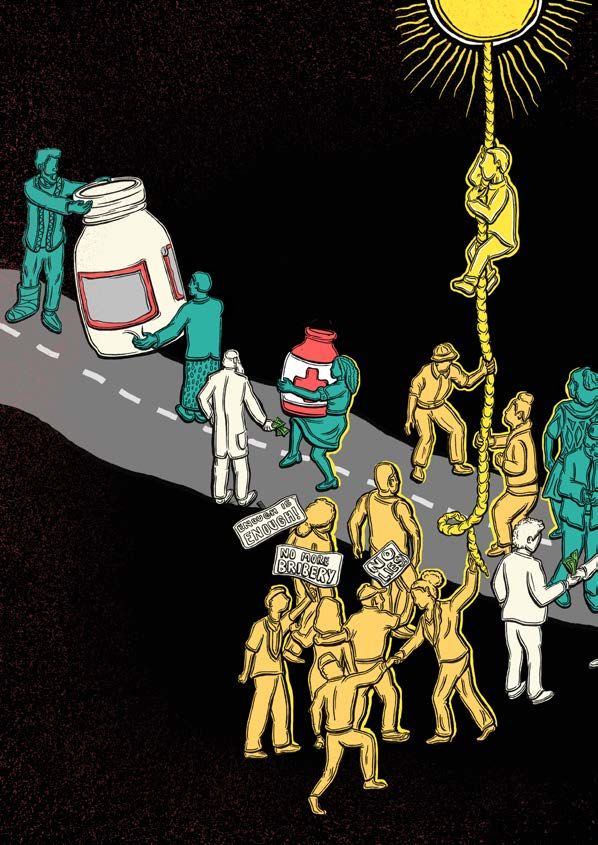
Cover image: Zhi Zulu | zhizulu.com

Every effort has been made to verify the accuracy of the information
contained in this report. All information was believed to be correct as
of July 2019. Nevertheless, Transparency International cannot accept
responsibility for the consequences of its use for other purposes or in
other contexts.

ISBN: 978-3-96076-124-2

2019 Transparency International. Except where otherwise noted, this
work is licensed under CC BY-ND 4.0 DE. Quotation permitted. Please
contact Transparency International – copyright@transparency.org –
regarding derivatives requests.
GLOBAL CORRUPTION BAROMETER – AFRICA 2019

GLOBAL
CORRUPTION
BAROMETER
AFRICA 2019
                       2-7                      14-18                             22
   TABLE OF CONTENTS

                       Executive summary        How are citizens                  Conclusion
                       The survey               affected by corruption?

                       Key findings             Bribery and corruption            23
                                                Who pays bribes?                  Note on the
                       Recommendations
                                                                                  methodology

                       8-13                     18-21                             Afrobarometer
                                                Taking action                     Omega Research
                       What do citizens in
                       Africa think about the   Citizens can help                 Weighting
                       level of corruption?     stop corruption
                       Corruption on the rise   Reporting corruption              25-60
                       Governments not          Civic space                       Country cards
                       doing enough             Accountable
                       Corruption by            governments
                                                                                  61-63
                       institution
                                                                                  Endnotes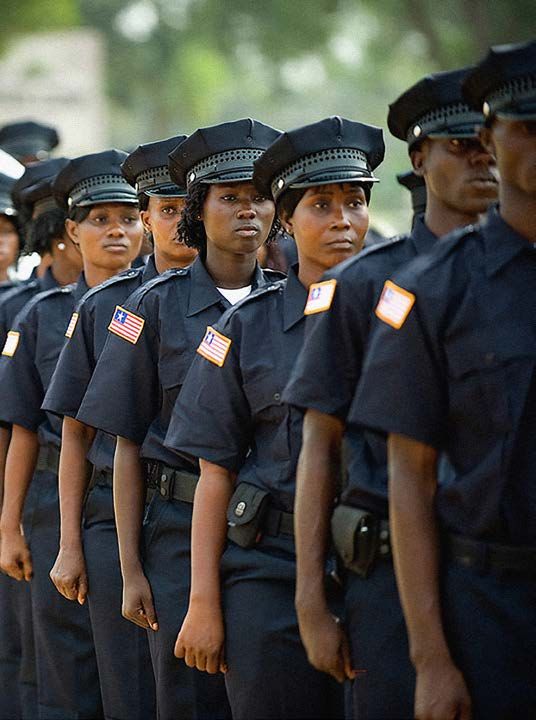
TRANSPARENCY INTERNATIONAL / AFROBAROMETER

                                             EXECUTIVE
                                             SUMMARY
                                             Corruption is hindering Africa’s economic, political and social
                                             development. It is a major barrier to economic growth, good
                                             governance and basic freedoms, such as freedom of speech
                                             or citizens’ right to hold governments to account.

photo: iStock.com / Joel Carillet

2
GLOBAL CORRUPTION BAROMETER – AFRICA 2019

More than this, corruption          government, forcing political
affects the wellbeing of            leaders to respond and
individuals, families and           strengthen anti-corruption
communities. While it varies        frameworks. The autocratic
extensively across countries        regime of President Jammeh
and public institutions,            was ousted, and there are
corruption harms hundreds           encouraging signs that the
of millions of citizens by          opacity, repression and
undermining their chances of        violation of basic rights that
a stable, prosperous future.        marked Jammeh’s time in office
This 10th edition of the Global     are being slowly reversed.
Corruption Barometer – Africa       Non-African actors also play
shows that the range of             a significant role in fuelling
corruption challenges that          corruption in Africa and
African citizens face is complex    aiding the diversion of critical
and multifaceted, requiring         resources away from essential
fundamental and systemic            public services. Foreign
changes. It also highlights that    businesses continue to bribe
while most people surveyed          public officials throughout
felt corruption had increased       the continent to get an unfair
in their country, a majority felt   advantage during bidding
that they, as citizens, could       processes and secure deals
make a difference in the fight      that are overpriced or do not
against corruption.                 yield real benefits. When money
Recent events in Gambia             that should support critical
show how citizens can play a        services, such as health care
fundamental role in making          and education, flows out of
these changes. Gambians             countries due to corruption,
called for greater integrity in     ordinary citizens suffer most.

                                                                            3
TRANSPARENCY INTERNATIONAL / AFROBAROMETER
The survey The results show that more For example, the poorest
than half of all citizens think people are twice as likely to
The Global Corruption
corruption is getting worse in pay a bribe as the richest
Barometer (GCB) – Africa,
their country and that their people in Africa. Paying bribes
published by Transparency
government is doing a bad job for essential public services
International in partnership
at tackling corruption. means poorer families have less
with Afrobarometer, presents
The GCB found more than one money for basic necessities like
the largest, most detailed set of
in four people who accessed food, water and medicine.
public opinion data on citizens’
public services, such as health Despite this, the GCB raises
views on corruption and direct
care and education, paid hope for positive change. More
experiences of bribery in Africa.
a bribe in the preceding than half of people in Africa
Based on fieldwork conducted
year. This equates to think that citizens can help
in 34 countries between 2016
approximately 130 million stop corruption.
and 2018 by Afrobarometer,
citizens in the 35 countries
as well as a survey conducted
surveyed.2
by Omega Research, the GCB
The GCB also reveals how
incorporates the views of
corruption is hitting the most
more than 47,000 citizens in 35
vulnerable people the hardest.
countries across Africa.1
KEY FINDINGS
01 02 03
Corruption is on the rise Many governments Concerns about the integrity
are failing to do enough of public officials remain high
More than half (55 per cent) of
all citizens think that corruption Only one in three citizens (34 per Among key public institutions,
increased in the previous 12 cent) thinks their government police are most widely seen as
months. Only 23 per cent think is doing a good job at fighting corrupt: 47 per cent of people
it declined. corruption, while 59 per say most or all police are
cent rate their government’s corrupt. But also almost four
performance as bad. in 10 citizens think most or all
government officials (39 per cent)
and parliamentarians (36 per
cent) are corrupt. These results
are consistent with the last
round of findings in 2015, where
citizens similarly thought that the
police were the most corrupt
institution.
4GLOBAL CORRUPTION BAROMETER – AFRICA 2019
ABOUT THE SURVEY
35
CONDUCTED AFROBAROMETER
FROM & OMEGA
RESEARCH
SEPT 2016 -
SEPT 2018 FIELDED THE COUNTRIES
SURVEY SURVEYED
FACE
47,000 +
TO FACE
PEOPLE AGED & NATIONALLY
18+ TOOK PART REPRESENTATIVE
04 05 06
Bribery demands are a People’s experience with Despite fears of retaliation,
regular occurrence for many bribery varies citizens can make a difference
More than one in four Men are slightly more likely Two-thirds of citizens fear
citizens who accessed public to pay a bribe than women, retaliation if they report
services, such as health care the poorest people are twice corruption. Yet, despite this,
and education, paid a bribe as likely to pay a bribe as the more than half of citizens
in the previous year. This is richest people, and young surveyed (53 per cent) think
equivalent to approximately people aged 18-34 are more ordinary people can make a
130 million people. likely to pay a bribe than people difference in the fight against
aged 55 and over. corruption.
5TRANSPARENCY INTERNATIONAL / AFROBAROMETER
Recommendations ++ Create mechanisms International
to collect citizens’
Corruption in Africa has a direct complaints and strengthen Governments of major
impact on the lives of citizens. whistleblower protection economies, including members
It undermines the integrity to ensure that citizens of the G20 and OECD, as well
and effectiveness of African can report instances of as those of offshore financial
institutions and deprives corruption without fear centres (secrecy jurisdictions)
governments of sorely needed of reprisal. can also help reduce corruption
tax revenues. in Africa. Authorities in these
While initiatives to tackle ++ Enable media and countries should:
corruption in specific civil society to hold
governments accountable. ++ Establish public registers,
institutions, such as the police
in open data format,
or parliament, are welcome, ++ Support transparency in containing information on
ultimately tackling corruption political party funding. the real, natural owners
in Africa requires a holistic,
++ Allow cross-border of companies and trusts
systemic approach, including
cooperation to combat (beneficial owners).
measures taken outside of
corruption. ++ Effectively enforce the
Africa.
While African citizens suffer the OECD Convention on
Africa consequences of corruption, Combating Bribery of
corrupt individuals are still able Foreign Officials.
Governments should put anti- to hide behind anonymous ++ Effectively implement
corruption commitments into companies and stash their the Financial Action Task
practice and should: ill-gotten funds abroad, Force (FATF) anti-money
++ Ratify, implement and purchasing luxury properties, laundering standards,
report on the African Union cars and other goods with to prevent proceeds of
Convention to Prevent public money and securing a corruption carried out
and Combat Corruption safe haven for themselves, their in Africa from being
(AUCPCC). families and their stolen assets. laundered in their
++ Investigate, prosecute ++ National authorities economies.
and sanction all reported should establish public ++ Implement strong
cases of corruption in both registers that name the measures to return stolen
the public and the private owners of shell companies, assets to their countries
sectors, with no exception. allowing bidders for public of origin, including swift
contracts to be vetted and responses to requests
++ Develop minimum
preventing those who keep for legal assistance, and
standards and guidelines
their identities secret from establish legal frameworks
for ethical procurement
benefitting from criminal to enable civil society and
and build strong
activities and keeping their victims of corruption to
procurement practice
dirty money untraced. take asset recovery cases
throughout the continent
with training, monitoring ++ Governments in the to court.
and research. region should put in place ++ Ensure that business
and enforce laws that leaders and boards
++ Adopt open contracting
address stolen assets – the of companies,
practices, which make data
proceeds of corruption, including multinational
and documentation clearer
crime and money companies operating
and easier to analyse and
laundering. in Africa, are effectively
ensure transparency in
hiring procedures. and transparently
implementing the highest
international anti-
corruption and anti-money
laundering standards.
6GLOBAL CORRUPTION BAROMETER – AFRICA 2019
Africans believe they can make
a difference. Governments must
allow them the space to do so.
AUCPPC provisions on media
freedom and civil society should
be implemented across Africa.
Paul Banoba
Regional Advisor for Africa at Transparency International
© photo: XX
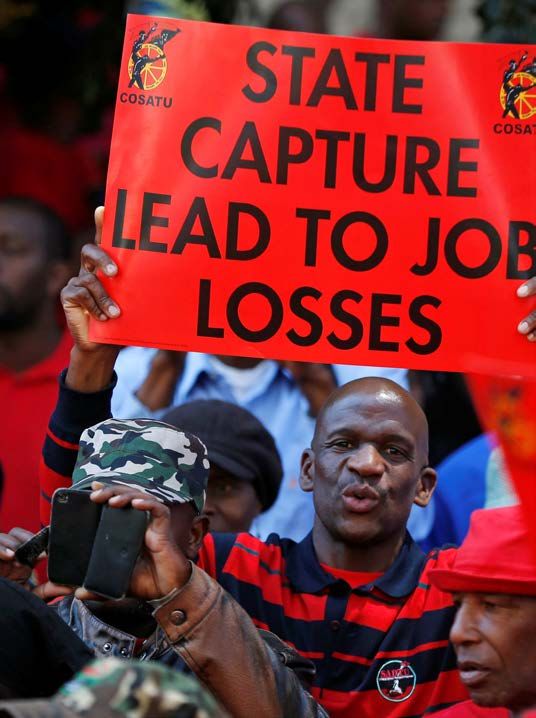
photo: REUTERS / SIPHIWE SIBEKO - stock.adobe.com
7TRANSPARENCY INTERNATIONAL / AFROBAROMETER
WHAT DO CITIZENS IN
AFRICA THINK ABOUT THE
LEVEL OF CORRUPTION?
We asked people what they thought about the state of corruption in their
country – how prevalent it is, whether it is rising or declining and whether
their government is doing enough to control it. Here’s what we found.
RESULTS BY COUNTRY
Percentage of people who think corruption
increased in the previous 12 months.3
85%
82%
80%
78%
76%
72%
72%
69%
67%
67%
66%
64%
62%
62%
61%
60%
60%
57%
56%
53%
52%
51%
49%
47%
43%
43%
43%
40%
100
0
GO
AN
N
DAG IA
AR
I
ON
DA
YA
ISIA
UTH BIA
ICA
A
MA ER
ZIM US
WE
LI
O
MO PE
CCO
ESW A
ZAM NI
UE
A
RRA AL
NE
RIA
E
LAW
OIR
INE
AN
ERI
TOG
BO
MA
MIB
KEN
TI
EG
I
NIG
ASC
BIQ
AN
ITI
LEO
SUD
NC
AFR
E
ZAM
ON
ERO
BAB
TUN
A
TSW
RO
LIB
NIG
GA
GU
D’IV
MA
UR
SEN
UG
NA
PRÍ
FC
CAM
BO
TE
CO
ND
MO
MA
SIE
CÔ
SO
BLI
ÉA
TOM
EPU
IC R
SÃO
RAT
OC
DEM
8GLOBAL CORRUPTION BAROMETER – AFRICA 2019
Corruption on the rise and Gabon, too, eight out of
10 citizens think corruption
A majority of African citizens
increased (83 per cent and 80
(55 per cent) think corruption
per cent respectively).
increased in their country in
By contrast, about half of
the previous 12 months, while
citizens in Burkina Faso and
far fewer think it declined
Gambia think corruption in
(23 per cent).4
their country decreased (54
Majorities reported increasing
per cent and 46 per cent
corruption in 22 of the 35
respectively).
countries surveyed, most
strikingly in the Democratic
Republic of Congo (DRC), where
85 per cent of all citizens see
corruption on the rise. In Sudan
Sudan and Gambia in focus
In Sudan, the survey was conducted before the April 2019
overthrow of President Omar al-Bashir by the military. Corruption
charges have been brought against him after US$113 million in
cash was allegedly found at Bashir’s residence after he was ousted.
Human rights violations are now reportedly being committed by
the military, undermining any prospect in the near term of stability
and peace.5
In 2016, Gambia elected a new president, Adama Barrow, who
39%
39%
34%
33%
32%
28%
10%
promised to bring political and civil rights to the country after 22
years of authoritarian rule.6 More recently, ethnic tensions have
reemerged, giving cause for concern about future progress in the
country.7
55%
OF PEOPLE THINK
CORRUPTION INCREASED
IN THE PREVIOUS 12 MONTHS
23% THINK CORRUPTION
DECREASED
16%
E
CAB THO
IN
A
IA
O
IA
ERD
AN
FAS
B
ZAN
BEN
M
GH
O
OV
GA
TAN
NA
LES
RKI
BU
THINK CORRUPTION
STAYED THE SAME
9TRANSPARENCY INTERNATIONAL / AFROBAROMETER
Governments not at addressing corruption risks. citizens in Sierra Leone think
doing enough However, in some countries, their government is doing well,
this is far more pronounced. while 61 per cent of citizens in
We also asked people how
Eighty-seven per cent of Lesotho think the same.
they rate their government’s
citizens in Gabon think their
efforts at fighting corruption.
government is failing to
The results show clear
fight corruption, followed by
dissatisfaction with the actions
Madagascar (83 per cent) and
taken so far. The majority of
Sudan (81 per cent).
Africans (59 per cent) think their
By contrast, 66 per cent of
government is doing a poor job
Madagascar and Lesotho in focus
In 2018 in Madagascar, the then-president Hery Rajaonarimampianina was heavily criticised for attempting
to change electoral law in his favour shortly before a new election. More recently, the Malagasy anti-
corruption agency began legal action against more than half the country’s parliamentarians, who are
accused of taking bribes.8
In Lesotho in 2016, the government introduced a law prohibiting direct and indirect bribery of public
officials.9 Since then, the government has made a number of statements confirming its commitment to
fighting corruption. Despite this, impunity for some public officials remains a problem in the country and
there are calls for civil society to play a greater role in decision making.10
59 %
THINK THEIR GOVERNMENT IS DOING A BAD
JOB AT TACKLING CORRUPTION
34 %
THINK THEIR GOVERNMENT IS DOING WELL
10GLOBAL CORRUPTION BAROMETER – AFRICA 2019
RESULTS BY COUNTRY
Badly Don’t know Well
Percentage of people who think their government
is doing badly vs. well in tackling corruption.11
GABON
MADAGASCAR
SUDAN
DEMOCRATIC REPUBLIC OF CONGO
UGANDA
MALAWI
GUINEA
MOROCCO
MALI
KENYA
ZIMBABWE
SOUTH AFRICA
ZAMBIA
TOGO
NAMIBIA
CAMEROON
TUNISIA
MAURITIUS
CABO VERDE
CÔTE D’IVOIRE
SÃO TOMÉ AND PRÍNCIPE
LIBERIA
NIGER
BENIN
SENEGAL
MOZAMBIQUE
BURKINA FASO
BOTSWANA
NIGERIA
ESWATINI
GAMBIA
GHANA
SIERRA LEONE
LESOTHO
TANZANIA
0 10 20 30 40 50 60 70 80 90 100
11TRANSPARENCY INTERNATIONAL / AFROBAROMETER
Corruption believing that most or all police groups (16 per cent, 22 per cent
by institution officers are corrupt. This is and 20 per cent respectively).
consistent with the previous
We asked people how much round of findings from the Police corruption
corruption they thought 2015 survey, suggesting
there is in various important that more work needs to be Eighty-one per cent of DRC
institutions in their country. The done to improve citizen trust citizens think the police are
results show that many people in police. corrupt, followed by Gabon (75
believe there are high levels Many Africans also think that per cent) and Uganda (70 per
of corruption among police, most or all government officials cent). By contrast, the police
government officials, politicians and parliamentarians are are considered much cleaner
and more. corrupt (39 per cent and 36 per by citizens in Mauritius, Tunisia
cent respectively). and Cabo Verde, where fewer
Results by institution Citizens tend to perceive than a quarter think that most
religious leaders, traditional or all police are corrupt (19 per
Citizens think the police are the cent, 23 per cent and 23 per
leaders and NGOs as cleaner,
most corrupt public institution, cent respectively).
yet some citizens still think
with nearly half (47 per cent)
corruption exists in these
RESULTS BY INSTITUTION
Percentage of people who think that most or all people in these
groups or institutions are involved in corruption.12
POLICE 47%
GOVERNMENT OFFICIALS 39%
MEMBERS OF PARLIAMENT 36%
BUSINESS EXECUTIVES 36%
PRESIDENT / PRIME MINISTER’S OFFICE 34%
JUDGES AND MAGISTRATES 34%
LOCAL GOVERNMENT OFFICIALS 33%
TRADITIONAL LEADERS 22%
NGOs 20%
RELIGIOUS LEADERS 16%
0 50
12GLOBAL CORRUPTION BAROMETER – AFRICA 2019
Public sector corruption doesn’t
exist in a vacuum. Foreign bribery
and money laundering divert
critical resources away from
public services, and ordinary
citizens suffer most.
Delia Ferreira Rubio
Chair of Transparency International
photo: “Security reform key to protecting women” by Africa Renewal / CC BY-NC-SA 2.0
13TRANSPARENCY INTERNATIONAL / AFROBAROMETER
HOW ARE CITIZENS AFFECTED
BY CORRUPTION?
We asked citizens about their experiences with bribery for basic services, such as health
care and education, to better understand what happens in people’s daily lives. We found
that people’s experiences vary and some services are better than others when it comes to
controlling corruption.
Morocco (31%)
Mali (21%)
Burkina Faso (16%)
Senegal (15%)
Gambia (21%)
Cabo Verde (8%)
Guinea (42%)
Sierra Leone (52%)
Liberia (53%)
Côte d’Ivoire (34%)
Ghana (33%)
Togo (32%)
Benin (27%)
São Tomé and Príncipe (16%)
Nigeria (44%)
Cameroon (48%)
RESULTS BY COUNTRY Gabon (35%)
Botswana (7%)
Percentage of public service users who Namibia (11%)
paid a bribe in the previous 12 months.13
South Africa (18%)
0%-19% 20%-39% 40%-59% 60%-79% 80%+
Lesotho (14%)
14GLOBAL CORRUPTION BAROMETER – AFRICA 2019
Bribery and corruption previous 12 months. per cent), Sierra Leone (52 per
The results show that of those cent), Cameroon (48 per cent)
We asked respondents whether who had contact, more than and Uganda (46 per cent).
they had contact with five key one in four people (28 per cent) Mauritius maintains the lowest
public services in their country paid a bribe in the previous 12 overall bribery rate (5 per
in the previous 12 months – months for basic services, like cent), followed by Botswana
police, health care, schools, ID health care and education.14 (7 per cent), Cabo Verde (8
documents and utilities. We This equates to approximately per cent), Namibia (11 per
then asked whether they had 130 million people across the cent) and Lesotho (14 per
paid a bribe, given a gift or 35 countries surveyed who paid cent). However, even in these
done a favour in order to get a bribe in the preceding year.15 countries, governments could
the services they needed. The Democratic Republic of do more to stop bribes for
Eighty-five per cent of overall Congo (DRC) has the highest public services.
respondents had contact with overall bribery rate (80 per
at least one public service in the cent), followed by Liberia (53
Tunisia (18%)
Democratic Republic of Congo in focus
The DRC is one of the poorest countries in the world, despite
having unrivalled natural wealth – particularly in the form of
Niger (23%) oil, gas and mineral deposits. Development in the country is
significantly hampered by insecurity, conflict and mismanagement
of natural resources. Public services are weak, underfunded and
poorly run, making anti-corruption efforts severely challenging.
Sudan (24%)
Uganda (46%)
85% OF OVERALL RESPONDENTS HAD
CONTACT WITH AT LEAST ONE PUBLIC
SERVICE IN THE PREVIOUS 12 MONTHS.
Kenya (45%)
Democratic Republic
of Congo (80%)
Tanzania (18%)
MORE THAN 1 IN 4 PEOPLE WHO USED
Zambia (18%)
Malawi (28%)
Madagascar (27%)
A PUBLIC SERVICE IN THE PREVIOUS
Zimbabwe (25%)
12 MONTHS HAD TO PAY A BRIBE.
Mauritius (5%)
THIS IS EQUIVALENT TO APPROXIMATELY
Mozambique (35%) 130 MILLION PEOPLE.
Eswatini (17%)
15TRANSPARENCY INTERNATIONAL / AFROBAROMETER
Results by service bribery rates, although 14 per For example, in Sierra Leone,
cent of people who received 50 per cent of citizens paid a
The police is the public medical services in the previous bribe for medical care. This is
service most likely to demand 12 months paid a bribe to get followed by DRC and Liberia (43
and receive bribes, which the medical care they needed. per cent each). By comparison,
corresponds with our finding Despite public clinics and health in Botswana, only 1 per cent of
that citizens think the police centers generally having low citizens who came into contact
is also the most corrupt levels of bribery compared with health centers or clinics paid
institution in Africa. with other services, in some a bribe, followed by Mauritius (2
Public clinics and health countries bribery in health per cent) and Eswatini (formerly
centers, meanwhile, have low care is a common experience. Swaziland) (3 per cent).
Sierra Leone and Liberia in focus
In both Sierra Leone and Liberia, investigations uncovered the misuse of huge sums from donations to fight
the 2014 Ebola epidemic. An audit of Red Cross spending in Liberia found fraud and “ghost worker” salaries
accounted for US$2.7million in missing funds. In Sierra Leone, Red Cross workers are alleged to have
colluded with bank workers to steal US$2 million. Corrupt use of emergency aid directly takes funds away
from those who need them the most.16 With new Ebola cases found in the DRC, concerns are high that life-
saving funds are also at risk of being misused.
RESULTS BY SERVICE
these services and paid a bribe in
Percentage of people who used
POLICE 28%
the previous 12 months.17
UTILITIES 23%
IDS 21%
SCHOOLS 16%
PUBLIC CLINICS 14%
AND HEALTH
CENTERS
0 30
75 61 52
contact with the police in the previous
HIGHEST
Percentage of people who came into
% % %
POLICE IN FOCUS
12 months and paid a bribe.
DEMOCRATIC
REPUBLIC OF CONGO
GUINEA BENIN
3 5 7
28
LOWEST
% % %
% CABO VERDE MAURITIUS BOTSWANA
16GLOBAL CORRUPTION BAROMETER – AFRICA 2019
Who pays bribes?18
Our further analysis looks at which public service users are most at risk of having to pay bribes when they try to
access basic public services. The findings show that while not everyone is equally at risk, corruption impacts on
many people’s access to services.
Results by gender However, the survey shows
MEN
32%
that corruption affects many
Men who accessed basic women as well as men, which
services are slightly more may put undue strain on
likely than women to have family budgets. Efforts to fight
paid a bribe in the previous 12 corruption should look to
months. This result may reflect support both male and female WOMEN
25%
men’s more traditional role in victims, including providing safe
overseeing family finances and and secure reporting channels
perhaps the likelihood that they where complaints will be taken
take responsibility for paying a seriously and acted on.
bribe for their family’s access to
basic services.
Results by poverty how those living in poverty may
POOREST MODERATELY
levels have less power to stand up to
36% 31%
POOR
corrupt public officials. Wealthy
Citizens living in poverty people often have more options
are much more vulnerable available to them, including
to corruption than wealthy using private sector services.
citizens. We found that almost
two in five of the poorest MODERATELY WEALTHIEST
25% 19%
WELL OFF
people in Africa paid bribes
for public services, while only
one in five of the wealthiest
people paid bribes for public
services.19 This result highlights
Results by age bribes than younger people, or
AGED 18-34 AGED 35-54
32% 27%
whether they are more likely to
Young people aged 18 to 34 resist if asked.
are more likely to pay a bribe
than people aged 55 or over.
Just under one in three young
people who accessed basic
services had to pay a bribe, AGED 55+
18%
compared with one in five
older people.
Further research is needed
to see whether older people
are less frequently asked for
17TRANSPARENCY INTERNATIONAL / AFROBAROMETER
TAKING ACTION
Several basic requirements are fundamental to reducing the prevalence
of corruption: ensuring people can safely report corruption when it is
experienced, guaranteeing that punishments are fairly given, enabling NGOs
to operate freely, and empowering citizens to hold governments to account.
The survey finds that while there are barriers to such anti-corruption efforts
in the region, many people are ready and willing to take action.
71%
66%
65%
64%
62%
62%
60%
60%
59%
58%
57%
57%
56%
55%
55%
54%
54%
54%
54%
54%
53%
52%
52%
50%
49%
48%
48%
100
0
A
TAN AL
E
ZAM IA
E
AN
CAM IPE
ON
O
UTH DE
N
YA
IA
ICA
IA
IN
NI
IA
DAG O
AR
A
O
A
MO IA
CCO
BIA
I
LAW
OIR
IQU
ERI
AN
AN
TOG
H
FAS
BO
ER
S
MIB
MB
ZAN
KEN
BEN
ATI
EG
ASC
R
UD
NC
I
AFR
T
ERO
ZAM
TUN
E
TSW
GH
RO
O
LIB
NIG
GA
D’IV
B
MA
SEN
OV
ESW
GA
NA
LES
S
NA
PRÍ
BO
CAB
RKI
TE
ND
MO
MA
CÔ
SO
BU
ÉA
TOM
SÃO
18GLOBAL CORRUPTION BAROMETER – AFRICA 2019
Citizens can help stop However, far fewer people in
corruption Niger (26 per cent), DRC (32
Despite fears of retaliation and per cent) and Sierra Leone (39
inaction, people are hopeful. per cent) think they can make
53 per cent of citizens believe a difference, suggesting that
ordinary people can make a governments in these countries
difference in the fight against need to do more to engage
corruption. citizens and demonstrate that
This is especially true in citizens’ actions are leading to
Eswatini, Gambia and Lesotho, positive changes.
where between 65 and 71 per
cent of people believe their
voice matters.
53% 39%
47%
45%
45%
44%
41%
39%
32%
26%
THINK ORDINARY PEOPLE THINK ORDINARY
CAN MAKE A DIFFERENCE PEOPLE CAN’T MAKE A
IN THE FIGHT AGAINST DIFFERENCE IN THE FIGHT
CORRUPTION AGAINST CORRUPTION
ORDINARY CITIZENS CAN
MAKE A DIFFERENCE IN THE
FIGHT AGAINST CORRUPTION
FC E
GO
ER
WE
A
DA
EPU RRA L I
ZIM US
L
N
INE
MA
NIG
AN
ITI
EO
ON
BAB
Percentage who agree20
GU
UR
UG
MA
CO
SIE
BLI
IC R
RAT
OC
DEM
19TRANSPARENCY INTERNATIONAL / AFROBAROMETER
Reporting corruption such retaliation. Namibia, where people are far
At 39 per cent, Gambia has the less confident that any action
Reporting corruption cases to lowest percentage of people would be taken (less than
the appropriate authorities who fear retaliation. However, 33 per cent).
is essential to anti-corruption this remains a worryingly Reporting mechanisms can
work. Yet the results show high proportion. act as important deterrents
two-thirds of Africans think Less than half of respondents for public officials who may
that if people report corruption think that reporting corruption otherwise decide to engage in
they will suffer retaliation21 will lead to any action corruption. However, if victims
and many people think (43 per cent). fear retaliation if they use such
that reporting channels are A majority of citizens in mechanisms or think they will
ineffective. Lesotho, Mauritius, Cabo be ineffective, the mechanisms
People are particularly Verde, Botswana, Eswatini will not be used. Whistleblower
concerned about retaliation in and Gambia think reporting reporting channels need to
Gabon, Eswatini, Malawi, São corruption can lead to change be safe and secure, providing
Tomé and Príncipe, Uganda, (55 per cent or more). confidentiality and anonymity
Nigeria, Kenya and Togo. In However, this falls to less than to reporters. Complaints must
these countries, more than one-third in Liberia, Guinea, be properly investigated, with
three-quarters of citizens fear Nigeria, Togo, Gabon and perpetrators held to account.
67% FEAR RETALIATION IF THEY REPORT
CORRUPTION
28%
THINK THEY CAN REPORT CORRUPTION
FREELY, WITHOUT CONSEQUENCE
Advocacy and Legal Advice Centres
In many countries in Africa, through our Advocacy and Legal Advice Centres (ALACs), Transparency
International offers citizens advice and support if they need to report a case of corruption that they have
experienced or witnessed. Governments should support and work with mechanisms like these to ensure that
complaints are investigated effectively and safely by the relevant authorities.
20GLOBAL CORRUPTION BAROMETER – AFRICA 2019
Civic space
There is broad support among 62% SAY THAT THEY SUPPORT
citizens for the freedom to join
PEOPLE’S FREEDOM TO JOIN ANY
NGOs and civic organisations
like Transparency International, ORGANISATION THEY CHOOSE22.
which can act as watchdogs
of corruption and monitor the
misuse of government power.
WHILE 33% SAY THAT THEY THINK
The strongest support for
freedom to join any NGO was
found in Gabon, Senegal, THE GOVERNMENT SHOULD BE ABLE
Madagascar and Togo. In these TO BAN ANY ORGANISATION WHICH
GOES AGAINST ITS POLICIES23.
places, more than four in five
citizens think people should be
free to join any organisation
they want.
Accountable
governments
62% OF PEOPLE THINK THAT IT IS
IMPORTANT FOR CITIZENS TO BE
ABLE TO HOLD THEIR GOVERNMENT
There is widespread support
among citizens for governments
to be more accountable to ACCOUNTABLE, EVEN IF THAT MEANS IT
the public. When citizens are
MAKES DECISIONS MORE SLOWLY24.
involved in decision-making,
outcomes are more likely to
be in the public interest, rather WHILE ONLY 34% THINK THAT IT
than a few corporate and
IS MORE IMPORTANT TO HAVE A
political interests.
Citizens in Benin, Gabon, Mali, GOVERNMENT THAT CAN GET THINGS
Togo and Gambia support DONE, EVEN IF PEOPLE HAVE NO
government accountability
INFLUENCE OVER WHAT IT DOES25.
the most, with more than
three-quarters agreeing
that governments should be
answerable to citizens.
Citizens in South Africa,
Tanzania, Madagascar,
Mozambique and Namibia are
more divided. About half of
people in these countries prefer
a government that gets things
done, even if citizens cannot
influence its decision-making.
21TRANSPARENCY INTERNATIONAL / AFROBAROMETER
CONCLUSION
The results from the latest edition of Transparency
International’s Global Corruption Barometer – Africa, built
primarily with data from Afrobarometer’s Round 7 survey,
demonstrate widespread public dissatisfaction with the
pace of progress in fighting corruption.
While perceptions of the others in fighting corruption, at and support civil and political
extent of the corruption least according to the views of rights while cooperating with
problem vary considerably their citizens. In general, citizens other nations investigating
across the continent, many in Cabo Verde and Mauritius corruption. Establishing public
citizens see corruption as think there is relatively little registers that name the owners
increasing, governments corruption in the public sector, of shell companies and taking
doing too little to address the with fewer bribes for public action against stolen assets are
problem, and bribery being far services. In Gambia, citizens also vital steps.
too common an occurrence in think corruption has declined All major economies and
many countries. recently and that government offshore financial centres
The results from the DRC, efforts to fight corruption are have a part to play. To stop
Sudan and Gabon are better. Given that the situation the flow of dirty money out of
particularly concerning. The in the country is now less Africa, they must tackle money
high and rising levels of certain, citizens’ views should laundering, support the return
corruption – coupled with be monitored via future surveys of stolen assets and establish
dissatisfaction with government to see how they respond to the public registers. To ensure that
efforts to tackle it – highlight an latest developments. their own companies aren’t
acute need for stronger anti- African governments must increasing corruption in Africa,
corruption commitments in commit to implementing they should also effectively
these countries. anti-corruption efforts. This enforce the OECD Convention
In Sierra Leone and Liberia, the requires both adopting and on Combating Bribery of
high frequency of bribes for enforcing comprehensive legal Foreign Officials.
public services is also an urgent frameworks, strengthening African citizens deserve
issue. Citizens need to be able their institutions, ensuring corruption-free countries.
to receive critical public services ethical procurement processes, Leaders on the continent
without paying bribes. and bringing transparency to and worldwide should act
However, some countries are political party funding. They also with urgency, commitment
seen to be doing better than need to protect whistleblowers and integrity.
22GLOBAL CORRUPTION BAROMETER – AFRICA 2019
NOTE ON THE
METHODOLOGY
The 10th edition of the Global Corruption Barometer –
Africa was implemented by Afrobarometer, as part of its
Round 7 surveys, in collaboration with Transparency
International. A separate survey was commissioned by
Transparency International for the Democratic Republic of
Congo (DRC), which was conducted by Omega Research.
Afrobarometer level. This report relies on Assisted Personal Interviewing.
data from 45,823 interviews A random probability stratified
Afrobarometer has been completed in 34 countries clustered sample was used. The
capturing data on public (home to almost 80 per cent sample was stratified by region and
opinion in Africa, on topics of the continent’s population) by level of urbanisation. Secondary
ranging from democracy between September 2016 and Sampling Units were selected up
and governance to economic September 2018. The data is to three hours from the nearest
management and trust, since weighted to ensure nationally road. Households were selected
1999. It facilitates use of this representative samples. at random using a random walk.
data to promote citizen voice Given our shared goals, The respondent was selected at
in ways that inform public Transparency International and random from all adults in the
policy and hold governments Afrobarometer have partnered household using a Kish grid method.
accountable. since 2014 to capture public The results are weighted to be
Afrobarometer directs a pan- opinion data on perceptions nationally representative according
African, non-partisan research and experiences of corruption to available population data.
network that conducts public across Africa. The results have a margin of
attitude surveys in African error of +/- 2.8 percentage points at
countries. It uses computer-
Omega Research a 95 per cent confidence level.
assisted personal interviewing
to conduct face-to-face The DRC survey was organised
Weighting
interviews in the language and conducted by Omega
of the respondent’s choice. Research. All fieldwork was For reported multi-country
Nationally representative completed using a face-to-face averages, an additional weighting
samples of between 1,200 and survey methodology in the factor is applied so that the sample
2,400 yield country-level results following languages: English, sizes for each country are equal.
with a maximum margin of French, Lingala and Swahili. The overall results for Africa are
error of +/-3 percentage points The face-to-face interviews were equivalent to an average of the
at a 95 per cent confidence conducted through Computer countries surveyed.
23TRANSPARENCY INTERNATIONAL / AFROBAROMETER
Country Surveying organization Fieldwork dates Sample size
Afrobarometer countries
Benin Institute for Empirical Research in Political Economy (IREEP) 24 Dec 2016-2 Jan 2017 1.200
Botswana Star Awards (Pty) Ltd 21 Jun-5 Jul 2017 1.198
Burkina Faso Centre for the Democratic Governance of Burkina Faso (CGD) 2-18 Oct 2017 1.200
Cabo Verde Afrosondagem 20 Nov-6 Dec 2017 1.200
Cameroon Centre d’Etudes et de Recherche en Economie et Gestion 7-25 May 2018 1.202
(CEREG) Université de Yaounde II
Côte d’Ivoire Centre de Recherche et de Formation sur le Développement 30 Dec 2016-11 Jan 2017 1.200
Intégré (CREFDI)
Eswatini ActivQuest 13-28 Mar 2018 1.200
Gabon Centre de Recherche en Geosciencs Politiques et Prospective 2-14 Nov 2017 1.199
(CERGEP)
Gambia Center for Policy Research and Strategic Studies (CEPRASS) 23 Jul-12 Aug 2018 1.200
Ghana Center for Democratic Development (CDD-Ghana) 9-25 Sept 2017 2.400
Guinea DG Stat View International 13-31 May 2017 1.194
Kenya Institute for Development Studies, University of Nairobi 13 Sept-8Oct 2016 1.599
Lesotho Advision (PTY) Limited 25 Nov-11 Dec 2017 1.200
Liberia The Khana Group 19 Jun-16 Jul 2018 1.200
Madagascar COEF Resources 20 Jan-26 Feb 2018 1.200
Malawi Centre for Social Research, University of Malawi 26 Dec 2016-14 Feb 2017 1.200
Mali Groupe de Recherche en Économie Appliquée et Théorique 8-24 Feb 2017 1.200
(GREAT)
Mauritius StraConsult Ltd 30 Sept-1 Nov 2017 1.200
Morocco Global for Survey and Consulting (GSC) 13-28 May 2018 1.200
Mozambique IPSOS Limited (Mozambique) 13 Jun-3 Sept 2018 2.392
Namibia Survey Warehouse 6 Nov-21 Dec 2017 1.200
Niger Laboratoire d’Etudes et de Recherches sur les Dynamiques 13-30 Apr 2018 1.200
Sociales et le Développement Local (LASDEL)
Nigeria Practical Sampling International (PSI) 26 Apr-10 May 2017 1.600
São Tomé and Príncipe Afrosondagem 29 Jun-22 Jul 2018 1.200
Senegal Carrefour d’Etudes et de Recherches-Action pour la 2-19 Dec 2017 1.200
Démocratie et le Développement (CERADD)
Sierra Leone ITASCAP Limited 6-28 Jul 2018 1.200
South Africa Plus 94 30 Jul-26 Sept 2018 1.840
Sudan Sudan Polling Survey Center 22 Jul-25 Aug 2018 1.200
Tanzania REPOA Policy Research for Development 30 Apr-17 Jun 2017 2.400
Togo Center for Research and Opinion Polls (CROP) 11-23 Nov 2017 1.200
Tunisia One-to-One Research and Polling (121) 31 Mar-7May 2018 1.199
Uganda Hatchile Consult Ltd 26 Dec 2016-8 Jan 2017 1.200
Zambia RuralNet 8-25 Apr 2017 1.200
Zimbabwe Mass Public Opinion Institute 28 Jan-10 Feb 2017 1.200
Additional surveys
Democratic Republic of Congo Omega Research 5 Feb - 29 Mar 2018 1.282
24GLOBAL CORRUPTION BAROMETER – AFRICA 2019
COUNTRY
CARDS
25TRANSPARENCY INTERNATIONAL / AFROBAROMETER
34%
Think corruption increased in the
previous 12 months
BENIN
27%
Of public service users paid a
bribe in the previous 12 months
54%
Think their government is doing
a bad job of tackling corruption
55%
Think that ordinary citizens can
BRIBERY RATES* make a difference in the fight
against corruption
* Based on people who used these public services in the previous 12 months.
2015 2019
Overall bribery rate 26% 27%
Public schools 9% 10%
Public clinics and health centers 13% 12% CORRUPTION BY INSTITUTION*
IDs 26% 14%
Utilities 20% 23%
* Percentage who think that most or all people in these institutions
Police 18% 52% are corrupt.
INSTITUTION 2015 2019
HAS CORRUPTION LEVEL CHANGED
IN THE PREVIOUS 12 MONTHS? President / Prime Minister 51% 43%
Members of Parliament 46% 42%
Government officials 54% 46%
2015 2019 Local government officials 48% 42%
Police 54% 55%
Increased 74% 34% Judges and Magistrates 48% 46%
Decreased 17% 44% Religious leaders 20% 22%
Stayed the same 7% 21% NGOs - 28%
Don’t know 2% 1% Business Executives 64% 53%
Refused to answer 0% 0% Traditional leaders 26% 28%
CAN ORDINARY PEOPLE MAKE IS THE GOVERNMENT DOING
A DIFFERENCE IN THE FIGHT A GOOD OR BAD JOB OF
AGAINST CORRUPTION? FIGHTING CORRUPTION?
2015 2019 2015 2019
Yes 42% 55% Good 19% 44%
No 49% 43% Bad 79% 54%
Neither yes nor no 5% 1% Don’t know 2% 2%
Don’t know / refused to answer 3% 1% Refused to answer 0% 0%
26GLOBAL CORRUPTION BAROMETER – AFRICA 2019
52%
Think corruption increased in the
previous 12 months
BOTSWANA
7%
Of public service users paid a
bribe in the previous 12 months
42%
Think their government is doing
a bad job of tackling corruption
62%
Think that ordinary citizens can
BRIBERY RATES* make a difference in the fight
against corruption
* Based on people who used these public services in the previous 12 months.
2015 2019
Overall bribery rate 1% 7%
Public schools 1% 2%
Public clinics and health centers 0% 1% CORRUPTION BY INSTITUTION*
IDs 0% 3%
Utilities 0% 4%
* Percentage who think that most or all people in these institutions
Police 1% 7% are corrupt.
INSTITUTION 2015 2019
HAS CORRUPTION LEVEL CHANGED
IN THE PREVIOUS 12 MONTHS? President / Prime Minister 20% 29%
Members of Parliament 25% 28%
Government officials 29% 39%
2015 2019 Local government officials 22% 27%
Police 34% 39%
Increased 51% 52% Judges and Magistrates 14% 20%
Decreased 24% 20% Religious leaders 16% 19%
Stayed the same 14% 17% NGOs - 19%
Don’t know 11% 11% Business Executives 35% 37%
Refused to answer 0% 0% Traditional leaders 13% 15%
CAN ORDINARY PEOPLE MAKE IS THE GOVERNMENT DOING
A DIFFERENCE IN THE FIGHT A GOOD OR BAD JOB OF
AGAINST CORRUPTION? FIGHTING CORRUPTION?
2015 2019 2015 2019
Yes 72% 62% Good 54% 52%
No 20% 31% Bad 42% 42%
Neither yes nor no 5% 4% Don’t know 4% 5%
Don’t know / refused to answer 3% 3% Refused to answer 0% 0%
27TRANSPARENCY INTERNATIONAL / AFROBAROMETER
28%
Think corruption increased in the
previous 12 months
BURKINA
FASO
16%
Of public service users paid a
bribe in the previous 12 months
44%
Think their government is doing
a bad job of tackling corruption
62%
Think that ordinary citizens can
BRIBERY RATES* make a difference in the fight
against corruption
* Based on people who used these public services in the previous 12 months.
2015 2019
Overall bribery rate 11% 16%
Public schools 9% 9%
Public clinics and health centers 4% 5% CORRUPTION BY INSTITUTION*
IDs 9% 11%
Utilities 5% 12%
* Percentage who think that most or all people in these institutions
Police 8% 21% are corrupt.
INSTITUTION 2015 2019
HAS CORRUPTION LEVEL CHANGED
IN THE PREVIOUS 12 MONTHS? President / Prime Minister 27% 24%
Members of Parliament 30% 28%
Government officials 32% 31%
2015 2019 Local government officials 28% 27%
Police 28% 29%
Increased 28% 28% Judges and Magistrates 34% 31%
Decreased 48% 54% Religious leaders 9% 17%
Stayed the same 18% 15% NGOs - 22%
Don’t know 5% 3% Business Executives 57% 38%
Refused to answer 0% 0% Traditional leaders 11% 17%
CAN ORDINARY PEOPLE MAKE IS THE GOVERNMENT DOING
A DIFFERENCE IN THE FIGHT A GOOD OR BAD JOB OF
AGAINST CORRUPTION? FIGHTING CORRUPTION?
2015 2019 2015 2019
Yes 61% 62% Good 45% 51%
No 31% 35% Bad 49% 44%
Neither yes nor no 4% 2% Don’t know 5% 5%
Don’t know / refused to answer 3% 1% Refused to answer 0% 0%
28GLOBAL CORRUPTION BAROMETER – AFRICA 2019
39%
Think corruption increased in the
previous 12 months
CABO
VERDE
8%
Of public service users paid a
bribe in the previous 12 months
61%
Think their government is doing
a bad job of tackling corruption
58%
Think that ordinary citizens can
BRIBERY RATES* make a difference in the fight
against corruption
* Based on people who used these public services in the previous 12 months.
2015 2019
Overall bribery rate 2% 8%
Public schools 2% 7%
Public clinics and health centers 1% 4% CORRUPTION BY INSTITUTION*
IDs 1% 6%
Utilities 1% 8%
* Percentage who think that most or all people in these institutions
Police 0% 3% are corrupt.
INSTITUTION 2015 2019
HAS CORRUPTION LEVEL CHANGED
IN THE PREVIOUS 12 MONTHS? President / Prime Minister 12% 16%
Members of Parliament 13% 16%
Government officials 15% 16%
2015 2019 Local government officials 15% 17%
Police 19% 23%
Increased 49% 39% Judges and Magistrates 9% 11%
Decreased 14% 20% Religious leaders 6% 11%
Stayed the same 20% 29% NGOs - 9%
Don’t know 18% 12% Business Executives 19% 20%
Refused to answer 0% 0% Traditional leaders - -
CAN ORDINARY PEOPLE MAKE IS THE GOVERNMENT DOING
A DIFFERENCE IN THE FIGHT A GOOD OR BAD JOB OF
AGAINST CORRUPTION? FIGHTING CORRUPTION?
2015 2019 2015 2019
Yes 55% 58% Good 23% 26%
No 34% 31% Bad 61% 61%
Neither yes nor no 3% 6% Don’t know 17% 12%
Don’t know / refused to answer 8% 5% Refused to answer 0% 0%
29TRANSPARENCY INTERNATIONAL / AFROBAROMETER
72%
Think corruption increased in the
previous 12 months
CAMEROON
48%
Of public service users paid a
bribe in the previous 12 months
64%
Think their government is doing
a bad job of tackling corruption
53%
Think that ordinary citizens can
BRIBERY RATES* make a difference in the fight
against corruption
* Based on people who used these public services in the previous 12 months.
2015 2019
Overall bribery rate 47% 48%
Public schools 32% 27%
Public clinics and health centers 31% 22% CORRUPTION BY INSTITUTION*
IDs 34% 35%
Utilities 34% 39%
* Percentage who think that most or all people in these institutions
Police 34% 37% are corrupt.
INSTITUTION 2015 2019
HAS CORRUPTION LEVEL CHANGED
IN THE PREVIOUS 12 MONTHS? President / Prime Minister 34% 48%
Members of Parliament 35% 43%
Government officials 45% 54%
2015 2019 Local government officials 36% 42%
Police 55% 63%
Increased 44% 72% Judges and Magistrates 51% 54%
Decreased 31% 13% Religious leaders 18% 23%
Stayed the same 17% 10% NGOs - 31%
Don’t know 8% 5% Business Executives 52% 49%
Refused to answer 0% 0% Traditional leaders 27% 35%
CAN ORDINARY PEOPLE MAKE IS THE GOVERNMENT DOING
A DIFFERENCE IN THE FIGHT A GOOD OR BAD JOB OF
AGAINST CORRUPTION? FIGHTING CORRUPTION?
2015 2019 2015 2019
Yes 56% 53% Good 37% 27%
No 35% 41% Bad 57% 64%
Neither yes nor no 5% 3% Don’t know 6% 8%
Don’t know / refused to answer 5% 4% Refused to answer 0% 0%
30GLOBAL CORRUPTION BAROMETER – AFRICA 2019
40%
Think corruption increased in the
previous 12 months
CÔTE
D’IVOIRE
34%
Of public service users paid a
bribe in the previous 12 months
58%
Think their government is doing
a bad job of tackling corruption
55%
Think that ordinary citizens can
BRIBERY RATES* make a difference in the fight
against corruption
* Based on people who used these public services in the previous 12 months.
2015 2019
Overall bribery rate 34% 34%
Public schools 17% 18%
Public clinics and health centers 18% 16% CORRUPTION BY INSTITUTION*
IDs 29% 31%
Utilities 13% 20%
* Percentage who think that most or all people in these institutions
Police 26% 43% are corrupt.
INSTITUTION 2015 2019
HAS CORRUPTION LEVEL CHANGED
IN THE PREVIOUS 12 MONTHS? President / Prime Minister 24% 27%
Members of Parliament 24% 30%
Government officials 29% 33%
2015 2019 Local government officials 31% 32%
Police 49% 49%
Increased 32% 40% Judges and Magistrates 35% 31%
Decreased 46% 32% Religious leaders 8% 13%
Stayed the same 20% 24% NGOs - 18%
Don’t know 3% 4% Business Executives 53% 44%
Refused to answer 0% 0% Traditional leaders 10% 15%
CAN ORDINARY PEOPLE MAKE IS THE GOVERNMENT DOING
A DIFFERENCE IN THE FIGHT A GOOD OR BAD JOB OF
AGAINST CORRUPTION? FIGHTING CORRUPTION?
2015 2019 2015 2019
Yes 55% 55% Good 44% 31%
No 38% 33% Bad 53% 58%
Neither yes nor no 4% 5% Don’t know 3% 10%
Don’t know / refused to answer 3% 7% Refused to answer 0% 1%
31TRANSPARENCY INTERNATIONAL / AFROBAROMETER
85%
Think corruption increased in the
previous 12 months
DEMOCRATIC
80%
REPUBLIC OF Of public service users paid a
CONGO bribe in the previous 12 months
80%
Think their government is doing
a bad job of tackling corruption
32%
Think that ordinary citizens can
BRIBERY RATES* make a difference in the fight
against corruption
* Based on people who used these public services in the previous 12 months.
2019
Overall bribery rate 80%
Public schools 59%
Public clinics and health centers 43% CORRUPTION BY INSTITUTION*
IDs 70%
Utilities 72%
* Percentage who think that most or all people in these institutions
Police 75% are corrupt.
INSTITUTION 2019
HAS CORRUPTION LEVEL CHANGED
IN THE PREVIOUS 12 MONTHS? President / Prime Minister 82%
Members of Parliament 79%
Government officials 66%
2019 Local government officials 68%
Police 81%
Increased 85% Judges and Magistrates 74%
Decreased 3% Religious leaders 27%
Stayed the same 9% NGOs 35%
Don’t know 3% Business Executives 51%
Refused to answer 0% Traditional leaders 43%
CAN ORDINARY PEOPLE MAKE IS THE GOVERNMENT DOING
A DIFFERENCE IN THE FIGHT A GOOD OR BAD JOB OF
AGAINST CORRUPTION? FIGHTING CORRUPTION?
2019 2019
Yes 32% Good 13%
No 50% Bad 80%
Neither yes nor no 15% Don’t know 7%
Don’t know / refused to answer 3% Refused to answer 0%
32GLOBAL CORRUPTION BAROMETER – AFRICA 2019
51%
Think corruption increased in the
previous 12 months
ESWATINI
17%
Of public service users paid a
bribe in the previous 12 months
38%
Think their government is doing
a bad job of tackling corruption
71%
Think that ordinary citizens can
BRIBERY RATES* make a difference in the fight
against corruption
* Based on people who used these public services in the previous 12 months.
2015 2019
Overall bribery rate 9% 17%
Public schools 4% 12%
Public clinics and health centers 1% 3% CORRUPTION BY INSTITUTION*
IDs 12% 21%
Utilities 3% 7%
* Percentage who think that most or all people in these institutions
Police 3% 10% are corrupt.
INSTITUTION 2015 2019
HAS CORRUPTION LEVEL CHANGED
IN THE PREVIOUS 12 MONTHS? President / Prime Minister 29% 24%
Members of Parliament 36% 21%
Government officials 45% 32%
2015 2019 Local government officials 25% 20%
Police 42% 30%
Increased 66% 51% Judges and Magistrates 27% 15%
Decreased 14% 21% Religious leaders 20% 13%
Stayed the same 13% 24% NGOs - 22%
Don’t know 7% 4% Business Executives 54% 33%
Refused to answer 0% 0% Traditional leaders 22% 15%
CAN ORDINARY PEOPLE MAKE IS THE GOVERNMENT DOING
A DIFFERENCE IN THE FIGHT A GOOD OR BAD JOB OF
AGAINST CORRUPTION? FIGHTING CORRUPTION?
2015 2019 2015 2019
Yes 59% 71% Good 48% 54%
No 35% 23% Bad 48% 38%
Neither yes nor no 4% 3% Don’t know 4% 8%
Don’t know / refused to answer 2% 3% Refused to answer 0% 0%
33TRANSPARENCY INTERNATIONAL / AFROBAROMETER
80%
Think corruption increased in the
previous 12 months
GABON
35%
Of public service users paid a
bribe in the previous 12 months
87%
Think their government is doing
a bad job of tackling corruption
57%
Think that ordinary citizens can
BRIBERY RATES* make a difference in the fight
against corruption
* Based on people who used these public services in the previous 12 months.
2015 2019
Overall bribery rate 35% 35%
Public schools 27% 23%
Public clinics and health centers 20% 23% CORRUPTION BY INSTITUTION*
IDs 22% 20%
Utilities 42% 36%
* Percentage who think that most or all people in these institutions
Police 24% 21% are corrupt.
INSTITUTION 2015 2019
HAS CORRUPTION LEVEL CHANGED
IN THE PREVIOUS 12 MONTHS? President / Prime Minister 63% 71%
Members of Parliament 57% 71%
Government officials 61% 75%
2015 2019 Local government officials 54% 64%
Police 63% 75%
Increased 52% 80% Judges and Magistrates 50% 68%
Decreased 19% 7% Religious leaders 36% 45%
Stayed the same 25% 12% NGOs - 40%
Don’t know 3% 1% Business Executives 55% 54%
Refused to answer 0% 0% Traditional leaders 35% 44%
CAN ORDINARY PEOPLE MAKE IS THE GOVERNMENT DOING
A DIFFERENCE IN THE FIGHT A GOOD OR BAD JOB OF
AGAINST CORRUPTION? FIGHTING CORRUPTION?
2015 2019 2015 2019
Yes 67% 57% Good 14% 12%
No 32% 41% Bad 86% 87%
Neither yes nor no 0% 2% Don’t know 0% 2%
Don’t know / refused to answer 1% 1% Refused to answer 0% 0%
34GLOBAL CORRUPTION BAROMETER – AFRICA 2019
32%
Think corruption increased in the
previous 12 months
GAMBIA
21%
Of public service users paid a
bribe in the previous 12 months
37%
Think their government is doing
a bad job of tackling corruption
66%
Think that ordinary citizens can
BRIBERY RATES* make a difference in the fight
against corruption
* Based on people who used these public services in the previous 12 months.
2019
Overall bribery rate 21%
Public schools 9%
Public clinics and health centers 8% CORRUPTION BY INSTITUTION*
IDs 20%
Utilities 13%
* Percentage who think that most or all people in these institutions
Police 20% are corrupt.
INSTITUTION 2019
HAS CORRUPTION LEVEL CHANGED
IN THE PREVIOUS 12 MONTHS? President / Prime Minister 19%
Members of Parliament 15%
Government officials 23%
2019 Local government officials 19%
Police 38%
Increased 32% Judges and Magistrates 25%
Decreased 46% Religious leaders 11%
Stayed the same 15% NGOs 17%
Don’t know 6% Business Executives 31%
Refused to answer 0% Traditional leaders 15%
CAN ORDINARY PEOPLE MAKE IS THE GOVERNMENT DOING
A DIFFERENCE IN THE FIGHT A GOOD OR BAD JOB OF
AGAINST CORRUPTION? FIGHTING CORRUPTION?
2019 2019
Yes 66% Good 54%
No 26% Bad 37%
Neither yes nor no 6% Don’t know 8%
Don’t know / refused to answer 2% Refused to answer 1%
35TRANSPARENCY INTERNATIONAL / AFROBAROMETER
33%
Think corruption increased in the
previous 12 months
GHANA
33%
Of public service users paid a
bribe in the previous 12 months
30%
Think their government is doing
a bad job of tackling corruption
60%
Think that ordinary citizens can
BRIBERY RATES* make a difference in the fight
against corruption
* Based on people who used these public services in the previous 12 months.
2015 2019
Overall bribery rate 36% 33%
Public schools 24% 15%
Public clinics and health centers 17% 12% CORRUPTION BY INSTITUTION*
IDs 38% 33%
Utilities 35% 23%
* Percentage who think that most or all people in these institutions
Police 58% 34% are corrupt.
INSTITUTION 2015 2019
HAS CORRUPTION LEVEL CHANGED
IN THE PREVIOUS 12 MONTHS? President / Prime Minister 47% 27%
Members of Parliament 48% 32%
Government officials 53% 35%
2015 2019 Local government officials 43% 27%
Police 64% 59%
Increased 76% 33% Judges and Magistrates 49% 38%
Decreased 8% 36% Religious leaders 25% 17%
Stayed the same 9% 22% NGOs - 14%
Don’t know 8% 9% Business Executives 44% 22%
Refused to answer 0% 0% Traditional leaders 37% 28%
CAN ORDINARY PEOPLE MAKE IS THE GOVERNMENT DOING
A DIFFERENCE IN THE FIGHT A GOOD OR BAD JOB OF
AGAINST CORRUPTION? FIGHTING CORRUPTION?
2015 2019 2015 2019
Yes 53% 60% Good 25% 60%
No 36% 31% Bad 71% 30%
Neither yes nor no 6% 4% Don’t know 4% 10%
Don’t know / refused to answer 4% 5% Refused to answer 0% 0%
36You can also read


