City Guide to Sacred Spaces - Chicago, IL - Sacred Space International / Tour Sacred Spaces
←
→
Page content transcription
If your browser does not render page correctly, please read the page content below
CHI
Sacred Space International / Tour Sacred Spaces

City Guide to Sacred Spaces
– Chicago, IL

                                                  © Sacred Space International
                                                  City Guide to Sacred Spaces in Chicago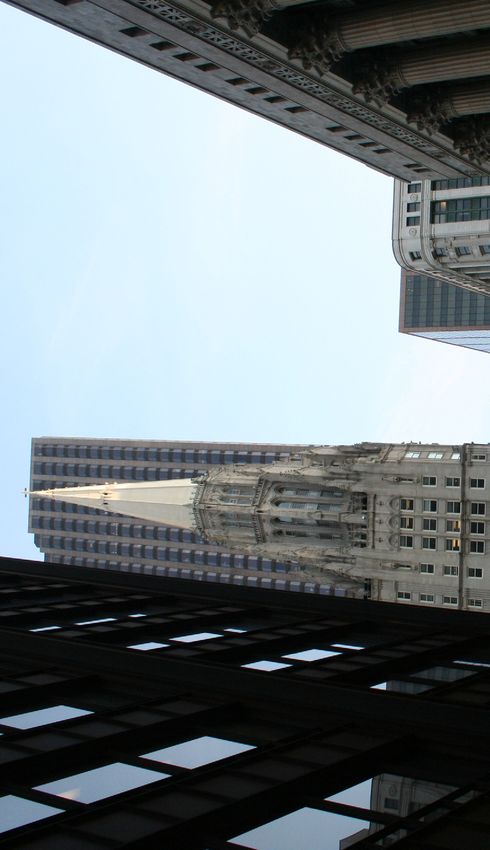
CITY GUIDE TO SACRED SPACES
CHICAGO, IL
Table of                              Key Map
                                      Sacred Chicago: Introduction to finding sacred spaces in Chicago
                                                                                                          2
                                                                                                          3

Contents                              Individual Sacred Space Descriptions:
                                        Map A                                                             4
                                          [CHI 01] The Chicago Temple                                     5
                                          [CHI 02] Seventeenth Church of Christ, Scientist                8
                                          [CHI 03] Chicago Cultural Center – Tiffany & G.A.R. Domes      11
                                          [CHI 04] Downtown Islamic Center                               14
                                          [CHI 05] GracePlace                                            17
                                        Map B                                                            20
                                          [CHI 06] Holy Name Cathedral                                   21
                                          [CHI 07] Fourth Presbyterian Church                            24
                                          [CHI 08] Christ the Savior Orthodox Church                     27
                                          [CHI 09] First St. Paul’s Evangelical Lutheran Church          30
                                          [CHI 10] The Moody Church                                      33
                                          [CHI 11] Alfred Caldwell Lily Pool                             36
                                        Map C                                                            38
                                          [CHI 12] Unity Temple                                          39
                                          [CHI 13] Baha’i House of Worship                               42
                                          [CHI 14] North Shore Congregation Israel                       45
                                      Bibliography and Acknowledgments                                   48
                                      Credits                                                            49

           C

                                                                                                              © Sacred Space International
                              B

                              A
                                                                                                              City Guide to Sacred Spaces in Chicago

                                  2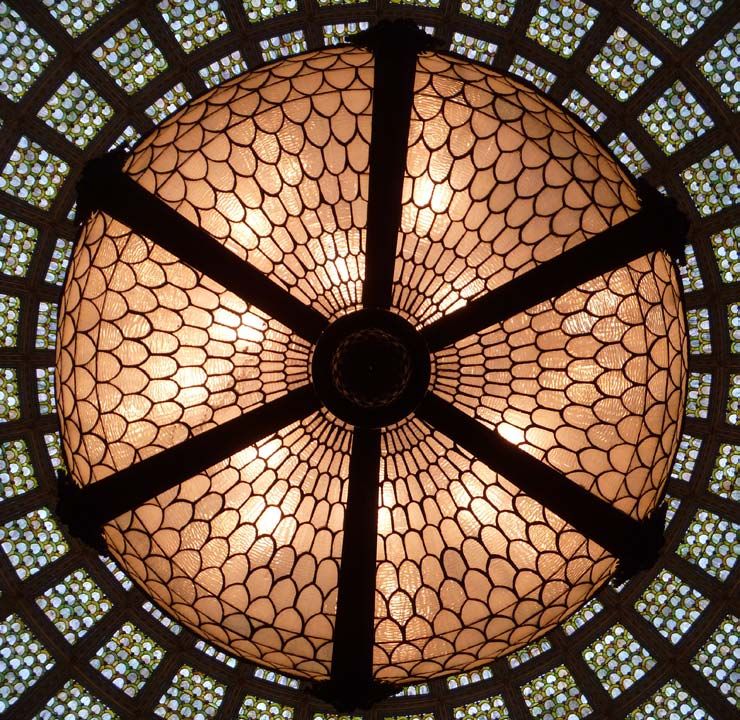
CITY GUIDE TO SACRED SPACES
                    CHICAGO, IL
                    Sacred
                    Chicago

INTRODUCTION TO FINDING
SACRED SPACES IN THE CITY
Within this “City of Big Shoulders,” lies a vast network
of spires and steeples. Churches, synagogues and
mosques appear like hidden jewels buried within
the fabric of the city, integrated into the urban grid
and set amidst Loop skyscrapers. As an organization,
Chicago is our physical home, where Sacred Space
International was born and it’s a city we know well. The
curated selection of sacred spaces we present in the
guide have leaders who expressed interest in interfaith
understanding and collaborated with us in our work.
Architecturally, they encompass the magnificent and
the modest, from the soaring nine-sided structure of
the Baha’i Temple in Wilmette, to the Downtown Islamic
Center – a quiet, unassuming space, hidden behind a
commercial storefront.
     Look at this city through the lens of its religious
architecture and gain an appreciation for the people who
carved out their space – setting it aside from everyday
life for the purpose of ritual, worship or simply peace.
Mainly, we chose spaces sited in or near the Downtown
Loop, but we also included a small group of historically
and architecturally significant sites at the periphery of
the city.
     The evolution of Chicago as a center for architecture

                                                                                                         © Sacred Space International
has been well documented. Its other history as an
historical hub for interfaith dialogue is lesser known.
The World’s Columbian Exposition of 1893, also known
at the Chicago World’s Fair, was the site for the First
Parliament of the World’s Religions. As a result, the
Baha’is chose to stay here and build their only Temple           Window at Unity Temple, Oak Park, IL.
in North America. Mary Baker Eddy, founder of Christian
Science, came to share her new religion with the rest
                                                                                                         City Guide to Sacred Spaces in Chicago

of the world – and took the influence of the Beaux Arts
style back to Boston when she left. The continuity of
architectural evolution and interfaith dialogue make
Chicago an ideal city to explore sacred space. We hope
you are inspired to visit and uncover the same beauty
and marvels we experienced when we entered inside
this group of sacred spaces. We know you will be awed
by what you find.

Deirdre Colgan,
Executive Director, Sacred Space International
Chicago, 2010

                                                             3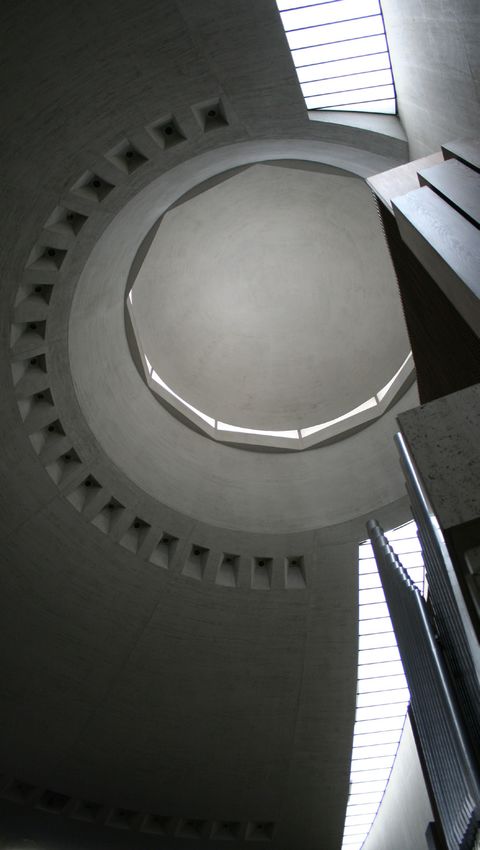
CITY GUIDE TO SACRED SPACES
CHICAGO, IL
Map A
N Michicgan Ave
N LaSalle Blvd
cta
N State St
cta
Halsted St
cta
N Ca
W Fullerto n PkwyAve
W North 2
2
nno
W Wacker Dr
N LaSalle Blvd
n Dr
cta
1 cta cta
cta
cta
3
S Michicgan Ave
cta Washington St
Lincoln Park
1
Oak Park
3 W Goethe
cta
St cta cta
Goudy
Square Park
B Adams St cta
Seward Park cta
Jackson St cta
4 A
Seward Park cta Grant Park
W Oak St cta
cta cta 4 cta
5 SACRED SITES SELECTED
[CHI 01] The Chicago Temple
2 W Chicago Ave 5 [CHI 02] Seventeenth Church of Christ, Scientist
W North Ave
N Ca
W Fullerton Pkwy [CHI 03] Chicago Cultural Center
© Sacred Space International
N Michicgan Ave
6 [CHI 04] Downtown Islamic Center
nno
N LaSalle Blvd
[CHI 05] GracePlace
nD
1 MORE TO SEE IN THIS AREA
N State St
r
N LaSalle Blvd
A.. Art Institute of Chicago - South Garden
B. Old St. Patrick’s Church
Park
Lincoln 3
W Goethe St
Oak Park Goudy
Square Park
City Guide to Sacred Spaces in Chicago
A
4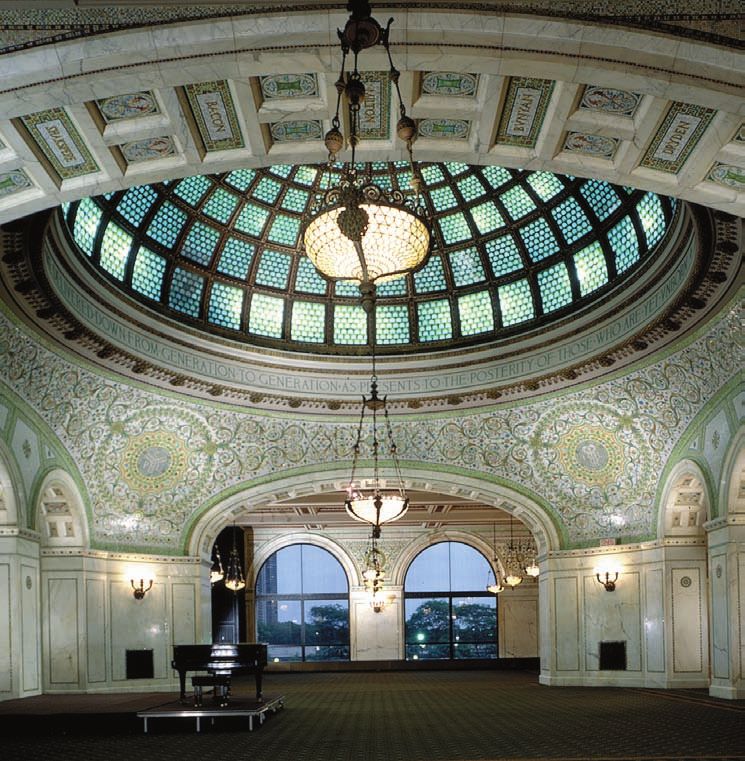
CITY GUIDE TO SACRED SPACES
CHICAGO, IL 01.1
[CHI 01] UNITED METHODIST
THE CHICAGO
TEMPLE
“Dedicated on Easter, the Sky Chapel
is the highest place of worship above
ground level in the world with a
carving of Jesus weeping over the city
of Chicago because people still do not
know ‘the things that make for peace.’”
ERIK NUSSBAUM, MUSIC DIRECTOR
View of the street level main sanctuary.
The Chicago Temple
VISITOR INFORMATION
ADDRESS 77 W Washington Street, Chicago, IL 60602
NEIGHBORHOOD Chicago Loop
COORDINATES 41.883088, -87.630608
PARKING Garage at 172 W Washington has discount Sunday rates
© Sacred Space International
(validate ticket at the church).
NEAREST TRANSIT Washington stop on CTA Blue Line. Buses 22 and 36 run
along Dearborn (NB) and Clark (SB) – all have stops near
Washington St.
WEBSITE www.chicagotemple.org
PHONE (312) 236-4548
cta
OPEN HOURS Call for an appointment or attend a service. Seward Park
SERVICE HOURS Saturday 5:00 p.m.
City Guide to Sacred Spaces in Chicago
Sunday 8:30 a.m. Seward Park
11:00 a.m.
2
WW Oak StDr
Wacker
Weds 7:30 to 9:00 a.m. Holy Communion cta cta
12:10 to 12:30 p.m. Noontime Worship 4 cta
12:30 to 1:00 p.m. Holy Communion
5
Thursday 5:30 p.m. Evening Prayer cta
3
icgan Ave
Friday 6:30-7:15 p.m. Taizé Worship
cta Washington St
(first Fridays of the month) 1 Ave
2 W Chicago cta
W North Ave cta cta
Ave
N Ca
TIPS & SUGGESTIONS FOR VISITORS 6
S Mich
W Fullerton Pkwy
N LaSalle Blvd
N Michicgan
nno
There are essentially two spaces to visit here – the main sanctuary on the
N State St
ground level and the Sky Chapel on the 23rd floor. Elevators up to the chapel
n Dr
N LaSalle Blvd
1
cta
Adams St
are very small. Allow extra time for groups larger than four. Tours of the Sky
Chapel happen every Wednesday at 2 p.m. Daley Plaza and its famous Picasso
cta
Jackson St cta
4 A
sculpture are located across the street where you can get a great view of the cta
Grant Park
skyscraper church. Lincoln 3
Park W Goethe
cta
St
5 Goudy
k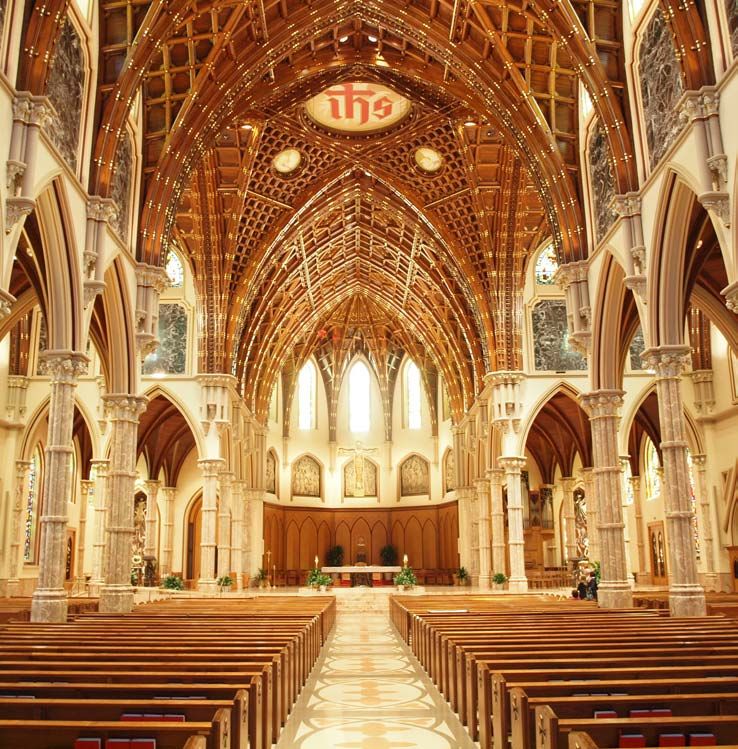
CITY GUIDE TO SACRED SPACES
                  CHICAGO, IL                   01.2
                  THE CHICAGO
                  TEMPLE

ABOUT: HISTORY & ORIGINS
As the oldest Church in Chicago, First United Methodist           The “Skyscraper Church” of the Chicago Loop.
Church at The Chicago Temple was founded in 1831,
when Chicago was no more than a small trading town
still unconnected to the railroads that would make it
a burgeoning metropolitan center. The congregation
of First United Methodist Church hails from humble
origins, having first met in members’ homes and later in
a log cabin. The city was incorporated in 1837 and began
to develop on the other side of the river, in what would
become known as the Chicago “Loop.” In 1838, the
log cabin was floated across the Chicago River to the
congregation’s current home on Washington Street. The
corner has since been known as “Methodist’s Corner.”
At that time an innovative mixed-use space was built,
allowing the congregation and its ministry to flourish in
a self-sustaining way.
     The Chicago Fire destroyed the congregation’s third
permanent place of worship in 1871. The church was
rebuilt and served its community until the 1920’s, when
the demands of a growing population necessitated
the construction of a new space. The 23-story Chicago
Temple was dedicated in 1924. To this day, it contains
the highest place of worship in the world, the Sky
Chapel, which rises 400 feet above street level. The

                                                                                                                 © Sacred Space International
chapel was dedicated in 1952 in honor of Charles R.
Walgreen, founder of the drugstore chain and member
of the congregation. Today the Sky Chapel hosts weekly
prayer services, weddings and other small gatherings.

                                                                Visitors gain a glimpse of the view from the
                                                                                                                 City Guide to Sacred Spaces in Chicago

                                                                private balcony of the current Senior Pastor,
                                                                whose residence is underneath the Sky Chapel.

                                                            6
CITY GUIDE TO SACRED SPACES
                  CHICAGO, IL                   01.3
                  THE CHICAGO
                  TEMPLE

ARCHITECTURE DESCRIPTION
Located in the heart of the Loop, The Chicago Temple              The Senior Pastor’s residence and the Sky Chapel
was constructed by the architecture firm of Holabird &            seen from the terrace on the 22nd floor.
Roche in the neo-Gothic style, a popular architectural
“rival” to the famed Prairie School in 1920’s Chicago. The
form of the church is an ingenious mixed-use solution
to the problem of maintaining a church in the business
district of a major city. To create income, the church took
the architectural form of a Gothic church and stretched it
upwards into a skyscraper! Now sandwiched between
the main sanctuary on the ground floor and the tower
structure are eighteen floors of rentable commercial
office space. The administration offices and property
management offices occupy the first four floors.
     The Chicago Temple’s primary sanctuary space
seats its 1,000-member congregation. The interior
continues in the neo-Gothic tradition through decorative
elements such as carved wood paneling, painted
vegetal motifs and a brilliantly colored rose window.
Around the space, stained glass panels narrate scenes
from the Old and New Testaments, and depict the life,
death, and resurrection of Christ. Ten exterior stained
glass windows on the building’s west façade narrate the
history of the church and its relationship with the city.
The carved wood altars of both the main sanctuary and

                                                                                                                     © Sacred Space International
the Sky Chapel express a parallel message for peace by
depicting Jesus weeping over Jerusalem and Chicago
respectively. The Sky Chapel’s thirty-seat interior reveals
the building’s wind bracing, indicative of Chicago’s
tradition of structural expressionism and reminiscent
of St. Andrew’s cross. In both spaces, congregants
are called to reflect on the biblical context of city life
and to look to faith in resolving the issues of urban life
                                                                  Sky Chapel interior with cross bracing for the
                                                                                                                     City Guide to Sacred Spaces in Chicago

today. With its twenty-three floors and a total height
                                                                  spire recalling St. Andrew’s Crosses.
of 568 feet, the structure held the record as the tallest
skyscraper in the city until 1930, when the Chicago
Board of Trade, by the same architects, claimed the title
at forty-four floors and 605 feet. Today, the building’s
neo-Gothic architecture stands in stark contrast to the
modernist boxes that surround it.

                                                              7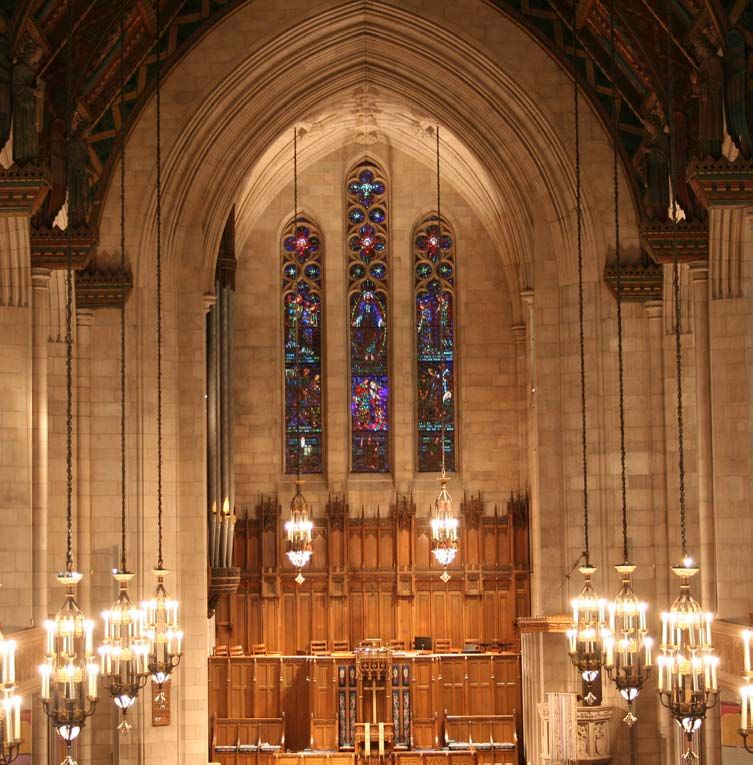
CITY GUIDE TO SACRED SPACES
CHICAGO, IL 02.1
[CHI 02] CHRISTIAN SCIENCE
SEVENTEENTH
CHURCH OF CHRIST,
SCIENTIST
“A Greek theater would be the very good
way of bringing people close together.”
HARRY WEESE, ARCHITECT
ORAL HISTORY ARCHIVED BY THE ART INSTITUTE OF CHICAGO
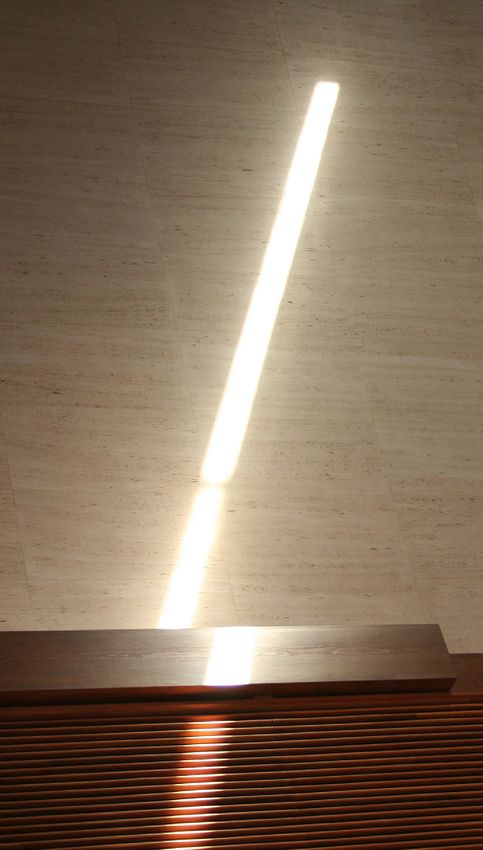
The monolithic poured concrete structure seems to float above the space. Light pours through the oculus above.
Seventeenth Church of Christ, Scientist
VISITOR INFORMATION
ADDRESS 55 E Wacker Drive, Chicago, IL 60601
NEIGHBORHOOD Downtown
COORDINATES 41.887112, -87.626136
PARKING There is parking available for members attending a
© Sacred Space International
service, entry is from lower Wacker Drive. Call the
Reading room for more info and permission to use these
parking spots.
NEAREST TRANSIT Lake stop on CTA Red Line, Clark/Lake stop on CTA Blue
Line. CTA Bus 146 exit at Wabash and Wacker Drive.
Goudy
WEBSITE www.christiansciencechicago.org Square Park
PHONE (312) 236-4671
OPEN HOURS Reading Room open from 10:00 a.m. – 4:00 p.m., Seward Park
Monday – Friday
City Guide to Sacred Spaces in Chicago
2
N Ca
SERVICE HOURS Sunday 10:30 a.m. Seward Park
W Fullerton Pkwy
W Wacker Dr
Wednesday 6:00 p.m. Testimony Meetings cta St
W Oak
nno
cta
TIPS & SUGGESTIONS FOR VISITORS
n Dr
cta
The Christian Science Reading Room is open to the public five days a week
4 1
cta
35
Ave icgan Ave
from 10:00 a.m. until 4:00 p.m. Ask the person at the desk can you have a cta Washington St
peek inside the wonderful amphitheater-like space of the main sanctuary; or 1
attend a Testimony service on Wednesday evening to get a sense of how this cta
Lincoln Park
W Chicago Avecta
cta
space is used. 2
S Mich
W North Ave
Oak Park 6
N Michicgan
N LaSalle Blvd
Adams St cta
N State St
N LaSalle Blvd
cta
Jackson St cta
4 A
cta Grant Park
cta
8 3 W Goethe St
CITY GUIDE TO SACRED SPACES
                   CHICAGO, IL                   02.2
                   SEVENTEENTH
                   CHURCH OF CHRIST,
                   SCIENTIST

ABOUT: HISTORY & ORIGINS
Mary Baker Eddy came to Chicago in 1893 to attend                   All seats are arranged auditorium-style facing the
the World Parliament of Religions and represent her                 Readers and the organ.
recently founded religion: Christian Science. While
she was there, she was inspired by the Beaux Arts
architecture of the World’s Columbian Exposition and
from that point on Christian Science churches were
constructed in the Greek and Roman Classical Revival
style. However, the common architectural thread among
all Christian Science churches is simplicity, such that
the architecture fosters a focused study of the Bible
and founder Mrs. Eddy’s text Science and Health, With
Key to the Scriptures. Christian Science approaches
these texts and testaments to spiritual healing, from
a scientific perspective, based on study and rational
understanding of God.
     There is no formal hierarchy within the leadership
structure and no formal ritual. To aid believers in this
pursuit, each Christian Science church houses a Reading
Room in addition to a central worship space, in addition
to areas for administrative and educational needs. The
Seventeenth Church of Christ, Scientist was founded
in 1924 and rented worship space in various locations
around downtown Chicago, including Symphony Hall. In
1956, they voted to purchase the odd, seven-sided lot at

                                                                                                                         © Sacred Space International
the corner of Wabash Avenue and Wacker Drive. From an
original list of thirty-four architects, including his friend
and fellow MIT graduate, I.M. Pei, Harry Weese was
chosen to design their new church, which was dedicated
in 1968. Interestingly, Weese had previously completed
a major renovation of Symphony Hall in 1966–67, while
the congregation was in residence there. Renowned for
his preservation work in Chicago, Weese demonstrated
                                                                    Even the basement, where the Sunday School
                                                                                                                         City Guide to Sacred Spaces in Chicago

in his design for the Seventeenth Church that he was
                                                                    meets is flooded with light.
able to apply classical principles of architecture to a new
modern building style.

                                                                9
CITY GUIDE TO SACRED SPACES
                  CHICAGO, IL                   02.3
                  SEVENTEENTH
                  CHURCH OF CHRIST,
                  SCIENTIST

ARCHITECTURE DESCRIPTION
Harry Weese, a renowned humanist Chicago architect, is             Looking up at the oculus and skylight,
celebrated for bringing human needs to the forefront of            above the organ.
his practice as a modernist. Trained also as a city planner
at the Cranbrook Academy of Art in Michigan, his work
reflects a profound sense for how the individual part fits
within the whole. Weese designed the Seventeenth
Church using modernist materials such as travertine, raw
concrete and glass. The low, conical shape and uniform,
travertine-clad façade contrast sharply with its imposing
skyscraper neighbors along the Chicago River. The brief
called for no exterior windows in the sanctuary space,
so Weese crowned the building with an oculus – a round
opening allowing for a mysterious source of light within
– reminiscent of the Roman Pantheon. Weese viewed
churches as a type of “high theater,” and he designed
this space “in the round,” evocative of Greek and
Roman amphitheaters.
     Weese believed that churches serve the rare
function of providing a space for contemplation, such
that “in churches there’s an abstraction which puts it
more into the realm of art than functionalism.” When
explaining his own spirituality in an interview, he said,
“History is my higher power.”
     Because there is no hierarchy or clergy in the

                                                                                                                        © Sacred Space International
Christian Scientist church, “Readers” are democratically
elected by the community to represent them for a
limited period of time. At Seventeenth Church, no seat
is more than 54 feet from the Readers’ desk, allowing
every congregant to share in a sense of togetherness
and equality. Integrated speakers were part of the
original design for each seat, reflecting the importance
and equality of each voice.
                                                                           Tracery of light illuminates the interior.
                                                                                                                        City Guide to Sacred Spaces in Chicago

     Weese has used the site’s quirky nature, being
situated on the double-deck of Wacker Drive to its best
advantage. Seven stories of office and support space
are located behind the main sanctuary, and a Reading
room is located in the glass-enclosed lobby. The Sunday
School for members under the age of eighteen, is
tucked away on the lower level, but opens into a sunken
plaza – which floods even this basement level space
with an ethereal light from above.

                                                              10
CITY GUIDE TO SACRED SPACES
CHICAGO, IL 03.1
[CHI 03] CULTURAL
CHICAGO
CULTURAL CENTER
TIFFANY & G.A.R. DOMES
“The building became known as ‘The
People’s Palace.’”
TIM SAMUELSON, CHICAGO CULTURAL HISTORIAN
Preston Bradley Hall, formerly the delivery and reading room for the Library.†
Chicago Cultural Center – Tiffany & G.A.R. Domes
VISITOR INFORMATION
ADDRESS 78 E Washington Street, Chicago, IL 60601
NEIGHBORHOOD Chicago Loop/Downtown
COORDINATES 41.925472, -87.635964
PARKING Grant Park North Garage at 25 N. Michigan Ave. Enter
© Sacred Space International
from middle lane on Michigan Ave., East Monroe
St. Garage at 5 S. Columbus. Downtown parking is
expensive. Average $27 for 2–8 hours of parking. Use
public transit and wear good walking shoes!
NEAREST TRANSIT Metra Electric Line Stop at Millennium Station; All
Michigan Avenue Bus lines stop within a block of the Goudy
Cultural Center. Square Park
WEBSITE www.chicagoculturalcenter.org
Seward Park
PHONE (312) 744-6630
City Guide to Sacred Spaces in Chicago
W North Ave 2 2
OPEN HOURS Monday – Thursday 8:00 a.m. – 7:00 p.m. Seward Park
W Wacker Dr
Friday 8:00 a.m. – 6:00 p.m. cta St
W Oak
N LaSalle Blvd
cta
Saturday 9:00 a.m. – 6:00 p.m. cta
Sunday 10:00 a.m. – 6:00 p.m. 4
Closed holidays cta
35
Michicgan Ave
cta Washington St
TIPS & SUGGESTIONS FOR VISITORS 1 cta
cta cta
On Wednesdays at noon the public is invited to come to this sacred space W Chicago3Ave
W Goethe St
N MichicganSAve
to enjoy a free classical recital. The fine art of the live music and the space 6 Goudy
of the room make for a wonderful experience. The concert is simultaneously Square Park
broadcast on the WFMT classical music station in Chicago. Adams St cta
N State St
N LaSalle Blvd
Seward Park
cta
Jackson St cta
4 A
cta Grant Park
Seward Park
cta
W Oak St
11CITY GUIDE TO SACRED SPACES
CHICAGO, IL 03.2
CHICAGO
CULTURAL CENTER
TIFFANY & G.A.R. DOMES
ABOUT: HISTORY & ORIGINS
The Chicago Cultural Center was built in 1897 as Healy and Millet designed the dome in the
Chicago’s first central Library. Rotunda of the Grand Army of the Republic
Memorial Hall.
When Michigan Avenue was still developing, the
site chosen to build the new library was called Dearborn
Park. A Civil War veteran’s organization owned part of
the land and negotiated to include the Grand Army
of the Republic (G.A.R.) Memorial Hall as part of the
design. Even though there were many fine architects
in Chicago at the time, the commission for the library
went to the Boston firm of Shepley, Rutan and Coolidge,
who won the competition to design the new structure.
This firm was the successor to H.H. Richardson’s in
Boston and had recently finished the Glessner House in
Chicago after Richardson’s death. Even though the firm
had previously built in the Richardsonian Romanesque
style, the structure of the Library was pure Beaux Arts
Classical Revival. This was the style of the moment after
its rapturous reception at the Columbian World’s Fair in
1893. For this event, the firm had designed what is now
The Art Institute of Chicago, close by on Michigan Ave,
built in the same Classical style.
By the mid-1920’s, the library had outgrown its
space. Chicago began to consider building a new library
in 1970. At the time, it was common to demolish old
© Sacred Space International
buildings in the name of progress but Eleanor “Sis”
Daley, Mayor Richard J. Daley’s wife, spoke out against
the proposed demolition and in a rare public comment
said “I am for restoring and keeping all the beautiful
buildings.” As a result the library was transformed into
the Cultural Center. The heavenly domes of this building,
the G.A.R dome and the Tiffany Dome in Preston Bradley
Hall form the basis for our selection of this space as
Detail of the apex of the dome. Art glass panels
City Guide to Sacred Spaces in Chicago
one that is sacred, but not affiliated with any particular
are exquisitely crafted.
faith tradition.
12CITY GUIDE TO SACRED SPACES
CHICAGO, IL 03.3
CHICAGO
CULTURAL CENTER
TIFFANY & G.A.R. DOMES
ARCHITECTURE DESCRIPTION
Shepley, Rutan and Coolidge constructed the first City Zodiac symbols at the apex of the largest Tiffany
of Chicago Library using the finest materials available dome in the world. A pendant globe light hangs
from the center.
and the best craftsman of the time. The neoclassical
exterior is made of Indiana limestone with a granite
base. The building is constructed without steel, using
thick compressive masonry walls. Both entries have
a distinct façade and are inspired by different classical
periods of architecture. The south side has white marble
Roman arches and is Italian Renaissance inspired. The
north side is classically Greek with Doric columns and
a portico.
As you enter from the north side on Randolph
Street and climb the stairs to the second floor, you will
see the G.A.R. – Grand Army of the Republic dome,
located in the rotunda of Memorial Hall – reminding
people of the loss that accompanies war. The forty-foot
diameter stained glass dome was made by Healy &
Millet of Chicago, who also designed work for the
Auditorium Building by Adler and Sullivan. The G.A.R
dome’s center oculus was restored in 2006 bringing
daylight into the rotunda.
To see the other dome, enter from Washington
Street and take a grand white marble staircase to the
third floor and Preston Bradley Hall. In the center as
© Sacred Space International
you look up, is the largest Tiffany dome in the world. At
thirty-eight feet in diameter it spans more than 1,000
square feet. During a restoration in 2008, each art
glass panel was dismantled and cleaned by hand. The
concrete and copper exterior dome added in the 1930’s
was removed and replaced with a new translucent
exterior dome. Now natural light once again illuminates
the space.
Traces of the building’s former use remain,
City Guide to Sacred Spaces in Chicago
Traces of its original use are preserved within
inscribed into the walls in fine marble tesserae
this former library space. Names of authors and great (C.P.L. stands for Chicago Public Library).
thinkers line the arches and walls, sparkling with glass
tesserae. The walls appear jewel-like; inlaid marble
with Favrile glass, colored stone, mother-of-pearl, gold
leaf and mosaic The green stone is Connemara marble
from Ireland; the white from the same Carrara marble
quarry Michelangelo used in Italy. It seems fitting that
immigrants from both countries would have come to
this library in Chicago to study and read.
13CITY GUIDE TO SACRED SPACES
CHICAGO, IL 04.1
[CHI 04] ISLAM
DOWNTOWN
ISLAMIC CENTER
“This mosque began in the late 60’s
as a much needed service in a prime
location when a few congregants were
looking for a place to pray our Friday
prayer. Today, you can find almost every
nationality here.”
BOARD MEMBER, DOWNTOWN ISLAMIC CENTER
Skylight above the musalla (prayer hall) on the fourth floor.
Downtown Islamic Center
VISITOR INFORMATION
ADDRESS 231 S State Street, 4th Floor, Chicago, IL 60604
NEIGHBORHOOD Chicago Loop
COORDINATES 41.878712, -87.62723
PARKING Surface lots are located on Wabash St. for a fee in addition
© Sacred Space International
to metered street parking.
NEAREST TRANSIT Jackson stop on CTA Red Line.
CTA Buses 2, 6, 29, 36, 146, 147 - exit at Adams stop.
WEBSITE www.dic-chicago.org
PHONE (312) 939-9095
OPEN HOURS Call ahead for appointment.
7
TIPS & SUGGESTIONS FOR VISITORS
Before entering the space it is respectful (but not required) for women to cover W Chicago Ave
City Guide to Sacred Spaces in Chicago
their heads with a scarf while in the Prayer Hall. Shoes need to be removed 2
upon entry and placed in the shoe racks provided in the foyer upstairs. W Wacker Dr 6
cta cta
N Michicgan Ave
cta
N LaSalle Blvd
3
N State St
cta
S Michicgan Ave
cta Washington St
1 cta cta
cta
cta
Adams St
cta
Jackson St cta
4 A CHI 10 - ISLAM
cta
2 Park
Grant
14 W Wacker Dr
ctaCITY GUIDE TO SACRED SPACES
CHICAGO, IL 04.2
DOWNTOWN
ISLAMIC CENTER
ABOUT: HISTORY & DESCRIPTION
In the second half of the 20th century, Muslims from Entry to the fourth floor prayer hall.
around the world began to settle in Chicago. The
Downtown Islamic Center (DIC) was created in the
1960’s in response to the need for Muslims working
in the Chicago Loop to have a place to gather for daily
prayer and Jummah Friday prayer. Since the 1960’s, the
community met in various rented office spaces in the
Loop, changing locations as the number of congregants
grew. In 2004, the Center purchased an existing
storefront property on South State Street.
The Center currently serves a congregation
predominantly of South Asian descent, although other
nationalities are both welcomed and represented. Wudu
or ablution areas for washing the hands, feet and face
before prayer, are located on the third floor. The main
musalla or prayer hall is on the fourth and top level.
The newly purchased five-story building at the
corner of Jackson Boulevard and State Street was
originally built to showcase automobiles. Today the
building is home to an urban masjid which specially
caters to working Muslims in the Chicago Loop. The
Qur’an provides no clear rules as to what a mosque
should look like, and the Downtown Islamic Center
has creatively adapted traditional mosque architecture
© Sacred Space International
and design to this existing commercial structure. For
ritual prayer, a mosque requires nothing more than a
clean, unobstructed floor space and an indication of the
qibla, the direction of Mecca. At the DIC, the mihrab,
or alcove designating the qibla, is situated in a corner
recess in the North East corner of the space. Diagonal
lines in the carpet mark this departure from the regular
north-south Chicago city grid. During prayer, the entire
Visitors in the smaller prayer space on the third floor.
City Guide to Sacred Spaces in Chicago
congregation shifts diagonally within the space to face
Mecca together. Skylights above illuminate the prayer
hall with natural light.
The third floor is home to the Council of Islamic
Organizations of Greater Chicago, and the ground floor
is leased as retail space. The exterior of the building
is unadorned corrugated metal, added to screen the
facade. From State Street, it is hard to believe that there
is a sacred space inside.
15CITY GUIDE TO SACRED SPACES
CHICAGO, IL 05.1
[CHI 05] EPISCOPAL
GRACEPLACE
“It is a place where we aim to engage
both your heart and your mind. A home
for your spirit in the South Loop.”
FR. TED CURTIS, RECTOR
Looking up into the void space of the third level, from the altar.
GracePlace
VISITOR INFORMATION
ADDRESS 637 S Dearborn Street, Chicago, IL 60605
NEIGHBORHOOD Printer’s Row
COORDINATES 41.873539, -87.629023
PARKING Free parking available on Sundays, 7:30 a.m. to 2:30
© Sacred Space International
p.m. at the lot located at the SE corner of Harrison and
Plymouth, park only in spots marked “Visitor Parking” or
“Permit Parking.”
NEAREST TRANSIT Harrison stop on CTA Red Line, Bus 22, 62, 129 exit
Dearborn or Polk St. stop.
WEBSITE www.gracechicago.org
S Michicgan Ave
cta Washington St
PHONE 312.922.1426 1
cta cta
cta
OPEN HOURS Call ahead for an appointment, or show up during one of
the service times for access to the space.
City Guide to Sacred Spaces in Chicago
SERVICES Sunday 8:00 a.m. Quiet Communion Service
10:00 a.m. Communion with Music B Adams St cta
11:30 a.m. Adult Formation cta
Jackson St cta
4 A
7:30 p.m. Light, Prayers, and Music cta Grant Park
Weds 12:15 p.m. Sandwich, Scripture, Sacrament
6:00 p.m. Centering Prayer cta
TIPS & SUGGESTIONS FOR VISITORS cta cta
GracePlace is not a typical sacred space – it’s a church in a loft! Because of that
it may be hard to find the door... look out for this unassuming entrance along
Dearborn Street and ring for entry. The main sanctuary is on the second floor 5
of the building. You will be sure to receive a warm welcome at the services on
Wednesday evening or Sunday morning.
16CITY GUIDE TO SACRED SPACES
CHICAGO, IL 05.2
GRACEPLACE
ABOUT: HISTORY & ORIGINS
In 1851, parishioners of Trinity Church came together Entry with baptismal font from the original
to form Grace Episcopal Church, making it one of the church and the ambulatory around the circular
sanctuary space.
oldest church communities in Chicago. In its 150-year
history, Grace Church has relocated and rebuilt six times
throughout Downtown Chicago. In the 1960’s, before
occupying its current space, the Church was situated on
West Jackson St. when it began a tradition of ministry
for the Loop’s business and newer student populations.
In 1983, the congregation bought a warehouse
building – a former printers loft – in historic Printer’s Row
whose bright literary history is alive today in its popular
annual book festival, as well as in the distinctive character
of its brick and terra cotta commercial architecture, most
of which was built for the print industry.
Since moving to its current location in Printer’s
Row, just south of the loop, GracePlace has opened its
doors to the surrounding community through its many
social outreach projects. It has become an example
of continuous interfaith understanding by sharing its
worship space and facilities with a variety of nonprofit
organizations and with congregations of various Christian
and Jewish faith traditions. Its outreach program to the
homeless feeds over 50 people every weekend.
© Sacred Space International
Looking out from the sanctuary space.
City Guide to Sacred Spaces in Chicago
17CITY GUIDE TO SACRED SPACES
CHICAGO, IL 05.3
GRACEPLACE
ARCHITECTURE DESCRIPTION
In 1985, Grace Church converted their recently View of the fishplate which functions symbolically
purchased three-story loft building in Chicago’s historic as the cross above the altar.
Printers Row neighborhood into a sacred space. In one
of Booth Hanson’s first design projects, the architect
Larry Booth had a chance to return to architectural “First
Principles,” stripping the space down to the earthy
materiality of its heavy timber frame with brick wall infill.
On the building’s second floor, a simple circular,
haven-like space was created for worship. This clean,
white gypsum-board wall, punctuated with stylized
Gothic pointed arches, delineates the sanctuary from
the ambulatory around its periphery. At the boundary,
as if to define sacred from profane, is a reflective dark
linoleum border, which holds the white structure apart,
making it appear to float within the space. Entry points
to this sanctuary are on the sides, compelling visitors to
find their way into the space. A triangular wedge from
the third floor above was removed and restructured,
creating a double-height space. This void allows a
skylight cut through the third-floor roof to bathe the altar
and chancel in natural light. The structure is revealed
within the space, and the junction of the exposed
beams and supporting columns are accentuated with a
structural “fishplate” splice in the form of a cross.
© Sacred Space International
The innovative design ensures a calm space while
preserving the raw character of the building’s heavy
timber-frame skeleton, visible in the supporting wood
post and beam structure. The original Chicago brick
defines the square exterior walls of the sanctuary, while
large east-west windows allow strong natural light to
permeate the space and to remind congregants of their
dense urban environment.
View of the main sanctuary from the altar.
City Guide to Sacred Spaces in Chicago
At the time of construction, existing zoning laws,
prohibited a church being built within a certain distance
of a tavern. As a workaround GracePlace opened as
a community center. A large, open hall, which steps
up from street level and the raised basement below
are used for diverse church functions and community
outreach events. The third floor houses office space that
is rented out to other not-for-profit organizations.
18CITY GUIDE TO SACRED SPACES
CHICAGO, IL
Map B
N Ca
W Fullerton Pkwy
nno
n Dr
11
Lincoln Park
N Ca
W Fullerton Pkwy
nno
n Dr
11
H
G 10
W North Ave Lincoln Park
cta
N LaSalle Blvd
Oak Park
cta
9 W Goethe St
Goudy
Square Park SACRED SITES SELECTED
cta
[CHI 06] Holy Name Cathedral
Seward Park
F E [CHI 07] Fourth Presbyterian Church
Seward Park
[CHI 08] Christ the Savior Orthodox Church
E [CHI 09] First St. Paul's Evangelical Lutheran Church
W Oak St
[CHI 10] The Moody Church
N State St
8 D [CHI 11] Alfred Caldwell Lily Pool
7
N Ca
10 MORE TO SEE IN THIS AREA
W Fullerto
W Chicago Ave
n PkwyAve
W North
© Sacred Space International
C. St. James Episcopal Cathedral
nno
N Michicgan Ave
cta cta
6 D. Sinai Congregation
N LaSalle Blvd
n Dr
C 411 E. Church of the Acension
N LaSalle Blvd
cta
cta H cta F. LaSalle Street Church
G. St. Michael’s in Old Town
H. Midwest Buddhist Temple
Lincoln Park
9 W Goethe St
Oak Park
cta Goudy
Square Park
7
City Guide to Sacred Spaces in Chicago
B
19CITY GUIDE TO SACRED SPACES
CHICAGO, IL 06.1
[CHI 06] ROMAN CATHOLIC
HOLY NAME
CATHEDRAL
“Where Chicago goes to pray.”
FR.DAN MAYALL, PASTOR
Walnut and oak ceilings in the newly restored interior, looking towards the altar.
Holy Name Cathedral
VISITOR INFORMATION
ADDRESS 730 N Wabash Avenue, Chicago, IL 60611
Entrance on State, between Chicago and Superior
NEIGHBORHOOD Downtown, Magnificent Mile
COORDINATES 41.895809, -87.62814
© Sacred Space International
PARKING Paid parking available on the surrounding streets at
non-rush hour times.
NEAREST TRANSIT Chicago stop on CTA Red Line. CTA Bus 36, exit at
Chicago Avenue.
WEBSITE www.holynamecathedral.org
PHONE (312) 787-8040 7 cta
OPEN HOURS Monday – Saturday 8:30 a.m. – 8:30 p.m.
Seward Park
Sunday 8:30 a.m. – 7:00 p.m. F E
City Guide to Sacred Spaces in Chicago
8
Seward Park
TIPS & SUGGESTIONS FOR VISITORS
Be sure to visit the quiet chapel to the right of the main sanctuary. W Oak St
S Michicgan Ave
8 D
7
Grant Park
W North Ave 10
W Chicago Ave
N Ca
W Fullerton Pkwy
cta cta
6
nno
N LaSalle Blvd
n Dr
N Michicgan Ave
H 411 C
N LaSalle Blvd
cta
N State St
Lincoln6
9Park W Goethe St
Goudy
20 Square ParkCITY GUIDE TO SACRED SPACES
CHICAGO, IL 06.2
HOLY NAME
CATHEDRAL
ABOUT: HISTORY & ORIGINS
Two years after Pope Gregory XVI declared Chicago a Rose window with expressionist forms in stained
diocese in 1843, St. Mary’s Church on Madison St. was glass made in Milan, Italy.
consecrated as its cathedral. Though it was the seat of
the bishop, the larger Holy Name parish at Superior St.
and State St. was used for diocesan events. Therefore,
plans were made to move the site of the cathedral to its
current location. After the Great Chicago Fire of 1871,
those plans were set into more immediate motion as
both St. Mary’s and Holy Name were destroyed. The
Archdiocese began construction of its new cathedral in
1874 according to plans by Irish-born, Brooklyn-based
architect, Patrick Keely. Joliet limestone was chosen as
the primary exterior material, a choice that may have
been influenced by the fact that the only buildings to
have withstood the fire north of the Chicago River, were
the Water Tower and Pumping Station, both built from
the same stone.
By 1890, two decades after its completion, the
cathedral required major renovations, which were
undertaken by Chicago architects James R. Willett
and Alfred F. Pashley. The original “Carpenter’s
Gothic” structure was weathering badly and required
reinforcement. At this time, Victorian-era interiors were
replaced by those in a medieval-inspired style. New
© Sacred Space International
stained glass windows and statues of the Virgin Mary
and Sacred Heart brought the cathedral to life with
detailed imagery. The plaster vaults of the ceiling gave
way to the intricate paneling of walnut and oak that we
see today.
In 1914, a renowned religious architect in Chicago,
Henry J. Schlacks was commissioned to extend the
sanctuary. He sliced a section through the rear of
Bronze screen doors leading from the Narthex to
City Guide to Sacred Spaces in Chicago
the church and using new foundations, moved the
the main sanctuary.
entire structure back fifteen feet toward the east. This
innovative change enlarged the altar and created space
for a new baptistery.
During the most recent renovations in 2009, the
roof and interiors had just been restored and were all
but complete, when disaster struck. A fire ignited in
the ceiling and severe water damage was sustained
throughout. The entire roof had to be rebuilt. After
being restored once again, Holy Name Cathedral is now
open and this sacred space looks better than it has in
many years.
21CITY GUIDE TO SACRED SPACES
CHICAGO, IL 06.3
HOLY NAME
CATHEDRAL
ARCHITECTURE DESCRIPTION
The original 1875 Patrick Keely exterior façade of Holy The Greek initials for Jesus Christ iota eta sigma
Name Cathedral has remained largely unchanged over (IHS), the Christogram signifying the Holy Name
of Jesus Christ, is situated in the crossing.
time, but the interior has been significantly altered,
most dramatically in 1969 under architects C.F. Murphy
and Associates.
Liturgical reforms set in place by the Second
Vatican Council in the 1960s, which met in part to
discuss the position of the church in the modern world,
greatly directed this renovation and the cathedral was
truly transformed to its present form. Layers from
previous additions were largely removed and the space
was reorganized to reflect the messages of a modern
church allowing closer, more diverse participation
by congregants. This resulted in a relatively simple
interior for the cathedral, dominated by the large altar
and crucifix. Interior walls were scraped down to their
original brick, and the Communion Rail and large altar
screen were removed. The interior structural columns
were strengthened once again, but this time with
steel supports.
Upon first entering through the large bronze doors,
several of the cathedral’s motifs come together to
produce the feeling of being in the biblical “Tree of Life,”
beginning with the doors themselves, which are richly
© Sacred Space International
decorated with extending branches. The Expressionist
stained glass windows in the clerestory space above,
created in Milan, Italy, describe a symbolic shift from
earthly existence to one that is heavenly and divine.
One processes through the space, passing red colors to
windows casting progressively cooler yellow and green
colors. Blue and white stained glass illuminates the most
sacred space above the altar. Prominently displayed
Abstract forms in the stained glass.
City Guide to Sacred Spaces in Chicago
galeros, the brimmed hats worn by all the previous
Cardinals of Chicago hang over the altar. The cathedra,
the physical seat of the bishop, is of a plain design: black
with three panels depicting the first Christian teachers,
Christ, Saint Peter and Saint Paul. Five sanctuary panels
depict the scenes relating to the Holy Name of Jesus,
from which the church gets its name.
Holy Name Cathedral integrates elements of the
modern Catholic Church despite its Gothic Revival
style. The changing liturgical ideas of its founders and
historical guardians are reflected by the changes within
the walls of its continuously evolving architecture.
22CITY GUIDE TO SACRED SPACES
CHICAGO, IL 07.1
[CHI 07] PRESBYTERIAN
FOURTH
PRESBYTERIAN
CHURCH
“Since 1914, Fourth Presbyterian Church
has been a presence in the heart of
Chicago, seeking to live out the gospel
through vibrant worship within its
walls and through committed service
reaching out into the community.”
DR. JOHN BUCHANAN
The soaring Gothic Revival interior designed by Ralph Adams Cram using original building techniques.
Fourth Presbyterian Church
VISITOR INFORMATION
ADDRESS 126 E Chestnut Street, Chicago, IL 60611
NEIGHBORHOOD Magnificent Mile, Gold Coast
COORDINATES 41.898644, -87.624497
PARKING Pay parking at 875 N Michigan Ave (John Hancock
© Sacred Space International
Center), validate ticket at the church (only on Sundays).
NEAREST TRANSIT Chicago stop on CTA Red Line. Walk east to Michigan Ave
and turn left. Walk 3 blocks. Take any bus along Michigan
Ave and get off at Water Tower or Delaware Street stop.
WEBSITE www.fourthchurch.org
PHONE (312) 787-4570
OPEN HOURS Monday – Friday 9:00 a.m. and 5:00 p.m.
Seward Park
SERVICE HOURS 8:00 a.m., 9:30 a.m., 11:00 a.m. 4:00 p.m. – Jazz Vespers F E
City Guide to Sacred Spaces in Chicago
Morning Prayer - every weekday at 9:30 am except Seward Park
Tuesday at 9:00 a.m. (takes place in the Stone Chapel to 7
W Oak St W Wacker Dr
the right of the main entry).
Taizé service – a form of ecumenical prayer founded in 8 D
France, happens every Fourth Friday
7
TIPS & SUGGESTIONS FOR VISITORS Washington St
8
W Chicago Ave 9
Find peace and quiet in the middle of the Magnificent Mile by stepping inside
icgan Ave
the courtyard garden or “Garth” of Fourth Church. The fountain was donated W North
cta Ave
10
cta
by one of the church’s architects, Howard Van Doren Shaw. 6
BlvdBlvd
Ave
S Mich
C
H Adams St
N LaSalle
N Michicgan
10
cta
N State St
N LaSalle
Jackson St
11 Grant Park
69 W Goethe St
23 GoudyCITY GUIDE TO SACRED SPACES
CHICAGO, IL 07.2
FOURTH
PRESBYTERIAN
CHURCH
ABOUT: HISTORY & ORIGINS
In 1833, pioneers in the frontier town of Chicago united Grisaille style stained glass by Charles J. Connick
under Presbyterianism to found Chicago’s first church. of Boston.
Some of the principles articulated by John Calvin remain
at the core of Presbyterian beliefs. Among these are
the sovereignty of God, the authority of the scripture,
justification by grace through faith and the priesthood
of all believers. The Presbyterian Church is governed at
all levels by a combination of clergy and laity, men and
women alike.
The Fourth Presbyterian Church of Chicago
was established in 1871 through the merger of two
prominent Presbyterian congregations. In the same
year, the Great Chicago Fire destroyed the church
building. Legend has it that the congregation saved the
Communion service silverware by burying it in the sand
at what is now the Oak Street Beach. A new structure
was completed in 1874, which served the community
until 1914, when the congregation moved to its current
home on Michigan Avenue.
Fourth Church has been home to many prominent
Chicago families. Reaper inventor Cyrus H. McCormick
played an active role in establishing Fourth Church’s
predecessor congregation. His family underwrote the
cost of the Michigan Avenue church. Fourth Presbyterian
© Sacred Space International
Church moved to Michigan Avenue as part of the
sweeping northward migration of society in the early
20th century. With the growth of Chicago’s industries
on the south side, the city’s affluent Prairie Avenue
community sought a safer, cleaner district, and looked
to the church as a spiritual home in the evolving River
North neighborhood.
Courtyard or Garth with fountain designed by
City Guide to Sacred Spaces in Chicago
the same architect who designed the rectory
and fellowship buildings behind: Howard
Van Doren Shaw.
24CITY GUIDE TO SACRED SPACES
CHICAGO, IL 07.3
FOURTH
PRESBYTERIAN
CHURCH
ARCHITECTURE DESCRIPTION
Renowned Gothic revivalist Ralph Adams Cram was Carved angels balance on corbels in Bartlett’s
the principle architect of Fourth Presbyterian Church. decorative ceiling.
He believed that the 12th and 13th Centuries marked
the Golden Age of religious architecture, and the design
of Fourth Church reflects the medieval belief that a
sacred space should rise to the heavens. Instead of
using a steel structure clad with stone or brick, like
many contemporary churches built in the Gothic Revival
style, Cram used stonemason techniques to create a
space true to the original Gothic principles. Regarding
materials – in this building – what you see is what you
get. The exposed buttresses and stone spire are carved
in vegetal and foliate motifs characteristic of both the
European Gothic style and its resurgence in Protestant
architecture in 20th Century America.
Cram’s associate Frederick Clay Bartlett designed
the decoration for the ceilings above the nave. Colorful
timber ceiling peaks above the center aisle, while
carved and vaulted stone differentiates the ceiling above
the chancel. Along the piers of the nave, fourteen carved
angels holding musical instruments symbolize music’s
capacity to praise God. The church’s 6,603-pipe organ
and choir loft aid the congregation in fulfilling this mission
in its weekly services. The stained glass windows of the
© Sacred Space International
main sanctuary were designed by Charles J. Connick
of Boston, whose study of medieval glass inspired his
work in Fourth Church. The abstract and floral motifs
of these windows are painted in the grisaille style,
permitting soft, multi-colored natural light to illuminate
the sanctuary. The east and west windows of the space
features more grandiose, figural designs, depicting the
four evangelists, prophets from the Old Testament, and
The Gothic Revivalist interior is a throwback to
City Guide to Sacred Spaces in Chicago
parables from the New Testament on the east window,
the 13th Century.
and the risen Christ, the heavenly host, and the peoples
of the earth on the west window.
Cram’s friend and associate Howard Van Doren
Shaw’s strong interest in the American Arts and Crafts
movement is visible in his designs for the auxiliary
buildings. The church courtyard, the Garth, is delineated
by a covered walkway, reminiscent of a monastic
cloister. Its centerpiece is a stone fountain donated
to the church by Shaw. Carvings of mothers and their
children circle the fountain to symbolize the continuation
of God’s message through the generations.
25CITY GUIDE TO SACRED SPACES
CHICAGO, IL 08.1
[CHI 08] RUSSIAN ORTHODOX
CHRIST THE SAVIOR
ORTHODOX CHURCH
“The altar table is the crux and center
of worship in a viable and thriving
Orthodox community. Church offices
are located around the perimeter of
the altar making even the mundane
aspects of office work take on a
spiritual dimension.”
THE LATE ARCHBISHOP JOB
The iconostasis divides the space, while connecting it with the Divine.
Christ the Savior Orthodox Church
VISITOR INFORMATION
ADDRESS 927 N LaSalle Boulevard
NEIGHBORHOOD Near North Side / Gold Coast
COORDINATES 41.899603, -87.632678
PARKING Street parking available in the surrounding neighborhood.
© Sacred Space International
One or two spots available on site.
NEAREST TRANSIT Chicago stop on CTA Brown and Red Lines. CTA Bus 156,
exit Delaware Stop.
WEBSITE www.xcthesavior.org
t
dS
PHONE (312) 202-0423
lan
St
t
Por
OPEN HOURS By appointment. Office closed on Friday.
3rd
c
SERVICE HOURS Sunday 9:10 a.m. Hours & Divine Liturgy ssa
Ma
Wednesday 6:30 p.m. Daily Vespers Ca
mbri
dg
City Guide to Sacred Spaces in Chicago
Thursday 6:30 a.m. Divine Liturgy t Main St eC
en
Charlesbank
Park
yS ter
an T
Alb
TIPS & SUGGESTIONS FOR VISITORS St Mo
ssar ns
Va ign Cam
Experience the sanctity of this beautifully decorated space, but do not enter or
Ob
T
the area past the Royal Doors. The altar area behind the icon screen of an rie
nH
wy
orthodox space is off-limits to everyone except vested clergy. aS
t
Re
T
shu
d
e
Ae
nt Rd
Na
Av
r
Dr
ba
rial
al
ch
mo
c
W
eri
nkme
Me
ay
1st St
mm
Binney St Mart
ha R
s 3A
Co
Emba
d
E C
sett
St
de
3rd
Esp he
lana
chu
T
ssa
Ma
Ca
m bri
dg
Arlin
Charlesbank
Main St eC Dr
Stan
en Park rrow
ter Sto
gton
T
Pu
Ga
St
26 Cambridge St
Berk
T
Cla
t
elCITY GUIDE TO SACRED SPACES
CHICAGO, IL 08.2
CHRIST THE
SAVIOR ORTHODOX
CHURCH
ABOUT: HISTORY & ORIGINS
Built in the late 1880’s as an Apostolic Catholic Church, The setting sun casts the light from the old
this now Orthodox Church has seen multiple changes. Apostolic Catholic stained glass windows onto
the new iconostasis – a symbol of the new
In the mid 1920’s LaSalle Street was being widened Orthodox Church.
into a boulevard, and the church had to be moved back
about ten feet to allow for the new right of way. The
building was picked up on giant rollers and moved
eastward, while the front steps had to be redesigned
and integrated into the church. After some time, the
original congregation, which had been in decline for
some years, no longer had use for the building. As the
Apostolic Catholic Church was actually an offshoot of
the Scottish Anglican Church, usual procedure would
have determined that the building be returned to The
Church of the Ascension, the closest Episcopal Church.
The pastor of this church, who was retiring from his
position, was in the process of converting to Orthodox
Christianity. So in 1996, the church was donated instead
to the Orthodox Church of America, which extensively
renovated the aging structure. On May 17, 2008,
thirty priests and the Archbishop were present for the
ceremonial re-dedication, or Chrismation, of this space
to the Orthodox Church. Sacred Chrism or holy oil was
used to anoint the architecture and altar, just as it would
have been used to confirm a person. This process
© Sacred Space International
designated the old Apostolic structure a new sacred
space for the Orthodox Church.
Relics of the holy martyr Ignatius of Jableczna, a
contemporary saint, were interred within the holy table
on the altar during the ceremony. Today this church
is based on an Eastern Orthodoxy, but the diverse
congregation comprises Russian, Greek, Serbian
and Romanian traditions. Fifty percent of the current
Fr. John Baker in front of the icon screen
City Guide to Sacred Spaces in Chicago
congregation has converted from other faith traditions.
he designed.
Now this space is home to the Midwestern Diocese
for the Orthodox Church and is the seat of the current
Archbishop.
27CITY GUIDE TO SACRED SPACES
CHICAGO, IL 08.3
CHRIST THE
SAVIOR ORTHODOX
CHURCH
ARCHITECTURE DESCRIPTION
Traces of the original congregation are still extant in Stained glass remains from the original
the recently dedicated Orthodox space. Heavy timber embodiment of the church as an Apostolic
Catholic space.
beams still support the ceiling, each capped by a carved
wooden shield – a relic from the founding families of
the Apostolic faith. The Bishop’s chair or cathedra is still
present and used by the resident Orthodox Archbishop.
The area above the altar is divided by the original
structural members, which delineate the icon frescoes
into a series of panels. The icon screen or iconostasis
(also known as the iconostas, or templon) physically
separates the nave from the sanctuary area in an
Orthodox Church space, but symbolically it connects the
two. The altar area behind the Royal Doors is off-limits
to the general public and to the congregation. Only fully
vested priests and bishops may enter this sacred space.
Christ, the namesake of the space features largely in
its iconography. Icons serve as illustration and as a tool
within the religion for communication with God. The
position held by the iconographer is traditionally one of
sacred importance. Eventually, almost every surface will
be covered with iconography, a process predicted to be
complete by Christmas 2012.
In this tradition the congregants stand during
service and so in its current incarnation, all the pews
© Sacred Space International
have been removed. Administrative offices for the
church and the Archdiocese are accessed from an
ambulatory corridor surrounding the sacred altar space.
Their site imbues these functions with a sense of the
divine. The icon screen in Christ the Savior Church
was commissioned and crafted with the help of the
current rector, Fr. John Baker, who was formerly a
union carpenter. Celtic imagery is contained within
Icons will eventually cover almost every surface
City Guide to Sacred Spaces in Chicago
the woodwork, which is used as a structure to support
within the space.
many icons. It is the most striking feature of the current
space. Auxiliary structures include the former rectory
for the original church, which is now used to house the
rector and the Archbishop’s residence. Twelve-foot high
windows and tall mahogany pocket doors are features of
this exquisitely preserved residential space adjacent to
the church building. It’s now used as a community space
for fellowship and events.
28CITY GUIDE TO SACRED SPACES
CHICAGO, IL 09.1
[CHI 09] LUTHERAN
FIRST ST. PAUL’S
EVANGELICAL
LUTHERAN CHURCH
“It’s a simple, curvilinear, non
monumental building to express a
feeling of a ‘working church.’”
EDWARD “NED” DART, ARCHITECT
Caption.
First St. Paul’s Evangelical Lutheran Church
VISITOR INFORMATION
ADDRESS 1301 N LaSalle Drive, Chicago, IL 60610
NEIGHBORHOOD Carl Sandburg Village – Gold Coast
COORDINATES 41.905866, -87.632553
© Sacred Space International
PARKING Street parking available in the neighborhood.
NEAREST TRANSIT Clark/Lake stop on CTA Red Line. CTA Bus 156, exit at
Goethe stop.
WEBSITE www.fspauls.org
PHONE (312) 642-7172
OPEN HOURS Call for appointment.
SERVICE HOURS Sunday Worship: 8:30 a.m. and 11:00 a.m.
Wednesday Morning Spoken Eucharist: 7:00 a.m.
TIPS & SUGGESTIONS FOR VISITORS 7
City Guide to Sacred Spaces in Chicago
Try and figure out where the light is coming from while you are in this space, W Wacker Dr
H
the source is at first mysterious.
Washington
G St
8
W North Ave 10
9
S Michicgan Ave
N LaSalle Blvd
Adams St
Jackson St
10
11 9GrantWPark
Goethe St
N Ca
W Fullerton Pkwy Goudy
nno
Square Park
n Dr
29CITY GUIDE TO SACRED SPACES
CHICAGO, IL 09.2
FIRST ST. PAUL’S
EVANGELICAL
LUTHERAN CHURCH
ABOUT: HISTORY & ORIGINS
First Saint Paul’s Evangelical Lutheran Church is the Chicago common bricks are used to celebrate
oldest Lutheran congregation in the city. Founded in the divine.
1843, the area north of Chicago Avenue was little more
than a swampy marshland. The current congregation is
a member of the Missouri Synod, which accepts and
teaches the Bible-based teachings of Martin Luther that
inspired the reformation of the Christian Church in the
16th century. The teachings of Luther and the reformers
can be summarized in three short phrases: Grace alone,
Scripture alone, and Faith alone. It seemed an unlikely
choice for the congregation of 1969 to choose the
celebrated Chicago modern architect Edward “Ned”
Dart to design their new sacred space, sited in the midst
of the new urban renewal, mixed-use development
project: Carl Sandburg Village, developed from 1960 to
1975. The Pastor at that time, Rev. James Manz, had
known of Dart through his earlier residential projects
and his ongoing project, the St. Procopius Abbey for
the Benedictine Monks of Lisle. He chose Dart because
of his skill as a modern architect and his ability to use
common materials in a profound way.
The congregation is originally German and would
have encompassed workers and craftsmen who used
their hands. Dart’s design is stripped-down and simple,
© Sacred Space International
allowing the experience of the word to have the deepest
emphasis and reflecting the tenets of this reform
Protestant Christian tradition as a “working” church.
The pews gently angle towards the simple
City Guide to Sacred Spaces in Chicago
asymmetry of the altar.
30You can also read


