Clock Sync in Finance and Enterprise - SJC June 2018
←
→
Page content transcription
If your browser does not render page correctly, please read the page content below
SJC June 2018

     Clock Sync in Finance and Enterprise.
© FSMLabs Inc. 2018
Outline of Talk
• Why is clock sync important in
  finance?
• What’s the technology base.
• Challenges.
• Finance to wider enterprise.
In finance, motivation is generally obvious
      • So question becomes: how do you make money
        by synchronizing clocks?
Basic fact: enormous volumes of electronic trading of
financial assets
      • NYSE is over 1 billion trades per day. Over a 12
        hour day that’ s, 50/microseconds per trade
      • There are 19 exchanges world wide that have
        over $1 trillion in market cap
      • There is an expanding universe of private
        trading venues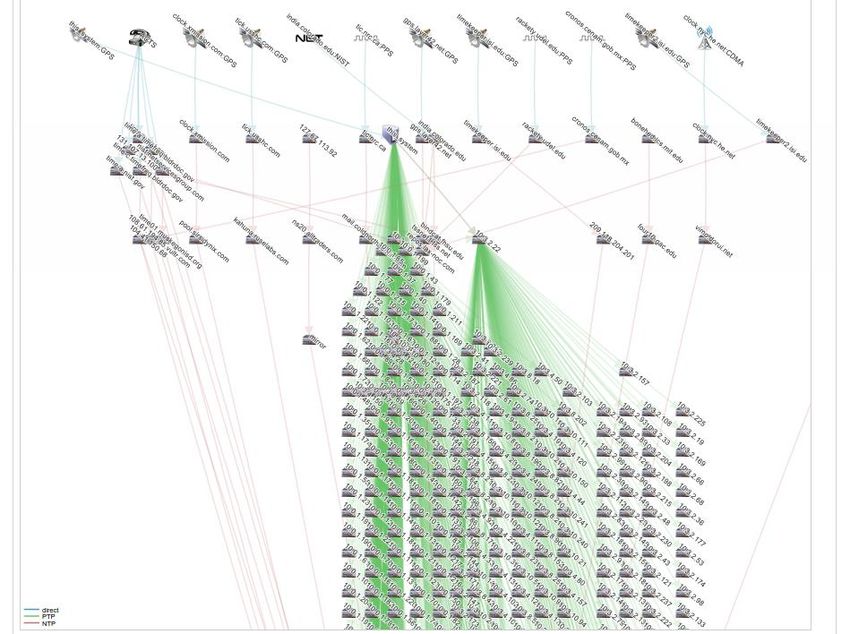
Clock Sync is needed for finding patterns and
 correlations

• Market intelligence – if
  you cannot measure
  when trades take place
  and when information
  becomes available, you
  cannot successfully
  trade in electronic
  markets.
To prevent fraud and SLA violations

• Front running
• Delayed trade
  information
• Delayed trade execution
• Inconsistent patterns
• Unexpected coincidences
To avoid fines and worse

 • Since 2008 financial
   crisis Regulators have
   been demanding more
   precise “business clocks”
   and proof of clock
   accuracy
 • 100microseconds
 • Pressure for more
Technology landscape
Technology landscape

Trading takes place mostly on commodity x86 Server
Computers running Linux/Windows/Solaris.
 • High processing power and lots of memory
 • High speed networking – 10G, 40G, 25G, 100G, ….
 • Less than stellar oscillators
 • Very limited digital I/O
 • Complex and changing configurations
 • Rapidly expanding number of Virtual Machines.
Technology landscape

Data center networks are generally high speed but ..
 • Shared – few dedicated paths for clock
   information
 • Variable congestion
 • Exceptionally heterogeneous
 • Subject to extensive changes and failures
 • Often bureaucratic nightmares management
   challenges
 • Plus: WANs of all description.
Authoritative time generally from GPS/GNSS

• GPS/GNSS accepted by regulators as official time
• GNSS is a solution to world wide stable time base
• Alternative terrestrial solutions become more available (NPLtime in UK … )
• Usual problems of availability and fragility and emerging problem of
  spoofing
• More management challenges – including real-estate ones
Accuracy requirements for clients vary

   • Regulatory requirement depends on
     regulator and uses: goes from
     100microseconds (Mifid2 high speed, SEC
     CAT exchanges) to 1 millisecond, to
     50milliseconds, to 1 second
   • Business logic requirements can be
     significantly more stringent: down to 100-
     200 nanosecond level

 Clock accuracy in the application
 program is the key measure.
Time is distributed by NTP and/or PTP
• Contrary to folk myth:
≈100 Nanosecond
accuracy from NTP is
possible
• High accuracy requires
smart filtering and
smoothing – even in
response to temperature
changes in the server
Y axis is 90 nanoseconds to -30 nanoseconds
X axis is over a one hour durationExample: GPS (green) PTP (blue) NTP (orange)
90 nanoseconds
30 nanoseconds
-30 nanoseconds
• For fault tolerance, multiple sources tracked in real-time over 1 hourRecord keeping is critical to meet regulatory requirements and to manage huge networks Example: Database of clock sync data from network of clients/sources
Managing these clock distribution networks is
   non-trivial
Green is PTP, red is
NTP, blue is source
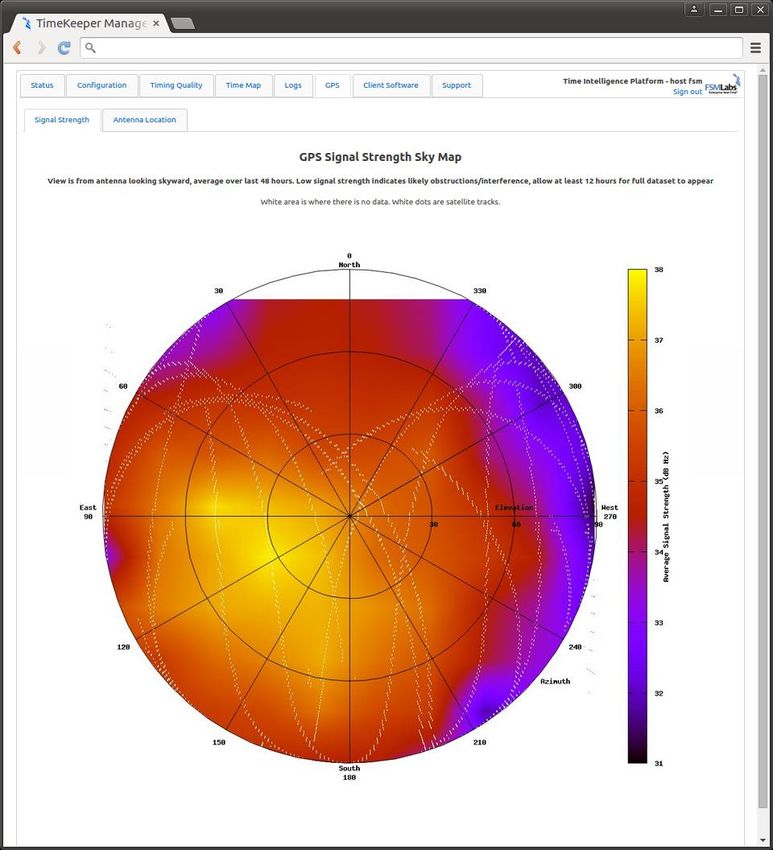
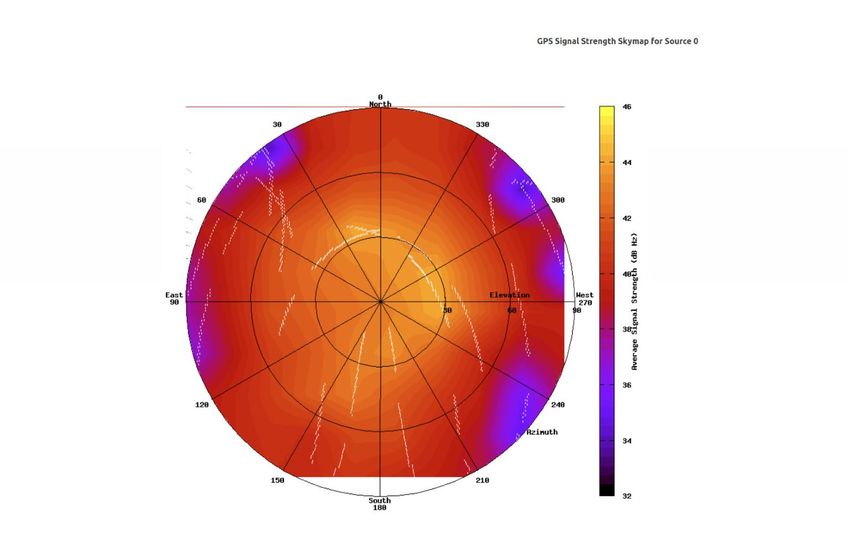
Diagnostics needed to help with GPS interference
or jamming issues.

  Build heat map from GPS
  signal data to show
  composite picture of signal
  strength. Purple areas
  show blocked reception.
Future
• Transactions get faster
  so clock accuracy has to
  get better.
• More trading venues –
  more data to timestamp
• Huge databases of clock
  sync data to maintain
  and connect with
  trading data.
Wider perspective: timestamp accuracy in
        finance is a solution to part of a more general
        problem of distributed system consistency
• Synchronizing “data” has
  been key topic in general
  computing for 50 years
• Traditionally solved by
  locking protocols and/or
  consensus prototols
• These can be
  prohibitively expensive
  at scale
One problem is “coordinator election” and data consensus. • Protocols like “Paxos” are widely used to make sure distributed databases remain consistent.
Recent rediscovery that synchronized clocks
allow for major simplifications
• Google Spanner database relies
  on an underlying clock sync
  using a method similar to 1980s
  techniques
• Clocks are also used to manage
  congestion in large scale
  enterprise data centers
So clock sync techniques developed for the big
enterprise networks in finance are powering
database consistency for general enterprise

  Developments in general
  enterprise will, in turn,
  enable more sophisticated
  distributed trading systems
  to operate: increasing
  dependency on clock
  accuracy.
• TimeKeeper Client
      Contact info                       Software
                                       • TimeKeeper Server
                                         Software
FSMLabs, Inc.                          • TimeKeeper
11701 Bee Caves Road, Suite 200          Compliance Software
Austin, TX 78738
USA                                    • TimeKeeper
info@fsmlabs.com                         GrandMaster Gen 2
Telephone: 1-512-263-5530
                                  22
You can also read


