CME 2019 13th INTERNATIONAL CONFERENCE ON COMPLEX MEDICAL ENGINEERING - September 23-25, 2019
←
→
Page content transcription
If your browser does not render page correctly, please read the page content below
CME 2019
 13th INTERNATIONAL CONFERENCE
ON COMPLEX MEDICAL ENGINEERING

            September 23-25, 2019
               Dortmund, Germany

Venue: The Dortmund Congress Centre, Westfalenhallen Dortmund
13th International Conference on Complex Medical Engineering | cme2019.ifado.de
Welcome to the CME 2019

It is a great pleasure to welcome you to the 13th CME International Conference on
Complex Medical Engineering (CME 2019) in Dortmund, Germany. The objective of
CME 2019 is to provide a forum for researchers, educators, engineers, neurologists,
medical staff and government officials involved in the general areas of biomedical
engineering to disseminate their latest research results and exchange views on future
research directions of these fields.

The conference was initiated by the Institute of Complex Medical Engineering (ICME),
Japan, in 2005. In 2019, the venue of CME is located in Dortmund, Germany.
Dortmund is a city with a history of coal mining and steel industry, but changed its
appearance during the last years. Nowadays, as part of the larger Ruhr-Rhine region,
it offers a rich culture with theatres, operas, and a quite green environment. Moreover,
it hosts one of the most vivid academic environments in the country, including various
universities covering the full academic range, including life, natural, and engineering
sciences.

I strongly hope that through everyone's cooperation, this meeting succeeds and helps
to advance our scientific topics.

With kind regards

Michael Nitsche, MD (IfADo)                                  The Institute of Complex
General Chair, CME 2019                                      Medical Engineering

                                                                                      1
Meeting Schedule: Mon, Sept 23rd 2019
Venue: The Dortmund Congress Centre, Westfalenhallen Dortmund
8:00 am to    Registration and Reception
9:00 am
9:00 am to    Opening (Michael Nitsche, Ullrich Sierau, Shozo Tobimatsu)
9:20 am
9:20 am to    Keynote (I): Mutual Benefits of Combining Neuroimaging with
10:20 am      Neuromodulation. Vincent P. Clark (Chaired by Michael Nitsche)
10:30 am to                            Oral Sessions 1
12:00 pm      Silbersaal          Room 9                   Room 10
              OS 1-1: New         OS 1-2: New trends       OS 1-3: Multi-modal
              Technology for      of clinical neurology:   approaches to
              Transcranial        diagnosis and            study cognitive
              Magnetic            treatment of             functions
              Stimulation:        neurological
              Advancements in     diseases
              Targeting, and
              Paradigms
12:00 pm to   Lunch/ Poster
1:30 pm
1:30 pm to    Keynote (II): Synaptic plasticity in rodent prefrontal cortex
2:30 pm       neurons. Satoru Otani (Chaired by Ester Nakamura-Palacios)
                                          Group photo
2:45 pm to                              Oral Sessions 2
4:15 pm       OS 2-1: Non-         OS 2-2: Reducing         Selected poster
              invasive brain       tACS artefact in         presentation
              stimulation          electro-physiological
              effects on human data – status quo
              executive            and future directions
              functions
4:30 pm to                              Oral Sessions 3
6:00 pm       OS 3-1: Roles of     OS 3-2: How
              intrinsic and        functional
              extrinsic neural     neuroimaging and
              oscillations in the neurophysiological
              brain                data can help us to
                                   assess and improve
                                   cares of post-
                                   comatose patients
                                   with disorders of
                                   consciousness?
6:30 pm -     Get together

2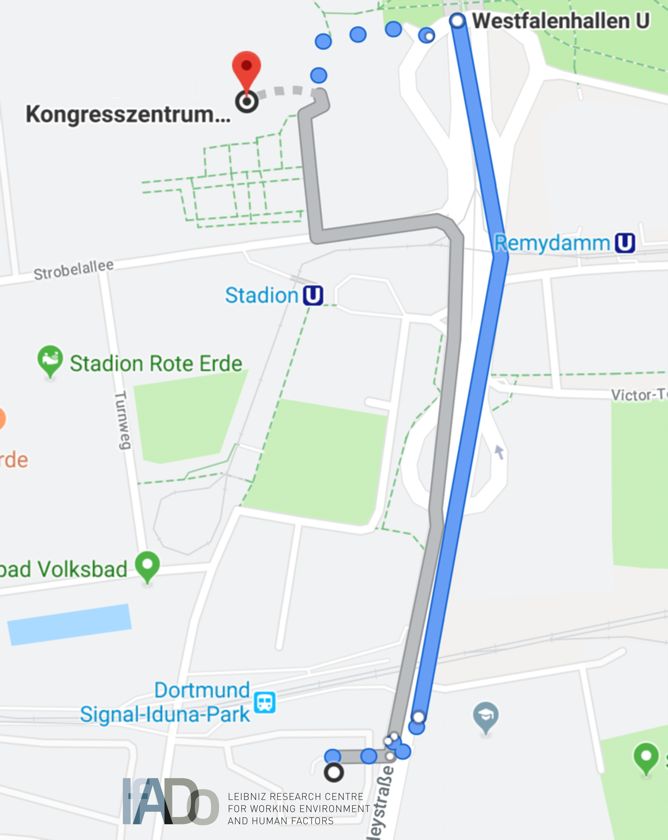
Meeting Schedule: Tue, Sept 24th 2019
Venue: The Dortmund Congress Centre, Westfalenhallen Dortmund
9:00 am to                            Oral Sessions 4
10:25 am     Silbersaal          Room 9                   Room 10
             OS 4-1: New          OS 4-2: Non-invasive    OS 4-3: New video
             methods and          and invasive            analysis methods
             experimental results transcranial brain      ranging from
             for optimized multi- stimulation for motor   entertainment to
             channel tES (I)      and mood systems        clinical applications

10:35 am to                             Oral Sessions 5
12:00 pm    OS 5-1: New           OS 5-2: Update on
            methods and           NIBS Technology in
            experimental results Brain Disorders
            for optimized multi-
            channel tES (II)
12:10 pm to Keynote (III): Transcranial direct current stimulation neural
1:30 pm     mechanisms to prevent and treat opioid-induced hyperalgesia.
            Felipe Fregni
            Keynote (IV): Leveraging neuroimaging, computational modeling
            and tDCS to remediate working memory decline in older adults.
            Adam J. Woods (Chaired by Frank Padberg, Agnes Flöel)
1:30 pm to Lunch
2:30 pm
2:30 pm to                              Oral Sessions 6
3:55 pm     OS 6-1: Modulating OS 6-2: Restoration of OS 6-3: Modulating
            sensory, motor, and disturbed                  Cognitive Control
            cognitive Functions neuroplasticity – a        with transcranial
            by training             technical solution to direct current
            interventions and       mental disorders?      stimulation (tDCS)
            non-invasive brain
            stimulations: Results
            from the TRAINSTIM
            project
4:05 pm to                              Oral Sessions 7
5:30 pm     OS 7-1: Possibilities OS 7-2: Advances in OS 7-3: Neuroimaging
            of multimodal MR        NIBS research of       guided non-invasive
            imaging and             human brain            brain stimulation in
            translation to clinical physiology             health and disease
            tDCS application
5:30 pm to General Assembly (Silbersaal)
6:30 pm
7:00 pm -   Gala Dinner (Dortmunder U)

                                                                                  3
Meeting Schedule: Wed, Sept 25th 2019
Venue: Leibniz Research Centre for Working Environment and Human Factors
(IfADo), Dortmund
9:00 am to Satellite Workshop: (by invitation)
1:00 pm    German Centre for Brain Stimulation

3:00 pm to IGSN Satellite Symposium:
6:00 pm    ‘Exploring multimodal interactions between emotional and
           cognitive processes in humans’

          Ester Nakamura-Palacios
          Ventral medial prefrontal cortex and its potential role in the emotional
          and compulsive-addictive cognitive control
          Martin Herrmann
          Modulation of fear learning and extinction by non-invasive brain
          stimulation
          Carmelo Vicario
          The contribution of the tongue motor neurons in the processing of
          reward and aversion

4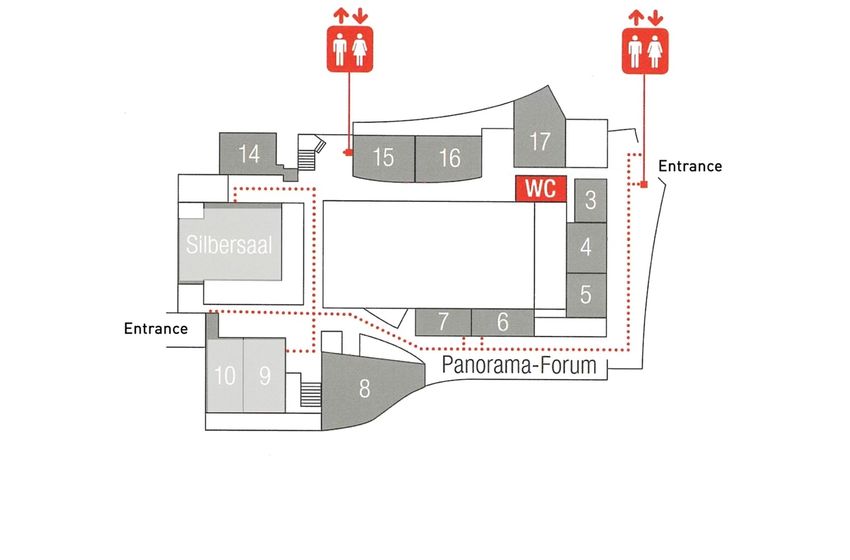
Venue Overview
Mon-Tue, September 23-24, 2019:
The Dortmund Congress Centre, Westfalenhallen Dortmund
1st Floor, Conference Rooms: Silbersaal, Room 9 and Room 10

Wed, September 25th, 2019:
Leibniz Research Centre for Working Environment and Human Factors (IfADo)
Ardeystraße 67, 44139 Dortmund, 3rd Floor, Lecture Hall

                                                                            5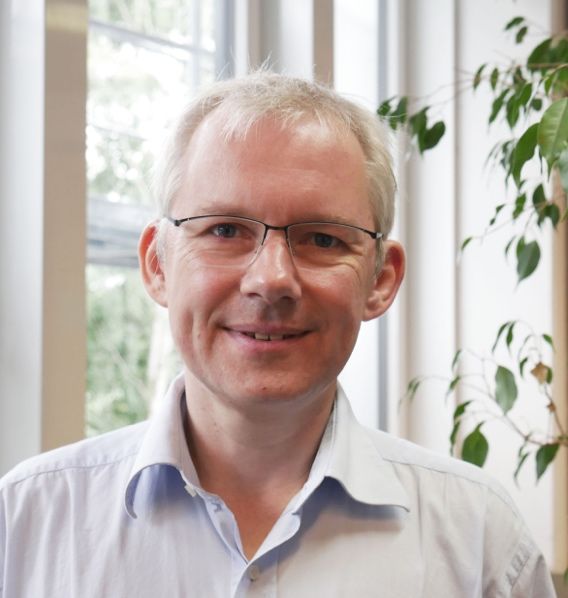
6
Oral Sessions: Mon, Sept 23rd 2019

                             10:30 am – 12:00 pm
OS1-1 (Silbersaal)
New Technology for Transcranial Magnetic Stimulation: Advancements in Targeting,
and Paradigms.
(Chaired by Pantelis Lioumis)
      Risto Ilmoniemi: Multi-locus TMS.

      Pantelis Lioumis: TMS and EEG.

      Thomas Picht: Use of diffusion tractography with TMS.

      Lari Koponen: qTMS: developing transcranial magnetic stimulation device and
      coil with reduced acoustic noise.

      Laura Marzetti: Adaptive algorithms for real-time connectivity estimation.

      Christoph Zrenner: Closed-loop stimulation.

OS1-2 (Room 9)
New trends of clinical neurology: diagnosis and treatment of neurological diseases.
(Chaired by Tetsuo Touge)
      Tetsuo Touge: Effects of transcranial magnetic stimulation with maximum
      voluntary muscle contraction (TSM with MVC) on chronic hand paresis caused
      by cerebral stroke.

      Masaki Kamada: MRI evaluation of Parkinson disease and Atypical
      Parkinsonisms.

      Tadayuki Takata: Comparison between effects of single and double transcranial
      magnetic stimulation with maximum voluntary muscle contraction on pinching
      muscle force and motor evoked potentials (MEPs).

      Yusaku Nakamura: Non-invasive high frequency peripheral magnetic
      stimulation in focal hand dystonia.

                                                                                   7
Oral Sessions: Mon, Sept 23rd 2019
OS1-3 (Room 10)
Multi-modal approaches to study cognitive functions.
(Chaired by Rafael Polania, Carmelo Vicario)
      Rafael Polania: Can we study brain function with tACS?

      Carmelo Vicario: Reward and punishment in the tongue motor neurons: some
      preliminary evidence.

      Shane Fresnoza: Exploring and modulating reasoning ability via noninvasive
      brain stimulation.

      Jessica Grundey: Nicotinic effects on cognition are linked to cortical
      excitability/neuroplasticity in healthy smokers.

                                 2:45 - 4:15 pm
OS2-1 (Silbersaal)
Non-invasive brain stimulation       effects   on      human   executive   functions.
(Chaired by Michal Lavidor)
      Agnes Flöel: Impact of non-invasive brain stimulation on learning, memory
      formation, and memory consolidation in older adults.

      Anna Pecchinenda: Impact of tDCS on visual selective attention.

      Gorana Pobric: Cognitive training and transcranial direct current stimulation
      effects in neurofibromatosis type 1: pilot study.

      Michal Lavidor, Katya Rubia: Non-invasive brain stimulation effects on human
      executive functions.

8
Oral Sessions: Mon, Sept 23rd 2019
OS2-2 (Room 9)
Reducing tACS artefact in electrophysiological data – status quo and future directions.
(Chaired by Christoph S Herrmann, Ursula Voss)
Romain Holzmann: Investigating nuisance effects induced in EEG during tACS
application.
Asif Jamil: Novel methods of altering oscillatory brain activity by phase-
synchronizing rTMS and tACS.
Florian Kasten: Concurrent tACS-MEG - Recovering event-related oscillations
in the presence of residual artifacts.
Nima Noury: Does tACS entrain neural oscillations?
Selected poster presentations (Room 10)
(Chaired by Tetsuo Touge, Michael Nitsche)
Sandor Markon: Fusion of Touch and Vision with Floating Image Visualization.
Lídia Mulet-Pons: tDCS-induced reconsolidation memory effects in Subjective
Cognitive Decline (SCD) are related with structural brain integrity.
Yasuko Maekawa: Comparison of acquired knowledge by nursing students for
learning elderly dementia care between a digital learning and a text-book study.
Carmen Weidler: Consequences of prefrontal tDCS on inhibitory control and
reactive aggression in alcohol dependent patients and tobacco users.
9Oral Sessions: Mon, Sept 23rd 2019
4:30 – 6:00 pm
OS3-1 (Silbersaal)
Roles of intrinsic and extrinsic neural oscillations in the brain.
(Chaired by Shozo Tobimatsu)
Shozo Tobimatsu: Neuromagnetic Oscillations in the Human Sensory Systems:
A Magnetoencephalographic Study.
Tsuyoshi Okamoto: Neural oscillations in the brain under different airflow
conditions.
Katsuya Ogata: Differential effects of 20 and 10 Hz-tACS on MEPs with
intermittent Theta Burst Stimulation.
Takao Yamasaki: Altered oscillatory V1 activity to motion perception in patients
with mild cognitive impairment: An fMRI study.
OS3-2 (Room 9)
How functional neuroimaging and neurophysiological data can help us to assess and
improve cares of post-comatose patients with disorders of consciousness.
(Chaired by Aurore Thibaut)
Federico Raimondo: Automated Machine Learning-based diagnosis of impaired
consciousness: cross-center and protocol generalization of EEG biomarkers.
Stephen Larroque: A clinical and research 3T MRI protocol under 30 minutes?
Yes, it's possible!
Yorgos Antonopoulos: Applying Machine Learning in PET scans of brain
lesioned patients for characterizing the level of consciousness.
Aurore Thibaut: Therapeutic challenges in non-communicative patients with
disorders of consciousness.
10Oral Sessions: Tue, Sept 24th 2019
9:00 – 10:25 am
OS4-1 (Silbersaal)
New methods and experimental results for optimized multi-channel tES (I).
(Chaired by Carsten Wolters, Till Schneider, Thomas Knösche)
Marios Antonakakis: Individual targeting effects and optimization of multi-
channel transcranial electric stimulation of the human primary somatosensory
cortex.
Guilherme Saturnino: Efficient optimization of multichannel TES.
Thomas Knösche: Identifying the location of the effects of transcranial brain
stimulation using the congruence factor approach.
Jens Haueisen/Alexander Hunold: Bifunctional cap for simultaneous EEG and tES.
OS4-2 (Room 9)
Non-invasive and invasive transcranial brain stimulation for motor and mood systems.
(Chaired by Jui-Cheng Chen)
Chi-Hung Juan: The effects and mechanisms of repetitive TMS (rTMS) and
theta burst stimulation (iTBS) in Treatment-Resistant Depressed patients
revealed with brain oscillations.
Ming-Kuei Lu: Paired electroacupuncture and transcranial magnetic stimulation.
Tsung-Hsun Hsieh: Therapeutic effects of transcranial direct current stimulation
(tDCS) in motor and cognitive impairments in Parkinsonian rat model.
Ying-Zu Huang: Fatigue and motor plasticity in human’s motor cortex.
OS4-3 (Room 10)
New video analysis methods ranging from entertainment to clinical applications.
(Chaired by Nicolai Spicher, Markus Kukuk)
Andreas Harrer: New video analysis methods - an application for the adaptive
movie format M(e)y(e) Cinema.
Christopher Bruman: New video analysis methods ranging from entertainment
to clinical applications.
Nicolai Spicher: New video analysis methods ranging from entertainment to
clinical applications.
11Oral Sessions: Tue, Sept 24th 2019
Anke Schlüter: New video analysis methods ranging from entertainment to
clinical applications.
10:35 am – 12:00 pm
OS5-1 (Silbersaal)
New methods and experimental results for optimized multi-channel tES (II).
(Chaired by Carsten Wolters, Till Schneider, Thomas Knösche)
Axel Thielscher/Oula Puonti: Validation and application of individualized head
models for transcranial brain stimulation.
Asad Khan: Constrained maximum intensity optimized multi-electrode
tDCS targeting of human somatosensory network.
Jan-Ole Radecke: Individualized optimization of lateralized transcranial
electric stimulation (tES) for experimental application.
Andrea Antal: Multichannel TES in the treatment of neurological and psychiatric
disorders.
OS5-2 (Room 9)
Update on NIBS Technology in Brain Disorders.
(Chaired by Giulio Ruffini, Ferdinand Binkofski)
Giulio Ruffini: Realistic modeling of tCS/tES: from research to clinical
applications.
Ferdinand Binkofski: Modulation of the front-striatal connectivity by theta-burst
stimulation. A perspective at clinical application.
Armin Kibele: Two studies on leg stabilizer strength in older adults.
Ester Miyuki Nakamura Palacios: Drug-cue reactivity as a potential neural target
in the development of a neurofeedback system for cognitive training in
substance use disorders.
Teodiano Freire Bastos Filho: A New Methodology for Neuro-Rehabilitation
System of Post-Stroke Patients Using Brain-Computer Interface Based on
tDCS, Motor Imagery, Virtual Reality and Robotic Devices.
12Oral Sessions: Tue, Sept 24th 2019
2:30 – 3:55 pm
OS6-1 (Silbersaal)
Modulating sensory, motor, and cognitive Functions by training interventions and non-
invasive brain stimulations: Results from the TRAINSTIM project.
(Chaired by Stefan Getzmann)
Pablo Maceiraelvira: TBA
Ensieh Ghasemian Sh/ Leila Farnad: Age dependency of neuroplasticity
induced by transcranial direct current stimulation.
Friederike Thams: Effects of brain stimulation and cognitive training on age-
associated cognitive decline.
Kathleen Kang: Effects of transcranial direct current stimulation (tDCS) on
attentional control and decision making.
Stephan Getzmann: Influences of non-invasive brain stimulation and short-term
training on auditory spatial attention.
OS6-2 (Room 9)
Restoration of disturbed neuroplasticity – a technical solution to mental disorders?
(Chaired by Lukas Frase)
Claus Normann: Disturbed neuroplasticity in depression – what we know and
what we need to know.
Lukas Frase: Non-invasive electrical modulation of vigilance, attentiveness and
sleep.
Frank Padberg: ‘Non-invasive electrical stimulation in mood disorders: A case
for precision medicine.’
Andreas Vlachos: TMS-based Restorative Neuromodulation – activate,
modulate, treat.
Han Lu: Network remodeling induced by transcranial brain stimulation: A
computational model of tDCS-triggered cell assembly formation.
13Oral Sessions: Tue, Sept 24th 2019
OS6-3 (Room 10)
Modulating Cognitive Control with transcranial direct current stimulation. (tDCS)
(Chaired by Christian Plewnia, Martin Herrmann)
Martin J. Herrmann: Transcranial direct current stimulation (tDCS) of the right
inferior frontal cortex (rIFC) improves emotional control.
Jessica Peter: Targeting episodic memory with transcranial direct current
stimulation: Is cognitive control the modulating factor?
Philipp A. Schroeder: Cathodal and anodal tDCS effects and the cognitive
control network influence one another.
Simone Weller, Christian Plewnia: Enhancement of cognitive control training
with tDCS: Effects of stimulation polarity, intensity and laterality.
4:05 – 5:30 pm
OS7-1 (Silbersaal)
Possibilities of multimodal MR imaging and translation to clinical tDCS application.
(Chaired by Daniel Keeser)
Lucia Bulubas: Factors associated with antidepressant effects of tDCS: insights
derived from multimodal baseline imaging from the ELECT-TDCS trial.
Eva Mezger: Effects of prefrontal cathodal tDCS on glutamate and resting state
connectivity: Combining tDCS, electrical field modeling and multimodal MRI
Daniel Keeser: Challenges of multimodal MR imaging for non-invasive brain
stimulation.
Shun Takahashi: Reduction of simulated e-fields in schizophrenia and major
depression during prefrontal tDCS.
14Oral Sessions: Tue, Sept 24th 2019
OS7-2 (Room 9)
Advances in NIBS research of human brain physiology.
(Chaired by Vera Moliadze, Giorgi Batsikadze)
Hwee-Ling Lee: Unravelling the functions of hippocampal subfields using ultra-
high field MRI.
Giorgi Batsikadze: Effects of cerebellar transcranial direct current stimulation
(ctDCS) on cerebellar-brain inhibition in humans.
Vera Moliadze: Transcranial electrical stimulation in pediatric brain.
Roser Sanchez-Todo: Model-driven optimization of multichannel transcranial
current stimulation.
OS7-3 (Room 10)
Neuroimaging guided non-invasive brain stimulation in health and disease.
(Chaired by Anirban Dutta)
Shubh Mohan Singh: Repetitive transcranial magnetic stimulation in psychiatry
– a case series at the PGIMER Chandigarh, India.
Zeynab Rezaee: Cerebellar Lobules Optimal Stimulation (CLOS) during gait
and balance training in healthy and stroke survivors.
Yashika Arora: Assessing the role of electrodes for high-definition transcranial
direct current stimulation configurations on cortical excitability in a
computational framework.
Anirban Dutta: Simultaneous electroencephalography (EEG) and near-infrared
spectroscopy (NIRS) under non-invasive brain stimulation in acute brain injury.
15Wed, Sept 25th 2019, IfADo 16
17
Poster Directory
                                            Basics
                          Effect of toluene on cortical excitability, neuroplasticity, and
 1    Fatemeh Yavari
                          cognitive functions in humans
     Mohsen Mosayebi      Probing the relevance of repeated cathodal tDCS over the
 2
          Samani          primary motor cortex for prolongation of after-effects
                          Exploring and modulating consciousness-related oscillatory
 3    Tiam Hosseinian
                          brain activity
       Md. Harun Ar       Effects of caffeine on cognitive functions (attention processes,
 4
           Rashid         and working memory capacity) in humans
                          Prolongation of late-phase LTP-like plasticity in the primary
 5   Desmond Agboada      motor cortex with repeated anodal transcranial direct current
                          stimulation
                          Ca2+ channel dynamics explain the nonlinear neuroplasticity
 6      Lorena Melo       induction by cathodal transcranial direct current stimulation
                          over the primary motor cortex
                          Modulating task-related motor cortex excitability by
 7      Fengxue Qi        transcranial electrical stimulation: probing neurorehabilitation
                          strategies
                          Evaluation of pH changes and skin redness in direct current
 8       A. Hunold
                          stimulation to the forearm
                          Different online and post-stimulation effects of prefrontal tDCS
     Kilian Abellaneda-
 9                        and tACS on working memory-related neural activity and
           Pérez
                          functional connectivity: an exploratory study
                          Mechanisms of the focusing effect of dopamine on the LTP-
10    Elham Ghanavati
                          like plasticity
                          The impact of chronotypes and time of the day on tDCS-
       Mohammad Ali
11                        induced motor cortex plasticity, cortical excitability, and
        Salehinejad
                          cognition
     G. Nathzidy Rivera- Effects of one session of anodal tDCS over Wernicke's area
12
           Urbina         on verbal learning and memory
        L.S. Balduin-     tDCS and semantic processing: speeding up word recognition
13
          Philipps        in older adults with verbal memory difficulties
                          Direct Evidence for Modulation of Single Unit Activity by tDCS
14     Ji Hyeon Ryu
                          in the Intact Somatosensory Cortex of Rats

18
Poster Directory
Clinical
Sustained attention combined with transcranial direct current
15 Lin-Cho Liu
stimulation (tDCS) in healthy aging
Age-related differences in default-mode network connectivity
Kilian Abellaneda- in response to intermittent theta-burst stimulation and its
16
Pérez relationships with maintained cognition and brain integrity in
healthy aging
Development of Quantitative Measurement Device for
17 Tsung-Hsun Hsieh
Spasticity in Children with Cerebral Palsy
Educational effects of a nursing department/clinical
18 Sachiko Matsui engineering department collaboration class designed to
promote an understanding of ME devices in emergency care
19 Shusaku Tsumoto Analysis of Waiting Time from Order Histories
Comparison of one-session anodal tDCS effects on fine
20 Elena L. Pavlova
motor control in subacute and chronic stroke patients
Technical
Effective utilization of e-learning for Japanese geriatric
21 Miwa Yamamoto
nursing
Temperature and humidity characteristics of two kinds of skin
22 Hiroko Shimizu
cleaning towels that affect sensation
Improvement of Retinex Algorithm for Medical Image
23 Naoki Shirai
Enhancement
24 Frederick Junker Morse Code: A Window on Language Decoding in the Brain
Selected for oral presentation
25 Sandor Markon Fusion of Touch and Vision with Floating Image Visualization
Comparison of acquired knowledge by nursing students for
26 Yasuko Maekawa learning elderly dementia care between a digital learning and
a text-book study
tDCS-induced reconsolidation memory effects in Subjective
27 Lídia Mulet-Pons Cognitive Decline (SCD) are related with structural brain
integrity
Consequences of prefrontal tDCS on inhibitory control and
28 Carmen Weidler reactive aggression in alcohol dependent patients and
tobacco users
19Keynote Speakers
Vincent P. Clark
Dr. Vince Clark is Professor of Psychology and Neuroscience
and Director of the Psychology Clinical Neuroscience Center at
the University of New Mexico. He and his associates investigate
the relationship between mind and brain. He employs structural
and functional magnetic resonance imaging (fMRI),
magnetoencephalography (MEG), event-related potentials
(ERPs) and methods of transcranial brain stimulation, including
transcranial direct current stimulation (tDCS) and transcranial
alternating current stimulation (tACS), as well as other methods
to examine human brain structure and function. Using these
tools, he is investigating the basic organizational principles of perception, learning,
memory, attention and language in healthy individuals. He also uses these methods to
examine the neural basis of psychiatric disorders such as drug and gambling addiction,
psychopathy and schizophrenia. His recent area of research examines how tDCS can
be used to increase learning and performance in healthy subjects, and the
mechanisms by which tDCS produces changes in brain function and behavior.
Felipe Fregni
Dr. Felipe Fregni is the Research Director of Spaulding
Neuromodulation Center (Spaulding Rehabilitation Hospital)
and Associate Professor at Harvard T.H. Chan School of Public
Health. His major research interests include the development of
non-invasive brain stimulation techniques to understand and
also to guide interventions aiming at modulating neuroplasticity
in chronic neurological and neuropsychiatric conditions
associated with maladaptive plasticity such as chronic pain and
post-stroke motor rehabilitation. During his physician-scientist
experience, Dr. Fregni has developed and conducted several clinical trials, as well as
observational trials and even literature reviews on the subject. His contribution to
science has given him the recognition of being a pioneer in transcranial electrical and
magnetic stimulation. Additionally, Dr. Fregni's passion for scientific education and
clinical research methodology cultured the biggest international worldwide training
program in clinical research to allow young investigators from different countries and
backgrounds to train in the Principles and Practice of Clinical Research course.
21Keynote Speakers
Satoru Otani
Dr. Satoru Otani is a permanent researcher of INSERM (French
national institute of health and medical research), working in
Institute of Vision, Sorbonne University. His main interest is
cellular and molecular mechanisms of long-term synaptic
plasticity in the prefrontal cortex. He particularly studied how
dopamine regulates synaptic plasticity in rodent prefrontal
cortex. Currently, he also studies age- and stress-related
cognitive declines/dysfunctions in rodents, as well as human
high-order cognitive function from social neuroscience
perspectives. He received his Ph.D. from University of Otago,
New Zealand, in 1989. After post-doctoral studies in France and USA, he acquired the
INSERM position in 1997 and worked as a group leader in Neuroscience Institute of
University of Paris 6 (-2012). After working as a university professor in Japan (2012-
2018), he rejoined INSERM. He also acts as an executive organizer of Japan-France
Biological Society.
Adam J Woods
Dr. Adam J. Woods is an Associate Professor of Clinical and
Health Psychology and Assistant Director of the Center for
Cognitive Aging and Memory (CAM) in the McKnight Brain
Institute at the University of Florida. Dr. Woods is an
interventional cognitive neuroscientist that focuses on discovery
and application of novel non-invasive interventions for
remediating age-related cognitive decline and preventing
dementia. His work leverages non-invasive brain stimulation,
multimodal neuroimaging and other clinical/cognitive
neuroscience methods to not only evaluate the efficacy of
promising brain-based interventions, but also understand their neural mechanisms. At
present, Dr. Woods’ lab leads the first and largest ongoing Phase III tDCS clinical trial
(the ACT study), as well as the largest ongoing near-infrared photobiomodulation
Phase II trial (the Revitalize study). His ongoing work seeks to leverage multimodal
neuroimaging, computational modeling, and machine learning to develop personalized
dosing applications for enhanced efficacy of these methods in clinical applications.
22General Chair
Prof. Nitsche, Michael A. (Leibniz Research Centre for Working Environment and
Human Factors, IfADo)
Congress Secretariat (IfADo)
• Dr. Kuo, Min-Fang (Information Office)
• Röse, Silvia (Liaison Office)
Organizing Committee Members
• Prof. Haueisen, Jens (TU Ilmenau)
• Dr. Kuo, Min-Fang (Leibniz Research Centre for Working Environment and
Human Factors, IfADo)
• Dr. Ryu, Ji Hyeon (Pusan National University Yangsan Hospital)
• Prof. Wascher, Edmund (Leibniz Research Centre for Working Environment and
Human Factors, IfADo)
• Prof. Wu, Jinglong (Okayama University)
Board Members
• Prof. Clark, Vincent (University of New Mexico)
• Prof. Huang, Qiang (Beijing Institute of Technology)
• Prof. Hummel, Friedhelm (Swiss Federal Institute of Technology)
• Prof. Liebetanz, David (University Medical Center Göttingen)
• Prof. Stagg, Charlotte (University of Oxford)
• Prof. Tobimatsu, Shozo (Kyushu University)
• Prof. Touge, Tetsuo (Kagawa University)
Main Sponsors
23Presenters
Abellaneda-Pérez, Kilian Lavidor, Michal (p. 8) Shimizu, Hiroko (p. 19)
(p.19)
Agboada, Desmond (p.18) Lee, Hwee-Ling (p. 15) Shirai, Naoki (p. 19)
Antal, Andrea (p.12) Lioumis, Pantelis (p. 7) Singh, Shubh Mohan (p. 15)
Antonakakis, Marios (p.11) Liu, Lin-Cho (p. 19) Spicher, Nicolai (p. 11)
Antonopoulos, Yorgos (p.10) Lu, Han (p. 13) Takahashi, Shun (p. 14)
Arora,Yashika (p.15) Lu, Ming-Kuei (p. 11) Takata, Tadayuki (p. 7)
Balduin-Philipps, Larrisa S. Maceiraelvira, Pablo (p. 13) Thams, Friederike (p. 13)
(p.18)
Bastos Filho, Teodiano Maekawa, Yasuko (p. 9) Thibaut, Aurore (p. 10)
Freire (p.12)
Batsikadze, Giorgi (p.15) Markon, Sandor (p. 9,19) Thielscher, Axel (p. 12)
Binkofski, Ferdinand (p.12) Marzetti, Laura (p. 7) Tobimatsu, Shozo (p. 2,9,23)
Brumann, Christopher Matsui, Sachiko (p. 19) Touge, Tetsuo (p. 7,23)
Bulubas, Lucia (p.14) Melo, Lorena (p. 18) Tsumoto, Shusaku (p. 19)
Chen, Jui-Cheng (p.11) Mezger, Eva (p. 14) Vicario, Carmelo (p. 4,7)
Clark, Vincent P. (p. 2,21) Moliadze, Vera (p. 15) Vlachos, Andreas (p. 13)
Dutta, Anirban (p. 15) Mosayebi Samani, Mohsen Voss, Ursula (p. 8)
(p. 18)
Farnad, Leila (p. 13) Mulet-Pons, Lídia (p. 9,19) Weidler, Carmen (p. 9,19)
Flöel, Agnes (p. 3,8) Nakamura, Yusaku (p. 7) Woods, Adam J. (p. 3,22)
Frase, Lukas (p. 13) Nakamura Palacios, Ester Wu, Jinglong (p. 23)
Miyuki (p. 2,4,12)
Fregni, Felipe (p. 3,21) Normann, Claus (p. 13) Yamamoto, Miwa (p. 19)
Fresnoza, Shane (p. 7) Noury, Nima (p. 8) Yamasaki, Takao (p. 9)
Getzmann, Stephan (p. 13) Ogata, Katsuya (p. 9) Yavari, Fatemeh (p. 18)
Ghanavati, Elham (p. 18) Okamoto, Tsuyoshi (p. 9) Zrenner, Christoff (p. 7)
Ghasemian Sh, Ensieh (p.13) Otani, Satoru (p. 2,22)
Grundey, Jessica (p. 8) Padberg, Frank (p. 3,13)
Harrer, Andreas (p. 11) Pavlova, Elena (p. 19)
Haueisen, Jens (p. 11,23) Pecchinenda, Anna (p. 8)
Herrmann, Christoph S. (p. 8) Peter, Jessica (p. 14)
Herrmann, Martin J. (p. 4,14) Picht, Thomas (p. 7)
Holzmann, Romain (p. 8) Plewnia, Christian (p. 14)
Hosseinian, Tiam (p. 18) Pobric, Gorana (p. 8)
Hsieh, Tsung-Hsun (p. 11,19) Polania, Rafael (p. 7)
Hsieh, Ying-Zu Puonti, Oula (p. 12)
Hunold, Alexander (p. 11,18) Rubia, Katya (p. 8)
Ilmoniemi, Risto (p. 7) Qi, Fengxue (p. 18,23)
Jamil, Asif (p. 8) Radecke, Jan-Ole (p. 12)
Juan, Chi-Hung (p. 11) Raimondo, Federico (p. 10)
Junker, Frederick (p. 19) Rashid, Md. Harun (p. 18)
Kamada, Masaki (p. 7) Rezaee, Zeynab (p. 15)
Kang, Kathleen (p. 13) Rivera-Urbina, G. Nathzidy
(p. 18)
Kasten, Florian (p. 8) Ruffini, Giulio (p. 12)
Keeser, Daniel (p. 14) Ryu, Ji Hyeon (p. 18,23)
Kibele, Armin (p. 12) Salehinejad, Mohammad Ali
(p. 18)
Khan, Asad (p. 12) Sanchez-Todo, Roser (p. 15)
Knösche, Thomas (p. 12) Saturnino, Guilherme (p. 11)
Koponen, Lari (p. 7) Schlüter, Anke (p. 12)
Larroque, Stephen (p. 10) Schroeder, Philipp A. (p. 14)
2425
We would like to thank our sponsors. It is their continued
   support that makes this CME conference possible.

                    Sponsors CME 2019
You can also read


