COAST 2016-2021 STRATEGIC PLAN - www.calstate.edu/coast - California State University
←
→
Page content transcription
If your browser does not render page correctly, please read the page content below
COAST
2016-2021 STRATEGIC PLAN

www.calstate.edu/coast
INTRODUCTION
The California State University (CSU) Council on Ocean Affairs, Science and
Technology (COAST) was formed in 2008 as a way to integrate CSU system-wide
expertise and resources to promote marine and coastal research and education
throughout the CSU and the state of California. COAST’s original interests lay in the
open and coastal ocean and coastal zones, such as bays, estuaries, and beaches.
COAST’s initial stated goals included supporting faculty research, enhancing
student educational experiences, and promoting environmental literacy among
decision makers and the public in order to foster stewardship and sustainable use
of California’s coastal resources. The first COAST strategic plan covering 2009-2015
reflected these goals as well as those germane to a nascent organization, such as
establishing a governance structure and securing sustained funding.

Over the last eight years, COAST has grown significantly in size, scope and activities.
COAST has established itself as an active and robust CSU-wide network of hundreds
of faculty members, research scientists and students from diverse disciplines actively
working to address critical marine and coastal environmental issues. COAST is widely
recognized both within and outside of the CSU as the umbrella organization for marine
and coastal related activities within the system. As there are also clear linkages
between terrestrial practices and processes and coastal and oceanic conditions, the
scope of COAST has expanded to actively include coastal watersheds to the extent
that they ultimately articulate with the coast (e.g., anadromous fish, surface and
groundwater flow, water quality, land use).

COAST continues to prioritize:

1. Support for research and education to advance our knowledge of marine and coastal
resources and the processes that affect them, and

2. Dissemination of scientific information to stakeholders for informed decision-
making and the development of responsible policy.

COAST’s new strategic plan for 2016-2021 encompasses these priorities and includes
several additional goals that reflect the organization’s evolution and desired future
direction. It is envisioned that achievement of the goals and actions contained within
this plan will allow COAST to serve the CSU, the state of California and the nation
more effectively and successfully.
2

    CONTEXT
    Around the world, human activities have directly affected        emissions will cause, and natural climate variability. It is highly
    marine ecosystems ubiquitously, and for the most part            likely that human-induced climate change will continue and
    negatively (Halpern et al. 2008). In 2003, the Pew Ocean         that many of its impacts will be pervasive, long lasting (on
    Commission Report found that America’s oceans were in crisis     the order of centuries), and in some cases irreversible (IPCC
    and cited a number of associated factors: coastal development    2014). For example, it is predicted that extreme weather events
    leading to habitat loss and degradation; nutrient pollution      (e.g., precipitation, storms) will become more frequent and
    resulting in harmful algal blooms and hypoxia; overfishing and   more intense regionally, the ocean will continue to warm and
    destructive fishing practices; and marine invasive species       acidify, and global mean sea level will continue to rise (IPCC
    (Pew Oceans Commission, 2003). More recently, studies have       2014). Furthermore, climate change may exacerbate any
    predicted that as human use of the oceans intensifies, we may    human-induced organism loss in the oceans and subsequent
    experience widespread marine defaunation globally (McCauley      ecosystem impacts (McCauley et al. 2015).
    et al. 2015) or even mass extinction (Jackson 2008).
                                                                     As a result, our coasts and oceans worldwide face a growing
    Additionally, humans have impacted the global climate system     number of threats, and unfortunately California, with its
    profoundly, and in turn, climate change has impacted natural     840-mile coastline, is no exception. California has rich and
    and human systems worldwide in recent decades (IPCC              diverse oceanic and coastal resources: sandy beaches,
    2014). Our future climate depends on the warming that is         rocky intertidal zones, estuaries, kelp forests, deep marine
    yet to occur as a result of past anthropogenic emissions, as     canyons, and offshore islands just to name a few. However,
    well as the warming that current and future anthropogenic        along the shore and in the ocean we face sea-level rise,
3

ocean acidification, harmful algal blooms, depleted fisheries,      with the ocean, especially following storms, and consuming
pollution, habitat degradation or loss, hypoxia, and many more      contaminated seafood. California’s ocean economy (activities
challenges that occur on local to global scales. These conditions   that indirectly or directly use the ocean, such as ship and
and events reduce the quality of our marine ecosystems and          boat building, extraction of natural resources, tourism and
the services they provide. The challenges to California’s vast      recreation, and transportation) was valued at over $44 billion
coastal resources and their needs have been well documented         in 2013 (NOEP, 2016b). When indirect and induced revenue
by the California Ocean Protection Council (OPC 2006, 2012)         are also considered, its value doubles to over $80 billion.
the California Resources Agency and California Environmental        The much larger coastal economy (the ocean economy as
Protection Agency (CRA and CEPA, 2004), and the California          well as all other activities that take place in coastal areas,
Office of Environmental Health Hazard Assessment                    e.g., construction, financial activities, education and health
(OEHHA, 2013).                                                      services, manufacturing, professional and business services,
                                                                    public administration, trade, transportation) was worth over
The impacts are not only to the marine organisms that live          $1.9 trillion in 2013 and accounted for 86 percent of California’s
in these waters, however, but extend to human health and            gross domestic product (NOEP, 2016a). While some coastal
the economy. California, which had the world’s eighth largest       economy sectors may not appear to have a direct connection
economy in 2014 (CCSCE, 2015), has 39 million residents (US         to the ocean, overall they support the large population that
Census Bureau 2016). Almost 75 percent of Californians live         chooses to live along and visit the coast for the climate,
in coastal counties (NOEP, 2016a) where they are at risk from       lifestyle and aesthetics. Thus, the health of California’s people
sea level rise, storms and flooding, pollution through contact      and its economy are directly tied to the health of the ocean.

                                                                                                       In 2013, 86 percent of
                                                                                                       California’s GDP was
                                                                                                       generated in coastal
                                                                                                       counties. The state’s
                                                                                                       economic vitality is
                                                                                                       linked directly to coastal
                                                                                                       environmental quality.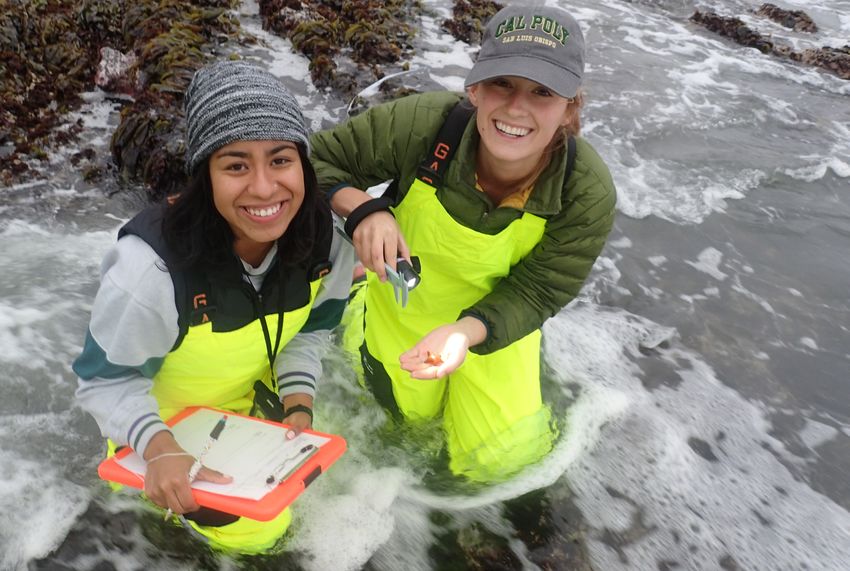
4

    THE NEED                                                             MISSION
    Looking forward, California needs to conserve and protect            COAST’s mission is to help the state of California maintain
    its coastal resources while promoting sustainable use and            a healthy ocean and sustainable use of coastal resources.
    economic growth and development. To reconcile these                  COAST coordinates and promotes research and education
    interests, the state will need to employ a suite of strategies       across the 23 campuses of the CSU to advance our
    to address marine and coastal challenges: develop innovative,        knowledge of marine resources and provide solutions to
    technological solutions where possible; improve management           local, state and national issues. COAST promotes workforce
    strategies; and develop mitigation and adaptation plans. It is       development in STEM and other marine-related disciplines and
    critical that these strategies are informed by the best available,   communicates with California’s governments, industries
    unbiased scientific data and information. An environmentally         and communities to support informed decision-making and
    literate and engaged citizenry and a highly skilled and              responsible policy development.
    technically capable workforce are needed to develop, adopt and
    implement effective strategies to ensure sustainable use and         COAST’s overall priorities are to:
    enjoyment of the coast for generations to come.
                                                                            •   Provide funding and opportunities to advance coastal,
                                                                                marine, and coastal watershed research and education.

    VISION                                                                  •   Serve as a primary resource for informed decision-making
                                                                                in government, industry and local communities.
                                                                            •   Train students to successfully join a highly skilled,
    COAST envisions a California that actively and sustainably
                                                                                technologically sophisticated workforce and ensure the
    manages its coast and ocean through the application
                                                                                success of students from all backgrounds.
    of scientific knowledge by a well-educated, diverse and
                                                                            •   Communicate the activities, successes and impacts of
    environmentally literate workforce and citizenry.
                                                                                COAST stakeholders and the public.

                                                                            COAST’S MISSION AND VISION
                                                                             COAST’s Mission and Vision statements reflect a
                                                                             deep commitment to research and education, CSU
                                                                             faculty and students, and the state of California in
                                                                             order to improve environmental quality, promote
                                                                             economically and environmentally sustainable
                                                                             use of our coast and ocean, and train the next
                                                                             generation of ocean leaders in California
                                                                             and the nation.
5

THE CSU’S UNIQUE POSITION
The CSU is the largest, most diverse public university system in the U.S. The CSU enrolls over
460,000 students and graduates over 100,000 students annually. In 2016, there are more than
three million CSU alumni. The CSU serves underrepresented communities: more than 50 percent
of CSU students are non-white, and more than two-thirds of CSU campuses are recognized
as Hispanic Serving Institutions (HSIs). The CSU graduates the majority of Latino students in
California, more than all other public and private institutions of higher education in the state
combined (IFC International, 2010). A significant percentage of CSU students are federal Pell grant
recipients (more than 30 percent of students at more than half of the CSU campuses). Many CSU
students are the first in their family to participate in higher education, and many come from racial
groups that are historically underrepresented in science, technology, engineering, and mathematics
(STEM) disciplines.

The CSU is the largest source of California’s skilled workforce and can address the critical need
for more STEM graduates as identified by the President’s Council of Advisors on Science and
Technology (PCAST). The 2012 PCAST report predicts that there will be a national deficit of one
million STEM college graduates by 2022. This prediction is based on estimated growth in the
STEM workforce and the need for at least some postsecondary education in over 90 percent of
the positions (Carnevale et al., 2011). The CSU already plays a significant role in preparing job-ready
STEM graduates at the baccalaureate and master’s degree levels. The opportunity to participate
in research should be an integral part of any STEM student’s education. COAST complements
the campuses’ STEM curriculum with opportunities for students to engage in two High Impact
Practices (HIPs): undergraduate research experiences and professional internships (during
which students often participate in scientific research). Both of these HIPs broaden students’
experiences and strengthen their science identity, which helps students persist in STEM majors
and successfully graduate (Eagan et al., 2010). Thus, the CSU and COAST together are perfectly
positioned to educate our students and help them graduate with the environmental literacy and
technological skills needed to effectively address the myriad challenges California faces.

The CSU has 23 individual campuses stretching from San Diego to Eureka and numerous biological
field stations and marine laboratories. This remarkable geographic coverage provides an unmatched
ability to provide opportunities to students throughout the state and to study the entire coast of
California. At present, over 400 CSU faculty members and research scientists are affiliated with
COAST and they bring with them hundreds more undergraduate and graduate students, all actively
working to address critical marine, coastal and coastal watershed issues. Their expertise comprises
the following disciplines, all of which can be brought to bear on issues of coastal affairs, science
and technology: biology, chemistry, geology, geography, physics, engineering, computer science,
economics, anthropology, archeology, sociology, public policy, maritime affairs, mathematics,
statistics, and the arts. Across the CSU there are research vessels, marine laboratories, analytical
laboratories, instrumentation, unique programs, and other physical assets that collectively form a
robust and unparalleled resource. COAST facilitates access to this collective resource to advance
research and education within the CSU and to serve the state and the nation in a way that no other
group or organization can.
6

    KEY ACCOMPLISHMENTS SINCE 2009
    COAST accomplished the following goals from the                  2. Be a primary resource for stakeholders seeking information
    2009-2015 Strategic Plan:                                        about, or novel solutions to, difficult problems in the coastal
                                                                     environment.
    1. Promote the advancement of collaborative, interdisciplinary
    coastal and marine-related research throughout the CSU.             • COAST has successfully convened six informational
                                                                          briefings in Sacramento for legislative and agency staff
       • COAST has made 70 awards totaling over $760,000 to
                                                                          on current, critical marine and coastal issues topics.
         CSU faculty members and research scientists. The return
                                                                          Briefings have featured CSU faculty members along with
         on investment from these awards has been over $8.65M
                                                                          stakeholders and decision makers.
         dollars in extramural funding awarded to the CSU, an
         11.1:1 ratio.                                               3. Secure sustained funding for the management of the COAST
       • COAST has developed multiple funding programs to            administrative infrastructure.
         support various faculty research needs. The programs
                                                                        • Chancellor’s Office support for COAST has increased by
         have been refined and improved based on feedback.
                                                                          over 150 percent, and annual funding increases are now
         Current faculty funding programs include:
                                                                          tied to the Higher Education Price Index.
           •   Grant Development Program                                • Individual campus annual contributions to COAST have
           •   Strategic Investment Program                               increased 25-50 percent.
           •   Rapid Response Funding
           •   Seminar Speaker Series                                4. Develop the COAST Governance Structure.

                                                                        • The initial Governance Structure was adopted in May
                                                                          2009. A revised Governance Structure was approved by a
                                                                          majority of Campus Representatives in June 2013 and is
                                                                          still in force.
7

                            5. Enhance the educational opportunities for undergraduate
                            and graduate students in the CSU, providing student
                            involvement in on-going research projects.

                               • COAST has established programs to incentivize and
                                 support student engagement in research and career
                                 development opportunities:
                                   •   Graduate Student Research Awards
                                   •   Undergraduate Research Support Program
                                   •   Student Travel Awards
                                   •   Summer Student Internship Program
                            To date COAST has awarded $1M to over 600 students.

                            6. Increase public awareness of the challenges facing our
                            coast and increase stewardship of our resources.

                               • COAST regularly posts information on current marine and
                                 coastal issues on the COAST website and social media.

                            7. Develop programs to leverage CSU assets and increase
                            the competitiveness of CSU faculty to successfully realize
                            national and state funding for their research programs.

                               • COAST faculty funding programs are designed to
                                 encourage collaborations across disciplines and
                                 campuses in order to maximize the expertise and
                                 resources available to address basic and applied research
                                 questions and critical coastal environmental
                                 information needs.
                               • COAST supports networking opportunities to promote
                                 relationship building and collaboration among faculty
                                 members and research scientists: Student-Faculty
                                 Research Poster Reception, Annual System-wide
                                 Meeting, thematic workshops and short courses, and the
                                 Speaker Seminar Series.

To date COAST has awarded
$1M to over 600 students.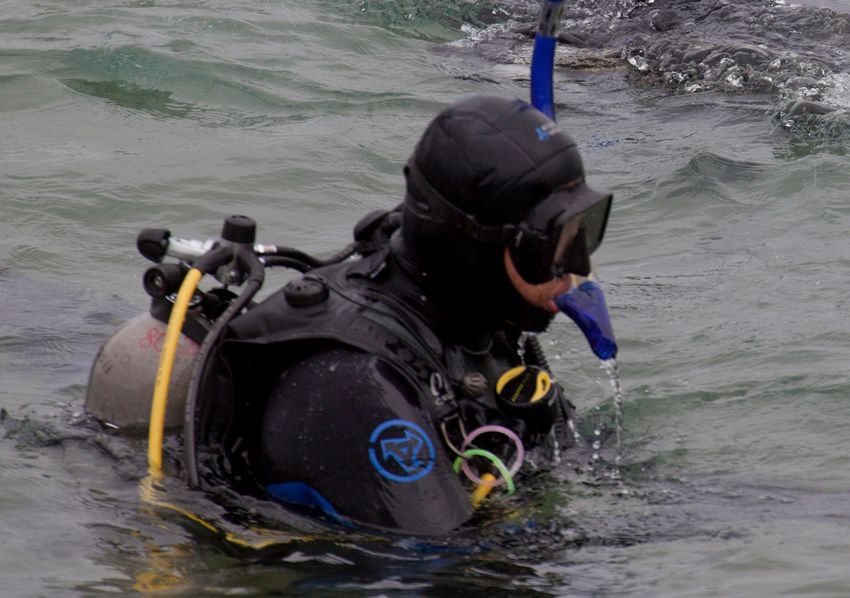
8

    PRIORITIES FOR 2016-2021
    COAST staff and members of the Executive Committee
    met in January 2015 to evaluate the program’s activities and
    achievements to date and to identify priorities, goals and
    actions for the future. COAST has identified the following
    overall priorities for 2016-2021:

       •   Provide funding and opportunities to advance coastal,
           marine, and coastal watershed research and education.
       •   Serve as a primary resource for informed decision-making
           in government, industry and local communities.
       •   Train students to successfully join a highly skilled,
           technologically sophisticated workforce and ensure the
           success of students from all backgrounds.
       •   Communicate the activities, successes and impacts of
           COAST stakeholders and the public.
9
GOALS FOR 2016-2021
The goals articulated below for the next five years constitute an
ambitious course of action designed to make COAST and the
CSU a more significant force within the state of California and
the U.S. with regard to marine and coastal issues, research and
education. Actions listed in italics are proposed new activities
that have not been undertaken previously.
Goal One: Promote the advancement of CSU marine, coastal,
and coastal watershed research and education.
COAST will engage in actions that raise the profile of faculty
members and students working to address marine, coastal,
and coastal watershed issues both internally, among the
CSU Chancellor’s Office, Presidents, Provosts, and Deans,
and externally, among state and federal agencies, elected
officials, and other stakeholders. To accomplish this, COAST will
articulate and disseminate the marine science related activities
of CSU faculty and students and make this information
available both within and outside of the CSU. COAST will
continue outreach among CSU faculty members and students
to increase the number of people engaged in COAST and to
increase awareness of and participation in COAST-sponsored
programs and activities.
Actions:
a. Produce annual reports on COAST activities and
accomplishments for distribution throughout the CSU
and to external stakeholders. Highlight COAST support
of faculty and student research, results and impacts.
b. Post items about activities and successes of COAST
faculty members, research scientists, and students on
the COAST website and social media regularly.
c. Convene annual system-wide meeting with
representatives from each of the 23 campuses. Address
COAST’s system-wide role, priorities, and impact. Use
meeting to advance COAST within the CSU and develop
strategies for increased effectiveness with external
stakeholders and strategic partners.
d. Convene annual student research poster reception at
the Chancellor’s Office showcasing COAST-supported
research by CSU faculty members and students.10
e. Produce individual year-end reports for each campus ii. Inventory and publish all extramural funding to CSU
detailing campus contributions to COAST, COAST funds faculty members and research scientists for marine,
awarded to campus faculty members and students, and coastal, and coastal watershed research annually.
extramural funding resulting from COAST support for iii. Engage in actions to increase the visibility of
each of the three preceding fiscal years. faculty and student accomplishments (e.g., grants,
f. Advocate for infrastructural support for CSU facilities publications, presentations) online and in social media.
and resources that enable research and education iv. Publish reports from the COAST Rapid Response
opportunities for CSU faculty members and students. Funding Program online to highlight what CSU faculty
g. Visit campuses in person to meet with faculty members members, research scientists, and students are
and administrators to cultivate awareness of COAST doing to respond to urgent or unexpected marine and
funding opportunities, program initiatives and successes. coastal events.
h. Represent COAST at scientific and v. Inventory and publish CSU faculty, research scientist,
professional meetings. and student responses to requests for information
from and interactions with local, state and federal
i. Inventory and summarize the marine, coastal, and
government, agencies, and industry.
coastal watershed related research and educational
activities of COAST faculty members, research scientists Performance Metrics:
and students. Timely completion of annual reports and campus year-end
financial reports; convening of annual meeting and poster
i. Create an online bibliography of peer-reviewed
reception; number of campuses visited; number of scientific
publications by COAST faculty members, research
and professional meetings attended or presentations made;
scientists and students. Student authors and
publication of bibliography; list of annual extramural funding
publications resulting from COAST support will be
noted. Links to primary publication sources will be
provided to facilitate access.11
awarded to COAST members; website and social media Actions:
traffic and interaction; number of responses to requests for a. Provide funding to CSU faculty members and research
information and interactions with local, state and federal associates to support development and submission
government, agencies, and industry. of full-length proposals for discrete research projects
to external funding agencies and organizations. Funds
Goal Two: Incentivize faculty research.
will support activities deemed necessary to maximize
COAST will continue to support faculty members and research subsequent success in obtaining external funding in
scientists engaged in marine, coastal, and coastal watershed support of scholarly work.
research with the ultimate goals of increasing: 1) the amount of b. Provide funding to teams of CSU faculty members and
extramural funding for marine, coastal, and coastal watershed research associates seeking significant external support
research and education in the CSU; 2) the number of externally for large-scale marine and coastal initiatives such as
funded marine, coastal, and coastal watershed related principal centers that further COAST’s programmatic goals and
investigators throughout the CSU; 3) collaboration among objectives and increase the research capacity
campuses; and 4) the overall research capacity of the CSU. of the CSU overall.
COAST supports the teacher-scholar model and will facilitate c. Provide funding for projects that require a quick
CSU faculty members’ scholarly work by providing resources to response outside of the existing annual COAST
advance research and aid in the pursuit of extramural funding funding programs. Projects may include responses to
for research. These resources may be in the form of seed unexpected or sudden events, those that have a short
funding and/or assigned time funding. opportunity to access data, facilities or specialized
equipment, or problems that require
immediate attention.12
Performance Metrics:
Number of faculty members supported; number of campuses
participating; total amount of funding provided in each program
and overall; number of proposals funded; total amount of
extramural funding secured; calculated return on investment
Goal Three: Support CSU undergraduate and graduate
student research.
COAST will continue to provide financial support to CSU
undergraduate and graduate students engaged in marine,
coastal, and coastal watershed research and education.
Existing programs provide students who are interested in
marine-related careers with the means to support themselves
while in school, fund their research, and travel to scientific
meetings. These experiences allow students to participate in
research and gain the skills necessary to join a highly skilled,
technologically advanced workforce while promoting and
supporting CSU research.
Actions:
a. Provide support to undergraduate and graduate students
to attend and present the results of original marine and
coastal-related research at scientific meetings
and conferences.
b. Increase the number of undergraduate students
participating in faculty-mentored marine and coastal
research and related activities by providing support
designated for this purpose directly to each of the
23 campuses.
c. Provide support to graduate students conducting
research that supports one or more of COAST’s goals
under the direction of a CSU faculty member.
Performance Metrics:
Number of student travel awards provided; number of
undergraduate students supported; number of graduate
students supported; total amount of funding provided in each
program and overall.13
Goal Four: Support CSU undergraduate and graduate student internships offered; results of internship surveys; percentage
career and workforce development. of students employed by host following internship; number
of students participating in thematic workshops and short
COAST will continue to provide opportunities for CSU courses; total amount of funding provided.
undergraduate and graduate students to learn new skills,
gain valuable experience and intern with potential employers Goal Five: Expand and diversify membership
including state and federal agencies, non-profit organizations,
COAST leadership will reach out intentionally and broadly
and private industry. Students will work side-by-side with
throughout the CSU to engage new members and expand
professional scientists on current research topics and projects
the expertise represented among members. This will increase
in both field and laboratory settings throughout California.
COAST members’ ability to participate in interdisciplinary
Actions: research and will strengthen connections between marine and
a. Provide paid summer internship research opportunities terrestrial scientists in the CSU.
with professional organizations (e.g., State and Federal Actions:
agencies, non-profits, private industry) to continuing
a. Engage newly hired faculty members and existing
undergraduate and graduate students.
faculty members not previously involved in COAST.
b. Encourage students to attend thematic workshops and
b. Purposefully seek out new members in disciplines not
short courses hosted at individual CSU campuses or
yet well represented within COAST.
marine laboratories. Workshops and short courses may
be technical or topical in nature. Support will be provided Performance Metrics:
to students to help defray travel costs.
Increased membership in COAST; increased number of areas of
Performance Metrics: expertise represented.
Number of students placed; number of hosts; number of14
Goal Six: Create an external Advisory Board.
Through the Chancellor’s Office, COAST will invite up to ten
individuals representing diverse institutional (e.g., government,
agencies, industry and non-profits) and geographical affiliations
to sit on an external Advisory Board (Board).
These individuals will be prominent leaders from government,
agencies, non-profits and the private sector: with 1) interest
in or knowledge of marine, coastal or coastal watershed
environments and issues, and 2) strong commitment to the
CSU and its mission.
The Board will: 1) provide professional perspective and advice
to better inform COAST priorities and actions, particularly with
regard to relevant state and national policy and industry needs,
2) help COAST better position itself to secure external funding,
and 3) provide input to help ensure the CSU is meeting
workforce demands in marine, coastal, and coastal watershed
related sectors.
The Board will meet in person at least once per calendar year.
It is envisioned that Board members will not only guide COAST,
but will become advocates for the program in their professional
circles as well, leading to increased stakeholder engagement
and potential revenue sources.
Actions:
a. Identify potential Board members in consultation with
faculty and administrators from throughout the CSU
and other professionals.
b. Convene Board meetings at least annually.
i. Present COAST current and planned activities and
priorities to Board, and use feedback to refine goals
and objectives as needed.
ii. Charge Board members with identifying
mechanisms to increase broad support for COAST
and use of COAST resources (data, information,
faculty expertise).
Performance Metrics:
Establishment of Board that meets annually.15
Goal Seven: Provide professional development activities for Goal Eight: Support the marine-related informational needs of
CSU faculty members, research scientists, staff, government staff and elected officials.
and students.
COAST will support informed decision-making at all levels by
COAST will provide opportunities for CSU faculty members, government, industry, and communities by providing unbiased
research scientists, staff, and students to learn new skills, scientific information and expertise. The goal is to facilitate
develop expertise and build collaborations. The outcomes development of responsible policies that promote sustainable
will be increased capacity and innovation, more collaborative use of the ocean, coastal zone and coastal watersheds. COAST
interdisciplinary or intercampus research proposals for will use specific platforms and events to showcase the work of
extramural funding; and an increase in the research profile of CSU faculty members, research scientists and students.
the CSU on a national level. These activities may also lead to Actions:
increased shared use and integration of CSU infrastructure.
a. Host informational briefings and events, such as the
Actions: annual California Ocean Day Luncheon, featuring the
a. Provide funding to departments to host seminar speakers research and expertise of CSU faculty members in
from other CSU campuses that they would not otherwise Sacramento, for agency, committee and legislative staff.
be able to invite. One of the benefits of this program is b. Travel to Washington, D.C. annually to attend Capitol Hill
the increased exchange of ideas among campuses in Ocean Week and meet with elected officials and heads
order to foster increased collaboration across campuses. of national agencies and offices to increase awareness of
b. Provide funding for thematic workshops and short COAST and its members’ activities.
courses hosted at individual CSU campuses or marine c. Produce thematic products and/or convene events
laboratories. Workshops and short courses may be targeting decision-makers that highlight the expertise and
technical or topical in nature. Support will be used to involvement of CSU faculty members in critical marine
cover logistical costs of hosting an event and to help and coastal topics (e.g., invasive species, sea level rise,
defray travel costs for CSU participants, including climate change).
students. Workshop and short course participation may
Performance Metrics:
be extended beyond the CSU in order to engage key
stakeholders and form strategic partnerships. Number of informational briefings and events; number of
attendees and organizations represented at informational
Performance Metrics:
briefings and events; number of legislative and agency
Number of collaborations that develop; number of attendees meetings in D.C. and elsewhere; thematic products or events
at each seminar; number of thematic workshops and short highlighting CSU faculty expertise and involvement in
courses funded; number and natures of attendees (faculty, critical issues.
students, non-CSU) at workshops/short courses; total amount
of funding provided.16
I M P L E M E N TAT I O N T I M E L I N E
The actions listed above include existing activities that occur • Inventory and summarize the marine, coastal, and coastal
continuously throughout the year as well as existing discrete watershed related research and educational activities of
activities that occur annually. There are also new actions that COAST faculty members, research scientists and students
COAST will initiate over the next five years; these items are • Online bibliography
noted in italics. Actions are grouped by timeframe below. • Increased visibility of faculty and student
Year-round activities and deliverables accomplishments online and in social media
• Online publication of Rapid Response Funding
• Support for CSU faculty members and research Program reports
associates through the following programs: • Inventory of CSU faculty member, research scientist,
• Grant Development Program and student responses to requests for information
• Strategic Investment Program and interactions with local, state and federal
• Rapid Response Funding government, agencies, and industry
• Seminar Speaker Series • Outreach to expand and diversify membership
• Thematic workshops and short courses at individual • Informational briefings and events in Sacramento
CSU campuses or marine laboratories • Website and social media postings
• Support for CSU undergraduate and graduate students • Campus visits
• Representation at scientific and professional meetings
• Graduate Student Research Awards
• Undergraduate Research Support Program Annual activities and deliverables
• Student Travel Awards
• Annual Report
• Student career and workforce development • System-wide meeting
• Summer Student Internship Program • Student research poster reception at Chancellor’s Office
• Support student participation in thematic workshops • Thematic products and/or events to highlight the expertise
and short courses hosted at individual CSU and involvement of CSU faculty members in critical marine
campuses or marine laboratories and coastal topics
• Campus year-end financial reports
• Extramural funding inventory
• External Advisory Board meeting
• Outreach in Washington, D.C.REFERENCES
California Ocean Protection Council, 2006. A Vision for Our Intergovernmental Panel on Climate Change (IPCC). 2014.
Ocean and Coast: Five-Year Strategic Plan, 2006. Climate Change 2014 Synthesis Report Summary for
Policymakers. Available online http://www.ipcc.ch/pdf/
California Ocean Protection Council, 2012. A Vision for Our assessment-report/ar5/syr/SYR_AR5_SPM_Final.pdf
Ocean and Coast: Five-Year Strategic Plan, 2012-2017. http:// Jackson, Jeremy B. C. 2008. Ecological extinction and evolution
www.opc.ca.gov/strategic-plan/ in the brave new ocean. PNAS 105: 11458-11465. www.pnas.
org/cgi/doi/10.1073/pnas.0802812105
California Resources Agency and California Environmental
Protection Agency, 2004. Protecting Our Ocean-California’s McCauley, Douglas J. et al. 2015. Marine defaunation:
Action Strategy. Final Report to Governor Arnold Animal loss in the global ocean. Science 347. DOI: 10.1126/
Schwarzenegger. http://www.resources.ca.gov/ocean/Cal_ science.1255641.
Ocean_Action_Strategy.pdf
National Ocean Economics Program (NOEP). 2016a. Data
Carnevale, A.P, N. Smith, and M. Melton. 2011. STEM. available online: http://www.oceaneconomics.org.
Washington, DC: Georgetown University Center on Education Accessed 3/14/16.
and the Workforce. https://cew.georgetown.edu/wp-content/
uploads/2014/11/stem-complete.pdf National Ocean Economics Program (NOEP). 2016b. State
of the U.S. Ocean and Coastal Economies, Coastal States
Center for the Continuing Study of the California Economy. Summaries - 2016 Update. 62 pp.
2015. California Remains the World’s 8th Largest Economy. Available online: http://www.OceanEconomics.org/Download.
Numbers in the News. July 2015. http://www.ccsce.com/PDF/
Numbers-July-2015-CA-Economy-Rankings-2014.pdf Office of Environmental Health Hazard Assessment
(OEHHA). 2013. Indicators of Climate Change in California.
Eagan, M. Kevin Jr., Sylvia Hurtado, and Mitchell J. Chang. 228 pp. http://oehha.ca.gov/multimedia/epic/pdf/
2010. What Matters in STEM: Institutional Contexts That climatechangeindicatorsreport2013.pdf
Influence STEM Bachelor’s Degree Completion Rates. 2010
Annual Meeting of the Association for the Study of Higher PCAST. 2012. Engage to Excel: Producing One Million Additional
Education, Indianapolis, IN. 34 pp. College Graduates with Degrees in Science, Technology,
Engineering, and Mathematics. PCAST, Washington, DC.
Halpern, Benjamin S. et al. 2008. A global map of human
impact on marine ecosystems. Science 319: 948-952. Pew Oceans Commission, 2003. America’s Living Oceans:
DOI:10.1126/science.1149345 Charting a Course for Sea Change. http://www.pewtrusts.org/
our_work_report_detail.aspx?id=30009
IFC International, 2010. Working for California: The Impact of
the California State University. http://www.calstate.edu/impact/ U.S. Census Bureau. 2016. State and County QuickFacts.
docs/CSUImpactsReport.pdf Available online: http://quickfacts.census.gov/qfd/states/06000.
html. Accessed 3/14/16.The California State University COUNCIL ON OCEAN AFFAIRS, SCIENCE & TECHNOLOGY Printed on recycled paper, using sustainable printing pratices, by the Chancellor’s Office Copy Center
You can also read


