(COBRA-REDUCE) RANDOMIZED TRIAL OF COBRA PZF STENTING TO - REDUCE DURATION OF TRIPLE THERAPY - CLINICAL TRIAL RESULTS
←
→
Page content transcription
If your browser does not render page correctly, please read the page content below
Randomized Trial of COBRA PzF Stenting to
      REDUCE Duration of Triple Therapy
               (COBRA-REDUCE )

                Robert A. Byrne, MB BCh PhD
     o n behalf of the COBRA-REDUCE Investigators

Clinical Trial Registration: NCT02594501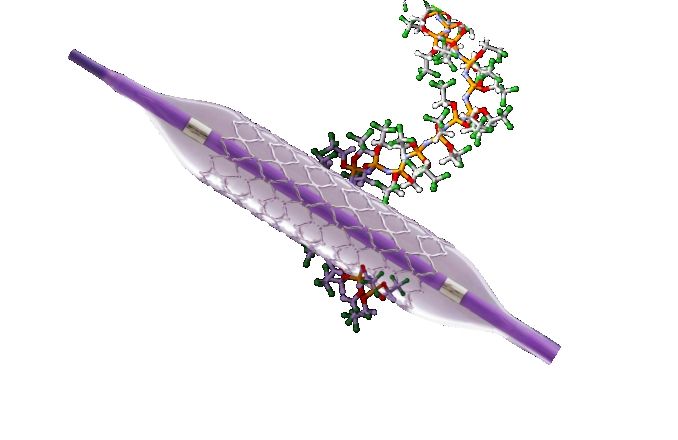
Disclosures | Robert A. Byrne

Personal fees
• None

Research funding
• Research contract with institution of prior employment:
  CeloNova Biosciences
COBRA PzF™ NanoCoated Coronary Stent (NCS)

                                                           Polyzene-F
                                                       Poly [bis (trifluoroethoxy)
                                                                      phosphazene]
Strut Material:
Cobalt Chromium Alloy
                                                 − High molecular weight ultra
Strut Thickness:                                   pure polyphosphazene
71 μm
                                                 − Stable fluorinated polymer,
NanoCoating:
Polyzene -F
                                                   does not degrade under
                                                   biological condition
Polyzene-F Thickness:
≤0.05 μm                                         − Thrombo-resistant,      non
                                                   inflammatory and pro-healing
                                                   in pre-clinical studies
COBRA-REDUCE | Trial Overview
996 patients enrolled between Feb 2016
Design and May 2020 in 59 sites in Europe & USA
• Randomized, open-label, active-controlled,
assessor-blinded, multi-center trial
• OBJECTIVE To determine whether COBRA Treatment Group Control Group
(N=495) (N=501)
PzF Stent with short duration DAPT (14d)
results in a lower incidence of bleeding Received COBRA Received DES only
stent only (N=481) (N=499)
without increasing thrombotic events
compared with DES * with std DAPT (3-6m) Withdrew Withdrew
in patients taking OAC § consent 1
Lost to FU 2
consent 6
Lost to FU 5
FU incomplete 9 FU incomplete 6
• PRINCIPAL INVESTIGATORS
Adnan Kastrati (PI), Deutsches Herzzentrum Clinical follow-up Clinical follow-up
München , Technische Universität, Munich, Germany at 6 months in at 6 months in
Robert A. Byrne (Co-PI), Mater Private Hospital, 97.6% (N=483) 96.6% (N=484)
RCSI University, Dublin, Ireland
*FDA-approved second-generation DES
Clinical Trial Registration: NCT02594501 § OAC dose intensity reduction permitted at PI’s discretionCOBRA-REDUCE | Antithrombotic Treatment Regimen
D0 D14 D90 D180
TREATMENT DEVICE: COBRA stent
OAC
ASA
Screening
Clopidogrel
R OAC dose-reduction was permitted at discretion of PI
ICA & OAC
Final
Eligibility
ASA
Clopidogrel
CONTROL DEVICE: FDA-approved DESCOBRA-REDUCE : Trial Organization
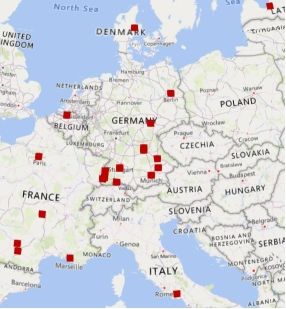
US
370
626
EUCOBRA-REDUCE | Primary Endpoint
BARC 2-5 Bleeding after 14 days*
0.2
COBRA + 14d DAPT
0.18
DES + 3-6m DAPT
0.16
COBRA + DES +
P-value
0.14 Short DAPT Std DAPT
0.12 7.5% (35/466) 8.9% (42/474) 0.477
0.1
0.08
0.06
0.04
0.02
0
0 20 40 60 80 100 120 140 160 180 200COBRA-REDUCE | Co-Primary Endpoint Thrombotic Composite
Composite of Death/MI/Stent Thrombosis/Ischemic Stroke
0.2
COBRA + 14d DAPT
0.18 DES + 3-6m DAPT
0.16
COBRA + DES +
0.14
Short DAPT Std DAPT
0.12
7.7% 5.2%
0.1 Difference +2.5% (95% CI 5.15%)
0.08
0.06
0.04
0.02
0
0 20 40 60 80 100 120 140 160 180 200Secondary bleeding endpoints
COBRA + short DAPT DES + standard DAPT
P=0.026*
20 18.3
P=0.212*
18
16 14.4
14 13
11.7
12 P=0.693*
% 10
8 P=0.869* 6.8
6.1
6 3.9 4.2
4
2
0
BARC 3-5 (after 14 d) BARC 3-5 (after BARC 2-5 (after BARC 1-5 (after
randomization) randomization) randomization)
*superiority analysisSecondary thrombo-embolic endpoints
COBRA + short DAPT DES + standard DAPT
20
16
%
12 P=0.383* P=0.354* P=0.279* P >0.99* P=0.545* P=0.004*
8
4.1 3.7
4 2.9 2.3 2.8
1.5 1.7 1.3
0.6 0.6 0.9 0.9
0
Death Cardiac death MI Def/prob ST Ischemic stroke ID-TLR
*superiority analysisCOBRA-REDUCE | Conclusions In patients undergoing PCI for acute or chronic coronary syndromes who are receiving oral anticoagulation, stenting with Cobra PzF stents with 14 days DAPT with or without reduced intensity OAC did not reduce bleeding and did not meet non- inferiority criteria with respect to thrombotic events compared with standard DES and 3-6 months of DAPT
COBRA-REDUCE | Conclusions

Treatment with Cobra PzF stent was safe with ST rates
considerably lower than those seen in earlier trials with HBR
patients despite DAPT duration of only 14 days

Ongoing follow-up and planned analysis of secondary outcomes
at 12 months is awaited in order to assess comparative efficacy of
the treatment arms in relation to the study devices

Analyses of bleeding events according to medication compliance,
OAC dose and number of ARC-HBR criteria will permit
examination of interaction between treatment effect,
anticoagulation intensity and baseline bleeding risk
You can also read


