Collie at the Crossroads - Planning a future beyond coal - Beyond Zero Emissions
←
→
Page content transcription
If your browser does not render page correctly, please read the page content below
Collie at the Crossroads
Planning a future beyond coal
Published by Beyond Zero Emissions Inc.
Ross House
Suite 3.9, 247 Flinders Lane
Melbourne Victoria 3000

First published November 2019

Collie at the Crossroads, Planning a future beyond coal should be attributed to
Beyond Zero Emissions.

ISBN 978-0-9923580-7-5

This publication is for general information purposes only. Beyond Zero
Emissions does not guarantee that this publication is comprehensive, without
flaw or appropriate for your needs. You should make your own inquiries or seek
independent professional advice before relying on anything in this publication.
Beyond Zero Emissions disclaims all liability for any error, loss or damage that
may arise as a result of you relying on anything contained in this publication.

This publication is licenced under the Creative Commons Attribution 3.0
Australia Licence. In essence, you are free to copy, distribute and adapt the
work, as long as you attribute the work and abide by the other licence terms.

                         To view a copy of this licence, visit:
                         https://creativecommons.org/licences/by-nc-sa/3.0

This document is available for download from http://bze.org.au

Requests and inquiries should be directed to info@bze.org.au

Beyond Zero Emissions acknowledges that we work on Aboriginal land. We pay
our respects to their Elders past, present and emerging.

This document is printed with ecoStar+ – it is an environmentally responsible
paper made carbon neutral, the fibre source is FSC Recycled certified. ecoStar+
is manufactured from 100% post consumer recycled paper in a process
chlorine free environment under the ISO 14001 environmental management
system. To find out the environmental savings and benefits of using recycled
paper, visit www.thinkrecycled.com.au and use our eco-calculator.
Repower our Regions
Beyond Zero Emissions (BZE) is an internationally        Our reports will support regional communities to
recognised climate change think tank, providing          identify zero-carbon opportunities and empower
independent and ambitious climate change solutions       them to act. Each report draws from our award-
for Australia.                                           winning body of research. They are:
Our flagship research program shows how all sectors      •   led by our world-class researchers and
of the Australian economy can decarbonise, repower           community of local experts
and benefit from the transition to zero emissions.       •   tailored to the unique character and needs of
These Zero Carbon Australia plans cover renewable            each region
energy and electricity; energy efficient buildings;      •   practical and deliverable
sustainable transport; agriculture, farming and land     •   bold, energising and inspiring
use; and industry.
                                                         •   empowering, giving communities the
Through volunteer-powered research we show                   information they need to build support for rapid
that a thriving, equitable zero emissions society is         decarbonisation and to inspire people to act.
achievable and affordable now, and that Australia        Collectively, these reports will show how Australia
can become a renewable energy superpower.                can be a renewable energy superpower in the zero-
Beyond Zero Emissions is using this research to          carbon global economy.
develop reports for repowering fossil dependent
regions with renewable energy, zero carbon
industries, agriculture and land use.
Collie at the Crossroads is part of our Repowering
our Regions program. We have already published
reports for the Northern Territory and Port Augusta
in South Australia. Plans for the Hunter Valley in New
South Wales, rural Victoria and elsewhere in regional
Australia are to follow.

  The Noongar people are the Traditional
  Custodians of southwest Australia. Collie
  is located on the land of the Wilman tribe,
  known as the fresh water people. Collie
  and surrounds are part of the Gnaala
  Karla Booja region. We recognise that the
  Noongar people’s sovereignty over their
  land was never ceded and the impact of
  this ongoing dispossession continues to
  this day. Beyond Zero Emissions stands
  in solidarity with First Nations people in
  calling for the establishment of a First
  Nations Voice in the Constitution, as
  described in the Uluru Statement from
  the Heart. We further support calls for the
  establishment of a Makarrata Commission
  on agreement-making and truth-telling
  between Aboriginal and Torres Strait
  Islander peoples and governments.

                                                                                          Beyond Zero Emissions 1
Support our work
 Donate                                                  Partner
 Your support will enable our community of climate       We have successfully translated findings from our
 experts to continue delivering climate solutions that   research into commercial projects for a select group
 inspire hope and action. We make your dollars work      of clients who share our values and ambition. We
 hard to produce high-impact solutions by pairing        can deliver these solo or in partnership with other
 our world-class research team with enthusiastic and     organisations. Selective commercial work provides
 capable volunteers from academia, business and          an important opportunity for us to translate our
 government. With your tax-deductible donation we        visionary research into direct outcomes.
 can deliver more successes like these:
                                                         Contact us via our website to find out more about
 Electrifying Industry: a global first report showing    how you can support our work by making a
 how manufacturing can fuel switch to renewable          donation, volunteering or partnering with us.
 electricity. The report was launched at a one-day
                                                         www.bze.org.au
 seminar attended by more than 200 leaders in
 industry and renewable energy.                          Endorsements
 Rethinking Cement: the world’s first report showing     ‘BZE have for years been the pathfinder, mapping
 how cement can be decarbonised. This has                the possibilities for our rapid, and inevitable,
 generated international and national interest and       transition to a low-carbon society. The Zero Carbon
 support across the construction and infrastructure      Australia Electric Vehicles Plan [2016] is another
 sector.                                                 vital piece of the jigsaw we must complete to make
 Stationary Energy Plan: this pioneering report          that transition, but particularly important given the
 changed the conversation on renewables in               need to move away from our social and economic
 Australia, showing governments, businesses and          reliance on ICE technology in a large continent with
 communities that 100% renewable electricity is          a widely dispersed population.’
 possible.                                               Ian Dunlop, Member of the Club of Rome
 Electric Vehicle Report: shows how Australia can        ‘[BZE’s Buildings Plan, 2013] comprehensively
 easily and affordably match and even top the UK’s       proves how we can reduce our buildings emissions,
 lead on electric vehicles. The report has been          and demonstrates how individuals can contribute.
 endorsed by the ACT and Queensland governments.         The leadership shown by Beyond Zero Emissions is
 Renewable Energy Superpower: a report that has          what the world needs, effective communication of
 become the spoken ambition of Australian climate        practical applications to solve our current climate
 leaders.                                                crisis.’
 Zero Carbon Communities Guide: a guide to inspire       Jigar Shah, Clean energy entrepreneur and author
 confidence and action at the local level.               of “Creating Climate Wealth: Unlocking the Impact
                                                         Economy”
 Volunteer
                                                         ‘[BZE’s Stationary Energy Plan, 2010] is a timely
 Beyond Zero Emissions is powered by                     and aspirational report that deserves the widest
 volunteers: engineers, scientists, economists and       attention and debate, particularly by political and
 communicators all contributing their time and           industrial decision makers.’
 expertise to develop and promote climate solutions
                                                         General Peter Gration, AC, OBE, FTSE, Former
 that support a rapid transition to zero emissions.
                                                         Australian Chief of Defense
 You can support our bold vision for a Zero
 Carbon Australia by donating your time with us.
 Opportunities exist for motivated and capable
 volunteers across cities and regions. Many of
 our volunteers make new friends, expand their
 professional network and learn new skills while doing
 interesting and impactful work with us.

2 Collie at the Crossroads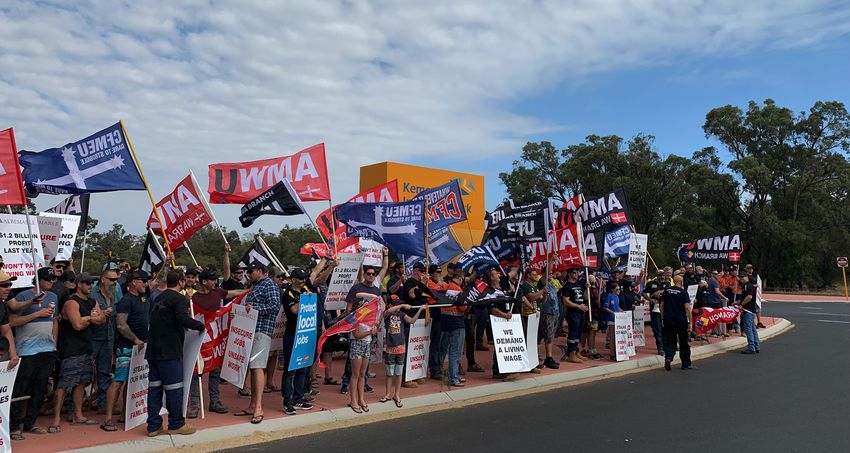
Contributors
Strategic oversight                                  Graphic Design
Vanessa Petrie                                       Sonja Loader-Jurac

Project lead                                         Cari Gray

Lachlan Rule                                         Editors
Volunteer researchers                                Heidi Lee

Jan Wisniewski                                       Matt Cohen

Matt Cohen                                           Nicki Colls

Omar Ali                                             Madeline Townsend

Kay Wennegal                                         Jan Wisniewski

Achille Victor                                       Project partners
Expert consultation                                  Beyond Zero Emissions would like to thank Jaime
                                                     Yallup Farrant & Luke Skinner from the Climate
Australian Manufacturing Workers Union (WA branch)   Justice Union for their substantial contribution to the
CFMEU Mining & Energy (WA branch)                    content, tone and socialisation of this report.

Australian Services Union (WA branch)                The Climate Justice Union works in communities
                                                     across Western Australia to accelerate the transition
Electrical Trades Union (WA branch)                  to zero emissions and prepare for climate change
Dr Martin Anda - Murdoch University                  impacts, while taking care of people and place.

Dr Fergus Green
Ian Porter - SEN
Dr John Shiel
Michael Lord
Nicole Boyd - ISCA                                   Funders
Tristy Fairfield                                     The Koorabup Trust
Adam Jones                                           Hamer Family Fund
Adam Zaborszczyk                                     Lenko Family Foundation

Jess Beckerling - Forests for Life                   NR Peace and Justice Fund

Graham Hansen - WACOSS                               The Mullum Trust

Alex Houlston - BOOM!Power                           The Pace Foundation
                                                     Many monthly and occasional donors
Kerry Anderson

Traditional Owners consultation
Les Wallam
James Khan
Gnaala Karla Booja Working Party

                                                                                      Beyond Zero Emissions 3
Key Messages
    1. Western Australia is endowed with a wealth of renewable energy resources.
       There is ample sun and wind to power the state’s electricity needs;
       domestic, commercial and industrial. Well developed technology exists to
       provide reliable and affordable renewable electricity to consumers.

    2. Renewable electricity is cheaper than new or existing coal or gas fired
       power stations. This reality is becoming clearer as the global transition to
       renewables accelerates. In this context, the closure of Collie’s coal industry
       is inevitable. Immediate action is needed to secure the livelihoods of coal
       workers, their families, and the town they support.

    3. Collie’s economy can be re-tooled for a low-carbon future, creating
       1,750 long term, secure jobs in renewable manufacturing, green building
       materials and recycling. Many of these new jobs are made possible by a
       rapid rollout of renewable energy.

    4. A 100% renewable electricity target would spur on over $13 billion in new
       investment on the grid and 5,000 jobs in construction and maintenance.

    5. The energy transition can pay social dividends. Working conditions can
       be improved and economic benefits can be shared through programs for
       home energy efficiency upgrades, small business sustainability and direct
       community investment.

4 Collie at the Crossroads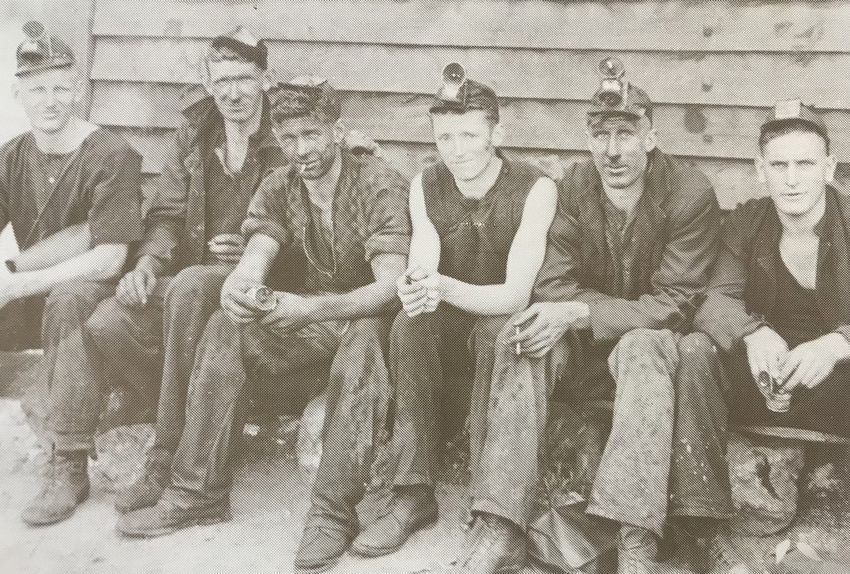
Contents
Executive Summary                                                                6
The Gnaala Kaala Boodja region                                                   8
Noongar ownership of land - koorah, nitja, boordahwan                            8
1. Introduction                                                                 10
2. Global renewable energy transition                                           13
Renewables are now cheaper than fossil fuels                                    13
Government policy supports climate action                                       14
Investors are divesting from fossil fuels                                       14
Business initiatives                                                            14
3. A 100% renewable grid                                                        15
4. The future of industry in Collie                                             17
4.1 Low-carbon manufacturing                                                    17
4.2 Protecting workplace conditions                                             18
5. Creating new, real jobs for Collie                                           20
5.1 Making renewable energy                                                     21
5.2 Sustainable building materials                                              27
5.3 Recycling renewable products                                                32
6. Social licence for change                                                    35
6.1 Energy efficiency retrofits for low-income households                       35
6.2 Sustainability grants for local businesses                                  36
6.3 A clean industry community fund                                             36
6.4 An energy co-operative                                                      37
7. Policy recommendations                                                       38
7.1 Secure social licence                                                       39
7.2 Legislate for a 100% WA-RET                                                 39
7.3 Renewable energy common user facilities                                     41
7.4 Local content requirements                                                  42
7.5 Low-carbon building material requirements                                   43
7.6 Sustainable industry investment fund                                        45
7.7 Review and redirect existing industry support                               46
9. Conclusion                                                                   47
Appendix 1 - The decline of coal in Collie                                      48
Appendix 2 - Keeping freight off roads                                          52
Endnotes53

                                                             Beyond Zero Emissions 5
Executive Summary
 What does Collie look like in 2030? This simple
 question has profound implications for the 9,000
                                                            Opportunities
 people who call the town home. For Collie to               This report describes a range of industries set to
 prosper, a grand coalition must be formed, which           grow rapidly in coming years, and highlights the
 works to secure the town’s future in the interests of      secure, well-paid jobs they can create in Collie.
 the community, workers and the planet.                     Taken together the opportunities listed below have
 The climate is changing quickly. Western Australia         the potential to create over 1,750 jobs in Collie, more
 is getting hotter and drier. A rapid transition to         than offsetting 1,250 positions in the coal industry. The
 renewable energy is needed to avert the worst of           transition described in this report would avert more
 these changes.				                                         than 14 million tonnes of CO₂-e per year by 2030.

 The future is uncertain for workers in Collie’s coal
 industry, long the town’s economic mainstay. The
 recent announcement of plans to close Muja units
 5&6, as well as jobs losses at Griffin Coal, highlights
 the urgent need for long-term, funded transition
 planning.
                                                            Renewable Energy Transition: Hundreds of new
 Staring down the end of the industry that built
                                                            jobs in the South West supporting a grid powered
 the town, Collie faces a challenge dozens of
                                                            100% by renewable energy. Collie’s role at the heart
 communities around Australia, and thousands
                                                            of the network maintained.
 worldwide, will confront in coming decades.
 Despite these challenges, the future for Collie and
 fossil-fuel communities all over Australia is bright, if
 they can seize the opportunities coming decades will
 present. The global move to a low-carbon economy
 presents a once-in-a-generation opportunity for
                                                            Sustainable Building Materials: Collie supplies
 Collie’s workers. A local workforce geared towards
                                                            Western Australia with valuable sustainable
 sustainable industry and manufacturing can underpin
                                                            construction materials, and helps to decarbonise the
 the next century of prosperity for Collie’s people.
                                                            state’s buildings and infrastructure.
 The opportunities outlined in this report are made
 possible by a broader transition on WA’s main
 electricity grid. The looming closure of Muja power
 station is the perfect opportunity for WA to fully
 harness the state’s renewable energy abundance.
 A renewable transition and creating a circular
                                                            Recycling Renewable Technology: Western
 economy can lower costs, diversify WA’s economy
                                                            Australia leads the world in battery and PV recycling,
 and create healthier, more sustainable regions.
                                                            processing and reuse.
 Benefits for community in the Gnaala Karla Boodja
 region need to be planned at the outset. This work
                                                            Table 1: Summary of economic opportunities
 to secure a social licence for change can begin
 immediately. Existing workers can be looked after,         Employment in Collie &              Investment
 conditions can be maintained. Local communities            Bunbury                             (2019 dollars)
 must also be supported through the transition,
                                                             Renewable energy         1,245     $13+ billion statewide
 including programs to assist small businesses and           transition
 low-income earners.
                                                             Sustainable building     330       $330 million
 Collie can retain its role at the heart of the energy       materials
 system by supplying and supporting the rollout
                                                             Recycling renewable      175       $82.5 million
 of renewable energy in WA. Existing skills and              products
 infrastructure in the Collie-Bunbury region can be
                                                             Total                    1,750     $13.4+ billion
 put to use developing new, high-value products for
 use in WA and abroad.

6 Collie at the Crossroads
Recommendations
Long-term policy direction and programs will           5. Develop a Renewable WA Common User Facility
drive the economic transition described in this           to supply the transition to 100% renewable
report. To create conditions for change, this report      electricity and position WA as a world leader in
recommends:                                               clean technology.
1. Secure social licence for the transition through    6. Create a Western Australian Sustainable Industry
   support for workers and the community.                 Investment Fund to drive the transition to clean
                                                          manufacturing and industry with $2.5 billion in
2. Legislate for a 100% Western Australian
                                                          investments over ten years.
   Renewable Energy Target (WA-RET) by 2030.
                                                       7. Review and redirect existing industry support
3. Maximise local industry participation by
                                                          away from fossil fuel and boom/bust mineral
   designating all WA-RET developments as “strategic
                                                          developments towards emerging clean industries.
   projects” under the Western Australian Industry
   Participation Strategy.
4. Implement low-carbon building material
   requirements for all state and local government
   infrastructure spends over $20 million.

                                                                                      Beyond Zero Emissions 7
The Gnaala Kaala Boodja region
   Figure 1: Noongar language divisions

                      YUED
     Moora

     Northam
                        WHADJUK
         Perth
                                  BALLARDONG

                        GNAALA KARLA
                        BOODJA

        Collie

          Yallingup
                                       WAGYL KAIP
     SOUTH WEST
     BOODJARAH

     Albany

 The Gnaala Karla Boodja region refers to the
 Noongar language or dialectical groups of the
                                                            Noongar ownership of land -
 Binjareb/Pinjarup, Wilman and Ganeang peoples. The         koorah, nitja, boordahwan
 Gnaala Karla Boodja region encompasses the region
 south of Perth to Donnybrook and from the coast            All of the projects proposed in this report fall
 inland to past Narrogin.                                   within Noongar boodja, and will impact, shape
                                                            and change the land. In recognition of ongoing
 Collie is located on the lands of the Wilman tribe         Noongar sovereignty over Noongar boodja, it falls
 of the fresh water people. The Wilman people               to project developers and Government to ensure
 acknowledge the Ngarngungudditj Waugal as the              Traditional Owners are both active participants in the
 creation spirit of the Collie River. To demonstrate        planning process and beneficiaries of the economic
 respect, each visit to the river begins with the tossing   opportunities created.
 of a handful of dirt into the water. This act “lets the
 river know we are present”.1                               The principle of Free, Prior and Informed Consent
                                                            (FPIC) should be a cornerstone of engaging with
 The Wilman people have preserved and protected             Traditional Owners about their land. FPIC ensures
 their boodja (land) and moort (family) since time          that Traditional Owners have ‘equal opportunity’ to
 immemorial, sustaining cultural practices for              engage with any proposed project on their land or
 thousands of generations. Despite two centuries of         which impacts their land. Equal opportunity means
 colonisation, the Wilman have maintained traditions        equal access to financial, human, linguistic and
 which care for the land and waters of Collie and           material resources in order for communities to fully
 surrounds.2 The Collie region is home to a lasting         and meaningfully engage in the process.4
 testament to this history of dislocation and cultural
 revival in Roelands Village, a former mission which        Benefits to Indigenous communities must be
 now runs healing and cultural programs.3                   planned at the outset, and not dependent on hopes
                                                            of prosperity “trickling down”. Canada and New
 The environment movement, Governments and                  Zealand already have successful track records of
 mainstream Australia have much to learn from               renewable energy projects facilitating Indigenous
 Traditional Owners in how to live sustainably on           benefit, including part-ownership of renewable
 Noongar boodja.                                            energy resources. This First Nations experience can
                                                            guide the participation of Traditional Owner groups
                                                            in the coming energy revolution.5
                                                            Designing a transition for Collie that also contributes
                                                            to righting the wrongs of colonisation will depend
                                                            on the commitment of all participants to listening to
                                                            Traditional Owner voices.

8 Collie at the Crossroads
Noongar seasons - Birak, Bunuru, Djeran, Makuru, Djilba and Kambarang
Noongar people recognise six seasons, based on the unique climate of Noongar boodja. These seasons,
determined by weather patterns, are called:
• Birak, December & January, the first summer.
• Bunuru, February & March, the second summer
• Djeran, April & May, the autumn
• Makuru, June & July, the first rains
• Djilba, August & September, the second rains
• Kambarang, October & November, the wildflower season
Knowledge of these seasons helps Noongar people know which animals and plants are available for
hunting or harvesting. Taking only what is needed from the land is a core component of Noongar
custom. By studying changes in nature, Noongar people know when certain foods or medicines are
plentiful, and when they should be left to recover.
Through working in concert with natural patterns, Noongar people avoid depleting the resources
they rely on. These customs allowed Noongar culture to flourish for tens of thousands of years. The
knowledge of how to live on boodja was given to Noongar people by the Waugal and has been passed
down by Elders ever since.6
The First Summer. Season of the Young.
Reptiles emerge from hibernation.
.
irth
Ad
Th sce of t
ers of B
Hot & dry time with easterly
ole
e S nc oo
am fo e co ovin ds. s
winds during the day and
ie
ec e. C l-m
ow on
nti d th d m ba art
.
cooler south-westerly
on
ldfl as
Hu ar rte ger ily p
Ho ds. F ncide f cou or
wi n. Se
d S ildr king
wi
sea breeze during
n
ps, cus ast. g
n coi s o d f
t e ish
m
um en
afternoon.
ts aso
a
h
ast ing larg try
sec ban of w
f
me lea
ore tla on
ll
rpe Se
erl
a
tow sta lar
of
Gr o f Sm
tio don ate
sts nds
a
r. S rn t
& f we d
Ca wer
a
y a hu
e
m
lac
n
d t ain.
ea he
nd nti
ou or
flo
k
&
.
,
so
lin ing r
.
no ng
ild
ps
n o art
sw ng
e
eW
rth
d
e
ke
The six
f
n
ce
Th
Re
r.
Noongar
seasons
Th . Se tion &
Ra onc lakes .
co of m hoo n o n.
Bla
of
Qu Wat ardi
ere s & e
Be ng
s.
e S as
hu da an prov Witc
Ad Sea utum
Ra ater
sh arria d. Tim
ins ep
nie
f
C fill les
ck
) is g o . The
co for ossu goo y gru
ag e ca outh ith
en tle
.
ins
cti e
nti
ec on .
ve
w
dis f th
mo
mi
w
ge
on
ult sio
eA
ng Kang s c d sou bs.
rdi e-l the oler
d
tin
Th
B
h
d
wa aro ont rce
pie llin
o
The First
c
o
s
P des ett
Ku ud fl s fro ing c
ip
rm
Rains. Fertility
or
i
er, , Em nues of
lba ut m
Season. Time
urt
m
m
k
inla u, .
i
wi eco
o
to travel to inland
h
nd
(M
hunting areas.
B
lo nd
i
Cold & wet weather with
westerly gales. Swans began
moulting, being unable to fly, and
became easy prey.
Beyond Zero Emissions 91. Introduction
Western Collieries Ltd workers C.1960s7
Collie sits in the Gnaala Karla Boodja region, home Collie is located 200 kms from Perth, in the heart of
for tens of thousands of years to the Pinjarup, the South West Interconnected System (SWIS). The
Wilman and Ganeang people.8 Noongar people town’s coal industry is made up of two coal mines
maintain strong cultural links to the Collie region, and the three power stations they supply.11 The
and to particular sites, such as the Collie River.9 In mines and power stations combined employ around
2015 this ongoing connection was recognised in a 1,250 workers and contractors.12
landmark native title determination encompassing
As a result of changes in the energy system, there is
Collie and the South West, the South West Native
growing uncertainty over the viability of Collie’s coal
Title Settlement.10
industry, and a strong push from the community for
Since the 1880s, Western Australia (WA) has rapid economic diversification. The stark reality of a
been powered by coal mined from Collie and its warming climate, the economics of a renewable grid
surrounds. Collie’s prosperity, and much of its and the design limitations of coal generators mean
identity, was borne of this industrial history. Collie’s coal industry faces a perfect storm.
10 Collie at the CrossroadsFigure 2: Collie and surrounds
Bluewaters Power
Station
Black Collie Power Station
Daimond Lake
Griffin Coal Mining
Collie
Premier Coal Mine
Muja Power Station
Roads
Land scars from mines
Collie township
Water
0 10km
Beyond Zero Emissions 11Figure 3: Annual rainfall anomaly - South Western Australia (1900 - 2018)
Collie, and the South West more broadly, are This report describes a range of well-paid and secure
particularly exposed to the risks of climate change. jobs in new industries that can support Collie’s future
South West WA has been called a “canary in the coal development.
mine for climate change” due to a stark decline in
The clean energy revolution will see US$10.3 trillion
rainfall over recent decades.13 Rainfall has declined
dollars invested worldwide by 2050, and hundreds
20% in the lower South West since 1970 and
of billions more spent on investment in low-carbon
predictions are for this trend to continue.14 Worst
manufacturing.19
case projections by the Commonwealth Scientific
and Industrial Research Organisation (CSIRO) and Collie and the South West are ideally located to lead
the Bureau of Meteorology (BoM) indicate rainfall the state and nation in transitioning local economies
could decline by an additional 35% on current to sustainable industry. A prosperous future for Collie
levels by 2090 if greenhouse gas emissions are not can be built on the back of WA’s strong renewable
brought under control.15 16 resources and the region’s established energy
and transport infrastructure, skilled workforce and
The end of coal presents WA with a choice about
existing heavy industry.
the type of economic transition that Collie will face.
Regional transitions away from fossil fuels can be an Collie at the Crossroads maps out a vision for a
opportunity for economic diversification and growth, prosperous, low-carbon Collie in 2030. This report
or stagnation and decline.17 shows how the energy transition can pay economic
and social dividends to communities moving away
Much existing work has focused on the opportunities
from coal, while establishing sustainable new
in tourism and agriculture to replace jobs lost in
industries that will set them up for decades to come.
Collie’s mines. Developing these sectors is to be
encouraged; however, to provide a sufficiently
secure economic future on which the town can
rely for its lifeblood, the strengths of the existing
workforce must be harnessed.18
12 Collie at the Crossroads2. Global renewable energy transition
A powerful combination of governments, investors
and business action is driving our global economy
Renewables are now
towards a zero-carbon future. Renewable energy cheaper than fossil fuels
investment now outperforms most fossil fuel
investments, a trend that is accelerating. Fossil fuels will be trapped in a pincer movement,
with economics on one side and climate action on
This transition will have a profound effect across the other. The cost of renewable energy has been
the economy. Sectors such as manufacturing, falling steeply for decades, and solar power is now
mining and transport will be transformed in perhaps 80% cheaper than only 10 years ago.20
the biggest wave of change since the industrial
revolution. Clear planning and decisive action In Australia, large scale wind and solar power are
can support regions most impacted to build new now often cheaper than existing coal and gas power
renewable industries and provide attractive jobs for plants – even when the cost of building those plants
workers. has been paid off.21 Electricity from large-scale solar
can now be produced for as little as 5-6 cents per
Governments, business and communities will all play kilowatt hour (c/kWh) in Australia, well below the
a part in securing a position for Western Australia as average market price.22 This compares to Western
a leader of the global clean energy economy. Australia’s average wholesale price of around 13 c/
kWh.23
Solar PV and battery costs are set to continue their
steep decline. By 2030, solar PV could fall by another
50% and solar PV firmed with two hours of battery
storage will be far cheaper than current forecasts
for Western Australia’s wholesale energy (Figure 4).24
Renewable electricity at this price will completely
rewrite energy economics.
Figure 4: The cost of renewable energy in Australia has plummeted and will continue to fall.
Beyond Zero Emissions 13Government policy supports Fossil fuels also face increasing legal challenges.35
A court case early in 2019 saw the first Australian
climate action decision against a new coal mine on climate
grounds. A NSW court dismissed an appeal against
To achieve the Paris Climate Agreement’s aim of the initial rejection, basing part of its reasoning on
keeping warming to “well below two degrees”, most the increased greenhouse gas emissions a new mine
of our fossil fuel reserves must remain in the ground, would cause.36
and new fossil fuel developments are out of the
question.25 Australia’s key trading partners, such as
China and India, are ramping up their climate policies
Business initiatives
and setting ambitious renewable energy targets.26 Many large businesses are surpassing governments
We must decarbonise our exports to maintain strong in their level of climate ambition. Some of the
demand for our goods and services in a renewable world’s leading companies aim to source 100% of
energy economy. their electricity from renewable sources. Apple,
Google and Microsoft have already achieved this
“...now is not the time for a medium-sized goal.37
economy to test global tolerance for free
More than 500 global corporations have joined
riders.” 27
the Science Based Targets initiative, which requires
Innes Willox, CEO of the Australian Industry Group
them to set emissions reduction targets in line
with the Paris Agreement. Signatories include
many household names such as Coca-Cola, Gap,
As more countries impose costs on carbon pollution,
IKEA, L’Oreal, Nestlé, Sony and Walmart. Some
Australia will come under increasing political
corporations, such as Mars and Sony, have gone
pressure to put a price on carbon. China now runs
further, committing to eliminating their indirect
the world’s largest emissions trading scheme 28 and
(Scope 3) emissions.
the European Union is already discussing carbon
tariffs.29 In WA, even large emitters like Woodside,
Westfarmers and South32 are using internal carbon
Investors are divesting from pricing to guide business decisions and quantify
climate risk.38
fossil fuels
The Investor Group on Climate Change has called
the Paris Agreement an unambiguous market
signal of the end of fossil fuels.30 Responding to
this, institutional investors have divested more than
$US6 trillion of fossil fuel investments.31 Institutional
investors are now joining forces to demand more
ambitious climate action.
The Investor Agenda, a group of 415 investors
representing over US$32 trillion in assets, has called
on governments to put a price on carbon, abolish
fossil fuel subsidies and phase out thermal coal
power.32 Advocacy from the Task Force on Climate-
related Financial Disclosures and investor groups
like Climate Action 100+ has persuaded many of
the world’s largest corporate emitters, including
significant WA operator Rio Tinto, to commit to
ambitious targets for decarbonising their operations.
33 34
14 Collie at the Crossroads3. A 100% renewable grid
Powering Western Australia with 100% renewable Individual modelling done by Sustainable Energy
energy by 2030 is affordable and achievable.39 40 41 Now (SEN) and researchers at the Australian National
42
The economics of renewable generation have University (ANU) shows a 100% renewable SWIS is
improved to the point of consistently beating achievable by 2030.49 50 Table 2 below summarises
traditional thermal generators on price.43 44 45There the technology mix each set of modelling suggests
is a growing consensus among Australia’s experts would be sufficient to reach 100% renewable energy.
in energy policy, economics and engineering that
Table 2: Technology mix for a 100% renewable SWIS
moving the energy system to 100% renewable
generation is a necessary change. 46 SEN ANU
While the bulk of Australian energy modelling Wind 6,000 MW 4,000 MW
demonstrating pathways to 100% renewable energy
has focused on the east coast National Electricity Solar 3,000 MW 4,300 MW
Market (NEM), the same factors work in Western
Australia’s favour. Western Australia has excellent Dispatchable 3,300 MW 3,000 MW
access to wind and solar resources and plenty renewable
of suitable locations for pumped hydro energy
Total 12,300 MW 11,300 MW
storage.47 48
The first step in transitioning Collie’s economy from This report has based its findings on SEN’s higher
coal to clean energy and industry is a rapid, managed figure of 12,300 MW of renewable capacity. The
transition of Western Australia’s main grid (the South SWIS already contains 650 MW of wind and utility
West Interconnected System) to 100% renewable solar generation, as well as 1,100+ MW of rooftop
energy. By committing to a wholesale renewable solar PV.51 52 Taking this existing capacity into ac-
rollout on the SWIS, WA can raise its profile as an count, reaching 100% renewable electricity requires
energy innovator, lower power prices and create a a buildout of under 1,000 MW of new capacity per
thriving local industry in low-carbon manufacturing year to 2030.
and clean technology. A 100% renewable energy There is currently 4,900 MW of renewable capacity
SWIS is the foundation of securing Collie’s future committed or under construction in Queensland
without coal while delivering broader social and alone and three times this amount nationwide.
economic benefits to all Western Australians. Despite a shambolic national policy environment,
Figure 5: Collie at the heart of SWIS
SWIS
Transmission lines
Geraldton
Kalgoorlie
Perth
Collie
Bunbury
Albany
Beyond Zero Emissions 15Australia built almost 12,000 MW of renewable The cost of firming these intermittent generation
capacity between January 2017 and December sources is estimated to be an additional $5/MWh up
2018.53 Given these figures, building 1,000 MW per to 50% renewable energy penetration, and $25/MWh
year in WA is a readily achievable goal. at 100%.60 61
The price of renewable energy has declined rapidly The CSIRO estimates the cost of solar energy
in recent years. The Levelised Cost of Energy (the firmed with six hours of storage will be $70 by
cost per unit of output) for solar projects in the NEM 2030 - cheaper than any competing technology.62
has declined by more than 60% since 2015.54 The For comparison, the Australian Energy Market
CSIRO projects the cost of solar generation will fall Commission (AEMC) gives a WA wholesale price of
another 35-40% and wind generation will drop by $129/MWh, with projected price increases of >4%
over 15% by 2030.55 Alinta Energy CEO, Jeff Dimery, through to 2022 due to rising coal and gas prices.63
recently announced Yandin Wind Farm, 200km north
Exposing WA energy consumers to the full cost
of Perth, was likely to produce electricity at under
of their supply has been an ongoing issue for WA
$50/MWh when completed in 2020.56
State Governments. Hundreds of millions of dollars
Table 3: Current and future cost of renewable energy of subsidies have been paid out of consolidated
revenue to shield consumers from the full cost
Solar Wind of running the energy system.64 65 To reduce this
NEM LCOE in 2019 $50-60/MWh 57
>$60/MWh58 burden on the budget, households were hit with
a 7% increase in the cost of electricity in 2018-19.
CSIRO 2030 projections59 $30-40/MWh $50/MWh
An ambitious renewable energy rollout is the best
Extra costs will be incurred to ensure that renewable option to protect consumers from inevitable price
energy can be dispatched at any time it is needed. hikes as these subsidies are withdrawn. 66
These “firming” costs include storage and grid
services such as inertia and frequency control (to
keep the whole network stable and running safely).
Figure 6: Indicative 100% renewable energy pathway
15000 100
12000 80
Nameplate capacity (MW)
Renewable energy (%)
9000 60
6000 40
3000 20
0 0
2019 2020 2021 2022 2023 2024 2025 2026 2027 2028 2029 2030
Renewable dispatchable (MW) Rooftop solar (MW) Fossil fuel generation (MW)
Utilty solar (MW) Wind (MW) Renewable share (%)
16 Collie at the Crossroads4. The future of industry in Collie
The statewide rollout of renewable energy will create At the same time as cheap renewables are reshaping
thousands of jobs in regional areas around Western the economics of energy intensive industries,
Australia. Meanwhile, the loss of jobs resulting from demand for low-carbon materials and products is set
the closure of Collie’s coal plants and mines will be to boom.
highly localised. Sustainable new industries need to
• The value of the global green building materials
be established to ensure Collie’s workers do not face
market is predicted to increase from US $46
significant financial hardship as the coal industry
billion in 2014 to US $364 billion in 2022.69
winds down.
• In response to customer demand, metal
WA’s abundant renewable resources create a massive producers such as Rio Tinto and Alcoa now
opportunity to boost the state’s industrial base and charge a premium for low-carbon products.70
capture far more value from its mineral resources.
• Many of the technological barriers to producing
Collie is well placed to ride this wave of sustainable industrial products such as green
reindustrialisation as the new hub of sustainable steel have been overcome.71
manufacturing in WA. • Private firms and Governments are increasingly
required to account for embodied emissions in
“Renewable energy is the way that Australia products and infrastructure.72
can once again become a cheap energy
Companies and jurisdictions that seize this potential
superpower and industries like aluminium
will prosper, those that don’t will be left behind.
smelting will relocate onshore.”67
The growing market for low-carbon materials is also
-Kobad Bhavngri, Head of Bloomberg New Energy Finance Australia creating exciting opportunities for new industries
focused on reusing and recycling post-consumer
Manufacturers that adapt will remain competitive and post-industrial materials.73 Creating circular
in a low-carbon future. Current fossil fuel reliant industries, which capture the value in waste to
industrial processes are simply incompatible with the produce new sustainable materials and products, is
emissions reductions required of nations to achieve an opportunity worth up to $4.5 trillion worldwide by
the aims of the Paris Agreement.68 2030. 74
The opportunities below are only a few of the many
4.1 Low-carbon available to Collie and Western Australia. Strategic
manufacturing investment, forward thinking and long-term vision
can underpin decades of sustainable economic
The move to low-carbon manufacturing and growth for the Collie-Bunbury region.
processing presents a once in a generation
opportunity to reduce costs and achieve a
competitive advantage in a carbon-constrained
world. WA has huge potential to drive a wave
of industrialisation using new technology and
affordable, renewable energy.
The Collie-Bunbury region, at the heart of the SWIS,
has a skilled workforce, strong transport links and
existing industrial infrastructure. These factors make
the region the ideal location for these new industries
to develop.
Beyond Zero Emissions 17Box 1: Skills for the future
4.2 Protecting workplace
For Collie to prosper as a sustainable
conditions
manufacturing hub, time and money will need The end of Collie’s coal industry will inevitably have a
to be spent reskilling Collie’s coal workers. profound effect on the town. This report shows how
Although local workers will have a wealth sound planning can make this a smoother process,
of transferable knowledge, additional sector leading to economic renewal and the creation of
specific training will be a vital first step in thousands of high-quality jobs. Putting workers and
helping coal workers to transition to new roles. community at the heart of this planning will help to
Assisting workers to complete training while still secure the best possible outcome for the town.
employed can help to minimise the disruption The International Labour Organisation (ILO) argues
experienced and ensure a steady supply of the energy transitions can contribute to greater
skilled staff for growing new industries.75 prosperity both for the affected workers and the
Workers should be supported to identify community more broadly:
their existing skills and the jobs they hope to
transition into. Tailored training plans backed “Greening all enterprises and jobs by
with funding from employers and government introducing more energy and resource
can then be developed to help fulfil these efficient practices, avoiding pollution and
ambitions and overcome barriers to retraining.76 managing natural resources sustainably
Priority must be given to ensuring local leads to innovation, enhances resilience
educational facilities are equipped to deliver the and generates savings which drive new
necessary programs. Consideration should also investment and employment.” 78
be given to co-locating educational facilities
in Collie with business entrepreneurship and The energy transition presents an opportunity to
innovation programs. rethink the kind of economy we want. In recent
years, work in Australia has become less secure,
The University of NSW’s Industrial Relations
wages have stagnated and the interests of employers
Research Centre attributes substantial
dominate industrial relations.79 80 As old industries
investment in training and innovation programs
close and new industries open, we have a choice in
for much of the success in transitioning
the kind of economic transition we create.
Germany’s Ruhr Valley away from coal mining.77
The centre’s report, The Ruhr or Appalachia? Workers in Collie’s coal mines and power stations
Deciding the future of Australia’s coal power have benefited from a long history of strong union
workers and communities, found: representation. Despite challenges created by the
declining viability of Collie’s coal mines, unions
“Retraining—especially when used as
have continued to play a central role in protecting
a preventative measure rather than a
the conditions and entitlements of local workers.81
reactive response to plant closure— 82
To gain the support of coal workers and their
is the most effective method for
representatives, new jobs must be high quality.
preventing unemployment and long-term
unemployment. This training needs to
occur well before retrenchment to be most
effective in the transition to decent work.
It should also be provided without cost to
those workers.”
18 Collie at the CrossroadsWA union members protest outside Albemarle lithium processing plant site in April 2019 (credit: AMWU)
Maintaining high-quality working conditions will
be an ongoing challenge as new employers enter
the region. Government can play a leading role
in promoting fair and democratic workplaces by
ensuring that all government-funded projects
in Collie-Bunbury adhere to agreed workplace
standards. Minimising the use of contract
labour, protecting collective bargaining rights
and guaranteeing a central role for worker’s
representatives in all negotiations are important and
achievable proposals.
By stepping up to the challenge and providing a
hands-on approach to coal transition, WA’s State
Government can help to create well-paid, secure,
and sustainable jobs in Collie.
Beyond Zero Emissions 195. Creating new, real jobs for Collie
Collie has over 1,250 coal industry jobs. By
Renewable Energy: Hundreds
harnessing the skills of the existing workforce, South
of new jobs in the South West
West Western Australia can rapidly transition to a
supporting a grid powered 100% by
renewable grid. Achieving a 100% renewable SWIS
renewable energy. Collie’s role at the
can help to create 1,750 new jobs in Collie-Bunbury.
heart of the network maintained.
The decarbonisation of the SWIS is the foundation
for the future of Collie and is achievable, with clear Sustainable building materials:
mandates and policy support, within 10 years. Not Collie supplies Western Australia’s
only will a 100% renewable energy SWIS deliver jobs construction and infrastructure
and economic gains in the Collie-Bunbury region, sector with low-carbon cement,
the initiatives required to deliver the renewable wood products and recycled steel.
energy technology in this timeframe will also be Recycling renewable technology:
supporting ongoing renewable energy development West Australia leads the world in
for other regions. battery and PV recycling, processing
Over 1,750 new jobs are spread across a range of and reuse.
industries, with a more diverse employment base
providing greater security to the region (see Figure 7).
The chart below shows the build up of jobs from
2020-2030 in the Collie-Bunbury region. Over this
period, all current coal industry jobs are replaced
with high quality equivalent jobs in renewable energy
powered sectors.
Figure 7: Employment impacts of Collie at the Crossroads proposals 2020-30
2000
1500
Number of jobs
1000
500
0
2020 2021 2022 2023 2024 2025 2026 2027 2028 2029 2030
RE manufacture Renewable hydrogen Green steel
Coal closure Engineered wood products Collie pumped hydro
Geopolymer cement Battery recycling PV recycling
20 Collie at the CrossroadsExplainer: What is a job?
5.1 Making renewable energy
Transitioning to 100% renewable energy will create
The jobs which will underpin Collie’s ongoing
5,000 jobs in construction and maintenance across
economic wellbeing are those in secure, long-
WA between 2020 and 2030.84 These energy
term and well paid workplaces. Therefore, jobs
generation jobs will be created in the windiest, or
listed in this report are all ongoing operational
sunniest locations in the SWIS.85
jobs lasting 10 years or more. Although no
construction jobs are counted in the section In addition to these jobs in the installation and
below, there will likely be an average of 100 maintenance of renewable energy infrastructure,
additional construction jobs per year required a great many more will be created designing and
to build facilities for making new building manufacturing the equipment and components
materials and recycling plants.83 necessary to build wind and solar farms.86
A job year = 1 Full Time Equivalent (FTE) worker
for 1 year. Jobs are not equal to workers; this Figure 8: Renewable resources on the SWIS
terminology is not interchangeable.
E.g. Coal plant decommissioning creates 260
jobs for ten years.
• Theoretically, this could be done in 5
years by creating 520 jobs (doubling the
resources allocated), or over 20 years by
halving resources to 130 jobs.
• Not all jobs will be filled by 1 person. Many
Australians are choosing to work a 0.8 FTE
workload, meaning 1 ‘job’ might be shared
among the workforce. If half of the 260 jobs
created were filled by full-time workers, and Collie
the rest were filled by people working 0.8
FTE, this would create employment for an
additional 30 people working at 0.8 FTE for
ten years.
Beyond Zero Emissions 21There are huge opportunities for jurisdictions with Not modelled were the ongoing opportunities
strong renewable resources and an established in supplying the repowering of the North West
industrial base, such as Western Australia, to create Interconnected System (NWIS), remote mine sites
ongoing employment along the whole renewable and industrial users, as well as in developing energy
value chain (see Table 4). The Collie-Bunbury region export industries. Given the vast scale of WA’s energy
can be the location for much of the supporting resources, and rapid energy demand growth in
industry and innovation upon which a statewide the wider region, there will be a substantial market
rollout of renewable energy will rely. Using a mix of for renewable manufacturers well beyond 2030.
existing and new infrastructure, access to transport Projects such as the Asian Renewable Energy Hub
and a skilled workforce, Collie can capture a highlight the significant, ongoing revenue streams
large share of the investment value, and resulting emerging as the region decarbonises.92
employment, a large scale renewable rollout will
Box 2: Keeping jobs local
entail.
Table 4: Summary of renewable opportunities
The first major wind manufacturing
Jobs Investment announcement in recent years, Vestas’
commitment to produce turbine hubs and
Manufacturing 870 $13+ billion statewide87
drive trains in Geelong, came about as a result
of local content requirements imposed on
Pumped hydro 60 Included above
(200MW)
developers under the Victorian Renewable
Energy Target (VRET).93 Australian renewable
Coal Plant 260 $75 – 125 Million88 manufacturing mainstay, Keppel Price, has
Decommissioning
doubled its wind tower fabrication workforce,
Green hydrogen 45 Included above predicting strong future growth under state
peaking plant
clean energy targets.94
System stability 10 Included above
Targeted industry support and policy stability
can significantly boost the share of domestically
Total 1,245 $13+ billion statewide
sourced materials in renewable energy projects.
The share of domestic production in the United
States wind industry almost tripled in five years
Renewable energy manufacturing from 25% in 2008 to 72% in 2012.95 This growth
has been attributed to consistent tax policy and
At present, the vast bulk of Australia’s wind energy
local industry support.96
manufacturing is done offshore, due in large part to
an uncertain policy environment. Consistent energy
policy is needed to provide incentive for offshore
WA has existing industry capacity in the manufacture
manufacturers to establish Australian operations
components for large projects, with many local firms
(see Box 2). Our modelling shows that with the right
contributing materials and know-how to massive
policies in place, building a 100% renewable SWIS
mineral and fossil fuel developments. The skills and
would create up to 870 high-value manufacturing
capabilities required to produce fibreglass turbine
jobs for the duration of the 2020-30 rollout.89 90 91
blades are similar to those already found in the
The Collie-Bunbury region can be home to much of state’s marine services and construction industry.
the supporting industry and innovation upon which a Likewise, steel fabrication businesses working with
statewide rollout of renewable energy will rely. Using the oil and gas sector could readily transition to
a mix of existing and new infrastructure, access producing turbine towers and solar panel mountings.
to transport and a skilled workforce, Collie can More complex components would likely require
capture much of the investment value, and resulting industry capability building but investing in this area
employment, a large scale renewable rollout would set WA manufacturers up to ride a wave of
creates. A centralised facility for the manufacture renewable energy development in Australia and
and development of renewable technology will throughout South East Asia.
ensure the maximum possible share of the required
infrastructure could be captured by WA firms (for
more information see Section 7.3).
22 Collie at the CrossroadsCoal plant decommissioning Box 3: The challenges of mine rehabilitation
Coal plant and mine closures are often associated
with job losses. Yet closures also create jobs in the Mine rehabilitation is a complex and expensive
decommissioning and rehabilitation processes they process. As BZE highlighted in The 10GW
necessitate. The progressive closure of Collie’s coal Vision, many closed mines leave a legacy of
industry could create over 260 jobs per year over ten heavy metal contamination and groundwater
years. pollution.100 This point has recently been
reinforced by news the Balla Balla river system
The closure of Victoria’s Hazelwood Power
in northern WA has been contaminated by
Station, and South Australia’s Northern Power
runoff from the shuttered Whim Creek Copper
Station, provide a guide for the jobs created in the
Mine.101
progressive closure of Collie, Bluewaters and Muja
Power Stations.97 These examples both indicate that Of particular concern is the practice of non-
1.7 job years is created for every 1MW of generation productive mines being put into indefinite “care
capacity closed. The total generation capacity of and maintenance”. In discussing WA’s gold
Collie’s power stations is around 1,600MW, indicating mines, researchers from Edith Cowan University
around 100 jobs for ten years will be required to found “Sites in care and maintenance are
decommission these plants. often neglected and minimal rehabilitation is
undertaken resulting in massive environmental
Coal mines also create work in remediating and
liabilities and social issues.” 102
repairing the landscape. Roughly one worker is
required to rehabilitate 2.4 hectares of disused coal The WA State Government, Premier Coal and
mine in a single year.98 Based on this, to rehabilitate Griffin Coal must start planning now for the
Collie’s 4,000 hectares of coal mines, 165 jobs will full and ongoing rehabilitation of Collie’s coal
be created for 10 years.99 mines. A mine closure which protects the
health of Collie’s residents and the surrounding
Unions and employers can work together to create
environment will require a great deal of money
an additional safety-net for workers vulnerable
and strict regulations in place to ensure
to long-term unemployment by ensuring they
rehabilitation is completed to a high standard.
are prioritised for roles in rehabilitation and
Ongoing monitoring to ensure compliance with
decommissioning.
stringent environmental standards will also be
Creating a workforce skilled in mine rehabilitation necessary to maintain community confidence.
has the potential to create an ongoing pipeline of
Engaging Traditional Owners in the remediation
work for Collie locals. The South West has a number
of Collie’s mines presents an opportunity to
of large mines that will require partial or wholesale
reaffirm Noongar connection to country and
rehabilitation in coming decades, including in nearby
improve rehabilitation outcomes.
Boddington and Greenbushes (see Box 3).
The closure of Collie’s coal mines can set a new
To ensure the remediation of Collie’s mines leads to
standard for mine rehabilitation in WA. Given
ongoing work, opportunities for co-locating training
the scale of the challenge facing the state, with
facilities should be investigated. Re-tooling Collie
1,137 mines in various condition listed as “shut”,
TAFE as a specialist facility in mine remediation,
developing a comprehensive model for the
land management and heavy machinery operations
closure of aged mines should be a priority.103 104
would equip Collie’s workers with the skills they will
need to 2030 and beyond.
Beyond Zero Emissions 23Hydroelectric energy generation Box 4: Pumped hydro in former mine
Hydro energy generation is a very mature
technology with a long track record of efficient The Kidston Clean Energy Hub is an integrated
operation. Hydroelectric power stations make energy solar and pumped hydro project in northern
by gravity feeding water through a turbine and can Queensland. Located on the site of a former
generate large volumes of consistent electricity. gold mine, the Kidston project combines
Hydroelectric power stations are also very flexible, 320MW of solar PV with a 250MW/2,000MWh
able to quickly follow changes in demand and are pumped hydro system run out of an abandoned
well suited to providing grid stability. 105 106 gold mine. The project, due to commence
construction in 2019, will produce enough
Pumped hydro energy storage (PHES) uses the same
renewable electricity to power 260,000 homes.
principle as a traditional hydroelectric power station,
The project received financing from both the
with the additional benefit of being able to pump
Clean Energy Finance Corporation (CEFC) and
water back uphill when electricity is cheap. As Figure
the Northern Australia Infrastructure Facility.109
9 describes, when there is insufficient generation on
the grid, stored water is released back downhill to
generate electricity. This process converts around Subject to a detailed site feasibility study, it is
80% of input energy into valuable supply at times of possible that Western Australia could store a
low generation.107 significant portion of its overnight energy needs
The retired coal pits in the Collie region are in a Collie Pumped Hydro Energy Storage Plant. A
potentially an excellent location for pumped hydro, 200MW/1,600MWh plant could provide up to 12% of
given their size and proximity to transmission average overnight demand.110
infrastructure.108 Other surrounding bodies of water Operating a 200MW Pumped Hydro plant in Collie
or suitable combinations of potential reservoirs would likely create 60 jobs.111
could also serve as upper or lower storage ponds,
depending on practical, amenity and environmental
concerns.
Figure 9: Pumped hydro energy storage (PHES) system
Stored water can be Solar
run downhill when
demand is high and
electricity is needed.
Upper storage
Power station
Pumping mode
Water is pumped
back to the upper Lower storage
Generating mode
storage ready for
re-use when more Water is run through the
energy is needed turbine to generate electricity
Excess electricity in the
system is used to pump
water back uphill
24 Collie at the CrossroadsYou can also read


