COMD5001 International Development Policy - Term Two // 2021 - UNSW Sydney
←
→
Page content transcription
If your browser does not render page correctly, please read the page content below
School of Social Sciences // UNSW Arts, Design & Architecture
COMD5001
International Development Policy

Term Two // 2021

  COMD5001 Term 2, 2021 published at 26-04-2021 // © University of New South Wales, 2021
                                                                                           1
Course Overview
Staff Contact Details
Convenors

Name                Email                        Availability                            Location     Phone
Krishna K. Shrestha krishna.shrestha@unsw.edu.au Email for online                        Room 151,    0413151111
                                                 appointment                             Morven Brown
                                                                                         Building

School Contact Information

School of Social Sciences

Room 159

Morven Brown C20

email: soss@unsw.edu.au

phone: 02 9385 1807

                 COMD5001 Term 2, 2021 published at 26-04-2021 // © University of New South Wales, 2021
                                                                                                              2
Course Details
Credit Points 6
Summary of the Course
Are you interested to understand why there is a rich world and there is a poor world? What type of socio-
economic and environmental policies can be identified and implemented to address some of these
development challenges? In this course, you will critically engage with several of the 'big issues'
concerning international development policy and highlights the link between ideas, policy and the reality
of development with an emphasis on the challenges facing local communities in developing countries.
The course blends theories of development with the rapidly expanding discipline of public policy to
enable you to examine and explain the rate, form and patterns of socio-economic and environmental
development challenges and opportunities. You will explore the influences upon this patterning and the
response by local communities, state organisations and other institutions. The course will also include
engagement with several sectoral policy issues on sustainable development such as participation, urban
poverty, food security, equity, climate change and disasters.
Course Learning Outcomes
1. Explain key concepts, approaches, issues and achievements of development theories applied as
development policy in developing countries
2. Develop a critical perspective of development policies implemented to address key aspects of
uneven development, focusing on major implications for the local communities
3. Undertake critical social science research, independently and in a team environment, and
develop the knowledge and communication skills necessary to engage in international
development policy analysis and practice
Teaching Strategies
This course is designed to build knowledge and skills in relation to development problems in developing
countries, development policy, and the consequences of policy and policy reform. The objective is to
focus on the range of ways we can identify development as an issue (for example as poverty or
disaster), its components (economic, social, cultural) and solutions (for example as programs, policies
etc) to problems that are local, national and global in character. You will have the opportunity to interpret,
analyse and propose solutions to development issues using a range of principles constructed as theories
about development that are often in conflict with each other and lead to a range of intended and
unintended practical outcomes. The course will encourage you to engage in learning through structured
activities, independent critical thinking and research-based work. Assessments will build knowledge and
skills in a range of development policy topics and assess both written and oral presentations.
COMD5001 Term 2, 2021 published at 26-04-2021 // © University of New South Wales, 2021
3Assessment
Assessments should be referenced in accordance with the School of Social Sciences Referencing
Guide, available at https://socialsciences.arts.unsw.edu.au/students/resources/policies-guidelines/.
Assessment Tasks
Assessment task Weight Due Date Student Learning
Outcomes Assessed
Mid-Term Reflective Essay 25% 02/07/2021 11:59 PM 1, 2
Group activity 25% 16/07/2021 11:59 PM 2, 3
Research Paper 50% 06/08/2021 11:59 PM 2, 3
Assessment Details
Assessment 1: Mid-Term Reflective Essay
Start date: Not Applicable
Length: As described below
Details:
600 word reflective essay based on class materials, readings, and tutorial discussions. Written feedback
and a mark will be provided within 2 weeks of submission. Written feedback and a mark will be provided
within 2 weeks of submission.
Additional details:
Essay question: What key ideas have you learned about development policy from the course so far?
In 600 words, reflect on a key idea that you have learned from the past few weeks’ lectures and
readings. You are not expected to do research outside of the recorded lectures and required / suggested
readings, but you are expected to refer and cite relevant recordings, readings and any of the recorded
weekly tutorial discussions.
A suggested structure of reflective essay might be:
1. Introduction (what is the key thing you have learned/surprised/challenged you? (~100 words)
2. First topic/theme/argument with supporting evidence and your analysis (~200 words)
3. Second topic/theme/argument (~200 words)
4. Conclusion (~100 words)
Marking rubrics:
COMD5001 Term 2, 2021 published at 26-04-2021 // © University of New South Wales, 2021
4Fail (below 50) Pass (50 – 64) Credit (65 – Distinction High
74) Distinction
(75 – 84)
(85 – 100)
Reflective No reflection; Some reflection Good reflection Very good Excellent
engagement essay is a list but do not but could have reflection with reflection which
with of things taught demonstrate linked course connects connects
readings, in the seminar engagement knowledge with course knowledge or
seminars and with course the wider knowledge with insights with
discussions readings; context of international broader
(70%) demonstrated international development context;
limited development policy; discussion
engagement policy; shows discussion demonstrates
(e.g. accessed good shows good strong
only engagement understanding understanding
with course of the course of
one week of readings and
course content) seminars but readings and the course
could have seminars readings and
more seminars
in-depth
analysis
Structure Poor structure; Some Some Well structured; Very well
(introduction, very weak or structure; structure; clear structured;
key issues, no introduction; introduction introduction introduction clear
conclusion) key points not lists topics but identifies identifies introduction
(20%) well delineated; did not identify identifies key
very weak or key issues or topics clearly key issues and issues and
no conclusion reflections; no but weaker on reflections; key reflections; key
logical flow of identifying points points clearly
key points and highlighted highlighted
conclusion did key issues and through use of through sub-
not refer to reflections; key sub-headings; headings;
introduction or points not well conclusion strong
key reflections delineated; pulls together conclusion
conclusion key reflections pulls together
key points and
is brief and reiterates their
serves only to
end the essay importance
Referencing Absence or Basic Use of Use of Use of
(10%) inaccurate use referencing is academic academic academic
of referencing accurate and conventions conventions conventions
and citation bibliography such as such as such as
conventions and or referencing and referencing and referencing,
reference list citation citation and citation is
COMD5001 Term 2, 2021 published at 26-04-2021 // © University of New South Wales, 2021
5included. is mostly is accurate,
accurate,
accurate. consistent
consistent and
Sometimes Attempts to appropriate for
lacks adhere to and appropriatethe discipline.
consistency, referencingfor the
but is a guidelines,discipline. Consistent with
reasonable ack Consistent with referencing
nowledgment however some referencing guidelines
of the sources inconsistencies guidelines
of information
Turnitin setting: This assignment is submitted through Turnitin and students can see Turnitin similarity
reports.
Assessment 2: Group activity
Start date: Not Applicable
Length: 1000 words
Details:
The Australian Government has made a call for submission as it is in the process of reviewing the
foreign aid policy. In a small group, you will work together and develop a three-page aid policy review
submission based on your group’s policy position. You will be allocated or self-nominated into a group
with specific policy interests and agendas. You can use Blackboard Collaborative, Zoom or designated
Moodle forums for your group’s discussions and working together. Written feedback and a mark will be
provided within 2 weeks of submission.
Additional details:
This assessment has two components:
A. In-class group presentation and discussion (10%) [throughout the term]
Active participation in in-class presentation and discussion each week following the 3:2:1 model will be
assessed by the lecturer on basis of your group’s performance in terms of a range of factors including: a)
critical engagement with the literature to develop and share group presentations in the class; b)
contribute critically and constructively in the class by raising questions and offering comments to others’
presentations; c) demonstrate effective teamwork, and d) make frequent and high quality Moodle
postings and participate online discussions by the group members. All members will receive equal
marks, and therefore it is critical that you and your team members work effectively together.
B. Group activity (15%) due: July 16, by 11.59pm
COMD5001 Term 2, 2021 published at 26-04-2021 // © University of New South Wales, 2021
6In a small group formed for the in-class discussion, you will work together and develop a three-page
submission (approx. 1,000 words) based on your group’s policy position on the following topic:
The Australian Government has made a call for submission as it is in the process of reviewing
the foreign aid policy:
Minister for Foreign Affairs and Minister for Women Senator the Hon Marise Payne and Assistant
Defence Minister and Minister for International Development and the Pacific the Hon Alex Hawke
MP have announced a consultation process to guide a new Australian development policy. This
policy will drive the Government's international development efforts in support of security,
stability, prosperity and resilience in the Indo-Pacific.
Building on the Foreign Policy White Paper, the new policy will guide Australia's development
program and ensure it remains aligned with the Government's strategic priorities. The policy will
cover development program activities as well as wider government initiatives that support
international development. It will also reflect the Government's increased emphasis on strategic
and economic partnerships in the Indo-Pacific and its Pacific Step-up.
The new policy will reflect the Government's plan to retain a targeted and efficient development
budget of $4 billion per year.
For examples of policy submissions, check out this link: https://www.dfat.gov.au/aid/new-
international-development-policy/Pages/submissions
To have a sense of DFAT’s development policy priorities (Pre-COVID-19), see Minister for
International Development, Alex Hawke’s keynote speech at the 2020 Australia Aid Conference:
https://www.youtube.com/watch?v=lFXCobTjB-4 (from time segment 1:46:54)
Rubrics for submission:
Fail (below 50)Pass (50 – 64) Credit (65 – Distinction (75High
– 84)
74) Distinction (85
– 100)
Teamwork No evidence of Superficial Adequate Participation Distinction plus
(30%) contribution to participation in participation from the start supporting
the project team work (e.g. and team work of the project; other team
last minute but with days actively members with
addition of or a week of propose constructive
wordings or absence from meetings; feedback
feedback) contribution ensure fair
without valid workload
distribution
reason
Relevance No reference to A few Submission is Submission is Distinction plus
of DFAT’s policy reference to generally focused, relating policy
policy priorities; DFAT policy focused but the targeting select submission to
submission submission priorities; gives targeting is not government good practices
(30%) instructs what policy advice as clear and is policy priorities from other
development and direction general in while provided bilateral
policy should but could have nature. a balanced agencies
be like without provided more advocacy of
giving evidence to Advocacy your group’s
justification (i.e. support your tends to take priorities and
COMD5001 Term 2, 2021 published at 26-04-2021 // © University of New South Wales, 2021
7a “rant” of what team’s on side and is interests
the governmentadvocacy not balanced
should do)
Research No reference orSome Good referral Great research Distinction plus
(40%) evidence given reference and to other which is clear linkage
to analysis of literature and
evident in between your
claims implication to Policy
referencing to argument and
development documents and key policy the evidence
policy but is provides documents or cited (in other
superficial (e.g. analysis academic words, not
adding between literature with putting
statistics existing good analysis citations for the
without literature and of materials sake of
explaining policies to your cited inclusion)
them)
argument
Submission notes: One from each group; submit a file via Moodle site
Turnitin setting: This is not a Turnitin assignment
Assessment 3: Research Paper
Start date: Not Applicable
Length: 3000 words
Details:
Choose from the list of questions or create your own (please consult with the course convener if
choosing your own question). The paper is up to 3000 words in addition to references OR you have the
option of having a take home test instead. The take home test will go for five days, and you need to write
three short essays (1000 words per short essay). The questions will be released one day before test
starts. Written feedback and a mark will be provided within 2 weeks of submission.
Additional details:
Choose a question from the list of questions and write a major essay. The essay is up to 3,000 words in
addition to references.
Students have a choice to selecting one of the questions from below:
1. The SDGs has the ambitious overall aim to “leave no one behind”. Do you agree or disagree that
it has been delivering this promise? or
COMD5001 Term 2, 2021 published at 26-04-2021 // © University of New South Wales, 2021
82. Select one of the key issue(s) (e.g. disasters, climate change; global pandemic) and argue why
they are the contemporary challenges for international development policy? or
3. What is science policy interface and what are the key challenges for enhancing science–policy
interface in development policy? Explain with examples of success and failures of science-policy
interface in development policies, or
4. Why is public participation in development policy making often associated with elite domination?
What are the possible policy responses to solve the problems of elite domination? or,
5. How and why could women’s voices can be enhanced through development policies? Explain
with examples, or,
6. Local leadership is vital for accountable disaster management policy? Discuss.
Marking rubrics:
Marking 0-49% 50 - 65% 65 – 74% 75 – 84% > 85%
criteria D HD
FL P C
1. Has a weak or Introduction is Introduction is Introduction
Structure unclear descriptive, concise. provides a clear
(5%) introduction. No provides a Conclusion is well and succinct
clear distinction general overview developed and overview of the
No evident between sectionsof the core issue well integrated. issue. Each
structure or evident logic but is long or The conclusion section serves a
behind the rambling. Some draws together the purpose in
organisation. attempt is made strands of advancing the
Does not include to organise. argument and argument and
a conclusion, or Contains a reflects on the there are logical
conclusion fails conclusion that implications of the links between
to draw together draws together arguments the sections.
strands of strands of presented. The conclusion
argument. argument. is concise and
persuasive.
2. Limited use Uses only Shows evidence Locate required Demonstrates a
Research of relevant immediately of engagement information. thorough and
skills and materials, mi available with relevant Employs a wide critically
engagem sconception information. literature but range of relevant reflective
ent (30%) of meanings, does not literature. Shows approach to
inappropriat Shows limited discriminate sound knowledge source selection
e or no use evidence of effectively of the literature appropriate to
of evidence independent between sources and good research the task.
research or of information. skills. A competent Demonstrated
relation of issue Over-reliance on piece of work high level of
to the literature. dated and/or showing capacity independent
COMD5001 Term 2, 2021 published at 26-04-2021 // © University of New South Wales, 2021
9Marking 0-49% 50 - 65% 65 – 74% 75 – 84% > 85%
criteria D HD
FL P C
Use of literature obvious sources, for research and thought in
and additional suggesting use of evidence. locating required
materials is very limited research information.
limited and/or skills.
largely irrelevant.
3. Critical No evidence Shows limited Attempts to Provides Analysis is
analysis of critical understanding analyse issue persuasive sophisticated
and argu analysis what is required and explain not analysis of the and nuanced,
ments in critical just what it is but issue at hand to evaluates
(50%) analysis. Writing how/why it develop a clear competing ideas
makes matters. Uses and robust from a number
unsubstantiated evidence drawn argument. Can of standpoints.
assertions, takes from a range of synthesise a Makes and
at face value sources to number of supports
contested support claims, concepts or factorspersuasive
concepts/ideas, but does not into a larger idea. argument(s) that
and/or critically engage Can evaluate the are well
reproduces with the evidencesalience and supported by
claims as to explore its limitations of careful
‘common limitations. various engagement
knowledge’ Writing presents arguments. with the relevant
without evidence.a clear argument Analysis may be literature.
Argument is but does not limited to Originality of
poorly expressed develop it fully. secondary sources analysis may be
and/or under- supported by
developed. primary source
material
4. PresentPoor Does not Adheres to all Spelling and Correct spelling
ation and presentation demonstrate an expectations and grammar used and grammar
expressio and understanding of conventions with with considerable used effectively
n (5%) expression, what is expected all expected accuracy and almost all of the
consistently in presentation. attributes effectiveness. time. Complex
poor Spelling and present. Clear Some translation sentence
spelling, grammar require writing style with and interpretation structure and
grammar editing. Some appropriately of the conventions sophisticated
and syntax sentences formatted to suit personal vocabulary used
require rewriting sentences and style and specific where
for clarity and/or paragraphs. execution. appropriate.
paragraph Consistent Highly effective
structure poor in academic writing academic writing
places. Writing style and well style, with clear
style may be structured and consistent
choppy in places sentences and links to
and/or poor flow paragraphs. arguments. A
on from one idea unique but
COMD5001 Term 2, 2021 published at 26-04-2021 // © University of New South Wales, 2021
10Marking 0-49% 50 - 65% 65 – 74% 75 – 84% > 85%
criteria D HD
FL P C
to the next. appropriate
presentation of
work.
5. Refere Errors and inBasic referencingConsistent Use of academic Use of academic
ncing consistencie accurate and use system of conventions such conventions
(10%) s in of a bibliography referencing with as referencing and such as
referencing or reference list, minor errors of citation is referencing and
and/or however, lacks style or accurate, citation is
insufficient consistency. presentation. consistent and accurate,
citations appropriate. consistent and
appropriate.
Submission notes: Must be submitted electronically only, through the relevant assessment TurnItIn
portal in Moodle.
Turnitin setting: This assignment is submitted through Turnitin and students can see Turnitin similarity
reports.
COMD5001 Term 2, 2021 published at 26-04-2021 // © University of New South Wales, 2021
11Attendance Requirements
Students are strongly encouraged to attend all classes and review lecture recordings.
Course Schedule
View class timetable
Timetable
Date Type Content
Week 1: 31 May - 4 June Seminar Tuesdays at 6 - 8pm | Venue:
Mathews 106
Week 1 (1 June):
Introduction – International Development Policy
for a more Just World
Why do we study international development policy?
Can the policy promote justice for the poorest,
indigenous and marginalised people? How are
policies designed and what are the drivers and
influences that push for policy change? How do
historical and contemporary factors such as climate
change, rising inequalities, change of new world
order and global pandemics shape development
policies? Do we need policies to have programs
and projects, or as David Mosse in this week’s
reading asked, “Do development policies guide
projects, or do they serve as legitimacy for
intervention?” Who benefits, who loses from the
process and outcomes of development policies? Do
international development policies serve the
interest of the poorest of the poor, marginalised and
indigenous peoples? If they do, how and if they
don’t, why not? We will explore these critical
questions as well as go over the course outline and
assessments.
In this seminar, lecturer will also discuss about
student learning groups and start the process of
group formation. The lecturer will also outline how
the in-class group discussions will be organised in
each week and what are expected of the members
during the seminar time and in-between.
Week 2: 7 June - 11 Seminar Week 2 (8 June):
June Public Policy and International development:
How to shape policy changes?
COMD5001 Term 2, 2021 published at 26-04-2021 // © University of New South Wales, 2021
12How can we think of public policy changes? What
are the key challenges and opportunities to shape
policies in international development? In this
seminar, we explore issues related to public policy
and international development. In particular, we
focus on processes and actors involved in
international development policy.
Also in this seminar, students will be divided into
small learning groups to discuss key issues and
questions related to the readings and the topic of
the seminar. The lecturer will finalise the group
membership so that group discussion can start
from week 3.
Week 3: 15 June - 18 Seminar Week 3 (15 June):
June Sustainable Development Goals (SDGs): Vision
for the future?
This week will provide a historical and
contemporary look at sustainable development
goals and highlight key priorities for international
development policies. The SDGs were meant to be
the bold, visionary successor of the Millennium
Development Goals (MDGs), which was criticised
for lacking in concrete implantation and guides.
With 231 indicators, the SDGs is meant to be a
blueprint for global sustainable development and to
left no one behind. But just how much influence do
the SDGs have in the space of international
development policies? With 2030 Agenda for
Sustainable Development less than ten years
away, this week we will examine SDGs
contributions to development policies, its critics and
what can be done to ensure the vision is on track.
In doing so, we will discuss some of the emerging
and existing debates that are critical for
international development policy makers to
contemplate? Again our focus will be to discuss
whether, how and why SDGs serving (or not
serving) the poorest and disadvantaged
communities in developing countries.
PLUS,
Group sharing and discussion, following the 3: 2:
1 Model, that is:
3 – What are the THREE main arguments of the
paper your group have read?
2 – What are the TWO critical issues your group
identified in the paper?
1 – What is the ONE burning question for your
COMD5001 Term 2, 2021 published at 26-04-2021 // © University of New South Wales, 2021
13group in this seminar topic?
Week 4: 21 June - 25 Seminar Week 4 (22 June):
June Public Participation and Development Policy:
who participates, who profits?
Public participation is important for developing and
implementing development policies but is often
failing both local communities and the
environment. Globally, the question of how local
communities organise and work effectively to
deliver social and environmental benefits remains
an enigma, despite many years of development
research and practice. Does policy process provide
an open a political space to disadvantaged groups
and individuals to participate? Do government
agencies ignore and co-opt marginalised groups to
reinforce existing inequitable relations? What are
the pitfalls and potentials of public participation to
realise transformative change in international
development policy and practice? With a critical
discussion of conceptual literature as well as
bringing real world experience from Nepal’s
community forestry, this seminar explores these
questions and many more with a view to search for
transformative participation in development policy
and practice.
PLUS,
Group sharing and discussion, following the 3: 2:
1 Model, that is:
3 – What are the THREE main arguments of the
paper your group have read?
2 – What are the TWO critical issues your group
identified in the paper?
1 – What is the ONE burning question for your
group in this seminar topic?
Week 5: 28 June - 2 July Seminar Week 5 (29 June):
Policy advocacy: From grassroots to the
Parliament
Non-government Organisations (NGOs), policy
advocates, activists and the like often juggle a fine
balance between representing the views of the
community and vulnerable groups and speak truth
to power, to exercising diplomacy and caution when
dealing with indifferent or even hostile
governments. This is particularly the case for
politically sensitive issues such as human rights,
sexual and reproductive health, and climate
change. This week, we will explore the complexities
COMD5001 Term 2, 2021 published at 26-04-2021 // © University of New South Wales, 2021
14of policy advocacy in the space of international
development, with a particular focus on NGOs.
PLUS,
Group sharing and discussion, following the 3: 2:
1 Model, that is:
3 – What are the THREE main arguments of the
paper your group have read?
2 – What are the TWO critical issues your group
identified in the paper?
1 – What is the ONE burning question for your
group in this seminar topic?
Week 6: 5 July - 9 July Seminar Week 6 (6 July):
Knowledge and Development Policy – whose
knowledge counts?
Development policies and practices are often
driven by technical knowledge, undervaluing local
and indigenous knowledge and the knowledge from
social sciences. As a result, indigenous knowledge
is not effectively utilised and local culture ignored.
In this seminar, we explore the politics of
knowledge and ideas of science-policy interface,
and then discuss insights from a case study which
demonstrate how and why indigenous knowledges
are not effectively utilised in the natural resource
management policies in Australia.
PLUS,
Group sharing and discussion, following the 3: 2:
1 Model, that is:
3 – What are the THREE main arguments of the
paper your group have read?
2 – What are the TWO critical issues your group
identified in the paper?
1 – What is the ONE burning question for your
group in this seminar topic?
Week 7: 12 July - 16 July Seminar Week 7 (13 July):
Gender Justice in International Development
Policies: The Redistribution - Recognition
Debate
Achieving gender equality and justice in global
development has long been considered as vital for
sustainable development. However, challenges
remain for gender to be recognised meaningfully by
powerful donors and policy makers. This week, we
will discuss different notions of justice and equity,
and why gender is important, what are the key
COMD5001 Term 2, 2021 published at 26-04-2021 // © University of New South Wales, 2021
15strategies for gender to be integrated.
PLUS,
Group sharing and discussion, following the 3: 2:
1 Model, that is:
3 – What are the THREE main arguments of the
paper your group have read?
2 – What are the TWO critical issues your group
identified in the paper?
1 – What is the ONE burning question for your
group in this seminar topic?
Week 8: 19 July - 23 July Seminar Week 8 (20 July):
Climate Change and Development Policy:
Integration Possible?
The changing climate has affected the lives and
livelihoods of people and environment today. The
hardest hit are the poorest and most disadvantaged
people in developing countries because of their
high vulnerability and low capacity to adapt to rapid
changes,. This seminar discusses some critical
themes in the climate change adaptation and
international development debate, highlighting the
current climate change and development issues
affecting the capacity and well-being of local
communities in Australia and developing countries.
The seminar will explore questions such as how
and why climate impacts and adaptation actions
are inevitably local; can local adaptation practices
to climate change n be assumed to occur in a fair
and equitable way, and what pathways there are for
integrating climate and development policies.
PLUS,
Group sharing and discussion, following the 3: 2:
1 Model, that is:
3 – What are the THREE main arguments of the
paper your group have read?
2 – What are the TWO critical issues your group
identified in the paper?
1 – What is the ONE burning question for your
group in this seminar topic?
Week 9: 26 July - 30 July Seminar Week 9 (27 July):
Foreign Aid in Humanitarian Policy and
Practice: unpacking disaster politics?
International support during the time of
humanitarian disasters has been crucial to respond
COMD5001 Term 2, 2021 published at 26-04-2021 // © University of New South Wales, 2021
16and recovery, but its effectiveness has been widely
questioned. Transparency and accountability of
donors have been frequently questioned. This
seminar explores, with a case study of Nepal’s
earthquake recovery practices, a range of
questions such as what humanitarian policies’
relationship to international development is; how do
global, universal humanitarian policies translate into
local context, and how and why does local and
national politics enables disaster capitalism.
PLUS,
Group sharing and discussion, following the 3: 2:
1 Model, that is:
3 – What are the THREE main arguments of the
paper your group have read?
2 – What are the TWO critical issues your group
identified in the paper?
1 – What is the ONE burning question for your
group in this seminar topic?
Week 10: 2 August - 6 Seminar Week 10 (3 Aug):
August Wrapping Up: Reframing International
Development Policy?
This week will be a reflection on the topics covered
throughout the term, with thoughts on how and why
to reframe international development policy, and
how and why each student could become a
development champion!
COMD5001 Term 2, 2021 published at 26-04-2021 // © University of New South Wales, 2021
17Resources
Prescribed Resources
All the weekly readings and seminar slides will be available from the course's Moodle site.
Week 1 (1 June): Introduction – International Development Policy for a more Just World
Required Reading: Mosse, D. (2004), Is Good Policy Unimplementable? Reflections on the
Ethnography of Aid Policy and Practice, Development and Change, 35(4): 639–671. (This is a big
article, so please focus only on pages 648-662).
Suggested reading: Mosse, D. (2013), The anthropology of international development, Annual
Review of Anthropology, 42: 227-246.
Week 2 (8 June): Public Policy and International development: How to shape policy changes?
Required Reading: Ojha, H. (2013). "Counteracting hegemonic powers in the policy process:
critical action research on Nepal’s forest governance " Critical Policy Studies 7(3): 242-262.
Pierson, P. (2005). "The study of policy development." Journal of policy history 17(01): 34-51.
Suggested reading: Pohl, C. (2008). "From science to policy through transdisciplinary
research." environmental science & policy 11(1): 46-53.
Ojha, H., Khatri, D., Shrestha, K. K.; Bhattarai, B., Baral, J, Basnett, B., Goutam, K., Sunam, R,
Banjade, M, Jana, S, Bushley, B, Dhungana, S. & Paudel, D. (2015), ‘Can evidence and voice
influence policy? Critical review of Nepalese forestry sector policy’, Society and Natural
Resources. Vol.29, no.3, pp. 357 – 373.
Week 3 (15 June): Sustainable Development Goals (SDGs): Vision for the future?
Required Reading: Watch the keynote address by Jonathan Glennie at the 2020 Australasian
Aid Conference (from 1:45 in the segment) https://www.youtube.com/watch?v=bkosBGHR0x0
Suggested reading: Moyer, J. and Hedden, S. (2020), Are we on the right path to achieve the
sustainable development goals? World Development, 127: 104749.
Week 4 (22 June): Public Participation and Development Policy: who participates, who profits?
Required Reading: Cornwall, A. (2008), Unpacking ‘Participation’: models, meanings and
practices’, Community Development Journal, 43: 269-283.
Suggested reading: Millner, N., Peñagaricano, I., Fernandez, M. and Snook, L. K. (2020), The
politics of participation: Negotiating relationships through community forestry in the Maya
Biosphere Reserve, Guatemala, World Development, 127, doi:
https://doi.org/10.1016/j.worlddev.2019.104743.
Head, B. (2007), Community Engagement: Participation on Whose Terms? Australian Journal of
Political Science 42(3): 441-454.
COMD5001 Term 2, 2021 published at 26-04-2021 // © University of New South Wales, 2021
18Week 5 (29 June): Policy advocacy: From grassroots to the Parliament
Required Reading: Ojha, H. (2013), Counteracting hegemonic powers in the policy process:
critical action research on Nepal’s forest governance, Critical Policy Studies, 7(3): 242-262.
Suggested reading: Eidt, C. M., Pant, L. P. and Hickey, G. M. (2020), Platform, Participation,
and Power: How Dominant and Minority Stakeholders Shape Agricultural Innovation,
Sustainability, 12(2): 461- 482.
Week 6 (6 July): Knowledge and Development Policy – whose knowledge counts?
Required Reading: Backstrand, B. (2003), Civic science for sustainability: Reframing the role of
experts, policy-makers and citizens in environmental governance, Global Environmental Politics,
3 (4): 24-41.
Suggested reading: Oreskes, N. (2004), Science and public policy: what’s proof got to do with
it? Environmental Science and Policy, 7(5): 369-383.
Ojha, H., Regmi, U., Shrestha, K. K., Paudel, N., Amatya, S., Zwi, A., Nuberg, I., Cedamon, E.
and Banjade, M. (2020), Improving Research-Policy Interface: Lessons from the Policy Lab
Methodology in Nepal's Community Forest Governance, Forest Policy and Economics, 114:
101997.
Week 7 (13 July): Gender Justice in International Development Policies: The Redistribution -
Recognition Debate
Required Reading: Agarwal, B. (2009), Gender and forest conservation: The impact of women's
participation in community forest governance, Ecological Economics, 68(11): 2785-2799.
Suggested reading: Shrestha, K. K. (2016), Dilemmas of Justice: Collective Action and Equity
in Nepal’s Community Forestry, Adroit Publishers, New Delhi, India. (Chapter 2).
García-López, G. A. (2019), Rethinking elite persistence in neoliberalism: Foresters and techno-
bureaucratic logics in Mexico’s community forestry, World Development, 120: 169-181.
Week 8 (20 July): Climate Change and Development Policy: Integration Possible?
Required Reading: Metz, B. and Kok, M. (2008), Integrating development and climate policies,
Climate Policy, 8: 99-102.
Suggested reading: Ingold, K. and F. Varone (2012), Treating policy brokers seriously:
Evidence from the climate policy, Journal of Public Administration Research and Theory, 22(2):
319-346.
Urwin, K. and A. Jordan (2008). "Does public policy support or undermine climate change
adaptation? Exploring policy interplay across different scales of governance, Global
Environmental Change, 18(1): 180-191.
COMD5001 Term 2, 2021 published at 26-04-2021 // © University of New South Wales, 2021
19Week 9 (27 July): Foreign Aid in Humanitarian Policy and Practice: unpacking disaster politics?
Required Reading: Shrestha, K. K., Bhattarai, B., Ojha, H. and Bajracharya, A. (2019), Disaster
justice in Nepal's earthquake recovery, International Journal of Disaster Risk Reduction, 33: 207–
216.
Suggested reading: Gunawardena, A. and Baland, J. (2016), Targeting Disaster Aid in Post-
Tsunami Sri Lanka, Development Policy Review, 34(2): 179-195.
Pelling, M. and Dill, K. (2010), Disaster politics: tipping points for change in the adaptation of
socio-political regimes, Progress in Human Geography, 34(1): 21-37.
Week 10 (3 Aug): Wrapping Up: Reframing International Development Policy?
Recommended Resources
If you are very keen to explore further on international development policy, you might want to check the
list of interesting articles/ books below to get yourself started.
Arnstein, S. (1969), A ladder of citizen participation, Journal of American Institute of Planning 35 (4):
216-224.
Bowen S, Zwi A. (2005) Pathways to evidence informed policy and practice: a framework for
action. Public Library of Science, Medicine, 2005 2 (7); 0100-0106 (e166).
Brett, E. (2003) ‘Participation and accountability in development management,’ Journal of Development
Studies 40 (2): 1-29.
Collins, A.E. 2009. Disaster and Development, Routledge perspectives in Development series, London.
(Chapter 2).
Haslam PA, Schafer J, and Beaudet P (Eds) (2012), Introduction to International Development:
Approaches, Actors, and Issues (2nd Edition). Oxford, Oxford University Press.
Howitt, R. (2001), Rethinking Resource Management: Justice, sustainability and Indigenous Peoples,
London, Routledge (Chapter 1).
Kates, R., Parris, T. and Leiserowitz, A. (2005), What is sustainable development, Environment 47 (3):
9-21.
Kingsbury D, Mackay J, Hunt J, McGillivray M and Clark M. (2016), International Development: Issues
and Challenges (3rd Ed), Palgrave Macmillan, Houndmills.
COMD5001 Term 2, 2021 published at 26-04-2021 // © University of New South Wales, 2021
20Kronmuller, E. Attallah, DG, Gutierrez, I, Guerrero, P and Gedda, M. 2012. Exploring indigenous
perspectives of an environmental disaster: Culture and place as interrelated resources for remembrance
of the 1960 mega-earthquake in Chile, International Journal of Disaster Risk Reduction 23(2017):
238-247.
Louis, RP. 2009. Can you hear us now? Voices from the margins: Using Indigenous Methodologies in
Geographic Research, Aboriginal policy Research Consortium International 2007: 130-139.
Mosse, D. (2005). Cultivating Development: An Ethnography of Aid Policy and Practice. New Delhi,
Vistaar Publications.
Ojha, H., Khatri, D., Shrestha, K. K.; Bhattarai, B., Baral, J, Basnett, B., Goutam, K., Sunam, R, Banjade,
M, Jana, S, Bushley, B, Dhungana, S. & Paudel, D. (2015), ‘Can evidence and voice influence policy?
Critical review of Nepalese forestry sector policy’, Society and Natural Resources. Vol.29, no.3, pp. 357
– 373.
Ojha, H., Shrestha, K. K., Subedi, Y., Shah, R., Nuberg, I., Heyojoo, B., Cedamon, E., Tamang, S.,
Paudel, K., Rigg, J., Malla, Y. & McManus, P. (2017), Agricultural land underutilisation in the hills of
Nepal: Investigating socio-environmental pathways of change, Journal of Rural Studies, vol. 53,
pp.156-172.
Pierson, P. (2005). "The study of policy development." Journal of policy history 17(01): 34-51.
Pohl, C. (2008). "From science to policy through transdisciplinary research." environmental science &
policy 11(1): 46-53.
Roy, A. (2009), Why India cannot plan its cities: Informality, insurgence and the idiom of
unbarnisation, Planning Theory, vol.8, no.1, pp.76 – 87.
Sen, A. (1999). Development as Freedom, Oxford University Press.
Shrestha, K. & Mahjabeen, Z, 2011, 'Civil science, community participation and planning for knowledge-
based development: analysis of Sydney Metropolitan Strategy', International Journal of Knowledge-
Based Development 2 (4): 412 – 432.
Shrestha, K. K. (2012), 'Towards Environmental Equity in Nepalese Community Forestry', In Frederick D.
Gordon & Gregory K. Freeland (ed.), International Environmental Justice: Competing Claims and
Perspectives, ILM Publications, Hertfordshire, UK, pp. 97–111.
Shrestha, K. K. (2016), Dilemmas of Justice: Collective action and Equity in Nepal’s Community
Forestry, Adroit Publishers, New Delhi, India.
Shrestha, K. K. and McManus, P. (2008), The politics of community participation in natural resource
management, lessons from community forestry in Nepal, Australian Forestry 71 (2): 135-146.
Shrestha, K. K., Ojha, H., & McManus, P. (2015), ‘Urbanization, social inclusion and climate change: An
introduction’, In Shrestha, et al. (2015), Inclusive Urbanization: Rethinking Participation, Planning and
Policy, Routledge, London and New York, pp.1–12.
Sneddon, C., Howarth, R. and Norgaard, R. (2006), Sustainable development in a post-Brundtland
world, Ecological Economics 57: 253–268.
COMD5001 Term 2, 2021 published at 26-04-2021 // © University of New South Wales, 2021
21Thomas A, Mohan G. (2007). Research skills for Policy and Development. How to find out fast,
London, Sage.
Wesselink, A., K. S. Buchanan, Y. Georgiadou and E. Turnhout (2013). "Technical knowledge,
discursive spaces and politics at the science–policy interface." Environmental Science & Policy 30: 1-9.
Course Evaluation and Development
Student feedback is gathered periodically using, among other means, UNSW’s myExperience process.
Informal feedback and class-generated feedback are important. A brief survey will be conducted around
the middle of the semester to identify areas of student issues. Analysis of feedback will inform the
reasonable adjustment of course content and delivery where possible. Student feedback is taken
seriously, and continual improvements are made to the course based in part on such feedback. Changes
to the course will be introduced to subsequent cohorts of students taking the course.
Constructive feedback is greatly appreciated. We aim to continue to improve and update the course; play
some part in helping us to do so. Share your feedback, your resources, your ideas. Play a part in
facilitating the learning of all members of the class.
COMD5001 Term 2, 2021 published at 26-04-2021 // © University of New South Wales, 2021
22Submission of Assessment Tasks
Turnitin Submission
If you encounter a problem when attempting to submit your assignment through Turnitin, please
telephone External Support on 9385 3331 or email them on externalteltsupport@unsw.edu.au . Support
hours are 8:00am – 10:00pm on weekdays and 9:00am – 5:00pm on weekends (365 days a year). If you
are unable to submit your assignment due to a fault with Turnitin you may apply for an extension, but you
must retain your ticket number from External Support (along with any other relevant documents) to
include as evidence to support your extension application. If you email External Support you will
automatically receive a ticket number, but if you telephone you will need to specifically ask for one.
Turnitin also provides updates on their system status on Twitter.
Generally, assessment tasks must be submitted electronically via either Turnitin or a Moodle
assignment. In instances where this is not possible, it will be stated on your course’s Moodle site with
alternative submission details.
For information on how to submit assignments online via Moodle: https://student.unsw.edu.au/how-
submit-assignment-moodle
COMD5001 Term 2, 2021 published at 26-04-2021 // © University of New South Wales, 2021
23Academic Honesty and Plagiarism
Plagiarism is using the words or ideas of others and presenting them as your own. It can take many
forms, from deliberate cheating to accidentally copying from a source without acknowledgement.
UNSW groups plagiarism into the following categories:
Copying: using the same or very similar words to the original text or idea without acknowledging the
source or using quotation marks. This also applies to images, art and design projects, as well as
presentations where someone presents another’s ideas or words without credit.
Inappropriate paraphrasing: Changing a few words and phrases while mostly retaining the original
structure and/or progression of ideas of the original, and information without acknowledgement. This also
applies in presentations where someone paraphrases another’s ideas or words without credit and to
piecing together quotes and paraphrases into a new whole, without appropriate referencing.
Collusion: working with others but passing off the work as a person’s individual work. Collusion also
includes providing your work to another student before the due date, or for the purpose of them
plagiarising at any time, paying another person to perform an academic task, stealing or acquiring
another person’s academic work and copying it, offering to complete another person’s work or seeking
payment for completing academic work.
Inappropriate citation: Citing sources which have not been read, without acknowledging the "secondary"
source from which knowledge of them has been obtained.
Duplication ("self-plagiarism"): submitting your own work, in whole or in part, where it has previously
been prepared or submitted for another assessment or course at UNSW or another university.
Correct referencing practices:
Paraphrasing, summarising, essay writing and time management
Appropriate use of and attribution for a range of materials including text, images, formulae and
concepts.
Individual assistance is available on request from The Learning Centre (http://www.lc.unsw.edu.au/).
Students are also reminded that careful time management is an important part of study and one of the
identified causes of plagiarism is poor time management. Students should allow sufficient time for
research, drafting and proper referencing of sources in preparing all assessment items.
UNSW Library also has the ELISE tool available to assist you with your study at UNSW. ELISE is
designed to introduce new students to studying at UNSW but it can also be a great refresher during your
study.
Completing the ELISE tutorial and quiz will enable you to:
analyse topics, plan responses and organise research for academic writing and other
assessment tasks
effectively and efficiently find appropriate information sources and evaluate relevance to your
needs
use and manage information effectively to accomplish a specific purpose
better manage your time
COMD5001 Term 2, 2021 published at 26-04-2021 // © University of New South Wales, 2021
24understand your rights and responsibilities as a student at UNSW
be aware of plagiarism, copyright, UNSW Student Code of Conduct and Acceptable Use of
UNSW ICT Resources Policy
be aware of the standards of behaviour expected of everyone in the UNSW community
locate services and information about UNSW and UNSW Library
Some of these areas will be familiar to you, others will be new. Gaining a solid understanding of all the
related aspects of ELISE will help you make the most of your studies at UNSW.
http://subjectguides.library.unsw.edu.au/elise/aboutelise
COMD5001 Term 2, 2021 published at 26-04-2021 // © University of New South Wales, 2021
25Academic Information
For essential student information relating to:
requests for extension;
late submissions guidelines;
review of marks;
UNSW Health and Safety policies;
examination procedures;
special consideration in the event of illness or misadventure;
student equity and disability;
and other essential academic information, see
https://www.arts.unsw.edu.au/current-students/academic-information/protocols-guidelines/
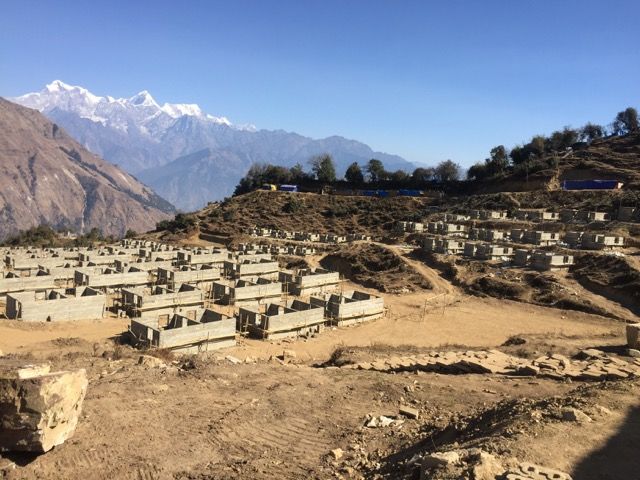
Image Credit
(Source: Shrestha 2019)
CRICOS
CRICOS Provider Code: 00098G
Acknowledgement of Country
We acknowledge the Bedegal people who are the traditional custodians of the lands on which UNSW
Kensington campus is located.
COMD5001 Term 2, 2021 published at 26-04-2021 // © University of New South Wales, 2021
26
Powered by TCPDF (www.tcpdf.org)You can also read


