Communications Strategy 2019/20 - Where YOU come first - James Paget University Hospital
←
→
Page content transcription
If your browser does not render page correctly, please read the page content below
Communications
                    Strategy 2019/20

                        Where YOU come first
www.jpaget.nhs.uk                   Communications Strategy 2019/20   Page 1
Page 2 Communications Strategy 2019/20 www.jpaget.nhs.uk
Placing communications at the
                     heart of our ambition
Introduction
Communications plays a key role in helping an organisation achieve its vision and objectives.
The Trust’s last Communications Strategy was written as we entered a ‘new phase of operational,
financial and organisational challenges.’
Two years on, we are now firmly in the midst of these challenges – and communications will
play a key role in helping us meet them by ensuring that our staff, patients, the public and other
stakeholders are kept informed about how our organisation is evolving, as both a stand-alone
organisation and part of a wider healthcare partnership, while continuing to provide them with
quality healthcare.
This new strategy builds on the communications work of the last two years, where significant
steps were taken including:
• enhancing staff briefings. This included the relaunch of the monthly Leadership Brief
  as ‘Paget Brief’, opening it up to all staff, with a new-look, more staff presenters and
  incorporating video. The weekly Friday Notices e-mail was also significantly enhanced,
  following feedback from staff to make it easier to access.
• significant growth of our social media audience, particularly on Facebook, where we promote
  the Trust’s good work and engage with our patients and their families, and our staff.
• enhanced processes to ensure timely web updates, providing better quality information for
  our patients
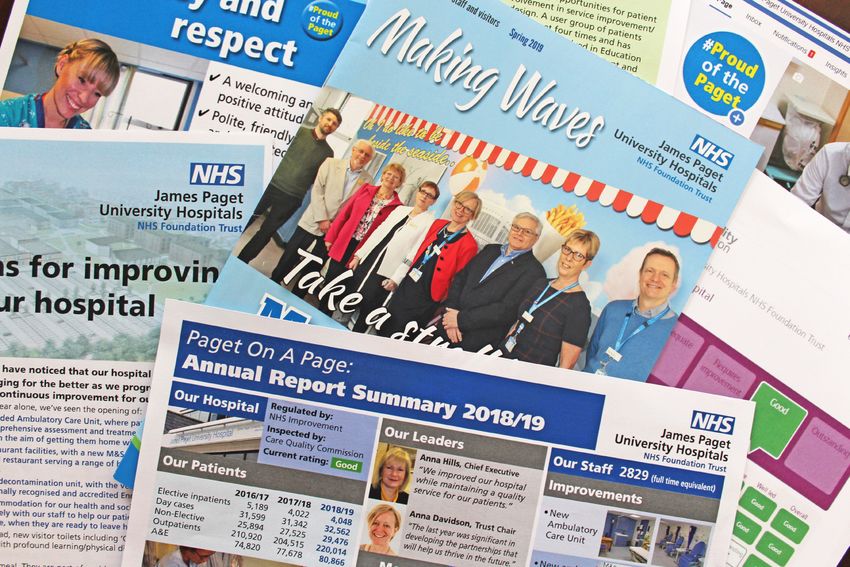
• improvements to the Trust’s quarterly publication for staff and patients, Making Waves, and
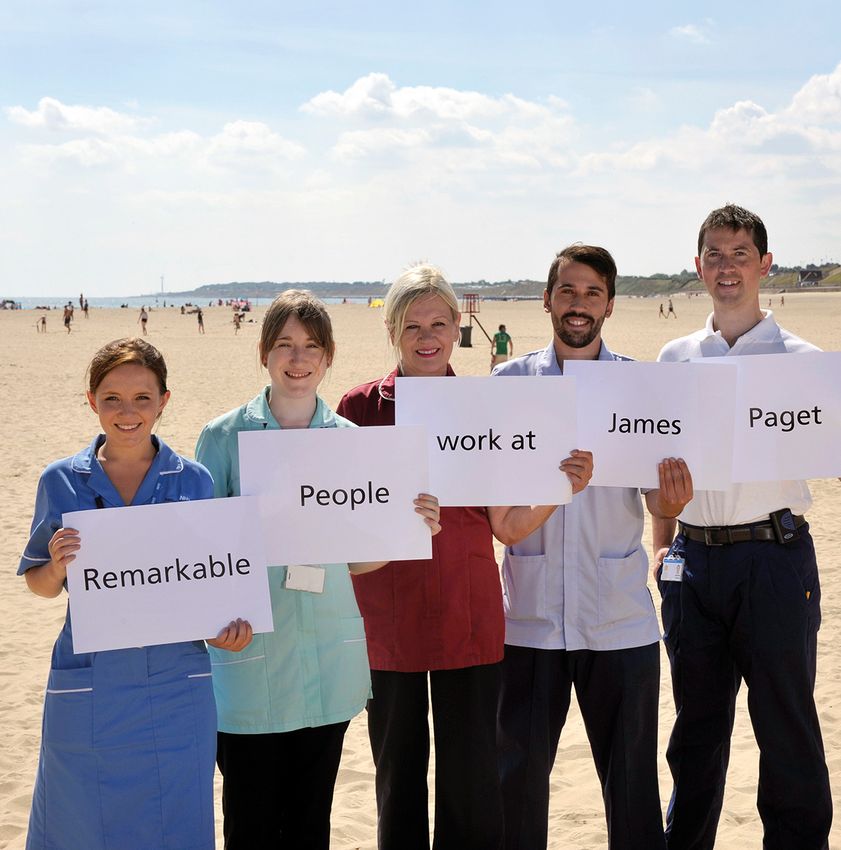
  enhancements to key annual events including the Annual General Meeting and Remarkable
  People staff awards.
It is on these firm foundations that the new Communications Strategy is built.
The strategy supports the Five Year Strategy and its four key objectives, which are aimed at
helping deliver the Trust’s vision of “being an innovative organisation delivering compassionate
and safe patient care through a well-led and motivated workforce.”
It is also informed by a range of strategies - Quality Improvement, People Strategy, Education
and Research, all of which were published or refreshed in 2018. It is also influenced by the
work of the Norfolk and Waveney Sustainability and Transformation Partnership (STP) which is
bringing health and social care partners in the area together to create a healthcare system which
is sustainable for the future.
The strategy has both an internal and external focus, reflected in the accompanying action plan
which contains areas of work which are aimed at moving communications forward over the next
two years within the resource available.

www.jpaget.nhs.uk                                                   Communications Strategy 2019/20   Page 3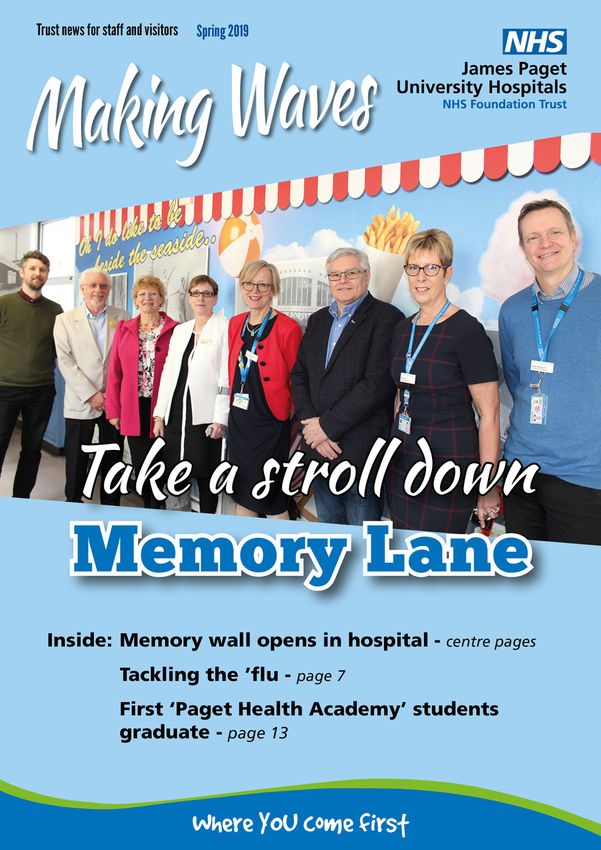
Context                                                Principles of communication
  In any communications strategy, it is essential        The following principles will govern
  to consider the current environment facing             all our communications activity:
  the organisation, to help develop appropriate          • All communications will be open
  communications objectives:                               and transparent, in line with our
  ■■ Political and economic: the Government                values
     has announced a funding increase for the            • All messages will be clear, accurate,
     NHS of £20.5billion over the next five years          focussed, appropriate for their
     yet finance remains extremely tight, with the         audience(s) and written in plain
     majority of acute providers, including our Trust,     English
     operating in financial deficit. There remains a
     drive to improve current performance while          • Information will be issued in a
     designing sustainable healthcare models for           timely manner
     the future. This will be achieved by working        • We will adopt a “staff first…”
     closely in partnership with other healthcare          approach with all our
     organisations across Norfolk and Waveney as           communications, wherever possible
     part of the Sustainability and Transformation         so that they have important news
     Partnership (STP), with performance reviewed          first
     on a system basis.                                  • NHS national identity guidelines
  ■■ Social: demand continues to rise due to an            will be strictly adhered to, ensuring
     ageing population, with people living longer,         consistency across all channels
     often with complex health needs. In 2018/19,        • The emphasis will be on two-
     the Trust experienced its busiest winter and          way communication, facilitating
     during the course of the year there were more         engagement with key audiences,
     than 80,000 attendances to our Emergency              including face-to-face, digital
     Department – a 9% increase on the year                channels and a staff app
     before. This was followed by a prolonged
     summer heatwave which put additional strain         • We will ask our staff what they
     on services.                                          think and encourage them
                                                           to be part of our continuous
  ■■ Technological: there is always a drive to             improvement, supporting us to
     use technology to its best effect to improve          provide the communications
     patient care and efficiency. There is now a           service that meets their needs as
     particular focus on ensuring that IT systems          far as possible
     across entire healthcare systems are integrated,
                                                         • Diversity and inclusion will be
     to streamline processes and improve efficiency,
                                                           considered in all that we do
     and a move towards a ‘paperless’ NHS. From a
                                                           to ensure our messages are
     communications perspective, developing digital
                                                           reasonable and understandable for
     channels to both inform and engage with our
                                                           all groups.
     staff and patients remains key.
                                                         Communications and the Trust’s
  ■■ Environmental: the Trust continues to review        reputation are the responsibility of
     and enhance its long-term site strategy, to         all staff, not just
     reflect both the needs of our local patients        the corporate
     but also the system wide development of new         communications
     models of healthcare.                               team. Therefore,
  ■■ Regulatory: The Trust will need to ensure it        we will look for
     responds effectively to its annual Care Quality     every opportunity
     Commission (CQC) inspections - rated the            to empower our staff to communicate
     hospital as ‘good’, and continues to show its       with their colleagues and patients,
     ambition by aspiring to be ‘outstanding.’           providing them with appropriate
                                                         messaging, channels and tools.

Page 4   Communications Strategy 2019/20                                            www.jpaget.nhs.uk
Setting objectives
The communications objectives have been set to complement the Trust’s strategic ambitions
contained within its Five Year Strategy, the current operating environment and on going
collaborative work as part of the STP.
They have been designed to help the Trust improve patient experience, support staff to deliver
patient services and boost morale, support staff health and wellbeing and highlight positive
work to benefit patients and their families. The objectives are as follows:

 1. Proactively support health and wellbeing initiatives for our staff while
    promoting equality, diversity and inclusion, to continue developing a
    caring culture built on long-standing values and behaviours.
    Key actions under this objective will largely focus on supporting the work
    of our Organisational Development team, which will be undertaking a             The badges are just one                                                         *Lesbian, gay

    major staff engagement exercise over the next year. The aim is to support
                                                                                    way to show that this is an                                                     bisexual, transgender
                                                                                   open, non-judgemental and                                                        and the + simply
                                                                                   inclusive place for people that                                                  means that we are
                                                                                   identify as LGBT+*                                                              inclusive of all

    staff health and well-being and ensure the organisation continues to
                                                                                                                                                                   identities, regardless
                                                                                   If you see someone wearing
                                                                                                                                                                   of how people define
                                                                                   one you can ask them about it.
                                                                                                                                                                   themselves.
                                                                                   The Rainbow Badge initiative originated
                                                                                                                           at Evelina London Children’s Hospital

    develop to become fully inclusive.
                                                                                   to make a positive difference by promoting
                                                                                                                              a message of inclusion.

    Supporting strategies/documents:
    Five Year People Strategy; ‘Attentively Kind and Helpful’ – Values and Behaviours;
    Equality, Diversity and Inclusion Strategy
 2. Develop our internal communications methods/
    channels, with a particular focus on raising the
    profile and accessibility of the Trust’s leadership,
    to foster improved staff engagement.
    Key actions under this objective will again
    have a focus on supporting the work of our
    Organisational Development team by, for
    example, developing a network of Engagement
    Champions across the hospital to help cascade
    information and act as a panel of ‘critical friends’ to improve Trust-wide communications.
    Actions will also include reviewing and enhancing our existing internal communications
    methods as well as working with other teams to explore and introduce new channels such
    as a staff app and confirm an intranet/document management solution.
    Supporting strategies/documents:
    Five Year Strategy – Ambition 2; Quality Improvement Strategy; ‘Effective and
    Professional’ – Values and Behaviours; Board of Directors 360 Degree Leadership
    Development Action Plan
 3. Support key areas of Trust business to maintain the Trust’s reputation
    as a resilient and innovative provider of quality local health services,
    committed to continuous improvement.
    Actions under this objective include working with divisions/
    departments across the hospital to ensure that key elements of strategy
    implementation receive appropriate communications to demonstrate
    how they contribute to the organisation’s overall continuous
    improvement, for the benefit of our patients. This will include updates
    on our estates plans for the hospital’s development; education and
    workforce plans for recruitment and ‘growing our own’ workforce;
    and the re-launch of the Trust’s charity which will provide an income stream to be used to
    develop patient services.
    Supporting strategies/documents:
    Five Year Strategy - Ambitions 1, 2, 3 and 4; Quality Improvement Strategy; Five Year
    People Strategy; ’Effective and Professional’ – Values and Behaviours

www.jpaget.nhs.uk                                                  Communications Strategy 2019/20                                                                                          Page 5
4. Continue to develop our existing social media channels, improve
    accessibility of our website and explore increasing our digital footprint to
    give our staff, patients and public more opportunity to engage with us.
    Key actions under this objective include a programme of marketing for
    the Trust’s Facebook page to both patients and staff, to increase followers,
    as well as develop its use for promoting the Remarkable People awards;
    conducting a survey of patients and staff to inform improvements to the
    Trust’s website; and updating our photographic library.
    Supporting strategies/documents:
    Five Year Strategy - Ambitions 1, 2, 3 and 4; Five Year People Strategy; ‘Responsive
    Communication’ – Values and Behaviours
 5. Work in partnership with communications colleagues across
    the Norfolk and Waveney Sustainability and Transformation
    Partnership (STP) to:
     - communicate and engage with staff, patients and the public as new
    models of healthcare are developed to create sustainable services for
    the future
     - support national NHS communications campaigns aimed at illness
    prevention, demand reduction and self-care.
    Key actions under this objective include continuing to work with
    communications leads at other NHS organisations across Norfolk
    and Waveney, including the other two acute hospitals, to ensure
    that developments are communicated to staff and patients and,
    where required, appropriate engagement takes place.
    Supporting strategies/documents:
    STP In Good Health plan; Five Year Strategy – Ambitions 1 and 4;
    Five Year People Strategy; ‘Responsive Communication’ – Values
    and Behaviours

Alongside the delivery of this strategy, the Trust’s communications team will continue with its
annual work programme which includes production of the Annual Report and organisation of
the Remarkable People staff awards. As such, any additional work will only be taken on if it
supports one or more the Trust’s priorities.
A full action plan will support delivery of this strategy and progress will be monitored through
the current monthly updates to the Board of Directors.

Page 6   Communications Strategy 2019/20                                            www.jpaget.nhs.uk
Paget On A Page:
Annual Report Summary 2018/19
                      Regulated by:
Our Hospital          NHS Improvement             Our Leaders                                           Our Staff 2829 (full time equivalent)
                      Inspected by:                              Anna Hills, Chief Executive
                      Care Quality Commission                    “We improved our hospital
                                                                                                        Improvements
                      Current rating: Good                       while maintaining a quality
                                                                 service for our patients.”             • New
Our Patients                                                                                              Ambulatory
                                                                 Anna Davidson, Trust Chair               Care Unit
                    2016/17 2017/18    2018/19                   “The last year was significant in
Elective inpatients    5,189   4,022      4,048                  developing the partnerships that
Day cases             31,599  31,342     32,562                  will help us thrive in the future.”
                                                                                                        • New and
Non-Elective          25,894  27,525     29,476                                                           improved
Outpatients          210,920 204,515    220,014                                                           catering
A&E                   74,820  77,678     80,866          Money                        Feedback            facilities
                                                  Projected deficit of:               Complaints
                                                   £8.5 million                       2017/18 173       • New guest
                                                                                                          Wi-Fi
                                                        Reduced to:                   2018/19 225
                                                   £5.6 million
                                                  After achieving financial targets   Compliments
                                                                                                        • Creation of
                                                   Savings achieved:                  2017/18 512         Memory
                                                   £9.7 million                       2018/19 658         Walk
Environment
                                                                                                       For more info visit: www.jpaget.nhs.uk
• Total CO2 emissions from use of gas/oil/electricity reduced
                                                                                                       www.norfolkandwaveneypartnership.org.uk
• 56% of electricity generated on-site through green
  technologies – up 4% on last year                                                                                  @JamesPagetNHS
                                                                                                               /JamesPagetUniversityHospitals
© July 2019 James Paget University Hospitals NHS Foundation Trust Review Date: July 2020 version 1
Page 8   Communications Strategy 2019/20                                                                            www.jpaget.nhs.uk

You can also read


