Competition Brief ARCHITECTURAL COMPETITION FOR ADAPTIVE REUSE OF SOLINA FILATURES "RESHAMKHANA", SRINAGAR AS - ARTS CULTURE AND CRAFTS CENTRE ...
←
→
Page content transcription
If your browser does not render page correctly, please read the page content below
ARCHITECTURAL COMPETITION FOR
ADAPTIVE REUSE OF SOLINA FILATURES
    “RESHAMKHANA”, SRINAGAR
                AS
 ARTS CULTURE AND CRAFTS CENTRE

    Competition Brief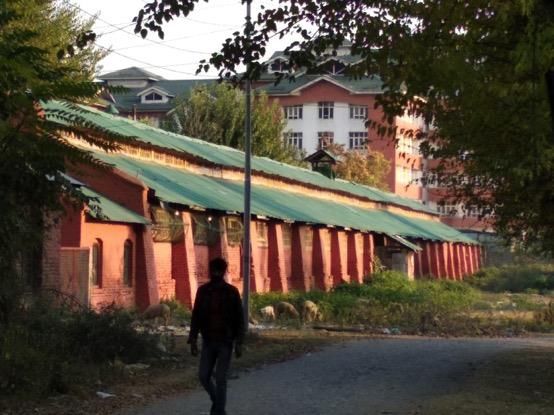
1.0 Site
   1.1 Macro Location
      1.1.1    About Srinagar City
       Srinagar is the largest city and the summer capital of the state of Jammu and Kashmir. It lies in
       Kashmir Valley on the banks of Jhelum River, a tributary of River Indus, Dal Lake and Anchar
       Lake. The city is famous for its gardens, waterfronts and houseboats. It is also known for
       traditional Kashmiri handicrafts and dried fruits.
       1.1.2 Geography
       The city of Srinagar is located on both sides of River Jhelum, which is known by the name of
       Vyath in Kashmir. The river passes through the city and meanders through the valley, moving
       onward and deepening in the Dal Lake. The city is famous for its nine old bridges, connecting
       the two parts of the city.
       There are a number of lakes and swamps in and around the city. These include the Dal, the
       Nigeen, the Anchar, Khushal Sar, Gil Sar and Hokersar.
       1.1.3 Climate
       Srinagar has a humid subtropical climate, much cooler than what is found in much of the rest
       of India, due to its moderately high elevation and northerly position. The valley is surrounded
       by the Himalayas on all sides. Winters are cool, with daytime temperature averaging to 2.5 °C
       (36.5 °F), and drops below freezing point at night. Moderate to heavy snowfall occurs in
       winter and the highway connecting Srinagar with the rest of India faces frequent blockades
       due to icy roads and avalanches. Summers are warm with a July daytime average of 24.1 °C
       (75.4 °F). The average annual rainfall is around 720 millimeters (28 in). Spring is the wettest
       season while autumn is the driest. The highest temperature reliably recorded is 38.3 °C
       (100.9 °F) and the lowest is −20.0 °C (−4.0 °F).
       1.1.4 Economy
       In November 2011, the City Mayors Foundation – an advocacy think tank – announced that
       Srinagar was the 92nd fastest growing urban area in the world in terms of economic growth,
       based on actual data from 2006 onwards and projections to 2020.
       1.1.4 Tourism
       Srinagar is one of several places that have been called the "Venice of the East" or the "Kashmiri
       Venice". Lakes around the city include Dal Lake – noted for its houseboats – and Nigeen Lake.
       Apart from Dal Lake and Nigeen Lake, the city is also famous for Wular Lake and Manasbal
       Lake to the north of Srinagar. Wular Lake is one of the largest fresh water lakes in Asia.
       Srinagar has some Mughal gardens, forming a part of those laid by the Mughal emperors
       across the Indian subcontinent. Those of Srinagar and its close vicinity include Chashma Shahi
       (the royal fountains); Pari Mahal (the palace of the fairies); Nishat Bagh (the garden of spring);
       Shalimar Bagh; the Naseem Bagh.
       1.1.5   Arts & Crafts
       Jammu & Kashmir, especially Srinagar's geographical location has acted as an important
       transit point between Central Asia, the Middle East and Europe, turning it into a strong site
       of socio-economic development since ancient times. The city acted as a crucial point of contact
       and a platform for exchange of art, culture, ideas and technology, thereby assisting in the
       process of a unique urbanization.
       The exquisite crafts of the land are a reflection of the richness of traditions, customs and arts
       that blend to yield a distinct spectrum. Srinagar, a physical manifestation of that richness, is
       home to some of the best craftsmen in the world. Brilliantly coloured motifs of Papier Mache
       on products such as flower vases, pen holders, table lamps and wall hangings, mesmerize art
       lovers with their details. The finest of Pashmina shawls with their soft colours are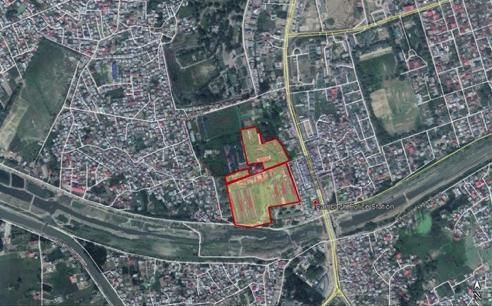
transformed into arresting art work by skilled craftsmen adept at threadwork. The Kashmiri
          carpets woven from fine wool and silks, with their elaborate and complex designs, are an
          embodiment of artistry and workmanship, bringing global fame and recognition to the region

          1.1.6     Demography
          As of 2011 census Srinagar urban agglomeration had 1,273,312 population. Both the city and
          the urban agglomeration has average literacy rate of approximately 70%. The child population
          of both the city and the urban agglomeration is approximately 12% of the total population.
          Males constituted 53.0% and females 47% of the population. The sex ratio in the city area is
          888 females per 1000 males, whereas in the urban agglomeration it is 880 per 1,000. The
          predominant religion of Srinagar is Islam with 96% of the population being Muslim. Hindus
          constitute the second largest religious group representing 2.75% of the population. The
          remaining population constitutes Sikhs, Buddhist and Jains.

          1.1.7     Transportation & Connectivity:
          By Road
          The city is served by many highways, including National Highway 1A and National Highway
          1D.
          By Air
          Srinagar Airport has regular domestic flights to Leh, Jammu, Chandigarh, Delhi and Mumbai
          and occasional international flights.
          By Rail
          Srinagar is a station on the 119 km (74 mi) long Banihal-Baramulla line that started in October
          2009 and connects Baramulla to Srinagar, Anantnag and Qazigund. The railway track also
          connects to Banihal across the Pir Panjal Mountains through a newly constructed 11 km long
          Banihal tunnel, and would subsequently connect to the Indian railway network after a few
          years.
       1.2 Micro Location/Subject Site
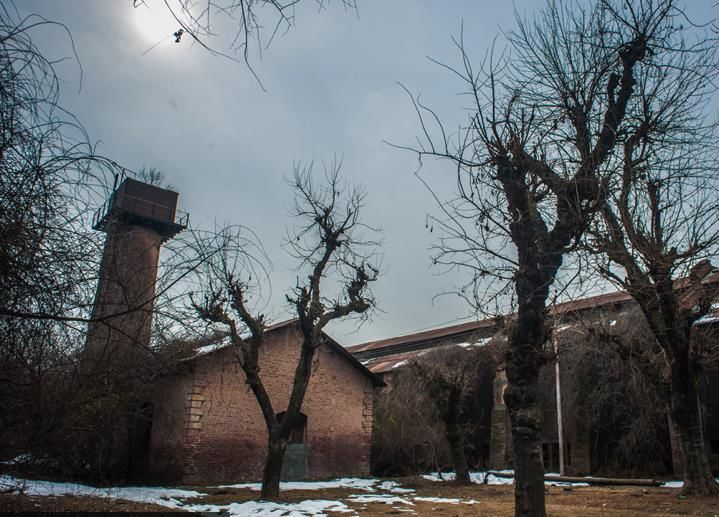
          Solina Silk Filatures (Resham Khana) located in Rambagh area, is a unique architectural
          complex that was set up about 120 years ago by Dogra King, Maharaja Pratap Singh in 1900s.
          Primarily made of brick, wood and stone it housed almost 2000 silk workers at its peak. The
          factory has remained closed since about 3 decades and though efforts to revive it were
          undertaken in the past, they it did not take off. The large complex is an important industrial
          heritage site for Jammu and Kashmir. In 2017, the complex was brought under Jammu and
          Kashmir Heritage Conservation Act 2010 (Act XV 2010) by J&K Government1. In June 2018,
          some areas of the old buildings were utilized for a seven-day art exhibition event organized by
          Kashmir Art Quest in which 60 artists from the valley, staying in the valley and outside came
          under one roof for the exhibition. In July 2018, part of the complex was put back to use to reel
          silk yarn by Jammu and Kashmir Industries Ltd (a State PSU). Originally on a larger site, it has
          now been fragmented into smaller parcels. Srinagar has seen rampant urban growth in the
          past two decades and the Solina Complex is one of largest green areas in the city with
          abundant Chinar and Mulberry Trees.

1
    http://jklaw.nic.in/pdf/SRO%20280%20of%202016%20culture%20deptt%20.pdf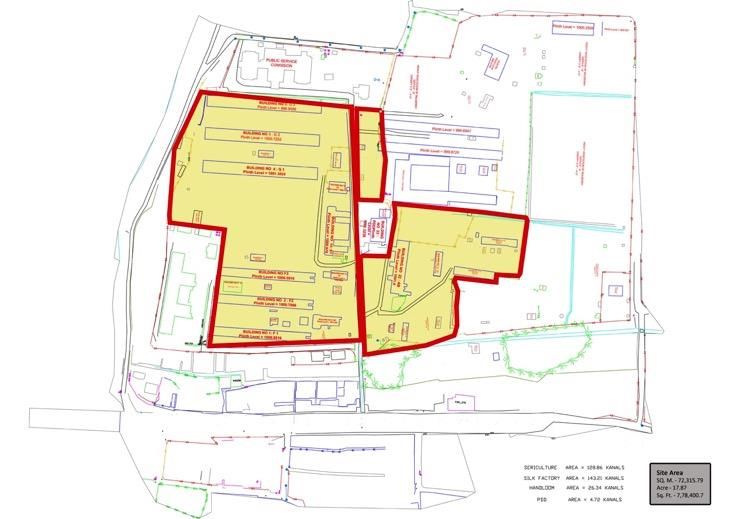
2.0 Site Background
   2.1 Land Area
   Solina Silk Filatures is one of the key open spaces in the city. The total area is approx. 22 acres (to
   be cross checked with actual survey) and is mostly under the control of Jammu and Kashmir
   Industries (JKI) Ltd. During 2015-2017 few structures have been revived for silk reeling and office
   use by JKI Ltd.
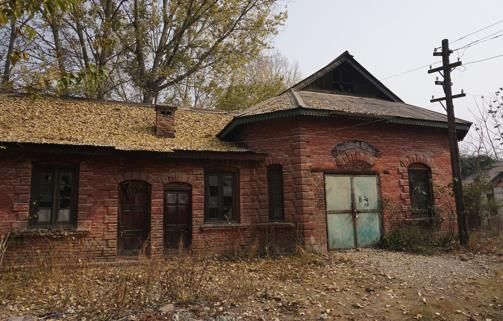
2.2 Typology of Buildings- Filature, Storage, Godowns and Ancillary Buildings
There are about 20 existing buildings which include 3 major clusters buildings – Filature 1, 2 and 3
each about 1250 sq.m which are located next to entry. These are brick buttress wall construction with
a wooden truss roof. Another cluster of three large buildings is in the rear, all of which were earlier
used as Godowns. Each godown has a built up area of approximately 2300 sqm and silk testing
building of 550 sqm. Another cluster of buildings along the main access road include Office block,
Receiving station of the Power Department and Silk Store building having a combined area of 1800
sqm The total area of buildings will be in range of about 15,000 sqm.

       2.2.1 Filature 1 (F1):-
       The building is single storey with wooden truss and brick walls with buttresses. The building
       has external dimensions of 335’x36’ 6”. The building is currently not in use. The building
       would require extensive repairs and renovation work

       2.2.2 Filature 2 (F2)
       The building is single storey with wooden truss and brick walls with buttresses. The building
       has external dimensions of 335’x36’ 6”. The building is currently not in use. The building
       needs extensive repairs and renovation work and has been declared unsafe by the State Public
       Works Department. However in 2018 the building was used as an exhibition space for seven-
       day art exhibition event. Further details of the exhibition are available at
       https://www.youtube.com/watch?v=SFsPyUykPbM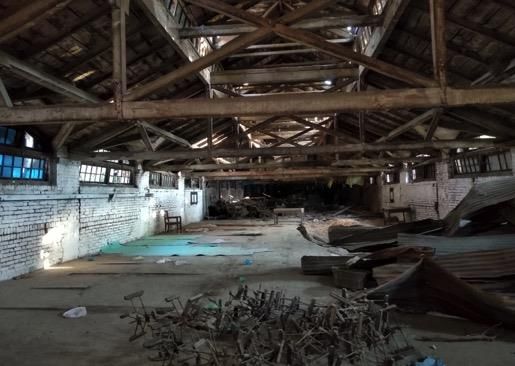
Inside view of Filature 2

2.2.3 Filature 3 (F3)
The building is single storey and has a wooden base, which is covered by wooden false ceiling.
The building is in fairly good condition and is currently being used by JKI for reeling of
cocoons. The building has dimensions of 364’x36’ 6”.

2.2.4 Godown 1(1G)
The building is double storey with a height of 22’. The building has dimension of 441’ x 46’ and
is currently not in use.

2.2.5 Godown 2(2G)
The building is double storey with a height of 22’. The building has dimension of 441”x46’ and
is currently not in use.
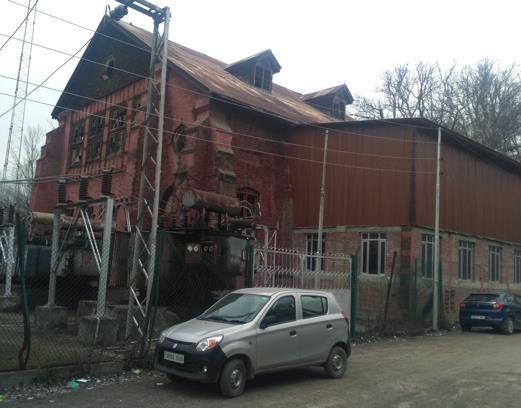
2.2.6 Godown 3(3G)
The building is double storey with a height of 22’. The building has dimension of 441”x46’ and
is currently under the Sericulture department however the said building is currently not in
use and would also be a part of the adaptive reuse. One side of the building forms the
boundary wall of the J&K Public Service Commission office.

2.2.7 Genset Room (7 GN)
The building is single storey, with dimensions of 20’ x27’. The building is currently not being
used. The building is in dilapidated form with the external walls having suffered extensive
damages.

2.2.8 Mosque (8 B1)
The building is single storey with dimensions of 80 x 60’. The building has been constructed
recently and is used by the local population.

2.2.9 Machine Room( 9M1)
The building is single story with dimensions of 84’ x 35’. The building is currently not in use.
The building is in significantly good condition.
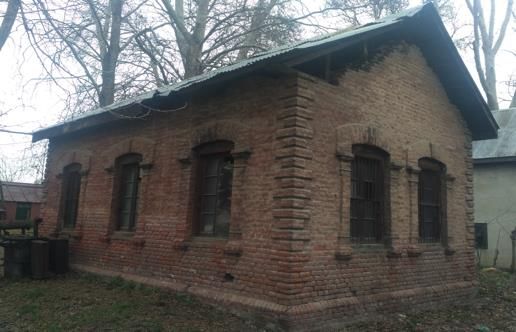
2.2.10 Boiler Room (10 B2)
The building is single storey with dimensions of 37’6” x18’4”. The building has been
constructed at a later date and has no significant heritage value, however it is being used as
boiler room for the Filature unit 3 running presently.

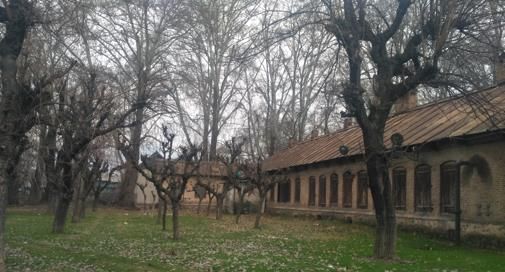
2.2.11 Waste Section(11 WS1)
The building is single storey with dimensions of 29’ x57’. The building is being used for storing
of waste silk. The building is between Godown 1 & 2 and has a fire water tank at the back.
2.2.12Waste Section (12 WS2)
The building is single storey with dimensions of 29’x57’.The building is currently not being
used. The building is between Godown 1 & Filature 3 and has a fire water tank at back.

2.2.13 Pump House(13 P1)
The pump house is single storey structure and is of size 32’ x 32’7”. The structure is currently
not being used.

2.2.14 Silk Testing (14 S1)
The Silk Testing building has dimension of 156’ x 36’ and is currently being used as a store by
JKI Ltd for storing of cocoons and testing of yarn being produced.
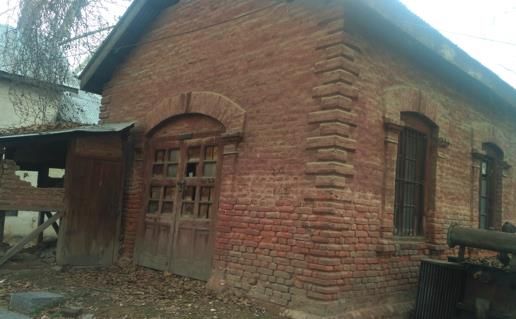
2.2.15 Cocoon Store Office (15 S2)
The cocoon store building has dimension of 32’ x 42’ and is currently not being used. The
structure is in dilapidated condition.

2.2.16 Gate Office (16 GT).
The structure is being used by watch staff and has dimension of 11’ x17 ‘6”. The structure was
added later on and as such has no significant heritage value.

2.2.17 Account Section (17 AS)
Single storey building with dimensions of 18’4” x29’5” and is currently not being used.
2.2.18 Pump House (18 P2)
The building has been added later and has a single storey with dimensions of 67’ x 19’ and is
presently not in use.
2.2.19 Family Quarter (19 FQ 1)
The family quarter has dimensions of 42’ x 20’ and has been added later on. Since the building
has no architectural heritage value it will not be taken in the restoration plan.

2.2.20 Family Quarter (20 FQ2)
Single storied building with size of 149’ x 17’ has been added later on. Since the building has
no architectural heritage value it will not be taken in the restoration plan.

2.2.21 Burned Store (21B3)
The building has a size of 151’ x 33’9” and has been damaged in fire but is in significantly good
condition and should be part of the restoration plan.
2.2.22 Administration Block (22 AB)
A part of the building is being used as office block by JKI. The Block has a size of 186’ X 41’3”.

2.2.23 Power Development Department block (23 PDD)
The building is under Power Development Department and has a large open yard for repair of
transformers and has a size of 79’ x 67’. It is one of significant building in the whole site and is
being vacated by the department. It is a double storied building and has a significant
architectural heritage value.
2.4 Existing Infrastructure Services

There is an existing mosque and a graveyard, which is part of Solina Campus, which will remain in the
Master plan and shall be integrated in the final vision plan. All major electrification is via overhead
poles and connection wires. The baseline assessment of the site shall account for all the infrastructure
and utilities on the site and address infrastructure gaps if any, in the proposed Master plan

2.5 Road network
The existing road network includes access to each building cluster and also offers connection to other
government facilities outside of Solina Factory. The access network planning should include
emergency vehicle access, service access and dedicated road network if the need be for various
building clusters. It is however suggested to reduce any further road construction that would affect
the overall green character of the site.
3.0 Subject and purpose of competition
Jammu and Kashmir Industries and Commerce Department (JKICD) has proposed for developing
Solina Silk Factory as an adaptive Re-use project. The area will need to be conserved as an industrial
heritage site for its existing establishment and developed for an Arts, Culture and Crafts Hub.
The Key objective of the project is two-folds:
1. Undertake the planning of a heritage sensitive adaptive reuse of the Solina Silk Factory and
other ancillary buildings into an Arts, Culture and Crafts Hub for the State by restoration of
buildings and adaptive reuse.
2. Preserve and enhance the heritage and landscape character of the site, viz as a major green
public space for the city of Srinagar.
The Proposed adaptive re-use project would be a unique project in the city and the country and would
anchor Solina Complex as a destination for tourism and growing Arts and Culture forum in India.
The larger goals of the project include:
To develop the mandate of J & K Government of designating Solina Silk Factory Complex
under Jammu and Kashmir heritage Conservation and Preservation Act 2010(Act XV
2010) and to propose a comprehensive plan for conserving the industrial heritage of
Solina.
To bring the Complex under Active Public Use that would promote the civic identity of
Srinagar in Arts, Culture and Crafts space nationally.
To Develop a Master plan for complex based on assessments and retrofits and suitability
analysis to house programs under Arts, Culture and Crafts and suitably update the existing
infrastructure.
To Develop an Architectural proposal for the adaptive reuse of Solina Silk Factory as a
Arts, Culture and Craft Centre
To preserve the identity of the structures and their typical material aspects but integrate
these into functional spaces with contemporary expression.
To create a sustainable public transport strategy for access to Complex and within the
complex including a pedestrian pathways network, parking and landscape.
The Master Plan will inter alia include
Exhibition spaces
Gallery Spaces, talk and Event/ performance spaces. Appropriate areas for retail of
artisan products, craft demo areas
Outdoor exhibit spaces for Art and performance events.
Public amenities will include food stalls, information centre and toilets.4.1 Organizers
The competition is being organized by the Jammu and Kashmir Industries
Limited, Govt. of J&K.
4.2 Evaluation criteria
The competition is open to architectural firms or multidisciplinary design
teams*. Applicant firm can be an international firm in JV with an Indian firm/
multidisciplinary design team.
The applicant firm/design team will be shortlisted based on the following
criteria:
1. The average annual turnover for the last 3 years of the applicant firm or the
JV partner or one member of design team to demonstrate the applicant’s
capacity to undertake the said work.
2. The works of similar nature and complexity successfully completed by the
applicant firm or JV partner or one member of design team
3. Expertise of Key Professional
The applicant firm/design team must demonstrate having access to the
following personnel:
Conservation Architect with a minimum experience of 15 years in
conservation of historical buildings/sites and structures including
retrofitting of heritage structures.
Urban Designer with a minimum experience of 10 years in designing
similar public places meant for activities such as centres for art, craft,
culture, craft shows/showcase, textile/artisan promotion, maker
markets, etc.
A Structural engineer having designed and supervised the restoration
and retrofitting of two heritage buildings/structures/complexes with a
minimum experience of 10 years.
A landscape architect with a minimum experience of 10 years in
designing public places.
*All collaborations must be supported by scanned copy of MoU(s) duly signed by
all team members and uploaded as part of submissions. A team once formed
cannot be changed without prior permission of the organizers.
About 5-8 applicant firms/design teams would be shortlisted which would be
further invited to participate in the competition
4.3 Competition timelines
Launch of competition: 10.05.2019
Last date of registration: 24.05.2019
Announcement of shortlisted: 30.05.2019
Pre Competition conference: 10.06.2019
Final day for questions: 15.06.2019
Final day for submissions: 30.07.2019
Assessment expected to be completed by: 10.08.20194.4 Selection Process
4.4.2 Registration for Competition.
(a) Request for Expression of Interest (REOI): JKI Ltd through widely published
advertisement in print media, official website and by this document invites
eligible firms / JV/ design team to submit their Expression of Interest within
stipulated time limit.
(b) Registration: The interested Architectural firms / JV/ design team will be
required to register for the competition. Registration/ application details can be
downloaded from our website www.jkil.gov.in /www.jkfrp.in. Correctly filled
application letter including information as required in schedule A&B along with
a registration fee of ₹1000.00 only in the form of a demand draft drawn in
favour of Director Finance, Jammu Kashmir Industries Limited, payable at
Jammu/Srinagar, should reach us at the address given in clause 4.5, within the
stipulated period.
(c) Evaluation for Eligible Firms: JKI Limited shall evaluate the registration
forms and other required information submitted by the interested applicant to
establish eligibility of the firms for the single stage competition. All shortlisted
firms shall be invited to participate in the pre-competition conference to be held
in Srinagar. List of eligible firms and in-eligible applicants (if any) will be
published on our website www.jkil.gov.in/www.jtfrp.in.
(d) Pre-Competition Conference: All shortlisted firms will be issued a request
to participate in single stage Architectural Design Competition. These eligible
firms will be invited to attend a Pre-Competition Conference at Srinagar, where,
Principal of the firm or their representatives may participate. JKIL shall discuss
Master Plan details and arrange for site visit on the date of Pre-competition
Conference. The eligible firms that do not attend the Pre-competition conference
may send their representative to visit the site with prior approval of JKIL.
All expenses to attend the Pre-competition conference and visit of site at
Srinagar will be borne by the participants.
4.4 Competition format
The competition is a Single Stage competition.
4.2 Competition language
Competition entries should be in English.
4.3 Prize money
The total prize money for the competition is INR 10,00,000 excluding GST. The
jury will divide the prize money between the various winners. The winning
entry’s prize will be INR 500000, the second prize will be INR 200000 while the
third prize will be INR 150000. In addition, three merit prizes of INR 50000 each
would also be awarded.
4.4 Jury
A jury, appointed by Jammu Kashmir Industries Limited will assess competition
entries. The following are the jury members:
Prof K T Ravindran, Academic Advisor, RICS School of Built Environment,
Amity University
Dr Priyaleen Singh, Professor of Architectural Conservation, SPA Delhi
Dr Arun Menon, Associate Professor , Civil Engineering, IIT Madras Mr Veer Munshi, Artist
Ar. C.L Razdan, Ex Professor & HoD, Architecture, SMVDU, Katra, J&K
Mr. Iftikhar Hakeem, CTP Jammu/ Director P&C, PMU, JTFRP.
Mr. Javid Iqbal, Managing Director, JKI Limited
The jury retains the right to call on additional professional experts as advisors.
4.5 Competition Officer
Mr. Sajid Nazir
Member Procurement PIU(I&C)
Address: Jammu Kashmir Industries Ltd
Old Secretariat, Srinagar, J&K 190001
Tel: 09419445538
Office hours: 1000 to 1700Hours
E-mail: sajidnazir@rediffmail.com
NB: All contacts regarding the competition, such as requests for documents,
questions and so on, must be directed to the Competition Officer. Entrants must not
come in direct contact with any jury member with questions regarding the
competition.
4.6 Competition Documentation
The competition documentation comprises this brief and the following
appendices in English:
a. Notice
b. Registration Details
c. Film & Images
d. Competition Brief
e. Site Layout
4.7 Distribution of Competition Documentation
Competition documentation is available in digital format only and, can be down-
loaded free of charge from the website www.jkil.gov.in / www.jtfrp.in
4.8 Competition Queries
Any questions about the competition after the registration process should be
directed to the Competition Officer in writing by 15.06.2019 at the latest.
Mark all correspondence ARCHITECTURAL COMPETITION FOR ADAPTIVE
REUSE OF SOLINA FILATURES “RESHAMKHANA” AS ARTS, CULTURE & CRAFTS
CENTRE
4.9 Competition Entries
Competition entries must be anonymous. All submitted posters and other
documentation should only have the unique 5 digit code chosen by the entrant,
consisting of letters and numbers, at the bottom right corner. A maximum of
eight posters may be submitted and must be paged 1-8.
4.10 Entry Requirements
All submissions must comprise of Technical and Financial Parts prepared as
per details indicated hereunder:Technical Part
An explanation of the adaptive reuse design with sustainability analysis of
proposed reuse.
Work in stages and approximate economic value of interventions.
Site plans. (Scales: 1:1000 and 1:400)
Conceptual reuse plans for all buildings with descriptions (Scale: 1:200)
Representative sections of all buildings (Scale: 1:200)
Representative facades detailing treatment of the walls (Scale: 1:200)
Schematic Master Plan for the Complex, based on assessments and retrofits and
suitability analysis to house programs under Arts, Culture & Crafts with
following details:
Context flows for each building and surrounding area.
Distribution of functions (building(s) and surrounding area).
Sectioning between public and internal communication.
Access to the site considering proposed use with regards to existing
conditions.
Proposed new buildings/facilities.
The competition entry should be mounted on rigid material (cardboard or
similar) in a landscape A1 format (59.4 x 84.1cm) and may comprise of a
maximum of eight posters. A copy of all posters should also be submitted in A3
format, unmounted and packed flat. All texts regarding the entry must be
included on the posters and should be legible in A3 format.
The proposal should also be submitted digitally on a USB memory stick or CD.
The memory stick or CD should contain (a) a folder with the proposal in A3
format with all charts in the same file, easy to reproduce (max. size 5MB) and
(b) the summarizing poster in A1 format which presents the proposal
(presentation) in a high-resolution format, which can be reproduced for an
exhibition.
NB: To guarantee anonymity, all submitted material must be stripped of all
information about the submitting company and staff, etc. and should only have
the unique 5 digit code chosen by the entrant.
Documentation outside the list indicated above shall be excluded from
assessment and exhibition. Models and similar items shall not be accepted.
Financial Part
Each participant shall also submit a financial proposal for providing
comprehensive architectural and related services for preparation and
implementation of Master Plan and supervision. The financial proposal shall be
submitted in a separate sealed envelope that shall only be opened after the
technical evaluation of the entries has been completed and the winning entry
has been finalized. The detailed scope of work shall be provided during the pre-
competition conference.
JKI Limited reserves the right of negotiating the financial proposal with the
participating teams.4.11 Submission The competition closes on 30.07.2019 that is the final day on which competition entries must have been handed to a registered delivery service (post or courier) addressed to the competition officer, marked with “ARCHITECURAL COMPETITION FOR ADAPTIVE REUSE OF SOLINA FILATURES “RESHAMKHANA” AS ARTS CULTURE AND CRAFTS CENTRE” (or delivered to the Competition Officer during stated office hours). Entries that are handed to registered delivery service by the final day but are not received by the Competition Officer within three days, shall not be considered for judging. The submission, besides the requirements mentioned in clause 4.10, must also include a sealed non-transparent envelope marked “CONFIDENTIAL” and should contain the registration details of the entry along with the Unique 5 digit code chosen by the entrant inscribed on each of the A1 landscape posters submitted by the participant. NB: If the entry is sent by a registered delivery service, the receipt showing the date of sending and registration number should simultaneously be sent separately to the Competition Officer. The receipt should also provide a telephone number for contact with the sender, while still ensuring anonymity, in case the proposal is not delivered. It is the entrant’s responsibility to ensure that anonymity is not compromised. It is particularly important to ensure this point, and that all information about the author of any documentation and other material is erased from the digital and printed material. Material other than that requested shall be removed, and neither assessed nor exhibited. 4.12 Insurance No original documentation should be submitted as competition entries are not insured. 4.13 Judging and Exhibition Judging is expected to be completed by early August, 2019. More accurate information about dates for awarding of prizes and announcement of results shall be communicated on the website www.jkil.gov.in/www.jtfrp.in. A public exhibition of competition entries may be held during the judging period. However, the location shall be announced later. 4.14 Judging criteria The entries shall be judged on the criteria indicated hereunder as well as the requirements spelled out in the brief and its appendices. Design concept and solution for creating centre of excellence (20 marks) Detailed design approach including ideas on building systems retrofits, flexibility in the use of spaces. (20 marks) Conversation and preservation of site assets (10 marks) Master planning and urban design approach (10 marks) Methodology for building inventory and assessment (10 marks) Interior concepts and flows along with program (10 marks)
Landscape and sustainable infrastructure (10 marks) Environmental sensitivity and energy efficiency (10 marks) 4.15 Publication The competition jury report shall be published within three weeks from announcement of competition results. Jammu and Kashmir Industries Limited reserves the right to publish all competition entries on their own digital channels (external and internal websites, Facebook, Instagram etc.) and in both local and national magazines. Other publication rights will be governed by agreements between the organizers and the concerned parties. Entries may be exhibited anonymously during the assessment period. All publication of competition entries after the competition has ended shall include the entrants’ names. 4.16 Ownership and Rights of Use All material submitted for the competition is part of the competition secretariat of the project. The organizers need no further permission to use the images in press release, publications, exhibitions and peer reviewed journals. The winning entry becomes the ownership of the organizers after an agreement is signed with the winning team. Entrants have ownership and copyright of their proposals submitted. 4.17 Return of Entries Entries will not be returned to the entrants. 4.18 Post-Competition Assignments After announcement of winner by Jammu Kashmir Industries Limited, negotiations, if required, shall take place with the winner on the financial proposal submitted for providing comprehensive architectural and related services for preparation and implementation of Master Plan and supervision for the adaptive reuse of the “Solina Filatures”. If Jammu and Kashmir Industries Limited finds reason to depart from the jury’s recommendations, they shall consult with the Council of Architecture. If the parties fail to reach an agreement on conditions for continuation of project planning, the Jammu Kashmir Industries Limited, in consultation with the Jury, reserves the right to negotiate with the second prize winner. On award of project, the prize money awarded shall be deducted from negotiated fees based on the financial proposal submitted by the competitor. The preliminary timeline involves a start for complete planning from mid August to September 2019; preparation of DPR and allotment of the work in October 2019; and start of construction in November 2019, which allows the complex to be completed by 2020 end.
Covering Letter
From:
____________________________________________
____________________________________________
____________________________________________
____________________________________________

To
Member Procurement PIU (I &C),
Jammu & Kashmir Industries Ltd,
Old Secretariat, Srinagar.

Subject:-Expression of Interest (EOI) to participate in Architectural Design Competition for
Adaptive Reuse of Solina Silk Filatures (Reshamkhana) as Arts, Culture & Craft Centre.

Dear Sir,

        We have examined the details given in EOI notification in the newspapers, and
the EOI details and forms for the said project posted on the website of JKI Limited, and
therefore:

1. We hereby certify that all the statement made and information supplied in the
   enclosed forms and accompanying statements are true and correct.
2. We have finished all information and details necessary for EOI and have no further
   pertinent information to supply.
3. We have agreed that JKI Limited, or their authorized representatives can approach
   individuals, employers and organization, to verify our competence and general
   reputation.
4. We are submitting certificates in support of our suitability, technical know-how and
   capability for having successfully completed similar projects in the past.
5. We hereby accept to abide by the terms and conditions of the competition at all
   stages.

    Thank You.

                                                          Yours sincerely,

                                                 Signature of Authorized Representative

                                                          Seal of the Organization
Schedule-A
Information on the organization submitting the EOI
Project Name
Assignment
I. Consulting Firm Information
1.a Name of Principal Organization/Design Team
Address:
Phone:
Fax:
Email:
1.b Name of JV Partner/Associate(if any)
Address:
Phone:
Fax:
E mail:
3. Legal Status of Organization/Design Team (Tick one)
(a) A proprietary firm
(b) A firm in partnership
(c) A limited company of corporation
(d) An association
(Attach copy of official document authenticating the legal status)
4. Names & Designation of Principal Architect of firm/design team
registered with Council of Architecture, India
Name:
Designation:
(Attach copy of registration certificate issued by Council of
Architecture, India)
5. Year of Registration with Council of Architecture of Principal of
Organization/Design Team
6. Authorized Representative of Organization/Design Team
Name of Person
Address
Phone:
Fax:
Email:
7. Details of Team Members for Project
Conservation Architect
Urban Designer/Urban Planner
Structural Engineers
Landscape Architect
Attach C.V of the professionals to be engaged (As per schedule-B
attached herewith)Present the rationale for and benefits of working in association (JV) with others rather
than undertaking the assignment independently (as appropriate). Describe the
proposed management and coordination approach of the association and the role of
each firm.
II. Projects Summary
Please select most relevant projects to demonstrate the Organization/Design Team
technical qualifications and geographical experience (maximum 10 projects).
S.No. Project Period Client Country Cost of Value of
Project Consultancy
1
2
3
4
5
6
7
8
9
10
SN 1
Project Title
Country/ Region
Start Date
Completion Date
Continuous
/Intermittent
Client
Funding Source
Description (Indicate your role and input in person-months)
(Please insert more tables as necessary)
III. EOI Attachments
SN Description
1 Certificate of Incorporation of Lead Member
2 Certificate of Incorporation of JV Member (For Each Member)
3 Certificate of Incorporation of Sub-Consultant (For Each Member)
4 Letter of Association
5 Audited Balance Sheets of Last Three Financial Years
IV. Eligibility Declaration
We, the undersigned, certify to the best of our knowledge and belief that:
We have read the advertisement, including scope of work, for this assignment. Neither the consulting firm nor its JV member nor the sub-consultant or any of
its experts prepared the scope of work for this activity.
We confirm that the project references submitted as part of this EOI accurately
reflect the experience of the specified firm/Joint Venture.
The lead entity and JV member are not currently sanctioned by the Government
of India or any State Govt. or any Semi-Public Agency of any State Govt.
JV member/team member named in this EOI have confirmed their interest in
this activity in writing.
JV member/team member named in this EOI, have authorized us in writing to
represent them in expressing interest in this activity.
We understand that any misrepresentation that knowingly or recklessly
mislead, or attempt to mislead may lead to the automatic rejection of the
proposal or cancellation of the contract, if awarded, and may result in further
remedial action.
We confirm our availability to commence work on the indicative commencement date
specified in the Competition Brief for this assignment, in case the work is awarded to us.
Signature of Authorized Representative
Seal of the OrganizationSchedule-B
Curriculum Vitae of Professional Staff for Adaptive Reuse of Solina Silk Filature
Each Professional staff to be employed in the project should fill this form separately
(Maximum: Two Pages)
S.No. Detail
1. Name of Professional Staff:
Position within the Assignment
Address:
Phone:
Fax:
Email:
2. Date of Birth
3. Nationality
4. Educational Qualifications:
Degree/University Year of Graduation %Marks
5. Professional Qualifications:
6. Details of Registration with Statutory Body(e.g. COA):
(Attach Copy of Registration Certificates)
7. Membership of Professional Societies
8 Awards Won:
National Agency Name of Organization Giving Award Year
International Agency Name of Organization Giving Award Year
9. Employment record relevant to the assignment: {Starting with present position,
list in reverse order. Please provide dates, name of employing organization, titles
of positions held, types of activities performed and location of the assignment, and
contact information of previous clients and employing organization(s) that can be
contacted for references. Past employment that is not relevant to the assignment
does not need to be included.}
Period Employing organization Country Summary of
and your title/position. activities
Contact information for performed
references relevant to the
Assignment[e.g., May [e.g., Ministry of ……,
2005- advisor/consultant to…
present]
For references:
Tel…………/e-mail……; Mr.
…., deputy minister]
10. Adequacy for the Assignment:
Detailed Tasks Assigned on Reference to Prior Work/Assignments
Consultant’s Team of Experts: that Best Illustrates Capability to
Handle the Assigned Tasks
Certification:
I, the undersigned, certify that to the best of my knowledge and belief, this CV correctly
describes myself, my qualifications, and my experience, and I am available to undertake
the assignment in case of an award. I understand that any misstatement or
misrepresentation described herein may lead to my disqualification or dismissal by the
Client.
{Day/month/year}
Name of Expert Signature
Date
{Day/month/year}
Name of authorized Signature
Date
Representative of the Consultant
(The same who signs the Proposal)You can also read


