CORMORANT ALPHA TOPSIDE - Decommissioning Programme - June 2021 - Consultation Draft - GOV.UK
←
→
Page content transcription
If your browser does not render page correctly, please read the page content below
CORMORANT ALPHA
TOPSIDE
Decommissioning
Programme

June 2021 – Consultation Draft
TB-COADEC01-X-AD-0002-000
TAQA INTERNAL REVISION SUMMARY

   Document
                        TAQA Bratani Limited
   Owner:
   Revision No:         A4                       Revision Date:       11/06/21
   Revision
                        Pre-Consultation Draft issue to OPRED
   Summary:
                        Prepared By:             Verified By:         Approved By:

   Authorisation                                                      D Taylor
                        K Lilford                A MacLean
                                                                      I Lewis

                                    OPRED REVISION SUMMARY

   Revision No.         Reference                 Changes / Comments      Issue Date

   A1                   Initial Issue to OPRED                            13/10/20

   A2                   Pre-Consultation Draft    Comments addressed      01/12/20

   A3                   Pre-Consultation Draft    Revised FMS Scope       03/06/21

   A4                   Consultation Draft                                11/06/21

                                       DISTRIBUTION LIST

   Company                                        Name            No. Copies
   Offshore Petroleum Regulator for
                                                  Ruth            1
   Environment and Decommissioning
                                                  Ledingham
   (OPRED)

   Section 29 Holders                             Various         1

                                                                                       2
CORMORANT ALPHA TOPSIDE
DECOMMISSIONING PROGRAMME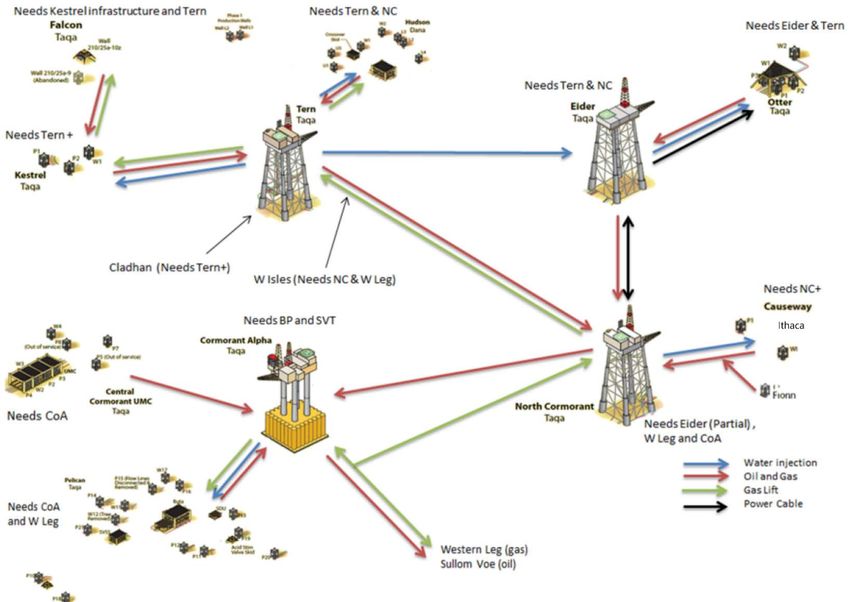
CONTENTS

CONTENTS                                       3
ABBREVIATIONS                                  4
FIGURES                                        6
TABLES                                         7
APPENDICES                                     7
1. EXECUTIVE SUMMARY                           8
2. DESCRIPTION OF ITEMS TO BE DECOMMISSIONED   24
3. REMOVAL AND DISPOSAL METHODS                29
4 ENVIRONMENTAL APPRAISAL OVERVIEW             40
5 INTERESTED PARTY CONSULTATIONS               49
6 PROGRAMME MANAGEMENT                         50
7 SUPPORTING DOCUMENTS                         53
APPENDICES                                     54

                                                3
CORMORANT ALPHA TOPSIDE
DECOMMISSIONING PROGRAMME
ABBREVIATIONS

                                ABBREVIATIONS

 Abbreviation   Explanation

 ALQ            Additional Living Quarters

 ALARP          As Low As Reasonably Practicable

 BAT            Best Available Technology

 bbls           Barrels

 COA            Cormorant Alpha

 CON            North Cormorant

 CoP            Cessation of Production

 DP             Decommissioning Programme

 EA             Environmental Appraisal

 EDC            Engineer Down & Clean

 EL             Elevation

 EMS            Environmental Management System

 ERRV           Emergency Response and Rescue Vessel

 EUNIS          European Nature Information System

 CGBS           Concrete Gravity Based Structure

 GJ             Gigajoule

 HLV            Heavy Lift Vessel

 HSE            Health and Safety Executive

 HVAC           Heating, Ventilation and Air Conditioning

 IPR            Interim Pipeline Regime

 JV             Joint Venture (Partner)

 km             Kilometres

 km2            Kilometres Squared

 Kw             Kilowatt

 LAT            Lowest Astronomical Tide

 LSA            Low Specific Activity Scale

                                                            4
CORMORANT ALPHA TOPSIDE
DECOMMISSIONING PROGRAMME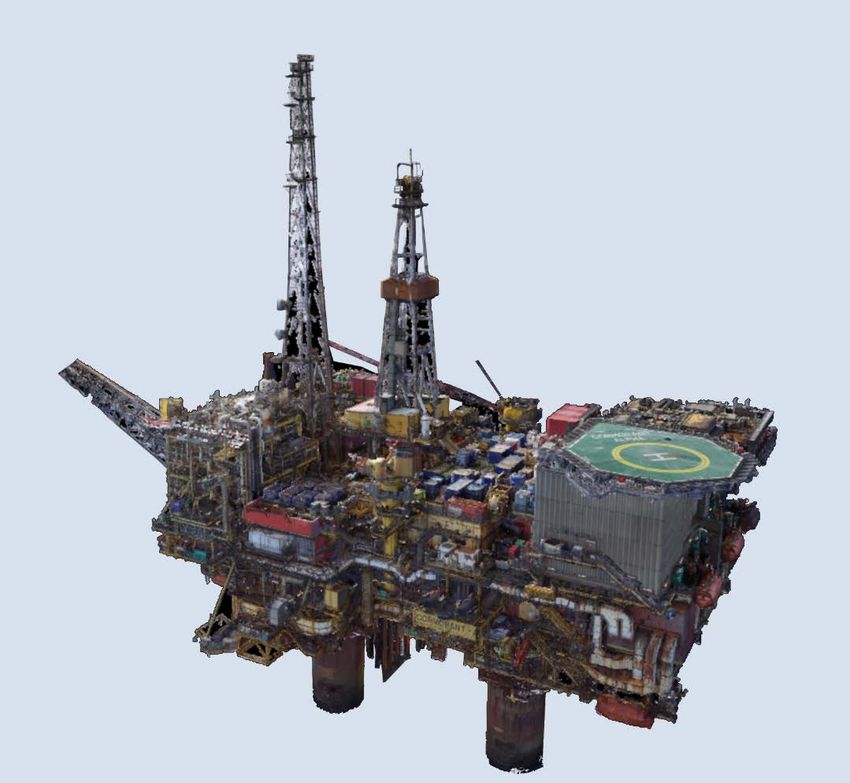
ABBREVIATIONS (CONT.)

 Abbreviation   Explanation

 m              Metres

 m3             Metres Cubed

 MM             Million

 MSF            Module Support Frame

 N/A            Not Applicable

 NFFO           National Federation of Fishermen's Organisations

 NIFPO          Northern Ireland Fish Producers Organisation Ltd

 NLB            Northern Lighthouse Board

 NNS            Northern North Sea

 NOF            Business Development Organisation

 NORM           Naturally Occurring Radioactive Material

 OGA            Oil and Gas Authority

 OGTC           Oil and Gas Technology Centre

 OGUK           Oil & Gas UK

 ONE            Opportunity North East

 OPEP           Oil Pollution Emergency Plan

 OPRED          Offshore Petroleum Regulator for Environment and Decommissioning

 OSPAR          Oslo Paris Convention

 P&A            Plug & Abandon

 PETS           Portal Environmental Tracking System

 PON            Petroleum Operations Notice

 RoI            Reverse of Installation

 SCOL           Self-Contained Offshore Lighthouse

 SFF            Scottish Fishermen’s Federation

 SLV            Single Lift Vessel

 SL             Single Lift

 STOIIP         Stock Tank Oil Initially In Place

 SPE            Society of Petroleum Engineers

                                                                                   5
CORMORANT ALPHA TOPSIDE
DECOMMISSIONING PROGRAMME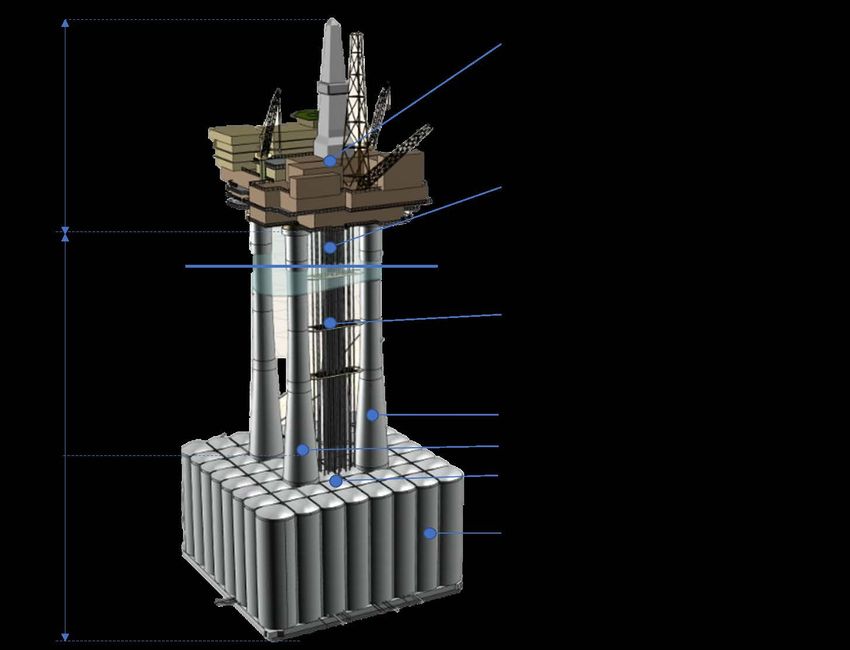
ABBREVIATIONS (CONT.)

 Abbreviation       Explanation

 SVT                Sullom Voe Terminal

 TAQA               TAQA Bratani Limited

 Te                 Tonnes

 TFS                Transfrontier Shipment (of Waste)

 UKCS               United Kingdom Continental Shelf

 UKHO               United Kingdom Hydrographic Office

 UMC                Underwater Manifold Centre

 WONS               Well Operations and Notifications System

FIGURES

                                          FIGURES

 Figure Reference      Description                                        Page

 Figure 1.1            Cormorant Alpha Platform                           11

 Figure 1.2            Field Location in UKCS                             16

 Figure 1.3            TAQA NNS Field Layout                              17

 Figure 1.4            Adjacent Facilities Interdependency Overview       22

 Figure 2.1            Cormorant Alpha Topside                            24

 Figure 2.2            Cormorant Alpha Topside by Functional Category     27

 Figure 2.3            Cormorant Alpha Topside by BEIS Category           28

 Figure 3.1            Cormorant Alpha Topside East Elevation             29

 Figure 3.2            Cormorant Alpha Topside Modular Construction       31

 Figure 3.3            Cormorant Alpha Topside Overview                   32

 Figure 3.4            Cormorant Alpha Platform: Topside & CGBS           34

 Figure 6.1            Cormorant Alpha Decommissioning Project Schedule   50

                                                                                 6
CORMORANT ALPHA TOPSIDE
DECOMMISSIONING PROGRAMME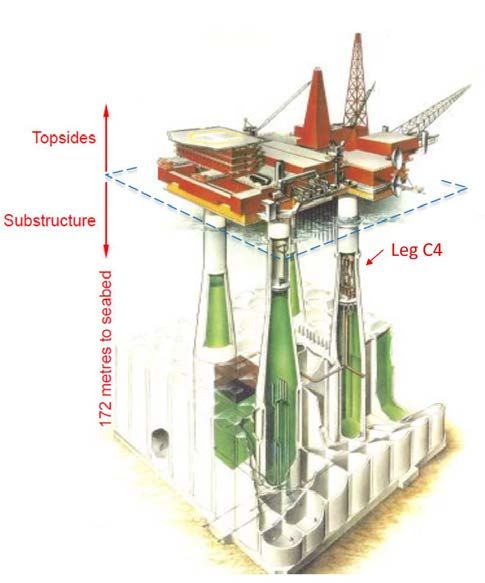
TABLES

                                             TABLES

 Figure Reference      Description                                      Page

 Table 1.1             Installation to be Decommissioned                12

 Table 1.2             Installation Section 29 Notice Holders Details   13

 Table 1.3             Summary of Decommissioning Programme             15

 Table 1.4             Adjacent Facilities                              18

 Table 2.1             Surface Facilities Information                   24

 Table 2.2             Well Information                                 25

 Table 3.1             Cleaning of Topsides for Removal                 33

 Table 3.2             Topside Removal Methods                          36

 Table 3.3             Well Plug and Abandonment                        37

 Table 3.4             Waste Stream Management Methods                  38

 Table 3.5             Inventory Disposition                            39
                       Reuse, Recycling and Disposal Aspirations for
 Table 3.6                                                              39
                       Recovered Material
 Table 4.1             Environmental Sensitivities                      40

 Table 4.2             Environmental Impact Management                  43

 Table 5.1             Summary of Stakeholder Comments                  49

 Table 6.1             Provisional Decommissioning Programme Costs      52

 Table 7.1             Supporting Documents                             53

APPENDICES

                                         APPENDICES
 Appendix           Description                            Page

 1                  Public Notice                          54

 2                  Letters of Support                     55

                                                                               7
CORMORANT ALPHA TOPSIDE
DECOMMISSIONING PROGRAMME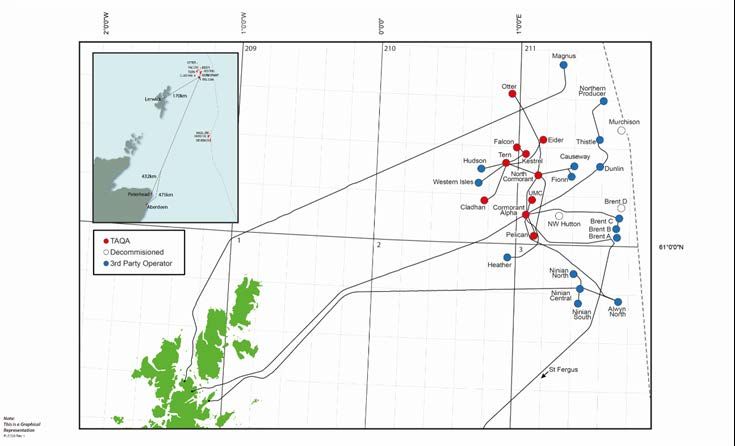
1. EXECUTIVE SUMMARY
                                                   between cessation of production and the
                                                   removal of the topsides as there will only be a
1.1 Decommissioning
                                                   small number of wells left to P&A at the time of
Programme                                          CoP. This has safety and environmental
This decommissioning programme is for the          benefits, as it reduces the length of time that
Cormorant Alpha topside installation.              people and equipment are mobilised to the
                                                   platform to perform maintenance of the
Cormorant Alpha is a fixed installation with a     topsides to ensure they are in a safe condition
concrete gravity-based structure located in the    for dismantling.
South Cormorant field in the East Shetland
basin of the Northern North Sea Block 211/26a.     Early planning has commenced and the
The field was discovered in 1972 with the          execution window of 2026 as the earliest
platform installed in 1978 and production          possible start date through to project
starting in December 1979.                         completion in 2028.

A CoP (Cessation of Production) applications       It should be noted that this does not include the
for the South Cormorant and Pelican (including     drilling derrick structure as this has already
Cormorant Alpha and the UMC manifold) fields       been covered by a separate decommissioning
have been prepared and have been submitted         programme (Ref:1) The modular drilling rig that
to the Oil & Gas Authority (OGA) in Q3 2020.       will be used to P&A the Cormorant Alpha
The CoP date for Cormorant Alpha is currently      platform wells will be removed prior to topside
anticipated to be Q4 2023.                         removal and is therefore not part of the scope
                                                   of this decommissioning programme.
This       Cormorant      Alpha      Topside
Decommissioning      Programme     (DP)    is      1.2 Requirement for
supported by an Environmental Assessment
which is a separate document and summarised
                                                   Decommissioning Programme
in Section 4.
                                                   In accordance with the Petroleum Act 1998, the
TAQA recognises that execution of topside          Section 29 notice holders of the Cormorant
removals can allow decommissioning to be           Alpha installation (see Table 1.2) are applying
executed cost effectively, to the benefit of the   to the Offshore Petroleum Regulator for
taxpayer and without prejudice or compromise       Environment and Decommissioning (OPRED)
to the feasible decommissioning options for the    to obtain approval for decommissioning the
remaining substructure. As such, OPRED has         Cormorant Alpha topside detailed in Section 2.1
agreed that our proposals for decommissioning      of this programme.
the Cormorant Alpha topside can form this
                                                   In conjunction with stakeholder and regulatory
separate, topside-only DP. This is discussed
                                                   consultation, the decommissioning programme
further in Section 1.3.
                                                   is submitted in compliance with national and
Isolation of the Rundown Lines and Vent Lines      international     regulations    and    OPRED
within the platform substructure, to facilitate    guidelines. This decommissioning programme
safe execution of topside removal, is also         is for an anticipated 11-year schedule, planning
included      within the    scope   of     this    for which began in 2019.
Decommissioning Programme.

A phased P&A programme, commencing in
advance of CoP will minimise the period

                                                                                                  8
 CORMORANT ALPHA TOPSIDE
 DECOMMISSIONING PROGRAMME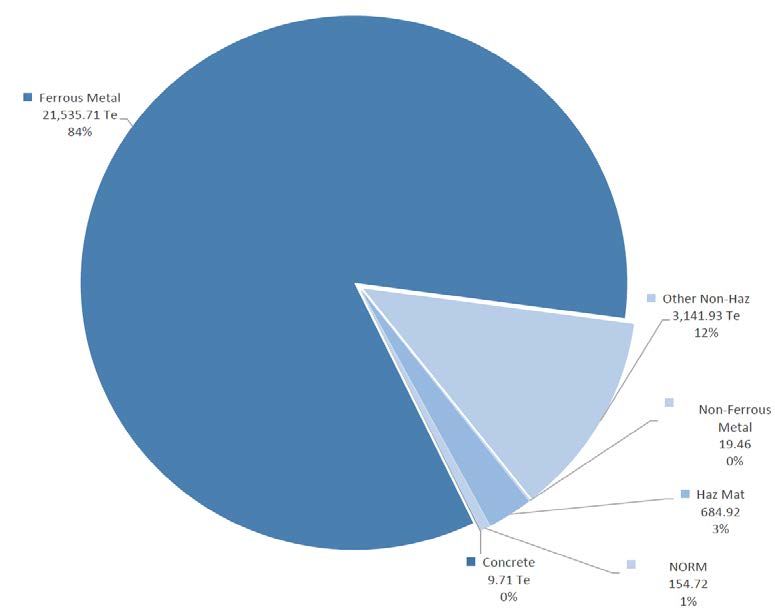
1.3 Introduction                                     Artificial lift is required to support production
                                                     from the native Cormorant Alpha platform wells
The Cormorant Alpha installation lies within the     and is reliant on the availability of a single gas
East Shetland Basin of the UKCS in licence           compressor and power generator and the
block 211/26a in 150m water depth. The               availability of an export route through
Cormorant Alpha Installation consists of a four-     Cormorant Alpha to the Sullom Voe Terminal
leg concrete gravity base structure, weighing        (SVT).
294,655Te. with a steel box girder Module
                                                     The Cormorant fields cover a large area and a
Support Frame (MSF) supporting two levels of
                                                     decision was made in the original field
modules with a total topsides weight of
                                                     development plans to install two platforms at
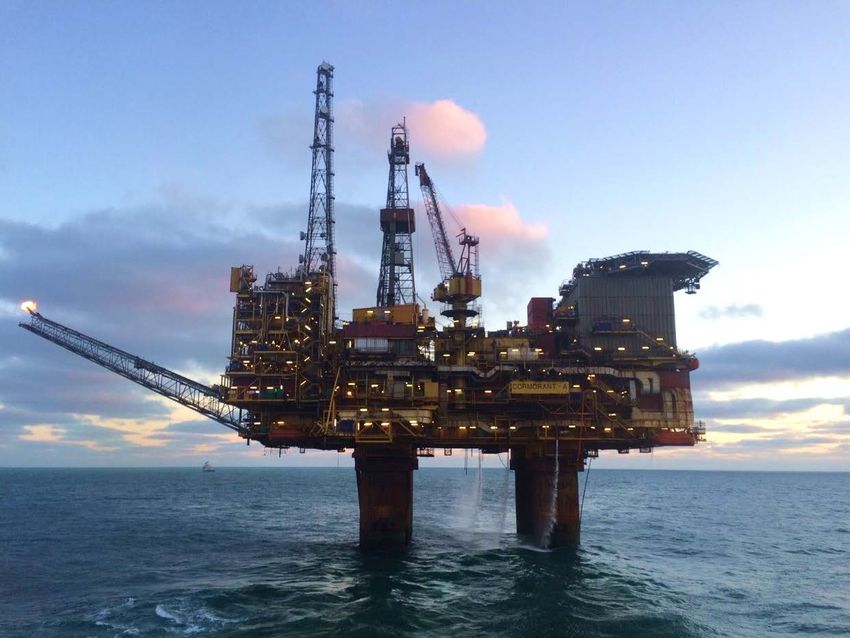
25,546.45Te. For a graphical representation of
                                                     the North (North Cormorant) and South of the
the platform in its entirety, please see Figure
                                                     areas (Cormorant Alpha). The Underwater
1.1. This illustrates the key structural elements
                                                     Manifold Centre (UMC) was installed to act as
of the platform, as well as a brief description of
                                                     a template structure for nine wells and pipelines
the key areas and their extent.
                                                     back to Cormorant Alpha. The installation was
The platform serves as a manned drilling,            originally designed to utilise its large concrete
production and metering facility for the Central     gravity base structure with storage cells
Cormorant and Pelican fields. Cormorant Alpha        capable of holding 1MMbbls of oil, although that
also serves as the entry point into Brent System     functionality is now disused following the 2017
for TAQA and other third-party production. This      Direct Export Project. The new export
production is then transported through the           configuration allows native field and Brent
Brent pipeline to Sullom Voe Terminal (SVT).         System Partner’s production to tie into a new
Cormorant Alpha is also a centre for                 collection manifold prior to flowing to SVT.
telecommunications in the area.
                                                     Third party fields who currently utilise the Brent
Connected to the installation is the Pelican         System transportation service via the
subsea template located on the Pelican field         Cormorant Alpha facilities include Hudson,
and the Central Cormorant Underwater                 Brent Charlie & Alwyn North. This is in addition
Manifold Centre (UMC) located on the South           to the TAQA operated Tern and Cormorant
Cormorant field. The Pelican and UMC subsea          North area fields. Of these only one (Alwyn
developments will both be subject to their own       North) is expected to still be in production at the
separate Decommissioning programmes. The             time of Cormorant Alpha’s cessation of
concrete gravity base substructure (CGBS) of         production. The Alwyn North Operator has
the Cormorant Alpha platform will be subject to      been      engaged       to    advise     of     the
a separate Decommissioning Programme, as             decommissioning timeline. They have identified
will the Brent Pipeline between Cormorant            two potential alternative export routes and have
Alpha and SVT.                                       initiated a project to identify the optimum
                                                     solution. Both initial options are feasible to be
The South Cormorant fields (Blocks I & II) have      implemented in advance of Cormorant Alpha
now produced 189MMbbls from the latest               CoP. Therefore, the removal of the Cormorant
STOIIP view of 372MMbbls. The ability for            Alpha topsides will not strand any upstream
Cormorant Alpha to continue producing to the         reserves.
limit of economic viability will be largely
influenced by the performance of aging critical
equipment, which in some instances would face
obsolescence issues in the event of failure.

                                                                                                      9
 CORMORANT ALPHA TOPSIDE
 DECOMMISSIONING PROGRAMME
economically unviable. Therefore, the asset
TAQA has carried out a review of the must be decommissioned.
Cormorant Alpha asset to determine the
feasibility of asset reuse (Ref 4). The Separate Decommissioning Programmes
alternatives for reuse included: an offshore covering the remainder of the Cormorant Alpha
renewable energy generation station (wind, substructure, currently planned for submission
wave or tidal), a marine research station, a in 2022+, the associated pipelines and subsea
training centre, fish farming site, carbon capture developments are currently planned for 2021+.
and storage site and reuse of the facilities at an
alternative location. However, after a thorough The removal of the Cormorant Alpha Topside
review TAQA concluded that reuse was not a will not prejudice the future decommissioning
credible option because of the age of the solutions covering the remaining Cormorant
infrastructure, its distance from shore and lack Alpha area infrastructure not dealt with in this
of demand for and the capital outlay combined document. For further details please refer to
with the annual operational and maintenance sections 3.1.3 and 3.1.6.
costs of the converted facility making it
10
CORMORANT ALPHA TOPSIDE
DECOMMISSIONING PROGRAMMEFigure 1.1: Cormorant Alpha Platform
11
CORMORANT ALPHA TOPSIDE
DECOMMISSIONING PROGRAMME1.4 Overview of Installation Being Decommissioned
1.4.1 Installation
TABLE 1.1 INSTALLATION TO BE DECOMMISSIONED
Production Type
Platform: Cormorant Alpha Oil / Gas
(Oil/Gas/Condensate):
Water Depth: 150 m UKCS Block: 211/26a
Distance to Distance from Nearest
41 km 103km NE from Unst
Median (km): UK Coastline (km):
Surface Installation
Number: Type: Topsides Weight (Te): Jacket Weight (Te):
Cormorant Alpha
1 25,546.45 N/A
Topside
Number of Wells
Platform: 25
12
CORMORANT ALPHA TOPSIDE
DECOMMISSIONING PROGRAMMETABLE 1.2 INSTALLATION SECTION 29 NOTICE HOLDERS DETAILS
Section 29 Notice Holders Registration Number
TAQA Bratani Limited 05975475
A/S Norske Shell
914 807 077
Amoco (U.K.) Exploration
SF000790
Company, LLC
Apache Beryl I Limited FC005975
Britoil Limited SC077750
Neo Energy (UKCS) Limited 02669936
CNR International (U.K.) Limited 00813187
Chrysaor Production (U.K.)
00524868
Limited
ConocoPhillips Skandinavia AS 918 110 127
Dana Petroleum (E&P) Limited 02294746
EnQuest Heather Limited 02748866
EnQuest Thistle Limited 04487223
Enterprise Oil Norge Limited 01682049
Enterprise Oil U.K. Limited 02290358
Esso Exploration and Production
00207426
UK Limited
ExxonMobil Exploration and
914 048 990
Production Norway AS
Fairfield Betula Limited 04465204
Fairfield Fagus Limited 05461823
Total E&P North Sea UK Limited 03682299
13
CORMORANT ALPHA TOPSIDE
DECOMMISSIONING PROGRAMMETABLE 1.2 INSTALLATION SECTION 29 NOTICE HOLDERS DETAILS
Section 29 Notice Holders Registration Number
MCX Dunlin (UK) Limited 06451712
MCX Osprey (UK) Limited 06451720
MOL UK Facilities Ltd 08824520
Siccar Point Energy E&P Limited 01504603
00140141
Shell U.K. Limited
Equinor UK Limited 01285743
Equinor ASA
923609016
Wintershall DEA Norge AS 985224323
The Cormorant Alpha installation is owned jointly between the Cormorant Alpha Field Owners (TAQA)
and the Brent System Owners.
14
CORMORANT ALPHA TOPSIDE
DECOMMISSIONING PROGRAMME1.5 Summary of Proposed Decommissioning Programme
TABLE 1.3 SUMMARY OF DECOMMISSIONING PROGRAMME
Proposed Decommissioning Solution Reason for Selection
Topsides
Cormorant Alpha Platform: complete removal of topsides for re-
use, recycling or appropriate disposal by a method to be
determined as appropriate.
This does not include the drilling derrick structure as this has
already been covered by a separate approved decommissioning
programme. This was due to the need to have a serviceable rig
with which to execute platform well P&A and the uneconomic
Meets regulatory requirements
proposition of returning the original facilities to service. The
modular drill rig which will be used for the P&A campaign will be
removed prior to topside removal.
The cut height for the topside removal is to be determined, but
OPRED will be advised once detailed engineering has been
completed. Cleaned equipment refurbished for re-use where
possible. Equipment which cannot be re-used will be recycled or
other disposal routes as appropriate.
Wells
Abandoned in accordance with Oil & Gas UK Guidelines for the
suspension and abandonment of wells.
A PON5 / Portal Environmental Tracking System (PETS) / Marine
Licence application under the relevant regulations will be
submitted in support of the works planned to be carried out. Meets OGA and HSE
Currently planned to take place in the window between 2021 & regulatory requirements
2025.
For information, conductors will be cut above the top of the
concrete storage cells at a height to avoid disturbance of the drill
cuttings pile. The removed sections will be transported to shore
for recycling. OPRED will be advised of the elevations of the
conductor cut heights once determined.
Interdependencies
Separate decommissioning programmes will be submitted for both the Cormorant Alpha
substructure and the remainder of the wider field infrastructure to be submitted from 2022 onwards.
Cormorant Alpha serves as the entry point to Brent System and as such is the Hub for this area of
the East Shetland Basin. At present incoming pipelines from North Cormorant, Brent Charlie and
Alwyn North utilise the ‘up and over’ service to SVT via Cormorant Alpha and the Brent System
Pipeline. However, production through Brent System will have ceased at the point the Cormorant
Alpha Topsides are to be removed (refer to Table 1.4 for further detail).
15
CORMORANT ALPHA TOPSIDE
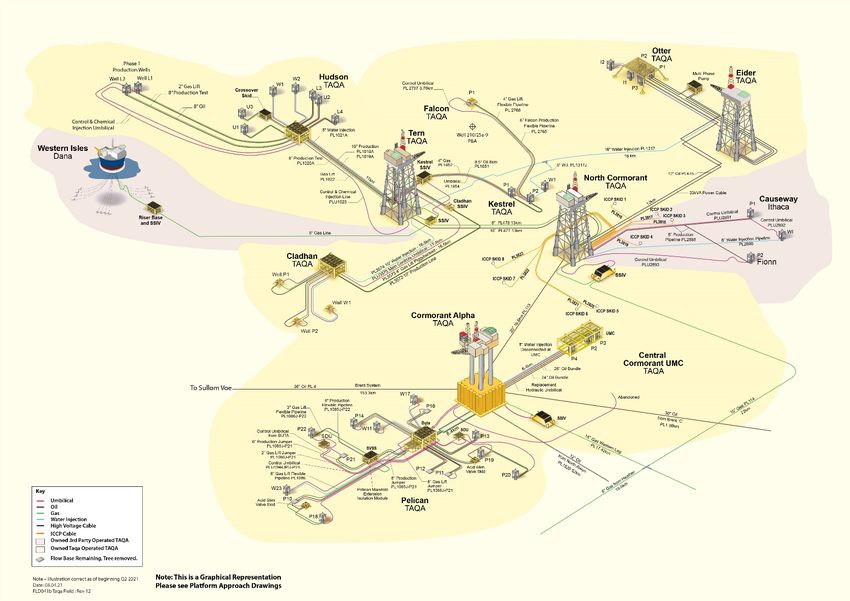
DECOMMISSIONING PROGRAMME1.6 Field Location Including Field Layout and Adjacent Facilities
Figure 1.2: Field Location in UKCS
CORMORANT ALPHA TOPSIDE 16
DECOMMISSIONING PROGRAMMEFigure 1.3: TAQA NNS Field Layout CORMORANT ALPHA TOPSIDE 17 DECOMMISSIONING PROGRAMME
TABLE 1.4 ADJACENT FACILITIES

                                                Distance /
  Owner            Name         Type
                                                Direction
                                                             Information Status

  TAQA Bratani                                  28.8km N
                   Eider        Platform                                   Utility Mode
  Limited                                       of COA
                                                             Water
  TAQA Bratani                  Subsea Wells    46 km NW
                   Otter                                     Injection /   Operational
  Limited                       (Template)      of COA
                                                             Production

  TAQA Bratani                  Subsea          46 km NW     Multiphase
                   Otter                                                   Operational
  Limited                       Structure       of COA       Pump

                                                21 km
  TAQA Bratani     Tern                                      Adjacent
                                Platform        WNW of                     Operational
  Limited          Alpha                                     Platform
                                                COA
  Dana Petroleum   Western                      12 km        Adjacent
  (E&P) Ltd                     Production
                   Isles                        West of      production    Operational
                                Facility
                   FPSO                         COA          Facility
  Dana Petroleum                                32 km        Water
  (E&P) Ltd                     Subsea
                   Hudson                       WNW of       injection /   Operational
                                Structures
                                                COA          Production
                                                23.1 km
  TAQA Bratani                  Subsea          NW of
                   Falcon                                    Production    Operational
  Limited                       Structures      COA

                                                23.1 km      Water
  TAQA Bratani                  Subsea
                   Kestrel                      NW of        Injection /   Operational
  Limited                       Structures
                                                COA          Production
                                                7 km
  TAQA Bratani                  Umbilical                    Control
                   Kestrel                      Kestrel to                 Operational
  Limited                       PLU1854                      Umbilical
                                                Tern
                                                22 km SW     Water
  TAQA Bratani                  Subsea          of COA
                   Cladhan                                   Injection /   Operational
  Limited                       Structures
                                                             Production

  TAQA Bratani     Cormorant                    15.8 km N
                                Platform                                   Operational
  Limited          North                        of COA

                                                17.5 km
  TAQA Bratani     Cormorant    20” Pipeline                 Oil Export
                                                CON to                     Operational
  Limited          North        PL113                        Line
                                                COA
                                                15.6 km      Water         Shut in
  Ithaca Energy                 Subsea
                   Causeway                     East of      Injection /   pending
  Ltd                           Structures
                                                CON          Production    Decom
                                                                           Shut in
  Ithaca Energy                 Subsea          11.9 km E
                   Fionn                                     Production    pending
  Ltd                           Structure       of COA
                                                                           Decom

CORMORANT ALPHA TOPSIDE
DECOMMISSIONING PROGRAMME
                                                                                          18
TABLE 1.4 ADJACENT FACILITIES (Cont.)
Distance /
Owner Name Type Information Status
Direction
Fairfield 33 km ENE of Shut in pending
Dunlin A Platform
Energy COA Decom
Fairfield 24” Pipeline 36.4 km DUN to
Dunlin Oil Export Line Decommissioned
Energy PL5 COA
Shell UK 20” Pipeline 36 km Brent C to
Brent Oil Export Operational
Ltd PL1 COA
20” Pipeline
BP UK NW Hutton Decommissioned Oil Export Decommissioned
PL148
12” Pipeline 52 km Alwyn
Total UK North Alwyn Oil Export Operational
PL1526 North to COA
TAQA
Brent System 36” Pipeline Platform Isolated and Out
Bratani Within COA GBS
Pipeline PL4A Bypass of Use
Limited
TAQA 153.293 km
Brent System 36” Pipeline
Bratani COA to Sullom Oil Export Operational
Pipeline PL4
Limited Voe
TAQA Underwater
Subsea 8 km NNW of Water Injection
Bratani Manifold Operational
Installation COA / Production
Limited Centre
TAQA Underwater
8” Pipeline 7 km UMC to
Bratani Manifold Production Operational
PL167 COA
Limited Centre
TAQA Dual 3” TFL
Underwater
Bratani Pipeline 7 km UMC to
Manifold Service Line Out of Use
Limited Bundle COA
Centre
PL168
TAQA Underwater
8” Pipeline 7 km UMC to
Bratani Manifold Production Operational
PL210 COA
Limited Centre
TAQA Underwater Control
Umbilical 7 km UMC to
Bratani Manifold Umbilical Operational
PL169 COA
Limited Centre (Hydraulics)
TAQA Underwater
8” Pipeline 7 km UMC to
Bratani Manifold Water Injection Out of Use
PL184 COA
Limited Centre
TAQA Underwater
Umbilical 7 km UMC to Control
Bratani Manifold Operational
PL1165 COA Umbilical
Limited Centre
TAQA
Control
Bratani Satellite Well Umbilical
6 km P1 to COA Umbilical Operational
Limited P1 PL118
(Power)
TAQA
Subsea Water Injection
Bratani Pelican 8 km S of COA Operational
Installation / Production
Limited
TAQA
8” Pipeline 8 km Pelican to
Bratani Pelican Production Operational
PL1084 COA
Limited
TAQA 8 km Pelican to
8” Pipeline
Bratani Pelican COA Production Operational
PL1085
Limited
CORMORANT APLHA TOPSIDE
DECOMMISSIONING PROGRAMME
19TABLE 1.4 ADJACENT FACILITIES (Cont.)
Distance /
Owner Name Type Information Status
Direction
TAQA
8” Pipeline 8 km Pelican to
Bratani Pelican Water Injection Operational
PL1086 COA
Limited
TAQA
6” Pipeline 8 km Pelican to
Bratani Pelican Gas Lift Operational
PL1087 COA
Limited
TAQA
Umbilical 8 km Pelican to Control
Bratani Pelican Operational
PLU1944 COA Umbilical
Limited
TAQA 3/8” Chemical
8 km Pelican to Control
Bratani Pelican Line Operational
COA Umbilical
Limited PL1088
TAQA 3/8” Chemical
8 km Pelican to Control
Bratani Pelican Line Operational
COA Umbilical
Limited PL1089
TAQA 3/8” Chemical
8 km Pelican to Control
Bratani Pelican Line Operational
COA Umbilical
Limited PL1090
TAQA Underwater
6” Pipeline 3.5 km W4 well
Bratani Manifold Water Injection Out of Use
PL1558 to UMC
Limited Centre
TAQA
Power Cable 25m Pelican Control
Bratani Pelican Operational
PL3136 SDU to Well P22 Umbilical
Limited
COA Gas Export
Shell UK Western Leg 16” Pipeline / Import to Brent
Gas Export Operational
Ltd Gas Pipeline PL17 Bypass tie-in
CORMORANT APLHA TOPSIDE
DECOMMISSIONING PROGRAMME
20TABLE 1.4 ADJACENT FACILITIES (Cont.)
Impacts of Decommissioning
The base of the incoming risers on Cormorant Alpha serves as the entry points into Brent System, with
the Cormorant Alpha Platform and connection to Brent Pipeline to SVT all jointly owned by TAQA and its
JV Partners.
All upstream fields, except for the Alwyn Area, have profiles which show a CoP date before, or in alignment
with, the cessation of Brent System throughput. Engagement with Alwyn Area Operator has been
undertaken to share the high-level decommissioning timeline to allow an alternative export route to be in
place in advance of Brent System CoP.
Flushing of the relevant substructure pipework, upstream pipelines, connecting subsea infrastructure and
export pipeline to SVT will have been completed prior to the removal of the Cormorant Alpha Topside.
TAQA has engaged with the Western Leg Gas Pipeline Operator to discuss disconnection arrangements.
TAQA has also engaged with Western Isles Operator regards the requirements for future fuel gas access
via the Western Leg post CoP of Cormorant Alpha and North Cormorant. These discussions remain
ongoing.
Cormorant Alpha also serves as a communications hub for the East Shetland Basin. The removal of the
Topside will require a re-route of the northern telecommunications ring. Advance notice of
decommissioning activities will be provided to Operators of installations served by this service, as well as
the Communications Service Provider, to allow them to determine the most appropriate network
arrangements following the removal of the Cormorant Alpha Topside.
Cormorant Alpha shares an ERRV with the nearby Heather platform. Consultation will be undertaken with
the Heather Operator over the timing of cessation during future contractual discussions.
CORMORANT APLHA TOPSIDE
DECOMMISSIONING PROGRAMME
21Figure 1.4: Adjacent Facilities Interdependency Overview Please note that ‘BP’ refers to the Brent System Pipeline
22
CORMORANT ALPHA TOPSIDE DECOMMISSIONING
PROGRAMME1.7 Industrial Implications
The Cormorant Alpha Topside Decommissioning Programme will be managed by TAQA’s UK
business, to ensure safe, efficient and legally compliant delivery of the various elements of
TAQA’s decommissioning scope. The intention is to make efficient use of the supply chain to
generate value through the application of knowledge, innovation and technology, explore
collaboration opportunities and to employ best practice in the management of the supply chain
to deliver a cost effective and reliable service.
This will be achieved through the following:
• TAQA will treat the supply chain in an TAQA have explored the possibility of working
ethical, fair and mutually rewarding way collaboratively with other Operators in the East
of Shetland basin in order to execute our
• Drive continuous improvement through decommissioning strategies in the most
collaboration with other Operators and efficient way possible. However, at this time,
industry stakeholders due to the differences in timing of forecast
activities, this has not provided any
• TAQA has and will continue to actively
opportunities to take forwards with regards
support Regulatory and OGA industry
topsides removal. TAQA will continue to
initiatives including Showcase events and
collaborate with industry and the supply chain
as part of the East of Shetland workgroup
in the future.
• Will stimulate the supply chain and
innovation through actively supporting and TAQA have engaged with the OGA (January
working with industry representative bodies 2020) to discuss and agree the contracting
including the OGTC, ONE, Decom North strategy and tender approach as well as the
Sea, SPE and NOF supporting SCAP requirements.
• Actively explore potential opportunities to Detailed feasibility studies with a number of
drive efficiency through multi-asset, multi- short-listed removal contractors have
field or multi-Operator campaigns commenced to allow the removal contractors to
develop a proposal for a removal methodology
• Conduct detailed market analysis ensuring and schedule with greatly reduced technical
that not only established removal uncertainty, has been very well-received by the
methodologies are considered, but genuine removal contractors, as a mutually beneficial
new market concepts also collaborative approach.
• Use of open and transparent decision
criteria on Contractor and contract strategy
selection
23
CORMORANT ALPHA TOPSIDE
DECOMMISSIONING PROGRAMME2. DESCRIPTION OF ITEMS TO BE
DECOMMISSIONED
2.1 Installation: Surface Facilities (Topside)
TABLE 2.1 SURFACE FACILITIES INFORMATION
Topsides / Facilities
Facility
Name Location
Type No. of
Weight (Te)
Modules
WGS84 340⁰ 48’ 20”
Cormorant
Topside WGS84 25,546.45 40
Alpha 61° 06' 09.411” N
Decimal
01° 04’22.272” E
Minute
Figure 2.1: Cormorant Alpha Topside
24
CORMORANT ALPHA TOPSIDE
DECOMMISSIONING PROGRAMME2.2 Wells
TABLE 2.2 WELL INFORMATION
Date
Category of
Platform Wells Designation Status Abandoned
Well
Never Abandoned
211/26-A1 PL-4-3-3 17.01.2017
Completed Phase 2
Completed
211/26-A13 Water Injector PL-4-3-3 -
(Shut in)
Abandoned
211/26-A17 Water Injector PL-3-3-3 14.06.2004
Phase 1
Completed
211/26-A18 Water Injector PL-3-3-3 -
Operational
Completed
211/26-A24 Water Injector PL-3-3-3 -
(Shut in)
Abandoned
211/26-A25J Junked PL-0-0-3 26.01.1983
Phase 1
Completed
211/26-A27Z Appraisal Well PL-3-3 -
(Shut in)
Abandoned
211/26-A28Z Oil Producer PL-2-3-3 09.02.2008
Phase 1
Completed
211/26-A32 Oil Producer PL-4-3-3 -
Operational
Completed
211/26-A33Y Oil Producer PL-2-4-3 -
Operational
Completed
211/26-A34 Oil Producer PL-4-3-3 -
(Shut in)
Completed
211/26-A35 Oil Producer PL-3-3-3 -
Operational
Completed
211/26-A36 Oil Producer PL-4-3-3 -
Operational
Completed
211/26-A37 Oil Producer PL-3-4-3 -
Operational
Completed
211/26-A38 Oil Producer PL-4-3-3 -
Operational
Completed
211/26-A39 Water Injector PL-3-4-3 -
Operational
25
CORMORANT ALPHA TOPSIDE
DECOMMISSIONING PROGRAMMETABLE 2.2 WELL INFORMATION (CONT.)
Category of Date
Platform Wells Designation Status
Well Abandoned
Completed
211/26-A40 Oil Producer PL-4-3-3 -
Operational
Completed
211/26-A40Z Oil Producer PL-4-3-3 -
Operational
Completed
211/26-A41 Oil Producer PL-2-3-3 -
Operational
Completed
211/26-A42 Oil Producer PL-4-3-3 -
Operational
Completed
211/26-A42Z Oil Producer PL-4-3-3 -
Operational
Completed
211/26-A43 Oil Producer PL-2-3-3 -
Operational
Completed
211/26-A43Z Oil Producer PL-2-3-3 -
Operational
Completed
211/26-A6 Water Injector PL-3-3-3 -
(Shut in)
Completed
211/26-A8Z Water Injector PL-4-3-3 -
Operational
Please note: The slot from which Appraisal original facilities to service. The modular drill
Well 211/26-A27Z was drilled was rig which will be used for the P&A campaign
subsequently, hence there are more well listed will be removed prior to topside removal.
than platform well slots.
Details of Wells categorisation have been
The drilling derrick structure has already been taken from OGUK Guidelines: Well
covered by a separate approved Decommissioning Guidelines Issue 6, June
decommissioning programme. This was due to 2018. All platform wells will be plugged and
the need to have a serviceable rig with which abandoned (P&A’d) under the appropriate
to execute platform well P&A and the standards as per the current WONS and
uneconomic proposition of returning the Marine Licences legislation.
26
CORMORANT ALPHA TOPSIDE
DECOMMISSIONING PROGRAMME2.3 Inventory Estimates
Figure 2.2: Cormorant Alpha Topside by Functional Category
Total 25,546.45 Tonnes
Please refer to Section 2.7 within the Once the removal methodology is selected
Environmental Appraisal for further details on OPRED will be informed and whilst some
the materials inventory data. The total Topsides material e.g. pipework, in each of the legs is
weight of 25,546.45 Te is inclusive of an likely to be removed to facilitate leg cutting, it is
estimated 839.64 Te of hazardous waste such also likely that material will require to be added
as paint and NORM, as shown in Figure 2.3. within each leg to support and secure the
remaining pipework and / or systems left in
The Cormorant Alpha topside will likely be cut place below the cut height. OPRED will be
at or around the transition between the top of informed about the material removed and
the concrete legs and the start of the steel added. The final solution will be determined by
footing supporting the cellar deck structure, that the cut height of the appointed contractor.
is at EL. +18.62m relative to LAT (168.92m
above seabed). The final cut height will be To date there has been no evidence of marine
determined dependant on the removal method growth extending up to the level of transition
of the appointed contractor. and therefore it is extremely unlikely that any
trace of marine growth will be removed with the
topsides.
27
CORMORANT ALPHA TOPSIDE
DECOMMISSIONING PROGRAMMEFigure 2.3: Cormorant Alpha Topside by BEIS Category
Total 25,546.45 Tonnes
Please refer to Section 2.7 within the Environmental Appraisal for further details on the materials
inventory data.
28
CORMORANT ALPHA TOPSIDE
DECOMMISSIONING PROGRAMME3. REMOVAL AND DISPOSAL METHODS
3.1 Topsides
The Cormorant Alpha topside will be removed
and returned to shore for reuse, recycling or
3.1.1 Topsides Decommissioning disposal. TAQA will select a recycling and
Overview disposal facility considering the factors of safety,
During the decommissioning of the Cormorant environmental, socio-economic and cost. UK,
Alpha topside there will be a wide range of European and other international facilities may
materials that will need to be processed and, be considered. Once a facility is selected TAQA
will advise OPRED. The successful facility along
where possible, either reused or recycled.
with the chosen removal contractor will be
Preventing waste is ultimately the most required to have a proven track record and
preferential option, achieved through reducing clearly documented and legislatively compliant
consumption and using resources more procedures including the handling of
efficiently. TAQA will comply with the Duty of transfrontier shipment of waste in the event that
Care requirements under the UK Waste is required. Regulations governing the
Regulations and The Environmental Protection transfrontier shipment of waste (TFS) as
(Duty of Care) (Scotland) Regulations 2014. The implemented in the UK by the “Transfrontier
hierarchy of waste management will also be Shipment of Waste Regulations 2007” details
followed at all stages of disposal and industry the UK required procedures in order for
best practice will be applied. compliance with the legislation. All waste
material will be handled in accordance with UK
and relevant International legislation. TAQA and
the selected contractor(s) will address any
Figure 3.1: Cormorant Alpha Topside East transfrontier shipment of waste to ensure that
Elevation
Note: At the point of topsides removal the drilling derrick will have been
removed as part of an approved DP. The MDR will be removed
prior to topside removal
For illustrative purposes: red boxes show main function of the topside models
29
CORMORANT ALPHA TOPSIDE
DECOMMISSIONING PROGRAMMEthe associated issues are appropriately is module RM4E which is open truss
managed. construction and comprises 5 deck levels.
The Cormorant Alpha Topside Structure The Drilling Deck comprises 4 drilling package
comprises 40 modules (see figure 3.2) with a modules supported from the roof of modules
total weight of 25,546.45 tonnes. M2E and M2W below. The modules are of
similar trussed frame assembly comprising a
The Installation consists of a four-leg concrete plated deck, plated roof and stiffened plate clad
gravity base structure with a steel box girder walls. UM3E, UM3W, UM4W and UM4WW are
module support frame (Cellar Deck) supporting open clad pallets located above the roofs of
two levels of modules (Module Deck and Drilling corresponding modules below.
Deck).
The removal methodology for the Cormorant
The cellar deck comprises a compartmentalised Alpha topside has not been finalised yet, as this
box girder assembly comprising 2 principal will be subject to a commercial tendering
girders running North-South connecting leg C1 process.
to C4 and C2 to C3. Transverse box girders
running East-West connect leg C1 to Leg C2 However, TAQA have instructed a vendor to
and C3 to C4 complete the main support conduct a study (Ref 2) which looked at removal
assembly. The areas between the box girders options that are deemed technically feasable.
are infilled with a series of compartments. The Options studied were single lift (SL) and reverse
conductor slots are located in the Box Girder of installation (RoI). These methodologies were
assembly between legs C3 and C4. The Module reviewed against a common and consistant set
Deck comprises 11 modules supported from the of assumptions. This is discussed in detail in
superstructure roof. The modules are of similar section 2 of the Environmental Appraisal (EA).
trussed frame assembly comprising a plated
deck, plated roof and clad walls. The exception For an overview of the Cormorant Alpha
topsides see figures 3.2 and 3.3
30
CORMORANT ALPHA TOPSIDE
DECOMMISSIONING PROGRAMME.
Figure 3.2: Cormorant Alpha Topside Modular Construction
31
CORMORANT ALPHA TOPSIDE
DECOMMISSIONING PROGRAMMEFigure 3.3: Cormorant Alpha Topside Overview
32
CORMORANT ALPHA TOPSIDE
DECOMMISSIONING PROGRAMME3.1.2 Preparation and Cleaning
Table 3.1 describes the methods that will be used to drain, flush, purge or clean the topsides, prior to
removal to shore.
TABLE 3.1 CLEANING OF TOPSIDES FOR REMOVAL
Waste Type Composition of Waste Disposal Route
Flushing of bulk process hydrocarbons will be
conducted offshore, and residual fluids
disposed of under appropriate permits. Fuels
and lubricants will be drained and transported
onshore for re-use / disposal within in UK*
Onboard Process fluids, fuels, and
Hydrocarbons lubricants As per the waste hierarchy, export quality
crude trapped in the oil storage cell attic
spaces will be removed to ALARP utilising
BAT. This will ensure that the produced oil
will not be considered as waste as this will be
exported to SVT via the Brent Pipeline.
Chemicals for cleaning
Discharge of cleaning chemicals offshore will
topsides.
be managed under relevant permits.
Other Hazardous Hazardous waste such as
Waste chemicals, bulk NORM solids and
Materials NORM radioactive material,
other hazardous materials will be transported
instruments containing
ashore for re-use / disposal within the UK*
heavy metals & batteries
During preparation works to enable topside
Lead-based paint. Further
removal either by SL or RoI activities may
survey work will be
Original Paint generate toxic fumes / dust if flame-cutting or
undertaken to identify other
Coating grinding / blasting is used, so appropriate
components that may be
safety measures will be taken. All remaining
present
material will be dealt with onshore
During preparation works to enable topside
removal either by SL or RoI activities may
Asbestos has been
generate a requirement for appropriate
Asbestos and identified in surveys.
control and management methods to be
Ceramic Fibre Additional surveys will be
enforced. All remaining material will be dealt
undertaken.
with onshore
* Some waste types may be removed with the topsides and depending on the location of the
onshore disposal facility, this may be out with the UK.
The sampling of lead-based paint was included this visit lead-based paint was sampled and
within the scope of a specialist material analysed to determine its composition.
inventory and waste characterisation consultant However, asbestos was not sampled as it is
who visited Cormorant Alpha in 2019. During recorded in the TAQA asbestos register and is
33
CORMORANT ALPHA TOPSIDE
DECOMMISSIONING PROGRAMMEactively managed in line with TAQA procedures.
A demolition survey will be required to be carried
out by a specialist prior to the planned removal
of the topsides. The method for the disposal of
asbestos and ceramic fibre will be determined by
the onshore facility who will be selected to
dismantle the Cormorant Alpha topsides and will
be in line with their policies and procedures and
will be compliant with all relevant legislation.
Pipelines to and from the installation will have
been flushed, as appropriate and feasible and
under the appropriate permits before the topside
is removed.
3.1.3 Rundown Line & Vent Line
Isolation
As referenced in Section 1.3 the completion of
the Direct Export Project in 2017 saw the end of
the active use of the CGBS storage cells for their
Figure 3.4 Cormorant Alpha Platform:
original purpose. (See figure 3.4) A last export
Topside & CGBS
run, utilising the existing export pumps was
carried out from the storage cells. However, due
It is planned to remove the residual hydrocarbon
to the large capacity of the export pumps it was
inventory contained in the platform substructure
not feasible to export all remaining
cells after topside removal. This scope will be
hydrocarbons from the storage cells as when the
executed utilising cell top drilling, similar to the
majority of oil had been exported the pumps
technology deployed within the Brent Field. A
would “cone” water up through the remaining
feasibility study into utilising this technology was
thin layer of hydrocarbons, at which point
completed in late 2020. This study concluded
pumping had to cease. These hydrocarbons are
that, subject to some modifications to existing
known as “hydrodynamically trapped oil”.
tooling, it would be feasible to deploy the
technology at Cormorant Alpha to access the
A subsequent project was tasked undertaking a
cells.
trial to remove this hydrodynamically trapped oil
from three of the four cells groups using a low
Management of residual hydrocarbons within
flow rate pump arrangement to prevent the
the storage cells will be covered under the
“coning” issue observed using the large capacity
Cormorant Alpha Substructure
export pumps. This project concluded in April
Decommissioning Programme which will be
2020 having exported around 655m3 of oil.
submitted in 2022+.
It is estimated that a maximum of 10,856 m3 of
To ensure safety of those onboard through until
oil remain in the cells following this most recent
disembarkation, and to facilitate the safe leg
recovery. This figure estimates the remaining
separation and finally topside removal, it is
export quality crude and does not include any
planned to isolate the Rundown Lines and Vent
emulsions.
Lines within the platform substructure. This
“Facilities Make Safe” activity is included within
34
CORMORANT ALPHA TOPSIDE
DECOMMISSIONING PROGRAMMEthe scope of the Cormorant Alpha Topside
Removal DP.
Execution of the Vent Line and Rundown Line
scopes is currently anticipated within a Q4 2021
to Q4 2022 window, subject to satisfactory
completion of project engineering activity.
3.1.4 Removal Methods
Possible methods are outlined in Table 3.2 and
studied (Ref 2) The final decision on the • Removal of under deck objects and
decommissioning method of the topsides will be cutting of risers, J-tubes and caissons
made following a commercial tendering process.
Once a decision has been made TAQA will • Cutting for topsides separation using
advise OPRED. diamond wire cutting tools
Two possible methods of topsides removal are • Cellar deck strengthening
under consideration; single lift and modular
removal. At this stage, the specific method by • Equipment and loose items sea
which the removal activity will take place has not fastening/removal
been determined. Both are potentially suitable.
• Installation of clamps and/or beams to
These decisions will depend to some degree on
provide lifting points; and
the proposals made by the eventual contractor.
The approaches are summarised in Table 1, and
• Installation of an above-water guiding
all will involve the following steps for the
system mounted on the CGBS
preparation for removal:
35
CORMORANT ALPHA TOPSIDE
DECOMMISSIONING PROGRAMMETABLE 3.2 TOPSIDE REMOVAL METHODS
1) HLV (Semi-submersible crane vessel) ☒ 2) SLV ☒
Method Description
Removal of topsides as a complete unit and transportation to
shore for re-use of selected equipment, recycling, break up, and /
or disposal. All methodologies are being carried forward into
Single lift removal by HLV / SLV
competitive tendering.
A final decision on decommissioning method will be made
following a commercial tendering process
Removal of parts / modules of topsides for transportation and re-
use in alternate location(s) and / or recycling / disposal.
Modular removal and re-use / All methodologies are being carried forward into competitive
recycle by HLV tendering.
A final decision on decommissioning method will be made
following a commercial tendering process
3.1.5 Post Removal Considerations 3.1.6 Substructure Management
Once the topside is removed, it is planned that Please note that decommissioning of the
the legs of CGBS will be capped and an AtoN Cormorant Alpha substructure is not within the
installed on one leg of the CGBS. If for whatever scope of this document. However, it is discussed
reason this cannot be done before the vessel here to demonstrate that the removal of the
leaves the Field, we will discuss appropriate Cormorant Alpha topside will not prejudice these
action with OPRED. In such circumstances a activities.
likely temporary solution would be to station a
guard vessel close to the platform to warn There several elements required to be
shipping. Notices to mariners will be issued and addressed to decommission the Cormorant
the UK Hydrographic Office (UKHO) and Alpha substructure, these include attic oil
Maritime and Coastguard Agency (MCA) removal, cell sampling and ongoing cell
informed of the changed status of the platform. monitoring, as well as drill cutting pile sampling.
The new status of the structure will be entered
into the FishSAFE programme of electronic As detailed in Section 3.1.3 attic oil removal is
warning. scheduled to take place after topside removal.
This scope will be executed using existing,
proven remote access technology after the
36
CORMORANT ALPHA TOPSIDE
DECOMMISSIONING PROGRAMMEtopside has been removed, so does not rely on
the ongoing presence of the platform topside. Consideration has been given to the presence of
drill cuttings on and around the CGBS and
Additionally, cell water sampling activities are TAQA has already carried out a subsea
due to take place after attic oil removal, using sampling and analysis campaign to characterise
existing proven technology which will be these cuttings. The topside facilities were not
deployed to execute this scope. Should ongoing utilised as part of this vessel-based campaign.
cell access be required this can be achieved Therefore, the removal of the topside does not
using the same technology and does not require preclude future drill cutting piles survey and
the topside to remain in place. sampling, if required.
3.2 Wells
TABLE 3.3 WELL PLUG AND ABANDONMENT
At the time of writing 4 of the platform Wells for Cormorant Alpha have been abandoned, with the
remaining 21 Wells still to be abandoned. All Wells will be fully decommissioned in accordance with the
Oil and Gas UK (OGUK) “Well Decommissioning Guidelines” (issue 6, June 2018.)
3.3 Waste Streams
37
CORMORANT ALPHA TOPSIDE
DECOMMISSIONING PROGRAMMETABLE 3.4 WASTE STREAM MANAGEMENT METHODS
Method Removal and Disposal Method
During the EDC phase, flushing of bulk liquids will be undertaken
offshore under appropriate oily discharge and chemical permits.
Vessels, pipework and sumps will be drained prior to removal to
shore and shipped in accordance with maritime transportation
Bulk Liquids
guidelines. Further cleaning and decontamination will take place
onshore prior to recycling / re-use at a fully permitted onshore
disposal facility.
It is not anticipated that any marine growth will be recovered as
part of this topside decommissioning scope. However, if it is
encountered it will be taken ashore for disposal under appropriate
permits.
Some marine growth maybe encountered during well plugging
and abandonment works including removal of conductors. The
Marine Growth marine growth is likely to be present in localised areas on the
conductors around the wave zone and upon removal to the
topside, most marine growth is likely to fall to sea. Where
applicable, the discharge of marine growth during removal will be
covered under relevant permits (Marine Licence) and onshore
disposal sites will prepare for additional cleaning.
To facilitate topside separation and subsequent removal NORM
will be partially removed offshore under appropriate radiation and
oily discharge permits. Any residual NORM contamination will be
NORM / LSA Scale
treated and disposed onshore via approved NORM
decontamination specialists.
An intrusive demolition survey will be conducted prior to
decommissioning activities and asbestos contaminated waste will
Asbestos
be disposed onshore via licensed waste contractors.
Will be recovered to shore and disposed of under appropriate
Other Hazardous Wastes
permits.
Appropriate licenced sites will be selected. TAQA will ensure that
the removal contractor has a proven track record and waste
stream management throughout the deconstruction process and
Onshore Dismantling Sites
demonstrate their ability to deliver innovative recycling options.
TAQA will carry out audits on disposal yards to provide assurance
that they are compliant with legislation.
38
CORMORANT ALPHA TOPSIDE
DECOMMISSIONING PROGRAMMETABLE 3.5 INVENTORY DISPOSITION
Planned Tonnage to
Total Inventory Tonnage Planned Left in situ
Shore
Installations Topsides: 25,546.45 Te Topsides: 25,546.45 Te Topsides: Zero
The topside will be landed ashore in the window of 2026 to 2028. It is not possible to forecast the reuse
market with any accuracy or confidence this far forward, so the following is a statement of re-use /
recycling aspirations. Percentages shown relate to the weight of material which is expected to be
recovered to shore. Refer to Sections 2.8 and 2.9 of the EA for further detail.
TABLE 3.6 REUSE, RECYCLE & DISPOSAL ASPIRATIONS FOR RECOVERED MATERIAL
Reuse Recycle Disposal
< 10% 90-97% < 3%
39
CORMORANT ALPHA TOPSIDE
DECOMMISSIONING PROGRAMME4 ENVIRONMENTAL APPRAISAL OVERVIEW
4.1 Environmental Sensitivities (Summary)
The Key environmental and social sensitivities in the Cormorant Alpha area have been summarised
below in Table 4.1.
TABLE 4.1 ENVIRONMENTAL SENSITIVITIES
Environmental Receptor Main Feature
There are no Nature Conservation Marine Protected Areas, Special
Protection Areas, Special Areas of Conservation, or Demonstration
and Research Marine Protected Areas within 40 km of the Cormorant
Alpha platform.
The ocean quahog (Arctica islandica) is listed by OSPAR as a
threatened and/or declining species and is also listed as a Scottish
Priority Marine Feature; records of this species occur over large
Conservation interests
areas of the central and northern North Sea. A benthic survey in 2019
recorded a single (and juvenile) Arctica islandica individual.
Lophelia pertusa may be present in the Cormorant Alpha platform
area, but the majority of L. pertusa communities are located in water
depths below 200 metres and as such it unlikely to be present in
significant numbers. No other features of conservation interest have
been recorded in the vicinity of the Cormorant Alpha platform.
The Cormorant Alpha platform is located at a water depth of 150 m.
Wave energy at the seabed is moderate, the annual mean wave
height within the South Cormorant field ranges from 2.71 m – 3.00 m
and the annual mean wave power is 39.35 kW/m.
Sediments in the area show little variation and were dominated by
Seabed sands. A small cuttings pile was detected around the south-east
jacket which had a high proportion of sedimentary fines with some
evidence of coarser sediments related to the presence of relic Mytilus
edulis shells. The seabed around the Cormorant Alpha Platform was
classified as the EUNIS broadscale habitat A5.26 ‘Circalittoral Muddy
Sand’
40
CORMORANT ALPHA TOPSIDE
DECOMMISSIONING PROGRAMMEThe Cormorant Alpha platform sits within known spawning grounds
for cod, haddock, Norway pout, saithe and whiting. Norway pout
have high concentration spawning grounds in the vicinity of the
Cormorant Alpha platform.
The area is also a potential nursery ground for haddock, Norway
Fish pout, whiting, blue whiting, hake, herring, ling, mackerel and spurdog.
The area is known to be a high intensity nursery ground for blue
whiting. Published sensitivity maps indicate that the probability of
aggregations of juvenile blue whiting and hake are medium. All other
species are low.
The Cormorant Alpha platform is located in an area targeted primarily
for demersal species in terms of both landed weights and value.
Fishing intensity is considered moderate for demersal fisheries and
low for pelagic and shellfish fisheries in comparison with other areas
Fisheries of the North Sea. According to fisheries statistics for the UK provided
by Marine Scotland, fishing effort has increased in 2018 in
comparison to the two preceding years. Both fishing effort and
landings have been low over the last five years of statistics since
2014. Summer months are generally busiest.
Harbour porpoise (Phocoena phocoena), white-beaked dolphin
(Lagenorhynchus albirostris), white-sided dolphin (Lagenorhynchus
acutus) and minke whale (Balaenoptera acutorostrata) are the most
abundant species recorded in the survey block covering the
Cormorant Alpha platform area. Harbour porpoise and minke whale
are the most frequently recorded cetacean in the vicinity of the
Marine Mammals Cormorant Alpha platform. Harbour porpoise is the most abundant
and widely distributed cetaceans in the North Sea.
Both grey and harbour seal densities are known to be low 103 km
offshore, and around the Cormorant Alpha platform densities are
predicted to be between 0 and 1 seals per 25 km2 for both species,
which is considered low.
Offshore in the NNS, the most numerous species present are likely
to be northern fulmar, black-legged kittiwake and common guillemot.
The Cormorant Alpha decommissioning area is located within or
close to hotspots for northern fulmar, European storm-petrel,
northern gannet, Arctic skua, long-tailed skua, great skua, black-
legged kittiwake, great black-backed gull, common guillemot, and
Atlantic puffin during their breeding season.
Birds
Adults of these species can be seen foraging far from their coastal
breeding colonies. In addition, after the breeding season ends in
June, large numbers of moulting auks (common guillemot, razorbill
and Atlantic puffin) disperse from their coastal colonies and into the
offshore waters from July onwards. At this time these high numbers
of birds are particularly vulnerable to oil pollution.
41
CORMORANT ALPHA TOPSIDE
DECOMMISSIONING PROGRAMMESeabird sensitivity to oil pollution in the region of the Cormorant Alpha
platform is considered low from January to August and medium from
September to December.
The Cormorant Alpha platform is located approximately 103 km from
the north-east coast of the Shetland Isles. Due to this distance, no
impacts to onshore communities are expected from offshore
operations at the Cormorant Alpha Decommissioning Area.
Onshore Communities Waste generated from the Decommissioning activities will be
transported onshore and managed in line with legislation and TAQA’s
associated Active Waste Management Plan and in collaboration with
SEPA and other regulatory bodies.
The Cormorant Alpha platform is located in a well-developed area for
oil and gas extraction. However, there is little activity from other sea
users recorded in the area. Apart from pipelines and cables
associated with the Cormorant Alpha platform, there are no other
cables or pipelines in the vicinity, no designated military practice and
exercise areas, no offshore renewable or wind farm activity. There
Other Users of the Sea are two designated wrecks located 9 km south-southwest and 12 km
east-southeast of the platform. However, these wreck sites are not
protected or dangerous.
Shipping density in the NNS in the vicinity of the proposed
decommissioning activities is considered moderate. Between 200 –
300 vessels transit through Block 211/26 annually.
Emissions from short-term decommissioning activities e.g. vessel
and platform fuel combustion emissions are considered small
Atmosphere compared to those previously arising from the asset over its
operational life.
42
CORMORANT ALPHA TOPSIDE
DECOMMISSIONING PROGRAMME4.2 Potential Environmental Impacts and their Management
Environmental Impact Assessment Summary:
A review of potentially significant environmental and social interactions has Plan adopted by the Scottish Government to help ensure sustainable
been completed and, considering the mitigation measures that will be built into development of the marine area. TAQA considers that the proposed
the project activities, there is expected to be no significant impact on receptors decommissioning activities are in alignment with its objectives and policies.
from Cormorant Alpha topside decommissioning. Further information and
justification statements can be found in the Cormorant Alpha Topside Therefore, based on the findings of the Environmental Appraisal including the
Environmental Appraisal (Ref 3). identification and subsequent application of appropriate mitigation measures,
and project management according to TAQA’s Health, Safety, Security and
Given the remote offshore location of the South Cormorant field, there is no Environment Policy and Environmental Management System (EMS), it is
potential for Cormorant Alpha topsides decommissioning to impact any considered that the proposed Cormorant Alpha topside decommissioning
European or nationally designated protected sites. activities do not pose any significant threat of impact to environmental or
The Environmental Appraisal has considered the Scottish National Marine societal receptors within the UKCS.
TABLE 4.2 ENVIRONMENTAL IMPACT MANAGAMENT
Activity Main Impacts Management
The following aspects may be
impacted by the
Topsides Removal decommissioning activities,
however, none of these are
assessed as significant:
CORMORANT ALPHA TOPSIDE 43
DECOMMISSIONING PROGRAMMEYou can also read


