Correlation Between Respiratory Accessory Muscles and Diaphragm Pillars MRI and Pulmonary Function Test in Late-Onset Pompe Disease Patients ...
←
→
Page content transcription
If your browser does not render page correctly, please read the page content below
ORIGINAL RESEARCH
                                                                                                                                              published: 01 March 2021
                                                                                                                                        doi: 10.3389/fneur.2021.621257

                                               Correlation Between Respiratory
                                               Accessory Muscles and Diaphragm
                                               Pillars MRI and Pulmonary Function
                                               Test in Late-Onset Pompe Disease
                                               Patients
                                               David Reyes-Leiva 1,2 , Jorge Alonso-Pérez 1,2 , Mercedes Mayos 3 , Claudia Nuñez-Peralta 4 ,
                                               Jaume Llauger 4 , Izaskun Belmonte 5 , Irene Pedrosa-Hernández 5 , Sonia Segovia 1,2 and
                                               Jordi Díaz-Manera 1,2,6*
                          Edited by:           1
                                                 Neuromuscular Disorders Unit, Neurology Department, Hospital de la Santa Creu i Sant Pau, Barcelona, Spain, 2 Centro de
                    Edoardo Malfatti,          Investigación Biomédica en Red en Enfermedades Raras, Madrid, Spain, 3 Pneumology Department, Hospital de la Santa
           INSERM U1179 Handicap               Creu i Sant Pau, Barcelona, Spain, 4 Radiology Department, Hospital de la Santa Creu i Sant Pau, Barcelona, Spain,
  neuromusculaire: Physiopathologie,           5
                                                 Rehabilitation and Physiotherapy Department, Hospital de la Santa Creu i Sant Pau, Universitat Autònoma de Barcelona,
        Biothérapie et Pharmacologie           Barcelona, Spain, 6 John Walton Muscular Dystrophy Research Center, Newcastle University, Newcastle, United Kingdom
      appliquées (END-ICAP), France

                        Reviewed by:
                                               Objectives: Pompe disease is a rare genetic disease produced by mutations in the
                Corrado Italo Angelini,
             University of Padua, Italy        GAA gene leading to progressive skeletal and respiratory muscle weakness. T1-weighted
                     Antonio Toscano,          magnetic resonance imaging is useful to identify fatty replacement in skeletal muscles
            University of Messina, Italy
                                               of late-onset Pompe disease (LOPD) patients. Previous studies have shown that
                  *Correspondence:
                    Jordi Díaz-Manera          replacement by fat correlates with worse results of muscle function tests. Our aim was to
   jordi.diaz-manera@newcastle.ac.uk           investigate if fat replacement of muscles involved in the ventilation process correlated with
                                               results of the spirometry and predicted respiratory muscle impairment in LOPD patients
                   Specialty section:
         This article was submitted to
                                               over time.
        Neuromuscular Disorders and
                                               Materials and Methods: We studied a cohort of 36 LOPD patients followed up annually
             Peripheral Neuropathies,
               a section of the journal        in our center for a period of 4 years. We quantified muscle fat replacement using Mercuri
                Frontiers in Neurology         score of the thoracic paraspinal and abdominal muscles and the pillars of the diaphragm.
         Received: 25 October 2020             We correlated the combined Mercuri scores of these areas with spirometry results and
         Accepted: 13 January 2021
          Published: 01 March 2021
                                               the need of respiratory support.
                             Citation:         Results: We found a statistically significant correlation (Spearman test, p < 0.05;
       Reyes-Leiva D, Alonso-Pérez J,          coefficient of correlation > 0.6) between forced vital capacity seated and lying and fat
Mayos M, Nuñez-Peralta C, Llauger J,
    Belmonte I, Pedrosa-Hernández I,           fraction score of all muscle groups studied. The group of patients who needed respiratory
 Segovia S and Díaz-Manera J (2021)            support had higher fat fraction scores than patients not requiring ventilatory support.
      Correlation Between Respiratory
                                               Higher fat replacement in these areas correlated with worse progression in spirometry
  Accessory Muscles and Diaphragm
  Pillars MRI and Pulmonary Function           values over time.
   Test in Late-Onset Pompe Disease
  Patients. Front. Neurol. 12:621257.
                                               Conclusions: Fat replacement of paraspinal, abdominal, and trunk muscles correlates
      doi: 10.3389/fneur.2021.621257           with results of spirometry and is able to predict worsening in respiratory muscle function

Frontiers in Neurology | www.frontiersin.org                                         1                                          March 2021 | Volume 12 | Article 621257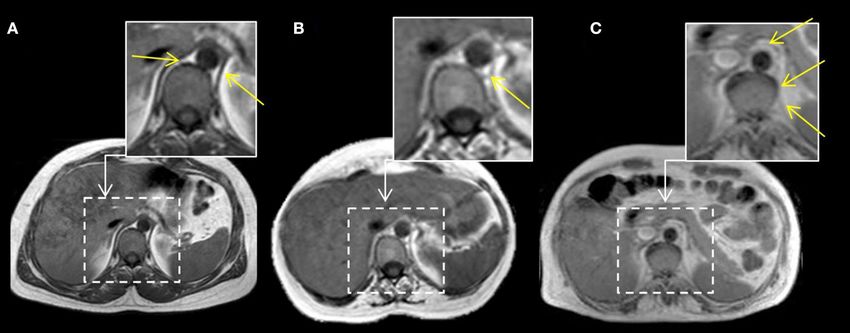
Reyes-Leiva et al.                                                                                                         Correlation Between MRI and PFT

                                               tests that could lead to an emerging ventilatory dysfunction. Therefore, the identification
                                               of fat replacement in these muscle groups should lead to a closer monitorization
                                               of patients. Radiologic evaluation of diaphragm pillars in T1-weighted imaging axial
                                               sequences could also be helpful to predict respiratory insufficiency.

                                               Keywords: Pompe disease, glycogen storage disease type II, MRI, muscular MRI, respiratory insufficiency,
                                               accessory respiratory muscles, diaphragm pillars

INTRODUCTION                                                                       forced vital capacity (FVC) in sitting position compared to
                                                                                   lying is considered a sign of diaphragm muscle weakness (12).
Pompe disease or glycogen storage disease type II is a rare                        Other parameters assessed with conventional spirometry include
genetic disease produced by mutations in the GAA gene                              maximal inspiratory pressure (MIP) that also correlates with
encoding the enzyme acid alpha glucosidase (AAG). This enzyme                      diaphragm performance. However, PFTs are often influenced by
catalyzes glycogen into glucose inside the lysosomes. Mutations                    patient’s motivation, and to obtain a perfect test is not always easy
in the GAA gene lead to accumulation of lysosomes loaded                           from a technical point of view.
with glycogen and autophagic vacuoles inside cells in several                         In recent years, muscle magnetic resonance imaging
tissues but especially in skeletal, smooth, and heart muscles (1).                 (MRI) using T1-weighted imaging (T1w) has proved to be
This accumulation triggers only partially known intracellular                      useful identifying skeletal muscle fat replacement in several
molecular pathways leading to necrosis and substitution of                         neuromuscular diseases, including LOPD. Previous studies
muscle fibers by fat and fibrous tissue that eventually produces                   have shown that trunk and lower limbs muscles are commonly
permanent skeletal and respiratory muscle weakness.                                replaced by fat in LOPD patients and that the amount of fat
    Pompe disease is differentiated in two main phenotypes.                        present in these muscles correlates with the degree of muscle
In infantile-onset Pompe disease, symptoms start during the                        impairment measured using different muscle function tests
first months of life and are characterized by hypotonia, general                   (13, 14). Therefore, muscle MRI could be considered a good
muscle weakness, respiratory impairment, and hypertrophic                          biomarker of muscle function in this disease useful to distinguish
cardiomyopathy. This phenotype is very severe with an ominous                      between mild and severe patients (15). Based on these previous
prognosis and is associated with a very low or absent                              results, we wondered if fat replacement of the muscles involved
expression of AAG (2). In contrast, in late-onset Pompe                            in the ventilation process correlated with spirometry values
disease (LOPD), symptoms start in any moment after 1                               or predicted respiratory muscle impairment in LOPD patients
year old, being characteristic a slowly progressive weakness                       over time.
affecting proximal muscles of the limbs and/or axial muscles
associated or not with respiratory muscle involvement and
elevated creatine kinase (CK) values in blood tests in most                        MATERIALS AND METHODS
patients (2, 3). The clinical spectrum in LOPD is heterogeneous,
ranging from isolated asymptomatic hyperCKemia to severe                           Description of the Study Population and
muscle weakness and respiratory insufficiency requiring invasive                   PFT
ventilatory support. Enzymatic replacement therapy (ERT) with                      This study was a prospective longitudinal cohort study involving
alglucosidase alfa (Myozyme/Lumizyme R , Sanofi-Genzyme,                           36 genetically confirmed LOPD patients performed at Hospital
Cambridge, MA, USA) is the only approved treatment for                             de la Santa Creu i Sant Pau (HSCP) in Barcelona from December
this disease (4). A single placebo-controlled clinical trials and                  2013 to June 2018. The clinical and genetic features of this
several open-label studies have already shown the efficacy of ERT                  cohort have been previously described (15). All patients were seen
maintaining muscle and respiratory function over time (5–8).                       once per year, and the assessment included a clinical interview,
    Respiratory impairment is a common manifestation of LOPD.                      several muscle function tests, a conventional spirometry, and a
Approximately 60–80% of LOPD patients develop respiratory                          whole-body muscle MRI using T1w sequence. We obtained PFT
insufficiency during their lifetime (9). Ventilation is a complex                  during the 4 years’ duration of the study, and MRI T1w whole
process that involves several muscles of the trunk, pharynx, and                   body during the first 3 years. On the fourth year, we changed
larynx to accomplish an adequate inspiration and expiration                        the MRI protocol, and only images of the lower limbs were
cycle. Diaphragm and intercostal muscles are considered primary                    obtained, so we did not use those images in the present study.
respiratory muscles playing a key role expanding the thoracic                      The study was approved by the HSCP Ethics Committee, and all
cavity during inspiration. Other muscles such as scalenus,                         participants signed a consent form. The study was registered in
serratus, sternocleidomastoid, and pectoralis support inspiration                  ClinicalTrials.gov with the identifier NCT01914536.
when diaphragm and intercostals are weak enough to not achieve                        Inclusion criteria for the study were (1) a diagnosis of
an appropriate inspiration (10, 11). Respiratory insufficiency in                  LOPD according to the recommendations made by the European
LOPD patients is mainly produced by diaphragm dysfunction                          Pompe Consortium: reduced enzymatic activity on fibroblasts,
that should be checked routinely with pulmonary function                           blood leukocytes or skeletal muscle and/or the presence of two
test (PFT) using spirometry. A difference of 10% or more in                        known mutations in the GAA gene (16); (2) no contraindications

Frontiers in Neurology | www.frontiersin.org                                   2                                     March 2021 | Volume 12 | Article 621257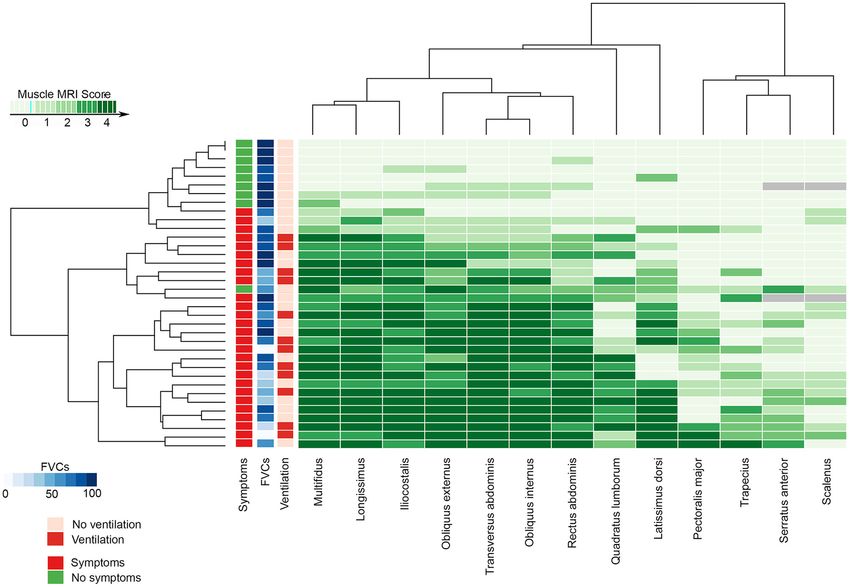
Reyes-Leiva et al.                                                                                                                         Correlation Between MRI and PFT

for the MRI; and (3) willingness to complete muscle function test                         in clinical examination. Isolated hyperCKemia associated or
and respiratory assessment. Asymptomatic patients who only had                            not to fatigue or muscle pain is not considered a criterion to
isolated hyperCKemia without clear skeletal muscle weakness in                            start ERT.
clinical examination or respiratory symptoms were also included.                             Muscle function tests and spirometry were performed by two
The criteria requested by health authorities to approve ERT in                            physiotherapists with a long experience in the assessment of
Spain vary from one region to another, but are commonly based                             neuromuscular patients (I.B., I.P.-H.). In terms of spirometry, we
on the presence of skeletal and/or respiratory muscular weakness                          measured FVC seated and lying and MIP and maximal expiratory

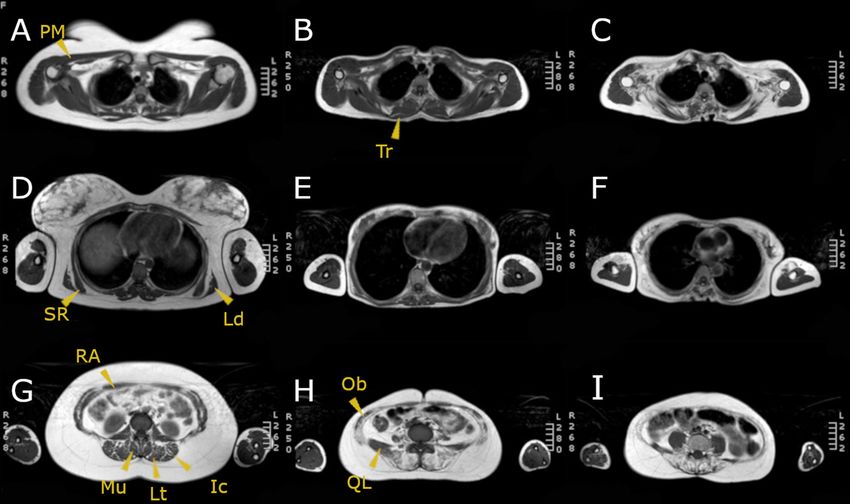
 FIGURE 1 | MRI T1w of three LOPD patients: (A,D,G) correspond to a patient with mild involvement; (B,E,H) correspond to a patient with moderate muscular
 involvement; (C,F,I) correspond to a patient with severe muscular involvement. Yellow arrowheads point the muscles assessed. PM, pectoralis major; SR, serratus;
 Ld, latissimus dorsi; RA, rectus abdominis; Mu, multifidus; Lt, longissimus thoracis; Ic, iliocostalis; Tr, trapezius; Ob, obliquus externus and internus; QL,
 quadratus lumborum.

 FIGURE 2 | MRI T1w abdominal sections of three LOPD patients. Yellow arrows point to both diaphragm pillars. In case (A), right and left diaphragm pillars are visible
 and do not show fatty replacement (Mercuri score 0). In case (B), left diaphragm pillar is visible and partially infiltrated, whereas right diaphragm pillar is absent (left
 pillar Mercuri score 3 points). In case (C), we can observe fully replaced diaphragm pillars at both sides (Mercuri score 4 points).

Frontiers in Neurology | www.frontiersin.org                                          3                                             March 2021 | Volume 12 | Article 621257
Reyes-Leiva et al.                                                                                                                       Correlation Between MRI and PFT

pressure (MEP) with the Carefusion Microlab ML 3500 MK8                                  N.-P., J. D.-M.) who quantified fatty muscle replacement using
spirometer (Carefusion, Yorba Linda, CA, USA).                                           the modified version of the Mercuri score published by Dr.
                                                                                         Fischer (17): no fatty replacement: 0 point; mild fatty replacement
                                                                                         or traces of infiltration on T1w scores, 1 point; fatty replacement
Muscle Imaging                                                                           in
Reyes-Leiva et al. Correlation Between MRI and PFT
TABLE 2 | Mean values of the compound MRI scores at every visit. TABLE 3 | Mean values of the MRI scores and Mercuri score of diaphragm pillars
classified in ventilated and nonventilated patients.
Visit 1, mean (SD) Visit 2, mean (SD) Visit 3, mean (SD)
Noninvasive mechanical Nonventilated p-value
Abdominal score 19.52 (12.5) 19.77 (12.5) 21.5 (11.86) ventilation = 12 (SD) patients = 24
Paraspinal score 19.11 (11.17) 20.08 (11.4) 21.78 (10.77) (SD)
Thorax score 9.08 (9.57) 9.97 (9.53) 11.55 (10.16)
Abdominal score 26.16 (6.8) 16.95 (13.62) 0.013
Global score 48.32 (29.78) 49.83 (30.58) 54.89 (29.60)
Paraspinal score 26.8 (3.68) 15.54 (11.94) 0.001
SD, standard deviation. Thorax score 12.7 (9.16) 7.7 (9.64) 0.155
Global score 65.75 (14.32) 40.6 (32.53) 0.006
Diaphragm pillar left 2.66 (1.7) 1.2 (1.6) 0.036
muscles in three groups: thoracic muscles, paraspinal muscles, Diaphragm pillar right 2.66 (1.7) 1.2 (1.6) 0.036
and abdominal muscles. We calculated a compound modified The last column shows results of Student t-test (significant p < 0.05). SD =
Mercuri score of these areas adding the individual Mercuri score standard deviation.
for each of those muscles from both sides (left and right) and
eventually obtaining four compound scores:
• Thoracic muscle score: Serratus L (0–4) + serratus R (0–4) + RESULTS
latissimus dorsi L (0–4) + latissimus dorsi R (0–4) + pectoralis Cohort Description
major L (0–4) + pectoralis major R (0–4) + scalenus L (0–4) Clinical data of the 36 LOPD patients enrolled in the study
+ scalenus R (0–4) + trapezius L (0–4) + trapezius R (0–4). have been previously reported and are displayed in Table 1 (15).
This score ranged from 0 to 40. Twenty patients were female (55.5%). Mean age of the patients
• Paraspinal muscle score: Multifidus L (0–4) + multifidus R (0– at the start of the study was 43.9 ± 14.8 years. At the baseline
4) + longissimus thoracis L (0–4) + longissimus thoracis R visit, 23 patients were on ERT with Myozyme. One patient
(0–4) + quadratus lumborum L (0–4) + quadratus lumborum (patient 7) started ERT during the follow-up. Mean duration
R (0–4) + iliocostalis L (0–4) + iliocostalis R (0–4). This score of ERT treatment at baseline was 4.30 ± 2.69 years. Eight
ranged from 0 to 32 patients were considered asymptomatic as they only presented
• Abdominal muscle score: Obliquus externus L (0–4)+ obli hyperCKemia and were not receiving ERT. The most common
quus externus R (0–4) + obliquus internus L (0–4) + clinical feature of the cohort was muscular weakness involving
obliquus internus R (0–4) + transversus abdominis L (0–4) + the lower limbs. Eleven patients needed noninvasive nocturnal
transversus abdominis R (0–4)+ rectus abdominis L (0–4) + mechanical ventilation at the start of our study. Patient 7 started
rectus abdominis R (0–4). This score ranged from 0 to 32. noninvasive nocturnal mechanical ventilation during the study.
• Global Score: Thoracic muscle score (0–40) + paraspinal
muscle score (0–32) + Abdominal muscle score (0–32). This
last score ranged from 0 to 104.
MRI T1w Analysis
Both abdominal and paraspinal muscles were more commonly
Furthermore, we assessed the involvement of the diaphragm by and severely affected than thoracic muscles in our cohort
analyzing fatty replacement of the diaphragm pillars, which are as shown in Tables 2, 3 and in Figure 3. The muscles more
two musculotendinous structures easily identifiable surrounding commonly replaced by fat were multifidus, longissimus,
the anterior lumbar spine as shown in Figure 2. iliocostalis, rectus abdominis, the oblique muscles and
transversus abdominis. Latissimus dorsi was the thoracic
Statistics muscle more common and severely affected, while there was a
We confirmed the scores obtained were normally distributed clear heterogeneity in the involvement of the remaining thoracic
using Kolmogorov–Smirnov test, and consequently, we used muscles among patients as shown in Figure 3. We observed
parametric statistic studies to analyze the data. We used significant differences in the degree of muscle fat replacement
Student t-test to study if the differences observed in the between ventilated and nonventilated patients in abdominal
fatty replacement scores obtained between ventilated and and paraspinal muscles but not in thoracic muscles at baseline
nonventilated patients were significant. To analyze differences (Table 3). It is noteworthy that the pillars of the diaphragm
observed over time in fatty replacement, we used a mixed were more severely affected in ventilated than in nonventilated
linear model and applied Greenhouse–Geisser test. We used patients (Table 3) as shown in Figure 2. There was a significant
Pearson test to correlate respiratory measurements with the progressive increase in the degree of fat replacement of thoracic,
degree of muscle involvement, and we considered that the abdominal, and paraspinal muscles during the follow-up
correlation was good if the correlation coefficient were higher (Greenhouse Geisser, p < 0.001). Interestingly, some of the
than 0.6. Hierarchical analysis and graphical representation as a presymptomatic patients have mild signs of fatty replacement
heatmap was performed using R software, V.3.1.3. Significance especially in paraspinal and abdominal muscles. It is noteworthy
was set up at p-values lower than 0.05. Statistical studies were that one of the considered presymptomatic patients had more
performed with SPSS for MAC computers (version 21, SPSS Inc., consistent changes affecting also thoracic muscles. However, this
Chicago, IL). patient did not complain of any muscular symptom.
Frontiers in Neurology | www.frontiersin.org 5 March 2021 | Volume 12 | Article 621257Reyes-Leiva et al. Correlation Between MRI and PFT
FIGURE 3 | The heatmap shows the MRI Mercuri score value for all the muscles studied, the presence of muscular weakness (symptomatic) or hyperCKemia alone
(no symptomatic), its relationship with the FVC at base time, and the needs of noninvasive mechanical ventilation in every patient. FVC, forced vital capacity; MRI,
magnetic resonance imaging.
Pulmonary Function Test Analysis of follow-up for global (p = 0.013, r = −0.506), abdominal p =
There were significant differences in FVC percentage predicted 0.017, r = −0.602), and paraspinal (p = 0.013, r = −0.542) MRI
measured seated or lying between ventilated and nonventilated Score. Although significant, the correlations with thoracic MRI
patients (Student t-test, p = 0.001 for both measurements). score and fat replacement of the diaphragm pillar were low: r =
Moreover, we identified a significant difference in FVC −0.233 and r = −0.437, respectively.
seated between baseline and last visit both in ventilated and It is noteworthy that one of the patients ventilated (patient
nonventilated patients (Table 4). We did not observe significant 24), with a clear diaphragmatic dysfunction characterized by a
differences in FVC in presymptomatic patients between baseline drop in FVC when lying higher than 20%, had mild abdominal
and last visit. The MIP and MEP values at baseline visit were also but severe paraspinal fat replacement (abdominal score: 10,
studied obtaining a mean MIP of 70.52 ± 28.95% and a mean paraspinal score: 28) and normal diaphragm pillars. Additionally,
MEP 72.98 ± 31.77% in all the patients. we detected patients (patients 6, 9, 14, 29, and 31) who had mild
to moderate abdominal fat replacement with a severe paraspinal
Correlation Test fat replacement but with diaphragm pillars nonaffected and
We observed significant correlation between global, thoracic, who did not show diaphragm dysfunction (FVC Seated - FVC
abdominal, and paraspinal scores and FVC percentage predicted lyingReyes-Leiva et al. Correlation Between MRI and PFT
the study. The predicted FVC seated was 78%, and the predicted TABLE 4 | Mean values of the FVC measured seated and mean values of the
FVC lying was 83% at baseline. At last visit, predicted FVC seated differences between FVC seated and lying at the first and last visit.
was 69%, and FVC lying was 64%. These differences were not First visit, mean Last visit, mean p-value
compatible with diaphragmatic dysfunction using the definition FVC% seated (SD) FVC% seated (SD)
mentioned above (a drop in FVC higher than 10% between
seating and lying), but a worsening tendency was noticed. In All patients 79.98% (21.43) 73.42 % (25.34) 0.002
this patient, muscle MRI showed a severe fatty replacement (36)
of paraspinal and abdominal muscles that was not modified Nonventilated 88.23% (18.61) 80.94% (24.21) 0.017
patients (24)
throughout the whole duration of the study. We have included
Ventilated 65.39% (12.91) 59.7% (14.06) 0.018
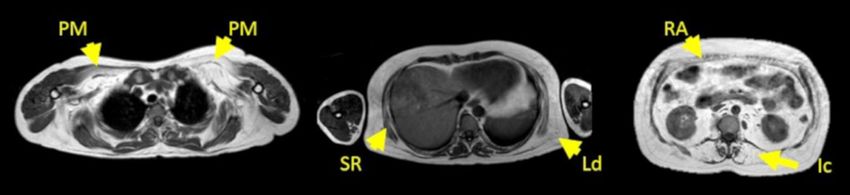
an MRI of this patient at first visit in Figure 4. The MRI scores
patients (12)
measured for this patient on the baseline visit were 30 points in
abdominal score, 25 points in paraspinal score, and 18 points First visit, mean Last visit, mean p-value
in thoracic score, so the Global score at the first visit was of 73 FVC% S-L (SD) FVC% S-L (SD)
points. In the last visit, we identified a very mild worsening in
All patients 11.51 (12.27) 8.46 (7.42) 0.107
paraspinal score (26 points) and in thoracic score (19 points)
(36)
remaining unchanged the abdominal score. The global score was
Nonventilated 10.45 (11.48) 8.11 (6.71) 0.460
of 75 then. patients (24)
Ventilated 23. 16 (15.00) 11.00 (8.93) 0.057
patients (12)
DISCUSSION We compared the mean values from the first and last visit (p-values in the last column).
FVC%, forced vital capacity percentage predicted; FVC% S-L, FVC% measured seated –
In this study, we show that fat replacement of thoracic, FVC% measured lying; SD, standard deviation.
abdominal, and paraspinal muscles correlates with low values of
FVC percentage predicted both seated and lying in a large cohort
of LOPD patients. Additionally, fat replacement of abdominal TABLE 5 | Correlations found between the compound scores calculated and the
and paraspinal muscles predicted changes in FVC during the diaphragm pillar involvement and the FVC% seated and lying.
follow-up in our cohort. These results suggest that identification
FVC% seated FVC% lying MIP MEP
of fat replacement in these areas on the MRI should lead to a
closer monitorization of respiratory muscle function over time. Global score p = 0.002 p = 0.004 p = 0.772 p = 0.135
It is well known that LOPD patients have a selective R = −0.52 R = −0.608
involvement of paraspinal, abdominal and proximal muscles of Thorax score p = 0.001 p = 0.003 p = 0.372 p = 0.124
the lower limbs in T1w MRI sequences (14, 15). Here we have R = −0.541 R = −0.621
confirmed these previous results, but we have also found a good Abdominal p = 0.011 p = 0.021 p = 0.301 p = 0.248
correlation between fat replacement and results of respiratory score R = −0.523 R = −0.394
muscle function tests. It has been previously shown that the Paraspinal p = 0.007 p = 0.007 p = 0.308 p = 0.309
score R = −0.456 R = −0.570
degree of fat replacement in a muscle correlates with results of
Diaphragm p = 0.0001 p = 0.001 p = 0.006 p = 0.59
specific function tests including assessment of muscle strength
pillars R = −0.590 R = −0.662 R = −0.689
using handheld dynamometry or even assessment of muscle
performance using timed tests such as the 6-min walking test We are showing the results of the Pearson test: p-value and R value. FVC%, forced
(18–20). Accordingly, it is not surprising that fat replacement of vital capacity percentage predicted; MIP, maximal inspiratory pressure; MEP, maximal
expiratory pressure.
the diaphragm or of the accessory respiratory muscles, such as
thoracic muscles, has a good correlation with FVC. However, we
have seen here that abdominal and paraspinal involvement is also
associated with FVC, and it predicts changes in this measure over except patient 14, who despite being ventilated did not meet the
time. This also suggests that clinical examination findings such standard criteria of diaphragm dysfunction. Although diaphragm
as a distended abdominal wall, Beevor sign (cephalic umbilical pillar grading is not a standardized procedure, and there is a
shift with abdominal muscular contraction due to abdominal wide variability between healthy volunteers and patients, we
weakness), or axial weakness, which are a common finding in consider it is a valid measure linked to clinical involvement of
LOPD, should also point to a closer monitorization of respiratory the diaphragm.
function (21). We have identified significant differences in FVC between
In concordance with these results, we have observed baseline and last visit in symptomatic patients treated despite
significant differences in the degree of fat replacement between being treated with ERT. Several other studies have also analyzed
ventilated and nonventilated LOPD patients, suggesting that fat the progression of FVC over time in LODP patients treated with
replacement of these muscles leads to a decrease in respiratory ERT, and the results are variable. Most of the studies coincide in
muscle function and eventually to the need of nocturnal a positive effect of starting ERT on FVC, as this value remains
respiratory support. All patients using noninvasive ventilation stable in most of the patients during the first 5 years of treatment
had some degree of fatty replacement in diaphragm pillars, (5, 8, 22). However, a recent study including patients followed
Frontiers in Neurology | www.frontiersin.org 7 March 2021 | Volume 12 | Article 621257Reyes-Leiva et al. Correlation Between MRI and PFT
FIGURE 4 | MRI T1w of patient 14 at first visit. From left to right, first image corresponds to shoulder girdle level; second image corresponds to a thoracic level, and
third image corresponds to an abdominal level. Yellow arrows point to the pectoralis major (PM), serratus (SR), latissimus dorsi (Ld), rectus abdominis (RA), and
iliocostalis muscle (Ic). The MRI scores at this visit were 30 points in abdominal score, 25 points in paraspinal score, and 18 points in thoracic score. The Global score
was of 73 points.
up for 10 years identified a mean decrease of more than 10% avoiding motion artifacts using Dixon in this body areas is asking
in FVC in patients treated, which is in agreement with our the patients to do repeated apneas that can last for 10–15 s
results, which are supported by an increase in fat replacement of (15, 30).
respiratory muscles, suggesting that ERT is not able to completely In conclusion, fat replacement of paraspinal, abdominal,
stop progression of respiratory muscle degeneration in Pompe and trunk muscles correlates with FVC percentage predicted
patients (7). seated and lying and is able to predict worsening in respiratory
Other previous studies have identified a correlation between muscle function tests that could lead to an emerging ventilatory
fatty replacement of abdominal muscles and diaphragm using dysfunction. Therefore, the identification of fat replacement in
computed tomography scan or MRI with spirometry results these muscle groups should lead to a closer monitorization
(23). We have confirmed these previous results, and additionally, of patients.
we have also found a correlation with fatty replacement of
paraspinal and thoracic muscles such as scalenus, trapezius, and
DATA AVAILABILITY STATEMENT
pectoralis major. However, it is noteworthy that the correlation
between FVC and fatty replacement of thoracic muscles was low, The raw data supporting the conclusions of this article will be
suggesting that they do not have a prominent role in respiratory made available by the authors, without undue reservation.
function in LOPD patients, which is probably more dependent of
the diaphragm and the abdominal muscles in these patients. Our
protocol of MRI included only axial images, which unfortunately ETHICS STATEMENT
do not allow a good analysis of intercostalis muscles. We think
The studies involving human participants were reviewed and
that coronal images should be obtained if these muscles want
approved by Ethics committee from Institut de Recerca
to be analyzed. In recent years, several studies have also used
Biomédica Hospital de la Santa Creu i Sant Pau. The
MRI to study diaphragm function, and they have elegantly shown
patients/participants provided their written informed consent to
changes in morphology of thorax cavity and decrease in thorax
participate in this study.
dynamics during inspiration and expiration in LOPD patients
(23–25). These results suggest a prominent involvement of the
diaphragm, which is also supported by the frequent finding of AUTHOR CONTRIBUTIONS
a decrease in FVC percentage predicted higher than 10% when
patients are lying compared to FVC seating and by the results DR-L, JA-P, CN-P, MM, JL, SS, and JD-M carried out the
of echography studies showing thinner diaphragms, which are concept and design of the study. DR-L, JA-P, CN-P, JL, and JD-M
replaced by fat (11, 26). The biggest limitation of our study is that performed the acquisition and analysis of data. JD-M performed
we have used a semiquantitative scale to analyze fat replacement the statistical analysis. DR-L, JA-P, IB, IP-H, and MM performed
that is observer dependent and that have several limitations to the acquisition and analysis of the PFT. DR-L, JA-P, CN-P,
identify consistent changes over time. At present, quantitative JL, SS, MM, and JD-M drafted of the manuscript. All authors
muscle MRI techniques, such as Dixon, are available and have contributed to the article and approved the submitted version.
demonstrated to identify better changes in fat replacement over
time (27–29). However, it is important to take into account that FUNDING
Dixon studies of the trunk muscles are extremely challenging
because of the movement artifacts of this area during normal This study was sponsored by a grant from Sanofi-Genzyme
respiration. To obtain images of good quality could be even and with grants of the Fondo Europeo de Desarrollo Regional-
more difficult in patients with respiratory involvement and FEDER, Instituto de Salud Carlos III (Spain) FIS (PI18/1525)
orthopnea such as LOPD patients because the only way of to JD-M.
Frontiers in Neurology | www.frontiersin.org 8 March 2021 | Volume 12 | Article 621257Reyes-Leiva et al. Correlation Between MRI and PFT
ACKNOWLEDGMENTS Universitario Donostia, Spain); Francisco Antonio Martínez-
García MD (Hospital ClínicoUniversitario Virgen de la Arrixaca,
We would like to thank all patients and relatives for the Murcia, Spain); Yolanda Morgado, MD (Hospital Universitario
participation in this study. We also thank all members of the Virgen de Valme, Sevilla, Spain); Antonio Moreno MD (Hospital
Spanish Pompe study group for their collaboration: Miguel Angel Universitario Morales Meseguer, Murcia, Spain); Germán Morís,
Barba-Romero MD (Hospital General de Albacete, Albacete, MD (Hospital Universitario de Asturias, Oviedo, Spain); Miguel
Spain); Joseba Barcena MD (Hospital Universitario Cruces, Angel Muñoz-Blanco MD (Hospital GregorioMarañón, Madrid,
Baracaldo, Spain); María Rosario Carzorla MD (Hospital Puerta
Spain); Andres Nascimento MD (Hospital Sant Joan de Déu,
de Hierro, Majadahonda, Spain); Carlota Creus MD (Hospital
Barcelona, Spain); Carmen Paradas PhD(Hospital Virgen del
Virgen de las Nieves, Granada, Spain); Jaume Coll-Cantí
MD PhD (Hospital Germans Tries i Pujol, Badalona, Spain); Rocío, Sevilla, Spain); José Luis Parajuá Pozo MD (Hospital de
Manuel Díaz MD (Hospital de Cabueñes, Gijón, Spain); Cristina Can Mises, Ibiza, Spain); Montse Olivé Plana MD PhD (Hospital
Domínguez MD (Hospital 12 de Octubre, Madrid & Insituto de Bellvitge, Barcelona, Spain); Arturo Robledo-Strauss MD
de Investigación i+12, Madrid, Spain); Roberto Fernández (Hospital Juan Ramón Jiménez, Huelva, Spain); Íñigo Rojas-
Torrón MD (Hospital Universitario Donostia, Spain); María Marcos MD (Hospital Virgen del Rocio, Sevilla, Spain); Jose
José García Antelo MD (Hospital Universitario A Coruña, A António Salazar MD (Hospital RegionalUniversitario deMálaga,
Coruña, Spain); JosepMaria Grau MD PhD (Hospital Clínic, Spain); Mercedes Usón MD (Hospital de Son Llátzer, Palma
Barcelona, Spain); Adolfo López deMunáin MD PhD (Hospital deMallorca, Spain).
REFERENCES Pompe disease: involvement patterns. Neuromuscul Disord. (2011) 21:791–
9. doi: 10.1016/j.nmd.2011.06.748
1. van der Ploeg A, Reuser A. Pompe’s disease. Lancet. (2008) 372:1342– 15. Figueroa-Bonaparte S, Segovia S, Llauger J, Belmonte I, Pedrosa I,
53. doi: 10.1016/S0140-6736(08)61555-X Alejaldre A, et al. Muscle MRI findings in childhood/adult onset
2. Kohler L, Puertollano R, Raben N. Pompe disease: from pompe disease correlate with muscle function. PLoS ONE. (2016)
basic science to therapy. Neurotherapeutics. (2018) 15:928– 11:e0163493. doi: 10.1371/journal.pone.0163493
42. doi: 10.1007/s13311-018-0655-y 16. van der Ploeg A, Kruijshaar M, Toscano A, Laforêt P, Angelini C,
3. Bembi B, Cerini E, Danesino C, Donati M, Gasperini S, Morandi L, et al. Lachmann R, et al. European consensus for starting and stopping
Diagnosis of glycogenosis type II. Neurology. (2008) 71 (Suppl. 2):S4– enzyme replacement therapy in adult patients with Pompe disease: a
S11. doi: 10.1212/WNL.0b013e31818da91e 10-year experience. Eur J Neurol. (2017) 24:768–e31. doi: 10.1111/ene.
4. van der Ploeg AT, Clemens PR, Corzo D, Escolar DM, Florence J, Groeneveld 13285
GJ, et al. A randomized study of alglucosidase alfa in late-onset pompe’s 17. Fischer D, Kley R, Strach K, Meyer C, Sommer T, Eger K, et al. Distinct muscle
disease. N Engl J Med. (2010) 362:1396–406. doi: 10.1056/NEJMoa0909859 imaging patterns in myofibrillar myopathies. Neurology. (2008) 71:758–
5. Kuperus E, Kruijshaar M, Wens S, de Vries J, Favejee M, van der Meijden 65. doi: 10.1212/01.wnl.0000324927.28817.9b
J, et al. Long-term benefit of enzyme replacement therapy in Pompe 18. Nuñez-Peralta C, Alonso-Pérez J, Llauger J, Segovia S, Montesinos P,
disease. Neurology. (2017) 89:2365–73. doi: 10.1212/WNL.00000000000 Belmonte I, et al. Follow-up of late-onset Pompe disease patients with muscle
04711 magnetic resonance imaging reveals increase in fat replacement in skeletal
6. van der Meijden J, Kruijshaar M, Harlaar L, Rizopoulos D, van der Beek N, muscles. J Cachexia Sarcopenia Muscle. (2020) 11:1032–46. doi: 10.1002/jcsm.
van der Ploeg A. Long-term follow-up of 17 patients with childhood Pompe 12555
disease treated with enzyme replacement therapy. J Inherit Metab Dis. (2018) 19. Alonso-Jimenez A, Kroon RHMJM, Alejaldre-Monforte A, Nuñez-
41:1205–14. doi: 10.1007/s10545-018-0166-3 Peralta C, Horlings CGC, van Engelen BGM, et al. Muscle MRI in a
7. Harlaar L, Hogrel J, Perniconi B, Kruijshaar M, Rizopoulos D, large cohort of patients with oculopharyngeal muscular dystrophy. J
Taouagh N, et al. Large variation in effects during 10 years of Neurol Neurosurg Psychiatry. (2019) 90:576–85. doi: 10.1136/jnnp-2018-3
enzyme therapy in adults with Pompe disease. Neurology. (2019) 19578
93:e1756–67. doi: 10.1212/WNL.0000000000008441 20. Diaz-Manera J, Fernandez-Torron R, LLauger J, James MK, Mayhew A, Smith
8. Schoser B, Stewart A, Kanters S, Hamed A, Jansen J, Chan K, et al. Survival and FE, et al. Muscle MRI in patients with dysferlinopathy: pattern recognition
long-term outcomes in late-onset Pompe disease following alglucosidase alfa and implications for clinical trials. J Neurol Neurosurg Psychiatry. (2018)
treatment: a systematic review and meta-analysis. J Neurol. (2016) 264:621– 89:1071–81. doi: 10.1136/jnnp-2017-317488
30. doi: 10.1007/s00415-016-8219-8 21. Garibaldi M, Diaz-Manera J, Gallardo E, Antonini G. Teaching video
9. Hagemans ML, Winkel LP, Van Doorn PA, Hop WJ, Loonen MC, Reuser AJ, neuroimages: the Beevor sign in late-onset Pompe disease. Neurology. (2016)
et al. Clinical manifestation and natural course of late-onset Pompe’s disease 86:e250–1. doi: 10.1212/WNL.0000000000002772
in 54 Dutch patients. Brain. (2005) 128:671–7. doi: 10.1093/brain/awh384 22. Toscano A, Schoser B. Enzyme replacement therapy in late-onset
10. Wijdicks EFM. The neurology of acutely failing respiratory mechanics. Ann Pompe disease: a systematic literature review. J Neurol. (2012)
Neurol. (2017) 81:485–94. doi: 10.1002/ana.24908 260:951–9. doi: 10.1007/s00415-012-6636-x
11. Harlaar L, Ciet P, van der Ploeg AT, Brusse E, van der Beek NAME, Wielopolski 23. Gaeta M, Barca E, Ruggeri P, Minutoli F, Rodolico C, Mazziotti
PA, et al. Imaging of respiratory muscles in neuromuscular disease: a review. S, et al. Late-onset Pompe disease (LOPD): correlations between
Neuromuscul Disord. (2018) 28:246–56. doi: 10.1016/j.nmd.2017.11.010 respiratory muscles CT and MRI features and pulmonary function.
12. McCool F, Tzelepis G. Dysfunction of the diaphragm. N Engl J Med. (2012) Mol Genet Metab. (2013) 110:290–6. doi: 10.1016/j.ymgme.2013.
366:932–42. doi: 10.1056/NEJMra1007236 06.023
13. Pichiecchio A, Uggetti C, Ravaglia S, Egitto M, Rossi M, Sandrini G, et al. 24. Wens S, Ciet P, Perez-Rovira A, Logie K, Salamon E, Wielopolski P, et al. Lung
Muscle MRI in adult-onset acid maltase deficiency. Neuromuscul Disord. MRI and impairment of diaphragmatic function in Pompe disease. BMC Pulm
(2004) 14:51–5. doi: 10.1016/j.nmd.2003.08.003 Med. (2015) 15:54. doi: 10.1186/s12890-015-0058-3
14. Carlier R, Laforet P, Wary C, Mompoint D, Laloui K, Pellegrini N, 25. Gaeta M, Musumeci O, Mondello S, Ruggeri P, Montagnese F, Cucinotta
et al. Whole-body muscle MRI in 20 patients suffering from late onset M, et al. Clinical and pathophysiological clues of respiratory dysfunction in
Frontiers in Neurology | www.frontiersin.org 9 March 2021 | Volume 12 | Article 621257Reyes-Leiva et al. Correlation Between MRI and PFT
late-onset Pompe disease: new insights from a comparative study by MRI 30. Figueroa-Bonaparte S, Llauger J, Segovia S, Belmonte I, Pedrosa I, Montiel
and respiratory function assessment. Neuromuscul Disord. (2015) 25:852– E, et al. Quantitative muscle MRI to follow up late onset Pompe patients:
8. doi: 10.1016/j.nmd.2015.09.003 a prospective study. Sci Rep. (2018) 8:10898. doi: 10.1038/s41598-018-2
26. Ruggeri P, Lo Monaco L, Musumeci O, Tavilla G, Gaeta M, 9170-7
Caramori G, et al. Ultrasound assessment of diaphragm function
in patients with late-onset Pompe disease. Neurol Sci. (2020) Conflict of Interest: The authors declare that the research was conducted in the
41:2175–84. doi: 10.1007/s10072-020-04316-6 absence of any commercial or financial relationships that could be construed as a
27. Nuñez-Peralta C, Alonso-Pérez J, Díaz-Manera J. The increasing potential conflict of interest.
role of muscle MRI to monitor changes over time in untreated
and treated muscle diseases. Curr Opin Neurol. (2020) 33:611– Copyright © 2021 Reyes-Leiva, Alonso-Pérez, Mayos, Nuñez-Peralta, Llauger,
20. doi: 10.1097/WCO.0000000000000851 Belmonte, Pedrosa-Hernández, Segovia and Díaz-Manera. This is an open-access
28. Dahlqvist JR, Widholm P, Leinhard OD, Vissing J. MRI in neuromuscular article distributed under the terms of the Creative Commons Attribution License (CC
diseases: an emerging diagnostic tool and biomarker for prognosis and BY). The use, distribution or reproduction in other forums is permitted, provided
efficacy. Ann Neurol. (2020) 88:669–81. doi: 10.1002/ana.25804 the original author(s) and the copyright owner(s) are credited and that the original
29. Díaz-Manera J, Walter G, Straub V. Skeletal muscle magnetic resonance publication in this journal is cited, in accordance with accepted academic practice.
imaging in Pompe disease. Muscle Nerve. (2020). doi: 10.1002/mus.27099. No use, distribution or reproduction is permitted which does not comply with these
[Epub ahead of print]. terms.
Frontiers in Neurology | www.frontiersin.org 10 March 2021 | Volume 12 | Article 621257You can also read


