The Qualitative Effects of Resveratrol and Coenzyme Q10 Administration on the Gluteus Complex Muscle Morphology of SJL/J Mice with Dysferlinopathy
←
→
Page content transcription
If your browser does not render page correctly, please read the page content below
Int. J. Morphol.,
29(3):876-884, 2011.

 The Qualitative Effects of Resveratrol and Coenzyme Q10
 Administration on the Gluteus Complex Muscle Morphology
              of SJL/J Mice with Dysferlinopathy

    Efectos Cualitativos de la Administración de Resveratrol y Coenzima Q10 en la Morfología
                 del Complejo Muscular Glúteo de Ratones SJL/J con Disferlinopatía

                                        Wendy Jeannette van der Spuy & Etheresia Pretorius

VAN DER SPUY, W. J. & PRETORIUS, E. The qualitative effects of resveratrol and coenzyme Q10 administration on the gluteus
complex muscle morphology of SJL/J mice with dysferlinopathy. Int. J. Morphol., 29(3):876-884, 2011.

         SUMMARY: Dysferlinopathy is a form of muscular dystrophy affecting muscles of the shoulder and pelvic girdles, resulting
from inheritance of a mutated dysferlin gene. The encoded dysferlin protein is proposed to be involved in sarcolemmal vesicle fusion
with a disrupted plasma membrane; however, with defective protein function these vesicles accumulate beneath the disruption site but
are unable to fuse with it and reseal the membrane, thus rendering the membrane repair mechanism defective. The SJL/J mouse model
presents with characteristics much like the commonest human condition. Immune modulators have long been under study in the maintenance
of muscle health in muscular dystrophies. Such supplementary treatment would ideally suppress inflammation, preventing the immune
response toward degenerating muscle from causing additional muscle fiber death, and thus provide a mechanism by which to prolong the
life of muscle fibers with inherently defective healing apparatus. For this purpose the anti-inflammatory supplement resveratrol and the
membrane-protective supplement coenzyme Q10 were administered separately and in combination to experimental animals to determine
their effectiveness in possible therapy of dysferlinopathy. The findings of this study report that low doses of resveratrol and coenzyme
Q10 supplementation in exclusivity were unable to afford much protection to muscle fibers at the tissue level. High doses of coenzyme
Q10 proved more effective in reducing attenuating inflammation; and combination treatment with resveratrol and coenzyme Q10 provided
not only the membrane-protective effects of coenzyme Q10, but also the anti-inflammatory effects of resveratrol which failed to materialize
at sufficient levels in exclusive administration.

        KEY WORDS: Dysferlinopathy; Coenzyme Q10; Resveratrol; Sarcolemma

INTRODUCTION

        Dysferlinopathy is a form of muscular dystrophy                 membrane repair mechanism defective (Bansal et al.; Bansal
inherited in an autosomal recessive hereditary pattern which            & Campbell). Due to this, cells of the immune system are
affects muscles of the shoulder and pelvic girdles (Angelini,           given enough time to initiate a response toward the damage,
2002). The myopathy is the result of inheritance of one of a            and the muscle fiber will most likely degenerate and undergo
few mutation variants of the dysferlin gene which encodes               myophagocytosis. It follows that as more damage is incurred
the dysferlin protein. The dysferlin protein product is                 to muscle, without prospect of repair, the myopathy takes
proposed to be involved in sarcolemmal vesicle fusion with              on an active state and the condition of skeletal muscle will
a disrupted plasma membrane (Bansal et al., 2003; Bansal                deteriorate, resulting in the myopathy. Dysferlinopathy is
& Campbell, 2004), in effect resealing the disruption before            additionally characterized by a large degree of inflammation
an immune response is able to take place. With defective                and high levels of muscle fiber regeneration in response to
protein function, the sarcolemmal vesicles accumulate                   degeneration, as compensation (Bansal et al.). Muscle is thus
beneath a plasma membrane disruption but are unable to                  in a constant state of alteration, with weakening thereof also
fuse with it and reseal the membrane, thus rendering the                prominent.

Department of Anatomy, School of Health Sciences, Faculty of Health Sciences, University of Pretoria, South Africa.
Subsidized by funding from the National Research Foundation of South Africa (NRF) to E.P. [Indigenous Knowledge Systems (FA2004033100004)].

876
VAN DER SPUY, W. J. & PRETORIUS, E. The qualitative effects of resveratrol and coenzyme Q10 administration on the gluteus complex muscle morphology of SJL/J mice with dysferlinopathy.
Int. J. Morphol., 29(3):876-884, 2011.
A successful tool in the study of dysferlinopathy decreased production of it by the body (NIH). Levels thereof
and possible maintenance or therapy thereof is an animal are reported to be low in muscular dystrophies (Folkers &
model. The SJL/J mouse model is widely used as it presents Simonsen); thus, as with the aged state, the levels of
with characteristics most like the commonest human coenzyme Q10 may well rapidly decline with the loss of
condition of dysferlinopathy; characterized by dysferlin muscle homeostasis in dysferlinopathy as the body’s
deficiency as well as inflammatory changes in muscle requirement is increased but the antioxidant’s production
(Bittner et al., 1999; Suzuki et al., 2005). The mouse remains at normal levels. Due to its lipid solubility coenzyme
dysferlin gene possesses an overall amino acid sequence Q10 is recommended as a membrane protective supplement
homology in excess of ninety percent to the human gene (Folkers & Simonsen; MedlinePlus, 2007; NIH), which was
(Vafiadaki et al., 2001), and is also inherited in an a factor of great interest to the study.
autosomal recessive pattern (Bittner et al.; Vafiadaki et
al.), making it the optimal means of studying therapeutic Previous research conducted by Potgieter and
options to dysferlinopathy. colleagues in 2011 showed that resveratrol and coenzyme
Q10 had positive effects on the prominently affected
Immune modulators have long been under study in muscle groups (i.e. quadriceps) of dysferlinopathy
the maintenance of muscle health in patients with muscu- (Potgieter et al., 2011). The question thus arose whether
lar dystrophies, though not as yet studied in changes in morphology are visible in less affected muscle
dysferlinopathies specifically (Folkers & Simonsen, 1995; groups (i.e. gluteus complex) with administration of these
Jain Foundation Inc., 2008). Treatment with such products. In the current research, it is thus hypothesized
supplements would ideally suppress inflammation in order that resveratrol and coenzyme Q10, separately and in
to prevent the immune response toward degenerating combination will provide membrane-protective and
muscle from causing additional muscle fiber death. The inflammatory-protective effects on gluteus complex
promise of treatment with immune modulators thus lies in muscles in animals of the SJL/J mouse model. This study
the fact that suppression of inflammation could prolong therefore investigated the effect of resveratrol and
the life of muscles in a disease state known to present with coenzyme Q10 on the ultrastructure of muscle fibers by
prominent inflammatory characteristics (Jain Foundation using light and transmission electron microscopy (TEM).
Inc.). Modulating the inflammatory response of muscle
tissues to the disease condition could thus provide a
mechanism by which to prolong the life of muscle fibers MATERIAL AND METHOD
with inherently defective healing apparatus.
Resveratrol is an antioxidant and vastly studied anti- Implementation of the mouse model. Female mice
inflammatory compound found largely in the skins of red consisting of 14 week old Dysferlinopathic SJL/J and 15
grapes (Das et al., 1999; McElderry, 1999; Roy & Lundy, week old normal SWR/J mice (each an average weight of
2005; Mitchell, 2008; Palsamy & Subramanian, 2008). 20g) were maintained and housed at the laboratory animal
This compound is known to enhance nitric oxide facility of the University of Pretoria Biomedical Research
production (Mitchell), which through certain mechanisms Centre (Pretoria, South Africa) through which ethical
supports the suppression of damaging effects which clearance was obtained. The animals were maintained in
leukocytes such as macrophages and neutrophils may have the facility’s barrier unit in Tecniplast cages with indivi-
on cells and tissues (Mitchell et al., 1995; Rando, 2001; dual air supply. All experimental procedures were carried
Tidball, 2005; Hodgetts et al., 2006; Toumi et al., 2006). out in strict accordance with the requirements of the
Neutrophils are the primary cells of an inflammatory University of Pretoria’s Animal Use and Care Committee.
response and are proposed to be largely responsible for
the inflammation at onset of the dysferlinopathic disease Animals were divided into seven experimental
process (Hodgetts et al.). groups consisting of eight animals in each, displayed in
(Table I), which depicts the strain of animal in each of the
Coenzyme Q10 is an endogenous antioxidant which groups as well as the treatment and dosages administered
protects cells and tissues from the harmful effects of free to them. Six randomly selected SJL/J animals were
radicals on proteins (thus DNA) and lipids (thus membranes) terminated for time-control results at this time. The
as well as other cellular components (NIH, 2008). Under remainder of the animals were entered into a 90 day expe-
normal circumstances, high concentrations thereof are rimental period, treatment administered as follows: con-
present in skeletal muscle; but levels decline with age as trol groups received a placebo in the same volume as the
there are increased requirements for the antioxidant and animals who received the supplements tested in the study.
877VAN DER SPUY, W. J. & PRETORIUS, E. The qualitative effects of resveratrol and coenzyme Q10 administration on the gluteus complex muscle morphology of SJL/J mice with dysferlinopathy.
Int. J. Morphol., 29(3):876-884, 2011.
Experimental groups received volumes of resveratrol and Electron microscopic preparation of samples
coenzyme Q10 (CoQ10) in dosages displayed in (Table I). continued as follows: biopsies were placed into fixative of
All dosing was performed orally once daily. The study was 2.5% formaldehyde and 2.5% glutaraldehyde for at least one
effectively concluded when the animals had reached hour. Tissue samples were rinsed three times for 15 minutes
approximately 27 and 28 weeks of age respectively for SJL/ each with 0.075M sodium phosphate buffer, after which the
J and SWR/J mice. Termination procedures were thus samples were placed in a 1% osmium tetraoxide (OsO4)
performed for the time-control (B) group at 14 weeks of secondary fixative for one hour. After a second round of
age, for remaining SJL/J (C-G) groups (positive controls rinsing three times for 15 minutes each in 0.075M sodium
and four experimental groups) at 27 weeks of age and for phosphate buffer, series dehydration was performed in 30%,
negative control (A) SWR/J mice at 28 weeks of age. 50%, 70%, 90% and three times absolute ethanol for a period
of 10 minutes each. Once dehydrated, TEM tissue samples
Tissue preparation for microscopy. Muscle biopsies of the were infiltrated with a Quetol Epoxy resin in a 1:1 ratio with
gluteus complex were taken from the left hand side of each 100% ethanol for one hour, then changed and infiltrated in
animal for microscopic analysis and investigation of changes resin exclusively overnight. Samples were finally embedded
in muscle morphology. The gluteus complex is not with Quetol Epoxy resin in rubber moulds and allowed to
commonly studied in research related to dysferlinopathy; polymerize in an oven at 60°C for approximately 39 hours
this complex is however one of the muscles directly for ultramicrotoming. Samples were subsequently cut at a
associated with the pelvic girdle, and is of interest as a muscle thickness of approximately 70-100nm and placed onto
believed to be largely involved in the weakness experienced copper grids. These were contrast stained using uranyl acetate
in Dysferlinopathic animals. and Reynolds lead citrate, rinsing the samples 16 times in
triplicate with distilled water and dabbing on filter paper to
Light microscopy samples were prepared as follows: dry after each staining step. Transmission electron
biopsies were placed into a 2.5% formaldehyde fixative for microscopic analysis followed using a JEOL Transmission
at least one hour. Tissue samples were rinsed three times for Electron Microscope (JEM 2100F).
15 minutes each with 0.075M sodium phosphate buffer, after
which series dehydration was performed in 30%, 50%, 70%,
90% and three times absolute ethanol for periods of 10 RESULTS
minutes each. Once dehydrated, tissue samples were
infiltrated with LR-White resin for one hour, changed and
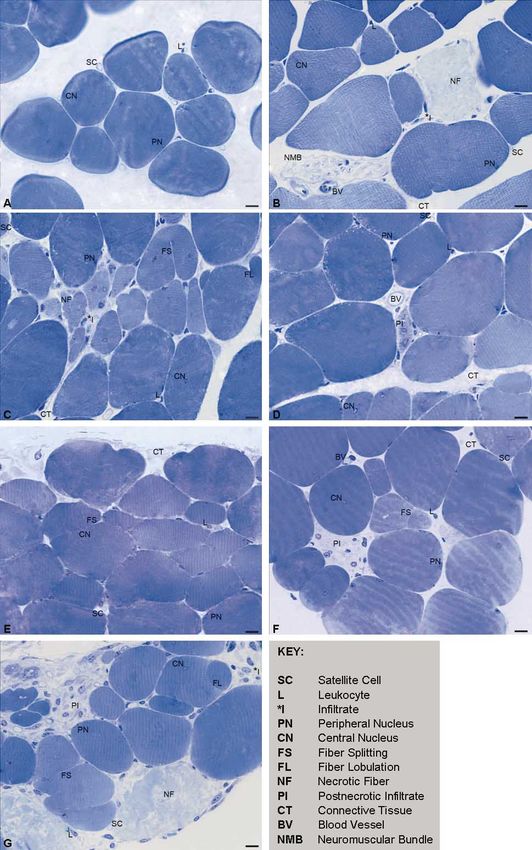
subsequently infiltrated for two days. Finally, tissue samples Characteristics most representative of
were individually embedded in LR-White resin in gelatin dysferlinopathy were scrutinized throughout the sample and
capsule moulds, placed in an oven at 60°C for approximately are labeled as such in the Figures. Photomicrographs were
39 hours in order to properly polymerize the samples for taken using light microscopy as well as transmission
microtoming. Samples were cut at an approximate thickness electron microscopy and each of these subsets analyzed
of 1µm and placed onto glass slides. All light microscopic for various characteristics or the lack thereof. Light
slides were stained using Toluidine Blue at a pH of microscopic micrographs (Fig.1) underwent qualitative
approximately 11.5, dried and mounted with cover-slips. morphological analysis, scoring thereof recorded with
Light microscopic analysis followed using a Nikon Optiphod regards to fiber and infiltrative characteristics as well as
Transmitted Light Microscope. the presence of myogenic stem cells (satellite cells).
Table I. Subdivision of experimental animals into groups, indicating the supplementary treatment dosages administered to each animal
within respective groups, as well as the age of the mice at which termination was performed
Treatment Dosage Age at Termination
Experimental Group Strain Treatment (mg/kg/day) (weeks)
A. Negative Control SWR/J None - 28
B. Time-control SJL/J None - 14
C. Positive Control SJL/J None - 27
D. Resveratrol SJL/J Resveratrol 60 27
E. Low-CoQ10 SJL/J Coenzyme Q10 40 27
F. High-CoQ 10 SJL/J Coenzyme Q10 120 27
G. Combination SJL/J Resveratrol/Coenzyme Q10 60/40 27
878VAN DER SPUY, W. J. & PRETORIUS, E. The qualitative effects of resveratrol and coenzyme Q10 administration on the gluteus complex muscle morphology of SJL/J mice with dysferlinopathy.
Int. J. Morphol., 29(3):876-884, 2011.
Fig. 1: Depicting
morphological
differences between
gluteus complex
muscles in groups A-
G. All muscle
sections were photo-
graphed under 40X
magnification.
Labels A-G are group
specific, thus, A:
Negative Control
SWR/J mice at 28
weeks of age. B:
Baseline untreated
SJL/J mice at 14
weeks of age. C:
Positive Control; D:
Resveratrol treated;
E: Low-CoQ10
treated; F: High-
CoQ10 treated; and
G: Combination
Resveratrol/CoQ10
treated SJL/J mice at
27 weeks of age.
(Scale bar = 10µm)
879VAN DER SPUY, W. J. & PRETORIUS, E. The qualitative effects of resveratrol and coenzyme Q10 administration on the gluteus complex muscle morphology of SJL/J mice with dysferlinopathy.
Int. J. Morphol., 29(3):876-884, 2011.
Table II. Adjusted scoring of light microscopic changes observed in micrographs of gluteus maximus muscle samples, with standard
deviation between groups indicated for each characteristic scored.
Scoring of Gluteus Maximus Light Microscopic Changes
Experimental Group Fiber Characteristics Infiltration and/or Proliferation Satellite Cells
A. Negative Control 20 10 80
B. Time-control 60 20 60
C. Positive Control 76 60 80
D. Resveratrol 80 45 60
E. Low-CoQ10 48 25 60
F. High-CoQ 10 48 45 80
G. Combination 76 60 80
Standard Deviation Between
Groups 21.52297 19.76047 10.69045
A: Negative Control SWR/
J mice at 28 weeks of age.
B: Baseline untreated SJL/
J mice at 14 weeks of age.
C: Positive Control;
D: Resveratrol treated (60
mg/kg/day);
E: Low-CoQ10 treated (40
mg/kg/day);
F: High-CoQ10 treated
(120 mg/kg/day);
G:Combination
Resveratrol/CoQ10 treated
(60/40 mg/kg/day) SJL/J
Fig. 2. Morphological differences between gluteus complex muscle membranes in animals under mice at 27 weeks of age.
investigation. All muscle sections were photographed at a magnification of approximately 60,000X. (Scale bar = 200nm)
880VAN DER SPUY, W. J. & PRETORIUS, E. The qualitative effects of resveratrol and coenzyme Q10 administration on the gluteus complex muscle morphology of SJL/J mice with dysferlinopathy.
Int. J. Morphol., 29(3):876-884, 2011.
Transmission electron ultramicrographs (Fig. 2) underwent groups (A-G). Defects (basal lamina thickening, presence
morphological analysis concentrated upon the sarcolemma of papillary projections) and discontinuity of the sarcolemma
and vesicle accumulation and fusion therewith. as well as the lack of fusion of sarcolemmal vesicles with
the sarcolemma are representative of the muscle’s inability
Scoring of light microscopic changes (Selcen et al., to repair itself and thus indicative of prospective degeneration
2001, Fanin & Angelini, 2002, Bansal et al., Ho et al., 2004, of the muscle tissue.
Cennachi et al., 2005) in the gluteus complex muscles in
each of the seven groups (A-G) was performed, with a score
of zero allocated for no changes and a maximum score of DISCUSSION
four allocated to prominent change, i.e. the maximal
presence of each variable examined. Scoring for each
category was then totaled and these values adjusted to Taken together, light microscopic and transmission
generate Table II (with a maximum value of 80 per category electron microscopic analysis reveal the following: The
scored). Examination was performed on a qualitative basis negative control (A) group displayed typical healthy muscle.
through the scrutiny of at least 20 micrographs per animal Degenerative changes were at an absolute minimum,
in each group for the presence of each of the following regenerative changes were also at a minimum, and
observations under three categories: Fiber Characteristics regenerative capabilities i.e. satellite cell numbers were at
– size variability, splitting and lobulation, degeneration and/ maximal levels. Sarcolemmal integrity as well as the basal
or necrosis, and regeneration (central nuclei); Infiltration/ lamina were normal though some sarcolemmal vesicles and
Proliferation – leukocyte (inflammatory, post-necrotic, and sub-sarcolemmal vacuoles were present, suggesting the
regenerative), perivascular, fibrotic or connective tissue, ability to promptly repair a site of injury should it occur in
and adipocytic; and finally the presence of Satellite Cells. this massively utilized muscle complex. The presence of
collagen bundles was insignificant at an ultrastructural level.
Regardless of the presence of multiple The gluteus complex muscle is prominent and much
characteristics, only one of each is marked in each of the exercise and stretching will necessitate the need for an
micrographs in Figure 1. The micrographs serve to present efficient repair mechanism, thus it is conceivable that the
the morphological differences between gluteus complex evident presence of large numbers of sarcolemmal vesicles
muscles in groups A-G, with reference to the characteristics in the vicinity allow for prompt repair of a site of injury
mentioned above. A summary of adjusted scores for light should it occur in this massively utilized muscle complex.
microscopic changes assessed within the entire sample is This group is the model to which treated groups were
shown in Table II; these include the various fiber compared in order to determine the status of muscular
characteristics, infiltrative and proliferative changes as well wellbeing.
as the presence of satellite cells as set out above.
The time-control (B) group possessed minimal
From the light microscopic scoring in Table II, it is regenerative and degenerative changes, as well as moderate
evident that fiber characteristics are significantly different regenerative capabilities, closer to that observed in the
when comparing the negative control SWR/J mice (A) to all negative control (A) group than the positive control (C)
SJL/J mice (B-G). Inflammatory infiltrate and/or connective group. Ultrastructurally however, a different representation
tissue proliferation are significantly higher than the negative was apparent, large vesicles and areas of membrane
controls (A) only in the positive controls (C), resveratrol disruption were observed along with an indistinct and/or
(D), high-CoQ10 (F) and combination (G) treated animals. very thick basal lamina in places. It would seem that in a
The presence of satellite cells indicates that the animals with largely utilized muscle complex, the 14 week old SJL/J
the highest muscle regenerative capacity are the ones in the mouse possesses a great ability to. This group provided the
negative (A) and positive (C) controls’ as well as those in comparison standard for groups administered
the high-CoQ10 (F) and combination (G) treated groups. supplementary treatment, allowing the determination of
enhancement in muscle wellbeing from 14 to 27 weeks of
Examination of transmission electron microscopic age.
morphological variables (Selcen et al.; Ho et al.) was
concentrated on the sarcolemma as well as vesicle The positive control (C) group possessed moderate
accumulation beneath the sarcolemma and/or fusion to maximal degenerative changes, and presented with
therewith. Ultramicrographs in Figure 2 serve to provide maximal regenerative changes and capabilities.
the morphological observations most representative of the Sarcolemmal defects were however pronounced, as were
gluteus complex muscles in animals within each of the seven basal lamina thickening and vesicle accumulation.
881VAN DER SPUY, W. J. & PRETORIUS, E. The qualitative effects of resveratrol and coenzyme Q10 administration on the gluteus complex muscle morphology of SJL/J mice with dysferlinopathy.
Int. J. Morphol., 29(3):876-884, 2011.
Inflammatory infiltrate within muscle samples of this group as well as maximal degenerative changes. Ultrastructurally,
was marked, and collagen bundles were observed in excess, few vesicles were evident with some fusion thereof with the
indeed in the highest levels when compared to all other sarcolemma observed and only a small degree of basal la-
groups under investigation. This group was thus the stan- mina thickening present. The state of inflammatory
dard of moderate to advanced dysferlinopathy to which infiltration was not striking within the animals of this group.
treated groups were compared. It would thus seem that in On ultrastructural level, the combination treatment appeared
this muscle group, more damage is incurred in the earliest to display an integrated beneficence of both supplementation
stages of disease, and the muscles themselves may be able treatment options, in that the anti-inflammatory effects of
to compensate for this as the myopathy progresses. resveratrol was visible and the membrane protective effects
of CoQ10 were marked even though the combination treated
When comparing the four experimental groups, the group was administered a low concentration of this
following was observed; resveratrol (D) administration supplement. Adding weight to this treatment option were
showed a maximal balance between regenerative and additional findings that the combination treated group
degenerative changes, with only moderate regenerative possessed the lowest neutrophil, eosinophil and monocyte
capabilities being evident. Vesicles and membrane defects counts overall.
were visible ultrastructurally, the basal lamina possessed
areas of thickening and structural alteration. Much Cumulatively, it is apparent that resveratrol and low-
inflammatory infiltrate was apparent, and collagen fibers coenzyme Q10 administration in exclusivity were unable to
were marked but not in excess. It appears that the exclusive afford much protection to muscle fibers at the tissue level,
anti-inflammatory role of resveratrol is ineffective in a both in terms of inflammation suppression and membrane
prominently utilized muscle complex. protective capabilities. High-coenzyme Q10 administration
offered convincing protection against membrane damage and
The low-CoQ10 (E) treated group showed minimal improved muscle fiber wellbeing dramatically from a time-
to moderate degenerative as well as regenerative changes, control age of 14 weeks to the age of positive control animals
and moderate regenerative capabilities. Many sarcolemmal at 27 weeks. The combination resveratrol/coenzyme Q10
vesicles, with areas of fusion with and thus repair of the administration provided not only membrane protective
sarcolemma was evident. Some discontinuity of the effects more likened to that observed in the high-coenzyme
membrane was however also evident. Additionally, basal Q10 than the low-coenzyme Q10 treated group, but also
lamina thickening and papillary projections were observed. provided the anti-inflammatory effects of resveratrol which
Inflammatory infiltration was marked; but collagen fibers failed to materialize at sufficient levels in exclusive
were not present in large amounts. Low-CoQ10 resveratrol administration.
administration does seem to be marginally membrane
protective in the case of gluteus complex muscles, but is not In 2011, Potgieter and coworkers showed that high
successful in protecting the fibers to a large extent as some doses of coenzyme Q10 as well as combination resveratrol/
discontinuity is visualized, with the overall state of muscle coenzyme Q10 markedly reduced the inflammatory insult
similar to that of the time-control (B) group. characteristic of dysferlinopathy in the prominently affected
quadriceps muscle (Potgieter et al. 2011). The results of the
High-CoQ10 (F) administration was shown to present present study show the same to be evident in less affected
muscle fibers with minimal degenerative changes and muscle groups. Thus in conclusion, the efficiency of
moderate to maximal regenerative changes and capabilities. supplementary treatment with either high-coenzyme Q10 or
Though large vesicles, thickening of the basal lamina and combination resveratrol/coenzyme Q10 was supported in the
some papillary projections were evident, collagen fiber findings of a less affected muscle group such as those of the
presence was not at all striking. This treatment option seemed gluteus complex, in that the supplements effectively
to be more effective in improving the condition of muscle decreased the ongoing inflammatory process characteristic
fibers from 14 to 27 weeks of age than the above two of dysferlinopathy.
treatment options (groups D and E). Muscle fibers were in
every respect closer to the state of health observed in the
negative control (A) group than to either 14 or 27 week old ACKNOWLEDGEMENTS
untreated SJL/J mice of the time-control (B) or positive con-
trol (C) groups.
The authors wish to that Dr. Marnie Potgieter, for the ani-
The combination (G) treated group displayed mal study supervision. The authors also wish to thank the
moderate to maximal regenerative changes and capabilities National Research Foundation of South Africa (NRF) for
882VAN DER SPUY, W. J. & PRETORIUS, E. The qualitative effects of resveratrol and coenzyme Q10 administration on the gluteus complex muscle morphology of SJL/J mice with dysferlinopathy.
Int. J. Morphol., 29(3):876-884, 2011.
funding E.P. [Indigenous Knowledge Systems interest and additionally have no financial interests in the
(FA2004033100004)]. The authors have no conflict of products reviewed in this paper.
VAN DER SPUY, W. J. & PRETORIUS, E. Efectos cualitativos de la administración de resveratrol y coenzima Q10 en la morfología del
complejo muscular glúteo de ratones SJL/J con disferlinopatía. Int. J. Morphol., 29(3):876-884, 2011.
RESUMEN: Disferlinopatía es una forma de distrofia muscular que afecta a los músculos de los hombros y cintura pélvica,
resultado de la herencia y mutación del gen de la distrofina. Sugerimos que la proteína codificada distrofina que integra la estructura
sarcolemal con una membrana plasmática interrumpida, que al presentar una proteína defectuosa, las estructuras se acumulan debajo del
sitio de alteración sin lograr fundirse con éste y cerrar la membrana afectando el mecanismo de reparación. El modelo de ratón SJL / J se
presenta con características muy similares a una condición humana común. Los inmunomoduladores han sido objeto de estudio en el
mantenimiento de la salud muscular en las distrofias musculares. Este tipo de tratamiento suplementario puede ser ideal para suprimir la
inflamación, en la prevención de la respuesta inmune en la degeneración muscular causando la muerte adicional de fibra muscular , y al
mismo tiempo proporcionar, un mecanismo con el cual prolongar la vida útil de aquellas fibras musculares con el aparato de sanación
comprometido. Para ello, el Resveratrol suplemento anti-inflamatorio y el suplemento protector de membrana coenzima Q10 se adminis-
tró por separado y en combinación en los animales de laboratorio para determinar su efectividad en el tratamiento de posible
disferlinopatía. Los resultados de este estudio indican que el Resveratrol en menor dosis y la coenzima Q 10 administrados como suplementos
de manera exclusiva, no demostraron efectos de protección de las fibras musculares a nivel del tejido. Una alta dosis de coenzima Q10
demostró ser más efectiva en la reducción de la inflamación; adicionalmente, el tratamiento combinado de Resveratrol y coenzima Q10
proporcionó efectos protectores de membrana, además de los efectos anti-inflamatorios del Resveratrol cuyo nivel no alcanzó la efecti-
vidad suficiente al ser administrado en forma exclusiva.
PALABRAS CLAVE: Disferlinopatía; Coenzima Q10; Resveratrol; Sarcolema.
REFERENCES
Angelini, C. Advances and perspectives in muscular red wine: role of polyphenolic antioxidants. Drugs Exp.
dystrophies. Basic Appl. Myol., 12(1):17-25, 2002. Clin. Res., 25:115-20, 1999.
Bansal, D. & Campbell K. P. Dysferlin and the plasma Fanin, M. & Angelini, C. Muscle pathology in dysferlin
membrane repair in muscular dystrophy. Trends Cell deficiency. Neuropath. Appl. Neurobiol., 28:461-70,
Biol., 14(4):206-13, 2004. 2002.
Bansal, D.; Miyake, K.; Vogel, S. S.; Groh, S.; Chen, C. C.; Folkers, K. & Simonsen, R. Two successful double-blind
Williamson, R.; McNeil, P. L. & Campbell, K. P. trials with coenzyme Q10 (vitamin Q10) on muscular
Defective membrane repair in dysferlin-deficient mus- dystrophies and neurogenic atrophies. Biochim. Biophys.
cular dystrophy. Nature, 423:168-72, 2003. Acta, 1217:281-6, 1995.
Bittner, R. E.; Anderson, L. V. B.; Burkhardt, E.; Bashir, R.; Ho, M.; Post, C. M.; Donahue, L. R.; Lidov, H. G.;
Vafiadaki, E.; Ivanova, S.; Raffelsberger, T.; Maerk, I.; Bronson, R. T.; Goolsby, H.; Watkins, S. C.; Cox, G.
Höger, H.; Jung, M.; Karbasiyan, M.; Storch, M.; A. & Brown, R. H. Jr. Disruption of muscle membrane
Lassmann, H.; Moss, J. A.; Davison, K.; Harrison, R.; and phenotype divergence in two novel mouse models
Bushby, K. M. & Reis, A. Dysferlin deletion in SJL mice of dysferlin deficiency. Hum. Mol. Genet., 13:1999-
(SJL-Dysf) defines a natural model for limb girdle mus- 2010, 2004.
cular dystrophy 2B. Nat. Genet., 23:141-2, 1999.
Hodgetts, S.; Radley, H.; Davies, M. & Grounds M.D.
Cenacchi, G.; Fanin, M.; De Giorgi, L. B. & Angelini C. Reduced necrosis of dystrophic muscle by depletion of
Ultrastructural changes in dysferlinopathy support host neutrophils, or blocking TNFa function with
defective membrane repair mechanism. J. Clin. Pathol., Etanercept in mdx mice. Neuromuscul. Disord., 16:591-
58:190-5, 2005. 602, 2006.
Das, D. K.; Sato, M.; Ray, P. S.; Maulik, G.; Engelman, R. Jain Foundation Inc. Research into Miyoshi/LGMD2B.
M.; Bertelli, A. A. & Bertelli, A. Cardioprotection of 2008.
883VAN DER SPUY, W. J. & PRETORIUS, E. The qualitative effects of resveratrol and coenzyme Q10 administration on the gluteus complex muscle morphology of SJL/J mice with dysferlinopathy.
Int. J. Morphol., 29(3):876-884, 2011.
McElderry, M. Q. B. Grape Expectations: The Resveratrol Vafiadaki, E.; Reis, A.; Keers, S.; Harrison, R.; Anderson,
Story. Quackwatch Web site, 1999. Available at: http:// L. V. B.; Raffelsberger, T.; Ivanova, S.; Hoger, H.;
www.quack-watch.com. Bittner, R. E.; Bushby, K. & Bashir, R. Cloning of the
mouse dysferlin gene and genomic characterization of
MedlinePlus. Herbs and Supplements: Coenzyme Q10. 2007. the SJL-Dysf mutation. Neuroreport, 12(3):625-9, 2001.
Avaible at: http://www.nlm.nih.gov/medlineplus/
druginfo/natural/938.html
Mitchell, C. A.; Grounds, M. D. & Papadimitriou, J. M. The
genotype of bone marrow-derived inflammatory cells Correspondence to:
does not account for differences in skeletal muscle Prof. E. Pretorius
regeneration between SJL/J and BALB/c mice. Cell Department of Physiology
Tissue Res., 280:407-13, 1995. Private Bag X·23, ARCADIA
0007, SOUTH AFRICA
Mitchell, T. Resveratrol: cutting-edge technology available Tel number: +27 12 420 2864
today. Life Extension Foundation. 2008. Fax: +27 12 420 4483
NIH: National Institutes of Health. Coenzyme Q10. 2008.
E-mail: resia.pretorius@up.ac.za
Palsamy, P. & Subramanian, S. Resveratrol, a natural
phytoalexin, normalizes hyperglycemia in
streptozotocin-nicotinamide induced experimental Received: 14-02-2011
Accepted: 14-07-2011
diabetic rats. Biomed. Pharmacother., 62:598-605, 2008.
Potgieter, M.; Pretorius, E.; Van der Merwe, C.F.; Beukes,
M.; Viera, W. A.; Auer, R.E.G.; Auer, M. & Meyer, S.
Histological assessment of SJL/J mice treated with the
antioxidants coenzyme Q10 and resveratrol. Micron.,
42:275-82, 2011.
Rando, T. A. Role of nitric oxide in the pathogenesis of
muscular dystrophies: a “two-hit” hypothesis of the cause
of muscle necrosis. Microsc. Res. Tech., 55:223-35, 2001.
Roy, H. & Lundy, S. Resveratrol. Pennington Nutrition Se-
ries, 7, 2005.
Selcen, D.; Stilling, G. & Engel, A. G. The earliest pathologic
alterations in dysferlinopathy. Neurology, 56:1472-81, 2001.
Suzuki, N.; Aoki, M.; Hinuma, Y.; Takahashi, T.; Onodera,
Y.; Ishigaki, A.; Kato, M.; Wartia, H.; Tateyama, M. &
Itoyama, Y. Expression profiling with progression of
dystrophic change in dysferlin-deficient mice (SJL).
Neurosci. Res., 52:47-60, 2005.
Tidball, J. G. Inflammatory processes in muscle injury and
repair. Am. J. Physiol. Regul. Integr. Comp. Physiol.,
288:R345-53, 2005.
Toumi, H.; F’guyer, S. & Best, T. M. The role of neutrophils
in injury and repair following muscle stretch. J. Anat.,
208:459-70, 2006.
884You can also read


