Could California's psych hospitals be ordered to admit inmates with COVID?
←
→
Page content transcription
If your browser does not render page correctly, please read the page content below
11/18/2020 California psych hospitals may have to take COVID inmates | CalMatters
MENU
CORONAVIRUS
Could California’s psych hospitals be
ordered to admit inmates with COVID?
BY LEE ROMNEY
NOVEMBER 18, 2020
Twitter Facebook
Patients at the Central Coast’s Atascadero State Hospital walk the halls in 2006. Due to COVID, patients have
at times been confined to their units, but still mingle in bathrooms, the dining hall and common day rooms. Of
the state’s psychiatric hospitals, Atascadero houses the largest number of mentally ill inmates from state
prisons. Photo by Peggy Peattie, ZUMA Press, Inc. / Alamy Stock Photo
IN SUMMARY
https://calmatters.org/health/coronavirus/2020/11/california-psych-hospitals-covid-inmates/ 1/13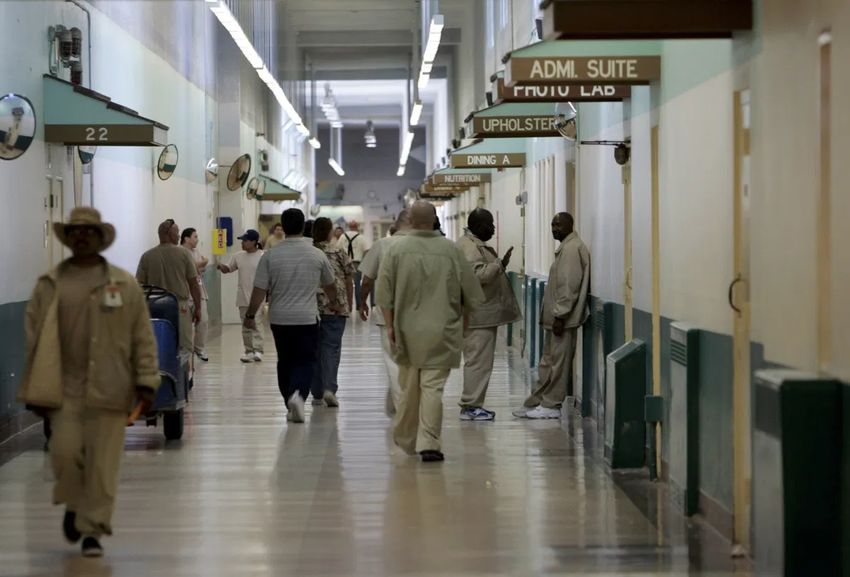
11/18/2020                                          California psych hospitals may have to take COVID inmates | CalMatters

                     The Department of State Hospitals is facing pressure in federal court to
                     speed up admissions of mentally ill inmates from the COVID-riddled state
                     prison system.

               Ervin Longstreet is in quarantine along with 49 other men on his unit at San
               Bernardino County’s Patton State Hospital — again. Because, somewhere at
               the psychiatric hospital, patients have tested positive for the coronavirus. It’s
               a frightening reminder of what happened last summer when, internal records
               show, nine Patton patients lost their lives to COVID.

               So Longstreet, 50, a man with a rich baritone voice known to other patients
               as “Street,” is worried — again.

               Like most of the 6,000 patients housed by the California Department of
               State Hospitals, Longstreet was sent by a court for treatment at Patton —
               instead of to prison — after he committed a crime that stemmed directly
               from his mental illness. But the pandemic has sidelined most therapy, and
               upended admissions and releases. Already, more than 500 staff members in
               the five-hospital system have contracted the virus, as have about 400
               patients, 19 of whom have died.

                                                                                   “It’s like having my sentence
                                                                                   modified to a death sentence,
                                                                                   because you’re just waiting in a
                                                                                   corner for it,” said Longstreet, a
                                                                                   Navy veteran with hypertension,
                                                                                   kidney and liver conditions. “You
                                                                                   don’t know who’s going to catch the
                                                                                   virus next.”

                                                                                   Longstreet is now suing to get out,
                                                                                   saying COVID poses too many
                                                                                   health risks. But here is the twist.
                                                                                   As hospital officials scramble to
                                                                                   reduce those risks, they’re facing
                                                                                   pressure in federal court to speed
                                                                                   up admissions of mentally ill

https://calmatters.org/health/coronavirus/2020/11/california-psych-hospitals-covid-inmates/                                  2/13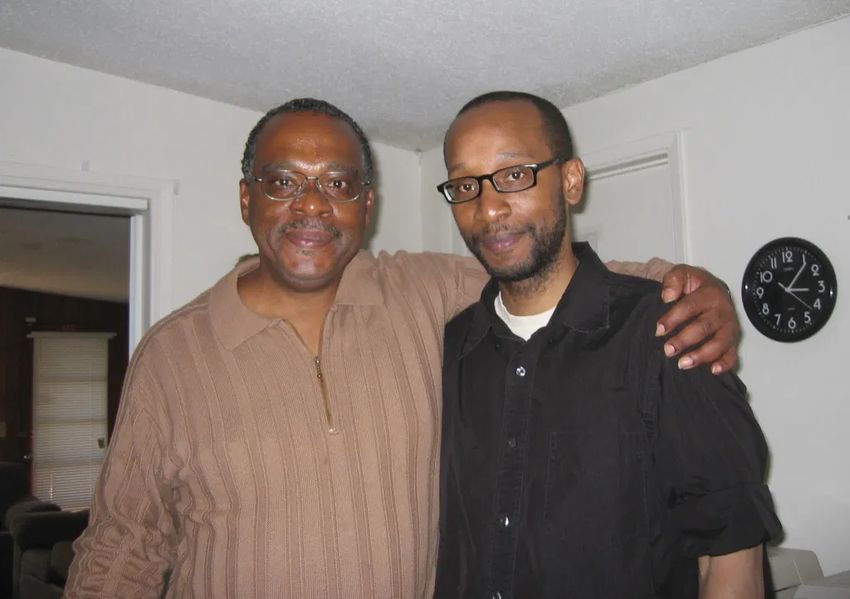
11/18/2020                                          California psych hospitals may have to take COVID inmates | CalMatters

                                                                                   inmates from the highly infectious
                                                                                   state prison system.

                                                                                   In an Oct. 23 hearing, attorneys
                                                                                   representing mentally ill prison
                                                                                   inmates awaiting state psychiatric
                                                                                   beds argued the hospitals are
                                                                                   violating court-imposed timelines
                                                                                   for transfers and should start
                                                                                   accepting the prisoners without
                                                                                   first requiring negative COVID tests.
                                                                                   To avoid delays, they say, the
                                                                                   hospitals should even start
                                                                                   admitting prisoners who have
                                                                                   tested positive.

                                                                                   These prisoners typically come to
               Ervin Longstreet, a patient at Patton State Hospital
                                                                                   the psychiatric hospitals for what
               who has several pre-existing medical conditions, is
                                                                                   court records describe as
               a named plaintiff in a class action lawsuit for
               expedited release of vulnerable patients amid the
                                                                                   “intermediate,” not “acute” care.
               coronavirus pandemic. Photo courtesy of Disability                  They aren’t suicidal, for example,
               Rights California                                                   and they are receiving psychiatric
                                                                                   care in prison.

               But attorneys who represent them say they are getting sicker as they wait,
               due to “blanket policies” that focus only on the dangers of the virus and not
               their deteriorating mental health conditions, according to their closing
               brief.

               A ‘unique and exquisite risk’

               Chief U.S. District Judge Kimberly J. Mueller could rule as early as Thursday
               on the matter — the latest to stem from a decades-old settlement overseen
               by a special master. Hospital officials fear a victory for the plaintiffs could be
               devastating, due to what Medical Director Katherine Warburton called in her
               testimony “the unique and exquisite risk of this virus once it’s introduced
               into our patient population.”

https://calmatters.org/health/coronavirus/2020/11/california-psych-hospitals-covid-inmates/                                  3/13
11/18/2020                                          California psych hospitals may have to take COVID inmates | CalMatters

               The Department of State Hospitals is a co-defendant in the case with the
               Department of Corrections and Rehabilitation. In their closing brief, they
               call “the suggestion” that defendants should loosen COVID precautions
               “irresponsible and hypocritical” at a time when the virus is spreading “at
               alarming rates across the state and country.”

               Ann Lyles, chief negotiator for the California Association of Psychiatric
               Technicians, which represents nearly 3,800 frontline hospital workers, said in
               an interview that, with infections soaring, “it doesn’t seem to me a good time
               to move a patient who is COVID positive, or could be COVID positive, into a
               place where this could spread — and do us in.”

               The Department of State Hospitals declined interviews, citing ongoing
               litigation.

               The court battle revolves around a relatively small class of patients. The
               hospitals set aside just 336 beds out of 6,000 for mentally ill inmates
               coming from state prisons. They arrive for temporary treatment with the
               expectation that they’ll return to prison and the psychiatric care provided
               there. The vast majority of patients in the hospitals, however, come through
               the courts — people like Longstreet, who’ve pleaded not guilty by reason of
               insanity. Others include patients deemed incompetent to stand trial, as well
               as sex offenders and prison parolees who’ve served their time but are
               determined to still be dangerous.

               But the hospitals aren’t prisons. Patients move about freely. Most sleep in
               dorms, share bathrooms, dining rooms and common dayrooms.

               Patients positive for COVID-19
               180

               160

               140

               120

https://calmatters.org/health/coronavirus/2020/11/california-psych-hospitals-covid-inmates/                                  4/13
11/18/2020 California psych hospitals may have to take COVID inmates | CalMatters
100
80
60
40
20
0
Atascadero* Coalinga* Patton* Metropolitan
Positive for COVID-19 Newly positive in last 14 days COVID
* Psychiatric hospitals that accept mentally ill prisoners.
Note: Numbers below 11 (11/18/2020 California psych hospitals may have to take COVID inmates | CalMatters
0
Atascadero Coalinga Patton Metropolitan
Positive for COVID-19 Newly positive in the last 14 day
Note: Numbers below 11 (11/18/2020 California psych hospitals may have to take COVID inmates | CalMatters
place to monitor compliance with a settlement. Mistrust among the parties
runs high.
“It’s very clear to us that we’re back to the old ball game,” plaintiffs attorney
Michael Bien said in an interview, contending the hospitals have always been
reluctant to admit his clients, COVID or no COVID. “We’ve been as patient as
we could be.”
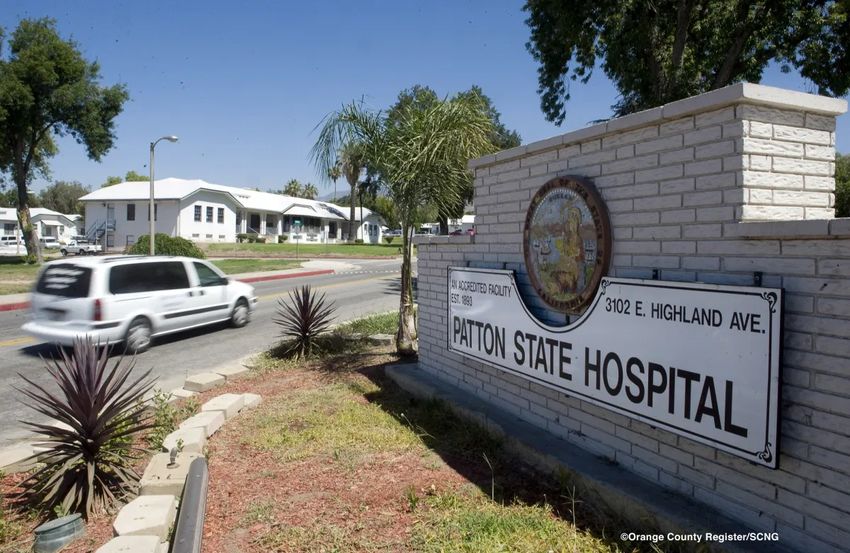
A sign marks the entrance to Patton State Hospital in San Bernardino County on June 26, 2013. Today,
the hospital has experienced the largest COVID outbreak to date of the state’s five psychiatric
facilities. Photo by PAUL BERSEBACH, ORANGE COUNTY REGISTER/SCNG
Dr. Adam Lauring, an infectious disease specialist who testified last month as
an expert witness for the plaintiffs, echoed that urgency.
“I guess I don’t understand why it would be different at a mental health
hospital versus, you know, a, quote, standard hospital,” Lauring told the
court, adding that the state hospitals have “a program for testing people on
the receiving end, so it seems unnecessary.”
https://calmatters.org/health/coronavirus/2020/11/california-psych-hospitals-covid-inmates/ 7/1311/18/2020 California psych hospitals may have to take COVID inmates | CalMatters
Lauring, who works in a standard hospital in Michigan, later confirmed under
cross-examination that his experience in a forensic psychiatric system like
California’s was brief and dates back to his medical training.
The state’s psychiatric facilities aren’t medical hospitals. They don’t provide
acute or critical medical care, instead sending seriously ill patients to local
community hospitals. Nor do they have the ability to truly segregate COVID-
positive patients in an outbreak, hospital officials said in court records and
written responses. Even the units re-purposed to quarantine groups of new
admits, positive patients and suspected positive patients have shared
bathrooms and common space.
The type of isolation rooms with private bathrooms used by standard
hospitals to contain infection, known as negative pressure rooms, are in
short supply, they add. Atascadero State Hospital on the Central Coast
houses most of the hospital system’s mentally ill prison inmates, with others
going to Coalinga State Hospital and Patton. Collectively, those hospitals
have just 20 such rooms.
How COVID slipped in
In mid-April, court records show, a month before resuming other admissions,
the hospitals cracked open the gates to mentally ill patients, under strict
conditions: a quarantine and negative test result by the prison pre-transfer,
another test and collective quarantine of new admits upon arrival at the
hospital, and a third before transfer to the unit patients will call home.
Transfer policies for mentally ill prisoners evolved with the pandemic,
hospital and prison officials testified, hammered out in dozens of meetings
with the special master’s own physician experts.
Then, in mid-May, a crisis. The first hospital patient systemwide turned
positive, at Patton, and COVID spread like wildfire.
Two staff members with direct knowledge of the outbreak say a patient who
was quarantined after his return from outside surgery and recuperation at a
nursing home nevertheless carried the virus onto his unit. All patients there
https://calmatters.org/health/coronavirus/2020/11/california-psych-hospitals-covid-inmates/ 8/1311/18/2020 California psych hospitals may have to take COVID inmates | CalMatters
eventually contracted it, as did all patients in an upstairs unit. By summer’s
end, 135 staff members at Patton would test positive along with 148 patients,
nine of whom died.
Among them was 63-year-old Jai
Barksdale of Los Angeles, who as a
member of the Black Liberation
Movement served prison time in the
1970s for a crime connected to his
revolutionary fervor, his son, Amiri
Barksdale, said. A well-groomed
man with a penchant for high
fashion and history when he was
well, he became withdrawn and
delusional when sick. Drug use and Jai Barksdale, left, and his son, Amiri Barksdale,
a head injury complicated matters. during a 2007 visit. The elder Barksdale died on
His diagnosis: paranoid Aug. 5 at Patton State Hospital after falling ill with
schizophrenia with organic brain COVID-19. Photo courtesy of Amiri Barksdale
dementia.
The younger Barksdale said he last saw his dad in 2013. Off street drugs and
back on psychiatric meds, he was digging into a book called “America’s
Undeclared War: What’s Killing Our Cities and How to Stop It.” He spoke of
getting back into business in men’s fashion.
“He was the glowing brilliant man I remember,” said Amiri Barksdale, 46.
Not long after, he was arrested for a bank robbery he’d committed while ill.
He landed at Patton after pleading not guilty by reason of insanity.
On the afternoon of Aug. 5, Amiri’s phone rang. His father was gone. That
same day, disability rights advocates filed the class-action lawsuit against
Patton that includes Longstreet, pressing the hospitals to release medically
fragile patients.
Putting on the brakes
https://calmatters.org/health/coronavirus/2020/11/california-psych-hospitals-covid-inmates/ 9/1311/18/2020 California psych hospitals may have to take COVID inmates | CalMatters
In a late August court declaration, Warburton said the outbreak only
reinforced her belief that the most effective way to combat COVID is by
“limiting the introduction of the disease, rather than trying to contain it once
patients are already infected.”
By then, she and her counterparts in corrections had acted on those
instincts, putting the brakes on transfers of mentally ill prisoners — because,
by the first week of July, active inmate infections in California’s state prisons
had reached 3,000. The alarming numbers prompted prison administrators
to start “closing” facilities to all but essential inmate movement.
A week later, hospital and correctional officials released new transfer
guidelines. The inmates would be accepted from “closed” institutions only
“on a rare case-by-case basis.”
At the root of the crisis, which one state lawmaker called “the worst prison
health screw-up in state history,” was inadequate pre-transfer testing, the
issue at the heart of the current dispute.
Keep tabs on the latest California policy and politics
news
Enter your email
SUBSCRIBE
By clicking subscribe, you agree to share your email address with CalMatters to receive
marketing, updates, and other emails from the site owner. Use the unsubscribe link in those
emails to opt out at any time.
I'M NOT INTERESTED
https://calmatters.org/health/coronavirus/2020/11/california-psych-hospitals-covid-inmates/ 10/1311/18/2020 California psych hospitals may have to take COVID inmates | CalMatters
“It’s like having my sentence
modified to a death sentence,
because you’re just waiting in a
corner for it.”
— ERVIN LONGSTREET, PATTON STATE HOSPITAL PATIENT
Struggling with an outbreak at the California Institution for Men, in Chino,
prison officials had transferred 121 inmates to Marin County’s San Quentin
State Prison. Many had not been tested for a month. More than 2,200
inmates at San Quentin would become infected. 28 would die, and COVID
would spread to the surrounding community.
By late September, plaintiffs told the court, correctional officials had
“closed” two-thirds of the state’s prisons — even those with minor outbreaks.
None of the waitlisted patients from any of those prisons had been
transferred to a state hospital bed.
With the court hearing looming, defendants dialed the policy back a notch. If
medical staff at the receiving hospital reviewed detailed infection data with
counterparts at “closed” prisons and the numbers checked out, inmates
would be cleared for transfer, pending a negative COVID test.
By the time Judge Mueller was listening to arguments, hospital officials
testified, nearly half the 55 mentally ill inmates on the wait list had been
transferred to hospital beds. But plaintiffs called it too little too late.
“Defendants,” they wrote in their closing brief, had “focused solely on the
public health risks” of the transfers, without considering “the patient’s
clinical needs for psychiatric hospitalization.”
Balancing the harm
https://calmatters.org/health/coronavirus/2020/11/california-psych-hospitals-covid-inmates/ 11/1311/18/2020 California psych hospitals may have to take COVID inmates | CalMatters
Those public health risks are real. Just three days after last month’s hearing,
prison officials at the Substance Abuse Treatment Facility at Corcoran State
Prison called state hospital counterparts with some news. A hundred inmates
had tested positive overnight. Atascadero State Hospital had already
cleared 15 inmates in another area of the prison for transfer under the latest
protocol, pending negative tests. Those transfers would have to wait.
Infections at Corcoran quickly soared to over 500 before beginning to drop
last week.
Since the hearing, the hospitals that take mentally ill prisoners have all
experienced new outbreaks.
Dr. Aaron Kheriaty directs the medical ethics program at UC Irvine and
consults part-time to the Department of State Hospitals’ bioethics
committee. He acknowledged in an interview that transfer delays could bring
“some level of harm” to the waiting inmates, but public health crises require
a shift in thinking away from “this or that individual.”
“You’ve got to Google-Earth up and look at the big picture, and that’s the
health of our confined population,” he said. “And if you can’t make this shift,
you’re going to get this wrong. And you’re going to have deaths…COVID
testing now is not complicated. It’s not a big ask.”
Lee Romney spent 23 years at the Los Angeles Times, where she covered the
state psychiatric hospital system and other vulnerable communities. She is
now an independent journalist and audio producer.
Support us during NewsMatch and double your impact
We rely on the generosity of Californians to cover the issues that matter.
During our NewsMatch campaign, your contributions will go twice as far.
ONE-TIME
MONTHLY
ANNUALLY
https://calmatters.org/health/coronavirus/2020/11/california-psych-hospitals-covid-inmates/ 12/1311/18/2020 California psych hospitals may have to take COVID inmates | CalMatters
$10 $15 $25 Other
Your contribution is appreciated.
DONATE
I'M NOT INTERESTED
WE WANT TO HEAR FROM YOU
Want to submit a guest commentary or reaction to an article we wrote? You can find our
submission guidelines here. Please contact Gary Reed with any commentary questions:
gary@calmatters.org, (916) 234-3081.
© 2020 CALMATTERS.
PROUDLY POWERED BY NEWSPACK BY AUTOMATTIC
PRIVACY POLICY
https://calmatters.org/health/coronavirus/2020/11/california-psych-hospitals-covid-inmates/ 13/13You can also read


