Courses for MSHA and the Mining Industry - Dedicated to the Health and Safety of the Nation's Miners
←
→
Page content transcription
If your browser does not render page correctly, please read the page content below
Courses for MSHA and
the Mining Industry

U.S. Department of Labor
Mine Safety and Health Administration
National Mine Health and Safety Academy

FY 2020

             Dedicated to the Health and Safety
                   of the Nation’s Miners
Courses can be scheduled for
 on-site training or can be held at
 the National Mine Academy.

 When scheduling a course, the length of the
 training can be modified to suit individual
 needs.

Visit the Mine Safety and Health Administration
               at www.msha.gov
Welcome

Welcome to the 2020 edition of Courses for MSHA and the
Mining Industry.

Our Nation’s mines produce more material than ever before.
Sophisticated machinery and equipment allow miners to work in
areas that are often complex and dangerous. Mining technology
is always changing and every mine is unique. The mining industry
is constantly in need of new miners. Most of these miners are
inexperienced and must be trained prior to employment. This
is why (1) Mine Safety and Health Inspections, (2) Technical
and Engineering Assistance, and (3) Education and Training are
important elements in ensuring a safe workplace. These are the
three elements of MSHA’s triangle of success.

Up-to-date and practical health and safety training is vital since
mining occurs in a hazardous, ever-changing environment where
there is little room for error.

The National Mine Health and Safety Academy, in Beaver, West
Virginia, is the world’s largest institution devoted to health and
safety in mining. It is a central training facility for Federal mine
safety and health inspectors, mine safety professionals, other
government agencies, the mining industry, and labor.

Most of the Academy’s courses are open to participants from
all throughout the mining community. Classes are taught by
Academy faculty and associate instructors and specialists from
the mining industry, trade associations, colleges and universities,
manufacturers, and other government agencies.

Whatever your interest in mine health and safety, you will find
useful and practical training at the National Mine Health and
Safety Academy.


Contents
							                                                                      Page
History.................................................................................. 1
The Academy’s Purpose and Goal....................................... 1
Academy Map...................................................................... 2
Academic Programs............................................................. 3
Academic Life....................................................................... 5
Student Life.......................................................................... 7
Fees and Billing.................................................................... 9
Travel to the Academy.........................................................11
Route Map to the Academy................................................ 12
Training Courses................................................................ 13
   Accident Prevention Techniques................................... 15
   Annual Retraining for Impoundment Qualification......... 16
   Atmospheric Monitoring Systems (AMS)
		 with Emphasis on Fire Protection............................. 17
   Blasting Seminar........................................................... 18
   Coal/MNM Electrical Specialists Training...................... 19
   Coal Mine Dust Personal Sampling Unit (CMDPSU)
		 Initial Maintenance and Calibration Certification...... 20
   Coal Mine Dust Personal Sampling Unit (CMDPSU)
		 Initial Sampling Certification..................................... 21
   Coal Mine Dust Personal Sampling Unit (CMDPSU)
		 Maintenance and Calibration Recertification Test.... 22
   Coal Mine Dust Personal Sampling Unit (CMDPSU)
		 Sampling Recertification Test................................... 23
   Continuous Personal Dust Monitor (CPDM)                                                 .
		 Initial Maintenance and Calibration Certification...... 24
   Continuous Personal Dust Monitor (CPDM)                                                 .
		 Maintenance and Calibration Recertification Test.... 25
   Continuous Personal Dust Monitor (CPDM)                                                 .
		 Initial Sampling Certification..................................... 26
                                            i
Page
Continuous Personal Dust Monitor (CPDM)
Sampling Recertification Test................................... 27
Electrical Hazards......................................................... 28
Electrical Safety for Coal Miners................................... 29
Electrical Safety for MNM Miners.................................. 30
First Aid/CPR/AED (American Red Cross).................... 31
Ground Control Hazards............................................... 32
Haulage (Surface) MNM................................................ 33
Haulage (Surface) Coal................................................. 34
Hazard Communication (HAZCOM).............................. 35
Impoundment Specialists Training................................ 36
Industrial Hygiene.......................................................... 37
Industrial Hygiene: Sampling for Respirable Silica .
Dust and Noise......................................................... 38
Instructor Training Workshop (Part 48).......................... 39
Introduction to Mining.................................................... 40
Law, Regulation, Policy, Citation/Order Writing,
Inspection Procedures.............................................. 41
Marshall University Masters of Safety Degree
(Emphasis in Mine Safety)....................................... 42
Microsoft® Excel 2016 – Advanced................................ 43
Microsoft® Excel 2016 – Basic....................................... 44
Microsoft® Excel 2016 – Intermediate........................... 45
Microsoft® PowerPoint 2016 – Basic............................. 46
Microsoft® Word 2016 – Advanced................................ 47
Microsoft® Word 2016 – Basic....................................... 48
Microsoft® Word 2016 – Intermediate............................ 49
Mine Accident Investigation and Report Writing............ 50
Mine Accident Investigation Techniques........................ 51
Mine Construction, Maintenance, and Repairs Safety.. 52
iiPage
Mine Emergency Unit Joint Training.............................. 53
Mine Emergency Unit Joint Training.............................. 54
Mine Explosion Prevention............................................ 55
Mine Hoist and Elevator Inspection Program Training.. 56
Mine Rescue Training.................................................... 57
Mine Rescue VISIO Mapping and Map Scoring .
Training..................................................................... 58
Mine Ventilation............................................................. 59
MSHA Accident Investigation Retraining....................... 60
Noise Hazards, Regulation, and Control....................... 61
Off Road Tire Safety...................................................... 62
Qualification for Impoundment Inspection..................... 63
Roof Control Seminar.................................................... 64
Roof Control Specialists Training.................................. 65
Slope and Shaft Sinking Safety..................................... 66
Special Investigators Recertification............................. 67
Special Investigators Training....................................... 68
Surface Facilities and Coal Preparation........................ 69
Tailings Dam and Waste Pile Inspection - MNM............ 70
TRAM/National Mine Instructors Seminar..................... 71
Underground Diesel Equipment/Ventilation .................. 72
Underground Ventilation for MNM Mines...................... 73
Ventilation Specialists Training...................................... 74
Workplace Examinations............................................... 75
MSHA Training................................................................... 76
Enrollment Form................................................................. 79
Suggestion Form for New Courses.................................... 81
Other Available Catalogs.................................................... 83
iii
ivHistory
Protecting those who work in our Nation’s mines requires an
awareness and understanding of the conditions that endanger
their health and safety.
This problem was recognized more than 140 years ago when a
proposal for a Federal mining bureau was submitted to Congress.
It was not until nearly five decades later that a series of deadly
mine explosions led to passage of the Organic Act of 1910. That
Act created the Bureau of Mines.
Laws passed over the next 60 years enlarged the scope of
legislation aimed at reducing mining hazards. The Federal Coal
Mine Health and Safety Act of 1969 contained provisions for the
training of Federal mine safety and health inspectors, as well as
establishing education and training for states, mine operators,
and miners. The Federal Mine Health and Safety Act of 1977
broadened these provisions to include metal and nonmetal
mining. The National Mine Health and Safety Academy supports
the requirements of the 1977 Act, and the newly enacted Mine
Improvement and New Emergency Response Act of 2006.
The Academy’s Purpose and Goal
The purpose of the Academy is to design, develop, and conduct
instructional programs that will assist in government, industry,
and labor efforts to reduce injuries, illnesses, and fatalities in the
mineral industries.
All of our programs, seminars, and courses are prepared with
one idea in mind – to improve health and safety conditions in
mines through education and training. This is our goal. Our
success will be measured by the extent to which mine accidents
and unhealthful conditions are reduced in future years.
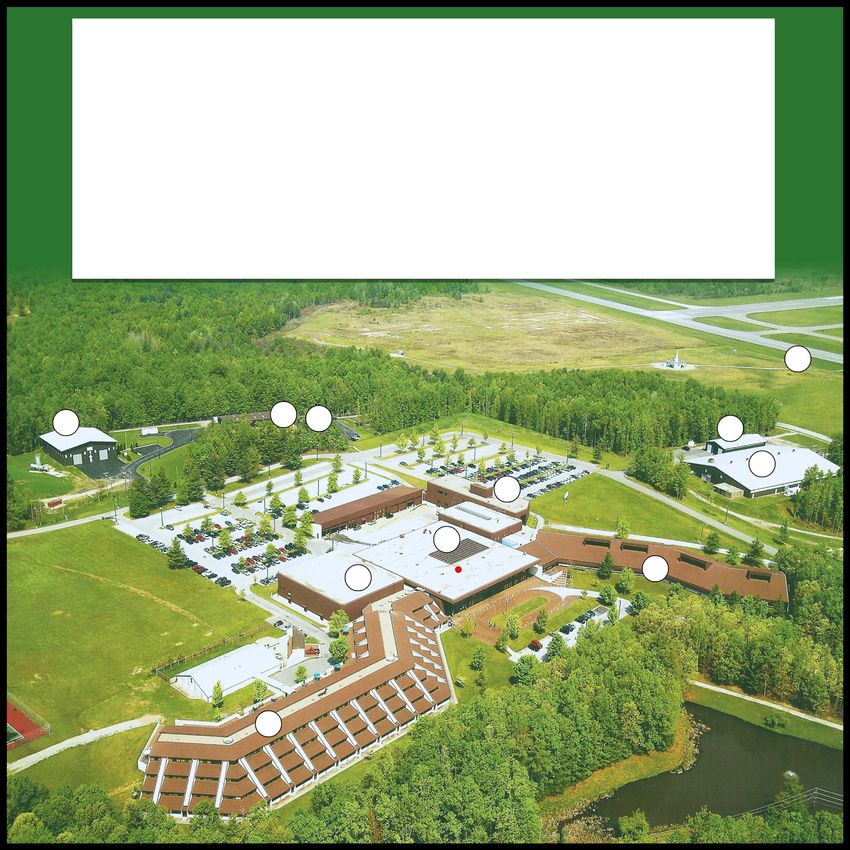
1Academy Map
Campus Map Key
1. Blue Falcon Mining 7. Instructional Materials
2. National Air and Dust Lab and Distribution
3. District 4 Building 8. Classroom Wing
4. Student Housing 9. Mine Emergency Operations
5. Gymnasium 10. Mine Simulation Lab
6. Administration Building 11. Raleigh County Airport
11
2 3
1 9
10
7
6
8
5 you are here
4
2Academic Programs
MSHA Training
All newly hired MSHA mine safety and health inspectors receive
entry-level training. This training covers technical aspects
of mine inspection and additional topics such as effective
communications and professionalism.
Entry-level coal mine safety and health inspectors receive
six modules of instruction (21 weeks total) at the Academy in
conjunction with required web-based training and on-the-job
training (OJT) sessions in the field.
Entry-level metal/nonmetal mine safety and health inspectors
training includes six modules of instruction (21 weeks total) at
the Academy in conjunction with required web-based training
and OJT sessions in the field.
Journeyman training presents up-to-date technical and regulatory
information to journeyman mine safety and health inspectors
to help them ensure that the mining community is served most
effectively. The Academy also presents courses to provide
journeymen with more in-depth training on special subjects.
Technical Specialists receive training in a variety of subjects
so that they remain informed regarding current technical and
regulatory information.
The Academy offers computer training on various software
applications to MSHA personnel and others from the mining
industry and other government agencies.
3Training for Industry
All Academy courses are open to participants from throughout
the mining community. These programs are taught by Academy
and visiting outside instructors and specialists from the
mining industry, trade associations, colleges and universities,
manufacturers, and other government agencies. Seminars,
workshops, and conferences are offered during the year, both at
the Academy and at sites throughout the country.
Many courses provide certification or qualification to persons
who take mandated examinations.
Examples of other courses available to the industry are Electrical
Safety for Miners, Hoists and Elevators, Instructor Training
Workshop (Part 48), Construction and Repairs Safety, Mine
Elevator Inspection Program Training, Noise Hazards, Regulation
and Control, and Surface Facilities and Coal Preparation. In
addition, the Academy will frequently furnish additional courses
to the industry and interested participants if valid requests are
made.
Training activities in the Mine Simulation Laboratory cover
mine rescue, firefighting, mine emergency response, simulated
inspections, ventilation, roof control, haulage, annual refresher
subjects, supervisory training, and mine examination. Students
come from MSHA, other Federal and state agencies, industry,
labor organizations, and international mining delegates.
4Academic Life
Class Attendance
A normal class is informal and dress is business casual.
However, due to safety concerns, proper PPE should be worn
to Academy classes that include mine labs and mine field trips.
You may wish to bring formal business attire for the graduation
ceremony or other activities.
A typical class day begins at 8:00 a.m. and ends at 4:00 p.m. All
other day classes end by 5:00 p.m., unless otherwise scheduled.
Absences from class are approved for personal illnesses,
emergencies, or death in a student’s family. Students must notify
their supervisor and instructors, and make up work assigned
while absent.
Grading System
The Academy uses a grading system for entry-level (coal and
metal/nonmetal) courses of study and gives examinations in
these classes. These grades are recorded, and students are
informed of their progress through periodic grade reports.
Units of Credit/Certificates of Participation
Students receive Continuing Education Units (CEUs) upon
completion of an Academy program. One CEU is 10 contact
hours of participation in an educational experience. The Academy
does not grant degrees, but CEUs may be converted into hours
of credit at other institutions.
Students who satisfy the Academy criteria for successful
completion of courses of study receive a Certificate of Completion
documenting the course title, date, and CEUs. Certificates are
not given for individual entry level and journeyman level classes.
5College Credit for Academy Courses
Mine safety and health inspectors can earn an Associate of
Applied Science Degree in Occupational Development:
Mine Inspection from the Mountwest Community and Technical
College (MCTC), Huntington, West Virginia. This program is
a cooperative effort among MSHA, the National Council of
Field Labor Locals, the U.S. Department of Labor’s Bureau of
Apprenticeship and Training, and the university. MCTC will
award 43 credit hours to students who complete the equivalent
of the mine inspector apprentice requirements. These credits are
applied to successful completion of the classroom and on-the-job
training parts of Entry Level Mine Inspector training. An additional
22 hours of general education credits are also required.
Academic Dishonesty
The student can be disciplined or dismissed from the Academy
for cheating, dishonesty, plagiarism, or knowingly furnishing
false information to the Academy.
Withdrawal
The student may withdraw from an Academy program without
penalty because of injury or other extenuating circumstances. If
you withdraw, you will not receive credit for the courses of study
in which you were enrolled.
Transcripts
You may request (in writing) a copy of your academic record.
Your request must include your full name and complete address.
Submit your request to:
National Mine Health and Safety Academy
Student Services Branch
1301 Airport Road
Beaver, West Virginia 25813-9426
FAX: (304) 256-3251
6Student Life
Food Service and Student Store
Academy food service offers complete meals in a cafeteria
setting. You may choose from a selection of freshly prepared
entrees and desserts with a full range of beverages available to
complement your meal. There is also a made-to-order deli and
a salad bar. Heart-healthy and vegetarian selections are also
available. Food service personnel can assist anyone who has
special dietary needs. If you are an MSHA employee, you will
receive a meal card when you check in. Present this card to
the cashier upon entering the cafeteria serving line. Non-MSHA
students who are in residence must pay for lodging and meals.
Academy Students have access to a laundry area. Vending
machines are located throughout the Academy for students and
guests. Problems with vending can be addressed contacting the
Food Service Director at (304) 256-3553.
The student store, located next to the cafeteria, has a wide
variety of sundries, souvenirs, and gifts. The food service and
student store accept all major credit cards.
For Your Health and Safety
Please observe all posted speed limits and all traffic and parking
signs. If you need emergency medical attention, please dial ext.
555 or “0” and request medical assistance. Academy personnel
will take you to a medical facility in an Academy vehicle or
arrange for an ambulance. If there is no answer, dial 9-911
(Raleigh County Emergency Operations Center) and request
medical assistance.
Assistance in completing accident health insurance claim forms
for Federal students may be obtained from your class coordinator
or a responsible staff person on duty after normal duty hours.
You play an important part in accident prevention at the Academy.
Should you see an actual or potential safety hazard, please
report it to an instructor, class coordinator, or any Academy staff
person.
7Pets of any kind are prohibited on all Academy grounds,
except for certified service animals accompanying people with
impairments.
Mail
You can send or receive mail (Monday through Friday) at the
Residence Hall registration desk. Our mailing address is:
National Mine Health and Safety Academy
1301 Airport Road
Beaver, WV 25813-9426
Security
Upon your arrival at the Academy you will need to stop at the
main gate. Uniformed security personnel are on duty at all
times. Personal photo identification must be presented at the
entry gates, and be displayed and worn while at the Academy.
Additionally, security guards will issue you a color coded parking
permit. Display this card on your vehicle dashboard and park in
the area designated on the permit.
8Fees and Billing
All Academy fees are reviewed periodically and subject to
change.
Tuition
The Academy will charge tuition fees to all persons attending
Academy courses, except employees of Federal, State, or local
governments, persons attending the Academy under a program
supported through an MSHA State grant, and persons performing
a direct service.
When attending a scheduled course as a stand-alone participant,
the tuition is $94.00 for a full day and $47.00 for a half day. When
requesting a course listed in this catalog for a group, the tuition is
$400 for a full day or $200 for a half day (minimum and maximum
student numbers may be required). If a course is requested to
be held on site rather than the Academy, the tuition fee is $400
per full day or $200 for a half day, plus travel reimbursement for
Academy instructor(s).
The tuition amount is due on arrival by check, or credit card
(VISA and MasterCard) payable to MSHA Finance. We regret
that we cannot accept cash. Billing is possible with a written
request to the Academy’s Student Services Branch two weeks in
advance. If tuition is submitted in advance, written notification of
withdrawal to the Student Services Branch is required to process
a full refund.
Lodging
All persons in residence at the Academy, except MSHA
personnel, other persons performing a direct service for MSHA,
and persons attending a program supported through an MSHA
State Grant, are charged for lodging. Lodging is only permitted
for MSHA employees who are attending a course, event or on
official business.
9The lodging fee is $45.00 per day for an individual and is due on
arrival by credit card (VISA and MasterCard) or check payable to
RC Tech, Inc. We regret that we cannot accept cash. Billing is
possible with a written request to the Student Services Branch.
Persons staying at the Academy may have their spouses and
immediate family as guests provided all appropriate fees are paid
on arrival. The fee for spouses and children 18 years of age and
older is $15.00. Children under the age of 18 are free and must
be accompanied by an adult at all times. Advance reservations
are required.
If you have special needs, please contact Student Services
before your arrival.
Meals
The Academy’s full service cafeteria offers a selection of freshly
prepared entrees, made-to-order sandwiches, soups, a salad
bar, desserts, and a full range of beverages. Heart-healthy and
vegetarian selections are available. Food service personnel can
assist anyone who has special dietary needs.
All MSHA employees receive a meal card at check-in to be
presented to the cashier at each meal. Non-MSHA persons who
are in residence must pay for their meals using cash, a major
credit card, or a personal check.
The cafeteria is open weekdays for breakfast from 6:15 a.m.
to 8:00 a.m. and lunch from 11:30 a.m. to 1:00 p.m. It may
occasionally be open for breakfast and lunch on weekends
with weekend service hours. The cafeteria has optional hours if
opening for dinner meal service.
10Travel to the Academy
Located on a plateau in southern West Virginia, the Academy
blends into its Appalachian mountain setting. Scenic vistas and
wildlife greet travelers to the Academy, and students experience
a restful environment.
Several travel options are available:
By Air
Beckley, West Virginia – The Raleigh County Memorial Airport
is located 1 mile from the Academy.
Charleston, West Virginia – The Yeager Airport is located 65
miles north of the Academy. Rental cars are available.
Lewisburg, West Virginia – The Greenbrier Valley Airport is
located 47 miles east of the Academy. Rental cars, taxis, and
limousines are available.
By Train
AMTRAK provides tri-weekly service to and from Prince, West
Virginia – located 16 miles from the Academy. Taxi service meets
all trains.
By Bus
Daily Greyhound service is available to and from Beckley –
located 8 miles from the Academy in downtown Beckley. Taxi
service is available.
By Car
See Route Map to the Academy on page 12.
11Route Map to the Academy
Arriving from the NORTH Arriving from the EAST
»» When using U.S. 19 South, »» When using I-64 West, use
go to and follow I-77 South, Exit 125, Beaver/Airport Road
exit at I-64 East »» Turn RIGHT at bottom of ramp
»» Follow I-64 to EXIT 125B, »» Academy is 1 mile on left
Airport Road
»» Academy is 1 mile on left
Arriving from the SOUTH Arriving from the WEST
»» When using I-77 North, exit »» When using I-64 East, use
and follow I-64 East Exit 125B, Airport Road
»» Use EXIT 125B, Airport »» Academy is 1 mile on left
Road
»» Academy is 1 mile on left
12Training Courses
The National Mine Health and Safety Academy develops and
presents courses of study which cover a wide spectrum of mine
health and safety subjects. These courses of study address
training needs of miners, mine safety and health inspectors,
government and industry personnel, and others concerned with
the health and safety of our Nation’s miners.
The courses described in this catalog are scheduled or can be
scheduled during the coming year. Additional courses can be
scheduled to meet specific needs of miners, mine operators, and
mine health and safety specialists.
Please contact Student Services at (304) 256-3252 if you are
interested in attending any course listed as “Scheduled Upon
Request.” A list of students requesting the course will be
maintained by that office until a sufficient interest is received. All
students will then be notified and a date will be established to
hold the training.
Courses can be scheduled for on-site training
or can be held at the National Mine Academy.
When scheduling a course, the length of the training
can be modified to suit individual needs.
13ACCIDENT PREVENTION TECHNIQUES
[SF601G]
This course is designed for safety managers/directors, mine
managers, or anyone in the mining industry involved in safety
management. Several proven accident reduction techniques are
covered during the three-day class.
The course begins with a discussion on the principle of multiple
causation and the importance of identifying the significant
contributing factors in most mining accidents. Accidents/ incidents
are divided into the three levels of causation with examples of
each level discussed. Discussions focus on the indirect level
of causation through a technique of identifying performance
problems as either skill or motivational. Unsafe conditions and
unsafe work practices are addressed through job safety analysis
and job observation. Stress, safety communications, and
effective safety talks will be covered.
The class concludes with a health and safety survey which can
identify the strengths and weaknesses of a company’s health
and safety program.
Contents:
♦♦ Accident/Incident Analysis
♦♦ Analyzing Performance Problems
♦♦ Safety Communications/Promotion
♦♦ Developing Effective Safety Talks
♦♦ Job Safety Analysis
♦♦ Job Observation
♦♦ Accident Investigation
Technical Coordinator: Joe Mackowiak
Course Length: 3 days
Scheduled upon request
15ANNUAL RETRAINING FOR
IMPOUNDMENT QUALIFICATION
[IM602C]
This course provides the annual retraining requirements for qualified
impoundment mine safety and health inspectors. Impoundment
mine safety and health inspectors are required to receive annual
retraining in accordance with the requirements specified in the
Code of Federal Regulations [30 CFR 77.107-1(b)].
Please Note: MSHA Qualification and Certification no longer
accepts Social Security Numbers on the application form
that you must fill out in order to receive your qualification
for impoundment inspection card after successful
completion of the course. You will need an MSHA Individual
Identification Number, available by applying online at:
http://www.msha.gov/forms/elawsforms/5000-46.htm
Contents:
♦♦ Reviews of Proper Inspection Procedures
♦♦ Signs of Impoundment Stress
♦♦ Instrumentation Monitoring
♦♦ Construction Monitoring
♦♦ Emergency Action Planning
♦♦ Foundation Analysis
♦♦ Geotechnical Investigations
♦♦ Breakthrough Potential Analysis
Technical Coordinator: Jared Adkins
Course Length: 4 hours
Dates: November 19, 2019, May 12, 2020
August 18, 2020
Scheduled upon request
16ATMOSPHERIC MONITORING SYSTEM (AMS) WITH
EMPHASIS ON FIRE PROTECTION
[EL600G]
This course is designed to familiarize the student with the
Safety Standards which apply to the Automatic Fire Sensor
and Warning Device Systems also known as an Atmospheric
Monitoring System, covered under 30 CFR 75.1103 and 30 CFR
75.351, and changes made under the Mine Improvement and
New Emergency Response Act of 2006 (MINER Act). A hands-
on session will be held at the Mine Simulation Lab to give the
student a practical understanding of the system.
Contents:
♦♦ MSHA Handbook on AMS Inspection Procedures, Provided
by the Instructor
♦♦ Installation and Calibration Requirements
♦♦ An In-depth Understanding of 30 CFR Application
♦♦ Hands-on Session in the Mine Simulation Lab
♦♦ PowerPoint Presentation on the Aracoma Disaster and
Changes Made in Fire Prevention Since 2006.
Technical Coordinator: Cliff Adkins
Course Length: 1 day
Scheduled upon request
17BLASTING SEMINAR
[EX524G]
This seminar is designed for company managers, blasting
engineers, blasters, state and Federal mine safety and health
inspectors (coal and metal/nonmetal), and others involved with
the planning, design, and use of explosives in the mining industry.
The most recent blasting techniques, trends, and developments
will be discussed. Participants will have the opportunity to share
ideas in small group sessions.
Contents:
♦♦ Vibration Analysis/Seismographs/Efficient Blasting
Techniques
♦♦ Storage of Explosives
♦♦ Handling and Use of Explosives
♦♦ Silica Dust and Toxic Gas Hazards in Blasting
♦♦ Blasting Agents and Emulsions
Technical Coordinator: Jared Adkins
Course Length: 2 days
Dates: Feb 19 - 20, 2020
18COAL AND METAL/NONMETAL ELECTRICAL SPECIALISTS
TRAINING
[EL41JM]
This course is designed for MSHA Coal and metal/nometal
Electrical Specialists to enhance their training and inspection
skills. The course is customized annually to ensure inspectors
are up-to-date on new policy and procedures. Classes covered
normally are: Accident Review, Electrical Inspection Procedures,
the new Proximity Safety Devices, and any current changes in
the Electrical Field and Modifications.
Technical Coordinators: Cliff Adkins and HQ Staff
Course Length: 3 Days
Dates: April 14 - 16, 2020
19COAL MINE DUST PERSONAL SAMPLING UNIT (CMDPSU)
(GRAVIMETRIC/ELF PUMP) INITIAL MAINTENANCE AND
CALIBRATION CERTIFICATION
[IHG613]
This course provides the initial training for personnel who are
required to calibrate and maintain a CMDPSU used to collect
coal mine dust samples. Successful completion of this course
certifies the participant to calibrate and maintain the CMDPSU
under the Code of Federal Regulations (30 CFR Parts 70/71/90).
Contents:
Instruction in the Regulations Governing the Coal Mine Operator’s
Respirable Dust Sampling Program Using a CMDPSU Including:
♦♦ Responsibilities of the Certified Person for Maintenance
and Calibration
♦♦ Properties of the Approved Sampling Unit
♦♦ Hands-on Instructions:
>> Pump Calibration Procedures
>> Maintenance Requirements
>> Sampling Unit Inspection
>> Pre-Shift Checks of Approved Sampling Unit
Technical Coordinators: Donald Booth
Ronald Barber
Course Length: 8 hours
Scheduled upon request
20COAL MINE DUST PERSONAL SAMPLING UNIT (CMDPSU)
(GRAVIMETRIC/ELF PUMP) INITIAL SAMPLING
CERTIFICATION
[IHG612]
This course provides the initial training for personnel who are
required to sample with a CMDPSU to collect coal mine dust
samples. Successful completion of this course certifies the
participant to collect coal dust samples under the Code of Federal
Regulations (30 CFR Parts 70/71/90).
Contents:
Instruction in the Regulations Governing the Coal Mine Operator’s
Respirable Dust Sampling Program Including:
♦♦ Responsibilities of the Certified Sampler
♦♦ Respirable Dust Sampling Procedures using a CMDPSU
♦♦ Approved Sampling Units
♦♦ Hands-on Instructions:
>> Inspection
>> Use
Technical Coordinators: Donald Booth
Ronald Barber
Course Length: 8 hours
Scheduled upon request
21COAL MINE DUST PERSONAL SAMPLING UNIT (CMDPSU)
MAINTENANCE AND CALIBRATION RECERTIFICATION
TEST
[IHG603]
The test is meant for persons who have a current certification
for the Coal Mine Dust Personal Sampling Unit Maintenance
and Calibration (gravimetric maintenance and calibration). To
maintain certification, a person must pass the MSHA examination
demonstrating competency in maintenance and calibration
procedures every three years. If your certification has expired
you must complete the applicable MSHA course of instruction
and pass the MSHA examination demonstrating competency in
maintenance and calibration procedures.
Technical Coordinators: Donald Booth
Ronald Barber
Course Length: 8 hours
Dates: February 4, March 16, April 9,
May 11, June 8, July 13,
August 10, 2020
Scheduled upon request / Testing Fee - $15
22COAL MINE DUST PERSONAL SAMPLING UNIT (CMDPSU)
SAMPLING RECERTIFICATION TEST
[IHG602]
The test is meant for persons who have a current certification
for the Coal Mine Dust Personal Sampling Unit (gravimetric
sampling) (ELF pump). To maintain certification, a person
must pass the MSHA examination demonstrating competency
in sampling procedures every three years. If your certification
has expired, you must complete the applicable MSHA course
of instruction and pass the MSHA examination demonstrating
competency in sampling procedures.
Technical Coordinators: Donald Booth
Ronald Barber
Course Length: 8 hours
Dates: February 10, March 23, April 20,
May 4, June 15, July 27,
August 24, 2020
Scheduled upon request / Testing Fee - $15
23CONTINUOUS PERSONAL DUST MONITOR (CPDM)
INITIAL MAINTENANCE AND CALIBRATION
CERTIFICATION
[IH409G]
This course provides the initial training for personnel who are
required to calibrate and maintain a CPDM used to collect coal
mine dust samples.
Successful completion of this course certifies the participant to
calibrate and maintain the CPDM under the Code of Federal
Regulations (30 CFR Parts 70/71/90).
Contents:
Instruction in the Regulations Governing the Coal Mine Operator’s
Respirable Dust Sampling Program using a CPDM Including:
♦♦ Responsibilities of the Certified Person for Maintenance
and Calibration
♦♦ Properties of the Approved Sampling Unit
Hands-on Instructions:
♦♦ Pump Calibration Procedures
♦♦ Maintenance Requirements
♦♦ Sampling Unit Inspection
♦♦ Pre-Shift Checks of Approved Sampling Unit
Technical Coordinators: Donald Booth
Ronald Barber
Course Length: 8 hours
Dates: Jan 6, April 6, June 29,
September 14, November 9, 2020
Scheduled upon request with a maximum of 18
24CONTINUOUS PERSONAL DUST MONITOR (CPDM)
MAINTENANCE AND CALIBRATION RECERTIFICATION
TEST
[IHG608]
The test is meant for persons who have a current certification
for the Continuous Personal Dust Monitor (CPDM) Maintenance
and Calibration. To maintain certification, a person must pass
the MSHA examination demonstrating competency in sampling
procedures every three years. If your certification has expired,
you must complete the applicable MSHA course of instruction
and pass the MSHA examination demonstrating competency in
sampling procedures.
Technical Coordinators: Donald Booth
Ronald Barber
Course Length: 8 hours
Dates: January 27, March 30, May 18,
July 29, September 28, 2020
Scheduled upon request with a maximum of 18
Testing Fee - $15
25CONTINUOUS PERSONAL DUST MONITOR (CPDM)
INITIAL SAMPLING CERTIFICATION
[IH407G]
This course provides the initial training for personnel who are
required to sample with a CPDM to collect coal mine dust
samples.
Successful completion of this course certifies the participant to
calibrate and maintain the CPDM under the Code of Federal
Regulations (30 CFR Parts 70/71/90).
Contents:
Instruction in the Regulations Governing the Coal Mine Operator’s
Respirable Dust Sampling Program Including:
♦♦ Responsibilities of the Certified Sampler
♦♦ Respirable Dust Sampling Procedures Using a CPDM
♦♦ Approved Sampling Units
Hands-on Instructions:
♦♦ Inspection
♦♦ Use
Technical Coordinators: Donald Booth
Ronald Barber
Course Length: 8 hours
Dates: January 13, March 19, May 7,
August 3, 2020
Scheduled upon request with a maximum of 18
26CONTINUOUS PERSONAL DUST MONITOR (CPDM)
SAMPLING RECERTIFICATION TEST
[IHG600]
The test is meant for persons who have a current certification
for the Continuous Personal Dust Monitor (CPDM). To maintain
certification, a person must pass the MSHA examination
demonstrating competency in sampling procedures every three
years. If your certification has expired, you must complete the
applicable MSHA course of instruction and pass the MSHA
examination demonstrating competency in sampling procedures.
Technical Coordinators: Donald Booth
Ronald Barber
Course Length: 8 hours
Dates: February 3, April 27, June 11,
September 21, 2020
Scheduled upon request / Testing Fee - $15
27ELECTRICAL HAZARDS
[EL301M]
This course is designed to provide practical methods and
techniques to identify electrical hazards and the appropriate
enforcement actions to be taken. This course is for MSHA
metal/nonmetal inspection personnel with little or no electrical
expertise.
Contents:
♦♦ Basic Electrical Theory
♦♦ Basic Circuitry
♦♦ Grounding
♦♦ Power Distribution Systems
♦♦ Inspection of Electrical Equipment
♦♦ Regulations and Policies
♦♦ Hazard Recognition
♦♦ Citations and Orders
♦♦ Personal Safety
NOTE: This course is not for Electrical Specialists.
Technical Coordinator: Cliff Adkins
Course Length: 3 days
Scheduled upon request
28ELECTRICAL SAFETY FOR COAL MINERS
[EL707C]
This course is designed to provide practical methods and
techniques to identify electrical hazards and the appropriate
enforcement actions to be taken. This course is for MSHA coal
inspection personnel with limited or no electrical expertise.
Contents:
♦♦ Basic Electrical Theory
♦♦ Basic Circuitry
♦♦ Hazard Recognition
♦♦ Grounding
♦♦ Power Distribution Systems
♦♦ Regulations and Policies
♦♦ Personal Safety
♦♦ Citations and Orders
♦♦ Inspection of Electrical Equipment
♦♦ Permissibility
NOTE: This course is not intended for Electrical Specialists.
Technical Coordinator: Cliff Adkins
Course Length: 3 days
Scheduled upon request
29ELECTRICAL SAFETY FOR METAL/NONMETAL MINERS
[EL601M]
This course is designed to provide practical methods and
techniques to identify electrical hazards and the appropriate
enforcement actions to take to correct them. This course is for
metal/nonmetal industry personnel with limited or no electrical
expertise.
Contents:
♦♦ Grounding
♦♦ Power Distribution Systems
♦♦ Inspection of Electrical Equipment
♦♦ Regulations and Policies
♦♦ Hazard Recognition
♦♦ Personal Safety
NOTE: This course is not intended for Electrical Specialists.
Technical Coordinator: Cliff Adkins
Course Length: 2 days
Scheduled upon request
30FIRST AID CPR/AED (AMERICAN RED CROSS)
[SF700G]
The purpose of the American Red Cross First Aid/CPR/AED
program for the lay responder is to provide participants with the
knowledge and skills necessary to help sustain life and minimize
the consequences of injury or sudden illness until advanced
medical help arrives. This program offers a choice of First Aid,
CPR, and AED components and injury-control modules to meet
the various training needs of those in workplaces, schools, or
community settings.
Expiration: 2 Years
Technical Coordinators: Joe Mackowiak
Matilda Collins
Teresa Reynolds
Course Length: 1 day
Tuition: $94 per person
Scheduled upon request
31GROUND CONTROL HAZARDS
[RC301M]
This course will focus on the Code of Federal Regulations (30
CFR) requirements related to ground control at surface and
underground metal and nonmetal mines. The course provides
techniques for the recognition and correction of ground control
hazards.
Contents:
♦♦ Highwalls
♦♦ Stockpiles
♦♦ Basic Geology
♦♦ Rock Fixtures
♦♦ Surface Structures
♦♦ Underground Support
♦♦ Hazard Recognition
♦♦ Compliance Determination
Technical Coordinators: Jared Adkins
Matilda Collins
Course Length: 3 days
Scheduled upon request
32HAULAGE (SURFACE) (MNM)
[HL301M]
Haulage accidents have been one of the leading causes of fatal
accidents for several years at our Nation’s surface mines. This
course teaches how to recognize the hazards that may exist in
surface haulage.
Contents:
♦♦ Compliance Determination of 30 CFR Parts 56/57.9000
and 56/57.14000
♦♦ Inspection Procedures for Surface Mining Equipment
♦♦ Use of Signs and Traffic Control on Mine Property
♦♦ Haul Road Design
♦♦ Brake Systems
♦♦ New Technology (Video Cameras)
♦♦ Rollover Protective Structures (ROPS)
♦♦ Falling Object Protective Structures (FOPS)
♦♦ Tire and Rim Safety
♦♦ Overview of Fatal Accidents
Technical Coordinators: Vince Nicolau
Jared Adkins
Course Length: 3 days
Scheduled upon request
33HAULAGE (SURFACE) (COAL)
[HL301C]
Haulage accidents have been one of the highest categories of
fatal accidents for several years at our Nation’s surface mines.
This course teaches the recognition of hazards that may exist in
surface haulage.
Contents:
♦♦ Compliance Determination of 30 CFR Parts 77.400 and
77.1600
♦♦ Inspection Procedures for Surface Mining Equipment
♦♦ Use of Signs and Traffic Control on Mine Property
♦♦ Haul Road Design
♦♦ Brake Systems
♦♦ New Technology (Video Cameras)
♦♦ Rollover Protective Structures (ROPS)
♦♦ Falling Object Protective Structures (FOPS)
♦♦ Tire and Rim Safety
♦♦ Overview of Fatal Accidents
Technical Coordinator: Vince Nicolau
Course Length: 3 days
Scheduled upon request
34HAZARD COMMUNICATION (HAZCOM)
[IH616G]
This course is designed to provide operators with information
necessary to develop an effective HazCom program. It will review
the requirements of 30 CFR Part 47, including identification of
chemicals at the mine site, determining which chemicals are
hazardous, establishing a HazCom Program, and informing
miners about chemical hazards and appropriate protection
measures.
Contents:
♦♦ Purpose and Scope of the HazCom Standard
♦♦ Operators and Chemicals Covered
♦♦ Identification of Hazardous Chemicals
♦♦ Requirements for a HazCom Program
♦♦ Container Labels and Other Forms of Warning
♦♦ Material Safety Data Sheet (MSDS) Requirements
♦♦ HazCom Training Requirements
♦♦ Availability of HazCom Information
♦♦ Trade Secret Provisions
♦♦ Exemptions
Technical Coordinator: Donald Booth
Course Length: 1 day
Scheduled upon request
35IMPOUNDMENT SPECIALISTS TRAINING
[JM419C]
This course is designed for MSHA Impoundment Specialists
to enhance their training and inspection skills. The course is
customized annually to ensure inspectors are up-to-date on new
policy and procedures.
Technical Coordinator: Jared Adkins
Course Length: 3 days
Dates: April 7 - 9, 2020
36INDUSTRIAL HYGIENE
[IH315C]
This course will enable mine safety and health inspectors to
recognize and effectively assess health hazards, other than
dust and noise, in coal mines and related areas. Laboratory
exercises will include sampling procedures and techniques for
more common health hazards that may be encountered during
inspections. Other health hazard sampling procedures and
techniques as well as health effects – respiratory, dermatological,
carcinogenic – will be discussed.
Contents:
♦♦ Industrial Hygiene Terminology
♦♦ Toxicology
♦♦ Solvents
♦♦ Asbestos
♦♦ Radiation (Gamma, Ultraviolet)
♦♦ Sampling Methods
♦♦ Methods of Control
♦♦ Contaminants Detected at Mine Sites
Technical Coordinator: Donald Booth
Course Length: 3 days
Scheduled upon request
37INDUSTRIAL HYGIENE: SAMPLING FOR RESPIRABLE
SILICA DUST AND NOISE
[IH621M]
(offered on site only)
This class, developed in cooperation with the National Stone,
Sand and Gravel Association, is to be scheduled at your
worksite. It involves two days of classroom work and a full
day of on-site sampling for silica and noise. It prepares miners
and mine operators to conduct ongoing sampling. Results of
noise sampling are available immediately; dust samples require
analysis in the laboratory, and the cost of analysis is picked up
by the mine operator.
Contents:
♦♦ Hazards of Silica and Noise
♦♦ Introduction to Industrial Hygiene
♦♦ Sampling Equipment and Techniques Laboratory
♦♦ Record Keeping
♦♦ Calculations
♦♦ Controls
Technical Coordinator: Donald Booth
Course Length: 3 days
Scheduled upon request with a minimum of 10 students
and a maximum of 15.
38INSTRUCTOR TRAINING WORKSHOP (PART 48)
[GS643G]
This course is intended to improve the instructional skills, abilities,
and knowledge of mine trainers. Participants will be required to
select, develop, and present a 15-minute training segment on a
health or safety topic in 30 CFR Part 48.
Approval as a Part 48 instructor is a two-part process. (1) You
must demonstrate that you have knowledge of the subjects that
you will be teaching. This is generally accomplished by submitting
an application to your local MSHA District Manager showing your
mining experience and education. (2) You must demonstrate
that you have the ability to teach. Successful completion of this
course will assist you in meeting this requirement. There are no
prerequisites for this course. Mining experience is helpful.
Contents:
♦♦ Principles of Adult Instruction
♦♦ Developing Objectives and Developing Criterion Test Items
♦♦ Outlining the Training Content
♦♦ Determining the Instructional Methods
♦♦ Developing and Using Training Aids
♦♦ Developing a Lesson Plan
♦♦ Using Facilitation Skills
♦♦ Part 48 Requirements
Technical Coordinator: Matilda Collins
Course Length: 3 days
Dates: October 8 - 10, 2019, December 3 - 5, 2019
March 24 - 26, 2020, May 12 - 14, 2020,
July 21 - 23, 2020, November 17 - 19, 2020
Scheduled upon request with a maximum of 20
39INTRODUCTION TO MINING
[MS701G]
The mining industry fulfills the important function of providing
society’s raw materials. Increasingly, mining has become more
complex, due to rapid technological changes and comprehensive
regulations. This complexity coupled with the industry’s rich and
traditional use of unique terminology can make understanding
mining difficult for persons unfamiliar with it. This course introduces
participants to the broad scope of mining, and is for those with
little or no mining knowledge. It will provide participants with a
working understanding of the various aspects of the industry.
Contents:
♦♦ Mining Terminology
♦♦ Mineral Exploration and Geology
♦♦ Description of the Different Mining Methods
♦♦ Coal Preparation and Mineral Processing
Health and Safety Regulations including:
♦♦ Ground/Roof Control
♦♦ Ventilation and Dust Control
♦♦ Haulage and Hoisting
♦♦ Personal Protective Equipment
♦♦ Mapping
♦♦ Mine Examinations
♦♦ Electricity
♦♦ Explosives
♦♦ Industrial Hygiene
Technical Coordinators: Chip Clay
Nathan Neely
Course Length: 2 days
Dates: July 21 - 22, 2020
Scheduled upon request
40LAW/REGULATION/POLICY, CITATION/
ORDER WRITING, INSPECTION PROCEDURES
[LP710G]
This course is designed for anyone in the mining industry to
gain a better understanding of enforcement procedures used to
protect the health and safety of all miners. The course reviews
handbooks, policy, and procedures used to enforce the Mine
Acts (1977/2006) and 30 CFR (Code of Federal Regulations.)
Each course will be designed for either coal or metal/nonmetal.
Classroom activities and discussions will blend in with researching
materials covered. A copy of the combined Mine Acts, 30 CFR,
and Program Policy will be provided.
Contents:
♦♦ Pre-Inspection Conference
♦♦ Inspection
♦♦ Notetaking
♦♦ Pictures
♦♦ Discussion of Violations at Issuance
♦♦ Close-Out Conference
♦♦ Determining Root Cause
♦♦ Research of Regulations/Policy/Procedures
Technical Coordinator: Joe Mackowiak
Course Length: 3 days
Scheduled upon request
41MARSHALL UNIVERSITY MASTERS OF SAFETY DEGREE
(EMPHASIS IN MINE SAFETY)
[NEMU003]
Courses will be offered pursuant to the Masters of Safety Degree
(Mining Emphasis) program offered by the Academy through
Marshall University. Courses are conducted in a blended
learning environment using Marshall’s Blackboard system, with
one required class meeting at the National Mine Health and
Safety Academy. Courses are available for the Fall, Spring, and
Summer semesters.
Students must be admitted into the program prior to course
enrollment. Application for Graduate Admission forms may be
obtained by calling Cheryl Stevens at (304) 256-3236 or by
going online to www.marshall.edu. College Chemistry 203, Math
130 (college algebra), and Physics 101 or the equivalent are
prerequisites for admission to this program. You must also meet
one of the following criteria: minimum undergraduate GPA of 2.5,
registered as a professional engineer, or scored at the mean or
above on one area of the General GRE.
Enrollment for these courses will be limited to 25 students and is
on a first come first serve basis. Students who have previously
taken classes in this program will be given first priority, followed
by MSHA students who are new to the program, followed by any
other interested students. Acceptance into the program does
not guarantee admission into the class. For more information,
contact Kevin Malay by email at malay.kevin@dol.gov.
Technical Coordinator: Kevin Malay
Dates: Fall 2019, Spring 2020, Summer 2020
42MICROSOFT® EXCEL 2016 – ADVANCED
[CT702G]
This course requires a prior knowledge of at least the Basic Excel
course and includes hands-on work in the Computer Laboratory.
Covers the following more advanced Excel topics:
♦♦ Work With Multiple Worksheet and Workbooks
♦♦ Use Lookup Functions and Formula Auditing
♦♦ Share and Protect Workbooks
♦♦ Automate Workbook Functionality
♦♦ Create Sparklines and Map Data
♦♦ Forecast Data
Technical Coordinators: Teresa Reynolds
Vince Nicolau
Course Length: 2 days
Dates: June 2 - 3, 2020
43MICROSOFT® EXCEL 2016 – BASIC
[CT721G]
Microsoft® Excel 2016 is a spreadsheet program that can be
used to organize, analyze and attractively present data, such as
a budget or sales report. This course requires a prior knowledge
of computers. Classroom activities include hands-on work in the
Computer Laboratory.
Contents:
♦♦ Excel Basics
♦♦ Enter and Edit Data
♦♦ Perform Calculations
♦♦ Modify a Worksheet
♦♦ Format a Worksheet
♦♦ Print Workbooks
♦♦ Manage Workbooks
Technical Coordinators: Teresa Reynolds
Vince Nicolau
Course Length: 2 days
Dates: February 19 - 20, 2020
44MICROSOFT® EXCEL 2016 – INTERMEDIATE
[CT722G]
Microsoft® Excel 2016 is a spreadsheet program that can be
used to organize, analyze and attractively present data, such as
a budget or sales report. This course requires a prior knowledge
of computers and the Basic Excel course. Classroom activities
include hands-on work in the Computer Laboratory.
Contents:
♦♦ Work With All Functions
♦♦ Work With Lists
♦♦ Analyze Data
♦♦ Visualize Data With Charts
♦♦ Use Pivot Tables and Pivot Charts
Technical Coordinators: Teresa Reynolds
Vince Nicolau
Course Length: 2 days
Dates: April 7 - 8, 2020
45MICROSOFT® POWERPOINT 2016 – BASIC
[CT711G]
Microsoft® PowerPoint 2016 is a presentation program that
allows users to create overhead slides, speaker notes, audience
handouts and outlines -- all in a single presentation file.
PowerPoint offers powerful tools to help create and organize a
presentation step by step. This class includes hands-on work
in the Computer Laboratory, and development of a sample
presentation.
Contents:
♦♦ Identify the Basic Features and Functions of PowerPoint
♦♦ Create a Presentation Using Suggested Content and a
Design Template
♦♦ Browse Through a Presentation
♦♦ Perform Advanced Text Editing Operations
♦♦ Add Graphical Elements to your Presentation
♦♦ Modify Objects in Your Presentation
♦♦ Add Tables and Charts to Your Presentation
♦♦ Rearrange Slides in a Presentation
♦♦ Check Spelling and Presentation Styles
♦♦ View a Presentation
♦♦ Create a Folder to Store a Presentation
♦♦ Prepare to Deliver Your Presentation
Technical Coordinators: Teresa Reynolds
Vince Nicolau
Course Length: 2 days
Dates: June 16 - 17, 2020
46MICROSOFT® WORD 2016 – ADVANCED
[CT707G]
Microsoft® Word 2016 is a word-processing program that is used
to compose and update a wide range of business documents.
It offers many desktop-publishing features that let you enhance
the appearance of documents. This course requires a prior
knowledge of computers. Classroom activities include hands-on
work in the Computer Laboratory.
Contents:
♦♦ Use Images in a Document
♦♦ Create Custom Graphic Elements
♦♦ Collaborate on Documents
♦♦ Add Reference Marks and Notes
♦♦ Secure a Document
♦♦ Create and Manipulate Forms
♦♦ Create Macros to Automate Tasks
Technical Coordinators: Teresa Reynolds
Vince Nicolau
Course Length: 2 days
Dates: July 21 - 22, 2020
47MICROSOFT® WORD 2016 – BASIC
[CT707G]
Microsoft® Word 2016 is a word-processing program that is used
to compose and update a wide range of business documents.
It offers many desktop-publishing features that let you enhance
the appearance of documents. Word also has the power and
flexibility to produce professional documents quickly and easily.
Classroom activities include hands-on work in the Computer
Laboratory.
Contents:
♦♦ Create a Document
♦♦ Format Text and Paragraphs
♦♦ Use Tools such as Find and Replace, Format Painter, and
Styles
♦♦ Enhance Lists by Sorting, Renumbering, and Customizing
List Styles
♦♦ Create and Format Tables
♦♦ Insert Graphic Objects into a Document, Including
Symbols, Special Characters, Illustrations, Pictures, and
Clip Art
♦♦ Format Appearance of a Page Through Borders and
Colors, Watermarks, Headers and Footers, and Page
Layout
♦♦ Use Word Features to help Identify and Correct Problems
with Spelling, Grammar, Readability, and Accessibility
Technical Coordinators: Teresa Reynolds
Vince Nicolau
Course Length: 2 days
Dates: January 15 - 16, 2020
48MICROSOFT® WORD 2016 – INTERMEDIATE
[CT707G]
Microsoft® Word 2016 is a word-processing program that is used
to compose and update a wide range of business documents.
It offers many desktop-publishing features that let you enhance
the appearance of documents. This course requires a prior
knowledge of computers. Classroom activities include hands-on
work in the Computer Laboratory.
Contents:
♦♦ Organize Content Using Tables and Charts
♦♦ Customize Formats Using Styles and Themes
♦♦ Insert Content Using Quick Parts
♦♦ Use Templates to Automate Document Formatting
♦♦ Control the Flow of a Document
♦♦ Simplify and Manage Long Documents
♦♦ Use Mail Merge to Create Letters, Envelopes, and Labels
Technical Coordinators: Teresa Reynolds
Vince Nicolau
Course Length: 2 days
Dates: May 13 - 14, 2020
49You can also read


