CURRICULUM Year 9 2018 Middle School
←
→
Page content transcription
If your browser does not render page correctly, please read the page content below
2018 Middle School
   Year 9
CURRICULUM
2018 Middle School
YEAR 9 CURRICULUM

From the Head and Deputy Head of Middle School

     We endeavour to inspire a vibrant culture of
     learning so each student can strive towards their
     full potential – academically, socially,
     physically and emotionally.

The purpose of this Year 9 Curriculum guide is to provide parents and students with an outline of:

1.            New South Wales Education Standards Authority (NESA)
2.            Mandatory Courses
3.            Elective Courses
4.            Assessment
5.            Reporting
6.            Awards
7.            Assessment Tasks

We hope this document clarifies many of the questions and concerns pertaining to Year 9 academic issues at Central
Coast Grammar School. It is strongly recommended students keep this book for choosing their elective courses in
Year 10.

We would like to acknowledge some of the material included in this booklet has been provided by the Australian
Curriculum Assessment and Reporting Authority (ACARA): www.acara.edu.au and the NSW Education Standards
Authority: www.boardofstudies.nsw.edu.au

Steven Bennett                                                               Jacki Lynch
Head of Middle School                                                        Deputy Head of Middle School

EDITORS:
Steven Bennett, Head of Middle School
Jacki Lynch, Deputy Head of Middle School
Anita Parsons, Middle School Administration Manager

2018 Middle School Year 9 Curriculum                                                                        Page 2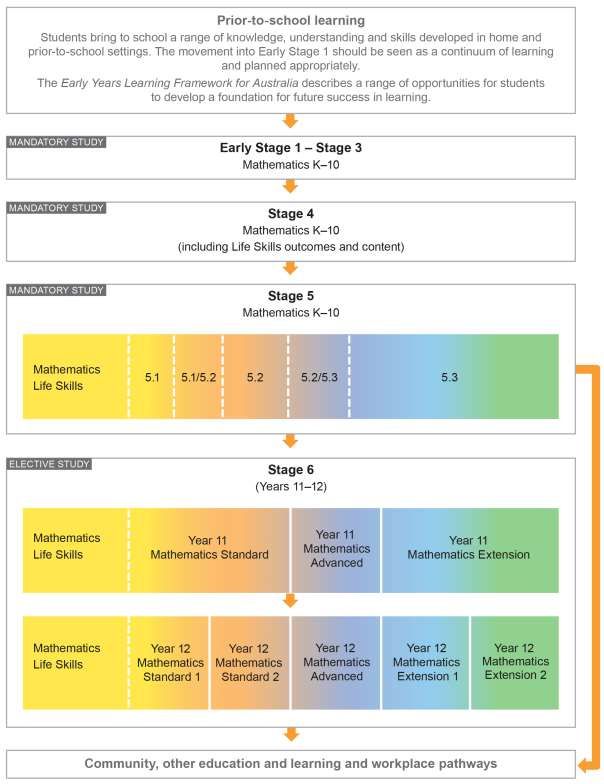
CONTENTS

Section 1: Curriculum
Australian Curriculum, Assessment and Reporting                                        Allocation of Grades ................................................... 33
Authority (ACARA) ........................................................4            Assessment Calendar ................................................. 34
NSW Education Standards Authority (NESA) ................4                             Assessment Planning Calendar .................................. 34
Mandatory Curriculum Requirements ..........................5                          Assessment Task Cover Sheets .................................. 34
NSW Record of School Achievement (RoSA) ................5                              Assessment Weighting ............................................... 34
                                                                                       Headmaster’s Newsletter .......................................... 34
                                                                                       Late Submission of an Assessment Task .................... 34
Section 2: Mandatory Courses                                                           'N’ determination ....................................................... 35
Curriculum Structure ....................................................7             Student Absences in terms of an Assessment Task ... 35
English ...........................................................................8   Student Absences (with Approved Leave) in terms
Geography ....................................................................9        of a Class Test ............................................................. 35
History.........................................................................10     Student Absences (without Approved Leave) in terms
Mathematics ...............................................................11          of a Class Test or Assessment Task ............................ 35
Personal Development, Health and Physical                                              Submission of Tasks ................................................... 35
Education ....................................................................13       Technology Issues ...................................................... 35
Science ........................................................................14
World Religion Studies................................................15
                                                                                       Section 5: Reporting
                                                                                       Academic School Reports ........................................... 36
Section 3: Elective Courses                                                            Personal Learning Profile ........................................... 38
Elective Course Description ........................................16                 Parent/Teacher Appointment .................................... 38
Choosing Elective Courses for Year 9 ..........................16                      Parent/Student/Teacher Conference ........................ 38
Commerce ..................................................................17
Dance ..........................................................................18
Drama .........................................................................19      Section 6: Awards
Food Technology.........................................................20             Years 7 to 9 Encouragement Awards ......................... 39
Industrial Technology .................................................21              Year 9 House Recognition Awards ............................. 39
Information and Software Technology .......................22                          Presentation Night ..................................................... 39
Languages: Chinese, French and Japanese .................23
Marine and Aquaculture Technology .........................24
Music ..........................................................................25     Section 7: Assessment Tasks
Philosophy ..................................................................26        Year 9 ......................................................................... 40
Photographic and Digital Media .................................27
Physical Activity and Sports Studies ...........................28
Sociology .....................................................................29
Textiles Technology ....................................................30
Visual Arts ...................................................................31

Section 4: Assessment
Introduction ................................................................32
Program of Assessment ..............................................32
Assessment Policy and Procedures.............................33
Alleged Malpractice in Assessment Tasks or
Examinations ..............................................................33

2018 Middle School Year 9 Curriculum                                                                                                                            Page 3
SECTION 1: CURRICULUM
AUSTRALIAN CURRICULUM, ASSESSMENT AND REPORTING AUTHORITY (ACARA)
ACARA is the independent authority for the development of a national curriculum, a national assessment program,
national data collection and reporting program that supports 21st century learning for all Australian students.
The Australian Curriculum sets out the core knowledge, understanding, skills and general capabilities important for all
students. The Australian Curriculum describes the learning entitlement of students as a foundation for their future
learning, growth and active participation in the community. It makes clear what all young Australians should learn as
they progress through school.
NSW EDUCATION STANDARDS AUTHORITY (NESA)
NESA serves government and non-government schools in the development of school education for Years K to 12. NESA
is responsible for advising the New South Wales (NSW) Minister for Education on the appropriateness of the curriculum
for NSW schools, the structure and process of its implementation.
Schools are required to deliver programs of study that comply with NESA syllabuses. Schools must satisfy the prescribed
hours and cover all of the essential content of each syllabus.
NESA:
works across all New South Wales school systems
sets the core curriculum by developing syllabuses for Kindergarten to Year 12 and provides support materials for
teachers and parents
manages the Record of Student Achievement (RoSA) and the Higher School Certificate Examination
assesses student achievement and awards credentials to meet the needs of the various range of students
promotes the provision of quality education by developing, communicating and implementing educational
policies and practices
provides advice on grading and assessment policy and procedures
promotes the provision of quality education through the registration and accreditation of non-government
schools, certifying that they may teach students and enter students for examinations
manages resources so educational objectives are met.
2018 Middle School Year 9 Curriculum Page 4
SECTION 1: CURRICULUM
MANDATORY CURRICULUM REQUIREMENTS
NESA states it is mandatory in Years 7 to 10 to complete the following mandatory curriculum:
NESA developed syllabus to be studied substantially throughout Years 7 to 10.
English
400 hours to be completed by the end of Year 10
NESA developed syllabus to be studied substantially throughout Years 7 to 10.
Mathematics
400 hours to be completed by the end of Year 10
NESA developed syllabus to be studied substantially throughout Years 7 to 10.
Science
400 hours to be completed by the end of Year 10
To be studied substantially throughout Years 7 to 10. 400 hours to be completed by the
Human Society and Its
end of Year 10 and must include 100 hours each of History and Geography in Stage 4 and
Environment
100 hours each of Australian History and Australian Geography in Stage 5
Languages Other than 100 hours to be completed in one language over one continuous 12 month period
English between Years 7 to 10 but preferably in Years 7 or 8
Technological and
NESA’s Technology (Mandatory) Years 7 and 8 syllabus to be studied for 200 hours
Applied Studies
200 hours to be completed, consisting of NESA’s 100 hours mandatory courses in each
of Visual Arts and Music. It is NESA’s expectation the 100 hours mandatory courses in
Creative Arts
these subjects will be taught as coherent units of study and not split over a number of
years
Personal Development,
NESA’s mandatory 300 hours course in Personal Development, Health and Physical
Health and Physical
Education. This integrated course is to be studied in each of Years 7 to 10
Education
NSW RECORD OF SCHOOL ACHIEVEMENT (ROSA)
The New South Wales Record of School Achievement (RoSA) replaced the School Certificate. Eligible students who leave
school prior to receiving their Higher School Certificate will receive the RoSA. NESA has developed information for
teachers, students and parents on how the RoSA will be implemented. See link: www.boardofstudies.nsw.edu.au/rosa/
The eligibility requirements for the RoSA are essentially unchanged from the School Certificate, except for the deletion
of the School Certificate tests. Requirements relating to curriculum, school attendance and the completion of Year 10
are identical to those that previously applied for the School Certificate.
A RoSA shows grades for all courses a student has completed up to the point they leave school including those
completed in Year 10, Year 11 or even Year 12.
To qualify for the RoSA award, a student must have:
attended a government school, an accredited non-government school or a recognised school outside NSW
undertaken and completed courses of study that satisfy the Board’s curriculum and assessment requirements
for the Record of School Achievement
complied with any other regulations or requirements (such as attendance) imposed by the Minister or the New
South Wales Education Standards Authority (NESA)
completed Year 10.
2018 Middle School Year 9 Curriculum Page 5
SECTION 2: MANDATORY COURSES English Geography History Mathematics Personal Development, Health and Physical Education Science World Religion Studies 2018 Middle School Year 9 Curriculum Page 6

SECTION 2: MANDATORY COURSES
CURRICULUM STRUCTURE
All Year 9 students at Central Coast Grammar School will study the following courses:
English 4 classes of mixed ability, 1 extension class and 1 enrichment class
Geography 5 classes of mixed ability
Rotate with History after a semester
History 5 classes of mixed ability
Rotate with Geography after a semester
Mathematics 6 classes. Three levels of Mathematics (5.1, 5.2 and 5.3)
Personal Development, Health and 5 classes of mixed ability
Physical Education
Science 6 graded classes
World Religion Studies 5 classes of mixed ability
In addition to these compulsory courses students have an opportunity to study three electives in Year 9. Electives
offered to Year 9 students for 2018 include:
Chinese Marine and Aquaculture Technology
Commerce Music
Dance Philosophy
Drama Photographic and Digital Media
Food Technology Physical Activity and Sports Studies
French Sociology
Industrial Technology Textiles Technology
Information and Software Technology Visual Arts
Japanese
2018 Middle School Year 9 Curriculum Page 7
SECTION 2: MANDATORY COURSES
ENGLISH
Key Learning Area: English
Head of Department: Kate Tracy
Course: English
Course Description
Students study literature, film, media, nonfiction, digital and multi modal texts. The texts give students experience of
Australian literature, insights into Aboriginal experiences, multicultural experiences in Australia and literature from
other countries and times.
Students study texts that give experience of cultural heritages, environmental and social sustainability, popular cultures
and youth cultures, picture books, every day and workplace texts, a range of social, gender and cultural perspectives.
Students also experience Shakespearean Drama.
Students learn to…
read, enjoy, understand, appreciate and reflect on the English language in a variety of texts
develop their skills, knowledge and understanding
create texts that are imaginative, interpretive, critical, analytical and powerful
use language and communicate appropriately and effectively
think in ways that are imaginative, interpretive and critical
express themselves and their relationships with others and the world
reflect on their learning in English
Course Requirements
Years 9 and 10 requires experience of at least two works each of fiction, film, nonfiction and drama, a variety of poetry
drawn from different anthologies or from particular poets.
Satisfactory completion of the mandatory study of English during Stage 5 will be recorded with a grade on the student’s
Record of Student Achievement Part A.
Special Features
English classes vary from year to year depending on the needs of the
cohort. However, at this stage 2018 Year 9 will have a six class structure
with extension/enrichment classes. Entry into the extension class is
determined by student achievement in the previous year. Students in the
extension class will follow the same course outline as the other classes,
but with an emphasis on the higher order skills of creativity and
evaluation.
2018 Middle School Year 9 Curriculum Page 8
SECTION 2: MANDATORY COURSES
GEOGRAPHY
Key Learning Area: Human Society and its Environment
Head of Department: Belinda Ho
Course: Geography
Course Description
Geography students engage in the Stage 5 curriculum which includes the focus areas of Sustainable Biomes, and
Changing Places and Urbanisation.
Students learn about geographical processes and human communities on a national and global level. Students also learn
about environmental and human interactions and how communities respond to them. From this, students will
investigate geographical issues that arise from a rapidly changing world.
Students learn to…
identify, gather, organise and interpret geographical data
develop an understanding of places, environments and people
explain the processes that form and transform natural environments and human communities
investigate the relationships between environments and people
apply geographical tools for inquiry studies
communicate their understanding through written and oral forms
Course Requirements
Students are expected to undertake fieldwork activities throughout
the year.
Special Features
Year 9 students undertake Geography for one semester, alternating
with History in the other semester.
2018 Middle School Year 9 Curriculum Page 9
SECTION 2: MANDATORY COURSES HISTORY Key Learning Area: Human Society and its Environment Head of Department: Belinda Ho Course: History Course Description History students study, The Making of the Modern World and Australia from 1750 to 1945. The Industrial Revolution, developing first in eighteenth-century Britain gave rise to economic changes that have had an enormous impact on society. It also contributed to other population movements like emigration and convict transportation as well as ideologies like nationalism and imperialism. The continent of Australia was significantly affected by English colonisation and this ultimately shaped the nation as it is today. These ties with Britain have shaped Australia’s history and are a key reason for our country’s involvement in World War I and World War II. Students learn to… read and understand historical texts use historical terms and concepts identify how primary and secondary sources are used and how to apply them to historical enquiry identify and analyse the different perspectives in History develop a sense of historical argument to investigate the past effectively communicate their understanding of the past Course Requirements All students must complete a site study in Stage 5. Special Features Year 9 students undertake History for one semester, alternating with Geography in the other semester. 2018 Middle School Year 9 Curriculum Page 10
SECTION 2: MANDATORY COURSES MATHEMATICS Key Learning Area: Mathematics Head of Department: Kingsley Hunt Course: Mathematics Course Description There are three pathways in Stage 5 (5.1, 5.2 and 5.3) each building on the concepts developed in the preceding pathway. 5.1 Pathway - is designed for students who need more time to develop basic mathematical skills. The content of Stage 5.1 reinforces the skills and knowledge developed in the Stage 4 Mathematics course. 5.2 Pathway – it is expected the majority of students will complete this stage by the end of Year 10. Students who achieve at this level will be able to ask questions that can be explored using mathematics and use mathematical arguments to reach and justify conclusions. When communicating mathematical ideas, they will be able to use appropriate language and algebraic, statistical and other notations and conventions in written, oral or graphical form. Students will be able to use suitable problem solving strategies which include selecting and organising key information to extend their inquiries by identifying and working on related problems. 5.3 Pathway - is the most abstract of the three courses. It is designed for students who have had no difficulty in achieving the syllabus outcomes up to and including Stage 5.2 outcomes. Students who progress to this stage should be able to work easily and quickly with more demanding mathematical concepts. They will be able to use deductive reasoning in problem solving, presenting arguments and formal proofs. Students will interpret, apply formal definitions, generalise, connect and apply mathematical ideas across topics. There are four strands to Mathematics. These include: Working Mathematically Number and Algebra Measurement and Geometry Statistics and Probability Students learn to… use appropriate terminology, diagrams and symbols in mathematical contexts select and use appropriate strategies to solve problems provide reasoning to support conclusions that are appropriate to the context Course Requirements Students who consistently achieve Limited, Basic and Unsatisfactory grades in the Stage 4 course will proceed to the 5.1 course in Year 9. This course is designed for students who need more time to develop basic mathematics skills. Students who consistently achieve Sound grades in the Stage 4 course may proceed to the 5.2 course in Year 9. Students who consistently achieve Excellent grades in the Stage 4 course may proceed to the 5.3 course in Year 9. These students should be able to work easily and quickly with more demanding mathematical concepts and be able to recall previous work with ease. Special Features The course of study in Years 9 and 10 provides the pathway for Stage 6 study in Mathematics. Mathematics is not compulsory in Stage 6. Students who intend to study the Stage 6 General Mathematics course should have demonstrated competence in the 5.2 content, particularly the Patterns and Algebra and Trigonometry. Students who intend to study the Stage 6 Mathematics course should show a high level of competency in the 5.2 course as well as 2018 Middle School Year 9 Curriculum Page 11
SECTION 2: MANDATORY COURSES
competency in the topics Real Numbers, Algebraic Techniques, Coordinate Geometry, Trigonometry and Deductive
Geometry from the 5.3 course. Students who intend to study the Stage 6 Mathematics Extension 1 course should show
strong results in the 5.3 course. The diagram below shows the pathways in Mathematics from Stage 4 through Stage 5
to Stage 6.

Mathematics Pathways

2018 Middle School Year 9 Curriculum                                                                       Page 12
SECTION 2: MANDATORY COURSES
PERSONAL DEVELOPMENT, HEALTH AND PHYSICAL EDUCATION
Key Learning Area: Personal Development, Health and Physical Education
Head of Department: Mark Steele
Course: Personal Development, Health and Physical Education
Course Description
Personal Development, Health and Physical Education (PD/H/PE) develops students’ capacity to enhance personal
health and wellbeing by examining the physical, social, psychological and spiritual dimensions of health. It promotes
their enjoyment of and commitment to an active lifestyle and to achieve confidence and competence in a wide range
of activities as they maximise movement and personal skills.
Year 9 students will study the following units:
Choices, Challenges and Opportunities (adolescent health issues)
Hand Propelled Ball Games
Adolescent Relationships (sexual health)
Gymnastics
Athletics:
o Sports movement skills
o Health consumerism
o The Party (drug use/relationships/mental health)
o Racquet games
Students learn about the following four modules:
Self and Relationships - Students learn about sense of self, adolescence and change, sources of personal support
and the nature of positive, caring relationships
Movement Skill and Performance - Students explore the elements of composition as they develop and refine
movement skills in a variety of contexts
Individual and Community Health - Students learn about the specific health issues of mental health, healthy food
habits, sexual health, drug use and road safety. They examine risk, personal safety and how to access health
information, products and services
Lifelong Physical Activity - Students consider lifestyle balance and the importance of physical activity and its
physical benefits. Students learn to participate successfully in a wide range of activities and to adopt roles that
promote a more active community.
Students learn to…
develop knowledge, understanding, skills, values and attitudes that enable them to advocate lifelong health and
physical activity.
apply some key skills that allow them to take action for health and physical activity. This includes an emphasis
on communicating, interaction, problem solving, decision making, planning and moving.
2018 Middle School Year 9 Curriculum Page 13SECTION 2: MANDATORY COURSES
SCIENCE
Key Learning Area: Science
Head of Department: Ross Farrelly
Course: Science
Course Description
The study of Science in Stage 5 continues to develop students’ scientific knowledge and understanding, skills, values
and attitudes within broad areas of science that encompass the traditional disciplines of Physics, Chemistry, Biology and
the Earth Sciences. As well as acquiring scientific knowledge and skills, students apply their understanding to everyday
life and develop an appreciation of science as a human activity. Students learn about the need to conserve, protect and
maintain the environment, the use and importance of technology in advancing science and the role of science in
developing technology. Students also develop an appreciation of, and skills in, selecting and using resources and systems
to solve problems. They are also encouraged to continue to develop positive values and attitudes towards themselves,
others, lifelong learning, science and the environment.
Students learn about knowledge and understanding of: the history of science, the nature and practice of science,
applications and uses of science, implications of science for society and the environment, current issues, research and
development, models, theories, laws, systems and interactions related to the physical world, matter, the living world
and Earth and Space.
Students learn to…
develop skills in working scientifically through planning investigations (Student research project)
conduct investigations
communicate information and understanding
develop scientific thinking and problem solving techniques
work individually and in teams
Course Requirements
Practical experiences which emphasise hands on activities
will occupy a substantial amount of course time. All students
are required to undertake at least one research project
during Stage 5. At least one project will involve hands on
practical investigation. At least one Stage 5 project will be an
individual task. This requirement is met by students
completing a Student Research project.
Special Features
Year 9 students are allocated to one of six graded classes.
This is determined by student achievement in Year 8.
2018 Middle School Year 9 Curriculum Page 14SECTION 2: MANDATORY COURSES WORLD RELIGION STUDIES Key Learning Area: Human Society and its Environment Head of Department: John Gunderson Course: World Religion Studies Course Description World Religion Studies is designed to provide students with an understanding of the nature and role of World Religions and Religions in Australia. The aim of this course is to stimulate students’ interest in and enjoyment of understanding themselves and the world in which they live. They will develop skills and critical understandings to enable them to operate effectively within society and to participate as active, informed and responsible citizens. Students learn about aspects of World Religions, interrelationships between the various religions in Australian society, Aboriginal spirituality and religious and theological concepts. The content is divided into three topics: Nature of Religion Introduction to World Religions Religions of Australia The course provides an opportunity for students to: develop a lifelong interest and enthusiasm for the study of world religions appreciate differing perspectives and viewpoints develop a sense of individual, group, national and international identity develop sensitivity and empathy to the needs, values and behaviour patterns of others, and contribute to a just society through informed citizenship Students learn to… develop skills to undertake the process of religious inquiry communicate their understanding of the world religions value and appreciate World Religion Studies as a study of human experience Course Requirements Year 9 students must complete original research and present a report. It is recommended this research is undertaken on a group basis. Tasks will include: Oral, written and an individual research assessment. 2018 Middle School Year 9 Curriculum Page 15
SECTION 3: ELECTIVE COURSES
ELECTIVE COURSE DESCRIPTIONS
Chinese Marine and Aquaculture Technology
Commerce Music
Dance Philosophy (Year 9 only)
Drama Photographic and Digital Media (Year 9 only)
Food Technology Physical Activity and Sports Studies (Year 9 only)
French Sociology
Industrial Technology Textiles Technology
Information and Software Technology Visual Arts
Japanese
CHOOSING ELECTIVE COURSES FOR YEAR 9
This curriculum guide provides Course Descriptions of all courses taught in Year 9 at Central Coast Grammar School.
Parents should discuss with their child the various courses in this section to assist in selecting their elective courses.
Students are required to study three elective courses in Year 9. They should take into account the following when
deciding their course of study:
choose courses based not only on their ability but also on their potential for enjoyment
related career opportunities
students are able to change elective courses for Year 10
In Year 10, students study English, Mathematics, Science, History, Geography, PDHPE, World Religion Studies and two
electives.
Generally, electives offered in Year 9 will be offered again in Year 10 although the content of the courses will vary from
year to year. Most courses are discrete courses, which means it is not necessary to study the course in Year 9 in order
to undertake it in Year 10. However, there are two exceptions, Languages and Industrial Technology. In these cases,
students must have completed the Year 9 course as a prerequisite to be permitted to study Languages and Industrial
Technology in Year 10.
It should be noted, while the list of electives offers a great variety of choice, for various reasons, not all courses may
actually run. For example, where student interest results in small numbers of students electing to study a course it may
not be viable to run the course. Other limits to choice may occur as a result of the elective lines, or school staffing. These
lines are determined by the students’ responses on the Elective Preferences form. If students find they have made the
wrong course selection, there is provision for them to change but this will depend on space being available in courses.
Students may change their selection up until the end of Week 6 Term 1 2018.
Students are not permitted to change courses beyond this date.
2018 Middle School Year 9 Curriculum Page 16SECTION 3: ELECTIVE COURSES
COMMERCE
Key Learning Area: Human Society and its Environment
Head of Department: John Gunderson
Course: Commerce
Commerce is an elective course studied for 100 or 200 hours during Years 9 and 10.
Course Description
Commerce enables students to develop knowledge, understanding, skills and values
that form the foundation on which they can make sound decisions about consumer,
financial, legal, business and employment issues. It develops in students the ability to
research information, apply problem solving strategies and evaluate options in order
to make informed and responsible decisions as individuals and as part of the
community.
Students study the core topics of:
Consumer Choice
Personal Finance
In these topics students learn about making responsible spending, saving, borrowing and investment decisions. They
will also study optional topics Towards Independence, Running a Business and Travel.
Students learn to…
develop skills in personal financial management
promote critical thinking and the opportunity to participate in the community
identify, research and evaluate options when making decisions on how to solve consumer problems and issues
that confront consumers.
develop research and communication skills, including the use of ICT that build on the skills they have developed
in their mandatory courses
Special Features
Commerce places emphasis on students developing life skills through practical classroom activities. The highlight of this
course are the Market Days.
2018 Middle School Year 9 Curriculum Page 17SECTION 3: ELECTIVE COURSES
DANCE
Key Learning Area: Creative Arts
Head of Department: Lee Fleming
Course: Dance
Dance is an elective course studied for 100 or 200 hours during Years 9 and Year 10.
Course Description
Dance involves the development of physical skill as well as aesthetic, artistic and cultural understanding.
Students learn about movement principles and stylised techniques. They learn through both problem solving and
directed teaching. The development of creativity, imagination and individuality is emphasised equally with knowledge
of theatre dance.
Students learn to…
express ideas creatively as they make and perform dances and analyse dance as works of art
experience, understand, value and enjoy dance as an artform through the interrelated study of the performance,
composition and appreciation of dance
Special Features
It is important for students of Dance to experience a range of live performances throughout the year. These theatre
visits are considered compulsory and often take place out of class time. Students and parents need to be aware, at
times, rehearsals and assessed performances take place outside of normal classroom hours.
2018 Middle School Year 9 Curriculum Page 18SECTION 3: ELECTIVE COURSES
DRAMA
Key Learning Area: Creative Arts
Head of Department: Lee Fleming
Course: Drama
Drama is an elective course studied for 100 or 200 hours during Years 9 and Year 10.
Course Description
Drama enables young people to develop knowledge, understanding and skills individually and collaboratively to make,
perform and appreciate dramatic and theatrical works. Students take on roles as a means of exploring both familiar and
unfamiliar aspects of their world while exploring the ways people react and respond to different situations, issues and
ideas.
All students undertake at least one unit of playbuilding in every 100 hours of the course. Playbuilding refers to a group
of students collaborating to make their own piece of drama from a variety of stimuli. At least one other dramatic form
or performance style must also be studied in the first 100 hours. Examples of these include improvisation, monologues,
physical theatre, mask, comedy and Shakespeare. Students also learn about the elements of drama, various roles in the
theatre, the visual impact of design, production elements and the importance of the audience in any performance.
Students learn to…
make, perform and appreciate dramatic and theatrical works
devise and enact dramas using scripted and unscripted material and use acting and performance techniques to
convey meaning to an audience
respond to, reflect on and analyse their own work and the work of others and evaluate the contribution of drama
and theatre to enriching society
Special Features
It is important for students of Drama to experience a range of live
performances throughout the year. These theatre visits are considered
compulsory and often take place out of class time. Students and parents
need to be aware, at times, rehearsals and assessed performances take
place outside of normal classroom hours.
2018 Middle School Year 9 Curriculum Page 19SECTION 3: ELECTIVE COURSES
FOOD TECHNOLOGY
Key Learning Area: Technological and Applied Studies
Head of Department: Bil Kensey
Course: Food Technology
Food Technology is an elective course studied for 100 or 200 hours during Years 9 and 10.
Course Description
Food Technology provides students with a broad knowledge and
understanding of food properties, processing, preparation and their
interrelationship, nutritional considerations and consumption patterns.
It addresses the importance of hygiene and safe working practices and
legislation in the production of food. Students will develop food specific
skills, which can then be applied in a range of contexts, enabling
students to produce quality food products. It also provides students
with a context through which to explore the richness, pleasure and
variety food adds to life and how it contributes to both vocational and
general life experiences.
Students learn about food in a variety of settings, enabling them to
evaluate the relationships between food, technology, nutritional status
and the quality of life. The following focus areas provide a context
through which the core (Food Preparation and Processing, Nutrition and Consumption) will be studied. The following
units of study will take place in Year 9:
Food for Special Needs
Food for Special Occasions
Food Selection and Health
Health and Food Trends
Students learn to…
explore food related issues through a range of practical experiences, allowing them to make informed and
appropriate choices with regard to food
develop the ability and confidence to design, produce and evaluate solutions to situations involving food
select and use appropriate ingredients, methods and equipment safely and competently
2018 Middle School Year 9 Curriculum Page 20SECTION 3: ELECTIVE COURSES
INDUSTRIAL TECHNOLOGY
Key Learning Area: Technological and Applied Studies
Head of Department: Bil Kensey
Course: Industrial Technology
Industrial Technology is an elective course offered in both Year 9 as a 100 hour course or Years 9 and 10 as a 200 hour
course. Students must undertake Industrial Technology in Year 9 in order to study the course in Year 10. Students are
able to study Industrial Technology in Year 9 only.
Course Description
Industrial Technology develops students’ knowledge and understanding of materials and processes in timber
technologies. They develop knowledge and skills relating to the selection, use and application of materials, tools,
machines and processes through the planning and production of quality practical projects.
In the 100 hour course Year 9 students undertake two compulsory core modules:
General Wood 1
General Wood 2
In the 200 hour course Year 10 students may select two of the four specialised modules:
Cabinetwork 3
Cabinetwork 4
Wood Machining 3
Wood Machining 4
Students learn about the properties and applications of materials associated with timber. They study the range of tools,
machines and processes available in both industrial and domestic settings for working with selected materials. Students
learn safe practices for practical work environments, including risk identification and minimisation strategies. They also
learn about design and designing including the communication of ideas and drawing processes.
Students learn to…
actively plan and construct quality practical projects
select and use a range of materials for individual
projects
competently and safely use a range of hand tools, power
tools and machines to assist in the construction of
projects
produce drawings and written reports to develop and
communicate ideas and information relating to projects.
2018 Middle School Year 9 Curriculum Page 21SECTION 3: ELECTIVE COURSES INFORMATION AND SOFTWARE TECHNOLOGY Key Learning Area: Technological and Applied Studies Head of Department: Janine Comber Course: Information and Software Technology Information and Software Technology is an elective course studied for 100 or 200 hours during Years 9 and 10. Course Description People will require highly developed levels of computing and technology literacy for their future lives. Students therefore need to be aware of the scope, limitations and implications of information and software technologies. Individual and group tasks, performed over a range of projects, will enable this practical based course to deliver the relevant knowledge and skills needed by students. Development of technology skills and information about career opportunities within this area are important aspects of the course. The core content to be covered in this course is integrated into the options chosen within the school. The course has been designed with an emphasis on practical activities that allow students to sustain focus in a range of interest areas at some depth. The option topics to be studied within this course include: Databases and, Internet and Website Development with two blocks of optional topics involving students selecting their own preference. Students learn to… identify a need or problem to be solved, explore a range of possible solutions and produce a full working solution use a variety of technologies to create, modify and produce products in a range of media formats develop a range of skills, including research and design use problem solving strategies 2018 Middle School Year 9 Curriculum Page 22
SECTION 3: ELECTIVE COURSES
LANGUAGES: CHINESE, FRENCH AND JAPANESE
Key Learning Area: Languages
Head of Department: Yoko Bloore
Course: Language: Chinese, French and Japanese
Chinese, French and Japanese are elective courses offered in both Year 9 as a 100 hour course or Years 9 and 10 as a
200 hour course. Students must undertake the chosen language in Year 9 in order to study the language in Year 10.
Students are able to study a language in Year 9 only.
Course Description
Language courses provide students with the opportunity
to gain effective skills in communicating in the chosen
language, to explore the relationship between other
languages and English and to develop an understanding of
the cultures associated with the chosen language.
Students develop the knowledge, understanding and skills
necessary for effective interaction in a language such as
listening, reading, speaking and writing. They explore the
nature of languages as systems by making comparisons
between English and the chosen language and produce
texts in the target language.
Students learn the intercultural understandings by reflecting on similarities and differences between their own culture
and the culture of the target language.
Students learn to…
communicate in another language
listen and respond to spoken language, as well as learn to read and respond to written texts in the language they
are learning
establish and maintain communication in familiar situations, using the language
explore the diverse ways in which meaning is conveyed by comparing and contrasting features of the language
develop a capacity to interact with people, their culture and their language
2018 Middle School Year 9 Curriculum Page 23SECTION 3: ELECTIVE COURSES MARINE AND AQUACULTURE TECHNOLOGY Key Learning Area: Technological and Applied Studies Head of Department: Janine Comber Course: Marine and Aquaculture Technology Marine and Aquaculture Technology is an elective course studied for 100 or 200 hours during Years 9 and 10. Course Description Marine and Aquaculture Technology develops students’ capacity to design, produce, evaluate, use and manage marine and water related environments in a sustainable way. Students study a core of 25 hours and five 15 hour optional modules. The five modules to be covered in Year 9 are: Dangerous Marine Creatures Marine Mammals Currents and Tides Basic Snorkelling Rock Platforms Students learn about marine and aquatic environments. They study water safety, general first aid and the maintenance of equipment. The economical sustainability of aquaculture and marine environments is emphasised together with the preservation of marine life. Students learn about the ethical and sustainable use, management and protection of the marine environment. The responsible selection and safe use of equipment in aquaculture and marine and maritime activities is emphasised. They also study a range of industries and organisations that use, manage and regulate the marine environment. The major emphasis of the Marine and Aquaculture Technology syllabus is on practical experiences. Students learn to… apply principles of water safety and first aid in marine situations and about Work and Safety (WHS) issues responsibly select, use and maintain materials and equipment use appropriate techniques in the context of the modules selected for study research, experiment and communicate in relation to aquaculture, maritime and marine activities apply ethical and sustainable practices in the use and management of the marine environment 2018 Middle School Year 9 Curriculum Page 24
SECTION 3: ELECTIVE COURSES
MUSIC
Key Learning Area: Creative Arts
Head of Department: Lee Fleming
Course: Music
Music is an elective course studied for 100 or 200 hours during Years 9 and 10.
Course Description
Students have the opportunity to develop their musical abilities and potential. As an artform, music pervades society
and occupies a significant place in world cultures and in the oral and recorded history of all civilisations. Music plays
important roles in the social, cultural, aesthetic and spiritual lives of people. At an individual level, music is a medium of
personal expression. It enables the sharing of ideas, feelings and experiences. The nature of musical study also allows
students to develop their capacity to manage their own learning, engage in problem solving, work collaboratively and
engage in activity that reflects the real world practice of performers, composers and audiences.
Students will study the concepts of music (duration, pitch, dynamics and expressive techniques, tone colour, texture
and structure) through the learning experiences of performing, composing and listening, within the context of a range
of styles, periods and genres. This course requires the study of the compulsory topic Australian Music, as well as a
number of optional topics that represent a broad range of musical styles, periods and genres.
The study of the concepts of music underpins the development of skills in the three learning experiences of performing,
composing and listening. Students are also exposed to the contemporary practices in music technology.
Students learn to…
perform music in a range of musical contexts
compose music that represents the topics they have studied
listen with discrimination, meaning and appreciation to a
broad range of musical styles
Special Features
Elective music students must perform each semester in the elective music concerts held in the Performing Arts Centre.
In order to maximise performance skills, elective music students are expected to be engaged in instrumental/vocal
tuition. Elective music students are expected to participate in the cocurricular music program of Central Coast Grammar
School.
It is also important for students of Music to experience a range of live performances throughout the year. Visits to these
performances are considered an essential element of the course and often take place outside of class time.
2018 Middle School Year 9 Curriculum Page 25SECTION 3: ELECTIVE COURSES
PHILOSOPHY
Key Learning Area: Human Society and its Environment
Head of Department: John Gunderson
Course: Philosophy
Philosophy is an elective course studied for 100 hours during Year 9 only.
Course Description
Philosophy enables students to build an appreciation of the pursuit of wisdom and the diversity of opinion. The course
aims to nurture a community of inquiry in the classroom in which students are challenged to provide reasons for their
beliefs and examine the validity of those beliefs. Moreover, by deliberately provoking controversy and debate, the
students will, through their own reflection, come to an understanding of how to distinguish between good and bad
argument. Philosophy encourages the development of broad based and critical thinking skills.
Students learn about key Classical Philosophers and will have the opportunity to consider the beginnings of Western
thought. They study some of the Modern Philosophers, consider the developments in Western thinking and the major
‘conflicting’ philosophical views of this modern period. The students are exposed to Ethics to enable them to work
towards reasoned positions on moral issues. Finally, they explore Psychological Philosophy to encourage their search
for self identity and what it is to be a human being.
Students learn to…
identify the range of opinions on philosophical questions and identify contradiction
develop the skills that enable them to distinguish fact from opinion, critically evaluate evidence and expose
hidden assumptions
develop a sense of rigorous objectivity and give sound arguments for their points of view of philosophical
questions
strive for accuracy in reasoning and make connections between ideas and issues
Special Features
Philosophy teaches students to employ effective research skills and in doing so
build the platform for sound study habits.
2018 Middle School Year 9 Curriculum Page 26SECTION 3: ELECTIVE COURSES
PHOTOGRAPHIC AND DIGITAL MEDIA
Key Learning Area: Creative Arts
Head of Department: Bil Kensey
Course: Photographic and Digital Media
Photographic and Digital Media is an elective course studied for 100 hours during Year 9 only.
Course Description
Photographic and Digital Media provides opportunities for students to enjoy making and studying a range of
photographic and digital media works. It enables students to investigate new technologies, cultural identity and the
evolution of photography and digital media into the 21st century.
Students learn about the enjoyment of making different kinds of photographic and digital media works. This could
include still, interactive and moving forms. They learn to represent their ideas and interests with reference to
contemporary trends and how photographers, videographers, filmmakers, computer/digital and performance artists
make photographic and digital media works.
Students learn about how photographic and digital media is shaped by different beliefs, values and meanings by
exploring photographic and digital media, artists and works from different times and places. Students are able to access
the darkroom to learn all of the required procedures for successful black and white photography.
Students learn to…
enhance their basic photographic knowledge with specific technical special effects
make photographic and digital media works using a range of materials and techniques including ICT, to build a
Photographic and Digital Media portfolio over time. They will be using topics such as Portraits and Landscapes to
give them a subject focus. Students have the opportunity to use Adobe Photoshop to enhance computer skills.
develop their research skills, approaches to experimentation and how to make informed personal choices and
judgements
record procedures and activities about their practice in their Photographic and Digital Media journal.
investigate and respond to a wide range of photographic and digital media artists and works in making critical
and historical studies
interpret and explain photographic images through the use of the Frames (subjective, structural, cultural,
postmodern) and the Conceptual Framework (artist-artwork-world-audience).
Course Requirements
Students are required to produce a Photographic and Digital Media portfolio and keep a Photographic and Digital Media
journal.
2018 Middle School Year 9 Curriculum Page 27SECTION 3: ELECTIVE COURSES
PHYSICAL ACTIVITY AND SPORTS STUDIES
Key Learning Area: Personal Development, Health and Physical Education
Head of Department: Mark Steele
Course: Physical Activity and Sports Studies
Physical Activity and Sports Studies is an elective course studied for 100 hours during Year 9 only.
Course Description
Physical Activity and Sports Studies aims to enhance students’ capacity to participate effectively in physical activity and
sport, leading to improved quality of life for themselves and others. Students engage in a range of physical activities in
order to develop key understanding about how and why we move and how to enhance quality and enjoyment of
movement.
Students learn about modules selected from each of the following three areas of study:
Foundations of Physical Activity
Body systems and energy for physical activity Fundamentals of movement skill development
Physical activity for health Nutrition and physical activity
Physical fitness Participating with safety
Physical Activity and Sport in Society
Australia’s sporting identity Opportunities and pathways in physical activity and
Lifestyle, leisure and recreation sport
Physical activity and sport for specific groups Issues in physical activity and sport
Enhancing Participation and Performance
Promoting active lifestyles Technology, participation and performance
Coaching Event management
Enhancing performance - strategies and
techniques
Students learn to…
develop their ability to work collaboratively with others to enhance participation, enjoyment and performance
in physical activity and sport
display management and planning skills to achieve personal and group goals in physical activity and sport
perform movement skills with increasing proficiency
analyse and appraise information, opinions and observations to inform physical activity and sport decisions
2018 Middle School Year 9 Curriculum Page 28SECTION 3: ELECTIVE COURSES
SOCIOLOGY
Key Learning Area: Human Society and its Environment
Head of Department: John Gunderson
Course: Sociology
Sociology is an elective course studied for 100 or 200 hours during Years 9 and 10.
Course Description
Sociology is a disciplined process of inquiry into local, national and global areas that allows students to locate themselves
in the broad continuum of human experience. It enables students to appreciate and enjoy their own social and cultural
environments while comparing and contrasting these environments with other societies and cultures. Sociology gives
students the opportunities to consider past and present societies and cultures while creating a variety of possible future
scenarios.
Students learn about social behaviours, processes and institutions with an emphasis on the Australian society. Also the
interrelationships between the various groups, its sub cultures within the Australian environment, the interaction
between the Australian society, culture and interaction between the global community, and the appropriate sociological
and anthropological concepts.
Sociology is divided into four topics:
The Family
Sport and Leisure Science
Technology and Society
Multicultural Society
Students learn to…
critically analyse and interpret sources of evidence in order to construct reasoned explanations, hypotheses
about the social structure and organisation of their own society and the values, attitudes, customs and traditions
of their culture
develop the cognitive skills of analysis, evaluation and synthesis
evaluate the political, cultural and social events/issues that have shaped, are shaping and may shape the world
around them
Course Requirements
Students complete an original research and present a research report. It is recommended this research is undertaken
on a group basis.
2018 Middle School Year 9 Curriculum Page 29SECTION 3: ELECTIVE COURSES
TEXTILES TECHNOLOGY
Key Learning Area: Technological and Applied Studies
Head of Department: Bil Kensey
Course: Textiles Technology
Textiles Technology is an elective course studied for 100 or 200 hours during Years 9 and 10.
Course Description
The study of Textiles Technology provides students with a broad knowledge of design, textiles in society and the
properties, performance and use of textiles. Project work will include investigation and experimentation. Students will
document, communicate their design ideas and experiences using contemporary technology. Textile projects give
students the opportunity to be creative, independent learners and explore functional and aesthetic aspects of textiles,
whilst demonstrating responsibility in decision making.
There are three areas of study:
Design
Properties and Performance of Textiles
Textiles and Society
Students learn about these areas by completing practical items from:
Apparel
Furnishings
Costume
Textile Arts
Non apparel
Students learn to…
develop practical skills in designing, producing and evaluating
engage with a variety of ICT applications when developing design ideas and researching information to support
project work
develop confidence, independence, actively engage in learning about the properties and performance of textiles,
textile design and the role of textiles in society
Course Requirements
Students have to purchase several portfolio books, fabrics, patterns and materials at a cost to themselves. Various
Textile portfolios documenting all stages of production need to be completed during the course.
2018 Middle School Year 9 Curriculum Page 30SECTION 3: ELECTIVE COURSES
VISUAL ARTS
Key Learning Area: Creative Arts
Head of Department: Bil Kensey
Course: Visual Arts
Visual Arts is an elective course studied for 100 or 200 hours during Years 9 and 10.
Course Description
Visual Arts provides opportunities for students to enjoy the making and studying of art. It builds an understanding of
the role of art in all forms of media, both in the contemporary and historical world. Visual Arts enables students to
represent their ideas and interests in artworks.
Students learn about the joys of making artworks in various forms. They learn to work through a concept with reference
to contemporary trends and how artists’ including painters, sculptors, architects, designers, photographers and
ceramicists make artworks. Students study many different cultures to learn how art is shaped by different beliefs, values
and meanings. They explore artists and artworks from different times and places. Students studying Elective Art spend
up to a term on any one project, thus giving them the opportunity to research their topic in depth and to finely hone
their technical skills.
Students will have the opportunity to work with a variety of media and techniques in 2D, 3D and 4D forms, including
traditional and more contemporary forms, site specific works, installations, video and digital media and other ICT forms,
to build a Body of Work over time. Media can include: painting, ceramic sculpture, photography, drawing, Adobe
Photoshop and printmaking, to name a few.
Students learn to…
develop their research skills, approaches to experimentation and how to make informed choices and judgements
record procedures and activities about their artmaking practice in their Visual Arts Process Diary
study a range of artists and artworks critically
interpret and explain artworks through the use of the Frames (subjective, structural, cultural, postmodern) and
the Conceptual Framework (artist-artwork-world-audience).
Course Requirements
Students are be required to complete a Body of Work and tasks related to the critical and historical study of art.
2018 Middle School Year 9 Curriculum Page 31You can also read


