KEY STAGE 4 OPTIONS 2020-2021 - IT'S TIME FOR YOU TO CHOOSE - Imberhorne School
←
→
Page content transcription
If your browser does not render page correctly, please read the page content below
KEY STAGE 4
    OPTIONS
   2020-2021

                IT’S TIME
              FOR YOU TO
               CHOOSE

Compassion   Achievement     Respect    Endeavour
    The cornerstones of our learning community
Essential Info                       Core Curriculum
Contents   Introduction and Key Dates
           Core and Optional Subjects
           Things to Consider
           Study Routes
                                        04-05
                                        06-07
                                        08-09
                                           10
                                                English
                                                Maths
                                                Science
                                                Core R.E.
                                                                                14-15
                                                                                16-17
                                                                                18-19
                                                                                20-21

                                                Optional Curriculum
           Support and Guidance            11
           Core Curriculum                 12
           Personalised Curriculum         13
                                                Languages
                                                French/German/Spanish/Italian   22-23

                                                Arts
                                                Art                             24-25
                                                Drama                           26-27
                                                Music                           28-29

                                                Humanities
                                                Geography                       30-31
                                                History                         32-33
                                                R.E. Full Course                34-35

                                                Physical Education
                                                P.E. GCSE                       36-37
                                                Dance                           38-39

                                                Business, Computing,
                                                Creative iMedia
                                                Computer Science                40-41
                                                Business Studies                42-43
                                                Creative iMedia                 44-45

                                                Technology
                                                D&T with Graphics               46-47
                                                D&T with Resistant Materials    48-49
                                                D&T with Textiles               50-51
                                                Electronics                     52-53
                                                Food                            54-55

                                                Applied learning                        Post-16
                                                Business Studies BTEC           56-57
                                                Health & Social Care            58-59   Education
                                                Sport BTEC                      60-61   at Imberhorne
                                                Vocational                              See page 63
                                                Construction                      62
02                                                                                                      03
Make the right decisions
     As a school, we are committed            daughter in making the             is crucial, we must not forget
     to providing a broad and                 right decisions, all Year 9        that achievement in other
     balanced curriculum as the basis         students will have one-to-         aspects of school life creates
     for the well-rounded education           one mentoring that covers          well-rounded individuals. Playing
     that will enhance the future             Careers/Futures and Options        a full part in these activities, in
     career, training and educational         with a member of staff in the      school sports teams, in cultural
     opportunities of Imberhorne              week beginning 13th January        activities and on educational
     students. The National Curriculum        2020.                              visits, is central to a balanced
     provides the framework for most                                             curriculum. Managing time to fit
     courses in Years 10 and 11. We           We hope that your child will       in all of these opportunities is an
     expect students to maintain              enjoy studying during the          important skill.
     the study of a wide range of             next two years. Academic
     subjects but also provide, when          standards at Imberhorne are        Please ask your children to return    for their options, but this cannot
     appropriate, opportunities for           high and we shall make every       their options form to school no       be guaranteed as courses can
     some specialisation or access to         effort to ensure that students     later than Monday 3rd February.       only run if group numbers are
     additional support.                      fulfil their potential. However,   Every effort is made to provide       viable and suitable staffing and
     In order to support your son/            whilst success in examinations     students with their first choices     accommodation is available.

     Key Dates                           Presentation to Year 9 students -
                                         ‘How the Options Process Works’:
                                                                                   Year 9 Parents’ Consultation Evening:
                                                                                   Students attend with parents/carers.
                                         Thu 9th January 2020                      As well as the opportunity to discuss
                                         Period 1 & 2                              targets and progress in Year 9,
                                                                                   there will also be information about
                                         Year 9 Options Briefing Evening           Key Stage 4 courses and teachers
                                         for parents at Windmill Lane:             available to answer any questions:
                                         Thu 9th January 2020                      Thu 23rd January 2020

                                         Careers/Futures and Options
                                         Mentoring with Year 9 students:           Completed Options Form
                                                                                   returned:
                                         Week Commencing
                                         13th January 2020                         Mon 3rd February 2020

04                                                                                                                                                          05
or upgrade to full GCSE using
1 hour of Core P.E. time
P.E. (Core) No examination
Personal Development No examination
Core and Optional Subjects Optional Subjects - in addition, students may choose subjects from the
Optional Subjects -areas:
following curriculum in addition, students may choose subjects from the following cu
This booklet aims to support our achieve this aim, all students Curriculum area Subjects offered Qualification
students in making choices at will be required to follow a
Languages French GCSE
the end of Key Stage 3 (KS3). At core curriculum plus optional
Languages German GCSE
Achieving
Imberhorne Success
we aim to provide subjects. Most courses lead to a Spanish GCSE
a curriculum thattois support
broad and Italian GCSE
This booklet aims our students full GCSE, but
in making someatlead
choices to BTEC
the end of Key Stage 3 (KS3). At
Imberhorne we aim
balanced whilst to provide
meeting thea curriculum that is or
Awards broad and balanced
Cambridge
Arts
whilst meeting the individual
National
Art GCSE
needs of students. Tostudents.
achieve this Arts Drama GCSE
individual needs of To aim, allCertificates.
students will be required to follow a core curriculum plus
Music GCSE
optional subjects. Most courses lead to a full GCSE, but some lead to BTEC First Awards or OCR
National Certificates. Humanities
Humanities Geography GCSE
History GCSE
Core Subjects - the core curriculum consists of the following subjects:
Core Subjects - the core curriculum consists of the following subjects: Physical Education
Physical Education Dance GCSE
GCSE P.E. GCSE
Coresubjects
Core Subjects Qualification Computing/Business/ Business Studies GCSE
Business, Computing, Computer Science
Creative Media GCSE
English Language & English Literature 2 GCSEs Creative iMedia Creative iMedia Cambridge
Mathematics GCSE National
Combined Science 2 GCSEs Technology
Technology Design & Technology
R.E. Higher Project Qualification • Graphics GCSE
or upgrade to full GCSE using • Resistant Materials GCSE
1 hour of Core P.E. time • Textiles GCSE
P.E. (Core) No examination Electronics GCSE
Personal Development No examination Food GCSE
Applied
AppliedLearning
learning Business Studies BTEC
Optional Subjects - in addition, students may choose subjects from the following curriculum areas: Health and Social Care Cambridge
National
Sport BTEC
Curriculum
Core area
Curriculum Subjects offered Qualification Vocational Construction City and Guilds
Vocational Certificate
The core curriculum is the compulsory element of the National
Languages French GCSE 04-05
(Level 1)
German
Curriculum for students in Key Stage 4. All students studyGCSE
English
Spanish
Language and English Literature GCSE will study
as well as Maths. All students
Italian GCSE We encourage students to follow a broad and balanced curriculum. We
Science and some may wish to follow the triple Science course as well.
Arts Art GCSE recommend that students study a Language and a Humanities subject. Many
Drama GCSE 4
students will also opt for an Arts subject bringing a creative element to their
Music GCSE curriculum offer. Finally, a fourth option enables the majority of students to add
Humanities Geography GCSE a technical or practical subject in order to gain the broadest experience. This
History GCSE
will allow entry to the widest possible range of career opportunities.
Physical Education Dance GCSE
GCSE PE GCSE
06 Computing/Business/ Business Studies GCSE 07
Things to consider
     Twilight Options                      Modern Foreign Languages                Many students choosing Applied
     In order to retain curriculum         At Imberhorne we attach great           Learning courses in Key Stage 4
     breadth, we offer two twilight        importance to the study of              may wish to continue with those
     options. Twilight courses run after   languages at all levels in the          subjects as ‘Level 3’ courses (Level
     school for two hours on a set         school. We think it is important        3 means they are equivalent
     evening in the week and enable        that our students see themselves        to A-Level courses, i.e. of the           advice at critical points.
     students to specialise in the         as global citizens and therefore,       same value) in the Sixth Form.            Post-16 choices are important
     following:                            see the acquisition of language         Such courses are often suited to          because students may be making
     •Science - triple science course,     skills as a fundamental part of         students who perform better when          such choices with particular
     OR                                    21st century learning.                  developing portfolios of work             careers or degree courses in mind.
     •Languages - Italian                  Therefore, most students will study     rather than assessment through            We encourage students to study
                                           a language. Those wishing to            examinations.                             a broad and balanced set of
     Specialisation                        study two languages in Key Stage        Students who have studied mainly          subjects in Key Stage 4 to provide
     The school is aware that some         4 will be able to combine their         GCSE courses in Key Stage 4 often         the most flexibility for post-16 study.
     students may wish to specialise in    first language with twilight Italian.   progress to studying A-Levels; it is      If students have followed courses
     other subjects and therefore opt                                              also true though that many may            in English, Maths, Science, Modern
     for two subjects from a particular    Progression Routes - Post 16            transfer onto Applied Learning            Foreign Languages, Humanities,
     curriculum area. This may be          We encourage every student to           courses in the Sixth Form. Choosing       Arts, Sports and Technology during
     an appropriate option for some        do their best and to achieve their      to study either just A-Levels or a        Key Stage 4 they will have created
     students. However, students may       potential. To best cater for our        combination of Applied Learning           an appropriate platform that allows
     not specialise in Technology or       diverse student population we also      courses and A-Levels provides             them to specialise according to the
     Physical Education.                   wish to clarify what post-16 options    equal access to further or higher         demands of a very wide range of
                                           are available. Students will progress   education.                                university degree courses.
     Applied Learning                      to post-16 study in a number of         Those students who do not achieve
     We group some subjects                ways, according to their skills and     the number of GCSE qualifications         If students have clear career or
     under the heading of ‘Applied         preferred learning style.               (or equivalent) necessary to start        university objectives in mind at this
     Learning’. These subjects have                                                Level 3 Applied Learning courses          stage it may be worth considering
     a vocational element to them.                                                 or A-Level courses by the end of          what subject requirements are
     They are assessed through a                                                   Year 11, may decide to stay on            expected for degree courses. This
     portfolio of evidence (coursework                                             in the Sixth Form at Imberhorne to        information may be accessed
     or controlled assessment) and                                                 undertake our ‘Level 2’ courses           through the UCAS (Universities
     examined units. Learning in these                                             or move onto vocational courses           and Colleges Admissions Service)
     subjects usually has a vocational                                             at different institutions. All students   website. On this website you
     bias and may simulate the                                                     are supported in making these             can search courses to find more
     experiences students could have                                               decisions during their time in Key        detailed information about
     in the work place                                                             Stage 4 and will receive specialist       requirements www.ucas.com

08                                                                                                                                                                     09
Study Routes                                                          Support and Guidance
                                                                            Support Option                        *make progress and achieve the
                                                                            For those students where the          highest standards they can

                           ‘Level 2’ Study                                  curriculum we have described
                                                                            will be too demanding, we also        Students will be expected to
                                                                            offer a Support Option. This option   spend between 1.5 and 2 hours
                       GCSE or GCSE equivalent courses                      is primarily intended for those       each evening on their homework
                                                                            who have been receiving special       tasks. We ask parents:
                                                                            needs support in Key Stage 3. We      *To encourage their children to

                           KEY STAGE 4                                      will invite students who we feel
                                                                            would be appropriate to choose
                                                                            this option.
                                                                                                                  develop a positive approach to
                                                                                                                  homework
                                                                                                                  *To provide adequate working
                                                                                                                  conditions
                                                                            Year 9 Mentoring (Options and         *To be aware of the homework
                                                                            Careers) Interview                    and coursework deadlines
                                                                            In January of Year 9, students        *To discuss homework tasks with
                                                                            have an individual meeting with       their children
                                                                            their form tutor. This is where
         Achieve 3 grade                                                    they will have the opportunity to     Differentiation
                                        Achieve            Achieve          discuss likely options or pathways.   In some subjects, teachers
           4’s or less at               7 or more            5 or 6
               GCSE                                                         It is not expected that students      are required to judge which
                                        grade 6+           GCSE’s at        have made career decisions at         papers are most suitable for
                                        (or equivalent)    grade 4+         this point. We do however expect      each candidate, taking into
                                                                            them to start the process of          account his or her performance
                                                                            finding out about possible career     in the classroom and in previous
                                                                            routes and qualifications.            assessments. Students are then
                                                                                                                  entered for the appropriate
                                           3 A Levels     3 subjects from   Assessment at Key Stage 4             level. Each level of entry provides
     Vocational             Further      or 4 A Levels
                                                          a combination
                                                                 of
                                                                            Subjects in Key Stage 4 are           access to a particular range of
       courses             ‘Level 2’        for high                        generally assessed through            grades.
       at other            study at       achieving        A Level/ BTEC    examinations and sometimes a
                                           students       Level 3 Courses
     institutions        Imberhorne                       (Possibly GCSE
                                                                            coursework component.                 Personal Development
                                           1 Applied         retakes in                                           Personal Development lessons
                                             Course         English and     Homework                              cover elements of Personal,
                                            (Double        Maths if grade
                                          Award) with       4 has not be    Imberhorne believes that regular      Social, Citizenship and Health
                                           2 A Levels        obtained)      homework is associated with a         Education, plus Careers
      ‘Level 3’                                                             good education. The school has        Education and Guidance.
        Study                                                               a clear homework policy. We set       The curriculum includes units
     Applied GCE’s                                                          homework to help students:            on Diversity, Relationships,
     A Level Courses                                                        *Understand, learn and practise       Healthy Lifestyles, Justice
                                                                            what has been covered in school       and the Law, Being a British
                                                                            *Learn how to work independently      Citizen and Careers. In Year 11
                                                                            and manage their time                 students complete a ‘Record of
                                                                            *Have opportunities to use            Achievement’ which focuses on
     Employment/Apprenticeship           Further/Higher Education           materials, ideas and information      their successes at Imberhorne,
                                                                            outside the classroom                 personal qualities and skills.

10                                                                                                                                                      11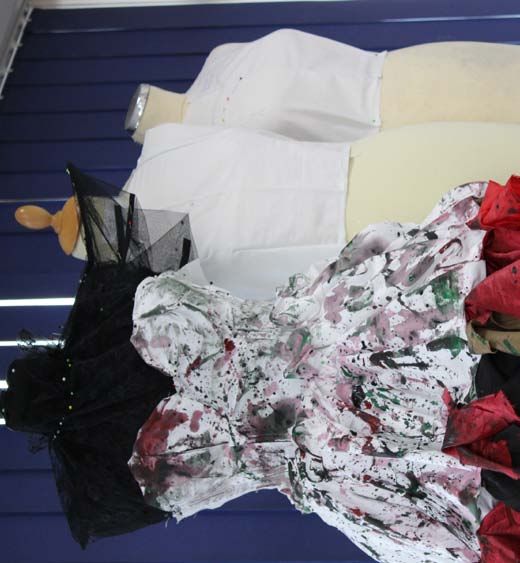
Options at Key Stage 4                                                                     Personalised Curricullum
                                                                                                The core curriculum takes up over half of the timetable. The Options
     Core Curricullum                                                                           process is how you can personalise the subjects that you study in the
                                                                                                remaining lessons. This table shows the subjects offered and it will help
     These are the subjects that all students study:
                                                                                                if you have this information in front of you when completing your
       ENGLISH                     MATHS                         COMBINED                       Options Form.
       LANGUAGE &                                                SCIENCE
       LITERATURE
                                                                                                  LANGUAGES                 P.E.                      TECHNOLOGY
       8 lessons                    8 lessons                     9 lessons                                                                            Design &
                                                                                                  French                    Dance
       (over week                   (over week                    (over week                                                                           Technology
                                                                                                  German                    GCSE P.E.                  Resistant Materials,
       A & B)                       A & B)                        A & B)                                                                               Graphics, Textiles
                                                                                                  Spanish
                                                                                                                                                       Electronics
                                                                                                  Italian
                                                                                                                                                       Food
                                                                                                Students are recommended    Students may only          Students may
       CORE P.E.                   R.E. and                    Students can choose              to choose a language        choose one P.E.            only choose one
                                   PERSONAL                    to follow a GCSE                 unless advised              course                     Technology
                                                                                                otherwise                                              course
                                   DEVELOPMENT                 R.E. full course using
                                                               1 hour of Core P.E.
       3 lessons                   2 lessons                   time, instead of                   ARTS                      BUSINESS,                  HUMANITIES
                                                                                                                            COMPUTING
       (over week                  (over week                  Core R.E. (HPQ)                                              SCIENCE,
                                                                                                  Art                                                  Geography
                                                                                                                            CREATIVE iMEDIA
       A & B)                      A & B)                                                                                                              History
                                                                                                  Drama                     Business GCSE,
                                                                                                  Music                     Computer Science,
                                                                                                                                                      Students are recommended
                                                                                                                            Creative iMedia           to choose a Humanity
     Qualification explanations                                                                                                                       course
     GCSE                General Certificate of Secondary Education; graded from 9-1.

     Higher Project      The Level 2 HPQ is a research project based on a topic chosen
                         by the student and agreed, as appropriately challenging, by the          APPLIED                   SUPPORT                    VOCATIONAL
     Qualification       school. It develops and extends one or more of their study areas.
     (HPQ)               Alternatively, the HPQ can follow an area of personal interest or        LEARNING
                         activity outside the main programme of study.                                                      Support Option             Contstruction
                                                                                                  Business BTEC
     BTEC First Award,   Work-related qualifications that are equivalent to GCSEs.
     Cambridge           Students who complete the course are awarded either a pass,              Health &
     National Award      merit or distinction.                                                                               Only for those
                                                                                                  Social Care                students who have         Spaces are very
                                                                                                                             been advised              limited
     English             A measure of school attainment. The Baccalaureate reflects the           Sport BTEC                 to choose
     Baccalaureate       fact that students have gained GCSE grades, at grade 5 or above,                                    this option
                         in English Language, Maths, Combined Science, a Humanities
                         subject (History or Geography) and a Modern Foreign Language.
                         The Baccalaureate is not an award and has no value in its own right.
                                                                                                     Triple Science or Italian can be chosen as a twilight course
12                                                                                                                                                                               13
What will you study on the                  In addition, students are prepared
                            course?                                     and assessed for the Non-Exam
                                                                        Assessment of Spoken Language,
                            The course consists of the study
                                                                        which is a compulsory requirement
                            of English Language and English
                                                                        of the course of study. The grade will
                            Literature. (Students receive two GCSEs.)
                                                                        appear on all students’ certificates
                            While studying English Language,
                                                                        as a separately reported grade,
                            students will read and comprehend
                                                                        alongside the overall grade issued.
                            a range of fiction and non-fiction
                                                                        In class, students will build their
                            texts to develop their analytical
                                                                        confidence in speaking formally,
                            skills. Students will be encouraged
                                                                        adapt vocabulary for audience
                            to examine the use of language
                                                                        and purpose and use a range
                            and structure and its impact on
                                                                        of techniques to make their
                            the reader. In addition, through
                                                                        presentation more engaging.
                            the study of quality texts, students
                            will be encouraged to develop
                            their individual writing style, with an     How will the course be
                            emphasis on technical accuracy              assessed?
                            and adapting style for audience             GCSE English Language and English
                            and purpose. In English Literature,         Literature are assessed by final
                            set texts are prescribed by the exam        exams at the end of Year 11.
                            board, AQA.                                 English Language is divided into two
                                                                        papers:
                            We study the following:                     • Response to Fiction text (Paper A)
                            • Shakespeare: Much Ado About               and Perspectives and Viewpoints
                            Nothing                                     (Paper B).
                            • 19th Century: Jekyll and Hyde             Each paper consist of unseen
                            • Modern: An Inspector Calls                extracts, which provides students
                            • Anthology Poetry: Power and               an opportunity to demonstrate their
                            Conflict cluster (provided by the           analytical skills. In section B of each
                            exam board)
            A CORE          As a department, we encourage
                                                                        paper, students showcase their
                                                                        writing skills. Each paper is equally
            SUBJECT         students to purchase the texts, as it
                            allows them to annotate as we read
                                                                        weighted.
                            and it allows them an opportunity to        English Literature is also divided into
                            re-read at their convenience.               two papers:
                            Texts are studied in depth, which           • Paper 1 assesses Shakespeare and
                            includes a close examination of             19th Century texts. Students will be

       ENGLISH
                            plot, character, themes, social             given an extract and will write an
                            and historical context. Moreover,              essay response to the question.
                            students are encouraged to                         • Paper 2 is Modern text, Seen
                            develop a personalised                                Poetry and Unseen Poetry.
                            response to the texts.
                            Students will also develop                             For further information,
                            their analytical writing                               please contact please
                            skills to help create an                               contact Mrs E Best

     GCSE Exam board: AQA
                            informed response.                                     ebest@imberhorne.co.uk

14                                                                                                                15
What will you study on the                in addition to work set outside of
                            course?                                   class and in the course textbook. A
                            There are 3 assessment objectives:        scientific calculator is essential for all
                            • Recall and use knowledge of             lessons, we recommend the Casio
                            prescribed content.                       fx-85GTX.
                            • Select and apply mathematical
                            methods in a range of contexts.           How will the course be
                            • Interpret and analyse problems          assessed?
                            and generate strategies to solve          Higher Tier - GCSE Grades 4 – 9
                            them.                                     Foundation Tier - GCSE Grades 1 – 5
                                                                      All the assessment is through
                            Students will be taught mathematics       examination; there is no coursework.
                            in the areas of number, algebra,          GCSE Maths has three examination
                            ratio and proportion, geometry and        papers (each 1 hour 30 minutes) at
                            measures, probability and statistics.     the end of Year 11.
                            There is an emphasis on problem           Paper 1 is non-calculator, and in
                            solving, explaining answers and           papers 2 and 3 calculators are
                            justifying choices.                       allowed.
                            Mathematics is taught in sets. For
                            those making good progress it is          For further information, please
                            possible to be entered for Higher         contact Mr I Andrews or Mr S Kay

            A CORE          Tier. There is a progress test every      iandrews@imberhorne.co.uk or

            SUBJECT         half term and sets are regularly          skay@imberhorne.co.uk
                            reviewed.
                            Lessons are teacher led with a
                            variety of student activities including

         MATHS
                            use of ICT. Students are expected
                            to use specialist websites for
                            homework and revision,

     GCSE Exam board: AQA
16                                                                                                                 17
What will you study on the              The Triple Science route leads
                                                                    to completion of three separate
                            course?
                                                                    Science GCSE’s; Biology, Chemistry
                            Science lessons will involve theory,
                                                                    and Physics. To allow the students
                            discussions, practical work, videos
                                                                    that choose Triple Science to cover
                            and group work. Lessons will be
                                                                    the extra content of three rather
                            similar in approach to the work
                                                                    than two GCSEs, students must
                            done in Science in Key Stage 3. The
                                                                    attend a ‘twilight lesson’ for two
                            work will build on Biology, Chemistry
                                                                    hours, between 3pm and 5pm,
                            and Physics topics studied during
                                                                    once a week. The twilight lesson
                            Key Stage 3. Practical work will
                                                                    is in addition to the nine lessons a
                            concentrate on the skills involved in
                                                                    fortnight for science as part of the
                            the design of experiments, carrying
                                                                    core curriculum.
                            them out, analysing the results and
                            evaluating the work.
                                                                    How will the course be
                            Students are given a revision
                                                                    assessed?
                            guide to help with homework and
                                                                    All Science GCSEs are assessed
                            preparation for exams. In addition,
                                                                    by final exams at the end of Year
                            a paper study guide is issued for
                                                                    11. The Biology exams make up one
                            each topic studied. In both Years 10
                                                                    third of the available GCSE marks
                            and 11 there will be discrete topics
                                                                    as do the Chemistry and Physics
                            on Biology, Chemistry and Physics.
                                                                    exams.
                            All students will be taught either
                                                                    All exams are available at
                            GCSE Combined Science or Triple
                                                                    Foundation Tier for students
                            Science.
                                                                    targeted up to a grade 4 or Higher
                            The ‘GCSE Combined Science’ is a
                                                                    Tier for more challenging exams that
                            double award and therefore gives
                                                                    allow access up to grade 9.
            A CORE          two GCSEs in Science and allows
                            progress to all Science A Level
                                                                    The Foundation Tier tests are more
            SUBJECT         courses.
                                                                    straightforward but have a ‘ceiling’
                                                                    of marks that they can contribute
                            For students identified as attaining
                                                                    towards a student’s total marks.
                            highly from Science during Key
                                                                    At all stages, the tier of entry and
                            Stage 3, there is the opportunity to
                                                                    preparation for assessments will
                            follow the ‘Triple Science’ route.

       SCIENCE
                                                                    be co-ordinated by the Science
                            Many of these students will have
                                                                       teacher.
                            been in the top set Science
                            groups during Year 9,
                            however other committed                           For further information,
                            students have done well                            please contact
                            on the Triple Science                              jhutchinson@
                            course without being in                            imberhorne.co.uk

     GCSE Exam board: AQA
                            a Year 9 top set.

18                                                                                                         19
What will you study on the a 2000 word essay on an ‘Ethical or
course? Philosophical’ issue of their choice.
In addition to this, students have
Students will:
to create a presentation and
• Identify, design and complete an
complete a production log. The
individual project, applying a range
project will be completed by Easter
of organisational skills and strategies
of Year 11.
to meet agreed objectives.
• Obtain, critically select and use
information from a range of sources. How will the course be
assessed?
• Analyse data, apply it relevantly
The HPQ is assessed on four
and demonstrate understanding
assessment objectives and is done
of any appropriate linkages,
so holistically at the end of the
connections and complexities of the
process in Year 11. Projects are
topic.
assessed internally and a sample will
• Select and use a range of skills, be sent for external moderation. This
solve problems, take decisions project is still graded A* - C
critically, creatively and flexibly, to For those wishing to study Full Course
achieve planned outcomes. R.E., there will be an opportunity
to study an Extened Project
• Evaluate outcomes both in
Qualification (EPQ) in Year 13.
relation to agreed objectives, and
own learning and performance.
• Select and use a range of For further information, please
communication skills and media to contact Mrs N Quick, Mr D Clubb or
present evidenced outcomes and Miss L Carey nquick@imberhorne.
conclusions in appropriate format. co.uk or dclubb@imberhorne.co.uk
or lcarey@imberhorne.co.uk
A CORE This is a Level 2 qualification. The
SUBJECT course will build upon the lessons
at Key Stage 3 and will introduce
students to more ethical and
philosophical questions.
Throughout Year 10, students will
cover a variety of issues taken
R.E.
from the GCSE R.E. specification,
to ensure that statutory
requirements are met.
Students will be taught the
necessary skills to create
Higher Project Qualification — HPQ
20 21Why study a language? If you would like to study two
The ability to speak a foreign languages you can do this in the
language is much valued by following ways:
employers and universities. You • You can choose 2 five-hour
will have the opportunity to visit options in your chosen languages.
a country where your chosen • You may study your first language
language is spoken and learning for 5 hours per fortnight during the
another language is believed normal timetabled day. You will also
to help improve memory and choose Italian GCSE as a twilight
concentration. (after school) option for 4 hours per
fortnight. The twilight option will run
after school one day per week for 2
What will you study on the hours.
course?
You will continue to develop the
How will the course be
skills of listening, speaking, reading
and writing. In addition you will
assessed?
be prepared to deal with real life You will be entered for final
situations abroad, such as going examinations in Listening, Speaking,
shopping and what to say if you are Reading and Writing at either
ill, as well as further developing the Foundation or the Higher Tier. Each
topic areas studied at Key Stage 3. of the skills is worth 25% of the total
Vocabulary and grammar learning grade.
will play an important part in all Key
Stage 4 language courses, and in For further information, please
order to achieve the highest grades contact Ms C Garnsey or Mrs L
you will be expected to manipulate Hutcheson cgarnsey@imberhorne.
co.uk or lhutcheson@imberhorne.
OPTION
the language confidently and
accurately. co.uk
Students who currently
study 2 languages:
If you wish to continue to study one
LANGUAGES
language at KS4 :
You may choose to study
either your first Lanuage
(French, German or Hola
French/German/Spanish/Italian
Spanish) or Italian.
Bonjour Hallo
GCSE Exam board: AQA Ciao
22 23Why study Art? ● consider and develop original
If you enjoy developing your visual ideas from initiation to realisation.
skills, being creative, experimenting ● analyse critically their own work
with different approaches to making and the work of others.
Art, visiting galleries, museums, ● express individual thoughts and
workshops and studios; you are choices confidently.
enthusiastic and imaginative, then ● take risks, experiment and learn
our GCSE Art and Design is the ideal from mistakes.
subject for you.
This course provides students with How will the course be
opportunities to explore their
assessed?
interests in art and design in ways
The Art and Design course is
that are stimulating, personally
assessed in two components:
relevant and developmental in
• Unit 1: 60% Personal Portfolio -
nature. Students develop their
internally set and marked; evidence
skills and have the opportunity to
of working in at least two disciplines
explore and respond to our visual
should be presented.
surroundings whilst developing
• Unit 2: 40% Externally Set
their creative and expressive
Assignment - externally set theme,
abilities. They will increase their
internally marked.
understanding of the place of art
and design in history and in today’s
Both units are marked using four
society.
assessment objectives. These
This course is essential for those
can be summed up as: Develop,
students who wish to progress to
Review/Experiment, Record and
A Level in Art at Sixth Form. These
Present.
courses can lead on to university
OPTION degrees and a wide range of
careers in the creative industries.
For further information, please
contact Mrs R McElvenny
What will you study rmcelvenny@imberhorne.co.uk
on the course?
ART & DESIGN
Students will learn to:
● apply a creative approach
to problem solving.
GCSE Exam board: Edexcel
24 25Why study Drama? perform an original piece of drama
GCSE Drama is an immensely fun from a given stimulus and will study
course which provides students and perform extracts from a second
with a huge range of transferable scripted play.
key skills which are invaluable in Although most students will be
the world of work and in further assessed as actors in performance,
education opportunities. Students those who have a strong interest
frequently work in groups to create in technical theatre or production
imaginative performance pieces. work are able to be assessed in the
During the creation of performance following areas: lighting, sound and
work, students develop skills in costume. Thorough preparation for
communication, negotiation, the written examination will also be
working to deadlines, problem undertaken during the course which
solving, decision making, creativity will include watching professional
and empathy. The key skills in theatrical productions.
performance are confidence,
projection, self-control, thinking-on- How will the course be
your-feet and awareness. Within assessed?
the written aspects of the course, Devised performance: 40%
transferable skills include analysis, • Students will research and explore
evaluation, research and reflection. a stimulus, work collaboratively and
This course is wonderful for students create their own devised drama.
wishing to pursue a career on the This coursework unit will be assessed
stage or screen but, fundamentally, via their written process and
the course enhances skills that all performance.
students can use in a variety of Performing scripted work: 20%
different ways in their futures outside • Students develop and apply
of drama. theatrical skills in acting or design
by presenting a showcase of two
extracts from a performance text.
What will you study
OPTION
Written Examination: 40%
on the course? • Students will practically
Students will practically explore a explore a performance text to
scripted play (Blood Brothers) and demonstrate their knowledge and
gain a deep understanding of the understanding of drama and will
play’s characters, plot, themes and answer questions on this text. They
design elements. In groups, they will will also analyse and evaluate a
DRAMA
perform extracts of this play and live theatre performance and it is
complete written responses. Through an expectation on the course that
studying this text, students will students will see at least two
also gain a good knowledge professional productions.
of theatrical terminology,
stage-craft techniques For further information,
and designing for theatre. please contact
Students will also work Mr J Watson
GCSE Exam board: AQA
jwatson@imberhorne.co.uk
in groups to devise and
26 27Why study Music? A wide variety of music genres
The GCSE Music course provides are studied through four study
exciting opportunities to develop areas. These are Musical Forms and
and extend the knowledge, Devices, Music for Ensemble, Film
understanding and skills gained Music and Popular Music.
at Key Stage 3. It gives students The composition and performance
the opportunity to make music, aspects of the course allow the
both individually and in groups, to flexibility to concentrate on the
develop a life-long interest in music genres of music which interest
that can progress to further study. students most.
Many universities and employers
regard music as a highly valued How will the course be
GCSE. The course is challenging yet assessed?
extremely rewarding.
The Music course is assessed in three
The vital pre-requisites for the course
components:
are a love of music and a willingness
Performance: (30%) solo and
to explore a variety of musical styles.
ensemble performance submitted in
Students need to play an instrument
advance.
or sing to a good standard
Composition: (30%) two
(minimum grade 3). Students who
compositions submitted in advance
do not meet these criteria should
Listening and Appraising: (40%)
discuss the course suitability with Mr
a listening exam: students are
Davis during the options process.
expected to answer questions on
Students are expected to have
musical excerpts both familiar and
independent instrumental or vocal
unfamiliar.
lessons throughout the two years
of study where possible. There is an
OPTION
For further information, please
expectation to participate in the
contact Mr N Davis ndavis@
extra-curricular opportunities within
imberhorne.co.uk
the department.
What will you study
MUSIC
on the course?
The GCSE course has three
elements: listening and
appraising, performing
and composing.
GCSE Exam board: EDUQAS
28 29Why study Geography? How will the course be
Geography is not only up-to-date assessed?
and relevant, it is one of the most The final exams at the end of Year
exciting, adventurous and valuable 11 will consist of 3 papers:
subjects to study today.
So many of the world’s current
• Paper 1: Global Geography Issues
problems boil down to geography,
Section A: Hazardous Earth
and need the geographers of the
Section B: Development dynamics
future to help us understand them.
Section C: Challenges of an
Global warming, sustainable food
urbanising world 1hr 30mins
production, natural disasters such
as earthquakes and tsunamis, the
• Paper 2: UK Geographical
spread of disease, the reasons for
Section A: The UK’s evolving physical
migration and the future of energy
landscape, including a general
resources are just some of the
section, coats, rivers and UK Issues-
great challenges facing the next
Flooding
generation of geographers.
Section B: The UK’s evolving human
landscape
What will you study Section C1: Fieldwork in a physical
on the course? evironment - Coasts
In Geography, you will acquire a Sections C2: Fieldwork in a human
variety of skills throughout the course environment - Urban
including literacy, numeracy and 1hr 30mins
ICT, graphical, cartographic and
photographic skills. • Paper 3: People and Environment
Fieldwork forms an integral part of Issues - Making Geographical
OPTION
the course where you will spend Decisions
2 days out of school completing DME: Sections A (biosphere),
human and physical fieldwork at the B (forests), C (energy) and D
end of Year 10. (decision)
Students are encouraged to 1hr 30mins
purchase the revision guide, exam
GEOGRAPHY
question booklet and mark scheme For further information, please
which will aid their learning contact Mr P Quigley pquigley@
throughout the course. imberhorne.co.uk
GCSE Exam board: Edexcel B
30 31Why study History? In Year11 you will study:
History is a highly valued subject • The American West 1835-95
and is seen as a useful qualification
for anyone considering a career • Early Elizabethan England 1558-88
that involves making decisions, such
as law, personnel management,
How will the course be
politics, social work, journalism or
the civil service. However, it can assessed?
and has led to students acquiring This course will be examined by
employment in fields as broad as the three exam papers and these will be
computer industry and performing sat at the end of Year 11.
arts. Paper 1— Medicine in Britain
The GCSE course is also good 1250-present day & the British sector
preparation for A Levels in of the Western Front, 1914-1918:
Government and Politics, Injuries, treatments & the trenches
Economics, Psychology and of (30%)
course History. It will train you to think, Paper 2— Early Elizabethan England
analyse, research, debate, discuss, 1558-1588 & American West c1835-
provide explanations and improves 1895 (40%)
literacy. Choose History if you enjoy Paper 3—Weimar & Nazi Germany,
finding out about events and people 1918-1939 (30%)
from the past and how the past
shapes the world you live in. For further information, please
contact Mr N Booth nbooth@
imberhorne.co.uk
What will you study
on the course?
There are three main periods
studied.
• The Medieval period (500-1500)
OPTION
• Early Modern (1450-1750)
• Modern History (1700-present day).
These cover local, British, European
and World history.
In Year10 you will study:
HISTORY
• Medicine in Britain 1250-present
day & the British sector of the
Western Front, 1914-1918
• Weimar & Nazi Germany
1918-39
GCSE Exam board: Edexcel
32 33This additional provision for R.E., which leads to a full GCSE, sits in the same
block as Core P.E. Students will have 2 lessons of Core P.E. per fortnight
instead of 3. Choosing to do full course R.E. does not affect other options.
Why study R.E.? You will develop analytical
Choose R.E. full course if you are and critical thinking skills, the
interested in moral and ethical ability to work with abstract ideas,
debates and if you enjoy thinking, leadership and research skills.
analysing and debating issues. The All these will help prepare students
course encourages reflection upon for further study.
common human experiences that Although the syllabus stresses the
raise questions about the meaning importance of ‘Religious Beliefs and
and purpose of life. It develops Attitudes’, the students are also
reasoned response to these expected to formulate and express
questions. This course should prove coherently their own opinions too.
useful to students who hope to go The study of religions: beliefs,
on to study Philosophy, Sociology, teachings and practices of two
Psychology and/or Politics at A religions (Christianity and Buddhism).
Level. R.E. is a useful qualification We arrange two trips to cover much
for anyone who works directly with of the syllabus requirement in this
other people. It is particularly useful area.
for careers in areas such as social Thematic Studies:
work, medicine, personnel work, law • Religion and life
and teaching. • Religion, crime and punishment
• Religion, human rights and
social justice
What will you study • Religion, peace and conflict
on the course?
The R.E. GCSE course will cover two
OPTION religions and four philosophical and
ethical themes. You are challenged
How will the course be
assessed?
with questions about belief, values, The final assessment, at the end
meaning, purpose and truth, of Year 11 consists of two written
enabling them to develop their exam papers each lasting 1 hour 45
R.E.
own values and attitudes towards minutes.
religious issues. Students will also
gain an appreciation of how For further information, please
religion, philosophy and contact please contact
ethics form the basis of Mrs N Quick nquick@
GCSE FULL COURSE
our culture. imberhorne.co.uk
GCSE Exam board: AQA
34 35Why study P.E.? a sport and students are expected
This is an ideal course for those to be able to demonstrate practical
students with a passion and talent skills in controlled practice and
for sport and provides a good match situations.
grounding for further studies
and Sports Leadership courses in How will the course be
the Sixth Form. It is essential that assessed?
students realise that lessons are
• 60% written examination at the
mostly class based and not all
end of Year 11.
practical. To do well in GCSE, P.E.
students are advised to play sport
There are two exam papers based
outside of school for local clubs and
on the theory components studied
participate in extra-curricular sports
in Years 10 and 11.
clubs.
• 30% of the course is school based
What will you study practical assessment of skills and
on the course? knowledge in 3 areas of sport.
The course combines the theory
• 10% is written coursework.
and practical elements of physical
This is based on the observation
education. The theory component
and analysis of yourself or another
deals with human anatomy and
performer.
physiology, the effects of exercise,
fitness and training on the body,
All GCSE P.E. students are
biomechanics, sports psychology
encouraged to obtain the GCSE
and it also deals with sport in a
P.E. options package which consists
social and historical context. The
of a white polo top, work booklets,
application of these components to
a revision guide and a textbook
physical education and sport is an
to be kept at home to help with
OPTION
important aspect of the course.
homework and revision. The cost
Students will study a number of
for this is approximately £40 and it
physical activities during core P.E.
ensures students are prepared for
lessons and need to be aware
that there is a limited number of the two year course.
sports to choose from in which to
be assessed. Sports that cannot For further information, please
P.E.
be catered for on site can still be contact Mrs E Wood ewood@
assessed such as swimming imberhorne.co.uk
and skiing. The practical
elements consist of being
the performer/player of
GCSE Exam board: AQA
36 37Why study Dance? of them as a solo assessment. These
Students will develop movement will require students to consider
as a medium of expression and and refine their physical and
communication in the performance, expressive dance skills in order to
creation and appreciation of achieve the best performance they
dance. Students who opt for GCSE can and to develop mental skills
Dance need to demonstrate the which will aid them in the rehearsal
potential to involve themselves in the phases of lessons. The other two
study and application of dance. The will be used to create a duet or
course will require commitment and trio which will act as the third form
energy but in return, the rewards of practical performance and
will be exciting. Confidence as both technique assessment. Finally, as
a choreographer and performer part of the choreographic stage
will increase as skills develop but it of the course, students will learn a
is important that all students show variety of techniques for building
a commitment to improving their and structuring choreography
own dance technique through in response to a given stimulus.
rehearsals. GCSE Dancers must also Students will then draw from these to
show a willingness to contribute to create their own choreography.
group choreography with a variety
of peers and be willing to share How will the course be
ideas and take on feedback from assessed?
both peers and staff. Students will be expected to write
critically about dance and perform
What will you study different dance works set by the
exam board as well as those they
on the course? have created themselves. There
Both the theory and practical is one written exam, students are
aspects of dance are studied. predominantly assessed on their
Students will develop; a deeper practical ability. The practical
OPTION
understanding of what it is like assessment pieces will have strong
to be a dancer, the different links to professional dance works.
choreographic devices and
movement components used in Examined components:
dance and how to effectively • Component 1: 60%
create expressive choreography. Solo performance x 2
Students will study 6 different (1 min each)
DANCE
professionally choreographed • Trio performance (3.5 mins)
• Choreography
dances and be required to use their
• Solo (2.5 mins) or Group (3.5 mins)
knowledge of them to create
Component 2: 40%
both practical work and be • Dance Appreciation –
able to critically analyse Written exam (1hr 30 mins)
them in the written exam.
As part of the performance For further information,
element, students will Mrs S Pollard spollard@
GCSE Exam board: AQA
have to learn four set imberhorne.co.uk
dances and perform two
38 39Why study Computer What will you study
Science? on the course?
This exciting GCSE gives you an The course will help you learn
excellent opportunity to investigate about critical thinking, analysis and
how computers work, how they are problem solving. These skills can
used and to develop computer be transferred to other subjects and
programming and problem- are used in many areas of day-to-
solving skills. You will build on the day life.
knowledge and understanding The Computer Systems and
gained at Key Stage 3 to learn and Programming will teach you the
think about real world applications. theory about a wide range of issues
This is a challenging course with such as hardware and software,
a high level of technical and the representation of data in a
theoretical content. There is also computer system, databases,
an element of mathematics – both computer networking and
arithmetic and logic. Students programming. In the Programming
considering this course may also Project you will design, code and
wish to consider Creative iMedia test a solution to three tasks using
as an option. It is advised that you the Python programming language.
should discuss this with your Key
Stage 3 Computing teacher to How will the course be
determine the best option for you.
If you take a GCSE in Computer
assessed?
The final exams at the end of
Science and then go on to study the
Year 11 consist of:
subject at A Level or university you
• Computer Systems - Exam 50%
will have an advantage over other
• Computational thinking,
students who are only starting the
OPTION
algorithms and programming -
subject at these higher levels. The
Exam 50%
increasing importance of I.T. means
that there is a growing demand for
For further information, please
people who are qualified to work in
contact Mr D Muchamore
industry.
dmuchmore@imberhorne.co.uk
COMPUTER SCIENCE
GCSE Exam board: OCR
40 41Why study Business Studies? • Theme 2 - Building a Business
This course helps prepare students This theme builds on theme 1
for further study or entry into the and examines how a business
business world, particularly for roles develops beyond the start-up
where they will be expected to phase. It focuses on the key business
use communication and I.T. skills, concepts, issues and decisions used
liaise with customers and carry out to grow a business, with emphasis
customer facing roles. Students on aspects of marketing, operations,
will be encouraged to acquire a finance and human resources.
range of practical skills, including Theme 2 also considers the impact
decision-making, problem- of the wider world on the decisions
solving, communication and the a business makes as it grows. It is
quantification and management divided into five topics; Growing
of information. Students taking this the business, Making marketing
course would be able to extend decisions, Making operational
their studies in the Sixth Form by decisions, Making financial decisions
following the popular and successful and Making human resources
Business Studies or Economics decisions.
courses. Theme 1 will be taught in Year 10
whilst theme 2 will be completed
during Year 11.
What will you study
on the course? How will the course be
There are two themes: assessed?
• Theme 1 - Introduction to Small
Both themes are assessed by final
Business
exams at the end of Year 11.
This theme concentrates on the
The paper will consist of
key issues and skills involved in
calculations, multiple-choice,
OPTION enterprise. It provides students
with a framework to consider
short-answer and extended-writing
questions. Questions will also be
the marketing, financial, human
based on business contexts given
and operational issues involved
in the paper. Themes 1 and 2 are
in starting and running a small
equally weighted accounting for
business. It is divided into five topics;
50% each of the GCSE.
BUSINESS STUDIES
Enterprise and entrepreneurship,
Spotting a business opportunity,
For further information, please
Putting a business idea in
contact Mr C Mumby
practice, Making the
cmumby@imberhorne.
business effective and
co.uk
Understanding external
influences on business.
GCSE Exam board: Edexcel
42 43Why study Creative imedia? Students will understand the
Many students develop an early importance of reviewing and making
interest in designing for the screen improvements to the final product
by creating digital images. The aim before it is submitted to the client.
of this course is to take a closer look There is an early emphasis on
at a range of digital media and to understanding the key aspects of the
develop a critical understanding of Creative iMedia course such as the
the design process when creating pre-production process through to
projects for different audiences. the evaluation of a product. Whilst
This course is an ideal grounding for the tasks are structured, students
those wishing to develop practical will need to develop research
design skills while gaining an insight skills and show creative initiative
into the role it plays in today’s digital when carrying out the assessments.
media industry. They will need to be able to work
independently and meet deadlines.
What will you study How will the course be
on the course? assessed?
Students will learn about the pre- The course consists of four units;
production process by planning a Creating digital graphics, Storytelling
creative digital media product to suit with a comic strip, Digital video
a client brief. Students will conduct sequence and an external exam.
some independent research to write The first three units are made up of
a detailed report on where and how controlled assessments, all internally
digital graphics are displayed in print assessed in school and then
and on the screen. This course will moderated by an external examiner.
look at the difference between raster The fourth unit is a 1 hour 15-minute
and vector images, file types, image external exam. Students are given
compression, version control and two attempts at the exam unit,
copyright implications. Further works
OPTION
with the first attempt being sat in
include storyboarding ideas, using the summer of Year 10. This gives
specialist hardware and software students the chance to reach their
to bring an idea to life. Students will target grade twice. Each unit is
build their knowledge on how to worth 25%.
manage a professional project from
start to finish. This course will help For further information, please
Creative iMEDIA
students develop valuable skills such contact Mr M Aucock maucock@
as working towards deadlines from imberhorne.co.uk
pre-production to the creation
stage, building upon practical
software skills (Photoshop,
Dreamweaver and Premier).
GCSE Exam board: OCR
Cambridge National
44 45Why study Graphics? •How to plan, sketch and draw
Do you enjoy: Thinking creatively? ideas using traditional technical
Problem solving? Designing drawing and illustration techniques.
products of the future? Promoting, • How to present information,
advertising, informing, educating images, lettering and apply colour
others on important issues? in a variety of ways including CAD
Designing 2D & 3D products using generated design. This could
computer aided design and include scanning hand generated
computer aided manufacture? artwork making it commercially
Developing and testing ideas viable.
through modelling-making? CAD programs used include
Graphics will build on skills learnt at Photoshop and Techsoft 2D Design.
Key Stage 3 and has been designed (CAD-CAM)
to encourage students to design CAM includes using machines
and make products with creativity such as a plotter cutter and laser
and originality, using a range of cutter to manufacture precise
artistic, graphic and modelling and accurately made prototypes
techniques to generate quality 2D reflecting industrial manufacturing
graphic designs and apply them to methods. Great fun!
a 3D product or prototype.
How will the course be
assessed?
What will you study
In Year 10 students will undertake a
on the course? series of modules or mini projects.
Students will study Core Technology Each module or project will be
which revisits knowledge and assessed to monitor student
experience gained during Key progress.
Stage 3 in all areas of Technology At the end of Year 11, students will
except Food. However, most of the be examined: 50% written paper,
OPTION
course will focus on the students’ 50% coursework
specialism—Graphics, where Students must undertake a
building skills, designing and making “substantial design and make task”
products will take place. based on contexts supplied by
The Graphics course content will the exam board. This coursework
include: is largely completed in lesson time
•How to work to a brief and design and assessed internally.
DESIGN & TECHNOLOGY
specifications, and work with a
client or target audience For further information,
by taking their needs and please contact Miss
wants into consideration S Purcell spurcell@
WITH GRAPHIC PRODUCTS
during the design and imberhorne.co.uk
making process.
GCSE Exam board: AQA
46 47Why study Resistant covers theory relevant to the world
of design in general, including social
Materials?
and environmental considerations,
Resistant Materials covers a wide
manufacturing systems, study
range of activities based on
of design styles and designers,
designing and making products in
mechanical and electronic
materials such as wood, metal and
systems, properties of materials and
plastics.
communication skills.
It is a subject which involves
Students will also be taught to
creative thinking and application of
analyse products, generate and
knowledge to practical situations.
develop design ideas and present
Whether you are interested in a
design solutions.
practical career, in product design,
engineering, manufacturing, interior
design or simply enjoy designing How will the course be
and making things then this course assessed?
has a lot to offer. Students will sit a final paper exam
at the end of Year 11. This is worth
What will you study on the worth 50% of the final award.
course?
For a large part of Year 11, students
Resistant Materials builds on
must undertake a “substantial
experience gained in Design and
design and make task” based on
Technology at Key Stage 3.
contexts supplied by the exam
Students will develop their
board.
knowledge and understanding of
This is largely completed in lesson
a wide range of specialist materials
time, worked on as homework and is
and processes used in Design &
assessed by their teacher.
Technology and manufacturing to
Students are encouraged to utilise a
OPTION
prepare them for the exam and
range of materials and techniques
coursework.
to demonstrate their skills and
They will learn about wood, metal,
knowledge fully in the completion of
plastic and modern and smart
this task.
materials and design in a variety
of contexts including industrial
For further information, please
and commercial practice, the
DESIGN & TECHNOLOGY
contact Mr R Jeffs rjeffs@
importance of quality checks
imberhorne.co.uk
and health & safety issues.
The subject content also
WITH RESISTANT MATERIALS
GCSE Exam board: AQA
48 49Why study Textiles? particular purpose. This will include
If you have an interest in the world the study of revolutionary new
of fashion and textiles design, then technical and smart fabrics designed
studying Textiles could be for you. for a range of practical uses.
Textiles Technology enables creative Students will learn how to do more
and practical students to build complex decorative techniques.
on their Key Stage 3 knowledge, e.g batik, tie dye, silk painting and
allowing them to achieve a sublimation transfer printing, enabling
GCSE Technology with a Textiles the addition of creative designs to
specialism. their garments. They will use ICT to
The course involves designing and research and study new ideas and
making products and garments to develop pattern designs for fabric.
inspired by studies of fashion and the Bulk manufacturing, fabric recycling
world of creative textiles, drawing will also be investigated.
on a range of source material from There will be a strong emphasis on
history, fashion genres to literature creativity and innovation.
and the natural world. In Year 10, students will study a
number of short projects that are
designed to give students the
What will you study knowledge to answer the written
on the course? paper in Year 11.
Students will study the fashion In Year 11, students focus on their
industry, the world of haute couture, “Substainantial design & make task”.
famous designers, past and present This is a design project which involves
and how fashion is designed and individual research, practical work
created for the High Street. They and development of students’ own
will learn to present work effectively ideas.
with the use of mood boards and How will the course be
how to create fashion drawings to
communicate ideas. assessed?
Students will make prototypes, The GCSE exam is made up of 50%
OPTION garments and products using
commercial patterns and then
coursework, with the written exam
making up the remaining 50%. In
learn the basic practical skills that Year 10, the work will be assessed
will help construct their design, e.g. against the GCSE criteria through
using the sewing machine and other both practical and written tasks.
equipment, also learning about the
way fabric is made and how it is used For further information, please
DESIGN & TECHNOLOGY
to make a variety of items. Through contact Mrs J Bonaccorsi
practical work, students will learn jbonaccorsi@imberhorne.co.uk
how fabric has different
WITH TEXTILES
properties and functions and
how to choose fabric for a
GCSE Exam board: AQA
50 51You can also read


