Health 2018 POSTGRADUATE - Allied health Health leadership Nursing and midwifery Nutrition and dietetics Psychology Sport - Times Higher ...
←
→
Page content transcription
If your browser does not render page correctly, please read the page content below

2018 POSTGRADUATE
Health
Cloud Campus    Geelong   Melbourne   Warrnambool

Allied health
Health leadership
Nursing and midwifery
Nutrition and dietetics
Psychology
Sport
Health
at Deakin
Growth sector State-of-the-art facilities
Job prospects look particularly bright for health professionals in Health students and researchers have access to the most advanced
Australia. With ageing populations and public health issues like equipment available in the sports, nutrition, nursing and midwifery,
obesity and chronic illness on the rise, and with government medicine, psychology and allied health fields. Some highlights include:
increasing emphasis on disease prevention as well as treatment,
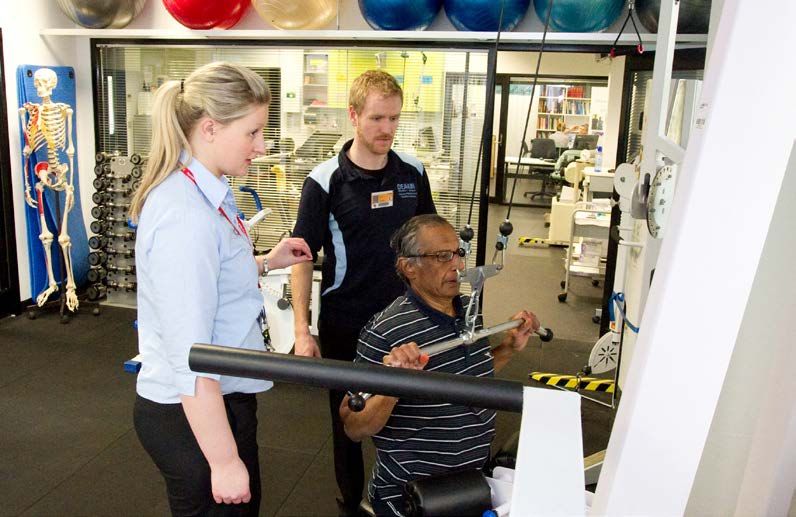
• 3D GAIT Lab – features world-first equipment, including a treadmill
Deakin’s Faculty of Health is one of the employability in the health industry is strong and increasing.
hooked up to a 3D motion capture system.
fastest growing health faculties in Australia. The healthcare and social assistance industries are expected to grow • Clinical Exercise Learning Centre – working alongside accredited
by 20.9 percent by 2019. exercise physiologists, students meet with clients, conduct
Across five schools we inspire students Source: Industry Employment Predictions 2016, Department of Employment assessments and create exercise and lifestyle programs.
• Food sensory labs – facilities include a sample preparation kitchen
to reach their potential, provide personal,
and 17 self-contained booths for computer data collection.
dynamic learning experiences and conduct • Cognitive Neuroscience Unit is a research group that uses cutting‑edge
technologies to explore the relationship between the brain, behaviour
world‑class research. and cognition.
• Elite Sports Precinct – at the Geelong Waurn Ponds Campus, Deakin
has world-class sport facilities to help athletes advance their skills.
Find out more at deakin.edu.au/health.
Join the most satisfied students in Victoria
Students get direct hands-on experience utilising
For seven consecutive years, Deakin has achieved the first‑class facilities in our exercise laboratories.
1 Health at Deakin highest level of overall student satisfaction among Victorian
universities. These great results are from the responses
4 What can I study? to ‘Overall Satisfaction’ in the Australian Graduate Survey,
8 Allied health 2010–2016.
Source: gooduniversities.com.au
14 Health leadership
16 Nursing and midwifery
20 Nutrition and dietetics
24 Psychology
28 Sport
30 Research
33 Contact us
Deakin Hallmarks are awarded as
digital credentials that can be shared
through professional social platforms
such as LinkedIn. They recognise
students’ outstanding achievement,
at course level, of capabilities that Communication Digital Teamwork Critical Problem Self Global
are key to employment success. literacy thinking solving management citizenship
deakin.edu.au/health 1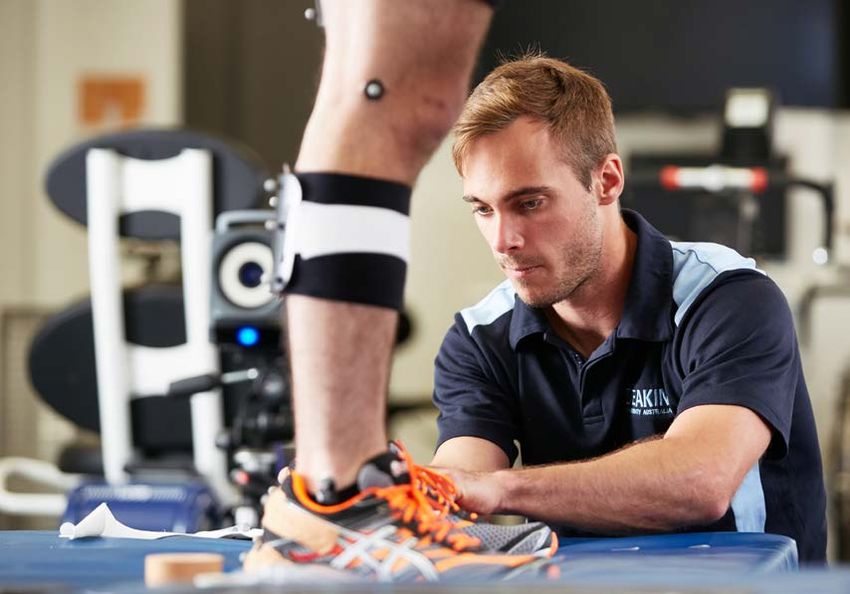
Health ‘Teaching research is about challenging students to
think differently, be open to new ideas and thinking
at Deakin critically and systematically. As a teacher you are
also constantly learning from students as they
bring their own ideas, perspectives and experiences
of research. You are constantly challenged by new
Growing health precinct Industry relations and partnerships
problems and ideas, the complexity of the real world
The medical precinct at the Geelong Waurn Ponds Campus has had a The Faculty of Health has hundreds of successful partnerships of health care and always learning something new.’
significant boost with Epworth HealthCare’s newest private hospital across government departments, hospitals, research institutes,
based within walking distance of the campus. These facilities enhance businesses and community groups. These partnerships have
the educational possibilities for Deakin’s health students by offering a led to some of our proudest achievements. As well as working
Associate Professor Bernice Redley
Centre for Quality and Patient Safety Research
supportive environment for supervised clinical placements. to improve health and health care, they give our students
and researchers the support they need to succeed. Every
School of Nursing and Midwifery
Leading research partnership we have is built on a shared commitment to
The Faculty of Health places strong emphasis on solutions-led improve health and wellbeing, both locally and further afield.
research. Our research programs are supported by one institute, Some of our partners sit on our course advisory boards and
six strategic research centres and five schools, and work closely with offer guest lecturing, giving students direct access to the latest
industry partners and the government to put findings into practice. industry knowledge.
For example, our work in cancer research is helping to forge out
ways to improve much-needed support for cancer survivors and their Indigenous partnerships
carers. For more information on our research in health go to page 30
One of our top priorities at the Faculty of Health is closing the
or visit deakin.edu.au/research.
gap in life expectancy and disadvantage between Aboriginal
and Torres Strait populations and the rest of Australia. Through
an internal partnership with Deakin’s Institute of Koorie
Education, we’re helping to train Aboriginal health workers
across Australia.
‘Deakin’s Faculty of Health is guided by a
strong and vibrant commitment to improving
the health and wellbeing of all people in
Top ranking university
Australia and our surrounding region.’
Deakin is ranked #3 in Australia for graduate employability by the
Professor Brendan Crotty
prestigious Times Higher Education index. Deakin was recently
Executive Dean, Faculty of Health
ranked Victoria’s #1 university under 50 years old by Times Higher
Education (2016 and 2017) and QS World University Rankings (2016).
And as a result of our renowned quality of research and teaching,
all three international university rankings put us in the top 2% of the
world’s universities. Deakin students have access to the most advanced
Data sources: Quacquarelli Symonds (QS); Academic Ranking of World equipment available in the health fields.
Universities, Times Higher Education and QS World University Rankings.
Rural and regional focus
We’re committed to responding to the health and medical needs of
rural and regional communities, particularly in western Victoria. This has
resulted in three regional research centres and a formal strategic alliance
with the Department of Health and Human Services.
Many of our health courses have a rural and regional focus, giving you a
broader perspective on your studies. You can undertake placements in
rural and regional locations to complement knowledge and skills gained
from metropolitan settings.
2 Health deakin.edu.au/health 3
What can I study?
Cloud Campus
Melbourne Burwood Campus
C
B
Gain credit towards your degree
Geelong Waterfront Campus WF
Geelong Waurn Ponds Campus WP
Warrnambool Campus WB With Credit for Prior Learning (CPL), your previous study or work
Institute of Koorie Education IKE
experience may make you eligible for credit towards your Deakin degree,
reducing the number of units you need to study and allowing you to
complete your course earlier and often more affordably. Find out more
at deakin.edu.au/courses/credit-for-prior-learning.
Course duration Trimester intake 2018 domestic 2017 domestic 2018 international
Campus IELTS~
in years# options^ full fee (8 CP)* indicative CSP fee* fee*
Coursework degrees
Allied health
Graduate Certificate of Agricultural Health and Medicine √ | H522 ≠
C 0.5 T1, T2 $12,856 ø – – –
ADMISSION REQUIREMENTS: A bachelor’s degree in any discipline; or at least three years of relevant work experience (or part-time equivalent).
Master of Child Play Therapy √ | H705
C † 2 T1, T2 $25,712 – – –
ADMISSION REQUIREMENTS: A bachelor’s degree in any discipline and three years of relevant work experience with children and families; or successful completion of the
Graduate Diploma of Therapeutic Child Play.
Graduate Diploma of Therapeutic Child Play √ | H605
C 1 T1, T2 $25,712 – – –
ADMISSION REQUIREMENTS: A bachelor’s degree in any discipline or a graduate certificate in any discipline; or at least three years of relevant work experience (or part-time equivalent).
Graduate Certificate of Therapeutic Child Play √ | H505
C 0.5 T1 $12,856 – – –
ADMISSION REQUIREMENTS: A bachelor’s degree in any discipline; or at least three years of relevant work experience (or part-time equivalent).
Graduate Certificate of Disability and Inclusion | H508
ADMISSION REQUIREMENTS: A bachelor’s degree in any discipline; or at least three years of relevant work experience (or part-time equivalent); or Certificate IV in Disability with C 1 PT T1, T2 ƒ $12,856 ø – $14,336 6.5/6
at least three years’ work experience in the disability sector.
Master of Health Promotion | H759
C B 2 T1 $24,384 – $34,000 6.5/6
ADMISSION REQUIREMENTS: A bachelor’s degree or other qualification at a higher AQF level in any discipline; or other evidence of academic capability judged to be equivalent.
Graduate Diploma of Health Promotion | H615
C B 1 T1 $24,384 – $30,136 6.5/6
ADMISSION REQUIREMENTS: A bachelor’s degree or a graduate certificate in any discipline; or at least three years of relevant work experience (or part-time equivalent).
Graduate Certificate of Health Promotion√ | H515
C B 1 PT T1 $12,856 – – –
ADMISSION REQUIREMENTS: A bachelor’s degree in any discipline; or at least three years of relevant work experience (or part-time equivalent).
Master of Optometry √ | H710
ADMISSION REQUIREMENTS: Bachelor of Vision Science, or equivalent, with an emphasis on an adequate coverage of vision sciences and students demonstrating the required WP 1.5§ T1 $40,704 – – –
level of clinical skills.
Master of Public Health | H757
C B 2 T1, T2 $24,384 – $34,000 6.5/6
ADMISSION REQUIREMENTS: A bachelor’s degree or other qualification at a higher AQF level in any discipline; or other evidence of academic capability judged to be equivalent.
Master of Social Work √ | H703
C † 2 T1 $21,632 $6371 – –
ADMISSION REQUIREMENTS: A bachelor’s degree in a related discipline, with two units in human behaviour and two units in study of society. This course is also offered through
the Institute of Koorie Education, which uses community-based delivery.
Health leadership
Master of Business Administration (Healthcare Management) | M703
ADMISSION REQUIREMENTS: A bachelor’s degree in any discipline and three years relevant work experience; or graduate certificate in a related discipline and five years relevant B 2 T1, T2, T3 $33,720 – $38,800 6.5/6
work experience, or graduate diploma equivalent (professional pathways).
Master of Health Economics | H704
C B 2 T1, T2 $23,568 – $29,624 6.5/6
ADMISSION REQUIREMENTS: A bachelor’s degree or other qualification at a higher AQF level in any discipline; or other evidence of academic capability judged to be equivalent.
Master of Health and Human Services Management | H756
C B 2 T1, T2, T3 $24,384 – $34,000 6.5/6
ADMISSION REQUIREMENTS: A bachelor’s degree or other qualification at a higher AQF level in any discipline; or other evidence of academic capability judged to be equivalent.
Nursing and midwifery
Graduate Certificate of Diabetes Education | H520
C 1 PT T1 $11,784 – $13,992 6.5/6
ADMISSION REQUIREMENTS: A bachelor’s degree in a related discipline.
Master of Nursing Practice | H771
ADMISSION REQUIREMENTS: A Bachelor of Nursing or equivalent, and registration with AHPRA, with no conditions or restrictions. Applicants must ideally have 12 months of C 1.5 T1, T2 $22,240 $6398 $26,912 6.5/6
recent clinical experience.
Master of Nursing Practice (Nurse Practitioner) √ | H773
ADMISSION REQUIREMENTS: A Bachelor of Nursing or equivalent, and registration with the AHPRA, with no conditions or restrictions, and five years (FTE) experience as a C 2 T1, T2 $22,240 – – –
registered nurse in a specialty area, and one year at an advanced practice level in the relevant specialty area of practice.
Graduate Diploma of Midwifery √ | H676
C B 1.5 T1 $23,568 $6349 – –
ADMISSION REQUIREMENTS: A Bachelor of Nursing or equivalent and applicants must be a registered nurse registered with AHPRA.
4 Health deakin.edu.au/health 5
What can I study?
Cloud Campus C
Melbourne Burwood Campus B
Geelong Waterfront Campus WF
Geelong Waurn Ponds Campus WP
Warrnambool Campus WB
Institute of Koorie Education IKE
Course duration Trimester intake 2018 domestic 2017 domestic 2018 international
Campus IELTS~
in years# options^ full fee (8 CP)* indicative CSP fee* fee*
Coursework degrees
Nutrition and dietetics
Master of Dietetics | H718
ADMISSION REQUIREMENTS: Applicants must hold a three-year bachelor’s degree or equivalent in a relevant cognate area (for example: science, health sciences, nutrition, food
science, exercise science, biomedical science, allied health or nursing) within the last 10 years. Students who have completed an undergraduate degree in a relevant cognate area B 1.5 S14 $32,960 – $39,328 7/7
must demonstrate learning in human biosciences and food and nutrition science as follows: biochemistry content with chemistry (0.25 EFTSL) followed by biochemistry (0.25 EFTSL);
human physiology content with human biology (0.25 EFTSL) followed by human physiology (0.25 EFTSL). Applicants are also required to have completed at least four units
(equivalent to 4 Deakin credit points) of nutrition and food science study, covering content relating to principles of nutrition, lifespan nutrition diet and disease and food science.
Master of Human Nutrition | H714
ADMISSION REQUIREMENTS: A bachelor’s degree, major or other qualification at a higher AQF level in a related discipline; or bachelor’s degree in any discipline plus three years C 1.5 T1, T2, T3 $29,992 – $32,296 6.5/6
relevant work experience; or other evidence of academic capability judged to be equivalent.
Graduate Diploma of Human Nutrition | H616
C 1 T1, T2, T3 $29,992 – $32,296 6.5/6
ADMISSION REQUIREMENTS: A bachelor’s degree or a graduate certificate in any discipline; or at least three years of relevant work experience (or part-time equivalent).
Graduate Certificate of Human Nutrition | H511
C 1 PT T1, T2, T3 $14,996 – $16,148 6.5/6
ADMISSION REQUIREMENTS: A bachelor’s degree in any discipline; or at least three years of relevant work experience (or part-time equivalent).
Master of Nutrition and Population Health | H748
B 2 T1 $29,992 – $32,296 6.5/6
ADMISSION REQUIREMENTS: A bachelor’s degree or other qualification at a higher AQF level in any discipline; or other evidence of academic capability judged to be equivalent.
Graduate Certificate of Public Health Nutrition | H517
C 1 PT T1, T22 $12,856 – $13,992 6.5/6
ADMISSION REQUIREMENTS: A bachelor’s degree or a graduate certificate in same discipline; or at least three years of relevant work and/or life experience.
Psychology
Graduate Diploma of Psychology (Pre-Practice)√ | H664
ADMISSION REQUIREMENTS: A bachelor’s degree from a discipline other than psychology and two prerequisite first year units HPS111 and HPS121 (or equivalent from another C B WP 2 T1, T2, T3 $25,712 – – –
professionally accredited psychology program).
Graduate Diploma of Psychology | H650
ADMISSION REQUIREMENTS: A bachelor’s degree with an approved three-year major sequence in psychology with a minimum of a mid-credit (65%) in Research Methods B (or an B WF 1 T1 $25,130 – $30,672 6.5/6
equivalent unit) and a minimum WAM of 65 in all level-2 and level-3 psychology core units (or their equivalents).
Master of Professional Psychology √ | H744
ADMISSION REQUIREMENTS: A four-year tertiary program with a psychology major from an APAC accredited program completed in the last 10 years with a minimum of a Honours B 1 T1 $30,208 – – –
2A average or equivalent, and eligibility for registration as a provisional psychologist with the Psychology Board of Australia.
Master of Psychology (Clinical) | H750
ADMISSION REQUIREMENTS: A four-year tertiary program with a psychology major from an APAC accredited program completed in the last 10 years with a minimum of a Honours B WF 2 T1 $30,208 $6349 $32,296 7/7
2A average or equivalent, and eligibility for registration as a provisional psychologist with the Psychology Board of Australia. Applicants with international qualifications must have
these assessed as equivalent by the Australian Psychological Society.
Master of Psychology (Organisational) | H752
ADMISSION REQUIREMENTS: A four-year tertiary program with a psychology major from an APAC accredited program completed in the last 10 years with a minimum of a Honours B 2 T1 $32,000 – $32,296 7/7
2A average or equivalent, and eligibility for registration as a provisional psychologist with the Psychology Board of Australia. Applicants with international qualifications must have
these assessed as equivalent by the Australian Psychological Society.
Sport
Master of Applied Sport Science√ | H707
C 1–1.5 T1, T2, T3 $25,712 – – –
ADMISSION REQUIREMENTS: A bachelor’s degree in exercise and sport science or equivalent.
Master of Business (Sport Management) | M748
ADMISSION REQUIREMENTS: A bachelor’s degree or other qualification at a higher AQF level in any discipline; or successful completion of MQP1 (or MQP Extended); or other C B 1.5–2 T1, T2, T33 $27,800 – $35,600 6.5/6
evidence of academic capability judged to be equivalent.
Graduate Certificate of Business (Sport Management) | M518
ADMISSION REQUIREMENTS: A bachelor’s degree in any discipline; or at least three years of relevant work experience~ (or part-time equivalent). C 1 PT T1, T2 $13,900 – $17,800 6.5/6
~ Relevant professional experience that demonstrates comprehensive knowledge of sport management or related fields.
Master of Clinical Exercise Physiology | H743
ADMISSION REQUIREMENTS: A bachelor’s degree in relevant area with eligibility for exercise scientist accreditation from Exercise and Sports Science Australia and completion of B 1.5 T1 $26,784 $9050 $31,136 6.5/6
140 hours of exercise science service delivery for apparently healthy clientele.
Information correct at July 2017. Deakin University reserves the right to alter, amend or guide only and are subject to change. Please visit deakin.edu.au/fees for the most ≠ Some attendance is required at the National Centre for Farmer Health, Deakin centre, ø Fee depicts 4 credit points.
delete course offerings and other information listed. up-to-date information. International fees are based on 8 credit points in one year of affiliated industry or other physical site. √ This course is not available to international students.
full-time study, unless otherwise indicated. † This course is offered via the Cloud Campus; however, there are significant fieldwork + This course includes a five-day residential unit.
* A unit or subject is usually 1 credit point (CP). Fees quoted are based on an annual
^ Most courses start in Trimester 1 (March to June). This column indicates whether placement and campus requirements. ƒ Trimester 2 is not available to international students.
full-time study load (8 CP/1 FT), regardless of your unit selection. If the course
you have the option of commencing your studies in Trimester 2 (July to October) or ◊ Clinician is defined as a registered member of one of the Australian Health 1 For international applicants only.
duration is more than 1 year full-time study (1 FT), the annual fee does not represent
Trimester 3 (November to February). Not all units are offered in every trimester. Practitioner Regulation Agency (AHPRA) registered clinical professions 2 Students commencing H517 Graduate Certificate of Public Health Nutrition in
the full cost of the course, it represents the cost of 1 year full-time study (8 CP) in
# Course lengths may vary in response to requirements within the Australian (www.ahpra.gov.au) or a bachelor qualified member of the Social Work, Dietician, Trimester 2 will be required to complete the program over 1.5 years part-time in order
2018. Fee-Paying Place (FPP): 2018 annual course fees for FPPs are shown in the 2018
Qualifications Framework. Applicants should refer to the handbook for the latest Physician Assistant, Paramedicine professions, or clinical professions as approved by to meet prerequisite requirements.
fee (8 CP) column. Commonwealth Supported Place (CSP): The CSP rates shown in the
information, deakin.edu.au/handbook. the School of Medicine. 3 Core units not available for this intake.
CSP column are indicative 2017 annual course fees. CSP fees are indicative because
~ IELTS is the International English Language Testing System. The IELTS scores in the § 1.5 years accelerated full time program delivered over four consecutive trimesters 4 Units in this course are offered in semesters.
they are calculated based on your unit selection. Fees displayed should be used as a
table above reflect the minimum overall score required as well as the lowest score commencing in Trimester 1.
FT = Full time
allowed for any band (overall score/lowest band score).
PT = Part time
6 Health deakin.edu.au/health 7
Allied health
Deakin code S304 Cloud Campus C
Course duration in years 3 Melbourne Burwood Campus B
Trimester T Geelong Waterfront Campus WF
Geelong Waurn Ponds Campus WP
Warrnambool Campus WB
Graduate Certificate of Agricultural Health Course structure Master of Child Play Therapy√ H705 C ^ 2 T1, T2 Graduate Certificate of Disability and Inclusion
and Medicine√ H522 C 0.5 T1, T2 Two core units and two coursework/research stream units totalling H508 C 1 PT T1, T2 #
Child play therapy is a growing specialist area within the mental health
4 credit points.
This unique course looks at the ways in which the physical and mental and early childhood sectors. It is an evidence-based profession in which Deakin recognises that perceptions of and responses to disability in
health of rural and remote workforces can be improved, highlighting play is used to transform children’s lives when they have experienced Australia are changing. Forward-thinking and innovative education and
how health, safety and wellbeing are essential for productivity in 2 + 2 = 4 abuse or trauma, have a developmental disorder, or are experiencing a
mental health issue.
research are needed to engage with these changes. Designed to meet
primary industries and agribusiness. It is relevant to a wide variety specialist education and training needs in the disability, human service
of graduate-level students and professionals from nursing, medicine, Core units Coursework/ Credit points and community workforce both locally and nationally, graduates are
This two-year master’s degree provides specialist training for students
Research stream units
health, agricultural science, agribusiness, social work, veterinary and with relevant prior experience and qualifications. The course is primarily ideally placed to take advantage of the growth opportunities in these
environmental science backgrounds. humanistic but other approaches are presented in the course materials. sectors as the National Disability Insurance Scheme is rolled out across
Core units
Placement units are an important component of the program. Australia. Our industry-connected course gives you access to leaders in
The course is recognised by AgriSafe Australia and allows clinically Agricultural Health and Medicine*
disability and inclusion research, as well as leaders in policy and practice.
trained graduates to become AgriSafe practitioners. It is accredited Healthy and Sustainable Agricultural Communities
Professional recognition
to offer continuing education and professional development through Course structure
Coursework/research stream units You will be eligible to apply to become a registered play therapist with the
a number of professional colleges and associations, including the
2 credit points from one of the coursework streams – public health, health promotion, Australasia Pacific Play Therapy Association (APPTA). Four core units totalling 4 credit points.
Australian College of Rural and Remote Medicine, the Australian nursing – or a 2 credit point minor research project. Visit deakin.edu.au/course/
Association of Social Workers, the Australian Veterinary Association graduate-certificate-agricultural-health-and-medicine for information on coursework Pathway programs/exit options
and the Royal Australian College of General Practitioners. and research stream units.
√ This course is not available to international students.
• Graduate Certificate of Child Play Therapy 0.5 4 = 4
• Graduate Diploma of Child Pay Therapy 1
* Some attendance is required at the National Centre for Farmer Health in Hamilton, Core units Credit points
Deakin centre, affiliated industry or other physical site. There is one compulsory
campus-based residential unit. Visit deakin.edu.au/course/graduate-certificate- Course structure
agricultural-health-and-medicine for information. 16 credit points, including two core units of 2 credit points and one Core units
selective unit. Community Capacity Building – Theory and Practice for Inclusion
Determinants of Health and Wellbeing in the Lives of People with Disability
Disability and Inclusion: Contemporary Theory and Lived Experience
13 + 1 = 16 Planning for Inclusion Across the Life Course
PT = Part time
Core units Selective unit Credit points
(15 credit # Trimester 2 is not available to international students.
points)
√ This course is not available to international students.
^ This course is offered at the Cloud Campus, but there are also significant
campus based and work placement requirements.
Practical learning is a key aspect of
postgraduate study at Deakin.
8 Health deakin.edu.au/health-sciences-and-allied-health 9
Allied health
Deakin code S304 Cloud Campus C
Course duration in years 3 Melbourne Burwood Campus B
Trimester T Geelong Waterfront Campus WF
Geelong Waurn Ponds Campus WP
Warrnambool Campus WB
‘Anatomy and physiology is interesting and
I find that once you have studied its content
it all makes sense. I will major in eye disease
and optometric practices, as per the outlines
of my course. I can’t wait.’
Master of Health Promotion H759 C B 2 T1
Preventing illness and promoting health are major aspects of the work
of health agencies in all developed and developing countries. Studies in
Zara Daneshvar
health promotion enable students from varying backgrounds to acquire
Bachelor of Vision Science/Master of Optometry student
the knowledge and skills to develop appropriate and evidenced-based
health promotion programs.
Career direction and professional development are strong drivers of the
Master of Health Promotion. Our partnerships with local industry give
you access to cutting-edge health promotion practice, enhance your
health promotion skills and prepare you to develop attributes valued
by employers, such as critical analysis, creativity, reflective practice and
lifelong learning.
Pathway programs/exit options
• Graduate Certificate of Health Promotion 0.5
• Graduate Diploma of Health Promotion 1
Course structure
16 credit points, including eight core units and one of the following options:
• 2 credit point minor project and six elective units, or
• 6 credit point research project that includes both the minor and major
project and two elective units.
8 + 8 = 16 Master of Optometry√ H710 WP 1.5 § T1
Core units Elective units Credit points Develop the knowledge and attributes required to practise as an
optometrist within Australia and New Zealand. This course builds upon
Core units the knowledge and applied skills acquired throughout Deakin’s Bachelor
Contemporary Health Issues and Policies of Vision Science (or equivalent), developing your understanding of
Health Communication optometric clinical assessment and procedures; ethical, legal and
Health Equity and Human Rights professional standards of practice; and high levels of interpersonal and
Health Program Evaluation interprofessional communication and commercial awareness.
Health Promotion
Clinical placements are a key part of Deakin’s optometry program, with
Needs Assessment and Health Program Planning
Qualitative Health Research
a variety of short-term industry placements available during the Master
Research Literacy for Health Practice of Optometry and the final six months of the course spent as a ‘student
resident’ in a range of clinical optometric and medical settings. These
Elective units extensive clinical rotations enable you to consolidate your skills under
For information on elective units, visit deakin.edu.au/course/master-health-promotion. the supervision of qualified optometrists. Clinical rotations include time
in both metropolitan and regional or rural settings.
Course structure
All the units in the course are core and each unit is worth 4 credit points.
‘Smoke-free Deakin’ is a health
promotion initiative across all
our campuses. 16
Credit points
A clinical skills facility allows you to put
theory into practice.
Core units
Advanced Optometric Studies 1 (4 credit points)
Advanced Optometric Studies 2 (4 credit points)
Community Optometry 1 (4 credit points)
Community Optometry 2 (4 credit points)
√ This course is not available to international students.
§ 1.5 years accelerated full-time program delivered over four consecutive trimesters
commencing in Trimester 1.
10 Health deakin.edu.au/health-sciences-and-allied-health 11
Allied health
Deakin code S304 Cloud Campus C
Course duration in years 3 Melbourne Burwood Campus B
Trimester T Geelong Waterfront Campus WF
Geelong Waurn Ponds Campus WP
Warrnambool Campus WB
Master of Public Health H757 C B 2 T1, T2 Course structure Master of Social Work√ H703 C ^ 2 T1 Professional recognition
Eight core units and eight elective units totalling 16 credit points. Deakin’s Master of Social Work is an Australian Association of Social
The Master of Public Health focuses on improving existing Study a progressive social work course with a strong emphasis on
Workers (AASW) accredited qualification, allowing entry into the social
health‑promoting environments, identifying public health priorities, practical experience gained through practical placements.
work profession, and meets the Australian Social Work Education and
generating initiatives for policy and action, and developing strategies
and interventions to ensure equity in the health system.
8 + 8 = 16 Our Master of Social Work focuses on social and community Accreditation Standards (ASWEAS).
development; race and gender issues; critical social work perspectives;
Deakin’s public health program is flexible in terms of both the way that Core units Elective units Credit points equity, power and diversity issues; and anti-oppressive and
you access your study and also in relation to what you want to get out empowerment approaches to social work practice and social policy.
of your postgraduate degree. With the course now available online, Core units
Biostatistics 1
Fieldwork provides you with the opportunity to gain valuable skills
you can manage your study around both professional and personal
Contemporary Health Issues and Policies and practical experience under the supervision of qualified social work Course structure
commitments.
Comparative Health Systems practitioners. You will complete a minimum of 1000 hours of fieldwork
16 credit points, including two core units worth 3 credit points each.
Career pathways are offered in six areas: Epidemiology 1 placements conducted in a variety of communities and workplaces.
Health Equity and Human Rights
• applied research
• environments for health
Health Promotion 16
Principles and Practice of Public Health
• health economics and management
Research Literacy for Health Practice
• health promotion and community development Credit points
• public health nutrition Elective units
• public health practice. For information on elective units, visit deakin.edu.au/course/master-public-health. Core units
Addressing Violence and Abuse
This postgraduate degree is perfect for medical professionals, allied Australian Social Work in an International Context
health workers and clinicians who are looking for ‘bigger picture’ Becoming a Social Worker
approaches that improve the health of individuals, populations, the Challenging Poverty and Social Exclusion
environment and communities. Collaborative Practice in Healthcare
Practicing Social Work with Communities and Groups
Professional Practice in Social Work A (3 credit points)
Professional Practice in Social Work B (3 credit points)
Reconstructing Professional Practice
Research Literacy for Health Practice
Responding to Trauma, Grief and Loss
Understanding Care and Risk
‘I challenge students to investigate issues/topics that √ This course is not available to international students.
directly impact them and then to look at the larger ^ This course is offered at the Cloud Campus, but there are also significant campus
based and work placement requirements.
picture to see how the issue has other impacts in other
areas they may not have been aware of. As one example,
when we really look at the embodied energy or life cycle
analysis of products and thoroughly unpack them, we
see not only the impacts on the natural environment but
also political, economic and social environments that
span multiple nations.’ Promoting world health
Justin Lawson Are you interested in what causes poor health? Helping people
Lecturer, School of Health and Social Development engage in healthier lifestyles? There are thousands of world health
issues that urgently need attention. For example, an estimated
1.9 billion people rely on contaminated water supplies. In order
to help prevent disease and make water safe for drinking, the
World Health Organization’s new International Scheme to Evaluate
Household Water Treatment Technologies ensures that products
used to treat water in homes are effective in protecting health.
Deakin’s public health and health promotion courses will start you
on the path to making a difference to world health.
12 Health deakin.edu.au/health-sciences-and-allied-health 13
Health
Deakin code S304 Cloud Campus C
Course duration in years 3 Melbourne Burwood Campus B
Trimester T Geelong Waterfront Campus WF
Geelong Waurn Ponds Campus WP
Warrnambool Campus WB
leadership
Master of Business Administration (Healthcare Core units
Management) M703 B 2 T1, T2, T3 Business fundamentals and context
Business Process Management
Deakin’s MBA (Healthcare Management) is jointly run and managed by Economics for Managers
the Deakin Business School and the School of Medicine. It offers the best Financial Reporting and Analysis
of both worlds – the core of Deakin’s MBA program and a tailored set
Running the organisation: decision making
of health units designed to prepare you to manage and lead healthcare
Finance
services in Australia and overseas. Marketing Management
This course offers an advanced combination of business insight and People Management
healthcare focus to succeed in the critical area of health service delivery. Strategy and value cr eation
Principles of Leadership
Exit options Strategy Capstone
• Graduate Certificate of Business Administration 0.5
Health and human services management specialisation
• Graduate Diploma of Business Administration 1
Comparative Health Systems
• Master of Business Administration 1.5
Health Law and Ethics
Healthcare Operations
Course structure
Introduction to Health Informatics Management
14 core units and two elective units totalling 16 credit points. Patient Safety and Risk Management
Research Literacy for Health Practice
Master of Health Economics H704 C B 2 T1, T2 Master of Health and Human Services
14 + 2 = 16 Elective units
Are you a health professional or economist interested in furthering Management H756 C B 2 T1, T2, T3
For information on specialisations and elective units, visit deakin.edu.au/course/
Core units Elective units Credit points master-business-administration-healthcare-management. your knowledge of health economics in Australia and internationally? This course sets you on track for the next step in your health career
Join the largest health economics team in Australia. Deakin’s towards management and leadership. Learn to make evidence-based
postgraduate course in health economics provides graduates from a decisions that focus on improving the quality of health service delivery –
range of areas – from nursing and pharmacy to commerce and public a sector that has seen strong growth in recent years.
health, and more – with specialist training in the application of health
economics to health policy, health technology assessment and the The content of this course focuses on business and management issues
healthcare system. within health – making it the most relevant business administration
course for the health sector. You have the opportunity to tailor the course
Course structure to suit your interests by taking a range of elective units from a number of
‘The residential subject was a fantastic experience and Seven core units, three selective units and six elective units totalling speciality streams, including:
16 credit points.
involved experiential learning. We were a diverse group • Business administration
• Health economics
who challenged one another constantly.’ 7 + 3 + 6 = 16 • Public health research.
Course structure
Jay Stiles Core units Selective units Elective units Credit points
10 core units and six elective units totalling 16 credit points.
Master of Health Economics student
Core units
Biostatistics 1
Economic Evaluation 1
10 + 6 = 16
Economic Evaluation - Theory and Practice
Core units Elective units Credit points
Economics for Managers
Health Economics 1
Core units
Health Technology Assessment 1
Business Process Management
Resource Allocation and Priority Setting
Contemporary Health Issues and Policies
Selective units Economic Evaluation 1
Financial Interpretation
All students must complete a minimum of three selective units from the
following: Health Economics 1
Economics and Health Policy Analysis Health Law and Ethics
Economic Modelling Human Resource Management
Epidemiology 1 Introduction to Health Informatics Management
Financing Health Care Research Literacy for Health Practice
Health Technology Assessment 2 Resource Allocation and Priority Setting
Elective units Elective units
For information on elective unit options, visit deakin.edu.au/course/ For information on elective units, visit deakin.edu.au/course/
master-health-economics. master-health-and-human-services-management.
14 Health deakin.edu.au/health-sciences-and-allied-health 15
Nursing
Deakin code S304 Cloud Campus C
Course duration in years 3 Melbourne Burwood Campus B
Trimester T Geelong Waterfront Campus WF
Geelong Waurn Ponds Campus WP
Warrnambool Campus WB
and midwifery
Graduate Certificate of Diabetes Education Professional recognition Master of Nursing Practice H771 C 1.5 T1, T2 Emergency care
H520 C 1 PT T1 The course is accredited by the Australian Diabetes Educators Association Emergency nurses work in the accident and emergency department of
The Master of Nursing Practice was designed in response to industry
(ADEA). In addition, by completing 40 hours of observational placements hospitals. Nurses work at the frontline of health care in hospitals, having
The Graduate Certificate of Diabetes Education is the first and and professional demand to increase the number of master’s-qualified
and the workshop components of the course, you may be eligible the primary role of triaging patients. Emergency nurses care for people
longest‑running course of its type in Australia and has a unique teaching registered nurses in the workforce and to meet the need for a
to seek registration as a Credentialled Diabetes Educator (CDE) with who have been involved in major or minor trauma, injury or illness. An
partnership with Diabetes Victoria. It is considered a benchmark course in sustainable Australian healthcare system. The course aims to broaden
ADEA. As a CDE you may register with Medicare and the Department of emergency nurse’s work environment has specific challenges due to
the health sector, preparing health professionals for specialty practice in and deepen the knowledge and skills of registered nurses who work in
Veterans’ Affairs, enabling patients/clients to seek rebates for the services patients presenting with all forms of medical and surgical conditions. Due
diabetes education. a variety of healthcare settings and recognises that graduates should be
you provide. to the nature of their work, emergency nurses require advanced skills in
able to practise in ways that extend beyond the technical and practical
Supervised optional observational placements introduce you to a range patient assessment.
Course structure concerns of nursing to include research-based practice.
of professional skills in diabetes education and assist you to develop an
Four core units totalling 4 credit points. It is designed to allow you to choose from a range of study pathways Intensive care
awareness of professional issues.
that support your career aspirations in nursing management and Intensive care nurses care for patients with life-threatening conditions,
Our academic staff are accredited diabetes educators, as well as being complex healthcare problems and co-morbidities. To ensure such critically
active researchers, covering a broad range of illness and health-related 4 = 4
governance, clinical education and leadership, advanced clinical
practice and the specialty practice areas of intensive care, cardiac care, ill patients and their families receive optimal care, intensive care nurses
areas, including diabetes, obesity and mental illness. Our research emergency care, critical care and perioperative nursing. typically care for only one or two patients and their families at any one
approach addresses both disease prevention and disease management, Core units Credit points time. Anticipating and rapidly responding to changes in the patient’s
as well as being solution focused, with a goal to transfer the knowledge Exit points condition, ensuring the safe operation of life support equipment,
gained from our research findings to inform policy, practice and teaching. Core units • Graduate Certificate of Nursing Practice 1 maintaining the patient’s functional status and delivering essential nursing
Diabetes in Social and Psychological Contexts • Graduate Diploma of Nursing Practice 2 care are critical to the patient’s recovery from critical illness. Intensive care
Learning and Teaching for Health Professionals nurses often work in general intensive care units (ICUs), combined cardiac
Management of Diabetes
and intensive care units, medical and surgical intensive care units, cardiac
Pathophysiology of Diabetes Applicants wishing to undertake the intensive care, cardiac care units, high dependency units and recovery rooms.
care, emergency care or critical care specialty courses at
certificate or diploma level in the Master of Nursing Practice Perioperative nursing
must also independently apply for and seek employment with Perioperative nurses work in operating rooms and post-anaesthesia
a collaborating hospital within their specialty area. Offers to care units. Perioperative nursing requires skills and abilities in managing
undertake these specialisations will not be issued until written patients in the preoperative, intraoperative and postoperative
confirmation of this support by a collaborating hospital has been environment. In the post-anaesthesia care units, nurses recover patients
received by Deakin. following general or regional anaesthesia. Perioperative nurses are skilled
communicators, problem-solvers and patient advocates.
Students must undertake at least 24 hours clinical practice
per week in their specialty area. In their daily work, perioperative nurses assist in preparing an individual
for surgery, offering comfort and support, using sound nursing skills and
problem-solving techniques together with specialised skills to ensure a
Specialisation overview safe experience. The work of a perioperative nurse includes assisting with
minor surgery using local anaesthetics through to major surgery under
Cardiac care
‘Studying the master’s in affiliation with Cardiac care nurses care for patients with acute coronary syndrome
general anaesthesia.
Austin Health has helped me make strong and numerous other acute and chronic cardiac conditions. Cardiac Continued on next page.
nurses require advanced cardiovascular assessment skills, cardiac
links between theory and practice and rhythm analysis skills and proficiency in treatment modalities to
optimised my learning experience. The allow early interventions aimed at reducing ischaemic damage to
the heart. A priority while treating patients is the commencement Clinical specialist learning
staff are extremely supportive and will of cardiac rehabilitation and the delivery of education programs to
guide you to achieving your goals.’ assist patients to resume a healthy lifestyle. Cardiac care nurses work
Studying a specialty master’s course enhances your
in a variety of hospital settings, including acute cardiac units, cardiac
catheter laboratories, coronary care units, cardiac rehabilitation and learning and clinical experiences, through programs
Megan Tweedie community care. This course is suited to students wishing to specialise that are developed, delivered and evaluated in
Master of Nursing Practice student in interventional cardiology. partnership with industry educators and managers.
Critical care
Critical care nurses provide care for seriously ill patients who may
be dependent on life support for their recovery. Critical care nurses
are skilled at anticipating, detecting and responding to episodes of
clinical deterioration to prevent further adverse events. Critical care
nurses work in a variety of urban, regional and rural settings, including
combined cardiac and intensive care units, emergency departments and
high dependency nursing areas.
16 Health deakin.edu.au/nursing-and-midwifery 17Nursing
Deakin code S304 Cloud Campus C
Course duration in years 3 Melbourne Burwood Campus B
Trimester T Geelong Waterfront Campus WF
Geelong Waurn Ponds Campus WP
Warrnambool Campus WB
and midwifery
Continued from previous page.
Course structure if undertaking a specialty practice Master of Nursing Practice (Nurse Practitioner)√
Graduate Certificate of Nursing Practice: four core units totalling 4 credit points. H773 C 2 T1, T2 Combine overseas travel with nursing studies
4 = 4
The Master of Nursing Practice (Nurse Practitioner) extends the scope of
practice of registered nurses, as well as broadening and deepening their An annual study tour to the Philippines offers Master of Nursing
Core units Credit points
theoretical knowledge as it relates to their specialty practice setting. Practice students a unique opportunity to learn about nursing and
This course enables you to select from a range of units to plan a course midwifery in an international context. Designed for experienced
Graduate Diploma of Nursing Practice: six core units and two elective units of study that supports your chosen career path in the clinical domain of registered nurses and midwives, the course gives students
totalling 8 credit points. nursing or midwifery. insight into the Filipino healthcare system, and Filipino culture
and society. It opens up opportunities that are out of reach to
6 + 2 = 8 Professional recognition
independent travellers, providing students with an incredible
The Master of Nursing Practice (Nurse Practitioner) also contains learning opportunity, as well as credit towards their degree.
Core units Elective units Credit points core units of study to support your application for endorsement as a
nurse practitioner by the Australian Health Practitioner Regulation Agency Visit deakin.edu.au/nursing-midwifery/study-opportunities
Master of Nursing Practice (Coursework): seven* core units and four elective
(AHPRA) through the Nursing and Midwifery Board of Australia (NMBA). for more information.
units totalling 12 credit points.
* One of the core units is worth 2 credit points.
Course structure
Four specialisation units and eight core units totalling 12 credit points.
7* + 4 = 12
Core units Elective units Credit points 4 + 8 = 12
Nursing study tour, Philippines
Master of Nursing Practice (Minor Thesis): nine core units totalling
Specialisation Core units Credit points
12 credit points. units
9 = 12 Core units
Advanced Health Assessment and Diagnostic Reasoning
Core units Credit points Clinical Excellence in Nurse Practitioner Practice Graduate Diploma of Midwifery√ H676 C B 1.5 T1 Professional recognition
Clinical Leadership and Collaborative Practice Following successful completion of the theoretical and clinical
The Graduate Diploma of Midwifery produces graduates with the
Core units Clinical Research Methods components of the course, you may apply to AHPRA for registration with
For information on core units for each specialty area, visit knowledge, values, attitudes and competencies that reflect the
Contemporary Nurse Practitioner Role NMBA as a midwife. This program of study is designed for registered
deakin.edu.au/course/master-nursing-practice.
Patient Safety and Risk Management
philosophy, nature and scope of midwifery practice in accordance
nurses seeking registration as a midwife.
If completing master’s: Quality and Safety in Medication Management with the requirements of the Nursing and Midwifery Board of
Research in Nursing and Midwifery (2 credit points) Australia (NMBA).
Therapeutic Medication Management Course structure
Elective units Typically nurses must have a minimum of five years full-time equivalent nursing The course is available through campus-based classes and via online 8 credit points, including five core units – one is worth 2 credit points and
For information on elective units, visit deakin.edu.au/course/master-nursing-practice.
experience, with three years full-time equivalent working at an advanced practice level in learning or videoconferencing, allowing you to meet and study with the others are worth 1 credit point each – plus two elective units.
Course sturcture if not undertaking a specialty practice their specialty area and a specialty qualification.
colleagues from around Australia to benefit your networking and
Master of Nursing Practice (Minor Thesis): three core units^ and six elective
units totalling 12 credit points.
√ This course is not available to international students. career opportunities.
5 + 2 = 8
You will typically be employed in a supervised part-time placement
arrangement including a variety of maternity services settings of a
3 + 6 = 12 collaborating hospital. These arrangements are designed to assist you
Core units
(6 credit
points)
Elective units Credit points
in meeting all requirements of the Graduate Diploma of Midwifery,
Core units^ Elective units Credit points
as well as those of the Australian Health Professional Regulation Core units
Master of Nursing Practice (Coursework): one core unit^ and 10 elective units Agency (AHPRA) and the NMBA. Clinical Challenges in Infant Care
totalling 12 credit points. Clinical Challenges in Maternity Care
Contexts of Midwifery Practice
1 + 10 = 12 The Woman and Newborn Infant
The Woman During Pregnancy, Labour and Birth (2 credit points)
Core unit^ Elective units Credit points Elective units
Core units (Minor Thesis) Choose 2 credit points from the following:
Research in Nursing and Midwifery (2 credit points) Advanced Health Assessment and Diagnostic Reasoning
Research Thesis A (2 credit points) Clinical Leadership and Collaborative Practice
Research Thesis B (2 credit points)
Patient Safety and Risk Management
Core units (Coursework) Research in Nursing and Midwifery (2 credit points)
Research in Nursing and Midwifery (2 credit points)
Alternatively, you may select level 7 electives from other Schools within the
Elective units Faculty of Health.
For information on elective units, visit deakin.edu.au/course/master-nursing-practice. √ This course is not available to international students.
^ These core units are worth 2 credit points each.
18 Health deakin.edu.au/nursing-and-midwifery 19Nutrition
Deakin code S304 Cloud Campus C
Course duration in years 3 Melbourne Burwood Campus B
Trimester T Geelong Waterfront Campus WF
Geelong Waurn Ponds Campus WP
Warrnambool Campus WB
and dietetics
Master of Dietetics H718 B 1.5 S1* Master of Human Nutrition H714 C 1.5 T1, T2, T3
Deakin’s Master of Dietetics is a three-semester professional training Learn the skills to work effectively as a nutritionist in a range
program that builds on your undergraduate knowledge in nutrition, of employment settings. Deakin’s Master of Human Nutrition
physiology and biochemistry, to develop skills in dietary management draws content from related disciplines such as food science,
of individuals and groups in both health and disease. biochemistry, physiology, epidemiology, psychology, sociology
and politics and policy.
Full-time professional practice placements provide you with hands-on
experience in clinical, community and food service settings. You also In this course, you will develop an advanced understanding of
develop research and communication skills through group projects and the role of nutrition and diet in the health of individuals and the
undertake professional and career development through a dietetic- population. You will also learn about the biological, social and
specific professional practice unit. policy-related aspects of human nutrition along with skills to
evaluate the findings of human nutrition studies and undertaking
Professional recognition research.
The Master of Dietetics is accredited by the Dietitians Association
This course also provides you with the opportunity to undertake
of Australia (DAA). Students graduating from accredited courses are
a diverse range of elective study options, giving you the ability
eligible for full membership of the DAA and the Accredited Practising
to pursue topic areas that align with your interests and career
Dietitian (APD) program and to work in all areas of dietetics.
aspirations.
Course structure
Pathway programs/exit options
12 credit points.
• Graduate Certificate of Human Nutrition 1 PT
• Graduate Diploma of Human Nutrition 1
12 • Graduate Certificate of Public Health Nutrition 1 PT
• Doctor of Philosophy 3–4
Credit points ‘I valued the opportunities to get out into the
Course structure
12 credit points.
workplace and learn from experienced dietitians.
Core units
Dietary Modification to Improve Health For example, I completed placements at Austin
Dietetic Research Skills
Food Service Management
12 Health, Goulburn Valley Health and SecondBite,
Principles of Dietetics
Credit points
giving me the chance to see a variety of career
Professional Practice for Dietetics
Community Nutrition pathways for dietitians. My current role
Clinical Dietetic Practice Core units
Assessment Methods for Nutrition and Physical Activity Research
primarily involves inpatient work in the acute
* Units in this course are offered in semesters.
Essentials of Food Science setting. I am responsible for the dietetic patient
Lifespan Nutrition
Nutritional Biochemistry and Physiology care across three wards, seeing patients in the
40 years of dietetics Principles of Nutrition
gastroenterology, general medicine, respiratory,
Understanding Human Nutrition Research Studies
Plus one of the following: orthopaedic, cardiology, endocrinology and
Deakin is a pioneer in dietetics education Research Practice in Human Nutrition plus five electives (two can be from any
in Australia and has been proudly offering postgraduate units) neurology units.’
the Dietitians Association of Australia (DAA) or
accredited course for 40 years. Nutrition Research Project Part A and Nutrition Research Project Part B
plus
Julia Kuypers
two HSN7XX electives
Master of Dietetics graduate
Employed: Clinical dietitian
Students who wish to use H714 as a PhD entry pathway must complete the
core units and these units: Nutrition Research Project Part A and Nutrition
Research Project Part B.
20 Health deakin.edu.au/food-nutrition-and-dietetics 21You can also read


