2022 Senior Course Handbook - Information for Year 10 and 11 Students - Traralgon College
←
→
Page content transcription
If your browser does not render page correctly, please read the page content below
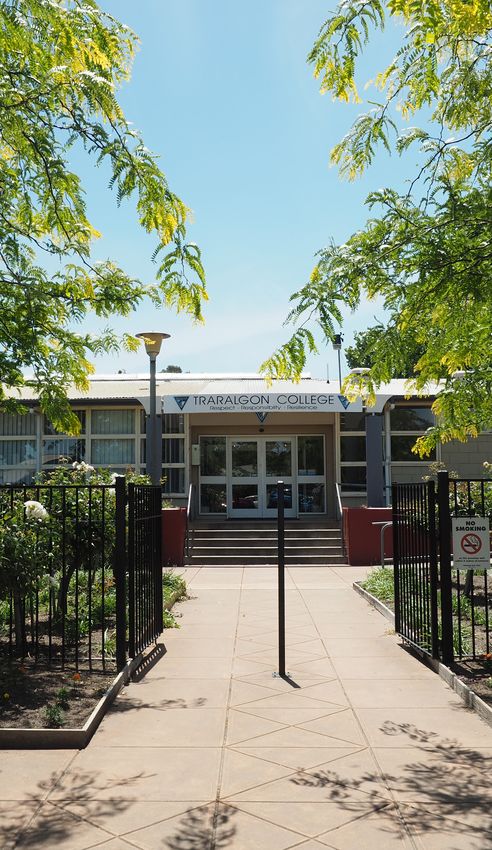
2022
Senior
Course
Handbook

      Information for
 Year 10 and 11 Students
Contents
                                                             School Programs		         4
                                                             VCE Overview              5
                                                             VCAL Overview		           6
                                                             VET Overview              7
                                                             Headstart 		8
                                                             VCE Course Guide
         Growing together as adaptable, confident,           VCE Studies			            10
             successful learners and citizens                VCE English			            11
                                                             VCE Mathematics		         12

 Senior Campus Welcome                                       VCE Health & PE		         14
                                                             VCE Humanities		          15

 Traralgon College Senior Campus is a vibrant and            VCE Commerce		            17
 stimulating learning environment for students in Years      VCE Science			            18
 10 to 12. Our teachers are committed professionals,         VCE Art			                20
 dedicated to delivering meaningful learning opportunities
                                                             VCE Technology		          22
 for all students.
                                                             VCAL & VET Course Guide
 We offer a rich Year 10 Program, VET in Schools for all
 students, a powerful VCAL program focussed on applied       VCAL Subjects		           24
 learning and a VCE program that will challenge you          VCAL Application          25
 to reach your academic potential. We look forward to
                                                             VET Application		         26
 welcoming you to our campus.
                                                             VET Courses			            27

 Michael Shone                                               Important Information 28
 Senior Campus Principal                                     Sample Forms		            30

Traralgon College Senior Course Handbook                                                    3
Senior School Programs
The Senior School at Traralgon College is an exciting part of your education where you will experience a range
of new subjects and begin planning your future. The best way to start planning for your future is by exploring the
options. Completing online job tests like the one at www.myfuture.edu.au can be a good way to start.

VCE: Victorian Certificate VCAL: Victorian
of Education               Certificate of Applied
At the Senior Campus, the  Learning
College offers a wide range            VCAL is a Senior Certificate
of studies accredited by the           focussed on applied learning
Victorian Curriculum and               rather than academic study.             VET: Vocational
Assessment Authority. A VCE            Flexible learning programs              Education and Training
program is suitable for a              consist of a business project that      VET programs are training
student interested in studying at      students work on, VET units and         programs with a particular
University as well as students         a work placement.                       vocational or job focus and are
who are unsure of their next                                                   designed to lead to further training
                                       VCAL is suitable for any student
steps, and would like to keep                                                  or direct entry into the workforce.
                                       who is interested in any pathway        On completion students receive
their options open.
                                       that is career or TAFE focussed.        an accredited TAFE qualification.
                                       University courses recognise the        VET can be taken within the VCE
                                       VCAL Senior Certificate but may         and is complsory in VCAL.
                                       have additional requirements.
                                       Please speak with the careers
    VCE is a program that              advisor if considering VCAL and         Headstart
    provides:                          interested in university.
                                                                               Headstart is a new Apprenticeship
    • Specific Subject Areas           Students participate in a project       and Traineeship pathway that
    • Academic Challenge               based curriculum that works             combines completing a VCE or
    • Structured Learning              towards developing competency           VCAL certificate over 3 years with
       Environment                     in outcomes for numeracy,               paid employment in a relevant
                                       literacy, work related skills and       industry. Headstart is available to
                                       personal development skills.            all Senior Campus students.
    VCE Pathways lead to:
                                       Students are at school 4 days
    • Tertiary studies -
                                       a week and also participate
      University & TAFE                in a VET program and a work
    • Apprenticeships                  placement for the remaining day.
    • Full Time Employment

                                          VCAL is a program for:
                                          • self directed, creative
                                            and innovative 21st
                                            Century learners

                                         VCAL Pathways include:
                                         • Apprenticeships
                                         • Full Time Employment
                                         • Further Education in
                                           TAFE & University

4                                                                 Traralgon College Senior Course Handbook
VCE Overview
Traralgon College offers a high quality VCE program with high expectations for all students. Success at VCE
requires dedication and commitment. We provide many opportunities and supports to ensure all students who
work hard will succeed.

VCE Studies and Units                  Satisfactory Completion                Types of Assessment
The VCE consists of over 40            To complete a unit of study            SCHOOL ASSESSED
subjects called studies. Each of       students will need to demonstrate      COURSEWORK (SACs)
these studies consist of 4 units.      achievement of learning outcomes.      SACs are tasks undertaken in class
Each unit is one semester (half        The Victorian Curriculum and           for assessment purposes. They
year). Units 1 and 2 are generally     Assessment Authority (VCAA)            may include projects, tests, essays,
undertaken in Year 11. Units 3 and     specify the learning outcomes          practical tasks, problem-solving
4 have more rigorous assessment        in each VCE study. The VCE is          tasks and assignments.
guidelines and are generally           designed with the intention that all
undertaken in Year 12. They must be    students can achieve satisfactory      SCHOOL ASSESSED TASKS
taken as a 3 - 4 sequence i.e they     completion. Students will be           (SATs)
must be studied for the entire year.   provided with multiple ways for them   These are longer-term tasks
Students doing VCE typically plan      to demonstrate their understanding     undertaken over most of the
a program of 20 units taken over a     of the outcomes of each study.         semester or year such as production
2-year period. Some students plan                                             tasks and folios (only applicable to a
their VCE over a longer period such    Levels of Achievement                  small number of subjects).
as 3 years.
                                       Graded assessments are derived         EXTERNAL VCE EXAMINATIONS
The units students select to form      from a range of tasks including        All students undertaking a Unit
their program should reflect career    ongoing class work, assignments,       3-4 study will undertake practice
needs and interests. However,          productions, folios, tests and         examinations in the term 3 holidays
students must also take into           examinations. In most units,           and external VCAA examinations at
account Victorian Curriculum and       assessment tasks will be completed     the end of year.
Assessment Authority (VCAA)            in the classroom, some under test
requirements for satisfactory          conditions. Graded assessments
completion.                            are used to determine a student’s
                                       level of achievement and for Year
Requirements for                       12 students to calculate their Study
                                       Score and ATAR score.
Satisfactory Completion
                                       The ATAR score ranks students on
of the VCE
                                       their level of achievement against
                                       other students across the state.
•   3 units from the English Group,
    including a Unit 3&4 sequence.
•   At least three Unit 3-4
    sequences in addition to an                                     The Study Score
    English Subject. eg Further            Each unit 3 or 4 study has between 2 & 4 school based graded
    Maths, Art, Biology                    assessments which are compiled, along with the examination score
•   A minimum total of 16 units            into a study score. The maximum study score is 50.
    successfully completed (can be
    units 1,2,3 or 4)
                                                   The ATAR (Australian Tertiary Admissions Rank)
•   The 16 units may include an
    unlimited number of units of           The ATAR is based on the Study Scores achieved in Unit 3-4
    Vocational Education and               sequences. It is a key measure used to determine university entry.
    Training.                              It is derived from the SCALED study scores in
•   Attendance Requirement must             • English group
    be met.                                 • The best three Unit 3-4 sequence study scores
                                            • 10% of the next two best Unit 3-4 sequence study scores

Traralgon College Senior Course Handbook                                                                          5
VCAL Overview
Traralgon College offers VCAL programs covering different industry areas. Study pathways you could consider
after VCAL are pre-apprenticeships, Apprenticeships/Traineeships or entry into Vocational Education and Training
(VET) courses. VCAL does not provide students with an Australian Tertiary Admission Rank (ATAR), however it is
now recognised as an entry-level qualification for a number of university courses.

What is VCAL?                          VCAL at Traralgon College The VCAL is offered at 3
                                                                 different levels
The Victorian Certificate of Applied   At Traralgon College we offer an
Learning (VCAL) will give you work-    integrated approach to gaining          Foundation level
related experience, literacy and       the VCAL certificate. This means
numeracy skills, and transferable      that the 4 strands are planned for,     At this level the focus is on
skills.                                delivered and assessed within           knowledge and employability skill
                                       common projects and learning tasks.     development, supported by a strong
VCAL aims to provide students                                                  emphasis on literacy and numeracy
                                       This means providing students with
with the skills, knowledge and                                                 skills and preparatory learning.
                                       a context for learning new skills
attitudes to make informed choices
                                       which is not driven by traditional
about pathways to work and further
                                       curriculum divisions, but which
education.                                                                     Intermediate level
                                       reflects how those skills will be
The principles underpinning VCAL       applied in the community, workplace     At intermediate level, the focus is
are                                    or in their personal lives.             on knowledge and employability
                                                                               skills development that leads to
• Tailoring a program to suit          The VCAL program at Traralgon
                                                                               independent learning, confidence
    students’ interests.               College consists of:
                                                                               and a higher level of transferable
• Personal development.                • 4 days per week of classes at
                                                                               skills.
• Development of work-related              school, including:
    and industry specific skills.         • Business class focusing
                                              on teaching skills and           Senior level
More information about the VCAL
                                              knowledge required to start
curriculum can be found on the                                                 At this level the focus is on
                                              your own small business
VCAA Website: http://www.vcaa.vic.                                             knowledge and employability
                                          • Numeracy Class
edu.au/Pages/vcal/index.aspx                                                   skills that lead to a high level of
                                          • Literacy Class
                                          • VCE Unit 1 Study; the VCE          interpersonal skills, independent
                                              study unit is an elective that   action and achievement of tasks
                                              will be based on current         that require decision making and
                                              VCAL teacher subject areas.      leadership.
                                       • a VET course
                                       • 1 day per week work placement
What is Applied Learning?
Applied learning is an approach which emphasises the relevance of what is being learnt in the ‘real world’ outside
the classroom, and makes that connection as immediate and transparent as possible. Applied learning will involve
students and their teachers working in partnerships and developing connections with organisations and individuals
outside school.
Applied learning is concerned with nurturing and working with a student in a holistic manner, taking into
considerations their personal strengths, interests, goals and previous experiences. Applied learning is not simply
“hands on” or practical learning, equal importance is placed on both theory and application.
How is VCAL structured?
VCAL has four curriculum areas, called strands. These strands are:
• Literacy and Numeracy Skills
• Industry Specific Skills
• Work Related Skills
• Personal Development Skills
A student’s VCAL learning program must include each strand. To achieve the VCAL certificate 100% completion of
each strand is required.

6                                                                 Traralgon College Senior Course Handbook
VET Overview
Vocational Education & Training (VET) programs are training programs with a particular vocational or job focus
and are designed to lead to further training or direct entry into the workforce. VET Courses can contribute to both
the Victorian Certificate of Education (VCE) and the Victorian Certificate of Applied Learning (VCAL), all students
have the opportunity to enrol in a VET Program.

Outcomes                                       Courses running at                   Courses at External
VET programs consist of a                       Traralgon College                       Providers
set of work skills called Units
of Competence (UoCs) and                  •   Automotive                       •   Aeroskills
students who successfully achieve         •   Building & Construction          •   Allied Health
competencies in a VET program                 (Carpentry)                      •   Animal Studies
receive a nationally recognised           •   Hospitality                      •   Bricklaying
certificate or Statement of Attainment                                         •   Business
                                          •   Information Technology
(awarded for partial completion of
                                          •   Music                            •   Civil Construction
a certificate). Some VET Programs
offer scored assessment in the Unit                                            •   Community Service
                                          •   Outdoor Recreation
3&4 sequence resulting in a study                                              •   Dance
score that directly contributes to                                             •   Early Childhood Education
                                          These courses will be delivered
the ATAR. Because of the ability to                                            •   Electrotechnology
gain a qualification prior to finishing
                                          at Traralgon College with
                                          a partnership with external          •   Engineering
school, many students have gone on
                                          agencies.                            •   Horticulture
to gain meaningful employment and/
or enter TAFE at a tertiary level after                                        •   Integrated Technologies
completing a VET program.                 Please see the VET Course            •   Painting & Decorating
                                          Guide later in theis handbook for    •   Plumbing
                                          more information                     •   Salon Assistant
                                                                               •   Screen & Media
                                                                               •   Racing (Stablehand)
                                                                               •   Retail Cosmetics
                                                                               •   Visual Arts (Photography)

                                                                               For more information about these
                                                                                 courses, please see the main
                                                                                     office for a brochure.

Application / Enrolment
Students who wish to enrol in a VET subject must complete a VET application form. Forms can be collected from
the Senior Campus front office or downloaded from Compass.
Once the forms are submitted, preferences will be reviewed and enrolments will be processed accordingly.
Students may be required to have an interview as part of the review process.
VET subjects have very limited enrolment numbers and acceptance will be based on a number of factors including
the student’s attitude, teacher recommendations, demonstrated interest in the vocational area and if necessary
participation in interview/s. Please note that not all students who apply will be accepted.
All students starting a VET subject are required to attend a compulsory Orientation Day in November. Details will
be provided to accepted students closer to the date.
VCE students are only able to undertake VET subjects that are run at Traralgon College.

Traralgon College Senior Course Handbook                                                                              7
Headstart
What Is Head Start?                    Students receive professional career       How Head Start Works
                                       planning advice from their school
Head Start is a new Apprenticeship                                                Depending on the needs of the
                                       career officer, get the opportunity to
and Traineeship pathway for school                                                employer, students attend schools
                                       discuss it with family and weigh up
students aimed at giving them just                                                some days and work on others. At
                                       if it is the right career pathway for
that. Head Start allows students to                                               a minimum, students will undertake
                                       them, before signing up to a Head
undertake their VCE or VCAL up to                                                 paid employment for
                                       Start apprenticeship or traineeship.
three years so they can spend more
                                                                                  •   One day per week in year 10
time in paid, on-the-job training to
develop skills employers need in                                                  •   Two days per week in year 11
                                       A Head Start student receives;
growing industries.                                                               •   Three days per week in year 12
                                       •   More time on the job in areas of
Head Start students leave                  industry demand.
secondary school with their VCE                                                   Head Start Qualifications
or VCAL and the recognition for        •   Employer support for students
                                                                              Our program supports 36 Certificate
completion or near completion of           to complete their VCE or VCAL,
                                                                              III Qualifications such as Early Child
their Apprenticeship or Traineeship.       as well as their apprenticeship or
                                                                              Care and Education, Carpentry, Civil
                                           traineeship.
The Benefits of Head                                                          Construction, Automotive, Business,
                                       •   Payment of a fair training wage. Plumbing, Horticulture and many
Start
                                       •   Quality training through Victorian more.
Head Start students are supported          TAFE or Skills First Registered        (To obtain a full list, please speak to
to grow into skilled Apprentices           Training Organisations.                our Head Start Coordinator)
and Trainees who have the literacy
and numeracy skills and on the job     •   Strong support for the life of their
experience that employers seek.            apprenticeship or traineeship.

Employers and students are
supported by Head Start
Coordinators over the whole
                                                  For further information, call Amanda McMahon, Head
apprenticeship or traineeship.
                                                  Start Coordinator Inner Gippsland on 0428 197 919 or
Employers are committed to                          email amanda.mcmahon3@education.vic.gov.au
providing genuine, long-term
employment opportunities to young
people who want to complete both
their apprenticeship/traineeship and
their VCE/VCAL.

8                                                                   Traralgon College Senior Course Handbook
VCE
                 Course
                 Guide

Traralgon College Senior Course Handbook   9
VCE Studies

Learning Domain   Subject                                  In choosing which studies you will
                  English                                  undertake you should:
ENGLISH           English Language                         •   Have a future career or education
                  Literature                                   pathway in mind.
                  Foundation Maths                         •   Have the correct advice - speak
                  General Maths (Year 11)                      to the careers advisor and subject
MATHS             Further Maths (Year 12)                      teachers
                  Mathematical Methods                     •   Be aware of the best pathway to
                                                               achieve your chosen career; there
                  Specialist Maths                             are often a number of different
                  Australian & Global Politics (Year 11)       pathways to the same career.
                  Australian Politics (Year 12)            •   Choose subjects which you enjoy or
                  Global Politics (Year 12)                    that you may need for future study or
                  Classical Studies                            work.
HUMANITIES
                  History
                  Sociology                                The best advice for students and
                  Business Management                      parents is to:
                  Legal Studies                            •   Gather as much information as
                                                               you possibly can now to help make
                  Health & Human Development
HEALTH & PHYSICAL                                              decisions for the future.
                  Physical Education
EDUCATION                                                  •   Keep options open and select
                  Outdoor & Environmental Studies              subjects that can lead you down
                  Biology                                      different pathways.
                  Chemistry                                •   List as many subjects as you think
SCIENCE           Environmental Science                        you might enjoy in completing your
                  Physics                                      VCE -find out all you can about each
                                                               subject from subject teachers.
                  Psychology
                                                           •   Visit the Careers Resource Centre
                  Art
                                                               and use the resources that can
                  Studio Arts                                  provide information to help you make
ART               Media                                        decisions.
                  Drama                                    •   Remember that most University
                  Music Performance                            courses give students a selection of
                                                               subjects as prerequisites.
                  Applied Computing
TECHNOLOGY        Food Studies                             •   Choose wisely from those subjects
                                                               you are most likely to do well in at
                  Product Design & Technology                  Year 12.

10                                                   Traralgon College Senior Course Handbook
VCE English
English English Language Literature
In English, students will learn VCE English Language explores the In Literature, students study a range
about how to create and analyse ways in which language is used by of classic and contemporary texts,
texts, moving from interpretation to individuals and groups and reflects including novels, plays, short stories,
reflection and critical analysis. our thinking and values. poetry and film.
As part of this, they will learn: Learning about language helps us As part of this, they learn about:
Year 11 to understand ourselves, the groups Year 11
• How to respond to texts with which we identify and the • How the interaction between
analytically and creatively (Unit society we inhabit. text and reader creates meaning
1) The study of English Language (Unit 1)
• How to analyse arguments and enables students to further develop • How to analyse the features and
the use of persuasive language and refine their skills in reading, conventions of texts (Unit 1)
in texts (Unit 1 and Unit 2) writing, listening to and speaking • How to develop increasingly
• How to create their own texts English. Students learn about sophisticated responses to a
and the impact on their intended personal and public discourses in range of literary forms (Unit 1)
audiences (Unit 1 and Unit 2) workplaces, fields of study, trades • How literary texts connect with
• How to compare the presentation and social groups. each other and with the world
of ideas, issues and themes in Year 11 (Unit 2)
texts (Unit 2) • Unit 1: Language and • The relationships between
Year 12 Communication authors, audiences and contexts
• How to analyse how the authors • Unit 2: Language Change (Unit 2)
of texts create meaning and • The ideas, language and
Year 12 structures of different texts from
the different ways texts can be • Unit 3: Language Variation and
interpreted (Unit 3) past and present eras (Unit 2)
Social Purpose
• How to present their point of • Unit 4: Language variation and Year 12
view on a current media issue. identity. • How the meaning of a text may
(Unit 3) change when it is adapted or
• How to explain the writing VCE English Language is a good transformed (Unit 3)
choices that they have made as choice for students who would like • Responding creatively to texts
authors (Unit 3 and Unit 4) there to be a right and wrong answer (Unit 3)
• How two texts present ideas, in English rather than the more • How different literary
issues and themes (Unit 4) subjective responses required to perspectives can be applied to
• How to write a detailed study texts in English and Literature. texts (Unit 4)
comparison • How to closely analyse the
• How to present their point of language of a text (Unit 4)
view in oral form on a current Literature involves a range of
media issue (Unit 4) assessment types, including critical
In this class, students will: complete and analytical essays, creative
character and theme activities based responses, performance reviews
on the set texts; write extended and oral presentations.
responses using appropriate Literature is a fantastic choice
essay formats and present oral for students who already enjoy
presentations. English and are looking to extend
themselves in Year 11 and Year 12.
Traralgon College Senior Course Handbook 11VCE Mathematics
There are four mathematics courses available for study in VCE:
• Foundation Maths (Year 11 only) – practical mathematics for everyday life.
• General (Year 11)/Further (Year 12) Maths – a requirement for a large range of tertiary studies.
• Mathematical Methods – a requirement for some tertiary studies in science and mathematics.
• Specialist Mathematics – advanced mathematics for a select range of tertiary studies in science and
mathematics.
General/Further and Maths Methods run each year while Foundation and Specialist Maths may or may not run
due to the lower number of students selecting these courses.
At Traralgon College we are committed to ensuring each student is successful in their selected senior program
and endeavour to provide the highest quality advice to students and parents when selecting an appropriate
course. Based on a student’s mathematics performance at Traralgon College on a range of measurements
as well as their learning behaviours, each prospective Year 11 VCE student will be provided with one of three
recommendations for their senior mathematics program: Maths Methods, General Maths or Foundation Maths
The data used to provide a recommendation is:
• Year 9 NAPLAN Maths score
• Year 10 PAT Maths (Progressive Achievement Test) score
• Year 10 Mid year maths exam
• Term 2 Progress Report score in Maths.
Each student will consider their recommendation with their parent and a teacher during their course counselling
interview. They will take into account this recommendation as well as their desired pathway and any other relevant
information to make a considered choice.
Foundation Mathematics General Mathematics
(Year 11) (Year 11)
In Foundation Mathematics, General Maths will support students Unit 1
students investigate the geometric in attaining the mathematical skills • Computation and Practical
properties of shapes and objects, relevant to a broad range of life Space Arithmetic
and the different ways we can activities such as finance, statistical • Linear Relations and Equations
represent shapes. Students focus review and problem solving. General • Financial Arithmetic
their attention to scale and drawing Mathematics students will learn how • Number Patterns and Recursion
conventions used in domestic to present, summarise and analyse Unit 2
and commercial plans, maps and data about real world situations. • Matrices
diagrams. Students then investigate • Linear Graphs and models
They will also investigate patterns
the use and application of different • Graphs and Networks
in numbers and relationships
forms of numbers and calculations • Comparing Data Distribution
between variables using graphs and
revolving around proportions. • Bivariate Data
analytical methods. Students will use
Students will finish off the unit with mathematics to explain networks For each topic, students will
an in-depth investigation of the such as those found in transport regularly complete skills exercises,
different ways algebraic formulas and social media, apply formulas to do a minimum of one test as well as
can be applied, particularly in calculate interest on loans and solve a minimum of one investigation or
practical contexts. everyday problems using algebra. application task.
Students will work individually
and in groups to understand how
mathematics is applied in real world
problems. Students will complete
set exercises, worksheets, projects
and assessments, within a given
time frame, to develop their skills in
mathematics.
In Foundation Mathematics,
students are expected to
consistently complete all skills
exercises.
12 Traralgon College Senior Course HandbookVCE Mathematics
Further Mathematics Mathematical Methods Specialist Mathematics
(Year 12) Students are expected to be Students are expected to be able
In Further Mathematics, students able to apply techniques and to apply techniques and processes
will present, summarise and analyse processes involving rational and real involving rational and irrational
data about real world situations arithmetic, algebraic manipulation, numbers, algebraic manipulation
and analyse a range of financial equation solving, graph sketching, and the applications of number with
situations. They will also investigate differentiation and integration with and without the use of technology,
the underlying mathematical and without the use of technology, as applicable.
ideas in two of four modules. In as applicable. Over units 1-4 students will study:
each module, students will learn The course develops mathematical • Algebra and Structure
fundamental skills and concepts. processes used (modelling, • Transformations, Trigonometry
They will model, investigate and transformations, graph sketching and matrices
solve application problems linked to and equation solving) in application
everyday situations. • Arithmetic and number
to contexts related to the following • Discrete mathematics
Unit 3 Core areas of study. • Graphs of linear and non-linear
• Data Analysis Over units 1-4 students will study: relations
• Recursion and financial • Functions and Graphs • Statistics
modelling • Algebra
For each area of study, students will
Unit 4 Applications • Calculus
regularly complete skills exercises
Two of the following four modules; • Probability and Statistics
and have to participate in a School
• Matrices For each area of study, students will: Assessed Coursework (SAC).
• Networks and Decision Maths complete regular skills exercises;
• Geometry and measurement attempt selections of past exam
• Graphs and relations questions; participate in School
For each module or core area Assessed Coursework (SAC) over a
of study, students will regularly number of periods in the classroom.
complete skills exercises, selections There will be two end-of-year
of past exam questions and have examinations in Term 4, one of
to participate in a School Assessed which is calculator free and the other
Coursework (SAC) over a number allows the use of a bound reference
of periods in the classroom. There and a CAS calculator.
will be two external examinations in
Term 4.
Please Note: Unit 3 & 4
Mathematical Methods will be run
by the Victorian Virtual Learning
Network with support from a
Traralgon College teacher
Calculators
The following calculators are a compulsory requirement
Scientific Calculator (approx. $20)
Foundation Mathematics Unit 1-2
TI-nspire CX CAS Calculator (approx. $200)
General Mathematics Unit 1-2
Further Mathematics Unit 3-4
Mathematical Methods Units 1-4
Specialist Mathematics Units 1-4
Traralgon College Senior Course Handbook 13VCE Health & Physical Education
Health & Human Physical Education Outdoor & Environmental
Development In Physical Education (PE), students Studies
In Health & Human Development will learn about the mental and In Outdoor and Environmental
(HHD), students will learn about how physical factors that influence Studies (OES), students study how
healthy different groups of people a person’s participation and humans can develop sustainable
are, what causes their health issues, performance in physical activity. relationships with the natural world.
and how these health issues can be Students in PE learn about: As part of this, they will learn about:
improved.
Year 11 Year 11
In HHD, students learn about: • The human body in motion • The experiences that people
Year 11 • Physical Activity, sport and have in outdoor environments,
• Health & wellbeing (Unit 1) society and why (Unit 1)
• Managing health and Year 12 • Outdoor environments in
development (Unit 2) • Movement skills and energy for Victoria, including impacts that
Year 12 physical activity humans can have on the areas
• Australia’s health in a globalised • Training to improve performance (Unit 2)
world (Unit 3) In this class, students will: Year 12
• Health and human development • Explore the relationship between • Current and historical
in a global context (Unit 4) the body systems and physical relationships between humans
In this class, students will: measure activity and outdoor environments in
the health status of a range of • Investigate factors that influence Victoria (Unit 3)
groups; research current issues an individual’s participation in • How we can make these
affecting youth and adults in physical activity. relationships more sustainable
Australia; research and develop • Explore the various systems (Unit 4)
solutions to these problems; which assist in energy production In this class, students will:
investigate how nutrition can for human movement; • Plan a camp to a local area;
promote good health; and research • Design and participate in a six- • Examine different people who
aid programs to address health week training program. currently use a local outdoor
issues in developing countries. Most • Research various strategies environment;
assessments will be exam style tests which are used to enhance • Research a specific local area
similar to the end of Year 12 exam, performance. from multiple perspectives;
with some research assignments in Classes will be a 70:30 split of • Assess their potential impacts
Year 11. theory and practical sessions. when at home and at a location
Students are expected to bring a they will visit and develop a code
change of clothes to all practical of conduct to minimise their
classes. impacts;
• Research the history of a
location they visit and evaluate
past human influences;
• Assess the health of an
environment they visit;
• Analyse strategies to enable us
to live more sustainably.
Most student assessments will be
directly related to a trip that they do
in a local outdoor environment.
All trips are compulsory and course
fees are generally not refundable.
14 Traralgon College Senior Course HandbookVCE Humanities
Australian & Global Australian Politics Global Politics (Year 12)
Politics (Year 11) (Year 12) In Global Politics students will study
In Australian and Global Politics In VCE Australian Politics students contemporary issues and events in
students will study forms of will study how democracy operates global politics.
contemporary power at both national in Australia and how the political To achieve this, they will learn about:
and global levels. system works to formulate public • Global Actors (Unit 3)
To achieve this, they will learn about: policy. • Global Challenges (Unit 4)
• Ideas, Actors and Power (Unit 1) To achieve this, they will learn about: In this class, students will investigate
• Global Connections (Unit 2) • Evaluating Australian Democracy a specific state in the Asia-Pacific
In this class, students will have (Unit 3) region, gaining an understanding of
the opportunity to engage with • Australian Public Policy (Unit 4) the factors that shape its national
key political, social and economic In this class, students will evaluate interest, how it pursues its goal,
issues, and to become informed the strengths and weaknesses of the and evaluate how effective these
citizens, voters and participants in Australian political system. They will methods are.
their local, national and international explore the significant values and In Global Politics, students are
communities. principles of democracy and how the required to complete assessment
In Australian & Global Politics, Australian political system reflects tasks which may include:
students are required to complete these. presentations, case studies, essays
assessment tasks which may In Australian Politics, students are & questions.
include: presentations, case studies, required to complete assessment VCE Global Politics is only offered
essays & questions. tasks which may include: as a Year 12 subject. Students
VCE Australian and Global Politics presentations, case studies, essays, should study Australian and Global
is only offered as Year 11 subject. & questions. Politics in year 11 but this is not a
Students can select either Australian VCE Australian Politics is only pre-requisite.
Politics or Global Politics to continue offered as a Year 12 subject.
their study of politics in Year 12. Students should study Australian
and Global Politics in year 11 but
this is not a pre-requisite.
Please note it is unlikely that these classes will run in
2022, however these may be available in later years.
Traralgon College Senior Course Handbook 15VCE Humanities
Classical Studies History Sociology
In VCE Classical Studies, students In History, students will learn to In VCE Sociology, students will
read and study works that have understand themselves, others learn about human behaviour and
captivated and inspired generations. and their world, developing social, social interaction to understand how
These works teach students political, economic and cultural societies are organised, develop and
about love and devotion, anger understanding. To achieve this, they change.
and betrayal, fate and freedom. In will learn about: To achieve this, students will learn
doing so students gain a deeper Year 11 – Bridging the Gap about:
understanding of humanity and an • Modern History 1900-1939
appreciation for influential works. To Year 11
(Unit 1) • Youth and family (Unit 1)
achieve this, they will learn about: • The British Empire 1400-1775 • Social norms – breaking the
Year 11 (Unit 2) code (unit 2)
• Mythical Worlds (Unit 1) Year 12 – Australian History
• Classical Worlds (Unit 2) Year 12
• Power & Resistance 1788-1998 • Culture and ethnicity (Unit 3)
Year 12 (Unit 3) • Communities, social movements
• Classical Works (Units 3 & 4) • • War & upheaval 1909-1992 and social change (Unit 4)
During the course students will (Unit 4)
During the course the students will
question, what is a hero? What is Our VCE History course is designed develop an understanding of the
beauty? What makes a leader? to allow students to build on the nature and purpose of sociological
What is the nature of war? They learning they have completed under inquiry; apply key concepts and
will encounter people both like and the Victorian Curriculum years 9-10. theories; conduct comparisons
unlike themselves in the myths, between social experiences;
During the Year 11 course students
codes and history of previous and analyse and evaluate social
complete Unit 1, building on the
civilisations. They will investigate structures and social awareness.
knowledge they gained in Year 10
classical works creating rich
by exploring the Inter-war years in In Sociology, students are expected
opportunities to learn about the past
greater detail and with a more global to complete all set tasks, including
and to gain a clearer understanding
perspective. In Unit 2 students begin primary and secondary research,
of the present world.
to prepare for Year 12 Australian written reports, representation
In Classical Studies, students are History by developing their analyses and investigations into
required to complete assessment knowledge of imperial colonisation, social experiences and topic tests in
tasks including: essays, reports, focusing on the British Empire. line with the end of year exam.
presentations, & questions.
During the Year 12 course students Please note that although we
explore four periods of time which recommend undertaking both Unit
span some of the transformative 1 and 2 at Year 11 there are no
events and processes that prerequisite studies for Year 12
developed and changed the nature Sociology.
of Australian society and created
modern Australia.
In History, students are required
to complete assessment tasks
including: a research piece; a source
analysis; an analysis of historical
interpretations; an essay & exams.
Please note that although we
recommend undertaking both Unit
1 and 2 at Year 11 there are no
prerequisite studies for Year 12
Australian History.
16 Traralgon College Senior Course HandbookVCE Commerce
Business Management Legal Studies
In Business Management, students In VCE Legal Studies, students
will learn about the features of will learn about the rights and
many organisations ranging from responsibilities of Australians.
small businesses to multinational Students will develop an
organisations. understanding of the criminal and
civil justice systems, in addition
As part of this, they will learn
to the broader elements of the
about the operations, features and
Australian legal system including the
management styles of businesses,
Constitution, the Parliaments and
as well as familiarising themselves
the Courts.
with relevant procedures and skills.
To achieve this, students learn
During this course, students will
about:
also develop the ability to analyse
contemporary case studies that Year 11
give the students a chance to apply • Guilt and Liability (Unit 1)
their skills and knowledge to real life • Sanctions, Remedies and Rights
situations. (Unit 2)
The subject also aims to develop Year 12
the students writing ability, as the • Rights and Justice (Unit 3)
final exam is marked globally, which • The People and the Law (Unit 4)
means that a component of the During this course, students will
subject ranking criteria is how well examine legislation and case law,
they can convey their ideas, whilst research recent cases and develop
addressing the task word and topic. skills in critiquing the justice system
To achieve this, students will learn with reference to the principles
about: of justice: access, fairness and
equality.
Year 11
• Planning a business (unit 1) In Legal Studies, students are
• Establishing a business (unit 2) expected to complete learning tasks
Year 12 and exam style tests similar to the
• Managing a business (unit 3) final VCE exam.
• Transforming a business (unit 4)
In Business Management students
are expected to complete learning
tasks and exam style tests similar to
the final VCE exam
Traralgon College Senior Course Handbook 17VCE Science
Biology Chemistry Environmental Science
VCE Biology enables students to VCE Chemistry enables students Environmental Science is an
investigate the processes involved to explore matter and its interdisciplinary science that
in sustaining life at cellular, system, behaviour. Chemistry is central explores the interactions and
species and ecosystem levels. to the production of energy, the interconnectedness between
As part of this, they will learn about: maintenance of clean air and water, humans and their environments.
the production of food, medicines In VCE Environmental Science,
Year 11 and new cutting-edge materials.
• Challenges to an organism in Earth is understood as a set of
Students will examine chemistry four systems: the atmosphere,
sustaining life and adapting to through four themes: the design and
their environment. biosphere, hydrosphere and
composition of useful materials, the lithosphere. The study explores how
• How the continuity of life is reactions and analysis of chemicals
maintained from generation to the relationships between these
in water, the production and use systems produce environmental
generation. of energy and materials, and the change over a variety of time scales.
Year 12 investigation of carbon-based Students investigate how humans
• How cells work and how they compounds. modify their environments and the
communicate with each other. VCE Chemistry is explored through consequences of these changes
• The continual change and the following questions: in local and global contexts with
challenges to which life on Earth a focus on pollution, biodiversity,
has been subjected . Year 11
• How can the diversity of energy use and climate change.
In this class, students will: conduct materials be explained? VCE Environmental Science is
a range of practical investigations • What makes water such a explored through the following
into cellular processes; research unique chemical? questions
current issues affecting ecosystems
in Australia and research and Year 12 Year 11
develop solutions to these problems. • How can chemical processes be • How are Earth’s systems
They will investigate how organisms designed to optimise efficiency? connected?
reproduce and how they have • How are organic compounds • How can pollution be managed?
evolved over time and the evidence categorised, analysed and used?
Year 12
to support this. Students will do up to 5 hours of • How can biodiversity and
Assessments will involve a mix of practical activities per unit, write development be sustained?
tests, practical and research reports reports, participate in field trips and • How can the impacts of human
and semester exams. excursions, complete classroom energy use be reduced?
tasks and undertake student
Students will do up to 5 hours of Students will do up to 5 hours of
planned investigations.
practical activities per unit, write practical activities per unit, write
reports, participate in field trips and reports, participate in field trips and
excursions, complete classroom excursions, complete classroom
tasks and undertake student tasks and undertake student
planned investigations. planned investigations.
18 Traralgon College Senior Course HandbookVCE Science
Physics Psychology
Physics seeks to understand VCE Psychology enables students
and explain the physical world. It to investigate the processes involved
examines models and ideas used in psychology. As part of this, they
to make sense of the world and will learn about:
which are sometimes challenged Year 11
as new knowledge develops. • The structure and functioning of
By looking at the way matter the human brain and the role it
and energy interact through plays in the overall functioning of
observations, measurements and the human nervous system.
experiments, physicists gain a better • How biological, psychological
understanding of the underlying and social factors influence
laws of nature. Physics students different aspects of a person’s
explore scientific study related psychological development.
to astrophysics, bioelectricity,
biomechanics, electronics, flight, Year 12
medical physics, nuclear energy, • How functioning of the nervous
nuclear physics, optics, sound and system explains a person’s
sports science. ability to interact with the world
VCE Physics is explored through the around them.
following questions: • The neural basis of memory
and learning and factors that
Year 11 influence the learning of new
• How can different forms of behaviours and the storage
energy (heat,electricity) and their and retention of information
interdependence be analysed ? in memory. They consider
• How can the force and motion the influence of biological,
connect to the physical world? psychological and social factors
Year 12 on the fallibility of memory.
• How do fields explain motion and In this class, students will:
electricity? investigate the role of the
• How can two contradictory brain in mental processes and
models explain both light and behaviour; undertake research
matter? into psychological development;
Students will do up to 5 hours of undertake research investigation into
practical activities per unit, write either brain function or psychological
reports, participate in field trips and development; investigate functions
excursions, complete classroom of the nervous system; and conduct
tasks and undertake student practical investigations into how we
planned investigations. learn and remember.
Assessments will involve a mix of
tests, practical and research reports
and semester exams.
Traralgon College Senior Course Handbook 19VCE Art
Art Studio Arts
Unit 4: Artworks, Ideas and
In VCE Art students will learn how to Viewpoints In Studio Arts students learn how
make art using a variety of materials to become a successful artist and
and techniques. They will also • An art idea and issue is develop, practice and refine the
develop a deep understanding of explored, referencing the skills that are needed to produce
how and why artists create artwork analytical frameworks and using quality artwork supported by an
referencing the personal, structural, a range of commentaries and understanding of art practices and
cultural and contemporary analytical viewpoints. industry knowledge.
frameworks. • Art process is used to Year 11
Year 11 communicate ideas, directions • Unit 1 – Studio Inspiration and
Unit 1: Artworks Experience and and personal concepts in a body Techniques
Meaning of work that includes at least one • Unit 2 – Studio Exploration and
finished artwork. Concepts
• Creating artworks expressing Year 12
personal interests and In this class, students will: create
• Unit 3 – Studio Practices and
experimentation with media and artworks that reflect their interests,
Processes
techniques, examining artworks personal experiences, preferences
• Unit 4 – Studio Practice and Arts
from different societies, cultures and and expressions; research artists Industry Contexts
historical periods. from various cultures and times
throughout the past and present; In this class students will learn the
Unit 2: Artworks and Contemporary and visit art galleries to support processes and the steps an artist
Culture and inform their art making, takes to be successful. This includes
• Using the cultural and understanding and appreciation of the ability to:
contemporary frameworks to art. • express themselves creatively
examine how artists interpret and through art making and come to
Assessments will involve finished
present social and personal issues understand how to support and
art pieces and a visual diary that
in their practice. The art process sustain their art practice.
records ideas, processes and
is used to produce at least one • develop an individual studio
experimentation with a variety of
finished artwork that explores social art materials, written responses process, and practise and refine
and/or personal ideas or issues. specialised skills appropriate to
regarding their art research and an
particular art forms and media
Year 12 exam.
selected for art making.
Unit 3: Artworks, Ideas and Values Students need to supply an A3 • analyse and draw inspiration
• Producing an art folio exploring workbook. from the ways in which artists
personal, artistic responses to apply studio processes in the
inspiration and ideas. production of their individual
• Analysing, comparing and artworks.
contrasting the messages and • develop an understanding of
meanings of artworks from historical and cultural contexts
before and after 1990. in the production and analysis of
artworks.
• extend their understanding of
the roles and methods involved
NOTE:
in the presentation of artworks in
ART, STUDIO ART & MEDIA a range of gallery and exhibition
In this class a significant spaces.
proportion of a student’s final • develop an understanding of
score is based on their completion professional art practices related
of a School Assessed Task (SAT), to the exhibition of artworks to
an extended production that the an audience, including the roles
student works on for the entire and methods involved in the
year during Year 12 presentation in a range of gallery
and exhibition spaces.
• Students also study the inner
workings of galleries and what
is involved with the preservation
and conservation of art.
20 Traralgon College Senior Course HandbookVCE Art
Media Drama Music Performance*
In VCE Media, students will look at In VCE Drama, students will learn In Music Performance, students
the relationship between the ideas about the creation and performance build performance and musicianship
and narratives we create and how of characters and stories that skills, by presenting performances
audiences engage with the media. communicate ideas, meaning and of selected group and solo
They will achieve this by analysing messages. music works using one or more
the nature and construction of To achieve this, students will study: instruments (including voice).
media products and producing their As part of this, they will learn about:
own media products for selected Year 11
• Introducing performance styles • Performance (Solo and Group)
audiences. (Units 1-4).
(Unit 1)
Year 11 • Australian identity (Unit 2) • Preparing for Performance (Units
Unit 1: Media forms, representations 1-4).
and Australian stories. Year 12 • Music Language (Units 1-4)
Students examine the • Devised ensemble performance • Organisation of sound (unit 2
representations we see in the media, (Unit 3) only)**
experiment with making media • Devised solo performance
(Unit 4) Students focus on building their
products and explore the nature of performance and musicianship
Australian stories in the media. In this class students will use skills, presenting selected group and
Unit 2: Narrative across media forms creative processes, a range of solo music works using one or more
Students look at genre and the stimulus material and play-making instruments.
styles of prominent media makers, techniques to develop and present
devised works. They will work They study the work of other
the processes involved in media performers and explore strategies
production by making a media together to construct performances
to optimise their own performance,
product as well as how social media drawing on a range of performance identifying stylistic, expressive
has dramatically changed the media styles relevant to practices of ritual and technical challenges.
landscape. and storytelling, contemporary
drama practice and the work of Students develop their listening,
Year 12 significant drama practitioners. aural, theoretical and analytical
Unit 3: Media narratives and pre- musicianship skills and use
production Assessments in drama include: appropriate music language and
Students explore the stories journals, performances, terminology.
that circulate through the media, presentations, questions, essays
and exam. **In Unit 2, students create their own
experiment with production original composition or improvisation
techniques and focus on the pre- Please note that although we informed by an analysis of a
production process of their media recommend undertaking both Unit musical work being prepared for
product. 1 and 2 at Year 11 there are no performance. They experiment with
Unit 4: Media production and issues prerequisite studies for Year 12 musical elements and use digital
in the media Drama. instruments, tools and equipment to
Students focus on the production create, notate and record their work.
and post-production of their media Students in Year 11 and Year 12
product and consider the nature of Music Performance are expected
communication between audiences to read music, analyse scores,
and the media. undertake aural and written tasks
In Media subjects, students will and regularly perform on a musical
collaborate with others to create a instrument. Music Performance,
variety of media products, must be students also undertake a program
willing to do production work outside of musical works that they will focus
of class and share their work with on for the entire year during year 12.
audiences. * If students are not currently
Media involves production work, and undertaking Instrumental Music
the development of planning folios. lessons, either at the College
or externally, these MUST be
commenced during Unit 1. This
is to ensure students are suitably
prepared to progress with Units 2, 3
& 4 and are musically literate.
Traralgon College Senior Course Handbook 21VCE Technology
Applied Computing Food Studies Product Design &
In VCE Applied Computing students VCE Food Studies takes an Technology
will learn about how individuals interdisciplinary approach to In Product Design and
and organisations use digital the exploration of food, with an Technology, students will learn
technologies to meet a range of emphasis on extending food to use design thinking to develop
purposes. Students will apply a knowledge and skills and building their understanding of product
range of knowledge and skills to individual pathways to health and development.
create solutions for clients in a wellbeing through the application of
way that mimics employment and practical food skills. To achieve this, students will learn
innovation in the IT industry. how to apply design practice to
VCE Food Studies provides specific problems or situations
To achieve this, students will learn: a framework for informed and in which they will generate and
• Year 11 provides a taste of all confident food selection and food communicate multiple creative
aspects of applied computing. preparation within today’s complex ideas, concepts and product design
• Year 12 students can follow architecture of influences and options using a range of techniques
either the Software Development choices. to develop viable solutions. When
or Data Analysis pathway. Students explore food from a creating tangible solutions, students
As part of this, they will learn about: wide range of perspectives. They will undertake risk assessment to
• Networks and network security study past and present patterns of apply appropriate, efficient and safe
• Programming and app eating, Australian and global food methods of working with materials,
development. production systems and the many tools, equipment and machines.
• Data analysis and visualisations. physical and social functions and They apply project management
• Problem Solving and project roles of food. techniques of time and sequence,
planning. They research economic, and choose appropriate processes.
• Innovation and product environmental and ethical Once a possible design solution
development. dimensions of food and critically has been produced, students
In this class, students will use evaluate information, marketing then analyse and evaluate the
programming techniques to messages and new trends. Practical appropriateness of production
produce an application to meet a work is integral to Food Studies and activities and product design.
client’s needs and develop data includes cooking, demonstrations, During the course, lessons will be
visualisations following a client’s creating and responding to design broken up into both theory and
designs. They will produce an briefs, dietary analysis, food practical sessions. Theory lessons
innovative project by utilising sampling and taste testing, sensory will focus on the product design
problem-solving methodology along analysis, product analysis and process and the development of a
with their choice of hardware and scientific experiments. possible design solution. Practical
software from areas such as 3D As a part of this they learn about: lessons will focus on generic models
printing, laser cutting, graphic design to allow for the development of
and web or game development. Year 11
knowledge and skills to produce
They will also design a network plan • Unit 1: Food Origins
possible design solutions.
and assess security threats for a • Unit 2: Food Makers
domestic client. Tools and equipment will be supplied
Year 12
by the school. Students will need
• Unit 3: Food in Daily life
to supply an A4 display folder for
• Unit 4: Food issues, challenges
the portfolio development. It is
and futures
also important that students have
NOTE a working computer that is fully
APPLIED COMPUTING & charged for each lesson as the use
PRODUCT DESIGN AND of ICT and CAD is embedded into
TECHNOLOGY the curriculum.
In this class a significant
proportion of a student’s final
score is based on their completion
of a School Assessed Task (SAT),
an extended production that the
student works on for the entire
year during Year 12.
22 Traralgon College Senior Course HandbookYou can also read


