COVID-19 Response Plan V.2 St. Tiernan's College Crossmolina Co. Mayo Coláiste Thiarnáin Naofa - Version 2
←
→
Page content transcription
If your browser does not render page correctly, please read the page content below
COVID-19 Response Plan V.2
                    St. Tiernan’s College
                        Crossmolina
                         Co. Mayo
                  Coláiste Thiarnáin Naofa
                                            24th February, 2021

                                                      Version 2

                                                              1
V.2 24.02.2021
Contents
1.0           Introduction and Amendment History .................................................................................. 4
2.0           COVID-19 Policy Statement ....................................................................................................... 6
3.0           Legislation ....................................................................................................................................... 7
4.0           Symptoms of COVID-19 ............................................................................................................... 7
5.0           How COVID-19 Spreads ............................................................................................................... 8
6.0           Responsibilities ............................................................................................................................. 8
7.0           Lead Worker Representatives (LWR).................................................................................. 10
8.0           Communication and Training ................................................................................................. 11
9.0           OH&S Documentation ................................................................................................................ 11
10.0          Physical Distancing .................................................................................................................... 12
11.0          Personal Hygiene ........................................................................................................................ 13
12.0          Face Mask ....................................................................................................................................... 15
13.0          Cleaning .......................................................................................................................................... 15
14.0          Meetings ......................................................................................................................................... 17
15.0          Managing Third Parties: Contractors and Visitors ......................................................... 17
16.0          Emergency Arrangements ....................................................................................................... 17
17.0          Remote Working ......................................................................................................................... 18
18.0          COVID-19 Case Management ................................................................................................... 19
19.0          Dealing with a Suspected Case of COVID-19 in the Workplace ................................... 19
20.0          Confirmed COVID-19 Case at Work ...................................................................................... 21
21.0          Reporting Requirements if an employee contracts COVID-19 ................................... 22
22.0          Building Maintenance................................................................................................................ 22
23.0          Managing Mental Health and Wellbeing ............................................................................. 22
24.0          Business Travel............................................................................................................................ 23
25.0          Personal Protective Equipment (PPE) ................................................................................ 24
26.0          Heating, Ventilation, and Air-Conditioning (HVAC) ....................................................... 26
Appendix A – Lead Worker Representative Checklist..................................................................... 27
Appendix B – COVID-19 Location Risk Assessment ......................................................................... 31
Appendix C– Visitor/Contractor Induction ......................................................................................... 38
Appendix D– Visitor/Contractor Contact Log ..................................................................................... 39
Visitor/Contractor Contact Log ............................................................................................................... 39
Appendix E– First Aid Guidance during COVID-19 ........................................................................... 40
Appendix F– Pre-Return to Work Form................................................................................................ 42
Appendix G – FET Pre-Return to Learning Form ............................................................................... 44
                                                                                                                              2
V.2 24.02.2021
PRE-RETURN TO LEARNING QUESTIONNAIRE COVID -19 ...................................................... 44
Appendix H - Self Declaration for Special Leave with Pay ............................................................. 45
Appendix I - Cleaning after the presence of a suspected or confirmed case of COVID-19.. 47
Appendix J - COVID-19 Incident Report Form. ................................................................................... 49
COVID-19 Privacy Notice............................................................................................................................ 50

                                                                                                                                                    3
V.2 24.02.2021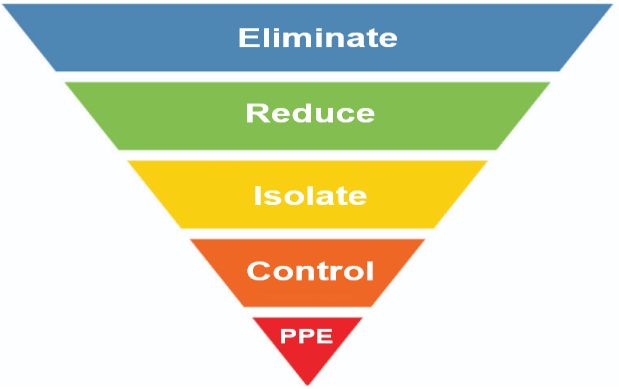
1.0    Introduction and Amendment History

The Covid-19 Response Plan has been developed by Mayo, Sligo and Leitrim Education and
Training Board (referred to as MSLETB throughout document) in line with Government of
Ireland (GOI) Work Safely Protocol” and “GOI Resilience Recovery 2020-2021 Plan for Living
with COVID-19.” which has been developed by the Government of Ireland (GOI), the Health
and Safety Authority (HSA), the Health Services Executive (HSE) and the Department of
Health.

 Employer                                     St Tiernan’s College
                                              MSLETB

 Address                                      Crossmolina, Co. Mayo

 Director/Senior Manager/Principal in the Mr Conor O’ Reilly
 Workplace.

 Lead Worker Representative(s)                Mr. Séamus Kelly

 Teaching and Learning or Administration?     MSLETB

                                              33
 Number of employees

                                              30
 Number of Employees who Deal Directly
 with the Public

                                              096 31236
 Phone:

                                              tiernanscollege@msletb.ie
 Email:

                                                                                        4
V.2 24.02.2021
The Plan will be updated should new or amended guidance be released by the Health and
Safety Authority (HSA), the Health Services Executive (HSE) and the Department of Health.
When determining what actions to take, consider the current level in the Plan for Living with
Covid-191 and conduct a Risk Assessment to ensure all risks are considered and include any
specific measures or response for dealing with an outbreak of COVID-19.
The history of amendments is recorded below.
Date Issue Number Page Number Reason
01.06 2020 1 First issue of the Covid
19 Response Plan
2 To amend and update
24.02.2021 first issue in response
to new and changing
guidelines.
1
Available at https://www.gov.ie/en/campaigns/resilience-recovery-2020-2021-plan-for-living-with-covid-19/
5
V.2 24.02.20212.0 COVID-19 Policy Statement
MSLETB is committed to providing a safe and healthy workplace for all our employees,
students, visitors and contractors and have developed a COVID-19 Response Plan. All
employees are responsible for the implementation of this plan and a combined effort will
help contain the spread of the virus.
MSLETB will:
continue to monitor our COVID-19 response and amend this plan in consultation
with our employees.
provide up to date information to our employees on the latest public health advice
issued.
display information on the signs and symptoms of COVID-19 and correct hand-
washing techniques.
provide an adequate number of trained worker representative(s) who are easily
identifiable and put in place a reporting system
inform all employees of essential hygiene and respiratory etiquette and physical
distancing requirements.
adapt the workplace to facilitate physical distancing appropriate in line with the
public health guidance and direction of the Department of Education
keep a log of contact / group work to help with contact tracing.
provide induction training which must be attended/completed by all employees.
develop and implement a procedure to be followed in the event of someone
showing symptoms of COVID-19 while at work or in the workplace.
provide instructions for employees/ students/ learners to follow if they develop
signs and symptoms of COVID-19 during work/ school/ learning time.
Intensify cleaning in line with government advice.
All managers/principals and employees will be consulted on an ongoing basis and feedback
is encouraged on any concerns, issues or suggestions which can be done through the
Worker Representative(s)
Signed: Date: 01.07. 20 _
Chief Executive
6
V.2 24.02.20213.0 Legislation
Legislation has been introduced and amended to enable the government to implement
controls and restrictions regarding COVID-19.
Legislation is under continual review as the pandemic develops but the main legislation
established includes but is not limited to:
Health (Preservation and Protection and Other Emergency Measures in the Public Interest)
Bill 2020 Emergency Measures in the Public Interest (COVID-19) Act 2020.
4.0 Symptoms of COVID-19
Infection with the virus that causes COVID-19 can cause illness, ranging from mild to severe,
and, in some cases, can be fatal. It can take anything from 2 days up to 14 days for symptoms
of coronavirus to appear. They can be similar to the symptoms of cold and flu.
• a fever (high temperature - 38 degrees Celsius or above).
• a new cough - this can be any kind of cough, not just dry.
• shortness of breath or breathing difficulties.
• loss or change to your sense of smell or taste. This means you notice that you cannot
smell or taste anything, or things smell or taste different to normal.
For the complete list of symptoms, please refer to the HSE Website
https://www2.hse.ie/conditions/coronavirus/symptoms.html
Some people infected with the virus, so called asymptomatic cases, have experienced no
symptoms at all.
• If you have any common symptom of Covid-19 (coronavirus), or feel unwell self-
isolate (stay in your room) and phone your family doctor straight away to see if you
need a COVID-19 test.
• Other people in your household will need to restrict their movements (stay at
home). Do not go to work/school/Centre of Education.
• Stay at home if you are identified as a close contact of someone confirmed as a
positive case of Covid-19. Do not go to work/school/training, and restrict movement
for fourteen days.
7
V.2 24.02.20215.0 How COVID-19 Spreads
The virus that causes COVID-19 disease is spread from people in fluid and in droplets scattered
from the nose or mouth of an infected person when the person with COVID-19 coughs,
sneezes or speaks.
The fluid or droplets land on objects and surfaces around the infected person. Other people
contaminate their hands by touching these objects or surfaces and then bring the virus into
contact with their eyes, nose or mouth by touching them with their contaminated hands.
COVID-19 can also spread if droplets from an infected person land directly on the mucous
membranes of the eye, nose or mouth of a person standing close to them.
It is still not known how long the virus survives on surfaces in different conditions. The period
of survival may vary under different conditions from hours to days. (e.g. type of surface,
temperature, humidity of the environment).
Studies indicate that it can persist on surfaces for hours and up to several days in the absence
of effective cleaning.
Common household disinfectants will kill the virus on surfaces. Clean the surface first and
then use a disinfectant.
Thorough and regular cleaning of frequently touched surfaces is essential. If disinfection is
required it must be performed in addition to cleaning, never as a substitute for cleaning.
While people are most likely to pass on the infection when they have symptoms, current
information suggests that some infected people spread the virus to others prior to developing
or displaying symptoms themselves.
Current information suggest that infected people can transmit the virus both when they are
symptomatic (showing symptoms) and asymptomatic (not showing symptoms).
This is why it is essential that anyone who is showing symptoms suggestive of COVID-19, or
anyone who has been in close contact with a confirmed case, should self-isolate and be
tested.
6.0 Responsibilities
MSLETB have appointed the following personnel for overall implementation of the plan.
• Pat Howley – Director.
• Orla Reilly – Head of Corporate Services.
8
V.2 24.02.2021• Mary McDonald – Government and Compliance Officer.
• Kieran Joyce – Human Resources.
Point of contact for all Covid related queries
• Michael Gaulier – Corporate Services
The following table should be completed by the location manager/principal to allocate
location specific responsibility which can be delegated.
Task Person(s) Responsible
Person(s) responsible for overall .
implementation of the plan. Mr. Conor O’ Reilly
Identification and training of worker
representatives. Mr.Conor O’ Reilly
Planning and Preparing to Return to Work.
Mr. Conor O’ Reilly
Ms. Brenda O’ Malley
Control Measures.
Mr . Conor O’ Reilly
Ms. Brenda O’ Malley
COVID-19 Induction.
Mr. Conor O’ Reilly
Ms. Brenda O’ Malley
Dealing with a Suspected Case of COVID-19. Mr. Conor O’ Reilly
Ms. Brenda O’ Malley
Cleaning and Disinfection. Mr. PJ Jordan
Mrs. Maureen Gallagher
Mrs. Jenny O’ Donnell
Mrs. Ann Gallagher
Employee Information. Mr. Conor O’ Reilly
Ms. Brenda O’ Malley
Mrs. Catherine O’ Hora
Return-to-work forms Mr.Conor O’ Reilly
Ms. Brenda O’ Malley
The measures necessary to minimise the risk of spread of infection rely on everyone taking
responsibility for their actions and behaviours.
9
V.2 24.02.2021St. Tiernan’s College will encourage an open and collaborative approach with employees
where issues and work activities can be openly discussed and addressed.
These new requirements will require coaching, positive reinforcement and engagement of
everyone.
Disciplinary process will be implemented where deemed necessary.
MSLETB have utilised the services of external health and safety consultant to assist with the
development of the COVID-19 response plan and risk assessments.
All MSLETB employees are required to comply with any testing required by Public Health
Authorities and must also comply with the following COVID-19 preventative measures:
• Stay at home and isolate if you are identified as a close contact of a confirmed case of
COVID-19
• Stay at home and isolate if you feel unwell or have any symptoms of COVID-19
• Contact your family doctor to arrange a test.
7.0 Lead Worker Representatives (LWR)
St. Tiernan’s College has appointed lead worker representatives (LWR) to ensure that COVID-
19 measures are monitored and strictly adhered to.
A checklist will be completed (Appendix A) with each LWR.
The names of the lead worker representatives will be covered in the localised COVID-19
induction/displayed on noticeboards in canteen and reception areas.
LWR’s will receive training and information on the role and the measures that have been put
in place to help prevent the spread of the virus and to highlight concerns, report defects,
submit ideas and identify improvements in the workplace.
Management and the LWR’s will work together to ensure that all the actions in the COVID-19
Management Plan and risk assessment are implemented and fully adhered to ensure the
suppression, preventing the spread of COVID-19 in the workplace.
Management will ensure regular communication with their lead worker representative(s),
about the measures being put in place to address the exposure to COVID-19 in the workplace.
LWR’s are involved in communicating the latest public/government health advice around
COVID-19 in the workplace.
10
V.2 24.02.20218.0 Communication and Training
St.Tiernan’s College will ensure regular communication and engagement with their
employees about the measures being put in place to address the occupational exposure to
COVID-19 in the workplace.
All employees will complete a COVID-19 induction training and each location will deliver a
localised induction for employees.
Employees will be kept up to date as new or amended guidance on COVID 19 is released.
Communication in relation to COVID-19 will also be in the form of posters displayed
throughout the premises.
9.0 OH&S Documentation
MSLETB has updated their Safety Statement to include a section within the arrangements
section to document control measures in relation to COVID-19.
A COVID-19 location Risk Assessment has also been developed to document the risk and
control measures in relation to Covid-19 – see Appendix B.
The risk assessment will address the level of risk and how and to what sources of COVID-19
might employees be exposed, including students, visitors and contractors.
Hierarchy of Control (HoC) Measures
The risk assessment has been completed with consideration to the hierarchy of controls.
The risk assessment will also take into account employee’s individual risk factors and include
the controls necessary to address the risks identified.
11
V.2 24.02.2021An email will be sent to all employees by the line manager/principal of the location to see if
they fall into a vulnerable or high risk category.
“Important: if you are in a vulnerable or higher risk category you should let your line
manger know as soon as possible. Further information on people at higher risk from
Coronavirus can be accessed here.”
This information be factored into the risk assessment for the location.
The HoC will assist with the selection of control measures for the planned activity.
Some measures are preferable to others and the hierarchy formalises this idea by providing
a structured list of common options in order of preference.
Start at the top, considering each option in turn and decide whether it is "reasonably
practicable".
For all levels below ‘Eliminate’, once you have selected the measures aimed at reducing the
risk, consideration must be given to whether the residual risk is acceptable.
If not, further measures will be required.
In practice, this will mean that if you cannot eliminate the risk of COVID-19 transmission, you
will have to consider control measures from other levels of the hierarchy.
In most cases more than one measure will need to be implemented. This is because:
• There are a number of different sources and transmission paths of COVID-19 that need
to be controlled.
• There is a residual risk as one individual measure alone will not be 100% effective at
controlling the risks (unless we can fully ‘Eliminate’ the risk).
10.0 Physical Distancing
Employees will be enabled to work from home were possible to reduce the number of
employees on the premises.
Employees will be expected to be on site in limited numbers to perform business essential
tasks as requested by Line Management.
Employees will be organised into teams/groups who consistently work and take breaks
together.
All workstations within the premises will be separated in conformance with government &
NPHET physical distancing guidelines.
12
V.2 24.02.2021Perspex screens will be installed where identified via the risk assessment.
Canteen facilities will form part of the location specific risk assessment to consider how
physical distancing can be applied e.g. tables and chairs appropriately separated in line with
physical distancing guidelines and staggering break and lunch times for employees and floor
markings on canteen floor.
In the event that canteen services resume self service facilities/areas will not be permitted
and all food will be served.
There are COVID-19 physical distancing floor markings/signage and posters in place
throughout the premises and employees will be reminded as part of the induction.
MSLETB have implemented a no handshake policy.
Windows should be open as fully as possible when classrooms/offices are not in use (e.g.
during break-times or lunch-times (assuming not in use) and also at the end of each day) and
partially open when classrooms/offices are in use.
Note: The location risk assessment will document location specific controls that have been
introduced in relation to physical distancing.
11.0 Personal Hygiene
Regular hand washing with soap and hot water is effective for the removal of COVID-19.
• Hand sanitiser (which will be at least 60% ethanol or 70% isopropanol) will be available
at every entry to the premises.
• All employees/visitors/contractors must sanitise their hands when entering the
premises and wear a face mask.
St. Tiernan’s College will complete regular checks to ensure that there is sufficient stock of
hand sanitiser/paper towels/soap.
Hand washing facilities with soap and hot water are available in the toilets.
Paper towels for drying of hands are available and are placed in a bin which is removed on a
regular basis using correct hygiene measures and air hand dryers will be disconnected.
Employees/Students/Learners must:
• ensure they are familiar with and follow hand hygiene guidance and advice.
13
V.2 24.02.2021• wash their hands for at least 20 seconds with soap and hot water or with an
alcohol-based (60% alcohol) hand sanitiser regularly and:
• after coughing and sneezing (Cover coughs and sneeze into an elbow or a
tissue)
• when arriving and leaving the workplace and other sites.
• before and after eating.
• before and after preparing food.
• before and after wearing gloves.
• before and after removing their face mask.
• before leaving and after arriving home.
• if in contact with someone who is displaying any COVID-19 symptoms.
• before and after being on public transport (if using it).
• before having a cigarette or vaping.
• when hands are dirty, if visibly dirty wash with soap and hot water eg. after
playing outside or engaging in certain sporting activities
• after toilet use.
• when entering and exiting a vehicle.
• after touching potentially contaminated surfaces.(Such as door handles).
• Avoid touching their eyes, nose, or mouth.
• when entering and exiting vehicles
• when entering and exiting buildings
• use their own pens.
• maintain 2 meters physical distance at all times/ 1 meter in classrooms between
learner’s desks.
Please note that alcohol-based sanitiser must not be stored or used near heat or naked flame.
Staff/Students/Learners have been instructed not share objects that touch their mouth, for
example, bottles or cups.
In addition to hand hygiene, good respiratory hygiene and etiquette is also necessary to
limit the spread of COVID-19.
St. Tiernan’s College will:
• provide tissues as well as bins/bags for their disposal.
• empty bins at regular intervals.
• provide advice on good respiratory practices.
Employees/Students/Learners must:
• adopt good respiratory hygiene and cough etiquette.
• ensure they are familiar and follow respiratory hygiene guidance.
• follow good practice on the safe use, storage, disposal and cleaning of face masks.
14
V.2 24.02.202112.0 Face Mask
Wearing a face mask is a requirement at all MSLETB Sites.
Schools must provide medical grade masks in the EN16483 category to all SNAs and teachers in
special schools and special classes and those staff by necessity that need to be in close and
continued proximity with pupils with intimate care needs including School Bus Escorts.
Face masks are required for all staff, and learners/students/trainees/visitors.
Face masks act as a barrier to help prevent respiratory droplets from travelling into the air
and onto other people when the person wearing the face mask coughs, sneezes, speaks, or
raises their voice.
Face masks are therefore intended to prevent transmission of the Covid-19 virus from the
wearer (who may not know that they are infected) to those with whom they come into
close contact.
Exemptions to this rule apply to those who can provide a medical certificate to certify that
they fall into a category listed below. The medical certificate must be provided to the
Principal / Manager by, or on behalf of, any person (staff or student/learner) who claims
that they are covered by the four exemptions as follows:
1. any person with difficulty breathing who cannot wear a face mask
2. any person who is unable to remove the face mask without assistance
3. any person who has special needs and who may feel upset or very uncomfortable
wearing the face mask, for example persons with intellectual or developmental
disabilities, mental health conditions, sensory concerns or tactile sensitivity.
4. The use of a clear visor can also be considered when a staff member is
interacting with students with hearing difficulties or learning difficulties.
In circumstances where a medical certificate is not provided, that person will be refused
entry to the site.
Wearing a face mask does not negate the need to self-isolate if sick.
13.0 Cleaning
If the location uses the services of a cleaning company to clean the premises, they will be
instructed on any enhanced cleaning regimes.
St. Tiernan’s College will be subject to cleaning at least twice daily.
15
V.2 24.02.2021Examples of the high touch areas that are required to be cleaned twice daily cleaning:
• Taps and washing facilities.
• Toilets - flush and seat.
• Doors, door handles and push plates.
• Handrails.
• Light switches.
• Alarm (Security/Fire) Panels.
• Kettles/Coffee Machines.
• Toasters.
• Microwaves.
• Fridge handles.
• Dishwasher handles.
• Window handles.
• Vending Machines
Cleaners have been instructed to ensure reusable cleaning equipment (mop heads/non-
disposable clothes) are clean before re-use and buckets are emptied and cleaned before re-
use.
Thorough and regular cleaning of frequently touched surfaces is essential. If disinfection is
required it must be performed in addition to cleaning, never as a substitute for cleaning.
Common household disinfectants will kill the virus on surfaces.
St. Tiernan’s College will operate a clear desk policy and employees have been issued with
cleaning materials and must keep clean their workspace at least twice daily.
Employees are asked to ensure they do not leave personal items (e.g. mobile phones/car
keys/bags) on communal surfaces.
Doors within St. Tiernan’s College will be propped open were possible to avoid the need to
touch handles. Fire doors should not be propped open and doors should be propped open
with door stoppers.
The LWR’s will ensure cleaning regimes are being implemented and report to management
any issues.
All soft furnishings in common and public areas have been removed (e.g. cushions) along with
any newspapers/magazines/leaflets or brochures.
Please refer to Appendix I of the COVID-19 Response Plan (Cleaning after the presence
of a suspected or confirmed case of COVID-19).
16
V.2 24.02.202114.0 Meetings
Meetings should be held virtually, if meetings have to take place with the premises this should
be with as few employees as possible and for as short a time as possible.
Tables and chairs within meeting rooms should be moved to ensure that they comply with
physical distancing and hand sanitising should be provided at entrance to a meeting room.
There will be a sign placed on the door of the meeting room indicating the maximum capacity.
Note: meetings that last longer than two hours participants in such meetings would be
classified as close contacts if one of the group then tested positive for COVID-19.
15.0 Managing Third Parties: Contractors and Visitors
Contractors and visitors will receive an induction in relation to the control measures that have
been adopted within St. Tiernan’s College - see Appendix C.
The rules will be displayed at the entrance to the location and every contractor and visitor
will be required to read the document before entering the building.
Anyone entering St. Tiernan’s College must use the hand sanitiser provided and wear a face
mask.
There is a log kept -See Appendix D of all contractors and visitors to enable contract tracing
to be carried out in the event of a positive case of COVID-19 within St. Tiernan’s College
This information is required only for tracing purposes and will be destroyed when a
contractor/visitor is no longer at risk. (i.e. 28 days after the visit).
Contractors will be requested to provide risk assessments and method statements that cover
the risk of COVID-19 associated with their activities.
16.0 Emergency Arrangements
St. Tiernan’s College will ensure they have a suitable number of first aiders and fire wardens
(taking into consideration first aiders and fire wardens who are now working remotely).
In the event that first aid is required in the workplace it may not be possible to maintain
physical distancing.
17
V.2 24.02.2021First aiders have been provided with updated guidance – see Appendix E when delivering first
aid during COVID-19.
Management will have to consider reviewing emergency evacuation procedures and consider
additional fire assembly points to ensure physical distancing can be applied.
17.0 Remote Working
All staff should continue to work from home to the greatest extent possible. Anyone who
can work from home should continue to do so. If there is any reason staff cannot work
remotely, they should coordinate this with their line manager.
The Resilience and Recovery 2020-2021: Plan for Living with COVID-19, sets out when only
essential workers or other designated workers should go to work.
Setting up workstations/areas correctly at home is just as important as in the office, and the
same principles apply.
Employees should ensure that they are adequately set up to work remotely and to take
regular breaks or change work activity.
For those employees that are using laptops at home have been encouraged to raise the laptop
up rather than looking down at the screen.
For more detailed information on good positioning at the workstation the ‘Position Yourself
Well’ guidance can been communicated to remote workers.
https://www.hsa.ie/eng/supports_for_business/faq’s_in_relation_to_home-
working_on_a_temporary_basis_covid-19_/position-yourself-well-dse-ruler.pdf
If ergonomic concerns are identified by an employee working from home, they can inform
their line manager/principal.
Ensure there is regular communication in place with employees working from home.
Additional guidance for employees on best practice on ergonomics and home workstations
can be found below.
https://www.hse.ie/eng/staff/safetywellbeing/healthsafetyand%20wellbeing/safetystateme
ntsandriskassessments.html
18
V.2 24.02.202118.0 COVID-19 Case Management
A Pre-Return to Work/FET Pre-Return to Learning Form (Appendix F/Appendix G) must be
completed at least 3 days in advance of the return to work/Centre after the site opens for the
first time, reopens after closures or after an absence.
This form should seek confirmation that employees/learners, to the best of their knowledge,
have no symptoms of COVID-19 and confirm that the employee/learner is not self-isolating,
restricting their movements, cocooning, awaiting the results of a COVID-19 test, has not
returned from travel abroad or been identified as a close contact.
Employees/Learners must:
• complete and return the pre-return to work/pre return to learning form three day
before they return to work/learning.
• inform their employer if there are any other circumstances relating to COVID-19, not
included in the form, which may need to be disclosed to allow their safe return to
work/learning.
• self-isolate at home and contact their GP promptly for further advice if they have any
COVID-19 symptom, if identified as a close contact, and if answering yes to any
questions on the form.
• stay out of work/learning until all symptoms have cleared following self-isolation and
have a negative test result from their doctor.
Employees and Learners should follow the latest government guidelines in relation to return
from a holiday abroad and follow the required quarantine period on return.
19.0 Dealing with a Suspected Case of COVID-19 in the Workplace
The key message is that people should not attend work/school/training, if they are
displaying any signs or symptoms of Covid-19 or are feeling unwell.
A nominated member of management/senior management team will be will be responsible for
ensuring that all aspects of the protocol to deal with suspected cases have been adhered to.
The following contact person(s) are responsible to deal with a suspected case:
• Mr. Conor O’ Reilly
• Ms. Brenda O’ Malley
19
V.2 24.02.2021St Tiernan’s College will allocate an isolation room(s) for personnel who become
symptomatic.
Ideally the room should be somewhere that an employee can be isolated behind a closed
door and have a window for ventilation have the following items:
• Tissues, hand sanitiser, disinfectant and/or wipes.
• PPE - gloves, masks, visor (Only for exceptions and first aiders)
• Waste bin.
When accompanying a suspected case outside or to an isolation room the responsible
person will keep at least 2m away and will ensure that all other employees also remain at
least 2meters away.
The suspected case will be provided with a mask and this must be worn when exiting the
premises.
The suspected case will immediately be directed to go home, call their doctor for advice and
follow that advice.
The suspected case will be advised to avoid touching people, surfaces and objects and also
advised to cover their mouth and nose with disposable tissues provided when they cough or
sneeze and put the tissue in the covered waste bin provided.
If the suspected case is unable to make their own way home, the responsible person should
arrange transport to their home or to hospital as advised by a medical practitioner and public
transport of any kind should not be used.
The person responsible will complete a report of the incident, (using COVID-19 Incident
Report Form See Appendix J). Include an assessment of any necessary follow-up actions and
ensure that these actions are carried out and notify the LWR.
The isolation room(s) and any of the other work areas involved in the case will be cleaned-
see Appendix I.
The personnel responsible to deal with a suspected case will also provide assistance if
contacted by the HSE.
The prompt identification and isolation of potentially infectious individuals is a crucial step in
reducing the risk of transmission.
St. Tiernan’s College will display information on the signs and symptoms of COVID-19, share
up to date information on public health advice issued and provide instruction for employees
to follow if they develop signs and symptoms of COVID-19 during work.
Employees will:
20
V.2 24.02.2021• Make themselves aware of the signs and symptoms of COVID-19 and monitor their
own wellbeing.
• Self-isolate at home and contact their GP promptly for further advice if they display
any signs or symptoms.
• Report to manager/principal immediately if any symptoms develop during work.
20.0 Confirmed COVID-19 Case at Work
If a confirmed case is identified, the HSE will provide the responsible persons with advice.
This may include:
• Any employee/student/learner in close face-to-face or touching contact.
• Any employee/student/learner talking with or being coughed on for any length of
time while the employee was symptomatic.
• Anyone who has cleaned up any bodily fluids.
• Close friendship groups or workgroups.
• Any employee living in the same household as a confirmed case.
Those who have had close contact will be asked to stay at home for 14 days from the last time
they had contact with the confirmed case and follow the home isolation information
guidance.
See Appendix H self-declaration for special leave with pay form which will be retained as part
of personnel records for the appropriate period of time.
If they develop new symptoms or their existing symptoms worsen within their 14-day
observation period they should call their doctor for reassessment.
See Appendix J Covid-19 Incident Report Form for all suspected cases of COVID-19 on site.
Staff who have not had close contact with the original confirmed case do not need to take
any precautions and can continue to attend work.
Note: Close contact is defined by the HSE as spending more than 15 minutes in total in
face-to-face contact within 2 meters of an infected person in 1 day.
Return to Work
In the event of an employee either being a suspected / confirmed case of COVID-19 or a
known close contact of a confirmed or suspected case, this protocol must be followed to
ensure they are fit to return to work by means of self-declaration.
• An individual must only return to work if deemed fit to do so and upon approval from
their Doctor/Medical Advisor and coordinating with their line manager/Principal.
21
V.2 24.02.2021• Pre-Return to Work Form is to be completed after Site opens for the first time/reopens
after closures, or when returning from an absence.
21.0 Reporting Requirements if an employee contracts COVID-19
There is no requirement for an employer to notify the Health and Safety Authority if a worker
contracts COVID-19.
Diseases are not reportable under the Safety, Health and Welfare at Work (Reporting of
Accidents and Dangerous Occurrences) Regulations 2016 (S.I. No. 370 of 2016).
COVID-19 is reportable under the Infectious Diseases (Amendment) Regulations 2020 and
would be reported by a medical practitioner.
22.0 Building Maintenance
Planned Preventative Maintenance (PPM) Schedule will be kept up to date (e.g. fire alarm
service records).
Air conditioning is not generally considered as contributing significantly to the spread of
COVID-19.
Switching off air conditioning is not required to manage the risk of COVID-19.
St. Tiernan’s College will ensure suitable control measures are in place to avoid the potential
for Legionnaires’ disease before they reopen.
23.0 Managing Mental Health and Wellbeing
MSLETB recognises that employees may encounter anxiety and stress in the course of their
duties and will ensure, in so far is reasonably practicable, that work-related stress factors
are managed as any other occupational hazard.
Employees also have a responsibility to care for their own health and mental wellbeing so as
not to contribute adversely to their stress levels and should seek assistance from their doctor
if required.
If an employee feels that they are being exposed to pressure at work that leads to stress likely
to adversely affect their physical / mental health and / or their capacity to undertake their
duties, they should approach their line manager/principal or their local HR Department.
22
V.2 24.02.2021The manager/principal and affected employee should discuss the issues in an honest and
open manner. The manager/principal will identify any reasonable actions they feel
appropriate and inform the affected employee of their intended actions.
All approaches received by management from employees will be treated with fairness and
sensitivity and dealt with in confidence.
To help support employees through difficult times, MSL ETB has an Employee Assistance
Service (EAS) programme which is a confidential employee support service designed to
support employees resolve personal or work related concerns, through telephone support,
specialist information and telephone or face to face counselling.
Currently the EAS is provided by Spectrum.Life under the logo of ‘Wellbeing Together:
Folláinne Le Chéile’ they are an independent company.
You can contact the EAS through a designated 24/7 Freephone helpline on 1800 411 057 to
access support covering a wide range of issues such as wellbeing, legal, financial, mediation,
management support and so on, or text ‘Hi’ to 087 369 0010 to avail of EAS support on SMS
& WhatsApp.
The EAS is completely confidential and voluntary, and we recommend anyone requiring
support to use this worthwhile service.
24.0 Business Travel
Business trips and face to face meetings should be reduced to the absolute minimum as far
as is practicable. Online and other alternatives should be made available.
Employees travelling to work should use their own cars and travel alone, avoiding car sharing.
Those living very close to work will be encouraged to walk or cycle.
Meetings should be held virtually avoiding the need to travel for business and travelling
should only be a last resort if the meeting cannot be held virtually.
Public transport should be avoided with the preference being for employees to use their own
cars if possible.
Government Travel Guidelines; for those required to travel internationally, the new European
Traffic Light System, DFA advice, and specific requirements must be taken into account.
23
V.2 24.02.202125.0 Personal Protective Equipment (PPE)
St. Tiernan’s College will provide PPE to employees in accordance with identified COVID-19
exposure risks and in line with public health advice.
• Employees should be trained in the proper use, cleaning, storing and disposal of PPE.
• PPE should never be shared.
• PPE needs to be consistently and properly worn when required. Additionally it must
be regularly inspected, cleaned, maintained, and replaced as necessary.
• Face masks should be clean, dry, and not shared or handled by others.
• Face masks must not contain any slogans/logos/images that may cause upset or be
deemed offensive.
Face visors that have been issued to first aiders will be marked with their name and it must
not be shared with another first aider.
• Face Mask must be worn with the Face Visor by the first aider.
• First aiders will disinfect and clean their face visor after use.
Ensure there are pedal operated covered bins provided in which employees can place used
masks and gloves. These bins will be removed after each shift and replaced using proper
hygiene controls.
Where gloves are necessary, they will not be considered a substitute for hand hygiene and
hands must be cleaned whenever gloves are removed.
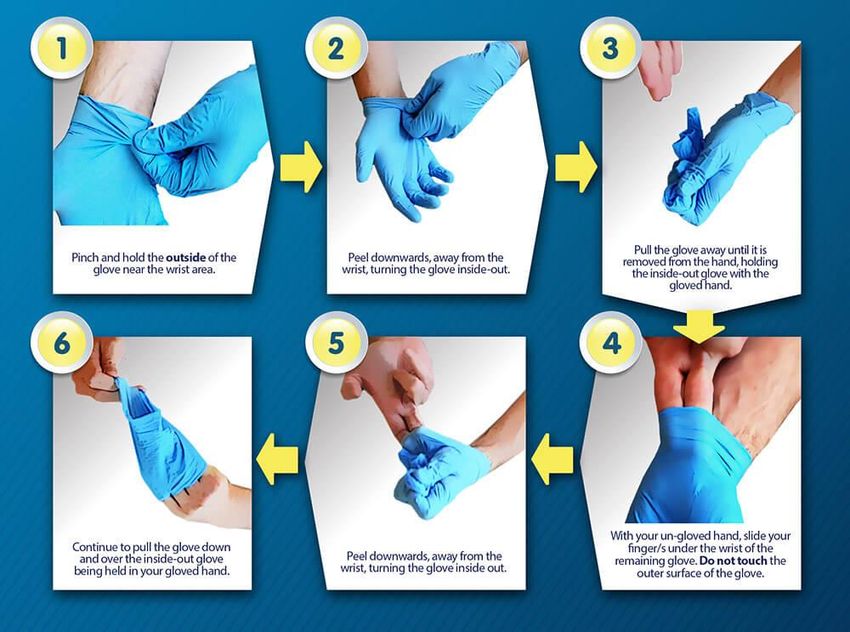
See below illustration for the correct method for the disposal of gloves.
• Pinch and hold the outside of the glove near the wrist area.
• Peel downwards, away from the wrist, turning the glove inside out.
• Pull the glove away until it is removed from the hand and hold the inside-out glove
with the gloved hand.
• With your un-gloved hand, slide your fingers under the wrist of the remaining
glove, taking care not to touch the outside of the glove.
• Again, peel downwards, away from the wrist, turning the glove inside out.
• Continue to pull the glove down and over the inside-out glove being held in your
gloved hand.
• This will ensure that both gloves are inside out, one glove enveloped inside the other,
with no contaminant on the bare hands.
24
V.2 24.02.202125 V.2 24.02.2021
26.0 Heating, Ventilation, and Air-Conditioning (HVAC)

Ventilation refers to the movement of outdoor air into a building, and the circulation of that
air within the building or room, that will assist in minimising the spread of COVID-19.
This can be achieved through natural means (e.g. opening a window/door) or mechanical
means (e.g. a central heating, ventilation and air conditioning).
   •   Natural ventilation through the introduction of fresh air into the building. e.g.
       opening doors and windows weather permitting and without causing discomfort.
   •   Cross-ventilation is a good option for window ventilation as it facilitates the quick
       exchange of room air for fresh air through widely opened windows opposite to each
       other where possible, weather permitting.
   •   Propping open internal doors may increase air movement and increase natural
       ventilation rate. (Note: fire doors should not be propped open unless fitted with
       approved automatic closers so that they function as fire doors in the event of an
       alarm or fire).
   •   Mechanical ventilation through the use of HVAC (Heating, Ventilation and Air
       Conditioning) systems. These provide comfortable environmental conditions
       (temperature and humidity) and clean air in indoor settings such as buildings and
       vehicles.
   •   All mechanical ventilation systems should be set at 100% fresh air.
   •   Switching off air conditioning is not required to manage the risk of COVID-19

However, as many air conditioning, heat pump units just heat, cool and recirculate the air,
it is important to check ventilation systems to ensure that there is an adequate supply of
fresh air (from a clean source) and that recirculation of untreated air is avoided.

Where buildings have Local Exhaust Ventilation, the make-up air should ideally come from
outdoor air rather than from adjacent rooms.

The overall approach to ventilation to minimise the spread of COVID-19 should be to have
windows open as fully possible when rooms are unoccupied and partially open when the
room is in use. Windows do not need to be open as wide in in windy/colder weather to
achieve the same level of airflow into the room and will assist in managing comfort levels.

Check that boilers are operating at a temperature recommended by manufacturer to
maximise avilable heat in the building. Heating should be operated for extended periods
during cold weather to counteract, as best as possible, the impact of windows being open
(partially when the room is in use and fully when it is unoccupied) in order to maintain an
appropriate balance between good vetilation and comfort levels.

                                                                                              26
V.2 24.02.2021
Appendix A – Lead Worker Representative Checklist
Control Yes No Action Responsibility
Have you agreed with your Yes Mr. Séamus Kelly
principal/manager to act as a
Worker Representative for your
workplace or work area?
Have you been provided with Yes Online training Mr. Séamus Kelly
module has
information and training in
been completed.
relation to the role of Worker
Representative?
Are you keeping up to date with Yes On a daily basis Mr. Séamus Kelly
the latest COVID-19 advice from
Government?
Are you aware of the signs and Yes Return to work Mr. Séamus Kelly
training and
symptoms of COVID-19?
LWR training
has been
completed.
Updates from
the HSE are
reviewed.
Do you know how the virus is Yes As above Mr. Séamus Kelly
spread?
Do you know how to help Yes As above
prevent the spread of COVID-19?
Are you helping in keeping your Yes Emails to staff Mr. Séamus Kelly
with updates
fellow workers up to date with
from the HSE
the latest COVID-19 advice from and DES when
Government? relevant. Survey
of staff formally
and informally.
Have you completed the COVID- Yes
19 return-to-work form and
given it to your employer?
Are you aware of the control Yes All staff have
bee sent a copy
measures your employer has put
of the school’s
in place to minimise the risk of Covid response
you and others being exposed to Plan. Information
27
V.2 24.02.2021COVID-19? shared at staff
meetings.
Did your employer consult with Yes A number of Mr. Séamus Kelly ,
meetings prior to Principal and Dep
you when putting control
the school Principal.
measures in place? reopening in
Sept and again
March with
Principal &Dep
Principal.
Regular
consultation with
the caretaker.
Have you a means of regular Yes I am in daily Mr Séamus Kelly,
contact with Principal and Dep.
communication with your
management Principal.
employer or manager/principal? and we have
both, formal and
informal
meetings on an
ongoing basis.
Are you co-operating with your Yes As above.
employer to make sure these
control measures are
maintained?
Have you familiarised yourself Yes Mr Séamus Kelly.
with the cleaning requirements
needed to help prevent cross
contamination?
Have you been asked to walk Yes I walk around Mr. Séamus Kelly.
our place of
around your workplace / work
work, every
area daily and check that the morning and
control measures are in place every afternoon
and are being maintained? checking that
control
measures are in
place.
Are you reporting immediately to Yes Mr. Séamus Kelly.
your employer /
manager/principal any
problems, areas of non-
compliance or defects that you
see?
28
V.2 24.02.2021Are you keeping a record of any Yes Any problems Mr Séamus Kelly.
will be brought to
problems, areas of
the attention of
noncompliance or defects and management.
what action was taken to remedy
the issue?
Are you familiar with what to do Yes All staff have Mr Séamus Kelly
been made and senior
in the event of someone
aware of the management.
developing the symptoms of measures and
COVID-19 while at work? location of the
isolation
room(s).
Are you co-operating with your Yes Mr Seamus Kelly.
employer in identifying an
isolation area and a safe route to
that area?
Are you helping, as part of the Yes When suitable Mr Séamus Kelly
and if the and senior
response team, in the
Principal and management.
management of someone Deputy Principal
developing symptoms of COVID- are unavailable.
19 while at work?
Once the affected person has left Yes Mr Séamus Kelly
and senior
the workplace, are you helping in
management.
assessing what follow-up action
is needed?
Are you helping in maintaining No Ms. Brenda O’
Malley and Mrs.
the worker contact log?
Catherine O’
Hora(Secretary).
Have you been made aware of Yes First aid Mr Conor O’ Reilly.
responders have
any changes to the emergency
had refresher
plans or first aid procedures for training courses
your workplace? within the last 12
months.
29
V.2 24.02.2021Are you making yourself Yes I am in regular Mr. Séamus Kelly.
contact with all
available to fellow workers to
staff members
listen to any COVID-19 control both informally
concerns or suggestions they through face to
may have? face discussions
and formally via
emails and staff
meetings.
Are you raising those control Yes Yes, all issues Mr. Séamus Kelly.
raised by staff
concerns or suggestions with
are brought to
your employer or the attention of
manager/principal and feeding school
back the response to the worker management.
who raised the issue?
Do you know what supports are Yes Our school is
very proactive in
available if you are feeling
terms of the well-
anxious or stressed and will you being of both
pass this information on to your and students
fellow workers? alike.
Are you aware of the availability Yes I have recently School
of the Spectrum Life Wellbeing been made management.
aware of this
Together Programme? resource.
Have you been provided by Yes Mr. Conor O’
Management with the supports to Reilly.
which you are entitled in your
role as Lead Worker
Representative?
If you are in a school, have you Yes Mr Séamus Kelly.
watched and do you understand
the online Induction Training
provided by the Department of
Education before returning to
workplace?
If you are a teacher, have you Yes Mr Conor O’ Reilly.
been provided with the 2 hours
per week of protected time off
class contact hours, as provided
for in the protocol?
If you are a school secretary or a N/A
caretaker have your duties been
re-prioritised by school
management to afford you
sufficient time to carry out your
duties as LWR within the scope
30
V.2 24.02.2021of your normal contracted hours,
as provide for in the protocol?
Appendix B – COVID-19 Location Risk Assessment
Hazards Is the What Risk Control measures Is this If no, what Person Date
hazard is the rating control actions are responsible action
present? risk? H = High in required to completed
M= place? implement the
control?
Y/N Medium
L = Low Y/N
COVID- Y Illness/ H All employees of the school Y In almost all Actions
19 Spread of will complete a pre-return to cases the completed
virus work form. person/ for first
Employees have been persons return to
instructed on the actions responsible work phase
that need to be taken in the for carrying Completed
event of a suspected out all August 28th
case/confirmed case which actions is the
forms part of the COVID 19 Principal and They are
response plan and employee Deputy regularly
induction. Principal in reviewed
consultation and were
and with completed
assistance by March
from those 1st for
with phased
assigned return to
roles i.e the School 2021
caretaker,
cleaners ,
aide , H&S
rep and
LWR.
COVID- Y Illness/ H All learners of the school will Y
19 Spread of complete a pre-return to
virus school form if over 18, or
parents/guardians will fill the
form for those under 18 as
part of the phased return to
school on March 1st 2021
COVID- Y Spread of H Classrooms have been laid Y
19 virus due to out in accordance with DES
lack of guidelines with 1m distance
physical between learner’s desks and
distancing 1-2m distance from the
teacher’s desk. Perspex
screens have been installed
31
V.2 24.02.2021Hazards Is the What Risk Control measures Is this If no, what Person Date
hazard is the rating control actions are responsible action
present? risk? H = High in required to completed
M= place? implement the
control?
Y/N Medium
L = Low Y/N
at the teacher’s desks where
required. Floor stickers to
show where front legs should
be as a guide, to maintain 1m
distance.
There are a number of self-
contained offices within the
school, however the
secretary’s office door has
been adjusted to a half door
with a lockable bottom half
to restrict people entering
that would pose a social
distancing issue.
Sanitising protocol in all
rooms, students must
sanitise desks and chair
before sitting , when
entering a new classroom.
Teacher/ SNA to wipe
teacher’s desk & chair before
leaving a room.
The school operates a clean
desk policy , no personal
items , books etc. to be left
on teacher’s desks or
students where relevant.
No sharing of equipment is
allowed unless in situations
where it is unavoidable i.e.
practical rooms. All cleaning
and sanitising protocols to be
adhered to.
COVID- Y Spread of H Year groups have been
19 the assigned base classrooms as
virus/illness recommended in the
due to lack guidelines. Students have
of physical been assigned a base seat
distancing/ and must return to this seat
lack of when eating lunch.
sanitising. Students must eat at their
assigned desk and be mindful
of the time spent with masks
off.
When in elective subjects
they will be moving to
different rooms, all sanitising
protocol to be adhered to
when in any room.
Practical room protocols re:
sharing tools/ equipment are
being adhered to. Please see
DES guidelines.
32
V.2 24.02.2021Hazards Is the What Risk Control measures Is this If no, what Person Date
hazard is the rating control actions are responsible action
present? risk? H = High in required to completed
M= place? implement the
control?
Y/N Medium
L = Low Y/N
As above H Introduction of 2 break
times and 2 lunchtimes.
No basketball or soccer at
those times, reviewed after
Oct midterm and a rota for
use of the courts created to
ensure no mixing of year
groups.
Further review on March 1st
for phased return of
students, currently no basket
ball or soccer allowed at
lunchtimes.
COVID- Y Spread of Students and staff are
19 the inducted as to required
virus/illness sanitising protocol in the
due to classroom, overflow area
insufficient and common areas.
cleaning Desks and chairs to be wiped
protocol with suitable wipes which
are provided in every room.
Everyone entering and
leaving a room must use
hand sanitiser provided.
Y Spread of H All staff rooms to be held Y
the remotely.
virus/illness All Parent& Teacher
due to the Meetings suspended.
lack of
physical
distancing
Y Spread of H Signage re social distancing Y
the virus on the basketball court fence
due to the and facing wall. Hand
lack of sanitser units outside.
physical Update: with the phased
distancing return of learners we have
asked learners to wear masks
outside when unable to
maintain a 2m distance. (
from March 1st 2021)
Y As above H Signage on the front door Y
entrance and new extension
entrance to inform the public
that only staff and learners
are allowed past the front
door. Signage instructing
everyone entering to follow
all COVID-19 protocols re:
,mask wearing distancing and
hand sanitising. However in
the event that they need to
enter the building , they have
to report to the secretary’s
office and comply with filling
the visitors log.
33
V.2 24.02.2021You can also read


