CROSSING THE LICENSING CHASM: How to Leverage Technology to Transition to a Recurring Revenue Model - Novotech Technologies
←
→
Page content transcription
If your browser does not render page correctly, please read the page content below

CROSSING THE LICENSING CHASM:
How to Leverage Technology to Transition to a Recurring Revenue Model
 This paper discusses the growing trend toward subscription and consumption-based revenue generation and the
 transition from product-centric to customer-value-centric business models. Our goal is to help you understand
 the value of software as a business enabler and how taking advantage of the software monetization technology
 stack can help ease the transition from one-time product sales to stronger and more predictable recurring
 revenue streams. We also share a real-life example of how one company is leveraging the technology stack
 to enable, manage, and automate recurring revenue streams to enhance the customer experience, generate
 recurring revenue, and improve business efficiency.

                                                           Published by Gemalto in cooperation with: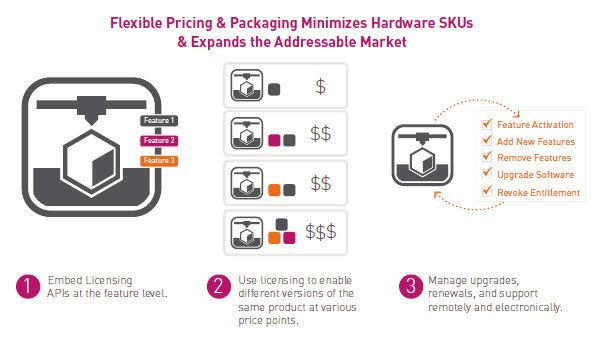
Table of Contents
         Introduction................................................................................................................3

         The Software Monetization Technology Stack...........................................................3

         Becoming More Customer-Centric...........................................................................4

         Pricing & Packaging Considerations..................................................................... 5-7

         Software Licensing and Entitlement Management............................................... 7-8

         Cloud Billing Technology........................................................................................ 8-9

         Back-Office Automation.............................................................................................9

         Putting it All Together......................................................................................... 10-11

         Final Thoughts.......................................................................................................... 12

         Next Steps................................................................................................................. 12

         About Simon-Kucher Partners................................................................................ 12

         About Aria Systems.................................................................................................. 12

         About Gemalto Software Monetization Solutions................................................... 12

Crossing the Licensing Chasm: - White Paper                                                                                               2
Introduction                                                   The Software Monetization Technology Stack
          We live in a customer-centric, software and services-          Using the right technology is core to optimizing innovative
          driven world. Customers are now driving decision               business models and recurring revenue streams. And
          making, and they increasingly expect immediate access          rather than trying to cobble together a solution on
          and value-based pay-as-you-go options for goods and            your own, we recommend you use existing commercial
          services.                                                      technology to your advantage.
          If you are thinking about moving to recurring revenue          Leveraging software monetization technology refers to
          business models for your products and services, you’re         the application of software license management, and
          not alone.                                                     billing technologies to enforce business rules with the
                                                                         goal of ensuring software-based products are properly
          There is a strong trend toward using subscription, usage-
                                                                         licensed and paid for. Whether based on a one-time fee, or
          and consumption-based recurring revenue models based
                                                                         a recurring pre-or post-paid subscription based on time,
          on how customers think about price and value.
                                                                         feature usage, metered consumption, or any combination
          Recent Aria Systems research finds that only 9 percent of      of these, your products must be properly licensed and
          U.S. companies will rely on one-time sales in the future,      paid for.
          with 91 percent looking to adopt some form of recurring
                                                                         As business and deployment models have evolved, so too
          sales to boost their performance. i
                                                                         has the ecosystem of technology to enable, manage, and
          IDC forecasts, by 2018, 60 percent of manufacturers of         automate the software monetization process.
          connected devices will generate recurring revenue via a
                                                                         For example, software licensing and entitlement
          software-based offering or service. And by 2019, more
                                                                         management systems that once focused primarily on
          than 50 percent of all industries will price and package
                                                                         dongle- or software-based license enforcement have
          their offerings as services with flexible subscription- or
                                                                         evolved into powerful business enablement, customer
          consumption-based pricing models. ii
                                                                         experience, and operational efficiency platforms. Modern
          Adapting customer-driven subscription and usage-based          software protection and license management systems
          revenue models can be advantageous for your company            protect your intellectual property from tampering, enable
          and your customers.                                            sophisticated and complex licensing and business model
                                                                         capabilities, track and report on usage, and automate
          >> Recurring revenue models enable you to deliver
                                                                         anytime, anywhere customer self-service licensing,
            greater value to customers and earn greater market
                                                                         activations, and updates.
            differentiation with longer and more predictable revenue
            streams.                                                     Likewise, with growth in SaaS deployments and usage-
          >> A service-based approach to business models allows your     based billing, the term ‘software monetization’ is also
            customers to shift what were once large one-time capital     being used to describe billing solutions that track usage
            equipment expenditures to monthly operating budgets.         per account, issue invoices, and automate billing and
                                                                         subscription renewals.
          But transitioning to a recurring revenue model is not as
          easy as changing your product to a subscription service,       These two examples alone, show how the lines can be
          dusting off your hands, and getting on with your day. It’s a   blurry regarding which technology does what, how the
          change that not only affects how you sell your products,       pieces fit together, and how to leverage the technology
          it also affects your entire business – from product            stack to enable, manage, and automate your software/
          marketing and accounting to customer service and back-         services-based business and recurring revenue streams.
          office operations.
          To make the move to recurring revenue, you need to
          resolve what your packaging and pricing strategies will                                   Software
          be. Then, you will need to determine how to implement                                    Licensing &
          and manage it all. How will you enable and disable                                       Entitlement
          features? How will you track and control usage? How will                                 Management
          you bill your customers? How will you offer customer
          self-service? How will you ensure that your back office is
          equipped to handle the strategies you devise today and
          flexible enough to manage your business as it evolves into                     Customer                Back-Office
          the future?                                                                     Billing                Automation
          The answers? Leverage technology to help enable and
          automate the recurring revenue process.

                                                                         Figure 1: The Software Monetization Technology Stack

Crossing the Licensing Chasm: - White Paper                                                                                            3
The goal of this paper is to provide clarity by focusing “By 2018, 60% of manufacturers of connected
on pricing and packaging considerations and how using devices will generate recurring revenue via a
the licensing and entitlement management, customer
software-based offering or service.”
billing, and back-office automation pieces of the software
monetization technology stack can help you accomplish –IDC Research
your recurring revenue goals.
IDC predicts that by 2019, more than 50 percent of all
Becoming More Customer-Centric industries will price and package their offerings as
services with flexible subscription- or consumption-based
Companies all over the world are transforming the way
pricing models. And by 2018, 60% of manufacturers of
they do business by moving from a product-centric to
connected devices will generate recurring revenue via a
customer-centric approach to business models. ii
software-based offering or service. ii
Figure 2: Business Evolution from Product-Centric to Service-Centric ii
Product Centric Service Centric “74% of respondents
Strategy Objectives Product Focus Customer Focus indicated a closer
Value Proposition Innovative Technology Customer Experience relationship with their
Financial Model Transaction Value Lifetime Value customer was the
Value Model Value Chain Value Agility
principle motivator behind
Process Thinking Business Processes System Thinking
their service offerings.”
Operational Approach SKUs & Product Catalogs Consumption/Usage
Organizational Structure Hierarcal Matrix
Ubiquitous software and connectivity, hardware “Nearly half (46%) of
commoditization, advanced IoT technologies, data/
intelligence, and the customer-value-driven service
respondents are looking
and subscription economies are all contributing to the to improve profitability
transformation. through added-value
Software is Everywhere services.”
Software is an enabler of this transformation
and becoming key to innovation and competitive –Hennik Research, in association with
differentiation. Devices are increasingly connected to the TheManufacturer.com
cloud and can be accessed, monitored, and controlled
from almost anywhere using apps on mobile devices. In a recent Hennick Research survey conducted in
association with The Manufacturer.com, 74 percent of
Instant Gratification and Value respondents indicated a closer relationship with their
Over the past decade or so, technology and connectivity customer was the principle motivator behind their service
have made us more sensitive to purchasing only the offerings. And nearly half (46 percent) of respondents
product and service features we need, when we need are looking to improve profitability through added-value
them. And then paying for those products and services services. iv
based on the value or outcomes we receive.
“By 2019, more than 50% of all industries will
A few examples include Netflix, Spotify, and GM’s new
luxury vehicle subscription service, ‘BOOK by Cadillac.’ iii price and package their offerings as services
with flexible subscription- or consumption-based
It’s now common to choose the features that suit our
needs and then pay for them on a monthly subscription pricing models.”
basis or as needed based on our use or consumption of –IDC Research
those products and services.
What began with software-as-a-service over a decade ago
Increasingly, we’re paying for service availability is now transforming entire industries—from music, video,
instead of a product in a box. home automation, transportation, and medical devices to
industrial automation.
Everything-as-a-Service
This instant gratification, pay-as-you-go service Becoming more service-centric means having to sell
phenomenon has crossed over into the B2B world as well. differently.
Pricing & Packaging Considerations
As part of selling differently, your pricing methodologies
need to change. Companies transitioning their value from
hardware to software and from on-premises to cloud, find
Crossing the Licensing Chasm: - White Paper 4the way they used to charge for their products no longer Conversely, changing the revenue model and the way
works for their new business models or new go to market. customers think about price and value can be a strategic
Aside from a major deployment transition, companies option at any point in time. This is not to say that you
also realize that recurring revenue models provide longer should change your revenue model frequently to increase
and more predictable revenue streams and make their your pricing power year over year. But rather, you can
products more affordable across a wider breadth of change your pricing model at any time to help customers
potential clients. better understand the value you provide, make direct
pricing comparisons more difficult, provide a means to
A recurring revenue model is not only about price levels;
differentiate prices, and align pricing closer to customer
it is also about how price is communicated, what it means
value and willingness to pay.
as a measure of value for a customer, and how products
and services can be configured to best align with your Nearly two-thirds of respondents who are under price
company’s adoption and cross-sell strategies. pressure want to change or are actively planning to
change their price model. v Given this data, however,
Dealing with Pricing Pressures
transitioning to a recurring revenue model will have
A recent pricing study by Simone Kucher and Partners
broader implications on product structure, the way your
found that 83 percent of respondents face increasing
organization interacts with your customers, and the way
price pressure, with 58 percent of respondents stating
your customers interact with your product. Therefore, it
that they are in a price war. These numbers are also
is important to consider your revenue model transition
reflected in companies’ inability to achieve their price
carefully and make sure the components work together to
increases. Companies trying to increase their prices last
meet your organization’s goals.
year reported they were only able to achieve 37 percent of
the total price increase, which is the lowest price increase Three Components to Driving Recurring Revenue
achievement ever recorded by this study. v As you begin to set the stage for pricing, there are primary
components you need to consider. Each component is
These statistics reflect dire circumstances for many
relatively straight forward, but when considered together,
companies. However, respondents are using multiple
what is best for one component is often a poor choice
options to help escape these oppressive market
for another component. Understanding what the typical
conditions. As you can see from figure 3, the top two
options are for each component and considering your
ways companies overcome pricing pressure are through
entire revenue model in concert will help you create
product innovation and by changing their revenue model.
a sustainable recurring revenue model that will drive
Introducing new, innovative, or differentiated products is additional income for your company.
a powerful lever for breaking out of a price erosion spiral.
The first component is acquisition. In traditional perpetual
However, this is not always an option for all companies,
licensing models, customer acquisition is the main
and there are times when innovations are not a big
priority since customers commit to making a large up-
enough change to alter the basis of competition.
front investment. Retention on maintenance in this model
is relatively important, but the likelihood of churn to a
Top 5 options to escape oppressive market conditions* competitor is much lower since switching costs—i.e. the
up-front cost of new perpetual licenses—are so high.
Introducing new, innovative, or differentiated The second component is retention. In recurring revenue
26%
products
models, acquisition is important, but retention is arguably
Changing the revenue model and the way
customers think about price and value
20%
more important because customers pay as they go and
Strenthening sales & marketing functions
can opt out any time if perceived value drops. This is not
19%
to support value creation & communication the case with large capex perpetual licensing models.
Reducing our variable or fixed costs 16%
The third component is monetization. This component
Changing mindset and confidence in our is driven by the price you can charge and how well you
12%
ablility to implement higher prices
can upsell and cross-sell value and features to your
Share of respondents*
customers over time to increase customer lifetime value.
Figure 3: Overcoming Marketing Pricing Pressure, Global Pricing Study
2016, Simon-Kucher Partners Individually, each of these components may seem
relatively easy to improve as you switch to a recurring
revenue model. However, a closer look at achieving all
three of these goals at once reveals clear trade-offs that
must be balanced to achieve a successful recurring
revenue model.
Crossing the Licensing Chasm: - White Paper 5Often your solution may be too comprehensive for a single
Good/Better/Best lineup, in which case your packaging
Acquire will need to break out by functional packages first. This
Low
More value
commitment
is often the case for enterprise software companies. For
for less
some companies, these functional bundles are comprised
of each of the services they provide (e.g. financial
management, human capital management). Other
Price
Packaging
The model companies have much more granular functional packages
recurring
revenue
and work to simplify their offer by having a defined base
More value
trade-off
High platform as a set entry point.
for more commitment
Price level
Packaging is a spectrum of flexibility, with the
Monetize Retain most common permutations listed here
Increase prices Hold prices
Least flexible, Degree of f customer flexiblity Most flexible,
but simple but complex
Figure 4: The Recurring Revenue Tradeoff, Monetization Strategies for
Subscription Businesses, Simon-Kucher Partners
The Recurring Revenue Trade-Off All-you- Functional
Good/
Better/
Platform-
Functional
Build-your-
can-eat Packages Best own
Packages
>> Acquisition vs. Monetization: A low-price strategy can fuel
acquisition efforts, but once you have established a pricing
anchor, it is very difficult to increase annual contracts Base Platform
more than 4-5 percent per year.
>> Acquisition vs. Retention: Increasing acquisition could
take the form of lower commitment terms, which could Figure 5: Packaging Spectrum
increase churn.
Good/Better/Best and Functional Packages are not
>> Retention vs. Monetization: When trying to retain the only options when it comes to packaging, but they
customers, the temptation is to maintain prices so you can help manage the tradeoff between acquisition and
don’t rock the boat, which sells short the monetization of monetization by providing smaller package options for
continual product investment. customers who need a lower barrier to adoption. Larger
As figure 4 illustrates, the recurring revenue trade- packages can be offered for customers who have the
off is a multi-dimensional balancing act, which is why need and willingness to pay for larger packages. These
transitioning to this model is especially challenging. Each packaging structures will also help retention since it is
of these trade-offs can be addressed through specific well observed that retention increases with increasing
product elements: packaging, price model, or price levels. product engagement—i.e. larger packages.
Managing the Acquisition and Monetization Trade-Off Managing Acquisition and Retention with Price Models
with Packaging One of the more difficult components in managing price is
Companies looking to transition to a recurring revenue determining how to charge and collect from customers.
model typically have one all-you-can-eat offer or a large This decision impacts how much they will pay during
menu of options that can be used to configure the right acquisition and over time, which influences retention.
product for a customer. An all-you-can-eat offer is simple
Traditionally, on-premises software required a perpetual
to communicate and provides more potential value to a
license with a large upfront investment. With recurring
customer, which makes acquisition easier. The menu of
revenue models, you have more flexibility and aren’t
options, on the other hand, provides many paths to upsell
locked into a specific price as you can change prices over
and cross-sell—especially if customers have different needs.
time. These price changes can be based on how much
Both options, however, force you to one end or the other in customers purchase up front, how much they purchase
this tradeoff. There are additional packaging options that over time, and how their level of engagement changes
can land you somewhere in the middle, depending on how over time.
much flexibility and simplicity you want in your packages.
Recurring revenue models present the opportunity to tie
One of the more widely used packaging options is Good/ pricing to value through usage-based models. The most
Better/Best, which, as its name suggests, provides granular version of this model is pay-as-you-go, which
increasing features and value. This approach provides a correlates how much customers pay with how much is
clear upsell path and allows you to communicate higher used (e.g. time, documents, transactions). This model
prices for higher value. helps manage the tradeoff between acquisition and
retention. For instance, you can charge a customer less
for low usage, but increase that amount over time as they
increase engagement with your product and achieve more
value from it.
Crossing the Licensing Chasm: - White Paper 6The challenge with pay-as-you-go models is the from production to post-sale activities like maintenance
unpredictability it presents for your customer. If you and renewals.
charge based on their use, and their usage is growing,
As mentioned earlier, one of the key aspects of capturing
it could be difficult for them to predict and budget
recurring revenue is to move towards differentiated
for. You may also have minimum setup and servicing
packaging. Another key aspect is being able to capture
requirements to ensure each additional customer is
product and feature usage data to support complex
profitable. There are a variety of price models you can use
pre- and post-paid revenue models. Leveraging a secure
to help reduce the risk for you and your customers:
licensing and entitlement management technology will
help you do both.
>> Adaptive flat rate—price per time period is predetermined
but changes over time based on historical usage Flexible Packaging Enabled by Licensing and Entitlement
Management
>> Hockey stick—there is a base price to begin with, but can
The shift to recurring revenue requires a focus on what
turn into a usage-based model if a threshold is hit
your customers value most. Feature-based licensing
>> Floor to cap—hockey stick + a cap to limit the maximum
allows you to enable and disable product features on-the-
amount a customer must pay fly based on your individual customers’ preferences.
>> Two-dimensional—flat upfront fee plus a usage-based fee,
Regardless of whether it’s software or an intelligent
which can be relatively lower because of the upfront fee
device, if it’s software or firmware-based, a Software
>> Capped pay-as-you-go—usage-based pricing with a
Monetization solution will allow you to license individual
maximum amount that can be charged features and feature sets.
>> Regressive—like pay-as-you-go, but the price per usage
What’s more, you don’t need to unlock these features
decreases over time to achieve volume discounts
until the software or device are commissioned on your
Managing Monetization and Retention with Price Level customer’s premises. This increases flexibility, and in
Getting your packaging and pricing model right helps the case of intelligent devices, reduces the number of
manage the tradeoff between monetization and retention, hardware variants to be manufactured.
but you will likely need to increase the price over time to Software licensing technology enables you to:
help offset increasing costs and recoup additional value.
Most companies don’t implement price increases at all, >> Deploy feature-based business models to provide your
or if they do, they define a blanket price increase across customers with the specific functionality they require.
all their customers and try to achieve the same increase >> Configure your devices for individual customer
for everyone. The former avoids customer churn, and the preferences; during production or after commissioned
latter can push customers over the edge if they already on the customer’s premises.
feel they are paying too much. >> Remotely enable and disable features electronically
The key to this tradeoff is to differentiate price level at any time to accommodate evolving customer
increases based on customer risk and customer requirements or your own proactive upsell campaigns.
willingness-to-pay. As you identify these, keep in >> Reduce inventory costs by defining your products
mind different customers and segments can have according to features rather than SKUs.
different target increases to maximize the likelihood The following example illustrates how feature-based
those increases will be achieved. It is also helpful to licensing facilitates packaging flexibility.
systematically track the reasons for price increases
to help communicate the rationale. Continual product
improvements, increases in usage, or increases in the
amount of support provided are a few examples.
Once you’ve made your pricing and packaging decisions,
we recommend you take advantage of the software
monetization technology stack to enable and automate
the recurring revenue process. The first component
to leverage is software licensing and entitlement
management technology.
Software Licensing and Entitlement Management Figure 6: Feature-Based Licensing Using Software Licensing &
Entitlement Management
A software/services-centric business model requires
a new approach to go to market including intellectual Feature-based licensing enabled by software licensing
property protection, secure and flexible licensing, and entitlement management makes it possible to provide
delivery, provisioning, and packaging. It also requires that customer value, increase product variety, and lower your
you maintain the complete lifecycle of a software product production costs at the same time.
Crossing the Licensing Chasm: - White Paper 7Usage Insight Enabled by Licensing and Entitlement Software Monetization technology provides the tools you
Management need to create and support relationship-based service
Tracking and analyzing software or device usage provides models and attractive purchasing options based on your
powerful insight into how your products are being used customers’ desired outcomes.
and enables you to make informed business decisions.
Recurring revenue models provide multiple options for
Software monetization technology enables you to monitor monetizing your products and allow your customers to:
and report on product feature usage and provides
>> Pay a fixed monthly subscription fee
valuable information for:
>> Pay based on timed use or metered consumption
>> Driving future packaging strategies - Tracking feature
>> Pay-per-feature or set of features used
usage can help you decide which to package into a
baseline product and which can be sold as added value Additional Licensing and Entitlement Management
– so you can accurately address the value and outcomes Capabilities
your customers desire. A robust software licensing and entitlement management
solution can do much more than enable recurring revenue
>> Billing & end-user compliance - Tracking and reporting
and flexible packaging options; it will also enable you to:
on device and feature usage is critical to ensure end-user
compliance and to feed billing systems >> Protect your intellectual property from tampering, reverse
>> Optimizing product roadmap investments - Insight engineering, and theft.
into how your products are used is a key component of >> Ensure end-user compliance with license agreements.
effective product line management. A full understanding >> Track, control, and report on use of products and features.
of which features are used and to what extent is an easy
>> Manage all licensing operations for on-premises,
way to identify where to invest or divest your engineering
cloud, and embedded software including packaging,
resources.
provisioning, customer self-service, automated electronic
>> Identifying up-sell, cross-sell and renewal opportunities - delivery, activation, and updates.
Easily run reports to identify: who is ripe for renewal, who
Once you have implemented a commercial licensing and
may be a good candidate for an upsell, who may want a
entitlement management technology, the next component
complementary product, etc.
in the software monetization technology stack is customer
Implementing a Software Monetization technology billing.
that features sophisticated licensing and entitlement
management provides a means to start tracking product Cloud Billing Technology
activation and usage down to the feature level. A Wider Variety of Monetization Models
To take full advantage of recurring revenue models,
companies are also moving beyond basic subscriptions
and using more complex usage-based and hybrid models.
However, legacy billing infrastructure usually cannot
provide the speed and flexibility that is required. The last
generation of on-premises billing systems encumber the
process by requiring IT intervention to code in changes,
which is time-consuming, expensive, and far too slow for
today’s fast-moving markets.
User-configurable, cloud-based billing platforms not only
Figure 7: Modern Licensing and Entitlement Management Solutions Track help manage the process, but enable business users to
Product Activations and Usage to the Feature Level
efficiently test product plans, bundles, and promotions
Recurring Revenue Models Enabled by Licensing and and then quickly iterate based on the results.
Entitlement Management
If you launch a product, test it, then find that it’s not
Business model innovation facilitated by a proven
working, additional testing is probably required. Maybe
software monetization technology enables you to
the pricing is too high or the subscription period is too
configure and sell your products and services based on
long. With an agile billing and monetization platform,
what your individual customers value and are willing
you can change prices, packaging, and other parameters
to pay.
very quickly. Cloud-based billing solutions allow these
A commercial software monetization solution enables changes to be quickly implemented by the business user
subscriptions and service-based pricing models based on instead of bothering IT, who are often occupied with
time, usage, or consumption. another project. Conversely, using legacy on-premises
systems, which require manual coding, could take weeks
or even months to make the same changes, depending
on the speed of your IT team and your place on their list
of priorities.
Crossing the Licensing Chasm: - White Paper 8Flexible Monetization Gone are the days of delivering goods and then
Speed to market is critical, but it’s not the only thing. communicating with customers only when payments are
Your billing technology also needs to be flexible to due. Products and services consumed on a recurring
account for irregular events like one-time charges, basis mandate an ongoing relationship with customers. If
binge consumption, or activation and cancellation fees. you fail to nurture this relationship, your customers will
Any number of metrics may also be attached to usage find someone else who will.
and consumption, such as thresholds, rollovers, and
Moving Forward
tiered pricing. This allows your business to meet each
What happens when the ability to add remote sensors to
customer’s unique needs and implement customer-
your product allows you to monitor its performance in
demanded models such as flat rate subscription,
real-time or gives your customers the ability to operate
freemium, pay as you go, tiers, volume discounts, pooling,
your product remotely? Will you be able to monetize the
high water mark pricing, etc. Importantly, all these plans
added value you provide to your customer, or will you be
need to be efficiently created without the exponential SKU
constrained?
creation, which adds complexity and invites errors.
Going forward you’ll need to become more creative in how
Companies also need flexible account management to
you package and deliver services to differentiate yourself
facilitate the myriad customer account relationships that
from your competitors, and you’ll need flexibility. That
naturally occur. With a hierarchical account structure,
flexibility comes from a billing and monetization solution
all the customer information is efficiently aggregated
that provides the tools and building blocks to create new
for automated assignment and proper recognition
offerings and new pricing options, without limitation,
including individuals, business units and geographies,
whenever you need them.
and distributor channels. Platforms that support
unlimited levels of account hierarchies with parent-child Companies that modernize their billing systems will be
relationships can be created to ensure that invoicing and the ones to survive and thrive in this exciting new era;
reporting meets both the needs of the business and the others will be left behind.
demands of the customer, who increasingly demand near
The third focus in our software monetization technology
custom billing.
stack is automating the back-office.
Enhancing Loyalty and Customer Lifetime Value
In a recurring revenue model, billing isn’t the end of the Back-Office Automation
customer relationship; it’s just the beginning. To maximize Once you have the technology in place, it makes sense to
both the customer experience and product profits, your integrate your back-office systems to automate the cash to
billing platform must allow you to manage every revenue quote, to delivery, and update process, and add operational
moment within the customer lifecycle. efficiency. Integrating your licensing and entitlement
management, billing, ERP, CRM, and marketing automation
Revenue moments occur each time a customer interacts
systems will streamline your operational processes and
with your product or service. Each of these moments
provide the best customer experience.
create an opportunity to optimize the exchange, increase
revenue, and add another positive experience that extends Leveraging the software monetization technology stack
your relationship with the customer. to improve your operational efficiency and provide the
improved value and outcomes your customers expect will
Potential revenue moments include:
help you drive both top- and bottom-line business growth.
>> Invoice delivery
>> Customer service inquiry
Putting it All Together
In this section, we’ll look at how Trimble Navigation
>> Welcome emails
is using three pieces of the software monetization
>> Renewal date reminders technology stack: licensing and entitlement management,
>> Credit card expiration/declines/dunning notifications billing, and back-office automation. By mastering the use
>> Service change requests of these tools and technologies to create better value for
its customers, Trimble is on the path to stronger long-
>> Nearing/exceeding consumption limits alerts
term profits.
You can (and should) use these revenue moments to
recommend relevant upsells or cross-sells based
on individual preferences, location, and needs. Even
including a customized happy birthday message will
stick out as a nice touch. With each thoughtful, positive,
personalized interaction, you add to the customer’s
lifetime value (CLV), cultivate loyalty, and strengthen the
steady, predictable stream of income to build a reliable
future for your business.
Crossing the Licensing Chasm: - White Paper 9Case-In-Point: Trimble Navigation Trimble Connect also marked the launch of
Gemalto and Aria Systems Power Trimble’s recurring revenue business models for the company,
Transition to Recurring Revenue which is to be the cornerstone for providing more
Trimble Navigation connects the physical and digital predictable revenue and accelerating growth. The
worlds through GPS-based products and services. product can be purchased as a basic subscription
A quintessential hardware company offering high- with the ability to pay per use. To enable this new
value devices, SaaS and recurring revenue is of business model, Trimble leveraged Aria Systems’
strategic importance to Trimble as the company cloud billing and monetization platform, which helps
transitions from mechanical to digital solutions. the company quickly launch, test, and monetize
product offerings in any way they could dream up.
To provide anytime-anywhere access and new
Aria gives Trimble the flexibility to offer a variety of
revenue models that support customer-driven value
plans that can be purchased in many ways so that
and outcomes, Trimble is extending its portfolio
the wide variety of stakeholders on a project can
with service-based offerings to provide incremental
access the platform in the best and most affordable
and ongoing recurring revenue streams — and add
way for their respective business.
dollars to its bottom line.
Trimble Catalyst:
To enable the evolution, Trimble Navigation is
Leveraging Gemalto Sentinel Licensing &
leveraging the software monetization technology
Entitlement Management to Enable Innovative
stack with a combination of secure licensing
Service-Based Business Models & Customer
and entitlement management from Gemalto and
Self-Service
cloud billing and monetization from Aria Systems.
Mountains were originally measured in the
Trimble began the transition with its Trimble
1950s and 1960s with technology not nearly as
Connect software and has since transitioned its
sophisticated and precise as the GNSS technology
Trimble Catalyst solution as well as its Aerial
available today. From high upon majestic, snow-
Photogrammetry Software and Services. Trimble is
covered mountaintops, Trimble Catalyst enables
also in the midst of a technology integration to fully
mountain-climbing teams to measure the world’s
automate and streamline its back-office operations.
tallest mountains with great precision.
Trimble Connect:
Over the years, the cost of standard GNSS
Leveraging Aria Systems Cloud Billing and
receiver hardware has declined and thus become
Monetization Technology to Handle Subscription
commoditized. In response to this trend, Trimble
Invoicing and Payments
developed Catalyst. The Trimble Catalyst software
The Westin at Denver International Airport is
adds valuable functionality to make GNSS hardware
an impressive landmark. Reflecting images of
more versatile and usable for more applications.
a bird in flight, the massive 433,000 square foot
building is a modern hotel, public transit center, Trimble Catalyst enables users to measure
and community gathering place. Getting the mountains as a service. Using Catalyst, users can
project from groundbreaking to grand opening was easily select the level of accuracy they need (one
enabled by Trimble Connect, a building information meter, submeter, decimeter, precision), based on the
management system where architects, builders, requirements of each job, without making any other
suppliers, and owners collaborated to ensure that changes to the GNSS equipment. Additionally, with
the Starwood property would open on time, to cellular connectivity, GPS data can be transmitted
spec, and on budget. The software got everyone to a central internet location for collaboration and
on the same page even when an 11th-hour change analysis. In the absence of connectivity, the system
order was delivered—an impressive feat for any stores the data and transmits the data when Wi-Fi is
construction project and a must-have available. Finally, these points can be geo-spatially
when thousands of jobs and billions of dollars added to Google Earth or Google Maps for archiving.
are at stake.
To enable subscriptions based on accuracy level,
To be successful, this system required a single Trimble uses the Gemalto software monetization
source of truth for everybody involved in the project platform to license accuracy levels as features.
from conception, planning, building, and operations. Gemalto Sentinel enables and simplifies the
Trimble Connect helps people across functions management of variable-accuracy licensing of the
stay on track uploading, downloading, and securing Catalyst software. Sentinel also enables a customer
important information and changes. self-service portal for activations, license transfers,
and accuracy-level subscription changes to reduce
installation and support costs and enhance the
user experience.
Crossing the Licensing Chasm: - White Paper 10Trimble Aerial Photogrammetry Software and
Trimble Gemalto Aria
Services: User needs a Sentinel EMS Aria knows
Leveraging Gemalto Sentinel Licensing & service knows user pricing
Entitlement Management to Protect IP, Enable
Order service Sentinel ems Aria knows
Pre- and Post-Paid Business Models & Customer in app manages payment info
Self-Service request
Using its aerial imaging software on a tablet PC, Service is Sentinel EMS Aria
Trimble can program a UX5 drone to accomplish Records the manages the
ready instantly license transaction
what used to take many years to accomplish with
manual surveying equipment. The imaging software Figure 8: Trimble Leverages the Software Monetization Technology
Stack to Automate the Back-Office
enables its user to enter their GPS coordinates and
program the drone for a 35-minute flight over the Trimble’s future plans include self-service
area. The drone captures a point and snaps a photo downloads and back-office integration to fully
every three centimeters; resulting in 10 gigabytes automate the subscription licensing, download,
of point data per flight, which takes two to three activation, upgrade/downgrade, and billing process.
days to process into a point cloud or 2D or 3D geo- Once integrated, the Gemalto Sentinel Entitlement
referenced maps. Management System ensures everything regarding
the request is legitimate and includes license
For indoor mapping and archiving, Trimble’s imaging
enforcement so that the services can’t be stolen or
software is also used with a tablet on a tripod to
abused. Then, once the user agrees to the terms
capture and create virtual replicas of buildings.
and conditions of the sale, the Aria Cloud Billing and
Trimble sells its Aerial Imaging software with the UX5 Monetization System ensures Trimble is paid for the
drone as a kit, with a perpetual license and annual services provided.
maintenance contract. Trimble offers point cloud data
Case-in-Point Conclusion
hosting for a monthly or annual subscription fee and
What this case in point demonstrates is how
a cloud-based processing service to take the raw
Trimble has taken a product-by-product approach
files from the UAS to 3D geo-referenced maps, using
to the transition as each of its applications and
a pre-paid, per-flight revenue model.
corresponding customer value preferences vary.
The Gemalto Sentinel Software Monetization By using a combination of licensing and entitlement
platform enables Trimble to protect its intellectual management, billing, and back-office automation
property and to create recurring revenue streams to ease the transition, Trimble is well on its way to
with pre- and post-paid subscription licensing transforming from a product-centric to a
models based on metered usage/consumption. customer-centric business.
Sentinel enables customer self-service activations,
license transfers, and subscription changes to Final Thoughts
reduce installation and support costs and enhance
The research shows that companies are transitioning
the user experience.
from product-centric to software and services-centric
Automating the Back-Office: business models. Subscriptions and recurring revenue
To Fully Automate the Subscription Licensing, models are on the rise and customers are expecting
Download, Activation, Upgrade/Downgrade, and to pay as they go based on the value they receive from
Billing Process your products and services. Making the transition from
Typically, when a user needs a service they want it large one-time sales models to relationship-based
right away, so Trimble needs a seamless process recurring revenue models will touch every part of your
that enables users to request services in the organization and requires a well thought out pricing
Trimble application or by some other method on the strategy and the proper technology. Those organizations
job site. Even though services are usually purchased that take advantage of what the software monetization
by monthly or annual subscription, time-based technology stack has to offer in licensing and entitlement
licensing and billing technology also makes it management, customer billing, and back-office
possible for Trimble to offer daily or automation will ease the transition and achieve the
hourly subscriptions. greatest success.
Next Steps
If you’ve found this paper useful and want to know more
about how to leverage technology to enable longer and
more predictable recurring revenue streams, check out
this webinar on the subject:
www.youtube.com/watch?v=shpCOymlJCg
Crossing the Licensing Chasm: - White Paper 11About Simon-Kucher Partners Join the Conversation
Simon-Kucher is a global consulting firm specializing in
strategy, marketing, pricing, and sales. Founded in 1985, > Facebook
https://www.facebook.com/Sentinel-Software-Monetization-1758261374199865/
the company focuses on TopLine Power® by helping
clients to boost their top line instead of cutting costs. With > LinkedIn
https://www.linkedin.com/showcase/10586190/
1,000 professionals in 33 offices worldwide, our practice
is built on evidence-based, practical strategies for profit > Twitter
improvement. For more information, visit: https://twitter.com/Sentinel_SM
www.simon-kucher.com > Google+
https://plus.google.com/u/2/111213966957422791805
About Aria Systems
> YouTube
Aria Systems’ cloud billing and monetization platform https://www.youtube.com/channel/UCO_hjzzJXm0wE7L1kxZjfcg
is top-ranked by leading research firms. Innovative
enterprises like Adobe, Philips, and Pitney Bowes > Blog
http://www.licensinglive.com/
depend on Aria to accelerate time to market and increase
flexibility, enabling them to maximize customer value and
©Gemalto 2017. All rights reserved. Gemalto, the Gemalto logo, are trademarks and service marks of Gemalto and are registered in certain countries. WP (EN)-June.22.2017 - Design: FR
grow recurring revenue through subscription and usage-
based offerings. For more information, visit
www.ariasystems.com
About Gemalto Software Monetization Solutions
Gemalto is the market leading provider of software
licensing and entitlement management solutions for on-
premises, embedded and cloud-based software vendors.
Gemalto’s Sentinel is the most trusted brand in the
software industry for secure, flexible, and future-proof
software monetization solutions. For more information,
visit: Gemalto.com/software-monetization
Sources
i
2016 State of Recurring Revenue Survey, Aria Systems and Gatepoint Research,
https://www.ariasystems.com/blog/2016-state-recurring-revenue-survey-results/
ii
IDC FutureScape: Worldwide Software Business Models and Monetization 2017 Predictions, November 2016, IDC Research,
http://www.idc.com/getdoc.jsp?containerId=US41995616
iii
http://media.cadillac.com/media/us/en/cadillac/news.detail.html/content/Pages/news/us/en/2017/jan/0105-cadillac-book.html
Annual Manufacturing Report 2016, Hennik Research in Association with TheManufacturer.com,
iv
http://www.themanufacturer.com/wp-admin/admin-ajax.php?action=download_pdf&file=/wp-content/uploads/2015/11/Annual-Manufacturing-Report-2016-single-pages-LOW-RES.pdf
v
Global Pricing Study 2016, Simon-Kucher & Partners, http://www.simon-kucher.com/en/resources/research-papers/global-pricing-study-2016
Contact Us: For all office locations and contact information, please visit www.gemalto.com/software-monetization
Follow Us: www.licensinglive.com
GEMALTO.COM
Crossing the Licensing Chasm: - White Paper 12You can also read


