Cyclone Procedure 2020-2021 - Darwin Port
←
→
Page content transcription
If your browser does not render page correctly, please read the page content below
Cyclone Procedure 2020-2021

P…+61 1300 327 946 | W... http://www.darwinport.com.au                                Darwin Port Operations Pty Ltd (ABN 60 269 541 845)
Administration Building, 11 Export Drive, Berrimah, Northern Territory                        as trustee for the Darwin Port Manager Trust
GPO Box 390, Darwin NT 0801                                                             Darwin Port Pilotage Pty Ltd (ABN 98 744 318 229)
                                                                                               as trustee for the Darwin Port Pilotage Trust
                                                     Uncontrolled Copy When Printed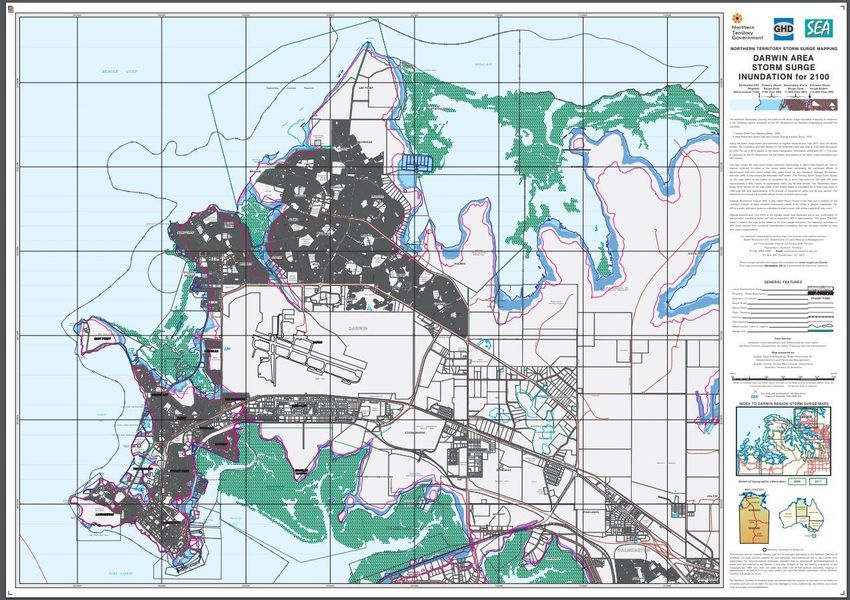
CYCLONE PROCEDURE 2020-21

                                             DARWIN PORT – CYCLONE PROCEDURE 2020 – 2021 SUMMARY

  STAGE                   DESCRIPTION                                                              DP ACTIONS                                          PORT STATUS
 Pre-season   Preparation for forthcoming Cyclone        Cyclone procedure and Standard Operating Procedures reviewed and                   Open
              Season                                     updated. Port users informed of cyclone precautions.
                                                         Revised Cyclone Procedure distributed to staff and stakeholders.
 Stage 1      Cyclone Watch (48 Hours)                   Actions as per Stage One requirements in Cyclone Procedure.                        Open
                                                         Standard Operating Procedures completed by relevant staff                          Initial planning for closure activated
                                                         members. Ships placed on four hours’ notice of readiness.
 Stage 2      Cyclone Warning (24 Hours)                 Actions as per Stage Two requirements in Cyclone                                   Open but under review GMO may
                                                         Procedure. Key staff report to designated work areas.                              action procedure to close the Port
                                                         Standard Operating Procedures completed by relevant staff
                                                         members. Ships placed on one hour’s notice of readiness.
                                                         Vessels may leave of their own accord.
 Stage 3      Cyclone Warning (12 Hours)                 Actions as per Stage Three requirements in Cyclone Procedure.                      Assessed depending on severity
                                                         Standard Operating Procedures completed by relevant staff                          and impact
                                                         members. All equipment secured.
                                                         Essential service vessels taken to designated cyclone refuges.
                                                         Vessels to leave port or proceed to designated cyclone moorings or havens.
 Stage 4      Safety Management and Lock Down            All staff leave worksite and take shelter as directed by the CEO.                  Assess depending on severity and
              Destructive winds imminent                                                                                                    likely impact
 Stage 5      Destructive winds impact Darwin            All staff remain in shelters.                                                      Assessed depending on severity
                                                                                                                                            and likely impact
              All Clear Pending                          Key personnel report to allocated work areas.                                      Assessed depending on severity and
                                                         Preparation for declaration of all clear.                                          likely impact
                                                         Plan for opening of Port agreed and communicated to stakeholders.
Stage 6       All Clear                                  All staff report to work once it is safe to do so. Damage assessment               Open with caution
                                                         commenced.
                                                         Harbour safety assessed.
              Post Cyclone Recovery                      Staff availability confirmed. Communication systems re-established.                Open with caution
                                                         Equipment damage reports completed. Damage mitigation actioned.
              Stand Down                                 Cyclone damage mitigation completed. Debrief of cyclone response.                  Open
                                                         Cyclone Procedure updated where necessary.

                              Revision no:          10          Review date:             142/08/20     Reviewed by:         SMMS        SOP_OPS/40
                              Finalised date:   30/10/19        Next review:               08/20       Authorised by:     GMO/CEO       Page 2 of 42

                                                                               Uncontrolled Copy When Printed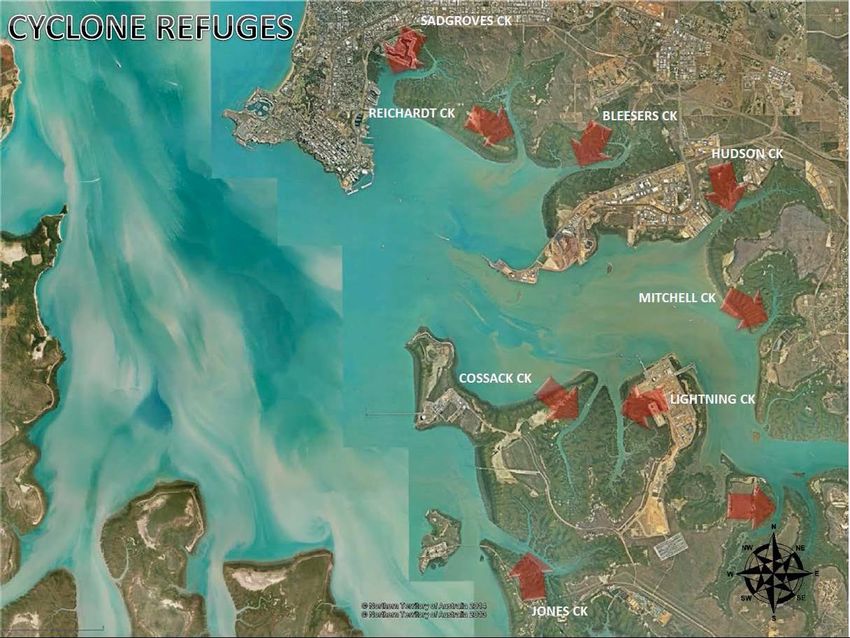
CYCLONE PROCEDURE 2020-21

TABLE OF CONTENTS
DARWIN PORT – CYCLONE PROCEDURE 2019 – 2020 SUMMARY .................................................................... 2
INTRODUCTION ................................................................................................................................................. 5
ENDORSEMENT AND APPROVAL ....................................................................................................................... 6
DOCUMENT CONTROL ....................................................................................................................................... 7
VERSION CONTROL ............................................................................................................................................ 8
DISTRIBUTION .................................................................................................................................................... 9
GLOSSARY ........................................................................................................................................................ 10
TROPICAL CYCLONE SEASON ........................................................................................................................... 11
TROPICAL SEVERE THUNDERSTORMS ............................................................................................................. 11
DP CYCLONE MANAGEMENT STRUCTURE....................................................................................................... 11
NOTIFICATION OF CLOSURE OF SCHOOLS ....................................................................................................... 13
NOTIFICATION OF CLOSURE OF DARWIN PORT OFFICES ................................................................................ 13
KEY STAKEHOLDERS ......................................................................................................................................... 13
RESPONSIBILITY OF SHIP’S MASTERS AND OWNERS....................................................................................... 14
DARWIN PORT MARINE PILOTS ....................................................................................................................... 14
VESSEL TRACKING ............................................................................................................................................ 14
COMMUNICATION ........................................................................................................................................... 15
COMMUNICATION METHODS ......................................................................................................................... 16
MEDIA MANAGEMENT .................................................................................................................................... 17
WEATHER FORECAST MONITORING................................................................................................................ 17
TROPICAL CYCLONE SEVERITY CATEGORIES .................................................................................................... 17
TROPICAL CYCLONE SERVICES ......................................................................................................................... 18
STORM SURGE ................................................................................................................................................. 19
DP CYCLONE MANAGEMENT CONSIDERATIONS ............................................................................................. 20
DP CYCLONE MANAGEMENT STAGES ............................................................................................................. 21
PRE-SEASON READINESS.................................................................................................................................. 22
STAGE ONE – CYCLONE WATCH (48 HOURS) .................................................................................................. 23
STAGE TWO – CYCLONE WARNING (24 HOURS) ............................................................................................. 25
STAGE THREE – CYCLONE WARNING (12 HOURS) ........................................................................................... 27
STAGE FOUR – SAFETY MANAGEMENT AND LOCKDOWN .............................................................................. 28
STAGE FIVE – DESTRUCTIVE WINDS REACH GREATER DARWIN ..................................................................... 28
ALL CLEAR PENDING ........................................................................................................................................ 29
STAGE SIX – ALL CLEAR .................................................................................................................................... 30

 Revision no:                 10          Review date:                14/08/20          Reviewed by:                      SMMS                  SOP_OPS/40
 Finalised date:             TBC          Next review:                  08/20           Authorised by:                  GMO/CEO                 Page 3 of 42

                                                             Uncontrolled Copy When Printed
CYCLONE PROCEDURE 2020-21

POST EVENT RECOVERY ................................................................................................................................... 30
STAND DOWN .................................................................................................................................................. 31
APPENDIX 1: - CONTACT DETAILS .................................................................................................................... 32
APPENDIX 2 - CYCLONE REFUGES .................................................................................................................... 38
APPENDIX 3 - DP RADIO CALL SIGNS ............................................................................................................... 39
APPENDIX 4 - VHF CHANNELS.......................................................................................................................... 40
APPENDIX 5: - STORM SURGE INUNDATION 2014 .......................................................................................... 41
APPENDIX 5: - STORM SURGE INUNDATION 2014 cont. ................................................................................. 42

 Revision no:                10          Review date:               14/08/20          Reviewed by:                     SMMS                 SOP_OPS/40
 Finalised date:             TBC         Next review:                 08/20           Authorised by:                 GMO/CEO                Page 4 of 42

                                                           Uncontrolled Copy When Printed
CYCLONE PROCEDURE 2020-21
INTRODUCTION
The Darwin Port Cyclone Procedure sets out Darwin Port Operations Pty Ltd (DP) authorities and
responsibilities for the management of the harbour infrastructure, vessels in the harbour, its tenants and
staff during a cyclone event.
The objectives of the Cyclone Procedure are to:
a) Minimise risk to life and property
b) Minimise the risk of damage to the Port of Darwin infrastructure
c) Optimise the use of Darwin Harbour cyclone refuge areas
d) Contribute effectively to the Northern Territory response to a cyclone event
This Cyclone Procedure has been developed in consideration of the Territory Emergency Plan
Revision no: 10 Review date: 14/08/20 Reviewed by: SMMS SOP_OPS/40
Finalised date: TBC Next review: 08/20 Authorised by: GMO/CEO Page 5 of 42
Uncontrolled Copy When PrintedCYCLONE PROCEDURE 2020-21
ENDORSEMENT AND APPROVAL
The Darwin Port Cyclone Procedure 2020 – 2021 is endorsed by:
General Manager Operations Date: TBC
The Darwin Port Cyclone Procedure 2020 – 2021 is approved by:
Chief Executive Officer Date: TBC
Cyclone Procedure will be finalised following inclusion of any amendments arising out of pre-season
exercises.
Revision no: 10 Review date: 14/08/20 Reviewed by: SMMS SOP_OPS/40
Finalised date: TBC Next review: 08/20 Authorised by: GMO/CEO Page 6 of 42
Uncontrolled Copy When PrintedCYCLONE PROCEDURE 2020-21
DOCUMENT CONTROL
The Darwin Port Cyclone Procedure is a controlled document.
Should the reader become aware of any inaccuracies, corrections or changes that are required, they
should photocopy this page and the relevant page(s) from the procedure that require changes, note
the changes and e-mail to:
General Manager Operations Darwin Port
Email: ian.niblock@darwinport.com.au
Name: .......................................................................................
Position: .......................................................................................
Organisation: .......................................................................................
Document No: .......................................................................................
Phone: .......................................................................................
Email: .......................................................................................
Please note the required changes to the following pages:
Revision no: 10 Review date: 14/08/20 Reviewed by: SMMS SOP_OPS/40
Finalised date: TBC Next review: 08/20 Authorised by: GMO/CEO Page 7 of 42
Uncontrolled Copy When PrintedCYCLONE PROCEDURE 2020-21
VERSION CONTROL
Version Date Position Name Reason for Amendment
0.1 25/08/12 2012/13 – Review and Update
0.2 25/08/12 Telephone numbers and Call Signs update
1.0 29/10/12 CEO Approved
1.1 9/09/13 2013/14 – Review and Update
1.2 20/9/13 Telephone numbers and Call Signs update
1.3 25/9/13 Desktop Exercise
1.4 1/10/13 Update
1.5 2/10/13 PMG Endorsed
2.0 9/10/13 CEO Approved
Incorporating OCPE Employment
2.1 Guidelines during a Cyclone
2.2 19/09/14 2014/15 – Review and Update
2.3 25/09/14 Telephone numbers and Call Signs update
2.4 07/10/14 PMG Endorsed
2.5 SOP Update
3.0 CEO Approved
3.1 16/10/15 2015/16– Review and Update
3.2 22/10/15 PMG PMG PMG Endorsed
3.3 22/10/15 CEO Terry O’Connor CEO Approved
3.4 26/09/16 MSM Matthew Wheeler 2016/17 Review and Update
3.5 10/16 GMO Ian Niblock Content Review
3.6 17/10/16 GMCS Melissa Reiter QA Content
3.7 17/10/16 GMO Ian Niblock Endorsed
3.8 17/10/16 PMG PMG PMG Endorsed
4.0 18/10/16 CEO Terry O’Connor Approved
4.1 18/09/17 DOM Gary Bawden 2017/18 review and update
Katie Brown /David
4.2 22/09/17 WH&SM/ENVM McMaster 2017/18 review
Post internal and external exercises
4.3 27/10/17 GMO Ian Niblock update
4.4 31/10/17 PMG PMG PMG endorsed
4.5 31/10/17 GMO Ian Niblock QA check and endorsed
5.0 31/10/17 CEO Terry O’Connor Approved
Move DG container assessment from
5.1 16/11/17 GMO Ian Niblock Stage 2 to Stage 1
GMO Admin. Insert
UpdateDAWR into Glossary
DMS contact detailsand Contact
to reflect
5.2 16/11/17 Amanda McCourt Details.
Assistant Serco ownership
6.0 16/11/17 CEO Terry O’Connor Approved
Remove (VTS) from DP Radio Call-signs
6.1 14/8/18 DOM Gary Bawden 2018/19 review and update
Cont. 2018/19 review and update
6.2 25/9/18 Cargo Supervisor John Horwood document and stakeholder contact
details
Revision no: 10 Review date: 14/08/20 Reviewed by: SMMS SOP_OPS/40
Finalised date: TBC Next review: 08/20 Authorised by: GMO/CEO Page 8 of 42
Uncontrolled Copy When PrintedCYCLONE PROCEDURE 2020-21
Review, acceptance of amendments and
6.3 4/10/18 GMO Ian Niblock QA review
6.4 25/10/18 DOM Gary Bawden Post exercise amendments
6.5 25/10/18 GMO Ian Niblock Review & acceptance of amendments
6.6 30/10/18 PMG PMG PMG Endorsed
7.0 30/10/18 CEO Terry O’Connor Approved
7.1 20/12/18 Executive Assistant Alleen Breward Update contact details
8.0 20/12/18 CEO Terry O’Connor Approved
8.1 02/05/19 DOM Gary Bawden 2019/20 Review and update
8.2 05/09/19 GMO Ian Niblock Review & acceptance of amendments
Gary Bawden/Ian
8.3 18/10/19 DOM & GMO Niblock Post internal exercise amendments
8.4 28/10/19 PMG PMG PMG Endorsed
9.0 30/10/19 CEO Darren Lambourn Approved
9.1 14/8/20 SMMS Gary Bawden 2020/21 Review and update
Elaborate cyclone operations
9.2 14/08/20 GMO Ian Niblock considerations and communications
DISTRIBUTION
An electronic link will be sent to all stakeholders identified in this document before the start of the
Cyclone Season.
The DP Cyclone Procedure is available to download from the DP website:
https://http://www.darwinport.com.au//facilities-services/emergency-cyclone-plans
Revision no: 10 Review date: 14/08/20 Reviewed by: SMMS SOP_OPS/40
Finalised date: TBC Next review: 08/20 Authorised by: GMO/CEO Page 9 of 42
Uncontrolled Copy When PrintedCYCLONE PROCEDURE 2020-21
GLOSSARY
AB Admin Building
BOM Bureau of Meteorology
BSM Business Systems Manager
CDC Counter Disaster Council
CFO Chief Financial Officer
CEO Chief Executive Officer
CEO EA Executive Assistant
CMT Crisis Management Team
COM Cargo Operations Manager
CWM Cyclone Worksite Managers
DAWR Department of Agriculture and Water Resources
DCM Department of the Chief Minister
DCO Duty Cargo Officer
DIPL Department of Infrastructure, Planning and Logistics
DLNG Darwin LNG
DP Darwin Port
EAAB East Arm Administration Building
EAW East Arm Wharf
EAWG East Arm Wharf Gatehouse
EAWWS East Arm Wharf Workshop
EADC East Arm Operations Buildings (Demountable City)
ECMP Emergency Crisis Management Plan
EM Environmental Manager
FHW Fort Hill Wharf
GMBSS General Manager Business Support Services
GME General Manager Engineering
GMF General Manager Facilities
GML General Manager Legal
GMO General Manager Operations
GMPD General Manager Port Development
HCO Harbour Control Officer
HCC Harbour Control Centre
IC Incident Controller
ICT Information & Communications Technology
ILNG INPEX LNG and INPEX LPG and Condensate
IMT IC Incident Management Team - Incident Controller
MM Maintenance Manager
MSG Maritime Security Guard
NTG Northern Territory Government
NTES NT Emergency Services
NTPFES NT Police, Fire and Emergency Services
OOW Officer of the Watch (Ships Officer)
PB Piot Boats
PBM Pilot Boat Master
PE Port Engineer
PMO Port Management Officer
RHM Regional Harbourmaster
SHW Stokes Hill Wharf
SLO Superintendent Landside Operations
SMMS Senior Manager Marine Services
Revision no: 10 Review date: 14/08/20 Reviewed by: SMMS SOP_OPS/40
Finalised date: TBC Next review: 08/20 Authorised by: GMO/CEO Page 10 of 42
Uncontrolled Copy When PrintedCYCLONE PROCEDURE 2020-21
TC Tropical Cyclone
TRS Tropical Revolving Storm
SMWHSES Senior Manager WHSES
WHSFO Work Health and Safety Field Officer
WS Wharf Services
WSM Wharf Services Manager
TROPICAL CYCLONE SEASON
The official tropical cyclone season for Darwin and the Northern Territory commences on 1 November
and concludes on 30 April annually. However, cyclones have been known to occur outside of the
official season.
Before a tropical cyclone forms it is difficult to predict its potential strength and path, including
whether it will make landfall. Along the north coast of Australia more than half of the cyclones impact
the coast.
TROPICAL SEVERE THUNDERSTORMS
The tropical cyclone season in Northern Australia is also known as the wet season, which has its own
distinctive tropical climate, quite different from what is to be experienced further south. Similarly, the
types of violent thunderstorms that occur during the wet season can have different characteristics to
those typical of southern and central Australia.
The main severe weather types associated with thunderstorms in the tropics are damaging wind and
heavy rainfall. The wind gusts are "straight line gusts", that is, not associated with the rotating winds
within a tornado, but due to the outflow from the downdraught of a thunderstorm as the air hits the
ground and spreads out. The name given to an intense thunderstorm downdraught concentrated on a
small area is a microburst.
Microbursts can occur at any time during the wet season and often with little or no warning. Typical
weather associated with microbursts include:
• Damaging wind – 90km/h or greater
• Tornadoes
• Heavy rainfall conducive to flash flooding
DP CYCLONE MANAGEMENT STRUCTURE
Overall response coordination for a cyclone event in Darwin rests with the Northern Territory Emergency
Services.
Cyclone events will be managed using a methodology consistent with the DP ECMP. However, given that
cyclone events are usually predicted many hours before their consequences are felt, management tends to
Revision no: 10 Review date: 14/08/20 Reviewed by: SMMS SOP_OPS/40
Finalised date: TBC Next review: 08/20 Authorised by: GMO/CEO Page 11 of 42
Uncontrolled Copy When PrintedCYCLONE PROCEDURE 2020-21
be more measured and aimed at preparing for the impact. Recovery from the impact will be managed
in accordance with the ECMP.
Managing Director
Landbridge Group
CMT Leader CWM AB
NT Government
DP CEO CEO EA
CMT/IC CMT GMPD
CMT GMF CMT GME CMT WHSESM CMT GML
GMO CMT GMBSS
CWM HCC CWM EAWWS CMT ICT CWM EAW CWM EAWG
SMMS MM BSM PE PSM
CWM
CWM WS
Landside Ops
WSM
WM
Figure 1 – DP Emergency Management Structure Adapted for Cyclone Events
The GMO is the CMT IC. The GMO, or the acting GMO have statutory powers as Port Management Officers
under the Ports Management Act 2015 that can be used during the management of a cyclone event. The
GMO is responsible for the management of operations on the harbour during a cyclone response.
Cyclone Worksite Managers (CWMs) are appointed to manage a range of cyclone procedures prior to,
during and after a cyclone event. Their areas of responsibility are as follows:
• CEO EA – DP Administration Building
• – Vehicles (?)
• Business Systems Manager – Information & Communications Technology
• Superintendent Landside Operations – East Arm Wharf Gatehouse
• Senior Manager Marine Services – Harbour Control & Pilot Boats
• Cargo Operations Manager – EAW Cargo Office
• Maintenance Manager – EAW Workshop
• Wharf Services Manager - Fort Hill Wharf, Pontoon and Fenders
Revision no: 10 Review date: 14/08/20 Reviewed by: SMMS SOP_OPS/40
Finalised date: TBC Next review: 08/20 Authorised by: GMO/CEO Page 12 of 42
Uncontrolled Copy When PrintedCYCLONE PROCEDURE 2020-21
NOTIFICATION OF CLOSURE OF SCHOOLS
On receipt of advice from the CDC that schools have been closed, and subject to approval from their
respective GMs, primary care givers may be released from duty to collect their children from school.
If a childcare centre closes due to the “Notification of Closure of Schools”, primary care givers may be
released from duty to collect their children.
Employees with other carer responsibilities, e.g. elder care or who collect children from a childcare
centre which is closed prior to the “Notification of Closure of Schools”, may be released from duty to
attend to their carer responsibilities.
Darwin Port will not close at this time and all other employees are to remain at work.
NOTIFICATION OF CLOSURE OF DARWIN PORT OFFICES
The CEO will release non-essential staff, with pay, to seek shelter where possible.
Employees with cyclone management responsibilities (including rostered HCO’s, MSG’s and DCO’s) are
required to remain at work, if it is safe to do so, until they have completed their responsibilities under this
plan or until the CEO moves to Stage 4.
All DP employees should ensure that adequate individual cyclone preparation measures have been
implemented to ensure the safety of their families, homes and property, before a cyclone is directly
affecting the Greater Darwin region. Additional cyclone preparedness information is available from the
Northern Territory Emergency Services website at-
http://www.pfes.nt.gov.au/emergency-service/public-safety-advice/natural-disaster-advice/cyclones
KEY STAKEHOLDERS
The following entities have been identified as key stakeholders and should be familiar with the DP
Cyclone Procedure:
• Department of the Chief Minister (Emergency Response Group)
• Department of Infrastructure, Planning and Logistics
• NT Police, Fire and Emergency Services
• All DP Tenants
• All Port of Darwin Users
The DP Cyclone Procedure is available to download from the DP website:
https://http://www.darwinport.com.au/facilities-services/emergency-cyclone-plans
Stakeholder and contact details for response agencies are contained in Appendix 1 - Contact Details.
Revision no: 10 Review date: 14/08/20 Reviewed by: SMMS SOP_OPS/40
Finalised date: TBC Next review: 08/20 Authorised by: GMO/CEO Page 13 of 42
Uncontrolled Copy When PrintedCYCLONE PROCEDURE 2020-21
RESPONSIBILITY OF SHIP’S MASTERS AND OWNERS
Masters, vessel operators and owners of vessels are responsible for the following:
• Ensuring that no vessels are left unattended whilst at anchor in the designated
Small Boat Anchorage (SBA).
• Ensuring that they have their own current cyclone contingency plan and
providing a copy (in electronic form) to the GMO if requested.
• Ensuring a responsible OOW is contactable 24 hours to receive notification of
potential severe weather events;
• Awareness of the advice contained in the Mariners’ Handbook NP100 regarding
navigable and dangerous semicircles of Tropical Revolving Storms;
• Ensuring the safety of their vessels and crew;
• Ensuring their vessels are secured;
• Ensuring main engines are not immobilized within the port limits without prior approval of the
GMO or acting GMO.
• Following explicitly, all directions issued to them by the GMO or acting GMO.
• Following explicitly, all instructions issued to them by the General Managers and staff
of Darwin Port;
• Bearing the cost of any damage caused by their vessels to Darwin Port infrastructure and/or other
vessels.
Masters of all vessels working in Darwin Port between 1 November and the 30 April will be advised to
familiarise themselves with current DP Cyclone Procedure and obtain a copy of the map outlining
cyclone mooring locations in and around Darwin Harbour Shown in Appendix 2 - Cyclone Refuges.
DARWIN PORT MARINE PILOTS
DP Marine Pilots are responsible to:
• Ensure that vessel masters are aware of these cyclone procedures and their obligations;
• Facilitate effective communication and execution of these procedures with all relevant parties;
• Obtain 24-hour contact details with the responsible OOW, for potential severe weather event
communications;
• Disseminate established contact details for communication of potential severe weather events.
VESSEL TRACKING
Darwin Harbour on-duty HCO will coordinate the tracking of all vessels affected by the Cyclone
Response.
Revision no: 10 Review date: 14/08/20 Reviewed by: SMMS SOP_OPS/40
Finalised date: TBC Next review: 08/20 Authorised by: GMO/CEO Page 14 of 42
Uncontrolled Copy When PrintedCYCLONE PROCEDURE 2020-21
COMMUNICATION
GMO / Regional Harbour Master (RHM) Relationship
The GMO is an appointed Port Management Officer (PMO) under the Ports Management Act 2015, having
statutory authority to issue directives and ultimately, if the situation requires, to close Darwin Port.
The GMO shall meet regularly with the RHM. It is essential that a strong working relationship exists
between the GMO and the RHM, and that the GMO keeps the RHM fully informed regarding cyclone
preparedness, the possibility of a cyclone, and in the case of a cyclone, the GMO shall keep the RHM
informed of any cyclone response action taken by DP. Contact may be by phone calls, by email or in person.
The RHM is a regulatory officer and in accordance with the Ports Management Act, has step in rights and
authority to direct a PMO to act in accordance with his or her directions should he or she feel the situation
so demands.
Stakeholders for Early Engagement
There are many stakeholders under the DP Cyclone Procedure. The DP Cyclone Procedure and associated
standard operating procedures identify the engagement of certain stakeholders during a cyclone event.
Because they manage assets that are effectively outside the control of DP, certain critical stakeholders
require early engagement. A close working relationship needs to be in place with these stakeholders well
prior to, and during, the cyclone season. The relationship should include meeting and exchanging copies of
respective cyclone plans prior to the official cyclone season to discuss any cyclone plan changes, and to
clarify the roles and responsibilities of the various parties in a cyclone event. Key stakeholders are
encouraged to ensure that they are suitably identified within the DP Cyclone response plan through
engagement at the Port User Group forums which are hosted regularly throughout the year by Darwin Port
GM Port Development.
In the case of a developing tropical low with no cyclone watch yet being declared, these critical
stakeholders must be engaged so that preparedness for Darwin Port is optimised.
These critical stakeholders include but are not limited to:
• Department of Infrastructure, Planning and Logistics, particularly in their capacity as
operators of various wharves, the Frances Bay Mooring Basin and the Frances Bay lock
facility. DP is to obtain, review and hold a copy of the DIPL cyclone plan prior to the
commencement of the cyclone season and to review it accordingly. Additionally, DP is to
provide a copy of its own cyclone plan to DIPL. Any content requiring clarification are to be
resolved prior to the commencement of the cyclone season.
• Royal Australian Navy, regarding the HMAS Coonawarra and Naval Vessels generally. DP is to
obtain, review and hold a copy of the RAN’s Coonawarra cyclone plan prior to the
commencement of the cyclone season.
• Darwin Waterfront, particularly regarding wharf tenants and tourism operators. DP is to obtain,
review and hold a copy of the Darwin Waterfront facility cyclone plan prior to the
commencement of the cyclone season and to review it accordingly. Additionally, DP is to
provide a copy of its own cyclone plan to Darwin Waterfront. Any queries or points regarding
clarification are to be resolved prior to the commencement of the cyclone season.
Revision no: 10 Review date: 14/08/20 Reviewed by: SMMS SOP_OPS/40
Finalised date: TBC Next review: 08/20 Authorised by: GMO/CEO Page 15 of 42
Uncontrolled Copy When PrintedCYCLONE PROCEDURE 2020-21
Refer to Appendix 1 for Contact Details
Communications during cyclone response
Communication with Port of Darwin stakeholders will be by the GMPD using the Port User Group contact
list.
Communication with EAW tenants and operators of berth and marine facilities will be by the GMO to those
stakeholders highlighted in the stakeholder contact list.
Exercise Procedure
Prior to the 1st November 2019, DP is to conduct a stakeholder desktop cyclone exercise. The exercise is to
involve, at a minimum, the stakeholders mentioned above. The purpose of such exercise is to ensure that
all parties can apply the cyclone plan, identify and eliminate any inadequacies and address any areas of
confusion regarding roles or responsibilities. A similar exercise is to be conducted with all DP personnel
who have a role in this Cyclone Procedure.
COMMUNICATION METHODS
Various means of communication will be used during the response to a tropical cyclone event as follows:
Face to Face meetings may be held by the CMT, usually in the Beagle Room at the DP Administration
Building. Alternative venues may be selected during the incident to minimise travel or in the event of
damage to the Administration Building.
Microsoft Teams will be used to facilitate Covid-19 safe communications with stakeholders where
necessary.
Teleconferencing will be used by the CMT to minimise travel.
Mobile Phones will be used for all communications to staff on status of cyclone plan and requirements to
attend the workplace. Important messages and changes in the tropical cyclone and the port status will also
be communicated using mobile phones.
Marine VHF Radio will be used to broadcast information to port users and stakeholders. Darwin Harbour
Control will be the radio communications hub and will be responsible for broadcasting updates regarding
the TC status, the current level of watch/warning and information regarding vessel movements and the
status of the port. A list of DP personnel utilising VHF radios is in Appendix 3 - DP Call Signs. Various VHF
channels are allocated for port and harbour operations as detailed in Appendix 4 – VHF Channels.
The communication means listed above are preferred due to the ‘closed loop’ nature of the communication.
Email will be used to distribute information, including status information for the tropical cyclone and
Darwin Port.
Social Media - Darwin Port Operations has established; Facebook, Instagram and Twitter accounts under
Darwin Port Operations. Darwin Port will use these social media platforms to communicate the status of
the port and associated operations.
Revision no: 10 Review date: 14/08/20 Reviewed by: SMMS SOP_OPS/40
Finalised date: TBC Next review: 08/20 Authorised by: GMO/CEO Page 16 of 42
Uncontrolled Copy When PrintedCYCLONE PROCEDURE 2020-21
WebEOC is a computer-based Emergency Operations Centre capability which has been adopted for use in
the NT by NTES. WebEOC provides NT Incident Command with information regarding response activities.
Information is provided via the RHM.
DP website will be used to provide information on the status of the Port and the DP tropical cyclone
response.
DP intranet will be used to provide DP personnel with updates regarding the current Port status and its
tropical cyclone response.
Text Messages - Individual managers will utilise text messages as a means of communicating information to
personnel in their teams.
MEDIA MANAGEMENT
Engagement and interactions with media are coordinated by the GMPD and all media enquiries should be
directed to the GMPD on mobile 0401 117 056.
DP takes direction from NTG, who will issue coordinated public cyclone announcements. The Chief Minister
and the Police Commissioner are the only persons authorised to make public announcements on behalf of
NTG.
DP is responsible for providing public statements on the status of the Port of Darwin during a cyclone; that
is, whether it is open or closed and safety messaging provided to commercial vessels within the Port of
Darwin.
WEATHER FORECAST MONITORING
Darwin Port monitors numerous weather forecasting sites during the cyclone season in order to maintain a
well-developed and early understanding of the potential weather impact.
TROPICAL CYCLONE SEVERITY CATEGORIES
The severity of a tropical cyclone is described in terms of categories ranging from 1 to 5 related to the
severity of the cyclone.
The BOM Warning Service is not designed to give an exact statement of conditions at individual locations
but will give a general idea of the expected worst conditions. Using this severity scale, communities will be
able to assess the degree of cyclone threat and take appropriate action.
Category Maximum Wind Gust Typical Effects
1 – Tropical Cyclone Less than 125km/h Minimal house damage. Damage to
some crops, trees and caravans. Boats
Gales may drag moorings.
2 – Tropical Cyclone 125 – 164km/h Minor house damage. Significant
damage to signs, trees and caravans.
Destructive Winds Heavy damage to some crops. Risk of
Revision no: 10 Review date: 14/08/20 Reviewed by: SMMS SOP_OPS/40
Finalised date: TBC Next review: 08/20 Authorised by: GMO/CEO Page 17 of 42
Uncontrolled Copy When PrintedCYCLONE PROCEDURE 2020-21
power failure. Small boats may break
moorings. e.g. Cyclone Marcus –
Darwin March 2018
3 – Severe Tropical Cyclone 165 - 224 km/h Some roof and structural damage.
Some caravans destroyed. Power
failure likely. Boats will break
moorings.
Very destructive winds
4 – Severe Tropical Cyclone 225 – 279 km/h Significant roofing and structural
damage. Many caravans destroyed
and blown away. Dangerous airborne
debris. Widespread power failure. e.g.
Very destructive winds Cyclone Tracy – Darwin 1974
5 – Severe Tropical Cyclone More than 280 km/h Extremely dangerous with widespread
destruction.
e.g. Cyclone Monica – Maningrida
2006
Extremely destructive winds
Additional information can be found on the BOM website by following the link:
http://www.bom.gov.au/cyclone/about/
TROPICAL CYCLONE SERVICES
BOM provides the following cyclone information services throughout the cyclone season.
Tropical Cyclone Seasonal Outlook
This is issued at the beginning of the season to provide an estimate of the level of tropical cyclone
activity in the coming season.
Tropical Cyclone Outlook
These are issued daily throughout the tropical cyclone season. They provide a forecast up to three days
in advance of the probability of cyclone development in the seas around Australia.
Tropical Cyclone Information Bulletin
These are issued when a cyclone is active in the Australian region but is not expected to impact
land-based communities within 48 hours.
Tropical Cyclone Watch
A watch is issued if a cyclone is expected to affect coastal communities within 48 hours, but not
expected within 24 hours.
Tropical Cyclone Warning
Revision no: 10 Review date: 14/08/20 Reviewed by: SMMS SOP_OPS/40
Finalised date: TBC Next review: 08/20 Authorised by: GMO/CEO Page 18 of 42
Uncontrolled Copy When PrintedCYCLONE PROCEDURE 2020-21
A warning is issued if a cyclone is affecting or is expected to affect coastal communities within 24 hours.
Technical Bulletin
The Tropical Cyclone Technical Bulletin provides technical details about the cyclone.
Tropical Cyclone Forecast Track Map
These are issued with tropical cyclone advices to give a graphical representation of the cyclone's past
track forecast movement and its threat area.
Marine Warnings
Marine warnings are issued for high seas and coastal waters threatened by cyclones.
Additional information can be obtained from the BOM website:
http://www.bom.gov.au/cyclone/about/warnings/
A DP cyclone response is triggered by the declaration of a cyclone watch or warning, but response
actions may be initiated prior to either a watch or a warning being declared if the CMT considers early
action is warranted.
It must be noted that not all cyclones develop in a position to enable a staged information and
warning process from 48 hours before the event. A good example is Cyclone Carlos which formed very
close to Darwin on the morning of 15 February 2011. A cyclone watch was declared at 11:00,
a warning at 17:00 and the strongest winds were experienced the same night.
Additionally, DP, subscribes to the Early Warning Network weather alerts for specified staff. The list of
recipients for these alerts is to be reviewed and updated annually prior to the commencement of the next
cyclone season.
STORM SURGE
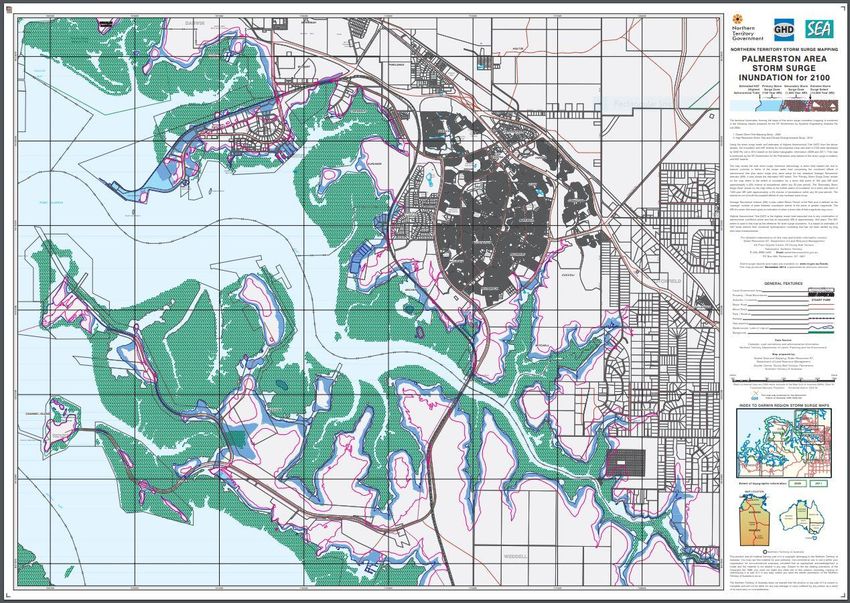
Both EAW and FHW are within the Darwin storm surge zone. There is a risk of inundation at both wharves
should a storm surge coincide with a high tide. The extent of the inundation would be influenced by the
height of the storm surge and the tide height. EAW and FHW decks are 1.5 metres above the Darwin
Highest Astronomical Tide (HAT) height of 8.0 metres.
Potential storm surge inundation depths are available from a 2010 Department of Land Resource
Management study available from the website https://denr.nt.gov.au/land-resource-
management/water/water-resources/flooding-reports-maps/storm-surge-inundation-maps
Maps showing storm surge zones are in Appendix 5 – Storm surge inundation
Port users need to be aware of the risk of storm surge at both FHW and EAW. Inundation is likely to affect
any cargo stored at EAW and could affect the continuous provision of electrical power at the wharf.
Revision no: 10 Review date: 14/08/20 Reviewed by: SMMS SOP_OPS/40
Finalised date: TBC Next review: 08/20 Authorised by: GMO/CEO Page 19 of 42
Uncontrolled Copy When PrintedCYCLONE PROCEDURE 2020-21
DP CYCLONE MANAGEMENT CONSIDERATIONS
The Port of Darwin is the only port between Townsville and Fremantle with full access to multi-modal
transport services and Australia’s nearest port to Asia and the nation’s ‘northern gateway’ for Australasian
trade. Darwin Port provides pilotage and harbour control systems and a supply chain capable of handling
containers and general cargo, bulk liquids, bulk materials, live exports and heavy lift oversized
cargoes. Darwin Port also services cruise ships and naval vessels at the Fort Hill Wharf and cruise ship
terminal. It is also a key support hub for the offshore oil and gas fields in the Arafura Sea, Timor Sea and
waters off the coast of Western Australia.
This multi-modal nature of operations introduces many considerations when prioritising shipping during
preparations for an approaching tropical low or cyclone and the potential closure of the port. These
considerations include; crew and passenger welfare, livestock welfare, the number and types of ships in the
port, the status of cargo operations and ship seaworthiness, tidal windows and potential draft restrictions,
the lead time necessary to safely evacuate ships from the port, tug availability, pilot availability and
potential impacts on the two gas terminals..
The Port of Darwin also contains the Santos LNG jetty and the INPEX LNG, LPG and condensate jetties. Both
LNG terminals occasionally receive LNGC’s with membrane constructed tanks. Membrane constructed
LNGC’s introduce a specific consideration due to “sloshing”. Within a range of tank filling levels, the natural
pitching and rolling of the ship at sea, and the liquid free-surface effect, can cause the liquid to move within
the tank. It is possible for considerable movement to take place, creating high impact on pressure on the
tank surface. This is called “sloshing” and can cause structural damage.
In collaboration with INPEX and Santos a Membrane tanker loading management process has been
developed to identify Upper and Lower sloshing limits. This process assists in vessel movement planning
during the approach of a cyclone. The loading of Membrane LNGC’s during the cyclone season is
monitored, recorded and updates distributed to applicable stakeholders. The management of Membrane
tankers could see their visit to the respective LNG terminal brought forward to allow the cargo to be loaded
and the ship to depart safely ahead of the cyclone impact. Alternatively, the Membrane tanker arrival may
be delayed until after the cyclone has passed through the Greater Darwin region.
DP CYCLONE MOORING MANAGEMENT
• Darwin Port has sole responsibility for the care, use and maintenance of all its owned moorings and
components and associated costs of replacement.
• Darwin Port arranges for all inspections required by the applicable mooring requirements and
mooring license terms and conditions.
• Darwin Port currently undertakes annual inspections of its owned moorings. The annual mooring
inspections are carried out immediately prior to the commencement of the Cyclone Season.
Revision no: 10 Review date: 14/08/20 Reviewed by: SMMS SOP_OPS/40
Finalised date: TBC Next review: 08/20 Authorised by: GMO/CEO Page 20 of 42
Uncontrolled Copy When PrintedCYCLONE PROCEDURE 2020-21
DP CYCLONE MANAGEMENT STAGES
DP monitors tropical lows and cyclones to make an early assessment of its likely path, development
and potential impact on the port’s infrastructure and operations. Any actions, if deemed necessary
will be taken on the basis that a tropical low may develop to cyclone intensity at close range to the
port, and category one cyclones have the potential to intensify immediately prior to crossing the
coast. In assessing such potential, advice and information will be obtained from the BOM and other
appropriate, reliable sources.
DP manages multiple worksites and a variety of infrastructure. DP uses a six-stage plan, to manage its
response to a cyclone as outlined below:
DP REPONSE STAGES
Pre-Season Readiness Cyclone procedure and Standard Operating Procedures reviewed
and updated. Port users informed of cyclone precautions.
Revised Cyclone Procedure distributed to staff and stakeholders.
Stage 1 – Cyclone Watch (48hr) Actions as per Stage One requirements in Cyclone Procedure.
Standard Operating Procedures completed by relevant staff
members. Ships placed on four hours’ notice of readiness.
Stage 2 – Cyclone Warning (24hr) Actions as per Stage Two requirements in Cyclone Procedure.
Key staff report to designated work areas.
Standard Operating Procedures completed by relevant staff
members. Ships placed on one hour’s notice of readiness.
Vessels may leave of their own accord.
Stage 3 – Cyclone Warning (12hr) Actions as per Stage Three requirements in Cyclone Procedure.
Standard Operating Procedures completed by relevant staff
members. All equipment secured.
Essential service vessels taken to designated cyclone refuges.
Vessels to leave port or proceed to designated cyclone moorings
or havens.
Stage 4 – Safety Management and All staff leave worksite and take shelter as directed by the CEO.
Lockdown
Stage 5 – Destructive winds reach All staff remain in shelters.
Greater Darwin
All clear pending Key personnel report to allocated work areas.
Preparation for declaration of all clear.
Plan for opening of Port agreed and communicated to
stakeholders.
Stage 6 – All Clear All staff report to work once it is safe to do so.
Damage assessment commenced.
Harbour safety assessed.
Post Cyclone Recovery Staff availability confirmed. Communication systems re-
established. Equipment damage reports completed.
Damage mitigation actioned.
Stand Down Cyclone damage mitigation completed.
Debrief of cyclone response.
Cyclone Procedure updated where necessary.
Revision no: 10 Review date: 14/08/20 Reviewed by: SMMS SOP_OPS/40
Finalised date: TBC Next review: 08/20 Authorised by: GMO/CEO Page 21 of 42
Uncontrolled Copy When PrintedCYCLONE PROCEDURE 2020-21
PRE-SEASON READINESS
TASK (to be completed prior to 1 November) Responsible Applicable
Office SOP
Conduct a cyclone awareness meeting for your location: IMT IC
• update listing of CWMs
• explain the Cyclone Management Structure and roles of
individual officers
• ensure all staff are aware of the location of emergency
equipment and
• remind staff to review the cyclone procedures on DP Intranet
Check that all equipment (generators, batteries, radios) are in CWM
good working order
Check that all DP vehicles have a spare key secured in a known
location for each worksite Team
Administrators
Check that spare keys for all worksites have been secured in a PSM
known location
Check that first aid supplies and torches are in order and restock WHSFO
as required
Check cyclone status notification EAW message sign on archway SLO
Provide notice to masters, operators, owners and agents of all GMO SOP_OPS/38
vessels in the Port, and those entering Port, as to their
responsibilities for operations during the wet season
Test lifting apparatus for pilot boat pontoon gangway GMF
Ensure port stakeholder list is updated and current GMPD
Advise East Arm, and Fort Hill Wharf tenants that they are GMO SOP_OPS/22
required to secure all loose materials in readiness for the cyclone
season
Ensure Qube and LINX cyclone plans for harbour cranes are GMO
appropriate
Advise stevedoring companies re procedures for securing of EAW Cargo
ship loader during the wet season Manager
Ensure that your individual work unit area is free of potential GMs and
missile hazards Managers
Ensure this whole plan has been read so you know what to expect All Staff
and how to access the information should a cyclone eventuate
Ensure you are aware of who your CWM is for your location and All Staff
make sure you have your CWM and General Manager's contact
details
Ensure personal contact details are correct in Chris21 or ADP as All Staff
appropriate
Update early warning subscription register SMMS/EA
Revision no: 10 Review date: 14/08/20 Reviewed by: SMMS SOP_OPS/40
Finalised date: TBC Next review: 08/20 Authorised by: GMO/CEO Page 22 of 42
Uncontrolled Copy When PrintedCYCLONE PROCEDURE 2020-21
STAGE ONE – CYCLONE WATCH (48 HOURS)
In line with standard practice for emergency management, Darwin Port undertake activities for the
prevention of, preparation for, response to, and recovery from the specific risks associated with a near or
direct impact from a cyclone. To mitigate the risk of injury to people, damage to the port infrastructure and
operations and/or financial loss, the following checklists are used as an aide-memoire for the preparation,
response and recovery stages.
Certain tasks are deemed to be mandatory (M) and must be completed as applicable to each stage of a
cyclone event.
Other tasks are deemed to be non-mandatory (*), taking into consideration the assessment of a cyclones
likely path, development and potential impact on the port’s infrastructure and operations, the GMO,
or designated PMO, in consultation with the DP cyclone management team may determine and
approve that non-mandatory tasks may be delayed or not undertaken.
TASK RESPONSIBLE APPLICABLE
OFFICER SOP
Re-confirm the following to General Managers: CWM
• Spare keys secured in a central location for vehicles
and worksite access doors
M
• Equipment (radios, torches, generators) is in order
Office equipment can be stowed safely and that loose items are
capable of being secured
Ensure staff complete preliminary preparations to store non- CWM
M
essential office equipment and secure loose items
M Ensure you have contact details for your supervisor All Staff
Provide an up-to-date list of employees’ names, addresses and General
M
phone numbers to your CWM and DP FSM Managers
Instruct all vessels in the harbour that a cyclone watch has been GMO/HCOs SOP_OPS/34
M declared and that all vessels are required to declare themselves
on four hour’s readiness
M Warning notice for small boat owners in SBA activated GMO SOP_OPS/35
Activate the cyclone watch notification message on the EAW SLO SOP_OPS/19
M
archway on direction by the CEO or GMO
M Maintain normal gatehouse operations SLO
M Commence preparations to secure gatehouses at EAW & FHW SLO
Notify contractor of need to remove the awning from the GMF SOP_OPS/30
*
passenger transfer area at FHW
Check the security of cargo shed doors and windows Cargo
M
Manager
Notify shipping agents and stevedoring companies that all Cargo SOP_OPS/23
M
non-essential equipment must be secured Manager
Request DAWR to expedite inspection of any DG containers Cargo
M
under Biosecurity control. Manager
Revision no: 10 Review date: 14/08/20 Reviewed by: SMMS SOP_OPS/40
Finalised date: TBC Next review: 08/20 Authorised by: GMO/CEO Page 23 of 42
Uncontrolled Copy When PrintedCYCLONE PROCEDURE 2020-21
Meet with EAW tenants to discuss anticipated severity of GMO
cyclone and to determine actions in respect of stacked
M
containers, refrigerated containers, DGs, Mobile Harbour
Cranes and any other relevant factors
Engage with DLNG and ILNG to discuss the anticipated cyclone GMO
severity and what actions to take for ships alongside, ships due
M
to arrive and the risk of tank-top events. In particular any
Membrane LNGC’s in port or arriving.
Ensure pilot boats are fuelled and ready for securing at short PBMs
M
notice
Make preparations to secure FHW Pilot boat pontoon. Only lift SMMS SOP_OPS/81
*
gangway if necessary
Check security of the ship loader belting Maintenance
M
Manager
Ensure that all fleet vehicles have been fuelled Maintenance
*
Manager
Ensure bulk diesel tanks are full Maintenance
M Manager
Ensure oil, water and tyres are checked on all plant Maintenance
M
Manager
Ensure all generators at all sites are fuelled and operational Maintenance
Confirm that all duplicate keys are held in a central and secure Manager
M
location for worksite access doors, DP vehicles and security CWM
cabinets.
Initiate ICT preparations Business SOP_OPS/39
M
Systems
* Remove Yokohama fenders from water GMF SOP_OPS/28
M Brief RHM on DP cyclone response status GMO
Carry out inspection of the SBA, advise owner/operator to GMO/PBM’s
M
remove any unattended vessel to a safe refuge.
Revision no: 10 Review date: 14/08/20 Reviewed by: SMMS SOP_OPS/40
Finalised date: TBC Next review: 08/20 Authorised by: GMO/CEO Page 24 of 42
Uncontrolled Copy When PrintedCYCLONE PROCEDURE 2020-21
STAGE TWO – CYCLONE WARNING (24 HOURS)
TASK RESPONSIBLE APPLICABLE
OFFICER SOP
Advise General Managers that a cyclone warning has been CEO
M
declared
Advise all staff and visitors that a cyclone warning has been CEO
M
issued
Activate the cyclone warning notification message on the SLO SOP_OPS/20
M
EAW archway on direction by the CEO or GMO
Instruct agents of all vessels in the harbour that a cyclone GMO/HCO SOP_OPS/37
M warning has been declared and that all vessels are required
to declare themselves on one hour’s readiness
GMO will consider closing the Port having risk assessed the GMO
situation in consultation with CMT and stakeholders. No
M
vessels will be allowed to remain at DP anchorages or berths
if the port is closed
Instruct all vessels SCHEDULED to enter the harbour within GMO/HCO SOP_OPS/36
* the next 24 hours that they will have to make alternative
arrangements until the cyclone threat has eased.
Remove the awning from the passenger transfer area at FHW GMF
*
if this has not been done earlier
M Secure FHW plant and equipment GMF
Secure environmental monitoring equipment Environmental SOP_OPS/27
*
Manager
* Secure workspaces All staff
* Undertake ICT shutdown procedures All staff SOP_OPS/39
Ensure that external work areas have been cleaned up and CWM
*
areas are free of potential missiles
Assist General Managers to ensure that vehicles are fully Team
M
fuelled, and spare keys secured Adminstrators
* Secure the cattle races Cargo Manager
Re-check that all loose material has been secured or Cargo Manager
M
removed from EAW
Lash and secure all cargo and equipment remaining on the Cargo Manager
*
wharves
Instruct stevedores to reduce windage impact on container Cargo Manager
M
stacks
M Re-check all generators are fuelled and operational Maintenance
Manager
Re-check all emergency communication equipment is Maintenance
M
operational and back up batteries are fully charged Manager
Ensure the pilot boats are fully fuelled and ready for SMMS
M
immediate use
M Check that all communications equipment is operational Line Managers
Revision no: 10 Review date: 14/08/20 Reviewed by: SMMS SOP_OPS/40
Finalised date: TBC Next review: 08/20 Authorised by: GMO/CEO Page 25 of 42
Uncontrolled Copy When PrintedCYCLONE PROCEDURE 2020-21
* Supervise clean-up of work areas including store areas Line Managers
Make preparations to secure FHW pilot boat pontoon & lift SMS SOP_OPS/81
M
gangway if necessary.
* Remove Yokohama fenders from water GMF SOP_OPS/28
M Brief RHM on DP cyclone response status GMO
Revision no: 10 Review date: 14/08/20 Reviewed by: SMMS SOP_OPS/40
Finalised date: TBC Next review: 08/20 Authorised by: GMO/CEO Page 26 of 42
Uncontrolled Copy When PrintedCYCLONE PROCEDURE 2020-21
STAGE THREE – CYCLONE WARNING (12 HOURS)
TASK RESPONSIBLE APPLICABLE
OFFICER SOP
GMO will reconsider closing the Port having risk assessed GMO SOP_OPS/24
the situation in consultation with stakeholders. No vessels
*
will be allowed to remain at DP anchorages or berths if the
port is closed
If the port is closed, instruct all vessels except those in the GMO/HCO
* mooring basin, or those necessary for duty, to clear for sea
or seek refuge in the designated cyclone refuge areas.
M Notify all visiting contractors and vendors CEO
CEO may issue notice to non-essential staff to leave the CEO
M
work site.
Activate the cyclone warning (12 hr) notification message SLO SOP_OPS/21
on the EAW archway on direction by the CEO or GMO
M OR, if the port is closed
Activate the Port Closed notification message on the EAW
archway on direction by the CEO or GMO
M Secure cruise ship terminal and FHW SLO SOP_OPS/29
M Secure all gatehouses at EAW and FHW SLO SOP_OPS/25
Secure pilot vessels in the mooring basin – 3m tide SMMS
M
dependent
M Close all water valves on FHW and EAW GMF
M Isolate backup power generator as required GMF SOP_OPS/26
Close main water valves adjacent to wharf abutments at Cargo Manager
M
EAW
Ensure you have your CWM and General Manager’s contact All staff
M
details
M Secure all sheds and offices on EAW Cargo Manager
M Secure ship loader and belting at EAW Cargo Manager SOP_OPS/18
M Isolate power to ship loader Cargo Manager
M Await instructions from the CEO or delegate All staff
M Brief RHM on DP cyclone response status GMO
Revision no: 10 Review date: 14/08/20 Reviewed by: SMMS SOP_OPS/40
Finalised date: TBC Next review: 08/20 Authorised by: GMO/CEO Page 27 of 42
Uncontrolled Copy When PrintedCYCLONE PROCEDURE 2020-21
STAGE FOUR – SAFETY MANAGEMENT AND LOCKDOWN
COMMENT RESPONSIBLE
OFFICER
An official announcement will be made by the Northern Territory All Staff
Emergency Services advising the public to seek shelter.
If the port is closed and it is assessed that personnel should leave the All Staff
workplace, the CEO will instruct all personnel to leave the workplace.
*
Please Note: All staff must check in with their General Manager before
leaving.
All staff will leave the worksite if and immediately seek shelter when All Staff
M
directed by the CEO or IMT IC.
STAGE FIVE – DESTRUCTIVE WINDS REACH GREATER DARWIN
COMMENT RESPONSIBLE
OFFICER
M All staff will remain in their cyclone shelter. All Staff
Revision no: 10 Review date: 14/08/20 Reviewed by: SMMS SOP_OPS/40
Finalised date: TBC Next review: 08/20 Authorised by: GMO/CEO Page 28 of 42
Uncontrolled Copy When PrintedYou can also read


