DEATH BY PLASTIC Can the planet survive our - SPACE CRAFT - April 2020
←
→
Page content transcription
If your browser does not render page correctly, please read the page content below
ROTARY.ORG                                 APRIL 2020

                                     DEATH BY PLASTIC
                                     Can the planet survive our
                                       throwaway culture?

                                                             SPACE CRAFT
                                                        Archaeologist Sarah Parcak’s
                                                              sky-high quest
                                                                   _____

                                                          AFTER THE FLOOD
                                                             ShelterBox lends
                                                            a hand in Paraguay

apr20-Cover-v3.indd 1                                                             2/11/20 12:54 PM
GEICO for your
                                                                                                                                                                                        Commercial Auto

                                                                                                                                                                                        General Liability

         business, too.                                                                                                                                                                 Business Owner’s Policy

         Running a business takes a lot of hard work.
                                                                                                                                                                                        Professional Liability
         We’re here to make it easier by helping you
         save time and money. Get a quote today.                                                                                                                                        Workers’ Compensation

                                                                                                   geico.com/business | 1-866-509-9444 | Local Office

Some discounts, coverages, payment plans and features are not available in all states, in all GEICO companies, or in all situations. Commercial auto coverage is underwritten by Government Employees Insurance Company. Business operations and property
coverages, and in some cases commercial auto coverage, are provided through GEICO Insurance Agency, Inc., either under an arrangement with Berkshire Hathaway affiliates or with non-affiliated insurers. GEICO is a registered service mark of Government
Employees Insurance Company, Washington, DC 20076; a Berkshire Hathaway Inc. subsidiary. GEICO Gecko image © 1999-2019. © 2019 GEICO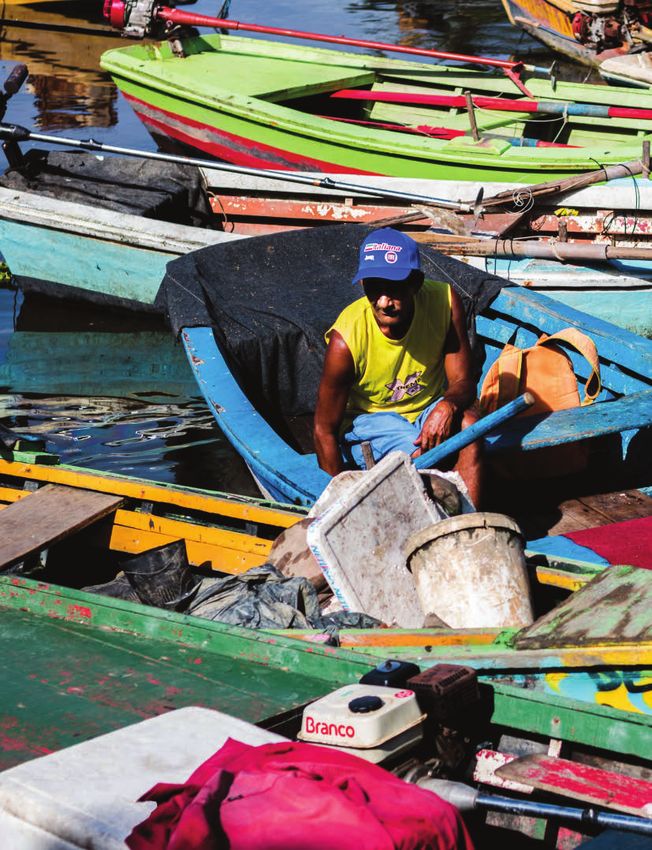
President’s message
                      Dear fellow Rotarians and members of the family of Rotary,

                          I spend a lot of time thinking of family, not just my own or the extended family of Rotary, but also the
                      families we are helping in the communities we serve. In many parts of the world, mothers and children face
                      challenges to survive that most of us will never comprehend. According to the World Health Organization,
                      the risk of a woman in a low-income country dying during pregnancy or childbirth, or from related causes,
                      is about 120 times higher than that of a woman living in a
                      high-income country. It is encouraging that infant mortality rates
                      are declining globally, yet 4 million babies annually still die within
                      the first year of life.
                          In April, Rotary turns its attention to maternal and child health.
                      And when we think of what we can do to help, we can look to clubs
                      like the Rotaract Club of Calabar South-CB, Nigeria, for inspira-
                      tion. It teamed up with the Rotaract Club of Canaan City (CB) in
                      a program focused on educating mothers on best practices to pre-
                      vent infant mortality and promote postnatal health for themselves
                      and their babies. In Bangladesh, the Rotary Club of Dhaka North
                      provides free surgeries and medicine to pregnant women who
                      cannot afford the hospital costs associated with giving birth.                      In April, Rotary turns its
                      I encourage you and your club to go to ideas.rotary.org to find                 attention to maternal and child
                      projects like these that are helping to save mothers and children.             health. I encourage you and your
                          We also have witnessed how millions of people — families and                 club to go to ideas.rotary.org
                      entire communities — have been ripped away from their homes
                                                                                                      to find projects that are helping
                                                                                                       to save mothers and children.
                      because of conflict, poverty, and disasters during the past decade.
                      But Rotary has not stood idly by during the global refugee crisis.
                      During Rotary Day at the United Nations last November, we honored a Rotary Peace Fellow and five
                      Rotarians who are taking action to help refugee communities. Among them was Ilge Karancak-Splane of the
                      Rotary Club of Monterey Cannery Row, California. After visiting several tent camps in Turkey, she led a Rotary
                      project that collected 1,000 pairs of children’s shoes and socks for families in the camps and, later, led a
                      global grant project to help educate refugee children. In March, Gay and I had the privilege of visiting a tent
                      camp in Torbalı and seeing firsthand the good work that Rotarians from Turkey and California were
                      accomplishing with Syrian refugees.
                          The challenges faced by mothers, their children, and refugee communities around the world are daunting.
                      But when we remember our greatest strength — how Rotary Connects the World — we can begin to find
                      solutions. Through our creativity, our resources, our dedication, and our networks, Rotary can and will
                      open opportunities to face these challenges.

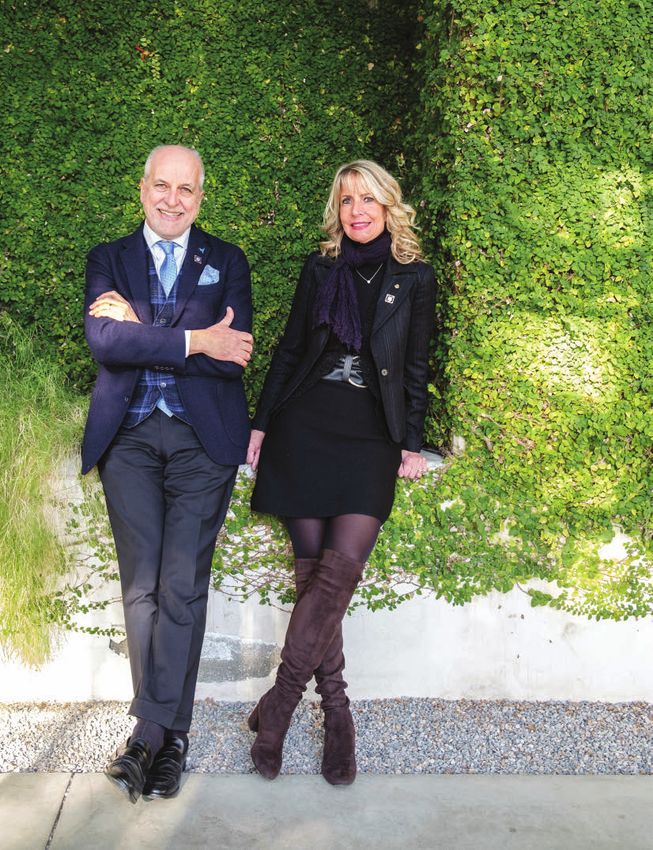
                       MARK DANIEL MALONEY
                       President, Rotary International

apr20-PresMessage-v3.indd 2                                                                                                             2/5/20 10:29 AM
FPO FPO FPO FPO FPO FPO

apr20-contents-v2.indd 2   2/10/20 2:57 PM

contents                                                                                         APRIL                               Vol. 198, No. 10

                                           11                        features

                                                                    26 T HE PLASTIC TRAP
                                                                          How do we escape our tangled relationship with a
                                                                          throwaway culture? Rotarians are pointing the way.
                                                                         •W
                                                                           ELCOME TO PLASTICVILLE: POPULATION 7.8 BILLION We’ve lived
                                                                          in a synthetic world for more than 70 years. Susan Freinkel, author of
                                                                          Plastic: A Toxic Love Story, wonders how much longer it can last.
                                                                         • ROUND TRIP The circular economy provides a framework to solve the
                                                                            plastic problem. Rotary Scholar Matt Kopac explains to Diana Schoberg
                                                                            how business can take the lead.
                                                    CLAUDIO BADER

                                                                         •	A WAY TO WASH THE WATER CLEAN Ludovic Grosjean wants to rid
                                                                            the oceans of plastic, writes Stephen Yafa, and it starts with our rivers.

                                                                    44 S ARAH PARCAK AND THE
               1    PRESIDENT’S MESSAGE
                                                                          SECRETS OF THE SATELLITES
               6    INBOX
               8    EDITOR’S NOTE                                         Inspired in part by Indiana Jones, this space
                                                                          archaeologist uses futuristic airborne technology
            11 our world                                                  to unearth the treasures of the past.
            		• Two of a kindness                                   		 By Diana Schoberg
              • Monumental respect
                                                                    		 Portraits by Ian Curcio
              • Q&A with Danny Spungen

                                                                    “   When you have awe ...
            		• People of action around the globe
            		• ShelterBox rises to the challenge
            		• Snapshot: Recife, Brazil
                                                                         you open yourself up
                                                                       to the accomplishments
              • April events

            23 viewpoints
            		• Every leaf a miracle

            53 our clubs
               • Sheboygan, Wisconsin:
                                                                       of other groups of people.
                                                                                                                            — Sarah Parcak               ”
            			 Don’t knock their wurst
                                                                                                   ON THE COVER A plastic bottle will take about 450 years
               • 4 questions about diversity,                                                      to decompose. But some new plant-based plastics, while no
            			 equity, and inclusion                                                              silver bullet, may break down more easily.
               • Club innovation: Leawood, Kansas
               • Convention countdown:                                                             OPPOSITE Archaeologist Sarah Parcak studies satellite
                                                                                                   images for the outlines of structures long buried underground.
            			 Breakout sessions
                                                                                                   Photography by Ian Curcio
               • Message from the trustee chair
               • Magazine awards
               • Assembly opens doors
            			 for governors-elect
               • Crossword

             64     LAST LOOK

                                                                                                                                       April 2020 The Rotarian             |3

apr20-contents-v3.indd 3                                                                                                                                            2/14/20 1:18 PM
General Officers of Rotary International
2019-20
President
JOHN REZEK Editor in chief MARK DANIEL MALONEY Decatur, Alabama, USA
JENNIFER MOODY Art director President-elect
HOLGER KNAACK Herzogtum Lauenburg-Mölln, Germany
JENNY LLAKMANI Managing editor
Vice President
OLAYINKA HAKEEM BABALOLA Trans Amadi, Nigeria
GEOFFREY JOHNSON Senior editor
Treasurer
HANK SARTIN Senior editor DAVID D. STOVALL Hall County, Georgia, USA
DIANA SCHOBERG Senior staff writer Directors
FRANCESCO AREZZO Ragusa, Italy
JOHN M. CUNNINGHAM Associate editor TONY (JAMES ANTHONY) BLACK Dunoon, Scotland
JEFFRY CADORETTE Media, Pennsylvania, USA
NANCY WATKINS Copy editor
MÁRIO CÉSAR MARTINS Santo André, Brazil
DE CAMARGO
VANESSA GLAVINSKAS Contributing editor
LAWRENCE A. DIMMITT Topeka, Kansas, USA
MARC DUKES Production manager RAFAEL M. GARCIA III Pasig, Philippines
JAN LUCAS KET Purmerend, The Netherlands
JOE CANE Design & production assistant KYUN KIM Busan-Dongrae, Korea
FLOYD A. LANCIA Anthony Wayne (Fort Wayne), Indiana, USA
CYNTHIA EDBROOKE Senior editorial coordinator
AKIRA MIKI Himeji, Japan
KATIE MCCOY Circulation manager BHARAT S. PANDYA Borivli, India
KAMAL SANGHVI Dhanbad, India
JOHRITA SOLARI Anaheim, California, USA
STEPHANIE A. URCHICK McMurray, Pennsylvania, USA
PIOTR WYGNAŃCZUK Gdynia, Poland
JOHN P. HEWKO General Secretary
Kyiv, Ukraine
Send ad inquiries and materials to: Marc Dukes, The Rotarian, Trustees of The Rotary Foundation
One Rotary Center, 1560 Sherman Ave., 14th floor, Evanston, IL 60201; 2019-20
phone 847-866-3092; email adv@rotary.org
Chair
Media kit: rotary.org/mediakit
GARY C.K. HUANG Taipei, Taiwan
To contact us: The Rotarian, One Rotary Center, 1560 Sherman Ave.,
Evanston, IL 60201; phone 847-866-3206; email rotarian@rotary.org Chair-elect
K.R. RAVINDRAN Colombo, Sri Lanka
Website: therotarian.com
To submit an article: Send stories, queries, tips, and photographs by mail Vice Chair
or email (high-resolution digital images only). We assume no responsibility KENNETH M. SCHUPPERT JR. Decatur, Alabama, USA
for unsolicited materials.
Trustees
To subscribe: Twelve issues at US$12 a year (USA, Puerto Rico, and U.S. Virgin
JORGE AUFRANC Guatemala Sur, Guatemala
Islands); $16 a year (Canada); $24 a year (elsewhere). Contact the Circulation
Department (phone 847-424-5217 or -5216; email data@rotary.org) BRENDA M. CRESSEY Paso Robles, California, USA
for details and for airmail rates. Gift subscriptions available at the same rates. HIPÓLITO S. FERREIRA Contagem-Cidade Industrial, Brazil
To send an address change: Enclose old address label, postal code, and JOHN F. GERM Chattanooga, Tennessee, USA
Rotary club, and send to the Circulation Department or email data@rotary.org. PER HØYEN Aarup, Denmark
Postmaster: Send all address changes to Circulation Department, The Rotarian, JENNIFER E. JONES Windsor-Roseland, Ontario, Canada
One Rotary Center, 1560 Sherman Ave., Evanston, IL 60201.
Call the Contact Center: USA, Canada, and Virgin Islands (toll-free) 866-976-8279. SEIJI KITA Urawa East, Japan
Elsewhere: 847-866-3000, ext. 8999. JULIA D. PHELPS Amesbury, Massachusetts, USA
IAN H.S. RISELEY Sandringham, Australia
Unless otherwise noted: All images are copyright ©2020 by Rotary International
or are used with permission. GULAM VAHANVATY Bombay, India
MICHAEL F. WEBB Mendip, England
Published monthly by Rotary International. The Rotarian ® is a registered trademark of Rotary International.
Copyright ©2020 by Rotary International. All rights reserved. Periodicals postage paid at Evanston, Ill., USA, SANGKOO YUN Sae Hanyang, Korea
and additional mailing offices. Canada Publications Mail Agreement No. 1381644. Canadian return address:
MSI, PO Box 2600, Mississauga, ON L4T 0A8. This is the April 2020 issue, volume 198, number 10, of JOHN P. HEWKO General Secretary
The Rotarian (ISSN 0035-838X). Publication number: USPS 548-810. Kyiv, Ukraine
4 | The Rotarian April 2020
apr20-masthead.indd 4 1/23/20 9:46 AM
What sort of people read
     The Rotarian?

                                                                People who make
                                                                 their community
                                                                    a better place.
                                                                   The Kigali Public Library, the brainchild
                                                                of Rotarians, is a center for peacebuilding,
                                                                                education, and connection.

     76% of our readers said working in their local community is their top priority.
     SOURCE: 2016 Rotarian Reader Survey conducted by GfK MRI

apr20-WhatKindAD_3.indd 2                                                                               2/24/20 3:32 PM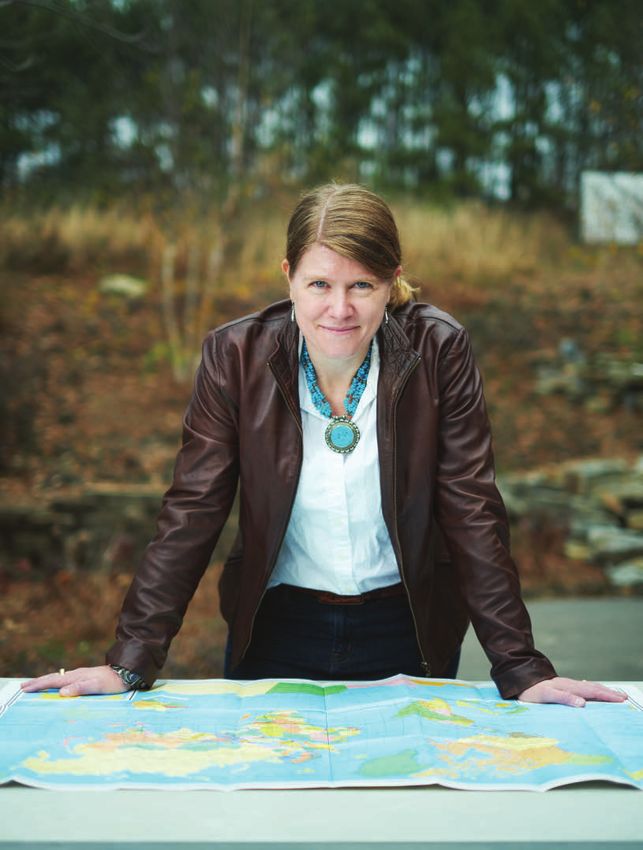
inbox

                                                                          Sharing feedback
                                                                          Regarding “Thanks for Not Sharing” by Joe Queenan [January]:
                                                                          Some time ago, I stumbled across a book that looked interesting.
                                                                          I read it and loved it. After reading it in virtually one sitting,
                                                                          I thought of a group of people I knew who shared my interests and
                                                                          my sense of humor. They also loved it. They shared it with others.
                                                                          We had discovered a new author. We shared his next book. And
                                                                          his next. Fifteen years on, that first book remains in my top 10.
                                                                          And to this day I enjoy the author’s columns in The Rotarian, even
                                                                          when I don’t always agree with their premise. And, oh, the book
                                                                          was If You’re Talking to Me, Your Career Must Be in Trouble —
                                                                          by Joe Queenan.                  SIMON BRIGHENTI, West Springfield, Massachusetts

            No doubt we have all received a book from a              dations with others. Over the years, my friends,     I thank God daily for the generosity and the
            well-meaning friend that didn’t meet our criteria        family, and acquaintances have shared books          miracle of transplantation.
            for a good read. In some cases, we simply put the        and offered book suggestions. All books deserve         SCOTT BADER
            book aside or donate it to our local library. In other   a chance. Occasionally I read something                 Sturgeon Bay, Wisconsin
            cases, we may start reading, trusting that our           recommended that I love, that I can’t put down,
            friend had a reason for giving us that particular        or that makes me feel better or be better, despite   Sustainability class
            book. Sometimes we give up partway through,              Joe’s assertion that “with only a few exceptions     I found “The Sustainability Challenge” in the
            recognizing that our friend made a mistake.              — the Bible, the Koran — nothing important in        December issue to be of great value. To me, this
            Occasionally we may read all the way to the end,         life can be fixed by reading a book.”                is what Rotary is all about: Figure out what really
            realizing that the friend was right. In any case, a         I will continue to give and receive books         works, what is really required, be honest when
            recommended book gives us insight into the mind          and suggestions for books, as well as music and      things do not go well, and keep improving. I find it
            of the giver that we previously lacked. If that          movies. I don’t know which ones will positively      refreshing to read that USAID is as interested in
            person is a friend, that alone is a valuable gift.       or negatively impact a person, or in what way.       sustainability as is The Rotary Foundation.
                I’m afraid that Joe Queenan’s piece totally             JOHN BAXTER                                          We must not fool ourselves about the
            misses the point. The gift of a book says, “I see           Simi Valley, California                           ingredients that are required for sustained success.
            something in you that I see in myself, and I                                                                  As Aldous Huxley said, “Facts do not cease to
            would like to share a bit of my mind with you.” In       Giving of yourself                                   exist because they are ignored.”
            no case is that gift ever a “smack in the face …         I usually read The Rotarian cover to cover, but         LARRY MCGEE
            punitive … cruel” or “a socially acceptable form         when I saw on your January Contents page that           Chehalis, Washington
            of sadism.”                                              your What It’s Like package included pieces on
                My advice to Joe — if he’s truly offended by         donating and receiving a kidney, I went right to     Your piece showing what worked, what didn’t,
            the gift of a book — is to smile, say thank you,         those awesome stories. Living donors are heroes      and why in Rotary water projects in Ghana should
            and donate it to the library in the name of his          — my wife is one. Everybody should know about        become a regular feature of The Rotarian. This
            local Rotary club.                                       paired exchange, in which a living donor who is      article gives Rotarians information about the ways
               DON HUTCHINS                                          incompatible with their intended recipient           in which we are already improving the world, as well
               Olalla, Washington                                    can swap kidneys with another donor-recipient        as advice regarding how we can improve the world
                                                                     pair in the same situation. My wife, Heidi, did      even more efficiently and effectively going forward.
            I love Joe Queenan’s writing but disagree with           that for me four years ago. She calls it the            DAVID CHILDS
            his opinion on sharing books or book recommen-           ultimate BOGO event: Bring Organ Get Organ.             Hot Springs Village, Arkansas

  6   | The Rotarian April 2020

apr20-Letters-v4.indd 6                                                                                                                                                         2/3/20 3:06 PM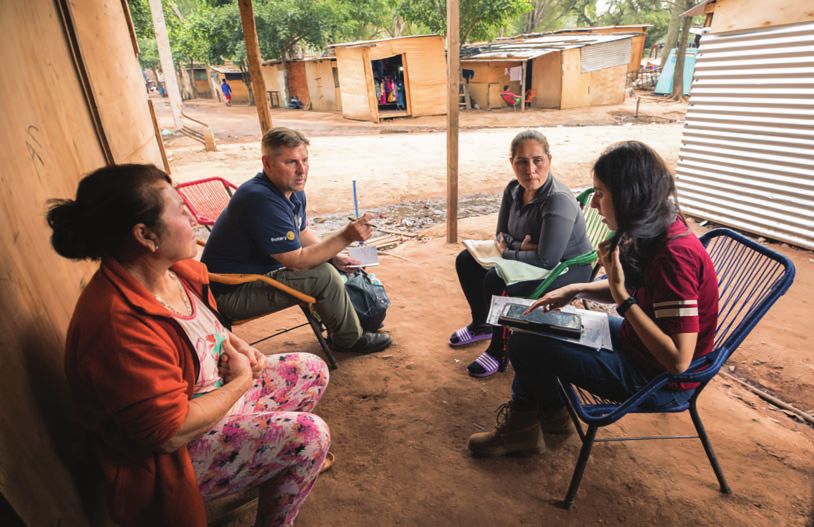
Overheard on social media
Our annual What It’s Like issue in January featured some Rotarians’
amazing experiences. We pitted their adventures against one another
on Instagram in our interactive version of What It’s Like Madness:
ND1 WOULD YOU RATHER ... ? ND1
U U
RO RO
2 2
UND UND
Conquer the RO RO
Seven Summits Play in a
39% World Cup game
33%
OR
ND3 OR
Visit every national park U
61%
Visit every
RO Fly a helicopter Fly a helicopter
67%
54%
national park
Fly a helicopter
61%
38%
OR
Visit every OR
OR national park
62%
Plant a butterfly garden
Ski with the first lady
39% Meet a monarch
46% 41%
Ski
53% OR
OR Plant a butterfly garden
Canoe with the first lady
47% 59%
THE WINNER!
Visit every national park
Check out Rotary International’s Instagram story on 15 APRIL for an interactive poll about archaeology.
R E P R I N T I NG A RT I C L E S
The Rotarian frequently receives requests to reprint its articles. In the interest of raising awareness about what Follow us to get updates, share stories with your networks,
Rotary does, we encourage readers to share our articles in this way. Any article, in its entirety, may be reprinted in
a Rotary-denominated publication such as a club or district newsletter. For other publications, both consumer and and tell us what you think.
nonprofit, reprints require the expressed prior permission of the magazine.
In all reprints, author, photographer, and illustrator credits must appear with the article, along with the following: The Rotarian, One Rotary Center, 1560 Sherman Ave.,
Reprinted by permission from The Rotarian magazine, [month/year]. Evanston, IL 60201 USA
Copyright © [year of publication] Rotary International. All rights reserved.
If you wish to reprint an article from The Rotarian, contact us at rotarian@rotary.org.
After publication of the reprint, please mail a copy to: EMAIL yourletters@rotary.org twitter.com/rotary
The Rotarian, 1560 Sherman Ave., Evanston, IL 60201.
See also myrotary.org/en/terms-using-rotary-international-trademarks-and-copyrights. facebook.com/rotary instagram.com/rotaryinternational
April 2020 The Rotarian |7
apr20-Letters-v4.indd 7 2/3/20 3:06 PM
SERVICE                                                                         W          hen I was first finding my way around Rotary’s
                                                                                                  Evanston office, I was struck by the dozens

      ABOVE SELF
                                                                                       of mugs on the shelves of the kitchen on our floor:
                                                                                       Service Above Self, State Farm, the Woman’s Club of
                                                                                       Evanston. There was a stack of paper cups next to the
                                                                                       coffee maker, but it didn’t seem to get any smaller
                                                                                       during the day. Rotary office culture was predicated
            The Object of Rotary                                  A message from the
                                                                                       on reducing our reliance on single-use items. I never
      THE OBJECT of Rotary is to encourage and foster                editor in chief
      the ideal of service as a basis of worthy enterprise and,                        knew which mug I was going to use each day, but that
      in particular, to encourage and foster:
                                                                     JOHN REZEK
                                                                                       had its amusements.
      FIRST The development of acquaintance                                              We may have good intentions, but they have been
      as an opportunity for service;                                                   overwhelmed by our 70-year infatuation with the con-
      SECOND High ethical standards in business and                                    venient and disposable nature of plastic. This has
      professions, the recognition of the worthiness of all                            morphed into a problem that overpowers our efforts to
      useful occupations, and the dignifying of each Rotarian’s                        recycle, blighting our oceans, our food supply, and even
      occupation as an opportunity to serve society;
                                                                                       our bloodstreams. This month’s feature “The Plastic
      THIRD The application of the ideal of service in each                            Trap” offers an overview of the problem as well as some
      Rotarian’s personal, business, and community life;
                                                                                       suggestions for its remediation. I’ve spent the past sev-
      FOURTH The advancement of international                                          eral months obsessing about how much plastic I touch
      understanding, goodwill, and peace through
                                                                                       every day. And once you’re aware of the cumulative
      a world fellowship of business and professional
      persons united in the ideal of service                                           effect of all this plastic, you can’t look away. So what’s
                                                                                       a reasonable person to do?
              The Four-Way Test                                                          In college, I liked to backpack, with Colin Fletcher’s
      OF THE THINGS we think, say, or do:                                              The Man Who Walked Through Time as a sort of practi-
      1) Is it the TRUTH?
      2) Is it FAIR to all concerned?                                                  cal and spiritual guide. My thought was that you should
      3) Will it build GOODWILL and                                                    move through nature without leaving evidence that you
          BETTER FRIENDSHIPS?                                                          were there — though that seemed as unattainable as
      4) Will it be BENEFICIAL to all concerned?
                                                                                       some of the other goals I was chasing at the time.
       Rotarian Code of Conduct                                                          Since then, I’ve tried to adopt a simpler intention: to
                                                                                       live modestly. I admire artistry and craftsmanship, but
      The following code of conduct has been adopted for the
      use of Rotarians:
                                                                   Once you’re         I don’t always feel the need to own an example. I’ve
                                                                   aware of the        never considered buying a Rolex. At my father’s table,
      AS A ROTARIAN, I will
                                                                     cumulative        I routinely enjoyed a 1947 Cheval Blanc and a 1945
      1) Act with integrity and high ethical standards
         in my personal and professional life
                                                                     effect of all     Mouton Rothschild at the same meal, but I don’t need
      2) Deal fairly with others and treat them and their
                                                                    this plastic,      to duplicate that experience at current market prices.
         occupations with respect                                       you can’t      I have a soft spot for Camille Pissarro’s paintings of the
      3) Use my professional skills through Rotary to:
                                                                      look away.       Boulevard Montmartre. I can’t afford one, but I know
         mentor young people, help those with special
                                                                                       the museums where I can see them.
         needs, and improve people’s quality of life in
         my community and in the world                                                   So now I’m tidying my side of the street. I’ve brought
                                                                                       a water bottle to the office and refill it several times a
      4) Avoid behavior that reflects adversely
         on Rotary or other Rotarians                                                  day. I have my own mug and a spare. I try to do what I
                                                                                       can. And I try to leave most things untouched. The less
      5) Help maintain a harassment-free environment in
         Rotary meetings, events, and activities, report any                           I need, the better for all of us.
         suspected harassment, and help ensure non-retaliation
         to those individuals that report harassment.

  8   | The Rotarian April 2020

apr20-Editor's Note-v6.indd 8                                                                                                                  2/11/20 1:55 PM
TAKE YOUR CLUB IN A
NEW DIRECTION
Is your club flexible and ready for the future?
New resources on Satellite Clubs, Passport Clubs, and
Corporate Membership can help you create an experience
that works for every member.
LEARN MORE ABOUT YOUR OPTIONS
AT ROTARY.ORG/FLEXIBILIT Y
MembershipFlexibility_AD2_EN18.indd 1 6/14/19 1:16 PMPotential shines brightest when it’s inspired. That’s why Rotary clubs invest time and expertise in
encouraging others to be the best they can be. Empowering those who have big dreams to achieve
great things — that’s what people of action do. Learn more at Rotary.org.
POA_RotarianAd_Empower.indd 1 2/21/20 12:38 PMour world
Two of a kindness
ROBERTA PEVERELLI
Rotary Club of Como-Baradello, Italy
FILIPPO ARCIONI
Rotary Club of Como, Italy
When Filippo Arcioni and Roberta Peverelli
tied the knot on 20 September 2018, they
knew they didn’t need a new blender clut-
tering up their kitchen. So they asked their
guests to help them celebrate the occasion
CLAUDIO BADER
by donating to End Polio Now rather than
April 2020 The Rotarian | 11
apr20-OW-Opener-Extended Caption-QA-v5.indd 11 2/5/20 10:22 AMour world
continued from page 11
buying traditional wedding gifts. Many
of their guests happily obliged, and the
donations amounted to $30,000.
“I was in disbelief — and happy,”
says Peverelli.
The idea seemed natural to these
longtime Rotarians. “When we decided
to get married, it only took looking into
each other’s eyes for an instant to decide
how we would incorporate Rotary into
our wedding,” says Peverelli.
In addition to having served as presi-
dents of their respective clubs, the
couple are deeply involved in the philan-
Monumental respect
thropic side of Rotary. Arcioni is the chair
of District 2042’s fundraising subcom-
mittee and Annual Fund subcommittee.
Peverelli is her club’s Foundation chair. ON A COOL DAY IN OCTOBER, about a We pry them up and get some dirt or sand
The two met in 2003 at an ice-skating dozen volunteers gathered at Mount Hope underneath the markers to bring them up
rink in Como. Peverelli was president of Cemetery in Baker City, a community of to the level of the rest of the lawn.”
her daughter’s skating team, and Arcioni around 10,000 in northeastern Oregon. The materials are donated, and Teskey
oversaw the company that manages the Some were members of the Rotary Club and Hanson bring necessary equipment.
rink. “We were fighting over the availabil- of Baker City and some were not, but “Dennis brings his tractor out to help
ity of an ice rink,” says Peverelli with a they all shared a sense of purpose: They haul dirt and lift up what we need to lift
laugh. Fortunately, their relationship were in the cemetery to restore veterans’ with the front-loader bucket,” Hanson says.
thawed and today they are devoted to each headstones. “And we have access to a hoist truck when
other — and to The Rotary Foundation. The volunteers worked to straighten, we need to lift the headstones completely
“We think the most important service reset, or stabilize 11 headstones. Their ef- out of the ground.”
of The Rotary Foundation is that it gives forts were part of a project started in 2011, The veterans section at Mount Hope
a lot of visibility and knowledge of Rotary when the City Council set up an advisory has about 350 graves; the volunteers
to the world,” Peverelli says. committee to look at ways to address the have worked on around 100 of them over
Asking for contributions to End Polio sad state of the veterans section of the cem- the years. “We’ve made great headway,”
Now also saved the couple the pre- etery. One committee member was Rotarian says Hanson. “Things are looking really
wedding stress associated with register- Dennis Teskey, the owner of a funeral good now.” But Teskey notes that the
ing for gifts, and saved their guests the service company called Gray’s West & Co. project is an ongoing effort and that
trouble of shopping for them. The request Pioneer Chapel, which is now run
also brought an expression of the couple’s by his stepson Troy Hanson. The Volunteers have worked
values into their wedding celebration. Rotary Club of Baker City soon got on restoring about
The couple encourage others to fol- involved with the project, and it 100 veterans’ graves.
low their example for any happy event. has kept the idea going ever since.
“We invite other Rotarians to consider Baker City has an endowment fund that veterans’ graves in the public part of the
collecting donations for End Polio Now covers maintenance of the cemetery cemetery also need work.
to celebrate other beautiful events in grounds, but not of the gravestones. “The Teskey and Hanson are confident there
their lives,” Arcioni says. “Naturally, it markers on the graves are the responsibil- will be plenty of volunteers to help in the
doesn’t have to be just weddings. ity of the families,” Teskey says. But it future. “We had a couple of new people
ROTARY CLUB OF BAKER CITY
“The joy you experience will be coupled would be difficult for the families to repair show up this year,” Hanson says. “They
with the knowledge that you are helping headstones that have shifted or sunk thought it was a great cause, and they
rid the world of polio and saving children because of the ground’s freezing and thaw- wanted to come and help. It’s kind of in-
from this crippling disease.” ing. “Most of the ones we have worked on fectious — people want to do their part to
— ANNEMARIE MANNION had sunk down with the years and settled. help veterans.” — NIKKI KALLIO
12 | The Rotarian April 2020
apr20-OW-Opener-Extended Caption-QA-v5.indd 12 2/5/20 10:22 AM“ I believe that going
to a museum or seeing
photocopies dilutes
the interaction.
Danny Spungen
”
Object lessons
In 2007, Danny Spungen, an avid flowers or cars. Another table is dedicated to stance, they told me we needed chairs around
stamp collector, met a man selling a people who are not Jews but did things to save the exhibit tables. We want students to en-
collection of more than 250 letters, Jews. After the students have had a chance to gage with the letters, which are protected in
postcards, and other materials re- see the objects, we ask them to do one of two archival polyester sleeves.
lated to the Holocaust. It changed his things: They can write an essay in the voice of
life. Spungen, a member of the Ro- an artifact they have chosen, talking about TR: Students could see these things in muse-
how it feels to be that letter or envelope, and ums. Why risk objects getting lost, stolen, or
tary Club of North Chicago, Illinois,
what that piece has seen; or they can look at a damaged by exposure?
bought the collection. Since then, he
piece and write about why they are interested
has acquired thousands of additional
in it, and how it speaks to them. SPUNGEN: I believe that going to a museum or
items, and he takes a rotating selec- seeing photocopies dilutes the interaction. I
tion of artifacts into schools around TR: Do you involve Holocaust survivors in your want the most direct relationship possible be-
the world to help students find a presentations? tween the witness and the student. Museums
personal connection with the Holo- don’t give you that. If an artifact is on display at
caust. When they see and sometimes SPUNGEN: Every time I take the artifacts out all, it is behind glass. In our exhibits, you can pick
hold these objects, the reality of the for an exhibit, I try to bring survivors. The ex- up a piece, and for that moment you and you
Holocaust becomes clearer. It’s a hibit is the introduction. The survivors are the alone are connected to that piece.
controversial approach among some key. We are now recording survivors we work
museum curators, who worry about with, talking about pieces from the collection. TR: Do you talk about other genocides in
When they are no longer with us, this exhibit history?
preserving objects, but Spungen be-
will be incredibly important.
lieves it is worth it in order to give
SPUNGEN: I use the Holocaust as an example
students a stronger understanding
TR: How do you choose which objects from of how and why genocides occur, why human-
of genocide.
your collection you take into schools? ity breaks down. The exhibit now ends with
an identification card of a Tutsi man from
THE ROTARIAN: What does your traveling SPUNGEN: It’s always changing. And the mate- Rwanda. He was killed when a church was fire-
exhibit look like? rial is not chosen by me. I work with students bombed in 1994 during the genocide. His
at Carmel Catholic High School in Mundelein, brother retrieved the ID card. On the label
SPUNGEN: Our exhibit usually has 18 long ta- Illinois. A Carmel history teacher, Jim Schus- for that card, we list things about him: his
VIKTOR MILLER GAUSA
bles. It used to be set up chronologically. But ter, attended an event I had to display the col- favorite food, his favorite sport. I spend a lot of
kids think in categories. So now I have one lection, and that started our partnership. The time in discussions of the exhibition talking
table dedicated to children’s drawings from Carmel students tell me what material speaks about other genocides.
concentration camps — pictures of dolls or to them. They have taught me so much. For in- — HANK SARTIN
April 2020 The Rotarian | 13
apr20-OW-Opener-Extended Caption-QA-v5.indd 13 2/5/20 10:22 AMour world
Czech Republic
Italy
United States
India
Argentina
People of action
around the globe
United States Argentina Italy
What began with a mother’s request Led by professional instructors Since 2012, the Rotary Club of
for an all-terrain wheelchair for her brought in by the Rotary Club Fermo has been helping inmates
daughter with spina bifida has grown of Campana, about 300 Zumba of an area prison find their voice.
More than into an initiative spanning several enthusiasts stepped up funding The club equipped the prison with
15 million people high schools in Georgia. In February for emergency responders. The computers and provided professional
participate in 2019, the robotics-oriented Interact gathering, in May 2019, raised a guidance to help the inmates produce
weekly Zumba Club of Etowah High School in Wood- portion of the $3,000 needed a newsletter, L’Altra Chiave News,
fitness classes in stock delivered its first mechanized to purchase a thermal-imaging translated as The Other Key News.
186 countries. wheelchair, created with help from camera for volunteer firefighters in Angelica Malvatani, a club member
Go Baby Go, a mobility project of the the community, says Club President and journalist, visits the Fermo prison
University of Delaware. The Interact Walter Waisman. The Latin-styled weekly to work with the inmates to
club was soon fielding requests for dance workout, held in a school write news articles and editorials and
more devices. Inspired by the re- gymnasium, injected energy into design the publication, which prints
sponse, the club created the Interact the club’s 80th anniversary celebra- hundreds of copies quarterly.
First Alliance, a consortium of tion. In recent years, the club’s “Through the newsletter they feel
like-minded Interact clubs in Canton, projects have funded scholarships more responsible for their choices
East Cobb, Tucker, and Woodstock for high school students, farming and seek to be appreciated for what
dedicated to getting students equipment for an agricultural school, they are: men, fathers, sons, brothers,
involved in science and technology. and stock for an eyeglasses bank. simply persons,” says Malvatani.
14 | The Rotarian April 2020
apr20-OW-Map-v4.indd 14 1/28/20 9:11 AMCzech Republic India
In May 2019, spectators lined Noll, a club member who helped After heavy rainfall in August 2018
the banks of the Vltava River as organize the competition with unleashed floodwaters and triggered
27 teams made a splash during assistance from the Czech landslides, Rotarians from clubs in
the 10th Dragon Boat Charity Dragon Boat Association. Teams southeast India’s District 3181 and
Challenge. The race, sponsored were formed by companies, around the world rallied to collect
by the Rotary Club of Prague- clubs, organizations, and friends. money for the victims. By June 2019,
International, raised $25,000 “In terms of who won? Of course the Rebuild Kodagu Trust Committee
for three charities: Život 90, a the charities won by receiving had completed 25 houses, which cost
support organization for seniors; hundreds of thousands of a little more than $7,000 each. The
Nadace Naše dítě, which helps [Czech] crowns in donations. homes were dedicated by 2011-12 Rain-related
abused children and children As for the race, the Rotary Club Rotary President Kalyan Banerjee, who weather events
with disabilities; and Výbor of Praha-Staré Město won,” says was one of the driving forces behind kill five people
every day in India.
ROTARY CLUB OF PRAGUE-INTERNATIONAL
dobré vůle, which aids people Prague-International member the project. The beneficiaries were
with disabilities. The 17-person Josef Simpartl. The 2020 race selected with help from Habitat for
teams, with 16 paddlers and is scheduled for 23 May. Humanity India, which also helped
one drummer to keep the rhythm, coordinate construction. Another 25
paddled the course as fast as houses were expected to be turned
possible and built a little Bohe- over to their new owners in March.
mian bonhomie, notes Christian — BRAD WEBBER
April 2020 The Rotarian | 15
apr20-OW-Map-v4.indd 15 1/28/20 9:11 AMour world
ShelterBox team rises to challenge
WHEN EL NIÑO caused abnormally intense In its May 2018 issue, The Rotarian fol- as well as Paraguay, experiencing firsthand
rainfall in April and May 2019, Paraguay lowed Morris, fellow Rotarian Wes Clan- the power of the Rotary-ShelterBox part-
experienced massive flooding that dis- ton, and Rotaractor Katelyn Winkworth nership. “When we hit the ground on any
placed an estimated 60,000 people. In as they trained to become members of deployment, Rotarians and Rotaractors
Asunción, the capital, the Paraguay River the ShelterBox Response Team. After are our first contact,” he says. “They help
overflowed, and tens of thousands had to 11 months developing the skills needed to us identify safe and unsafe areas, the right
live in temporary settlements with inade- assist displaced people around the world, places to set up base. They provide drivers
quate shelter and poor sanitation. With the they were invited to participate in the in- and translators. We wouldn’t have the im-
high waters persisting for months, residents tensive final stage of training conducted pact we do without the partnership.”
needed humanitarian assistance while they by ShelterBox in the rugged countryside In Paraguay, members of the Rotaract
figured out what to do in the long run. in Cornwall, England. After nine days deal- clubs of Asunción and Asunción Catedral
That’s how Ned Morris, a member of ing with simulations of the disasters they were crucial to the mission’s success. Mar-
the Rotary Club of Walla Walla, Wash- might encounter on a deployment, Shelter- iana Santiviago and Oliver Lugo Fatecha
ington, found himself in Asunción for 22 Box welcomed Morris, Clanton, and Wink- helped with translation, and Gabriela
days in July and August. It was Morris’ worth to its response team, which numbers Grasso, Fanny Santos, and others provided
fifth deployment since late 2017, when about 200 people worldwide. logistical support.
he completed his training with Shelter- Since then, Morris has supported fami- ShelterBox Response Teams provided
Box, Rotary’s partner for disaster relief. lies in the Caribbean, Ethiopia, and Kenya shelter kits packed with tarpaulins and
16 | The Rotarian April 2020
apr20-OurWorld-Feature-v7.indd 16 2/5/20 2:41 PMOPPOSITE: Ned Morris (second from left) worked closely with ShelterBox team members
and community members to ensure that displaced people were getting things they needed.
THIS PAGE, CLOCKWISE FROM TOP LEFT: ShelterBox distributed thermal blankets
for the cold nights; mosquito nets are essential for disease prevention; the ShelterBox team,
including Rotarians from the UK and the United States, worked alongside local Rotaractors;
solar lights make it possible to do chores and cook at night, and provide a sense of comfort.
tools to help repair homes. They also dis- Community engagement is key to don’t want to be a burden on them. They’ve
tributed solar lights, mosquito nets, and the partnership’s success. The response already gone through enough.”
blankets to displaced people in Asunción. teams work with local leaders and teach ShelterBox is always preparing for its
As for Morris, he served on a team dedicated them to show others how to use the re- next deployment, without knowing where
to monitoring, evaluation, accountability, sources ShelterBox provides. That means that might be. “We fundraise for the next
and learning (MEAL), part of ShelterBox’s the ShelterBox teams can be small, with disaster,” says Morris, who also works
effort to garner knowledge from each de- lower deployment costs and greater abil- as a ShelterBox ambassador, spreading
ALYCE HENSON / ROTARY INTERNATIONAL
ployment. “The purpose of the MEAL team ity to adapt to changing circumstances. the word about the Rotary-ShelterBox
is to make sure we’re providing the right The response teams also work directly mission. “We already had the supplies in
type of aid that’s needed now,” he explains. with the people most affected by a disas- place that we’re delivering now. We are
“And if they need other things, we want to ter, but they are careful not to be intrusive. ready when the next hurricane or earth-
know what those are. If it’s something that “These people are in a horrible situation quake hits, wherever that might be. What-
we can bring in the future to improve our and they deserve to be respected, consulted, ever it is, as soon as the next disaster hits,
response, we want to know.” and treated with dignity,” Morris says. “We we are ready.” — HANK SARTIN
April 2020 The Rotarian | 17
apr20-OurWorld-Feature-v7.indd 17 2/5/20 2:41 PMour world 18 | The Rotarian April 2020 apr20-OW-snapshot-v2.indd 18 1/23/20 9:44 AM
SNAPSHOT
                               Recife, Brazil
                               The Capibaribe River, which flows through the heart of
                               Recife into the Atlantic Ocean, has long been used as a
                               dumping ground by people who live on its banks. Every
                               year, Projeto Recapibaribe, a nonprofit organization
                               dedicated to the preservation of the Capibaribe, holds a
                               one-day competition for local fishermen to see who can
                               haul the most garbage out of the river. In 2018, the Ro-
                               taract Club of Recife-Encanta Moça got involved, rais-
                               ing money to buy protective gear for the participants,
                               provide food baskets for the fishermen’s families, and
                               pay a per diem to all the participants so they didn’t lose
                               the day’s income. Rotaractor BERNARDO FERREIRA, who
                               captured this moment from the garbage collection,
                               notes that the 2018 edition removed 30 tons of trash.

                                                                April 2020 The Rotarian     | 19

apr20-OW-snapshot-v2.indd 19                                                          1/23/20 9:44 AM
our world
APRIL events
18
Swing into spring
EVENT: Spring Swing
HOST: Rotary Club of Denver Mile High, Colorado
WHAT IT BENEFITS: Local and international projects
4
WHAT IT IS: This night of big band music includes dancing,
drinks, and delectable appetizers. In case you need to
brush up on your swing steps, a brief lesson will be
Ready, set, race provided to get everyone warmed up.
EVENT: Southeast Regional Small School
19 - 30
Track and Field Invitational
HOST: Rotary Club of Seneca Golden Corner,
South Carolina
WHAT IT BENEFITS: GED scholarships, local charities Branch out
WHAT IT IS: Athletes from small high schools in South Carolina, EVENT: Tree Sale
Alabama, Georgia, North Carolina, and Tennessee HOST: Rotary Club of Sherwood, Oregon
compete in classic track and field events. WHAT IT BENEFITS: Local and international projects
The meet also includes races for elementary
WHAT IT IS: Say goodbye to winter with some spring planting.
schoolchildren and senior citizens.
Purchase a fruit, shade, or ornamental bare-root
tree donated by Oregon nurseries, and get digging!
11
Hop to it 25
EVENT: Bunny Hop 5K Shades of blue
HOST: Rotary Club of Antioch, California EVENT: Bluegrass and Blueberry Festival
WHAT IT BENEFITS: High school scholarships and other
HOST: Rotary Club of Avon Park, Florida
youth-related programs
WHAT IT BENEFITS: Veterans Freedom Flights and local schools
WHAT IT IS: Held annually on the day before Easter, this
and charities
5K race is a community event, with high school
bands performing to pump up the runners WHAT IT IS: Hear live bluegrass music and enjoy barbecue
beforehand, and cheerleaders rooting them chicken, blueberry lemonade, and blueberry desserts.
on along the course. You can also buy fresh blueberries and blueberry
plants, and shop for arts and crafts.
Tell us about your event. Write to rotarian@rotary.org with “calendar” in the subject line.
20 | The Rotarian April 2020
apr20-OW-Calendar-v1.indd 20 1/28/20 8:32 AMHunger hides in every community. That’s why Rotary clubs support programs to provide
healthy food and develop sustainable solutions to food insecurity. Fighting hunger to build
stronger communities — that’s what people of action do. Learn more at Rotary.org.
POA_RotarianAd_FightHunger.indd 1 2/21/20 12:36 PMROTARY PEACE FELLOWSHIP Developing Leaders, Building Peace Full funding for a certificate in peacebuilding, conflict transformation, and development at Makerere University in Kampala, Uganda LEARN MORE: rotary.org/peace-fellows
viewpoints

                                   Every leaf a miracle
                                            Know a tree or poetry and life can be renewed

                                                                     by G EO F F R EY JO H N S O N

                T
                          here are 4 million                                                                           in our neighborhood. When
                          trees in the Windy                                                                           the old homes are sold, they
                          City. This is the                                                                            are replaced by structures
                story of one that got away.                                                                            that invariably share two dis-
                   Several summers ago I re-                                                                           tinguishing features: a deck
                turned home from work and                                                                              atop the garage in lieu of a
                found the landscape irrevo-                                                                            backyard, and a colonnade at
                cably altered. When I’d left                                                                           the home’s entryway. The lat-
                that morning, a broadly                                                                                ter are often composed of
                branching chestnut tree had                                                                            Doric columns, more appro-
                stood in the backyard of the                                                                           priate to Thomas Jefferson’s
                house two doors over from                                                                              Monticello. I had always
                ours. Now it was gone. The                                                                             heard the South would rise
                only ones more surprised                                                                               again; I just did not think it
                than I were the birds, who                                                                             would be next door.
                punctured the evening quiet                                                                               I don’t know why I have
                with their profane tweets.                                                                             such an aversion to those
                   The birds had lost their                                                                            columns. In the 1830s, first
                homes; we had lost a living                                                                            as a town and then as a city,
                landmark. Since my wife and I had             1924, had lived in the house most of her      Chicago was an avid participant in ar-
                moved into our house, and as our chil-        life. The tree had likely been there just     chitecture’s Greek Revival. But the col-
                dren were born and grew up, the tree          as long, grown from a chestnut that           umns of the structures built then
                had stood there. From the upstairs deck       her father had brought from France.           actually supported weighty pediments.
                off our bedroom, we could see other           After the couple died — George in             The newly installed pillars in my neigh-
                trees, many of them grand, but none so        2004, Ellen three years later — the           borhood, more decorative than struc-
                majestic as the chestnut, whose lush,         house was sold to a developer. The very       tural, are an affront here in the land of
                leafy canopy might comfortably shade          first thing he did was cut down the           “form follows function.” And the
                a bevy of brawny blacksmiths.                 chestnut tree. A few days later he de-        worker who shoulders one of those
                   I never got the full story of the tree’s   molished the house.                           featherweight tubes and struts about
                origins, which I regret. The couple who          A McMansion complete with gargan-          as if he were Samson? What a doric.
                owned the house with the chestnut             tuan garage took its place. Little was left      There are worse things than losing
  RICHARD MIA

                tree were in their 70s when we moved          in the way of a yard. Over the past de-       a solitary chestnut tree. In 1995, we
                into the neighborhood. Ellen, born in         cade, this has become a familiar pattern      weren’t the only newcomers to the

                                                                                                                               April 2020 The Rotarian   | 23

apr20-column-neignborhood-news-v2.indd 23                                                                                                           2/3/20 3:21 PM
FIND A CLUB neighborhood. Others took up resi-
dence after a journey of 7,000 miles,
hitching a ride from China on the
sitcom starring Hal Linden — but the
dazzling sunbursts of color that appear
each June when the tree flowers pro-
ANYWHERE IN THE WORLD!
wooden crates and pallets used in a de- vide incontrovertible evidence of its
livery to a hardware manufacturing Linnaean provenance.
company six blocks from our house. I find many reasons to admire that
These Asian longhorned beetles, shiny tree, especially as I watch the Doric
black insects with white spots and long columns proliferate in our neighbor-
antennae, laid their eggs in nearby hood. Most people are familiar with
trees. The beetle larvae burrowed into Monticello and its colonnaded porches.
the host trees, munching their way to (If your memory needs jogging, check
maturity, at which point the adults out the back of a nickel.) As he began
chewed their way back out — not espe- compulsively remodeling in 1792, Jef-
cially benign behavior from the trees’ ferson envisioned six Doric columns
perspective. holding up the west portico of his hill-
It was a few years before the beetles top home. But for years, those pillars
were detected; by that time, they had failed to materialize; instead, the
spread across several city blocks. In trunks of four tulip trees served as sub-
1999, the city of Chicago and private stitutes. When the British diplomat
contractors cut down and destroyed Augustus John Foster visited Monti-
876 infested trees, the only way to ef- cello in 1807, he declared the tree
Get Rotary’s free Club Locator app fectively contain the invasive pests. “It trunks “as beautiful as the fluted shafts
and find a meeting wherever you go! will be years — decades, even — before of Corinthian pillars.”
www.rotary.org/clublocator these streets know shade again,” ob- The Doric columns were finally in-
served the Chicago Tribune. stalled in 1822, four years before Jef-
The first to go was a Norway maple ferson’s death; one of his slaves, a
that had been planted in 1966 to re- skilled stonemason named Thrimston
place a tree lost to Dutch elm disease. Hern, helped make Jefferson’s dream
Another homeowner bemoaned the a reality. But the tulip trees were an in-
loss of her 100-year-old ash tree; she tegral part of Monticello’s design for
had learned it would be coming down at least 15 years — and Jack McLaugh-
匀䤀䴀倀䰀䔀 吀伀 唀匀䔀 on the same day she brought home lin, the author of Jefferson and Monti-
吀漀琀愀氀 吀漀琀愀氀
her newborn son. The city replanted cello: The Biography of a Builder, thinks
匀甀戀猀挀爀椀戀攀爀猀 吀攀愀洀猀
a variety of species along those dese- they were there even longer. We’ve
砀
㘀㤀㐀 ㈀
crated blocks, but six years later, been in our home 25 years, and I expect
吀漀琀愀氀 吀漀琀愀氀
that homeowner remained unhappy. our tulip tree, at least as old as our
刀漀甀琀攀猀 嘀漀氀甀渀琀攀攀爀猀 “We had the biggest and most beautiful 120-year-old house, will remain
㐀㈀ ㈀㌀
tree on the block and ended up with the long after I’m gone. Those faux Dorics
䘀䰀䄀䜀 倀刀伀䜀刀䄀䴀 䤀一 吀䠀䔀 䌀䰀伀唀䐀 saddest,” she told the Tribune, refer- next door and across the street should
昀漀爀 挀氀甀戀猀 漀昀 愀氀氀 猀椀稀攀猀℀ encing the sapling that had taken the be so lucky.
匀琀愀爀琀椀渀最 愀琀 ␀㈀ ⼀䴀漀⸀ ash’s place. Henry Wadsworth Longfellow’s
Fortunately, our street was spared. “The Village Blacksmith” — which be-
匀甀戀猀挀爀椀戀攀爀 䴀愀渀愀最攀洀攀渀琀
Out front, we still have the towering gins “Under a spreading chestnut-tree”
刀漀甀琀攀 䴀愀渀愀最攀洀攀渀琀 tulip tree that was already ancient the day — was once among the best-loved
嘀椀猀甀愀氀椀稀攀 漀渀 䜀漀漀最氀攀 䴀愀瀀℀
嘀漀氀甀渀琀攀攀爀 䴀愀渀愀最攀洀攀渀琀 we moved in. A city worker trimming poems of the American people. Like
䠀漀氀椀搀愀礀 䴀愀渀愀最攀洀攀渀琀
倀愀礀洀攀渀琀 愀渀搀 䄀甀琀漀洀愀琀椀挀 䌀爀攀搀椀琀 䌀愀爀搀 刀攀渀攀眀愀氀 ⴀ
the trees along our block once tried to everything else, people’s tastes change,
瀀愀礀洀攀渀琀 眀攀戀猀椀琀攀 convince me it was a linden — “You be it in architecture, in arboriculture,
know, like Barney Miller,” he said, root- or in poets (else I need not have felt
䌀䄀䰀䰀 唀匀㨀 ㈀㐀ⴀ㌀㠀㌀ⴀ㠀
ing about in his trove of arboreal arcana compelled to explain my earlier allu-
to unearth this reference to the 1970s sion to tree-shaded smithies). A
24 | The Rotarian April 2020
APR20Combos-v1.indd 24 2/21/20 4:01 PMLike everything else,
people’s tastes change,
be it in architecture, SPONSOR THE 2020
in arboriculture, ROTARY CONVENTION
IN HONOLULU!
or in poets.
philosopher grounded in equanimity Convention sponsorship provides great visibility to
might even find consolation in these businesses and nonprofit organizations to engage with
recurring cycles of change. 25,000 active Rotary members around the world.
In March 1842, emerging from a
deep depression brought on by the SPONSORSHIP CAN INCLUDE:
Exhibit space in the House of Friendship
death of his brother, Henry David
Opportunity to hold or sponsor a breakout session
Thoreau composed a letter to his Chance to work with Rotary to create a custom campaign
friend Ralph Waldo Emerson. Nature,
he wrote, does not recognize death. Fill out your information online to discuss the benefits of investing in a
Rotary sponsorship: riconventionsponsorship.com/contact-us
“She finds her own again under new
forms without loss. … When we look
over the fields we are not saddened
HONOLULU
because these particular flowers or HAWAII 2020
grasses will wither — for the law of
their death is the law of new life.” Even
in the midst of profound loss, nature
regenerative triumphs.
Years have passed, decades even, and
now those beetle-devastated streets
WHAT WILL YOU
WATCH TODAY?
know shade again. The mother and her
young son have moved on, but an oak of
great promise now rises where her be-
loved ash once stood. As for our van-
ished chestnut, it will never return;
even if it could, there’s no longer a large www.youtube.com/rotaryinternational
www.youtube.com/rotaryinternational
swath of grass in which to plant itself.
But late last spring, as dusk over- watch. learn. connect.
took a May day, I sat in our backyard
reading Whitman, whose sublime
lament for the death of Lincoln was $ 3 / 8 6 3 2 5 7 0 , 5 $
inspired by the sight of a newly blos- ) , 2 1 $ $ 1 ( : 2 3 ( &
$ 3 5 , / / $ 9 $ % $ , 7
somed lilac bush, its “every leaf a mir- 5 ( , 7 ( 5 $ 7 ( % , 1 * (
acle.” I set the book aside and listened. 0 $ 7 ( 5 1 $ / $ 1 '
In the tiny patch of yard where the ma-
jestic chestnut once stood, a father
Advertise in (
6
7
+
& +
5 ,
0 (
0 3
$
5
6
(
8 5 (
1 7 $ ' 2
The Rotarian
3 $ 8 6 ( $ 7 5 , $
played with his two young children. I 1 , ; / 8 6 7 $ % 6 ( 1 7
could not see them, but I could hear & 2 1 1 ( & 7 3 $ 6 6
their laughter as it rose through the & + , / ' + ( $ / 7 +
evening quiet, a comforting sound that
adv@rotary.org / ( 5 2 < ( & 2 1 2 0 , 6 7
$ 5 ( 6 & = $ 5 0 2 1 7 +
might provide solace to even a battal- 1 2 1 ( 3 ( 5 , ( ( 5 , (
ion of blacksmiths. ■ * 1 $ 7 / 6 7 6 6 7 ( 5 1
April 2020 The Rotarian | 25
APR20Combos-v1.indd 25 2/21/20 4:01 PMTHE
PLASTIC
TRAP
26 | The Rotarian April 2020
apr20-Plastics-v13.indd 26 2/18/20 12:58 PMHow do we escape our tangled
relationship with a throwaway culture?
Rotarians are pointing the way
April 2020 The Rotarian | 27
apr20-Plastics-v13.indd 27 2/18/20 12:58 PMWelcome to Plasticville:
Population 7.8 billion
We’ve lived in a synthetic world for more than 70 years. How much longer can it last?
BY SUSAN FREINKEL
n 1950, a Philadelphia toy company came found in nature. With the product’s invention, the Bakelite
I
out with a new accessory for electric-train Corporation boasted, humans had transcended the classic
enthusiasts: snap-together kits of plastic taxonomies of the natural world: the animal, mineral, and
buildings for a place it called Plasticville vegetable kingdoms. Now we had “a fourth kingdom, whose
U.S.A. Sets of plastic people to populate the boundaries are unlimited.”
town were optional. Bakelite was invented to replace another scarce natural
Today we all live in Plasticville. But when, exactly, did we substance: shellac, a product of the sticky excretions of the
take our first steps into this synthetic world? Some say it was female lac beetle. Demand for shellac began shooting up in
in 1870, when the inventor John Wesley Hyatt patented a mal- the early 20th century because it was an excellent electrical
leable compound that was originally conceived as a substitute insulator. Yet it took 15,000 beetles six months to make
for an increasingly scarce commodity: ivory. It was created enough of the amber-colored resin needed to produce a
from a natural polymer — the cellulose in cotton — combined pound of shellac. To keep up with the rapid expansion of the
with other ingredients; Hyatt’s brother Isaiah dubbed the new electrical industry, something new was needed.
material celluloid, meaning “like cellulose.” As it turned out, the plastic Leo Baekeland invented by com-
Others fix the date to 1907, when a Belgian émigré named bining formaldehyde with phenol (a waste product of coal) and
Leo Baekeland cooked up Bakelite; the first fully synthetic subjecting the mixture to heat and pressure was infinitely more
polymer, it was made entirely of molecules that couldn’t be versatile than shellac. A dark-colored, rugged material with a
28 | The Rotarian April 2020
apr20-Plastics-v13.indd 28 2/18/20 12:58 PMsleek, machinelike beauty, it could be precisely molded and ma- devastating wars. Plastics promised a
chined into nearly anything. Contemporaries hailed its “protean material utopia, available to all. At least,
adaptability” and marveled at how Baekeland had transformed that was the hopeful vision of a pair of
something as foul-smelling and nasty as coal tar — long a discard British chemists in 1941. “Let us try to
in the coking process — into this wondrous new substance. imagine a dweller in the ‘Plastic Age,’ ”
The 1920s and ’30s saw an outpouring of new materials Victor Yarsley and Edward Couzens
from labs around the world. One was cellulose acetate, a semi- wrote. “This ‘Plastic Man’ will come
synthetic product (plant cellulose was one of its base ingredi- into a world of colour and bright shining
ents) that had the easy adaptability of celluloid but wasn’t surfaces ... a world in which man, like
flammable. Another was polystyrene, a hard, shiny plastic that a magician, makes what he wants for
could take on bright colors, remain crystalline clear, or be Much of the almost every need.”
puffed up with air to become the foamy polymer DuPont later plastic we’ve That world was delayed in coming.
trademarked as Styrofoam. produced Most of the new plastics discovered in
DuPont also introduced nylon, its answer to the centuries- is with us still. the 1930s were monopolized by the mili-
long search for an artificial silk. When the first nylon stockings Humans could tary over the course of World War II.
were introduced, after a campaign that promoted the material disappear Production of plastics leaped during the
as being as “lustrous as silk” and as “strong as steel,” women from the earth war, nearly quadrupling from 213 million
went wild. Stores sold out of their stock in hours, and in some tomorrow, pounds in 1939 to 818 million pounds in
cities, the scarce supplies led to nylon riots. Across the ocean, but many of 1945. Come V-J Day, all that production
British chemists discovered polyethylene, the strong, moisture- the plastics potential had to go somewhere, and plas-
proof polymer that would become the sine qua non of packag- we’ve made tics exploded into consumer markets.
ing. Eventually, we’d get plastics with features nature will last Just months after the war’s end, thou-
had never dreamed of: surfaces to which nothing would stick for centuries. sands of people lined up to get into the
(Teflon), fabrics that could stop a bullet (Kevlar). first National Plastics Exposition in
Though fully synthetic like Bakelite, many of these new New York, a showcase of the new prod-
materials differed in one significant way. Bakelite is a ther- ucts made possible by the plastics that
moset plastic, meaning that its polymer chains are hooked had proven themselves in the war. For a
together through the heat and pressure applied when it is public weary of two decades of scarcity,
molded. The molecules set the way batter sets in a waffle iron. the show offered an exciting and glitter-
And once those molecules are linked into a daisy chain, they ing preview of the promise of polymers.
can’t be unlinked. You can break a piece of Bakelite, but you Here was the era of plenty that the hope-
can’t melt it down to make it into something else. ful British chemists had envisioned.
Polymers such as polystyrene and nylon and polyethylene “Nothing can stop plastics,” the chair-
are thermoplastics; their polymer chains are formed in chem- man of the exposition crowed.
ical reactions that take place before the plastic ever gets near Plastics production expanded
a mold. The bonds holding these daisy chains together are explosively, with a growth curve that was
looser than those in Bakelite, and as a result these plastics steeper even than the fast-rising GNP’s.
readily respond to heat and cold. Unlike Bakelite, they can be Thanks to plastics, newly flush Ameri-
molded and melted and remolded over and over again. Their cans had a never-ending smorgasbord of
shape-shifting versatility is one reason thermoplastics affordable goods to choose from. The
quickly eclipsed the thermosets. flow of new products and applications
was so constant it was soon the norm.
t’s understandable why many at the time Tupperware had surely always existed,
I
saw plastics as the harbinger of a new era alongside Formica counters, Naugahyde
of abundance. Plastics, so cheaply and chairs, red acrylic taillights, Saran wrap,
easily produced, offered salvation from the vinyl siding, squeeze bottles, push but-
haphazard and uneven distribution of nat- tons, Barbie dolls, Lycra bras, Wiffle
ural resources that had made some nations balls, sneakers, sippy cups, and countless
wealthy, left others impoverished, and triggered countless more things. The nascent industry part-
April 2020 The Rotarian | 29
apr20-Plastics-v11.indd 29 2/10/20 3:36 PMYou can also read


