THE FUTURE OF FOOD EATING SMART FOR THE PLANET - The University of Auckland
←
→
Page content transcription
If your browser does not render page correctly, please read the page content below
THE UNIVERSITY OF AUCKLAND ALUMNI MAGAZINE

 auckland.ac.nz/ingenio

                                                           SPRING 2019

 THE
 FUTURE
 OF
 FOOD
 EATING SMART
 FOR THE PLANET
Phenomenal result              Fine tuning            Rocketing along
Campaign exceeds all      Composing a curriculum   Auckland space projects
  our expectations         for a modern musician         taking off
BIG PICTURE

              SPRING ON CAMPUS
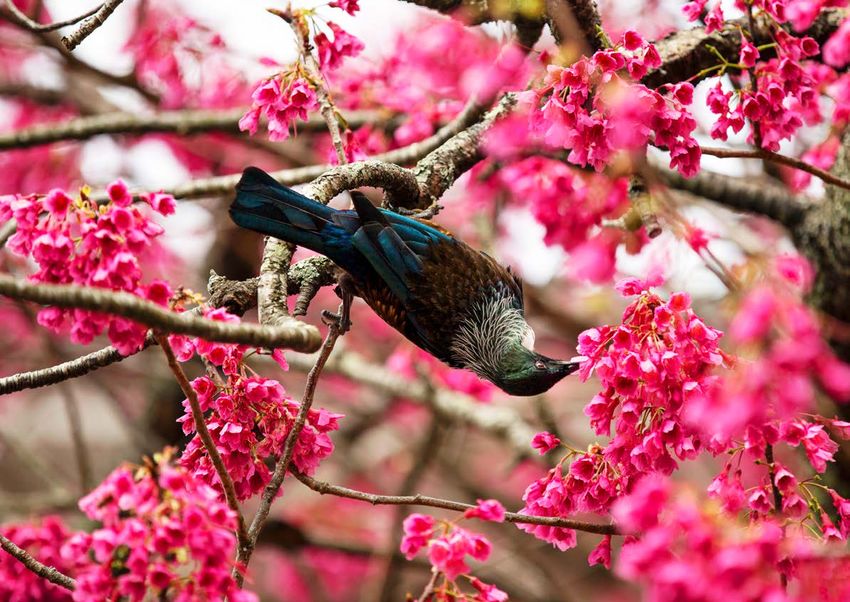
              The University of Auckland City Campus grounds are a picture
              in spring. Photographer Elise Manahan captured this tui among
              dozens flocking to the Taiwan Cherry (prunus campanulata
              superba) tree. Later the birds will seek the nectar from the
              kowhai as they come into flower.
this
issue                                                                                                                   19
                                                                                                                        Sarah Hillary: saving art
                                                                                                                                                       20
                                                                                                                                                       Future-proofing music education

7                                               26
                                                                                                 REGULARS
                                                                                                         6
Beyond                                          Dawn of                                                Editorial
expectations                                    a new era
The University’s For All Our Futures campaign
has been a resounding success – funding
                                                Professor Dawn Freshwater will take up her
                                                role as the University’s Vice-Chancellor in
                                                                                                        11
                                                                                                   Guest columnist:
research, innovation and student support.       2020. She talks about her past and her vision.      Dita De Boni

                                                                                                       24
12                                              36                                                      News

                                                                                                        31
The future of food: eating                      The 2019                                          7 tips to … rethink
smart for the planet                            40 Under 40                                         your strategy
There are many forces shaping the future of     Meet some of our youngest alumni achievers.
our food. So what is our role in creating a
sustainable food future for the planet?
                                                We profile a selection of 40 Under 40s who are
                                                making their mark on the world.                        32
                                                                                                      Research

23                                              37                                                     34
                                                                                                    Taking Issue:
                                                                                                                                                    28
                                                                                                 cannabis referendum                                Space cadets
Organ donation of                               Golden
the keyboard kind                               grads                                                  38
                                                                                                                                                    Jim Hefkey and the Auckland Programme for
                                                                                                                                                    Space Systems: why students are flocking to
Organist and philanthropist                     It was a special day for a special group          Around the Globe                                  explore the final frontier
Graeme Edwards tells why a new                  of alumni who graduated 50+ years ago,

                                                                                                       40
high-tech organ hits the right note.            including a 93-year-old still winning awards.

                                                                                                  Connection Points

                                                                                                       42
                                                                                                       Books

4 | Ingenio magazine                                                                                                                                                     auckland.ac.nz/ingenio | 5
Ingenio Editorial Campaign
The University of Auckland
T
Alumni and Friends magazine
Spring 2019 he University’s Campaign For
ISSN 1176-211X All Our Futures has been an
unprecedented success – raising an
INVESTMENT
Editor Denise Montgomery extraordinary $380,271,165 to fund
Executive editor research, fuel innovation and support students.
Helen Borne
IN OUR FUTURE The campaign was publicly launched in
Art design September 2016, to raise $300 million to answer
Mike Crozier, Ashley Marshall
important questions for the future of New Zealand
I
Feature photos and to actively engage with at least 50 percent
Elise Manahan, Billy Wong
n many universities around the world, the us. This has been the basis of the For All Our of the University’s alumni. By the end of the
Ingenio editorial contacts
‘impact agenda’ is becoming an important Futures campaign, which has sought to increase campaign on 31 October 2019, the fundraising
Communications
and Marketing, issue, reflecting the desire of those who alumni engagement and generate financial total had exceeded its goal by $80 million and
The University of Auckland invest in the universities – particularly support for our students, teaching and research. 60 percent of alumni were actively engaged.
Private Bag 92019, governments and their funding bodies – to It has been stunningly successful, not only in “The campaign has highlighted the power
Auckland 1142, be assured that their investment is having a meeting its direct objectives, but also in further of partnerships and philanthropy as we address
New Zealand.
positive impact. enhancing the impact the University has on the challenges and opportunities of the modern
Level 3, Alfred Nathan House
24 Princes Street, Auckland. While the desire to see a ‘return on investment’ society. One hundred stories of that impact were world,” says Vice-Chancellor Professor Stuart
Telephone: +64 9 923 6061 is understandable, it can be problematic for the highlighted to our community over the final McCutcheon. “I sincerely thank the thousands of
Email: universities. This is so for several reasons. First, weeks of the campaign. There could have been people who have contributed to this outstanding
ingenio@auckland.ac.nz the impact we have on our graduates is not many hundreds more and each would illustrate success, our staff for conducting and supporting
BEYOND
Web: auckland.ac.nz/ingenio
immediate, but lasts through their lifetime and very well how this University makes a difference. wonderful teaching and research, our alumni
How alumni keep in touch is often intergenerational. Second, even a major What the campaign has shown incontrovertibly for demonstrating the lifelong benefits of a
To continue to receive Ingenio
and subscribe to @auckland,
new research finding will often take many years is that philanthropy has become a powerful University of Auckland degree, and our many
the University’s email newsletter before it has an impact on society. For example, vehicle for the University to achieve many things friends and donors for making the work of this
for alumni and friends, enter a new therapy will have to go through exhaustive that would otherwise not be possible. extraordinary institution possible.”
EXPECTATIONS
your details at: alumni. testing before it can be made available for clinical Because of the investment of our donors, At a “thank you” event for key supporters on
auckland.ac.nz/update use. And third, each new finding depends on the University is a different and more capable 21 November, Health Sciences student Tahirah
Alumni Relations Office the knowledge creation that has gone before it, organisation. That investment in the creation and Moton spoke about rising from a background
The University of Auckland
19A Princes Street,
often over a long period of time, but without dissemination of knowledge, and in the support of family breakdown and foster homes to
Private Bag 92019 which that finding would not have been possible. of our students, will produce dividends for many Three years ago, the University of Auckland successfully undertaking university study, thanks
Auckland 1142, New Zealand In short, attaching a particular impact to a years to come. And for the hundreds of stories to a scholarship from the Ralph and Eve Seelye
Telephone: +64 9 923 4653 particular investment is extraordinarily difficult. of impact there are hundreds of donors who publicly launched its ambitious For All Our Futures Charitable Trust. She has now been awarded a
Email: An alternative approach is to look more contributed to them and to whom we owe a great fundraising campaign. The focus was to ask some prestigious Kupe Leadership Scholarship.
alumni@auckland.ac.nz
Web: alumni.auckland.ac.nz
holistically at the impact of a whole institution. debt of gratitude. of the biggest questions facing society today and to Alumna Dr Emma Scotter, head of the Motor
That was the approach taken by the 2019 At the founding of the Auckland University answer them, in partnership with our supporters. Neuron Disease Lab at the University’s Centre
Disclaimer
Articles may reflect personal inaugural Times Higher Education (THE) College in 1883, the Governor, Sir William for Brain Research, talked about the Aotearoa
opinion that is not that of the University Impact Rankings to assess the Jervois, noted the importance of “placing the Fellowship that funded her return to Auckland
University of Auckland. performance of each university against some of advantages of a university education within the from a research role at King’s College London.
Audited by abc.org.nz the 17 United Nations Sustainable Development reach of every man and woman of Auckland”. She now receives support from the Motor Neurone
Copyright Goals. The University of Auckland was ranked Today he would have said, “of New Zealand and Disease Association of NZ, Marcus Gerbich and
No parts of this publication No 1 internationally, reflecting the strong desire the world” and he would surely have referenced Dr Amelia Pais-Rodriguez, and the Freemasons.
may be reproduced without of our people to make a positive difference to our research as well as our education. The The fundraising total was made up of 23,592
prior consent of the University
the lives of others in New Zealand and around work of our staff and students has, over many gifts, large and small, from 7,236 donors. Almost
of Auckland. All rights
reserved. © The University the world. generations, had a huge impact. all were given for a specific purpose, nominated
of Auckland 2019 Increasingly, our ability to make a difference Thank you for helping us make a difference. by the donor. Many of the major gifts were for
depends not only on the investment by medical research, including the largest-ever gift to
government and students, but also on the Read about the 100 impacts at the University, from the Hugh Green Foundation
willingness of our alumni and friends to support tinyurl.com/CampaignImpacts (see story on page 10). Numerous gifts supported
donor-funded student scholarships, which trebled
in number over the course of the Campaign.
The very last gift was an online donation of $220
STUART McCUTCHEON towards the Student Emergency and Wellbeing
Vice-Chancellor Fund, from an Australia-based alumnus.
The campaign began by asking multiple
questions, reflecting important needs across
society. By its close, many of these “Can We”
questions had been turned into “Together, we
have…” statements and history had been made,
as For All Our Futures became New Zealand’s
Photo: Elise Manahan largest-ever fundraising campaign.
auckland.ac.nz/ingenio | 7
Campaign son Aaron, is a good example of linking modern
technology with traditional infrastructure.”
John and Leonie met at Manurewa High
School. Its students and staff visit Unleash Space
and the University offers advice on how to run
Powerful
the Maker Space at Manurewa.
“Our Maker Space at Manurewa High
partnerships
School has inspired the students to develop their
creative minds and understand entrepreneurial
activities,” says John, who is also chair of the
Manurewa High School Business Academy.
He says there are important reasons for
providing philanthropic support. “New Zealand
can’t rely on being a commodity provider. Our
future depends on our ability to innovate and
be creative, to think laterally about solutions the
world needs. Philanthropy not only provides
There have been more than 23,000 gifts to the For All Our Futures campaign and thousands money or resources, but it also gives us the John Hynds, left, and the Hynds Entrepreneurial Fellow,
of people have benefited, from students and faculties to the community, the country and chance to spend personal time with people to Peter Rachor. Opposite page: Wendy Kerr with student
ultimately the world. Ingenio talks to three pairs of donors and recipients. guide and influence the best result.”
creative technologists in the Unleash Space.
Photos: Elise Manahan
DONORS feeling that it’s everyone’s space,” says Wendy. DONORS antibiotics from getting to it. The antibiotics were
JOHN AND LEONIE HYNDS “Leading universities overseas have innovation ERIC AND PATRICIA TRACEY stopping it spreading, but unable to kill the bug.”
hubs and we’ve been able to replicate that here, While in Auckland, Eric told John about
Recipients: Unleash Space at the Business School; Peter thanks to philanthropy. In the Maker Space, Recipient: FMHS Patricia’s situation. “I referred him to some
I
Rachor, Hynds Entrepreneurial Fellow anyone from any faculty can join, do a training excellent infectious disease specialists in Auckland
I
session and then use the machines.” n London, at the Cricket World Cup final who advised what could be done,” says John.
f you’re the type who walks with your eyes There’s everything from sewing machines to in July 2019, Eric Tracey’s pride in being a The situation also got them talking about
fixed on the pavement, the name ‘Hynds’ 3D printers and a laser cutter. Student ‘creative New Zealander pumped through his veins. the need for more research on such infections.
may be familiar. It’s all over our streets, technologists’ are employed to assist. Alumnus Eric, a business graduate who John presented Eric with a project in 2018 that
embossed on many metal drain covers. The “When you have an idea in your head, it’s lectured at Auckland in 1972-73, has had a was particularly relevant to Patricia’s condition.
Hynds family, through the Hynds Foundation led intangible,” says Wendy. “But when you make successful career with Deloitte and he and wife “The Traceys immediately and enthusiastically
by John and Leonie Hynds, are major donors to it, it becomes tangible. That’s a really important Patricia have lived in London for many years. He supported it because they could see the direct
the University, but their money most certainly part of the innovation and start-up process.” is chair of the NZ UK Link Foundation. relevance,” says John. “Their generous donation
isn’t going down the drain. In the semester breaks, CIE runs experiential “I’m very proud of being a New Zealander provides long-term support for a research fellow.”
John Hynds’ company, Hynds Pipe Systems, programmes such as Get Good Done (a social and constantly want to live up to what being Eric says when the For All Our Futures
was formed in 1973 and specialises in waste entrepreneurship programme), Summer Lab a good Kiwi requires. We were at the Cricket campaign began, it was a “bit of a no-brainer”
management. In 2017, the Hynds Foundation (for budding entrepreneurs) or Solve It, the World Cup final. The Black Caps were to want to support it. “Patricia and I knew first-
was one of six founding partners to provide large corporate innovation challenge. Hynds was a magnificent in the way they played and in how hand there’s a need for research in the area of
philanthropic gifts to set up the Unleash Space sponsor in the 2018 Solve It challenge, in which they handled two ties being a defeat!” infectious diseases.”
for five years, in the Centre for Innovation and companies gave students a tricky problem. Over Eric was the New Zealand Society UK’s The Traceys’ funding means Dr Ries Langley
Entrepreneurship (CIE). The Hynds family gift the two-week break, students worked on how to New Zealander of the Year in 2014 for his is now working on developing a new type of
was also used to fund the Hynds Entrepreneurial get the public to learn about wastewater. contributions to New Zealand trade and business, prophylactic vaccine that will reduce a patient’s
Fellow, leading to the appointment of Peter “The winning team came up with an sporting and fundraising causes. One of those risk of staphylococcal infection following surgery.
Rachor, who was director for entrepreneurship interactive manhole cover they made on the causes is the University of Auckland. “Staphylococcus aureus is by far the most common
and innovation at the University of Portland in laser cutter. It’s on display in the Maker Space.” “It’s good to do something that could make the bug in post-surgical infection,” says John. “It’s
Oregon for 11 years. Wendy says CIE also runs workshops for the world a better place,” says Eric. “I’m grateful to one of the best at developing resistance to Patricia and Eric Tracey
“We’re so grateful to John and Leonie,” Hynds Company. “Our collaborators designed New Zealand for my education. Kiwi values are antibiotics, so if you’re unlucky enough to get donated to fund research for
says Wendy Kerr, director of CIE. “Being a drainage pipe and made the prototype on the at the heart of my life, so I enjoy giving back a infected with a resistant strain, such as MRSA, a cause close to their hearts.
able to employ someone like Peter Rachor 3D printer in an afternoon. Hynds’ innovation little through philanthropy and charitable work.” antibiotics just don’t work as well.”
allows us to teach concepts of innovation and manager said normally they’d have to cast it in In another role, as chair of the UK Friends John says the Traceys are now family friends.
entrepreneurship to students and staff.” three and a half tonnes of concrete! of the University of Auckland, he met Professor “One of the pleasures of being a Dean is
Peter, whose remit is to work with every “The physical space and programmes around John Fraser, Dean of the Faculty of Medical getting to know people like Eric and Patricia.
faculty, is based in the Unleash Space on the it allow us to have a much deeper partnership and Health Sciences (FMHS). Around that time, They provide tireless ambassadorial support
corner of Grafton Road and Symonds Street. with Hynds. We help them solve problems, too.” Patricia was facing a serious health battle, with a for the University and have a real love of New
Within that area is the lively Maker Space, John Hynds says even though he left school at ‘superbug’ in her leg following surgery. Zealand. They are lovely positive people – so
filled with useful tools and gadgetry, and there’s 17, he always had an innovative streak. “I wasn’t “Patricia was on antibiotics for nearly six years down to earth – and Eric is an avid supporter of
also the Collide Space. Everything is funded so good with schoolwork, but I have a capacity fighting this superbug, which had attached itself the Black Caps. He delights in telling the story
by donors. to dream. Hynds is a creative and innovative to the prosthetic in her leg,” says Eric. “The of how he became 12th man for the Black Caps
“At the heart of the Unleash Space is that company. Our Smarter Water project, led by my bug developed a film over it, which prevents in 2004!”
8 | Ingenio magazine auckland.ac.nz/ingenio | 9
Campaign
$16.5m brain boost Guest columnist: Dita De Boni real-life massacre of 51 Muslim New Zealanders
– and be part of an instantly connected
movement spreading hate and racial vilification
A
nyone who met Hugh Green will In late October, the Foundation signed a gift MORAL across the world.
The problem goes far beyond Zuckerberg.
remember his big personality. For
a modest man he lived on a large
agreement for $16.5 million to fund the Hugh
Green Biobank in perpetuity, and for a new OBLIGATIONS Take, for example, the way the extremely
valuable personal data collected by many of
S
scale, coming from an Irish family of Hugh Green Foundation Chair in Translational these sites is being made available to all sorts
eight children, farming large cattle, making his Neuroscience. The significant donation will ilicon Valley is a place of enormous of bad actors.
fortune from big property development projects allow the CBR to develop a brain-drug discovery innovation, free-thinking and wealth. There’s also the issue of where much of the
after settling in New Zealand. facility, using human brain-cell cultures to Living there, one imagines, is a bit like seed and expansion funding in Silicon Valley
So it’s appropriate that the Hugh Green identify and develop effective medications for paradise on earth: low taxes, exciting comes from. According to a recent New York
Foundation has now made the biggest-ever brain disorders. work with lots of free pizza and unlimited sick Times article, there’s plenty of it coming from
single donation, of $16.5 million, to the The University sincerely thanks the Hugh leave, and hobnobbing with some of the most the likes of Saudi Arabia, which only recently
University of Auckland. Green Foundation for its partnership and exceptional brains in the world. and brazenly assassinated a journalist it did
Before Hugh’s death in 2012, he came to generosity. Researchers look forward to Hedonistic, cerebral wonderland it may be, not like.
greatly admire the work of Distinguished developing new treatments to help the millions but it seems that living in Silicon Valley is not Increasingly, Silicon Valley bigwigs are being
Professor Sir Richard Faull and his team at of people living with brain diseases. enough for some of its more restless residents. forced to wake up to the ethical dimensions of
the Centre for Brain Research (CBR). The Hugh’s largesse continues with his family and If the stories are to be believed, many of their enormous omnipresence. At a recent San
Foundation’s first donation helped start the the Foundation’s commitment to philanthropy. Life-changing generosity: them spend years plotting and planning to live Francisco conference on the future of artificial
Hugh Green Biobank in 2011. One of a He once said: “My real happiness is family, the The late Hugh Green was completely free of government oversight in intelligence, for example, Microsoft openly
handful of institutions worldwide that’s able to farms, the cows and people. a huge admirer of the work more remote corners of the world. debated the idea of not selling facial recognition
being done at the Centre
grow human brain cells, the Biobank uses “You come in with nothing and you go for Brain Research. The
Seasteading was until recently a very real technology to some clients, and Google
these cell-culture methods to develop new out with nothing and you just need the bare Hugh Green Foundation fascination with those from the Valley of Silicon: discounted selling a face ID service at all, for
drugs to treat brain disorders, such as essentials while you’re here. And that’s how has now donated $16.5m to an extreme libertarian fantasy of island states supposedly ethical reasons.
Huntington’s disease. I’ve lived my life.” the Centre. where those with enough money lived out of It’s not too cynical to surmise they are
reach of authorities. We’ve all heard about Elon jumping before they are pushed. They are
Musk’s fantasy of establishing a colony on Mars. appointing ‘chief ethics officers’, they are
The latest would-be colonisers from Silicon meeting with Prime Minister Jacinda Ardern
Valley belong to the Open Lunar Foundation, a and promising to take down their most
group of tech mavens and engineers who want egregious content more quickly; they may even
DONORS live there, you have won the lottery of life and to establish a “harmonious human settlement” be half-heartedly agreeing to pay some sort of
CHARLOTTE LOCKHART AND those who have the capacity should give back, on the moon. The single-digit billions price tag tax in the countries in which they make their
ANDREW BARNES whether it’s financially or through your time.” seems to be no matter at all. highest profits. This may be more a result of
Patricia was happy to learn Andrew has a deep It is little wonder that students and being smart and future-focused than out of a
Recipient: Patricia Pillay, Kupe Leadership Scholar interest in archaeology. “He and Charlotte really postgraduates from New Zealand flock to put genuine sense of moral obligation. Nevertheless,
S
wanted to support an anthropology student themselves in the middle of Silicon Valley, it addresses a growing stain on the amazing About the writer:
tudent Patricia Pillay is doing her because their insights into human behaviour where they can observe not just brilliance, but reputation of Silicon Valley, which has given so Alumna Dita De Boni (BA,
masters in anthropology and is one translate to the workforce.” the application of that brilliance to the market. much that is positive to humanity. Italian/Russian) is a senior
journalist with The National
of 14 Kupe Leadership Scholars who Charlotte says insight can help build a When students are also placed within spaces It is now time for all of us, from the tech
Business Review and has
receives financial support from donors leader. “A good leader is prepared to stand out where genuine innovation and entrepreneurship mavens to the tech users and the fledgling worked in print, television
for one academic year. The scholarship also and try new things, be different and care for occur, it shows them what can be achieved entrepreneurs, to look more closely at the and radio journalism for
provides leadership development and mentoring, others. Andrew and I value leadership in New with the right machinery in place – where human legacy of what is created in that more than 20 years.
in Patricia’s case from acclaimed anthropologist Zealand and being part of something like this ideas really are valuable, and nurturing them a amazing place. ■
Professor Dame Anne Salmond. programme is important to us.” genuine and tangible business goal.
Patricia’s scholarship has been funded by Patricia, who went to Avondale College, is the I believe, though, that the students need to
Charlotte Lockhart and husband Andrew first in her family to go to university and says the understand that with enormous freedom and
Barnes, founders of New Zealand trusts business scholarship meant she could continue her study. influence comes enormous responsibility. It is
Perpetual Guardian, who are also supporting an She also feels privileged to have a mentor like not clear that the pioneers of Silicon Valley
architecture student with a Kupe scholarship. As Dame Anne. “She’s very supportive and has Top: Charlotte Lockhart
always understood that – and some perhaps
employers, they recently shifted their staff to a given me valuable advice about keeping my and Andrew Barnes. still don’t.
four-day working week. doors open and expanding my connections on Above: Anthropology There’s probably been little reason for some
Charlotte says they like their staff to help out a global platform. She’s also offered words of student Patricia Pillay to imagine they need to think too deeply about
in the community. wisdom about studying overseas and the value of with one of her mentors,
Dave Veart.
the ramifications of the technological advances “Silicon Valley bigwigs are
“We encourage them to use one day every
quarter for a charity or community programme.
bringing that knowledge back to Aotearoa.”
Patricia is also learning from archaeologist
they unleash on the world.
Mark Zuckerberg did not realise, when he being forced to wake up to
Being engaged with the community gives us a
great basis for life and sets a good example for
Dave Veart, who has a masters in anthropology
and law from Auckland and is a former staff
set about connecting college students over
‘TheFacebook’ in 2004, that one day his
the ethical dimensions of their
our children.”
That’s one of the drivers for the couple’s
member. “Dave was involved with the Ihumātao
situation and explained why it’s significant. He’s
platform would be used to help manipulate
the public into voting for Brexit or a Trump
enormous omnipresence.”
giving. Says Charlotte: “Andrew is an immigrant been teaching me about legislation and applying presidency. He did not realise that one day
to New Zealand and firmly believes that if you what you learn in uni to real-life issues.” ■ people would be able to download and watch the
10 | Ingenio magazine
C
  Cover story                                            onsider the following. One in ten New     contributor to our diseases and premature
                                                         Zealanders is going (mostly) meat         death and they are our biggest source of                  Joanne Todd (opposite
                                                         free. By some estimates, 70 percent of    environmental damage.                                     page), the director of High-
                                                                                                                                                             Value Nutrition, says as part
                                                         millennials are cutting back on meat in      “At the same time they contribute enormously
                                                                                                                                                             of the criteria for funding,
                                             their diet. Millennials, those born between 1981      to our national wealth and diverse cultures. New          a business must provide
                                             and 1996, make up an increasingly dominant            Zealand can and, I think, should, become a                evidence of how it responds
                                             percentage of the global population, and more         world leader in developing healthy, sustainable,          to the UN’s Sustainable
                                             than half the populations in Asia.                    equitable and prosperous food systems.”                   Development Goals.
                                                                                                                                                             Photo: Elise Manahan
                                                But in 2018, New Zealand’s beef exports               Global food giants are hedging their bets.
                                             earned more than $3 billion. About 47 percent         Tyson, the biggest meat producer in the US,
                                             of New Zealand’s beef goes to the United              has created an alternative protein nugget and
                                             States where most of it gets turned into meat         a blended patty that combines beef with pea
                                             patties. In the US, 100 million hamburgers are        protein. At a branch in Atlanta, the fast-food
                                             consumed each day.                                    giant KFC recently decided to trial a new line of
                                                The often contradictory messages from              nuggets and wings made from plant protein. Cars
                                             demographics, consumer behaviour, export              and queues blocked streets. The meatless nuggets
                                             dollars and influencer comment tell different         and wings sold out in less than a day.
                                             stories, but they are all about the future of food.      French dairy and drinks giant Danone has
                                                Dr Rosie Bosworth, a University of Auckland        made a decisive shift towards plant-based
                                             alumna who featured in the 40 Under 40 in             products. Chief executive Emmanuel Faber told
                                             2017, is a future of foods strategist. Rosie is       the Globe and Mail this year, “There is a huge
                                             adamant that it is time for New Zealand to “stop      trend of people moving to less animal protein
                                             polishing the wrong paradigm”. The future             and more vegetable protein. We believe this
                                             of food comes down to what people choose to           flexibility in diets is fundamental for the future,
                                             eat and she says global population shifts mean        for the health of the people and also for the
                                             the immediate future will be dominated by             health of the planet.”
                                             millennials, estimated by Ernst Young to make up
                                             75 percent of the global workforce by 2025.
                                                She says the relationship that millennials have
                                                                                                   “We’re seeing the rise of

THE
                                             with their food has three big drivers: health,
                                             ethics and environment.
                                                “When it comes to animal agriculture, New
                                             Zealand has a better system than most of the
                                                                                                   conscious consumers who are
                                             developed world but, even so, agriculture has a
                                                                                                   after ethical, sustainable and

FUTURE
                                             huge impact on our environment. Millennials
                                             and, to a lesser degree, baby boomers, are very
                                             conscious of the role of animal protein in our        healthy options for protein.”
                                             health.
                                                “At the same time we’re seeing the rise of         – Dr Rosie Bosworth, future of foods strategist

                                                                                                   T
                                             conscious consumers who are after ethical,

 of FOOD
                                             sustainable and healthy options for protein, often                he Intergovernmental Panel on
                                             with impactful meaning. This is what millennials                  Climate Change recently released
                                             want and they’ve moved beyond the commodity                       its Climate Change and Land report
                                             play of just buying food, they want their food to                 that covers food production and
                                             be a values-driven experience,” says Rosie.           security. The report is decidedly big picture,
                                                Hot on the heels of the millennials are            with mind-boggling estimates of environmental
                                             Generation Z, those born since 1997. They are         loss. Agriculture utilises about 70 percent of the
                                             estimated to surpass millennials as the dominant      world’s fresh water. Soil on tilled fields is being
                                             societal cohort by 2030.                              lost at 100 times the rate it is being formed.
                                                “Gen Z are saying there are new ways to            About 25 to 30 percent of food production is
Our relationship with food, the why,         produce food that don’t have the environmental,       lost or wasted. Meanwhile, two billion adults
what and how is a buffet of conundrums,      ethical and sustainability baggage,” says Rosie.      are overweight or obese and 821 million are
                                                “Why would you choose animals when there is        undernourished.
contradictions, consumer anxiety,            a yummy, nutritious alternative that has the same        The report’s big takeaway is that the window
cultural mores and demographic               sensory experience, that’s produced in your own       is open to reduce climate change by diversifying
change. Gilbert Wong looks at the forces     country and exacts no cost to a living animal?”       food production systems and what we eat. It says:
                                                The University of Auckland’s Professor Boyd        “Balanced diets featuring plant-based foods …
shaping the future of food and how the       Swinburn, co-chair of the Lancet Commission           and animal-sourced food produced in resilient,
University’s research is contributing to     on Obesity, says New Zealand can help lead the        sustainable and low greenhouse gas emission
                                             change in diet and environmental sustainability.      systems present major opportunities … while
what’s likely to be on our plates in 2030.      “Food systems are central to our wellbeing         generating significant co-benefits in terms of
                                             as New Zealanders. They are by far the biggest        human health.”

12 | Ingenio magazine                                                                                                                                    auckland.ac.nz/ingenio | 13
The EAT-Lancet Commission on Food, If the future of food is more accurately good people of Shanghai breathe a little easier in
Planet and Health was published in January. framed as the clash of proteins, alt protein pollution-shrouded winters.
Food in the Anthropocene: The EAT-Lancet Commission versus meat, a glimpse of the future for New A second major programme, Digestive
on Healthy Diets from Sustainable Food Systems is Zealand comes with the lesson that not all of Health, is led by Dr Nicole Roy at Massey
the work of 37 world-leading scientists from our beef is created equal and it doesn’t have to University. Her team is looking at the links
16 countries. It distils a large body of research on be consigned to the fast-food hamburger chains between diet, metabolism and the microbiome
the environmental impact of various diets and of the US. Firstlight Foods has pioneered the to understand irritable bowel syndrome which
outlines a preferred future of food as one with development of a Wagyu-cross beef with a affects around one in three people worldwide.
far less meat. It says: “Most studies conclude that network of Kiwi farmers. The cattle are raised Another strand is Metabolic Health. Professor
a diet rich in plant-based foods and with fewer on pasture to create quality beef cuts that have Sally Poppitt, director of the Human Nutrition
animal- source foods confers both improved collected international awards. Unit at the University of Auckland, leads a
health and environmental benefits.” The twist is that grass-fed Wagyu cuts also team looking for early predictive markers of
The report comes up with a “planetary deliver a bounty of complex lipids and healthy Type 2 diabetes in a common Chinese body
health plate”, the best diet for human health omega-3 fatty acids, the so-called ‘good fats’ shape, known as ToFi, ‘Thin on the outside,
and environmental sustainability. Half the plate that help prevent heart disease. Fat on the inside’. Despite a low body mass
would be vegetables and fruits, the other half Another company looking at the future of index, many people of Chinese heritage store
would be food made from whole grains, plant the influence of millennials and those who food is a2 Milk™ which, on the basis of a unhealthy fat and face a high risk of diabetes.
Dr Rosie Bosworth says the
protein and unsaturated plant oils. Completely influence them directly via social media feeds. relationship millennials have
different protein in its milk, has grown into The estimate is that more than 300 million
optional are modest amounts of animal protein. For example, the tennis powerhouse Williams our biggest listed company. A clinical trial at people in Asia have Type 2 diabetes. Early
China’s
with their food has three
The EAT-Lancet report concludes that sisters, Serena and Venus, promote a vegan big drivers: health, ethics the University of Auckland’s Liggins Institute predictive markers for diabetes would be
business as usual for food production and diet is diet in training to boost performance. The alt- and the environment. in 2018 found that a2 Milk™ was at least as valuable intellectual property for future foods
not an option. “Without action, the world risks meat supporters include billionaire influencer Photo: Billy Wong effective as lactose-free milk at preventing or diet now from New Zealand.
failing to meet the UN Sustainable Development Bill Gates, who has said: “The future of meat easing some symptoms of lactose intolerance. The fourth main strand of research, Infant
Goals (SDGs) and the Paris Agreement, and is vegan.” Firstlight Foods and a2 Milk™ are examples resembles Health, led by Associate Professor Clare
T
today’s children will inherit a planet that has of New Zealand businesses to benefit from Wall of the Faculty of Medicine and Health
been severely degraded and where much of he report does find a silver lining research funding from High-Value Nutrition what has Sciences, is looking at ways to determine
the population will increasingly suffer from in the otherwise gloomy scenario (HVN), one of two National Science Challenges how complementary foods could boost the
malnutrition and preventable disease.” it paints for the meat industry. (NSCs) hosted by the University of Auckland. become microbiome of infants to improve immunity
New Zealand’s red-meat interests have The authors argue: “The same In 2014, 11 National Science Challenges, each and reduce infection.
the bane
C
not been sitting on their hands. Beef and considerations that are leading consumers a nationwide research collaboration, were
Lamb NZ commissioned Antedote, a San to consider alternative proteins are the ones established to tackle the biggest science-based hina has 17 cities with a GDP higher
Francisco innovation consultancy, to look at that give us confidence that there is a strong issues and opportunities facing this country. of Western than $US140 billion, while New
how our red meat sector should respond to opportunity for New Zealand red meat. There HVN’s job is to deliver the research required to Zealand’s national GDP is about
the rise of alternative proteins. The Future of is a desire for better food at all levels, which switch us from being a largely commodity food countries. $US205 billion.
Meat is an engaging overview of the threats supports a strong future for ‘real’ red meat.” producer to one that exports high-value premium China’s big problem is that it needs to feed
and opportunities. Take this counterfactual: in our biggest beef foods for health and wellbeing. a fifth of the world’s population and has only
The report acknowledges how consumers market, the US, and second-biggest market, The University also hosts A Better Start, the one tenth of its farmland. About 57 percent
increasingly want food that is healthy, sustainable China, consumers are happily chomping down NSC seeking to lift the health and life outcomes of its population now live in cities and their
and ethical, a trend driven by the backlash quality red meat, with sales of grass-fed beef from for children. affluence is rising. As it rises, their diet now
against “broken food systems, e.g. factory farming New Zealand doubling every year since 2012 to The idea to “let food be thy medicine”, resembles what has become the bane of
and big food”. There is the common echo about the US, with China on a similar trajectory. attributed to Hippocrates, has been updated for Western countries, much more processed food,
the 21st century as the prime research driver for a dramatic rise in consumption of pork, red
HVN and over ten years it will have invested meat and dairy and, with that, an epidemic of
ALTERNATIVE PROTEINS: WHAT EXACTLY ARE THEY? $69m in top food and nutrition scientists. HVN’s obesity and diabetes.
focus is on foods for affluent consumers in China, Little of this looks sustainable, which is why
Beyond Burger Impossible Memphis Meat Insect flour New Wave where eating specific foods for health reasons is High-Value Nutrition supports food businesses
Burger (seafood) commonplace. So it has invested in research at that tread more lightly on the environment.
the Malaghan Institute in Wellington, led by Dr “Sustainability is very much part of the mix
What Plant-based burger Plant-based burger Focus on chicken Ingredient added to Plant-based shrimp Olivier Gasser, to look at the impact of we want in every business we work with,” says
bars, cakes diet on lung health. The aim is to Joanne Todd, director of HVN. As part of the
Technology Mixing known Extracting protein Cellular based Raising, roasting Protein from create foods to help the criteria for funding, a business must provide
plant-based molecules from (stemcells harvested and grinding insects seaweed and soy evidence of how it responds to the UN’s SDGs.
ingredients together plants and building from animal tissue such as crickets into turned into a shrimp This includes working with innovative Māori
to create a beef a product from the are multiplied in flour alternative businesses to ensure that Vision Mātauranga,
patty form protein molecules the lab. Sometimes or unleashing the science and innovation
up called ‘clean meat’) of Māori knowledge and resources, is part
of the future of food. A recent investment
What experts Good source of Not as good as Not as good as Good source of Not launched yet is in karengo (seaweed) with Ngāi Tahu
say about protein, although not real meat as a result real meat as a result protein to add to the and Wakatū Incorporation, the
the nutrition a direct substitute of processing of processing mix in diet Cawthron Institute, AgResearch,
the Malaghan Institute
Source: The Future of Meat (report by Antedote) and Hokkaido University.
14 | Ingenio magazine auckland.ac.nz/ingenio | 15
Traditional sources of nori (Pyropia spp) are in     are definitely driving changes regarding
                   short supply because of reduced harvests in the      sustainability and animal rights issues,”
                   Northern Hemisphere through climate change.          says Jenny.
                   One day the partners want to harvest, process           “They are the ‘loud voices’, linked by their
                   and export karengo, an indigenous seaweed, as        experience of technology, but they are also
                   a premium and sustainable food with evidence-        diverse groups who are fluid, hard to define
                   based health benefits.                               and fragmented to reach. Within these cohorts,
                      HVN has adopted a wait-and-see approach           there are the socially aspirational, but many also
                   to alternative plant proteins that mimic animal      simultaneously hold personal aspirations, seek
                   meat. “We’re not going down that road, because       convenience and are open to temptations.”
                   we need to look at what New Zealand can do at           They are embracing vegetarianism, veganism
                   scale and efficiently.”                              or ‘vegan-ish’ diets, and see lab-grown meats
                      Joanne agrees that the trend towards              as appropriate for fast-food industries and to
                   alternative proteins in the US is driven by          feed those who don’t think about where meats
                   millennial behaviour, but also by factors New        come from. At the same time, Jenny says,
                                                                                                                                                                                                                                     Jenny Young, left, and
                   Zealand lacks.                                       deciding what to eat is complex, so it’s difficult                                                                                                           Joya Kemper urge New
                      “They can do it because they have the money       to generalise.                                                                                                                                               Zealand to be a global
                   to do it and the land to grow it.”                      “Let’s not forget the older generations with                                                                                                              leader for sustainability
                      Even if the Canterbury Plains could grow          buying power who are now living longer and                                                                                                                   and ethical farming.
                   peas to turn into Beyond Burger patties, any         will continue to have a strong influence on the                                                                                                              Photo: Elise Manahan
                   harvest would be dwarfed by production from          market well into the 2030s,” she says.
                   the American Midwest. It is not in HVN’s brief          “Among the baby boomers there have always
                   to invest in commodity foods either. As well as      been ethical and pro-sustainability consumers.
                   the karengo, HVN has looked at hemp seed, a          Many mature consumers are following healthier
                   rich source of protein when made into flour.         eating patterns as they age, embracing plant-        information campaigns to change social norms,
                      “We’re definitely open to looking at emerging     based diets or cutting back on red meat.”            to a regulatory framework. Germany, Brazil
                   protein sources, but they have to be ones that          But she says our attachment to meat remains       and Sweden have established guidelines for
                   New Zealand can grow sustainably.”                   strong because of taste, tradition and nutritional   sustainable food consumption to give legitimacy
                      Speaking as a nutritionist, Joanne urges          benefits. For some, there might be conflict          to those wanting to change behaviour.
                   consumers to think hard about their food             between their desire for meat and concern over          Alongside this, policymakers can consider        “People might have great intentions but
                   choices. Plant-based “meat” is derived largely       animal rights. Other consumers are divorced          limits on marketing and advertising, to taxes on
                   from imported pea protein and so comes with          from this and believe they are entitled to           unhealthy foods as part of national strategies to   convenience beckons and those intentions
                   food miles. The Impossible Burger, showcased         eat meat because we’re omnivores and that it         reduce obesity.
                   by Air New Zealand, comes with a long                is irreplaceable.                                       However, she says, New Zealanders value          don’t translate to behaviour.”
                   ingredient list of additives. She says the need to      In the face of bombardment from the media         personal responsibility highly and any such         – Dr Jenny Young, Marketing, University of Auckland Business School
                   know where our food comes from works both            and social networks with often contradictory         strategy risks being dubbed an initiative of
                   ways. “On one hand you have a beautiful, tasty       information about the latest trending diet,          the nanny state.The push and pull between
                   beef burger you know is grown on grass and on        dilemmas on what to eat will continue.               consumers and markets, the battle between
                   the other hand you have … what exactly?”                “We also need to consider how changes filter      good intention and habit, the ethical and           really show the value and necessity of investing
                                                                        down to consumers who may not be as involved.        sustainability struggle between alt protein and     in research and development,” she says.
                                                                        Food decision-making is often done in a low-         animal meat will all shape the future of food.         Rosie Bosworth sees alternative protein as a
                                                                        involvement state, but it has an immediacy day       How should New Zealand react to this menu of        disrupter as potent as the internet. She says New
“We need to look at what New Zealand                                    to day,” says Jenny.                                 possibles and probables?                            Zealand needs to get behind more research and
                                                                           Unfortunately, unhealthy packaged foods              The Future of Meat report’s advice: “This is     development, foster more start-ups and generate
can do at scale and efficiently.”                                       still proliferate, with nearly 70 percent of         a wake-up call to ensure we understand what         support for those who want change.
                                                                        supermarket foods classified as ultra-processed      is important to premium consumers, that we             “We have five to ten years in this market, so
– Joanne Todd, director of High-Value Nutrition, Liggins Institute      by the University of Auckland’s inaugural            protect our natural food production systems         let’s use the cash cow to fund the new paradigm.
                                                                        “State of the Food Supply”.                          and products, and do more to ensure that our        Your first reaction is to defend, but we need to

                  T
                                                                           Jenny has interviewed people before they          customers and consumers recognise that New          be more far-sighted than that. We need to find
                               he question of how millennial and        enter a supermarket about their beliefs and          Zealand’s red-meat farmers are in the natural       a new identity. Holding on to the old one means
                               Gen Z behaviour will shape the           views on the environment and desire for              foods business.”                                    economic suicide.”
                               future of food is not clearcut, say      sustainability. When they leave, the contents           HVN’s Joanne Todd says for New Zealand              Jenny Young sees the continuing
                               researchers from the Department          of their trolley clearly contrast with what they     farmers to forget about animal protein would        fragmentation of food markets with tradition
                   of Marketing at the Faculty of Business and          have said. Consumer behaviourists call this the      take a generational shift. For her, the future is   and innovation both driving the way we will eat.
                   Economics at the University.                         “attitude behaviour gap”.                            for New Zealand to be a country that produces          “There are vastly different segments –
                     Dr Jenny Young researches consumer                    “People might have great intentions               a wide range of premium foods in a pristine and     polarised values – so consumer-centric insights
                   behaviour, including decision-making for food,       but convenience beckons and those intentions,        sustainable environment for affluent consumers.     are crucial. Being a leader on sustainability,
                   and works with Dr Joya Kemper, who has a             don’t translate to behaviour,” she says.             In the meantime, innovation is needed and           respectful marketing and ethical farming is
                   special interest in the marketing of social and         Joya suggests that widespread changes in          that’s where work being done at the Liggins         the best position for New Zealand for the
                   environmental issues and the rise of ethical         diet, such as reducing red meat consumption          Institute comes in.                                 wild ride ahead.” ■
                   consumption.                                         as advocated by the EAT-Lancet report, would            “At High-Value Nutrition, we hope to change
                     “Millennial and Gen Z generations                  require a complex mix of initiatives, from           the culture of the food and beverage industry to    Turn to page 18 for The Next Generation.

                                                                                                                                                                                                                                 auckland.ac.nz/ingenio | 17
Future of food of age, and more than 80 percent of infant meals Alumni Profile
had no added sugar and salt. The bad news is
that almost half of the nine-month-olds had tried
sweets, chocolate, hot chips and potato crisps and
only about a third were eating vegetables or fruit
twice or more daily as recommended.
The contemporary young Auckland family
lives life in a blur of working parents, day care,
commutes from hell, drop-offs and pick-ups.
Convenience, in all spheres of life, including All this has taken years of training. Excelling
cooking, becomes highly desirable. academically at high school, Sarah enrolled at
But convenience can have unwanted university directly from sixth form. She began
THE Saving art
consequences. Clare and Professor Bryony James, her medical intermediate year at Otago in 1974,
from the Faculty of Engineering, are investigating but her study was interrupted by the death of
potential effects on a rising trend in convenience her mother, Louise, and sister Belinda in a plane
NEXT
food for infants: puree foods in plastic pouches. crash in Nepal in 1975. They’d been on the
“The idea is that the product is only to be way to meet up with Sarah’s father, Sir Edmund
used by squeezing it into a bowl and eating it By Linda Tyler Hillary. Later, Sarah studied psychology and
GENERATION
with a spoon, but people give it to infants to feed chemistry for an undergraduate degree, but
A
themselves,” says Clare. switched to the University of Auckland to get
But slurping your food means not developing uckland Art Gallery’s Principal married and be closer to family. It was there
I
the dexterity to manage a spoon. As well, puree Conservator Sarah Hillary is a she graduated in art history. Volunteering at
f today’s children are tomorrow’s food is more energy dense and processed than a heroine of art. She’s been hard at the Auckland Art Gallery, she applied for the
shoppers, what do we know about their whole food, such as a slice of apple. Clare and work in the conservation laboratory Conservation of Cultural Materials course at the
diet and the foods they might favour? Bryony have designed a trial to test whether at the Gallery, saving neglected works of art Canberra College of Advanced Education where
Associate Professor Clare Wall of the infants feeding from pouches can change the for 36 years. Some of her high-profile rescues she completed a Masters of Applied Science.
Faculty of Medical and Health Sciences leads the development of a child’s bite. A good bite is include repairing canvases damaged during thefts “That gave me a grounding in the three areas
nutrition department.
“The infant diet has changed in a similar way
essential for the development of jaw muscles and
teeth, which in turn are important for language “It’s really – works by James Tissot and Colin McCahon –
while her research into painting techniques has
of object, paper and painting conservation,
which was vital before I could do what I do.”
to the adult diet,” she says. “More processed
food, more salt, more sugar, more fat.”
development. Delayed language development
and motor skills have big implications for brain
important identified several fakes, some in public collections.
International journals have featured her in-
She then specialised in painting conservation.
“I decided to return to New Zealand in 1983
Parents do their best, but as the infant grows
up, it naturally becomes more and more part of
development and learning.
“So, the question is, are we breeding a
to bear in depth research in technical art history, which
involves the scientific analysis of artworks to
to take up an internship, working with the
incumbent conservator at the Auckland Art
the family and its food environment. “There’s generation who are used to consuming only mind the establish how and when they were made. Her Gallery, and was later given a permanent role.”
less time and so it becomes harder to prepare soft foods … who are missing development meticulous work contributed to a re-evaluation After working on numerous paintings from
separate meals for infants. windows?” asks Clare. intentions of of the painting of Saint Sebastian by Italian provincial and regional galleries as part of
“Your food preferences and behaviour start From Clare’s perspective, the food business pull 17th-century master Guido Reni that’s held in the gallery’s Northern Regional Conservation
“Are we in early childhood. Often if a child has done is often much stronger than consumer push. The the artist.” the Auckland Art Gallery. That painting is now service, Sarah won a Getty Advanced Internship
well, they get a sweet, so we associate lollies with time-poor family faces a barrage of marketing, considered to be the original work while others at the Williamstown Regional Art Conservation
breeding a being good. The foods we crave are the ones that and what’s best for baby is not always the same that exist in galleries around the world are copies. Laboratory in Massachusetts in 1986. Returning
generation influence our pleasure,” says Clare.
If you happen to be raised in a family with
thing. The marketers are already looking closely
at the next generation of consumers. Babies born
As well as being an exhibiting artist at the
Anna Miles Gallery in Auckland, Sarah regularly
to work at the gallery, she now manages a staff
of six and knowledge of her skills has spread
who are limited access to healthy foods, it is harder to since 2010 have earned themselves a cohort- contributes to the exhibition programme at through the conservation service the gallery
change your eating habits as an adult. defining descriptor, ‘Generation Alpha’. the Auckland Art Gallery. Her displays provide provides for artworks owned by other institutions,
used to “We have overweight children who will grow Although they are true digital natives, growing Top: Sarah Hillary with Colin insights into how paintings are made, showing corporations and members of the public.
up to be obese adults.” up with iPad, Siri and Alexa, they are inheriting McCahon’s Upland Road how microscopic analysis of minute cross- “It’s important to keep learning,” she says.
consuming Clare is one of the authors of Infant Feeding in a troubling epidemic: obesity. New Zealand Chapel windows – a huge
conservation job to reattach
sections can reveal the number of layers of paint “I update my knowledge by going to conferences
New Zealand, commissioned by the Ministry of has the third-largest percentage of overweight on the surface of a painting. and scientific meetings. There are always new
only soft Social Development. Prior to the report there or obese children in the OECD, after Greece
paint to the glass surface.
Below: Sarah meticulously “I showed visitors to the Frances Hodgkins techniques or improvements.”
was no national data collected on what the and Italy. About a third of our children are exhibition how techniques of analysis revealed Her working methods must also adhere to
foods?” country’s infants are eating. The data comes overweight, with about one in ten classified
restoring artworks.
a figure painting beneath a still life, and how the international standards: each examination of a
from the Growing Up in New Zealand study, as obese. The World Health Organisation is artist built up her surfaces with up to 40 layers painting’s surface under raking light reveals every
– Associate Professor
hosted by the University of Auckland, which concerned that by 2025, there will be 70 million of oil paint,” says Sarah. “Similar techniques scrape and accretion recorded in a condition
Clare Wall, Faculty has followed a cohort of 6,432 children since overweight or obese infants and young children. also revealed the use of photography to produce report. “It’s also really important to give careful
of Medical and birth. Those children are now ten and the study As they age, they face higher rates of heart Gottfried Lindauer’s startlingly accurate portraits consideration to the treatment approach ... to
Health Sciences has produced a wealth of data and insight into disease, diabetes, degenerative disease of the … we examined them under infrared light.” bear in mind the intentions of the artist and the
their lives. The report looks at what families joints and some cancers. For Generation Alpha, Sarah’s collaborations with researchers at originality of the artwork.”
actually do when compared with a set of ideal faced with climate change, global obesity and the Tate Gallery in London and the Getty Reversibility is also important. “In the future,
infant feeding guidelines from the Ministry of malnourishment, the future of food looks to Conservation Institute in Los Angeles have our understanding of an artwork might surpass
Health. The good news is that, on average, these become more complicated than ever. Siri is contributed significantly to the understanding current knowledge,” she says. “We need to make
infants are okay. About 94 percent are eating unlikely to have the answers on what to do of how artists based in Aotearoa used modern sure the treatments we use today don’t hinder the
three or more solid meals a day at nine months about it. ■ materials to produce their work. work of conservators in the future.” ■
18 | Ingenio magazine auckland.ac.nz/ingenio | 19You can also read


