Dengue in Nicaragua

                      A review of control status,
                      trends, and needs
                      February 2011
←
→
Page content transcription
If your browser does not render page correctly, please read the page content below
Dengue in Nicaragua
A review of control status,
trends, and needs
February 2011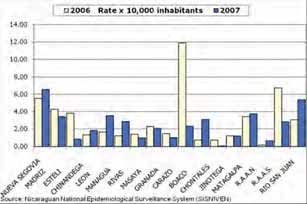
This document is part of a larger case study on Nicaragua’s health system and diagnostic
needs. The health system case study employed two main methodological approaches. The
first was a review of official Ministry of Health (MINSA) data and epidemiological reports,
as well as publications in peer-reviewed journals. The second was a concurrent series of
field visits in 2008 to provide firsthand evidence of diagnostic needs and difficulties. A more
detailed account of these methodological approaches can be found in the methodology
section of the health system case study.

Acknowledgment
Primary funding for this study was provided by the National Institutes of Health, National
Institute of Biomedical Imaging and Bioengineering (grant U54 EB007949).

Authors
Magda Sequeira, Henry Espinoza, Juan Jose Amador, Gonzalo Domingo, Margarita Quintanilla,
and Tala de los Santos, all with PATH (for correspondence: tdelossantos@path.org).

Suggested citation
Sequeira M, Espinoza H, Amador JJ, Domingo G, Quintanilla M, and de los Santos T. Dengue in
Nicaragua. Seattle, Washington: PATH; 2010.

About PATH
PATH is an international nonprofit organization that creates sustainable, culturally relevant
solutions, enabling communities worldwide to break longstanding cycles of poor health. By
collaborating with diverse public- and private-sector partners, PATH helps provide appropriate
health technologies and vital strategies that change the way people think and act. PATH’s
work improves global health and well-being.

Copyright © 2011, Program for Appropriate Technology in Health (PATH). All rights reserved.
The material in the document may be freely used for educational or noncommercial purposes,
provided that the material is accompanied by an acknowledgment line.

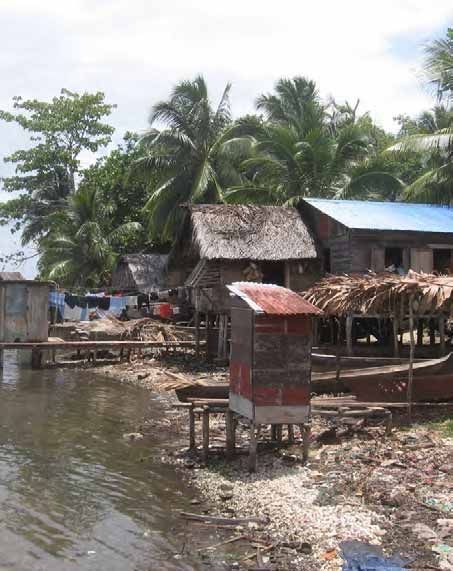
Cover photo: PATH/Tala de los Santos
Contents
Glossary .................................................................................................................................................................. 2
Overview................................................................................................................................................................. 3
    The recent situation ........................................................................................................................................... 3
    The current situation ......................................................................................................................................... 4
    Seasonality ......................................................................................................................................................... 4
    Dengue types ..................................................................................................................................................... 4
    The main groups affected.................................................................................................................................. 4
    Symptoms of dengue ......................................................................................................................................... 5
    Vectors................................................................................................................................................................ 5
    Hemorrhagic dengue ......................................................................................................................................... 5
    Factors that influence dengue .......................................................................................................................... 6
Geographic distribution ......................................................................................................................................... 7
    Outbreaks........................................................................................................................................................... 7
Government control strategies ............................................................................................................................. 8
    Diagnosis ............................................................................................................................................................ 8
    Serological diagnosis ......................................................................................................................................... 9
    Virological methods........................................................................................................................................... 9
Differential diagnosis ............................................................................................................................................10
Control strategies .................................................................................................................................................10
    Social promotion and communication ............................................................................................................10
    SEPA approach ..................................................................................................................................................10
    Sanitation ...........................................................................................................................................................11
    Laboratory procedures ......................................................................................................................................11
    Vector control ....................................................................................................................................................11
    Patient health care ............................................................................................................................................ 12
    Surveillance system .......................................................................................................................................... 12
    Role of hospitals, health centers, health posts, and volunteers .................................................................... 13
Examples of dengue control strategies ............................................................................................................... 13
    Managua ............................................................................................................................................................ 13
    Nueva Segovia ...................................................................................................................................................14
    Chinandega .......................................................................................................................................................14
Funding mechanisms ............................................................................................................................................14
    Areas for improvement ....................................................................................................................................14
    Which nongovernmental agencies and other groups are involved in dengue eradication in Nicaragua? ... 15
Conclusions ........................................................................................................................................................... 15
References .............................................................................................................................................................16
Appendix ...............................................................................................................................................................18

                                                                                     1
Glossary
CNDR Centro Nacional de Diagnóstico y Referencia (National Diagnostic and Reference Center)
COMBI Communication for behavioral impact (a strategy for the modification of community
conduct)
MINSA Ministerio de Salud (Ministry of Health)
PAHO Pan American Health Organization, a regional office of the World Health Organization
PATH Program for Appropriate Technology in Health
RAAN Región Autónoma del Atlántico Norte (North Atlantic Autonomous Region)
RAAS Región Autónoma del Atlántico Sur (South Atlantic Autonomous Region)
SILAIS Sistemas Locales de Atención Integral de Salud (Local Comprehensive Health Care Systems,
which are the Nicaraguan health system’s 17 administrative units corresponding to the
country’s departments and autonomous regions)
VTD Vector Transmitted Disease
WHO World Health Organization
2Overview
Dengue displays an endemoepidemic behavior Managua and León were also seriously affected.
in Nicaragua and has an epidemiological, social, During this first period (1985–2007) only 20% to 40%
and economic impact. All four dengue serotypes of reported cases were actually investigated.3
circulate in the country, and the vector is widely
distributed with high infestation rates. In 2002, a national outbreak attributed to the
circulation of the Den-4 and Den-1 serotypes
A total of 23,035 cases were recorded in Nicaragua affected the SILAIS in Río San Juan, Matagalpa,
between 1985 and 1989. This number nearly and Nueva Segovia, the latter of which was
doubled to 61,302 between 1990 and 1997 and then the site of an important Den-1 outbreak. The
increased by a further 58% to 106,635 cases up national outbreak resulted in 16,723 suspected
to 2007. This represents an accumulated total of cases and 2,310 confirmed cases. Twelve deaths
190,972 recorded cases of dengue in Nicaragua in 23 were recorded, all from complications related
years (Figure 1).1 to hemorrhagic dengue fever or dengue shock
syndrome.
The recent situation
The last major outbreak was in 2005 with 14,749
The first significant dengue outbreak in Nicaragua suspected cases and 1,991 confirmed cases,
occurred in 1985, affecting most of the country’s compared to 8,422 suspected cases and 1,097
departments, or states. A total of 17,483 suspected confirmed cases in 2004. This represented a 43%
cases were reported (Figure 2), along with seven increase in cases and an 83% rise in mortality
deaths from hemorrhagic dengue. Surveillance compared to the annual average for 2003 and
efforts resulted in the isolation of eight strains 2004. The outbreak affected the whole country,
of the Den-1 and Den-2 serotypes suspected to be although the highest incidences were recorded
responsible for the outbreaks. The following year in the Managua, Masaya, and North Atlantic
484 cases and one death were reported (Figure 1).2 Autonomous Region (RAAN) SILAIS. The
circulating serotypes were Den-1, Den-2, and
The Den-3 serotype was detected for the first time Den-4.4
in Central America in 1994. Its circulation in
Nicaragua coincided with an outbreak in 1994 and
1995 involving approximately 39,000 suspected FIGURE 1: Suspected cases and deaths from
cases (20,469 in 1994 and 19,268 in 1995). While the dengue, Nicaragua 1985–2008
whole country was affected, the majority of cases
occurred in the departments of Managua and
León.
The following two years saw significantly fewer
cases, but 26,506 suspected and 4,309 confirmed
cases were reported in 1998 and 1999 when isolates
of Den-4 were detected in addition to Den-2 and
Den-3. This included an important outbreak in the
administrative health units (SILAIS) of Masaya,
where nine people died, while the SILAIS of Source: National Dengue Program
3FIGURE 2: Suspected and confirmed cases of FIGURE 3: Confirmed cases of classic dengue fever
dengue in Nicaragua per week, 2005–2007
25000
20000
15000
10000
5000
FIGURE 4: Dengue hemorrhagic fever: Confirmed
cases per week, 2007–2008
0
1985
1987
1989
1991
1993
1995
1997
2001
2003
2005
2007
1999
The current situation
In 2007, around 8,500 suspected cases of dengue
were reported, including 1,415 laboratory-
confirmed cases of classic dengue (16% of suspected
cases) (Figure 2) and 150 confirmed cases of
hemorrhagic dengue. Eleven deaths were reported.
The incidence rate was 2.53 per 10,000 inhabitants,
and the mortality rate was 2.11 per 100,000
inhabitants.5
From January to May of 2008, a total of 127 cases of Dengue types
classic dengue and 11 cases of hemorrhagic dengue All four types of the dengue virus have been found
were confirmed, for an incidence rate of 0.22 per in Nicaragua and cause intense outbreaks when
10,000 inhabitants.6 they first appeared. Den-1 and Den-2 were first
detected in 1985, Den-3 in 1994, and Den-4 in 1996.
Seasonality Den-1 and Den-4 are blamed for the outbreak of
Although there are cases all year, the highest 2002.
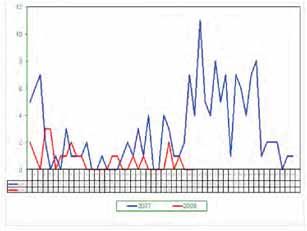
amount for both classic dengue and hemorrhagic
dengue occur during the rainy season, which The main groups affected
begins in May and lasts until November or Morbidity is highest among 5- to 14-year-olds
December (Figures 3 and 4). September and October (incidence rate of 3.5 per 10,000 inhabitants),
are the wettest months. followed by children under 1 (2 per 10,000) and 15-
to 49-year-olds (Figure 5).
The 5- to 14-year-olds and 15- to 49-year-olds have
the largest numbers of hemorrhagic dengue
cases, but the highest rates (confirmed cases/total
age-group population) are found among those
4under 1 and 5- to 14-year-olds, where the mortality (73%) in type 1 dengue fever symptoms, while
rates are 0.6 and 0.3 per 100,000 inhabitants, ecchymosis, epistaxis (nosebleeds), gingivorrhagia,
respectively (Figure 6).7 edema of the gall bladder wall, ascites, and pleural
effusion are commonly seen in type 2 dengue fever.8
Women are most affected, representing 728 (55%) of
the 1,415 cases in 2007. This is because the vector is Vectors
found in houses, making women more susceptible
Aedes aegypti (the yellow fever mosquito) is the
given their house-bound roles, and because women
primary vector for transmission of dengue in
use skirts, thus leaving a greater area of the body
Nicaragua and is present in all of the country’s
uncovered, facilitating mosquito bites on their
main urban centers, as it only breeds in clean
legs.
water. In 2007 the country had a house infestation
index of 6.7%, with 70% of SILAIS registering
FIGURE 5: Rates of classic dengue by age group. an infestation index of 5% or greater,9 which is
Nicaragua, 2006–2007 considered high risk according to the Nicaraguan
guidelines (Figure 7).
High rates of Aedes aegypti infestation persist
in the country’s main cities, partly because
of the irregular supply of potable water. The
local populations employ water collection and
storage methods that provide breeding places for
the mosquito. Habits and behaviors that favor
infestation by Aedes aegypti in Nicaragua include
the accumulation in backyards of receptacles
and other junk that can retain standing water, a
reluctance to use larvicides, and the premature
FIGURE 6: Rates of dengue hemorrhagic fever by
age group. Nicaragua, 2006–2007 cleaning of larvicide residue. The mosquito’s
distribution has also increased in recent years due
to the “pseudo-urbanization” of rural settlements,
particularly along the country’s main highways.
Aedes albopictus, which unlike Aedes aegypti is
more associated with rural areas, also has been
detected in some parts of the country (e.g., the
Subtiava neighborhood of the city of León, Ocotal
in the department of Nueva Segovia, Potosí in the
department of Chinandega, and Los Chiles in the
department of Río San Juan). However, this insect
Symptoms of dengue has not been identified as a current carrier of
The findings of a 2007 study of children diagnosed dengue in Nicaragua.
with dengue admitted to the La Mascota
Children’s Hospital in Managua revealed the Hemorrhagic dengue
clinical symptoms of classic dengue to include The fact that the four dengue serotypes have
fever, headache, retro-orbicular pain, and general circulated in Nicaragua increases the probability
malaise that may also include rash, petechia, of epidemics of hemorrhagic dengue. This is
hemorrhagic manifestations, and positive because infection by one serotype of the dengue
tourniquet test. Petechiae are more common virus confers immunity only against that specific
5serotype while at the same time increasing the simultaneous circulation of multiple serotypes
possibility of hemorrhagic dengue if infected by (Den-1, Den-2, Den-3, and Den-4). The Den-3
any of the other three. serotype last circulated in 1999, and more than
1,351,000 people are estimated to be susceptible
to it.10
FIGURE 7 : Infestation of houses by Aedes aegypti
in 2007 in Nicaragua
Factors that influence dengue
Circumstances that heighten the threat of dengue
epidemics include:11
>5 Ǟ Increasing urban population trends. Fifty-six%
1-5 of the population is concentrated in theGeographic distribution
Although the locations of the different outbreaks Outbreaks
have varied over the years—depending on factors
The following is a summary of three recent
such as viral circulation, favorable environmental
outbreaks:
conditions, and the effectiveness of the immediate
control measures—the Pacific coast region is
Managua, 2002: The outbreak was located mainly
considered to be at greatest risk due to its higher
in the areas covered by four health centers: Villa
levels of urbanization and the population’s prior
Libertad, Edgard Lang, Francisco Buitrago, and
exposure to various types of dengue. However,
Pedro Altamirano. It involved 684 confirmed cases
other areas such as Nueva Segovia, the North and
and an attack rate of 5 per 10,000 inhabitants.
South Atlantic Autonomous Regions (RAAN and
Factors that favored the outbreak included an
RAAS), and Matagalpa have become increasingly
Aedes aegypti household infestation index of over
important in terms of dengue epidemics, which
25%; the simultaneous circulation of the Den-1 and
are closely linked to water supply problems in
Den-2 serotypes; increased numbers of household
those areas.
mosquito breeding sites (6% presence of potential
breeding sites in the houses); and the reluctance
In 2007, 74% of cases in Nicaragua corresponded to
of 17% of the population to use the Abate larvicide.
six SILAIS— Chinandega, León, Managua, Masaya,
Forty percent of people willing to use the larvicide
Matagalpa, and Nueva Segovia—that have also
threw it away seven days after its application.13
registered the highest number of cases in previous
years (Figure 8, Appendix 1).12 The incidence rates
Chontales, 2003: The outbreak occurred in
in León, Madriz, Managua, Nueva Segovia, the
the cities of Juigalpa and San Pedro de Lóvago.
RAAS, and Río San Juan are all higher than the
It involved 76 confirmed cases with an attack
national average, while the SILAIS on the Pacific
rate of 1.9 x 10,000 inhabitants. The outbreak
side of the country—particularly Managua and
was influenced by water supply problems (65%
León—plus Nueva Segovia have reported the most
household coverage), a lack of sanitary sewerage
cases of hemorrhagic dengue and death from
systems, garbage collection problems ( 70%
dengue (Appendix 1).
coverage), and a 5.7% infestation index.14
FIGURE 8: Rates of classic dengue by SILAIS. Carazo, 2006–2007: An outbreak of cases of
Nicaragua, 2006–2007 Den-3 in the last quarter of 2006 appears to have
originated with Nicaraguan students returning
from El Salvador and spread as a result of high
Aedes aegypti infestation indices. The outbreak
involved 141 cases and one death. Another outbreak
occurred at the beginning of 2007, focused on the
areas of La Paz, San Marcos, Diriamba, Jinotepe,
and El Rosario. Risk factors in this zone include
irregular water supply (water coverage of 70% in
urban areas); inappropriate water storage methods;
an increase in the infestation indices in semirural
areas; commuting to Managua and neighboring
cities, which can help spread the disease; the
lack of systematic control actions, such as the
7application of the Abate larvicide; and a lack of low-volume fumigation using portable equipment
vector control human resources in the countryside. and a LECO pesticide sprayer, an education
Control actions included the use of support campaign, clean-up days, and organization of the
brigades from neighboring departments for health services.15
intensive Abate application in all of the cities, ultra
Government control strategies
Diagnosis
FIGURE 9: Algorithm for dengue diagnosis
Suspected case of dengue
5 - 7 days Epidemiologically relevant
Greater
t
Monotest (ELISA IgM) 1 - 3 days
than 7 days
Positive Negative ELISA IgG PCR Viral isolation
Probable
b b Negative Positive Negative
Case
cause of
dismissed
dengue
Positive sero- Case Case
conversion dismissed dismissed
Confirmed case of dengue
8As well as being fundamental for epidemiological to come back five days later, during which time
surveillance and the timely implementation of contact with the patient could be lost. It takes
control actions, laboratory diagnosis is essential between ten and 25 days to receive results in those
for the therapeutic monitoring of patients. This is municipalities that do not have the capacity to test
particularly true for serious cases during outbreaks the samples.19
of leptospirosis, meningococcemia, influenza,
and dengue where early diagnosis and suitable Paired sera analysis
treatment can save lives. (ELISA IgG /total antibody detection)
Available only at the CNDR, this test is conducted
Serological diagnosis
in special circumstances to identify primary and
The mono test (ELISA IgM detection) secondary cases of dengue, as well as cases of
epidemiological interest that were identified late.
The mono test is the routine Ministry of Health
It requires a second convalescence sample after 14
(MINSA) test to diagnose dengue. It is currently
days.20
available at the National Diagnostic and Reference
Center (CNDR) in Managua and seven SILAIS
Serological response:
laboratories (Bluefields, Chinandega, Chontales,
Estelí, Granada, León, and Matagalpa). The Ǟ Primary case: Total antibody titration by ELISA
reagents are locally produced in the CNDR. Each inhibition < 2,560.
test costs US$1. Ǟ Secondary case: Total antibody titration ≥ 2,560.
Health workers take the samples in the health The identification of primary and secondary
unit—where the patient is treated for between five cases is useful in identifying the evolution and
and seven days after the symptoms first appear16— magnitude of a focus and evaluating the control
and then send them to the corresponding actions and is important for completing the
regional or central laboratory. In the health unit, epidemiological investigation.
the sample must be centrifuged or the serum
manually separated before being sent to the Virological methods
laboratory, which may cause problems in some
Viral isolation
cases. The health workers make no special trips
to deliver these samples and instead wait to take Available only at the CNDR, this method tests
advantage of other trips, which leads to delays in samples taken within three days of the initiation
receiving the results. Similarly, samples sent from of dengue symptoms. It identifies the dengue
more isolated places can be lost or can deteriorate serotype involved, helping to monitor viral
during transportation (mainly through hemolysis).17 circulation and gauge the severity of the outbreak.
Between 8,000 and 10,000 serological samples RT-PCR
are tested for dengue in Nicaragua every year,
Real-time PCR tests are currently available only
representing around 95% to 98% of the total cases.
at the CNDR. They test samples taken within
In 2007, 1,415 (12%) of the 8,753 samples tested
five days of the appearance of symptoms, when
positive. The CNDR also carries out quality control
antibody levels are still not detectable and there
on 10% of the negative samples and all of the
is a need for a rapid diagnosis, such as in serious
positive samples in the country.18
cases.21
The main limitation of the test is that it cannot
The annual number of tests performed in shown in
be used in the first days following the appearance
Appendix 2.
of dengue symptoms. The patient therefore has
9Differential diagnosis
Currently all samples tested for dengue are also Pediatric patients with fever are automatically
automatically analyzed for leptospirosis, regardless tested for measles and rubella. Both disease are
of the results, using a single epidemiological still under surveillance and control in Nicaragua’s
form. If the results are negative for both illnesses immunization program, though the country has
and the patient’s case is followed up, however, had no measles case since 1995 and no rubella cases
the attending doctor makes the final diagnosis since 2006. According to the respective diagnosis
according to clinical presumption.22 In 2006, 8,275 algorithms, any suspected case of measles or
samples were tested as a result of epidemiological rubella that tests negative is also tested for dengue,
surveillance throughout the country, of which which is considered a differential diagnosis given
1,350 (16%) were positive for dengue, 55 (0.66%) were that dengue can also cause fever and a rash similar
positive for leptospirosis, and 6,870 (83%) were to measles and rubella.
negative for both.23
Control strategies
In 2004, Nicaragua created a national Another strategy for modifying community
integrated dengue strategy with a behavior- conduct is a basic dengue booklet that provides
based, multi-sector, comprehensive, and elementary school teachers with essential
interdisciplinary approach that integrates the information on the disease to pass on to their
following components: social promotion and students. The idea is to change the habits of
communication, epidemiological surveillance, students and their families to ensure ongoing
laboratory procedure, vector control, patient health control of the Aedes aegypti mosquito. For the
care, and environmental sanitation.24 last three years, the Education Ministry has
introduced the booklet into elementary schools in
Social promotion and communication the urban areas of nine Nicaraguan departments,
COMBI strategy and it is currently pending implementation in
the Caribbean coast region (RAAN and RAAS).
Nicaragua has been gradually applying a The booklet was translated into Creole English,
communication for behavioral impact (COMBI) Mayangna, and Miskito in collaboration with
strategy for the modification of community the University of the Autonomous Regions of
conduct. The strategy is based on plans and the Caribbean Coast of Nicaragua to facilitate its
programming and is implemented with and dissemination to Caribbean coast pupils in the
for the community. This new strategy was first languages spoken in their communities.26
implemented in two communities covered by the
Silvia Ferrufino Health Center in the Managua SEPA approach
SILAIS for 18 months with funding from the Pan
American Health Organization (PAHO). It was Nongovernmental organizations have also
subsequently implemented in the Chontales, implemented other interventions and approaches
Jinotega, León, Madriz, Masaya, and Nueva to modify community behaviors to combat
Segovia SILAIS.25 dengue. Evidence-based, community-derived
interventions for prevention and control of dengue
in Nicaragua, conducted from 2004 to 2007, use the
10socializing evidence for participatory action (SEPA) Vector control
approach, implemented by CIET International in
Key elements in the vector control strategy
collaboration with the University of California at
include:
Berkeley. The heart of this approach is an informed
dialogue with community members based on
Environmental sanitation campaigns: These
their own evidence, including questionnaires;
involve clean-up and sanitation activities stressing
entomological surveys that identify Aedes
the elimination in local houses of potential
larvae and pupae in participants’ households;
breeding grounds for Aedes aegypti (including
and serological evidence of dengue infection
household items that can collect water and be
in children, obtained by analyzing the change
used as breeding places by the mosquitoes).
in dengue virus-specific antibody levels in the
Organized in urban and semiurban areas of each
children’s saliva.
municipality, the campaigns involve the local
government and population. Four anti-epidemic
During the first year of interventions, in 2004, a
campaigns took place in 2008, emphasizing the
panel of 30 sentinel sites (130 houses each, for a
community’s role in dengue prevention.29
total of 3,956 households) was selected to represent
the population of Managua. In the first year,
Larvicide campaigns (“Abatization”): Six to
entomological surveys detected a house index
eight national campaigns are carried out each
of 8% to 44% in the 30 sites, while serological
year involving house-to-house visits by technical
results indicated that 8% to 44% of children had
personnel or health volunteers to inspect houses
been bitten by a dengue-infected mosquito.
and their surroundings for potential breeding
Entomological, serological, and interview data are
grounds (old tires, barrels, water channels, etc.).
used to measure the impact of an intervention and
Any potential breeding areas are destroyed and
also feed back to the community through house
the temephos larvicide (temephos 1% at 20g per
visits and focus groups to catalyze and direct an
200 liters of water) is applied. The inhabitants are
informed intervention. The interventions consist
also counseled on how to prevent the illness. In
of a communication strategy based on local
2007, staff and volunteers made 2,936,309 visits to
knowledge and experience, led by community
houses,30 for a coverage of 76% of the programmed
leaders and dengue health volunteers. The second
houses.31
cycle, in October 2005, measured the impact of
the first year’s interventions and refined them
These activities are evaluated through
with community input. By Year 3, the hope was to
entomological surveys that track house infestation
determine whether the communities were likely to
indices. In 2007, a total of 14,481 of the 217,267
carry on the process independently.
houses included in the survey resulted positive, for
an infestation index of 6.7% and a Breteau index
Sanitation
(number of containers with immature stages per
This strategy is based on achieving a political 100 houses inspected) of 7.9%.32
commitment between the municipalities and
the central government through multisectoral Fumigation: Zones identified by entomological
working groups to implement complementary or epidemiological indicators as high risk are
actions to reduce environmental risk factors.27 fumigated to control the larvae and mosquito
population, break the chain of transmission, and
Laboratory procedures control outbreaks. The insecticide used for Aedes
aegypti control in Nicaragua is cypermetrine (25%).
The decentralization of the ELISA IgM mono test to
This is applied outdoors using a LECO machine
seven SILAIS laboratories and the local production
with ultra low-volume dispersal, which is most
of the reagents have helped improve laboratory
effective during the coolest hours of the day and
diagnosis in Nicaragua, with the aim of producing
timely, high-quality diagnosis and information.28
11at night. Although indoor household fumigation Prevention Guidelines (Appendices 3 and 4) have
with portable fumigation machines has proved been produced and are currently being reviewed,37
effective in interrupting epidemic outbreaks, a with the aim of achieving the more timely
fumigation team can only cover 80 houses a day, identification, diagnosis, and treatment of dengue
so much more equipment and personnel would be patients.
needed to cover more extensive areas.33 In 2007,
a total of 738,398 houses were fumigated with Surveillance system
motor-backpack fumigation equipment and nearly
Dengue is a disease under epidemiological
200,000 acres sprayed by LECO machine.34
surveillance (Figure 10) for which immediate
notification is compulsory, with information
Epidemic focus control in response to suspected
recorded on notification forms by sex and age
cases: Activities to control epidemic focuses are
group and on an epidemiological case sheet. The
essential within at least 500 meters of suspected or
epidemiological surveillance system is based
identified dengue cases. These include the search
around the community or local health post. Health
for new cases, epidemiological investigation, house
post staff report the case to the municipal level,
inspections, destruction of breeding sites, the
where the information is consolidated before being
application of larvicide, open-air fumigation using
sent on to the SILAIS level and from there to the
cypermetrine, and sanitary education.35
central level (Figure 11).
Anti-epidemic health campaigns: Five
The cases are classified as follows:
campaigns are conducted every year to promote
community participation in the different
Suspected dengue: All febrile cases accompanied
prevention and control activities, including clean
by headache, retroorbital pain, myalgia,
up, destruction of breeding sites, application of
arthralgia, vomiting, abdominal pain, rash and/or
larvicide, and education.36
hemorrhaging.38
Patient health care
Suspected hemorrhagic dengue: All suspected
Although there is no specific treatment and cases with hemorrhaging accompanied by one
there are no vaccines for dengue, the ministry or both of the following: thrombocytopenia (low
of health has case management guidelines to platelet count ofFIGURE 11: Information flow chart
Epidemilogical serveillance hsopitals Health facilites (1050 health
(32) centers and health postss)
Epidemilogical serveillance SILAIS (17)
Epidemilogical
ill Daily report
epor and V.E. central
t
bulletin consolidated level
weekly report
Confirmed case: All suspected cases that have Health centers: Diagnosis and management
tested positive for dengue in a serological or of outpatient cases; follow up of positive cases
virological test. and epidemic focus controls; implementation of
vectoral control through the Vector Transmitted
Role of hospitals, health centers, health Disease (VTD) Program; educating the population.
posts, and volunteers
Health posts: Identification, referral, or
Hospitals: Diagnosis and management of cases,
management of outpatient cases; educating the
including taking samples and sending them to the
population.
corresponding laboratory; management of severe
cases of dengue.
Health volunteers: Referral of suspected cases and
educating the population.
Examples of dengue control strategies
Managua Ǟ The community exhibited a sense of greater
self-efficacy in terms of controlling Aedes
Implementation of the COMBI strategy,
aegypti.
particularly in the municipality of Ticuantepe,
revealed the following results:39 Ǟ The community actively participated in
identifying options for reinforcing household
Ǟ Communities protected water tanks and barrels actions (e.g., increasing the recommended
used to store water where there is an irregular frequency from once to twice a week to ensure
supply, displaying intended behavioral changes the housewife performs the actions at least
of the strategy. once a week).
Ǟ Health promoters and interpersonal Ǟ Schools used the Basic Dengue Booklet,
communication played an important role in the particularly in the municipality of Ticuantepe
process of changing to healthy behaviors. and those sectors corresponding to the Pedro
13Altamirano and Francisco Buitrago Health neighborhood in December. The Santa Ana
Centers. neighborhood was traditionally most affected by
cases of dengue, but in 2008 dengue transmission
Nueva Segovia was reduced starting from the 36th week, despite
The COMBI project in the Santa Ana neighborhood the fact that entomological data did demonstrate
of the municipality of Ocotal is characterized the presence of the vector. However, the presence
by actions aimed at protecting water resources detected was at a very low population density and
through direct education.40 This has resulted in a was only in the larval stage, and there was no
reduction of hydrically transmitted diseases and efficient transmission of the dengue virus.
interruption of the life cycle of the Aedes aegypti
vector. Community participation is essential Calculation of the cost of implementing this
for effectively implementing the actions, with strategy in the whole municipality points to
community members carrying out the activities budgetary savings of approximately 60% compared
and the health personnel providing periodic to the cost of conventional measures (if the COMBI
training supervisions and entomologically activities are carried out paying a per diem of 40.00
measuring the results. The education actions córdobas (about US$2), as the supervision is only
are one of the main pillars of this process. They done for half a day, once a week).
are implemented both directly, through visits to
houses where the vector is located, and indirectly, Chinandega
using the media to congratulate people on the Health ministry personnel trained teachers in
results obtained and thus encourage them to act in urban schools on dengue prevention based on
the interests of their own health. the contents of the Basic Dengue Booklet.41 After
the training, follow up was provided through
The results show this intervention to be both school visits to check whether the teachers were
effective and efficient. The initial block index using the booklets with their pupils, while school
of 70% at the beginning of 2007 fell to just 2% in competitions were held based on the students’
December 2007, while the house index fell from knowledge of the contents. This has helped
17.46 to 0.18, the deposit index from 2.12 to 0.02, systematically integrate dengue prevention as a
and the Breteau index from 21.41 to 0.18. In gross community and household responsibility into the
numbers, the 84 houses that initially hosted the school curriculum.
vector dropped to just one house in the whole
Funding mechanisms
The Ministry of Health assigns a budget for The sustainability of the dengue control strategies
dengue control activities, providing resources depends mainly on the financial capacity and the
for each SILAIS. Generally speaking, the country transfer of financial resources from the health
finances the salaries of 1,000 field workers across ministry central level to the SILAIS.
the country. An additional US$750,000 is spent
each year on insecticides, while US$2,000,000 is Areas for improvement
earmarked to support the comprehensive control
The strategies for dengue prevention have
of contagious diseases, approximately 55% of
produced good results. The most important
which goes to the fight against dengue.42 PAHO/
challenge is to appropriately train MOH personnel
WHO also provides financial collaboration of about
so that all the activities are timely, prioritized, and
US$25,000.
of high quality.
14Which nongovernmental agencies and CNDR and to strengthen research capabilities in
other groups are involved in dengue this area. In 2003 it received funding from the
eradication in Nicaragua? Pediatric Dengue Vaccine Initiative to implement
a sentinel site for dengue monitoring with a cohort
Pan American Health Organization (PAHO):
of 5,000 children, in an attempt to discover the
Provides technical and financial support.
dynamics of dengue transmission, its clinical
manifestation, and the severity of the disease. This
Sustainable Sciences Institute: Since 1988 this
sentinel site could be used in the future for the
nongovernmental organization has been working
trial of a new dengue vaccine.
to help transfer appropriate technology to the
Conclusions
the IgM mono test for dengue. If the case is
Dengue fever is a disease with a high risk of
identified earlier than this, the patient must
becoming epidemic in Nicaragua. Different macro
return for a future appointment, a practice
factors influence the dengue problem in the
that risks the patient not returning and
country, requiring integrated efforts by public,
health providers not being able to confirm the
private, and community sectors, which is vital
diagnosis. Rapid tests based on the detection of
to achieving the sustainability and complete
antigens could offer an alternative for detecting
effectiveness of the actions. In this respect,
the disease earlier and can be easily taken
the Ministry of Health has implemented an
to other at-risk communities that have not
integrated management strategy for dengue and
traditionally had access to laboratory services.
has developed a number of successful local-level
experiences.
2. Reducing the time between taking the
sample and receiving the results. Despite the
In terms of diagnosis, progress has been made
decentralization efforts, the average time for
in decentralizing serological testing to the
obtaining a result for dengue is between 15 and
departmental level. However, the following
30 days, which is a long time and results in
challenges still remain:
delayed control actions.
1. Achieving more timely diagnosis of the cases
3. Achieving diagnosis of the vast majority
when the symptoms first appear, as opposed
of suspected cases that test negative for
to five days after they appear, as is currently
dengue. Only 30% of suspected dengue cases
the case. This recommendation is based on the
investigated test positive, which means that
fact that the patient must have been displaying
every year the etiology of about 8,000 febrile
the symptoms for five to seven days to confirm
cases investigated for dengue is undetermined.
dengue using the main technology available—
15References
1. MINSA. Epidemiology Directorate Reports (1990–1996, 1997–2001, and 2002–2006). Managua, Nicaragua:
Ministerio de Salud.
2. MINSA. Epidemiology Directorate Reports (1990–1996). Managua, Nicaragua: Ministerio de Salud.
3. MINSA. Epidemiology Directorate Reports (1997–2001). Managua, Nicaragua: Ministerio de Salud.
4. MINSA. Epidemiology Directorate Reports (2002–2006). Managua, Nicaragua: Ministerio de Salud.
5. MINSA. National Epidemiological Surveillance Program Annual Report, 2007. Managua, Nicaragua:
Ministerio de Salud; 2007.
6. Dr. Luisa Amanda Campos. Presentation at the 4th National Malaria Forum, 2008.
7. MINSA. National Epidemiological Surveillance Program Annual Report, 2007. Managua, Nicaragua:
Ministerio de Salud; 2007.
8. MINSA. National Dengue Program Annual Report, 2007. Managua, Nicaragua: Ministerio de Salud; 2007.
9. Ibid.
10. MINSA. National Integrated Strategy for the Prevention and Control of Dengue, MINSA, Nicaragua.
11. Ibid.
12. MINSA. National Epidemiological Surveillance Program Annual Report, 2007. Managua, Nicaragua:
Ministerio de Salud; 2007.
13. MINSA. Epidemiological Bulletins. Managua, Nicaragua: Ministerio de Salud.
14. MINSA. Epidemiological Bulletins. Managua, Nicaragua: Ministerio de Salud.
15. Interview with Yolanda González, Epidemiologist at the Carazo SILAIS.
16. MINSA. National Dengue Healthcare and Prevention Guidelines. Managua, Nicaragua: Ministerio
de Salud.
17. Field visit to the municipality of Jalapa, department of Nueva Segovia. Interviews with Juan de Dios
Vega Acuña (head of VTD in the SILAIS), Bayardo Ruiz (head of VTD in Jalapa) and Edwin Blanco (SILAIS
laboratory).
18. Interview with Dr. Ángel Balmaceda, Director of Virology, National Diagnostic and Reference Center,
MINSA.
19. Field visit to the RAAS SILAIS. Interviews with Dr. Abraham Mayorga (SILAIS Epidemiologist) and Dr.
Jorge Barrera (Epidemiologist in Laguna de Perlas).
1620. MINSA. National Dengue Healthcare and Prevention Guidelines. Managua, Nicaragua: Ministerio
de Salud
21. Interview with Dr. Ángel Balmaceda.
22. Field visit to Jalapa.
23. CNDR. Annual Virology and Parasitology Report. Managua, Nicaragua: Ministerio de Salud; 2006.
24. Interview with Dr. Luisa Amanda Campos, director of the MINSA Dengue Program.
25. Interview with Dr. Luisa Amanda Campos.
26. MINSA Management Report, 2001-2006—MINSA. National Dengue Healthcare and Prevention
Guidelines. Managua, Nicaragua: Ministerio de Salud.
27. MINSA. National Integrated Strategy for the Prevention and Control of Dengue. Managua, Nicaragua:
Ministerio de Salud.
28. Interview with Dr. Ángel Balmaceda.
29. Field visit to the municipality of Jalapa. Interviews with Juan de Dios Vega Acuña and Bayardo Ruiz.
30. The same houses were visited various times to repeat the application of the larvicide.
31. MINSA. National Dengue Program Annual Report, 2007. Managua, Nicaragua: Ministerio de Salud.
32. MINSA. National Dengue Program Annual Report, 2007. Managua, Nicaragua: Ministerio de Salud.
33. MINSA. National Dengue Healthcare and Prevention Guidelines. Managua, Nicaragua: Ministerio
de Salud.
34. MINSA. National Dengue Program Annual Report, 2007. Managua, Nicaragua: Ministerio de Salud.
35. Interview with Dr. Luisa Amanda Campos.
36. Ibid.
37. MINSA. National Dengue Healthcare and Prevention Guidelines. Managua, Nicaragua: Ministerio
de Salud.
38. MINSA. Epidemiological Surveillance Guidelines. Managua, Nicaragua: Ministerio de Salud.
39. Interview with Dr. Luisa Amanda Campos.
40. Interview with Dr. Eddy Caseres, epidemiologist at the Nueva Segovia SILAIS.
41. Interview with Dr. Octavio Chávez, epidemiologist at the Chinandega SILAIS.
42. Interview with Dr. Juan José Amador, fomer MINSA Director of Epidemiology (1991-2007).
17Appendix
TABLE A-1: Dengue cases in Nicaragua, 2007–2008
Confirmed cases of Confirmed cases of Dengue incidence Confirmed cases of classic
SILAIS
classic dengue, 2007 hemorrhagic dengue, 2007 rate, 2007 dengue up to May 2008
Managua 444 94 3.15 54
N. Segovia 147 3 6.84 3
Matagalpa 149 2 2.47 21
León 139 13 3.52 11
Masaya 86 16 2.65 7
Chinandega 83 2 1.84 4
RSJ 55 0 5.63 8
Boaco 51 1 2.97 2
Carazo 50 8 2.97 2
Madriz 50 0 3.69 5
Jinotega 43 0 1.42 7
RAAS 37 1 3.33 1
Granada 21 5 1.08 1
RAAN 20 0 0.96 1
Estelí 20 1 0.91 0
Rivas 17 0 1 0
Chontales 3 4 0.07 0
TOTAL 1,415 156 2.53 127
TABLE A-2: Total dengue tests conducted in the CNDR, 2006
IgM ELISA inhibition RT-PCR Viral Isolation M/R/D
SILAIS
Total Pos % Total Pos % Total Pos % Total Pos % Total Pos %
Estelí 35 12 34 0 0 0 0 0 0 0 0 0 0 0 0
Madriz 444 45 10 0 0 0 0 0 0 0 0 0 5 0 0
N. Segovia 1141 140 12 0 0 0 29 8 28 0 0 0 3 0 0
Chinandega 862 103 12 0 0 0 13 0 0 0 0 0 8 0 0
León 249 31 12 0 0 0 29 4 14 0 0 0 7 1 14
Managua 3472 695 20 392 267 68 672 181 27 211 121 57 8 0 0
Granada 69 11 16 0 0 0 0 0 0 0 0 0 0 0 0
Carazo 170 64 38 0 0 0 1 0 0 1 1 100 6 0 0
Masaya 210 56 27 0 0 0 3 1 33 0 0 0 5 0 0
Rivas 25 3 12 0 0 0 0 0 0 0 0 0 1 0 0
Boaco 549 56 10 0 0 0 23 5 22 0 0 0 0 0 0
Chontales 73 3 4 0 0 0 0 0 0 0 0 0 3 0 0
Matagalpa 17 3 18 0 0 0 0 0 0 0 0 0 2 0 0
Jinotega 388 54 14 0 0 0 6 0 0 0 0 0 7 0 0
RAAN 92 20 22 0 0 0 1 0 0 0 0 0 0 0 0
RAAS 21 5 24 0 0 0 0 0 0 0 0 0 0 0 0
R.S. Juan 458 49 11 0 0 0 15 2 13 0 0 0 0 0 0
Total 8275 1350 16 392 267 68 792 201 25 212 122 58 55 1 2
18FIGURE A-1: Management of patients with dengue
Suspected dengue case
Clinical and laboratory
t evaluation
Classic d
dengue
Classic dengue with hemorrhagic Dengue hemorrhagic fever / DSS
manifestations
No
Alarming Grade I, II Grade III, IV
alarming Children Adults
data
data
000
00
>70,000 d
Child or adult
without with platelets
No data Alarming hemo-FIGURE A-2: Hospital treatment for adults
Adult
treatment in Adult treatment in ICU
general ward
NSS or Ringer’s Lactate, 20-40 ml/kg 30-60 minuets
Hypotension offset State of shock persisits
Keep in ICU with
h this
th Insert central venous catheter and
treatment scheme measure central venous pressure
CVP less th
than 8 cm CVP greater
t than 8
NSS or Ri
Ringer’s of water cm of water
Lactate 2,000 ml
in 24 hours
Acetaminophen NSS or Ringer’s,
i 20
Use Dopamine
500 mg every 6 ml/kg in 2 hours
hours
Platelets higher Hypotension
t
than 20,000 carry Not offset Not offset Offset
offset
out control in 24
hours
Clinical evaluation Dextran 70 (20 ml/kg in 1 hour)
2-3 times a day
carry out control
every 12 hours
Suspect internal bleeding
NSS or Ringer’s 2000 cm/m2, the first half in 8 hours,
the other half the follwing 12 hours
20PATH Street Mailing 2201 Westlake Avenue, Suite 200 PO Box 900922 Seattle, WA 98121 Seattle, WA 98109 USA USA www.path.org
You can also read


