Design & Access Statement - Site of the Former Leper Hospital | Saltisford
←
→
Page content transcription
If your browser does not render page correctly, please read the page content below
Design & Access Statement
Site of the Former Leper Hospital | Saltisford
Project Team
Prepared for WMHBT and Platform Housing
by Brownhill Hayward Brown Ltd.
Trading as BHB Architects
Document Title : Design & Access Statement
© Brownhill Hayward Brown 2021
The contents of this document may not be copied or reproduced in
whole or part without prior written permission of
Brownhill Hayward Brown Ltd.
Georgian House
24 Bird Street
Lichfield
Staffordshire
WS13 6PT
01543 254357
mail@bhbarchitects.co.uk
Project Ref: 3298
Status: FINAL
Date: May 2021
Revision: D
Prepared by: CC
Reviewed by: AM
Approved by: AM
Conservation Architect The JESSOP Consultancy
Sheffield + Lichfield + Oxford
Archaeologist
CHAPEL OF ST MICHAEL &
Architect Services Engineer
THE MASTERS HOUSE 04 June 2020
Robertson Cartwright Design Ltd.
Building Services Design Engineers & Low Carbon Consultants
RCD reference: 17580-R-001 Rev 1
Saltisford, Warwick, Warwickshire
Prepared by: Matthew Cartwright BSc, MIEE, AMSLL, LCC
PRELIMINARY MECHANICAL & ELECTRICAL STRATEGY BRIEFING
HWA
HWA Structural Engineer
1.
St. Michaels Chapel and Masters House, Saltisford, Warwickshire
Introduction
This document outlines the preliminary building services brief for St Michael’s Chapel
and the Masters House that has been developed between BHB Architects and
Quantity Surveyor
Robertson Cartwright Design to date.
HWA (Structural Engineers) Ltd Abbreviations:
CONSULTING CIVIL AND STRUCTURAL ENGINEERS
HWA (Structural Engineers) Ltd MH – Masters House
CONSULTING CIVIL AND STRUCTURAL
SOLIHULL ENGINEERS
WEST MIDLANDS SMC – St Michaels Chapel
HMO – New-build residential property at rear of the site
SOLIHULL
Tel: 021 745 7600 WESTengineers@h-w-a.co.uk
email: MIDLANDS RCD – Robertson Cartwright Design
WCC – Warwickshire County Council
Tel: 021 745 7600 email: engineers@h-w-a.co.uk
2. Utilities infrastructure routes
Independent metered utility connections shall be provided to the MH, SMC and HMO
properties.
The gas, water and electric supply authorities previously provided outline budget
costs for service connections to the site in 2018. Applications for formal quotations
shall be submitted to the utility authorities during the detailed design stage, once the
building services design is developed, prior to tender.
N.B. No service connection budget quotation has been obtained previously for the
HMO property.
Various options for routing of the services have been considered between BHB and
2 | Site of the Former Leper Hospital, Saltisford | Design and Access Statement | April 2021 RCD, primarily centered around the potential for routing elements of the incoming
services to the site via the neighbouring WCC car-park off Ansell Way, or direct from
Saltisford Road.
At present, the intention is to combine the majority of the incoming services that will
serve the MH and HMO within a combined services trench, originating at the south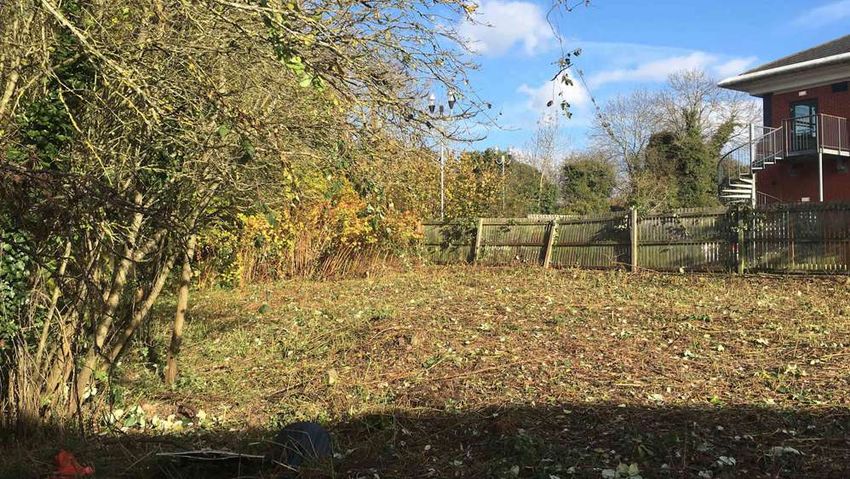
Contents

    1.    Introduction                           3.    Involvement
    1.1   Structure and Purpose of Statement     3.1   Stakeholder Consultation
    1.2   Site Location                          3.2   Design Evolution
    1.3   Site Description
    1.4   Development Description
                                                 4.    Design Proposals
                                                 4.1   Design Aims and Principles
    2.    Assessment                             4.2   Use and Layout
                                                 4.3   Amount
    2.1   Site Context                           4.4   Scale
          2.1.1 Transport and Local Facilities   4.5   Appearance
          2.1.2 Ecology                          4.6   Landscape
          2.1.3 Noise                            4.7   Access
          2.1.4 Archaeology                      4.8   Services and Energy Strategy
          2.1.5 Flood Risk
          2.1.6 Utilities

    2.2   Local Character                        5.    Design Appraisal
          2.2.1 Built Form
                                                 5.1   Design Appraisal
    2.3   Planning Policy
          2.3.1 National Design Guidance
          2.3.2 Local Design Guidance            6.    Summary
    2.4   Site Constraints and Opportunities

                                                                             Site of the Former Leper Hospital, Saltisford | Design and Access Statement |April 2021 | 3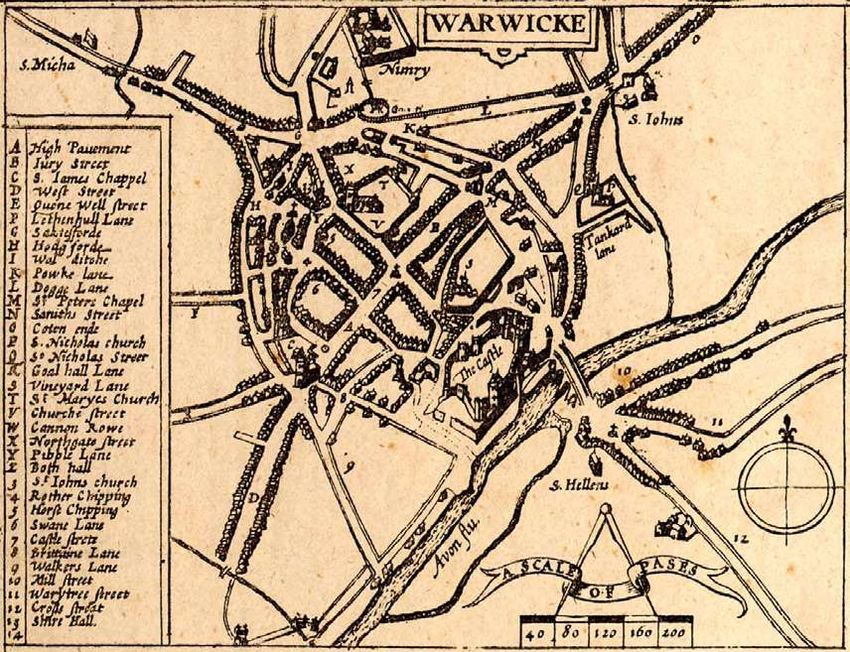
1. Introduction

      1.1 Structure and Purpose of Statement
          This Design and Access Statement has been prepared on behalf
          of West Midlands Historic Buildings Trust (WMHBT) and Platform
          Housing Group and is submitted as part of the applications for              1. Introduction     Outlines the vision for the site and sets out the structure and purpose of the
                                                                                                          statement.
          Planning Permission and Listed Building Consent for works at the site
          of the Former Leper Hospital, Saltisford. A separate application to
          Historic England is being made on behalf of WMHBT and Platform
          for Scheduled Monument consent.

          This document should be read alongside all drawings and other                2. Assessment      Considers the site and its surroundings in terms of physical, social and
                                                                                                          planning context. Identifies opportunities and constraints.
          documents submitted with the applications. A separate Heritage
          Assessment has been prepared by The Jessop Consultancy’s
          archaeologist. Together these documents provide an analysis of
          the context, and the site, and support the proposals as set out in this
          Design and Access Statement.                                                3. Involvement      Outlines the stakeholder consultation undertaken, as well as its key findings
                                                                                                          and design evolution.

          The document serves the following functions and purpose:

           • To provide a concise description of the key issues and the
             evaluation that informed the design decisions that have led to
             the current proposals;
           • To provide comprehensive information on the proposals in
             terms of design, access and landscape.
                                                                                                          Presentation of design proposals including uses and amount proposed,
          This document has been structured as set out in the table adjacent
          in response to:                                                           4. Design Proposals   access arrangements, layout of the development, scale of buildings,
                                                                                                          landscaping treatments and appearance.
           • The requirement criteria for a Design and Access Statement as
              set out by the DMPO (2015);
           • The ‘Design and Access Statements How to write, read and use                                 Appraisal of the proposals against its aims and the ten characteristics
             them’ guidance provided by CABE (2008);
           • The guidance for recognising well designed places as set out in
                                                                                    5. Design Appraisal   identified by The National Design Guide (PPG) as contributing to good design
                                                                                                          as set out in the National Planning Policy Framework.
             ‘The National Design Guide’ (PPG 2019).

                                                                                        6. Summary        Provides a summary of the key features and benefits of the proposals.

4 | Site of the Former Leper Hospital, Saltisford | Design and Access Statement | April 2021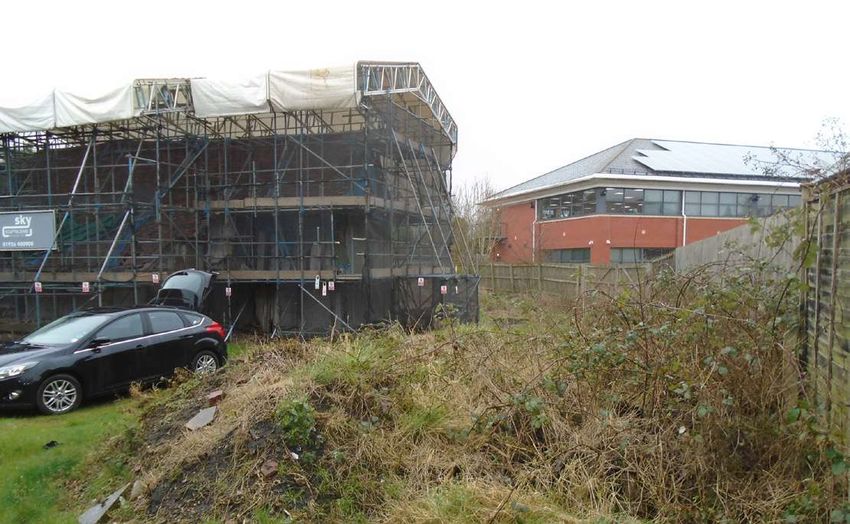
1.2 Site Location

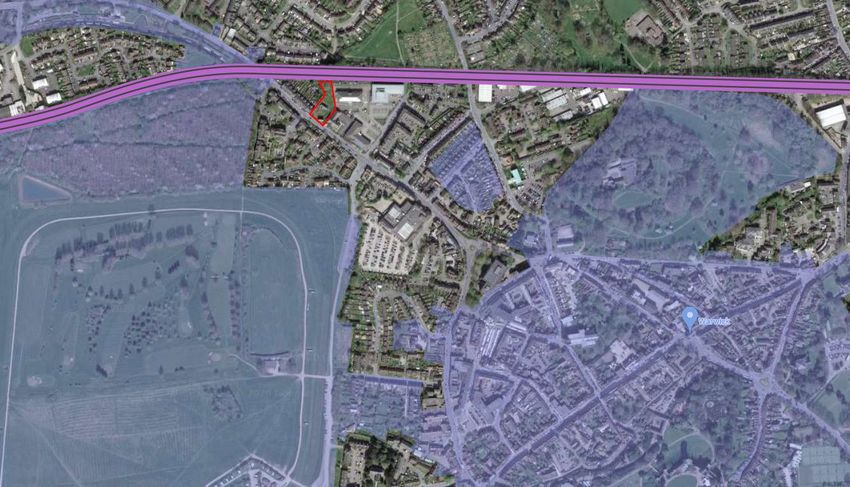
   The application site is located on a main route into the heart of Warwick
   Town Centre, just 0.5 miles from the main shopping area. It is bounded
   to the north by the railway line, and to the south by the A425. The
   southern half of the site is the site of the former Leper Hospital and is a
   Scheduled Monument on which the historic buildings of St Michael’s
   Chapel and the Master’s House still remain. The northern part of the
   site is currently vacant and largely overgrown.
                                                                                                   Canal CA
   The areas immediately to the west and south of the site are mainly
   residential, with a mix of terraces houses and apartment buildings up                                                                railway line
   to four storeys in height.

   The area to the east of the site is occupied by Warwickshire County                                                    Site
   Council offices and the Church of Jesus Christ and the Latter-Day
   Saints which fronts the A425 road.                                                                                                              Cape Rd
                                                                                                                                                     CA
   The site is situated between 3 Conservation Areas; the Warwick
   Conservation Area, The Canal Conservation Area and the Cape Rd.,                                                                                                     Warwick CA
   Victoria St. & Edward St. Conservation Area.

   The site benefits from a wide range of services and amenities, including
                                                                                                   Warwick CA
   schools, shops, places of worship, restaurants, cafes and theatres. It
   also benefits from being within walking distance of a number of areas
   of public open space, including the Diamond Jubilee Woods and
   Saltisford Common.                                                                                                                                        Warwick Centre

   The site is also serviced by good transport links, as it is close to both
                                                                                       N
   Warwick and Warwick Parkway railway stations, providing direct links
   to Birmingham, London and Stratford-upon-Avon.

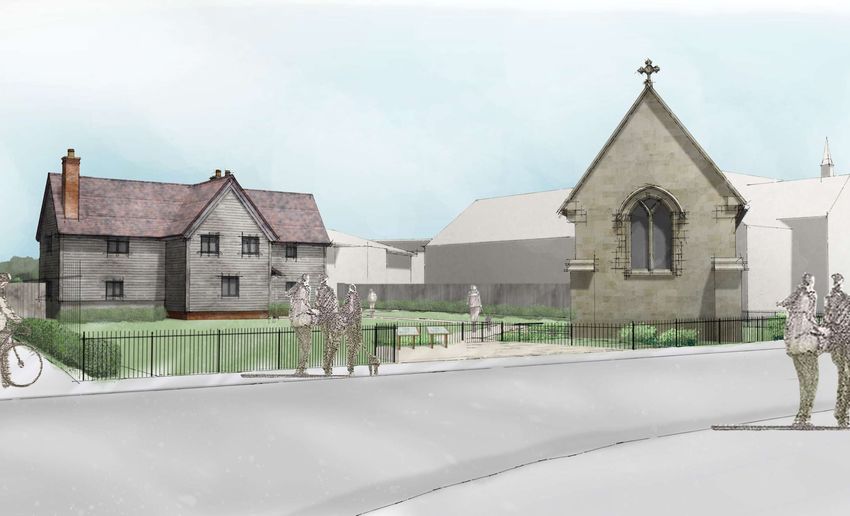
   Our proposals are the repair and conversion to residential use of the
   two historic buildings, St Michael’s Chapel and the Master’s House.
   The northern part of the site will provide additional housing. All the
   housing on site will be managed by Platform Housing Group and will
   provide affordable rented accommodation in a sustainable location             Location Plan showing surrounding Conservation Areas - NTS
                                                                                 (c) Google 2020
   whilst safeguarding the historic buildings and site for the future.

                                                                                                       Site of the Former Leper Hospital, Saltisford | Design and Access Statement | April 2021| 5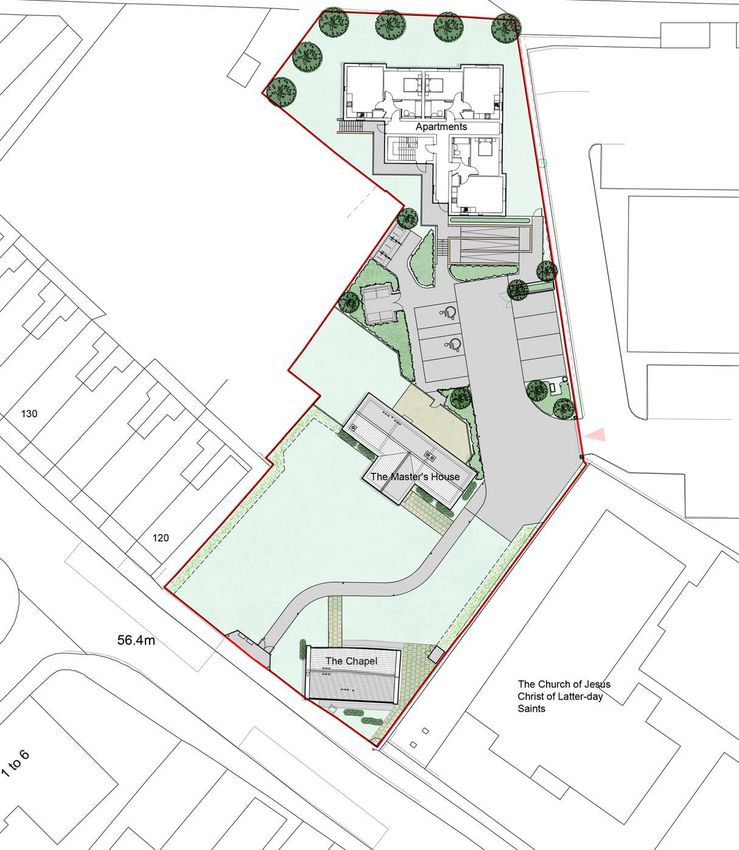
1.3 Site Description
                                                                                                             Brief History of the Leper Hospital
       The application site is approximately 0.2ha in size situated on Saltisford Road, a                    As detailed in the Schedule listing the site was previously that of the Saltisford Leper
       main route into Warwick town centre. The site is largely vacant, with the remains of                  Hospital, one of only 3 remaining in the country.
       two derelict historic buildings, St Michael’s Chapel to the south of the site, fronting
       Saltisford Road and the Master’s House near the centre of the site. The rear of the                   If you caught leprosy in medieval Warwick the hospital provided the sufferer with a
       site is vacant and largely overgrown, with a number of trees separating the rest of                   place to live rather than providing segregation or medical care, as in medieval times
       the site from the railway line on the site’s northern boundary.                                       they did not have the same concept of how diseases spread as we do today.

       The site is currently secured by fences and railings around its perimeter, with 2 points              The word hospital originally referred to places of shelter for those in need - homeless,
       of vehicle access. The first is directly off Saltisford Road, the second is through the               poor travellers etc. as well as the sick.
       car park of the adjacent office buildings, via Ansell Way.
                                                                                                             Founders located sites to show off their wealth and piety to travellers. The occupiers
       The southern portion of the site is a Scheduled Monument, St Michael’s Leper                          were self-sufficient but also sold produce to the townsfolk - this was a good location
       Hospital (List Entry ref: 1011035). The two buildings on site are both separately Grade               for that and to beg for alms (charitable assistance), on a main road with a steady
       II* listed, Master’s House (List Entry Ref: 1364850) is currently on Historic England’s               flow of traffic to and from the walled town of Warwick.
       At Risk Register, whilst St Michael’s Chapel has had some recent restoration works.
                                                                                                             Beneath the grass are the archaeological remains of further medieval buildings for
                                                                                                             those who managed the leper hospital - the Master (manager), cooks, brewers,
                                                                                                             general servants etc. - and for those who received shelter.

                                                                                 N

                                                                                                  Site of
                                                                                                  former Leper
                                                                                                  Hospital

        Extent of                St Michael’s                              Existing pedestrian
                                                        Master’s
        Scheduled                Chapel                                    and vehicular
                                                        House
        Monument                                                           access
                                                                                                   Archive map (c17th century) illustrating the location of the Leper Hospital site in relation to the
Site Plan Identifying key buildings - NTS                                                          settlement- NTS

6 | Site of the Former Leper Hospital, Saltisford | Design and Access Statement | April 2021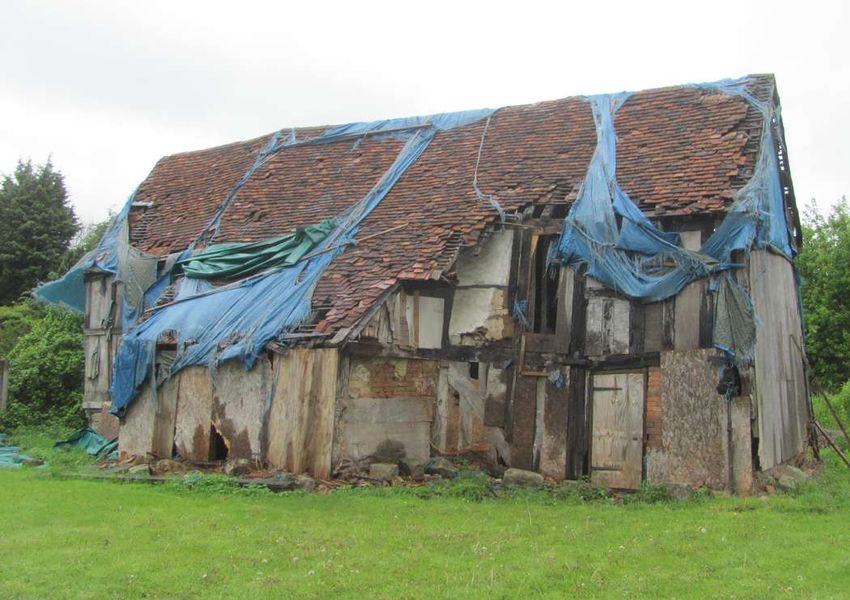
Recent History of the Site
By the 17th and 18th century St Michael’s Chapel and the Master’s House were
converted to cottages.

Historic photos show the frontage along Saltisford Road with cottages built up to
the pavement and surrounding St Michael’s Chapel on all sides. A chimney can
be seen projecting from the Chapel’s roof.

The Master’s House is seen divided into three cottages with multiple lean-to
extensions and canopies and brick infill between its timber framing.

Later the buildings surrounding St Michael’s Chapel were demolished, revealing
large openings that had been made in its walls.

                                                                                            Archive photo of the rear of Master’s House ‘4,56 St Michael`s Terrace in the 1950`s’

 Fig. 6: The Master’s House and Chapel, 1962 photo (WCRO PH210/182/21)                                       St MICHAELS CHAPEL, Saltisford, Warwick                         St MICHAELS CHAPEL, Saltisford, Warwick

Archive photo of the rear of the view from Saltisford Road,               Archive photos of St Michael’s Chapel following the demolition of cottages on its north and west elevations
 Fig. 7: The street frontage and Chapel, 1962 photo (WCRO PH210/182/21)
the south west gable visible between surrounding buildings,
1962

                                                                                                    Site of the Former Leper Hospital, Saltisford | Design and Access Statement | April 2021| 7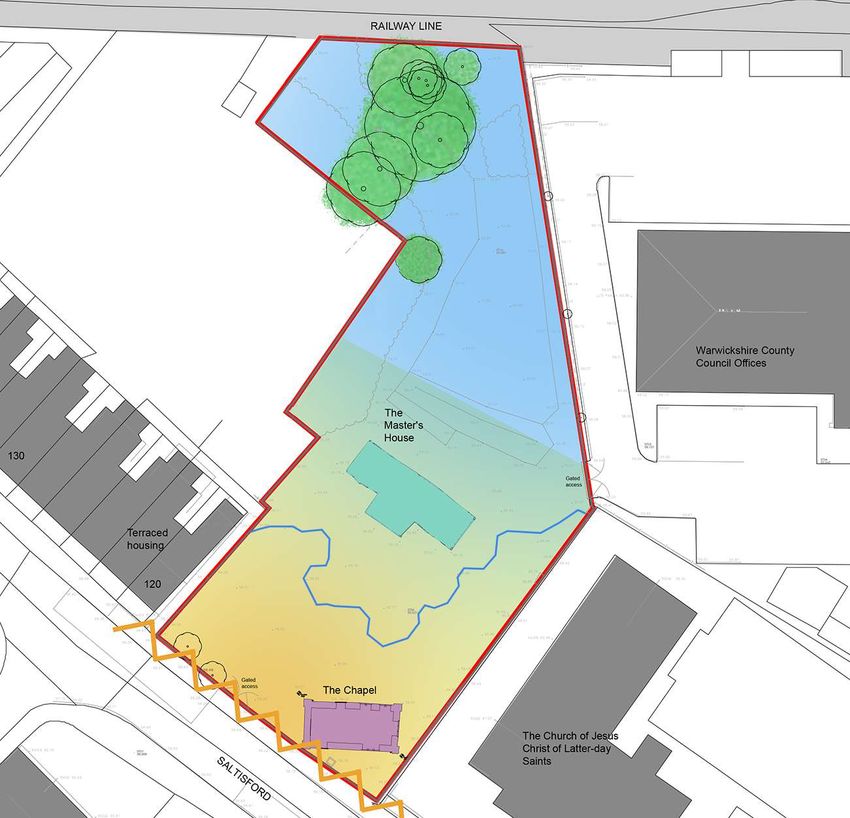
Current Condition of the Site
                                                                                               The site is currently in private ownership and unoccupied. Though currently
                                                                                               secure, the site has previously been subject to vandalism and occupied by
                                                                                               homeless people seeking refuge in the less-than-safe buildings. The majority
                                                                                               of the site continues to become more overgrown, with various debris from the
                                                                                               building works on the chapel strewn across the site of the Scheduled Monument.

                                                                                               Despite efforts to protect the Master’s House by the current owner it has fallen
                                                                                               into disrepair. Inappropriate boarding has been used to try to shield the timber
                                                                                               frame from the elements and tarpaulin used to cover the roof may have created
                                                                                               more problems with water ingress and has since been torn off by the elements.

                                                                                               Long term dereliction and neglect the Master’s House has resulted in it becoming
                                                                                               structurally unstable. It is on the Historic England’s At Risk register, listed as Priority
                                                                                               B and in Very Poor condition. In the absence of action from the site’s owner West
                                                                                               Midlands Historic Buildings Trust organised for the building to be appropriately
                                                                                               protected whilst plans for its future repair and re-use could be considered. This
                                                                                               included a stabilising scaffold structure with protective roof cover and netting to
                                                                                               be installed to secure the building and prevent further damage.

                                                                                               The current owner has, however, undertaken considerable restoration work on
   Photo of Master’s House c 2017, showing inappropriate boarding and remains of tarpaulin     St Michael’s Chapel, rebuilding the stone walls, incorporating new stone window
                                                                                               and door surrounds including stone hood mouldings and stone mullions, installing
                                                                                               solid carved timber members to provide the structure for a first floor level and
                                                                                               re-roofing in clay tiles.

                                                                                               Under its current ownership the site has been subject to a number of planning
                                                                                               applications. An approved scheme to convert both buildings to office use was
                                                                                               commenced but later abandoned and have not been fully implemented. The
                                                                                               only work to have been carried out is the partial repair of the Chapel.

                                                                                               The rear of the site remains vacant.

   Photo of Master’s House c 2020 following installation of scaffold support and appropriate
   protection

8 | Site of the Former Leper Hospital, Saltisford | Design and Access Statement | April 2021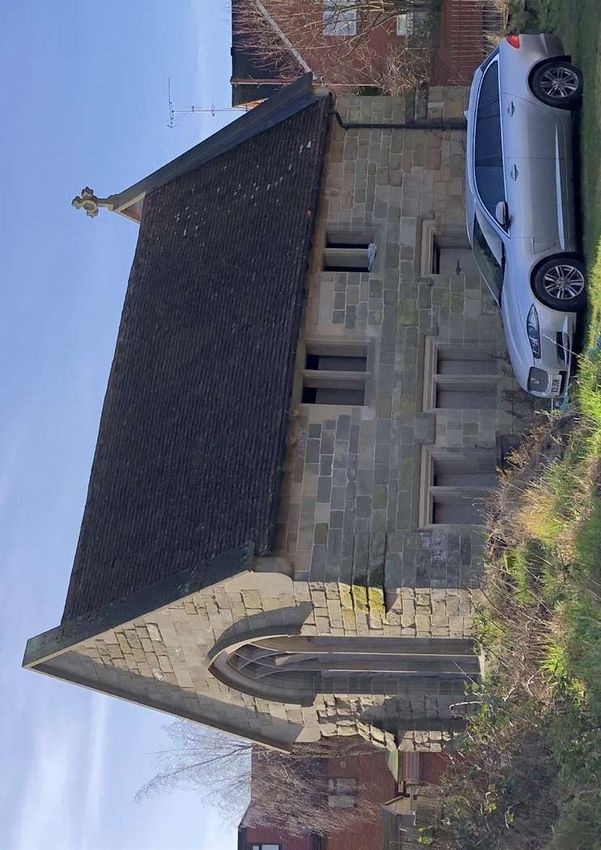
1.4 Development Description
                                                                                  The buildings, particularly the Master’s House, are in a poor condition and will continue to
                                                                                  deteriorate if they are not repaired.

                                                                                  The historical and architectural value of the buildings have been recognised by Warwick
                                                                                  District Council and Historic England as important both locally and nationally.

                                                                                  Warwick District Council are working in partnership with Platform Housing Group and propose
                                                                                  to sympathetically repair and convert both listed buildings to single dwellings, facilitated in
                                                                                  part by the construction of a new apartment building to the rear of the site. The partnership
                                                                                  has a successful track record of bringing listed buildings within the area back into use. The
                                                                                  most recent example of their success is the neighbouring Gasworks development.

                                                                                  Warwick District Council are also working in partnership with West Midlands Historic Buildings
                                                                                  Trust (WMHBT) who have a track record in building preservation and securing grant monies
                                                                                  for difficult sites such as the application site at Saltisford. WMHBT take on ownership of sites in
                                                                                  order to gain grant monies for the repair of historically important buildings. The Trust will have a
                                                                                  back to back agreement with Platform Housing in order for them to lease the properties from
                                                                                  them in future.

                                                                                  The Leper Hospital site remains the only part of the immediate area which is undeveloped
                                                                                  and Warwick District Council are keen to support local interest in bringing the buildings back
                                                                                  into use.

  Photo of the north elevation of St Michael’s Chapel c 2020                      It is proposed that St Michael’s Chapel will provide a 1 bed home, whilst the Master’s House
  showing new stonework and tiled roof                                            will be converted to a 2 bed home. The new residential use would allow alterations to the
                                                                                  buildings to be minimal.

                                                                                  The new apartments to the rear will also provide affordable housing, with 8no. 1 bed
                                                                                  apartments spread over 3 floors.

Photo of St Michael’s Chapel c 2020, showing new stonework and tiled roof              Photo of rear of the site showing overgrowth

                                                                            Site of the Former Leper Hospital, Saltisford | Design and Access Statement | April 2021| 9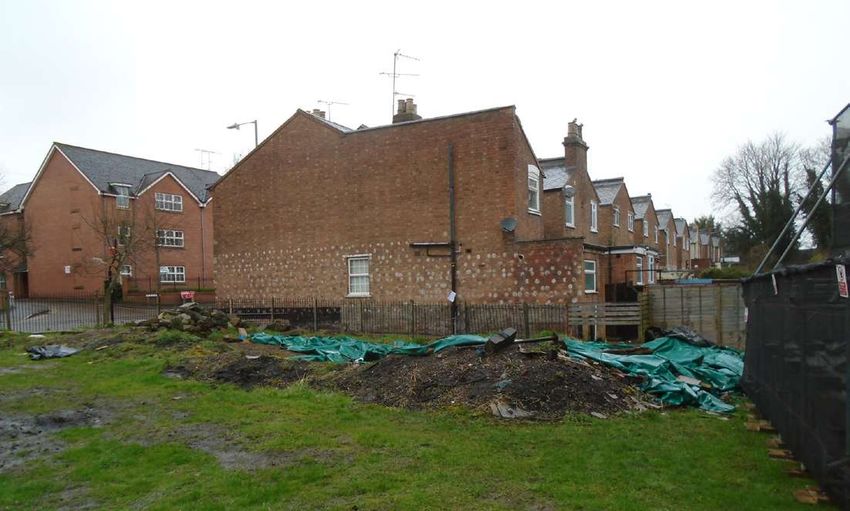
2. Assessment
 2.1 Site Context
     2.1.1 Transport and Local Facilities
                                                                                                  The site is easily accessible by both pedestrians and vehicles.
     The site benefits from good transport links as it is located between Warwick and Warwick
     Parkway railway stations just 15 and 21 minutes walk away. These provide regular services
                                                                                                  There is an existing access from Saltisford Road, however the local highways authority will
     with direct trains to Birmingham, London and Stratford-upon-Avon.
                                                                                                  not accept this to be used as a vehicular access once the site has been re-developed.
                                                                                                  This access off Satisford Road is to be for pedestrian and cycle use only. An alternative
     There is a bus stop immediately in front of the site on the Saltisford Road. This provides
                                                                                                  vehicle access point via the adjacent office car park has been maintained and agreed
     regular services to Warwick town centre and Leamington Spa. The site is also within 10
                                                                                                  with Warwickshire County Council. The car park is in the ownership of Warwickshire County
     minutes walking distance of a number of other bus stops, providing regular bus services
                                                                                                  Council and there is a legal agreement in place for access across it.
     to Stratford-upon-Avon and Coventry.
                                                                                                  Due to its sustainable location in close proximity to a range of facilities and sustainable
     The site’s location close to the town centre also offers plenty of public parking areas
                                                                                                  transport links it is not anticipated that all new residents will require the use of a car. As
     within 2 miles.
                                                                                                  such it is intended that only a limited number of parking spaces will be provided in order
                                                                                                  to promote the use of the public transport and walking.
     The area immediately surrounding the site has a mix of uses including large office spaces,
     retail and a large number of older and new houses and apartments.

     There are a number of existing facilities and amenities located within a short walk of the
     site:
         • Restaurants and public houses (2 minutes walk)
         • Large supermarket (3 minutes walk)
         • Private gym (3 minutes)
         • Priory Medical Centre - doctors’ surgery (9 minutes walk)
         • St Mary Immaculate Catholic Primary School (12 minutes walk away)
         • A number of pre-schools (10-15 minutes walk)
         • Wider range of shops, restaurants and cafés within the town centre ( 8 minutes
           walk away)

10 | Site of the Former Leper Hospital, Saltisford | Design and Access Statement | April 2021
2.1.2 Ecology (refer to separate reports by Middlemarch Environmental) Recommendations
Nature Conservation Sites
A Preliminary Ecological Appraisal and a Preliminary Bat Roost Assessment A Construction Ecological Management Plan (CEMP) should be compiled for the site to
was carried out on site in October 2019. minimise the potential impact of the construction phase of the development on the existing ecology of the site
and off site receptors, and ensure works proceed in accordance with current wildlife legislation. This document
Nature Conservation Sites should be agreed with the Local Planning Authority ecologist prior to any works commencing.
The report found that there are no Statutory designated ecology sites
that would be impacted by the proposals. Habitats
Existing and notable habitats, including early-mature and mature trees should be retained where possible. Where
There are two non-statutory sites, the Railway Line, Rowington & Shrewley this is not possible appropriate replacement planting should be incorporated on site.
area (Ecosite) and the Com Brook (part of the River Avon LWS) that have
potential to be indirectly impacted upon by the construction phase of Biodiversity enhancements should be incorporated into new landscaping scheme to provide a net gain in
development at site if insensitive lighting were to be used. biodiversity across the site. This could include:
• planting habitats which will be of value to wildlife
Habitats • provision of nesting/roosting habitats for bird and bat species
The mature and early-mature trees within the northern part of the site • inclusion of hedgehog passes under fences
have intrinsic habitat value.
Protected and Notable Species
Aside from these trees the remaining habitat within the site is not considered Bats:
to be notable and does not meet the national or local biodiversity criteria. At least three dusk emergence and/or dawn re-entry surveys are to be undertaken during the bat emergence/
re-entry survey season to determine the presence/absence of roosting bats within the structures. If a roost is
Protected and Notable Species discovered during these surveys, a Natural England licence application may be required.
The buildings on site may provide potential ingress points and roosting
locations for bats. The proposals may result in a loss of foraging resources, Any new lighting should be carefully designed to minimise potential disturbance and fragmentation impacts on
however no long-term impacts on bats are anticipated provided lighting sensitive receptors, such as bat species.
is carefully designed to minimise disturbance.
Reptiles:
There is no evidence of badgers within the site, though there is potential Clearance of any suitable reptile habitat should be undertaken under the supervision of an experienced
for badgers to pass through the site. ecologist. Clearance to be undertaken in a manner which allows reptiles to disperse and appropriately timed to
be completed whilst reptiles are active.
The site contains habitat that may be suitable for hedgehogs.
Nesting Birds:
The on site habitat may also be suitable hibernation habitat for reptiles Vegetation and building clearance should be undertaken outside the nesting bird season. If this is not possible
such as snakes, though there is only a single record of a grass snake being then any vegetation/buildings to be removed or disturbed should be checked by an experienced ecologist for
located within 980m of the site. nesting birds immediately prior to works commencing. If birds are found to be nesting any works which may affect
them should be delayed until the young have fledged and the nest has been abandoned naturally.
The trees, scrub and buildings on site may provide suitable nesting habitat
for common bird species. Any works should be timed to avoid potential Terrestrial Mammals (Badgers & Hedgehogs):
harm to nesting birds. During construction phase any excavations that need to be left overnight should be covered or fitted with
mammal ramps to ensure that any animals that enter can safely escape. Any open pipework with an outside
It is anticipated that there will be no long-term impacts of the works diameter of greater than 120 mm must be covered at the end of each work day to prevent animals entering/
on invertebrates, such as moths, provided suitable new habitats are becoming trapped.
incorporated to support these species on site.
Clearance of scrub, ruderals and debris piles should be undertaken in a sensitive manner to avoid harming
There is Japanese knot-weed, an invasive species of plant, present in the small mammals. If any are found during the course of the works they should be removed carefully to a suitably
northern part of the site. undisturbed location within the vicinity. This should be completed when these species are active.
Invasive Plants:
The works must not cause the spread of Japanese knot-weed, known to be present on site. A Method Statement
must be developed to ensure works are appropriately managed.
Site of the Former Leper Hospital, Saltisford | Design and Access Statement |April 2021 | 11noise.co.uk Ltd
11. Mitigation
11.1. Element 1: Good Acoustic Design Process
11.1.1. 2.1.3
The Noise
client (refer to an
has appointed separate
acousticsEnvironmental
consultant at an Noise Survey
early stage. Theand Memorandum
proposed development(dated
has been11th
May 2020) by noise.co.uk Ltd)
arranged so that dwellings are set back from the dominant noise sources and gardens are located behind
their associated dwellings to provide screening.
An environmental noise survey has been carried out at the site to determine typical ambient
11.2. sound levels.
Element It has
2: Internal found
Noise Levelthat the main source of ambient noise was the Saltisford Road. The
Guidelines
sound levels have been used to calculate the facade sound insulation to reduce sound
11.2.1. levelsonwithin
Based the converted
the measured buildings
and predicted andsound
free-field proposed
pressurenew apartments.
levels at the worstDue to its
affected proximity
facades, the to
the road
simple St Michael’s
calculation Chapel
method from is identified
BS8233:2014 as being
has been used to more exposed
determine to ambient
the necessary noise on its
sound reduction
north-east,
to south-east
meet the guideline and
values. south-west
Standard elevations.
forms of construction are assumed such that the glazing is likely to
be the lowest performing facade element.
Glazing and ventilation are identified within the report as areas of building fabric likely to
provide
Requiredthe lowest sound reduction, and so the report recommends a preferred sound
Mitigation
reduction for each of these that would be compliant with the guideline values for noise
11.2.2. The single
within thefigure glazing and
buildings. ventilator
For all performance
new windows requirements
these in order to achieve the internal design
were as follows:
criteria are summarised in Table 15. The glazing performance has been specified in terms of the road
traffic corrected weighted sound reduction index, Rw + Ctr, and the ventilator performance has been
specified in terms of the road traffic corrected element normalised level difference Dne,w + Ctr.
Living Rooms (Daytime) Bedrooms (Night-time)
Specification 1 – Elevations along Saltisford Road
35dB Rw + Ctr /41dB Dne,w + Ctr 32dB Rw + Ctr /38dB Dne,w + Ctr
Specification 2 – Everywhere else
20dB Rw + Ctr /26dB Dne,w + Ctr 27dB Rw + Ctr /33dB Dne,w + Ctr
Table 15 – Required facade sound insulation (Glazing/Ventilator)
11.2.3. A plan showing where these specifications apply has been provided in the appendix.
However, the glazing units currently available on the market which provide these required
Glazing
sound and Ventilator
reduction levelsSpecifications
are 18mm (meeting Specification 2) and 27mm (meeting Specification
11.2.4. 1) thick. Due to the historic significance
The glazing and ventilator performance has beenofspecified
St Michael’s
based Chapel and the Master’s
on the performance House
data provided by it is
Saint-Gobain and Greenwood Airvac. These are suggested configurations and any other glazing and vent a
important that any new window fitments do not detract from the existing fabric. As such
suitable steel framed window was chosen, a W20 framing system, this is Historic England’s
combination can be used provided it achieves the minimum performance levels given in Table 15. The
preferred glazing solution. These windows do not take glazed units deeper than 16.2mm and
recommended glazing
so are not able to specification is givenwould
take glass which in Tablemeet
16. the required sound reduction.
Living Rooms (Daytime) Bedrooms (Night-time)
Alternative options for new windows were explored and through discussion between
Environmental
Specification 1 Health, Historic England and the Planning Department and it was agreed that
a8mm
lower specification of noise reduction may be acceptable
Glass – 12mm Airspace – 8.4mm laminated glass
in order that the visual impact
8mm Glass – 16mm Airspace – 6mm glass
on the historic buildings be kept to a minimum. Proposals should look to provide the highest
Specification
level 2
of sound reduction in glazing and ventilation possible whilst ensuring products and
materials used are
4mm Glass – 12mmsuited to their
Airspace – 4mmcontext
glass within the4mm
historic
Glassbuildings.
– 12mm Airspace – 4mm glass
Table 16 - Our recommended glazing configurations
11.2.5. Should penetrations be required for ventilation purposes our recommended ventilator configurations,
calculated to work in conjunction with the above glazing specifications, are summarised in Table 17. The
specification provides an equivalent area of at least 5000mm2. It should be checked by a suitably
qualified person that this ventilator specification meets the requirements of Approved Document F.13
13
Approved Document F: Means of Ventilation (2010 Edition)
Report No 20290-1 26
th
7 August 2019
12 | Site of the Former Leper Hospital, Saltisford | Design and Access Statement | April 20212.1.4 Archaeology (refer to separate Heritage Assessment by The Jessop Consultancy)
SUMMARY OF ARCHAEOLOGY: STANDING BUILDINGS:
The site of the former Leper Hospital in Saltisford, Warwick is a scheduled Monument (NHLE: The Chapel
1011035) and contains two Listed Buildings – The Master’s House Grade 11* (NHLE: 1364850) The Chapel is a single cell structure built from sandstone with a pitched roof. It has been extensively
and the former Chapel of St Michael – Grade II* (NHLE: 1035366). restored, however historic photographs confirm that it formerly was adorned with wall paintings
and had a barrel vaulted timber ceiling. No evidence for previous archaeological surveys of the
HISTORICAL SUMMARY: standing fabric has been identified.
Historical accounts indicate that the earliest development of the Site and adjacent property
to the east was as a leper hospital, chapel and cemetery. The scheduled site forms the The Master’s House
southern part of the development area and comprises of two standing building and an Archaeological survey
area of rough grassland, representing former gardens. An archaeological building survey was undertaken by Dr Richard Morriss in a 1996 survey of the
Master’s House and suggested that the building post-dated the dissolution of monastic houses
The hospital was founded by Roger Earl of Warwick at the end of the reign of Henry I, c.1130s. and institutions. He concluded that the building was a fairly small timber-framed building of
The endowment was intended to support a small community of lepers, being presided over three main components, although subsequently separated into three dwellings by the early 19th
by a warden (a priest) and records of their tenure survive from 1275. In 1535 it was given Century and had suffered relatively few major alterations. An earlier building lying to the south of
to Richard Fisher in exchange for rent and the provision of money and four beds to the the earliest surviving part of the house was demolished and replaced by a partly timber-framed
poor. The last master/warden was appointed in 1557. The chapel and Master’s house were lean-to-structure.
converted to cottages in the 17th-18th centuries and a row of secular almshouses were built
along the Saltisford street frontage in 1635 and which were demolished in the 1960s. Dendrochronological analysis
In 1997 a dendrochronology survey was undertaken by the Nottingham University Tree-ring dating
SUMMARY OF ARCHAEOLOGICAL EXCAVATIONS/MONITORING: Laboratory and established that the timbers dated to 1503-1528, thus pre dating the dissolution.
Watching brief 1977
A watching brief was undertaken by Harold Mytum for Warwickshire Museum during the ADDITIONAL HERITAGE / ARCHAEOLOGICAL SURVEYS
demolition of later structures around the Chapel, which exposed the foundations of the 2006 - A Conservation Statement for the site was prepared by Diane Trenchard-Jones
west wall. A deposit of loose sand and sandstone was recorded, which may represent a 2017 - A commentary on the archaeological information for the site was prepared by Clare
construction trench. A single shard of 13th century pottery was recovered. Henshaw
2019 – Magnitude Surveys undertook an archaeological geophysical survey of the site using a
Trial holes 1988 hand pushed sled-mounted ground penetrating radar, over an area of c.0.22ha. Within the site,
Two trial holes were excavated by building contractors against the west end of the Master’s the presence of a characteristic grave type anomaly was identified, along with further similar
House and revealed a series of layers that were interpreted of being Medieval and Post- responses throughout the survey area possibly suggesting more grave sites. Wall-like responses
Medieval in date. were identified possibly corresponding to medieval wall remains. They also noted that widespread
rubble material is seen throughout the site corresponding to either landscaping of the area or the
Archaeological evaluation 2004 demolition of previous structures
Four archaeological trenches of differing sizes were excavated across the site to assess 2020 – A heritage statement has been prepared by Oliver Jessop to review all the various stages
the archaeological potential of the Scheduled Monument by Warwickshire Museum Field of archaeological investigation for the Scheduled Monument and Standing buildings, and assess
Services in advance of a proposal to erect a new office block. the impact of the proposed scheme upon the heritage significance of the site which has included:
The excavations located the remains of stone building believed to date to the 13th Century,
post holes and pits of varying sizes, again from the 13th Century or earlier. Boundary features • A review of previous archaeological reports;
were identified including a wide ditch to the north of the Master’s House. Evidence for Post- • Review of the historical accounts;
Medieval usage on the site comprised of masonry wall foundations and a yard surface. • Consultation with the County Archaeologist and Warwickshire archives;
• Analysis of historical mapping in relation to the geophysical survey and 2004 excavations;
• Consultation with the Historic England archive and library in Swindon which has identified
historical photographs and drawings for the two Listed Buildings.
Site of the Former Leper Hospital, Saltisford | Design and Access Statement |April 2021 | 132.1.5 Flood Risk (refer to separate Flood Risk Assessment by JBA Consulting)
A Flood Risk Assessment (FRA) for the site was undertaken to provide information on the Recommendations
nature of flood risk at the site. The flood risk to and from the site has been determined The flood risk within the site can be mitigated against by implementing the following
based on publicly available information, review of OS maps and site topographic survey recommendations:
data provided by Strata Surveys Ltd.
• For the proposed new apartment building
The main watercourse affecting the site is the Saltisford Brook a tributary of the River • Finished Floor Levels (FFL) and openings (such as air bricks) are a minimum
Leam, located approximately 45m to the North West/West of the site. of 56.78m AOD;
• A void to be retained below the buildings floor to retain the site’s floodplain
The site to be located within Flood Zones 2 and 3. capacity.
Fluvial Flooding • For the conversion of St Michael’s Chapel to residential use
Hydraulic modelling outputs of the Saltisford Brook were derived to determine the risk of • Position bedrooms at first floor level;
fluvial flooding to the site in the 100-year with 35% climate change (Design event) • Consider flood risk resilience measures, such as raising the height of all
electrical sockets above the design flood level.
The model results show that the site is at risk of flooding in this Design event, with the
Master’s House at risk of higher flood levels than the proposed apartment building and • For the conversion of the Masters House to residential use:
St Michael’s Chapel. • Raise the finished floor level where practical;
• The use of Property Level Protection Measures such as air brick covers and
Surface Water Flood Risk flood doors is recommended;
The proposed apartment building and the Master’s House are located within the 1 in • Flood risk resilience measures are recommended, such as:
30-year extents and the risk of surface water flooding diminishes towards the south of the • Raising the height of all electrical sockets, kitchen appliances and
site, where the Chapel is located with the 1in1000-year events. The overall risk of surface sanitary ware above the maximum expected height of flooding;
water flooding to the site is considered to be medium. • All electrical sockets, wiring and switches should meet the wiring
regulations in Part M Building Regulations and BS7671;
Groundwater Flood Risk • Where possible, use materials that are resilient to water.
Groundwater flood risk to the site is considered to be low with no documented cases of
groundwater flooding in the vicinity of the proposed development. • Landscaping:
• Any change in ground levels should direct water flows away from the new
Sewer Flood Risk buildings to drainage systems or the road;
There are no site-specific records of sewer flooding relating to the proposed development • Access roads and parking should slope away from buildings.
site. According to the 2013 SFRA, the postcode (CV34 4) has had 7 sewer flooding
incidents between 2008 and 2012. A flood evacuation plan should be in place to direct residents out of the site safely
and early in the event of flooding. Once evacuation becomes unsafe the proposed
Reservoir Flood Risk apartment building should provide a safe refuge on site.
The EA Reservoir Flood Risk Map shows the site is not at risk of flooding from reservoir
failure. The flood risk is deemed to be negligible.
14 | Site of the Former Leper Hospital, Saltisford | Design and Access Statement | April 2021Flood Risk Continued; Sequential and Exception Tests.
Within the Flood Risk Assessment (FRA) prepared by JBA Consulting, section 3.3 refers to The District Council has looked at a number of suitable and viable uses for the existing
the Sequential and Exception Tests. It outlines the sequential approach that is applied buildings and the wider site, over a number of years to secure its long-term future,
to identify suitable sites for development and provides reasons why development however until the current development proposals for the restoration and conversion
should be considered acceptable on this site. It concludes that it is assumed the of the existing buildings into dwellings and the provision of 8 no. new apartments have
proposal passes the Sequential Test and satisfies both parts of the Exception Test, been brought forward, no other viable and sustainable uses have been identified or
however it notes that the responsibility for confirming that the proposal satisfies the secured. The comprehensive development of the site for residential use, is therefore
Sequential and Exception Tests lies with the Local Planning Authority, taking advice acknowledged by the District Council as the only way that has been identified to
from the Environment Agency. secure the necessary development finance to support the proposals and to facilitate
the implementation of the long-term management required for the site, through the
Supplemental to the information provided within the FRA with regards to the Sequential involvement of Platform Housing Group.
and Exception Tests, it must be re-affirmed that in considering the site for residential
development, the very special circumstances have to be considered and balanced Being mindfull of the heritage importance of bringing forward viable proposals for the
against the flood risk. site, whilst also giving due consideration to the flood risk issues, as stated in the FRA,
following the preparation of the assessment and initial liaison with the Environment
Whilst it is acknowledged that there may be other suitable sites for residential Agency, all practical means of addressing the potential flood risk concerns have
development within the district, the redevelopment of the former Leper Hospital site been considered and mitigated as far as possible for both the existing buildings and
on Saltisford provides a unique and time limited opportunity to secure the long-term the proposed new flats. This includes flood resilience measures with regards to the
future for both the Master’s House and the Chapel, as part of the remains of the Master’s House and Chapel and flood mitigation measures with regards to the new
former Leper Hospital, which is acknowledged by both Warwick District Council and build flats
Historic England to be of both local and national historic importance,
In conclusion, whilst it is acknowledged that development of residential properties
In an Executive Report prepared in August 2019, the District Council has previously within a flood risk area has to be carefully considered, it also has to be balanced
acknowledged that the Master’s House and St Michael’s Chapel are on the Heritage against the very special circumstance of this site, which as previously stated provides
at Risk Register, with the condition of the Master’s House, being described as ‘very bad’ the unique and possibly last opportunity to secure a long term and financially viable
which is the most serious of categories. A structural survey and assessment carried development proposal for the site, that will protect the nationally important heritage
out in May 2019, concluded that the Master’s House building was in serious danger of assets. It is therefore considered that the proposals do meet the threshold with regards
further deterioration, which would result in the loss of this nationally important heritage to satisfying both the Sequential and Exception Test.
asset.
The District Council has considered the supporting strategies within the NPPF and noted 2.1.6 Utilities (refer to separate Mechanical & Electrical Strategy Briefing by RCD)
that one of the core planning principles was to ‘Conserve heritage assets in a manner
appropriate to their significance, so that they can be enjoyed for their contribution Various options for routing of the services have been considered between BHB and
to the quality of life of this and future generations’ and that ‘heritage assets are an RCD, primarily centred around the potential for routing elements of the incoming
irreplaceable resource and that the District Council, as the local planning authority, services to the site via the neighbouring WCC car-park off Ansell Way, or direct from
should set out a positive conservation strategy to ensure the continued maintenance Saltisford Road.
and enjoyment of heritage assets, and those at risk from decay, neglect and other
threats’. The guidance within the NPPF goes on to state that the local planning The intention is to combine the majority of the incoming services that will
authority should consider ‘the desirability of sustaining and enhancing the significance serve the Master’s House and the new apartment building within a combined
of heritage assets and putting them to viable uses consistent with their conservation’. services trench, originating at the south-west corner of the site, where gas, water
In addition the District Council, as the local planning authority has a statutory duty and telecoms connections would emanate from Saltisford Road. It is proposed that
to have special regard to the desirability of preserving any listed building within its these connections are laid in a combined trench to minimise the disturbance to the
setting, when considering development proposals. Scheduled Monument.
The incoming electrical service infrastructure for the Master’s House and the new
apartment building is currently noted to enter the site via WCC’s car park. In addition,
this service would also serve an external landlords supply.
The incoming infrastructure to St Michael’s Chapel shall be routed totally independently,
with all connections direct from Saltisford Road.
Site of the Former Leper Hospital, Saltisford | Design and Access Statement |April 2021 | 152.2 Local Character
2.2.1 Built Form
Buildings Within the Site - The Master’s House
(note for in depth analysis see separate drawings and Heritage Statement submitted with the application)
Master’s House is central to the site and parallel to the road.
The Historic England list entry reads:
‘Part of the Leper Hospital of Saint Michael founded in C12.
Subsequently divided into three tenements. C15 structure on
C12 foundations; often called the Priest’s or Master’s House.
Heavy, fairly close set timber framing, brick and some cement
infilling. Later wooden casements and doors, 2 storeys, old tiled
roof. One of the very few leper hospitals of the early middle
ages still surviving. VCH, viii, p.438.’
Today the Master’s House is concealed behind the protective scaffold,
beyond which there is the remains of the timber frame, some brick infill, part View of the south west elevation of Master’s House c mid to late 1900s
of the stone and brick plinths, part of the clay tiled roof, the remains of the
chimney hearths and 3 staircases.
The main part of the House is a 2 storey (now distorted) rectangular plan, of
3 almost square bays of timber frame. From the central bay a single storey
out-shut still remains. The remains of the 3 staircases evidence the buildings The JESSOP Consultancy
use as a brief terrace of 3 cottages, each occupying 1 of the 3 bays. Within Sheffield + Lichfield + Oxford
each bay there is the remains of a fireplace and staircase.
The small lean-to to the side of the out-shut seen on the archive photos is no
longer present, and the out-shut is not as wide, having lost one of its chimneys.
View of the south west elevation of Master’s House c 1990s
16 | Site of the Former Leper Hospital, Saltisford | Design and Access Statement | April 2021TIIII TIII
+62.40 +62.40
+61.88 +61.88
Safety Health and Environmental Information A3
The following risks are identified as unusual or unfamiliar to a
competent contractor
CONSTRUCTION
There are no significant or unfamiliar risks
DEMOLITION RISKS (FUTURE)
There are no significant or unfamiliar risks+58.86
+58.86
It is assumed that all work will be carried out by a competent
DATUM DATUM
contractor working, where appropriate, to an approved
method statement
Notes:
+55.48 +55.48
+62.40 TIIII TIII
+62.40 TIIII TIII +62.40 Safety Health and Environmen
+62.40
The following risks are identified as unu
+61.88
+61.88 Existing Southwest
SouthwestElevation
Elevationof Master’s House
+61.88
+61.88contractor Nor
CONSTRUCTION RISKS
Scal
There are no significant or unfamiliar ris
Scale 1:50
+62.40 TIIII TIII DEMOLITION RISKS (FUTURE)
+62.40 There are no significant or unfamiliar ris
+61.88 +61.88 It is assumed that all work will be carried
working, where appropriate, to an appro
+62.40 Notes:
+62.40
Some of the linework to express the exi
+61.98 fabric is not currently surveyable due to
+61.88 the
+58.86 +58.86
+58.86 +58.86
DATUM DATUM
DATUM DATUM
Existing First Floor Plan of Master’s House
A3
First Floor Plan
Safety Health and Environmental Information
The following risks are identified as unusual or unfamiliar to a
+58.86 Scale 1:50 competent contractor
A Planning prepared +58.865/6/20 SPF
DATUM REV DETAILS
CONSTRUCTION DATUM
DATE CHECKED
There are no significant or unfamiliar risks
DEMOLITION RISKS (FUTURE)
brownhill hayward+58.86
brown
There are no significant or unfamiliar risks
chartered architects
It is assumed that all work will be carried DATUM out by a competent +58.86
FOR GUIDANCE ONLY contractor working,
0 1 5 4 3 2 5where
4 3 5 7 - appropriate,
m a i l @ b h b a r c h i t eto
c t san
. c o .approved
uk DATUM
method statement
+55.48
D R A W I N G N O.
Masters House and St.Michael's Chapel
+55.48 3298-012 +55.48
1:20 0 200mm 400mm 600mm 800mm 1000
First Floor Plan as Existing +55.48
1:100 0 1m 2m 3m 4m 5m Notes:
WMHBT
REV
A
DATE
FEB 20
1:50 0 1m 2m
PLANNING
DRAWN CHECKED SCALE
Northeast Elevation
0 100mm 200mm SH SPF 1:50 @ A3
North
1:5
Southwestbhb
Elevation
Southwest Elevation
PART OF
The copyright of this drawing and design is vested in the
Architect and must not be copied or reproduced without
written consent. All dimensions given are to be
Scale 1:50
verified on site by the responsible contractor.
architects
Scale 1:50 Scale 1
+55.48 +55.48 Scale 1:50
Southwest Elevation +55.48
NortheastElevation
Existing Northeast Elevation
of Master’s House
+62.40 Scale 1:50 +55.48
Scale 1:50 +62.40 +62.40
+62.40
+61.98
+61.98
+61.88
+61.88
Northwest Elevation Southeast Elevation
+62.40 Scale 1:50 Scale 1:50
+62.40
+61.98
+61.88
+58.86
+58.86 +58.86
DATUM +58.86
DATUM BAY 3 BAY 2 BAY 1
Existing Ground Floor Plan of Master’s House
DATUM
TIIII TIII TII TI DATUM
Ground Floor Plan
+58.86
Scale 1:50 A Planning prepared 5/6/20 SPF
+58.86
REV DETAILS DATE CHECKED
DATUM
DATUM
brownhill hayward brown
chartered architects
FOR GUIDANCE ONLY 01543 254357 - mail@bhbarchitects.co.uk
D R A W I N G N O.
Masters House and St.Michael's Chapel
+55.48 3298-011
1:20 0 200mm 400mm 600mm 800mm 1000
Ground Floor Plan as Existing +55.48 +55.48
1:100 0 1m 2m 3m 4m 5m
+55.48
REV DATE
WMHBT A FEB 20
1:50 0 1m 2m
PLANNING
DRAWN CHECKED SCALE
1:5 0 100mm 200mm SH SPF 1:50 @ A3
PART OF
bhb
The copyright of this drawing and design is vested in the
Northwest Elevation Southeast Elevation
Architect and must not be copied or reproduced without
Existing Northwest Elevation of Master’s House Existing Southeast Elevation of Master’s House
written consent. All dimensions given are to be
Northwest Elevation
Indicative Floor Plan Southeast Elevation
verified on site by the responsible contractor.
architects
+55.48
+55.48 Scale 1:50 Scale 1:50 Scale 1:50 Scale 1:50
Scale 1:100
Northwest Elevation Southeast ElevationSite of the Former Leper Hospital, Saltisford | Design and Access Statement | April 2021| 17
Scale 1:50 Scale 1:50Buildings Within the Site - St Michael’s Chapel
(note for in depth analysis see separate drawings and Heritage Statement submitted with the application)
St Michael’s Chapel is liturgically orientated and located towards the south
of the site, nearest Saltisford Road.
The Historic England list entry reads:
‘C15 on C12 foundations. Chapel for the Leper Hospital of
Saint Michael. Ashlar, old and machine tiled roof. Now part
of 2 cottages formed in C18 from chapel and brick additions
towards road. Blocked east window, no tracery. Interior: carved
and moulded timber barrel vault.’
The Chapel is a simple rectangular plan, with deep solid stone walls and a
steeply pitched timber framed roof, with handmade clay tiles. The building is
constructed on a true liturgical layout with east window clearly evident. There
are a number of domestic scale window openings and a door opening in
both the north and south elevations, though there are no windows or doors
fitted. All window and door surrounds appear to be recent repairs in new
stone. None of the previous patchwork of stone and brick infill seen in archive
photos and drawings is present.
Archive image of St Michael’s Chapel, c 1850
The building has had a relatively recent scheme of repair undertaken, as a
result the stonework and roof to the building are in generally good condition.
Externally stonework is in very good condition with much stone repair evident.
The roof is in generally good repair, with minimal replacement of broken tiles
needed. The coping stones to the parapet gable walls have been replaced
and a stone cross finial installed on the west parapet.
The chimney seen in some archive photos, from its time as 2 cottages, is no
longer present. The barrel vault ceiling and timber carvings below the roof
structure have also been lost.
Large carved oak beams have been installed at first floor to provide a floor
structure, though presently there is no floor boarding.
The ground floor structure is missing completely. There is evidence of limited
brick sleeper walls remaining.
Current photo of St Michael’s Chapel,
north and west elevations
18 | Site of the Former Leper Hospital, Saltisford | Design and Access Statement | April 2021South Elevation South Elevation North Elevation North Elevation
Scale 1:50 Scale 1:50 Scale 1:50 Scale 1:50
Safety Health and Environmental Information A3
The following risks are identified as unusual or unfamiliar to a
competent contractor
CONSTRUCTION
There are no significant or unfamiliar risks
DEMOLITION RISKS (FUTURE)
There are no significant or unfamiliar risks
It is assumed that all work will be carried out by a competent
contractor working, where appropriate, to an approved
method statement
Notes:
Safety Health and Environmental Information A3
The following risks are identified as unusual or unfamiliar to a
competent contractor
CONSTRUCTION
There are no significant or unfamiliar risks
Existing First Floor Plan of St Michael’s Chapel DEMOLITION RISKS (FUTURE) Existing East Elevation of St Michael’s Chapel Existing West Elevation of St Michael’s Chapel
First Floor Plan There are no significant or unfamiliar risks
East Elevation East Elevation West Elevation West A1
Elevation
It is assumed that all work will be carried out by a competent Safety Health and Environmental Information
Scale 1:50 contractor working, where appropriate, to an approved
A
methodPlanning prepared
statement 5/6/20 SPF
Indic
The following risks are identified as unusual or unfamiliar to a competent
Scale 1:50 Scale 1:50 Scale 1:50 Scale 1:50
REV DETAILS DATE CHECKED
contractor
Notes: CONSTRUCTION RISKS
There are no significant or unfamiliar risks
brownhill hayward brown
chartered architects DEMOLITION RISKS (FUTURE)
There are no significant or unfamiliar risks
FOR GUIDANCE ONLY 01543 254357 - mail@bhbarchitects.co.uk
Masters House and St.Michael's Chapel
D R A W I N G N O. It is assumed that all work will be carried out by a competent contractor
1:20 0 200mm 400mm 600mm 800mm 1000 3298-061 working, where appropriate, to an approved method statement
SMC_First Floor Plan as Existing 1:20 0 200m
1:100 0 1m 2m 3m 4m 5m REV DATE
WMHBT 1:100 0 1m
Notes:
A FEB 20
1:50 0 1m 2m
PLANNING
DRAWN CHECKED SCALE
1:50 0
1:5 0 100mm 200mm SPF SPF 1:50 @ A3
PART OF 1:5 0
bhb
The copyright of this drawing and design is vested in the
Architect and must not be copied or reproduced without
written consent. All dimensions given are to be
verified on site by the responsible contractor.
architects
Existing Ground Floor Plan of St Michael’s Chapel
Ground Floor Plan
Scale 1:50 A Planning prepared 5/6/20 SPF
REV DETAILS DATE CHECKED
brownhill hayward brown
chartered architects
FOR GUIDANCE ONLY 01543 254357 - mail@bhbarchitects.co.uk
D R A W I N G N O.
Masters House and St.Michael's Chapel
1:20 0 200mm 400mm 600mm 800mm 1000 3298-060
SMC_Ground Floor Plan as Existing
1:100 0 1m 2m 3m 4m 5m REV DATE
WMHBT A FEB 20
1:50 0 1m 2m
PLANNING
DRAWN CHECKED SCALE
Existing North Elevation of St Michael’s Chapel Existing South Elevation of St Michael’s Chapel
1:5 0 100mm 200mm SPF SPF 1:50 @ A3
PART OF
bhb
The copyright of this drawing and design is vested in the
Architect and must not be copied or reproduced without
written consent. All dimensions given are to be
verified on site by the responsible contractor.
architects
South Elevation North Elevation South Elevation
Scale 1:50 Scale 1:50 Scale 1:50
Site of the Former Leper Hospital, Saltisford | Design and Access Statement | April 2021| 19Surrounding Buildings
The site is surrounded by later development on all sides.
Early 21st century housing backs on to the south side of Saltisford Road, immediately
opposite the site. Further along the road and to the south the development
continues with 3 and 4 storey apartment buildings, all of red brick.
To the west of the site there is a row of Victorian terraced houses, much altered,
many with modern windows, doors and later extensions.
To the east of St Michael’s Chapel is The Church of Jesus Christ of Latter-day
Saints, a late 20th century 2 storey red brick building with pitched roofs, large in
volume and height compared to the chapel.
To the east of the vacant northern portion of the site is the 21st century office
buildings built by Warwickshire County Council, set in the car park accessed off
Ansell Way. Access and easement for vehicular access and service connections
to the site across this car park has been maintained in a legal agreement. The red
brick office building has a deep rectangular plan, 2 storeys, wide glazing, white
plastic soffits and rainwater goods and shallow pitched roof with solar panels on
the south side. View across Saltisford Road looking south from the site
To the north is the railway line with more residential development beyond.
View towards the Master’s House and office building to the east of the site beyond
20 | Site of the Former Leper Hospital, Saltisford | Design and Access Statement | April 2021You can also read


